EP0169581B1 - Antitussive and mucus regulating 2-substituted thiazolidines - Google Patents
Antitussive and mucus regulating 2-substituted thiazolidines Download PDFInfo
- Publication number
- EP0169581B1 EP0169581B1 EP85109445A EP85109445A EP0169581B1 EP 0169581 B1 EP0169581 B1 EP 0169581B1 EP 85109445 A EP85109445 A EP 85109445A EP 85109445 A EP85109445 A EP 85109445A EP 0169581 B1 EP0169581 B1 EP 0169581B1
- Authority
- EP
- European Patent Office
- Prior art keywords
- methyl
- thiazolidine
- group
- formula
- methoxyphenoxy
- Prior art date
- Legal status (The legal status is an assumption and is not a legal conclusion. Google has not performed a legal analysis and makes no representation as to the accuracy of the status listed.)
- Expired
Links
- 0 C1CC=C*C1 Chemical compound C1CC=C*C1 0.000 description 10
Classifications
-
- C—CHEMISTRY; METALLURGY
- C07—ORGANIC CHEMISTRY
- C07D—HETEROCYCLIC COMPOUNDS
- C07D231/00—Heterocyclic compounds containing 1,2-diazole or hydrogenated 1,2-diazole rings
- C07D231/02—Heterocyclic compounds containing 1,2-diazole or hydrogenated 1,2-diazole rings not condensed with other rings
- C07D231/10—Heterocyclic compounds containing 1,2-diazole or hydrogenated 1,2-diazole rings not condensed with other rings having two or three double bonds between ring members or between ring members and non-ring members
- C07D231/12—Heterocyclic compounds containing 1,2-diazole or hydrogenated 1,2-diazole rings not condensed with other rings having two or three double bonds between ring members or between ring members and non-ring members with only hydrogen atoms, hydrocarbon or substituted hydrocarbon radicals, directly attached to ring carbon atoms
-
- A—HUMAN NECESSITIES
- A61—MEDICAL OR VETERINARY SCIENCE; HYGIENE
- A61P—SPECIFIC THERAPEUTIC ACTIVITY OF CHEMICAL COMPOUNDS OR MEDICINAL PREPARATIONS
- A61P11/00—Drugs for disorders of the respiratory system
-
- A—HUMAN NECESSITIES
- A61—MEDICAL OR VETERINARY SCIENCE; HYGIENE
- A61P—SPECIFIC THERAPEUTIC ACTIVITY OF CHEMICAL COMPOUNDS OR MEDICINAL PREPARATIONS
- A61P11/00—Drugs for disorders of the respiratory system
- A61P11/10—Expectorants
-
- A—HUMAN NECESSITIES
- A61—MEDICAL OR VETERINARY SCIENCE; HYGIENE
- A61P—SPECIFIC THERAPEUTIC ACTIVITY OF CHEMICAL COMPOUNDS OR MEDICINAL PREPARATIONS
- A61P11/00—Drugs for disorders of the respiratory system
- A61P11/14—Antitussive agents
-
- C—CHEMISTRY; METALLURGY
- C07—ORGANIC CHEMISTRY
- C07C—ACYCLIC OR CARBOCYCLIC COMPOUNDS
- C07C43/00—Ethers; Compounds having groups, groups or groups
- C07C43/02—Ethers
- C07C43/20—Ethers having an ether-oxygen atom bound to a carbon atom of a six-membered aromatic ring
- C07C43/23—Ethers having an ether-oxygen atom bound to a carbon atom of a six-membered aromatic ring containing hydroxy or O-metal groups
-
- C—CHEMISTRY; METALLURGY
- C07—ORGANIC CHEMISTRY
- C07C—ACYCLIC OR CARBOCYCLIC COMPOUNDS
- C07C45/00—Preparation of compounds having >C = O groups bound only to carbon or hydrogen atoms; Preparation of chelates of such compounds
- C07C45/27—Preparation of compounds having >C = O groups bound only to carbon or hydrogen atoms; Preparation of chelates of such compounds by oxidation
- C07C45/29—Preparation of compounds having >C = O groups bound only to carbon or hydrogen atoms; Preparation of chelates of such compounds by oxidation of hydroxy groups
-
- C—CHEMISTRY; METALLURGY
- C07—ORGANIC CHEMISTRY
- C07C—ACYCLIC OR CARBOCYCLIC COMPOUNDS
- C07C49/00—Ketones; Ketenes; Dimeric ketenes; Ketonic chelates
- C07C49/20—Unsaturated compounds containing keto groups bound to acyclic carbon atoms
- C07C49/255—Unsaturated compounds containing keto groups bound to acyclic carbon atoms containing ether groups, groups, groups, or groups
-
- C—CHEMISTRY; METALLURGY
- C07—ORGANIC CHEMISTRY
- C07D—HETEROCYCLIC COMPOUNDS
- C07D233/00—Heterocyclic compounds containing 1,3-diazole or hydrogenated 1,3-diazole rings, not condensed with other rings
- C07D233/54—Heterocyclic compounds containing 1,3-diazole or hydrogenated 1,3-diazole rings, not condensed with other rings having two double bonds between ring members or between ring members and non-ring members
- C07D233/56—Heterocyclic compounds containing 1,3-diazole or hydrogenated 1,3-diazole rings, not condensed with other rings having two double bonds between ring members or between ring members and non-ring members with only hydrogen atoms or radicals containing only hydrogen and carbon atoms, attached to ring carbon atoms
-
- C—CHEMISTRY; METALLURGY
- C07—ORGANIC CHEMISTRY
- C07D—HETEROCYCLIC COMPOUNDS
- C07D249/00—Heterocyclic compounds containing five-membered rings having three nitrogen atoms as the only ring hetero atoms
- C07D249/02—Heterocyclic compounds containing five-membered rings having three nitrogen atoms as the only ring hetero atoms not condensed with other rings
- C07D249/08—1,2,4-Triazoles; Hydrogenated 1,2,4-triazoles
-
- C—CHEMISTRY; METALLURGY
- C07—ORGANIC CHEMISTRY
- C07D—HETEROCYCLIC COMPOUNDS
- C07D277/00—Heterocyclic compounds containing 1,3-thiazole or hydrogenated 1,3-thiazole rings
- C07D277/02—Heterocyclic compounds containing 1,3-thiazole or hydrogenated 1,3-thiazole rings not condensed with other rings
- C07D277/04—Heterocyclic compounds containing 1,3-thiazole or hydrogenated 1,3-thiazole rings not condensed with other rings having no double bonds between ring members or between ring members and non-ring members
-
- C—CHEMISTRY; METALLURGY
- C07—ORGANIC CHEMISTRY
- C07D—HETEROCYCLIC COMPOUNDS
- C07D277/00—Heterocyclic compounds containing 1,3-thiazole or hydrogenated 1,3-thiazole rings
- C07D277/02—Heterocyclic compounds containing 1,3-thiazole or hydrogenated 1,3-thiazole rings not condensed with other rings
- C07D277/04—Heterocyclic compounds containing 1,3-thiazole or hydrogenated 1,3-thiazole rings not condensed with other rings having no double bonds between ring members or between ring members and non-ring members
- C07D277/06—Heterocyclic compounds containing 1,3-thiazole or hydrogenated 1,3-thiazole rings not condensed with other rings having no double bonds between ring members or between ring members and non-ring members with carbon atoms having three bonds to hetero atoms with at the most one bond to halogen, e.g. ester or nitrile radicals, directly attached to ring carbon atoms
-
- C—CHEMISTRY; METALLURGY
- C07—ORGANIC CHEMISTRY
- C07D—HETEROCYCLIC COMPOUNDS
- C07D311/00—Heterocyclic compounds containing six-membered rings having one oxygen atom as the only hetero atom, condensed with other rings
- C07D311/02—Heterocyclic compounds containing six-membered rings having one oxygen atom as the only hetero atom, condensed with other rings ortho- or peri-condensed with carbocyclic rings or ring systems
- C07D311/04—Benzo[b]pyrans, not hydrogenated in the carbocyclic ring
- C07D311/06—Benzo[b]pyrans, not hydrogenated in the carbocyclic ring with oxygen or sulfur atoms directly attached in position 2
- C07D311/20—Benzo[b]pyrans, not hydrogenated in the carbocyclic ring with oxygen or sulfur atoms directly attached in position 2 hydrogenated in the hetero ring
-
- C—CHEMISTRY; METALLURGY
- C07—ORGANIC CHEMISTRY
- C07D—HETEROCYCLIC COMPOUNDS
- C07D319/00—Heterocyclic compounds containing six-membered rings having two oxygen atoms as the only ring hetero atoms
- C07D319/10—1,4-Dioxanes; Hydrogenated 1,4-dioxanes
- C07D319/14—1,4-Dioxanes; Hydrogenated 1,4-dioxanes condensed with carbocyclic rings or ring systems
- C07D319/16—1,4-Dioxanes; Hydrogenated 1,4-dioxanes condensed with carbocyclic rings or ring systems condensed with one six-membered ring
- C07D319/20—1,4-Dioxanes; Hydrogenated 1,4-dioxanes condensed with carbocyclic rings or ring systems condensed with one six-membered ring with substituents attached to the hetero ring
-
- C—CHEMISTRY; METALLURGY
- C07—ORGANIC CHEMISTRY
- C07D—HETEROCYCLIC COMPOUNDS
- C07D417/00—Heterocyclic compounds containing two or more hetero rings, at least one ring having nitrogen and sulfur atoms as the only ring hetero atoms, not provided for by group C07D415/00
- C07D417/02—Heterocyclic compounds containing two or more hetero rings, at least one ring having nitrogen and sulfur atoms as the only ring hetero atoms, not provided for by group C07D415/00 containing two hetero rings
- C07D417/06—Heterocyclic compounds containing two or more hetero rings, at least one ring having nitrogen and sulfur atoms as the only ring hetero atoms, not provided for by group C07D415/00 containing two hetero rings linked by a carbon chain containing only aliphatic carbon atoms
Definitions
- the present invention relates to antitussive and mucus regulating 2-substituted thiazolidines, to process for their preparation and to pharmaceutical and veterinary compositions containing them.
- the compounds of the invention are 2-substituted thiazolidines of the formula (I): wherein:
- mono substituted amino group comprises, within the meanings thereof, an amino group substituted by a C 1 -C 6 , linear or branched alkyl group or by groups having formula: or
- the substituents of a disubstituted amino group according to the invention may be linear or branched C 1 -C 6 alkyl groups or, taken together, they represent an unsaturated or saturated nitrogen ring such as morpholin-1-yl, pyrrolidin-1-yl, piperidin-1-yl, 4-methyl-piperazin-1-yl, 4-ethyl-piperazin-1-yl, 4-(2'-hydroxyethyl)piperazin-1-yl, 4-(4'-fluorophenyl)piperazin-1-yl; imidazol-1-yl, 3-pyridyl, 4-pyridyl.
- phenyl means phenyl groups which are substituted by a fluorine atom in the para position, by chlorine atoms in the meta and/or para positions or by a CF 3 in the meta positions or phenyl group of formula wherein Z 1 is H or COCH 3 and Z 2 is H, CH 3 or COCH 3 and P 4 is selected from the group consisting of hydrogen, aminomethyl, C 1 -C 2 -acylaminomethyl or mono- or di-substituted aminomethyl group, as defined above.
- optical antipodes i.e. enantiomers, racemic mixtures thereof and diastereoisomers mixtures of compounds of formula I, have also to be considered as an object of the invention as well as non-toxic salts, both for pharmaceutical and veterinary use.
- the present invention relates to pharmaceutically acceptable base addition salts when in formula I a free carboxy group is present, and to pharmaceutically acceptable acid addition salts when in formula I R 3 is hydrogen or an acyl group in which is present a basic organic moiety.
- Typical examples of pharmacologically acceptable non-toxic bases are organic bases e.g. organic amines such as methylamine, dimethylamine, trimethylamine, ethylamine, diisopropylamine, N-methyl-N-hexylamine, tromethamine, cyclohexylamine, N-methyl-N-cyclohexylamine, a-phenylethylamine, ⁇ -phenylethylamine, N,N-dimethylethanolamine, N,N-diethylethanolamine, ethylenediamine, piperidine, morpholine, piperidine, piperazine, galactamine, N-methylglucamine, ephedrine, lysine, arginine; and inorganic bases such as alkali and alkali-earth metal hydroxydes as well as aluminium and zinc hydroxydes.
- organic bases e.g. organic amines such as methylamine, dimethylamine, trimethylamine, ethyl
- Typical examples of pharmacologically acceptable non-toxic acids are organic acids such as acetic, formic, propionic, fumaric, maleic, malic, malonic, benzoic, salicylic, 3,4,5-trimethoxybenzoic, methanesulphonic, benzenesulphonic, canfosulphonic, lactic, aspartic, glutamic, L and D-2-phenyl-thiazolidin-5-carboxylic acid, cystin and cystein; and inorganic acids such as nitric, phosphoric, sulphoric, hydrochloric, hydrobromic acids.
- organic acids such as acetic, formic, propionic, fumaric, maleic, malic, malonic, benzoic, salicylic, 3,4,5-trimethoxybenzoic, methanesulphonic, benzenesulphonic, canfosulphonic, lactic, aspartic, glutamic, L and D-2-phenyl-thiazolidin-5-carboxy
- Preferred salts of the invention comprise compounds of formula I wherein R 2 is a carboxy group salified with one of the above cited bases. Salts of piperazine and imidazole derivatives are even more preferred.
- Particularly preferred compounds of the invention are those of formula I wherein R 1' R a , R b are hydrogen, X is an oxygen atom, R 3 is an acyl derivative.
- the compounds of the invention are prepared by reacting compounds of formula II wherein
- Thiazolidines I and enantiomers or diastereoisomers thereof can be optionally subjected to subsequent acylation by reaction with an acylating agent selected from the group consisting of: tert-butoxy-carbonate, a cyclic anhydride such as succinic and glutaric anhydride or an activated species of a carboxylic acid of the formulae IVa and IVb or a sulphonyl halide of the formula IVc: wherein:
- the compounds of formula Id wherein n is zero, P 1 and P 2 are hydrogen and Q' is Cl, Br or I may optionally be reacted with triphenylphosphine in an inert solvent (benzene, acetonitrile, THF etc.): the obtained phosphonium salt is optionally converted into a stabilized ylide compound of the formula le: wherein R, R a , R b , R 1 , R 2 and p are as above defined, with an aldehyde of the formula (V) wherein T is also as above defined, to give, after optional removal of the protective groups, 3-thiazolidine acrylamides of the formula If which, when T is H, C 1 -C 4 -lower alkyl and phenyl, can be optionally reacted with nucleophiles such as amines (i.e.
- R represents an esterified hydroxy group (R c CO 2 ⁇ )
- the protective ester group can be selectively removed and the resulting hydroxy group may be optionally subjected to selective esterification.
- the cyclization of a compound of formula II with an aminealkanethiol of formula III to form a 2- substituted thiazolidine ring may be performed by reaction with either a stoichiometric amount or a small excess of the amine alkanethiol in an aqueous solvent, either in the presence or absence of a catalytic amount of its ammonium salt such as acetate, formiate, canfosulfonate, hydrochloride.
- Suitable solvents are, for example, water, methanol, ethanol, acetic acid and mixtures thereof.
- the reaction is preferably carried out at temperatures ranging from about -20°C to the solvent's reflux temperature; preferably the reaction is performed at room temperature.
- reaction times range from a few minutes to several days, but usually they do not exceed two hours and often a few minutes are sufficient to complete the reaction.
- optical resolution of the compounds of formula la may be optionally carried out by salification with an optically active acid such as for example d- and I-canfosulfonic acid, d- and I-lactic acid, d- and I-mandelic acid, d- and I-6-exo-chloro-7-syncarboxy-bicyclo[2,2,1]-heptan-3-one-3,3-ethylendioxy followed by crystallization till constant rotatory power and recovery of the optically active 2-substituted-thiazolidine.
- an optically active acid such as for example d- and I-canfosulfonic acid, d- and I-lactic acid, d- and I-mandelic acid, d- and I-6-exo-chloro-7-syncarboxy-bicyclo[2,2,1]-heptan-3-one-3,3-ethylendioxy
- Suitable solvents are, for example, alcohols such as methanol, ethanol, 1-propanol, 2-propanol, ethers such as ethylether, isopropylether, dioxane, tetrahydrofuran, esters such as ethylformiate and ethylacetate and hydrocarbons such as benzene, toluene, cyclohexane, hexane and mixtures thereof.
- alcohols such as methanol, ethanol, 1-propanol, 2-propanol
- ethers such as ethylether, isopropylether, dioxane, tetrahydrofuran
- esters such as ethylformiate and ethylacetate
- hydrocarbons such as benzene, toluene, cyclohexane, hexane and mixtures thereof.
- the optical resolution is preferably carried out at room temperature and a few crystallizations are generally necessary to obtain a constant rotatory power.
- the optional acylation of the compounds of formula la with an acylating agent of formula IV may be performed by reaction with either a stoichiometric amount or a small excess of acylating agent in an inert solvent in the presence of either a stoichiometric amount or of an excess of a base.
- Suitable solvents are, for example, halogenated hydrocarbons such as CH 2 Cl, CHCI 3 , Cl ⁇ CH 2 CH 2 Cl; ketones such as acetone and butan-2-one; hydrocarbons such as hexane, cyclohexane, benzene, toluene, pyridine and mixtures thereof.
- a nearly stoichiometric amount of base for any molecule of the acylating agent is useful.
- a base may be an inorganic base e.g. an alkali or an alkali-earth metal oxide, carbonate or bicarbonate, e.g. CaO, CaCO 3 , K 2 CO 3 , KHC0 3 , Na 2 C0 3 , NaHC0 3 ; an organic base such as a tertiary amine, e.g. trimethylamine, tributylamine; or an aromatic base, e.g. pyridine, an alkyl substituted pyridine, a N,N-dialkyl-aniline; or an anionic ion-exchange resin.
- an inorganic base e.g. an alkali or an alkali-earth metal oxide, carbonate or bicarbonate, e.g. CaO, CaCO 3 , K 2 CO 3 , KHC0 3 , Na 2 C0 3 , NaHC0 3
- the acylation reaction is preferably carried out at temperatures ranging from about -40° to about the solvent's reflux temperature; preferably the reaction is performed at room temperature.
- a temperature below 0°C, ranging from -40° to about -50° may be preferably used when a free phenolic group is also present and an equivalent of the acylating agent is used in order to obtain the optional acylation of the thiazolidine ring without affecting the phenolic group.
- the reaction is performed in the presence of an excess of a condensating agent, such as a carbodiimide and preferably dicyclohexylcarbodiimide, in an inert solvent, at room temperature, in the presence or absence of catalytic amounts of 4-dimethylaminopyridine.
- a condensating agent such as a carbodiimide and preferably dicyclohexylcarbodiimide
- the optional oxidation of the compounds of formula Ib to obtain a thiazolidine sulphoxide of formula Ic may be performed by reaction with either a stoichiometric amount of a small excess of an organic peracid such as monoperphtalic acid, m-chloroperbenzoic, peracetic acid, performic acid and perbenzoic acid in an inert solvent either in the presence or in the absence of a base.
- an organic peracid such as monoperphtalic acid, m-chloroperbenzoic, peracetic acid
- Preferred oxidizing agent is a stoichiometric amount of monoperphtalic acid
- the preferred solvent is ethyl acetate
- the reaction is preferably performed in the presence of an excess of NaHCO 3 .
- the oxidation reaction is preferably carried out at temperature ranging from about -25°C to room temperature; preferably the reaction is performed at 0°C.
- the thiolation of a compound of formula Id wherein Q' is a halogen atom may be optionally performed by treatment with either a stoichiometric amount or an excess of a salt of a thiocarboxylic acid and/or of thiophenol acid such as for example, sodium, potassium salt and/or "in situ" formed salt of the thiocarboxylic acid with a generic organic base such as trimethylamine, triethylamine, tributylamine, in an inert solvent.
- Suitable solvents are, for example, halogenated hydrocarbons, ketones, esters, ethers, alcohols and the mixtures thereof.
- the reaction is preferably carried out at room temperature and the reaction times range from few minutes to several hours but, usually, the reaction times do not exceed two hours at room temperature.
- a free thiol group may be optionally obtained reacting the thioacyl compounds with an excess of aqueous ammonia solution in inert gas atmosphere at room temperature.
- suitable solvents are alcohols such as methanol, ethanol, glycols and ethers miscible with aqueous ammonia solutions such as dimethoxyethane, dioxane, tetrahydrofurane and mixtures thereof.
- the optional alkylation of the free thiol group may be performed by treatment of the potassium and/or sodium salt of the thiol compound with an alkyl halide.
- the reaction between the stabilized ylides of the formula le and the aldehydes of formula V is the well-known Witting reaction whose experimental procedure is also well-known; it is generally performed by mixing the reagents in equimolecular ratio in an inert solvent such as an halogenated solvent, an ethereal solvent (THF, dimethoxyethane, etc.), hydrocarbons (cyclohexane, benzene, toluene, hexane), acetonitrile or using a mixture thereof, preferably at room temperature.
- an inert solvent such as an halogenated solvent, an ethereal solvent (THF, dimethoxyethane, etc.), hydrocarbons (cyclohexane, benzene, toluene, hexane), acetonitrile or using a mixture thereof, preferably at room temperature.
- the Michael addition of the above defined nucleophiles to the acrylamides of the formula la is also a well-known reaction.
- Preferred solvents are alcohols and the reaction is carried out by mixing the reagent and heating at the reflux temperature.
- the compounds of formula II are known compounds or may be prepared by known methods.
- 2- ⁇ -hydroxy-3,4-dihydroxy-benzopyrane, and 2- ⁇ -hydroxy-1,4-benzodioxane are optionally prepared by reduction with DIBAH of the corresponding lactones i.e. 3,4-dihydro-benzopyran-2-one (dihydrocoumarin) and 1,4-benzodioxan-2-one.
- amine alkanethiol of formula III the acylating agents offormula IV and the thiocarboxylic acids and the aldehydes of formula V are known compounds or may be prepared by known methods.
- the compounds of the invention are therapeutically active substances, devoid of acute, subacute or chronic toxic effects, suitable for use as antitussive agents and mucus regulating agents.
- LD 50 values above 1 g/kg are generally determined both after oral and intraperitoneal administration of the compounds of the invention.
- the compound 4-carboethoxy-3-acetylthioacetyl-2-(o-methoxyphenoxy)methyl-thiazolidine differs from the other ones, because it shows in mice LD so such as 0,76 g/kg (os) and 0.67 g/kg (i.p.). A sedative effect, starting from 30 mg/kg, is also present.
- guinea pigs are exposed to a citric acid aerosol (7.5%) and cough is recorded 60 minutes after the antitussive treatment by i.p. route.
- Male animals of 300-400 g pigs are placed in a perspex box (20 x 30 x 30 cm) connected to an aerosol compressor; the animals are subjected to a citric acid saturated atmosphere, 60 minutes after the i.p. injection of a compound of the invention (0.1 and 0.3 M solutions; 1 mi/kg).
- the total number of cough strokes and the delay of the first cough are recorded during the first five minutes.
- guinea pigs Five guinea pigs are used for each dose level and the results are compared with controls (vehicle treatment) and codeine phosphate 0.07 M solution (standard treatment).
- two insulated nichrome wires (0.4 mm diameter) are surgically implanted into the submucosa of the trachea.
- the dogs are placed in a sling and the exteriorized electrodes are connected to an electric stimulating device (such as Grass S 48 Mod.).
- an electric stimulating device such as Grass S 48 Mod.
- the stimulation parameters such as: delay 0.01 msec, duration 1 msec, frequency 30 Hz, are used.
- An electrical stimulus of 1 sec is applied 10 times at 5 sec intervals in order to determine the minimum voltage necessary for eliciting reproducible cough responses. Then, tussive responses to the electrical stimuli are registered at 15, 30, 60, 90, 120, 150, 180, 240, 300 and 360 minutes after oral administration of the compounds of the invention.
- the tussive responses are scored as follows: 1: no response; 2: sigh or exaggerated expiration; 3: marked cough; 4: one marked cough and one exaggerated expiration; 5: two marked coughs.
- the inhibition percent of the cough response and the duration of activity are compared with codeine.
- codeine phosphate when tested at 8 mg/kg shows a 52% inhibition of the cough stimulus for a long time (about 2-4 hours).
- the mucus regulating properties of the compounds of the invention are investigated "in vivo" by means of experiments carried out on male New Zealand white rabbits.
- the animals are submitted to inhalation of a 5% H 2 SO 3 aqueous solution by aerosol (exposition of 3 hours a day for 3 alternate days), to induce a chronic bronchial inflammatory disease which causes a production of pathological sputum in the bronchial tree.
- Aim of the experiments is to evaluate modifications of selective parameters such as dry weight of the sputum, viscosity, content in proteins, phospholipids, galactose, sialic acid and fucose, induced in this pathological sputum by pharmacological treatment with the compounds of the invention.
- the sputum produced in the bronchial tree is collected daily, through a "T" shaped glass cannula, inserted in the trachea, before and after oral twice a day (9.00 am and 4.00 pm) treatment with one of the compounds of the invention.
- the schedule treatment procedure is shown in the following Scheme 1: where 0 indicates the day of implantation of the tracheal cannula; -7-5-3 indicate the days of H 2 S0 3 treatment (H); 1, 2, 3, 4 indicate the days of oral administration of the compounds of the invention (T) and the time of mucus collection (M).
- the mucus collected in day 1 in the morning is considered as a blank; 7 indicates the day of the animal sacrifice after the mucus collection.
- the sputum samples are stored in the freezer (-20°C) until the investigation of biological and rheological parameters is carried out.
- the samples are investigated for relative viscosity, measure ' d at 37°C with a Brookfield viscometer (model LT VD) equipped with a 1,565° cone-plate, and aliquoted for biochemical analysis of protein, phospholipids, galactose, sialic acid and fucose contents. Dry weight of the mucus is also determined.
- cumulative data are referred to a seven days period after the beginning of the treatment and they are extrapolated using the AUC method (area under curve) calculated by the trapezoidal rule.
- AUC method area under curve
- An ideal mucoregulating agent should reduce the viscosity and the protein content of the mucus.
- the high protein content of the mucus could be related to an abnormal production of the mucus macromolecules and also to an abnormal passive transport of seric proteins through the capillary vessels.
- the reduction of the mucoprotein content should be associated with a reduction of the contents of galactose and sialic acid in the sputum, so indicating a lower tendency to produce mucines which contribute to the viscosity of the mucus.
- Fucose content is related to the production of neutral mucines.
- the increase in the mucus volume is connected to a reparative local process for which a liquefaction of the mucus is obtained. This event is particularly desirable when, as in some pathological conditions, the mucus of the patients appears to be adhesive and highly viscous, so contributing to the obstruction of the respiratory ways.
- 3-Acetylthioacetyl-2-(0-methoxyphenoxymethyl)thiazolidine is a typical compound of the invention having mucus regulating properties as well as good antitussive activity.
- the compound shows an ED 50 lower than 5 mg/kg (185% delay) in the guinea pig cough test. At doses of 20 mg/kg, this acetylthiothiazolidine compound shows a 54.2% inhibition of the cough stimulus in the dog also exhibiting a more favourable duration of action in comparison to codeine.
- the guinea pig cough test and the dog cough test are effective and reliable testing procedures for the screening of substances useful in the treatment of cough of different origins and in the relief of the pain induced by tussive attacks.
- the compounds of the invention may be useful in the treatment of patients in order to reduce and to prevent tussive attacks. Therefore the compounds of the invention are also useful to stop paroxysm of coughing which could precipitate syncope.
- cough fractures of the ribs may occur in otherwise normal patients, their occurrence should at least raise the possibility of pathologic fractures, which are seen in multiple myeloma, osteoporosis and osteolytic metastase.
- Particularly preferred compounds of the invention as antitussive agents are compounds like 3 - (acylthioacetyl) - 2 - (O - methoxyphenoxy)methylthiazolidine and/or 3 - (methylpiperazineacetyl) - 2 - (0 - methoxyphenoxy)methylthiazolidine and/or 3 - (methylpiperazinoacetylthioacetyl) - 2 - (O - methoxyphenoxy)methylthiazolidine.
- Further preferred compounds are their 2 - (0 - methoxyphenylthio)-methyl- and their 2 - [2' - (O - methoxyphenyl)ethyl]-analogues which are endowed with a strong antitussive property together with a comparatively lit mucus regulator activity.
- the compounds 9, 7, 10 exhibit ED 50 values such as 60, 162 and 61 mg/kg, respectively, indicating an almost 10 times decrease of the antitussive potency in comparison with the reference compound 3 (ED 50 ⁇ 5 mg/kg).
- ED 50 ⁇ 5 mg/kg ED 50 ⁇ 5 mg/kg
- compounds such as 3 - (ethoxyoxalyl)- and 3 - (cyclopropyl)carboxyl - 2 - (0 - methoxyphenoxy)methylthiazolidine appear to be devoid of any antitussive properties both in the guinea pig and dog cough tests.
- 3 - (Imidazol - 1' - yl)acetyl - 2 - (0 - methoxyphenoxy)methylthiazolidine and its 2 - (0 - hydroxyphenoxy)methyl-analogue display a reduced antitussive potency (ED 50 40.6 mg/kg and 96 mg/kg respectively, while retaining a strong mucus regulating activity (see table 1)).
- the changes induced in the mucus by the treatment with selective mucus regulators as a consequence may reduce the number of cough attacks.
- particularly useful and preferred substances which exhibit a high mucus regulating activity together with a reduced antitussive potency are 2-(O-hydroxyphenoxy)methyl-4-carboxy-thiazolidine, 2-(O-hydroxyphenoxy)methyl-thiazolidines 3-substituted with 3-alkoxyoxalyl, 3-cyclopropylcarbonyl-, 3-(imidazol-1-yl)acetyl, 3-(3',4'-dihydroxy)cinnamoyi, 3-(3'-methoxy-4'-hydroxy)-cinnamoyl groups.
- Bis-2-(0-methoxyphenoxy)methyl-thiazolidines such as the 3-acetylthioacetyl and the 4-carboethoxy derivatives show also antitussive properties with ED 50 values of 230 and 116 mg/kg respectively.
- the 3- acetylthio compound is also active in the dog cough test (13% inhibition of the cough stimulus) in which it shows a very prolonged action (2-3 times longer than that of codeine phosphate).
- 2-(0-methoxyphenoxy)methyl-3-acetylthioacetylthiazolidine its 2-(0-tolyloxy)methyl analogue is devoid of any antitussive properties.
- it increases viscosity, protein and fucose content in the mucus, poorly affecting galactose and sialic content.
- 2-tolyoxy-methyl-3-(imidazol-1'-yl)acetylthiazolidine is not active in the cough tests, exhibiting some mucus regulating action in the bronchitic rabbits, with a spectrum of action very close to that of carboxymethyl- cysteine.
- Some compounds of the invention display also a protecting action on the liver of mice against paracetamol and CCI 4 poisoning.
- the compounds 3-(acetylglicinyl)-2-(O-methoxyphenoxy)-methyl-thiazolidine, 3-BOC-2-(O-methoxyphenoxy)-methyl-thiazolidine, 3-glicinyl-2-(O-methoxyphenoxy)-methyl-thiazolidine and its 2-(0- allyloxyphenoxy)-methyl analogue are also endowed with good antitussive properties with ED 50 ranging from 3 to 30 mg/kg.
- the compounds of 3-[3-(2-(2-hydroxyethylamino)ethylamino)propionyl)]-2-(O-methoxyphenoxy)-methyl-thiazolidine maleate and its 2-0-propargyloxy analogue are also particularly effective as antitussive agents with an ED so ranging from 3 to 6 mg/kg and are both characterized by a very prolonged duraction of action.
- the compounds of the invention are also characterized by a pronounced ability to induce relaxation of the bronchial and tracheal smooth muscle.
- compounds I are effective antitussive, bronchodilating and mucus regulating agents. They may be administered by oral, sublingual, intravenous, subcutaneous, intramuscular, rectal or inhalatory route.
- the inhalatory route is particularly preferred when a mucus regulating action is requested.
- the preferred doses of the compounds range from 0.05 to about 5 mg/kg/day, according to the patient's conditions, weight, age, and administration route.
- the preferred doses by inhalatory route range from 0.05 to 1 mg/kg/day.
- the compounds of the invention can be administered either to humans or animals in a variety of dosage forms, e.g., orally in the form of tablets, capsules, or liquids; rectally, in the form of suppositories; parenterally, subcutaneously or intramuscularly, with intravenous administration being preferred in emergency situations; by inhalation in the form of aerosols or solutions for nebulizers; in the form of sterile implants for prolonged action.
- the pharmaceutical or veterinary compositions containing the compounds of the invention may be prepared in conventional ways and contain conventional carriers and/or diluents.
- sterile aqueous isotonic solutions are preferred.
- sterile solutions or suspensions in aqueous or non-aqueous media may be used; for tissue implants, a sterile tablet or silicone rubber capsule, containing or impregnated with the compound is used.
- Conventional carriers or diluents are, for example, water, gelatine, lactose, dextrose, saccharose, mannitol, sorbitol, tellulose, talc, stearic acid, calcium or magnesium stearate, glycol, starch, arabic gum, tragacanth gum, alginic acid or alginates, lecithin, polysorbate, vegetable oils, etc.
- a suspension or a solution of the compound of the invention preferably in the form of a salt, such as the sodium salt in water (and/or the nitrate salt) can be used.
- the pharmaceutical preparation can be in the form of a suspension or of a solution of the compound of the invention in one of the usual liquefied propellants, such as dichlorodifluoromethane or dichlorotetrafluoroethane, administered from a pressurized container such as an aerosol bomb.
- propellants such as dichlorodifluoromethane or dichlorotetrafluoroethane
- a co-solvent such as ethanol, dipropylene glycol and/or a surfactant to the pharmaceutical formulation.
- Cysteamine acetate obtained from cysteamine (2-aminie-ethanethiol)hydrochloride (3.6 g) and sodium acetate (4.52 g) is added to a solution of 1,3-di-O-methoxyphenoxy-propan-2-one (8 g) in ethanol (60 ml). The mixture is stirred for 3 days at room temperature, the ethanol is evaporated off and the residue is partitioned between water and CH 2 CI 2 . The organic phases are collected, washed with water, dried on MgS0 4 .
- DIBAH diisobutylaluminium hydride
- a-Chloroacetylchloride (13.4 g, 9.5 ml) is added, with exclusion of humidity, under stirring, in 30 minutes, to a solution of the above thiazolidine (12 g) in 1,2-dichloroethane (120 ml) and triethylamine (18 ml), cooled at -10°C. Stirring is continued for 1 hour at 0°C and the mixture is partitioned with water. The organic phase is separated, washed with water, dried on CaC1 2 and the solvents are evaporated to dryness in vacuum.
- H-NMR 2.35 (s, 3H, -S-CO-CH 3 ); 3.7 (s, 2H, ⁇ CO ⁇ CH 2 ⁇ S ⁇ CO ⁇ ; 2.1-2.4 (s, 4H, CH 2 ⁇ CH 2 ;
- Chloroacetyl chloride (8.4 ml) is added dropwise to a stirred mixture of pyrocatechol (11 g), triethylamine (28 ml) and dry methylene chloride (100 ml), cooled at 0°C, in 20 minutes.
- a-Ortho-tolyloxy-ethanal (7.8 g) is reacted in ethanol (30 ml) with an aqueous solution of cysteamine acetate (6.4 10 -2 M). The mixture is stirred for 30 minutes at room temperature and poured in water (50 ml).
- the residual oil (13 g) is purified by column chromatography on Si0 2 , using a mixture of petroleum ether-Et 2 0 7:3 as the eluent.
- the recovered 3-acetylthioacetyl-2-(O-tolyloxymethyl)thiazolidine (9.51 g) is a colourless oil, which can't be crystallized. 2.35 (s, 3H, S ⁇ CO ⁇ CH 3 ); 3.8 (d, 2H, O ⁇ C H2 ⁇ CH); 5.5 (t, 1H,
- O-Methoxy-thiophenol (83.5 g) is reacted in DMF (150 ml) with a-bromoethanal dimethyl acetale (76.2 ml) in the presence of dry K 2 CO 3 (81.4 g), under stirring, in inert gas atmosphere for 2 hours at 50°C.
- the mixture is cooled and after filtration of the inorganic material it is diluted with water (500 ml) and extracted with Et 2 0.
- the collected organic phases are dried on Na 2 S0 4 and evaporated to dryness to give 85 g of a-(O-methoxyphenylthio)ethanal dimethyl acetal as a colourless oil.
- a solution of a 3-a-haloacetyl-2-(O-methoxyphenoxy)methyl-thiazolidine (for example the 1-a-bromoacetyl, 2.07 g) in 1,2-dichloroethane (20 ml) is treated under stirring with 3,4,5-trimethoxy-thiobenzoic acid (m.p. 172-174°C obtained from 3,4,5-trimethoxybenzoylchloride and NaSH in aqueous ethanol) in the presence of aqueous solution of potassium carbonate (2 g) and tetrabutylammonium bromide (0.32 g). After a night, the organic phase is separated, washed with water, dried on CaCl 2 .
- 3,4,5-trimethoxy-thiobenzoic acid m.p. 172-174°C obtained from 3,4,5-trimethoxybenzoylchloride and NaSH in aqueous ethanol
- a monoperphtalic acid solution (41 ml, 66.5 mg/ml) in ethyl acetate is added to a stirred solution of 3-chloroacetyl-2-(0-methoxyphenoxy)methyl-thiazolidine (7 g) in ethyl acetate cooled at 0°C. After 2 hours the mixture is washed with 5% aqueous NaHC0 3 , aqueous sodium sulphite, 5% aqueous NaHCO 3 and water. The organic phase is dried on Na 2 S0 4 and the solvent is evaporated to dryness in vacuum. The residue is crystallized from ethanol to give 3-chloroacetyl-2-(O-methoxyphenoxy)methyl-thiazolidine-l-sulphoxide. (5.62 g) m.p. 127-128°C.
- Imidazolyl sodium (3.58 g) is added to a stirred solution of 3-chloroacetyl-2-(O-methoxyphenoxy)-methylthiazolidine (5.8 g) in DMSO (35 ml. After 1 hour the mixture is poured in ice and water (200 ml) and the separated oil is extracted with EtOAc (3 x 30). The organic phases are collected, washed with water, dried on Na 2 SO 4 .
- hydrochloride (m.p. 212-214°) is formed and crystallized from 2-propanol.
- a-Bromopropionyl chloride (0.97 ml) in methylene chloride (15 ml) is added dropwise to a mixture of 2-(O-methoxyphenoxy)methyl-thiazolidine (2 g) and triethylamine (1.35 ml) in CH 2 CI 2 (30 ml) at 0-5°C. After 1 hour, the mixture is washed with water and the usual work-up gives 3-a-bromopropionyl-2-(0-methoxy- phenoxy)methyl-thiazolidine as a colourless oil.
- a solution of a-(o-methoxyphenylthio)ethanol dimethylacetal (6.2 g), cysteamine hydrochloride (4.6 g) and potassium acetate (3.92 g) in 70% aqueous acetic acid is heated for 2 hours at 100°C.
- the mixture is poured in an excess of 7% aqueous sodium hydrogenocarbonate and ice and the precipitate is collected by filtration affording, after crystallization from acetone-isopropylether, 5 g of 2-(o-methoxyphenylthio)-methyl-thiazolidine m.p. 111-112°C.
- aqueous extracts are treated with 20% aqueous NaOH until pH 5 and then with 5% aqueous NaHC0 3 until pH 7.8 ⁇ 8, extracted with dichloromethane (2 x 25 ml) to give a crude material which is purified by Si0 2 column chromatography (hexane:ethylacetate 1:1).
- reaction mixture is kept for 28 hours at room temperature and evaporated to dryness.
- the residue is partitioned between water and ethylacetate.
- the organic phase is separated, washed with water, dried on Na 2 S0 4 and evaporated to dryness.
- cysteamine hydrochloride (0.38 g) is treated with 2-(0-methoxyphenoxy- methyl)-3-acryloyl-thiazolidine (0.8 g) in ethanol (25 ml) for 12 hours at room temperature and then for 8 hours at reflux temperature.
- aqueous phase is extracted with ethylether, and the combined organic phase are collected, washed with NaOH, water, dried on Na 2 S0 4 and evaporated to dryness to give 3-[5-(morpholin-1-yl)-3-thia- pentanoyl)-2-(O-methoxyphenoxy)methyl-thiazolidine (oil), hydrochloride m.p. 158-160°C.
- a solution of 1-iodo-pentane (0.21 ml) in methanol (2 ml) is added to a solution of 3-(2-mercaptoacetyl)-2-(0-methoxyphenoxy)methyl-thiazolidine (0.5 g) in a sodium methylate solution (from 42 mg of sodium in 10 ml of methanol).
- the mixture is stirred for 3 hours at room temperature, diluted with N aqueous sodium hydroxide (60 ml) and then extracted with ethylacetate to give, after the usual work-up, 0.44 g of 3-(3-thia- octanoyl)-2-(0-methoxyphenoxy)methyl-thiazolidine oil.
- a-Methoxy-acetylchloride (7.3 ml) is added to a stirred solution of 14.8 g of 2-(0-methoxyphenoxy)-methylthiazolidine and triethylamine (11.2 ml) in sym-dichloroethane (100 ml), cooled at 0-5°C. After 1 hour, the mixture is washed with water. After the usual work-up and crystallization from isopropanol, 11.46 g of 3-(a-methoxyacetyl)-2-(0-methoxyphenoxy)methyl-thiazolidine, m.p. 76-77°C, are obtained.
- N,N'-Dicyclohexylcarbodiimide (22.7 g) is added to a stirred solution of 2-(O-methoxyphenoxy)methyl- thiazolidine (22.6 g), N-acetylglycine (12.9 g) and 4-dimethylaminopyridine (1.08 g) in sym-dichloroethane cooled at 0°C. After 12 hours, the dicyclohexylurea is removed by filtration, and the organic phase is washed with 5% aqueous NaHC0 3 , water and then it is dried on Na 2 SO 4 .
- sorbitol can be used instead of saccharose.
Landscapes
- Chemical & Material Sciences (AREA)
- Organic Chemistry (AREA)
- Health & Medical Sciences (AREA)
- Pharmacology & Pharmacy (AREA)
- Animal Behavior & Ethology (AREA)
- Pulmonology (AREA)
- Chemical Kinetics & Catalysis (AREA)
- General Chemical & Material Sciences (AREA)
- Medicinal Chemistry (AREA)
- Nuclear Medicine, Radiotherapy & Molecular Imaging (AREA)
- Engineering & Computer Science (AREA)
- Life Sciences & Earth Sciences (AREA)
- Bioinformatics & Cheminformatics (AREA)
- General Health & Medical Sciences (AREA)
- Public Health (AREA)
- Veterinary Medicine (AREA)
- Pharmaceuticals Containing Other Organic And Inorganic Compounds (AREA)
- Plural Heterocyclic Compounds (AREA)
- Thiazole And Isothizaole Compounds (AREA)
- Detergent Compositions (AREA)
- Agricultural Chemicals And Associated Chemicals (AREA)
- Photoreceptors In Electrophotography (AREA)
- Nitrogen And Oxygen Or Sulfur-Condensed Heterocyclic Ring Systems (AREA)
Abstract
Description
- The present invention relates to antitussive and mucus regulating 2-substituted thiazolidines, to process for their preparation and to pharmaceutical and veterinary compositions containing them.
- The compounds of the invention are 2-substituted thiazolidines of the formula (I):

- X is a CH2, O, S;
- R is hydroxy, or an ester of formula Rc―CO2―, lower C1-C6-alkoxy, CH2=CH-CH20-; HC≡C―CH2―0―; methyl;
- R1 is hydrogen and

- R2 is hydrogen or a -COOH or ―COOC2H5 group;
- R3 is hydrogen, a C1-C2 alkylsulphonyl group, an unsubstituted or mono or polysubstituted phenylsulfonyl group or an acyi group of formula RdCO;
- p is zero or 1 with the proviso that when X is sulfur p is zero; both Ra and Rb, are hydrogen or methyl; Rc and Rd, which are the same or different are: hydrogen,


- a group of formula ―(CH2)m―SCO―(CH2)nP3 wherein m and n have the above defined meanings and P3 is a lower C1―C7, linear or branched alkyl chain, a C3―C6-cycloalkyl a disubstituted aminogroup, a phenyl or phenoxy ring, optionally mono- or polysubstituted in the o, m and p-positions; an alkenyl chain of formula

- The term "mono substituted amino group" comprises, within the meanings thereof, an amino group substituted by a C1-C6, linear or branched alkyl group or by groups having formula:


- The substituents of a disubstituted amino group according to the invention may be linear or branched C1-C6 alkyl groups or, taken together, they represent an unsaturated or saturated nitrogen ring such as morpholin-1-yl, pyrrolidin-1-yl, piperidin-1-yl, 4-methyl-piperazin-1-yl, 4-ethyl-piperazin-1-yl, 4-(2'-hydroxyethyl)piperazin-1-yl, 4-(4'-fluorophenyl)piperazin-1-yl; imidazol-1-yl, 3-pyridyl, 4-pyridyl.
- Finally, the term "mono- or polysubstituted phenyl", according to the invention, means phenyl groups which are substituted by a fluorine atom in the para position, by chlorine atoms in the meta and/or para positions or by a CF3 in the meta positions or phenyl group of formula

- The optical antipodes, i.e. enantiomers, racemic mixtures thereof and diastereoisomers mixtures of compounds of formula I, have also to be considered as an object of the invention as well as non-toxic salts, both for pharmaceutical and veterinary use.
- More particularly, the present invention relates to pharmaceutically acceptable base addition salts when in formula I a free carboxy group is present, and to pharmaceutically acceptable acid addition salts when in formula I R3 is hydrogen or an acyl group in which is present a basic organic moiety.
- Typical examples of pharmacologically acceptable non-toxic bases are organic bases e.g. organic amines such as methylamine, dimethylamine, trimethylamine, ethylamine, diisopropylamine, N-methyl-N-hexylamine, tromethamine, cyclohexylamine, N-methyl-N-cyclohexylamine, a-phenylethylamine, β-phenylethylamine, N,N-dimethylethanolamine, N,N-diethylethanolamine, ethylenediamine, piperidine, morpholine, piperidine, piperazine, galactamine, N-methylglucamine, ephedrine, lysine, arginine; and inorganic bases such as alkali and alkali-earth metal hydroxydes as well as aluminium and zinc hydroxydes.
- Typical examples of pharmacologically acceptable non-toxic acids are organic acids such as acetic, formic, propionic, fumaric, maleic, malic, malonic, benzoic, salicylic, 3,4,5-trimethoxybenzoic, methanesulphonic, benzenesulphonic, canfosulphonic, lactic, aspartic, glutamic, L and D-2-phenyl-thiazolidin-5-carboxylic acid, cystin and cystein; and inorganic acids such as nitric, phosphoric, sulphoric, hydrochloric, hydrobromic acids.
- Preferred salts of the invention comprise compounds of formula I wherein R2 is a carboxy group salified with one of the above cited bases. Salts of piperazine and imidazole derivatives are even more preferred.
- In the formulae of this specification they wavy line bond ( ( ) indicates that the substituent has not a definite stereochemical identity, i.e. that the substituent may be both of (R) and (S) configuration; the broken line (----) indicates that a substituent is of (S) absolute stereochemistry; the heavy solid line (◄) indicates that a substituent is of (R) absolute configuration.
- Particularly preferred compounds of the invention are those of formula I wherein R1' Ra, Rb are hydrogen, X is an oxygen atom, R3 is an acyl derivative.
- Compounds of formula I wherein R is alkoxy, allyloxy, propargyloxy are particularly preferred as antitussive agents.
- Compounds of formula I wherein R is hydroxy and/or acyloxy are particularly preferred as mucus regulating agents.
- Specific examples of preferred compounds of the invention are the following:
- 2-(O-methoxyphenoxy)methyl-3-acetylthioacetyl-thiazolidine;
- 2-(O-methoxyphenoxy)methyl-3-benzoylthioacetyl-thiazolidine;
- 2-(O-methoxyphenoxy)methyl-3-(3',4',5'-trimethoxy)-benzoylthioacetyl-thiazolidine;
- 2-(O-methoxyphenoxy)methyl-3-(4'-methyl-pyrazin-1-yl)-acetyl-thiazolidine and its di-hydrochloride salts;
- 2-(O-methoxyphenoxy)methyl-3-(4'-methyl-pyrazin-1-yl)-acetyl-thioacetyl-thiazolidine and its bis hydrochloride salt;
- 2-(O-methoxyphenoxy)methyl-3-cyclopropylcarbonylthioacetyl-thiazolidine;
- 2-(O-methoxyphenoxy)methyl-3-(3'-cyclohexyl)propionylthioacetyl-thiazolidine;
- 2-(O-methoxyphenoxy)methyl-3-acetylthioacetyl-thiazolidine-sulfoxide;
- 2-(O-hydroxyphenoxy)methyl-3-ethoxyoxalyl-thiazolidine and its methylether;
- 2-(O-hydroxyphenoxy)methyl-3-cyclopropylcarbonylthiazolidine and its methylester;
- 2-(O-hydroxyphenoxy)methyl-3-imidazol-1'-yl-acetylthiazolidine and its methyl and ethylethers both as free base, as hydrochloride and nitrate salt;
- 2-(0-methoxyphenoxy)methyl-3-imidazol-1-yl-acetylthioacetyl-thiazolidine both as free base or as nitrate salt;
- 2-(O-acetylthioacetoxy-phenoxy)methyl-3-acetylthloacetyl-thiazolidine;
- 2-[2'-(O-acetylthioacetoxyphenyl)ethyl]-3-acetylthioacetyl-thiazolidine;
- 2-[O-methoxyphenylthio)methyl-3-benzoylthioacetyl-thiazolidine;
- 2-(O-methoxyphenylthio)methyl-3-(4'-methylpiperazin-1'-yl)acetylthioacetyl-thiazolidine;
- 2-(O-methoxyphenylthio)methyl-3-(4'-methylpiperazin-1'-yl)acetyl-thiazolidine both as free base and as di-hydrochloride salt;
- 2-[2'-(O-methoxyphenyl)ethyl]-3-benzoylthioacetyl-thiazolidine;
- 2-[2'-(O-methoxyphenyl)ethyl]-3-(4'-methyl-pyrazin-1-yl)acetyl-thiazolidine;
- 2-[2'-(O-methoxyphenyl)ethyl]-3-piperidin-1-yl-acetyl-thiazolidine;
- 2-(O-methoxyphenoxy)methyl-3-piperidin-1-yl-acetyl-thiazolidine;
- 2-(O-methoxyphenylthio)methyl-3-piperidin-1-yl-acetyl-thiazolidine;
- 3-(3'-morpholinomethyl-4'-hydroxy-3'-methoxy-cinnamoyl)-2-(O-methoxyphenoxy)-methyl- thiazolidine;
- 3-(3'-pyrrolidylmethyl-4'-hydroxy-3'-methoxy-cinnamoyl)-2-(O-hydroxyphenoxy)-methyl-thiazolidine;
- 3-[3-(2-hydroxyethylamino)ethylaminopropanoyl]-2-(O-methoxyphenoxy)methyl-thiazolidine and its maleate;
- 3-[3-(imidazol-1-yl)propionyl]-2-(O-methoxyphenoxy)methylthiazolidine;
- 3-(3,6-dioxa-capriloyl)-2-(O-methoxyphenoxy)methyl-thiazoildine;
- 3-(acetylaminoacetyl)-2-(O-methoxyphenoxy)methyl-thiazolidine.
- The compounds of the invention are prepared by reacting compounds of formula II

- both W1 and W2 are a lower C1-C2 alkoxy or, taken together, form a carbonyl group;
- R' is a member selected from the group consisting of methyl, hydroxy, a lower C1-C6 alkoxy, allyloxy, propargyloxy;
- X is a member selected from the group consisting of CH2, S, O;
- R1 is hydrogen or


- Compounds of formula I, wherein R2 is hydrogen may be optionally subjected to optical resolution; when R2 is a free and/or an esterified carboxy group, the single diastereoisomers and/or racemic mixtures of the diastereoisomers are optionally obtained.
- Thiazolidines I and enantiomers or diastereoisomers thereof can be optionally subjected to subsequent acylation by reaction with an acylating agent selected from the group consisting of: tert-butoxy-carbonate, a cyclic anhydride such as succinic and glutaric anhydride or an activated species of a carboxylic acid of the formulae IVa and IVb or a sulphonyl halide of the formula IVc:

- Q, PI, P2 and n are as above defined;
- R4 is a C1-C2 alkyl group, an unsubstituted or mono or polysubstituted phenyl ring;
- Hal is chlorine, bromine or iodine;
- Z is a known species activating a carboxy group such as chlorine, bromine, azide, ―O―CO―D where D is a C1―C5 lower alkoxy and benzyloxy, a C1―C5 lower alkyl (mixed anhydride and anhydride) and activated esters.
- The obtained acyl-thiazolidines have the formula Ib

- The acylation reaction can also be selectively carried out only on the thiazolidine nitrogen atom; in this case R can be an hydroxy group.
- By using in the acylation reaction a carbodiimide as activating species of the carboxy group, the acylation reaction can be optionally performed by reaction of a thiazolidine of formula I with an acid of the formulae IVa, IVb wherein Z is hydroxy.
- Compounds Ib wherein X is different from S, can be optionally oxidized by a suitable reagent to give compounds of formula lc:

- Compounds of the general formula Id


- Finally, the compounds of formula Id wherein n is zero, P1 and P2 are hydrogen and Q' is Cl, Br or I may optionally be reacted with triphenylphosphine in an inert solvent (benzene, acetonitrile, THF etc.): the obtained phosphonium salt is optionally converted into a stabilized ylide compound of the formula le:


- When in the above general formulae Ib-Id R represents an esterified hydroxy group (RcCO2―), the protective ester group can be selectively removed and the resulting hydroxy group may be optionally subjected to selective esterification.
- The cyclization of a compound of formula II with an aminealkanethiol of formula III to form a 2- substituted thiazolidine ring may be performed by reaction with either a stoichiometric amount or a small excess of the amine alkanethiol in an aqueous solvent, either in the presence or absence of a catalytic amount of its ammonium salt such as acetate, formiate, canfosulfonate, hydrochloride.
- Suitable solvents are, for example, water, methanol, ethanol, acetic acid and mixtures thereof.
- The reaction is preferably carried out at temperatures ranging from about -20°C to the solvent's reflux temperature; preferably the reaction is performed at room temperature.
- The reaction times range from a few minutes to several days, but usually they do not exceed two hours and often a few minutes are sufficient to complete the reaction.
- The optical resolution of the compounds of formula la may be optionally carried out by salification with an optically active acid such as for example d- and I-canfosulfonic acid, d- and I-lactic acid, d- and I-mandelic acid, d- and I-6-exo-chloro-7-syncarboxy-bicyclo[2,2,1]-heptan-3-one-3,3-ethylendioxy followed by crystallization till constant rotatory power and recovery of the optically active 2-substituted-thiazolidine.
- Suitable solvents are, for example, alcohols such as methanol, ethanol, 1-propanol, 2-propanol, ethers such as ethylether, isopropylether, dioxane, tetrahydrofuran, esters such as ethylformiate and ethylacetate and hydrocarbons such as benzene, toluene, cyclohexane, hexane and mixtures thereof.
- The optical resolution is preferably carried out at room temperature and a few crystallizations are generally necessary to obtain a constant rotatory power.
- The optional acylation of the compounds of formula la with an acylating agent of formula IV may be performed by reaction with either a stoichiometric amount or a small excess of acylating agent in an inert solvent in the presence of either a stoichiometric amount or of an excess of a base. Suitable solvents are, for example, halogenated hydrocarbons such as CH2Cl, CHCI3, Cl―CH2CH2Cl; ketones such as acetone and butan-2-one; hydrocarbons such as hexane, cyclohexane, benzene, toluene, pyridine and mixtures thereof.
- A nearly stoichiometric amount of base for any molecule of the acylating agent is useful. Such a base may be an inorganic base e.g. an alkali or an alkali-earth metal oxide, carbonate or bicarbonate, e.g. CaO, CaCO3, K2CO3, KHC03, Na2C03, NaHC03; an organic base such as a tertiary amine, e.g. trimethylamine, tributylamine; or an aromatic base, e.g. pyridine, an alkyl substituted pyridine, a N,N-dialkyl-aniline; or an anionic ion-exchange resin.
- The acylation reaction is preferably carried out at temperatures ranging from about -40° to about the solvent's reflux temperature; preferably the reaction is performed at room temperature.
- A temperature below 0°C, ranging from -40° to about -50° may be preferably used when a free phenolic group is also present and an equivalent of the acylating agent is used in order to obtain the optional acylation of the thiazolidine ring without affecting the phenolic group.
- Using in the acylation reaction, a carboxylic acid of formula IVa and IVb (Z=OH), the reaction is performed in the presence of an excess of a condensating agent, such as a carbodiimide and preferably dicyclohexylcarbodiimide, in an inert solvent, at room temperature, in the presence or absence of catalytic amounts of 4-dimethylaminopyridine.
- The optional oxidation of the compounds of formula Ib to obtain a thiazolidine sulphoxide of formula Ic may be performed by reaction with either a stoichiometric amount of a small excess of an organic peracid such as monoperphtalic acid, m-chloroperbenzoic, peracetic acid, performic acid and perbenzoic acid in an inert solvent either in the presence or in the absence of a base.
- Preferred oxidizing agent is a stoichiometric amount of monoperphtalic acid, the preferred solvent is ethyl acetate and the reaction is preferably performed in the presence of an excess of NaHCO3.
- The oxidation reaction is preferably carried out at temperature ranging from about -25°C to room temperature; preferably the reaction is performed at 0°C.
- The thiolation of a compound of formula Id wherein Q' is a halogen atom may be optionally performed by treatment with either a stoichiometric amount or an excess of a salt of a thiocarboxylic acid and/or of thiophenol acid such as for example, sodium, potassium salt and/or "in situ" formed salt of the thiocarboxylic acid with a generic organic base such as trimethylamine, triethylamine, tributylamine, in an inert solvent.
- Suitable solvents are, for example, halogenated hydrocarbons, ketones, esters, ethers, alcohols and the mixtures thereof.
- The reaction is preferably carried out at room temperature and the reaction times range from few minutes to several hours but, usually, the reaction times do not exceed two hours at room temperature.
- A free thiol group may be optionally obtained reacting the thioacyl compounds with an excess of aqueous ammonia solution in inert gas atmosphere at room temperature.
- The reaction is optionally performed at room temperature, suitable solvents are alcohols such as methanol, ethanol, glycols and ethers miscible with aqueous ammonia solutions such as dimethoxyethane, dioxane, tetrahydrofurane and mixtures thereof.
- The optional acylation of the free thiol and phenolic group may be performed as above described.
- The optional alkylation of the free thiol group may be performed by treatment of the potassium and/or sodium salt of the thiol compound with an alkyl halide.
- The reaction between the stabilized ylides of the formula le and the aldehydes of formula V is the well-known Witting reaction whose experimental procedure is also well-known; it is generally performed by mixing the reagents in equimolecular ratio in an inert solvent such as an halogenated solvent, an ethereal solvent (THF, dimethoxyethane, etc.), hydrocarbons (cyclohexane, benzene, toluene, hexane), acetonitrile or using a mixture thereof, preferably at room temperature.
- The Michael addition of the above defined nucleophiles to the acrylamides of the formula la is also a well-known reaction. Preferred solvents are alcohols and the reaction is carried out by mixing the reagent and heating at the reflux temperature.
- The thiazolidines of formula I wherein R is hydroxy and R3 is -CO2C(CH3)3 may be optionally reacted with a lower Cl-C6-alkyl halide, a propargyl halide and allyl halide in an aprotic solvent such as dimethylformamide in the presence of potassium carbonate to give a compound of formula I wherein R is a lower Cl-C6 alkoxy, CH2=CH-CH2-O- and HC=-CH-CH20.
- The subsequent optional cleavage with trifluoroacetic acid of the protective tert-butoxy-carbonyl group affords the corresponding thiazolidines of formula I, wherein R is a lower C1-C6 alkoxy, allyloxy and propargyloxy and R1 is hydrogen.
- The compounds of formula II are known compounds or may be prepared by known methods.
- Particularly 2-ζ-hydroxy-3,4-dihydroxy-benzopyrane, and 2-ζ-hydroxy-1,4-benzodioxane are optionally prepared by reduction with DIBAH of the corresponding lactones i.e. 3,4-dihydro-benzopyran-2-one (dihydrocoumarin) and 1,4-benzodioxan-2-one.
- Also the amine alkanethiol of formula III, the acylating agents offormula IV and the thiocarboxylic acids and the aldehydes of formula V are known compounds or may be prepared by known methods.
- The compounds of the invention are therapeutically active substances, devoid of acute, subacute or chronic toxic effects, suitable for use as antitussive agents and mucus regulating agents.
- In fact for example the compounds of the invention never exhibit acute toxic effects in mice and rats.
- LD50 values above 1 g/kg are generally determined both after oral and intraperitoneal administration of the compounds of the invention.
- The compound 4-carboethoxy-3-acetylthioacetyl-2-(o-methoxyphenoxy)methyl-thiazolidine differs from the other ones, because it shows in mice LDso such as 0,76 g/kg (os) and 0.67 g/kg (i.p.). A sedative effect, starting from 30 mg/kg, is also present.
- The techniques described by Charlier et al. (Arch. Int. Pharmacodyn. 134, 306, 1961) and by Stefko et al. (J. Pharm. Exp. Therap., 108, 217, 1953), adapted with minor modifications, are used to investigate the antitussive properties of the compounds of the invention. Codeine phosphate is used as positive reference compound.
- According to the Charlier procedure guinea pigs are exposed to a citric acid aerosol (7.5%) and cough is recorded 60 minutes after the antitussive treatment by i.p. route. Male animals of 300-400 g pigs are placed in a perspex box (20 x 30 x 30 cm) connected to an aerosol compressor; the animals are subjected to a citric acid saturated atmosphere, 60 minutes after the i.p. injection of a compound of the invention (0.1 and 0.3 M solutions; 1 mi/kg).
- The total number of cough strokes and the delay of the first cough are recorded during the first five minutes.
- Five guinea pigs are used for each dose level and the results are compared with controls (vehicle treatment) and codeine phosphate 0.07 M solution (standard treatment).
- ED50 and the corresponding delay of first cough stroke are calculated.
- The data obtained by i.p. administration are confirmed by oral administration.
- In the Stefko procedure, conscious mongrel dogs (15 ± 3 kg body weight) are used; the compounds of the invention are tested for their ability to inhibit cough induced by electric stimulation.
- Under general anesthesia, two insulated nichrome wires (0.4 mm diameter) are surgically implanted into the submucosa of the trachea.
- About two days later, the dogs are placed in a sling and the exteriorized electrodes are connected to an electric stimulating device (such as Grass S 48 Mod.).
- The stimulation parameters such as: delay 0.01 msec, duration 1 msec, frequency 30 Hz, are used.
- An electrical stimulus of 1 sec is applied 10 times at 5 sec intervals in order to determine the minimum voltage necessary for eliciting reproducible cough responses. Then, tussive responses to the electrical stimuli are registered at 15, 30, 60, 90, 120, 150, 180, 240, 300 and 360 minutes after oral administration of the compounds of the invention.
- The tussive responses are scored as follows: 1: no response; 2: sigh or exaggerated expiration; 3: marked cough; 4: one marked cough and one exaggerated expiration; 5: two marked coughs.
- Six dogs are employed for each determination and the mean activity is calculated.
- The inhibition percent of the cough response and the duration of activity are compared with codeine.
- In the guinea pig cough test, codeine phosphate shows an ED50 = 23 mg/kg with a 170% delay.
- In the dog cough test, codeine phosphate when tested at 8 mg/kg shows a 52% inhibition of the cough stimulus for a long time (about 2-4 hours).
- The mucus regulating properties of the compounds of the invention are investigated "in vivo" by means of experiments carried out on male New Zealand white rabbits. The animals are submitted to inhalation of a 5% H2SO3 aqueous solution by aerosol (exposition of 3 hours a day for 3 alternate days), to induce a chronic bronchial inflammatory disease which causes a production of pathological sputum in the bronchial tree.
- Aim of the experiments is to evaluate modifications of selective parameters such as dry weight of the sputum, viscosity, content in proteins, phospholipids, galactose, sialic acid and fucose, induced in this pathological sputum by pharmacological treatment with the compounds of the invention.
- To this purpose, the sputum produced in the bronchial tree is collected daily, through a "T" shaped glass cannula, inserted in the trachea, before and after oral twice a day (9.00 am and 4.00 pm) treatment with one of the compounds of the invention.
- The schedule treatment procedure is shown in the following Scheme 1:where 0 indicates the day of implantation of the tracheal cannula; -7-5-3 indicate the days of H2S03 treatment (H); 1, 2, 3, 4 indicate the days of oral administration of the compounds of the invention (T) and the time of mucus collection (M).

- The mucus collected in day 1 in the morning is considered as a blank; 7 indicates the day of the animal sacrifice after the mucus collection.
- The sputum samples are stored in the freezer (-20°C) until the investigation of biological and rheological parameters is carried out.
- The samples are investigated for relative viscosity, measure'd at 37°C with a Brookfield viscometer (model LT VD) equipped with a 1,565° cone-plate, and aliquoted for biochemical analysis of protein, phospholipids, galactose, sialic acid and fucose contents. Dry weight of the mucus is also determined. For each parameter, cumulative data are referred to a seven days period after the beginning of the treatment and they are extrapolated using the AUC method (area under curve) calculated by the trapezoidal rule. Finally the data are compared with data obtained from controls (vehicle treatment), non bronchitic rabbits (vehicle treatment) and positive controls bronchitic rabbits treated with 0.153 M 2-carboxymethyl cysteine.
- In Table 1 the AUC values, determined for the various parameters, after the treatment of bronchitic rabbits with S-carboxymethyl cysteine are reported.

- As it is evident, all the parameters are influenced by the pharmacological treatment with S-carboxymethyl cysteine.
- An ideal mucoregulating agent should reduce the viscosity and the protein content of the mucus.
- In pathological cases, the high protein content of the mucus could be related to an abnormal production of the mucus macromolecules and also to an abnormal passive transport of seric proteins through the capillary vessels.
- At the same time, the reduction of the mucoprotein content should be associated with a reduction of the contents of galactose and sialic acid in the sputum, so indicating a lower tendency to produce mucines which contribute to the viscosity of the mucus.
- Fucose content is related to the production of neutral mucines.
- The increase in the mucus volume is connected to a reparative local process for which a liquefaction of the mucus is obtained. This event is particularly desirable when, as in some pathological conditions, the mucus of the patients appears to be adhesive and highly viscous, so contributing to the obstruction of the respiratory ways.
- The results obtained with some compounds of the invention, administered orally in equimolecular amounts in comparison with the standard S-carboxymethyl cysteine, are shown in Table 2.


- 3-Acetylthioacetyl-2-(0-methoxyphenoxymethyl)thiazolidine is a typical compound of the invention having mucus regulating properties as well as good antitussive activity.
- The compound shows an ED50 lower than 5 mg/kg (185% delay) in the guinea pig cough test. At doses of 20 mg/kg, this acetylthiothiazolidine compound shows a 54.2% inhibition of the cough stimulus in the dog also exhibiting a more favourable duration of action in comparison to codeine.
- Other compounds of the invention such as: 3 - benzoylthioacetyl - 2 - (0 - methoxyphenoxy)methyl- thiazolidine; 3 - (3' - cyclohexyl)propionylthioacetyl - 2 - (0 - methoxyphenoxy)methylthiazolidine; 3 - (4' - methyl - piperazin - 1' - yl)acetylthioacetyl - 2 - (O - methoxyphenoxy)methylthiazolidine . 2HCI; 3-(4' - methylpiperazin - 1' - yl)acetyl - 2 - (0 - methoxyphenoxy)methylthiazolidine 2HCI; 3-acetylthioacetyl - 2 - (O - methoxyphenylthio)methylthiazolidine, and 3-acetylthioacetyl - 2 - [2' - (0 - methoxyphenyl)ethyl]-methylthiazolidine exhibit in the guinea pig cough test ED50 ranging from 0.5 to 4 mg/kg with a % delay of the first cough (control 100) also ranging from 135 to 316%.
- The guinea pig cough test and the dog cough test are effective and reliable testing procedures for the screening of substances useful in the treatment of cough of different origins and in the relief of the pain induced by tussive attacks.
- Accordingly, the compounds of the invention may be useful in the treatment of patients in order to reduce and to prevent tussive attacks. Therefore the compounds of the invention are also useful to stop paroxysm of coughing which could precipitate syncope.
- Prevention and stopping strenuous coughing is also highly useful because cough may produce rupture of an emphysematous bled and rib fractures.
- Although cough fractures of the ribs may occur in otherwise normal patients, their occurrence should at least raise the possibility of pathologic fractures, which are seen in multiple myeloma, osteoporosis and osteolytic metastase.
- Particularly preferred compounds of the invention as antitussive agents are compounds like 3 - (acylthioacetyl) - 2 - (O - methoxyphenoxy)methylthiazolidine and/or 3 - (methylpiperazineacetyl) - 2 - (0 - methoxyphenoxy)methylthiazolidine and/or 3 - (methylpiperazinoacetylthioacetyl) - 2 - (O - methoxyphenoxy)methylthiazolidine. Further preferred compounds are their 2 - (0 - methoxyphenylthio)-methyl- and their 2 - [2' - (O - methoxyphenyl)ethyl]-analogues which are endowed with a strong antitussive property together with a comparatively faible mucus regulator activity.
- A decrease of the antitussive potency together with a favourable increase of the mucus regulating ability is surprisingly noted, when in compounds 1 the alkoxy, allyloxy and propargyloxy groups of R are substituted by a hydroxy or an acyloxy group, as it can be noticed, for example, from the data reported in Table 2, particularly for the compounds 3, 9, 7, 10.
- In the guinea pig cough test, the compounds 9, 7, 10 exhibit ED50 values such as 60, 162 and 61 mg/kg, respectively, indicating an almost 10 times decrease of the antitussive potency in comparison with the reference compound 3 (ED50 ≃ 5 mg/kg). To this decrease of potency as antitussive agents corresponds a particularly favourable increase of their mucus regulating activity.
- These latter data provide also evidence that a changing in X, i.e. a methylene group instead of oxygen, increases the antitussive potency.
- In Table 3 some data reported relating to the antitussive properties of some 4-carboxy-thiazolidines of the invention.

- On the other hand, compounds such as 3 - (ethoxyoxalyl)- and 3 - (cyclopropyl)carboxyl - 2 - (0 - methoxyphenoxy)methylthiazolidine appear to be devoid of any antitussive properties both in the guinea pig and dog cough tests. 3 - (Imidazol - 1' - yl)acetyl - 2 - (0 - methoxyphenoxy)methylthiazolidine and its 2 - (0 - hydroxyphenoxy)methyl-analogue display a reduced antitussive potency (ED50 40.6 mg/kg and 96 mg/kg respectively, while retaining a strong mucus regulating activity (see table 1)).
- This graduality in antitussive potency together with a very high mucus regulating activity is highly desirable in some pathological conditions such as chronic bronchitis, in which it is not always desirable to suppress a cough productive of significant quantities of sputum. In some cases, an early suppression of the cough could mean retention of the mucus in the tracheobronchial tree, negative interference with the distribution of the ventilation alveolar aeration and with the ability of the lung to resist infections.
- The changes induced in the mucus by the treatment with selective mucus regulators as a consequence may reduce the number of cough attacks.
- In accordance with this aim particularly useful and preferred substances which exhibit a high mucus regulating activity together with a reduced antitussive potency are 2-(O-hydroxyphenoxy)methyl-4-carboxy-thiazolidine, 2-(O-hydroxyphenoxy)methyl-thiazolidines 3-substituted with 3-alkoxyoxalyl, 3-cyclopropylcarbonyl-, 3-(imidazol-1-yl)acetyl, 3-(3',4'-dihydroxy)cinnamoyi, 3-(3'-methoxy-4'-hydroxy)-cinnamoyl groups.
- Bis-2-(0-methoxyphenoxy)methyl-thiazolidines such as the 3-acetylthioacetyl and the 4-carboethoxy derivatives show also antitussive properties with ED50 values of 230 and 116 mg/kg respectively. The 3- acetylthio compound is also active in the dog cough test (13% inhibition of the cough stimulus) in which it shows a very prolonged action (2-3 times longer than that of codeine phosphate).
- In contrast to the 2-(0-methoxyphenoxy)methyl-3-acetylthioacetylthiazolidine, its 2-(0-tolyloxy)methyl analogue is devoid of any antitussive properties. In addition, when tested as mucus regulator, it increases viscosity, protein and fucose content in the mucus, poorly affecting galactose and sialic content. Also 2-tolyoxy-methyl-3-(imidazol-1'-yl)acetylthiazolidine is not active in the cough tests, exhibiting some mucus regulating action in the bronchitic rabbits, with a spectrum of action very close to that of carboxymethyl- cysteine.
- Some compounds of the invention display also a protecting action on the liver of mice against paracetamol and CCI4 poisoning.
- The compounds 3-[(3,6-dioxa-capriloyl)-2-(0-methoxyphenoxy)-methyl-thiazolidine, 3-(3-thia-6-oxa- capriloyl)-2-(O-methoxyphenoxy)methyl-thiazolidine, 3-(3-imidazolyl-propionyl)-2-(O-methoxyphenoxy)-methyl-thiazolidine, 3-13'-imidazol-1-yl)-propionyl-2-(0-propargyloxyphenoxymethyl)-thiazolidine, when tested to a dosage level of 0.01-0.08 M, are mucus regulating agents at least as effect as 0.153 M of 5-carboxymethylcysteine.
- Moreover, the compounds 3-(acetylglicinyl)-2-(O-methoxyphenoxy)-methyl-thiazolidine, 3-BOC-2-(O-methoxyphenoxy)-methyl-thiazolidine, 3-glicinyl-2-(O-methoxyphenoxy)-methyl-thiazolidine and its 2-(0- allyloxyphenoxy)-methyl analogue are also endowed with good antitussive properties with ED50 ranging from 3 to 30 mg/kg.
- The compounds of 3-[3-(2-(2-hydroxyethylamino)ethylamino)propionyl)]-2-(O-methoxyphenoxy)-methyl-thiazolidine maleate and its 2-0-propargyloxy analogue are also particularly effective as antitussive agents with an EDso ranging from 3 to 6 mg/kg and are both characterized by a very prolonged duraction of action.
- The compounds of the invention are also characterized by a pronounced ability to induce relaxation of the bronchial and tracheal smooth muscle.
- For instance, 3-(3'-morpholinomethyl-4-hydroxy-5'-methoxy-cinnamoyl)-2-(O-methoxyphenoxy)-methyl-thiazolidine.HCI is able to relax "in vitro" guinea pig trachea smooth muscle strips contracted by methacoline with ED50 of 1.9 x 10⁻⁴M. The spasmolytic activity of the new substance favourably compares with that of dihydroxypropyltheophylline (ED50 0.76 x 10⁻⁴M). After intrajugular administration, the compound appears 3-6 times more active than aminophylline in the resolution of bronchospasm induced by I.V. histamine in anesthetized guinea-pigs (Konzett-Ressler test).
- Therefore, compounds I are effective antitussive, bronchodilating and mucus regulating agents. They may be administered by oral, sublingual, intravenous, subcutaneous, intramuscular, rectal or inhalatory route.
- The inhalatory route is particularly preferred when a mucus regulating action is requested.
- The preferred doses of the compounds range from 0.05 to about 5 mg/kg/day, according to the patient's conditions, weight, age, and administration route.
- The preferred doses by inhalatory route range from 0.05 to 1 mg/kg/day.
- As previously stated, the compounds of the invention can be administered either to humans or animals in a variety of dosage forms, e.g., orally in the form of tablets, capsules, or liquids; rectally, in the form of suppositories; parenterally, subcutaneously or intramuscularly, with intravenous administration being preferred in emergency situations; by inhalation in the form of aerosols or solutions for nebulizers; in the form of sterile implants for prolonged action. The pharmaceutical or veterinary compositions containing the compounds of the invention may be prepared in conventional ways and contain conventional carriers and/or diluents.
- For example, for intravenous injection or infusion, sterile aqueous isotonic solutions are preferred. For subcutaneous or intramuscular injection, sterile solutions or suspensions in aqueous or non-aqueous media may be used; for tissue implants, a sterile tablet or silicone rubber capsule, containing or impregnated with the compound is used.
- Conventional carriers or diluents are, for example, water, gelatine, lactose, dextrose, saccharose, mannitol, sorbitol, tellulose, talc, stearic acid, calcium or magnesium stearate, glycol, starch, arabic gum, tragacanth gum, alginic acid or alginates, lecithin, polysorbate, vegetable oils, etc.
- For administration by nebulizer, a suspension or a solution of the compound of the invention, preferably in the form of a salt, such as the sodium salt in water (and/or the nitrate salt) can be used. Alternatively, the pharmaceutical preparation can be in the form of a suspension or of a solution of the compound of the invention in one of the usual liquefied propellants, such as dichlorodifluoromethane or dichlorotetrafluoroethane, administered from a pressurized container such as an aerosol bomb. When the compound is not soluble in the propellant it may be necessary to add a co-solvent, such as ethanol, dipropylene glycol and/or a surfactant to the pharmaceutical formulation.
- The following examples illustrate but do not limit the present invention.
- A solution of potassium hydroxyde (8.46 g) in 2-propanol and water (3 ml) is added to a mixture of pyrocathechine monomethyl ether (28.5 g) and epichlorohydrin (10 ml) in 2-propanol (320 ml). The mixture is heated to reflux for 2 hours, the excess of the solvent is distilled out and the residue is poured in ice- water. The precipitate is filtered and crystallized from isopropylether to give 1,3-di-O-methoxyphenoxy- propan-2-ol (28.8 g); m.p. 73-75°.
- A solution of this compound in dry benzene-DMSO (3:1, 250 ml) is treated with dicyclohexylcarbodiimide (55 g), pyridine (8 ml) and trifluoroacetic acid (4 ml). The mixture is stirred for 3 hours at room temperature, then the excess of reagent is destroyed by cautious addition of a solution of oxalic acid (10 g) in methanol (20 ml). The mixture is diluted with water (150 ml) and filtered to remove the precipitated dicyclohexylurea. The organic phase is separated, washed with water, dried on Na2S04 and the solvents are evaporated in vacuum. The residue oil is crystallized from Et20 to yield 1,3-di-O-methoxy- phenoxy-propan-2-one (22 g) m.p. 64-66°C.
- Cysteamine acetate, obtained from cysteamine (2-aminie-ethanethiol)hydrochloride (3.6 g) and sodium acetate (4.52 g) is added to a solution of 1,3-di-O-methoxyphenoxy-propan-2-one (8 g) in ethanol (60 ml). The mixture is stirred for 3 days at room temperature, the ethanol is evaporated off and the residue is partitioned between water and CH2CI2. The organic phases are collected, washed with water, dried on MgS04. After evaporation of the solvents under vacuum, the oil is crystallized from Et20 to give 7.8 g of 2,2-di(O-methoxyphenoxy)methyl-thiazolidine m.p. 86-88°C (Rf = 0.5 on Si02 CH2CI2/EtOAc 4: 1). An analytical sample from ethanol shows m.p. 91-93°C.
- Following the procedure described in Example 1 but using L-cysteine hydrochloride, 2,2-di(O-methoxyphenoxy)methyl-4-carboxy-thiazolidine m.p. 160-162°C is obtained.
- Following the procedure described in Example 1, but using L-cysteine ethyl ester hydrochloride, 2,2-di(O-methoxyphenoxy)methyl-4-carbethoxythiazolidine (EtOH), is obtained, as an oil, [α]D -53°; [α]365 = -138°.
- Under an inert gas atmosphere a 1 M DIBAH (diisobutylaluminium hydride) solution in toluene (150 ml) is added dropwise to a stirred solution of 3,4-dihydrobenzopyran-2-one (20 g) in dry toluene (200 ml) cooled at -70°C, in 20 minutes.
- Stirring is continued for additional 20 minutes, then the excess reagent is destroyed by adding a 2M isopropanol solution in toluene (50 ml). The mixture is warmed at room temperature and treated with water (5 ml) and anhydrous Na2SO4 (40 g) under continuous stirring. The inorganic material is filtered off and the organic eluate is evaporated to dryness under vacuum to give crude 3,4-dihydro-2-hydroxy-benzopyrane (19.4 g).
- A solution of this compound in EtOH (70 ml) is treated with an aqueous solution of cysteamine acetate prepared by mixing cysteamine hydrochloride (18 g) and potassium acetate (16.2 g) in water (30 ml).
- The reaction mixture is stirred for 30 minutes at room temperature and diluted with water (200 ml). The precipitate is filtered and after drying in vacuum is crystallized from isopropylether to give 2-[2'-(0-hydroxyphenyl)ethyl]thiazolidine (16 g) m.p. 100-102°C.
- a-Chloroacetylchloride (13.4 g, 9.5 ml) is added, with exclusion of humidity, under stirring, in 30 minutes, to a solution of the above thiazolidine (12 g) in 1,2-dichloroethane (120 ml) and triethylamine (18 ml), cooled at -10°C. Stirring is continued for 1 hour at 0°C and the mixture is partitioned with water. The organic phase is separated, washed with water, dried on CaC12 and the solvents are evaporated to dryness in vacuum. Crystallization from Et2O gives 3-a-chloroacetyl-2-[2'-(0-a-chloroacetoxy-phenyl)ethyl]-thiazolidine (12 g), m.p. 88-89°C (hexane/AcOEt 7:3, R, = 0.5). A solution of this compound (6 g) in acetone (30 ml) is treated with potassium thioacetate (4.1 g) under stirring for 30 minutes. The mixture is filtered from the inorganic materials, the acetone is evaporated under vacuum and the residue is partitioned between water and EtOAc. From the organic phase after the usual work-up it is obtained 3-acetylthioacetyl-2-[2'-(O-acetylthioacetoxyphenyl)ethyl]thiazolidine as a colourless oil (hexane/AcOEt 7:3, R, = 0.4).
- A solution of 3-chloroacetyl-2-[2'-(0-chloroacetoxyphenyl)ethyl]thiazolidine (5.5 g) in dry methanol is treated with p-toluenesulphonic acid (0.5 g) at room temperature for 2 days. The excess of solvent is evaporated in vacuum and then the mixture is diluted with water (80 ml). The crystalline precipitate is collected by filtration, dried in vacuum and recrystallized from Et20 to give 3.9 g of 3-chloroacetyl-2-[2'-(O-hydroxyphenyl)ethyl]thiazolidine m.p. 98 °C.
- The same compound is obtained by treatment at -35° of a solution of 2-[2'-(0-hydroxyphenyl)ethyl]-thiazolidine (5 g) in 1,2-dichloroethane (50 ml) with triethylamine (3.8 ml) and chloroacetylchloride (2 ml), which is added dropwise in 15 minutes.
- The organic phase is warmed at room temperature, washed with water, dried on CaC12 and the solvents are evaporated in vacuum to dryness. The residue gives 4.5 g of 3-α-chloroacetyl-2-[2'-(O-hydroxyphenyl)ethyl]thiazolidine m.p. 96-98 (from Et2O).
- The obtained compound (3.5 g) is reacted in acetone (20 ml) with potassium thioacetate (1.5 g) at room temperature for 1 hour to give 3-actylthioacetyl-2-[2'-(0-hydroxyphenyl)ethyl]thiazolidine (3.2 g), as a colourless oil (Rf 0.25 hexane/EtOAc 6:4).
- H-NMR = 2.35 (s, 3H, -S-CO-CH3); 3.7 (s, 2H, ―CO―CH2―S―CO―; 2.1-2.4 (s, 4H, CH2―CH2;
-

- Chloroacetyl chloride (8.4 ml) is added dropwise to a stirred mixture of pyrocatechol (11 g), triethylamine (28 ml) and dry methylene chloride (100 ml), cooled at 0°C, in 20 minutes.
- The mixture is warmed at room temperature, then heated to reflux for 2 hours. The organic phase is washed with water, 5% aqueous sodium hydroxyde and then with water. After drying on Na2SO4, the solvent is evaporated to dryness under vacuum and the crude material is crystallized from cyclohexane-Et20 to give 1,4-benzodioxan-2-one (10 g) m.p. 52-54°C. A molar solution of DIBAH in toluene (73 ml) is added dropwise to a stirred solution of 1,4-benzodioxan-2-one (8.9 g) in dry toluene (100 ml), cooled at -70°C during 40 minutes. Stirring at this temperature is continued for 15 minutes, then the excess reagent is destroyed by adding 2N-isopropanol in toluene (75 ml), under stirring, at -70+ -60°C. The mixture is warmed at room temperature and treated with 30% NaH2PO4 aqueous solution (6 ml) and 25 g of anhydrous Na2S04, for 4 hours, under stirring. The inorganic material is filtered out and the eluate is evaporated to dryness to give 8.2 g of 2-hydroxy-1,4-benzodioxan. A stirred solution of this 6-lactol (7.8 g) in ethanol (30 ml) is treated with a solution of cysteamine hydrochloride (7.36 g) and potassium acetate (6.5 g) in water (12 ml). Stirring is continued for 45 minutes, then a crystalline precipitate of 2-[(O-hydroxy- phenoxy)methyl]thiazolidine (8.1 g) is obtained. M.p. 76-78°C.
- Chloroacetylchloride (2.5 ml) is added to a stirred solution of 2-[(0-hydroxyphenoxy)methyl]thiazolidine (6 g) in 1,2-dichloroethane (80 ml) and triethilamine (4.3 ml) cooled at -30°C. After the usual work-up 3-a-chloroacetyl-2-[(0-hydroxyphenoxy)methyl]thiazolidine (5.7 g, from Et20, m.p. 89―91°C) is obtained. A stirred solution of the latter compound in 1,2-dichloroethane (50 ml) is heated with solid potassium thioacetate (4 g). After 2 hours, the mixture is washed with water to give, after the usual work-up, 3-acetylthio-acetyl-2-[(O-hydroxyphenoxy)methyl]thiazolidine (6.4 g, from EtOH) m.p. 97-99°C.
- A stirred solution of this compound (2.5 g) in dimethoxyethane (25 ml) is treated with 30% aqueous ammonia (5 ml) in inert gas atmosphere. Stirring is continued for 5 hours, the reagents are evaporated to small volume in vacuum and the residual mixture is diluted with 30% NaH2PO4 aqueous solution (25 ml). After extraction of the aqueous medium with Et20, the usual work-up gives 3-mercaptoacetyl-2-[(O-hydroxyphenoxy)methyl]thiazolidine (1.22 g) m.p. 92-93°C.
- A solution of 3-a-chloroacetyl-2-[2'-(0-hydroxyphenoxy)methyl]thiazolidine (1 g) in DMSO (5 ml) is treated at room temperature with sodium-imidazolyl (0.58 g). After 3 hours the mixture is poured in ice (20 g) and 30% NaH2P04 aqueous solution (50 ml) and extracted with EtOAc. After the usual work-up, 3-(imidazol-1'-yl)acetyl-2-[(O-hydroxyphenoxy)methyl]thiazolidine (0.68 g) is obtained as a colourless oil.
- A solution ofthis compound in Et20 is treated with gaseous HCI and the crystalline hydrochloride (m.p. 170°C) is obtained.
- Following the procedure described in Example 7, but using an excess of a-chloro-acetylchloride, the following 2-substituted thiazoline are prepared:
- 3-a-chloroacetyl-2-[(0-a-chloroacetoxyphenoxy)methyl]thiazolidine; m.p. 88-89°C;
- 3-α-acetylthioacetyl-2-[(O-α-acetylthioacetoxyphenoxy)methyl]thiazolidine, as a colourless oil;
- H-NMR = 2.35 (s, 6H, -S-CO-CH3); 3.7-4 (2s, 4H, CH2―S―); 5.5. (t, 1 H,

- a-Ortho-tolyloxy-ethanal (7.8 g) is reacted in ethanol (30 ml) with an aqueous solution of cysteamine acetate (6.4 10-2 M). The mixture is stirred for 30 minutes at room temperature and poured in water (50 ml).
- The precipitate is filtered and crystallized from petroleum ether/isopropyl ether (3:1) to give 2-(0-tolyl- oxymethyl)thiazolidine (7 g) m.p. 66-68°C.
- A solution of this compound (6.5 g) in dry 1,2-dichloroethane is cooled at 0°C and treated with triethylamine (5 ml) and with a-chloroacetylchloride, added during 15 minutes. The mixture is stirred for additional 20 minutes, then solid potassium thioacetate is added. After 1 hour, the inorganic material is removed by filtration and the organic filtrate is washed with water.
- After the usual work-up, the residual oil (13 g) is purified by column chromatography on Si02, using a mixture of petroleum ether-Et20 7:3 as the eluent.
- The recovered 3-acetylthioacetyl-2-(O-tolyloxymethyl)thiazolidine (9.51 g) is a colourless oil, which can't be crystallized.


- Using potassium thiobenzoate in the procedure of the Example 10, the 3-benzoylthioacetyl-2-[(O-tolyloxymethyl]thiazolidine is obtained as an uncrystallizable colourless oil. 3-Mercaptoacetyl-[2-0-tolyloxymethyl]thiazolidine m.p. 54―56°C is prepared by hydrolysis with aqueous ammonia, according to the procedure of the Example 7.
- A solution of a-(O-methoxy)phenoxy ethanal (9 g) in ethanol (980 ml) is heated with a L-cysteine (6.71 g) solution in water (36 ml) and with acetic acid (5.4 ml), for a night at 50°C. After cooling at room temperature, the white precipitate is filtered out and crystallized from EtOAc ti give 4-carboxy-2-(0-methoxyphenoxymethyl)thiazolidine (9.3 g) m.p. 149-150°C. [α]p = -86°; [α]365 ° = -226° (EtOH).
- A solution of this compound (0.6 g) in dry acetone (10 ml) is heated with triethylamine (0.98 ml) and a-chloroacetylchloride (0.48 ml) for 2 hours at room temperature. Potassium-thioacetate (1.14 g) is then added to the mixture which is stirred for additional 3 hours at room temperature. The acetone is partially removed under vacuum and the mixture is diluted with water and acidified to pH 6.5. After extraction with ethylacetate and the usual work-up, 0.25 g of 4-carboxy-2-(0-methoxyphenoxymethyl)-3-acetylthioacetyl- thiazolidine is obtained as a colourless oil, [a]o = -24° (EtOH).
- Following the procedure described in Example 12, but using an aqueous solution of L-cysteine methyl ester hydrochloride and sodium acetate, 4-carbomethoxy-2-(O-methoxy)phenoxymethyl-thiazolidine [a]o = -57° (EtOH) and 4-carbomethoxy-2-(O-methoxyphenoxymethyl)-3-acetylthioacetyl-thiazolidine [α]D = -48° (EtOH) are prepared.
- A mixture of [α-(O-methoxy)phenoxy]ethanal (7.9 g), L-cysteine ethyl ester (8.8 g), sodium acetate.3H20 (7.1 g) and ethanol (200 ml) is stirred at room temperature for 12 hours. The excess solvent is evaporated and the mixture is diluted with water, extracted with EtOAc. The combined organic phases are washed with water, aqueous NaHC03, then water, dried and evaporated to dryness, to give an oil (13 g). Further crystallization from hexane gives 4-carbethoxy-2-(O-methoxyphenoxy)methyl-thiazolidine (12 g) m.p. 50°C; [a]D = -49° (EtOH). Subsequent treatment in acetone of this compound (8.5 g) with triethylamine (6.1 ml) and a-chloroacetylchoride (3.3 ml) and, without separation of the intermediate 1-a-chloroacetyl-thiazolidine, with potassium-thioacetate (6.5 g) gives, after the usual work-up, 4-carbethoxy-2-(0-methoxyphenoxy)methyl-3-acetylthioacetyl-thiazolidine (7 g) m.p. 90° (from Et20) [a]D = -41° (EtOH).
- The reaction of 4-carbethoxy-2-(O-methoxy)phenoxymethyl-thiazolidine (7.5 g) in dry methylene chloride with ethoxalylchloride (3.1 ml) in the presence of triethylamine (3.9 ml) for 2 hours at room temperature, gives 4-carbethoxy-2-(O-methoxyphenoxy)methyl-3-ethoxyoxalyl-thiazolidine (8.5 g) as a colourless oil, [a]o = -46° (EtOH) after the usual work-up.
- Following the procedure described in Example 15, but using the ethoxysuccinoylchloride and the ethoxyglutaroylchloride, the following compounds are obtained:
- 4-carbethoxy-2-(O-methoxy-phenoxy)methyl-3-(3'-carbethoxy)propanoyl-thiazolidine [a]D = -38° (EtOH); 4-carbethoxy-2-(O-methoxy-phenoxy)methyl-3-(4'-carbethoxy)butanoyl-thiazolidine [α]D= -32° (EtOH).
- Following the procedure described in Example 14, but using a-[(0-ethoxy)phenoxy]ethanal,
α -[(O-propargyloxy)phenoxy]ethanal, α-[(O-allyloxy)phenoxylethanal and α-[(O-methoxy)phenylthiolethanal the following compounds are obtained: - 4-carbethoxy-2-(0-ethoxy-phenoxy)methyl-thiazolidine, [α]D = -56° (EtOH);
- 4-carbethoxy-2-(O-ethoxy-phenoxy)methyl-3-α-acetylthioacetyl-thiazolidine, [a]o = -39° (EtOH);
- 4-carbethoxy-2-(O-propargyloxy-phenoxy)methyl-thiazolidine, [a]D = -81° (EtOH);
- 4-carbethoxy-2-(O-propargyloxy-phenoxy)methyl-3-a-acetylthioacetyl-thiazolidine, [α]D = -71° (EtOH);
- 4-carbethoxy-2-(O-allyloxy-phenoxy)methyl-thiazolidine, [a]D = -62° (MeOH);
- 4-carbethoxy-2-(O-allyloxy-phenoxy)methyl-3-a-acetylthioacetyl-thiazolidine, [a]D = -66° (MeOH);
- 4-carbethoxy-2-(0-methoxy-phenylthio)methyl-thiazolidine, [α]D = -59° (MeOH);
- 4-carbethoxy-2-(0-methoxy-phenylthio)methyl-3-α-acetylthioacetyl-thiazolidine, [α]D = -49° (MeOH);
- 4-carboxy-2-(0-methoxyphenylthio)methyl-thiazolidine, [α]D = -75.5°; [α]365 = -168° (MeOH).
- O-Methoxy-thiophenol (83.5 g) is reacted in DMF (150 ml) with a-bromoethanal dimethyl acetale (76.2 ml) in the presence of dry K2CO3 (81.4 g), under stirring, in inert gas atmosphere for 2 hours at 50°C. The mixture is cooled and after filtration of the inorganic material it is diluted with water (500 ml) and extracted with Et20. The collected organic phases are dried on Na2S04 and evaporated to dryness to give 85 g of a-(O-methoxyphenylthio)ethanal dimethyl acetal as a colourless oil.
- A solution of this compound in methanol (400 ml) is treated with 2N H2SO4 (100 ml) for 2 hours at 80°C, the excess methanol is evaporated in vacuum and the residue is diluted with water and extracted with Et20. The usual work-up gives a-(O-methoxyphenylthio)ethanal (70.2 g).
- 15.5 g of this latter substance is reacted in water (50 ml) with cysteamine hydrochloride (8 g) and potassium acetate (6.56 g), under stirring for 2 hours at room temperature. Addition of methylenechloride (30 ml) and the usual work-up of the organic phase give a crude oil (13 g) which is crystallized from isopropanol to yield 2-(0-methoxyphenylthiomethyl-thiazolidine m.p. 111-112°C.
- Using in this procedure a-(0-methoxy-phenoxy)ethanal, a-(O-ethoxyphenoxy)ethanal, a-(O-allyloxy- phenoxy)ethanal and α-(O-propargyloxyphenoxy)ethanal the following 2-substituted thiazolidines are obtained:
- 2-(O-ethoxyphenoxymethyl)thiazolidine m.p. 60-64°C;
- 2-(O-methoxyphenoxymethyl)thiazolidine m.p. 62-63°C;
- 2-(0-allyloxyphenoxymethyl)thiazolidine m.p. 55-56°C;
- 2-(0-propargyloxyphenoxymethyl)thiazolidine m.p. 72-74°C;
- A solution of 2-(O-methoxyphenoxymethyl)thiazolidine (100 g) in 1,2-dichloroethane (250 ml) cooled at 10° is heated, under stirring, with triethylamine (68 ml) and a solution of a-chloroacetylchloride (36.2 ml) in 1,2-dichloroethane (50 ml) is added dropwise. After 1 hour, the mixture is washed with water, dried on Na2S04 and evaporated to dryness. Subsequent crystallization from propan-2-ol gives 3-a-chloroacetyl-2-(O-methoxyphenoxymethyl)thiazolidine m.p. 87-88°C (100 g).
- A solution of 2-(O-methoxyphenoxymethyl)thiazolidine (15 g) in acetone (75 ml), cooled at 10°C, under stirring is added with triethylamine (10.5 ml) and dropwise with a solution of a-chloroacetylchloride (5.8 ml) in acetone (15 ml). After 2 hours the mixture is added with potassium thioacetate (35.4 g) and stirring is continued for 2 hours, the mixture is poured in ice and water (250 ml) and the precipitate is filtered and crystallized from EtOH to give 2-(O-methoxyphenoxy)methyl-3-acetylthioacetylthiazolidine (19.8 g, 87% yield) m.p. 89-91°C.
- A solution of 3-α-chloroacetyl-2-(O-methoxyphenoxy)methyl-thiazolidine (6 g) in acetone (80 ml) is heated to reflux temperature in the presence of sodium iodide (5 g) for 3 hours and then poured in ice and water (400 ml). The precipitate is collected, dissolved in methylene dichloride and washed with water, 5% aqueous NaHCO3, 2N sodium thiosulphate, water, and dried on Na2SO4. After the usual work-up, the residue is crystallized from acetone and isopropanol to give 5.92 g of 3-a-iodoacetyl-2-(O-methoxy- phenoxy)methyl-thiazolidine m.p. 81-83°C. Using in this procedure sodium bromide, the 3-a-bromoacetyl-2-(O-methoxyphenoxy)methyl-thiazolidine is obtained, m.p. 82-84°C.
- A solution of a 3-a-haloacetyl-2-(O-methoxyphenoxy)methyl-thiazolidine (for example the 1-a-bromoacetyl, 2.07 g) in 1,2-dichloroethane (20 ml) is treated under stirring with 3,4,5-trimethoxy-thiobenzoic acid (m.p. 172-174°C obtained from 3,4,5-trimethoxybenzoylchloride and NaSH in aqueous ethanol) in the presence of aqueous solution of potassium carbonate (2 g) and tetrabutylammonium bromide (0.32 g). After a night, the organic phase is separated, washed with water, dried on CaCl2. After the usual work-up and filtration on short column of Si02 with hexane/AcOEt 3:1. 3-(3',4',5'-trimethoxy-benzoyl)thioacetyl-2-(O-methoxyphenoxy)methyl-thiazolidine (2.2 g) is obtained, m.p. 110―112°C.
- Using in this procedure the thiobenzoic acid and the thionicotinic acid, the following compounds are obtained:
- 3-benzoylthioacetyl-2-(0-methoxyphenoxy)methyl-thiazolidine, m.p. 84―86°C;
- 3-nicotinoylthioacetyl-2-(O-methoxyphenoxy)methyl-thiazolidine, m.p. 89-91°C, hydrochloride m.p. 138-139°, methansulphonate m.p. 122-124°C.
- Under an inert gas atmosphere, 30% ammonium hydroxyde (10 ml) is added to a stirred solution of 3- acetylthioacetyl-2-(0-methoxyphenoxy)methyl-thiazolidine (3.5 g) in 1,2-dimethoxyethane (20 ml). After 2 hours the mixture is diluted with water (120 ml) and the precipitate is filtered, dried under vacuum, crystallized from ethyl ether to give 3-mercaptoacetyl-2-(O-methoxyphenoxy)methyl-thiazolidine (2.4 g) m.p. 86-87°C.
- A solution of this compound (0.8 g) in dry pyridine (3.2 ml) is treated with cyclopentylpropionylchloride (0.5 g). After a night, the mixture is diluted with 2N H2SO4, extracted with Et20 to afford after the usual work-up 3-(3'-cyclopentyl)propionylthioàacetyl-2-(O-methoxyphenoxy)methyl-thiazolidine (0.92 g) m.p. 48―49°C.
- In the same way, using 3-cyclohexylpropionylchloride, 3-phenylpropionylchloride and cyclopropylcarbonylchloride instead of 3-cyclopentylpropionylchloride the following compounds are obtained:
- 3-(3'-cyclohexyl)propionylthioacetyl-2-(O-methoxyphenoxy)methyl-thiazolidine, m.p. 44-45°C;
- 3-(3'-phenyl)propionylthioacetyl-2-(O-methoxyphenoxy)methyl-thiazolidine, m.p. 38-44°C;
- 3-(cyclopropylcarbonylthioacetyl-2-(0-methoxyphenoxy)methyl-thiazolidine, m.p. 99-101°C.
- Following the procedure of Example 23, but using phenoxyacetylchloride, ethoxyoxalylchloride, ethoxycarbonylchloride, the following thiazolidines are obtained:
- 3-phenoxyactylthioacetyl-2-(O-methoxyphenoxy)methyl-thiazolidine, m.p. 64-66°C;
- 3-ethoxycarbonylthioacetyl-2-(O-methoxyphenoxy)methyl-thiazolidine, m.p. 72-76°C.
- A solution of 2-(O-methoxyphenoxy)ethanal (0.45 g) in ethanol (10 ml) and few drops of acetic acid are added to a solution of L-penicillamine (3-mercapto-D-valine, 0.45 g) in ethanol (20 ml), the mixture is stirred at room temperature for 3 hrs. The solvent is evaporated in vacuum to a small volume, the residue is diluted with water and extracted with ethylacetate. After the usual work-up, the residual oil is crystallized from ethanol to give 2-(0-methoxyphenoxy)methyl-5,5-dimethyl-4-carboxy-thiazolidine m.p. 136-138°C.
- In similar way, starting from 3-mercapto-D-valine ethylester, the following compounds are obtained:
- 2-(0-methoxyphenoxy)methyl-5,5-dimethyl-4-carbethoxy-thiazolidine [a]D = +13° (MeOH); and
- 3-acetylthioacetyl-2-(O-methoxyphenoxy)methyl-5,5-dimethyl-4-carbethoxy-thiazolidine [a] = +24° (MeOH).
- A monoperphtalic acid solution (41 ml, 66.5 mg/ml) in ethyl acetate is added to a stirred solution of 3-chloroacetyl-2-(0-methoxyphenoxy)methyl-thiazolidine (7 g) in ethyl acetate cooled at 0°C. After 2 hours the mixture is washed with 5% aqueous NaHC03, aqueous sodium sulphite, 5% aqueous NaHCO3 and water. The organic phase is dried on Na2S04 and the solvent is evaporated to dryness in vacuum. The residue is crystallized from ethanol to give 3-chloroacetyl-2-(O-methoxyphenoxy)methyl-thiazolidine-l-sulphoxide. (5.62 g) m.p. 127-128°C.
- A solution of this sulphoxide (4.68 g) in 1,2-dichloroethane (40 ml) is reacted with dry potassium-thioacetate (2 g) for 2 hours at room temperature under stirring. After the usual work-up 3-acetylthioacetyl-2-(0-methoxyphenoxy)methyl-thiazolidine-1-sulphoxide is obtained, m.p. 112-114°C.
- Following the procedure described in Example 22, but using 3-chloroacetyl-2-(0-methoxyphenoxy)-methyl-thiazolidine-1-sulphoxide, the following thiazolidines are prepared:
- 3-benzoylthioacetyl-2-(0-methoxyphenoxy)methyl-thiazolidine-1-sulphoxide m.p. 110-112°C;
- 3-(3,4,5-trimethoxybenzoyl)thioacetyl-(2-O-methoxyphenoxy)methyl-thiazolidine-1-sulphoxide m.p. 122-124°C.
- Imidazolyl sodium (3.58 g) is added to a stirred solution of 3-chloroacetyl-2-(O-methoxyphenoxy)-methylthiazolidine (5.8 g) in DMSO (35 ml. After 1 hour the mixture is poured in ice and water (200 ml) and the separated oil is extracted with EtOAc (3 x 30). The organic phases are collected, washed with water, dried on Na2SO4. After evaporation, the crude residue is purified by filtration on a short column of SiO2 using EtOAc and EtOAc/MeOH 85:15 as the eluent to give 3-(imidazol-1-yl)acetyl-2-(O-methoxyphenoxy)-methyl-thiazolidine (5.1 g) as a colourless oil.
- A stirred solution of this compound in isopropanol (25 ml) and Et20 (35 ml) is treated with 7,7N aqueous nitric acid (2.1 ml). After 2 hours the crystalline precipitate is collected by filtration, washed with Et2O (30 ml) and dried under vacuum to give 3-(imidazol-1-yl)acetyl-2-(O-methoxyphenoxy)methyl- thiazolidine nitrate, m.p. 139-140°C.
- Potassium carbonate (3.8 g) and N-methylpiperazine (3.2 g) are added to a stirred solution of 3-chloroacetyl-2-(0-methoxyphenoxy)methyl-thiazolidine (8 g) in acetonitrile (48 ml). The mixture is heated to reflux temperature for 1 hour, the excess solvent is removed in vacuum and the residue is partitioned between water and EtOAc. The usual work-up gives 5.5 g of 3-(4'-methyl-piperazin-1'-yl)acetyl-2-(0-methoxyphenoxy)methyl-thiazolidine as a colourless oil.
- Its hydrochloride (m.p. 212-214°) is formed and crystallized from 2-propanol.
- Following the same procedure described in Example 29, using the following amines: morpholine, piperidine, N-m-chlorophenylpiperazine, N-phenylpiperazine; the following thiazolidines are obtained:
- 3-morfolylacetyl-2-(0-methoxyphenoxy)methyl-thiazolidine hydrochloride m.p. 88-88.5°C;
- 3-piperidyl-2-(0-methoxyphenoxy)methyl-thiazolidine as a colourless oil, hydrochloride 90-92°C;
- 3-(4'-m-chlorophenyl-piperazin-1'-yl)-2-(O-methoxyphenoxy)methyl-thiazolidine as a colourless oil, bis methanesulphonate m.p. 60°C, bis·HCl m.p. 178-180°C;
- 3-(4'-phenylpiperazin-1'-yl)-2-(O-methoxyphenoxy)methyl-thiazolidine m.p. 52―54°C; hydrochloride 134―136°C.
- To a cooled solution of N-methylpiperazinoacetic acid (1.73 g) and triethylamine (1.52 ml) in dichloromethane is added a solution of isobutylchloroformate (1.44 ml) in dichloromethane (6 ml). The mixture is stirred for 45 minutes at -10°C, then 3-mercaptoacetyl-2-(0-methoxyphenoxy)methyl- thiazolidine (3.4 g) dissolved in dichloromethane (10 ml) is added. The mixture is kept for 45 minutes at -10°C then it is warmed at room temperature.
- After the usual work-up, 3-(4'-methylpiperazin-1-yl)acetylthioacetyl-2-(O-methoxyphenoxy)methyl- thiazolidine is obtained as vitreous oil.
- A solution of this compound (4.78 g) in acetone (25 ml) is treated with gasous HCI: its bis.hydrochloride, precipitates with m.p. 178-180°C. Using in this procedure morfolinoacetic, 4-m-chlorophenyl-piperazinoacetic,N,N-diethylaminoacetic acids, the corresponding thiazolidines are obtained:
- 3-(1-morfolyl)acetylthioacetyl-2-(0-methoxyphenoxy)methyl-thiazolidine m.p. 165-168°C (as HCI salt);
- 3-diethylaminoacetylthioacetyl-2-(0-methoxyphenoxy)methyl-thiazolidine m.p. 142-150°C (as HCI salt);
- 3-(4'-m-chlorophenyl)acetylthioacetyl-2-(O-methoxyphenoxy)methyl-thiazolidine m.p. 182-186°C (as HCI salt).
- a-Bromopropionyl chloride (0.97 ml) in methylene chloride (15 ml) is added dropwise to a mixture of 2-(O-methoxyphenoxy)methyl-thiazolidine (2 g) and triethylamine (1.35 ml) in CH2CI2 (30 ml) at 0-5°C. After 1 hour, the mixture is washed with water and the usual work-up gives 3-a-bromopropionyl-2-(0-methoxy- phenoxy)methyl-thiazolidine as a colourless oil.
- The compound is reacted with an excess of potassium-thioacetate (1.8 g) in acetone (15 ml) to give after the usual work-up, 3-(acetylthio)propionyl-2-(O-methoxyphenoxy)methyl-thiazolidine (1.8 g) as an uncrystallizable oil. After 2 months, this sample, maintained at -20°C, shows some crystalline seeds. Further crystallization from Et20 gives 0.83 g of a diastereoisomeric couple m.p. 101102° (SS, RR) and an uncrystallizable oil (SR, RS). Even though the absolute configurations of the chiral center have been defined on the basis of H-NMR spectra, they cannot be considered definitively ascertained.
- A solution of 2-(O-methoxyphenylthio)methyl-thiazolidine (5 g) in pyridine (25 ml) is reacted with acetylthioacetylchloride (2.93 g) for a night at room temperature, the reaction mixture is diluted with 2N H2S04, extracted with ethylether to give after the usual work-up 3-a-acetylthioacetyl-2-(0-methoxyphenyl- thio)methyl-thiazolidine, m.p. 62-64°C.
- In a similar way the following compounds are obtained:
- 2-(O-ethoxyphenoxy)methyl-3-acetylthioacetyl-thiazolidine;
- 2-(O-allyloxyphenoxy)methyl-3-acetylthioacetyl-thiazolidine;
- 2-(O-propargyloxyphenoxy)methyl-3-acetylthioacetyl-thiazolidine;
- 4-carboxy-2-(O-methoxyphenylthio)methyl-3-acetylthioacetyl-thiazolidine [a]o = -39° (MeOH).
- A solution of 2-(O-methoxyphenoxy)methyl-thiazolidine (1.83 g) in pyridine (6 ml) is treated with methane sulphonyl chloride (1.2 g) at room temperature. After 4 hours the mixture is diluted with 2N HzS04, extracted with Et20, to afford after the usual work-up 2.2 g of 3-methanesulphonyl-2-(0-methoxy- phenoxy)methyl-thiazolidine m.p. 118-120°C.
- Following the procedure described in Example 34, but using the following acylating agents: p-toluenesulphonylchloride, benzenesulphonylchloride, acetic anhydride, trifluoroacetic anhydride, succinic anhydride, glutaric anhydride, cyclopropylcarbonylchloride, ethoxyoxalylchloride, the following thiazolidines are obtained:
- 3-p-tolylsulphonyl-2(0-methoxyphenoxy)methyl-thiazolidine m.p. 131-133°C;
- 3-phenylsulphonyl-2-(0-methoxyphenoxy)methyl-thiazolidine m.p. 124-126°C;
- 3-acetyl-2-(0-methoxyphenoxy)methyl-thiazolidine m.p. 84-85°C;
- 3-trifluoroacetyl-2-(O-methoxyphenoxy)methyl-thiazolidine m.p. 78-81°C;
- 3-(3'-carboxy-propionyl)-2-(O-methoxyphenoxy)methyl-thiazolidine m.p. 122-124°C;
- 3-(4'-carboxy-butirroyl)-2-(0-methoxyphenoxy)methyl-thiazolidine m.o. 122-124°C;
- 3-ethoxyoxalyl-2-(O-methoxyphenoxy)methyl-thiazolidine m.p. 88-91°C;
- 3-cyclopropylcarbonyl-2-( O-methoxyphenoxy)methyl-thiazolidine m.p. 82-83°C.
- Reaction in pyridine (5 ml) of 2-(O-methoxyphenoxy)methyl-thiazolidine (0.9 g) with a-bromo- isobutirroylchloride (0.54 ml) for 30 minutes at 0°C followed by 2 hours at room temperature gives 2-(O-methoxyphenoxy)methyl-3a-(2'-bromo-2'-methylpropionyl)thiazolidine as an oil.
- H-NMR = 1.6 (6H, 2S,

- A solution of a-(o-methoxyphenylthio)ethanol dimethylacetal (6.2 g), cysteamine hydrochloride (4.6 g) and potassium acetate (3.92 g) in 70% aqueous acetic acid is heated for 2 hours at 100°C. The mixture is poured in an excess of 7% aqueous sodium hydrogenocarbonate and ice and the precipitate is collected by filtration affording, after crystallization from acetone-isopropylether, 5 g of 2-(o-methoxyphenylthio)-methyl-thiazolidine m.p. 111-112°C.
- Subsequent treatment with a-chloroacetylchloride gives 3a-chloroacetyl-2-(o-methoxyphenylthio)-methyl-thiazolidine m.p. 127-129°C which is converted by treatment with potassium thioacetate into 3- acetylthioacetyl-2-(o-methoxyphenylthio)methyl-thiazolidine oil; H-NMR (CDCI3): 7 (m, 4H, Arom); 3.95 (s, 3H, OCH3); 3.8 (d, 2H, S-CH2-); 2.4 (s, 3H,
-

- Starting from the same a-chloroacetyl compound (1.65 g) by reaction in acetonitrile with 4-methylpiperazine (1.5 ml) in the presence of potassium carbonate (1.5 g) for a night at room temperature, after the usual work-up 3-(4'-methylpiperazin-1'-yl)acetyl-2-(o-methoxyphenylthio)methyl-thiazolidine is obtained m.p. 144-146°C; bis-hydrochloride salt m.p. 203-205°C.
- Starting from the 3-(acetylthioacetyl-2-(o-methoxyphenoxy)methyl-thiazolidine by ammonolysis, according to the procedure of Example 23, and subsequent esterification with 4-methyl-piperazin-1-yl- acetic acid mixed anhydride 3-(4'-methylpiperazin-1'-yl)acetylthioacetyl-2-(o-methoxyphenylthio)methyl- thiazolidine, free base is obtained as an oil; bis-hydrochloride m.p. 165-169°C.
- A solution of 3a-iodoacetyl-2-(o-methoxyphenoxy)methyl-thiazolidine (3.9 g) in benzene (25 ml) is treated with triphenylphosphine (2.7 g) at the reflux temperature for 2 hours. The solution is cooled at room temperature and the crystalline compound formed is separated by filtration to give 4.2 g of 3-triphenylphosphonium acetyl-2-(o-methoxyphenoxy)methylthiazolidine iodide m.p. 165-171°C.
- Starting from the 3-chloro compound, the corresponding triphenylphoshonium chloride (m.p. 174-177°C) is obtained.
- This latter (5.5 g) is dissolved in water (30 ml) and methylene chloride (30 ml) is added. The mixture is vigorously stirred and 0.1 N sodium hydroxyde is added until a persistent light red color is developed in the presence of phenolphtaleine. The organic phase is separated, washed with water, dried and evaporated to dryness to yield 4.1 g (from ethylacetate) of 3-triphenylphosphilydenemethylcarbonyl-2-(o-methoxy- phenoxy)methylthiazolidine m.p. 131-135°C.
- 3 Grams of this ylide is treated in dimethoxyethane (12 ml) with 4-acetoxy-3-methoxy-benzaldehyde (1.16 g) for 3 hrs at room temperature. The mixture is evaporated to dryness and filtered on short Si02 column using as the eluent hexane-AcOEt 15:10 to give pure 3-E(4'-acetoxy-3'-methoxy)-cinnamoyl-2-(0- methoxyphenoxy)methyl-thiazolidine as an oil; H-NMR: 2.3 (s, 3H, COCH3);
-

- A solution of 0.8 g of this latter compound in dry ethanol (5 ml) is treated at room temperature with finely powdered K2C03 (0.2 g), for a night, under stirring. The inorganic material is filtered out and the mixture is poured in water, extracted with ethylacetate affording, after the usual work-up, 0.7 g of 3-E(4'-hydroxy-3'-methoxy)cinnammoyl-2-(o-methoxyphenoxy)methyl-thiazolidine, oil, H-NMR:

- Following the same procedure, but using 3,4-diacetoxy-benzaldehyde the following compounds are prepared:
- 3-E(3',4'-diacetoxy)cinnamoyl-2-(o-methoxyphenoxy)-methyl-thiazolidine; H-NMR:


- 3-E(3',4'-dihydroxy)cinnamoyl-2-(o-methoxyphenoxy)-methyl-thiazolidine; H-NMR: 3.88 (s, 3H, -OCH3);
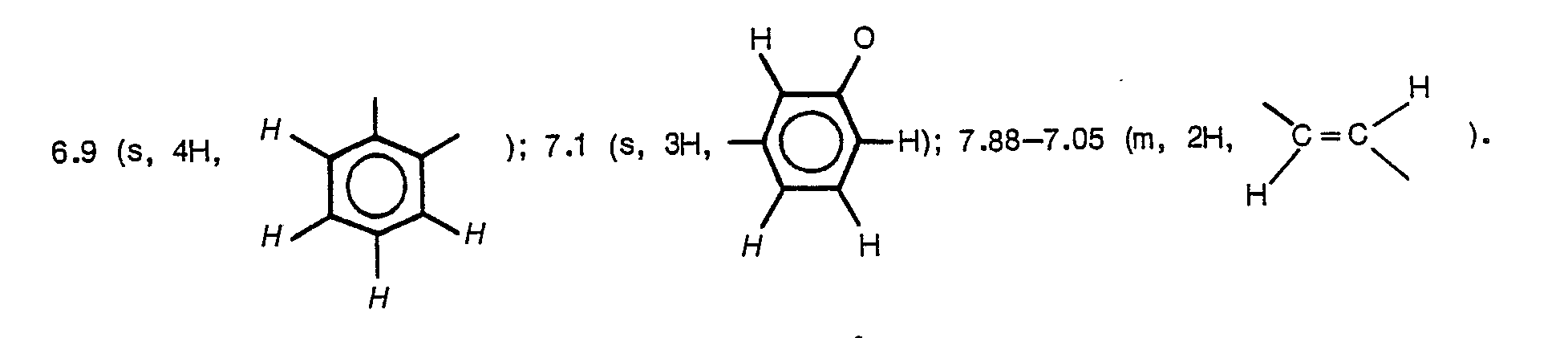
- To a solution of 3a-chloroacetyl-2-[2'-(o-hydroxyphenyl)ethyl]-thiazolidine (2.5 g) in methylene chloride (15 ml), 1,2-dihydropyrane (1 g) and p-toluenesulphonic acid (50 mg) are added. The mixture is stirred for 2.5 hours at room temperature then pyridine (0.1 g) is added and the solvent is evaporated under vacuum. According to the procedure of Example 8, the residue is dissolved in DMSO and heated with imidazolyl sodium. After the usual work-up the intermediate 3-(imidazol-1-yl)acetyl-2-[2'-(0- hydroxyphenyl)ethyl]-thiazolidine-2"-tetrahydropyranylether (2.4 g) obtained is treated with 2N methanolic hydrochloric acid solution and the crystalline 3-(imidazol-1-yl)acetyl-2-[2'-(0-hydroxyphenyl)ethyl]-thiazolidine hydrochloride, m.p. 178-181°C is precipitated by dilution of the mixture with ethylether.
- A solution of 2-(o-methoxyphenoxy)methyl-thiazolidine (0.98 g) in pyridine (4 ml) is reacted with succinic anhydride (0.4 g) for 2 hours at room temperature. The mixture is diluted with 2N aqueous sulphuric acid until pH 4.5, then with water. The crystalline precipitate is filtered and crystallized from aqueous ethanol to give 2-(o-methoxyphenoxy)methyl-3-(3'-carboxy)propionyl-thiazolidine (0.95 g) m.p. 104-1070C.
- In similar way, using benzoylchloride, 3,4,5-trimethoxybenzoylchloride, nicotinoylchloride and 3-carboethoxy-propionylchloride the following 3-acetylthiazolidines are obtained:
- 2-(o-methoxyphenoxy)methyl-3-(3'-carbethoxy)propionyl-thiazolidine, oil, H-NMR (CDCI3): 6.90 (s, 4H, arom.); 3.8 (s, 3H, OCH3); 4.15 (q, 2H, CH2CH3); 5.7

- 2-(o-methoxyphenoxy)methyl-3-benzoyl-thiazolidine m.p. 74-76°C;
- 2-(o-methoxyphenoxy)methyl-3-(3',4',5'-trimethoxy)-benzoyl-thiazolidine, oil, H-NMR (CDCI3): 6.8 (s, 4H, arom.); 6.75 (s, 2H, arom.); 5.75

- 2-(o-methoxyphenoxy)methyl-3-nicotinoyl-thiazolidine m.p. 98-100°C.
- Tert-butylcarbonate (19.3 g) is added to a stirred solution of 2-[2'-(O-hydroxyphenyl)ethyl]-thiazolidine (18.5 g) in dimethylformamide (20 ml) at room temperature. After 1 hour, the mixture is diluted with water (200 ml) and the crystalline precipitate is filtered out to give 2-[2'-(O-hydroxyphenyl)ethyl]-3-BOC-thiazolidine (26.5 g), m.p. 113-114°C.
- In similar way the following BOC-thiazolidine are prepared:
- 2-[2'-(O-hydroxyphenyl)ethyl]-3-BOC-4-carboethoxy-thiazolidine, oil, H-NMR (CHCI3-THMS): 1.3 (3H, t, CH2―CH3); 1.5 (9H, s, -C(CH3)3); 3.3 (2H, d, s); 4.3 (2H, q, CH2―CH3); 6.7-7.2 (4H, m);
- 2-(2'-O-hydroxyphenoxy)methyl-3-BOC-thiazolidine, m.p. 110°C;
- 2-(2'-0-hydroxyphenoxy)methyl-3-BOC-4-carbethoxy-thiazolidine, oil H-NMR (CHCI3-THMS): 1.5 (9H, s, ―C(CH3)3).
- A solution of 2-(2'-O-hydroxyphenoxy)methyl-3-BOC-thiazolidine (1 g) in anhydrous DMF (10 ml) is stirred with 0.3 ml of allyl bromide and potassium carbonate (1 g) for 5 hours. After dilution with water (100 ml) and extraction with ethyl ether (2 x 30 ml), the organic phases are washed with water, dried on Na2S04 and evaporated to dryness.
- The residue 2-(2'-0-allyloxyphenoxy)methyl-3-BOC-thiazolidine (oil: H-NMR (CDCI3-THMS): 1.4 (9H, s, C(CH3)3; 4.55 (2H, d, -CH2-CH=); 5.6-5
-

- Using in the same procedure the propargyl chloride, the following derivatives are prepared:
- 2-(2'-O-propargyloxyphenoxy)methyl-3-BOC-thiazolidine, m.p. 83-85°C;
- 2-(2'-0-propargyloxyphenoxy)methyl-thiazolidine, m.p. 78-79°C (from ethanol).
- A solution of 3-morpholinomethyl-4-hydroxy-5-methoxy-benzaldehyde (5.02 g) in ethylacetate (50 ml) is treated with 3-triphenylphosphilydene-methylcarbonyl-2-(0-methoxyphenoxy)-methyl-thiazolidine (11.8 g) at room temperature. After 2 days, the mixture is extracted with 12% aqueous HCI (5 x 50 ml). The combined aqueous extracts are treated with 20% aqueous NaOH until pH 5 and then with 5% aqueous NaHC03 until pH 7.8―8, extracted with dichloromethane (2 x 25 ml) to give a crude material which is purified by Si02 column chromatography (hexane:ethylacetate 1:1).
- The oil (5.3 g) is treated in ethylacetate with 6N HCI in isopropanol to give 3-(3'-morpholinomethyl-4'-hydroxy-3'-methoxy-cinnamoyl)-2-(0-methoxyphenoxy)methylthiazolidine hydrochloride (4.9 g) m.p. 124-126°C.
- In similar way the following compounds are prepared:
- 3-(3'-pyrrolidylmethyl-4'-hydroxy-5'-methoxy-cinnamoyl)-2-(O-methoxyphenoxy)methyl-thiazolidine- hydrochloride, m.p. 134-136°C;
- 3-(3'-morpholinomethyl-4'-hydroxy-5'-methoxy-cinnamoyl)-2-(O-hydroxyphenoxy)methyl- thiazolidine maleate;
- 3-(3'-diethylaminomethyl-4'-hydroxy-5'-methoxycinnamoyl)-2-(O-propargyloxyphenoxy)methyl- thiazolidine-hydrochloride.
- Using in the procedure of the Example 3 the following aldehydes:
- 2-(4-methyl-piperazin-1'-yl)ethanal
- 2-(morpholin-1'-yl)ethanal
- 3-(morpholin-1'-yl)propanal and Propanal the following 3-substituted thiazolidines are prepared:
- 3-[4-(4-methylpiperazin-1-yl)-2-butenoyl]-2-(O-methoxyphenoxy)methyl-thiazolidine maleate;
- 3-[4-(morpholin-1-yl)-2-butenoyl]-2-(O-methoxyphenoxy)methyl-thiazolidine-hydrochloride;
- 3-[5-(morpholin-1-yl)-2-pentenoylJ-2-(O-methoxyphenoxy)methyl-thiazolidine-hydrochloride;
- 3-(2-pentenoyl)-2-(O-methoxyphenoxy)methyl-thiazolidine.
- A solution of acryloylchloride (12.2 ml) in CH2CI2 is added to a stirred solution of 2-(O-methoxyphenoxy)methyl-thiazolidine (30.5 g) and triethylamine (20.7 ml) in CH2CI2 (130 ml), cooled at o-5°C. The mixture is kept for 3 hours at o-5°C, the triethylamine hydrochloride is removed by filtration and the eluate is washed with water, 5% aqueous NaHC03, water. After drying on Na2SO4, and evaporation of the solvent, the crude residue is crystallized from ethylacetate to give 3-acryloyl-2-(0-methoxyphenoxy)methyl-thiazolidine m.p. 56-58°C. Using in the procedure the 2-(0-hydroxyphenoxy)-methyl-thiazolidine and cooling the reaction mixture at -15 - -10°C, the 3-acryloyl-2-(0-hydroxy- phenoxy)methyl-thiazolidine is obtained. A solution of these acryloylthiazolidines (1.1 g) in ethanol (20 ml) are treated with (2-hydroxyethylamino)ethylamine (0.42 ml).
- The reaction mixture is kept for 28 hours at room temperature and evaporated to dryness. The residue is partitioned between water and ethylacetate. The organic phase is separated, washed with water, dried on Na2S04 and evaporated to dryness.
- A solution of the residual oil (1.6 g) in dry acetone (20 ml) is treated with a solution of maleic acid (0.48 g) in acetone (6 ml) to give a crystalline precipitate, yielding:
- 3-(3-(2-hydroxyethylamino)ethyl)aminopropanoyl-2-((O-methoxyphenoxy)methyl-thiazolidine bis maleate m.p. 128-130°C;
- 3-(3-(2-hydroxyethylamino)ethyl)aminopropanoyl-2-(O-hydroxymethyl)thiazolidine bis maleate m.p. 134-136°C;
- 3-(3-(2-hydroxyethylamino)ethyl)aminopropanoyl-2-(O-propargyloxy-methyl)thiazolidine bis maleate.
- In inert gas atmosphere, cysteamine hydrochloride (0.38 g) is treated with 2-(0-methoxyphenoxy- methyl)-3-acryloyl-thiazolidine (0.8 g) in ethanol (25 ml) for 12 hours at room temperature and then for 8 hours at reflux temperature.
- The reaction mixture is cooled at room temperature and after two days the crystalline precipitate is filtered to give 0.62 g of 3-(5-amino-4-thia-hexanoyl)-2-(O-methoxyphenoxy)methyl-thiazolidine-hydrochloride m.p. 116-118°C.
- Using in the same procedure N-acetyl-cysteine, in the presence of catalytic amount of sodium methylate, 3-(5-carboxy-5-acetylamino-4-thia-hexanoyl)-2-(O-methoxyphenoxy)methyl-thiazolidine m.p. 119-121°C, is prepared.
- By treatment of the above described acryloythiazolidine in ethanol with imidazole, the following compounds are prepared:
- 3-(3-imidazol-1-yl)-propionyl-2-(O-propargyloxyphenoxy)methyl-thiazolidine;
- 3-(3-imidazol-1-yl)-propionyl-2-(O-methoxyphenoxy)methyl-thiazolidine m.p. 115-117°C (as nitrate).
- A solution of 2-morpholine-ethylchloride hydrochloride (0.18 g) in water (5 ml) is added to a solution of 3-(2-mercaptoacetyl)-2-(O-methoxyphenoxy)methyl-thiazolidine in aqueous N sodium hydroxyde (10 ml), in inert gas atmosphere and stirred overnight at room temperature.
- The aqueous phase is extracted with ethylether, and the combined organic phase are collected, washed with NaOH, water, dried on Na2S04 and evaporated to dryness to give 3-[5-(morpholin-1-yl)-3-thia- pentanoyl)-2-(O-methoxyphenoxy)methyl-thiazolidine (oil), hydrochloride m.p. 158-160°C.
- A solution of 1-iodo-pentane (0.21 ml) in methanol (2 ml) is added to a solution of 3-(2-mercaptoacetyl)-2-(0-methoxyphenoxy)methyl-thiazolidine (0.5 g) in a sodium methylate solution (from 42 mg of sodium in 10 ml of methanol). The mixture is stirred for 3 hours at room temperature, diluted with N aqueous sodium hydroxide (60 ml) and then extracted with ethylacetate to give, after the usual work-up, 0.44 g of 3-(3-thia- octanoyl)-2-(0-methoxyphenoxy)methyl-thiazolidine oil. Using in this procedure the a-bromo- methylacetate as alkylating agent, the 3-(4-carbomethoxy-3-thia-succinoyl)-2-(0-methoxyphenoxy)methyl- thiazolidine, m.p. 77-79°C, is obtained.
- A solution of dicyclohexylcarbodiimide (1.75 g) in dimethylformamide (10 ml) is added to a stirred suspension of phenylthioacetic acid (1.44 g) and 2-(O-hydroxyphenoxy)methyl-thiazolidine in dimethylformamide (15 ml).
- After two hours, the dicyclohexylurea is filtered out and the solution is diluted with water (150 ml) and extracted with ethylether. The organic phases are collected and, after the usual work-up, the residual oil is purified by chromatography on Si02 (hexane-AcOEt 1:1) to give 1.8 g of 3-(phenylthioacetyl)-2-(hydroxyphenoxy)methylthiazolidine m.p. 94-96°C.
- In similar way, the following derivatives are prepared:
- 3-(phenylthioacetyl)-2-(O-methoxyphenoxy)methyl-thiazolidine, m.p. 97-99°C;
- 3-(3-thia-pentanoyl)-2-(O-methoxyphenoxy)methyl-thiazolidine, m.p. 66―67°C.
- A solution of 1-acetylcysteine disodium salt (638 mg) in MeOH (3 ml) is treated with a solution of 3-(a-chloroacetyl)-2-(O-methoxyphenoxy)methyl-thiazolidine (0.88 g) in dimethoxyethane (10 mi). After 2 hours at room temperature the mixture is evaporated to dryness and the residue is partitioned between ethyl acetate and aqueous 20% NaH2P04 solution.
- The organic phase, after the usual work-up, gives 0.76 g of 3-(5-carboxy-5-acetylamino-3-thia- pentanoyl)-2-(O-methoxyphenoxy)methyl-thiazolidine, m.p. 69-78°C.
- a-Methoxy-acetylchloride (7.3 ml) is added to a stirred solution of 14.8 g of 2-(0-methoxyphenoxy)-methylthiazolidine and triethylamine (11.2 ml) in sym-dichloroethane (100 ml), cooled at 0-5°C. After 1 hour, the mixture is washed with water. After the usual work-up and crystallization from isopropanol, 11.46 g of 3-(a-methoxyacetyl)-2-(0-methoxyphenoxy)methyl-thiazolidine, m.p. 76-77°C, are obtained.
- Using in the same procedure the 3,6-dioxa-capriloyl-chloride and the 3-thia-6-oxacapriloyl chloride, the following compounds are obtained:
- 3-(3,6-dioxa-capriloyl)-2-(O-methoxyphenoxy)methyl-thiazolidine, oil, H-NMR (CDCl3―THMS): 1.3 (3H, t, CH2-CH3); 3.7 (6H, m, ―O―CH2―CH2―O―CH2); 3.8 (3H, s, O―CH3); 6.5 (4H, s
- 3-(3-thia-6-oxa-capriloyl)-2-(0-methoxyphenoxy)methyl-thiazolidine, oil, H-NMR (CDCl3―THMS): 1.3 (3H, t, CH2CH3); 3.82 (3H, s, OCH3).
- N,N'-Dicyclohexylcarbodiimide (22.7 g) is added to a stirred solution of 2-(O-methoxyphenoxy)methyl- thiazolidine (22.6 g), N-acetylglycine (12.9 g) and 4-dimethylaminopyridine (1.08 g) in sym-dichloroethane cooled at 0°C. After 12 hours, the dicyclohexylurea is removed by filtration, and the organic phase is washed with 5% aqueous NaHC03, water and then it is dried on Na2SO4. After removal of solvents in vacuum, the residual oil is crystallized from isopropanol to give 3-(N-acetylaminoacetyl)-2-(0-methoxy- phenoxy)methyl-thiazolidine, m.p. 119-120°C. Using in this procedure BOC-glycine and N-formylglycine, the corresponding 3-(N-formylaminoacetyl)-2-(O-methoxyphenoxy)methyl-thiazolidine, m.p. 104-106°C, 3-(BOC-glycinyl)-2-(0-methoxyphenoxy)methyl-thiazolidine oil, are prepared.
- By treatment of the BOC-derivate with trifluoroacetic acid and methylene chloride at room temperature, using the procedure of the Example 2, the 3-(glycinyl) compound is prepared.
- By treatment of a solution of the N-formyl-glycinyl compound (15.07 g) in methanol (250 ml) with 8N HCI solution in isopropanol (9 ml) for 8 hours at room temperature, followed by concentration of the mixture at volume of 50 ml and filtration, 12 g of 3-glycinyl-2-(O-methoxyphenoxy)methyl-thiazolidine.HCI m.p. 182-184°C, are obtained.
- A stirred solution of 3,5-dibromo-salicylaldehyde (8.37 g), 3-glycinyl-2-(0-methoxyphenoxy)methyl- thiazolidine-hydrochloride (9.54 g) and triethylamine (4.14 ml) in methanol (250 ml) is heated at reflux temperature for 3 hours and then cooled to room temperature. Stirring is continued for 8 hours to precipitate 15.12 g of 3-(2-(3,5-dibromo-2-hydroxy-benzylidenamino-acetyl)-2-(O-methoxyphenoxy)-methyl-thiazolidine, m.p. 126-130°C.
- 10% NaBH4 on alumina (11.8 g) is added to a stirred solution of this compound in ethylacetate (250 ml). After 6 hours, the organic phase is filtered, washed with water and dried on Na2SO4.
- After treatment with 8N HCI in isopropanol (4.8 ml), 3-(3',5'-dibromo-6'-hydroxyphenyl)methylamino- acetyl-2-(0-methoxyphenoxy)methyl-thiazolidine-hydrochloride (12.9 g), m.p. 193-196°C, is obtained.
- The following examples illustrate various unit dosage compositions containing a compound of the present invention as the active ingredient.
- In case of diabetic patients, sorbitol can be used instead of saccharose.
-

-

-

-
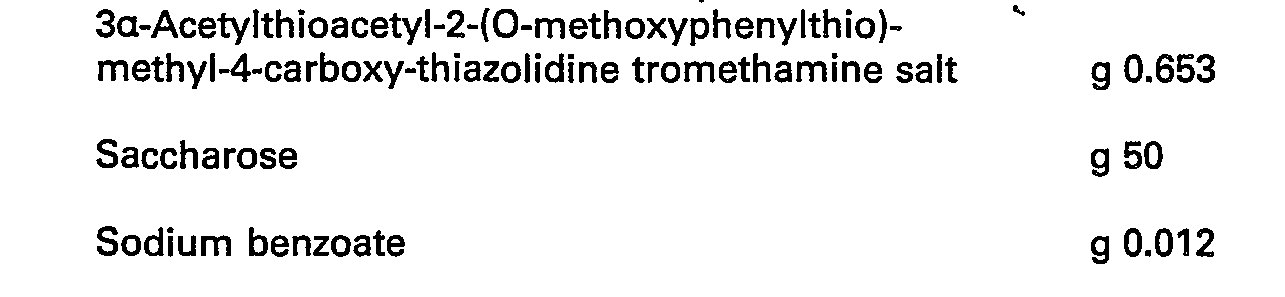

- Using cysteine hydrochloride instead of cysteamine in the procedure of the Examples 4 and 7, the following compounds are obtained:
- 4-carboxy-2-[2'-(O-hydroxyphenyl)ethyl]-thiazolidine, m.p. 182-183°C;
- 4-carboxy-2-[(O-hydroxyphenoxy)methyl]-thiazolidine, m.p. 182-183°C.
Claims (9)
- A process for the preparation of compounds having formula I
 X is a CH2, 0, S;R is hydroxy, or an ester of formula Rc―CO2―, lower C1―C6-alkoxy, CH2=CH―CH2O―; HC≡C―CH2―O―; methylR1 is hydrogen and
 R2 is hydrogen or a -COOH or ―COOC2H5 group;R3 is hydrogen, a C1-C2 alkylsulphonyl group, an unsubstituted or mono or polysubstituted phenylsulfonyl group or an acyl group of formula RdCO;p is zero or 1 with the proviso that when X is sulfur p is zero;both Ra and Rb, are hydrogen or methyl; Rc and Rd, which are the same or different are: hydrogen,

 the term "mono substituted amino group" comprising, within the meanings thereof, an amino group substituted by a C1-C6, linear or branched alkyl group or by groups having formula:

 the term "mono- or polysubstituted phenyl", meaning phenyl groups which are substituted by a fluorine atom in the para position, by chlorine atoms in the meta and/or para positions or by a CF3 in the meta positions or phenyl group of formula
 both W1 and W2 are a lower C1―C2 alkoxy or, taken together, form a carbonyl group;R' is a member selected from the group consisting of methyl, hydroxy, a lower C1-C6 alkoxy, allyloxy, propargyloxy;X is a member selected from the group consisting of CH2, S, 0;R1 is hydrogen or


 Q, P1, P2 and n are as above defined;R4 is a C1-C2 alkyl group, an unsubstituted or mono or polysubstituted phenyl ring;Hal is chlorine, bromine or iodine;Z is a known species activating a carboxy group such as chlorine, bromine, azide, ―O―CO―D where D is a C1―C5 lower alkoxy and benzyloxy, a C1―C5 lower alkyl (mixed anhydride and anhydride) and activated esters.
Priority Applications (1)
| Application Number | Priority Date | Filing Date | Title |
|---|---|---|---|
| AT85109445T ATE48421T1 (en) | 1984-07-27 | 1985-07-26 | COUGH SUPPRESSION AND MURPH REGULATOR 2-SUBSTITUTED THIAZOLE. |
Applications Claiming Priority (4)
| Application Number | Priority Date | Filing Date | Title |
|---|---|---|---|
| GB08419254A GB2164333B (en) | 1984-07-27 | 1984-07-27 | Antitussive and mucus regulating 2-substituted thiazolidines |
| GB8419254 | 1984-07-27 | ||
| GB08517553A GB2177690A (en) | 1985-07-11 | 1985-07-11 | Antitussive and mucus regulating 2-substituted thiazolidines |
| GB8517553 | 1985-07-11 |
Publications (3)
| Publication Number | Publication Date |
|---|---|
| EP0169581A2 EP0169581A2 (en) | 1986-01-29 |
| EP0169581A3 EP0169581A3 (en) | 1987-05-13 |
| EP0169581B1 true EP0169581B1 (en) | 1989-12-06 |
Family
ID=26288033
Family Applications (1)
| Application Number | Title | Priority Date | Filing Date |
|---|---|---|---|
| EP85109445A Expired EP0169581B1 (en) | 1984-07-27 | 1985-07-26 | Antitussive and mucus regulating 2-substituted thiazolidines |
Country Status (14)
| Country | Link |
|---|---|
| US (1) | US4857643A (en) |
| EP (1) | EP0169581B1 (en) |
| JP (1) | JPS6163669A (en) |
| AT (1) | ATE48421T1 (en) |
| AU (1) | AU582770B2 (en) |
| CA (1) | CA1270250A (en) |
| DE (1) | DE3574590D1 (en) |
| DK (1) | DK169474B1 (en) |
| ES (1) | ES8605249A1 (en) |
| GR (1) | GR851845B (en) |
| HU (1) | HU195492B (en) |
| IE (1) | IE58518B1 (en) |
| IL (1) | IL75891A (en) |
| NZ (1) | NZ212831A (en) |
Cited By (1)
| Publication number | Priority date | Publication date | Assignee | Title |
|---|---|---|---|---|
| EP2070915A1 (en) | 2007-12-03 | 2009-06-17 | A.M.S.A. ANONIMA MATERIE SINTETICHE E AFFINI S.p.A. | New process for the synthesis of moguisteine |
Families Citing this family (12)
| Publication number | Priority date | Publication date | Assignee | Title |
|---|---|---|---|---|
| GB2177690A (en) * | 1985-07-11 | 1987-01-28 | Boehringer Biochemia Srl | Antitussive and mucus regulating 2-substituted thiazolidines |
| NO174506B (en) * | 1984-10-30 | 1994-02-07 | Usv Pharma Corp | Analogous procedure for the preparation of therapeutically active compounds |
| IT1196485B (en) * | 1986-07-14 | 1988-11-16 | Zambon Spa | THIAZOLIDIN-4-CARBOXYLIC ACID DERIVATIVES FOR PHARMACEUTICAL ACTIVITIES |
| IT1203932B (en) * | 1987-04-17 | 1989-02-23 | Boehringer Biochemia Srl | 2-SULFINYL-ACETYL-1,3-THIAZOLIDINE, THEIR PREPARATION AND PHARMACEUTICAL COMPOSITIONS |
| IT1228251B (en) * | 1987-07-02 | 1991-06-05 | Boehringer Biochemia Srl | CYCLIC AMINO-THIOACETAL STARCHES, PROCEDURE FOR THEIR PREPARATION AND PHARMACEUTICAL COMPOSITIONS THAT CONTAIN THEM |
| IT1223565B (en) * | 1987-12-21 | 1990-09-19 | Zambon Spa | THIAZOLIDIN 4 CARBOXYLIC ACID DERIVATIVES FOR PHARMACEUTICAL ACTIVITIES |
| IT1216119B (en) * | 1988-03-17 | 1990-02-22 | Boehringer Biochemia Srl | BETA_CARBONIL_CARBOSSIAMIDI DI 1,3_TIAZOLIDINE. |
| US5420289A (en) * | 1989-10-27 | 1995-05-30 | American Home Products Corporation | Substituted indole-, indene-, pyranoindole- and tetrahydrocarbazole-alkanoic acid derivatives as inhibitors of PLA2 and lipoxygenase |
| IT1270594B (en) * | 1994-07-07 | 1997-05-07 | Recordati Chem Pharm | CONTROLLED RELEASE PHARMACEUTICAL COMPOSITION OF LIQUID SUSPENSION MOGUISTEIN |
| JPWO2002051836A1 (en) * | 2000-12-27 | 2004-04-22 | 協和醗酵工業株式会社 | Dipeptidyl peptidase-IV inhibitor |
| MX2012008530A (en) * | 2010-01-25 | 2013-02-21 | Kareus Therapeutics Sa | Novel compositions for reducing abeta 42 production and their use in treating alzheimer's disease (ad). |
| CN102653527A (en) * | 2011-12-22 | 2012-09-05 | 东莞达信生物技术有限公司 | Moguisteine synthesis process |
Family Cites Families (6)
| Publication number | Priority date | Publication date | Assignee | Title |
|---|---|---|---|---|
| FR8266M (en) * | 1968-12-31 | 1970-10-26 | ||
| DE2926771A1 (en) * | 1979-07-03 | 1981-01-15 | Hoechst Ag | THIAZOLIDE DERIVATIVES AND METHOD FOR THE PRODUCTION THEREOF |
| IT1194793B (en) * | 1981-05-12 | 1988-09-28 | Corvi Camillo Spa | THIAZOLIDINE DERIVATIVES FOR PHARMACOLOGICAL ACTIVITY, PROCEDURE FOR THEIR PREPARATION AND PHARMACEUTICAL COMPOSITIONS CONTAINING THESE DERIVATIVES |
| US4649146A (en) * | 1983-01-31 | 1987-03-10 | Fujisawa Pharmaceutical Co., Ltd. | Thiazole derivatives and pharmaceutical composition comprising the same |
| DE3404786A1 (en) * | 1984-02-10 | 1985-08-14 | Ludwig Heumann & Co GmbH, 8500 Nürnberg | NEW ALKANOL DERIVATIVES, METHOD FOR THEIR PRODUCTION AND MEDICINAL PRODUCT CONTAINING THESE COMPOUNDS |
| US4732934A (en) * | 1986-12-08 | 1988-03-22 | General Electric Company | Functionalized thermoplastic polymers, blends prepared therefrom, and methods for preparing blends |
-
1985
- 1985-07-18 HU HU852765A patent/HU195492B/en not_active IP Right Cessation
- 1985-07-22 NZ NZ212831A patent/NZ212831A/en unknown
- 1985-07-22 AU AU45242/85A patent/AU582770B2/en not_active Ceased
- 1985-07-23 IL IL75891A patent/IL75891A/en not_active IP Right Cessation
- 1985-07-24 CA CA000487403A patent/CA1270250A/en not_active Expired - Lifetime
- 1985-07-25 GR GR851845A patent/GR851845B/el unknown
- 1985-07-26 ES ES545575A patent/ES8605249A1/en not_active Expired
- 1985-07-26 AT AT85109445T patent/ATE48421T1/en not_active IP Right Cessation
- 1985-07-26 IE IE187985A patent/IE58518B1/en not_active IP Right Cessation
- 1985-07-26 DK DK341985A patent/DK169474B1/en not_active IP Right Cessation
- 1985-07-26 JP JP60166620A patent/JPS6163669A/en active Granted
- 1985-07-26 EP EP85109445A patent/EP0169581B1/en not_active Expired
- 1985-07-26 DE DE8585109445T patent/DE3574590D1/en not_active Expired - Lifetime
-
1988
- 1988-11-03 US US07/266,559 patent/US4857643A/en not_active Expired - Fee Related
Cited By (1)
| Publication number | Priority date | Publication date | Assignee | Title |
|---|---|---|---|---|
| EP2070915A1 (en) | 2007-12-03 | 2009-06-17 | A.M.S.A. ANONIMA MATERIE SINTETICHE E AFFINI S.p.A. | New process for the synthesis of moguisteine |
Also Published As
| Publication number | Publication date |
|---|---|
| JPH0576944B2 (en) | 1993-10-25 |
| JPS6163669A (en) | 1986-04-01 |
| DE3574590D1 (en) | 1990-01-11 |
| US4857643A (en) | 1989-08-15 |
| ES8605249A1 (en) | 1986-03-16 |
| NZ212831A (en) | 1988-05-30 |
| IL75891A (en) | 1989-07-31 |
| ATE48421T1 (en) | 1989-12-15 |
| IE851879L (en) | 1986-01-27 |
| IE58518B1 (en) | 1993-10-06 |
| EP0169581A3 (en) | 1987-05-13 |
| EP0169581A2 (en) | 1986-01-29 |
| DK341985A (en) | 1986-01-28 |
| CA1270250A (en) | 1990-06-12 |
| IL75891A0 (en) | 1985-12-31 |
| AU582770B2 (en) | 1989-04-13 |
| GR851845B (en) | 1985-12-02 |
| ES545575A0 (en) | 1986-03-16 |
| HUT38921A (en) | 1986-07-28 |
| DK341985D0 (en) | 1985-07-26 |
| HU195492B (en) | 1988-05-30 |
| DK169474B1 (en) | 1994-11-07 |
| AU4524285A (en) | 1986-01-30 |
Similar Documents
| Publication | Publication Date | Title |
|---|---|---|
| US4857643A (en) | Antitussive and mucus regulating 2-substituted thiazolidines | |
| US4525358A (en) | 2-[4-(Diphenylmethyl)-1-piperazinyl]-acetic acids and their amides | |
| US5776951A (en) | Anti-atherosclerotic diaryl compounds | |
| EP0130795B1 (en) | Carboxylic acid derivatives useful for inhibiting the degradation of cartilage | |
| US4217305A (en) | Phenylethanolamine derivatives | |
| CS227015B2 (en) | Method of preparing 2,4-di-substituted thiazol derivatives | |
| EP0783490A1 (en) | 1-acyl-4-aliphatylaminopiperidine compounds | |
| DK170332B1 (en) | Pharmacologically active substituted benzamides, process for their preparation and a pharmaceutical composition thereof | |
| US4263293A (en) | Heterocyclic containing amides as inhibitors of mammalian collagenase | |
| KR20060004967A (en) | Aromatic Oxyphenyl and Aromatic Sulfanylphenyl Derivatives | |
| DE69607183T2 (en) | BENZOTHIAZOLONE DERIVATIVES | |
| FI86175B (en) | FOERFARANDE FOER FRAMSTAELLNING AV NYA TERAPEUTISKT ANVAENDBARA FENOLDERIVAT. | |
| IE851011L (en) | Antioestrogenic phenol derivatives | |
| US5543419A (en) | Quinuclidine esters process and intermediate for their preparation and pharmaceutical compositions containing them | |
| US4798898A (en) | Antitussive and mucus regulating 2-substituted thiazolidines | |
| US4937260A (en) | Benzamido-derivatives | |
| EP0171005B1 (en) | Xanthinylmethylthiazolidines, process for their preparation and pharmaceutical compositions containing them | |
| DE69405815T2 (en) | Acylureas | |
| CA1182818A (en) | N-substituted mercaptoacyl propionamides | |
| US4988701A (en) | Cyclic amino-thioacetal amides, a process for the preparation thereof and pharmaceutical compositions | |
| EP1908466B1 (en) | Substituted propanamide derivative and pharmaceutical composition containing the same | |
| US4292305A (en) | Antiallergic imidodisulfamides | |
| KR890000486B1 (en) | Method for preparing 2-methoxyphenyl ester of N-substituted amino acid | |
| JPH0335320B2 (en) | ||
| EP0266549A1 (en) | Cinnamyl amines, process for their preparation and pharmaceutical compositions containing them |
Legal Events
| Date | Code | Title | Description |
|---|---|---|---|
| PUAI | Public reference made under article 153(3) epc to a published international application that has entered the european phase |
Free format text: ORIGINAL CODE: 0009012 |
|
| AK | Designated contracting states |
Designated state(s): AT BE CH DE FR GB IT LI LU NL SE |
|
| PUAL | Search report despatched |
Free format text: ORIGINAL CODE: 0009013 |
|
| AK | Designated contracting states |
Kind code of ref document: A3 Designated state(s): AT BE CH DE FR GB IT LI LU NL SE |
|
| 17P | Request for examination filed |
Effective date: 19870730 |
|
| 17Q | First examination report despatched |
Effective date: 19880829 |
|
| GRAA | (expected) grant |
Free format text: ORIGINAL CODE: 0009210 |
|
| AK | Designated contracting states |
Kind code of ref document: B1 Designated state(s): AT BE CH DE FR GB IT LI LU NL SE |
|
| REF | Corresponds to: |
Ref document number: 48421 Country of ref document: AT Date of ref document: 19891215 Kind code of ref document: T |
|
| REF | Corresponds to: |
Ref document number: 3574590 Country of ref document: DE Date of ref document: 19900111 |
|
| ITF | It: translation for a ep patent filed | ||
| ET | Fr: translation filed | ||
| PLBE | No opposition filed within time limit |
Free format text: ORIGINAL CODE: 0009261 |
|
| STAA | Information on the status of an ep patent application or granted ep patent |
Free format text: STATUS: NO OPPOSITION FILED WITHIN TIME LIMIT |
|
| 26N | No opposition filed | ||
| ITPR | It: changes in ownership of a european patent |
Owner name: CAMBIO RAGIONE SOCIALE;BOEHRINGER MANNHEIM ITALIA |
|
| ITTA | It: last paid annual fee | ||
| REG | Reference to a national code |
Ref country code: CH Ref legal event code: PFA Free format text: BOEHRINGER MANNHEIM ITALIA S.P.A. |
|
| NLT1 | Nl: modifications of names registered in virtue of documents presented to the patent office pursuant to art. 16 a, paragraph 1 |
Owner name: BOEHRINGER MANNHEIM ITALIA S.P.A. TE MILAAN, ITALI |
|
| REG | Reference to a national code |
Ref country code: FR Ref legal event code: CD |
|
| EPTA | Lu: last paid annual fee | ||
| EAL | Se: european patent in force in sweden |
Ref document number: 85109445.8 |
|
| PGFP | Annual fee paid to national office [announced via postgrant information from national office to epo] |
Ref country code: LU Payment date: 19960701 Year of fee payment: 12 |
|
| PGFP | Annual fee paid to national office [announced via postgrant information from national office to epo] |
Ref country code: SE Payment date: 19960717 Year of fee payment: 12 |
|
| PGFP | Annual fee paid to national office [announced via postgrant information from national office to epo] |
Ref country code: NL Payment date: 19960729 Year of fee payment: 12 |
|
| PGFP | Annual fee paid to national office [announced via postgrant information from national office to epo] |
Ref country code: BE Payment date: 19960911 Year of fee payment: 12 |
|
| PG25 | Lapsed in a contracting state [announced via postgrant information from national office to epo] |
Ref country code: LU Free format text: LAPSE BECAUSE OF NON-PAYMENT OF DUE FEES Effective date: 19970726 |
|
| PG25 | Lapsed in a contracting state [announced via postgrant information from national office to epo] |
Ref country code: SE Effective date: 19970727 |
|
| PG25 | Lapsed in a contracting state [announced via postgrant information from national office to epo] |
Ref country code: BE Free format text: LAPSE BECAUSE OF NON-PAYMENT OF DUE FEES Effective date: 19970731 |
|
| BERE | Be: lapsed |
Owner name: BOEHRINGER MANNHEIM ITALIA S.P.A. Effective date: 19970731 |
|
| PG25 | Lapsed in a contracting state [announced via postgrant information from national office to epo] |
Ref country code: NL Free format text: LAPSE BECAUSE OF NON-PAYMENT OF DUE FEES Effective date: 19980201 |
|
| NLV4 | Nl: lapsed or anulled due to non-payment of the annual fee |
Effective date: 19980201 |
|
| EUG | Se: european patent has lapsed |
Ref document number: 85109445.8 |
|
| PGFP | Annual fee paid to national office [announced via postgrant information from national office to epo] |
Ref country code: FR Payment date: 20000711 Year of fee payment: 16 |
|
| PGFP | Annual fee paid to national office [announced via postgrant information from national office to epo] |
Ref country code: AT Payment date: 20000712 Year of fee payment: 16 |
|
| PGFP | Annual fee paid to national office [announced via postgrant information from national office to epo] |
Ref country code: GB Payment date: 20000726 Year of fee payment: 16 Ref country code: CH Payment date: 20000726 Year of fee payment: 16 |
|
| PG25 | Lapsed in a contracting state [announced via postgrant information from national office to epo] |
Ref country code: GB Free format text: LAPSE BECAUSE OF NON-PAYMENT OF DUE FEES Effective date: 20010726 Ref country code: AT Free format text: LAPSE BECAUSE OF NON-PAYMENT OF DUE FEES Effective date: 20010726 |
|
| PG25 | Lapsed in a contracting state [announced via postgrant information from national office to epo] |
Ref country code: LI Free format text: LAPSE BECAUSE OF NON-PAYMENT OF DUE FEES Effective date: 20010731 Ref country code: CH Free format text: LAPSE BECAUSE OF NON-PAYMENT OF DUE FEES Effective date: 20010731 |
|
| REG | Reference to a national code |
Ref country code: CH Ref legal event code: PL |
|
| GBPC | Gb: european patent ceased through non-payment of renewal fee |
Effective date: 20010726 |
|
| PG25 | Lapsed in a contracting state [announced via postgrant information from national office to epo] |
Ref country code: FR Free format text: LAPSE BECAUSE OF NON-PAYMENT OF DUE FEES Effective date: 20020329 |
|
| PGFP | Annual fee paid to national office [announced via postgrant information from national office to epo] |
Ref country code: DE Payment date: 20020430 Year of fee payment: 17 |
|
| REG | Reference to a national code |
Ref country code: FR Ref legal event code: ST |
|
| PG25 | Lapsed in a contracting state [announced via postgrant information from national office to epo] |
Ref country code: DE Free format text: LAPSE BECAUSE OF NON-PAYMENT OF DUE FEES Effective date: 20030201 |