EP0168626B1 - Composition for the manufacture of a medicament for the therapeutic treatment of trauma of the skin - Google Patents
Composition for the manufacture of a medicament for the therapeutic treatment of trauma of the skin Download PDFInfo
- Publication number
- EP0168626B1 EP0168626B1 EP85107124A EP85107124A EP0168626B1 EP 0168626 B1 EP0168626 B1 EP 0168626B1 EP 85107124 A EP85107124 A EP 85107124A EP 85107124 A EP85107124 A EP 85107124A EP 0168626 B1 EP0168626 B1 EP 0168626B1
- Authority
- EP
- European Patent Office
- Prior art keywords
- compound
- trifluoperazine
- composition
- values
- skin
- Prior art date
- Legal status (The legal status is an assumption and is not a legal conclusion. Google has not performed a legal analysis and makes no representation as to the accuracy of the status listed.)
- Expired - Lifetime
Links
- 239000000203 mixture Substances 0.000 title claims description 34
- 208000014674 injury Diseases 0.000 title claims description 16
- 239000003814 drug Substances 0.000 title claims description 14
- 230000008733 trauma Effects 0.000 title claims description 13
- 230000001225 therapeutic effect Effects 0.000 title claims description 8
- 238000004519 manufacturing process Methods 0.000 title claims description 3
- ZEWQUBUPAILYHI-UHFFFAOYSA-N trifluoperazine Chemical compound C1CN(C)CCN1CCCN1C2=CC(C(F)(F)F)=CC=C2SC2=CC=CC=C21 ZEWQUBUPAILYHI-UHFFFAOYSA-N 0.000 claims description 79
- 229960002324 trifluoperazine Drugs 0.000 claims description 79
- 150000001875 compounds Chemical class 0.000 claims description 76
- 206010042496 Sunburn Diseases 0.000 claims description 48
- 102000000584 Calmodulin Human genes 0.000 claims description 40
- 108010041952 Calmodulin Proteins 0.000 claims description 40
- 208000001034 Frostbite Diseases 0.000 claims description 38
- KLBQZWRITKRQQV-UHFFFAOYSA-N Thioridazine Chemical compound C12=CC(SC)=CC=C2SC2=CC=CC=C2N1CCC1CCCCN1C KLBQZWRITKRQQV-UHFFFAOYSA-N 0.000 claims description 33
- 229960002784 thioridazine Drugs 0.000 claims description 33
- 239000011575 calcium Substances 0.000 claims description 32
- 239000006071 cream Substances 0.000 claims description 32
- OYPRJOBELJOOCE-UHFFFAOYSA-N Calcium Chemical compound [Ca] OYPRJOBELJOOCE-UHFFFAOYSA-N 0.000 claims description 30
- 229910052791 calcium Inorganic materials 0.000 claims description 30
- 230000009471 action Effects 0.000 claims description 28
- 239000006210 lotion Substances 0.000 claims description 11
- 239000003589 local anesthetic agent Substances 0.000 claims description 10
- 239000002674 ointment Substances 0.000 claims description 8
- 238000002360 preparation method Methods 0.000 claims description 8
- 229960005475 antiinfective agent Drugs 0.000 claims description 6
- 239000004599 antimicrobial Substances 0.000 claims description 6
- ZFIFHAKCBWOSRN-UHFFFAOYSA-N naphthalene-1-sulfonamide Chemical class C1=CC=C2C(S(=O)(=O)N)=CC=CC2=C1 ZFIFHAKCBWOSRN-UHFFFAOYSA-N 0.000 claims description 6
- MAAQGZFMFXQVOG-UHFFFAOYSA-N 4,4-diphenylbutan-1-amine Chemical class C=1C=CC=CC=1C(CCCN)C1=CC=CC=C1 MAAQGZFMFXQVOG-UHFFFAOYSA-N 0.000 claims description 5
- 229940049706 benzodiazepine Drugs 0.000 claims description 5
- 150000001557 benzodiazepines Chemical class 0.000 claims description 5
- FFSAXUULYPJSKH-UHFFFAOYSA-N butyrophenone Chemical class CCCC(=O)C1=CC=CC=C1 FFSAXUULYPJSKH-UHFFFAOYSA-N 0.000 claims description 5
- 150000008533 dibenzodiazepines Chemical class 0.000 claims description 5
- 150000005075 thioxanthenes Chemical class 0.000 claims description 5
- 239000002250 absorbent Substances 0.000 claims description 3
- 230000002745 absorbent Effects 0.000 claims description 3
- 239000008151 electrolyte solution Substances 0.000 claims description 3
- 238000001990 intravenous administration Methods 0.000 claims description 3
- 150000002990 phenothiazines Chemical class 0.000 claims description 3
- 108010001478 Bacitracin Proteins 0.000 claims description 2
- CEAZRRDELHUEMR-URQXQFDESA-N Gentamicin Chemical compound O1[C@H](C(C)NC)CC[C@@H](N)[C@H]1O[C@H]1[C@H](O)[C@@H](O[C@@H]2[C@@H]([C@@H](NC)[C@@](C)(O)CO2)O)[C@H](N)C[C@@H]1N CEAZRRDELHUEMR-URQXQFDESA-N 0.000 claims description 2
- 229930182566 Gentamicin Natural products 0.000 claims description 2
- UILOTUUZKGTYFQ-UHFFFAOYSA-N Mafenide acetate Chemical compound CC(O)=O.NCC1=CC=C(S(N)(=O)=O)C=C1 UILOTUUZKGTYFQ-UHFFFAOYSA-N 0.000 claims description 2
- 229930193140 Neomycin Natural products 0.000 claims description 2
- 108010040201 Polymyxins Proteins 0.000 claims description 2
- 229960003071 bacitracin Drugs 0.000 claims description 2
- 229930184125 bacitracin Natural products 0.000 claims description 2
- CLKOFPXJLQSYAH-ABRJDSQDSA-N bacitracin A Chemical compound C1SC([C@@H](N)[C@@H](C)CC)=N[C@@H]1C(=O)N[C@@H](CC(C)C)C(=O)N[C@H](CCC(O)=O)C(=O)N[C@@H]([C@@H](C)CC)C(=O)N[C@@H]1C(=O)N[C@H](CCCN)C(=O)N[C@@H]([C@@H](C)CC)C(=O)N[C@H](CC=2C=CC=CC=2)C(=O)N[C@@H](CC=2N=CNC=2)C(=O)N[C@H](CC(O)=O)C(=O)N[C@@H](CC(N)=O)C(=O)NCCCC1 CLKOFPXJLQSYAH-ABRJDSQDSA-N 0.000 claims description 2
- 229960002518 gentamicin Drugs 0.000 claims description 2
- 229960002721 mafenide acetate Drugs 0.000 claims description 2
- 229960004927 neomycin Drugs 0.000 claims description 2
- 229960003600 silver sulfadiazine Drugs 0.000 claims description 2
- UEJSSZHHYBHCEL-UHFFFAOYSA-N silver(1+) sulfadiazinate Chemical compound [Ag+].C1=CC(N)=CC=C1S(=O)(=O)[N-]C1=NC=CC=N1 UEJSSZHHYBHCEL-UHFFFAOYSA-N 0.000 claims description 2
- WJFKNYWRSNBZNX-UHFFFAOYSA-N 10H-phenothiazine Chemical compound C1=CC=C2NC3=CC=CC=C3SC2=C1 WJFKNYWRSNBZNX-UHFFFAOYSA-N 0.000 claims 2
- 229950000688 phenothiazine Drugs 0.000 claims 2
- 238000002474 experimental method Methods 0.000 description 49
- 230000000694 effects Effects 0.000 description 48
- 241000700159 Rattus Species 0.000 description 26
- 238000000034 method Methods 0.000 description 25
- ZKHQWZAMYRWXGA-KQYNXXCUSA-N Adenosine triphosphate Chemical compound C1=NC=2C(N)=NC=NC=2N1[C@@H]1O[C@H](COP(O)(=O)OP(O)(=O)OP(O)(O)=O)[C@@H](O)[C@H]1O ZKHQWZAMYRWXGA-KQYNXXCUSA-N 0.000 description 24
- ZKHQWZAMYRWXGA-UHFFFAOYSA-N Adenosine triphosphate Natural products C1=NC=2C(N)=NC=NC=2N1C1OC(COP(O)(=O)OP(O)(=O)OP(O)(O)=O)C(O)C1O ZKHQWZAMYRWXGA-UHFFFAOYSA-N 0.000 description 24
- 229960001456 adenosine triphosphate Drugs 0.000 description 24
- 102000001554 Hemoglobins Human genes 0.000 description 23
- 108010054147 Hemoglobins Proteins 0.000 description 23
- 102000004190 Enzymes Human genes 0.000 description 20
- 108090000790 Enzymes Proteins 0.000 description 20
- 230000006698 induction Effects 0.000 description 15
- 102000004169 proteins and genes Human genes 0.000 description 15
- 108090000623 proteins and genes Proteins 0.000 description 15
- 239000007924 injection Substances 0.000 description 14
- 238000002347 injection Methods 0.000 description 14
- 239000000243 solution Substances 0.000 description 13
- 102000005548 Hexokinase Human genes 0.000 description 10
- 108700040460 Hexokinases Proteins 0.000 description 10
- 230000001939 inductive effect Effects 0.000 description 8
- PLDUPXSUYLZYBN-UHFFFAOYSA-N Fluphenazine Chemical compound C1CN(CCO)CCN1CCCN1C2=CC(C(F)(F)F)=CC=C2SC2=CC=CC=C21 PLDUPXSUYLZYBN-UHFFFAOYSA-N 0.000 description 6
- 210000001015 abdomen Anatomy 0.000 description 6
- 229960002690 fluphenazine Drugs 0.000 description 6
- LNEPOXFFQSENCJ-UHFFFAOYSA-N haloperidol Chemical compound C1CC(O)(C=2C=CC(Cl)=CC=2)CCN1CCCC(=O)C1=CC=C(F)C=C1 LNEPOXFFQSENCJ-UHFFFAOYSA-N 0.000 description 6
- 229940102223 injectable solution Drugs 0.000 description 6
- 239000007788 liquid Substances 0.000 description 6
- XLYOFNOQVPJJNP-UHFFFAOYSA-N water Substances O XLYOFNOQVPJJNP-UHFFFAOYSA-N 0.000 description 6
- 102000004567 6-phosphogluconate dehydrogenase Human genes 0.000 description 5
- 108020001657 6-phosphogluconate dehydrogenase Proteins 0.000 description 5
- 206010002091 Anaesthesia Diseases 0.000 description 5
- 241001465754 Metazoa Species 0.000 description 5
- 230000037005 anaesthesia Effects 0.000 description 5
- 230000006378 damage Effects 0.000 description 5
- 239000010410 layer Substances 0.000 description 5
- 239000000463 material Substances 0.000 description 5
- 230000002438 mitochondrial effect Effects 0.000 description 5
- 210000001519 tissue Anatomy 0.000 description 5
- 230000000202 analgesic effect Effects 0.000 description 4
- 210000004027 cell Anatomy 0.000 description 4
- 210000000170 cell membrane Anatomy 0.000 description 4
- 231100000075 skin burn Toxicity 0.000 description 4
- 239000007921 spray Substances 0.000 description 4
- MDLAAYDRRZXJIF-UHFFFAOYSA-N 1-[4,4-bis(4-fluorophenyl)butyl]-4-[4-chloro-3-(trifluoromethyl)phenyl]-4-piperidinol Chemical compound C1CC(O)(C=2C=C(C(Cl)=CC=2)C(F)(F)F)CCN1CCCC(C=1C=CC(F)=CC=1)C1=CC=C(F)C=C1 MDLAAYDRRZXJIF-UHFFFAOYSA-N 0.000 description 3
- ZIIUUSVHCHPIQD-UHFFFAOYSA-N 2,4,6-trimethyl-N-[3-(trifluoromethyl)phenyl]benzenesulfonamide Chemical compound CC1=CC(C)=CC(C)=C1S(=O)(=O)NC1=CC=CC(C(F)(F)F)=C1 ZIIUUSVHCHPIQD-UHFFFAOYSA-N 0.000 description 3
- CURLTUGMZLYLDI-UHFFFAOYSA-N Carbon dioxide Chemical compound O=C=O CURLTUGMZLYLDI-UHFFFAOYSA-N 0.000 description 3
- IAZDPXIOMUYVGZ-UHFFFAOYSA-N Dimethylsulphoxide Chemical compound CS(C)=O IAZDPXIOMUYVGZ-UHFFFAOYSA-N 0.000 description 3
- 208000027418 Wounds and injury Diseases 0.000 description 3
- 230000002924 anti-infective effect Effects 0.000 description 3
- 235000011089 carbon dioxide Nutrition 0.000 description 3
- 229960003878 haloperidol Drugs 0.000 description 3
- 238000001727 in vivo Methods 0.000 description 3
- 230000003834 intracellular effect Effects 0.000 description 3
- 244000052769 pathogen Species 0.000 description 3
- 229960004505 penfluridol Drugs 0.000 description 3
- YVUQSNJEYSNKRX-UHFFFAOYSA-N pimozide Chemical compound C1=CC(F)=CC=C1C(C=1C=CC(F)=CC=1)CCCN1CCC(N2C(NC3=CC=CC=C32)=O)CC1 YVUQSNJEYSNKRX-UHFFFAOYSA-N 0.000 description 3
- 229960003634 pimozide Drugs 0.000 description 3
- 239000000843 powder Substances 0.000 description 3
- 230000002265 prevention Effects 0.000 description 3
- 239000003981 vehicle Substances 0.000 description 3
- ALYNCZNDIQEVRV-UHFFFAOYSA-N 4-aminobenzoic acid Chemical compound NC1=CC=C(C(O)=O)C=C1 ALYNCZNDIQEVRV-UHFFFAOYSA-N 0.000 description 2
- 208000003105 Diaper Rash Diseases 0.000 description 2
- 208000002193 Pain Diseases 0.000 description 2
- 102000015439 Phospholipases Human genes 0.000 description 2
- 108010064785 Phospholipases Proteins 0.000 description 2
- FAPWRFPIFSIZLT-UHFFFAOYSA-M Sodium chloride Chemical compound [Na+].[Cl-] FAPWRFPIFSIZLT-UHFFFAOYSA-M 0.000 description 2
- RWHOZGRAXYWRNX-VFUOTHLCSA-N alpha-D-glucose 1,6-bisphosphate Chemical compound O[C@H]1[C@H](O)[C@@H](COP(O)(O)=O)O[C@H](OP(O)(O)=O)[C@@H]1O RWHOZGRAXYWRNX-VFUOTHLCSA-N 0.000 description 2
- 229910052782 aluminium Inorganic materials 0.000 description 2
- XAGFODPZIPBFFR-UHFFFAOYSA-N aluminium Chemical compound [Al] XAGFODPZIPBFFR-UHFFFAOYSA-N 0.000 description 2
- BLFLLBZGZJTVJG-UHFFFAOYSA-N benzocaine Chemical compound CCOC(=O)C1=CC=C(N)C=C1 BLFLLBZGZJTVJG-UHFFFAOYSA-N 0.000 description 2
- 238000005119 centrifugation Methods 0.000 description 2
- 238000000576 coating method Methods 0.000 description 2
- 239000003792 electrolyte Substances 0.000 description 2
- 238000000605 extraction Methods 0.000 description 2
- 239000012530 fluid Substances 0.000 description 2
- 230000035876 healing Effects 0.000 description 2
- BQJCRHHNABKAKU-KBQPJGBKSA-N morphine Chemical compound O([C@H]1[C@H](C=C[C@H]23)O)C4=C5[C@@]12CCN(C)[C@@H]3CC5=CC=C4O BQJCRHHNABKAKU-KBQPJGBKSA-N 0.000 description 2
- 230000036407 pain Effects 0.000 description 2
- VLTRZXGMWDSKGL-UHFFFAOYSA-N perchloric acid Chemical compound OCl(=O)(=O)=O VLTRZXGMWDSKGL-UHFFFAOYSA-N 0.000 description 2
- 230000009467 reduction Effects 0.000 description 2
- QZAYGJVTTNCVMB-UHFFFAOYSA-N serotonin Chemical compound C1=C(O)C=C2C(CCN)=CNC2=C1 QZAYGJVTTNCVMB-UHFFFAOYSA-N 0.000 description 2
- SQGYOTSLMSWVJD-UHFFFAOYSA-N silver(1+) nitrate Chemical compound [Ag+].[O-]N(=O)=O SQGYOTSLMSWVJD-UHFFFAOYSA-N 0.000 description 2
- 239000000126 substance Substances 0.000 description 2
- 230000000699 topical effect Effects 0.000 description 2
- 229940100615 topical ointment Drugs 0.000 description 2
- BRLSVBQUGGJOLL-UHFFFAOYSA-N (4-aminophenyl)sulfonyl-pyrimidin-2-ylazanide;cerium(3+) Chemical compound [Ce+3].C1=CC(N)=CC=C1S(=O)(=O)[N-]C1=NC=CC=N1.C1=CC(N)=CC=C1S(=O)(=O)[N-]C1=NC=CC=N1.C1=CC(N)=CC=C1S(=O)(=O)[N-]C1=NC=CC=N1 BRLSVBQUGGJOLL-UHFFFAOYSA-N 0.000 description 1
- WSPOMRSOLSGNFJ-AUWJEWJLSA-N (Z)-chlorprothixene Chemical compound C1=C(Cl)C=C2C(=C/CCN(C)C)\C3=CC=CC=C3SC2=C1 WSPOMRSOLSGNFJ-AUWJEWJLSA-N 0.000 description 1
- FEBOTPHFXYHVPL-UHFFFAOYSA-N 3-[1-[4-(4-fluorophenyl)-4-oxobutyl]-4-piperidinyl]-1H-benzimidazol-2-one Chemical compound C1=CC(F)=CC=C1C(=O)CCCN1CCC(N2C(NC3=CC=CC=C32)=O)CC1 FEBOTPHFXYHVPL-UHFFFAOYSA-N 0.000 description 1
- 229930183010 Amphotericin Natural products 0.000 description 1
- QGGFZZLFKABGNL-UHFFFAOYSA-N Amphotericin A Natural products OC1C(N)C(O)C(C)OC1OC1C=CC=CC=CC=CCCC=CC=CC(C)C(O)C(C)C(C)OC(=O)CC(O)CC(O)CCC(O)C(O)CC(O)CC(O)(CC(O)C2C(O)=O)OC2C1 QGGFZZLFKABGNL-UHFFFAOYSA-N 0.000 description 1
- 229920002799 BoPET Polymers 0.000 description 1
- 108091003079 Bovine Serum Albumin Proteins 0.000 description 1
- 101800004538 Bradykinin Proteins 0.000 description 1
- BHPQYMZQTOCNFJ-UHFFFAOYSA-N Calcium cation Chemical compound [Ca+2] BHPQYMZQTOCNFJ-UHFFFAOYSA-N 0.000 description 1
- 208000034656 Contusions Diseases 0.000 description 1
- 229920000742 Cotton Polymers 0.000 description 1
- HCYAFALTSJYZDH-UHFFFAOYSA-N Desimpramine Chemical compound C1CC2=CC=CC=C2N(CCCNC)C2=CC=CC=C21 HCYAFALTSJYZDH-UHFFFAOYSA-N 0.000 description 1
- 102100025027 E3 ubiquitin-protein ligase TRIM69 Human genes 0.000 description 1
- KCXVZYZYPLLWCC-UHFFFAOYSA-N EDTA Chemical compound OC(=O)CN(CC(O)=O)CCN(CC(O)=O)CC(O)=O KCXVZYZYPLLWCC-UHFFFAOYSA-N 0.000 description 1
- 206010014418 Electrolyte imbalance Diseases 0.000 description 1
- 208000010201 Exanthema Diseases 0.000 description 1
- QXZGBUJJYSLZLT-UHFFFAOYSA-N H-Arg-Pro-Pro-Gly-Phe-Ser-Pro-Phe-Arg-OH Natural products NC(N)=NCCCC(N)C(=O)N1CCCC1C(=O)N1C(C(=O)NCC(=O)NC(CC=2C=CC=CC=2)C(=O)NC(CO)C(=O)N2C(CCC2)C(=O)NC(CC=2C=CC=CC=2)C(=O)NC(CCCN=C(N)N)C(O)=O)CCC1 QXZGBUJJYSLZLT-UHFFFAOYSA-N 0.000 description 1
- 101000830203 Homo sapiens E3 ubiquitin-protein ligase TRIM69 Proteins 0.000 description 1
- 102100035792 Kininogen-1 Human genes 0.000 description 1
- YLCXGBZIZBEVPZ-UHFFFAOYSA-N Medazepam Chemical compound C12=CC(Cl)=CC=C2N(C)CCN=C1C1=CC=CC=C1 YLCXGBZIZBEVPZ-UHFFFAOYSA-N 0.000 description 1
- 239000005041 Mylar™ Substances 0.000 description 1
- 102000004861 Phosphoric Diester Hydrolases Human genes 0.000 description 1
- 108090001050 Phosphoric Diester Hydrolases Proteins 0.000 description 1
- 208000004210 Pressure Ulcer Diseases 0.000 description 1
- 239000008156 Ringer's lactate solution Substances 0.000 description 1
- 206010040943 Skin Ulcer Diseases 0.000 description 1
- 208000028990 Skin injury Diseases 0.000 description 1
- 229930006000 Sucrose Natural products 0.000 description 1
- CZMRCDWAGMRECN-UGDNZRGBSA-N Sucrose Chemical compound O[C@H]1[C@H](O)[C@@H](CO)O[C@@]1(CO)O[C@@H]1[C@H](O)[C@@H](O)[C@H](O)[C@@H](CO)O1 CZMRCDWAGMRECN-UGDNZRGBSA-N 0.000 description 1
- 208000002847 Surgical Wound Diseases 0.000 description 1
- 238000010521 absorption reaction Methods 0.000 description 1
- 238000009825 accumulation Methods 0.000 description 1
- 230000004913 activation Effects 0.000 description 1
- 239000012190 activator Substances 0.000 description 1
- 239000004411 aluminium Substances 0.000 description 1
- KRMDCWKBEZIMAB-UHFFFAOYSA-N amitriptyline Chemical compound C1CC2=CC=CC=C2C(=CCCN(C)C)C2=CC=CC=C21 KRMDCWKBEZIMAB-UHFFFAOYSA-N 0.000 description 1
- 229960000836 amitriptyline Drugs 0.000 description 1
- 229940009444 amphotericin Drugs 0.000 description 1
- APKFDSVGJQXUKY-INPOYWNPSA-N amphotericin B Chemical compound O[C@H]1[C@@H](N)[C@H](O)[C@@H](C)O[C@H]1O[C@H]1/C=C/C=C/C=C/C=C/C=C/C=C/C=C/[C@H](C)[C@@H](O)[C@@H](C)[C@H](C)OC(=O)C[C@H](O)C[C@H](O)CC[C@@H](O)[C@H](O)C[C@H](O)C[C@](O)(C[C@H](O)[C@H]2C(O)=O)O[C@H]2C1 APKFDSVGJQXUKY-INPOYWNPSA-N 0.000 description 1
- 230000003444 anaesthetic effect Effects 0.000 description 1
- 239000005557 antagonist Substances 0.000 description 1
- 230000002767 anti-calmodulin effect Effects 0.000 description 1
- 230000000561 anti-psychotic effect Effects 0.000 description 1
- 238000013459 approach Methods 0.000 description 1
- 239000007864 aqueous solution Substances 0.000 description 1
- 238000003556 assay Methods 0.000 description 1
- 230000003385 bacteriostatic effect Effects 0.000 description 1
- 230000004888 barrier function Effects 0.000 description 1
- 239000002585 base Substances 0.000 description 1
- 229960002507 benperidol Drugs 0.000 description 1
- 229960005274 benzocaine Drugs 0.000 description 1
- 239000011230 binding agent Substances 0.000 description 1
- 230000003115 biocidal effect Effects 0.000 description 1
- 230000037396 body weight Effects 0.000 description 1
- 229940098773 bovine serum albumin Drugs 0.000 description 1
- QXZGBUJJYSLZLT-FDISYFBBSA-N bradykinin Chemical compound NC(=N)NCCC[C@H](N)C(=O)N1CCC[C@H]1C(=O)N1[C@H](C(=O)NCC(=O)N[C@@H](CC=2C=CC=CC=2)C(=O)N[C@@H](CO)C(=O)N2[C@@H](CCC2)C(=O)N[C@@H](CC=2C=CC=CC=2)C(=O)N[C@@H](CCCNC(N)=N)C(O)=O)CCC1 QXZGBUJJYSLZLT-FDISYFBBSA-N 0.000 description 1
- 210000005178 buccal mucosa Anatomy 0.000 description 1
- 229910001424 calcium ion Inorganic materials 0.000 description 1
- 230000004856 capillary permeability Effects 0.000 description 1
- 239000002775 capsule Substances 0.000 description 1
- 230000023852 carbohydrate metabolic process Effects 0.000 description 1
- 235000021256 carbohydrate metabolism Nutrition 0.000 description 1
- 210000003850 cellular structure Anatomy 0.000 description 1
- 230000008859 change Effects 0.000 description 1
- ANTSCNMPPGJYLG-UHFFFAOYSA-N chlordiazepoxide Chemical compound O=N=1CC(NC)=NC2=CC=C(Cl)C=C2C=1C1=CC=CC=C1 ANTSCNMPPGJYLG-UHFFFAOYSA-N 0.000 description 1
- 229960004782 chlordiazepoxide Drugs 0.000 description 1
- ZPEIMTDSQAKGNT-UHFFFAOYSA-N chlorpromazine Chemical compound C1=C(Cl)C=C2N(CCCN(C)C)C3=CC=CC=C3SC2=C1 ZPEIMTDSQAKGNT-UHFFFAOYSA-N 0.000 description 1
- 229960001076 chlorpromazine Drugs 0.000 description 1
- 229960001552 chlorprothixene Drugs 0.000 description 1
- 229960004170 clozapine Drugs 0.000 description 1
- QZUDBNBUXVUHMW-UHFFFAOYSA-N clozapine Chemical compound C1CN(C)CCN1C1=NC2=CC(Cl)=CC=C2NC2=CC=CC=C12 QZUDBNBUXVUHMW-UHFFFAOYSA-N 0.000 description 1
- 229940124558 contraceptive agent Drugs 0.000 description 1
- 239000003433 contraceptive agent Substances 0.000 description 1
- 238000007796 conventional method Methods 0.000 description 1
- 239000002537 cosmetic Substances 0.000 description 1
- 230000000254 damaging effect Effects 0.000 description 1
- 230000003247 decreasing effect Effects 0.000 description 1
- 229960003914 desipramine Drugs 0.000 description 1
- 238000010586 diagram Methods 0.000 description 1
- 235000014113 dietary fatty acids Nutrition 0.000 description 1
- AXZAYXJCENRGIM-UHFFFAOYSA-J dipotassium;tetrabromoplatinum(2-) Chemical compound [K+].[K+].[Br-].[Br-].[Br-].[Br-].[Pt+2] AXZAYXJCENRGIM-UHFFFAOYSA-J 0.000 description 1
- 239000006185 dispersion Substances 0.000 description 1
- 229940079593 drug Drugs 0.000 description 1
- 210000003743 erythrocyte Anatomy 0.000 description 1
- 201000005884 exanthem Diseases 0.000 description 1
- 239000004744 fabric Substances 0.000 description 1
- 229930195729 fatty acid Natural products 0.000 description 1
- 239000000194 fatty acid Substances 0.000 description 1
- 150000004665 fatty acids Chemical class 0.000 description 1
- 239000011888 foil Substances 0.000 description 1
- 230000008014 freezing Effects 0.000 description 1
- 238000007710 freezing Methods 0.000 description 1
- 239000000417 fungicide Substances 0.000 description 1
- 239000003193 general anesthetic agent Substances 0.000 description 1
- 108010015485 glucose 1,6-diphosphate phosphatase Proteins 0.000 description 1
- 150000002334 glycols Chemical class 0.000 description 1
- 230000034659 glycolysis Effects 0.000 description 1
- 230000009931 harmful effect Effects 0.000 description 1
- 239000007970 homogeneous dispersion Substances 0.000 description 1
- 239000005556 hormone Substances 0.000 description 1
- 229940088597 hormone Drugs 0.000 description 1
- BCGWQEUPMDMJNV-UHFFFAOYSA-N imipramine Chemical compound C1CC2=CC=CC=C2N(CCCN(C)C)C2=CC=CC=C21 BCGWQEUPMDMJNV-UHFFFAOYSA-N 0.000 description 1
- 229960004801 imipramine Drugs 0.000 description 1
- 239000011261 inert gas Substances 0.000 description 1
- 208000015181 infectious disease Diseases 0.000 description 1
- 230000028709 inflammatory response Effects 0.000 description 1
- 230000005764 inhibitory process Effects 0.000 description 1
- 210000001613 integumentary system Anatomy 0.000 description 1
- 238000007918 intramuscular administration Methods 0.000 description 1
- 230000009545 invasion Effects 0.000 description 1
- 229960004393 lidocaine hydrochloride Drugs 0.000 description 1
- YECIFGHRMFEPJK-UHFFFAOYSA-N lidocaine hydrochloride monohydrate Chemical compound O.[Cl-].CC[NH+](CC)CC(=O)NC1=C(C)C=CC=C1C YECIFGHRMFEPJK-UHFFFAOYSA-N 0.000 description 1
- 229960005015 local anesthetics Drugs 0.000 description 1
- 230000007246 mechanism Effects 0.000 description 1
- 229960002225 medazepam Drugs 0.000 description 1
- -1 meperidene Chemical class 0.000 description 1
- 229910052751 metal Inorganic materials 0.000 description 1
- 239000002184 metal Substances 0.000 description 1
- 150000002739 metals Chemical class 0.000 description 1
- 229960005181 morphine Drugs 0.000 description 1
- 239000004570 mortar (masonry) Substances 0.000 description 1
- 239000003883 ointment base Substances 0.000 description 1
- 239000003960 organic solvent Substances 0.000 description 1
- 229940052264 other local anesthetics in atc Drugs 0.000 description 1
- 231100000915 pathological change Toxicity 0.000 description 1
- 230000036285 pathological change Effects 0.000 description 1
- VOKSWYLNZZRQPF-GDIGMMSISA-N pentazocine Chemical compound C1C2=CC=C(O)C=C2[C@@]2(C)[C@@H](C)[C@@H]1N(CC=C(C)C)CC2 VOKSWYLNZZRQPF-GDIGMMSISA-N 0.000 description 1
- 229960005301 pentazocine Drugs 0.000 description 1
- 150000003904 phospholipids Chemical class 0.000 description 1
- 239000004033 plastic Substances 0.000 description 1
- 229910001487 potassium perchlorate Inorganic materials 0.000 description 1
- 239000003380 propellant Substances 0.000 description 1
- 239000011253 protective coating Substances 0.000 description 1
- 230000001681 protective effect Effects 0.000 description 1
- 239000011241 protective layer Substances 0.000 description 1
- BWPIARFWQZKAIA-UHFFFAOYSA-N protriptyline Chemical compound C1=CC2=CC=CC=C2C(CCCNC)C2=CC=CC=C21 BWPIARFWQZKAIA-UHFFFAOYSA-N 0.000 description 1
- 229960002601 protriptyline Drugs 0.000 description 1
- 150000003242 quaternary ammonium salts Chemical class 0.000 description 1
- 206010037844 rash Diseases 0.000 description 1
- 230000004044 response Effects 0.000 description 1
- 229920006395 saturated elastomer Polymers 0.000 description 1
- 229940076279 serotonin Drugs 0.000 description 1
- 229910001961 silver nitrate Inorganic materials 0.000 description 1
- 229960001516 silver nitrate Drugs 0.000 description 1
- 231100000046 skin rash Toxicity 0.000 description 1
- 231100000019 skin ulcer Toxicity 0.000 description 1
- 239000011780 sodium chloride Substances 0.000 description 1
- 239000008174 sterile solution Substances 0.000 description 1
- 238000007920 subcutaneous administration Methods 0.000 description 1
- 210000004003 subcutaneous fat Anatomy 0.000 description 1
- 239000005720 sucrose Substances 0.000 description 1
- 230000000475 sunscreen effect Effects 0.000 description 1
- 239000000516 sunscreening agent Substances 0.000 description 1
- 239000006228 supernatant Substances 0.000 description 1
- 239000000725 suspension Substances 0.000 description 1
- 208000024891 symptom Diseases 0.000 description 1
- 238000002636 symptomatic treatment Methods 0.000 description 1
- 239000003826 tablet Substances 0.000 description 1
- 238000012360 testing method Methods 0.000 description 1
- 229940124597 therapeutic agent Drugs 0.000 description 1
- 238000002560 therapeutic procedure Methods 0.000 description 1
- 239000013008 thixotropic agent Substances 0.000 description 1
- 229940100611 topical cream Drugs 0.000 description 1
- 230000006441 vascular event Effects 0.000 description 1
Images

Classifications
-
- A—HUMAN NECESSITIES
- A61—MEDICAL OR VETERINARY SCIENCE; HYGIENE
- A61K—PREPARATIONS FOR MEDICAL, DENTAL OR TOILETRY PURPOSES
- A61K31/00—Medicinal preparations containing organic active ingredients
-
- A—HUMAN NECESSITIES
- A61—MEDICAL OR VETERINARY SCIENCE; HYGIENE
- A61K—PREPARATIONS FOR MEDICAL, DENTAL OR TOILETRY PURPOSES
- A61K31/00—Medicinal preparations containing organic active ingredients
- A61K31/33—Heterocyclic compounds
- A61K31/395—Heterocyclic compounds having nitrogen as a ring hetero atom, e.g. guanethidine or rifamycins
- A61K31/435—Heterocyclic compounds having nitrogen as a ring hetero atom, e.g. guanethidine or rifamycins having six-membered rings with one nitrogen as the only ring hetero atom
- A61K31/44—Non condensed pyridines; Hydrogenated derivatives thereof
- A61K31/445—Non condensed piperidines, e.g. piperocaine
-
- A—HUMAN NECESSITIES
- A61—MEDICAL OR VETERINARY SCIENCE; HYGIENE
- A61K—PREPARATIONS FOR MEDICAL, DENTAL OR TOILETRY PURPOSES
- A61K38/00—Medicinal preparations containing peptides
- A61K38/04—Peptides having up to 20 amino acids in a fully defined sequence; Derivatives thereof
- A61K38/12—Cyclic peptides, e.g. bacitracins; Polymyxins; Gramicidins S, C; Tyrocidins A, B or C
Definitions
- Compounds that may be utilized for the purpose of the present invention include those phenothiazines, thioxanthenes, butyrophenones, diphenylbutylamines, dibenzodiazepines, benzodiazepines, dibenzazepines and naphthalenesulfonamides, which have the aforesaid ability to interfere with calcium calmodulin activity. Accordingly it is a primary object of this invention to provide a composition for the manufacture of a medicament for treating trauma to the skin. This object is achieved by a composition according to the appended Claim 1. The features of the invention will become apparent from the detailed description which follow.
- Fig. 1 is a graph that shows the reduction of hemoglobin in the skin of an animal treated with a compound according to the invention.
- the invention relates to the use of a composition
- a composition comprising an ointment, cream or lotion which contains from 4% to 40% by weight of a compound that has the ability to interfere with the action of calcium calmodulin complex in the preparation of a medicament for the therapeutic treatment of trauma to the skin.
- said medicament is useful for the treatment of mammalian tissues that have been damaged by trauma induced by thermal, electrical, radiant, freezing or mechanical stresses.
- the term "compound having the ability to interfere with action of the calcium calmodulin complex” means all compounds that inhibit the in vivo actions of calcium-calmodulin complex sufficiently so that a trauma to mammalian skin will be prevented or alleviated.
- the trauma may include a burn, sunburn or frostbite.
- These compounds include compounds known in the literature as anti-calmodulin compounds, calmodulin antagonists and calmodulin binding compounds. These various mechanisms that are involved are described in: Vincenzi, F. F., in Calmodulin and Intracellular Ca" Receptors, (S. Kakiuchi et al editors), Plenum Press, NY (1982) pp. 1-17, which is incorporated by reference.
- compositions for use in the preparation of the medicament of the present invention comprise:
- compositions include lip coatings, nose coatings which contain a compound having the ability to interfere with the action of calcium calmodulin complex for application to the skin prior to exposure to low temperatures.
- compositions for the prevention of sunburn which include a sunscreen such as para-aminobenzoic acid may be combined with a compound having the ability to interfere with the action of calcium calmodulin complex to protect those who expect to be exposed to the harmful effects of the sun.
- the topical ointment, cream or lotions may be based on any of the well known ointment bases, creams or lotions that are described in the literature or which are commercially available.
- the concentration of the compound having the ability to interfere with the action of calcium calmodulin complex in the topical ointment cream or lotion may be any amount that is effective for treatment of burns, sunburn or frostbite or other trauma. These amounts are preferably between 1 and 50% or more preferably from 4% to 40% and most preferably 7.5 to 20% weight by total weight of composition. These compositions are preferably sterile so that they will not introduce any pathogenic organisms into a burn.
- Solutions for spray applications may be for using any liquid vehicle that will provide a homogeneous dispersion of the active compounds. It is preferred to use a lipophilic vehicle that will adhere to the skin and facilitate percutaneous absorption of the active compounds. Suitable vehicles include fatty acids that are liquid at room temperature, liquid glycols, DMSO and the like. If necessary, pharmaceutically acceptable organic solvents may be utilized to dissolve or disperse the active compound. The compound may be preferred at from 1 to 50% preferably 4% to 50% and most preferably 7-1/2 to 20% by weight. These solutions may be supplied in pressurized containers using any suitable inert gas as a propellant. The solution in the container should be sterile. A non-pressurized spray container using conventional piston type applicators may also be utilized.
- a suitable local anesthetic may be combined with the spray solution or with any topical preparation to provide immediate relief from the burn pain.
- These local anesthetics may be included at from 0.1 to 10%'by weight of solutions depending on the particular local anesthetic.
- the useful local anesthetic include lidocaine hydrochloride, benzocaine and the like.
- Other local anesthetics are described in Text Books of Organic Medicinal and Pharmaceutical Chemistry, 3rd edition, Wilson et al., Lippincott Pub., 1956, pp. 421-435, which is incorporated by reference.
- Electrolyte solution containing conventional quantities of electrolyte may be combined with a compound having the ability to interfere with the action of calcium calmodulin complex.
- these solutions include Ringer's Lactate solution and Isotonic saline. These solutions may contain from 0.1 to 10 mg per liter of the active compounds.
- a bandage dressing may be made from a combination of an absorbent layer that is provided with a impervious backing material. The material is saturated with a solution containing from 1 to 50% preferably 4% to 40% and most preferably 7.5% to 20% by weight of the active compound.
- the back layer may be made from a Mylar film or an aluminum foil layer.
- the absorbent layer may be made from gauze or a woven cotton fabric.
- An additional layer may be used to prevent it from adhering to the skin.
- compositions may be made containing an anti-infective compound solution as a bacteriostatic, bacteriocidal, antibiotic or a fungicidal agent.
- the particular anti-infective compound should be used at a level that will prevent the growth of pathogenic organisms.
- These materials are well known and include quaternary ammonium salts, neomycin, bacitracin, polymyxin, amphotericin, silver sulfadiazine, mafenide acetate, cerium sulfadiazine, gentamicin or silver nitrate and the like. These materials may be used in conventional amounts such as are shown in the Physicians Desk Reference (PDR) 38th Edition which is incorporated by reference.
- the amount of the compounds having the ability to bind calmodulin will vary from as low as 0.1 to 50% usually from 1 to 50% may be used, preferably 4% to 40%; and most preferably 7.5% to 20% by weight.
- Disposable syringes may be prefilled with solutions of the active compounds with or without an analgesic compound such as meperidene, morphine, pentazocine and alike.
- an analgesic compound such as meperidene, morphine, pentazocine and alike.
- the amount of the analgesic may be within the conventionally used range as shown in the PDR.
- the amount of the active compounds may be within the range of the single dosage unit set forth herein.
- Collapsible tubes fabricated from plastic or suitable metals may be prefilled with ointment, cream, lotion that contain active compounds in an amount by 1 to 50% preferably 4% to 40% and most preferably 7.5% to 20% by weight.
- these containers are preferably sterile and may also contain one of the anti-infective agents set forth above and a local anesthetic.
- the active compounds may be added to conventional compositions used for skin rashes such as diaper rashes. These compositions include baby powder, baby lotion and ointments used for diaper rashes. In addition the active compounds may be used in the treatment of bed sores, skin ulcers, and the healing of cuts, bruises and surgical incisions by selecting an appropriate composition.
- the therapeutic treatment of burns comprises the parenteral, oral or local administration of a medicament comprising an amount of the active compound that is effective to alleviate the symptoms of a burn.
- the parenteral dosage will vary depending on the host.
- the particular compound trifluorperazine has been utilized successfully in rats at levels of 80 mg/kg body weight administered as a single dose.
- Other dosage regimens may be used which comprise administering the compound in dividec doses over a period of days depending on the severity of the burn, the size of the involved area and the host.
- the parenteral dose may range from 1-25 mg or more given as a single dose or larger amounts may be given in divided doses.
- the mode of injection may be intravenous subcutaneous, intramuscular or otherwise.
- the dose will depend on the particular compound chosen anc may be adjusted to give the optimum response in a given subject.
- Administration may also be by means 0 1 slow intravenous drip with or without the administration of anti-infective agents or electrolytes usually given to severely burned patients.
- the compounds may also be administered orally using tablets, capsules, suspension or aqueous solutions.
- the medicaments of the present invention may be prepared using conventional techniques.
- the particular compounds that may be used are selected using the procedure set forth by Levin et al. Mol. Pharmacol 12, 581-589 (1976) which is incorporated by reference. While Levin et al use the term "activator", it is now recognized that this material is the protein known as calmodulin. See Kakiuchi et al, supra pp. 1-3.
- the criteria for the inclusion of a particular compound as one having the ability to interfere with the action of calcium calmodulin complex is that the compound prevent or alleviate a trauma to mammalian skin and that it have an 1 50 (activated) value of less than 320 pM in the Levin, et al., supra phosphodiesterase inhibition test.
- Many phenothiazines, thioxanthenes, butyrophenones, diphenylbutylamines, benzodiazepines, dibenzodiazepines, dibenzazepines and naphthalenesulfonarnides that interfere with the action of calcium calmodulin complex are commercially available. A number of these compounds are described in Drills Pharmacology in Medicine, Di Palma, 4th Edition, pp. 466-501 which is incorporated by reference and naphthalenesulfonamides are described in Hidaka, H. and Tanaka, T., Calmodulin and Intracellular Ca' receptors, (S. Kakuchi, et al, editors) Plenum Press, NY (1982) pp. 19-23, which is incorporated by reference. The presently preferred compound is trifluoperazine.
- the calcium calmodulin complex also activates glucose 1,6-bisphosphatase which is the enzyme that degrades glucose-1,6-bisphosphate which is involved with carbohydrate metabolism.
- the decrease in the concentration of glucose-1,6-bisphosphate causes a decrease in glycolysis with the resulting decrease in adenosine tri-phosphate (ATP) concentration.
- ATP adenosine tri-phosphate
- the decrease in ATP concentration also contributes to the destruction of the cell membrane and the discharge of the cell contents as noted above.
- the calmodulin binding agents are believed to bind to the calcium-calmodulin complex and render it substantially biologically inert with regard to the activation of phospholipase A 2 and glucose-1,9- bisphosphatase.
- the preferred compound, trifluorperazine was utilized to heal burns, sunburns and frostbites. Burns were induced by pouring water at 100°C on the skin of rats. The compound has a clearly visible effect on the skin in that it markedly reduced the redness of the skin after burning. Its effect was further investigated by measuring several biochemical parameters which characterize burns, sunburns and frostbites. The following parameters were measured:
- the animals were injected intraperitoneally with trifluoperazine dihydrochloride (80 mg/kg body wt) in 0.1 ml saline. One hundred minutes later skin burns were induced (at 100°C). After an additional 20 min, the skin was removed and the biochemical parameters were assayed.
- the frozen skin powder (70-90 mg) was placed on top of 1 ml frozen 5% perchloric acid containing 1 mM EDTA, and extracted at -10°C. After centrifugation, the extract was neutralized with KOH. The precipitated potassium perchlorate was removed by centrifugation and the clear supernatant was used for determination of ATP. ATP was measured as described by Lowry et al. (Lowry, O. H., Passonneau, J. V., Hasselberger, F. X. and Schulz, D. W., J. Biol. Chem. 239: 18-30 (1964).
- the mitochondrial and soluble fractions were separated, and hexokinase and 6-phosphogluconate dehydrogenase activities were assayed as described by Beitner et al. (Beitner, R., Lilling, G., Frucht, H., Ben-Porat, H., and Sofer, Y., Biochem. Med. 30: 369-380 (1983). 100 pl of the soluble fraction was added to 1 ml of 0.25 M sucrose and hemoglobin was estimated spectrophotometrically at 420 mp.
- Fig. 1 is a diagram showing the reversal of the effect of burns on hemoglobin content in rat skin by injection of trifluoperazine.
- ATP was extracted and assayed as described in Methods. Values are means ⁇ S.E., with number of experiments in parentheses. P values (burns vs. control or trifluoperazine vs. burn) 0.005.
- Enzyme was extracted and assayed as described in Methods. Values are means ⁇ S.E., with number of experiment in parentheses. P values (burn vs. control or trifluoperazine vs. burn) 0.005.
- Protein was measured in the soluble fraction, as described in Methods. Values are means ⁇ S.E., with number of experiments in parentheses. P values (burn vs. control or trifluorperazine vs. burn) 0.005.
- Trifluoperazine was administered topically in the form of a cream, immediately following the induction of burns (at 100°C), and reapplied 1 hr later (total of two applications). After an additional hr (i.e., 2 hrfrom onset of burns), the skin was removed and hemoglobin extracted and assayed, as described in Methods. Values are means ⁇ S.E., with number of experiments in parentheses. P values (burns vs. control or trifluorperazine vs. burn) 0.005.
- Trifluoperazine was administered topically, as described in Table 5. ATP was extracted and assayed, as described in Methods. Values are means ⁇ S.E., with number of experiments in parentheses. P Values (burn vs. control or trifluoperazine vs. burn) 0.005.
- Trifluoperazine was administered topically in the form of a cream, immediately following the induction of burns, and reapplied 30 minutes later, and then every hour (total of seven applications). After 53 hours from onset of burns, the skin was removed from each animal and ATP extracted and assayed, as described in Methods. Values are means ⁇ S.E., with number of experiments in parentheses. P values (burn vs. control or trifluoperazine vs. burn) 0.005.
- Trifluoperazine was administered topically, as described in Table 5. Enzyme was extracted and assayed, as described in Methods. Values are means ⁇ S.E., with number of experiments in parentheses. P values (burns vs. control or trifluoperazine vs. burn) 0.005.
- Trifluoperazine was administered topically, as described in Table 5. Hexokinase was extracted and assayed, as described in Methods. Values are means ⁇ S.E., with number of experiments in parentheses. P values (burn vs. control or trifluoperazine vs. burn) 0.005.
- Trifluoperazine was administered topically, as described in Table 5. Protein was measured in the soluble fraction, as described in Methods. Values are means ⁇ S.E., with number of experiments in parentheses.
- trifluoperazine When trifluoperazine was injected 100 min prior to inducing burns, it completely prevented the increase in hemoglobin content, and its concentration was similar to that of normal control skins. Similar results were obtained when trifluorperazine was injected immediately after burning and its effect was studied 1 hr later. Treatment with trifluoperazine completely reversed the effect of burning on hemoglobin content.
- Tables 5 - 9 show the effects of trifluoperazine administered topically to the burned skin in the form of a cream. It can be seen that the effects of trifluoperazine applied in the form of a cream for 2 hours from onset of burns were similar to those obtained by the injectable solution. Namely, the cream reversed the changes in hemoglobin, ATP and protein concentration induced by burns (Tables 5, 6 and 9 respectively).
- trifluoperazine is very effective in the treatment and prevention of burns. It prevented and abolished the marked changes in the skin content of hemoglobin, ATP, protein and enzymes' activities induced by burns. It also has a clearly visible effect on the skin.
- the compound acts both by treating and preventing burns, sunburns and frostbite, it may be used both in first aid and burn treatment and also to protect persons exposed to fire or the sun in the course of their daily work (e.g. soldiers, firemen, outdoor workers, etc.) and as protective measure in those plants and factories where employees work with fire.
- Trifluoperazine is effective in the treatment of frostbite injuries.
- Frostbite was induced in rats under anesthesia by applying dry ice to the skin in the abdomen area.
- Trifluoperazine was administered topically to the frost-injured skin in the form of 20% by weight dispersion in "Oil of Olay Beauty Fluid" (Olay Company Inc).
- Tables 10-13 show the effects on hemoglobin, ATP, and enzymes' activities in the frost injured skin. It can be seen that the changes in these biochemical parameters induced by frostbite are similar to those induced by burns, namely, and increase in hemoglobin concentration and a decrease in ATP, and enzymes' activities.
- Frostbite was induced in the rats under anesthesia by applying dry ice for 1 minute to the skin in the abdomen area. Trifluoperazine was administered topically in the form of a cream, immediately following the induction of frostbite, and reapplied 30 minutes later, and then every hour. After 5-1/2 hours from the induction of frostbite, a section of the affected skin was surgically removed and hemoglobin extracted and assayed, as described supra. Values are means ⁇ S.E., with number of experiments in parentheses. P values (frostbite vs. control or trifluoperazine vs. frostbite) 0.005.
- Trifluoperazine was administered topically, as described in Table 10. ATP was extracted and assayed, as described in Methods. Values are means ⁇ S.E., with number of experiments in parentheses. P values (frostbite vs. control or trifluoperazine vs. frostbite) ⁇ 0.005.
- Trifluoperazine as administered topically, as described in Table 10. Enzyme was extracted an assayed, as described in Methods. Values are means ⁇ S.E., with number of experiments in parentheses. P value (frostbite vs. control or trifluoperazine vs. frostbite) ⁇ 0.005.
- Trifluoperazine was administered topically, as described in Table 10. Hexokinase was extracted and assayed, as described in Methods. Values are means ⁇ S.E., with number of experiments in parentheses. P values (frostbites vs. control or trifluoperazine vs. frostbite) ⁇ 0.005.
- Trifluoperazine was also found to be effective in the prevention and treatment of sunburn. Sunburn was induced in rats under anesthesia by exposing their skin in the abdomen area to a UV lamp (Osram-Sonnenstrahler Ultra-Vitalux R ), which closely resembles natural sunlight. The distance between lamp and the animal was 17.5 cm and the time of exposure was 1-1/2-2 minutes. Trifluoperazine was administered either as an injectable solution (2 mg per rat) or topically in the form of a cream (8% of trifluoperazine in Oil of Olay).
- Tables 14-21 show the effects of trifluoperazine on hemoglobin, ATP, and enzymes activity in the sunburned skin. It can be seen that trifluoperazine administered either as an injectable solution or topically in the form of a cream, reversed the changes in these biochemical parameters.
- the compound fluphenazine was used to determine its effectiveness in treating experimentally induced burns (100°C water) on rat skin:
- Values are means ⁇ S.E. with number of experiments in parentheses; P values: burn vs. control ⁇ 0.005; fluphenazine vs. burn ⁇ 0.005.
- thioridazine was used to determine its effectiveness in treating experimentally induced burns, sunburns and frostbite.
- Tables 32-35 thioridazine reversed the marked changes in the skin content of hemoglobin, ATP and enzymes' activities induced by burns (100°C water). It also reversed the changes in these biochemical parameters induced by sunburns, when administered topically to the sunburned skin in the form of a cream (Tables 36-39).
- thioridazine was also very effective in the treatment of frostbite. It also has a clearly visible effect on the skin.
- Thioridazine was administered as an injectable solution as described in Table 32. ATP was extracted and assayed, as described in Methods. Values are means ⁇ S.E., with number of experiments in parentheses. P values (burn vs. control or thiorazine vs. burn) ⁇ 0.005.
- Thioridazine was administered as an injectable solution as described in Table 32. Enzyme was extracted and assayed, as described in Methods. Values are means ⁇ S.E., with number of experiments in parentheses. P values (burn vs. control or thioridazine vs. burn) ⁇ 0.005.
- Thioridazine was administered as an injectable solution as described in Table 32. Enzyme was extracted and assayed, as described in Methods. Values are means ⁇ S.E., with number of experiments in parentheses. P values (burn vs. control or thioridazine vs. burn) ⁇ 0.005.
- thioridazine HCI 400 mg were mixed with 5 g of "Kamill kauscreme" (commercial cosmetic moisture cream). This mixed cream was administered topically to rats (20-25 g b. wt.) two hours prior to the induction of sunburn by a UV lamp (four applications every 30 minutes). It was reapplied immediately following the induction of sunburns and 30 minutes later. After additional 30 minutes, the skin was removed and hemoglobin extracted and assayed, as described in Methods. Values are means ⁇ S.E. with number of experiments in parentheses. P values (sunburn vs. control or thioridazine vs. sunburn) ⁇ 0.005.
- Thioridazine was administered topically in the form of a cream as described in Table 36. Values are means ⁇ S.E., with number of experiments in parentheses. P values (sunburn vs. control or thioridazine vs. sunburn) ⁇ 0.005.
- Thioridazine was administered topically in the form of a cream as described in Table 36. Values are means ⁇ S.E., with number of experiments in parentheses. P values (sunburn vs. control or thioridazine vs. sunburn) ⁇ 0.005.
- Thioridazine was administered topically in the form of a cream as described in Table 36. Values are means ⁇ S.E., with number of experiments in parentheses. P values (sunburn vs. control or thioridazine vs. sunburn) 0.005.
- Frostbite was induced in the rats under anesthesia by applying dry ice for 1 minute to the skin in the abdomen area.
- Thioridazine was administered topically in the form of a cream (1 g of thioridazine HCI mixed with 5 g of "Kamill kaurscreme"), immediately following the induction of frostbite, and reapplied 30 minutes later, and then every hour. After 5-1/2 hours from the induction of frostbite, a section of the affected skin was surgically removed and hemoglobin extracted and assayed, as described in Methods. Values are means ⁇ S.E., with number of experiments in parentheses. P values (frostbite vs. control or thioridazine vs. frostbite) ⁇ 0.005.
- Thioridazine was administered topically, as described in Table 40. ATP was extracted and assayed as described in Methods. Values are means S ⁇ S.E., with number of experiments in parentheses. P values (frostbite vs. control or thioridazine vs. frostbite) ⁇ 0.005.
- Thioridazine was administered topically as described in Table 40. Enzyme was extracted and assayed, as described in Method. Values are means ⁇ S.E., with number of experiments in parentheses. P values (frostbite vs. control or thioridazine vs. frostbite) ⁇ 0.005.
- Thioridazine was administered topically as described in Table 40. Hexokinase was extracted and assayed, as described in Methods. Values are means ⁇ S.E., with number of experiments in parentheses. P values (frostbite vs. control or thioridazine vs. frostbite) ⁇ 0.005.
- compositions may be utilized in the practice of the invention:
Landscapes
- Health & Medical Sciences (AREA)
- Life Sciences & Earth Sciences (AREA)
- General Health & Medical Sciences (AREA)
- Epidemiology (AREA)
- Veterinary Medicine (AREA)
- Public Health (AREA)
- Animal Behavior & Ethology (AREA)
- Medicinal Chemistry (AREA)
- Pharmacology & Pharmacy (AREA)
- Chemical & Material Sciences (AREA)
- Proteomics, Peptides & Aminoacids (AREA)
- Immunology (AREA)
- Gastroenterology & Hepatology (AREA)
- Bioinformatics & Cheminformatics (AREA)
- Engineering & Computer Science (AREA)
- Medicines That Contain Protein Lipid Enzymes And Other Medicines (AREA)
- Pharmaceuticals Containing Other Organic And Inorganic Compounds (AREA)
- Cosmetics (AREA)
Description
- In the prior art there is no known therapeutic agent that has been specifically used in the treatment of trauma to the skin, for example burns, sunburn and frostbite. The general prior art approach to skin trauma therapy has been limited to symptomatic treatment and the use of specific medicaments for the alleviation of pain, infection and electrolyte imbalances. Various types of bandages have been used as protective layers for the affected areas of the body and these have contained different anesthetic and anti-infective agents.
- The applicant has discovered that a certain class of chemical substances is capable of exerting a profound effect on traumatized tissue, particularly burns, sunburn and frostbite. These compounds promote healing of skin tissue and aid in preventing or alleviating the damaging effects of trauma on the skin of the mammalian body. These chemical substances possess the ability to interfere with the action of the calcium calmodulin complex in vivo in the mammalian body. Compounds which are able to bind the protein calmodulin in vivo are known in the prior art. For example, U.S. 4,443,446 describes these compounds and their use as vaginal contraceptives. Many of these compounds have also been used for their antipsychotic action.
- Compounds that may be utilized for the purpose of the present invention include those phenothiazines, thioxanthenes, butyrophenones, diphenylbutylamines, dibenzodiazepines, benzodiazepines, dibenzazepines and naphthalenesulfonamides, which have the aforesaid ability to interfere with calcium calmodulin activity. Accordingly it is a primary object of this invention to provide a composition for the manufacture of a medicament for treating trauma to the skin. This object is achieved by a composition according to the appended Claim 1. The features of the invention will become apparent from the detailed description which follow.
- Fig. 1 is a graph that shows the reduction of hemoglobin in the skin of an animal treated with a compound according to the invention.
- The invention relates to the use of a composition comprising an ointment, cream or lotion which contains from 4% to 40% by weight of a compound that has the ability to interfere with the action of calcium calmodulin complex in the preparation of a medicament for the therapeutic treatment of trauma to the skin.
- More particularly, said medicament is useful for the treatment of mammalian tissues that have been damaged by trauma induced by thermal, electrical, radiant, freezing or mechanical stresses.
- As used herein and in the appended claims, the term "compound having the ability to interfere with action of the calcium calmodulin complex" means all compounds that inhibit the in vivo actions of calcium-calmodulin complex sufficiently so that a trauma to mammalian skin will be prevented or alleviated. In particular the trauma may include a burn, sunburn or frostbite. These compounds include compounds known in the literature as anti-calmodulin compounds, calmodulin antagonists and calmodulin binding compounds. These various mechanisms that are involved are described in: Vincenzi, F. F., in Calmodulin and Intracellular Ca" Receptors, (S. Kakiuchi et al editors), Plenum Press, NY (1982) pp. 1-17, which is incorporated by reference.
- Compounds which are known to have ability to interfere the action of calcium calmodulin complex include trifluoperazine, fluphenazine, thioridazine, chlorprothixene chlorpromazine, penfluridol, benperidol, haloperidol, pimozide, clozapine, medazepam, chlordiazepoxide, imipramine, amitriptyline, protriptyline, desipramine and naphthalenesulfonamides. The compositions for use in the preparation of the medicament of the present invention comprise:
- sterile and non-sterile topical ointments, creams or lotions which contain a compound having the ability to interfere with calcium calmodulin complex; sterile and non-sterile solutions for spray application from pressurized or non-pressurized containers which contain a compound having the ability to interfere with the action of calcium calmodulin complex with or without a local anesthetic; an electrolyte solution which also contains a compound having the ability to interfere with the action of calmodulin complex; a bandage dressing which contains a compound having the ability to interfere with the action of calcium calmodulin complex; a composition which contains an anti-infective compound and said compound and a composition which contains an analgesic and said compound; a solution, for use with disposable injectable syringes, which contain a compound having the ability to interfere with the action of calcium calmodulin complex with or without an analgesic; a sterile or non-sterile ointment, cream or lotion, for use with collapsible tubes, based on a compound having the ability to interfere with the action of calcium calmodulin complex with or without an anti-infective agent and/or a local anesthetic agent; compositions for treatment of burns on the buccal mucosa or the esophogous which contain a thixotropic agent, a local anesthetic and a compound having the ability to interfere with the action of calcium calmodulin complex. Wax or stiff paste like compositions that are applied to the skin as frostbite preventatives or burn protective coatings are also within the scope of the present invention.
- These compositions include lip coatings, nose coatings which contain a compound having the ability to interfere with the action of calcium calmodulin complex for application to the skin prior to exposure to low temperatures.
- Compositions for the prevention of sunburn which include a sunscreen such as para-aminobenzoic acid may be combined with a compound having the ability to interfere with the action of calcium calmodulin complex to protect those who expect to be exposed to the harmful effects of the sun.
- The topical ointment, cream or lotions may be based on any of the well known ointment bases, creams or lotions that are described in the literature or which are commercially available.
- Suitable bases are described in Remington's Practice of Pharmacy 9th Edition, Cook et al., pp. 286-296, Mack Pub. Co. which is incorporated by reference. The concentration of the compound having the ability to interfere with the action of calcium calmodulin complex in the topical ointment cream or lotion may be any amount that is effective for treatment of burns, sunburn or frostbite or other trauma. These amounts are preferably between 1 and 50% or more preferably from 4% to 40% and most preferably 7.5 to 20% weight by total weight of composition. These compositions are preferably sterile so that they will not introduce any pathogenic organisms into a burn.
- Solutions for spray applications may be for using any liquid vehicle that will provide a homogeneous dispersion of the active compounds. It is preferred to use a lipophilic vehicle that will adhere to the skin and facilitate percutaneous absorption of the active compounds. Suitable vehicles include fatty acids that are liquid at room temperature, liquid glycols, DMSO and the like. If necessary, pharmaceutically acceptable organic solvents may be utilized to dissolve or disperse the active compound. The compound may be preferred at from 1 to 50% preferably 4% to 50% and most preferably 7-1/2 to 20% by weight. These solutions may be supplied in pressurized containers using any suitable inert gas as a propellant. The solution in the container should be sterile. A non-pressurized spray container using conventional piston type applicators may also be utilized.
- It is also contemplated that a suitable local anesthetic may be combined with the spray solution or with any topical preparation to provide immediate relief from the burn pain. These local anesthetics may be included at from 0.1 to 10%'by weight of solutions depending on the particular local anesthetic. The useful local anesthetic include lidocaine hydrochloride, benzocaine and the like. Other local anesthetics are described in Text Books of Organic Medicinal and Pharmaceutical Chemistry, 3rd edition, Wilson et al., Lippincott Pub., 1956, pp. 421-435, which is incorporated by reference.
- Electrolyte solution containing conventional quantities of electrolyte may be combined with a compound having the ability to interfere with the action of calcium calmodulin complex. Examples of these solutions include Ringer's Lactate solution and Isotonic saline. These solutions may contain from 0.1 to 10 mg per liter of the active compounds. A bandage dressing may be made from a combination of an absorbent layer that is provided with a impervious backing material. The material is saturated with a solution containing from 1 to 50% preferably 4% to 40% and most preferably 7.5% to 20% by weight of the active compound. The back layer may be made from a Mylar film or an aluminum foil layer. The absorbent layer may be made from gauze or a woven cotton fabric. An additional layer may be used to prevent it from adhering to the skin.
- Compositions may be made containing an anti-infective compound solution as a bacteriostatic, bacteriocidal, antibiotic or a fungicidal agent. The particular anti-infective compound should be used at a level that will prevent the growth of pathogenic organisms. These materials are well known and include quaternary ammonium salts, neomycin, bacitracin, polymyxin, amphotericin, silver sulfadiazine, mafenide acetate, cerium sulfadiazine, gentamicin or silver nitrate and the like. These materials may be used in conventional amounts such as are shown in the Physicians Desk Reference (PDR) 38th Edition which is incorporated by reference. The amount of the compounds having the ability to bind calmodulin will vary from as low as 0.1 to 50% usually from 1 to 50% may be used, preferably 4% to 40%; and most preferably 7.5% to 20% by weight.
- Disposable syringes may be prefilled with solutions of the active compounds with or without an analgesic compound such as meperidene, morphine, pentazocine and alike. The amount of the analgesic may be within the conventionally used range as shown in the PDR. The amount of the active compounds may be within the range of the single dosage unit set forth herein.
- Collapsible tubes fabricated from plastic or suitable metals may be prefilled with ointment, cream, lotion that contain active compounds in an amount by 1 to 50% preferably 4% to 40% and most preferably 7.5% to 20% by weight. In addition, these containers are preferably sterile and may also contain one of the anti-infective agents set forth above and a local anesthetic.
- The active compounds may be added to conventional compositions used for skin rashes such as diaper rashes. These compositions include baby powder, baby lotion and ointments used for diaper rashes. In addition the active compounds may be used in the treatment of bed sores, skin ulcers, and the healing of cuts, bruises and surgical incisions by selecting an appropriate composition.
- The therapeutic treatment of burns comprises the parenteral, oral or local administration of a medicament comprising an amount of the active compound that is effective to alleviate the symptoms of a burn.
- Generally, the parenteral dosage will vary depending on the host. The particular compound trifluorperazine has been utilized successfully in rats at levels of 80 mg/kg body weight administered as a single dose. Other dosage regimens may be used which comprise administering the compound in dividec doses over a period of days depending on the severity of the burn, the size of the involved area and the host. Generally, for humans the parenteral dose may range from 1-25 mg or more given as a single dose or larger amounts may be given in divided doses. The mode of injection may be intravenous subcutaneous, intramuscular or otherwise. The dose will depend on the particular compound chosen anc may be adjusted to give the optimum response in a given subject. Administration may also be by means 01 slow intravenous drip with or without the administration of anti-infective agents or electrolytes usually given to severely burned patients. The compounds may also be administered orally using tablets, capsules, suspension or aqueous solutions.
- The medicaments of the present invention may be prepared using conventional techniques.
- The particular compounds that may be used are selected using the procedure set forth by Levin et al. Mol. Pharmacol 12, 581-589 (1976) which is incorporated by reference. While Levin et al use the term "activator", it is now recognized that this material is the protein known as calmodulin. See Kakiuchi et al, supra pp. 1-3. The criteria for the inclusion of a particular compound as one having the ability to interfere with the action of calcium calmodulin complex is that the compound prevent or alleviate a trauma to mammalian skin and that it have an 150 (activated) value of less than 320 pM in the Levin, et al., supra phosphodiesterase inhibition test. Especially preferred are those compounds with an 150 (activated) value of less than 100 uM. Many phenothiazines, thioxanthenes, butyrophenones, diphenylbutylamines, benzodiazepines, dibenzodiazepines, dibenzazepines and naphthalenesulfonarnides that interfere with the action of calcium calmodulin complex are commercially available. A number of these compounds are described in Drills Pharmacology in Medicine, Di Palma, 4th Edition, pp. 466-501 which is incorporated by reference and naphthalenesulfonamides are described in Hidaka, H. and Tanaka, T., Calmodulin and Intracellular Ca' receptors, (S. Kakuchi, et al, editors) Plenum Press, NY (1982) pp. 19-23, which is incorporated by reference. The presently preferred compound is trifluoperazine.
- The applicant does not wish to be bound by any theory by which the invention operates but it is believed that the therapeutic action is based on the fact that in skin burns and other skin injuries, there is a rapid release of bradykinin and serotonin. Both of these hormones tend to increase the intracellular concentration of calcium ions which bind the protein calmodulin to form a calcium calmodulin complex. This complex activates phospholipase A2. The activated phospholipase A2 acts on the cell membrane phospholipids causing the destruction of the cell membrane. This causes the loss of proteins, enzymes and other cell components, and the loss of the integrity of the integumentary system as a barrier to invasion by pathogenic organisms. The calcium calmodulin complex also activates glucose 1,6-bisphosphatase which is the enzyme that degrades glucose-1,6-bisphosphate which is involved with carbohydrate metabolism. The decrease in the concentration of glucose-1,6-bisphosphate causes a decrease in glycolysis with the resulting decrease in adenosine tri-phosphate (ATP) concentration. The decrease in ATP concentration also contributes to the destruction of the cell membrane and the discharge of the cell contents as noted above. The calmodulin binding agents are believed to bind to the calcium-calmodulin complex and render it substantially biologically inert with regard to the activation of phospholipase A2 and glucose-1,9- bisphosphatase.
- The following studies are illustrative of the invention and are not to be construed as a limitation on the scope of the invention.
- The preferred compound, trifluorperazine, was utilized to heal burns, sunburns and frostbites. Burns were induced by pouring water at 100°C on the skin of rats. The compound has a clearly visible effect on the skin in that it markedly reduced the redness of the skin after burning. Its effect was further investigated by measuring several biochemical parameters which characterize burns, sunburns and frostbites. The following parameters were measured:
- (a) Hemoglobin: In the inflammatory response to thermal injury, increased capillary permeability is an early and important vascular event. Thermal injury causes the extravascular accumulation of erythrocytes (Green, K. L., Br. J. Exp. Pathol. 59: 38-47 (1978), and hemoglobin is released from the heat-altered red cells ("Leading Articles", Lancet 1: 153-155 (1960).
- (b) A TP: A characteristic change of an injured tissue is a decrease in the concentration of ATP, namely, the cell energy.
- (c) Enzyme's activities: In an injured tissue, due to the pathological changes in cell membrane, there is a loss from the cell of several enzymes. The activities of soluble 6-phosphogluconate dehydrogenase and particulate and soluble hexokinase were found to be markedly reduced in the burned skin.
- (d) Protein: The concentration of protein in the burned skin is significantly decreased.
- These experiments and their results will now be described in detail:
- Charles River albino rats, aged 8-10 days (15-22 g b.wt) fed ad libitum were used. Skin burns were induced in the rats under anesthesia by pouring water at 100°C on the abdomen and chest area. Trifluoperazine was administered either prior to or after the induction of burns. Identical rats with and without burns served as controls. The skin from the abdomen and chest was removed and rapidly frozen between a pair of aluminium tongs precooled in liquid N2. The subcutaneous fat was scraped off and discarded, and the frozen skins were stored in liquid N2 until used (24 h). The frozen skins were powdered in a mortar cooled liquid N2 and the powder was used for extraction of ATP, hemoglobin, protein and enzymes.
- The animals were injected intraperitoneally with trifluoperazine dihydrochloride (80 mg/kg body wt) in 0.1 ml saline. One hundred minutes later skin burns were induced (at 100°C). After an additional 20 min, the skin was removed and the biochemical parameters were assayed.
- The animals were injected immediately after burning with the same solution as in (a) and the effects were studied 1 hour later.
- 400 mg of trifluoperazine dihydrochloride was mixed with 5 g of "Oil of Olay Beauty Fluid" (Olay Company Inc.) and applied topically.
- The frozen skin powder (70-90 mg) was placed on top of 1 ml frozen 5% perchloric acid containing 1 mM EDTA, and extracted at -10°C. After centrifugation, the extract was neutralized with KOH. The precipitated potassium perchlorate was removed by centrifugation and the clear supernatant was used for determination of ATP. ATP was measured as described by Lowry et al. (Lowry, O. H., Passonneau, J. V., Hasselberger, F. X. and Schulz, D. W., J. Biol. Chem. 239: 18-30 (1964).
- The mitochondrial and soluble fractions were separated, and hexokinase and 6-phosphogluconate dehydrogenase activities were assayed as described by Beitner et al. (Beitner, R., Lilling, G., Frucht, H., Ben-Porat, H., and Sofer, Y., Biochem. Med. 30: 369-380 (1983). 100 pl of the soluble fraction was added to 1 ml of 0.25 M sucrose and hemoglobin was estimated spectrophotometrically at 420 mp.
- Protein was measured by the method of Lowry et al. (Lowry, O. H., Rosenbrough, N. J., Farr, A. L. and Randall, R. J., J. Biol. Chem. 193:265-275 (1951) with crystalline bovine serum albumin as a standard.
- Fig. 1 is a diagram showing the reversal of the effect of burns on hemoglobin content in rat skin by injection of trifluoperazine.
- The effect of burns on hemoglobin contents in rat skin with and without trifluorperazine was demonstrated by injection of trifluoperazine prior to and after the induction of burns. Hemoglobin was extracted and assayed as described above in Methods and the results are shown in the attached Fig. 1 in which part A shows the results where trifluoperazine was injected prior to the induction of burns and part B the results where the injection was after the induction of burns. Values are means ±SE with the number of experiments in parentheses, P values (burns vs. control or trifluoperazine vs. burns) are smaller than 0.005.
- The control in each case was unburnt and untreated skin. "Burn" means burnt and untreated skin and "Trif" means treatment with trifluoperazine as specified.
- The reversal of the effect of burns on ATP concentration in rat skins by injection of trifluoperazine prior to the induction of burns (A) or after burning (B) was demonstrated and the results are shown in the following Table I:

- ATP was extracted and assayed as described in Methods. Values are means ±S.E., with number of experiments in parentheses. P values (burns vs. control or trifluoperazine vs. burn) 0.005.
- The reversal of the effect of burns on the activity of soluble 6-phosphogluconate dehydrogenase in rat skin by injection of trifluoperazine prior to induction of burns (A) and after burning (B) was demonstrated and the results are shown in the following Table 2:

- Enzyme was extracted and assayed as described in Methods. Values are means ±S.E., with number of experiment in parentheses. P values (burn vs. control or trifluoperazine vs. burn) 0.005.
- The reversal of the effect of burns on the activity of soluble and mitochondrial hexokinase in rat skin by injection or trifluoperazine prior to inducing burns (A) and after burning (B) was demonstrated and the results are shown in the following Table 3:

- Values are means ±S.E., with number of experiments in parentheses. P values (burn vs. control or trifluoperazine vs. burn) 0.005.
- The reversal of the effect of burns on protein concentration in rat skin by injection of trifluoperazine prior to the induction of burns (A) or after burning (B) was demonstrated and the results are shown in the following Table 4:
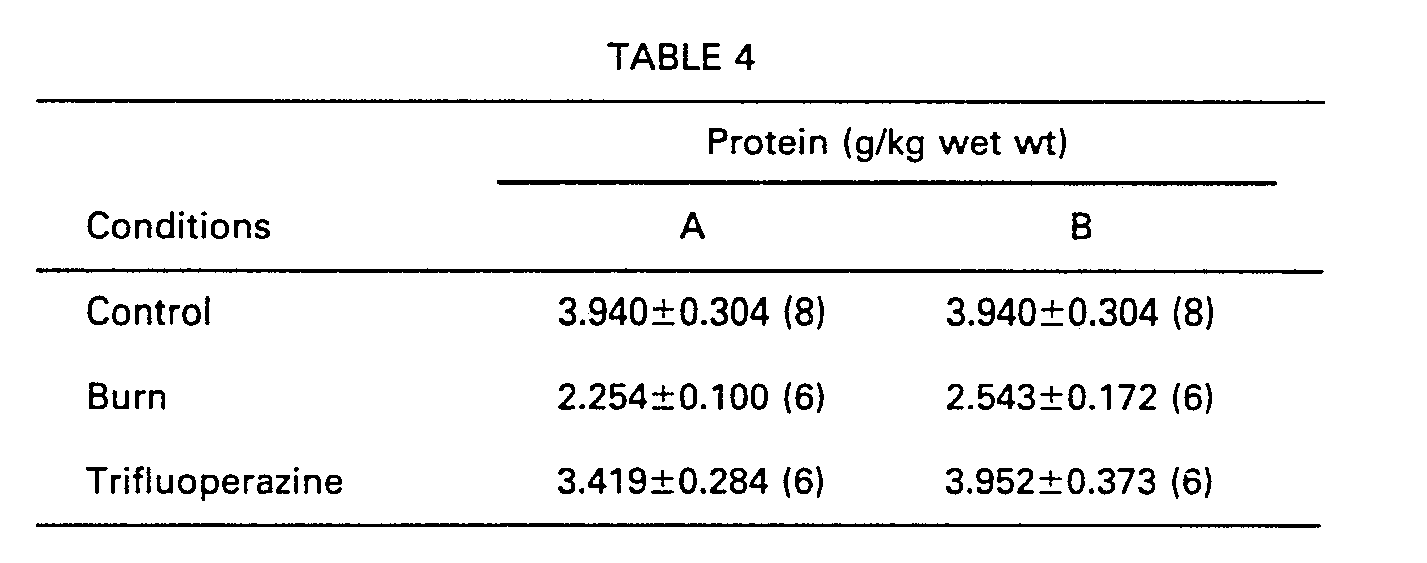
- Protein was measured in the soluble fraction, as described in Methods. Values are means ±S.E., with number of experiments in parentheses. P values (burn vs. control or trifluorperazine vs. burn) 0.005.
- The reversal of the effect of burns on hemoglobin content in rat skin by trifluoperazine administered topically in the form of a cream was demonstrated and the results are shown in the following Table 5:

- Trifluoperazine was administered topically in the form of a cream, immediately following the induction of burns (at 100°C), and reapplied 1 hr later (total of two applications). After an additional hr (i.e., 2 hrfrom onset of burns), the skin was removed and hemoglobin extracted and assayed, as described in Methods. Values are means ±S.E., with number of experiments in parentheses. P values (burns vs. control or trifluorperazine vs. burn) 0.005.
- Reversal of the effect of burns on ATP concentration in rat skin by trifluoperazine administered topically in the form of a cream was demonstrated and the results are shown in the following Table 6:

- Trifluoperazine was administered topically, as described in Table 5. ATP was extracted and assayed, as described in Methods. Values are means ±S.E., with number of experiments in parentheses. P Values (burn vs. control or trifluoperazine vs. burn) 0.005.

- Trifluoperazine was administered topically in the form of a cream, immediately following the induction of burns, and reapplied 30 minutes later, and then every hour (total of seven applications). After 53 hours from onset of burns, the skin was removed from each animal and ATP extracted and assayed, as described in Methods. Values are means ±S.E., with number of experiments in parentheses. P values (burn vs. control or trifluoperazine vs. burn) 0.005.
- Reversal of the effect of burns on the activity of soluble 6-phosphogluconate dehydrogenase in rat skin by trifluoperazine administered topically in the form of a cream was demonstrated and the results are shown in the following Table 7:

- Trifluoperazine was administered topically, as described in Table 5. Enzyme was extracted and assayed, as described in Methods. Values are means ±S.E., with number of experiments in parentheses. P values (burns vs. control or trifluoperazine vs. burn) 0.005.
- The reversal of the effect of burns on the activity of soluble and mitochondrial hexokinase in rat skin by trifluoperazine administered topically in the form of a cream was demonstrated and the results are shown in the following Table 8:

- Trifluoperazine was administered topically, as described in Table 5. Hexokinase was extracted and assayed, as described in Methods. Values are means ±S.E., with number of experiments in parentheses. P values (burn vs. control or trifluoperazine vs. burn) 0.005.
- Reversal of the effect of burns on protein concentration in rat skin by trifluoperazine administered topically in the form of a cream was demonstrated and the results are shown in the following Table 9:

- Trifluoperazine was administered topically, as described in Table 5. Protein was measured in the soluble fraction, as described in Methods. Values are means ±S.E., with number of experiments in parentheses.
- P values (burn vs. control or trifluoperazine vs. burn) 0.005.
- When trifluoperazine was injected 100 min prior to inducing burns, it completely prevented the increase in hemoglobin content, and its concentration was similar to that of normal control skins. Similar results were obtained when trifluorperazine was injected immediately after burning and its effect was studied 1 hr later. Treatment with trifluoperazine completely reversed the effect of burning on hemoglobin content.
- The experiments demonstrated in Table 1 show the effect of trifluorperazine on ATP concentration in skin. It can be seen that burning induced a marked decrease in the levels of ATP in skin, whereas injection of trifluoperazine 100 min prior to inducing burns (A) almost completely prevented the decrease in the concentration of ATP. Similar results were obtained when trifluoperazine was injected after burning and its effects studies 1 hour later (B).
- As shown in Table 2, under identical conditions, trifluoperazine also antagonized the effect of burns on the activity of soluble 6-phosphogluconate dehydrogenase. The activity of this enzyme, which is markedly reduced by burns, was almost completely restored by injection of trifluoperazine either prior to inducing burns (A) or after burning (B). Similar results were obtained for hexokinase (Table 3). Burns induced a marked decrease in the activity of this enzyme from both the mitochondrial and soluble fractions and trifluoperazine antagonized this effect when injected either prior to inducing burns (A) or after burning (B).
- The results presented in Table 4 show the effect of trifluoperazine on protein concentration in the soluble fraction from rat skin. It can be seen that burning induced a significant decrease in protein concentration, whereas injection of trifluoperazine prior to inducing burns (A), or after burning (B), reversed this effect.
- The results presented in Tables 5 -9 show the effects of trifluoperazine administered topically to the burned skin in the form of a cream. It can be seen that the effects of trifluoperazine applied in the form of a cream for 2 hours from onset of burns were similar to those obtained by the injectable solution. Namely, the cream reversed the changes in hemoglobin, ATP and protein concentration induced by burns (Tables 5, 6 and 9 respectively).
- It is also reversed the reduction in enzymes' activities in the burned skin (Tables 7 and 8).
- These results show that trifluoperazine is very effective in the treatment and prevention of burns. It prevented and abolished the marked changes in the skin content of hemoglobin, ATP, protein and enzymes' activities induced by burns. It also has a clearly visible effect on the skin.
- Similar results are obtained in the treatment of sunburn and frostbite.
- Since the compound acts both by treating and preventing burns, sunburns and frostbite, it may be used both in first aid and burn treatment and also to protect persons exposed to fire or the sun in the course of their daily work (e.g. soldiers, firemen, outdoor workers, etc.) and as protective measure in those plants and factories where employees work with fire.
- It has been found that trifluoperazine is effective in the treatment of frostbite injuries. Frostbite was induced in rats under anesthesia by applying dry ice to the skin in the abdomen area. Trifluoperazine was administered topically to the frost-injured skin in the form of 20% by weight dispersion in "Oil of Olay Beauty Fluid" (Olay Company Inc). The results as reported in Tables 10-13 show the effects on hemoglobin, ATP, and enzymes' activities in the frost injured skin. It can be seen that the changes in these biochemical parameters induced by frostbite are similar to those induced by burns, namely, and increase in hemoglobin concentration and a decrease in ATP, and enzymes' activities. These experiments reveal that trifluoperazine reverses the changes in all these biochemical parameters to normal control levels.

- Frostbite was induced in the rats under anesthesia by applying dry ice for 1 minute to the skin in the abdomen area. Trifluoperazine was administered topically in the form of a cream, immediately following the induction of frostbite, and reapplied 30 minutes later, and then every hour. After 5-1/2 hours from the induction of frostbite, a section of the affected skin was surgically removed and hemoglobin extracted and assayed, as described supra. Values are means ±S.E., with number of experiments in parentheses. P values (frostbite vs. control or trifluoperazine vs. frostbite) 0.005.

- Trifluoperazine was administered topically, as described in Table 10. ATP was extracted and assayed, as described in Methods. Values are means ±S.E., with number of experiments in parentheses. P values (frostbite vs. control or trifluoperazine vs. frostbite)<0.005.

- Trifluoperazine as administered topically, as described in Table 10. Enzyme was extracted an assayed, as described in Methods. Values are means ±S.E., with number of experiments in parentheses. P value (frostbite vs. control or trifluoperazine vs. frostbite) <0.005.

- Trifluoperazine was administered topically, as described in Table 10. Hexokinase was extracted and assayed, as described in Methods. Values are means ±S.E., with number of experiments in parentheses. P values (frostbites vs. control or trifluoperazine vs. frostbite)<0.005.
- Trifluoperazine was also found to be effective in the prevention and treatment of sunburn. Sunburn was induced in rats under anesthesia by exposing their skin in the abdomen area to a UV lamp (Osram-Sonnenstrahler Ultra-VitaluxR), which closely resembles natural sunlight. The distance between lamp and the animal was 17.5 cm and the time of exposure was 1-1/2-2 minutes. Trifluoperazine was administered either as an injectable solution (2 mg per rat) or topically in the form of a cream (8% of trifluoperazine in Oil of Olay).
- Tables 14-21 show the effects of trifluoperazine on hemoglobin, ATP, and enzymes activity in the sunburned skin. It can be seen that trifluoperazine administered either as an injectable solution or topically in the form of a cream, reversed the changes in these biochemical parameters.
- These results show that trifluoperazine has utility in the treatment of sunburn.

- Values are means ±S.E., with number of experiments in parentheses. P values (sunburn vs. control or trifluoperazine vs. sunburn) 0.005.

- Values are means ±S.E., with number of experiments in parentheses. P values (sunburn vs. control or trifluoperazine vs. sunburn)<0.005.

- Values are means ±S.E., with number of experiments in parentheses. P values (sunburn vs. control or trifluoperazine vs. sunburn)<0.005.

- Values are means ±S.E., with number of experiments in parentheses. P values (sunburn vs. control or trifluoperazine vs. sunburn)<0.005.
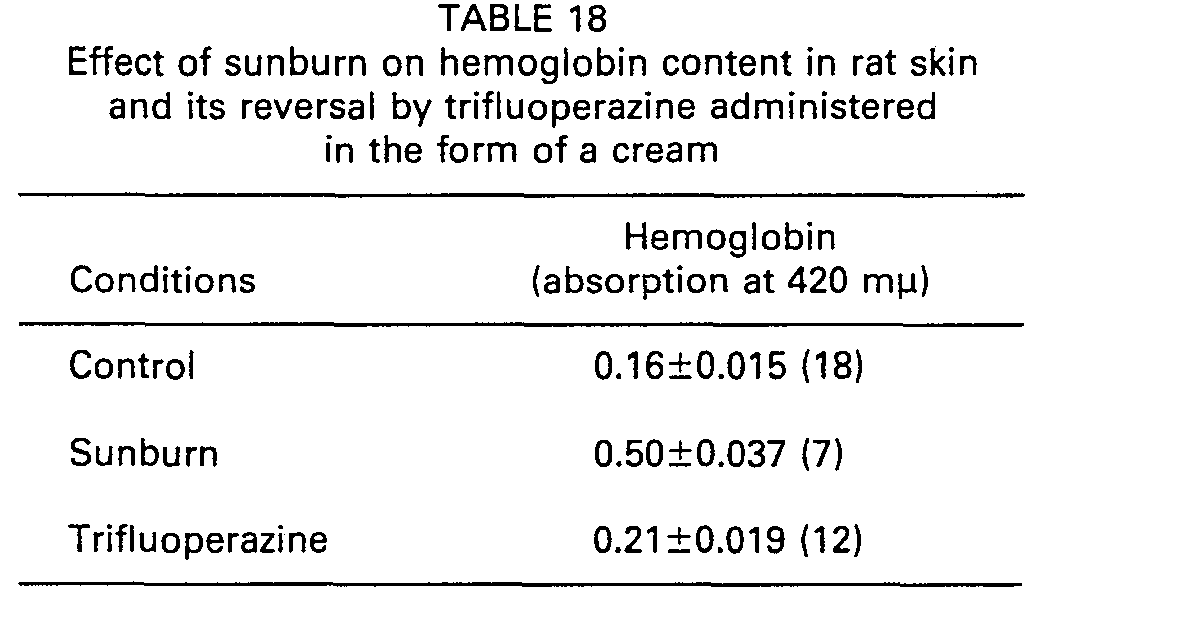
- Values are means ±S.E., with number of experiments in parentheses. P values (sunburn vs. control or trifluoperazine vs. sunburn)<0.005.

- Values are means ±S.E., with number of experiments in parentheses. P values (sunburn vs. control or trifluoperazine vs. sunburn)<0.005.

- Values are means ±S.E., with number of experiments in parentheses. P values (sunburn vs. control or trifluoperazine vs. sunburn)<0.005.

- Values are means ±S.E., with a number of experiments in parentheses. P values for soluble hexokinase (sunburn vs. control or trifluoperazine vs. sunburn) 0.005; for mitochondrial hexokinase (sunburn vs. control)<0.005; trifluoperazine vs. sunburn)<0.025.
- The compound fluphenazine was used to determine its effectiveness in treating experimentally induced burns (100°C water) on rat skin:
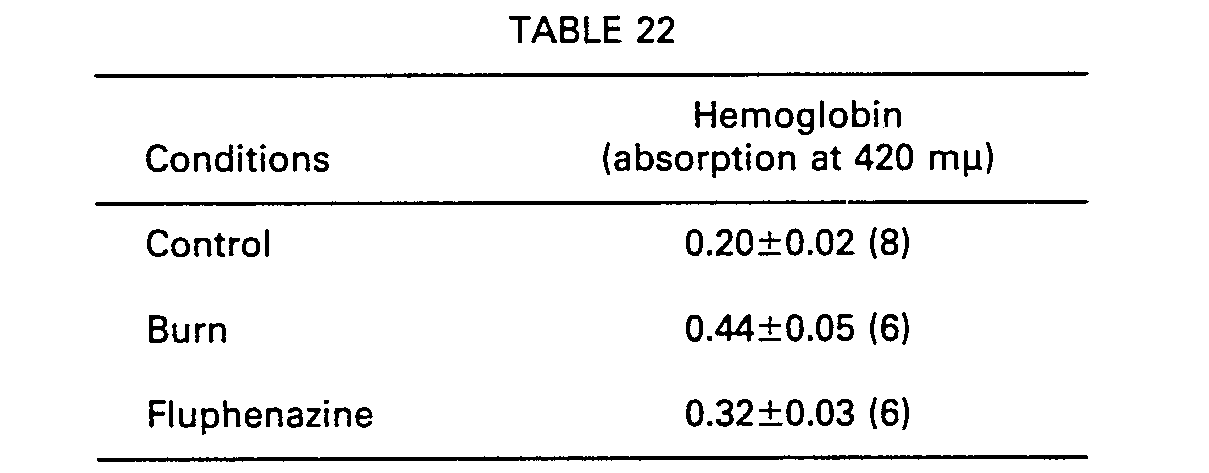
- Values are means ±S.E. with number of experiments in parentheses; P values: burn vs. control <0.005; fluphenazine vs. burn <0.005.

- Values are means ±S.E. with number of experiments in parentheses. P values: burn vs. control <0.005; fluphenazine vs. burn <0.025.

- Values are means ±S.E. with number of experiments in parentheses. P values: burn vs. control <0.005; fluphenazine vs. burn <0.05.

- Values are means ±S.E., with number of experiments in parentheses. P values (burn vs. control or fluphenazine vs. burn) <0.005.

- Values are means ±S.E., with number of experiments in parentheses. P values: burn vs. control <0.005; Haloperidol vs. burn <0.005.

- Values are means ±S.E., with number of experiments of parentheses. P values: burn vs. control <0.005; Haloperidol vs. burn <0.005.

- Values are means ±S.E., with number of experiments in parentheses. P values: sunburn vs. control <0.005; pimozide vs. sunburn <0.05.

- Values are means ±S.E., with number of experiments in parentheses. P values: sunburn vs. control 0.005; pimozide vs. sunburn <0.05.

- Values are means ±S.E., with number of experiments in parentheses. P values: burn vs. control 0.005; penfluridol vs. burn <0.05.

- Values are means ±S.E., with number of experiments in parentheses. P value: burn vs. control 0.005; penfluridol vs. burn <0.05.
- In the experiments demonstrated in Tables 32-43 the compound thioridazine was used to determine its effectiveness in treating experimentally induced burns, sunburns and frostbite. As shown in Tables 32-35 thioridazine reversed the marked changes in the skin content of hemoglobin, ATP and enzymes' activities induced by burns (100°C water). It also reversed the changes in these biochemical parameters induced by sunburns, when administered topically to the sunburned skin in the form of a cream (Tables 36-39). As shown in Tables 40-43, thioridazine was also very effective in the treatment of frostbite. It also has a clearly visible effect on the skin.

- Rats (20-25 g b. wt.) were injected i.p. with 2 mg of thiorizadine HCI dissolved in 0.1 ml water, 100 minutes prior to inducing burns. Skin burns were induced by water at 100°C. Twenty minutes later the skins were removed and hemoglobin was extracted and assayed, as described in Methods. Values are means ±S.E., with number of experiments in parentheses. P values (burn vs. control or thioridazine vs. burn) 0.005.

- Thioridazine was administered as an injectable solution as described in Table 32. ATP was extracted and assayed, as described in Methods. Values are means ±S.E., with number of experiments in parentheses. P values (burn vs. control or thiorazine vs. burn) <0.005.

- Thioridazine was administered as an injectable solution as described in Table 32. Enzyme was extracted and assayed, as described in Methods. Values are means ±S.E., with number of experiments in parentheses. P values (burn vs. control or thioridazine vs. burn) <0.005.

- Thioridazine was administered as an injectable solution as described in Table 32. Enzyme was extracted and assayed, as described in Methods. Values are means ±S.E., with number of experiments in parentheses. P values (burn vs. control or thioridazine vs. burn) <0.005.

- 400 mg of thioridazine HCI were mixed with 5 g of "Kamill Gesichtscreme" (commercial cosmetic moisture cream). This mixed cream was administered topically to rats (20-25 g b. wt.) two hours prior to the induction of sunburn by a UV lamp (four applications every 30 minutes). It was reapplied immediately following the induction of sunburns and 30 minutes later. After additional 30 minutes, the skin was removed and hemoglobin extracted and assayed, as described in Methods. Values are means ±S.E. with number of experiments in parentheses. P values (sunburn vs. control or thioridazine vs. sunburn) <0.005.

- Thioridazine was administered topically in the form of a cream as described in Table 36. Values are means ±S.E., with number of experiments in parentheses. P values (sunburn vs. control or thioridazine vs. sunburn) <0.005.

- Thioridazine was administered topically in the form of a cream as described in Table 36. Values are means ±S.E., with number of experiments in parentheses. P values (sunburn vs. control or thioridazine vs. sunburn) <0.005.

- Thioridazine was administered topically in the form of a cream as described in Table 36. Values are means ±S.E., with number of experiments in parentheses. P values (sunburn vs. control or thioridazine vs. sunburn) 0.005.

- Frostbite was induced in the rats under anesthesia by applying dry ice for 1 minute to the skin in the abdomen area. Thioridazine was administered topically in the form of a cream (1 g of thioridazine HCI mixed with 5 g of "Kamill Gesichtrscreme"), immediately following the induction of frostbite, and reapplied 30 minutes later, and then every hour. After 5-1/2 hours from the induction of frostbite, a section of the affected skin was surgically removed and hemoglobin extracted and assayed, as described in Methods. Values are means ±S.E., with number of experiments in parentheses. P values (frostbite vs. control or thioridazine vs. frostbite) <0.005.

- Thioridazine was administered topically, as described in Table 40. ATP was extracted and assayed as described in Methods. Values are means S±S.E., with number of experiments in parentheses. P values (frostbite vs. control or thioridazine vs. frostbite) <0.005.

- Thioridazine was administered topically as described in Table 40. Enzyme was extracted and assayed, as described in Method. Values are means ±S.E., with number of experiments in parentheses. P values (frostbite vs. control or thioridazine vs. frostbite) <0.005.

- Thioridazine was administered topically as described in Table 40. Hexokinase was extracted and assayed, as described in Methods. Values are means ±S.E., with number of experiments in parentheses. P values (frostbite vs. control or thioridazine vs. frostbite) <0.005.
- The following compositions may be utilized in the practice of the invention:


Claims (20)
Priority Applications (1)
| Application Number | Priority Date | Filing Date | Title |
|---|---|---|---|
| AT85107124T ATE56360T1 (en) | 1984-06-11 | 1985-06-10 | COMPOSITION FOR THE PRODUCTION OF A MEDICATION FOR THE THERAPEUTIC TREATMENT OF SKIN TRAUMA. |
Applications Claiming Priority (6)
| Application Number | Priority Date | Filing Date | Title |
|---|---|---|---|
| US61927484A | 1984-06-11 | 1984-06-11 | |
| US619274 | 1984-06-11 | ||
| US67048284A | 1984-11-13 | 1984-11-13 | |
| US670482 | 1984-11-13 | ||
| US06/734,120 US4777171A (en) | 1984-06-11 | 1985-05-15 | Method and composition for the therapeutic and prophylactic treatment of trauma to the skin |
| US734120 | 1996-10-21 |
Publications (2)
| Publication Number | Publication Date |
|---|---|
| EP0168626A1 EP0168626A1 (en) | 1986-01-22 |
| EP0168626B1 true EP0168626B1 (en) | 1990-09-12 |
Family
ID=27417239
Family Applications (1)
| Application Number | Title | Priority Date | Filing Date |
|---|---|---|---|
| EP85107124A Expired - Lifetime EP0168626B1 (en) | 1984-06-11 | 1985-06-10 | Composition for the manufacture of a medicament for the therapeutic treatment of trauma of the skin |
Country Status (4)
| Country | Link |
|---|---|
| EP (1) | EP0168626B1 (en) |
| CA (1) | CA1247525A (en) |
| DE (1) | DE3579642D1 (en) |
| IL (2) | IL75467A0 (en) |
Family Cites Families (3)
| Publication number | Priority date | Publication date | Assignee | Title |
|---|---|---|---|---|
| US4141976A (en) * | 1976-01-05 | 1979-02-27 | The Regents Of The University Of Michigan | Process for alleviating proliferative skin diseases |
| US4443446A (en) * | 1980-05-30 | 1984-04-17 | University Of Georgia Research Foundation, Inc. | Use of psychoactive drugs as vaginal contraceptives |
| JPS5855411A (en) * | 1981-09-28 | 1983-04-01 | Nitto Electric Ind Co Ltd | Base material composition and medicinal composition for external use |
-
1985
- 1985-06-10 IL IL75467A patent/IL75467A0/en not_active IP Right Cessation
- 1985-06-10 CA CA000483597A patent/CA1247525A/en not_active Expired
- 1985-06-10 DE DE8585107124T patent/DE3579642D1/en not_active Expired - Lifetime
- 1985-06-10 EP EP85107124A patent/EP0168626B1/en not_active Expired - Lifetime
- 1985-06-11 IL IL8575467Q patent/IL75467A/en not_active IP Right Cessation
Non-Patent Citations (4)
| Title |
|---|
| CHEMICAL ABSTRACTS, vol. 101, no. 16, 15 Oct 1984, Columbus, OH (US); p. 392, no. 137093t * |
| CHEMICAL ABSTRACTS, vol. 101, no. 16, 15 Oct 1984, Columbus, OH (US); p. 392, no. 137093t; & JP-A-59 95 212 * |
| CHEMICAL ABSTRACTS, vol. 97, no. 9, 30 Aug 1983, Columbus, OH (US); S.RANGANATHAN et al.: "Effect of calcium(2+) blocking agents on the metabolism of low density lipoproteins in human skin fibroblasts", p. 48, no. 66196c * |
| CHEMICAL ABSTRACTS, vol. 98, no. 23, 06 June 1983, Columbus, OH (US); E.NAITOH et al.: "Different effects of calmodulin inhibitors on ornithine decarboxylase induction by 12-O-tetradecanoylphorbol-13-acetate in mouse skin", p. 203, no. 193087p * |
Also Published As
| Publication number | Publication date |
|---|---|
| IL75467A0 (en) | 1985-10-31 |
| IL75467A (en) | 1990-07-12 |
| EP0168626A1 (en) | 1986-01-22 |
| CA1247525A (en) | 1988-12-28 |
| DE3579642D1 (en) | 1990-10-18 |
Similar Documents
| Publication | Publication Date | Title |
|---|---|---|
| DE69221686T2 (en) | THERAPEUTIC AND COSMETIC COMPOSITIONS FOR SKIN TREATMENT | |
| EP0954278B1 (en) | Pharmaceutical compositions containing kukui nut oil | |
| US5425954A (en) | Topical amino acid - vitamin complex compositions for pharmaceutical and cosmetic use | |
| CA1320445C (en) | Compositions that affect suppression of cutaneous delayed hypersensitivity and products including same | |
| US5612382A (en) | Composition for percutaneous absorption of pharmaceutically active ingredients | |
| US4555524A (en) | Transdermal 2-(4-isobutylphenyl)-propionic acid medication and methods | |
| US4654323A (en) | Method and composition for the therapeutic and prophylactic treatment of trauma to the skin | |
| WO2004000359A1 (en) | Topical pharmaceutical composition comprising skin penetration enhancers for the treatment of warts | |
| WO2004000268A1 (en) | Topical administration of pharmacologically active bases in the treatment of warts | |
| US4820711A (en) | Method for treating actinic keratosis with cytotoxic agents | |
| UA76415C2 (en) | Use of biguanide derivatives for making medicine having wound healing effect | |
| US4910197A (en) | Method and composition for the therapeutic and prophylactic treatment of trauma to the skin | |
| US4777171A (en) | Method and composition for the therapeutic and prophylactic treatment of trauma to the skin | |
| US5278172A (en) | Method and composition for treating tendon or joint inflammation using a vasodilator | |
| JPH03204815A (en) | Therapeutic composition for treating dermatological disease carried by mast cell | |
| US5886047A (en) | Topical pharmaceutical preparation for fever blisters and other viral infections and method of use | |
| US5036050A (en) | Compositions containing thymopentin for topical treatment of skin disorders | |
| AU709422B2 (en) | Method for topical treatment of scar tissue and related tissue reaction to trauma | |
| WO1999026613A1 (en) | Aminoguanidine compositions for treating skin proliferative diseases | |
| JP3631245B2 (en) | Use of hymenoptera venom for the manufacture of a medicament for the treatment of DNA virus infection | |
| GB2177917A (en) | Dermatologically active substances | |
| US20060105057A1 (en) | Compositions using tetrasilver tetroxide and methods for management of skin conditions using same | |
| KR960005144B1 (en) | Topical composition for acceleration wound healing | |
| EP0168626A1 (en) | Composition for the manufacture of a medicament for the therapeutic treatment of trauma of the skin | |
| US5576329A (en) | Method for treating tendon or joint inflammation with papaverine HCL |
Legal Events
| Date | Code | Title | Description |
|---|---|---|---|
| PUAI | Public reference made under article 153(3) epc to a published international application that has entered the european phase |
Free format text: ORIGINAL CODE: 0009012 |
|
| AK | Designated contracting states |
Designated state(s): AT BE CH DE FR GB IT LI NL SE |
|
| 17P | Request for examination filed |
Effective date: 19860722 |
|
| 17Q | First examination report despatched |
Effective date: 19880302 |
|
| GRAA | (expected) grant |
Free format text: ORIGINAL CODE: 0009210 |
|
| AK | Designated contracting states |
Kind code of ref document: B1 Designated state(s): AT BE CH DE FR GB IT LI NL SE |
|
| REF | Corresponds to: |
Ref document number: 56360 Country of ref document: AT Date of ref document: 19900915 Kind code of ref document: T |
|
| ITF | It: translation for a ep patent filed | ||
| REF | Corresponds to: |
Ref document number: 3579642 Country of ref document: DE Date of ref document: 19901018 |
|
| ET | Fr: translation filed | ||
| PG25 | Lapsed in a contracting state [announced via postgrant information from national office to epo] |
Ref country code: GB Effective date: 19910610 Ref country code: AT Effective date: 19910610 |
|
| PG25 | Lapsed in a contracting state [announced via postgrant information from national office to epo] |
Ref country code: SE Effective date: 19910611 |
|
| PG25 | Lapsed in a contracting state [announced via postgrant information from national office to epo] |
Ref country code: LI Effective date: 19910630 Ref country code: CH Effective date: 19910630 Ref country code: BE Effective date: 19910630 |
|
| PLBE | No opposition filed within time limit |
Free format text: ORIGINAL CODE: 0009261 |
|
| STAA | Information on the status of an ep patent application or granted ep patent |
Free format text: STATUS: NO OPPOSITION FILED WITHIN TIME LIMIT |
|
| 26N | No opposition filed | ||
| BERE | Be: lapsed |
Owner name: BAR-ILAN UNIVERSITY Effective date: 19910630 |
|
| PG25 | Lapsed in a contracting state [announced via postgrant information from national office to epo] |
Ref country code: NL Effective date: 19920101 |
|
| GBPC | Gb: european patent ceased through non-payment of renewal fee | ||
| NLV4 | Nl: lapsed or anulled due to non-payment of the annual fee | ||
| PG25 | Lapsed in a contracting state [announced via postgrant information from national office to epo] |
Ref country code: FR Effective date: 19920228 |
|
| REG | Reference to a national code |
Ref country code: CH Ref legal event code: PL |
|
| PG25 | Lapsed in a contracting state [announced via postgrant information from national office to epo] |
Ref country code: DE Effective date: 19920401 |
|
| REG | Reference to a national code |
Ref country code: FR Ref legal event code: ST |
|
| EUG | Se: european patent has lapsed |
Ref document number: 85107124.1 Effective date: 19920109 |