EP0159894B1 - Thermoset acrylic resin composition for coating metallic materials and stainless steel coated with the composition - Google Patents
Thermoset acrylic resin composition for coating metallic materials and stainless steel coated with the composition Download PDFInfo
- Publication number
- EP0159894B1 EP0159894B1 EP19850302636 EP85302636A EP0159894B1 EP 0159894 B1 EP0159894 B1 EP 0159894B1 EP 19850302636 EP19850302636 EP 19850302636 EP 85302636 A EP85302636 A EP 85302636A EP 0159894 B1 EP0159894 B1 EP 0159894B1
- Authority
- EP
- European Patent Office
- Prior art keywords
- weight
- coating
- group
- stainless steel
- acid ester
- Prior art date
- Legal status (The legal status is an assumption and is not a legal conclusion. Google has not performed a legal analysis and makes no representation as to the accuracy of the status listed.)
- Expired
Links
- 238000000576 coating method Methods 0.000 title claims description 136
- 239000011248 coating agent Substances 0.000 title claims description 131
- 239000000203 mixture Substances 0.000 title claims description 51
- 229920000178 Acrylic resin Polymers 0.000 title claims description 37
- 239000004925 Acrylic resin Substances 0.000 title claims description 37
- 239000010935 stainless steel Substances 0.000 title claims description 37
- 229910001220 stainless steel Inorganic materials 0.000 title claims description 37
- 229920001187 thermosetting polymer Polymers 0.000 title claims description 15
- 239000007769 metal material Substances 0.000 title claims description 6
- -1 polysiloxane Polymers 0.000 claims description 31
- 239000000178 monomer Substances 0.000 claims description 26
- 125000000391 vinyl group Chemical group [H]C([*])=C([H])[H] 0.000 claims description 23
- NIXOWILDQLNWCW-UHFFFAOYSA-N 2-Propenoic acid Natural products OC(=O)C=C NIXOWILDQLNWCW-UHFFFAOYSA-N 0.000 claims description 19
- 238000007334 copolymerization reaction Methods 0.000 claims description 18
- 229920001296 polysiloxane Polymers 0.000 claims description 17
- 150000001875 compounds Chemical class 0.000 claims description 15
- 125000005396 acrylic acid ester group Chemical group 0.000 claims description 14
- 125000004432 carbon atom Chemical group C* 0.000 claims description 14
- 125000005397 methacrylic acid ester group Chemical group 0.000 claims description 13
- 125000003700 epoxy group Chemical group 0.000 claims description 10
- 125000002887 hydroxy group Chemical group [H]O* 0.000 claims description 10
- 150000007524 organic acids Chemical class 0.000 claims description 10
- 239000000049 pigment Substances 0.000 claims description 10
- 125000004185 ester group Chemical group 0.000 claims description 8
- 229920001577 copolymer Polymers 0.000 claims description 7
- 239000002245 particle Substances 0.000 claims description 7
- SMZOUWXMTYCWNB-UHFFFAOYSA-N 2-(2-methoxy-5-methylphenyl)ethanamine Chemical compound COC1=CC=C(C)C=C1CCN SMZOUWXMTYCWNB-UHFFFAOYSA-N 0.000 claims description 6
- 235000013870 dimethyl polysiloxane Nutrition 0.000 claims description 6
- 229920000435 poly(dimethylsiloxane) Polymers 0.000 claims description 6
- 229910000077 silane Inorganic materials 0.000 claims description 5
- 150000002148 esters Chemical class 0.000 claims description 4
- 239000004480 active ingredient Substances 0.000 claims description 3
- 125000001997 phenyl group Chemical group [H]C1=C([H])C([H])=C(*)C([H])=C1[H] 0.000 claims description 2
- 229920002554 vinyl polymer Polymers 0.000 claims description 2
- FPYJFEHAWHCUMM-UHFFFAOYSA-N maleic anhydride Chemical compound O=C1OC(=O)C=C1 FPYJFEHAWHCUMM-UHFFFAOYSA-N 0.000 claims 1
- 238000007493 shaping process Methods 0.000 claims 1
- 239000000463 material Substances 0.000 description 62
- 238000000034 method Methods 0.000 description 20
- 239000000047 product Substances 0.000 description 18
- 238000002360 preparation method Methods 0.000 description 17
- 238000012545 processing Methods 0.000 description 14
- 238000012360 testing method Methods 0.000 description 13
- 238000005452 bending Methods 0.000 description 11
- 239000002904 solvent Substances 0.000 description 10
- 229910000831 Steel Inorganic materials 0.000 description 9
- 239000010959 steel Substances 0.000 description 9
- JEIPFZHSYJVQDO-UHFFFAOYSA-N iron(III) oxide Inorganic materials O=[Fe]O[Fe]=O JEIPFZHSYJVQDO-UHFFFAOYSA-N 0.000 description 8
- 239000003795 chemical substances by application Substances 0.000 description 7
- 229910052751 metal Inorganic materials 0.000 description 7
- 239000002184 metal Substances 0.000 description 7
- 238000006116 polymerization reaction Methods 0.000 description 7
- 239000000126 substance Substances 0.000 description 7
- 238000005406 washing Methods 0.000 description 7
- SOGAXMICEFXMKE-UHFFFAOYSA-N Butylmethacrylate Chemical compound CCCCOC(=O)C(C)=C SOGAXMICEFXMKE-UHFFFAOYSA-N 0.000 description 6
- 239000011347 resin Substances 0.000 description 6
- 229920005989 resin Polymers 0.000 description 6
- 239000000243 solution Substances 0.000 description 6
- 229920000298 Cellophane Polymers 0.000 description 5
- CTQNGGLPUBDAKN-UHFFFAOYSA-N O-Xylene Chemical compound CC1=CC=CC=C1C CTQNGGLPUBDAKN-UHFFFAOYSA-N 0.000 description 5
- 238000006243 chemical reaction Methods 0.000 description 5
- 230000000052 comparative effect Effects 0.000 description 5
- 238000010438 heat treatment Methods 0.000 description 5
- 150000002739 metals Chemical class 0.000 description 5
- 239000003973 paint Substances 0.000 description 5
- 230000000704 physical effect Effects 0.000 description 5
- 150000003254 radicals Chemical class 0.000 description 5
- 239000000758 substrate Substances 0.000 description 5
- XLYOFNOQVPJJNP-UHFFFAOYSA-N water Substances O XLYOFNOQVPJJNP-UHFFFAOYSA-N 0.000 description 5
- 239000008096 xylene Substances 0.000 description 5
- ZWEHNKRNPOVVGH-UHFFFAOYSA-N 2-Butanone Chemical compound CCC(C)=O ZWEHNKRNPOVVGH-UHFFFAOYSA-N 0.000 description 4
- LRHPLDYGYMQRHN-UHFFFAOYSA-N N-Butanol Chemical compound CCCCO LRHPLDYGYMQRHN-UHFFFAOYSA-N 0.000 description 4
- 230000005856 abnormality Effects 0.000 description 4
- 239000003513 alkali Substances 0.000 description 4
- VQLYBLABXAHUDN-UHFFFAOYSA-N bis(4-fluorophenyl)-methyl-(1,2,4-triazol-1-ylmethyl)silane;methyl n-(1h-benzimidazol-2-yl)carbamate Chemical compound C1=CC=C2NC(NC(=O)OC)=NC2=C1.C=1C=C(F)C=CC=1[Si](C=1C=CC(F)=CC=1)(C)CN1C=NC=N1 VQLYBLABXAHUDN-UHFFFAOYSA-N 0.000 description 4
- 238000012505 colouration Methods 0.000 description 4
- 238000011109 contamination Methods 0.000 description 4
- 230000007797 corrosion Effects 0.000 description 4
- 238000005260 corrosion Methods 0.000 description 4
- 238000004132 cross linking Methods 0.000 description 4
- 239000004205 dimethyl polysiloxane Substances 0.000 description 4
- 230000000694 effects Effects 0.000 description 4
- 125000000524 functional group Chemical group 0.000 description 4
- 239000011259 mixed solution Substances 0.000 description 4
- 238000007254 oxidation reaction Methods 0.000 description 4
- 150000004756 silanes Chemical class 0.000 description 4
- 239000004342 Benzoyl peroxide Substances 0.000 description 3
- OMPJBNCRMGITSC-UHFFFAOYSA-N Benzoylperoxide Chemical compound C=1C=CC=CC=1C(=O)OOC(=O)C1=CC=CC=C1 OMPJBNCRMGITSC-UHFFFAOYSA-N 0.000 description 3
- JIGUQPWFLRLWPJ-UHFFFAOYSA-N Ethyl acrylate Chemical compound CCOC(=O)C=C JIGUQPWFLRLWPJ-UHFFFAOYSA-N 0.000 description 3
- WOBHKFSMXKNTIM-UHFFFAOYSA-N Hydroxyethyl methacrylate Chemical compound CC(=C)C(=O)OCCO WOBHKFSMXKNTIM-UHFFFAOYSA-N 0.000 description 3
- VVQNEPGJFQJSBK-UHFFFAOYSA-N Methyl methacrylate Chemical compound COC(=O)C(C)=C VVQNEPGJFQJSBK-UHFFFAOYSA-N 0.000 description 3
- KWYUFKZDYYNOTN-UHFFFAOYSA-M Potassium hydroxide Chemical compound [OH-].[K+] KWYUFKZDYYNOTN-UHFFFAOYSA-M 0.000 description 3
- HEMHJVSKTPXQMS-UHFFFAOYSA-M Sodium hydroxide Chemical compound [OH-].[Na+] HEMHJVSKTPXQMS-UHFFFAOYSA-M 0.000 description 3
- YXFVVABEGXRONW-UHFFFAOYSA-N Toluene Chemical compound CC1=CC=CC=C1 YXFVVABEGXRONW-UHFFFAOYSA-N 0.000 description 3
- 239000006096 absorbing agent Substances 0.000 description 3
- 239000002253 acid Substances 0.000 description 3
- 238000000137 annealing Methods 0.000 description 3
- 235000019400 benzoyl peroxide Nutrition 0.000 description 3
- 238000001816 cooling Methods 0.000 description 3
- 238000001723 curing Methods 0.000 description 3
- 238000011156 evaluation Methods 0.000 description 3
- VOZRXNHHFUQHIL-UHFFFAOYSA-N glycidyl methacrylate Chemical compound CC(=C)C(=O)OCC1CO1 VOZRXNHHFUQHIL-UHFFFAOYSA-N 0.000 description 3
- 238000004519 manufacturing process Methods 0.000 description 3
- 238000002156 mixing Methods 0.000 description 3
- 235000005985 organic acids Nutrition 0.000 description 3
- 230000003647 oxidation Effects 0.000 description 3
- PNJWIWWMYCMZRO-UHFFFAOYSA-N pent‐4‐en‐2‐one Natural products CC(=O)CC=C PNJWIWWMYCMZRO-UHFFFAOYSA-N 0.000 description 3
- 230000002265 prevention Effects 0.000 description 3
- 239000007921 spray Substances 0.000 description 3
- OZAIFHULBGXAKX-UHFFFAOYSA-N 2-(2-cyanopropan-2-yldiazenyl)-2-methylpropanenitrile Chemical compound N#CC(C)(C)N=NC(C)(C)C#N OZAIFHULBGXAKX-UHFFFAOYSA-N 0.000 description 2
- CSCPPACGZOOCGX-UHFFFAOYSA-N Acetone Chemical compound CC(C)=O CSCPPACGZOOCGX-UHFFFAOYSA-N 0.000 description 2
- IJGRMHOSHXDMSA-UHFFFAOYSA-N Atomic nitrogen Chemical compound N#N IJGRMHOSHXDMSA-UHFFFAOYSA-N 0.000 description 2
- XEEYBQQBJWHFJM-UHFFFAOYSA-N Iron Chemical compound [Fe] XEEYBQQBJWHFJM-UHFFFAOYSA-N 0.000 description 2
- CERQOIWHTDAKMF-UHFFFAOYSA-N Methacrylic acid Chemical compound CC(=C)C(O)=O CERQOIWHTDAKMF-UHFFFAOYSA-N 0.000 description 2
- NBIIXXVUZAFLBC-UHFFFAOYSA-N Phosphoric acid Chemical compound OP(O)(O)=O NBIIXXVUZAFLBC-UHFFFAOYSA-N 0.000 description 2
- FAPWRFPIFSIZLT-UHFFFAOYSA-M Sodium chloride Chemical compound [Na+].[Cl-] FAPWRFPIFSIZLT-UHFFFAOYSA-M 0.000 description 2
- 150000001252 acrylic acid derivatives Chemical class 0.000 description 2
- 239000004411 aluminium Substances 0.000 description 2
- 229910052782 aluminium Inorganic materials 0.000 description 2
- XAGFODPZIPBFFR-UHFFFAOYSA-N aluminium Chemical compound [Al] XAGFODPZIPBFFR-UHFFFAOYSA-N 0.000 description 2
- 239000007864 aqueous solution Substances 0.000 description 2
- 125000004429 atom Chemical group 0.000 description 2
- 230000015572 biosynthetic process Effects 0.000 description 2
- 239000004566 building material Substances 0.000 description 2
- MPFUOCVWJGGDQN-UHFFFAOYSA-N butan-1-ol;1,2-xylene Chemical compound CCCCO.CC1=CC=CC=C1C MPFUOCVWJGGDQN-UHFFFAOYSA-N 0.000 description 2
- 229910052799 carbon Inorganic materials 0.000 description 2
- 239000003054 catalyst Substances 0.000 description 2
- 235000019646 color tone Nutrition 0.000 description 2
- 238000005238 degreasing Methods 0.000 description 2
- 239000000975 dye Substances 0.000 description 2
- 239000004744 fabric Substances 0.000 description 2
- 238000013035 low temperature curing Methods 0.000 description 2
- 150000002734 metacrylic acid derivatives Chemical class 0.000 description 2
- 239000012046 mixed solvent Substances 0.000 description 2
- XNGIFLGASWRNHJ-UHFFFAOYSA-N phthalic acid Chemical compound OC(=O)C1=CC=CC=C1C(O)=O XNGIFLGASWRNHJ-UHFFFAOYSA-N 0.000 description 2
- 238000005498 polishing Methods 0.000 description 2
- 229920000058 polyacrylate Polymers 0.000 description 2
- 238000011160 research Methods 0.000 description 2
- 150000003839 salts Chemical class 0.000 description 2
- WGTYBPLFGIVFAS-UHFFFAOYSA-M tetramethylammonium hydroxide Chemical compound [OH-].C[N+](C)(C)C WGTYBPLFGIVFAS-UHFFFAOYSA-M 0.000 description 2
- 238000003466 welding Methods 0.000 description 2
- LSZMEVZPFPOJIT-UHFFFAOYSA-N 2,2-dimethoxyethoxy(ethenyl)silane Chemical compound COC(CO[SiH2]C=C)OC LSZMEVZPFPOJIT-UHFFFAOYSA-N 0.000 description 1
- VZSRBBMJRBPUNF-UHFFFAOYSA-N 2-(2,3-dihydro-1H-inden-2-ylamino)-N-[3-oxo-3-(2,4,6,7-tetrahydrotriazolo[4,5-c]pyridin-5-yl)propyl]pyrimidine-5-carboxamide Chemical compound C1C(CC2=CC=CC=C12)NC1=NC=C(C=N1)C(=O)NCCC(N1CC2=C(CC1)NN=N2)=O VZSRBBMJRBPUNF-UHFFFAOYSA-N 0.000 description 1
- LBLYYCQCTBFVLH-UHFFFAOYSA-N 2-Methylbenzenesulfonic acid Chemical compound CC1=CC=CC=C1S(O)(=O)=O LBLYYCQCTBFVLH-UHFFFAOYSA-N 0.000 description 1
- ZNQVEEAIQZEUHB-UHFFFAOYSA-N 2-ethoxyethanol Chemical compound CCOCCO ZNQVEEAIQZEUHB-UHFFFAOYSA-N 0.000 description 1
- OMIGHNLMNHATMP-UHFFFAOYSA-N 2-hydroxyethyl prop-2-enoate Chemical compound OCCOC(=O)C=C OMIGHNLMNHATMP-UHFFFAOYSA-N 0.000 description 1
- KPYCVQASEGGKEG-UHFFFAOYSA-N 3-hydroxyoxolane-2,5-dione Chemical compound OC1CC(=O)OC1=O KPYCVQASEGGKEG-UHFFFAOYSA-N 0.000 description 1
- XDLMVUHYZWKMMD-UHFFFAOYSA-N 3-trimethoxysilylpropyl 2-methylprop-2-enoate Chemical compound CO[Si](OC)(OC)CCCOC(=O)C(C)=C XDLMVUHYZWKMMD-UHFFFAOYSA-N 0.000 description 1
- DKPFZGUDAPQIHT-UHFFFAOYSA-N Butyl acetate Natural products CCCCOC(C)=O DKPFZGUDAPQIHT-UHFFFAOYSA-N 0.000 description 1
- RYGMFSIKBFXOCR-UHFFFAOYSA-N Copper Chemical compound [Cu] RYGMFSIKBFXOCR-UHFFFAOYSA-N 0.000 description 1
- 229920000742 Cotton Polymers 0.000 description 1
- AFCARXCZXQIEQB-UHFFFAOYSA-N N-[3-oxo-3-(2,4,6,7-tetrahydrotriazolo[4,5-c]pyridin-5-yl)propyl]-2-[[3-(trifluoromethoxy)phenyl]methylamino]pyrimidine-5-carboxamide Chemical compound O=C(CCNC(=O)C=1C=NC(=NC=1)NCC1=CC(=CC=C1)OC(F)(F)F)N1CC2=C(CC1)NN=N2 AFCARXCZXQIEQB-UHFFFAOYSA-N 0.000 description 1
- 239000004952 Polyamide Substances 0.000 description 1
- OFOBLEOULBTSOW-UHFFFAOYSA-N Propanedioic acid Natural products OC(=O)CC(O)=O OFOBLEOULBTSOW-UHFFFAOYSA-N 0.000 description 1
- 241000221535 Pucciniales Species 0.000 description 1
- VMHLLURERBWHNL-UHFFFAOYSA-M Sodium acetate Chemical compound [Na+].CC([O-])=O VMHLLURERBWHNL-UHFFFAOYSA-M 0.000 description 1
- XSTXAVWGXDQKEL-UHFFFAOYSA-N Trichloroethylene Chemical group ClC=C(Cl)Cl XSTXAVWGXDQKEL-UHFFFAOYSA-N 0.000 description 1
- 208000027418 Wounds and injury Diseases 0.000 description 1
- 150000007513 acids Chemical class 0.000 description 1
- 150000001298 alcohols Chemical class 0.000 description 1
- 125000003545 alkoxy group Chemical group 0.000 description 1
- 125000005250 alkyl acrylate group Chemical group 0.000 description 1
- 125000000217 alkyl group Chemical group 0.000 description 1
- 229910000147 aluminium phosphate Inorganic materials 0.000 description 1
- 125000003277 amino group Chemical group 0.000 description 1
- 150000008064 anhydrides Chemical class 0.000 description 1
- 150000004945 aromatic hydrocarbons Chemical class 0.000 description 1
- 239000012298 atmosphere Substances 0.000 description 1
- 239000012752 auxiliary agent Substances 0.000 description 1
- 239000002585 base Substances 0.000 description 1
- 238000009835 boiling Methods 0.000 description 1
- CQEYYJKEWSMYFG-UHFFFAOYSA-N butyl acrylate Chemical compound CCCCOC(=O)C=C CQEYYJKEWSMYFG-UHFFFAOYSA-N 0.000 description 1
- 239000012986 chain transfer agent Substances 0.000 description 1
- 238000004040 coloring Methods 0.000 description 1
- 238000007796 conventional method Methods 0.000 description 1
- 229910052802 copper Inorganic materials 0.000 description 1
- 239000010949 copper Substances 0.000 description 1
- 239000003431 cross linking reagent Substances 0.000 description 1
- 238000005520 cutting process Methods 0.000 description 1
- HPXRVTGHNJAIIH-UHFFFAOYSA-N cyclohexanol Chemical compound OC1CCCCC1 HPXRVTGHNJAIIH-UHFFFAOYSA-N 0.000 description 1
- 230000006378 damage Effects 0.000 description 1
- 238000005034 decoration Methods 0.000 description 1
- 230000007547 defect Effects 0.000 description 1
- 230000002950 deficient Effects 0.000 description 1
- 238000013461 design Methods 0.000 description 1
- 238000011161 development Methods 0.000 description 1
- JGFBRKRYDCGYKD-UHFFFAOYSA-N dibutyl(oxo)tin Chemical compound CCCC[Sn](=O)CCCC JGFBRKRYDCGYKD-UHFFFAOYSA-N 0.000 description 1
- XXBDWLFCJWSEKW-UHFFFAOYSA-N dimethylbenzylamine Chemical compound CN(C)CC1=CC=CC=C1 XXBDWLFCJWSEKW-UHFFFAOYSA-N 0.000 description 1
- 238000007598 dipping method Methods 0.000 description 1
- 239000002270 dispersing agent Substances 0.000 description 1
- GMSCBRSQMRDRCD-UHFFFAOYSA-N dodecyl 2-methylprop-2-enoate Chemical compound CCCCCCCCCCCCOC(=O)C(C)=C GMSCBRSQMRDRCD-UHFFFAOYSA-N 0.000 description 1
- 238000001035 drying Methods 0.000 description 1
- FWDBOZPQNFPOLF-UHFFFAOYSA-N ethenyl(triethoxy)silane Chemical compound CCO[Si](OCC)(OCC)C=C FWDBOZPQNFPOLF-UHFFFAOYSA-N 0.000 description 1
- NKSJNEHGWDZZQF-UHFFFAOYSA-N ethenyl(trimethoxy)silane Chemical compound CO[Si](OC)(OC)C=C NKSJNEHGWDZZQF-UHFFFAOYSA-N 0.000 description 1
- MBGQQKKTDDNCSG-UHFFFAOYSA-N ethenyl-diethoxy-methylsilane Chemical compound CCO[Si](C)(C=C)OCC MBGQQKKTDDNCSG-UHFFFAOYSA-N 0.000 description 1
- ZLNAFSPCNATQPQ-UHFFFAOYSA-N ethenyl-dimethoxy-methylsilane Chemical compound CO[Si](C)(OC)C=C ZLNAFSPCNATQPQ-UHFFFAOYSA-N 0.000 description 1
- SUPCQIBBMFXVTL-UHFFFAOYSA-N ethyl 2-methylprop-2-enoate Chemical compound CCOC(=O)C(C)=C SUPCQIBBMFXVTL-UHFFFAOYSA-N 0.000 description 1
- 239000012467 final product Substances 0.000 description 1
- 239000011888 foil Substances 0.000 description 1
- 238000005227 gel permeation chromatography Methods 0.000 description 1
- 238000009998 heat setting Methods 0.000 description 1
- FUZZWVXGSFPDMH-UHFFFAOYSA-N hexanoic acid Chemical compound CCCCCC(O)=O FUZZWVXGSFPDMH-UHFFFAOYSA-N 0.000 description 1
- 208000014674 injury Diseases 0.000 description 1
- 239000001023 inorganic pigment Substances 0.000 description 1
- 229910052742 iron Inorganic materials 0.000 description 1
- 150000002576 ketones Chemical class 0.000 description 1
- VZCYOOQTPOCHFL-UPHRSURJSA-N maleic acid Chemical compound OC(=O)\C=C/C(O)=O VZCYOOQTPOCHFL-UPHRSURJSA-N 0.000 description 1
- 239000011976 maleic acid Substances 0.000 description 1
- PHQOGHDTIVQXHL-UHFFFAOYSA-N n'-(3-trimethoxysilylpropyl)ethane-1,2-diamine Chemical compound CO[Si](OC)(OC)CCCNCCN PHQOGHDTIVQXHL-UHFFFAOYSA-N 0.000 description 1
- MQWFLKHKWJMCEN-UHFFFAOYSA-N n'-[3-[dimethoxy(methyl)silyl]propyl]ethane-1,2-diamine Chemical compound CO[Si](C)(OC)CCCNCCN MQWFLKHKWJMCEN-UHFFFAOYSA-N 0.000 description 1
- 229910052757 nitrogen Inorganic materials 0.000 description 1
- 150000007530 organic bases Chemical class 0.000 description 1
- 239000012860 organic pigment Substances 0.000 description 1
- 150000002902 organometallic compounds Chemical class 0.000 description 1
- RPQRDASANLAFCM-UHFFFAOYSA-N oxiran-2-ylmethyl prop-2-enoate Chemical compound C=CC(=O)OCC1CO1 RPQRDASANLAFCM-UHFFFAOYSA-N 0.000 description 1
- 229920002647 polyamide Polymers 0.000 description 1
- 229920000768 polyamine Polymers 0.000 description 1
- 229920000642 polymer Polymers 0.000 description 1
- 238000004321 preservation Methods 0.000 description 1
- 230000002035 prolonged effect Effects 0.000 description 1
- 239000002994 raw material Substances 0.000 description 1
- 238000011084 recovery Methods 0.000 description 1
- 239000011342 resin composition Substances 0.000 description 1
- 230000000717 retained effect Effects 0.000 description 1
- 238000007142 ring opening reaction Methods 0.000 description 1
- 238000013000 roll bending Methods 0.000 description 1
- 239000004576 sand Substances 0.000 description 1
- 239000013535 sea water Substances 0.000 description 1
- 239000001632 sodium acetate Substances 0.000 description 1
- 235000017281 sodium acetate Nutrition 0.000 description 1
- 238000005507 spraying Methods 0.000 description 1
- 238000004381 surface treatment Methods 0.000 description 1
- AFCAKJKUYFLYFK-UHFFFAOYSA-N tetrabutyltin Chemical compound CCCC[Sn](CCCC)(CCCC)CCCC AFCAKJKUYFLYFK-UHFFFAOYSA-N 0.000 description 1
- JOXIMZWYDAKGHI-UHFFFAOYSA-N toluene-4-sulfonic acid Chemical compound CC1=CC=C(S(O)(=O)=O)C=C1 JOXIMZWYDAKGHI-UHFFFAOYSA-N 0.000 description 1
- VZCYOOQTPOCHFL-UHFFFAOYSA-N trans-butenedioic acid Natural products OC(=O)C=CC(O)=O VZCYOOQTPOCHFL-UHFFFAOYSA-N 0.000 description 1
- UBOXGVDOUJQMTN-UHFFFAOYSA-N trichloroethylene Natural products ClCC(Cl)Cl UBOXGVDOUJQMTN-UHFFFAOYSA-N 0.000 description 1
- 238000004804 winding Methods 0.000 description 1
Images
Classifications
-
- C—CHEMISTRY; METALLURGY
- C08—ORGANIC MACROMOLECULAR COMPOUNDS; THEIR PREPARATION OR CHEMICAL WORKING-UP; COMPOSITIONS BASED THEREON
- C08F—MACROMOLECULAR COMPOUNDS OBTAINED BY REACTIONS ONLY INVOLVING CARBON-TO-CARBON UNSATURATED BONDS
- C08F283/00—Macromolecular compounds obtained by polymerising monomers on to polymers provided for in subclass C08G
- C08F283/12—Macromolecular compounds obtained by polymerising monomers on to polymers provided for in subclass C08G on to polysiloxanes
- C08F283/124—Macromolecular compounds obtained by polymerising monomers on to polymers provided for in subclass C08G on to polysiloxanes on to polysiloxanes having carbon-to-carbon double bonds
-
- C—CHEMISTRY; METALLURGY
- C09—DYES; PAINTS; POLISHES; NATURAL RESINS; ADHESIVES; COMPOSITIONS NOT OTHERWISE PROVIDED FOR; APPLICATIONS OF MATERIALS NOT OTHERWISE PROVIDED FOR
- C09D—COATING COMPOSITIONS, e.g. PAINTS, VARNISHES OR LACQUERS; FILLING PASTES; CHEMICAL PAINT OR INK REMOVERS; INKS; CORRECTING FLUIDS; WOODSTAINS; PASTES OR SOLIDS FOR COLOURING OR PRINTING; USE OF MATERIALS THEREFOR
- C09D143/00—Coating compositions based on homopolymers or copolymers of compounds having one or more unsaturated aliphatic radicals, each having only one carbon-to-carbon double bond, and containing boron, silicon, phosphorus, selenium, tellurium, or a metal; Coating compositions based on derivatives of such polymers
- C09D143/04—Homopolymers or copolymers of monomers containing silicon
-
- C—CHEMISTRY; METALLURGY
- C09—DYES; PAINTS; POLISHES; NATURAL RESINS; ADHESIVES; COMPOSITIONS NOT OTHERWISE PROVIDED FOR; APPLICATIONS OF MATERIALS NOT OTHERWISE PROVIDED FOR
- C09D—COATING COMPOSITIONS, e.g. PAINTS, VARNISHES OR LACQUERS; FILLING PASTES; CHEMICAL PAINT OR INK REMOVERS; INKS; CORRECTING FLUIDS; WOODSTAINS; PASTES OR SOLIDS FOR COLOURING OR PRINTING; USE OF MATERIALS THEREFOR
- C09D151/00—Coating compositions based on graft polymers in which the grafted component is obtained by reactions only involving carbon-to-carbon unsaturated bonds; Coating compositions based on derivatives of such polymers
- C09D151/08—Coating compositions based on graft polymers in which the grafted component is obtained by reactions only involving carbon-to-carbon unsaturated bonds; Coating compositions based on derivatives of such polymers grafted on to macromolecular compounds obtained otherwise than by reactions only involving carbon-to-carbon unsaturated bonds
- C09D151/085—Coating compositions based on graft polymers in which the grafted component is obtained by reactions only involving carbon-to-carbon unsaturated bonds; Coating compositions based on derivatives of such polymers grafted on to macromolecular compounds obtained otherwise than by reactions only involving carbon-to-carbon unsaturated bonds on to polysiloxanes
-
- Y—GENERAL TAGGING OF NEW TECHNOLOGICAL DEVELOPMENTS; GENERAL TAGGING OF CROSS-SECTIONAL TECHNOLOGIES SPANNING OVER SEVERAL SECTIONS OF THE IPC; TECHNICAL SUBJECTS COVERED BY FORMER USPC CROSS-REFERENCE ART COLLECTIONS [XRACs] AND DIGESTS
- Y10—TECHNICAL SUBJECTS COVERED BY FORMER USPC
- Y10T—TECHNICAL SUBJECTS COVERED BY FORMER US CLASSIFICATION
- Y10T428/00—Stock material or miscellaneous articles
- Y10T428/12—All metal or with adjacent metals
- Y10T428/12493—Composite; i.e., plural, adjacent, spatially distinct metal components [e.g., layers, joint, etc.]
- Y10T428/12535—Composite; i.e., plural, adjacent, spatially distinct metal components [e.g., layers, joint, etc.] with additional, spatially distinct nonmetal component
- Y10T428/12556—Organic component
- Y10T428/12569—Synthetic resin
-
- Y—GENERAL TAGGING OF NEW TECHNOLOGICAL DEVELOPMENTS; GENERAL TAGGING OF CROSS-SECTIONAL TECHNOLOGIES SPANNING OVER SEVERAL SECTIONS OF THE IPC; TECHNICAL SUBJECTS COVERED BY FORMER USPC CROSS-REFERENCE ART COLLECTIONS [XRACs] AND DIGESTS
- Y10—TECHNICAL SUBJECTS COVERED BY FORMER USPC
- Y10T—TECHNICAL SUBJECTS COVERED BY FORMER US CLASSIFICATION
- Y10T428/00—Stock material or miscellaneous articles
- Y10T428/26—Web or sheet containing structurally defined element or component, the element or component having a specified physical dimension
- Y10T428/261—In terms of molecular thickness or light wave length
-
- Y—GENERAL TAGGING OF NEW TECHNOLOGICAL DEVELOPMENTS; GENERAL TAGGING OF CROSS-SECTIONAL TECHNOLOGIES SPANNING OVER SEVERAL SECTIONS OF THE IPC; TECHNICAL SUBJECTS COVERED BY FORMER USPC CROSS-REFERENCE ART COLLECTIONS [XRACs] AND DIGESTS
- Y10—TECHNICAL SUBJECTS COVERED BY FORMER USPC
- Y10T—TECHNICAL SUBJECTS COVERED BY FORMER US CLASSIFICATION
- Y10T428/00—Stock material or miscellaneous articles
- Y10T428/31504—Composite [nonstructural laminate]
- Y10T428/31511—Of epoxy ether
-
- Y—GENERAL TAGGING OF NEW TECHNOLOGICAL DEVELOPMENTS; GENERAL TAGGING OF CROSS-SECTIONAL TECHNOLOGIES SPANNING OVER SEVERAL SECTIONS OF THE IPC; TECHNICAL SUBJECTS COVERED BY FORMER USPC CROSS-REFERENCE ART COLLECTIONS [XRACs] AND DIGESTS
- Y10—TECHNICAL SUBJECTS COVERED BY FORMER USPC
- Y10T—TECHNICAL SUBJECTS COVERED BY FORMER US CLASSIFICATION
- Y10T428/00—Stock material or miscellaneous articles
- Y10T428/31504—Composite [nonstructural laminate]
- Y10T428/31652—Of asbestos
- Y10T428/31663—As siloxane, silicone or silane
-
- Y—GENERAL TAGGING OF NEW TECHNOLOGICAL DEVELOPMENTS; GENERAL TAGGING OF CROSS-SECTIONAL TECHNOLOGIES SPANNING OVER SEVERAL SECTIONS OF THE IPC; TECHNICAL SUBJECTS COVERED BY FORMER USPC CROSS-REFERENCE ART COLLECTIONS [XRACs] AND DIGESTS
- Y10—TECHNICAL SUBJECTS COVERED BY FORMER USPC
- Y10T—TECHNICAL SUBJECTS COVERED BY FORMER US CLASSIFICATION
- Y10T428/00—Stock material or miscellaneous articles
- Y10T428/31504—Composite [nonstructural laminate]
- Y10T428/31678—Of metal
- Y10T428/31692—Next to addition polymer from unsaturated monomers
- Y10T428/31699—Ester, halide or nitrile of addition polymer
Definitions
- Thermoset acrylic resin composition for coating metallic materials and stainless steel coated with the composition.
- This invention relates to an acrylic resin composition for coating metallic materials. More particularly it relates to such a composition obtained by copolymerizing a specified acrylic acid ester or methacrylic acid ester, a vinyl group-containing polysiloxane and a vinyl group containing silane compound. This invention further relates to a decorative stainless steel piece coated with the modified acrylic resin.
- thermoset acrylic resin compositions have been broadly used as coating materials for various metals such as iron, aluminium, copper and stainless steel since the compositions afford a coating which is superior in lustre, transparency, hardness, weather resistance, chemical resistance and other properties.
- the resultant coating often has insufficient adhesion to metals; hence it does not to endure shaping-processing such as bending through 0 - 2 to 180°.
- shaping-processing such as bending through 0 - 2 to 180°.
- such a blending is usually accompanied by reduction in at least one of the physical properties such as hardness, chemical resistance, hot water resistance and other properties of the above coating.
- thermoset acrylic resin composition in order to avoid such reduction in physical properties and yet obtain a bending-processed, formed product coated with a thermoset acrylic resin composition, it is the present state of the art that the bending-processed, formed product is post-coated with the resin composition.
- thermoset acrylic resin composition a thermoset acrylic resin composition
- precoat sheet obtained by coating such a coating material onto metallic sheets.
- stainless steel materials particularly stainless steel sheet, steel band, steel pipe, etc., surface-adjusted by BA (Bright Annealing), buffing, hairline polishing, etc, so as to retain their planar surfaces are characterized by endurability and metallic lustre.
- BA Breast Annealing
- these forming-processed products have been broadly used for interior and exterior parts for automobiles using trim, emblem, stainless foil, etc. for automobiles, interior and exterior building materials, furniture, domestic appliances, etc.
- such stainless steel materials even if surface-adjusted, have raised problems in that the products are liable to cause rust or contamination, and the shade of the steel materials is limited to the colour only of the steel itself, and thus they are restricted in the aspect of decorative properties.
- the materials sometimes are coated with an acrylic resin paint while making the most of the metallic lustre of stainless steel.
- the coating formed from such a paint is required to have transparency and high hardness, the softness and adhesion are instead sacrificed.
- such a stainless steel material having a high hardness coating is subjected to forming such as press processing or roll processing, it raises drawbacks in that cracks occur on the coating or the coating peels off.
- such a coating is insufficient in salt resistance, alkali resistance and weather resistance, the uses of stainless steel materials having the high hardness acrylic resin coating have been restricted to indoor uses where the quantity of UV light is small.
- the colouration of the surface of the stainless steel materials there is a method of forming a coating having a thickness of from 500 to 10000 A by way of anodic oxidation on the surface of the materials, to develop colour on the surface through interference of natural light and reflected light (which method will hereinafter be abbreviated to as "oxidation method”).
- oxidation method a method of forming a coating having a thickness of from 500 to 10000 A by way of anodic oxidation on the surface of the materials, to develop colour on the surface through interference of natural light and reflected light.
- oxidation method which method will hereinafter be abbreviated to as "oxidation method”
- the steel materials according to this colour development method have the following drawbacks: discolouration of the processed surface of stainless steel materials, change in colour tone depending on the direction of view of adhesion of oil or the like and high production cost due to the treating technique.
- this method has been adopted only for extremely restricted uses. Accordingly, it has been practically very difficult to effect a transparent colouration
- thermoset acrylic resin composition having superior forming processability after coating
- copolymer compositions obtained by subjecting to radical copolymerization (a) an alkyl acrylate or an alkyl methacrylate, (b) a hydroxyl group or epoxy group-containing acrylic acid ester, (c) a vinyl group-containing polysiloxane and (d) a vinyl group-containing silane compound, each having a definite range of carbon atoms and in definite amount, are more suitable for attaining the above-mentioned objects.
- the present inventors have made extensive research in order to solve the problems of the prior art relative to stainless steel materials, and as a result have found that when a coating material comprising a silicone resin-modified acrylic resin as an active ingredient is coated on stainless steel materials, followed by baking, then there is obtained a siloxane bond-containing resi.n coating on the surface of the materials. Further it has been found that this coating typically does not have the above various drawbacks due to conventional acrylic resin coating materials; it is possible to blend a pigment which can bring about a desired colouration; and there is no defect in the above coating by way of anodic oxidization.
- an object of the present invention is to provide a thermoset acrylic resin composition for coating metals which can be formulated to cause neither peeling-off nor blushing due to bending processing to be usable for coated metal sheets.
- Another object of the present invention is to provide a decorative stainless steel piece coated with a modified acrylic resin, having a superior colourability and endurability.
- thermoset acrylic resin composition for coating metallic materials, obtained by subjecting to radical copolymerization, the following monomers (a) to (d), with the proportions by weight being based on the total weight of the monomers (a) to (d):
- an organic acid having 3 or more carbon atoms can be further blended with the mixture of said monomers, either as the acid itself or in the form of an anhydride or other derivative, and especially acrylic acid or malic anhydride.
- the copolymer obtained by the radical copolymerization preferably has a weight average molecular weight of 5,000 to 300,000.
- the vinyl group-containing polysiloxane is preferably at least one compound selected from the group consisting of the following monomers (e) to (h):
- the present invention further resides in a stainless steel piece having thereon a coating comprising a modified acrylic resin as an active ingredient, prepared by subjecting to radical copolymerization, (1) 20 to 2% by weight of vinyl group-containing alkoxysilane, (2) 20 to 0.01% by weight of a vinyl group-containing polysiloxane, (3) 20 to 5% by weight of a hydroxyl group- or epoxy group-containing acrylic acid ester or methacrylic acid ester and 40 to 80% by weight of (4) an acrylic acid ester having 1 to 12 carbon atoms in the ester group moiety or (5) a methacrylic acid ester having 1 to 12 carbon atoms in the ester group moiety, in the presence of 0.1 to 5% by weight of an organic acid having 3 or more carbon atoms, the respective % by weight being based on the total weight of the monomers (1) to (5), and baking at a temperature of 100 to 350°C.
- a modified acrylic resin as an active ingredient prepared by subjecting to radical copolymerization
- the stainless steel piece suitably has a coating with a thickness of 1 to 30 p.
- a pigment having an average particle diameter of 2 11 or less can be present in the coating.
- the coating can be baked again after forming-processing at a temperature of 100 to 300°C.
- composition of the present invention is obtained by subjecting monomers of the four groups (a) to (d) to radical copolymerization.
- acrylic acid esters having 1 to 12 carbon atoms in the ester group moiety or methacrylic acid esters having 1 to 12 carbon atoms in the ester group moiety are used in a proportion of 40 to 80% by weight based on the total weight of the monomers (a) to (d).
- these esters are acrylates such as ethyl acrylate or butyl acrylate and methacrylates such as methyl methacrylate, ethyl methacrylate or butyl methacrylate. If these acrylates or methacrylates have 13 or more carbons in the alkyl group moiety, the physical properties thereof as a coating material relative to final products are often insufficient. This applies also to the case where the amounts employed are less than 40% by weight or exceed 80% by weight.
- hydroxyl group- or epoxy group-containing acrylic acid esters or hydroxyl group- or epoxy group-containing methacrylic acid esters are used in a proportion of 20 to 5% by weight based on the total weight of monomers used for the composition.
- these esters are 2-hydroxyethyl acrylate, 2-hydroxyethyl methacrylate and glycidyl acrylate, 2-hydroxyethyl methacrylate and glycidyl methacrylate.
- vinyl group-containing polysiloxanes are used in a proportion of 20 to 0.01% by weight based on the total weight of the monomers used for the composition.
- the vinyl group may be bonded in the form of the terminal group of the polysiloxanes or may be bonded indirectly to Si atom in the repeating units of the polysiloxanes or bonded thereto by the medium of another functional group. If the proportion of the polysiloxanes used exceeds 20% by weight, the resulting coating is too soft and also poor in adhesion, while if it is less than 0.01 % by weight, the physical properties of the coating are insufficient.
- Concrete examples of the polysiloxanes are the compounds (e) to (h) described above. Then of the compounds is the ranges given above.
- vinyl group-containing silane compounds are used in a proportion of 20 to 2% by weight based on the total weight of the monomers used for the composition.
- the silane compounds have two or three hydrolyzable functional groups bonded directly to the Si atom besides the above vinyl group. While these functional groups are not limited, alkoxy groups having 1 to 4 carbon atoms are easily used and afford preferred results.
- vinyl group-containing silane compounds are vinyltrimethoxysilane, vinyltriethoxysilane, vinyldimethoxyethoxysilane, methylvinyldimethoxysilane, methylvinyldiethoxysilane, y-methacryloxypropyltrimethoxysilane and y-methacryloxypropylmethyldimethoxysilane.
- the above monomers of groups (a) to (d) are suitably copolymerized in the presence of a radical-generating agent. While the form of the copolymerization is not limited, solvent polymerization in the presence of a solvent is easily conducted and affords good results. Examples of such solvents are aromatic hydrocarbons such as toluene or xylene, ketones such as methyl ethyl ketone or acetone, and alcohols such as n-butanol or cyclohexanol.
- the kind of the radical-generating agent and the proportion thereof are similar to those in the case of polymerization of usual acrylic acid esters or methacrylic acid esters.
- a radical-generating agent such as benzoyl peroxide or azobisisobutyronitrile can be used in a proportion of 0.2 to 2% by weight based on the total weight of the monomers for the composition, and the copolymerization carried out at a temperature of 60° to 120°C, depending on the half-life of the agent.
- the total amounts of the monomers of the four groups may be mixed together at the time for copolymerization, or a part of the monomer mixture may be additionally fed to other monomers or the monomer mixture during the copolymerization.
- the composition is preferred to have a viscosity at 25°C of 100 to 2,000 cp, preferably 150 to 1,000 cp in the case of xylene solvent and a resin content of 40% by weight.
- the copolymers within this viscosity range have a weight average molecular weight in the range of 5,000 to 300,000 in terms of values according to gel permeation chromatography.
- the adjustment of polymerization degree is carried out depending on the quantity of radical-generating agent or chain transfer agent used, as in the case of production of usual acrylic resins.
- thermoset acrylic resin composition of the present invention for coating metallic materials.
- the solvent used at the time of copolymerization may be left in the resulting composition as it is, or may be recovered by heating under reduced pressure or the like means, together with recovery of the unreacted monomers of the above groups (a) to (d).
- the acrylic resin composition of the present invention may be subjected to crosslinking reaction for thermosetting, by utilizing the functional group contained in the compounds of group (b).
- crosslinking agent or reaction promotor therefor organic acids or organic base compounds for instance as described below can be used in a proportion of 0.1 to 5% by weight, preferably 0.5 to 3% by weight based on the weight of the acrylic resin composition.
- organic acids are acrylic acid, methacrylic acid, phthalic acid, maleic acid or p-toluenesulphonic acid.
- Acrylic acid or methacrylic acid may be added at the same time as copolymerization for producing the acrylic resin composition of the present invention and copolymerized.
- Other organic acids are added after preparation of the composition.
- organic base compounds examples include benzyldimethylamine, polyamines, polyamides, etc. which are used as a catalyst for epoxy group ring opening relative to the compounds of group (b).
- certain amino group-containing silane compounds may be more preferably used, such as y-aminopropyltriethoxysilane, 3-(2-aminoethyl)aminopropyltrimethoxysilane, or 3-(2-aminoethyl)aminopropylmethyldimethoxysilane.
- These organic base compounds are added and mixed after preparation of the acrylic resin composition of the present invention.
- curing promotors examples include bases, salts or acids such as potassium hydroxide, tetramethylammonium hydroxide, sodium acetate, phosphoric acid, toluenesulphonic acid.
- organometallic compounds such as dibutyltin oxide or tetrabutyl tin may be preferably used.
- auxiliary agents blended in paints of similar kinds of resins may be used, such as an organic or inorganic pigment, dyestuff, UV light absorber, dispersing agent, sagging-prevention agent, etc.
- an organic or inorganic pigment such as an organic or inorganic pigment, dyestuff, UV light absorber, dispersing agent, sagging-prevention agent, etc.
- dyestuff and pigment if importance is attached to the weather resistance of the coating, the use of pigment is preferred. Further if importance is attached to the transparency of the coating coloured by pigment addition, pigment particles are preferably ground into finely-divided particles of 2 u or less, preferably 1 p or less, by various kinds of paint shakers such as ball mill, centrimill, sand grind mill, and the particles are dispersed in the coating material and used.
- the coating material of the present invention has a good pigment-dispersibility is one of its specific features. If transparency is not particularly required, a pigment for general purpose may be dispersed, as it is, in the coating material. Further, in order to improve the coating operability or finishing properties, a solvent such as xylene, butyl acetate, ethylcellosolve, butanol or 2-butanone may be blended in a suitable amount.
- any of the conventional methods may be employed such as curtain flow coating, roll coating, spraying, dipping, etc.
- the resulting coating typically has a thickness as extremely low as 2 to 15 u, and nevertheless its specific features can be fully exhibited after curing described later.
- the product of the present invention which is a thermoset silicone-modified acrylic resin composition, can be cured by heating after formation of the coating.
- the coating is suitably cured at 150 to 280°C, preferably 200 to 270°C and in a short time such as 1 to 30 minutes, preferably 3 to 15 minutes.
- Another curing method is the following low temperature curing:
- the present invention in one aspect relates to a stainless steel material having a cured coating comprising siloxane bonds as its skeleton, formed by coating material mainly of a silicone-modified acrylic resin, followed by thermosetting.
- the stainless steel used its composition and surface-adjustment method have no particular limitation. However, in order to assure the adhesion of the coating, dirts such as oil matters, dusts, etc, are preferably removed by washing in advance, as described later.
- the modified acrylic resin coating material of the present invention may be naturally applied also to steel materials or aluminium materials. Nevertheless, the coating of the present invention is best limited to stainless steel materials in that none of general coatings including known acrylic resin coatings could have fully satisfied all of weather resistance, rust prevention, hardness and adhesion relative to stainless steel materials.
- the above surface-adjustment is not indispensable. However, if dirt such as oil matters, dusts, etc, are attached to the surface of the materials, at the time of adjustment or preservation of the materials prior to coating, then it is preferred to carry out degreasing and washing (e.g. solvent washing with trichlene or the like) or alkali washing.
- degreasing and washing e.g. solvent washing with trichlene or the like
- alkali washing e.g. solvent washing with trichlene or the like
- the method of coating with the modified acrylic resin of the present invention it is possible to employ for instance any of roll coater method, blade coater method, gravure coater method, beat coater method, curtain flow coater method, dip coater method, and spray coater method.
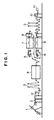
- roll coater apparatus is illustrated in Fig. 1.
- Fig. 1 shows a roll coater apparatus as an example of the coating apparatus used in the present invention.
- the apparatus includes payoff reel 1; welding machine 2 for connecting coils; accumulator 3; pretreating means 4 for degreasing and washing; No. 1 roll coater 5; No. 2 roll coater 6; No. 1 baking furnace 7; No. 2 baking furnace 8; cooling means 9 after coating and baking; cutter 10; coil winder 11 after completion of coating and baking; and coil 12 to be coated.
- the above apparatus is an apparatus wherein a bandform steel sheet is continuously coated and baked, and No. 1 roll coater (5) and No. 1 baking furnace (7); and No. 2 roll coater (6) and No. 2 baking furnace (8) are paired, respectively, that is, the so-called 2 coats and 2 bakes are possible.
- band-form stainless steel sheets 12 fed from payoff reel 1 are continuously connected by welding machine 2, and degreased with an alkali and washed by pretreating means 4 in advance of coating, followed by coating coil to be coated 12 by No. 1 roll coater 5 so as to give a desired thickness of coating, baking in No. 1 baking furnace 7 and No. 2 baking furnace 8, cooling at cooling means 9, cutting by cutter 10 into coil units and winding up by coil winder 11.
- thermosetting conditions temperature and time are in a relative relationship and also the conditions vary depending on the properties of coating required.
- the baking is possible in a temperature range of 100° to 350°C and in a broad period range of one hour to 0.5 minute.
- Preferable baking conditions under which baking is more easily carried out are those under which the material to be coated is baked for a relatively short time of 1 to 10 minutes in an atmosphere heated to 150° to 300°C.
- the thickness of the coating of the present invention is preferably in the range of 1 to 30 p. If it is less than 1 p, an interference fringe is observed on the surface of the coating; this is often undesirable in respect of appearance. On the often hand, if the thickness exceeds 30 p, the properties of the coating are not usually improved, and, to the contrary, when the stainless steel materials are subjected to a great extent of processing, there is tendency that the coating is liable to peel off.
- the characteristic effectiveness of the present invention is in that even when the coating is extremely thin, a sufficient corrosion resistance can be exhibited. Namely, in the case of coatings formed by general paints, unless the coating has a considerable thickness e.g. 30 p or more, there is the drawback that a coating-deficient part is liable to occur, whereas in the case of the present invention, even when the thickness of the coating is only several ⁇ as above, it is normally possible to retain the properties of coating.
- the resulting product of the present invention has the following specific features as compared with conventional acrylic resin coating or anode- oxidized coating:
- the present invention makes it possible to extend the degree of freedom of design relative to colour specification of coating materials, to a larger extent than conventional products. Further, since it is possible to subject stainless steel sheet or coil after surface-treatment, to forming-processing, various effects on the final product are obtained such as energy saving, reduction in rejection rate, reduction in cost, etc.
- Methyl methacrylate 50 parts by weight; the succeeding parts being all by weight
- butyl methacrylate (10 parts) glycidyl methacrylate (20 parts)
- acrylic acid 2 parts
- y-methacryloxypropyltrimethoxysilane 10 parts
- benzoyl peroxide one part was added, followed by reacting the mixture in nitrogen stream at 100°C for 4 hours, to obtain a silicone-modified acrylic polymer having a viscosity at 25°C of 210 cp, indicated in Table 1.
- Preparation example 1 was repeated except that the components and composition were varied, to obtain silicone-modified acrylic polymers having viscosities at 25°C indicated in Table 1.
- Methyl methacrylate (40 parts by weight; the succeeding parts being all by weight), n-butyl methacrylate (10 parts) and ethyl acrylate (10 parts) (the total of the above parts: 60 parts) were mixed with glycidyl methacrylate, 2-hydroxyethyl methacrylate, a two vinyl-terminated dimethylpolysiloxane (viscosity: 50 cp) and methacryloxypropyltrimethoxysilane, each 10 parts, as modifying monomers, and acrylic acid (0.5 part) and benzoyl peroxide (0.5 part), to prepare a mixed solution of monomers for polymerization.
- This mixed solution was dropwise added to xylene (150 parts) kept at 100°C to effect copolymerization reaction and thereby finally obtain a silicone resin-modified acrylic resin solvent solution having a solution viscosity at 25°C of 340 cp (resin concentration: 40% by weight).
- Cyan Blue-5050 (tradename of product made by Dainichi Seika Kogyo Company) having a particle diameter of 1 p or less (Coating material preparation example 1-2) (a blue coating material was obtained).
- the coating of the present invention was baked on a stainless steel sheet under various conditions indicated in the following Table 3 and according to the notes described below the Table, followed by evaluating the properties of the resulting coatings for comparison.
- the coating thickness is less than 1 p, an interference fringe is observed, and when it is 24 p, a slight peel is observed in the cross-cut, Erichsen's cellophane peel test; thus the coating thickness was judged to be suitably in the range of 1 to 30 p. Further, as to the setting conditions, it is apparent that a short time treatment such as 3 minutes at 220°C - one minute at 300°C affords a sufficient coating-formability.
- the product of the present invention does not rust even under the conditions of exposure to atmospheric air where the substrate rusts, and the coating of the present invention retains rust-preventive function even through 90° bending processing.
- the coating of the present invention exhibits almost generally good results even in the case of 180° roll bending processing, and as to the heating time for baking, 10 minutes or more at 200°C, 3 minutes or more at 250°C and 2 minutes or more at 300°C were adequate, but a slight interference color was observed at a baking time of 8 minutes at 300°C; hence shorter than 8 minutes are preferred.
- SUS 430 BA or SUS 304 HL was used as the substrate; as the coating material, products of coating material preparation examples 1-1 and 1-2, a commercially available acrylic resin and a product of oxidation method were used; baking was carried out varying the setting conditions and the coating thickness; and the performances of the resulting coated sheets directed to the following items were evaluated.
- the coating conditions and the results are shown in Table 6.
- the evaluation method was conducted according to the following three-stage method:
- the surface of the coated sheet was injured with 10 yen coin, and the resistance was designated in a four-stage manner (A (good) - D (bad)), depending on the extent of injury.
- Cotton cloth was immersed in trichloroethylene and the surface of the coated sheet was rubbed definite times with the cloth. The resulting appearance was evaluated.
Landscapes
- Chemical & Material Sciences (AREA)
- Organic Chemistry (AREA)
- Chemical Kinetics & Catalysis (AREA)
- Life Sciences & Earth Sciences (AREA)
- Engineering & Computer Science (AREA)
- Materials Engineering (AREA)
- Wood Science & Technology (AREA)
- Health & Medical Sciences (AREA)
- Medicinal Chemistry (AREA)
- Polymers & Plastics (AREA)
- Paints Or Removers (AREA)
Description
- Thermoset acrylic resin composition for coating metallic materials and stainless steel coated with the composition.
- This invention relates to an acrylic resin composition for coating metallic materials. More particularly it relates to such a composition obtained by copolymerizing a specified acrylic acid ester or methacrylic acid ester, a vinyl group-containing polysiloxane and a vinyl group containing silane compound. This invention further relates to a decorative stainless steel piece coated with the modified acrylic resin.
- Known thermoset acrylic resin compositions have been broadly used as coating materials for various metals such as iron, aluminium, copper and stainless steel since the compositions afford a coating which is superior in lustre, transparency, hardness, weather resistance, chemical resistance and other properties. However, the resultant coating often has insufficient adhesion to metals; hence it does not to endure shaping-processing such as bending through 0 - 2 to 180°. In order to impart such a bending resistance to the coating, it is necessary with the thermoset acrylic resin composition to blend an agent for imparting bending resistance. However, such a blending is usually accompanied by reduction in at least one of the physical properties such as hardness, chemical resistance, hot water resistance and other properties of the above coating. Thus, in order to avoid such reduction in physical properties and yet obtain a bending-processed, formed product coated with a thermoset acrylic resin composition, it is the present state of the art that the bending-processed, formed product is post-coated with the resin composition.
- However, if a coating material (a thermoset acrylic resin composition) were available which would endure the above bending processing after coating, then itwould be possible to produce various fabricated products such as domestic appliances, office machines, building materials, etc, by the use of the so-called precoat sheet obtained by coating such a coating material onto metallic sheets. When such a precoat sheet is utilized, it is possible to remove technical difficulties at the time of coating, make the operational. environment non-pollutive and effect energy-saving, as compared with the case where individual formed products are coated. Hence the desire for the coating material which endures the bending processing.
- Furthermore, stainless steel materials, particularly stainless steel sheet, steel band, steel pipe, etc., surface-adjusted by BA (Bright Annealing), buffing, hairline polishing, etc, so as to retain their planar surfaces are characterized by endurability and metallic lustre. Hence these forming-processed products have been broadly used for interior and exterior parts for automobiles using trim, emblem, stainless foil, etc. for automobiles, interior and exterior building materials, furniture, domestic appliances, etc. However, such stainless steel materials, even if surface-adjusted, have raised problems in that the products are liable to cause rust or contamination, and the shade of the steel materials is limited to the colour only of the steel itself, and thus they are restricted in the aspect of decorative properties.
- For the purpose of decoration, rust prevention and contamination prevention of stainless steel materials, the materials sometimes are coated with an acrylic resin paint while making the most of the metallic lustre of stainless steel. However, in the case where the coating formed from such a paint is required to have transparency and high hardness, the softness and adhesion are instead sacrificed. Thus when such a stainless steel material having a high hardness coating is subjected to forming such as press processing or roll processing, it raises drawbacks in that cracks occur on the coating or the coating peels off. Further, since such a coating is insufficient in salt resistance, alkali resistance and weather resistance, the uses of stainless steel materials having the high hardness acrylic resin coating have been restricted to indoor uses where the quantity of UV light is small.
- As to the colouration of the surface of the stainless steel materials, there is a method of forming a coating having a thickness of from 500 to 10000 A by way of anodic oxidation on the surface of the materials, to develop colour on the surface through interference of natural light and reflected light (which method will hereinafter be abbreviated to as "oxidation method"). However, the steel materials according to this colour development method have the following drawbacks: discolouration of the processed surface of stainless steel materials, change in colour tone depending on the direction of view of adhesion of oil or the like and high production cost due to the treating technique. Thus this method has been adopted only for extremely restricted uses. Accordingly, it has been practically very difficult to effect a transparent colouration on the surface of stainless steel materials while retaining the metallic lustre of the materials thereon and at the same time impart rust resistance.
- In view of the foregoing technical situations, the present inventors have made extensive research in order to find a thermoset acrylic resin composition having superior forming processability after coating, and as a result have found that copolymer compositions obtained by subjecting to radical copolymerization, (a) an alkyl acrylate or an alkyl methacrylate, (b) a hydroxyl group or epoxy group-containing acrylic acid ester, (c) a vinyl group-containing polysiloxane and (d) a vinyl group-containing silane compound, each having a definite range of carbon atoms and in definite amount, are more suitable for attaining the above-mentioned objects.
- Further the present inventors have made extensive research in order to solve the problems of the prior art relative to stainless steel materials, and as a result have found that when a coating material comprising a silicone resin-modified acrylic resin as an active ingredient is coated on stainless steel materials, followed by baking, then there is obtained a siloxane bond-containing resi.n coating on the surface of the materials. Further it has been found that this coating typically does not have the above various drawbacks due to conventional acrylic resin coating materials; it is possible to blend a pigment which can bring about a desired colouration; and there is no defect in the above coating by way of anodic oxidization.
- As is apparent from the foregoing, an object of the present invention is to provide a thermoset acrylic resin composition for coating metals which can be formulated to cause neither peeling-off nor blushing due to bending processing to be usable for coated metal sheets.
- Another object of the present invention is to provide a decorative stainless steel piece coated with a modified acrylic resin, having a superior colourability and endurability.
- The present invention provides a thermoset acrylic resin composition for coating metallic materials, obtained by subjecting to radical copolymerization, the following monomers (a) to (d), with the proportions by weight being based on the total weight of the monomers (a) to (d):
- (a) at least one compound selected from the group consisting of acrylic acid esters and methacrylic acid esters, the esters having 1 to 12 carbon atoms in the ester group moiety, in a proportion of 40 to 80% by weight;
- (b) at least one compound selected from the group consisting of hydroxyl group- or epoxy group-containing acrylic acid esters and hydroxyl group- or epoxy group-containing methacrylic acid esters, in a proportion of 20 to 5% by weight;
- (c) a vinyl group-containing polysiloxane, in a proportion of 20 to 0.01% by weight; and
- (d) a vinyl group-containing silane compound, in a proportion of 20 to 2% by weight.
- 0.1 to 5% by weight of an organic acid having 3 or more carbon atoms can be further blended with the mixture of said monomers, either as the acid itself or in the form of an anhydride or other derivative, and especially acrylic acid or malic anhydride.
- The copolymer obtained by the radical copolymerization preferably has a weight average molecular weight of 5,000 to 300,000.
- The vinyl group-containing polysiloxane is preferably at least one compound selected from the group consisting of the following monomers (e) to (h):
- (e) vinyl group-terminated polyalkylsiloxanes having a viscosity at 25°C (η) of 2 to 100,000 cp and the following structural formula:

- (f) polydimethyl-polymethylvinylsiloxane copolymers having a n of 10 to 100,000 cp at 25°C and the following structural formula:

- (g) methacryloxypropyl group-terminated polydimethylsiloxanes having a n of 5 to 100,000 cp at 25°C and the following structural formula:


- (h) polydimethyl-methacryloxypropylsiloxanes having a of 10 to 100,000 cp at 25°C and the following structural formula:

- The present invention further resides in a stainless steel piece having thereon a coating comprising a modified acrylic resin as an active ingredient, prepared by subjecting to radical copolymerization, (1) 20 to 2% by weight of vinyl group-containing alkoxysilane, (2) 20 to 0.01% by weight of a vinyl group-containing polysiloxane, (3) 20 to 5% by weight of a hydroxyl group- or epoxy group-containing acrylic acid ester or methacrylic acid ester and 40 to 80% by weight of (4) an acrylic acid ester having 1 to 12 carbon atoms in the ester group moiety or (5) a methacrylic acid ester having 1 to 12 carbon atoms in the ester group moiety, in the presence of 0.1 to 5% by weight of an organic acid having 3 or more carbon atoms, the respective % by weight being based on the total weight of the monomers (1) to (5), and baking at a temperature of 100 to 350°C.
- The stainless steel piece suitably has a coating with a thickness of 1 to 30 p.
- A pigment having an average particle diameter of 2 11 or less can be present in the coating. The coating can be baked again after forming-processing at a temperature of 100 to 300°C.
- The composition of the present invention is obtained by subjecting monomers of the four groups (a) to (d) to radical copolymerization.
- For the compounds of group (a), acrylic acid esters having 1 to 12 carbon atoms in the ester group moiety or methacrylic acid esters having 1 to 12 carbon atoms in the ester group moiety are used in a proportion of 40 to 80% by weight based on the total weight of the monomers (a) to (d). Concrete examples of these esters are acrylates such as ethyl acrylate or butyl acrylate and methacrylates such as methyl methacrylate, ethyl methacrylate or butyl methacrylate. If these acrylates or methacrylates have 13 or more carbons in the alkyl group moiety, the physical properties thereof as a coating material relative to final products are often insufficient. This applies also to the case where the amounts employed are less than 40% by weight or exceed 80% by weight.
- Next, for the compounds of group (b), hydroxyl group- or epoxy group-containing acrylic acid esters or hydroxyl group- or epoxy group-containing methacrylic acid esters are used in a proportion of 20 to 5% by weight based on the total weight of monomers used for the composition. Concrete examples of these esters are 2-hydroxyethyl acrylate, 2-hydroxyethyl methacrylate and glycidyl acrylate, 2-hydroxyethyl methacrylate and glycidyl methacrylate. If the proportion of the compounds of group (b) exceeds 20% by weight, there is a fear that the physical properties of the coating prepared from the resulting final composition are inferior, while if it is less than 5% by weight, the curability of the final composition is often insufficient.
- Next, for the compounds of group (c), vinyl group-containing polysiloxanes are used in a proportion of 20 to 0.01% by weight based on the total weight of the monomers used for the composition. The vinyl group may be bonded in the form of the terminal group of the polysiloxanes or may be bonded indirectly to Si atom in the repeating units of the polysiloxanes or bonded thereto by the medium of another functional group. If the proportion of the polysiloxanes used exceeds 20% by weight, the resulting coating is too soft and also poor in adhesion, while if it is less than 0.01 % by weight, the physical properties of the coating are insufficient. Concrete examples of the polysiloxanes are the compounds (e) to (h) described above. Then of the compounds is the ranges given above.
- Finally, as for the compounds of group (d), vinyl group-containing silane compounds are used in a proportion of 20 to 2% by weight based on the total weight of the monomers used for the composition. The silane compounds have two or three hydrolyzable functional groups bonded directly to the Si atom besides the above vinyl group. While these functional groups are not limited, alkoxy groups having 1 to 4 carbon atoms are easily used and afford preferred results. Concrete examples of such vinyl group-containing silane compounds are vinyltrimethoxysilane, vinyltriethoxysilane, vinyldimethoxyethoxysilane, methylvinyldimethoxysilane, methylvinyldiethoxysilane, y-methacryloxypropyltrimethoxysilane and y-methacryloxypropylmethyldimethoxysilane.
- The above monomers of groups (a) to (d) are suitably copolymerized in the presence of a radical-generating agent. While the form of the copolymerization is not limited, solvent polymerization in the presence of a solvent is easily conducted and affords good results. Examples of such solvents are aromatic hydrocarbons such as toluene or xylene, ketones such as methyl ethyl ketone or acetone, and alcohols such as n-butanol or cyclohexanol. The kind of the radical-generating agent and the proportion thereof are similar to those in the case of polymerization of usual acrylic acid esters or methacrylic acid esters. For example, a radical-generating agent such as benzoyl peroxide or azobisisobutyronitrile can be used in a proportion of 0.2 to 2% by weight based on the total weight of the monomers for the composition, and the copolymerization carried out at a temperature of 60° to 120°C, depending on the half-life of the agent. In the copolymerization, the total amounts of the monomers of the four groups may be mixed together at the time for copolymerization, or a part of the monomer mixture may be additionally fed to other monomers or the monomer mixture during the copolymerization.
- As to the extent of the polymerization of the acrylic resin composition of the present invention, the composition is preferred to have a viscosity at 25°C of 100 to 2,000 cp, preferably 150 to 1,000 cp in the case of xylene solvent and a resin content of 40% by weight. The copolymers within this viscosity range have a weight average molecular weight in the range of 5,000 to 300,000 in terms of values according to gel permeation chromatography. The adjustment of polymerization degree is carried out depending on the quantity of radical-generating agent or chain transfer agent used, as in the case of production of usual acrylic resins. If the above viscosity is less than 100 cp, unpolymerized monomers are liable to remain, and since the viscosity of the composition is too low, its operability as coating material can not be regarded as good, while if the viscosity exceeds 2,000 cp, then due to its too high viscosity, the operability is not only inferior, but also there is a tendency that the hot water resistance and corrosion resistance of the resulting coating is lower.
- In the above manner, a copolymer as the thermoset acrylic resin composition of the present invention for coating metallic materials is obtained. The solvent used at the time of copolymerization may be left in the resulting composition as it is, or may be recovered by heating under reduced pressure or the like means, together with recovery of the unreacted monomers of the above groups (a) to (d).
- The acrylic resin composition of the present invention may be subjected to crosslinking reaction for thermosetting, by utilizing the functional group contained in the compounds of group (b). As the crosslinking agent or reaction promotor therefor, organic acids or organic base compounds for instance as described below can be used in a proportion of 0.1 to 5% by weight, preferably 0.5 to 3% by weight based on the weight of the acrylic resin composition.
- Concrete examples of such organic acids are acrylic acid, methacrylic acid, phthalic acid, maleic acid or p-toluenesulphonic acid. Acrylic acid or methacrylic acid may be added at the same time as copolymerization for producing the acrylic resin composition of the present invention and copolymerized. Other organic acids are added after preparation of the composition.
- Examples of the above organic base compounds are benzyldimethylamine, polyamines, polyamides, etc. which are used as a catalyst for epoxy group ring opening relative to the compounds of group (b). However, certain amino group-containing silane compounds may be more preferably used, such as y-aminopropyltriethoxysilane, 3-(2-aminoethyl)aminopropyltrimethoxysilane, or 3-(2-aminoethyl)aminopropylmethyldimethoxysilane. These organic base compounds are added and mixed after preparation of the acrylic resin composition of the present invention. Examples of other curing promotors are bases, salts or acids such as potassium hydroxide, tetramethylammonium hydroxide, sodium acetate, phosphoric acid, toluenesulphonic acid. However, from the viewpoint of the chemical stability of the catalyst itself, organometallic compounds such as dibutyltin oxide or tetrabutyl tin may be preferably used.
- When the composition of the present invention is used as the coating material for coating metals, various kinds of auxiliary agents blended in paints of similar kinds of resins may be used, such as an organic or inorganic pigment, dyestuff, UV light absorber, dispersing agent, sagging-prevention agent, etc. As to the above dyestuff and pigment, if importance is attached to the weather resistance of the coating, the use of pigment is preferred. Further if importance is attached to the transparency of the coating coloured by pigment addition, pigment particles are preferably ground into finely-divided particles of 2 u or less, preferably 1 p or less, by various kinds of paint shakers such as ball mill, centrimill, sand grind mill, and the particles are dispersed in the coating material and used. The fact that the coating material of the present invention has a good pigment-dispersibility is one of its specific features. If transparency is not particularly required, a pigment for general purpose may be dispersed, as it is, in the coating material. Further, in order to improve the coating operability or finishing properties, a solvent such as xylene, butyl acetate, ethylcellosolve, butanol or 2-butanone may be blended in a suitable amount.
- As for the method for coating the metal surface with the coating material of the composition of the present invention, any of the conventional methods may be employed such as curtain flow coating, roll coating, spraying, dipping, etc. The resulting coating typically has a thickness as extremely low as 2 to 15 u, and nevertheless its specific features can be fully exhibited after curing described later.
- The product of the present invention which is a thermoset silicone-modified acrylic resin composition, can be cured by heating after formation of the coating. The coating is suitably cured at 150 to 280°C, preferably 200 to 270°C and in a short time such as 1 to 30 minutes, preferably 3 to 15 minutes. Another curing method is the following low temperature curing:
- The coating of the composition of the present invention contains an alkoxysilane and a reaction promotor such as or organic acid or organic base, and crosslinking reaction gradually proceeds even at low temperature such as room temperature to 60°C; hence such a low temperature curing method can be easily utilized for woodworking, for repairing building structures or automobiles or for other purposes.
- When the acrylic resin composition of the present invention is used as the coating, a coating having a high degree of crosslinking is readily obtained, and this coating is superior in adhesion and processing- resistance notwithstanding its high hardness. The reason is presumed to consist in the following three points:
- (1) When the blending ratio of acrylic acid ester or methacrylic acid ester to the vinyl group-containing polysiloxane both as raw materials for the acrylic resin composition, and the polymerization degree of the composition copolymer are adequately selected, ultimately the flexibility and hardness of the coating can be adequately retained.
- (2) The vinyl group-containing silane compound as one of the copolymerization components forms siloxane bond, bond to hydroxyl group and chemical or physical bond to metals to be coated.
- (3) The organic acid or organic base compound added to the composition promotes crosslinking reaction.
- The present invention in one aspect relates to a stainless steel material having a cured coating comprising siloxane bonds as its skeleton, formed by coating material mainly of a silicone-modified acrylic resin, followed by thermosetting.
- As to the stainless steel used, its composition and surface-adjustment method have no particular limitation. However, in order to assure the adhesion of the coating, dirts such as oil matters, dusts, etc, are preferably removed by washing in advance, as described later.
- The modified acrylic resin coating material of the present invention may be naturally applied also to steel materials or aluminium materials. Nevertheless, the coating of the present invention is best limited to stainless steel materials in that none of general coatings including known acrylic resin coatings could have fully satisfied all of weather resistance, rust prevention, hardness and adhesion relative to stainless steel materials.
- Products of stainless steel materials have generally been surface-adjusted. As the methods therefore, for example, BA (Bright Annealing), 2B (annealing and acid washing followed by being subjected to skinpass roll), buffing, hairline polishing (HL), etc, have been conducted.
- For the stainless steel materials used in the present invention, the above surface-adjustment is not indispensable. However, if dirt such as oil matters, dusts, etc, are attached to the surface of the materials, at the time of adjustment or preservation of the materials prior to coating, then it is preferred to carry out degreasing and washing (e.g. solvent washing with trichlene or the like) or alkali washing. As to the method of coating with the modified acrylic resin of the present invention, it is possible to employ for instance any of roll coater method, blade coater method, gravure coater method, beat coater method, curtain flow coater method, dip coater method, and spray coater method. As an example, roll coater apparatus is illustrated in Fig. 1.
- Fig. 1 shows a roll coater apparatus as an example of the coating apparatus used in the present invention.
- In this figure, the apparatus includes payoff reel 1; welding machine 2 for connecting coils; accumulator 3; pretreating means 4 for degreasing and washing; No. 1 roll coater 5; No. 2
roll coater 6; No. 1baking furnace 7; No. 2baking furnace 8; cooling means 9 after coating and baking;cutter 10; coil winder 11 after completion of coating and baking; and coil 12 to be coated. - The above apparatus is an apparatus wherein a bandform steel sheet is continuously coated and baked, and No. 1 roll coater (5) and No. 1 baking furnace (7); and No. 2 roll coater (6) and No. 2 baking furnace (8) are paired, respectively, that is, the so-called 2 coats and 2 bakes are possible.
- When the coating and baking in the present invention are carried out using the apparatus, the above No. 2 roll coater (6) is not always required.
- In short, band-form stainless steel sheets 12 fed from payoff reel 1 are continuously connected by welding machine 2, and degreased with an alkali and washed by pretreating
means 4 in advance of coating, followed by coating coil to be coated 12 by No. 1 roll coater 5 so as to give a desired thickness of coating, baking in No. 1baking furnace 7 and No. 2baking furnace 8, cooling at cooling means 9, cutting bycutter 10 into coil units and winding up by coil winder 11. - As to the baking conditions, i.e. thermosetting conditions, temperature and time are in a relative relationship and also the conditions vary depending on the properties of coating required. However, the baking is possible in a temperature range of 100° to 350°C and in a broad period range of one hour to 0.5 minute.
- Preferable baking conditions under which baking is more easily carried out are those under which the material to be coated is baked for a relatively short time of 1 to 10 minutes in an atmosphere heated to 150° to 300°C. However, conditions under which the heating time is somewhat prolonged, e.g. heating at 150° to 250°C for 10 to 60 minutes, make it possible further to improve the properties of the coating of the present invention.
- The above fact also means that when coated band-form steel or the like of the present invention is brought into mass production, it is possible to improve the properties of the coating by re-baking after baking as follows:
- For example, when a coated stainless steel material first baked at 250°C for 1 to 5 minutes is reheated e.g. to 220°C for 20 minutes, it is possible to produce the steel material having further improved properties without harming mass-productivity.
- The thickness of the coating of the present invention is preferably in the range of 1 to 30 p. If it is less than 1 p, an interference fringe is observed on the surface of the coating; this is often undesirable in respect of appearance. On the often hand, if the thickness exceeds 30 p, the properties of the coating are not usually improved, and, to the contrary, when the stainless steel materials are subjected to a great extent of processing, there is tendency that the coating is liable to peel off.
- The characteristic effectiveness of the present invention is in that even when the coating is extremely thin, a sufficient corrosion resistance can be exhibited. Namely, in the case of coatings formed by general paints, unless the coating has a considerable thickness e.g. 30 p or more, there is the drawback that a coating-deficient part is liable to occur, whereas in the case of the present invention, even when the thickness of the coating is only several µ as above, it is normally possible to retain the properties of coating.
- In the present invention, as has been described above in details, since a specific coating of organic and inorganic substances is formed on the surface of a stainless steel piece, the resulting product of the present invention has the following specific features as compared with conventional acrylic resin coating or anode- oxidized coating:
- (1) Since the coating is superior in pigment-dispersibility, excellent transparency is easily obtained and a lustrous colouration of stainless steel tone is exhibited.
- (2) Since the coating has a surface hardness as high as 2H or more, it is hardly injured.
- (3) The coating has a superior weather resistance.
- (4) The coating has a superior adhesion.
- (5) The coating has a good corrosion resistance.
- (6) The coating has a good chemical resistance.
- (7) Through roll processing, press processing, etc, the coating does not peel off.
- (8) The colour tone does not vary depending on the direction of view.
- (9) The coating is superior in resistance to fingerprint contamination and resistance to oil contamination.
- (10) It is possible to prepare the coating economically.
- Due to the above specific features, the present invention makes it possible to extend the degree of freedom of design relative to colour specification of coating materials, to a larger extent than conventional products. Further, since it is possible to subject stainless steel sheet or coil after surface-treatment, to forming-processing, various effects on the final product are obtained such as energy saving, reduction in rejection rate, reduction in cost, etc.
- Next, the present invention will be described in more detail by way of Preparation Examples and Use Examples.
- Methyl methacrylate (50 parts by weight; the succeeding parts being all by weight), butyl methacrylate (10 parts), glycidyl methacrylate (20 parts), acrylic acid (2 parts), vinyl-terminated polydimethylsiloxane (n=50) (10 parts) and y-methacryloxypropyltrimethoxysilane (10 parts) were dissolved in xylene (150 parts), and benzoyl peroxide (one part) was added, followed by reacting the mixture in nitrogen stream at 100°C for 4 hours, to obtain a silicone-modified acrylic polymer having a viscosity at 25°C of 210 cp, indicated in Table 1.
- Preparation example 1 was repeated except that the components and composition were varied, to obtain silicone-modified acrylic polymers having viscosities at 25°C indicated in Table 1.
- The respective polymers obtained in Preparation examples 1 - 8 were diluted by the equal weight of a mixed solvent of xylene-butanol (2:1), applied onto a stainless steel sheet (SUS 430, planished) and subjected to heat setting at 230°C for 5 minutes to obtain coatings of 5 - 6 p thick, followed by evaluation. The results are shown in Table 2.


- In the above Table 2, the evaluation methods are as follows:
- Judgement:
- 0 No change in appearance was observed.
- A Changes (cracks, blushing, etc.) were somewhat observed.
- x Changes (cracks, blushing, etc.) were clearly observed.
- Pencil Hardness:
- Measured according to JIS-K-5400.
- Adhesion:
- After cross-cut adhesion test according to JIS―K―5400, peel test was five times carried out with cellophane tape.
- Processability:
- Test piece was folded by 180° with a vise and folded part was judged with naked eyes.
- Corrosion resistance:
- Test piece was subjected to cross-cut and bending processings (2 (p 180° folded), followed by saline solution spray test (according to JIS Z 2371) for 200 hours to observe appearance change such as occurrence of rust, blister, etc.
- Hot water resistance:
- Test piece was cross-cut and immersed in boiling water for 2 hours, followed by cellophane tape peel test.
- Next, Coating material preparation examples directed to the second aspect of the present invention will be described.
- Methyl methacrylate (40 parts by weight; the succeeding parts being all by weight), n-butyl methacrylate (10 parts) and ethyl acrylate (10 parts) (the total of the above parts: 60 parts) were mixed with glycidyl methacrylate, 2-hydroxyethyl methacrylate, a two vinyl-terminated dimethylpolysiloxane (viscosity: 50 cp) and methacryloxypropyltrimethoxysilane, each 10 parts, as modifying monomers, and acrylic acid (0.5 part) and benzoyl peroxide (0.5 part), to prepare a mixed solution of monomers for polymerization. This mixed solution was dropwise added to xylene (150 parts) kept at 100°C to effect copolymerization reaction and thereby finally obtain a silicone resin-modified acrylic resin solvent solution having a solution viscosity at 25°C of 340 cp (resin concentration: 40% by weight).
- To this solution was added a mixed solvent of xylene-butanol (ratio by weight, 1:1) to make the resin content 30%, followed by adding a UV light absorber (0.5% by weight based on the resin content), and further adding and mixing either one of the following two kinds of coloring pigments (each 2.5% by weight based on the resin content):
- Transoxide Red (tradename of product made by Dainichi Seika Kogyo Company) having a particle diameter of 1 p or less (Coating material preparation example 1-1) (a red coating material was obtained); and
- Cyan Blue-5050 (tradename of product made by Dainichi Seika Kogyo Company) having a particle diameter of 1 p or less (Coating material preparation example 1-2) (a blue coating material was obtained).
- Preparation of a mixed solution of monomers for polymerization, and copolymerization reaction were carried out under the same conditions as in coating material preparation examples 1-1 and 1-2 except that as the monomers for copolymerization, lauryl methacrylate (19 parts) was used in place of ethyl acrylate and two methacryls-terminated dimethylpolysiloxane (one part, viscosity 200 cp), in place of two vinyls-terminated dimethylpolysiloxane, to obtain a silicone resin-modified acrylic resin solvent solution having a solution viscosity at 25°C of 600 cp.
- To this solution were added solvent, UV light absorber and pigment in the same manner as in coating material preparation examples 1-1 and 1-2 to obtain a red coating material and a blue one.
- The coating of the present invention was baked on a stainless steel sheet under various conditions indicated in the following Table 3 and according to the notes described below the Table, followed by evaluating the properties of the resulting coatings for comparison.

- As apparent from Table 3, when the coating thickness is less than 1 p, an interference fringe is observed, and when it is 24 p, a slight peel is observed in the cross-cut, Erichsen's cellophane peel test; thus the coating thickness was judged to be suitably in the range of 1 to 30 p. Further, as to the setting conditions, it is apparent that a short time treatment such as 3 minutes at 220°C - one minute at 300°C affords a sufficient coating-formability.
- As the stainless substrate, SUS 304 DF (Dull Finish, satin texture) or HL (Hair Line Finish) was used; the thickness of coating material polished and baked was varied; and non-bent or 90° bent product was exposed to atmospheric air to compare the presence or absence of rust formation with that of a stainless substrate having no coating material applied thereon.
- The test conditions and the results are shown in the following Table 4.

- As apparent from Table 4, the product of the present invention does not rust even under the conditions of exposure to atmospheric air where the substrate rusts, and the coating of the present invention retains rust-preventive function even through 90° bending processing.
- As the stainless substrate, SUS 430 BA (0.5 mm thick) was used; as the coating material, the product obtained in Coating material preparation example 2-1 was used; and the setting conditions of the coating material of the present invention and the bending processability of the resulting coating depending on the coating thickness were observed.
- Baking conditions and the presence or absence of abnormality at the R part of the resulting baked coating are shown in Table 5.
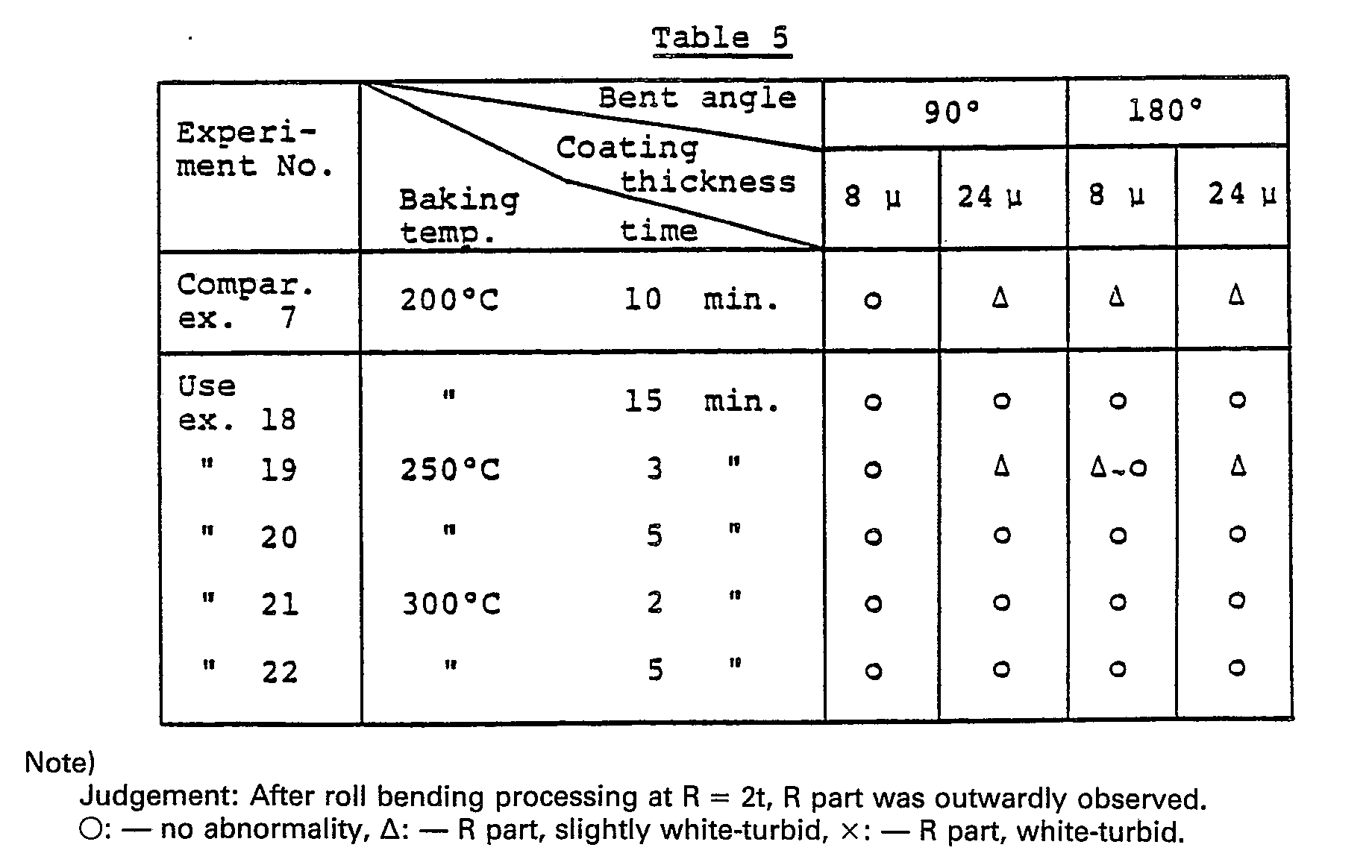
- As seen from Table 5, the coating of the present invention exhibits almost generally good results even in the case of 180° roll bending processing, and as to the heating time for baking, 10 minutes or more at 200°C, 3 minutes or more at 250°C and 2 minutes or more at 300°C were adequate, but a slight interference color was observed at a baking time of 8 minutes at 300°C; hence shorter than 8 minutes are preferred.
- As the substrate, SUS 430 BA or SUS 304 HL was used; as the coating material, products of coating material preparation examples 1-1 and 1-2, a commercially available acrylic resin and a product of oxidation method were used; baking was carried out varying the setting conditions and the coating thickness; and the performances of the resulting coated sheets directed to the following items were evaluated. The coating conditions and the results are shown in Table 6.
- The evaluation method was conducted according to the following three-stage method:
- 0: Abnormalities such as peel, stain, crack, etc. were not observed at all.
- Δ: Slight abnormalities were observed.
- x: Abnormalities were clearly observed.
- Artificial seawater spray (20°C. one minute) followed by infrared ray lamp drying were carried out and the resulting appearance was evaluated.
- 90° bending and 180° bending at R = 2t were carried out, and thereafter a cellophane tape peel test upon the resulting bent part was carried out; the resulting appearance was evaluated.
- Immersed in a mixed solution of 28% HCI and 3% H202 water for 30 seconds. The resulting appearance was evaluated.
- Immersed in 3% NaCI aqueous solution kept at 50°C for 144 hours, followed by water-washing and thereafter a cellophane tape peel test. The resulting appearance was evaluated.
- Immersed in 0.5% NaOH aqueous solution kept at 50°C for 144 hours. The resulting appearance was observed.
- The surface of the coated sheet was injured with 10 yen coin, and the resistance was designated in a four-stage manner (A (good) - D (bad)), depending on the extent of injury.
- Cotton cloth was immersed in trichloroethylene and the surface of the coated sheet was rubbed definite times with the cloth. The resulting appearance was evaluated.
- Test was carried out according to the accelerated weather resistance test of JIS K 5400, and the appearance and the degree of reflection (Q = 60°) were measured.


Claims (8)


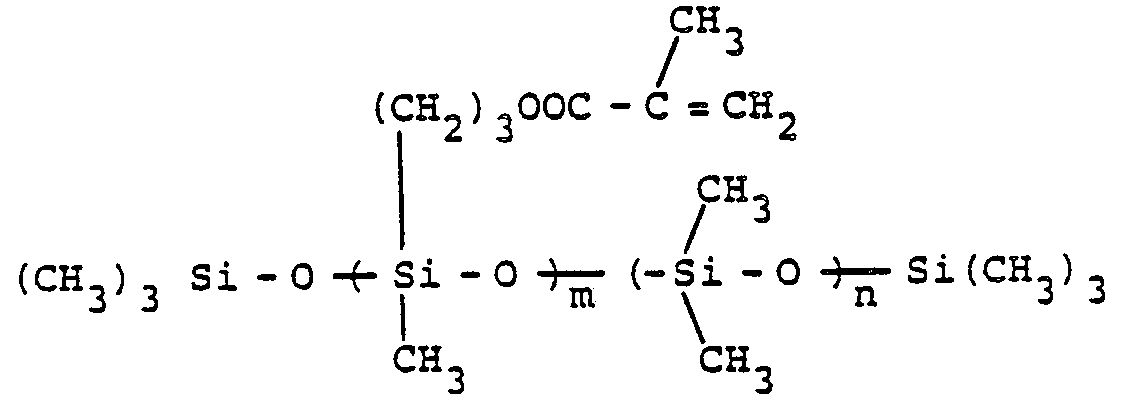
Applications Claiming Priority (4)
| Application Number | Priority Date | Filing Date | Title |
|---|---|---|---|
| JP75375/84 | 1984-04-14 | ||
| JP59075375A JPS60219207A (en) | 1984-04-14 | 1984-04-14 | Thermosetting acrylic resin composition for coating metallic material |
| JP199775/84 | 1984-09-25 | ||
| JP19977584A JPS6176361A (en) | 1984-09-25 | 1984-09-25 | Modified acrylic resin coated decorative stainless steel |
Publications (3)
| Publication Number | Publication Date |
|---|---|
| EP0159894A2 EP0159894A2 (en) | 1985-10-30 |
| EP0159894A3 EP0159894A3 (en) | 1986-12-30 |
| EP0159894B1 true EP0159894B1 (en) | 1989-10-04 |
Family
ID=26416524
Family Applications (1)
| Application Number | Title | Priority Date | Filing Date |
|---|---|---|---|
| EP19850302636 Expired EP0159894B1 (en) | 1984-04-14 | 1985-04-15 | Thermoset acrylic resin composition for coating metallic materials and stainless steel coated with the composition |
Country Status (3)
| Country | Link |
|---|---|
| US (1) | US4564557A (en) |
| EP (1) | EP0159894B1 (en) |
| DE (1) | DE3573439D1 (en) |
Families Citing this family (35)
| Publication number | Priority date | Publication date | Assignee | Title |
|---|---|---|---|---|
| FR2601378B1 (en) * | 1986-02-12 | 1988-08-19 | Atochem | ADHESIVE COMPOSITIONS BASED ON ETHYLENE COPOLYMER AND EPOXYALKYL ESTER |
| US4910252A (en) * | 1986-07-07 | 1990-03-20 | Kansai Paint Co., Ltd. | Siloxane polymer antifouling paint composition containing polysiloxanes |
| JPS63168469A (en) * | 1986-12-29 | 1988-07-12 | Shin Etsu Chem Co Ltd | Room temperature-curable paint composition |
| NZ222904A (en) * | 1987-01-15 | 1989-09-27 | Glidden Co | Acrylic modified silicone resins |
| JPS63221123A (en) * | 1987-03-09 | 1988-09-14 | Kansai Paint Co Ltd | Low-temperature-curable resin composition |
| JPS6411167A (en) * | 1987-07-02 | 1989-01-13 | Toray Silicone Co | Covering material composition |
| US5035940A (en) * | 1988-09-19 | 1991-07-30 | Rexham Corporation | Aluminum-fluoropolymer laminate |
| JPH02228351A (en) * | 1989-03-02 | 1990-09-11 | Kansai Paint Co Ltd | Resin composition, curable composition, and coating composition |
| CA2013949C (en) * | 1989-04-06 | 1999-08-24 | Toshiro Nambu | Thermosetting composition |
| JPH0372578A (en) * | 1989-05-30 | 1991-03-27 | Kansai Paint Co Ltd | Double-layered coating film for can internal surface |
| US5166276A (en) * | 1989-07-12 | 1992-11-24 | Mitsubishi Petrochemical Company Ltd. | Polymer for hair-care products |
| US4988759A (en) * | 1989-09-26 | 1991-01-29 | E. I. Du Pont De Nemours And Company | Coating composition of acrylic polymers containing reactive groups and an epoxy organosilane |
| US5064719A (en) * | 1989-09-26 | 1991-11-12 | E. I. Du Pont De Nemours And Company | Coating composition of acrylic polymers containing reactive groups and an epoxy organosilane |
| US5066698A (en) * | 1990-05-10 | 1991-11-19 | E. I. Du Pont De Nemours And Company | Coating composition of an acrylic polymer, a crosslinking agent and a silane oligomer |
| JP3287475B2 (en) * | 1991-12-27 | 2002-06-04 | 日本ペイント株式会社 | Curable resin composition |
| DE4201724A1 (en) * | 1992-01-23 | 1993-07-29 | Basf Lacke & Farben | METHOD FOR PRODUCING A MULTILAYERED LACQUERING, NON-AQUEOUS LACQUERING AND SELF-CROSSLINKABLE POLYACRYLATE RESINS |
| US5250652A (en) * | 1992-07-30 | 1993-10-05 | Lever Brothers Company, Division Of Conopco, Inc. | High loading water-dispersible UVA and/or UVB light-absorbing copolymer |
| US6312668B2 (en) | 1993-12-06 | 2001-11-06 | 3M Innovative Properties Company | Optionally crosslinkable coatings, compositions and methods of use |
| ATE194376T1 (en) * | 1994-05-17 | 2000-07-15 | Flachglas Ag | MONOMER MIXTURE FOR BONDING ESSENTIALLY SHEET-SHAPED OBJECTS |
| EP0719848A3 (en) * | 1994-12-28 | 1998-03-11 | MITSUI TOATSU CHEMICALS, Inc. | Powder paint compositions |
| GB2303632B (en) * | 1995-07-24 | 1999-03-10 | Toagosei Co Limited | Curable emulsion and coating material comprising the same |
| FR2742159B1 (en) * | 1995-12-07 | 1998-12-24 | Lorraine Laminage | PROCESS FOR PROTECTING AGAINST CORROSION AND / OR PREPARING FOR FORMING A METAL PART |
| US5858544A (en) * | 1995-12-15 | 1999-01-12 | Univ Michigan | Spherosiloxane coatings |
| FR2747945B1 (en) * | 1996-04-26 | 1998-08-21 | Lorraine Laminage | METAL SHEET SURFACE TREATMENT |
| WO2001089720A1 (en) * | 2000-11-02 | 2001-11-29 | Corus Staal Bv | Solution polymerized vinyl resin for primer applications |
| US6863985B2 (en) * | 2001-10-31 | 2005-03-08 | Wacker Polymer Systems Gmbh & Co. Kg | Hydrophobicized copolymers |
| DE10215962A1 (en) | 2002-04-11 | 2003-10-30 | Wacker Polymer Systems Gmbh | Organopolymers of silicone and their saponification products |
| DE10216608A1 (en) | 2002-04-15 | 2003-10-30 | Wacker Polymer Systems Gmbh | Extrudable, low-migration silicone organocopolymers with high transparency, their production and use |
| AU2004229041B2 (en) * | 2003-12-30 | 2011-01-20 | Lg Electronics Inc. | Door of drum-type washing machine, method of manufacturing door with hairline sheet of drum-type washing machine, and method of manufacturing hairline sheet for door |
| US7694537B2 (en) * | 2003-12-30 | 2010-04-13 | Lg Electronics Inc. | Door for drum type washing machine and method of manufacturing door with decorative part |
| CN100549091C (en) * | 2004-08-09 | 2009-10-14 | 新日铁化学株式会社 | Epoxy resin composition and epoxy-polysiloxane coating composition |
| US7690226B2 (en) * | 2005-06-09 | 2010-04-06 | Lg Electronics Inc. | Washing machine and method for manufacturing door thereof |
| US20070218301A1 (en) * | 2006-03-15 | 2007-09-20 | Pachuta Justin A | Tinted anti-fingerprint coating on 430 stainless steel for appliances |
| EP3034573A1 (en) * | 2014-12-16 | 2016-06-22 | ALLNEX AUSTRIA GmbH | Flow modifier for coating compositions |
| CN115678469A (en) * | 2022-11-07 | 2023-02-03 | 兴科电子(东莞)有限公司 | Adhesive for bonding titanium wire, nylon and silica gel, preparation method and application method |
Family Cites Families (12)
| Publication number | Priority date | Publication date | Assignee | Title |
|---|---|---|---|---|
| US3997694A (en) * | 1973-12-12 | 1976-12-14 | E. I. Du Pont De Nemours And Company | Container coated with a ductile coating of an acrylic polymer having reactive sites and an epoxy resin |
| US4125670A (en) * | 1975-08-11 | 1978-11-14 | Bethlehem Steel Corporation | Thermosetting organic coated metallic sheet |
| JPS5337746A (en) * | 1976-09-20 | 1978-04-07 | Nippon Steel Corp | Coated steel sheet for d#d or di can |
| JPS5818229B2 (en) * | 1977-12-30 | 1983-04-12 | 新日本製鐵株式会社 | Painted steel plate for draw and ironing cans |
| DE2827592A1 (en) * | 1978-06-23 | 1980-01-10 | Bayer Ag | BINDERS FOR COATING MEASURES |
| US4414375A (en) * | 1980-09-02 | 1983-11-08 | Neefe Russell A | Oxygen permeable contact lens material comprising copolymers of multifunctional siloxanyl alkylesters |
| JPS5755954A (en) * | 1980-09-19 | 1982-04-03 | Kanegafuchi Chem Ind Co Ltd | Composition |
| US4341889A (en) * | 1981-02-26 | 1982-07-27 | Bausch & Lomb Incorporated | Polysiloxane composition and biomedical devices |
| JPS57179210A (en) * | 1981-04-28 | 1982-11-04 | Sunstar Giken Kk | Room temperature curing elastic composition |
| US4486504A (en) * | 1982-03-19 | 1984-12-04 | General Electric Company | Solventless, ultraviolet radiation-curable silicone coating compositions |
| US4491650A (en) * | 1982-05-05 | 1985-01-01 | Essex Specialty Products, Inc. | Acrylic resin having pendant silane groups thereon, and methods of making and using the same |
| US4426431A (en) * | 1982-09-22 | 1984-01-17 | Eastman Kodak Company | Radiation-curable compositions for restorative and/or protective treatment of photographic elements |
-
1985
- 1985-04-03 US US06/719,429 patent/US4564557A/en not_active Expired - Lifetime
- 1985-04-15 EP EP19850302636 patent/EP0159894B1/en not_active Expired
- 1985-04-15 DE DE8585302636T patent/DE3573439D1/en not_active Expired
Also Published As
| Publication number | Publication date |
|---|---|
| EP0159894A2 (en) | 1985-10-30 |
| DE3573439D1 (en) | 1989-11-09 |
| EP0159894A3 (en) | 1986-12-30 |
| US4564557A (en) | 1986-01-14 |
Similar Documents
| Publication | Publication Date | Title |
|---|---|---|
| EP0159894A2 (en) | Thermoset acrylic resin composition for coating metallic materials and stainless steel coated with the composition | |
| US5741552A (en) | Coating composition and method for forming multi-layer coating | |
| CA1335909C (en) | Automotive coating compositions | |
| GB2234691A (en) | Coating method | |
| CA2693792C (en) | Coating composition with accelerated low temperature cure | |
| JP2552767B2 (en) | Emulsion polymer and coating composition prepared therefrom | |
| WO1996039454A1 (en) | Thermosetting composition, method of finish coating, and coated articles | |
| JPWO1996039454A1 (en) | Thermosetting composition, coating finishing method, and coated article | |
| WO1994021387A1 (en) | Anodized aluminum with protective coating and coating composition | |
| GB2226326A (en) | Composite polyvinylchloride plastisol coating composition and method of application to a metal sheet | |
| JPH07331165A (en) | Topcoating film formation | |
| JP2003268300A (en) | Top coatings for automotive outer panels, coating methods, and coatings | |
| JP2003073856A (en) | Rust inhibitor-containing water-dispersible metal surface treatment agent, surface-treated metal material and method for producing the same | |
| JP4424914B2 (en) | Water-based paint for pre-coated metal sheet, pre-coated metal sheet and method for producing the same | |
| JPH06306325A (en) | Resin composition for water-base coating material | |
| JPS6114267A (en) | Water-and oil-repellent paint | |
| WO1996003534A1 (en) | Process for treating the surface of aluminum sheet for cap manufacturing | |
| JP2649559B2 (en) | Non-aqueous dispersion type resin composition | |
| JPH0471925B2 (en) | ||
| JP2769188B2 (en) | Top coating composition | |
| JP3048019B2 (en) | Resin composition for paint | |
| JPH05263026A (en) | Ultraviolet-curable cationic electrodeposition coating composition suitable for plated material | |
| WO2000000527A1 (en) | Water reducible resins containing propoxylated allyl alcohol, their use in water borne coating compositions, and coated articles made therewith | |
| JPS6353033A (en) | Coated substrate material and method of coating substrate | |
| JPH04367766A (en) | Painting method |
Legal Events
| Date | Code | Title | Description |
|---|---|---|---|
| PUAI | Public reference made under article 153(3) epc to a published international application that has entered the european phase |
Free format text: ORIGINAL CODE: 0009012 |
|
| AK | Designated contracting states |
Designated state(s): DE FR GB |
|
| 17P | Request for examination filed |
Effective date: 19860314 |
|
| PUAL | Search report despatched |
Free format text: ORIGINAL CODE: 0009013 |
|
| AK | Designated contracting states |
Kind code of ref document: A3 Designated state(s): DE FR GB |
|
| 17Q | First examination report despatched |
Effective date: 19880331 |
|
| GRAA | (expected) grant |
Free format text: ORIGINAL CODE: 0009210 |
|
| AK | Designated contracting states |
Kind code of ref document: B1 Designated state(s): DE FR GB |
|
| ET | Fr: translation filed | ||
| REF | Corresponds to: |
Ref document number: 3573439 Country of ref document: DE Date of ref document: 19891109 |
|
| PLBE | No opposition filed within time limit |
Free format text: ORIGINAL CODE: 0009261 |
|
| STAA | Information on the status of an ep patent application or granted ep patent |
Free format text: STATUS: NO OPPOSITION FILED WITHIN TIME LIMIT |
|
| 26N | No opposition filed | ||
| REG | Reference to a national code |
Ref country code: GB Ref legal event code: IF02 |
|
| PGFP | Annual fee paid to national office [announced via postgrant information from national office to epo] |
Ref country code: GB Payment date: 20020410 Year of fee payment: 18 Ref country code: FR Payment date: 20020410 Year of fee payment: 18 |
|
| PGFP | Annual fee paid to national office [announced via postgrant information from national office to epo] |
Ref country code: DE Payment date: 20020424 Year of fee payment: 18 |
|
| PG25 | Lapsed in a contracting state [announced via postgrant information from national office to epo] |
Ref country code: GB Free format text: LAPSE BECAUSE OF NON-PAYMENT OF DUE FEES Effective date: 20030415 |
|
| PG25 | Lapsed in a contracting state [announced via postgrant information from national office to epo] |
Ref country code: DE Free format text: LAPSE BECAUSE OF NON-PAYMENT OF DUE FEES Effective date: 20031101 |
|
| GBPC | Gb: european patent ceased through non-payment of renewal fee |
Effective date: 20030415 |
|
| PG25 | Lapsed in a contracting state [announced via postgrant information from national office to epo] |
Ref country code: FR Free format text: LAPSE BECAUSE OF NON-PAYMENT OF DUE FEES Effective date: 20031231 |
|
| REG | Reference to a national code |
Ref country code: FR Ref legal event code: ST |