EP0147236B1 - Process for the promotion of regeneration of plants from tissue cultures - Google Patents
Process for the promotion of regeneration of plants from tissue cultures Download PDFInfo
- Publication number
- EP0147236B1 EP0147236B1 EP84309134A EP84309134A EP0147236B1 EP 0147236 B1 EP0147236 B1 EP 0147236B1 EP 84309134 A EP84309134 A EP 84309134A EP 84309134 A EP84309134 A EP 84309134A EP 0147236 B1 EP0147236 B1 EP 0147236B1
- Authority
- EP
- European Patent Office
- Prior art keywords
- regeneration
- culture medium
- silver nitrate
- tissue cultures
- hormone
- Prior art date
- Legal status (The legal status is an assumption and is not a legal conclusion. Google has not performed a legal analysis and makes no representation as to the accuracy of the status listed.)
- Expired
Links
- 230000008929 regeneration Effects 0.000 title claims abstract description 38
- 238000011069 regeneration method Methods 0.000 title claims abstract description 38
- 238000000034 method Methods 0.000 title claims abstract description 25
- SQGYOTSLMSWVJD-UHFFFAOYSA-N silver(1+) nitrate Chemical compound [Ag+].[O-]N(=O)=O SQGYOTSLMSWVJD-UHFFFAOYSA-N 0.000 claims abstract description 71
- 239000001963 growth medium Substances 0.000 claims abstract description 38
- 229910001961 silver nitrate Inorganic materials 0.000 claims abstract description 34
- GVPFVAHMJGGAJG-UHFFFAOYSA-L cobalt dichloride Chemical compound [Cl-].[Cl-].[Co+2] GVPFVAHMJGGAJG-UHFFFAOYSA-L 0.000 claims abstract description 8
- 235000013311 vegetables Nutrition 0.000 claims abstract description 6
- 241000196324 Embryophyta Species 0.000 claims description 17
- 241000209510 Liliopsida Species 0.000 claims description 7
- 241001233957 eudicotyledons Species 0.000 claims description 7
- 239000003104 tissue culture media Substances 0.000 claims 2
- 230000001502 supplementing effect Effects 0.000 claims 1
- VGGSQFUCUMXWEO-UHFFFAOYSA-N Ethene Chemical compound C=C VGGSQFUCUMXWEO-UHFFFAOYSA-N 0.000 abstract description 23
- 239000005977 Ethylene Substances 0.000 abstract description 23
- 239000003112 inhibitor Substances 0.000 abstract description 17
- 239000005556 hormone Substances 0.000 abstract description 13
- 229940088597 hormone Drugs 0.000 abstract description 13
- 238000004519 manufacturing process Methods 0.000 abstract description 10
- 210000001519 tissue Anatomy 0.000 description 18
- 206010020649 Hyperkeratosis Diseases 0.000 description 17
- 239000005631 2,4-Dichlorophenoxyacetic acid Substances 0.000 description 16
- 230000001172 regenerating effect Effects 0.000 description 11
- 230000000694 effects Effects 0.000 description 9
- 238000011081 inoculation Methods 0.000 description 9
- 229930192334 Auxin Natural products 0.000 description 8
- 241000209140 Triticum Species 0.000 description 8
- 235000021307 Triticum Nutrition 0.000 description 8
- 239000002363 auxin Substances 0.000 description 8
- 239000000203 mixture Substances 0.000 description 8
- 210000004027 cell Anatomy 0.000 description 7
- 239000005972 6-Benzyladenine Substances 0.000 description 5
- NWBJYWHLCVSVIJ-UHFFFAOYSA-N N-benzyladenine Chemical compound N=1C=NC=2NC=NC=2C=1NCC1=CC=CC=C1 NWBJYWHLCVSVIJ-UHFFFAOYSA-N 0.000 description 5
- 230000001965 increasing effect Effects 0.000 description 5
- SEOVTRFCIGRIMH-UHFFFAOYSA-N indole-3-acetic acid Chemical compound C1=CC=C2C(CC(=O)O)=CNC2=C1 SEOVTRFCIGRIMH-UHFFFAOYSA-N 0.000 description 5
- PRPINYUDVPFIRX-UHFFFAOYSA-N 1-naphthaleneacetic acid Chemical compound C1=CC=C2C(CC(=O)O)=CC=CC2=C1 PRPINYUDVPFIRX-UHFFFAOYSA-N 0.000 description 4
- BQCADISMDOOEFD-UHFFFAOYSA-N Silver Chemical compound [Ag] BQCADISMDOOEFD-UHFFFAOYSA-N 0.000 description 4
- 230000015572 biosynthetic process Effects 0.000 description 4
- 230000002401 inhibitory effect Effects 0.000 description 4
- 229910052709 silver Inorganic materials 0.000 description 4
- 239000004332 silver Substances 0.000 description 4
- UDPGUMQDCGORJQ-UHFFFAOYSA-N (2-chloroethyl)phosphonic acid Chemical compound OP(O)(=O)CCCl UDPGUMQDCGORJQ-UHFFFAOYSA-N 0.000 description 3
- 239000005971 1-naphthylacetic acid Substances 0.000 description 3
- UFBJCMHMOXMLKC-UHFFFAOYSA-N 2,4-dinitrophenol Chemical compound OC1=CC=C([N+]([O-])=O)C=C1[N+]([O-])=O UFBJCMHMOXMLKC-UHFFFAOYSA-N 0.000 description 3
- 230000032823 cell division Effects 0.000 description 3
- 230000003247 decreasing effect Effects 0.000 description 3
- 230000013020 embryo development Effects 0.000 description 3
- 230000006698 induction Effects 0.000 description 3
- 239000011550 stock solution Substances 0.000 description 3
- 244000062793 Sorghum vulgare Species 0.000 description 2
- 210000002257 embryonic structure Anatomy 0.000 description 2
- 238000002474 experimental method Methods 0.000 description 2
- 230000005764 inhibitory process Effects 0.000 description 2
- 210000001161 mammalian embryo Anatomy 0.000 description 2
- 239000002609 medium Substances 0.000 description 2
- 235000019713 millet Nutrition 0.000 description 2
- 230000005305 organ development Effects 0.000 description 2
- 230000002829 reductive effect Effects 0.000 description 2
- 210000001082 somatic cell Anatomy 0.000 description 2
- ZMZGFLUUZLELNE-UHFFFAOYSA-N 2,3,5-triiodobenzoic acid Chemical compound OC(=O)C1=CC(I)=CC(I)=C1I ZMZGFLUUZLELNE-UHFFFAOYSA-N 0.000 description 1
- HXKWSTRRCHTUEC-UHFFFAOYSA-N 2,4-Dichlorophenoxyaceticacid Chemical compound OC(=O)C(Cl)OC1=CC=C(Cl)C=C1 HXKWSTRRCHTUEC-UHFFFAOYSA-N 0.000 description 1
- OVSKIKFHRZPJSS-DOMIDYPGSA-N 2-(2,4-dichlorophenoxy)acetic acid Chemical compound OC(=O)[14CH2]OC1=CC=C(Cl)C=C1Cl OVSKIKFHRZPJSS-DOMIDYPGSA-N 0.000 description 1
- OKTJSMMVPCPJKN-UHFFFAOYSA-N Carbon Chemical compound [C] OKTJSMMVPCPJKN-UHFFFAOYSA-N 0.000 description 1
- 229910021580 Cobalt(II) chloride Inorganic materials 0.000 description 1
- 241000208125 Nicotiana Species 0.000 description 1
- 241000208133 Nicotiana plumbaginifolia Species 0.000 description 1
- 235000002637 Nicotiana tabacum Nutrition 0.000 description 1
- 108090000913 Nitrate Reductases Proteins 0.000 description 1
- 244000115721 Pennisetum typhoides Species 0.000 description 1
- 235000007195 Pennisetum typhoides Nutrition 0.000 description 1
- JUGOREOARAHOCO-UHFFFAOYSA-M acetylcholine chloride Chemical compound [Cl-].CC(=O)OCC[N+](C)(C)C JUGOREOARAHOCO-UHFFFAOYSA-M 0.000 description 1
- 229910052799 carbon Inorganic materials 0.000 description 1
- 229910002092 carbon dioxide Inorganic materials 0.000 description 1
- 235000013339 cereals Nutrition 0.000 description 1
- 150000005829 chemical entities Chemical class 0.000 description 1
- 229930002875 chlorophyll Natural products 0.000 description 1
- 235000019804 chlorophyll Nutrition 0.000 description 1
- ATNHDLDRLWWWCB-AENOIHSZSA-M chlorophyll a Chemical compound C1([C@@H](C(=O)OC)C(=O)C2=C3C)=C2N2C3=CC(C(CC)=C3C)=[N+]4C3=CC3=C(C=C)C(C)=C5N3[Mg-2]42[N+]2=C1[C@@H](CCC(=O)OC\C=C(/C)CCC[C@H](C)CCC[C@H](C)CCCC(C)C)[C@H](C)C2=C5 ATNHDLDRLWWWCB-AENOIHSZSA-M 0.000 description 1
- 210000000349 chromosome Anatomy 0.000 description 1
- 229910017052 cobalt Inorganic materials 0.000 description 1
- 239000010941 cobalt Substances 0.000 description 1
- GUTLYIVDDKVIGB-UHFFFAOYSA-N cobalt atom Chemical compound [Co] GUTLYIVDDKVIGB-UHFFFAOYSA-N 0.000 description 1
- 230000002860 competitive effect Effects 0.000 description 1
- 210000000805 cytoplasm Anatomy 0.000 description 1
- 230000002950 deficient Effects 0.000 description 1
- 230000000408 embryogenic effect Effects 0.000 description 1
- 230000009422 growth inhibiting effect Effects 0.000 description 1
- 239000007952 growth promoter Substances 0.000 description 1
- 238000009396 hybridization Methods 0.000 description 1
- 229910052500 inorganic mineral Inorganic materials 0.000 description 1
- 230000003993 interaction Effects 0.000 description 1
- 238000002955 isolation Methods 0.000 description 1
- 239000011707 mineral Substances 0.000 description 1
- 230000001338 necrotic effect Effects 0.000 description 1
- 231100000989 no adverse effect Toxicity 0.000 description 1
- SJYNFBVQFBRSIB-UHFFFAOYSA-N norbornadiene Chemical compound C1=CC2C=CC1C2 SJYNFBVQFBRSIB-UHFFFAOYSA-N 0.000 description 1
- 150000002894 organic compounds Chemical class 0.000 description 1
- 230000008635 plant growth Effects 0.000 description 1
- 230000037039 plant physiology Effects 0.000 description 1
- 210000001938 protoplast Anatomy 0.000 description 1
- 150000003839 salts Chemical class 0.000 description 1
- 230000000392 somatic effect Effects 0.000 description 1
- 239000000126 substance Substances 0.000 description 1
- 238000003786 synthesis reaction Methods 0.000 description 1
- 239000011782 vitamin Substances 0.000 description 1
- 229940088594 vitamin Drugs 0.000 description 1
- 229930003231 vitamin Natural products 0.000 description 1
- 235000013343 vitamin Nutrition 0.000 description 1
Images


Classifications
-
- A—HUMAN NECESSITIES
- A01—AGRICULTURE; FORESTRY; ANIMAL HUSBANDRY; HUNTING; TRAPPING; FISHING
- A01H—NEW PLANTS OR NON-TRANSGENIC PROCESSES FOR OBTAINING THEM; PLANT REPRODUCTION BY TISSUE CULTURE TECHNIQUES
- A01H4/00—Plant reproduction by tissue culture techniques ; Tissue culture techniques therefor
Definitions
- the invention relates to a process for the promotion of plant regeneration from tissue cultures.
- auxins which promote cell division in a certain concentration effectively, in higher concentrations have an inhibiting effect, moreover, their regeneration and greening inhibiting activity is also known. It may, therefore, be presumed that the incapability of monocotyledon cells of cell division and the poor regeneration and greening ability of certain tissue cultures of mono- and dicotyledons are the consequence of the high endogenous auxin level.
- antiauxins e.g. TIBA
- Our invention is based on the surprising recognition that the regeneration ability can substantially be improved by adding inhibitors of ethylene production or ethylene action to hormone-containing or hormone-free culture media used for maintaining vegetable tissue cultures.
- the desired increase of regeneration ability can be achieved also in the presence of hormones (auxins) by using inhibitors of ethylene production or ethylene action.
- auxins hormones
- inhibitors of ethylene production or ethylene action unlike antiauxins, have no adverse effect on plant growth.
- the invention relates to a process for the promotion of regeneration of differentiated plants from vegetable cells maintained in tissue cultures by adding inhibitors of ethylene production or ethylene action to the hormone-containing or hormone-free culture medium used for maintaining the tissue cultures.
- the inhibitors of ethylene production are chemical substances, which inhibit ethylene synthesis, while the inhibitors of ethylene action act in a competitive manner.
- inhibitors of ethylene production and ethylene action include for example AgN0 3 , CoCl 2 , C0 2 and various organic compounds such as dinitrophenol, 2,5-norbornadiene, etc.
- the inhibitors employed in the present invention are AgN0 3 and C O C1 2 , which have been found to promote regeneration of differentiated plants if added at concentrations of from 1 to 100 mg/I, even though at low concentrations AgN0 3 is in fact known to promote ethylene production [Gavinlertvatana et al: J. Am. Soc. Hortic. Sci., 105(3), 304-7 (1980)].
- the process according to the invention is suitable for the promotion of regeneration of a wide range of mono- and dicotyledonous plants, e.g. cereals, tobacco and other cultivated plants. Accordingly, when carrying out the process of the invention one can start both from tissue cultures of monocotyledons and from those of dicotyledons.
- the inhibitor concentration may be varied within a wide range, and strongly depends on the chemical entity of ethylene inhibitor on the plant to be regenerated, on its pretreatment, etc.
- the determination of the optimum concentration is the task of a person skilled in the art, and the proper concentration should always be selected considering all circumstances.
- the inhibitors of ethylene production or ethylene action can be added directly to the culture medium used for maintaining plant cells (hormone-containing culture medium) or alternatively, the callus culture may previously be placed into a hormone-free culture medium. According to a preferred embodiment of the process the inhibitor is added to a hormone-free culture medium.
- the culture medium may be any medium conventionally used for the cultivation of plant tissues, and generally contains as main components a carbon source, mineral salts and optionally growth promoters, e.g. vitamins and hormones.
- RM-salts For preparing one litre of culture medium 250 ml of RMI stock solution, 5.0 ml of RMII stock solution and 10 ml of RMIII stock solution were used. Components RMI, RMII and RMIII together are called RM-salts [Murashige et al.: Physiol. Plant 15, 473-497 (1962)].
- Example 2 The procedure described in Example 1 is repeated except that silver nitrate is added to the 2,4-D-containing culture medium used for cultivation of callus cultures. The results obtained are shown in Table 4.
- Example 1 From immature millet (Pennisetum americanum) embryos callus culture was induced as described in Example 1 on a culture medium disclosed in Example 1. Callus cultures were placed on hormone-free media after cultivation for four weeks (1000 I x25°C), which either contained silver nitrate (50 mg/L) or were silver nitrate-free. Embryogenic calli (which contained embryoids) were inoculated on further media with the same composition after another four-week cultivation period. Shoot formation was observed only on the silver nitrate-containing media.
- the mutant and the control (wild) cell lines were maintained on the culture medium described in Example 1, which was supplemented with the following components:
- Tests were carried out to determine the optimum duration of silver nitrate treatment in order to achieve a maximum shoot formation.
- callus cultures wsre induced from a very poorly regenerating wheat variety (GK Maraton) and from two wheat varieties showing a considerably good regeneration ability (GK Kincso and Avalon).
- Silver nitrate was added to the culture medium in a concentration of 10 mg/l. in various points of time: at callus induction, at the first inoculation and at the second inoculation.
- the culture medium had the same composition as the culture medium described in Example 1, except silver nitrate and 2,4-D concentrations given above.
- shoot number per regenerating callus showed a definite increase as well.
- the increase in shoot number varied between 75 and 92% depending on the variety.
- the improvement of shoot regeneration is especially remarkable if the above two factors are taken into account simultaneously, i.e., the shoot numbers are related to the total number of calli. In this case the increase in shoot regeneration in the poorly regenerating variety is about 8-fold related to the silver nitrate-free control.
- the effect of silver nitrate in the callus culture of GK Maraton is illustrated on the attached Figures 1 and 2.
- Example 9 The procedure described in Example 9 was followed except that instead of silver nitrate 5 mg/l. of cobalt chloride were employed (CoCI 2 x6H 2 0), and cobalt chloride was added to the culture medium at callus induction and both subsequent inoculations. Cobalt chloride was sterilized together with the other components of culture medium. As a control cultures cultivated on cobalt chloride-free culture medium were employed. Under the effect of cobalt chloride shoot regeneration was increased in case of all three test varieties: the increase in the ratio of regenerating calli is 20 to 40%, in the shoot number per regenerating callus 15 to 33% and in the shoot number related to the total number of calli 30 to 80%. The shoot regeneration increasing activity of cobalt chloride was, however, somewhat less expressed than that of silver nitrate. The results are shown in Table 10.
Landscapes
- Life Sciences & Earth Sciences (AREA)
- Developmental Biology & Embryology (AREA)
- Engineering & Computer Science (AREA)
- Biotechnology (AREA)
- Cell Biology (AREA)
- Botany (AREA)
- Environmental Sciences (AREA)
- Micro-Organisms Or Cultivation Processes Thereof (AREA)
- Breeding Of Plants And Reproduction By Means Of Culturing (AREA)
- Medicines Containing Plant Substances (AREA)
- Preparation Of Compounds By Using Micro-Organisms (AREA)
Abstract
Description
- The invention relates to a process for the promotion of plant regeneration from tissue cultures.
- In the last decade cell genetics and the experiments on cultivation of vegetable tissues have produced numerous promising results, elaborating new, effective techniques for example for mutant isolation, somatic hybridization, cytoplasm transfer. Their practical application is, however, strongly limited by the fact that in the tissue cultures of monocotyledons, which are of utmost importance economically, so far only the most fundamental methods of tissue cultivation could be employed.
- The main problems in connection with cultivation of monocotyledons in tissue cultures are as follows:-
- a) tissue cultures can be initiated only from vegetable parts capable of functional cell division (embryo, immature inflorescence, young leaf parts);
- b) in the undifferentiated tissue parts (calli) there is no chlorophyll formation, i.e. calli are white;
- c) the plant regeneration from tissue culture either via organogenesis or via embryogenesis is incidental, and this ability is rapidly lost during subsequent inoculations or is preserved merely in certain genotypes [Vasil, I.K. Plant improvement and somatic cell genetics, Academic Press: New York, 179-203 (1982)].
- Following the strategy working well for dicotyledons numerous hormones and hormone combinations have been tested to solve this problem without any essential result [Dudits, D. et al., Can. J. Bot. 53, 957-963 (1975)]. According to the most usable process, from immature embryo callus was induced in the presence of 1 kg/lit. of 2,4-D (2,4 - dichlorophenoxyacetic acid, a hormone of the auxin type), from which parallel with the withdrawal of the hormone, through organogenesis or embryogenesis plant could be regenerated [Sears, R. G. et al., Crop. Sci. 22, 546-550 (1982)]. The process is disadvantageous in that the calli must be injected into media with gradually decreasing 2,4-D content, therefore, the process is cumbersome and takes a long time. In millet varieties plants could be regenerated from calli of protoplast origin through embryogenesis [Vasil, I. K.: Plant improvement and somatic cell genetics, Academic Press: New York, 233-252 (1983)] but about 90 to 99% of the embryoids did not get beyond the sprout homozygote state.
- In case of dicotyledons generally satisfactory results are achieved with various hormone combinations, but in older cultures and in the case of hybrides with higher chromosome number the regeneration ability is substantially decreased.
- The principal source of problems is that the auxins, which promote cell division in a certain concentration effectively, in higher concentrations have an inhibiting effect, moreover, their regeneration and greening inhibiting activity is also known. It may, therefore, be presumed that the incapability of monocotyledon cells of cell division and the poor regeneration and greening ability of certain tissue cultures of mono- and dicotyledons are the consequence of the high endogenous auxin level.
- Recently it has also been reported that in non-regenerating calli cultivated on culture media with high auxin concentrations high ethylene levels can be detected. From this it was concluded that ethylene production can be used as an early index of severe stress caused by auxins. It was further suggested that the regeneration problems can be solved by reducing the auxin concentration, i.e. by adding antiauxins to the tissue cultures [Huxter, T. J. et al.: Physiol. Plant. 53, 319-326 (1981); Grady, K. L. et al.: Plant. Physiol. 70, 919-921 (1982); Garcia, F. G. et al.: Ann. Bot. 51, 207-295 (1983)].
- The addition of antiauxins generally proved, however, ineffectual, since experiments showed that antiauxins (e.g. TIBA) merely have a strong growth inhibiting effect in tissue cultures.
- Our intention was to provide a method by which plants (both mono- and dicotyledons) can be regenerated from tissue cultures considerably more efficiently than by the hitherto known techniques.
- Our invention is based on the surprising recognition that the regeneration ability can substantially be improved by adding inhibitors of ethylene production or ethylene action to hormone-containing or hormone-free culture media used for maintaining vegetable tissue cultures. In other words, we have surprisingly found that the desired increase of regeneration ability can be achieved also in the presence of hormones (auxins) by using inhibitors of ethylene production or ethylene action. We have further found that inhibitors of ethylene production or ethylene action, unlike antiauxins, have no adverse effect on plant growth.
- Accordingly, the invention relates to a process for the promotion of regeneration of differentiated plants from vegetable cells maintained in tissue cultures by adding inhibitors of ethylene production or ethylene action to the hormone-containing or hormone-free culture medium used for maintaining the tissue cultures.
- The inhibitors of ethylene production are chemical substances, which inhibit ethylene synthesis, while the inhibitors of ethylene action act in a competitive manner.
- There are numerous inhibitors of ethylene production and ethylene action known in the art [see e.g.: What's new in plant physiology, 12, 37-40 (1981)]. Such inhibitors include for example AgN03, CoCl2, C02 and various organic compounds such as dinitrophenol, 2,5-norbornadiene, etc.
- The inhibitors employed in the present invention are AgN03 and COC12, which have been found to promote regeneration of differentiated plants if added at concentrations of from 1 to 100 mg/I, even though at low concentrations AgN03 is in fact known to promote ethylene production [Gavinlertvatana et al: J. Am. Soc. Hortic. Sci., 105(3), 304-7 (1980)].
- The process according to the invention is suitable for the promotion of regeneration of a wide range of mono- and dicotyledonous plants, e.g. cereals, tobacco and other cultivated plants. Accordingly, when carrying out the process of the invention one can start both from tissue cultures of monocotyledons and from those of dicotyledons.
- The inhibitor concentration may be varied within a wide range, and strongly depends on the chemical entity of ethylene inhibitor on the plant to be regenerated, on its pretreatment, etc. The determination of the optimum concentration is the task of a person skilled in the art, and the proper concentration should always be selected considering all circumstances.
- The inhibitors of ethylene production or ethylene action can be added directly to the culture medium used for maintaining plant cells (hormone-containing culture medium) or alternatively, the callus culture may previously be placed into a hormone-free culture medium. According to a preferred embodiment of the process the inhibitor is added to a hormone-free culture medium. The culture medium may be any medium conventionally used for the cultivation of plant tissues, and generally contains as main components a carbon source, mineral salts and optionally growth promoters, e.g. vitamins and hormones.
- The invention will now be illustrated in greater detail in the following specific Examples, which are given for illustration and not limitation of our invention.
- From immature wheat embryos callus culture was initiated on a culture medium having the following composition:

- For preparing one litre of culture medium 250 ml of RMI stock solution, 5.0 ml of RMII stock solution and 10 ml of RMIII stock solution were used. Components RMI, RMII and RMIII together are called RM-salts [Murashige et al.: Physiol. Plant 15, 473-497 (1962)].
- After cultivation for four weeks (1000 lux, 25°C) the callus cultures were placed on hormone-free culture media, which-apart from inosite-had the same composition as given above but were supplemented with 1,10 and 100 mg/lit. of silver nitrate, respectively. As a control calli grown on culture media with the same composition but containing no silver nitrate were employed. It has been found that in callus cultures grown on silver nitrate-containing culture media both the regeneration frequency and the average shoot number were significantly better than in the control group. Silver nitrate proved most effective in a 10 mg/I. concentration. Its effect in Gk-806 wheat cultures is illustrated by the results set forth in Table 1 below.

- Essentially following the procedure described in Example 1 but using cobalt chloride as an inhibitor of ethylene action instead of silver nitrate, the following results were obtained.

- Essentially following the procedure described in Example 1 but using dinitrophenol (DNP) as an inhibitor the following results were obtained.

- The procedure described in Example 1 is repeated except that silver nitrate is added to the 2,4-D-containing culture medium used for cultivation of callus cultures. The results obtained are shown in Table 4.

- In order to prove that the effect of silver nitrate is based on the inhibition of ethylene action the procedure described in Example 1 was followed, but ethrel (2 - chloroethylphosphonic acid) was added to the culture medium. The results are set forth in Table 5 below.

- The above results show that, as expected, as a result of ethrel addition the incidence of regeneration in the test cultures has considerably been decreased.
- On a culture medium having the same composition as described in Example 1 but containing 0.5 mg/I. of 2,4-D instead of 1 mg/I. of 2,4-D Gk 806 wheat calli were cultivated for seven months. During this time calli completely lost their regeneration ability. Callus cultures were then placed on hormone-free medium, having the above composition, except 2,4-D, to which 10 mg/I. of silver nitrate were added.

- It can be seen that calli which have previously lost their regeneration ability became capable of regeneration of a culture medium containing silver nitrate, in other words, silver nitrate induced regeneration.
- From immature millet (Pennisetum americanum) embryos callus culture was induced as described in Example 1 on a culture medium disclosed in Example 1. Callus cultures were placed on hormone-free media after cultivation for four weeks (1000 I x25°C), which either contained silver nitrate (50 mg/L) or were silver nitrate-free. Embryogenic calli (which contained embryoids) were inoculated on further media with the same composition after another four-week cultivation period. Shoot formation was observed only on the silver nitrate-containing media.
- The results obtained are set forth in Table 7.

- On nitrate reductase deficient mutants of Nicotiana plumbaginifolia (dicotyledon), the callus culture of which showed no or very poor regeneration ability, the effect of silver nitrate was tested.
- The mutant and the control (wild) cell lines were maintained on the culture medium described in Example 1, which was supplemented with the following components:

- To induce regeneration naphthylacetic acid was eliminated from this culture medium (on which mutants showed no regeneration at all). On the latter culture medium in case of the mutant cell lines only very poor, accidental regeneration could be achieved. Under the effect of silver nitrate (50 mg/I.), however, the mutant cell lines practically showed the same regeneration ability as the wild varieties.

- Tests were carried out to determine the optimum duration of silver nitrate treatment in order to achieve a maximum shoot formation. For this purpose callus cultures wsre induced from a very poorly regenerating wheat variety (GK Maraton) and from two wheat varieties showing a considerably good regeneration ability (GK Kincso and Avalon). Silver nitrate was added to the culture medium in a concentration of 10 mg/l. in various points of time: at callus induction, at the first inoculation and at the second inoculation.
- As a control cultivation carried out on a silver nitrate-free culture medium was employed. During the inoculations the initial 1 mg/l. 2,4-D concentration was first reduced to 0.5 mg/l. and then to zero. Inoculations were performed in one month intervals. The culture medium had the same composition as the culture medium described in Example 1, except silver nitrate and 2,4-D concentrations given above.
- If silver nitrate was added to the culture medium during the first or second inoculation, the number of regenerating calli has significantly been increased, particularly in case of the poorly regenerating variety (GK Maraton). If silver nitrate was added to the culture medium during the callus induction already, the ratio of regenerating calli in the poorly regenerating variety has further been increased. Related to the control a 4.4-fold increase can be observed. The numerical results are set forth in Table 9.
- It is not only the number of regenerating calli which has been increased, but the shoot number per regenerating callus showed a definite increase as well. The increase in shoot number varied between 75 and 92% depending on the variety.
- The improvement of shoot regeneration is especially remarkable if the above two factors are taken into account simultaneously, i.e., the shoot numbers are related to the total number of calli. In this case the increase in shoot regeneration in the poorly regenerating variety is about 8-fold related to the silver nitrate-free control. The effect of silver nitrate in the callus culture of GK Maraton is illustrated on the attached Figures 1 and 2.

- The procedure described in Example 9 was followed except that instead of
silver nitrate 5 mg/l. of cobalt chloride were employed (CoCI2x6H20), and cobalt chloride was added to the culture medium at callus induction and both subsequent inoculations. Cobalt chloride was sterilized together with the other components of culture medium. As a control cultures cultivated on cobalt chloride-free culture medium were employed. Under the effect of cobalt chloride shoot regeneration was increased in case of all three test varieties: the increase in the ratio of regenerating calli is 20 to 40%, in the shoot number per regenerating callus 15 to 33% and in the shoot number related to the total number ofcalli 30 to 80%. The shoot regeneration increasing activity of cobalt chloride was, however, somewhat less expressed than that of silver nitrate. The results are shown in Table 10.
- K=Kincs6
- A=Avalon
- M=Maraton
- To determine the optimum silver nitrate concentration with respect to shoot regeneration calli induced from the three wheat varieties described in Example 9 on a culture medium having the composition described in Example 1 (2,4-D=1 mg/L) were used. Silver nitrate was added to the culture medium at the first and second inoculation, in concentrations of 0, 2.5, 5, 10, 20 and 40 mg/L, respectively. Inoculations were performed in one month intervals, first on a culture medium containing 0.5 mg/l. of 2,4-D and then on a culture medium without 2,4-D.
- Depending on the variety tested 10 mg/l. and 20 mg/l. concentrations of silver nitrate proved the most efficient, but in a concentration of 20 mg/l. silver nitrate has already a slight necrotic effect on the calli. Therefore, in
wheat tissue cultures 10 mg/l. is recommended as an optimum concentration. From the results, which are set forth in Table 11, it can be clearly seen that silver nitrate is effective in a relatively wide concentration range, and there is a sudden increase in shoot regeneration already at the lowest dose tested.
- K=Kincs6
- A=Avalon
- M=Maraton
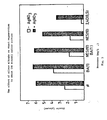
- The effect of silver nitrate in the presence of various hormones was tested. In the tests wheat (GK Kincs6) calli induced on a culture medium according to Example 1 containing 1 mg/l. of 2,4-D and maintained at a reduced 2,4-D level (0.5 mg/L) were used. The shoot number of calli was determined.
- From the data given in Table 12 it can be seen that although 6-benzyl-adenine (BA), which is a known accelerator of shoot regeneration, produced a certain increase in shoot number, its effect has considerably been surpassed by the activity of silver nitrate. Moreover, 6-benzyl-adenine could not compensate the shoot regeneration inhibiting effect of 1-naphthylacetic acid (auxin), in contrary to silver nitrate, which completely compensated the inhibition caused by 1-naphthylacetic acid (NES).
- In case of 2,4-D (0.5 mg/l.), which exerts a very strong shoot regeneration inhibiting effect, the absolute value of shoot regeneration obtained in the presence of silver nitrate is not particularly high but the relative promotion of shoot regeneration is far the strongest in this case (related to the silver nitrate-free control). The interaction of the test hormones and silver nitrate is illustrated on Figure 3.
-

- BA=6-benzyl-adenine
- NES=1-naphthylacetic acid
- 2,4-D=2,4-dichlorophenoxyacetic acid
Claims (5)
Priority Applications (1)
| Application Number | Priority Date | Filing Date | Title |
|---|---|---|---|
| AT84309134T ATE44428T1 (en) | 1983-12-30 | 1984-12-28 | METHOD OF PROMOTING THE REGENERATION OF PLANTS FROM TISSUE CULTURES. |
Applications Claiming Priority (2)
| Application Number | Priority Date | Filing Date | Title |
|---|---|---|---|
| HU834524A HU190214B (en) | 1983-12-30 | 1983-12-30 | Process for the promotion of regenerating plants from tissue culture |
| HU452483 | 1983-12-30 |
Publications (3)
| Publication Number | Publication Date |
|---|---|
| EP0147236A2 EP0147236A2 (en) | 1985-07-03 |
| EP0147236A3 EP0147236A3 (en) | 1986-10-22 |
| EP0147236B1 true EP0147236B1 (en) | 1989-07-12 |
Family
ID=10968207
Family Applications (1)
| Application Number | Title | Priority Date | Filing Date |
|---|---|---|---|
| EP84309134A Expired EP0147236B1 (en) | 1983-12-30 | 1984-12-28 | Process for the promotion of regeneration of plants from tissue cultures |
Country Status (8)
| Country | Link |
|---|---|
| US (1) | US4784957A (en) |
| EP (1) | EP0147236B1 (en) |
| JP (1) | JPS60160818A (en) |
| AT (1) | ATE44428T1 (en) |
| CA (1) | CA1267100A (en) |
| DE (1) | DE3478890D1 (en) |
| HU (1) | HU190214B (en) |
| IL (1) | IL73944A (en) |
Families Citing this family (8)
| Publication number | Priority date | Publication date | Assignee | Title |
|---|---|---|---|---|
| WO1988006627A1 (en) * | 1987-02-26 | 1988-09-07 | Bio Polymers Pty. Ltd. | Plant gum material and use thereof in food products |
| US5173423A (en) * | 1990-02-12 | 1992-12-22 | Sumitomo Chemical Company Limited | Process for breeding a glabrous variety of rice crop and a glabrous plant |
| US6271001B1 (en) | 1995-03-23 | 2001-08-07 | Bio Polymers Pty. Ltd. | Cultured plant cell gums for food, pharmaceutical, cosmetic and industrial applications |
| US20050158699A1 (en) * | 1995-06-07 | 2005-07-21 | Kadkade Prakash G. | Cryopreservation of plant cells |
| US5965438A (en) * | 1995-06-07 | 1999-10-12 | Phyton, Inc. | Cryopreservation of plant cells |
| WO2006103518A1 (en) * | 2005-03-31 | 2006-10-05 | Council Of Scientific And Industrial Research | A medium formulation for induction of in vitro flowering in capsicum |
| CN102577953B (en) * | 2012-02-13 | 2013-09-18 | 中国科学院水生生物研究所 | Method for restraining browning in subculture of tobacco callus |
| CN103155870A (en) * | 2012-12-27 | 2013-06-19 | 河南农业大学 | Method for improving inducing, growing and regeneration of sweet wormwood multiple shoots by silver nitrate |
Family Cites Families (1)
| Publication number | Priority date | Publication date | Assignee | Title |
|---|---|---|---|---|
| US4060933A (en) * | 1976-12-20 | 1977-12-06 | Gte Laboratories Incorporated | Tissue culture technique utilizing a specific light source |
-
1983
- 1983-12-30 HU HU834524A patent/HU190214B/en not_active IP Right Cessation
-
1984
- 1984-12-27 IL IL73944A patent/IL73944A/en unknown
- 1984-12-28 AT AT84309134T patent/ATE44428T1/en not_active IP Right Cessation
- 1984-12-28 JP JP59274988A patent/JPS60160818A/en active Granted
- 1984-12-28 EP EP84309134A patent/EP0147236B1/en not_active Expired
- 1984-12-28 CA CA000471112A patent/CA1267100A/en not_active Expired - Lifetime
- 1984-12-28 DE DE8484309134T patent/DE3478890D1/en not_active Expired
- 1984-12-31 US US06/687,607 patent/US4784957A/en not_active Expired - Fee Related
Also Published As
| Publication number | Publication date |
|---|---|
| DE3478890D1 (en) | 1989-08-17 |
| US4784957A (en) | 1988-11-15 |
| ATE44428T1 (en) | 1989-07-15 |
| JPS60160818A (en) | 1985-08-22 |
| HUT35715A (en) | 1985-07-29 |
| EP0147236A3 (en) | 1986-10-22 |
| JPH0446535B2 (en) | 1992-07-30 |
| IL73944A0 (en) | 1985-03-31 |
| CA1267100A (en) | 1990-03-27 |
| EP0147236A2 (en) | 1985-07-03 |
| HU190214B (en) | 1986-08-28 |
| IL73944A (en) | 1988-11-15 |
Similar Documents
| Publication | Publication Date | Title |
|---|---|---|
| Davidonis et al. | Plant regeneration from callus tissue of Gossypium hirsutum L. | |
| Emershad et al. | In‐ovulo embryo culture of Vitis vinifera LCV ‘Thompson seedless’ | |
| Litz et al. | In vitro somatic embryogenesis and plant regeneration from Carica papaya L. ovular callus | |
| US5008200A (en) | Propagating multiple whole fertile plants from immature leguminous | |
| Von Arnold et al. | Regulation of somatic embryo development in Picea abies by abscisic acid (ABA) | |
| Yepes et al. | Micropropagation of thirteen Malus cultivars and rootstocks, and effect of antibiotics on proliferation | |
| Jalonen et al. | Characterization of embryogenic cell lines of Picea abies in relation to their competence for maturation | |
| KAwATA et al. | The regeneration of rice plant, Oryza sativa L., in the callus derived from the seminal root | |
| Mohamed et al. | Dark preconditioning, CPPU, and thidiazuron promote shoot organogenesis on seedling node explants of common and faba beans | |
| Bapat et al. | Somatic embryogenesis and plantlet formation in tissue cultures of sandalwood (Santalum album L.) | |
| JPS6174520A (en) | Regeneration of corn | |
| Dewir et al. | Optimization of media formulation for axillary shoot multiplication of the red-peeled sweet potato (Ipomoea batatas [L.] Lam.)‘Abees’ | |
| WO1987002701A1 (en) | Methods and media for enhanced somatic embryogenesis | |
| US4784957A (en) | Process for the promotion of regeneration of plants from tissue cultures | |
| Sangwan et al. | In vitro culture of Phragmites tissues. Callus formation, organ differentiation and cell suspension culture | |
| Lam | Plantlet formation from potato tuber discs in vitro | |
| US5354943A (en) | Methods of high frequency tissue regeneration, regeneration of herbicide-tolerant populus plants therewith, and the herbicide-tolerant plants made thereby | |
| EP0171593A1 (en) | Sunflower regeneration through embryogenesis and organogenesis | |
| EP0170904A1 (en) | Sunflower regeneration through organogenesis | |
| US4687743A (en) | Sunflower regeneration media, method of use and plants regenerated thereon | |
| Webb et al. | Callus initiation and organized development from Zamia pumila embryo explants | |
| Rahman et al. | The effects of medium composition and culture conditions on in vitro rooting and ex vitro establishment of jackfruit (Artocarpus heterophyllus Lam.) | |
| Schwarz | 6. Plant growth regulator effects in the in vitro propagation of three hardwood tree genera: Castanea, Juglans, and Quercus | |
| Malepszy et al. | In vitro culture of Cucumis sativus L. IV. Conditions for cell suspension | |
| JP3318037B2 (en) | Mass growth method of birch |
Legal Events
| Date | Code | Title | Description |
|---|---|---|---|
| PUAI | Public reference made under article 153(3) epc to a published international application that has entered the european phase |
Free format text: ORIGINAL CODE: 0009012 |
|
| 17P | Request for examination filed |
Effective date: 19850102 |
|
| AK | Designated contracting states |
Designated state(s): AT DE FR GB NL |
|
| RIN1 | Information on inventor provided before grant (corrected) |
Inventor name: PURHAUSER, LASZLO Inventor name: MARTON, LASZLO, DR. Inventor name: MEDGYESY, PETER, DR. |
|
| PUAL | Search report despatched |
Free format text: ORIGINAL CODE: 0009013 |
|
| AK | Designated contracting states |
Kind code of ref document: A3 Designated state(s): AT DE FR GB NL |
|
| 17Q | First examination report despatched |
Effective date: 19871207 |
|
| GRAA | (expected) grant |
Free format text: ORIGINAL CODE: 0009210 |
|
| AK | Designated contracting states |
Kind code of ref document: B1 Designated state(s): AT DE FR GB NL |
|
| REF | Corresponds to: |
Ref document number: 44428 Country of ref document: AT Date of ref document: 19890715 Kind code of ref document: T |
|
| REF | Corresponds to: |
Ref document number: 3478890 Country of ref document: DE Date of ref document: 19890817 |
|
| ET | Fr: translation filed | ||
| PLBE | No opposition filed within time limit |
Free format text: ORIGINAL CODE: 0009261 |
|
| STAA | Information on the status of an ep patent application or granted ep patent |
Free format text: STATUS: NO OPPOSITION FILED WITHIN TIME LIMIT |
|
| 26N | No opposition filed | ||
| PGFP | Annual fee paid to national office [announced via postgrant information from national office to epo] |
Ref country code: FR Payment date: 19931116 Year of fee payment: 10 |
|
| PGFP | Annual fee paid to national office [announced via postgrant information from national office to epo] |
Ref country code: AT Payment date: 19931125 Year of fee payment: 10 |
|
| PGFP | Annual fee paid to national office [announced via postgrant information from national office to epo] |
Ref country code: GB Payment date: 19931217 Year of fee payment: 10 |
|
| PGFP | Annual fee paid to national office [announced via postgrant information from national office to epo] |
Ref country code: NL Payment date: 19931231 Year of fee payment: 10 |
|
| PGFP | Annual fee paid to national office [announced via postgrant information from national office to epo] |
Ref country code: DE Payment date: 19940228 Year of fee payment: 10 |
|
| PG25 | Lapsed in a contracting state [announced via postgrant information from national office to epo] |
Ref country code: GB Effective date: 19941228 Ref country code: AT Effective date: 19941228 |
|
| PG25 | Lapsed in a contracting state [announced via postgrant information from national office to epo] |
Ref country code: NL Effective date: 19950701 |
|
| GBPC | Gb: european patent ceased through non-payment of renewal fee |
Effective date: 19941228 |
|
| PG25 | Lapsed in a contracting state [announced via postgrant information from national office to epo] |
Ref country code: FR Effective date: 19950831 |
|
| NLV4 | Nl: lapsed or anulled due to non-payment of the annual fee |
Effective date: 19950701 |
|
| PG25 | Lapsed in a contracting state [announced via postgrant information from national office to epo] |
Ref country code: DE Effective date: 19950901 |
|
| REG | Reference to a national code |
Ref country code: FR Ref legal event code: ST |