EP0145078B1 - Diphenyl ether herbicides - Google Patents
Diphenyl ether herbicides Download PDFInfo
- Publication number
- EP0145078B1 EP0145078B1 EP84201740A EP84201740A EP0145078B1 EP 0145078 B1 EP0145078 B1 EP 0145078B1 EP 84201740 A EP84201740 A EP 84201740A EP 84201740 A EP84201740 A EP 84201740A EP 0145078 B1 EP0145078 B1 EP 0145078B1
- Authority
- EP
- European Patent Office
- Prior art keywords
- group
- formula
- atom
- carbon atoms
- alkyl
- Prior art date
- Legal status (The legal status is an assumption and is not a legal conclusion. Google has not performed a legal analysis and makes no representation as to the accuracy of the status listed.)
- Expired
Links
- 0 Nc(cc1)cc(N)c1Oc(cc1N*2)ccc1[N+]2[O-] Chemical compound Nc(cc1)cc(N)c1Oc(cc1N*2)ccc1[N+]2[O-] 0.000 description 1
Classifications
-
- C—CHEMISTRY; METALLURGY
- C07—ORGANIC CHEMISTRY
- C07D—HETEROCYCLIC COMPOUNDS
- C07D209/00—Heterocyclic compounds containing five-membered rings, condensed with other rings, with one nitrogen atom as the only ring hetero atom
- C07D209/02—Heterocyclic compounds containing five-membered rings, condensed with other rings, with one nitrogen atom as the only ring hetero atom condensed with one carbocyclic ring
- C07D209/44—Iso-indoles; Hydrogenated iso-indoles
- C07D209/48—Iso-indoles; Hydrogenated iso-indoles with oxygen atoms in positions 1 and 3, e.g. phthalimide
-
- C—CHEMISTRY; METALLURGY
- C07—ORGANIC CHEMISTRY
- C07D—HETEROCYCLIC COMPOUNDS
- C07D307/00—Heterocyclic compounds containing five-membered rings having one oxygen atom as the only ring hetero atom
- C07D307/77—Heterocyclic compounds containing five-membered rings having one oxygen atom as the only ring hetero atom ortho- or peri-condensed with carbocyclic rings or ring systems
- C07D307/87—Benzo [c] furans; Hydrogenated benzo [c] furans
-
- A—HUMAN NECESSITIES
- A01—AGRICULTURE; FORESTRY; ANIMAL HUSBANDRY; HUNTING; TRAPPING; FISHING
- A01N—PRESERVATION OF BODIES OF HUMANS OR ANIMALS OR PLANTS OR PARTS THEREOF; BIOCIDES, e.g. AS DISINFECTANTS, AS PESTICIDES OR AS HERBICIDES; PEST REPELLANTS OR ATTRACTANTS; PLANT GROWTH REGULATORS
- A01N35/00—Biocides, pest repellants or attractants, or plant growth regulators containing organic compounds containing a carbon atom having two bonds to hetero atoms with at the most one bond to halogen, e.g. aldehyde radical
- A01N35/06—Biocides, pest repellants or attractants, or plant growth regulators containing organic compounds containing a carbon atom having two bonds to hetero atoms with at the most one bond to halogen, e.g. aldehyde radical containing keto or thioketo groups as part of a ring, e.g. cyclohexanone, quinone; Derivatives thereof, e.g. ketals
-
- A—HUMAN NECESSITIES
- A01—AGRICULTURE; FORESTRY; ANIMAL HUSBANDRY; HUNTING; TRAPPING; FISHING
- A01N—PRESERVATION OF BODIES OF HUMANS OR ANIMALS OR PLANTS OR PARTS THEREOF; BIOCIDES, e.g. AS DISINFECTANTS, AS PESTICIDES OR AS HERBICIDES; PEST REPELLANTS OR ATTRACTANTS; PLANT GROWTH REGULATORS
- A01N37/00—Biocides, pest repellants or attractants, or plant growth regulators containing organic compounds containing a carbon atom having three bonds to hetero atoms with at the most two bonds to halogen, e.g. carboxylic acids
- A01N37/36—Biocides, pest repellants or attractants, or plant growth regulators containing organic compounds containing a carbon atom having three bonds to hetero atoms with at the most two bonds to halogen, e.g. carboxylic acids containing at least one carboxylic group or a thio analogue, or a derivative thereof, and a singly bound oxygen or sulfur atom attached to the same carbon skeleton, this oxygen or sulfur atom not being a member of a carboxylic group or of a thio analogue, or of a derivative thereof, e.g. hydroxy-carboxylic acids
- A01N37/38—Biocides, pest repellants or attractants, or plant growth regulators containing organic compounds containing a carbon atom having three bonds to hetero atoms with at the most two bonds to halogen, e.g. carboxylic acids containing at least one carboxylic group or a thio analogue, or a derivative thereof, and a singly bound oxygen or sulfur atom attached to the same carbon skeleton, this oxygen or sulfur atom not being a member of a carboxylic group or of a thio analogue, or of a derivative thereof, e.g. hydroxy-carboxylic acids having at least one oxygen or sulfur atom attached to an aromatic ring system
- A01N37/40—Biocides, pest repellants or attractants, or plant growth regulators containing organic compounds containing a carbon atom having three bonds to hetero atoms with at the most two bonds to halogen, e.g. carboxylic acids containing at least one carboxylic group or a thio analogue, or a derivative thereof, and a singly bound oxygen or sulfur atom attached to the same carbon skeleton, this oxygen or sulfur atom not being a member of a carboxylic group or of a thio analogue, or of a derivative thereof, e.g. hydroxy-carboxylic acids having at least one oxygen or sulfur atom attached to an aromatic ring system having at least one carboxylic group or a thio analogue, or a derivative thereof, and one oxygen or sulfur atom attached to the same aromatic ring system
-
- A—HUMAN NECESSITIES
- A01—AGRICULTURE; FORESTRY; ANIMAL HUSBANDRY; HUNTING; TRAPPING; FISHING
- A01N—PRESERVATION OF BODIES OF HUMANS OR ANIMALS OR PLANTS OR PARTS THEREOF; BIOCIDES, e.g. AS DISINFECTANTS, AS PESTICIDES OR AS HERBICIDES; PEST REPELLANTS OR ATTRACTANTS; PLANT GROWTH REGULATORS
- A01N37/00—Biocides, pest repellants or attractants, or plant growth regulators containing organic compounds containing a carbon atom having three bonds to hetero atoms with at the most two bonds to halogen, e.g. carboxylic acids
- A01N37/44—Biocides, pest repellants or attractants, or plant growth regulators containing organic compounds containing a carbon atom having three bonds to hetero atoms with at the most two bonds to halogen, e.g. carboxylic acids containing at least one carboxylic group or a thio analogue, or a derivative thereof, and a nitrogen atom attached to the same carbon skeleton by a single or double bond, this nitrogen atom not being a member of a derivative or of a thio analogue of a carboxylic group, e.g. amino-carboxylic acids
- A01N37/46—N-acyl derivatives
-
- A—HUMAN NECESSITIES
- A01—AGRICULTURE; FORESTRY; ANIMAL HUSBANDRY; HUNTING; TRAPPING; FISHING
- A01N—PRESERVATION OF BODIES OF HUMANS OR ANIMALS OR PLANTS OR PARTS THEREOF; BIOCIDES, e.g. AS DISINFECTANTS, AS PESTICIDES OR AS HERBICIDES; PEST REPELLANTS OR ATTRACTANTS; PLANT GROWTH REGULATORS
- A01N43/00—Biocides, pest repellants or attractants, or plant growth regulators containing heterocyclic compounds
- A01N43/02—Biocides, pest repellants or attractants, or plant growth regulators containing heterocyclic compounds having rings with one or more oxygen or sulfur atoms as the only ring hetero atoms
- A01N43/04—Biocides, pest repellants or attractants, or plant growth regulators containing heterocyclic compounds having rings with one or more oxygen or sulfur atoms as the only ring hetero atoms with one hetero atom
- A01N43/06—Biocides, pest repellants or attractants, or plant growth regulators containing heterocyclic compounds having rings with one or more oxygen or sulfur atoms as the only ring hetero atoms with one hetero atom five-membered rings
- A01N43/12—Biocides, pest repellants or attractants, or plant growth regulators containing heterocyclic compounds having rings with one or more oxygen or sulfur atoms as the only ring hetero atoms with one hetero atom five-membered rings condensed with a carbocyclic ring
-
- A—HUMAN NECESSITIES
- A01—AGRICULTURE; FORESTRY; ANIMAL HUSBANDRY; HUNTING; TRAPPING; FISHING
- A01N—PRESERVATION OF BODIES OF HUMANS OR ANIMALS OR PLANTS OR PARTS THEREOF; BIOCIDES, e.g. AS DISINFECTANTS, AS PESTICIDES OR AS HERBICIDES; PEST REPELLANTS OR ATTRACTANTS; PLANT GROWTH REGULATORS
- A01N43/00—Biocides, pest repellants or attractants, or plant growth regulators containing heterocyclic compounds
- A01N43/34—Biocides, pest repellants or attractants, or plant growth regulators containing heterocyclic compounds having rings with one nitrogen atom as the only ring hetero atom
- A01N43/36—Biocides, pest repellants or attractants, or plant growth regulators containing heterocyclic compounds having rings with one nitrogen atom as the only ring hetero atom five-membered rings
-
- A—HUMAN NECESSITIES
- A01—AGRICULTURE; FORESTRY; ANIMAL HUSBANDRY; HUNTING; TRAPPING; FISHING
- A01N—PRESERVATION OF BODIES OF HUMANS OR ANIMALS OR PLANTS OR PARTS THEREOF; BIOCIDES, e.g. AS DISINFECTANTS, AS PESTICIDES OR AS HERBICIDES; PEST REPELLANTS OR ATTRACTANTS; PLANT GROWTH REGULATORS
- A01N43/00—Biocides, pest repellants or attractants, or plant growth regulators containing heterocyclic compounds
- A01N43/34—Biocides, pest repellants or attractants, or plant growth regulators containing heterocyclic compounds having rings with one nitrogen atom as the only ring hetero atom
- A01N43/36—Biocides, pest repellants or attractants, or plant growth regulators containing heterocyclic compounds having rings with one nitrogen atom as the only ring hetero atom five-membered rings
- A01N43/38—Biocides, pest repellants or attractants, or plant growth regulators containing heterocyclic compounds having rings with one nitrogen atom as the only ring hetero atom five-membered rings condensed with carbocyclic rings
-
- A—HUMAN NECESSITIES
- A01—AGRICULTURE; FORESTRY; ANIMAL HUSBANDRY; HUNTING; TRAPPING; FISHING
- A01N—PRESERVATION OF BODIES OF HUMANS OR ANIMALS OR PLANTS OR PARTS THEREOF; BIOCIDES, e.g. AS DISINFECTANTS, AS PESTICIDES OR AS HERBICIDES; PEST REPELLANTS OR ATTRACTANTS; PLANT GROWTH REGULATORS
- A01N47/00—Biocides, pest repellants or attractants, or plant growth regulators containing organic compounds containing a carbon atom not being member of a ring and having no bond to a carbon or hydrogen atom, e.g. derivatives of carbonic acid
- A01N47/08—Biocides, pest repellants or attractants, or plant growth regulators containing organic compounds containing a carbon atom not being member of a ring and having no bond to a carbon or hydrogen atom, e.g. derivatives of carbonic acid the carbon atom having one or more single bonds to nitrogen atoms
- A01N47/28—Ureas or thioureas containing the groups >N—CO—N< or >N—CS—N<
- A01N47/36—Ureas or thioureas containing the groups >N—CO—N< or >N—CS—N< containing the group >N—CO—N< directly attached to at least one heterocyclic ring; Thio analogues thereof
-
- C—CHEMISTRY; METALLURGY
- C07—ORGANIC CHEMISTRY
- C07C—ACYCLIC OR CARBOCYCLIC COMPOUNDS
- C07C205/00—Compounds containing nitro groups bound to a carbon skeleton
- C07C205/27—Compounds containing nitro groups bound to a carbon skeleton the carbon skeleton being further substituted by etherified hydroxy groups
- C07C205/35—Compounds containing nitro groups bound to a carbon skeleton the carbon skeleton being further substituted by etherified hydroxy groups having nitro groups and etherified hydroxy groups bound to carbon atoms of six-membered aromatic rings of the carbon skeleton
- C07C205/36—Compounds containing nitro groups bound to a carbon skeleton the carbon skeleton being further substituted by etherified hydroxy groups having nitro groups and etherified hydroxy groups bound to carbon atoms of six-membered aromatic rings of the carbon skeleton to carbon atoms of the same non-condensed six-membered aromatic ring or to carbon atoms of six-membered aromatic rings being part of the same condensed ring system
- C07C205/38—Compounds containing nitro groups bound to a carbon skeleton the carbon skeleton being further substituted by etherified hydroxy groups having nitro groups and etherified hydroxy groups bound to carbon atoms of six-membered aromatic rings of the carbon skeleton to carbon atoms of the same non-condensed six-membered aromatic ring or to carbon atoms of six-membered aromatic rings being part of the same condensed ring system the oxygen atom of at least one of the etherified hydroxy groups being further bound to a carbon atom of a six-membered aromatic ring, e.g. nitrodiphenyl ethers
-
- C—CHEMISTRY; METALLURGY
- C07—ORGANIC CHEMISTRY
- C07C—ACYCLIC OR CARBOCYCLIC COMPOUNDS
- C07C65/00—Compounds having carboxyl groups bound to carbon atoms of six—membered aromatic rings and containing any of the groups OH, O—metal, —CHO, keto, ether, groups, groups, or groups
- C07C65/21—Compounds having carboxyl groups bound to carbon atoms of six—membered aromatic rings and containing any of the groups OH, O—metal, —CHO, keto, ether, groups, groups, or groups containing ether groups, groups, groups, or groups
- C07C65/24—Compounds having carboxyl groups bound to carbon atoms of six—membered aromatic rings and containing any of the groups OH, O—metal, —CHO, keto, ether, groups, groups, or groups containing ether groups, groups, groups, or groups polycyclic
Definitions
- the tests fall into two categories, pre-emergence and post-emergence.
- the pre-emergence tests involved spraying a liquid formulation of the compound onto the soil in which the seeds of the plant specied mentioned above had recently been sown.
- the post-emergence tests involved two types of test, viz., soil drench and foliar spray tests. In the soil drench tests the soil in which the seedling plants of the above species were growing was drenched with a liquid formulation containing a compound of the invention, and in the foliar spray tests the seedling plants were sprayed with such a formulation.
- the herbicidal effects of the test compounds were assessed visually twelve days after spraying the foliage and the soil, and thirteen days after drenching the soil and were recorded on a 0-9 scale.
- a rating 0 indicates growth as untreated control, a rating 9 indicates death.
- An increase of 1 unit on the linear scale approximates to a 10% increase in the level of effect.
Landscapes
- Life Sciences & Earth Sciences (AREA)
- Chemical & Material Sciences (AREA)
- Organic Chemistry (AREA)
- General Health & Medical Sciences (AREA)
- Zoology (AREA)
- Health & Medical Sciences (AREA)
- Engineering & Computer Science (AREA)
- Dentistry (AREA)
- Agronomy & Crop Science (AREA)
- Wood Science & Technology (AREA)
- Plant Pathology (AREA)
- Environmental Sciences (AREA)
- Pest Control & Pesticides (AREA)
- Agricultural Chemicals And Associated Chemicals (AREA)
- Organic Low-Molecular-Weight Compounds And Preparation Thereof (AREA)
- Indole Compounds (AREA)
- Furan Compounds (AREA)
Description
- This invention relates to a composition for and a method of controlling undesired plant growth and to compounds for use in such a composition or method.
- Certain substituted phenoxy phthalates are disclosed as herbicides in US Patent 4334915, along with the corresponding phenoxy phthalic anhydride. That anhydride is disclosed only as being a useful intermediate in the preparation of the phthalates and no mention or suggestion is made that the anhydride itself may exhibit any biological activity. It has now been found that such phenoxy phthalic anhydrides, along with certain other diphenyl ethers which bear a fused ring substituent at the 3,4 position, show interesting herbicidal activity.
- Certain phenoxy phthalic acid derivatives have been disclosed in the literature, ie, J. Org. Chem., Vol. 42,1977, pages 3414 to 3419 and 3425 to 3431 and Vol. 45 (1980), pages 1374 to 1379, Chem. Abstracts, 70, 98664z and US Patent No. 4334915 although no mention is made of herbicidal activity of these compounds.
- Accordingly, the present invention provides a herbicidal composition which comprises a liquid carrier comprising a surface active agent or a solid carrier and, as active ingredient, a diphenyl ether derivative having the general formula I:

- R1 represents a hydrogen or halogen, preferably chlorine, atom or an alkyl or haloalkyl, preferably trifluoromethyl, group;
- R2 and R3, which may be the same or different, each independently represents a hydrogen or halogen, preferably chlorine, atom or an alkyl, haloalkyl, nitro or cyano group;
- A represents a divalent group selected from -X-,


- R5 represents a hydrogen atom, a carboxyl or hydroxyl group, or an optionally substituted alkyl, alkoxy, aralkyl, alkoxycarbonyl or alkoxycarbonylalkyl group, or an amino group of formula NR6R7;
- R6 and R7, which may be the same or different, each represents a hydrogen atom or an optionally substituted alkyl, aryl or acyl group;
- and X, both in formula I and in the definitions of the substituents therein, represents an oxygen or sulphur atom.
- The term "acyl" is used herein to denote the radical derived from an organic acid by the removal of a hydroxyl group; the organic acid may be a carboxylic acid (including carbamic acid derivatives) or a sulphonic acid, examples of suitable acyl groups being alkylcarbonyl, alkylcarbamoyl and alkylsulphonyl, e.g. acetyl, methylsulphonyl and dimethylcarbamoyl.
- When any of the foregoing substituents represents or contains an alkyl, alkenyl or alkynyl substituent group, this may be linear or branched and may contain up to 10, preferably up to 6, carbon atoms, suitable examples being methyl, ethyl, propyl, allyl and propynyl. When they represent or contain a cycloalkyl substituent group this may contain from 3 to 10, preferably 5 to 8, carbon atoms, and is suitably cyclohexyl. When they contain a haloalkyl substituent group, this suitably contains up to 6, preferably up to 4, carbon atoms and the halogen atom is suitably fluorine or chlorine, trifluoromethyl being particularly preferred. When they contain an aryl substituent group, this is preferably a phenyl group. When they contain a heterocyclic group, this may, for example, be a pyrrole, pyrrolidine, pyridine, piperidine, furan or pyran ring. When any of the foregoing substituents are designated as being optionally substituted, the substituent groups which are optionally present may be any of those customarily employed in the development of pesticidal compounds, and/or the modification of such compounds to influence their structure/activity, persistence, penetration or other property. Specific examples of such substituents include halogen, especially chlorine, atoms and nitro, cyano, hydroxyl, alkoxy, e.g. methoxy, or ester, e.g. alkoxycarbonyl, groups.
- Preferred compositions are those wherein the active ingredient is a compound of general formula I wherein X represents an oxygen atom;
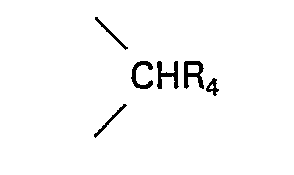
- A represents an oxygen atom, a carbonyl group, the group C(R4)2 wherein one group R4 is a hydrogen atom, or an alkyl or alkoxy group of up to 4 carbon atoms, especially methyl or methoxy, or an aryl, especially phenyl, group, and the other group R4 is a hydrogen or halogen, especially chlorine or bromine, atom, a hydroxyl group, an alkyl group of up to 4 carbon atoms, especially methyl, an alkoxy group of up to 4 carbon atoms, especially methoxy, ethoxy or propoxy, optionally substituted by a halogen, especially chlorine, atom, or a hydroxyl or alkoxy, especially methoxy, group, a cycloalkoxy group of 5 to 8 carbon atoms especially cyclohexyloxy, an alkenyloxy or alkynyloxy group of up to 6 carbon atoms, especially allyloxy or propynyloxy, an alkoxycarbonylalkoxy, especially ethoxycarbonylethoxy, group, an alkylthio group of up to 4 carbon atoms, especially methyl- or propyl- thio, an alkanoyl, especially acetyl, group, a pyridyl group, or an amino group of formula NR6R7 wherein R6 represents a hydrogen atom or an alkyl group of up to 4 carbon atoms, especially methyl, and R7 represents an alkyl group of up to 4 carbon atoms, especially methyl, a phenyl group optionally substituted by at least one halogen, especially chlorine, atom, or an alkylcarbonyl, alkylcarbamoyl or alkylsulphonyl group, especially acetyl, dimethylcarbamoyl or methylsulphonyl;
- and B represents an oxygen atom, the group

- Particularly preferred compositions are those wherein the active ingredient is a compound in which R1 represents a trifluoromethyl group, R2 represents a halogen, especially chlorine, atom and R3 represents a hydrogen atom.
- With certain exceptions, the compounds of formula I are novel, and the invention therefore also extends to those novel compounds per se. The novel compounds are the diphenyl ether derivatives of formula I wherein the substituents A, B, R1, R2, R3, R4, R5, R6 and R7 have the meanings defined above, with the exception of 4-(2-chloro-4-trifluoromethylphenoxy)-phthalic anhydride and compounds where R1 is a hydrogen atom or a methyl group, R2 and R3 each represent a hydrogen atom, A represents


- It will be appreciated that when the nature of the substituents is such as to introduce an asymmetric carbon atom, then the resulting compound will exist in stereoisomeric forms. Also, some substituent combinations permit the existence of tautomeric forms. The scope of the present invention includes these different forms of the compounds and their mixtures, and herbicidal compositions containing the active ingredient in such isomeric forms and mixtures.
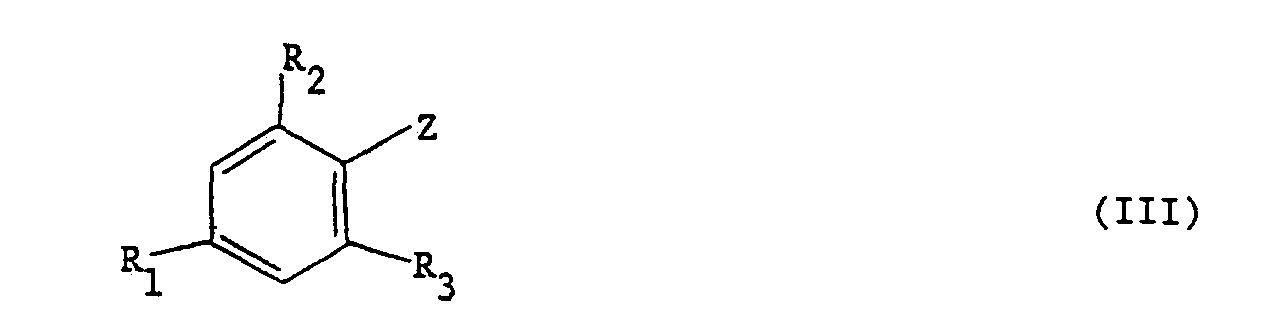
- The invention further provides a process for the preparation of the novel diphenyl ethers as defined above which comprise reacting a phthalide of formula:


- Compounds wherein X in formula I represents sulphur may be obtained from the corresponding oxygen analogues by reaction with phosphorus pentasulphide. Compounds wherein A represents a halomethylene group may suitably be obtained by reacting the corresponding methylene compound with an appropriate halogenating agent. Thus, a compound wherein A represents CHBr may be obtained by reacting the corresponding

- Compounds wherein X and B in formula I both represent an oxygen atom, and A is the group C(R4)2 in which one group R4 is a hydrogen atom and the other has one of the meanings defined above excluding hydrogen or hydroxyl, may be obtained from the corresponding compound wherein A represents CH(OH) by reaction with a reagent of formula HR4 wherein R4 is as defined for formula I excluding hydrogen or hydroxyl or, when R4 is a carboxylic acyloxy group, an acyl anhydride of formula Ac20 wherein Ac is an alkylcarbonyl group. The reaction is suitably carried out by refluxing the reaction mixture. In some cases the reactant HR4 can be used in excess to provide a convenient reaction solvent; in other cases it may be convenient to introduce the reagent HR4 as a solution in an organic solvent, e.g. acetonitrile or methyl ethyl ketone.
- The compounds of the general formula I have been found to show interesting activity as herbicides. Accordingly the invention also provides the use as a herbicide of such a compound or composition according to the invention. Further in accordance with the invention there is provided a method of combating undesired plant growth at a locus by treating the locus with a compound or composition according to the invention. Application to the locus may be pre-emergence or post-emergence. The dosage of active ingredient used may, for example, be from 0.05 to 4 kg/ha.
- A carrier in a composition according to the invention is any material with which the active ingredient is formulated to facilitate application to the locus to be treated, which may for example be a plant, seed or soil, or to facilitate storage, transport or handling. A carrier may be a solid or a liquid, including a material which is normally gaseous but which has been compressed to form a liquid, and any of the carriers normally used in formulating herbicidal compositions may be used. Preferably compositions according to the invention contain 0.5 to 95% by weight of active ingredient.
- Suitable solid carriers include natural and synthetic clays and silicates, for example natural silicas such as diatomaceous earths; magnesium silicates, for example talcs; magnesium aluminium silicates, for example attapulgites and vermiculites; aluminium silicates, for example kaolinites, montomorillonites and micas; calcium carbonate; calcium sulphate; ammonium sulphate; synthetic hydrated silicon oxides and synthetic calcium or aluminium silicates; elements, for example carbon and sulphur; natural and synthetic resins, for example coumarone resins, polyvinyl chloride, and styrene polymers and copolymers; solid polychlorophenols; bitumen; waxes; and solid fertilisers, for example superphosphates.
- Suitable liquid carriers include water; alcohols, for example isopropanol and glycols; ketones, for example acetone, methyl ethyl ketone, methyl isobutyl ketone and cyclohexanone; ethers; aromatic or araliphatic hydrocarbons, for example benzene, toluene and xylene; petroleum fractions, for example kerosine and light mineral oils; chlorinated hydrocarbons, for example carbon tetrachloride, perchloroethylene and trichloro-ethane. Mixtures of different liquids are often suitable.
- Agricultural compositions are often formulated and transported in a concentrated form which is subsequently diluted by the user before application. The presence of small amounts of a carrier which is a surface-active agent facilitates this process of dilution. Thus preferably at least one carrier in a composition according to the invention is a surface-active agent. For example the composition may contain at least two carriers, at least one of which is a surface-active agent.
- A surface-active agent may be an emulsifying agent, a dispersing agent or a wetting agent; it may be nonionic or ionic. Examples of suitable surface-active agents include the sodium or calcium salts of polyacrylic acids and lignin sulphonic acids; the condensation of fatty acids or aliphatic amines or amides containing at least 12 carbon atoms in the molecule with ethylene oxide and/or propylene oxide; fatty acid esters of glycerol, sorbitan, sucrose or pentaerythritol; condensates of these with ethylene oxide and/or propylene oxide; condensation products of fatty alcohol or alkyl phenols, for example p-octylphenol or p-octylcresol, with ethylene oxide and/or propylene oxide; sulphates or sulphonates of these condensation products; alkali or alkaline earth metal salts, preferably sodium salts, of sulphuric or sulphonic acid esters containing at least 10 carbon atoms in the molecule, for example sodium lauryl sulphate, sodium secondary alkyl sulphates, sodium salts of sulphonated castor oil, and sodium alkylaryl sulphonates such as dodecylbenzene sulphonate; and polymers of ethylene oxide and copolymers of ethylene oxide and propylene oxide.
- The compositions of the invention may for example be formulated as wettable powders, dusts, granules, solutions, emulsifiable concentrates, emulsions, suspension concentrates and aerosols. Wettable powders usually contain 25, 50 or 75% w of active ingredient and usually contain in addition to solid inert carrier, 3-10% w of a dispersing agent and, where necessary, 0-10% w of stabiliser(s) and/or other additives such as penetrants or stickers. Dusts are usually formulated as a dust concentrate having a similar composition to that of a wettable powder but without a dispersant, and are diluted in the field with further solid carrier to give a composition usually containing 2 10% w of active ingredient. Granules are usually prepared to have a size between 10 and 100 BS mesh (1.676-0.152 mm), and may be manufactured by agglomeration or impregnation techniques. Generally, granules will contain-75% w active ingredient and 0-10% w of additives such as stabilisers, surfactants, slow release modifiers and binding agents. The so-called "dry flowable powders" consist of relatively small granules having a relatively high concentration of active ingredient. Emulsifiable concentrates usually contain, in addition to a solvent and, when necessary, co-solvent, 10-50% w/v active ingredient, 2-20% w/v emulsifiers and 0-20% w/v of other additives such as stabilisers, penetrants and corrosion inhibitors. Suspension concentrates are usually compounded so as to obtain a stable, non-sedimenting flowable product and usually contain 10-75% w active ingredient, 0.5-15% w of dispersing agents, 0.1-10% w of suspending agents such as protective colloids and thixotropic agents, 0-10% w of other additives such as defoamers, corrosion inhibitors, stabilisers, penetrants and stickers, and water or an organic liquid in which the active ingredient is substantially insoluble; certain organic solids or inorganic salts may be present dissolved in the formulation to assist in preventing sedimentation or as anti-freeze agents for water.

- Aqueous dispersions and emulsions, for example compositions obtained by diluting a wettable powder or a concentrate according to the invention with water, also lie within the scope of the invention. The said emulsions may be of the water-in-oil or of the oil-in-water type, and may have a thick 'mayonnaise'-iike consistency.
- The composition of the invention may also contain other ingredients, for example other compounds possessing herbicidal, insecticidal or fungicidal properties.
- The following Examples illustrate the invention.
- 5-Hydroxy phthalide (5.5 g) was dissolved in ethanol (50 ml), 2.5 g potassium hydroxide added and the solution refluxed for 3 hours. The solvent was removed, the residue dissolved in dimethylsulphoxide (50 ml) and 8.2 g of 3,4 dichlorobenzotrifluoride added. This mixture was stirred under dry nitrogen at 160°C for 18 hours, after which it was cooled, poured onto ice, neutralised with dilute hydrochloric acid and the product extracted with methylene chloride to yield the desired product m.pt. 109-111°C.
- Analysis: Calc. for C15H803CIF3: C 54.8; H 2.4%
- Found: C 54.8; H 2.5%
- The product of Ex. 1 (1.5 g) and N-bromosuccinimide (0.82 g) was dissolved in dry carbon tetrachloride (25 ml) and a small pellet of benzoyl peroxide added. The reaction mixture was refluxed with stirring under strong light, when succinimide began to precipitate. The mixture was cooled, filtered, washed with carbon tetrachloride and the solvent removed. Chromatographed separation (silica column; methylene chloride eluant) yielded a pale orange viscous oil as the desired product.

- The product of Example 1 (1.55 g) and phosphorus pentasulphide (2.2 g) were refluxed in sodium dried dioxan (15 ml) for 1 hour with stirring. The reaction mixture was cooled, filtered, dried, washed with methylene chloride, and chromatographically purified to yield a pale yellow solid, m.pt. 86-88°C.

- N-Benzyl-5-hydroxyphthalimide (0.84 g) and potassium hydroxide (0.19 g) were dissolved in ethanol (50 ml) and the solvent was evaporated. The residue was dissolved in dimethylsulphoxide (50 ml) and 4-chloro-3-nitro benzotrifluoride (0.75 g) was added. The mixture was heated at 180°C for six hours and poured into water. The mixture was extracted with ethyl acetate, the ethyl acetate layer was separated, dried and evaporated to yield a pale yellow oil. The oil crystallised from ethanol as pale yellow prisms m.pt. 166-167°C.

- Following a similar procedure to that of Example 4, but using 3,4-dichlorobenzotrifluoride in place of 4-chloro-3-nitrobenzotrifluoride, the desired product was obtained as a white solid m.pt. 119-121°C.

- The product of Example 2, was refluxed with 20 ml water for 3 days, and the reaction mixture extracted with methylene chloride and dried. Removal of the solvent and chromatographic purification yielded the desired product, m.pt. 145-147°C.

-
- A) 5-Hydroxy phthalide (5.5 g) was dissolved in ethanol (50 ml), 2.5 g potassium hydroxide added and the solution refluxed for 3 hours. The solvent was removed, the residue dissolved in dimethylsulphoxide (50 ml) and 8.2 g of 3,4-dichlorobenzotrifluoride added. This mixture was stirred under dry nitrogen at 160°C for 18 hours, after which it was cooled, poured onto ice, neutralised with dilute hydrochloric acid and the product extracted with methylene chloride.
- B) The product of A (1.5 g) and N-bromosuccinimide (0.82 g) was dissolved in dry carbon tetrachloride (25 ml) and a small pellet of benzoyl peroxide added. The reaction mixture was refluxed with stirring under strong light, when succinimide began to precipitate. The mixture was cooled, filtered, washed with carbon tetrachloride and the solvent removed. Chromatographic separation (silica column; methylene chloride eluant) yielded a pale orange viscous oil.
- C) The product of B was refluxed with 20 ml water for 3 days, and the reaction mixture extracted with methylene chloride and dried. Removal of the solvent and chromatographic purification yielded 5-(2'-chloro-4'-trifluoromethylphenoxy)-3-hydroxyphthalide m.pt. 145-147°C. This product is referred to in the following Examples 8-10 as "hydroxy-phthalide".
- D) Hydroxyphthalide prepared as in steps A)-C) above (1.4 g) was refluxed in methanol (20 ml) with stirring for 2 hours. Residual solvent was removed by evaporation, the product chromatographically purified over silica with methylene dichloride eluant to yield a clear oil, which was recrystallised to give the desired product, m.pt. 67°C.

- Hydroxyphthalide, (0.7 g) was refluxed in acetic anhydride (10 ml) with stirring for 5 hours. Excess acetic anhydride was removed by evaporation, the residue washed with saturated sodium bicarbonate solution, extracted with methylene dichloride and the organic layers washed with bicarbonate and dried with sodium sulphate. The solvent was removed, the product chromatographically purified and recrvstallised to vield a.solid. m.Dt. 113°C.

- Hydroxyphthalide (0.7 g) was added to a solution of 1,1-dimethyl urea (0.2 g) in methyl ethyl ketone (20 ml) and the mixture refluxed for 2 hours, after which a further 0.2 g of the urea were added. After a further 6 hours reflux, the solvent was removed, the residue suspended in water and shaken to remove any unreacted urea, taken up in ethyl acetate and chromatographically purified to yield a solid, m.pt. 154°C.

- Hydroxyphthalide (1.0 g) was added to a solution of 3,4-dichloroaniline (0.5 g) in dry acetonitrile (10 ml), and a crystal of p-toluene sulphonic acid added. The mixture was refluxed with stirring for 55 hours, the solvent removed, and the residue chromatographically purified to yield a solid, m.pt. 168°C.

- Following procedures similar to those described in the foregoing Examples, further compounds were prepared whose characteristics and analyses are set out in Table 1. In all cases, the identity of the product was confirmed by n.m.r. analysis. In those instances marked "m.m.s." the empirical formula was confirmed by accurate mass measurement spectrometry. The compounds are identified by reference to substituent R2, A and B in the following formula:


- To evaluate their herbicidal activity, compounds according to the invention were tested using as representative range of plants: maize, Zea mays (Mz); rice, Oryza sativa (R); barnyard grass, Echinochloa crusgalli (BG); oat, Avena sativa (0); linseed, Linum usitatissimum (L); mustard, Sinapsis alba (M); sugar beet, Beta vulgaris (SB) and soya bean, Glycine max (S).
- The tests fall into two categories, pre-emergence and post-emergence. The pre-emergence tests involved spraying a liquid formulation of the compound onto the soil in which the seeds of the plant specied mentioned above had recently been sown. The post-emergence tests involved two types of test, viz., soil drench and foliar spray tests. In the soil drench tests the soil in which the seedling plants of the above species were growing was drenched with a liquid formulation containing a compound of the invention, and in the foliar spray tests the seedling plants were sprayed with such a formulation.
- The soil used in the tests was a prepared horticultural loam.
- The formulations used in the tests were prepared from solutions of the test compounds in acetone containing 0.4% by weight of an alkylphenol/ethylene oxide condensate available under the trade mark TRITON X-155. These acetone solutions were diluted with water and the resulting formulations applied at dosage levels corresponding to 5 kg or 1 kg of active material per hectare in a volume equivalent to 600 litres per hectare in the soil spray and foliar spray test, and at a dosage of level equivalent to 10 kilograms of active material per hectare in a volume equivalent to approximately 3,000 litres per hectare in the soil drench tests.
- In the pre-emergence tests untreated sown soil and in the post-emergence tests untreated soil bearing seedling plants were used as controls.
- The herbicidal effects of the test compounds were assessed visually twelve days after spraying the foliage and the soil, and thirteen days after drenching the soil and were recorded on a 0-9 scale. A rating 0 indicates growth as untreated control, a rating 9 indicates death. An increase of 1 unit on the linear scale approximates to a 10% increase in the level of effect.
- The results of the tests are set out in Table II below, in which the compounds are identified by reference to the preceding examples.


Claims (12)



Priority Applications (1)
| Application Number | Priority Date | Filing Date | Title |
|---|---|---|---|
| AT84201740T ATE37876T1 (en) | 1983-12-02 | 1984-11-26 | HERBICIDES DIPHENYL ETHER. |
Applications Claiming Priority (4)
| Application Number | Priority Date | Filing Date | Title |
|---|---|---|---|
| GB838332268A GB8332268D0 (en) | 1983-12-02 | 1983-12-02 | Herbicides |
| GB8412061 | 1984-05-11 | ||
| GB848412061A GB8412061D0 (en) | 1984-05-11 | 1984-05-11 | Phthalide derivatives |
| GB8332268 | 1984-05-11 |
Publications (3)
| Publication Number | Publication Date |
|---|---|
| EP0145078A2 EP0145078A2 (en) | 1985-06-19 |
| EP0145078A3 EP0145078A3 (en) | 1985-11-27 |
| EP0145078B1 true EP0145078B1 (en) | 1988-10-12 |
Family
ID=26287065
Family Applications (1)
| Application Number | Title | Priority Date | Filing Date |
|---|---|---|---|
| EP84201740A Expired EP0145078B1 (en) | 1983-12-02 | 1984-11-26 | Diphenyl ether herbicides |
Country Status (21)
| Country | Link |
|---|---|
| EP (1) | EP0145078B1 (en) |
| JP (1) | JPH0797349A (en) |
| KR (1) | KR920005416B1 (en) |
| AR (1) | AR240859A1 (en) |
| AU (1) | AU584866B2 (en) |
| BR (1) | BR8406081A (en) |
| CS (1) | CS270413B2 (en) |
| DE (1) | DE3474547D1 (en) |
| DK (1) | DK165159C (en) |
| EG (1) | EG17322A (en) |
| ES (1) | ES538072A0 (en) |
| FI (1) | FI844700L (en) |
| GR (1) | GR81107B (en) |
| HU (1) | HU196734B (en) |
| MA (1) | MA20284A1 (en) |
| NZ (1) | NZ210382A (en) |
| OA (1) | OA07880A (en) |
| PH (1) | PH20541A (en) |
| PT (1) | PT79577B (en) |
| SU (1) | SU1314947A3 (en) |
| ZW (1) | ZW19584A1 (en) |
Families Citing this family (10)
| Publication number | Priority date | Publication date | Assignee | Title |
|---|---|---|---|---|
| GB8522528D0 (en) * | 1985-09-11 | 1985-10-16 | Shell Int Research | Diphenyl ether herbicides |
| GB8625106D0 (en) * | 1986-10-20 | 1986-11-26 | Shell Int Research | Diphenyl ether herbicides |
| US4911754A (en) * | 1987-07-16 | 1990-03-27 | American Cyanamid Company | Herbicidally active aryloxy saturated 5-membered benzo fused hetero-cyclic compounds |
| GB8720511D0 (en) * | 1987-09-01 | 1987-10-07 | Shell Int Research | Preparing diphenyl ethers |
| GB8720509D0 (en) * | 1987-09-01 | 1987-10-07 | Shell Int Research | Diphenyl ether herbicides |
| GB8722968D0 (en) * | 1987-09-30 | 1987-11-04 | Shell Int Research | Preparing diphenyl ethers |
| WO1991005781A1 (en) * | 1989-10-12 | 1991-05-02 | Dr. R. Maag Ag | Pyrimidine and triazine derivatives with herbicidal and plant growth regulating properties |
| TW219935B (en) * | 1991-12-25 | 1994-02-01 | Mitsubishi Chemicals Co Ltd | |
| EP3509588B1 (en) | 2016-09-12 | 2023-06-07 | Integral Health,Inc. | Bicyclic compounds useful as gpr120 modulators |
| KR102537985B1 (en) | 2016-09-12 | 2023-05-30 | 인테그랄 헬스 인코퍼레이티드 | Monocyclic Compounds Useful as GPR120 Modulators |
Citations (1)
| Publication number | Priority date | Publication date | Assignee | Title |
|---|---|---|---|---|
| EP0184256A2 (en) * | 1984-11-30 | 1986-06-11 | Shell Internationale Researchmaatschappij B.V. | Diphenyl ether herbicides |
Family Cites Families (1)
| Publication number | Priority date | Publication date | Assignee | Title |
|---|---|---|---|---|
| JPS5535016A (en) * | 1978-09-02 | 1980-03-11 | Nippon Nohyaku Co Ltd | Phenoxyphthalate, and herbicide containing the same |
-
1984
- 1984-11-26 DE DE8484201740T patent/DE3474547D1/en not_active Expired
- 1984-11-26 EP EP84201740A patent/EP0145078B1/en not_active Expired
- 1984-11-29 MA MA20508A patent/MA20284A1/en unknown
- 1984-11-29 AR AR298774A patent/AR240859A1/en active
- 1984-11-29 CS CS849195A patent/CS270413B2/en unknown
- 1984-11-29 ZW ZW195/84A patent/ZW19584A1/en unknown
- 1984-11-29 DK DK568984A patent/DK165159C/en not_active IP Right Cessation
- 1984-11-29 PH PH31511A patent/PH20541A/en unknown
- 1984-11-29 NZ NZ210382A patent/NZ210382A/en unknown
- 1984-11-29 ES ES538072A patent/ES538072A0/en active Granted
- 1984-11-29 BR BR8406081A patent/BR8406081A/en not_active IP Right Cessation
- 1984-11-29 HU HU844418A patent/HU196734B/en not_active IP Right Cessation
- 1984-11-29 FI FI844700A patent/FI844700L/en not_active Application Discontinuation
- 1984-11-29 GR GR81107A patent/GR81107B/en unknown
- 1984-11-29 PT PT79577A patent/PT79577B/en unknown
- 1984-11-29 AU AU36001/84A patent/AU584866B2/en not_active Ceased
- 1984-11-29 KR KR1019840007518A patent/KR920005416B1/en not_active Expired
- 1984-11-29 SU SU843822000A patent/SU1314947A3/en active
- 1984-11-30 OA OA58457A patent/OA07880A/en unknown
- 1984-12-01 EG EG734/84A patent/EG17322A/en active
-
1994
- 1994-07-29 JP JP6196309A patent/JPH0797349A/en active Pending
Patent Citations (1)
| Publication number | Priority date | Publication date | Assignee | Title |
|---|---|---|---|---|
| EP0184256A2 (en) * | 1984-11-30 | 1986-06-11 | Shell Internationale Researchmaatschappij B.V. | Diphenyl ether herbicides |
Also Published As
| Publication number | Publication date |
|---|---|
| ES8602578A1 (en) | 1985-12-01 |
| DK568984A (en) | 1985-06-03 |
| EP0145078A3 (en) | 1985-11-27 |
| HUT37738A (en) | 1986-02-28 |
| SU1314947A3 (en) | 1987-05-30 |
| EG17322A (en) | 1991-03-30 |
| EP0145078A2 (en) | 1985-06-19 |
| DE3474547D1 (en) | 1988-11-17 |
| FI844700A0 (en) | 1984-11-29 |
| PH20541A (en) | 1987-02-09 |
| PT79577B (en) | 1986-09-11 |
| CS919584A2 (en) | 1989-11-14 |
| DK165159C (en) | 1993-03-08 |
| ZW19584A1 (en) | 1985-02-20 |
| KR920005416B1 (en) | 1992-07-03 |
| NZ210382A (en) | 1989-03-29 |
| AR240859A2 (en) | 1991-03-27 |
| GR81107B (en) | 1985-03-29 |
| CS270413B2 (en) | 1990-06-13 |
| DK165159B (en) | 1992-10-19 |
| OA07880A (en) | 1986-11-20 |
| FI844700A7 (en) | 1985-06-03 |
| BR8406081A (en) | 1985-09-24 |
| HU196734B (en) | 1989-01-30 |
| DK568984D0 (en) | 1984-11-29 |
| KR850004749A (en) | 1985-07-27 |
| AR240859A1 (en) | 1991-03-27 |
| ES538072A0 (en) | 1985-12-01 |
| PT79577A (en) | 1984-12-01 |
| MA20284A1 (en) | 1985-07-01 |
| AU584866B2 (en) | 1989-06-08 |
| FI844700L (en) | 1985-06-03 |
| AU3600184A (en) | 1985-06-13 |
| JPH0797349A (en) | 1995-04-11 |
Similar Documents
| Publication | Publication Date | Title |
|---|---|---|
| US5304532A (en) | Herbicidal compounds | |
| EP0145078A2 (en) | Diphenyl ether herbicides | |
| GB2277930A (en) | Herbicidal picolinamide derivatives | |
| CA1250300A (en) | Ether herbicides | |
| EP0174685A2 (en) | Ether herbicides | |
| US4954160A (en) | Oximino ether compounds | |
| EP0286735B1 (en) | Diphenyl ether derivatives | |
| EP0348002A2 (en) | Herbicidal acrylonitrile derivatives | |
| EP0291114B1 (en) | Oximino ether compounds | |
| US5073192A (en) | Diphenyl ether herbicides | |
| EP0289100B1 (en) | Anilide herbicides | |
| EP0280367B1 (en) | Glycine compounds | |
| GB2157679A (en) | Aromatic ether herbicides | |
| EP0212753B1 (en) | Diphenyl ether herbicides | |
| EP0184256B1 (en) | Diphenyl ether herbicides | |
| EP0286153B1 (en) | Herbicidal vinylamine derivatives | |
| EP0149269A2 (en) | Heterocyclic herbicides | |
| EP0265020A1 (en) | Diphenyl ether herbicides | |
| GB2207425A (en) | Diphenyl ether herbicides | |
| GB2172886A (en) | Imidazoisoindole dione herbicides | |
| EP0198522A1 (en) | Heterocyclic herbicides | |
| GB2155462A (en) | Heterotricyclic herbicides/fungicides | |
| US5508251A (en) | Herbicidal methods and compositions comprising epoxy compounds | |
| GB2194530A (en) | Diphenyl ether compounds | |
| GB2167062A (en) | N-Substituted phenyl imidazolidinones |
Legal Events
| Date | Code | Title | Description |
|---|---|---|---|
| PUAI | Public reference made under article 153(3) epc to a published international application that has entered the european phase |
Free format text: ORIGINAL CODE: 0009012 |
|
| 17P | Request for examination filed |
Effective date: 19841128 |
|
| AK | Designated contracting states |
Designated state(s): AT BE CH DE FR GB IT LI LU NL SE |
|
| PUAL | Search report despatched |
Free format text: ORIGINAL CODE: 0009013 |
|
| AK | Designated contracting states |
Designated state(s): AT BE CH DE FR GB IT LI LU NL SE |
|
| 17Q | First examination report despatched |
Effective date: 19870625 |
|
| GRAA | (expected) grant |
Free format text: ORIGINAL CODE: 0009210 |
|
| AK | Designated contracting states |
Kind code of ref document: B1 Designated state(s): AT BE CH DE FR GB IT LI LU NL SE |
|
| REF | Corresponds to: |
Ref document number: 37876 Country of ref document: AT Date of ref document: 19881015 Kind code of ref document: T |
|
| ITF | It: translation for a ep patent filed | ||
| REF | Corresponds to: |
Ref document number: 3474547 Country of ref document: DE Date of ref document: 19881117 |
|
| PG25 | Lapsed in a contracting state [announced via postgrant information from national office to epo] |
Ref country code: LU Free format text: LAPSE BECAUSE OF NON-PAYMENT OF DUE FEES Effective date: 19881130 |
|
| ET | Fr: translation filed | ||
| PLBE | No opposition filed within time limit |
Free format text: ORIGINAL CODE: 0009261 |
|
| STAA | Information on the status of an ep patent application or granted ep patent |
Free format text: STATUS: NO OPPOSITION FILED WITHIN TIME LIMIT |
|
| 26N | No opposition filed | ||
| PGFP | Annual fee paid to national office [announced via postgrant information from national office to epo] |
Ref country code: LU Payment date: 19891005 Year of fee payment: 6 |
|
| PGFP | Annual fee paid to national office [announced via postgrant information from national office to epo] |
Ref country code: SE Payment date: 19891010 Year of fee payment: 6 |
|
| PG25 | Lapsed in a contracting state [announced via postgrant information from national office to epo] |
Ref country code: SE Effective date: 19901127 |
|
| ITTA | It: last paid annual fee | ||
| PGFP | Annual fee paid to national office [announced via postgrant information from national office to epo] |
Ref country code: GB Payment date: 19941017 Year of fee payment: 11 |
|
| PGFP | Annual fee paid to national office [announced via postgrant information from national office to epo] |
Ref country code: AT Payment date: 19941020 Year of fee payment: 11 |
|
| PGFP | Annual fee paid to national office [announced via postgrant information from national office to epo] |
Ref country code: FR Payment date: 19941114 Year of fee payment: 11 |
|
| PGFP | Annual fee paid to national office [announced via postgrant information from national office to epo] |
Ref country code: NL Payment date: 19941130 Year of fee payment: 11 Ref country code: DE Payment date: 19941130 Year of fee payment: 11 |
|
| PGFP | Annual fee paid to national office [announced via postgrant information from national office to epo] |
Ref country code: BE Payment date: 19941205 Year of fee payment: 11 |
|
| PGFP | Annual fee paid to national office [announced via postgrant information from national office to epo] |
Ref country code: CH Payment date: 19950116 Year of fee payment: 11 |
|
| EUG | Se: european patent has lapsed |
Ref document number: 84201740.2 Effective date: 19910705 |
|
| PG25 | Lapsed in a contracting state [announced via postgrant information from national office to epo] |
Ref country code: GB Effective date: 19951126 Ref country code: AT Effective date: 19951126 |
|
| PG25 | Lapsed in a contracting state [announced via postgrant information from national office to epo] |
Ref country code: LI Effective date: 19951130 Ref country code: CH Effective date: 19951130 Ref country code: BE Effective date: 19951130 |
|
| BERE | Be: lapsed |
Owner name: SHELL INTERNATIONALE RESEARCH MAATSCHAPPIJ B.V. Effective date: 19951130 |
|
| PG25 | Lapsed in a contracting state [announced via postgrant information from national office to epo] |
Ref country code: NL Effective date: 19960601 |
|
| REG | Reference to a national code |
Ref country code: CH Ref legal event code: PL |
|
| GBPC | Gb: european patent ceased through non-payment of renewal fee |
Effective date: 19951126 |
|
| PG25 | Lapsed in a contracting state [announced via postgrant information from national office to epo] |
Ref country code: FR Effective date: 19960731 |
|
| NLV4 | Nl: lapsed or anulled due to non-payment of the annual fee |
Effective date: 19960601 |
|
| PG25 | Lapsed in a contracting state [announced via postgrant information from national office to epo] |
Ref country code: DE Effective date: 19960801 |
|
| REG | Reference to a national code |
Ref country code: FR Ref legal event code: ST |