EP0142268A1 - Saccharomyces cerevisiae possessing gene coding for interleukin-2 polypeptide and method for producing interleukin-2 using the yeast - Google Patents
Saccharomyces cerevisiae possessing gene coding for interleukin-2 polypeptide and method for producing interleukin-2 using the yeast Download PDFInfo
- Publication number
- EP0142268A1 EP0142268A1 EP84306934A EP84306934A EP0142268A1 EP 0142268 A1 EP0142268 A1 EP 0142268A1 EP 84306934 A EP84306934 A EP 84306934A EP 84306934 A EP84306934 A EP 84306934A EP 0142268 A1 EP0142268 A1 EP 0142268A1
- Authority
- EP
- European Patent Office
- Prior art keywords
- cell
- gene
- dna
- cells
- cdna
- Prior art date
- Legal status (The legal status is an assumption and is not a legal conclusion. Google has not performed a legal analysis and makes no representation as to the accuracy of the status listed.)
- Withdrawn
Links
- 108090000623 proteins and genes Proteins 0.000 title claims abstract description 65
- 240000004808 Saccharomyces cerevisiae Species 0.000 title claims abstract description 33
- 235000014680 Saccharomyces cerevisiae Nutrition 0.000 title claims abstract description 33
- 108010002350 Interleukin-2 Proteins 0.000 title claims description 145
- 102000000588 Interleukin-2 Human genes 0.000 title claims description 141
- 238000004519 manufacturing process Methods 0.000 title claims description 5
- 108020004414 DNA Proteins 0.000 claims abstract description 74
- 230000000694 effects Effects 0.000 claims abstract description 40
- 229920001184 polypeptide Polymers 0.000 claims abstract description 19
- 108090000765 processed proteins & peptides Proteins 0.000 claims abstract description 19
- 102000004196 processed proteins & peptides Human genes 0.000 claims abstract description 19
- 239000013598 vector Substances 0.000 claims abstract description 19
- 108091026890 Coding region Proteins 0.000 claims abstract description 10
- 230000001902 propagating effect Effects 0.000 claims abstract description 8
- 210000004027 cell Anatomy 0.000 claims description 129
- 108020004999 messenger RNA Proteins 0.000 claims description 77
- 238000000034 method Methods 0.000 claims description 34
- 108020004511 Recombinant DNA Proteins 0.000 claims description 23
- 210000001744 T-lymphocyte Anatomy 0.000 claims description 20
- 239000001963 growth medium Substances 0.000 claims description 15
- 108091008146 restriction endonucleases Proteins 0.000 claims description 14
- 210000004962 mammalian cell Anatomy 0.000 claims description 12
- 229930006000 Sucrose Natural products 0.000 claims description 7
- CZMRCDWAGMRECN-UGDNZRGBSA-N Sucrose Chemical compound O[C@H]1[C@H](O)[C@@H](CO)O[C@@]1(CO)O[C@@H]1[C@H](O)[C@@H](O)[C@H](O)[C@@H](CO)O1 CZMRCDWAGMRECN-UGDNZRGBSA-N 0.000 claims description 7
- 239000005720 sucrose Substances 0.000 claims description 7
- 238000000432 density-gradient centrifugation Methods 0.000 claims description 4
- 239000013049 sediment Substances 0.000 claims description 3
- 238000012258 culturing Methods 0.000 claims description 2
- 210000004408 hybridoma Anatomy 0.000 claims description 2
- 230000003362 replicative effect Effects 0.000 claims description 2
- 125000003275 alpha amino acid group Chemical group 0.000 claims 2
- 238000005215 recombination Methods 0.000 claims 1
- 230000006798 recombination Effects 0.000 claims 1
- 108020004635 Complementary DNA Proteins 0.000 description 63
- 238000010804 cDNA synthesis Methods 0.000 description 63
- 239000002299 complementary DNA Substances 0.000 description 63
- 239000013612 plasmid Substances 0.000 description 43
- FAPWRFPIFSIZLT-UHFFFAOYSA-M Sodium chloride Chemical compound [Na+].[Cl-] FAPWRFPIFSIZLT-UHFFFAOYSA-M 0.000 description 32
- 150000001413 amino acids Chemical group 0.000 description 28
- LFQSCWFLJHTTHZ-UHFFFAOYSA-N Ethanol Chemical compound CCO LFQSCWFLJHTTHZ-UHFFFAOYSA-N 0.000 description 21
- 239000012634 fragment Substances 0.000 description 21
- 239000000243 solution Substances 0.000 description 20
- 241000588724 Escherichia coli Species 0.000 description 19
- ISWSIDIOOBJBQZ-UHFFFAOYSA-N Phenol Chemical compound OC1=CC=CC=C1 ISWSIDIOOBJBQZ-UHFFFAOYSA-N 0.000 description 18
- 235000018102 proteins Nutrition 0.000 description 18
- 102000004169 proteins and genes Human genes 0.000 description 18
- TWRXJAOTZQYOKJ-UHFFFAOYSA-L Magnesium chloride Chemical compound [Mg+2].[Cl-].[Cl-] TWRXJAOTZQYOKJ-UHFFFAOYSA-L 0.000 description 16
- 229940024606 amino acid Drugs 0.000 description 16
- 235000001014 amino acid Nutrition 0.000 description 16
- 239000011780 sodium chloride Substances 0.000 description 16
- 238000011282 treatment Methods 0.000 description 16
- 239000002609 medium Substances 0.000 description 14
- 230000000977 initiatory effect Effects 0.000 description 13
- QKNYBSVHEMOAJP-UHFFFAOYSA-N 2-amino-2-(hydroxymethyl)propane-1,3-diol;hydron;chloride Chemical compound Cl.OCC(N)(CO)CO QKNYBSVHEMOAJP-UHFFFAOYSA-N 0.000 description 12
- 239000003226 mitogen Substances 0.000 description 12
- GZCWLCBFPRFLKL-UHFFFAOYSA-N 1-prop-2-ynoxypropan-2-ol Chemical compound CC(O)COCC#C GZCWLCBFPRFLKL-UHFFFAOYSA-N 0.000 description 11
- 102000013563 Acid Phosphatase Human genes 0.000 description 11
- 108010051457 Acid Phosphatase Proteins 0.000 description 11
- 108010014303 DNA-directed DNA polymerase Proteins 0.000 description 10
- 102000016928 DNA-directed DNA polymerase Human genes 0.000 description 10
- 238000003556 assay Methods 0.000 description 10
- 239000000203 mixture Substances 0.000 description 10
- KCXVZYZYPLLWCC-UHFFFAOYSA-N EDTA Chemical compound OC(=O)CN(CC(O)=O)CCN(CC(O)=O)CC(O)=O KCXVZYZYPLLWCC-UHFFFAOYSA-N 0.000 description 9
- 229910019142 PO4 Inorganic materials 0.000 description 9
- 238000005119 centrifugation Methods 0.000 description 9
- 238000003776 cleavage reaction Methods 0.000 description 9
- 239000010452 phosphate Substances 0.000 description 9
- 239000000523 sample Substances 0.000 description 9
- 230000007017 scission Effects 0.000 description 9
- 239000000725 suspension Substances 0.000 description 9
- HEDRZPFGACZZDS-UHFFFAOYSA-N Chloroform Chemical compound ClC(Cl)Cl HEDRZPFGACZZDS-UHFFFAOYSA-N 0.000 description 8
- 229910001629 magnesium chloride Inorganic materials 0.000 description 8
- 108091032973 (ribonucleotides)n+m Proteins 0.000 description 7
- 241001131785 Escherichia coli HB101 Species 0.000 description 7
- WQZGKKKJIJFFOK-GASJEMHNSA-N Glucose Natural products OC[C@H]1OC(O)[C@H](O)[C@@H](O)[C@@H]1O WQZGKKKJIJFFOK-GASJEMHNSA-N 0.000 description 7
- 229960000723 ampicillin Drugs 0.000 description 7
- AVKUERGKIZMTKX-NJBDSQKTSA-N ampicillin Chemical compound C1([C@@H](N)C(=O)N[C@H]2[C@H]3SC([C@@H](N3C2=O)C(O)=O)(C)C)=CC=CC=C1 AVKUERGKIZMTKX-NJBDSQKTSA-N 0.000 description 7
- 239000008103 glucose Substances 0.000 description 7
- 210000004698 lymphocyte Anatomy 0.000 description 7
- 210000002966 serum Anatomy 0.000 description 7
- PLVPPLCLBIEYEA-AATRIKPKSA-N (E)-3-(indol-3-yl)acrylic acid Chemical compound C1=CC=C2C(/C=C/C(=O)O)=CNC2=C1 PLVPPLCLBIEYEA-AATRIKPKSA-N 0.000 description 6
- 108010062580 Concanavalin A Proteins 0.000 description 6
- 102000012410 DNA Ligases Human genes 0.000 description 6
- 108010061982 DNA Ligases Proteins 0.000 description 6
- 101001002657 Homo sapiens Interleukin-2 Proteins 0.000 description 6
- IQFYYKKMVGJFEH-XLPZGREQSA-N Thymidine Chemical compound O=C1NC(=O)C(C)=CN1[C@@H]1O[C@H](CO)[C@@H](O)C1 IQFYYKKMVGJFEH-XLPZGREQSA-N 0.000 description 6
- 238000000246 agarose gel electrophoresis Methods 0.000 description 6
- 239000000872 buffer Substances 0.000 description 6
- RGWHQCVHVJXOKC-SHYZEUOFSA-J dCTP(4-) Chemical compound O=C1N=C(N)C=CN1[C@@H]1O[C@H](COP([O-])(=O)OP([O-])(=O)OP([O-])([O-])=O)[C@@H](O)C1 RGWHQCVHVJXOKC-SHYZEUOFSA-J 0.000 description 6
- PLVPPLCLBIEYEA-UHFFFAOYSA-N indoleacrylic acid Natural products C1=CC=C2C(C=CC(=O)O)=CNC2=C1 PLVPPLCLBIEYEA-UHFFFAOYSA-N 0.000 description 6
- NBIIXXVUZAFLBC-UHFFFAOYSA-K phosphate Chemical compound [O-]P([O-])([O-])=O NBIIXXVUZAFLBC-UHFFFAOYSA-K 0.000 description 6
- 239000002244 precipitate Substances 0.000 description 6
- 210000001938 protoplast Anatomy 0.000 description 6
- UCSJYZPVAKXKNQ-HZYVHMACSA-N streptomycin Chemical compound CN[C@H]1[C@H](O)[C@@H](O)[C@H](CO)O[C@H]1O[C@@H]1[C@](C=O)(O)[C@H](C)O[C@H]1O[C@@H]1[C@@H](NC(N)=N)[C@H](O)[C@@H](NC(N)=N)[C@H](O)[C@H]1O UCSJYZPVAKXKNQ-HZYVHMACSA-N 0.000 description 6
- 229920001817 Agar Polymers 0.000 description 5
- 108020004705 Codon Proteins 0.000 description 5
- FBPFZTCFMRRESA-FSIIMWSLSA-N D-Glucitol Natural products OC[C@H](O)[C@H](O)[C@@H](O)[C@H](O)CO FBPFZTCFMRRESA-FSIIMWSLSA-N 0.000 description 5
- 102000004594 DNA Polymerase I Human genes 0.000 description 5
- 108010017826 DNA Polymerase I Proteins 0.000 description 5
- 239000000020 Nitrocellulose Substances 0.000 description 5
- 230000004913 activation Effects 0.000 description 5
- 239000008272 agar Substances 0.000 description 5
- 230000001580 bacterial effect Effects 0.000 description 5
- HAAZLUGHYHWQIW-KVQBGUIXSA-N dGTP Chemical compound C1=NC=2C(=O)NC(N)=NC=2N1[C@H]1C[C@H](O)[C@@H](COP(O)(=O)OP(O)(=O)OP(O)(O)=O)O1 HAAZLUGHYHWQIW-KVQBGUIXSA-N 0.000 description 5
- 229920001220 nitrocellulos Polymers 0.000 description 5
- 239000000047 product Substances 0.000 description 5
- HEMHJVSKTPXQMS-UHFFFAOYSA-M sodium hydroxide Inorganic materials [OH-].[Na+] HEMHJVSKTPXQMS-UHFFFAOYSA-M 0.000 description 5
- 239000000600 sorbitol Substances 0.000 description 5
- 238000013519 translation Methods 0.000 description 5
- 239000012138 yeast extract Substances 0.000 description 5
- JIAARYAFYJHUJI-UHFFFAOYSA-L zinc dichloride Chemical compound [Cl-].[Cl-].[Zn+2] JIAARYAFYJHUJI-UHFFFAOYSA-L 0.000 description 5
- YBJHBAHKTGYVGT-ZKWXMUAHSA-N (+)-Biotin Chemical compound N1C(=O)N[C@@H]2[C@H](CCCCC(=O)O)SC[C@@H]21 YBJHBAHKTGYVGT-ZKWXMUAHSA-N 0.000 description 4
- ALYNCZNDIQEVRV-UHFFFAOYSA-N 4-aminobenzoic acid Chemical compound NC1=CC=C(C(O)=O)C=C1 ALYNCZNDIQEVRV-UHFFFAOYSA-N 0.000 description 4
- IJGRMHOSHXDMSA-UHFFFAOYSA-N Atomic nitrogen Chemical compound N#N IJGRMHOSHXDMSA-UHFFFAOYSA-N 0.000 description 4
- 102000004190 Enzymes Human genes 0.000 description 4
- 108090000790 Enzymes Proteins 0.000 description 4
- ZHNUHDYFZUAESO-UHFFFAOYSA-N Formamide Chemical compound NC=O ZHNUHDYFZUAESO-UHFFFAOYSA-N 0.000 description 4
- PVNIIMVLHYAWGP-UHFFFAOYSA-N Niacin Chemical compound OC(=O)C1=CC=CN=C1 PVNIIMVLHYAWGP-UHFFFAOYSA-N 0.000 description 4
- 239000012980 RPMI-1640 medium Substances 0.000 description 4
- 229920002684 Sepharose Polymers 0.000 description 4
- 239000001110 calcium chloride Substances 0.000 description 4
- 229910001628 calcium chloride Inorganic materials 0.000 description 4
- 239000001913 cellulose Substances 0.000 description 4
- 229920002678 cellulose Polymers 0.000 description 4
- 238000010276 construction Methods 0.000 description 4
- 210000001151 cytotoxic T lymphocyte Anatomy 0.000 description 4
- SUYVUBYJARFZHO-RRKCRQDMSA-N dATP Chemical compound C1=NC=2C(N)=NC=NC=2N1[C@H]1C[C@H](O)[C@@H](COP(O)(=O)OP(O)(=O)OP(O)(O)=O)O1 SUYVUBYJARFZHO-RRKCRQDMSA-N 0.000 description 4
- SUYVUBYJARFZHO-UHFFFAOYSA-N dATP Natural products C1=NC=2C(N)=NC=NC=2N1C1CC(O)C(COP(O)(=O)OP(O)(=O)OP(O)(O)=O)O1 SUYVUBYJARFZHO-UHFFFAOYSA-N 0.000 description 4
- NHVNXKFIZYSCEB-XLPZGREQSA-N dTTP Chemical compound O=C1NC(=O)C(C)=CN1[C@@H]1O[C@H](COP(O)(=O)OP(O)(=O)OP(O)(O)=O)[C@@H](O)C1 NHVNXKFIZYSCEB-XLPZGREQSA-N 0.000 description 4
- 230000029087 digestion Effects 0.000 description 4
- 238000003113 dilution method Methods 0.000 description 4
- 229940088598 enzyme Drugs 0.000 description 4
- 230000012010 growth Effects 0.000 description 4
- 238000009396 hybridization Methods 0.000 description 4
- 238000000338 in vitro Methods 0.000 description 4
- 239000000411 inducer Substances 0.000 description 4
- 230000006698 induction Effects 0.000 description 4
- 238000003780 insertion Methods 0.000 description 4
- 230000037431 insertion Effects 0.000 description 4
- 239000002773 nucleotide Substances 0.000 description 4
- 125000003729 nucleotide group Chemical group 0.000 description 4
- 238000002360 preparation method Methods 0.000 description 4
- FGDZQCVHDSGLHJ-UHFFFAOYSA-M rubidium chloride Chemical compound [Cl-].[Rb+] FGDZQCVHDSGLHJ-UHFFFAOYSA-M 0.000 description 4
- 239000006228 supernatant Substances 0.000 description 4
- 238000012360 testing method Methods 0.000 description 4
- 238000010257 thawing Methods 0.000 description 4
- 230000009466 transformation Effects 0.000 description 4
- DGVVWUTYPXICAM-UHFFFAOYSA-N β‐Mercaptoethanol Chemical compound OCCS DGVVWUTYPXICAM-UHFFFAOYSA-N 0.000 description 4
- NCMVOABPESMRCP-SHYZEUOFSA-N 2'-deoxycytosine 5'-monophosphate Chemical compound O=C1N=C(N)C=CN1[C@@H]1O[C@H](COP(O)(O)=O)[C@@H](O)C1 NCMVOABPESMRCP-SHYZEUOFSA-N 0.000 description 3
- DWRXFEITVBNRMK-UHFFFAOYSA-N Beta-D-1-Arabinofuranosylthymine Natural products O=C1NC(=O)C(C)=CN1C1C(O)C(O)C(CO)O1 DWRXFEITVBNRMK-UHFFFAOYSA-N 0.000 description 3
- UXVMQQNJUSDDNG-UHFFFAOYSA-L Calcium chloride Chemical compound [Cl-].[Cl-].[Ca+2] UXVMQQNJUSDDNG-UHFFFAOYSA-L 0.000 description 3
- 239000006144 Dulbecco’s modified Eagle's medium Substances 0.000 description 3
- 101150083678 IL2 gene Proteins 0.000 description 3
- DCXYFEDJOCDNAF-REOHCLBHSA-N L-asparagine Chemical compound OC(=O)[C@@H](N)CC(N)=O DCXYFEDJOCDNAF-REOHCLBHSA-N 0.000 description 3
- 108090001090 Lectins Proteins 0.000 description 3
- 102000004856 Lectins Human genes 0.000 description 3
- 101710163270 Nuclease Proteins 0.000 description 3
- 241000235070 Saccharomyces Species 0.000 description 3
- 229920005654 Sephadex Polymers 0.000 description 3
- 239000012507 Sephadex™ Substances 0.000 description 3
- 241000269368 Xenopus laevis Species 0.000 description 3
- 239000000654 additive Substances 0.000 description 3
- 239000000427 antigen Substances 0.000 description 3
- 102000036639 antigens Human genes 0.000 description 3
- 108091007433 antigens Proteins 0.000 description 3
- IQFYYKKMVGJFEH-UHFFFAOYSA-N beta-L-thymidine Natural products O=C1NC(=O)C(C)=CN1C1OC(CO)C(O)C1 IQFYYKKMVGJFEH-UHFFFAOYSA-N 0.000 description 3
- 230000015572 biosynthetic process Effects 0.000 description 3
- 229940041514 candida albicans extract Drugs 0.000 description 3
- 238000006243 chemical reaction Methods 0.000 description 3
- 239000003636 conditioned culture medium Substances 0.000 description 3
- 230000002950 deficient Effects 0.000 description 3
- 230000001419 dependent effect Effects 0.000 description 3
- 239000003599 detergent Substances 0.000 description 3
- 238000000605 extraction Methods 0.000 description 3
- 239000002523 lectin Substances 0.000 description 3
- 210000000265 leukocyte Anatomy 0.000 description 3
- 239000007788 liquid Substances 0.000 description 3
- 230000007774 longterm Effects 0.000 description 3
- 229910052943 magnesium sulfate Inorganic materials 0.000 description 3
- 230000003211 malignant effect Effects 0.000 description 3
- 239000003550 marker Substances 0.000 description 3
- 244000005700 microbiome Species 0.000 description 3
- 230000003287 optical effect Effects 0.000 description 3
- -1 polyvinyl- sulfate Chemical compound 0.000 description 3
- 230000000644 propagated effect Effects 0.000 description 3
- LXNHXLLTXMVWPM-UHFFFAOYSA-N pyridoxine Chemical compound CC1=NC=C(CO)C(CO)=C1O LXNHXLLTXMVWPM-UHFFFAOYSA-N 0.000 description 3
- 150000003839 salts Chemical class 0.000 description 3
- 230000028327 secretion Effects 0.000 description 3
- 239000013605 shuttle vector Substances 0.000 description 3
- 229960005322 streptomycin Drugs 0.000 description 3
- 238000003786 synthesis reaction Methods 0.000 description 3
- 229940104230 thymidine Drugs 0.000 description 3
- 239000011592 zinc chloride Substances 0.000 description 3
- 108010082737 zymolyase Proteins 0.000 description 3
- GMKMEZVLHJARHF-UHFFFAOYSA-N (2R,6R)-form-2.6-Diaminoheptanedioic acid Natural products OC(=O)C(N)CCCC(N)C(O)=O GMKMEZVLHJARHF-UHFFFAOYSA-N 0.000 description 2
- MTCFGRXMJLQNBG-REOHCLBHSA-N (2S)-2-Amino-3-hydroxypropansäure Chemical compound OC[C@H](N)C(O)=O MTCFGRXMJLQNBG-REOHCLBHSA-N 0.000 description 2
- JKMHFZQWWAIEOD-UHFFFAOYSA-N 2-[4-(2-hydroxyethyl)piperazin-1-yl]ethanesulfonic acid Chemical compound OCC[NH+]1CCN(CCS([O-])(=O)=O)CC1 JKMHFZQWWAIEOD-UHFFFAOYSA-N 0.000 description 2
- DCXYFEDJOCDNAF-UHFFFAOYSA-N Asparagine Natural products OC(=O)C(N)CC(N)=O DCXYFEDJOCDNAF-UHFFFAOYSA-N 0.000 description 2
- 102100031780 Endonuclease Human genes 0.000 description 2
- 241000206602 Eukaryota Species 0.000 description 2
- 108010015133 Galactose oxidase Proteins 0.000 description 2
- SQUHHTBVTRBESD-UHFFFAOYSA-N Hexa-Ac-myo-Inositol Natural products CC(=O)OC1C(OC(C)=O)C(OC(C)=O)C(OC(C)=O)C(OC(C)=O)C1OC(C)=O SQUHHTBVTRBESD-UHFFFAOYSA-N 0.000 description 2
- ZDXPYRJPNDTMRX-VKHMYHEASA-N L-glutamine Chemical compound OC(=O)[C@@H](N)CCC(N)=O ZDXPYRJPNDTMRX-VKHMYHEASA-N 0.000 description 2
- HNDVDQJCIGZPNO-YFKPBYRVSA-N L-histidine Chemical compound OC(=O)[C@@H](N)CC1=CN=CN1 HNDVDQJCIGZPNO-YFKPBYRVSA-N 0.000 description 2
- CSNNHWWHGAXBCP-UHFFFAOYSA-L Magnesium sulfate Chemical compound [Mg+2].[O-][S+2]([O-])([O-])[O-] CSNNHWWHGAXBCP-UHFFFAOYSA-L 0.000 description 2
- 241000124008 Mammalia Species 0.000 description 2
- 102000016943 Muramidase Human genes 0.000 description 2
- 108010014251 Muramidase Proteins 0.000 description 2
- 108010062010 N-Acetylmuramoyl-L-alanine Amidase Proteins 0.000 description 2
- 102000005348 Neuraminidase Human genes 0.000 description 2
- 108010006232 Neuraminidase Proteins 0.000 description 2
- 108091028043 Nucleic acid sequence Proteins 0.000 description 2
- 108091034117 Oligonucleotide Proteins 0.000 description 2
- 108091034057 RNA (poly(A)) Proteins 0.000 description 2
- 108010092799 RNA-directed DNA polymerase Proteins 0.000 description 2
- 102000007562 Serum Albumin Human genes 0.000 description 2
- 108010071390 Serum Albumin Proteins 0.000 description 2
- UIIMBOGNXHQVGW-UHFFFAOYSA-M Sodium bicarbonate Chemical compound [Na+].OC([O-])=O UIIMBOGNXHQVGW-UHFFFAOYSA-M 0.000 description 2
- 239000004098 Tetracycline Substances 0.000 description 2
- 239000007983 Tris buffer Substances 0.000 description 2
- 241000209140 Triticum Species 0.000 description 2
- 235000021307 Triticum Nutrition 0.000 description 2
- 241000269370 Xenopus <genus> Species 0.000 description 2
- JLCPHMBAVCMARE-UHFFFAOYSA-N [3-[[3-[[3-[[3-[[3-[[3-[[3-[[3-[[3-[[3-[[3-[[5-(2-amino-6-oxo-1H-purin-9-yl)-3-[[3-[[3-[[3-[[3-[[3-[[5-(2-amino-6-oxo-1H-purin-9-yl)-3-[[5-(2-amino-6-oxo-1H-purin-9-yl)-3-hydroxyoxolan-2-yl]methoxy-hydroxyphosphoryl]oxyoxolan-2-yl]methoxy-hydroxyphosphoryl]oxy-5-(5-methyl-2,4-dioxopyrimidin-1-yl)oxolan-2-yl]methoxy-hydroxyphosphoryl]oxy-5-(6-aminopurin-9-yl)oxolan-2-yl]methoxy-hydroxyphosphoryl]oxy-5-(6-aminopurin-9-yl)oxolan-2-yl]methoxy-hydroxyphosphoryl]oxy-5-(6-aminopurin-9-yl)oxolan-2-yl]methoxy-hydroxyphosphoryl]oxy-5-(6-aminopurin-9-yl)oxolan-2-yl]methoxy-hydroxyphosphoryl]oxyoxolan-2-yl]methoxy-hydroxyphosphoryl]oxy-5-(5-methyl-2,4-dioxopyrimidin-1-yl)oxolan-2-yl]methoxy-hydroxyphosphoryl]oxy-5-(4-amino-2-oxopyrimidin-1-yl)oxolan-2-yl]methoxy-hydroxyphosphoryl]oxy-5-(5-methyl-2,4-dioxopyrimidin-1-yl)oxolan-2-yl]methoxy-hydroxyphosphoryl]oxy-5-(5-methyl-2,4-dioxopyrimidin-1-yl)oxolan-2-yl]methoxy-hydroxyphosphoryl]oxy-5-(6-aminopurin-9-yl)oxolan-2-yl]methoxy-hydroxyphosphoryl]oxy-5-(6-aminopurin-9-yl)oxolan-2-yl]methoxy-hydroxyphosphoryl]oxy-5-(4-amino-2-oxopyrimidin-1-yl)oxolan-2-yl]methoxy-hydroxyphosphoryl]oxy-5-(4-amino-2-oxopyrimidin-1-yl)oxolan-2-yl]methoxy-hydroxyphosphoryl]oxy-5-(4-amino-2-oxopyrimidin-1-yl)oxolan-2-yl]methoxy-hydroxyphosphoryl]oxy-5-(6-aminopurin-9-yl)oxolan-2-yl]methoxy-hydroxyphosphoryl]oxy-5-(4-amino-2-oxopyrimidin-1-yl)oxolan-2-yl]methyl [5-(6-aminopurin-9-yl)-2-(hydroxymethyl)oxolan-3-yl] hydrogen phosphate Polymers Cc1cn(C2CC(OP(O)(=O)OCC3OC(CC3OP(O)(=O)OCC3OC(CC3O)n3cnc4c3nc(N)[nH]c4=O)n3cnc4c3nc(N)[nH]c4=O)C(COP(O)(=O)OC3CC(OC3COP(O)(=O)OC3CC(OC3COP(O)(=O)OC3CC(OC3COP(O)(=O)OC3CC(OC3COP(O)(=O)OC3CC(OC3COP(O)(=O)OC3CC(OC3COP(O)(=O)OC3CC(OC3COP(O)(=O)OC3CC(OC3COP(O)(=O)OC3CC(OC3COP(O)(=O)OC3CC(OC3COP(O)(=O)OC3CC(OC3COP(O)(=O)OC3CC(OC3COP(O)(=O)OC3CC(OC3COP(O)(=O)OC3CC(OC3COP(O)(=O)OC3CC(OC3COP(O)(=O)OC3CC(OC3COP(O)(=O)OC3CC(OC3CO)n3cnc4c(N)ncnc34)n3ccc(N)nc3=O)n3cnc4c(N)ncnc34)n3ccc(N)nc3=O)n3ccc(N)nc3=O)n3ccc(N)nc3=O)n3cnc4c(N)ncnc34)n3cnc4c(N)ncnc34)n3cc(C)c(=O)[nH]c3=O)n3cc(C)c(=O)[nH]c3=O)n3ccc(N)nc3=O)n3cc(C)c(=O)[nH]c3=O)n3cnc4c3nc(N)[nH]c4=O)n3cnc4c(N)ncnc34)n3cnc4c(N)ncnc34)n3cnc4c(N)ncnc34)n3cnc4c(N)ncnc34)O2)c(=O)[nH]c1=O JLCPHMBAVCMARE-UHFFFAOYSA-N 0.000 description 2
- 230000000996 additive effect Effects 0.000 description 2
- 238000001042 affinity chromatography Methods 0.000 description 2
- 229960004050 aminobenzoic acid Drugs 0.000 description 2
- BFNBIHQBYMNNAN-UHFFFAOYSA-N ammonium sulfate Chemical compound N.N.OS(O)(=O)=O BFNBIHQBYMNNAN-UHFFFAOYSA-N 0.000 description 2
- 229910052921 ammonium sulfate Inorganic materials 0.000 description 2
- 229960001230 asparagine Drugs 0.000 description 2
- 235000009582 asparagine Nutrition 0.000 description 2
- 210000003719 b-lymphocyte Anatomy 0.000 description 2
- 230000004071 biological effect Effects 0.000 description 2
- 229960002685 biotin Drugs 0.000 description 2
- 235000020958 biotin Nutrition 0.000 description 2
- 239000011616 biotin Substances 0.000 description 2
- KGBXLFKZBHKPEV-UHFFFAOYSA-N boric acid Chemical compound OB(O)O KGBXLFKZBHKPEV-UHFFFAOYSA-N 0.000 description 2
- 238000004113 cell culture Methods 0.000 description 2
- 239000006285 cell suspension Substances 0.000 description 2
- 229960005091 chloramphenicol Drugs 0.000 description 2
- WIIZWVCIJKGZOK-RKDXNWHRSA-N chloramphenicol Chemical compound ClC(Cl)C(=O)N[C@H](CO)[C@H](O)C1=CC=C([N+]([O-])=O)C=C1 WIIZWVCIJKGZOK-RKDXNWHRSA-N 0.000 description 2
- 238000004587 chromatography analysis Methods 0.000 description 2
- 238000010367 cloning Methods 0.000 description 2
- 230000000295 complement effect Effects 0.000 description 2
- JZCCFEFSEZPSOG-UHFFFAOYSA-L copper(II) sulfate pentahydrate Chemical compound O.O.O.O.O.[Cu+2].[O-]S([O-])(=O)=O JZCCFEFSEZPSOG-UHFFFAOYSA-L 0.000 description 2
- 239000012228 culture supernatant Substances 0.000 description 2
- 125000000086 dCMP group Chemical group 0.000 description 2
- 125000003791 dGMP group Chemical group 0.000 description 2
- 201000010099 disease Diseases 0.000 description 2
- 208000037265 diseases, disorders, signs and symptoms Diseases 0.000 description 2
- 238000010828 elution Methods 0.000 description 2
- 238000005194 fractionation Methods 0.000 description 2
- 230000002068 genetic effect Effects 0.000 description 2
- 238000004128 high performance liquid chromatography Methods 0.000 description 2
- 230000001900 immune effect Effects 0.000 description 2
- 238000010348 incorporation Methods 0.000 description 2
- 238000011534 incubation Methods 0.000 description 2
- 230000001939 inductive effect Effects 0.000 description 2
- 229960000367 inositol Drugs 0.000 description 2
- CDAISMWEOUEBRE-GPIVLXJGSA-N inositol Chemical compound O[C@H]1[C@H](O)[C@@H](O)[C@H](O)[C@H](O)[C@@H]1O CDAISMWEOUEBRE-GPIVLXJGSA-N 0.000 description 2
- 229910000359 iron(II) sulfate Inorganic materials 0.000 description 2
- 208000032839 leukemia Diseases 0.000 description 2
- 239000006166 lysate Substances 0.000 description 2
- 239000004325 lysozyme Substances 0.000 description 2
- 229960000274 lysozyme Drugs 0.000 description 2
- 235000010335 lysozyme Nutrition 0.000 description 2
- GMKMEZVLHJARHF-SYDPRGILSA-N meso-2,6-diaminopimelic acid Chemical compound [O-]C(=O)[C@@H]([NH3+])CCC[C@@H]([NH3+])C([O-])=O GMKMEZVLHJARHF-SYDPRGILSA-N 0.000 description 2
- 238000000520 microinjection Methods 0.000 description 2
- 238000012986 modification Methods 0.000 description 2
- 230000004048 modification Effects 0.000 description 2
- 229960003512 nicotinic acid Drugs 0.000 description 2
- 235000001968 nicotinic acid Nutrition 0.000 description 2
- 239000011664 nicotinic acid Substances 0.000 description 2
- 229910052757 nitrogen Inorganic materials 0.000 description 2
- 210000000287 oocyte Anatomy 0.000 description 2
- 229940014662 pantothenate Drugs 0.000 description 2
- 239000011713 pantothenic acid Substances 0.000 description 2
- 210000003819 peripheral blood mononuclear cell Anatomy 0.000 description 2
- 239000008363 phosphate buffer Substances 0.000 description 2
- 239000013600 plasmid vector Substances 0.000 description 2
- 230000008569 process Effects 0.000 description 2
- 230000009257 reactivity Effects 0.000 description 2
- 230000010076 replication Effects 0.000 description 2
- CDAISMWEOUEBRE-UHFFFAOYSA-N scyllo-inosotol Natural products OC1C(O)C(O)C(O)C(O)C1O CDAISMWEOUEBRE-UHFFFAOYSA-N 0.000 description 2
- 238000000527 sonication Methods 0.000 description 2
- 210000004989 spleen cell Anatomy 0.000 description 2
- 210000004988 splenocyte Anatomy 0.000 description 2
- 239000000021 stimulant Substances 0.000 description 2
- 230000000638 stimulation Effects 0.000 description 2
- 239000000126 substance Substances 0.000 description 2
- 229960002180 tetracycline Drugs 0.000 description 2
- 229930101283 tetracycline Natural products 0.000 description 2
- 235000019364 tetracycline Nutrition 0.000 description 2
- 150000003522 tetracyclines Chemical class 0.000 description 2
- 229960003495 thiamine Drugs 0.000 description 2
- LENZDBCJOHFCAS-UHFFFAOYSA-N tris Chemical compound OCC(N)(CO)CO LENZDBCJOHFCAS-UHFFFAOYSA-N 0.000 description 2
- 238000011144 upstream manufacturing Methods 0.000 description 2
- 229940011671 vitamin b6 Drugs 0.000 description 2
- 238000005406 washing Methods 0.000 description 2
- 235000005074 zinc chloride Nutrition 0.000 description 2
- 229910019614 (NH4)6 Mo7 O24.4H2 O Inorganic materials 0.000 description 1
- KHWCHTKSEGGWEX-RRKCRQDMSA-N 2'-deoxyadenosine 5'-monophosphate Chemical compound C1=NC=2C(N)=NC=NC=2N1[C@H]1C[C@H](O)[C@@H](COP(O)(O)=O)O1 KHWCHTKSEGGWEX-RRKCRQDMSA-N 0.000 description 1
- LTFMZDNNPPEQNG-KVQBGUIXSA-N 2'-deoxyguanosine 5'-monophosphate Chemical compound C1=2NC(N)=NC(=O)C=2N=CN1[C@H]1C[C@H](O)[C@@H](COP(O)(O)=O)O1 LTFMZDNNPPEQNG-KVQBGUIXSA-N 0.000 description 1
- XNCSCQSQSGDGES-UHFFFAOYSA-N 2-[2-[bis(carboxymethyl)amino]propyl-(carboxymethyl)amino]acetic acid Chemical compound OC(=O)CN(CC(O)=O)C(C)CN(CC(O)=O)CC(O)=O XNCSCQSQSGDGES-UHFFFAOYSA-N 0.000 description 1
- 229920000936 Agarose Polymers 0.000 description 1
- 241000024188 Andala Species 0.000 description 1
- 208000023275 Autoimmune disease Diseases 0.000 description 1
- 208000035143 Bacterial infection Diseases 0.000 description 1
- 101100479039 Caenorhabditis elegans aars-1 gene Proteins 0.000 description 1
- OKTJSMMVPCPJKN-UHFFFAOYSA-N Carbon Chemical compound [C] OKTJSMMVPCPJKN-UHFFFAOYSA-N 0.000 description 1
- KRKNYBCHXYNGOX-UHFFFAOYSA-K Citrate Chemical compound [O-]C(=O)CC(O)(CC([O-])=O)C([O-])=O KRKNYBCHXYNGOX-UHFFFAOYSA-K 0.000 description 1
- 102000053602 DNA Human genes 0.000 description 1
- 108010008286 DNA nucleotidylexotransferase Proteins 0.000 description 1
- 102100029764 DNA-directed DNA/RNA polymerase mu Human genes 0.000 description 1
- 108060002716 Exonuclease Proteins 0.000 description 1
- 108700039691 Genetic Promoter Regions Proteins 0.000 description 1
- DHMQDGOQFOQNFH-UHFFFAOYSA-N Glycine Chemical compound NCC(O)=O DHMQDGOQFOQNFH-UHFFFAOYSA-N 0.000 description 1
- 239000007995 HEPES buffer Substances 0.000 description 1
- HTTJABKRGRZYRN-UHFFFAOYSA-N Heparin Chemical compound OC1C(NC(=O)C)C(O)OC(COS(O)(=O)=O)C1OC1C(OS(O)(=O)=O)C(O)C(OC2C(C(OS(O)(=O)=O)C(OC3C(C(O)C(O)C(O3)C(O)=O)OS(O)(=O)=O)C(CO)O2)NS(O)(=O)=O)C(C(O)=O)O1 HTTJABKRGRZYRN-UHFFFAOYSA-N 0.000 description 1
- 108010050904 Interferons Proteins 0.000 description 1
- 102000000589 Interleukin-1 Human genes 0.000 description 1
- 108010002352 Interleukin-1 Proteins 0.000 description 1
- 239000007836 KH2PO4 Substances 0.000 description 1
- XUJNEKJLAYXESH-REOHCLBHSA-N L-Cysteine Chemical compound SC[C@H](N)C(O)=O XUJNEKJLAYXESH-REOHCLBHSA-N 0.000 description 1
- ONIBWKKTOPOVIA-BYPYZUCNSA-N L-Proline Chemical compound OC(=O)[C@@H]1CCCN1 ONIBWKKTOPOVIA-BYPYZUCNSA-N 0.000 description 1
- QNAYBMKLOCPYGJ-REOHCLBHSA-N L-alanine Chemical compound C[C@H](N)C(O)=O QNAYBMKLOCPYGJ-REOHCLBHSA-N 0.000 description 1
- ODKSFYDXXFIFQN-BYPYZUCNSA-N L-arginine Chemical compound OC(=O)[C@@H](N)CCCN=C(N)N ODKSFYDXXFIFQN-BYPYZUCNSA-N 0.000 description 1
- CKLJMWTZIZZHCS-REOHCLBHSA-N L-aspartic acid Chemical compound OC(=O)[C@@H](N)CC(O)=O CKLJMWTZIZZHCS-REOHCLBHSA-N 0.000 description 1
- WHUUTDBJXJRKMK-VKHMYHEASA-N L-glutamic acid Chemical compound OC(=O)[C@@H](N)CCC(O)=O WHUUTDBJXJRKMK-VKHMYHEASA-N 0.000 description 1
- 229930182816 L-glutamine Natural products 0.000 description 1
- AGPKZVBTJJNPAG-WHFBIAKZSA-N L-isoleucine Chemical compound CC[C@H](C)[C@H](N)C(O)=O AGPKZVBTJJNPAG-WHFBIAKZSA-N 0.000 description 1
- KDXKERNSBIXSRK-YFKPBYRVSA-N L-lysine Chemical compound NCCCC[C@H](N)C(O)=O KDXKERNSBIXSRK-YFKPBYRVSA-N 0.000 description 1
- FFEARJCKVFRZRR-BYPYZUCNSA-N L-methionine Chemical compound CSCC[C@H](N)C(O)=O FFEARJCKVFRZRR-BYPYZUCNSA-N 0.000 description 1
- COLNVLDHVKWLRT-QMMMGPOBSA-N L-phenylalanine Chemical compound OC(=O)[C@@H](N)CC1=CC=CC=C1 COLNVLDHVKWLRT-QMMMGPOBSA-N 0.000 description 1
- AYFVYJQAPQTCCC-GBXIJSLDSA-N L-threonine Chemical compound C[C@@H](O)[C@H](N)C(O)=O AYFVYJQAPQTCCC-GBXIJSLDSA-N 0.000 description 1
- QIVBCDIJIAJPQS-VIFPVBQESA-N L-tryptophane Chemical compound C1=CC=C2C(C[C@H](N)C(O)=O)=CNC2=C1 QIVBCDIJIAJPQS-VIFPVBQESA-N 0.000 description 1
- OUYCCCASQSFEME-QMMMGPOBSA-N L-tyrosine Chemical compound OC(=O)[C@@H](N)CC1=CC=C(O)C=C1 OUYCCCASQSFEME-QMMMGPOBSA-N 0.000 description 1
- KZSNJWFQEVHDMF-BYPYZUCNSA-N L-valine Chemical compound CC(C)[C@H](N)C(O)=O KZSNJWFQEVHDMF-BYPYZUCNSA-N 0.000 description 1
- 206010025323 Lymphomas Diseases 0.000 description 1
- 241001465754 Metazoa Species 0.000 description 1
- 102000013967 Monokines Human genes 0.000 description 1
- 108010050619 Monokines Proteins 0.000 description 1
- 101000981253 Mus musculus GPI-linked NAD(P)(+)-arginine ADP-ribosyltransferase 1 Proteins 0.000 description 1
- 206010028980 Neoplasm Diseases 0.000 description 1
- 239000004677 Nylon Substances 0.000 description 1
- 108700026244 Open Reading Frames Proteins 0.000 description 1
- 229930182555 Penicillin Natural products 0.000 description 1
- JGSARLDLIJGVTE-MBNYWOFBSA-N Penicillin G Chemical compound N([C@H]1[C@H]2SC([C@@H](N2C1=O)C(O)=O)(C)C)C(=O)CC1=CC=CC=C1 JGSARLDLIJGVTE-MBNYWOFBSA-N 0.000 description 1
- 239000002202 Polyethylene glycol Substances 0.000 description 1
- ZLMJMSJWJFRBEC-UHFFFAOYSA-N Potassium Chemical compound [K] ZLMJMSJWJFRBEC-UHFFFAOYSA-N 0.000 description 1
- 108010076504 Protein Sorting Signals Proteins 0.000 description 1
- 101150085390 RPM1 gene Proteins 0.000 description 1
- 102000006382 Ribonucleases Human genes 0.000 description 1
- 108010083644 Ribonucleases Proteins 0.000 description 1
- 101100228790 Schizosaccharomyces pombe (strain 972 / ATCC 24843) yip11 gene Proteins 0.000 description 1
- 101100053019 Schizosaccharomyces pombe (strain 972 / ATCC 24843) yip12 gene Proteins 0.000 description 1
- VMHLLURERBWHNL-UHFFFAOYSA-M Sodium acetate Chemical compound [Na+].CC([O-])=O VMHLLURERBWHNL-UHFFFAOYSA-M 0.000 description 1
- 108091081024 Start codon Proteins 0.000 description 1
- 230000024932 T cell mediated immunity Effects 0.000 description 1
- JZRWCGZRTZMZEH-UHFFFAOYSA-N Thiamine Natural products CC1=C(CCO)SC=[N+]1CC1=CN=C(C)N=C1N JZRWCGZRTZMZEH-UHFFFAOYSA-N 0.000 description 1
- 102000004142 Trypsin Human genes 0.000 description 1
- 108090000631 Trypsin Proteins 0.000 description 1
- 208000036142 Viral infection Diseases 0.000 description 1
- 101150079920 YIP1 gene Proteins 0.000 description 1
- 238000002835 absorbance Methods 0.000 description 1
- 238000010521 absorption reaction Methods 0.000 description 1
- 239000002253 acid Substances 0.000 description 1
- 230000009471 action Effects 0.000 description 1
- 230000003213 activating effect Effects 0.000 description 1
- 235000011130 ammonium sulphate Nutrition 0.000 description 1
- 230000003321 amplification Effects 0.000 description 1
- 230000003698 anagen phase Effects 0.000 description 1
- 238000004458 analytical method Methods 0.000 description 1
- 239000003242 anti bacterial agent Substances 0.000 description 1
- 230000000259 anti-tumor effect Effects 0.000 description 1
- 229940088710 antibiotic agent Drugs 0.000 description 1
- 238000000376 autoradiography Methods 0.000 description 1
- FIXLYHHVMHXSCP-UHFFFAOYSA-H azane;dihydroxy(dioxo)molybdenum;trioxomolybdenum;tetrahydrate Chemical compound N.N.N.N.N.N.O.O.O.O.O=[Mo](=O)=O.O=[Mo](=O)=O.O=[Mo](=O)=O.O=[Mo](=O)=O.O[Mo](O)(=O)=O.O[Mo](O)(=O)=O.O[Mo](O)(=O)=O FIXLYHHVMHXSCP-UHFFFAOYSA-H 0.000 description 1
- 208000022362 bacterial infectious disease Diseases 0.000 description 1
- 230000037429 base substitution Effects 0.000 description 1
- 239000000440 bentonite Substances 0.000 description 1
- 229910000278 bentonite Inorganic materials 0.000 description 1
- SVPXDRXYRYOSEX-UHFFFAOYSA-N bentoquatam Chemical compound O.O=[Si]=O.O=[Al]O[Al]=O SVPXDRXYRYOSEX-UHFFFAOYSA-N 0.000 description 1
- 230000004791 biological behavior Effects 0.000 description 1
- 210000004899 c-terminal region Anatomy 0.000 description 1
- LLSDKQJKOVVTOJ-UHFFFAOYSA-L calcium chloride dihydrate Chemical compound O.O.[Cl-].[Cl-].[Ca+2] LLSDKQJKOVVTOJ-UHFFFAOYSA-L 0.000 description 1
- 238000004364 calculation method Methods 0.000 description 1
- 201000011510 cancer Diseases 0.000 description 1
- 229910052799 carbon Inorganic materials 0.000 description 1
- 230000015556 catabolic process Effects 0.000 description 1
- 230000020411 cell activation Effects 0.000 description 1
- 210000003855 cell nucleus Anatomy 0.000 description 1
- 230000004663 cell proliferation Effects 0.000 description 1
- 210000004671 cell-free system Anatomy 0.000 description 1
- 230000001413 cellular effect Effects 0.000 description 1
- 230000036755 cellular response Effects 0.000 description 1
- 239000007795 chemical reaction product Substances 0.000 description 1
- YTRQFSDWAXHJCC-UHFFFAOYSA-N chloroform;phenol Chemical compound ClC(Cl)Cl.OC1=CC=CC=C1 YTRQFSDWAXHJCC-UHFFFAOYSA-N 0.000 description 1
- 238000004440 column chromatography Methods 0.000 description 1
- 238000007796 conventional method Methods 0.000 description 1
- 210000004748 cultured cell Anatomy 0.000 description 1
- 108091092330 cytoplasmic RNA Proteins 0.000 description 1
- GYOZYWVXFNDGLU-XLPZGREQSA-N dTMP Chemical compound O=C1NC(=O)C(C)=CN1[C@@H]1O[C@H](COP(O)(O)=O)[C@@H](O)C1 GYOZYWVXFNDGLU-XLPZGREQSA-N 0.000 description 1
- 238000000354 decomposition reaction Methods 0.000 description 1
- 238000006731 degradation reaction Methods 0.000 description 1
- 238000004925 denaturation Methods 0.000 description 1
- 230000036425 denaturation Effects 0.000 description 1
- 210000004443 dendritic cell Anatomy 0.000 description 1
- KHWCHTKSEGGWEX-UHFFFAOYSA-N deoxyadenylic acid Natural products C1=NC=2C(N)=NC=NC=2N1C1CC(O)C(COP(O)(O)=O)O1 KHWCHTKSEGGWEX-UHFFFAOYSA-N 0.000 description 1
- KXGVEGMKQFWNSR-LLQZFEROSA-N deoxycholic acid Chemical compound C([C@H]1CC2)[C@H](O)CC[C@]1(C)[C@@H]1[C@@H]2[C@@H]2CC[C@H]([C@@H](CCC(O)=O)C)[C@@]2(C)[C@@H](O)C1 KXGVEGMKQFWNSR-LLQZFEROSA-N 0.000 description 1
- 229960003964 deoxycholic acid Drugs 0.000 description 1
- KXGVEGMKQFWNSR-UHFFFAOYSA-N deoxycholic acid Natural products C1CC2CC(O)CCC2(C)C2C1C1CCC(C(CCC(O)=O)C)C1(C)C(O)C2 KXGVEGMKQFWNSR-UHFFFAOYSA-N 0.000 description 1
- LTFMZDNNPPEQNG-UHFFFAOYSA-N deoxyguanylic acid Natural products C1=2NC(N)=NC(=O)C=2N=CN1C1CC(O)C(COP(O)(O)=O)O1 LTFMZDNNPPEQNG-UHFFFAOYSA-N 0.000 description 1
- 238000000502 dialysis Methods 0.000 description 1
- 239000005546 dideoxynucleotide Substances 0.000 description 1
- FFYPMLJYZAEMQB-UHFFFAOYSA-N diethyl pyrocarbonate Chemical compound CCOC(=O)OC(=O)OCC FFYPMLJYZAEMQB-UHFFFAOYSA-N 0.000 description 1
- VHJLVAABSRFDPM-QWWZWVQMSA-N dithiothreitol Chemical compound SC[C@@H](O)[C@H](O)CS VHJLVAABSRFDPM-QWWZWVQMSA-N 0.000 description 1
- 231100000673 dose–response relationship Toxicity 0.000 description 1
- 210000003162 effector t lymphocyte Anatomy 0.000 description 1
- 238000012869 ethanol precipitation Methods 0.000 description 1
- 230000029142 excretion Effects 0.000 description 1
- 102000013165 exonuclease Human genes 0.000 description 1
- 239000000284 extract Substances 0.000 description 1
- 230000006870 function Effects 0.000 description 1
- 230000004927 fusion Effects 0.000 description 1
- 239000000499 gel Substances 0.000 description 1
- 238000001502 gel electrophoresis Methods 0.000 description 1
- 238000001641 gel filtration chromatography Methods 0.000 description 1
- 238000002523 gelfiltration Methods 0.000 description 1
- 239000003365 glass fiber Substances 0.000 description 1
- 238000003505 heat denaturation Methods 0.000 description 1
- 238000010438 heat treatment Methods 0.000 description 1
- XLYOFNOQVPJJNP-ZSJDYOACSA-N heavy water Substances [2H]O[2H] XLYOFNOQVPJJNP-ZSJDYOACSA-N 0.000 description 1
- 229960002897 heparin Drugs 0.000 description 1
- 229920000669 heparin Polymers 0.000 description 1
- HNDVDQJCIGZPNO-UHFFFAOYSA-N histidine Natural products OC(=O)C(N)CC1=CN=CN1 HNDVDQJCIGZPNO-UHFFFAOYSA-N 0.000 description 1
- 238000000265 homogenisation Methods 0.000 description 1
- 102000055277 human IL2 Human genes 0.000 description 1
- 210000005260 human cell Anatomy 0.000 description 1
- 230000028996 humoral immune response Effects 0.000 description 1
- 230000002209 hydrophobic effect Effects 0.000 description 1
- 208000026278 immune system disease Diseases 0.000 description 1
- 238000000760 immunoelectrophoresis Methods 0.000 description 1
- 238000009169 immunotherapy Methods 0.000 description 1
- 238000007901 in situ hybridization Methods 0.000 description 1
- 238000012606 in vitro cell culture Methods 0.000 description 1
- 238000011065 in-situ storage Methods 0.000 description 1
- 239000003112 inhibitor Substances 0.000 description 1
- 230000004073 interleukin-2 production Effects 0.000 description 1
- 238000004255 ion exchange chromatography Methods 0.000 description 1
- BAUYGSIQEAFULO-UHFFFAOYSA-L iron(2+) sulfate (anhydrous) Chemical compound [Fe+2].[O-]S([O-])(=O)=O BAUYGSIQEAFULO-UHFFFAOYSA-L 0.000 description 1
- 238000001155 isoelectric focusing Methods 0.000 description 1
- 238000002955 isolation Methods 0.000 description 1
- 229940124280 l-arginine Drugs 0.000 description 1
- 238000005567 liquid scintillation counting Methods 0.000 description 1
- 210000002540 macrophage Anatomy 0.000 description 1
- 229910000357 manganese(II) sulfate Inorganic materials 0.000 description 1
- CDUFCUKTJFSWPL-UHFFFAOYSA-L manganese(II) sulfate tetrahydrate Chemical compound O.O.O.O.[Mn+2].[O-]S([O-])(=O)=O CDUFCUKTJFSWPL-UHFFFAOYSA-L 0.000 description 1
- 238000005259 measurement Methods 0.000 description 1
- 238000000386 microscopy Methods 0.000 description 1
- 238000002156 mixing Methods 0.000 description 1
- 238000010369 molecular cloning Methods 0.000 description 1
- 229910000402 monopotassium phosphate Inorganic materials 0.000 description 1
- 230000035772 mutation Effects 0.000 description 1
- 210000004897 n-terminal region Anatomy 0.000 description 1
- 210000000822 natural killer cell Anatomy 0.000 description 1
- 230000001613 neoplastic effect Effects 0.000 description 1
- 238000003199 nucleic acid amplification method Methods 0.000 description 1
- 108020004707 nucleic acids Proteins 0.000 description 1
- 102000039446 nucleic acids Human genes 0.000 description 1
- 150000007523 nucleic acids Chemical class 0.000 description 1
- 238000011580 nude mouse model Methods 0.000 description 1
- 235000015097 nutrients Nutrition 0.000 description 1
- 229920001778 nylon Polymers 0.000 description 1
- 229920002113 octoxynol Polymers 0.000 description 1
- 210000002741 palatine tonsil Anatomy 0.000 description 1
- 229940049954 penicillin Drugs 0.000 description 1
- 210000005259 peripheral blood Anatomy 0.000 description 1
- 239000011886 peripheral blood Substances 0.000 description 1
- 210000005105 peripheral blood lymphocyte Anatomy 0.000 description 1
- 150000004633 phorbol derivatives Chemical class 0.000 description 1
- 239000002644 phorbol ester Substances 0.000 description 1
- 229920001223 polyethylene glycol Polymers 0.000 description 1
- 210000002729 polyribosome Anatomy 0.000 description 1
- 229910052700 potassium Inorganic materials 0.000 description 1
- 239000011591 potassium Substances 0.000 description 1
- GNSKLFRGEWLPPA-UHFFFAOYSA-M potassium dihydrogen phosphate Chemical compound [K+].OP(O)([O-])=O GNSKLFRGEWLPPA-UHFFFAOYSA-M 0.000 description 1
- 230000003389 potentiating effect Effects 0.000 description 1
- 238000001556 precipitation Methods 0.000 description 1
- 230000035755 proliferation Effects 0.000 description 1
- 230000001737 promoting effect Effects 0.000 description 1
- 238000000746 purification Methods 0.000 description 1
- 235000008160 pyridoxine Nutrition 0.000 description 1
- 239000011677 pyridoxine Substances 0.000 description 1
- 235000019171 pyridoxine hydrochloride Nutrition 0.000 description 1
- 239000011764 pyridoxine hydrochloride Substances 0.000 description 1
- 239000011541 reaction mixture Substances 0.000 description 1
- 238000011084 recovery Methods 0.000 description 1
- 230000009467 reduction Effects 0.000 description 1
- 230000008929 regeneration Effects 0.000 description 1
- 238000011069 regeneration method Methods 0.000 description 1
- 230000001105 regulatory effect Effects 0.000 description 1
- 238000011160 research Methods 0.000 description 1
- 210000001995 reticulocyte Anatomy 0.000 description 1
- 238000004366 reverse phase liquid chromatography Methods 0.000 description 1
- YVSWPCCVTYEEHG-UHFFFAOYSA-N rhodamine B 5-isothiocyanate Chemical compound [Cl-].C=12C=CC(=[N+](CC)CC)C=C2OC2=CC(N(CC)CC)=CC=C2C=1C1=CC=C(N=C=S)C=C1C(O)=O YVSWPCCVTYEEHG-UHFFFAOYSA-N 0.000 description 1
- 239000003161 ribonuclease inhibitor Substances 0.000 description 1
- 229920002477 rna polymer Polymers 0.000 description 1
- 239000001632 sodium acetate Substances 0.000 description 1
- 235000017281 sodium acetate Nutrition 0.000 description 1
- 235000017557 sodium bicarbonate Nutrition 0.000 description 1
- 229910000030 sodium bicarbonate Inorganic materials 0.000 description 1
- 239000001509 sodium citrate Substances 0.000 description 1
- NLJMYIDDQXHKNR-UHFFFAOYSA-K sodium citrate Chemical compound O.O.[Na+].[Na+].[Na+].[O-]C(=O)CC(O)(CC([O-])=O)C([O-])=O NLJMYIDDQXHKNR-UHFFFAOYSA-K 0.000 description 1
- 238000001179 sorption measurement Methods 0.000 description 1
- 238000010561 standard procedure Methods 0.000 description 1
- 108010075210 streptolysin O Proteins 0.000 description 1
- 235000019157 thiamine Nutrition 0.000 description 1
- KYMBYSLLVAOCFI-UHFFFAOYSA-N thiamine Chemical compound CC1=C(CCO)SCN1CC1=CN=C(C)N=C1N KYMBYSLLVAOCFI-UHFFFAOYSA-N 0.000 description 1
- 239000011721 thiamine Substances 0.000 description 1
- DPJRMOMPQZCRJU-UHFFFAOYSA-M thiamine hydrochloride Chemical compound Cl.[Cl-].CC1=C(CCO)SC=[N+]1CC1=CN=C(C)N=C1N DPJRMOMPQZCRJU-UHFFFAOYSA-M 0.000 description 1
- 238000013518 transcription Methods 0.000 description 1
- 230000035897 transcription Effects 0.000 description 1
- GPRLSGONYQIRFK-MNYXATJNSA-N triton Chemical compound [3H+] GPRLSGONYQIRFK-MNYXATJNSA-N 0.000 description 1
- 239000012588 trypsin Substances 0.000 description 1
- 210000004881 tumor cell Anatomy 0.000 description 1
- 125000005287 vanadyl group Chemical group 0.000 description 1
- 230000009385 viral infection Effects 0.000 description 1
- 229940088594 vitamin Drugs 0.000 description 1
- 235000013343 vitamin Nutrition 0.000 description 1
- 239000011782 vitamin Substances 0.000 description 1
- 229930003231 vitamin Natural products 0.000 description 1
- 150000003722 vitamin derivatives Chemical class 0.000 description 1
- XLYOFNOQVPJJNP-UHFFFAOYSA-N water Substances O XLYOFNOQVPJJNP-UHFFFAOYSA-N 0.000 description 1
- 239000007222 ypd medium Substances 0.000 description 1
- 150000003751 zinc Chemical class 0.000 description 1
- 229910000368 zinc sulfate Inorganic materials 0.000 description 1
- RZLVQBNCHSJZPX-UHFFFAOYSA-L zinc sulfate heptahydrate Chemical compound O.O.O.O.O.O.O.[Zn+2].[O-]S([O-])(=O)=O RZLVQBNCHSJZPX-UHFFFAOYSA-L 0.000 description 1
- 239000011686 zinc sulphate Substances 0.000 description 1
Images


Classifications
-
- C—CHEMISTRY; METALLURGY
- C07—ORGANIC CHEMISTRY
- C07K—PEPTIDES
- C07K14/00—Peptides having more than 20 amino acids; Gastrins; Somatostatins; Melanotropins; Derivatives thereof
- C07K14/435—Peptides having more than 20 amino acids; Gastrins; Somatostatins; Melanotropins; Derivatives thereof from animals; from humans
- C07K14/52—Cytokines; Lymphokines; Interferons
- C07K14/54—Interleukins [IL]
- C07K14/55—IL-2
-
- C—CHEMISTRY; METALLURGY
- C12—BIOCHEMISTRY; BEER; SPIRITS; WINE; VINEGAR; MICROBIOLOGY; ENZYMOLOGY; MUTATION OR GENETIC ENGINEERING
- C12N—MICROORGANISMS OR ENZYMES; COMPOSITIONS THEREOF; PROPAGATING, PRESERVING, OR MAINTAINING MICROORGANISMS; MUTATION OR GENETIC ENGINEERING; CULTURE MEDIA
- C12N15/00—Mutation or genetic engineering; DNA or RNA concerning genetic engineering, vectors, e.g. plasmids, or their isolation, preparation or purification; Use of hosts therefor
- C12N15/09—Recombinant DNA-technology
- C12N15/63—Introduction of foreign genetic material using vectors; Vectors; Use of hosts therefor; Regulation of expression
- C12N15/79—Vectors or expression systems specially adapted for eukaryotic hosts
- C12N15/80—Vectors or expression systems specially adapted for eukaryotic hosts for fungi
- C12N15/81—Vectors or expression systems specially adapted for eukaryotic hosts for fungi for yeasts
Definitions
- the present invention relates to Saccharomyces cerevisia possessing gene coding for interleukin-2 polypeptide and method for producing interleukin-2 using the yeast.
- Interleukin 2 (hereinafter referred to as "IL-2") formerly referred to as T cell growth factor, is a soluble protein (generally known as "lymphokine”), and is produced from T cells activated with a lectin or an antigen (Morgan. D.A., et al., Science, 193, 1007-1008 (1976), Gillis, S. et al., J. Immunol., 120, 2027-2033 (1978). Interleukin 2 (IL-2) is capable of modulating lymphocyte reactivity and promoting the in vitro long-term cultures of antigen specific effector T-lymphocytes (Gillis. S. et al., Nature 268, 154-156 (1977)).
- IL-2 is also known to manifest other relevant biological activities such as enhancement of thymocyte mitogenesis (Chen, B.M. et al., Cell. Immunol., 22, 211-224, (1977)), Shaw, J. et al., J. Immunol. 120, 1967-1973, (1978)), induction of cytotoxic T cell reactivity (Wagner, H. et al, Nature, 284, 278-280, (1980)) and anti-SRBC plaque forming cell responses (Gillis, S. et al., J. Exp. Med., 149, 1960-1968, (1979) in cultures of nude mouse spleen cells.
- this lymphocyte regulatory substance is useful in potentiating humoral and cellular immune responses and in restoring immune deficient state to a normal humoral and cellular immune state.
- These identified immunological activities of IL-2 strongly indicate that IL-2 is useful for medical immunotherapy against immunological disorders including neoplastic diseases, bacterial or viral infections, immune deficient diseases, autoimmune diseases etc. (Pagermaster, B. et al., Adv. Immunopharm., 507, (1980)).
- the inventors have now succeeded in obtaining the cell of Saccharomyces cerevisiae transformed with a recombinant DNA comprising a gene coding for an IL-2 polypeptide and a vector DNA capable of propagating in the cell, the coding sequence of the gene being located at a position downstream of a promoter sequence.
- the transformed Saccharomyces cerevisiae could produce IL-2 expressing the genetic information of the gene incorporated in the cell.
- A”, “G”, “C” and “T” represent deoxyadenylic acid, deoxyguanylic acid, deoxycytidylic acid and thymidylic acid, respectively.
- the cloned gene, coded for an IL-2 polypeptide may be obtained by transcription of messenger RNA (mRNA; "RNA” is an abbreviation for ribonucleic acid) corresponding to IL-2 (hereinafter referred to as "IL-2 mRNA”) and originating from a mammalian cell which is characterized by the capability of producing a polypeptide which possesses IL-2 activity, as a complementary DNA (cDNA).
- cDNA complementary DNA
- the single stranded cDNA (ss-cDNA) obtained can be converted into a double stranded cDNA (ds-cDNA).
- the mRNA used as a template for the preparation of cDNA can be conventionally separated from a mammalian cell capable of producing IL-2 polypeptide.
- the separated RNA is polyadenylated (Gillis et al., Immunological Rew., 63, 167-209 (1982)), and the polyadenylated RNA can be fractionated by, for example, centrifugation on a sucrose density gradient as a sediment of 11 to 12S. Occasionally mRNA of 13S will demonstrate IL-2 mRNA activity, and in those instances, it is presumed that the mRNA is in an aggregated form of 11 to 12 S mRNA.
- the mammalian cells capable of producing IL-2 which are the source of mRNA of the present invention, may be T-lymphocytes, such as peripheral blood mononuclear cells, tonsil cells, spleen cells or the like, which are operationally obtainable from mammals.
- the cells may be conventionally pretreated such as with a nylon column, antiserum-complement, density gradient fractionation, multiple enzyme treatment such as a combination of neuraminidase and galactose oxidase, by yray irradiation or with trypsin to confer the cells with the IL-2 productivity or to increase the IL-2 activity.
- cloned T lymphocytes obtained from the said mammilian cells after cultivation in the presence of T cell growth factor, may be also used as a source of mRNA and is the preferred T-lymphocytes.
- Transformed lymphocyte cell lines such as T lymphocytes derived from leukemia or lymphoma cell line per se or from their derivatives obtained by pretreatment or mutation by the methods mentioned above, or the cloned transformed cell lines are preferred as sources of the mRNA.
- cloned cells line usually contain larger amounts of IL-2 mRNA as compared to parental bulk cell lines.
- T cell hybridomas obtained by fusion of the lymphocyte derived cells mentioned above and tumor cell lines, such as CEM, Molt 4F, and BW5147, are also preferred mammalian cell lines for use in this invention.
- the lymphocyte derived cell lines include (1) constitutive producers of IL-2 and (2) those which are producers of IL-2 only in the presence of a mitogen introduced into the culture, either in the absence or presence of other IL-2 production co-stimulatory cells.
- the constitutive IL-2 producer cells are cultured under conditions commonly known in the field of cell culture.
- cultured cells are washed extensively with culture medium and resuspended in a culture medium, such as Rosewell Park Memorial Institute 1640 (hereinafter "RPMI 1640"), Dulbecco Modified Eagle Medium (hereinafter "DMEM”) or in Click's medium, which may or may not contain serum.
- RPMI 1640 Rosewell Park Memorial Institute 1640
- DMEM Dulbecco Modified Eagle Medium
- Click's medium which may or may not contain serum.
- These culture media may be supplemented with various additives, such as penicillin, streptomycin or other antibiotics, or with fresh L-glutamine, Hepes buffer and sodium bicarbonate in a concentrations as are generally used in the field of cell culture.
- the preferred cell density may be from 0 .5 to 4 x 10 6 cells/ml.
- appropriate stimulants include mitogens, neuraminidase, galactose oxidase, zinc derivatives such as zinc chloride, or lymphocyte activating substances originated from microorganisms, such as protein A, streptolysin-O. The stimulated cells are recovered and washed.
- the co-presence of macrophages or dendritic cells during the mitogen stimulation may also activate the mRNA, or may increase the amount of the activiated mRNA.
- the co-presence of cell lines derived from B lymphocytes or B lymphocyte lines, such as Raji, Daudi, K562, and BALL-1 may activate the mRNA or increase the amount of activated mRNA.
- the mammalian cells are maintained in an in vitro cell culture or in histocompatibility matched animals, under normal conditions.
- in vitro culture maintenace is used to prepare the source of mRNA
- the cells may be grown in any of the culturing media as were previously found to foster growth of T cells. These culture media may or may not be supplemented with mammal serum, serum component or serum albumin.
- the culture period for the activation of the mRNA will correspond to the period necessary for the activation of cells to generate the mRNA. This period usually coincides with the time needed to start the excretion of IL-2 into the culture medium.
- the preferred period may be from 3 to 12 hours after addition of a stimulant, such as a mitogen. Undue prolongation of the culture period may occasionally result in the decomposition of the generated IL-2 mRNA.
- phorbol esters such as PMA or TPA may preferably utilized in a concentration from 10 to 50 ng/ml to boost the level of activation.
- the above described process for activation of IL-2 mRNA may be carried out at temperatures ranging from 32 to 38 0 C in a humidified atmosphere and in a pH of approximately 7.0 to 7.4.
- Jurkat cell line of human leumemic T cell ⁇ freely available from Fred Hutchinson Cancer Institute, Seattle, United States, Salk Institute, San Diego, United States, German Cancer Centre, Heidelberg, West Germany) is suspended in Click's medium at a cell density of 1 x 10 6 cells/ml and 8 x 10 3 R x-ray is irradiated at irradiation rate of 150 R/min. Thereafter 0.1 cells of the thus irradiated cells per 200 ⁇ l of medium are inoculated into Click's medium containing 5% FCS in 96 well flat-bottom microplates (Falcon 3072) and cultured for 3 weeks at 37°C in 5% C0 2 incubator (cloning by limiting dilution method).
- the grown viable cells are transferred into 24 well culture plate (Nunc) before the cell layer becomes confluent and is further cultures for 5 days.
- the grown cells are further cultured in serum and serum albumin free synthetic culture medium for about two days at an initial cell density of between 1-2 x 10 6 /ml.
- the culture supernatant is harvested by centrigugation, and filtered with 0.22 millipore filter paper to clear off debris and to sterilize the supernatant, and then x-ray treated mutants capable of producing IL-2 constitutively are selected and cloned by measuring the IL-2 activity present in the supernatant.
- PBL peripheral blood lymphocytes
- the cells are washed and inoculated again in 1 ml of Click's medium at a cell density of 1 x 10 5 cells/ml together with 1 ml of a conditioned medium which has been prepared from human splenocytes stimulated by 2.5pg/ml of concanavalin A (hereinafter "Con A") for 48 hours, and the culture medium containing 50% conditioned medium is exchanged in every three days to get long term culture of human T lymphocytes from PBL.
- Con A concanavalin A
- the thus prepared long term cultured human T lymphocytes are cloned by the limiting dilution method as described above, in the presence of human splenocytes derived conditioned medium and the cell clones are propagated similarly.
- cloned human T lymphocytes are inoculated in 1 ml of RPMI 1640 at a cell density of 1 x 10 6 cells/ml in 24 well Nunc culture plate in the presence of 10 ⁇ g/ml of PHA and cultured for 24 hours at 37°C in 7.5% C0 2 incubator.
- the supernatants of the culture liquid are harvested, centrifuged, filtered through a 0.22 ⁇ millipore filter and assayed for IL-2 activity to specify the IL-2 producing human normal T lymphocytes clones.
- Jurkat cell line or cloned cell lines such as Jurkat 111 obtained by the limiting dilution-method described above are able to produce from 10 to 4,000 units/ml of I L -2 when cultured for 24 hours in a serum free synthetic medium described previously or in RPMI 1640 containing 1-2 % mammalian serum in the presence of a mitogen such as 10 ⁇ g/ml Con A or 2.5 ⁇ g/ml PHA.
- a mitogen such as 10 ⁇ g/ml Con A or 2.5 ⁇ g/ml PHA.
- These malignant human cell lines also produce IL-2 when cultured in the presence of zinc chloride, protein A or picibanil.
- IL-2 mRNA obtained from precipitated polysome in the IL-2 biosyntheis, which is precipitated with anti-IL-2 antibody by extracting with a detergent.
- the poly A-containing mRNA can be fractionated or concentrated by an conventional manner, such as by affinity chromatograph or batch absorption on oligo dT-cellulose, poly U-sepharose of sepharose 2B, sucrose density gradient centrifugation or by agarose gel electrophoresis.
- the mRNA fractions are then assayed for IL-2 mRNA activity by testing biological activities of proteins translated from the mRNA fractions or by identifying the translated protein using monoclonal antibody against the IL-2 peptide. For instance mRNA is usually translated into the corresponding protein by microinjection into frog (Xenopus laevis) egg (Gurdon, J.B., et al., Nature, 233 , 177-182 (1972)) or by employing the m RNA dependent reticulolysate or wheat germ translation cell free systems.
- frog Xenopus laevis
- the activity of IL-2 may be ascertained by the microassay procedure principally discussed by Gillis et al (Gillis. S., et al., J. Immunol., 120, 2027-2033 (1978)).
- the assay monitors the IL-2 dependent cellular proliferation of a cytotoxic T lymphocyte cell lines (hereinafter "CTLL") generated according to the methods described by Gillis et al., That is, 4 x 1 0 3 CTLL cells are inoculated into 100 ⁇ l of RPM1 1640 medium containing 2% FCS in 96 well flat-bottomed microplates together with 100pl of the serially diluted translation products.
- CTLL cytotoxic T lymphocyte cell lines
- IL-2 possesses the activity to promote the proliferation of T lymphocytes, which enables the measurement of IL-2 activity using an index of T cell grow.th activity. That is, five CTLL cells are transferred into 100 ⁇ l of DMEM containing 2% FCS in 96 well flat-bottomed microplates together with 100 ⁇ l of the serially diluted translation products. After 72 to 96 hours incubation at 37°C in a 5% C0 2 incubator, the number of cells grown and activated is counted under microscopy. As an positive external control group, 100 units/ml, 10 units/ml of IL-2 are added and the IL-2 activity of the test sample is calculated in comparison with the number of grown viable cells in these control groups.
- IL-2 mRNA from the most active fraction is used as a template to synthesize ds-cDNA and the ds-cDNA is connected with a vector DNA.Synthesis of cDNA is carried out by conventional procedures.
- ss-cDNA which is complementary to mRNA is prepared in the presence of dATP, dGTP, dCTP, dTTP employing reverse transcriptase and using mRNA as a template and oligo-dT as a primer.
- the template mRNA is then removed by alkaline treatment and ds-cDNA is achieved by employing reverse transcriptase or DNA polymerase and using the above synthesized ss-CDNA as a template.
- Recombinant DNA is prepared from the ds-cDNA thus obtained and a vector DNA containing replicon capable of replicating in cells of Saccharomyces cerevisiea .
- the recombinant DNA is thereafter incorporated into the host cells.
- the ds-cDNA and the vector DNA capable of propagating in cells of Saccharomyces cerevisiae are, prior to ligation, modified by various procedures such as exonuclease treatment, additon of chemically synthesized DNA pieces and G, C-tailing to give ligatable termini to the ends of the ds-cDNA and the vector DNA.
- Ligation of the ligatable DNAs is performed by, for example, T 4 -phage DNA ligase in the presence of ATP.
- living cells are transformed to amplify the cloned cDNA or to produce IL-2 polypeptide.
- the ds-cDNA can be combined with a vector capable of propagating in Escherichia coli or both in Escherichia coli and Saccharomyces cerevisiae, by which gene coding for IL-2 polypeptide can be selected using Escherischia coli.
- the selected gene is thereafter inserted into a vector capable of propagating in Saccharomyces cerevisiae, if the vector used for the selection was that capable of propagating only in Escherichia coli.
- vectors capable of propagatin in Escherichia coli are pJDP219, pJDP218, YRp3, YEpl3, YIP1, pYCl, pYC2, YEp213, YRpl7, YIp203 and pPGK.
- Transformation of the host cell with the recombinant DNA may be carried out efficiently after forming a protoplast of the host cell.
- Cells possessing IL-2 gene can be isolated after the transformation, by either of the following two ways.
- the recombinant DNA in the transformant is separated and cleaved with a restriction endonuclease. From the DNA fragments formed by the cleaving, the insert cDNA fraction is separated.
- the complete nucleotide sequence of the PstI DNA insert coding for IL-2 polypeptides from the recombinant DNA of pIL2-50A was determined by the procedure of Maxam and Gilber (Meth. Enzyme. 65 499-560, (1980)) and by the dideoxynucleotide chain termination method (Smith, A.J.M. Meth. Enzym. 65, 560-580 (1980)).
- restriction endonuclease cleavage map of the cDNA insert and base sequence of the insert are shown in Figure 1, and Figure 2(2) in which the cDNA has sites cleaved with restriction endonuclease of BstNI, XbaI and BstNI in this order, respectively.
- the DNA sequence of the insert contains a single large open reading frame.
- the first ATG sequence which usually served as the initiation sequence in eukaryotes (Kozak, M. Cell, 15, 1109-1123 (1978)), is found at nucleotides 48-50 from the 5' end. This ATG is followed by 152 codons before the termination triplet TGA is encountered at nucleotides 507 to 509.
- a stretch of A residues corresponding to the 3'-poly (A) terminus of the mRNA is found at the end of the cDNA and this is preceeded by the hexanucleotide AATAAA (position 771-776) which is usually found in most eukaryotic mRNAs (Proudfoot, N.J. and Brownlee, C.G., Nature 263, 211-214, (1976))
- amino acid sequence I amino acid sequence I
- polypeptide of the amino acid sequence I consists of 153 amino acids and its molecular weight is calculated to be 17631.7 daltons.
- N-terminal region of the deduced IL-2 polypeptide is also quite hydrophobic and this region probably serves as a signal peptide which is cleaved during the secretion process of the mature IL-2.
- Such cleavage occurrs either between Ser and Ala at position 20 and 21 or between Ala and Pro at position 21 and 22 respectively, forming the polypeptide having amino acid sequences II and III, since similar cleavage sites have often been found in other secretion proteins (Blobel, G. et al., Symp. Soc, exp. Med. 33, 9-36, (1979)).
- the mature IL-2 polypeptide would then contain 133 or 132 amino acids with the calculated molecular weight being 15420.5 daltons or 15349.4 daltons. This value is then compared with the reported value for human IL-2 protein from Jurkat cells (15,000 daltons) (Gillis, S.
- cDNA clone in which the A residue at position 503 of pIL2-50A cDNA (Fig 2) is replaced by a G residue can be detected.
- Other cDNA clones with some base substitution compared to pIL 2-50A cDNA can also be expected.
- genes of present invention include DNA having the base sequence shown in Fig 2(a), DNAs initiating from ATG sequence at position 48 to 50 and having the sequencial bases following the ATG sequence up to at least ATC sequence at position 504-506, DNAs initiating from GCA sequence at position 108-110 and having the sequencial bases following the GCA sequence up to at least the ATC codon and DNAs initiating from CCT sequence at position 111-113 and having the sequencial bases following the CCT sequence up to at least the ACT sequence.
- the genes of the present invention also include DNAs ending at the ACT sequence at position 504 to 506 and initiating from A at position 1, ATG sequence at position 48 to 50, CGA sequence at position 108 to 110 or CCT sequence at position 111 to 113.
- the genes of the present invention further include DNAs ending at TGA sequence at position 507 to 509 and initiating from A at position 1, ATG sequence at position 48 to 50, GCA sequence at position 108 to 110 or CCT sequence at position 111 to 113.
- the genes of the present invention furhter include DNAs ending at C at position 801 and initiating from A at position 1, ATG sequence at position 48 to 50, GCA sequence at position 108 to 110 or CCT sequence at position 111 to 113.
- the genes of the present invention additionally include DNAs ending with poly (A) and initiating from ATG codon at position 48-50, GCA sequence at position 108-110 or CC T sequence at position 111 to 113.
- the genes of the present invention also include those of which base sequence correspond to Amino Acid Sequence I, II and III.
- polypeptides deficient in one or more amino acids in Amino Acid Sequence I, or polypeptides in which one or more amino acids in Amino Acid Sequence I are replaced with one or more amino acids may have IL-2 activity. Therefore genes coded for such polypeptides are suitable genes for the present invention.
- genes having additive connection of one or more base sequences, capable of expressing one or more amino acids to Amino Acid Sequences I, II or III are suitable in this invention so far as the additively connected amino acids do not interfere with the action of the polypeptides in expressing IL-2 activity.
- Modified additively connected amino acid region which interfere with the polypeptide function as IL-2 can be used in this invention so far as the additively connected region can be easily eliminated. This situation is quite the same for the additive connection of DNA to the 3'-terminus of genes corresponding to Amino Acid Sequence I, II and III coding additional amino acids at C-terminal of the I, II and III having Amino Acid Sequence I, II and III respectively. Therefore use of genes coded for such polypeptides are to be considered to be included in the present invention.
- Recominant DNAs which direct the production of IL-2 in living cells can be constructed by various methods.
- the coding sequence of IL -2 cDNA can be inserted in an expression vehicle at the position downstream of the promoter sequence.
- a cDNA piece carrying a promoter sequence can be inserted upstream of the IL-2 coding sequence, after or prior to, the insertion of cDNA in the expression vehicle.
- Cells incorporating the recombinant DNA are cultured to amplify the recombinant DNA or to produce IL-2 polypeptide.
- the cultivation is carried out by conventional means.
- transformed yeast may be cultured in a medium containing source of carbon, a nitrogen source, inorganic salts and, when required, organic nutrients such as vitamin and amino acid at a temperature in the range from 20° to 37°C and a pH ranging from 4 to 7 under aerobic condition.
- the IL-2 produced intracellulary or extracellulary is recovered by any known method, such as precipitation with ammonium sulfate, dialysis to remove salts (under normal or vacuum pressure), gel filtration, chromatography, preparative flat-bed isoelectric focusing, gel electropheresis, high performance liquid chromatography (hereinafter "HPLC"), (ion exchange, gel filtration and reverse phase chromatography), and affinity chromatography on dye bound carrier, on activated Sepharose 4B coupled with monoclonalantibody against said IL-2 or on lectin bound Sepharose 4P and the like.
- HPLC high performance liquid chromatography
- the polypeptide thus obtained shows the same biochemical and biological behavior as has been known for IL-2 produced by mammalian cells by mitogen stimulation, and has I L -2 activity.
- the molecular weight is around 15,000 dalton and I L -2 activity was completely neutralized or precipitated with monoclonal anti-IL-2 antibody in the presence or absence of immunoabsorbents, such as Igsorb (Enzyme Centre).
- immunoabsorbents such as Igsorb (Enzyme Centre).
- Igsorb Enzyme Centre
- the IL-2 polypeptide shows only a single precipitate against the corresponding anti-IL-2 antibody.
- the IL-2 activity remains stable after reduction with 2-mercaptoethanol, and is resistant to treatment with DNAse and RNAse as well as to heat treatment at 56°C for 30 min. The activity is stable at a pH between pH 2 to 9.
- the IL-2 produced could promote the growth of monoclonal functional T cells (cytotoxic T lymphocyte), enhance the thymocyte mitogenesis, give rise to the generation of anti-tumor specific cytotoxic T lymphocytes from memory state in the absence of the antigen, and could be used to augment natural killer cell activity against YAC-1 and RLol cells.
- monoclonal functional T cells cytotoxic T lymphocyte
- enhance the thymocyte mitogenesis give rise to the generation of anti-tumor specific cytotoxic T lymphocytes from memory state in the absence of the antigen, and could be used to augment natural killer cell activity against YAC-1 and RLol cells.
- RNA Fractionation of mRNA was c ⁇ arried out using affinity chromatography on oligo (dT)-Cellulose (P.L. Biochemicals, Type 7).
- An adsorption solution was a solution of pH 7.5 containing 20 mM Tris-HCl, 0.5 M NaCl, 1 mM EDTA and 0.5% SDS and elution was carried out with water and 10 mM Tris-HCI (pH 7.5) by turns after washing the colum with the buffer (20 mM Tris-HCl, pH 7.5, 0.5 M NaCl, 1 mM EDTA).
- the resultant mRNA eluted was 3.6 mg.
- 2.4 mg of the mRNA obtained was fractionated by sucrose density gradient centrifugation (5 to 2.5% sucrose density gradient in a solution of pH 7.5 containing 50 mM Tris-HC1, 1mM EDTA and 0.2 M NaCl, centrifuged at 26,000 rpm for 24 hours at 4°C), and 11 to 12S fraction of mRNA was fractionated into fractions No. 12, 13, 14 in the amount of 59 ⁇ g, 46 ⁇ g and 60 ⁇ g, respectively.
- cDNA was synthesized in vitro from No. 13 fraction of 11 to 12S mRNA containing IL-2 mRNA and recombinant DNA was constructed with the plasmid vector PBR 322. With the recombinant DNA, Escherichia coli was transformed, and clone acquired IL-2 cDNA clones was selected, as follows:
- plasmid DNA purified from a single colony, designated as p3-16, gave the positive IL-2 activity. Therefore this clone was identified as the clone possessing IL-2 cDNA (E.coli x 1776/p3-16 AJ 11995 (FERM- B P-225)). Thus plasmid DNA, p3-16, was confirmed to share exactly the DNA (Il-2 gene) capable of forming the specific hybrid with IL-2 mRNA.
- the CDNA insert of plasmid p3-16 showed characteristics to be cleaved by restriction enzyme XbaI at a single site and by BstNi at two sites, (at upstream and downstream of Xbal cleavage site).
- the plasmid p3-16 contained a cDNA insert consisting of about 650 base pairs, which apparently corresponds to a part of IL-2 mRNA of 11 to 12S size. Therefore another cDNA library were prepared according to the procedure of Land et al. (Land et al., Nucleic Acids Res., vol 9 p2551, (1981)) using IL-2 mRNA as a template.
- Single stranded cDNA (1.6 ⁇ g) was synthesized by using 4pg of IL-2 mRNA elongated by dCMP residues, and ds-cDNA was synthesized by using oligo (dG) 12-18 as the primer for DNA polymerase I (Klenow fragment).
- the cDNA (0.6pg) longer than 680-base pair DNA size marker was obtained by a sucrose gradient cenrifugation and inserted into the PstI site of pBR322 by the standard G-C tailing method. After transformation of E.
- coli x 1776 by the recombinant DNA approximately 2,000 colonies were screened by in situ hybridization method of Grunstein-Hogness with nick-translated p3-16 cDNA insert as the probe and the colony containing plasmid pIL 2-50A containing around 850 base pairs and the transformed clone (E. coli x 1776/pIL 2-50A, AJ 11996 (FERM-BP 226)) were identified.
- a restriction endonuclease cleavage maps of the cDNA insert of pIL 2-50A are shown in Fig. 1.
- a plasmid which should direct the synthesis of human IL-2 in E. coli cells was constructed as follows.
- a plasmid pTIL2-22 was constructed from pTrS-3 (Nishi T., Taniguchi T. et al., SEIKAGAKU 53, 967, (1981)), and pIL 2-50A containing the IL-Z cDNA by a series of modification procedures as illustrated in Fig. 4 (a).
- a plasmid pTrS-3 include insertion of the region of Trp promoter and Shine Dalgarno (hereinafter "SD") between EcoRi site and Clal site of pBR322.
- the plasmid also contains an ATG initiation codon 13 bp downstream of the S D sequence as well as a single SphI site as illustrated in Figure 3.
- the vector is very efficient to produce the said protein when DNA sequence corresponding to the said protein is inserted in phase just downstream of the ATG codon, which is generated by SphI digestion and by subsequent treatment by T4 DNA polymerase of pTrS-3. Therefore the plasmid pTrS-3 (30 ⁇ g) was cleaved with a restriction enzyme SphI in a conventional manner and after successive treatment with phenol and chloroform, ethanol precipitates were recovered, then both ends were rendered flush by the treatment of T4 DNA polymerase.
- cDNA fragment ligated to a pTrS-3 vector, previously digested by SphI and treated by T4 DNA polymerase just downstream of ATG sequence.
- ligated plasmid was then used to transform into E. coli. HB 101 according to the conventional proceures.
- Ligation was carried out as follows. IL-2 cDNA (0.4 ⁇ g) larger fragment and 0.2 ⁇ g of pTrS-3 vector DNA were mixed with 0.8 unit of T4 DNA ligase in 66 mM Tris-HCl of pH 7.5 containing 6.6 mM MgCl 2 , 1 mM ATP and 10 mM DTT, and the mixture was allowed to react at 4°C overnight.
- HB101 containing pTIL 2-22 was cultured under the conventional conditions known for the propagation of microorganisms.
- the cells were grown in 10 ml of x broth (2.5% Bactotrypton, 1.0% yeast extracts, 0.1% glucose, 20 mM MgS0 4 , 50 mM Tris-HC1, pH 7.5) containing 25 ⁇ g/ml streptomycin and 25 ⁇ g of ampicillin at 37°C for an overnight.
- One ml of the culture suspension was inoculated into the same x broth (100 m2) and cultured at 37°C).
- O.D. at 650 mp arrived around 1.5-2.0 3-indole acrylic acid (IAA) was added.
- Trp promoter inducers such as IAA was added at a final concentration of 50 ⁇ g/ml.
- IAA Trp promoter inducers
- IL-2 was usually extracted from organisms. The extracted IL-2 activity ranged from 10.000 to 120,000 units/ml.
- E. coli HB101 containing pTIL 2-22 (AJ 12009) has been deposited in the accession number of FERM-BP 245.
- a plasmid which should direct the synthesis of human IL-2 in E. coli cells was constructed as follows.
- a plasmid pTIL2-21 was constructed from pTrS-3 (Nishi T., Taniguchi T: et al., SEIKAGAKU 53, 967, (1981)), and pIL 2-50A containing the IL-Z cDNA by a series of modification procedures as illustrated in Fig. 4(b).
- a plasmid pTrS-3 include insertion of the region of Trp promoter and Shine Dalaarno (hereinafter "SD") between EcoRI site and ClaI site of pBR322.
- Plasmid pTrS-3 (10 ⁇ g) was at first cleaved with the restriction enzyme SalI and the SalI site was rendered flush by the treatment with DNA polymerase (Klenow fragment) or with T4 DNA polymerase. After cleavage with ClaI, a larger fragment, containing the trp promoter region, was isolated by a ⁇ garose gel electrophoresis in a conventional manner to recover 3 ⁇ g of DNA.
- the candidate transformants able to hybridize with both of IL-2 cDNA and synthetic oligonucleotides were firstly selected by colony hybridization method, then the transformants possessing the insertion of DNA fragment initiating from CCT sequence at position III to 113 in Fig 2(a) (CCTACT -----) just downstream of ATG GCA sequence were selected by PstI,XbaI cleavage.
- the E. coli HB 101 containing pTTL2-21a of pTTL2-21b was cultured under the conventional conditions known for the propagation of microorganisms.
- the cells were grown in 10 ml of x broth (2.5% Bactotrypton, 1.0% yeast extracts, 0.1% glucose, 20 mM MgSO 4 , 50 mM Tris-HCl, pH 7.5) containing 25 ⁇ g/ml streptomycin and 25 ⁇ g of ampicillin at 37°C for an overnight .Ore ml of the culture suspension was inoculated into the same x broth (100 ml) and cultured at 37 0 C. When O.D.
- Escherichia coli HB101 possessing pTI L 2-21a (AJ 12013) and Escherichia coli HB101 possessing pTIL2-21b (AJ 12014) have been deposited in the assession numbers of FERM-BP 248 and FERM-BP 249 respectively.
- a yeast-E.coli shuttle vector pAM82 is carrying markers of arsl, 2 ⁇ m ori and leu 2, and the promoter for the yeast of acid phosphatase (APase) gene. They also carry a 3.7 kb DNA segment of pBR322 which contains an ampicillin resistance marker (Ap ⁇ ) and the origin of replication (Fig 5).
- the APase promoter is inducible by shifting phosphate concentration in culture medium from high into low.
- Recombinant DNA pTIL2-21a(1 ⁇ g) previously digested by Ball and XhoI linker (10 pmoles) previously phosphorylated at 5-terminus were ligated overnight at 4°C with 1 unit of T 4 DNA ligase in 66mM Tris-HC1 of pH 7.5 containing 6.6mM MgCl 2 , 1mM ATP and 10mM DTT.
- T 4 DNA ligase in 66mM Tris-HC1 of pH 7.5 containing 6.6mM MgCl 2 , 1mM ATP and 10mM DTT.
- ligated DNA was the incorporated into E. coli HB101, and the transformant carrying plasmid (pTII2-X16) which had XhoI site instead of Bal I site was selected.
- 1 ⁇ g of pTIL2-Xl6 previously digested by Hpa I, and XhoI linker (10 pmoles) were ligated with 1 unit of T 4 DNA liga
- the ligated DNA was incorporated into E. coli and the transformant carrying plasmid (pTIL2-X2) which had XhoI site instead of HpaI site was selected
- Plasmid pTIL2-X2 (30 ⁇ g) was cleaved with restriction enzyme XhoI, and XhoI fragment (ca 1.6 Kb) containing IL-2 cDNA was isolated and purified by agarose gel electrophoresis to recover 5 ⁇ g of DNA.
- Yeast-E. coli shuttle vector pAM82 (2 ⁇ g) was cleaved similarly by XhoI, and the cleaved pAM82 and 2 ⁇ g of the XhoI fragment were mixed in 66mM Tris-Hcl of pH 7.5 containing 1 unit of T 4 DNA ligase 6.6mM MaCl 2 , ImM ATP and 10mM DTT, and the mixture was held at 4°C overnight.
- the desired recombinant DNA should have about 7 kb Xbal fragment and about 2.5 kb XbaI fragment, and then the desired recombinant DNA was selected as that which formed about 7 kb Xbal fragment and about 2.5 Kb XbaI fragment by XbaI digestion, obtaining pYIL2-21a, pYIL2-21b, in which the cDNA was located at the position downstream of the acid phosphatase promoter in pAM82.
- Saccharomyces cerevisiae AH22 was introduced into Saccharomyces cerevisiae AH22 as follows.
- Cells of S. cerevisiae AH22 (a leu2, his4, can 1, cir + ) were aerobically cultured in 100ml of YPD medium (1% yeast extract, 2% polypepton, 2% glucose pH 5.3) placed in a 500 ml shaking flask at 30°C with shaking.
- the cells were harvested by centrifugation at 3,500 rpm for 5 min, washed once with TE buff (lmM Tris-HCl, pH 7.5, O.lm MEDTA) and suspended in 5ml of the same buffer. A 0.5ml portion of this cell suspension was transferred to a test tube,an equal volume of 0.2M CH 3 COOLi or 1.OM Cscl was added to the suspension, and thereafter the suspension was held at 30° with shaking for one hour.
- TE buff lmM Tris-HCl, pH 7.5, O.lm MEDTA
- the cells in suspension were harvested by centrifugation at 3,500 rpm for 5 min, washed once with 1 M sorbitol, and suspended again in lml of Zymolyase 5000 solution (1M sorbitol, 0.1M citrate buffer-10mM EDTA-0.4mg/ml zymolyase 5000).
- Protoplasts were prepared by shaking the suspension gently at 37°C for 1 hour. Then the protoplasts were washed three times with 1M sorbitol and resuspended in 1.0 ml of lm sorbitol-lOmM CaCl 2 - 10mM Tris-HCl, of pH 7.5.
- the plasmid DNA was added to the suspension of protoplasts to contain 20 ⁇ g/ml and the mixture were incubated for 5 min. at a room temperature. Then, 5ml of 40% polyethylene glycol 4000-lOmM CaCl 2 - lOmM Tris-HCl, of pH 7.5 was added to the mixture. After 10 min, the protoplasts were sedimented by centrifugation and resuspended in 5ml of the 1M sorbitol-10mN CaCl2- 10mM Tris-HC1 of pH 7.5.
- AH22 containing pYIL2-21a or pYIL2-21b was aerobically cultured at 30°C in 100ml of high-phosphate Burkholder minimal medium (containing 20.0g/1 glucose, 2.0g/l asparagine, 1.5g/dl KH 2 PO 4 , 2.0g/l (NH 4 ) 2 SO 4 , 0.5g/1 MgS0 4 7H 2 0, 0.33 g/1 CaCl 2 .2H 2 O, 0.1mg/l KI, 0.25 mg/l FeSO 4 7H 2 0, 0.04 mg/l MnS0 4 4H 1 0, 0.02mg/l (NH 4 ) 6 MO 7 P 28 4H 2 O, 0.60 mg/l H 3 BO 3 , 0.04 mg/l CuSO 4 .5H 2 O, 0.31 mg/1 ZnSO 4 7H 2 O,,0.20 mg/l thiamine HCl, 10.0mg/l inositol, 0.2 mg/l Ca-pantothenate, 0.2 mg/l
- the cells obtained were suspended in 5ml of a solution containing Zymolyase 500 (100pg/ml), 1.2M sorbitol, 50mM phosphate (pH 7.2) and 14mM 2-mercaptoethanol, and the suspension were incubated for 30 min at 30 °C.
- the protoplasts were collected by centrifugation and lysed in 1 ml of 0.1% Triton x-100/50mM phosphate (pH 7.2) and 1mM phenylmethylsulphonyl- fluroide. The lysate was clarified by centrigugation at 11,000 rpm for 20 min.
- the IL-2 activity in the cleared lysate of low phosphate induced sample ranges from 1,000 to 10,000 units/ml. No IL-2 activity is found in high phosphate induced sample.
- Saccharomyces cerevisiae AH22 possessing pYIL2-21a (AJ 14613) and Saccharomyces cerevisiae AH22 possessing pYIL2-21b (AJ 14614) were deposited at the Fermantation Research Institute, Japan, on the 18th October 1983, under the accession numbers FERM-P 7303 and FERM-P7304 respectively. Under the Budapest Treaty, these deposits were given the accession numbers FERM-BP 626 and FERM-BP 627, respectively, on the 2nd October 1984.
- Saccharomyces cerevisiae AH22 which is a known strain, are disclosed in Proc. Natl. Acad. Sci. USA, 80, 1-5(1983) and in Proc. Natl. Acad. Sci. USA,75, 1929-1933 (1978), and Saccharomyces cerevisiae FERM-7303 and Saccharomyces cerevisiae FERM-P 7304 have the same characteristics as Saccharomyces c.erevisiae AH22.
Landscapes
- Life Sciences & Earth Sciences (AREA)
- Health & Medical Sciences (AREA)
- Genetics & Genomics (AREA)
- Chemical & Material Sciences (AREA)
- Organic Chemistry (AREA)
- Engineering & Computer Science (AREA)
- Zoology (AREA)
- Bioinformatics & Cheminformatics (AREA)
- Biochemistry (AREA)
- General Engineering & Computer Science (AREA)
- Molecular Biology (AREA)
- Mycology (AREA)
- Biophysics (AREA)
- General Health & Medical Sciences (AREA)
- Wood Science & Technology (AREA)
- Biomedical Technology (AREA)
- Biotechnology (AREA)
- Physics & Mathematics (AREA)
- Microbiology (AREA)
- Plant Pathology (AREA)
- Toxicology (AREA)
- Gastroenterology & Hepatology (AREA)
- Medicinal Chemistry (AREA)
- Proteomics, Peptides & Aminoacids (AREA)
- Preparation Of Compounds By Using Micro-Organisms (AREA)
Abstract
Description
- The present invention relates to Saccharomyces cerevisia possessing gene coding for interleukin-2 polypeptide and method for producing interleukin-2 using the yeast.
- Interleukin 2 (hereinafter referred to as "IL-2") formerly referred to as T cell growth factor, is a soluble protein (generally known as "lymphokine"), and is produced from T cells activated with a lectin or an antigen (Morgan. D.A., et al., Science, 193, 1007-1008 (1976), Gillis, S. et al., J. Immunol., 120, 2027-2033 (1978). Interleukin 2 (IL-2) is capable of modulating lymphocyte reactivity and promoting the in vitro long-term cultures of antigen specific effector T-lymphocytes (Gillis. S. et al., Nature 268, 154-156 (1977)). IL-2 is also known to manifest other relevant biological activities such as enhancement of thymocyte mitogenesis (Chen, B.M. et al., Cell. Immunol., 22, 211-224, (1977)), Shaw, J. et al., J. Immunol. 120, 1967-1973, (1978)), induction of cytotoxic T cell reactivity (Wagner, H. et al, Nature, 284, 278-280, (1980)) and anti-SRBC plaque forming cell responses (Gillis, S. et al., J. Exp. Med., 149, 1960-1968, (1979) in cultures of nude mouse spleen cells. Accordingly, this lymphocyte regulatory substance is useful in potentiating humoral and cellular immune responses and in restoring immune deficient state to a normal humoral and cellular immune state. These identified immunological activities of IL-2 strongly indicate that IL-2 is useful for medical immunotherapy against immunological disorders including neoplastic diseases, bacterial or viral infections, immune deficient diseases, autoimmune diseases etc. (Pagermaster, B. et al., Adv. Immunopharm., 507, (1980)).
- In the pending European patent application of the same assignee as the present application (European Patent Application No. 83101035.0 = U.S. Patent Application serial No. 463,496), genes coding for IL-2 polypeptide, recombinant DNA carrying the genes, cells possessing the recombinant DNA, and methods for producing IL-2 using the cells has been disclosed. The pending European patent application also suggests that the gene coding for IL-2 polypeptide can be incorporated into cells of Saccharomyces cerevisiae after the gene has been combined with a vector DNA capable of propagating in cells of Saccharomyces cerevisiae, and the genetic information of the incorporated gene can be expressed to produce IL-2.
- The inventors have now succeeded in obtaining the cell of Saccharomyces cerevisiae transformed with a recombinant DNA comprising a gene coding for an IL-2 polypeptide and a vector DNA capable of propagating in the cell, the coding sequence of the gene being located at a position downstream of a promoter sequence. The transformed Saccharomyces cerevisiae could produce IL-2 expressing the genetic information of the gene incorporated in the cell.
-
- Figure 1 shows a restriction endonuclease cleavage map of a cloned gene coded to produce a polypeptide which possesses the activity of IL-2 (hereinafter referred to as "IL-2 polypeptide").
- Figure 2 (a) shows the base sequence of the cloned gene.
- Figure 2(b) shows Amino Acid Sequences I and II of the polypeptide which possess IL-2 activity.
- Figure 2 shows the plasmid vector pTrS-3.
- Figure 4(a) and 4(b) are flow charts showing the construction of recombinant DNAs (pTIL 2-22, pTIL2-21,) using pTrS-3 as a vector.
- Figure 5 is a flow chart showing the construction of a recombinant DNA (pYIL 2-21) using paM82 as a vector.
- In the Figures, "A", "G", "C" and "T" represent deoxyadenylic acid, deoxyguanylic acid, deoxycytidylic acid and thymidylic acid, respectively.
- The cloned gene, coded for an IL-2 polypeptide, may be obtained by transcription of messenger RNA (mRNA; "RNA" is an abbreviation for ribonucleic acid) corresponding to IL-2 (hereinafter referred to as "IL-2 mRNA") and originating from a mammalian cell which is characterized by the capability of producing a polypeptide which possesses IL-2 activity, as a complementary DNA (cDNA). The single stranded cDNA (ss-cDNA) obtained can be converted into a double stranded cDNA (ds-cDNA).
- The mRNA used as a template for the preparation of cDNA can be conventionally separated from a mammalian cell capable of producing IL-2 polypeptide. The separated RNA is polyadenylated (Gillis et al., Immunological Rew., 63, 167-209 (1982)), and the polyadenylated RNA can be fractionated by, for example, centrifugation on a sucrose density gradient as a sediment of 11 to 12S. Occasionally mRNA of 13S will demonstrate IL-2 mRNA activity, and in those instances, it is presumed that the mRNA is in an aggregated form of 11 to 12 S mRNA.
- The mammalian cells capable of producing IL-2 which are the source of mRNA of the present invention, may be T-lymphocytes, such as peripheral blood mononuclear cells, tonsil cells, spleen cells or the like, which are operationally obtainable from mammals. The cells may be conventionally pretreated such as with a nylon column, antiserum-complement, density gradient fractionation, multiple enzyme treatment such as a combination of neuraminidase and galactose oxidase, by yray irradiation or with trypsin to confer the cells with the IL-2 productivity or to increase the IL-2 activity. Also cloned T lymphocytes, obtained from the said mammilian cells after cultivation in the presence of T cell growth factor, may be also used as a source of mRNA and is the preferred T-lymphocytes. Transformed lymphocyte cell lines such as T lymphocytes derived from leukemia or lymphoma cell line per se or from their derivatives obtained by pretreatment or mutation by the methods mentioned above, or the cloned transformed cell lines are preferred as sources of the mRNA. Evidently, cloned cells line usually contain larger amounts of IL-2 mRNA as compared to parental bulk cell lines. T cell hybridomas, obtained by fusion of the lymphocyte derived cells mentioned above and tumor cell lines, such as CEM, Molt 4F, and BW5147, are also preferred mammalian cell lines for use in this invention. In such instance the lymphocyte derived cell lines include (1) constitutive producers of IL-2 and (2) those which are producers of IL-2 only in the presence of a mitogen introduced into the culture, either in the absence or presence of other IL-2 production co-stimulatory cells.
- In order to generate IL-2 mRNA in constitutive IL-2 producer cells, the constitutive IL-2 producer cells are cultured under conditions commonly known in the field of cell culture. For the generation of the mRNA in ,:cells producing IL-2 only in the presence of mitogen, cultured cells are washed extensively with culture medium and resuspended in a culture medium, such as Rosewell Park Memorial Institute 1640 (hereinafter "RPMI 1640"), Dulbecco Modified Eagle Medium (hereinafter "DMEM") or in Click's medium, which may or may not contain serum.
- These culture media may be supplemented with various additives, such as penicillin, streptomycin or other antibiotics, or with fresh L-glutamine, Hepes buffer and sodium bicarbonate in a concentrations as are generally used in the field of cell culture. The preferred cell density may be from 0.5 to 4 x 10⁶ cells/ml. To induce activation of the mRNA and production of IL-2, appropriate stimulants are added. Suitable such stimulants include mitogens, neuraminidase, galactose oxidase, zinc derivatives such as zinc chloride, or lymphocyte activating substances originated from microorganisms, such as protein A, streptolysin-O. The stimulated cells are recovered and washed. The co-presence of macrophages or dendritic cells during the mitogen stimulation may also activate the mRNA, or may increase the amount of the activiated mRNA. Likewise the co-presence of cell lines derived from B lymphocytes or B lymphocyte lines, such as Raji, Daudi, K562, and BALL-1 may activate the mRNA or increase the amount of activated mRNA.
- To propagate the mammalian cells, they are maintained in an in vitro cell culture or in histocompatibility matched animals, under normal conditions. When in vitro culture maintenace is used to prepare the source of mRNA, the cells may be grown in any of the culturing media as were previously found to foster growth of T cells. These culture media may or may not be supplemented with mammal serum, serum component or serum albumin.
- The culture period for the activation of the mRNA will correspond to the period necessary for the activation of cells to generate the mRNA. This period usually coincides with the time needed to start the excretion of IL-2 into the culture medium. The preferred period may be from 3 to 12 hours after addition of a stimulant, such as a mitogen. Undue prolongation of the culture period may occasionally result in the decomposition of the generated IL-2 mRNA. During the course of the activation of IL-2 producing cells, phorbol esters, such as PMA or TPA may preferably utilized in a concentration from 10 to 50 ng/ml to boost the level of activation.
- The above described process for activation of IL-2 mRNA may be carried out at temperatures ranging from 32 to 380C in a humidified atmosphere and in a pH of approximately 7.0 to 7.4.
- The procedures to obtain and culture mammalian cells capable of producing IL-2 will now be explained.
- Jurkat cell line of human leumemic T cell {freely available from Fred Hutchinson Cancer Institute, Seattle, United States, Salk Institute, San Diego, United States, German Cancer Centre, Heidelberg, West Germany) is suspended in Click's medium at a cell density of 1 x 10⁶ cells/ml and 8 x 10³ R x-ray is irradiated at irradiation rate of 150 R/min. Thereafter 0.1 cells of the thus irradiated cells per 200µl of medium are inoculated into Click's medium containing 5% FCS in 96 well flat-bottom microplates (Falcon 3072) and cultured for 3 weeks at 37°C in 5% C02 incubator (cloning by limiting dilution method). The grown viable cells are transferred into 24 well culture plate (Nunc) before the cell layer becomes confluent and is further cultures for 5 days. The grown cells are further cultured in serum and serum albumin free synthetic culture medium for about two days at an initial cell density of between 1-2 x 10⁶/ml. The culture supernatant is harvested by centrigugation, and filtered with 0.22 millipore filter paper to clear off debris and to sterilize the supernatant, and then x-ray treated mutants capable of producing IL-2 constitutively are selected and cloned by measuring the IL-2 activity present in the supernatant.
- Human peripheral blood is harvested and peripheral blood lymphocytes (hereinafter "PBL") are isolated by density gradient centriguation on Ficoll-Hypaque. The PBL is inoculated in 2 ml of Click's medium containing 5% FCS at a cell density of 1 x 10⁶ cells/ml in 24 well Nunc culture plate together with 100µl of 5pg/ml of phytohemmaglutinin-M(Gibco) (pHA), and cultured for 48 hours under the conditions described above. The cells are washed and inoculated again in 1 ml of Click's medium at a cell density of 1 x 10⁵ cells/ml together with 1 ml of a conditioned medium which has been prepared from human splenocytes stimulated by 2.5pg/ml of concanavalin A (hereinafter "Con A") for 48 hours, and the culture medium containing 50% conditioned medium is exchanged in every three days to get long term culture of human T lymphocytes from PBL. The thus prepared long term cultured human T lymphocytes are cloned by the limiting dilution method as described above, in the presence of human splenocytes derived conditioned medium and the cell clones are propagated similarly. Thereafter cloned human T lymphocytes are inoculated in 1 ml of RPMI 1640 at a cell density of 1 x 10⁶ cells/ml in 24 well Nunc culture plate in the presence of 10µg/ml of PHA and cultured for 24 hours at 37°C in 7.5% C02 incubator. The supernatants of the culture liquid are harvested, centrifuged, filtered through a 0.22µ millipore filter and assayed for IL-2 activity to specify the IL-2 producing human normal T lymphocytes clones.
- Jurkat cell line or cloned cell lines such as Jurkat 111 obtained by the limiting dilution-method described above are able to produce from 10 to 4,000 units/ml of IL-2 when cultured for 24 hours in a serum free synthetic medium described previously or in RPMI 1640 containing 1-2 % mammalian serum in the presence of a mitogen such as 10µg/ml Con A or 2.5µg/ml PHA. These malignant human cell lines also produce IL-2 when cultured in the presence of zinc chloride, protein A or picibanil.
- Human malignant cell line Molt 4F and some cloned cell lines such as Jurkat J99, obtained according to the limiting dilution method, do not produce IL-2 even when cultured for 24 to 72 hours in the presence of lectins or mitogens in any concentration. However, these cells become able to produce IL-2 in significant amount (10-100µ/ml) during culture period of 24 hours at 37°C , when cocultured with 5-10µ/
ml interleukin 1, one of monokines, or with 50% number of K562 or Raji cells. - The extraction of IL-2 mRNA from cells activated by the manner as mentioned above is carried out according to the conventional well known procedures, irrespective of the difference of cell sources. For instance, cells are partially or completely disrupted by additon of a detergent such as NP-40, SDS, Triton-X and deoxycholic acid or by mechanical homogenization or freeze-thawing. To prevent degradation of RNA by ribonuclease during extraction of mRNA, it is preferred to add RNase inhibitors such as heparin, polyvinyl- sulfate, bentonite, macaroid, diethylpyrocarbonate or vanadyl complex. IL-2 mRNA can be obtained from precipitated polysome in the IL-2 biosyntheis, which is precipitated with anti-IL-2 antibody by extracting with a detergent.
- The poly A-containing mRNA can be fractionated or concentrated by an conventional manner, such as by affinity chromatograph or batch absorption on oligo dT-cellulose, poly U-sepharose of sepharose 2B, sucrose density gradient centrifugation or by agarose gel electrophoresis.
- The mRNA fractions are then assayed for IL-2 mRNA activity by testing biological activities of proteins translated from the mRNA fractions or by identifying the translated protein using monoclonal antibody against the IL-2 peptide. For instance mRNA is usually translated into the corresponding protein by microinjection into frog (Xenopus laevis) egg (Gurdon, J.B., et al., Nature, 233 , 177-182 (1972)) or by employing the m RNA dependent reticulolysate or wheat germ translation cell free systems.
- The activity of IL-2 may be ascertained by the microassay procedure principally discussed by Gillis et al (Gillis. S., et al., J. Immunol., 120, 2027-2033 (1978)). The assay monitors the IL-2 dependent cellular proliferation of a cytotoxic T lymphocyte cell lines (hereinafter "CTLL") generated according to the methods described by Gillis et al., That is, 4 x 10 3 CTLL cells are inoculated into 100µl of RPM1 1640 medium containing 2% FCS in 96 well flat-bottomed microplates together with 100pl of the serially diluted translation products. After 20 hours incubation at 37°C in 5% C02 incubator, cells are pulsed for 4 hours with 0.5 µCi of 3H-TdR, harvested onto glass fibre strips with the aid of an automated cell harvester and then the incorporated radioactivity is measured by liquid scintillation counting. By these assay procedures, the CTLL cells cultured in the presence of IL-2 were found to incorporate 3H-TdR in a dose dependent manner resulting in the definite -calculation of the amount of IL-2 contained in test samples.
- IL-2 possesses the activity to promote the proliferation of T lymphocytes, which enables the measurement of IL-2 activity using an index of T cell grow.th activity. That is, five CTLL cells are transferred into 100µl of DMEM containing 2% FCS in 96 well flat-bottomed microplates together with 100µl of the serially diluted translation products. After 72 to 96 hours incubation at 37°C in a 5% C02 incubator, the number of cells grown and activated is counted under microscopy. As an positive external control group, 100 units/ml, 10 units/ml of IL-2 are added and the IL-2 activity of the test sample is calculated in comparison with the number of grown viable cells in these control groups.
- The thus obtained IL-2 mRNA from the most active fraction is used as a template to synthesize ds-cDNA and the ds-cDNA is connected with a vector DNA.Synthesis of cDNA is carried out by conventional procedures.
- At first, ss-cDNA which is complementary to mRNA is prepared in the presence of dATP, dGTP, dCTP, dTTP employing reverse transcriptase and using mRNA as a template and oligo-dT as a primer. The template mRNA is then removed by alkaline treatment and ds-cDNA is achieved by employing reverse transcriptase or DNA polymerase and using the above synthesized ss-CDNA as a template.
- Recombinant DNA is prepared from the ds-cDNA thus obtained and a vector DNA containing replicon capable of replicating in cells of Saccharomyces cerevisiea . The recombinant DNA is thereafter incorporated into the host cells.
- The ds-cDNA and the vector DNA capable of propagating in cells of Saccharomyces cerevisiae are, prior to ligation, modified by various procedures such as exonuclease treatment, additon of chemically synthesized DNA pieces and G, C-tailing to give ligatable termini to the ends of the ds-cDNA and the vector DNA. Ligation of the ligatable DNAs is performed by, for example, T4-phage DNA ligase in the presence of ATP.
- With the recombinant DNA thus obtained, living cells are transformed to amplify the cloned cDNA or to produce IL-2 polypeptide.
- The ds-cDNA can be combined with a vector capable of propagating in Escherichia coli or both in Escherichia coli and Saccharomyces cerevisiae, by which gene coding for IL-2 polypeptide can be selected using Escherischia coli. The selected gene is thereafter inserted into a vector capable of propagating in Saccharomyces cerevisiae, if the vector used for the selection was that capable of propagating only in Escherichia coli.
- Examples of vectors capable of propagatin in Escherichia coli are pJDP219, pJDP218, YRp3, YEpl3, YIP1, pYCl, pYC2, YEp213, YRpl7, YIp203 and pPGK.
- Transformation of the host cell with the recombinant DNA may be carried out efficiently after forming a protoplast of the host cell.
- Cells possessing IL-2 gene can be isolated after the transformation, by either of the following two ways.
- (1) In the plus-minus method, partially purified IL-2 mRNA is obtained by sucrose density gradient centrifugation of mRNAs extracted from mitogen activated mammalian cells as 11 to 12s sediment and then 32p-radiolabelled ss-cDNA is synthesized using the partially purified mRNA as a template. After removal of the template mRNA by alkaline treatment, isolated cDNA is hybridized with partially purified 11 to 12s mRNA extracted from mitogen non activated mammalian cells. Thereafter nonhybridized and hybrid forming cDNA are fractionated on hydroxylapatine column chromatography. The non hybridized cDNA and hybridized cDNA are tentatively called probe A and probe B, respectively. Transformants are grown on two nitrocellulose filters in quite the same way: and the DNA of the cells is fixed on the filter paper by alkaline treatment. Probe A and Probe B are respectively hybridized with the DNA on two different filter papers and thereafter autoradiography assay is carried out to select the transformants which react positively to probe A (plus), but react weakly or do not at all to probe B (minus) Taniguchi et al., Proc. Jpn. Acad., v 155B 464-469, 1979).
- (2) The second method consists of dividing, for example, 1,000 to 10,000 transformant clones into several tens or several hundreds of clone groups. The divided clone groups are respectively cultured by conventional means to obtain plasmid DNAs. Thereafter these plasmid DNAs are converted into ss-cDNAs, for example, by heat denaturation, and the ss-cDNAs obtained are fixed onto nitrocellulose filter papers to achieve the hybridization of mRNA complementary to the fixed DNAs and prepared from mammalian cells including activated Il-2 mRNA. Alternatively, mRNAs containing IL-2 mRNA are hybridized with heat denaturated plasmid DNAs and the DNA-mRNA hybrid is fixed onto nitrocellulose filter papers. These filter papers are then washed with low salt concentration buffer, such as 1mM HEPES, or with lOmM NaCl, and mRNA adsorbed on filter paper is extracted by treatment with a solution containing 0.5mM EDTA and 0.1% SDS solution for e.g. 1 min. at 95°C. Purified mRNA is recovered by elution through oligo dT-cellulose colum chromatography. Thereafter, the mRNA is translated into protein by microinjection into Xenopus laevis egg to ascertain IL-2 activity, or the mRNA is translated into a protein using the mRNA dependent reticulocyte or wheat germ in vitro cell free translation system, to analyse IL-2 activity using anti-IL-2 antibody. According to these procedures, the group in which the presence of IL-2 activity was detected was further divided repeatedly into groups consisting of smaller number of transformant clones until a single clone possessing IL-2 DNA is specified.
- To obtain cDNA coding for IL-2 polypeptide from the IL-2 producing transformant, the recombinant DNA in the transformant is separated and cleaved with a restriction endonuclease. From the DNA fragments formed by the cleaving, the insert cDNA fraction is separated.
- The complete nucleotide sequence of the PstI DNA insert coding for IL-2 polypeptides from the recombinant DNA of pIL2-50A was determined by the procedure of Maxam and Gilber (Meth. Enzyme. 65 499-560, (1980)) and by the dideoxynucleotide chain termination method (Smith, A.J.M. Meth. Enzym. 65, 560-580 (1980)).
- The restriction endonuclease cleavage map of the cDNA insert and base sequence of the insert are shown in Figure 1, and Figure 2(2) in which the cDNA has sites cleaved with restriction endonuclease of BstNI, XbaI and BstNI in this order, respectively.
- The DNA sequence of the insert contains a single large open reading frame. The first ATG sequence, which usually served as the initiation sequence in eukaryotes (Kozak, M. Cell, 15, 1109-1123 (1978)), is found at nucleotides 48-50 from the 5' end. This ATG is followed by 152 codons before the termination triplet TGA is encountered at nucleotides 507 to 509.
- A stretch of A residues corresponding to the 3'-poly (A) terminus of the mRNA is found at the end of the cDNA and this is preceeded by the hexanucleotide AATAAA (position 771-776) which is usually found in most eukaryotic mRNAs (Proudfoot, N.J. and Brownlee, C.G., Nature 263, 211-214, (1976))
- The amino acid sequence, for which the cDNA codes, could be deduced as shown in Figure 2(b) (Amino Acid sequence I), and the polypeptide of the amino acid sequence I consists of 153 amino acids and its molecular weight is calculated to be 17631.7 daltons. As has been reported as a common feature in most of the secretion proteins known to date (Blobel, G. et al., Sym. Soc. exp. Med., 33, 9-36 (1979)), the N-terminal region of the deduced IL-2 polypeptide is also quite hydrophobic and this region probably serves as a signal peptide which is cleaved during the secretion process of the mature IL-2. Such cleavage occurrs either between Ser and Ala at
position position - It has been known that genes of eukaryotes often show polymorphysm for example in human interferon genes. (Taniguchi et al. Gene 10 11-15 (1980), Ohno & Taniguchi, Proc. Natl. Acad. Sci USA, 77, 5305-5309, (1986); Gray et al., Nature 295 501-508 (1981)). In some cases, polymorphysm is accompanied with replacement of certain amino acids of the protein products and in other cases, the structure of the protein product remains unchanged. In the case of human IL-2 cDNA, another cDNA clone (pIL2-50A) in which the A residue at position 503 of pIL2-50A cDNA (Fig 2) is replaced by a G residue can be detected. Other cDNA clones with some base substitution compared to pIL 2-50A cDNA can also be expected.
- As can be understood from the above the genes of present invention include DNA having the base sequence shown in Fig 2(a), DNAs initiating from ATG sequence at position 48 to 50 and having the sequencial bases following the ATG sequence up to at least ATC sequence at position 504-506, DNAs initiating from GCA sequence at position 108-110 and having the sequencial bases following the GCA sequence up to at least the ATC codon and DNAs initiating from CCT sequence at position 111-113 and having the sequencial bases following the CCT sequence up to at least the ACT sequence. The genes of the present invention also include DNAs ending at the ACT sequence at position 504 to 506 and initiating from A at
position 1, ATG sequence at position 48 to 50, CGA sequence at position 108 to 110 or CCT sequence at position 111 to 113. The genes of the present invention further include DNAs ending at TGA sequence at position 507 to 509 and initiating from A atposition 1, ATG sequence at position 48 to 50, GCA sequence at position 108 to 110 or CCT sequence at position 111 to 113. The genes of the present invention furhter include DNAs ending at C at position 801 and initiating from A atposition 1, ATG sequence at position 48 to 50, GCA sequence at position 108 to 110 or CCT sequence at position 111 to 113. The genes of the present invention additionally include DNAs ending with poly (A) and initiating from ATG codon at position 48-50, GCA sequence at position 108-110 or CCT sequence at position 111 to 113. The genes of the present invention also include those of which base sequence correspond to Amino Acid Sequence I, II and III. Furthermore, polypeptides deficient in one or more amino acids in Amino Acid Sequence I, or polypeptides in which one or more amino acids in Amino Acid Sequence I are replaced with one or more amino acids may have IL-2 activity. Therefore genes coded for such polypeptides are suitable genes for the present invention. Similarly, genes having additive connection of one or more base sequences, capable of expressing one or more amino acids to Amino Acid Sequences I, II or III, are suitable in this invention so far as the additively connected amino acids do not interfere with the action of the polypeptides in expressing IL-2 activity. Modified additively connected amino acid region which interfere with the polypeptide function as IL-2, can be used in this invention so far as the additively connected region can be easily eliminated. This situation is quite the same for the additive connection of DNA to the 3'-terminus of genes corresponding to Amino Acid Sequence I, II and III coding additional amino acids at C-terminal of the I, II and III having Amino Acid Sequence I, II and III respectively. Therefore use of genes coded for such polypeptides are to be considered to be included in the present invention. - Recominant DNAs which direct the production of IL-2 in living cells can be constructed by various methods. For example, the coding sequence of IL-2 cDNA can be inserted in an expression vehicle at the position downstream of the promoter sequence. Alternatively, a cDNA piece carrying a promoter sequence can be inserted upstream of the IL-2 coding sequence, after or prior to, the insertion of cDNA in the expression vehicle.
- Example for procedures to construct Saccharomyces cerevisiae which expresses the IL-2 cDNA and produce IL-2 polypeptide is explained more precisely below:
- A yeast-E. coli shuttle vectors pAT77 and pAM82 have been described by Miyanoshita et al. (Proc. Natl. Acad. S ci.
USA 80, 1-5. (1983)). The vector pAM82 is a derivative of pAT77 and both carrying markers of ars 1 (Stinchcomb, D.T. et al, Nature 282, 39-43, (1979), 2pm ori (Broach, J.R. et al. Gene 8, 121-133 (1979)) and leu 2 (Ratzkin, B. et al. Proc Natl. Acad Sci USA 74, 474-491 (1979)) and the promoter for the yeast acid phosphatase (APase) gene. They also carry a 3.7 kb DNA segment of pBR322 which contains an ampicillin resistance marker (AP6) and the origin of replication (Fig. 5). The APase promoter is inducible by shifting a high concentration of phosphate into a low concentration in the culture media. In order to express human IL-2 cDNA, pIL2-50A is digested by PstI and after treating either by the E. coli Klenow Fragment of by T4 DNA polymerase, the cDNA is ligated with pAM82 previously digested by XhoI and incubated with the E. coli K.Ienow Fragment to fill in the ends. Hybrid plasmids in which the cDNA coding sequence are downstream of the yeast APase promoter sequence are selected by cloning them in E.coli. The obtained plasmid, pYIL-2A, is introduced into yeast and, after induction of the APase promoter, IL-2 activity in the yeat extract is measured. The plasmid pYIL-2a contains a stretch of GC residues between the yeast promoter and the IL-2 cDNA. It is possible that such a sequence inhibits the expression of IL-2 cDNA. In order to overcome this problem following construction of a plasmid can be made: Plasmid pIL2-50A is digested by PstI and the cDNA inserted is isolated. This cDNA isthen treated by T4 DNA polymerase in the presence of dATP, dGTP and dTTP so that the stretches of C-residues at the both ends of the cDNA are chewed off and subsequently treated by Nuclease Sl, to remove stretches of G-residues. This DNA is ligated with Xhol DNA linker and plasmid pBR322 whose EcoRI site is cleaved and rendered flush by EcoRI and the Klenow Fragment, and the resulting plasmid, pIL2-Xho, is digested by XhoI and the cDNA inserted is isolated. The cDNA is then introduced into the single XhoI site of pAM82 and a plasmid containing the IL-2 coding sequence correctly oriented with respect to the yeast APase promoter is cloned in E. coli. The plasmid, pYIL-2B, is introduced into yeast and, after induction of the APase promoter, IL-2 activity in the yeast extract is measured. - Cells incorporating the recombinant DNA are cultured to amplify the recombinant DNA or to produce IL-2 polypeptide. The cultivation is carried out by conventional means. For instance, transformed yeast may be cultured in a medium containing source of carbon, a nitrogen source, inorganic salts and, when required, organic nutrients such as vitamin and amino acid at a temperature in the range from 20° to 37°C and a pH ranging from 4 to 7 under aerobic condition.
- The IL-2 produced intracellulary or extracellulary is recovered by any known method, such as precipitation with ammonium sulfate, dialysis to remove salts (under normal or vacuum pressure), gel filtration, chromatography, preparative flat-bed isoelectric focusing, gel electropheresis, high performance liquid chromatography (hereinafter "HPLC"), (ion exchange, gel filtration and reverse phase chromatography), and affinity chromatography on dye bound carrier, on activated Sepharose 4B coupled with monoclonalantibody against said IL-2 or on lectin bound Sepharose 4P and the like. Methods of recovery, the purification of IL-2, are described in Watson et. al., J. Exp. Med., 150, 849-861 (1979), Gillis et al., J. Immunol., 124, 1954-1962, (1980), Mochizuki et. al., J. Immunol Methods 39, 185-201, (1980), and Welte, K. et al., J. Exp. Med., 156, 454-464 (1982).
- The polypeptide thus obtained shows the same biochemical and biological behavior as has been known for IL-2 produced by mammalian cells by mitogen stimulation, and has IL-2 activity. The molecular weight is around 15,000 dalton and IL-2 activity was completely neutralized or precipitated with monoclonal anti-IL-2 antibody in the presence or absence of immunoabsorbents, such as Igsorb (Enzyme Centre). In immunoelectrophoresis, the IL-2 polypeptide shows only a single precipitate against the corresponding anti-IL-2 antibody. The IL-2 activity remains stable after reduction with 2-mercaptoethanol, and is resistant to treatment with DNAse and RNAse as well as to heat treatment at 56°C for 30 min. The activity is stable at a pH between
pH 2 to 9. The IL-2 produced could promote the growth of monoclonal functional T cells (cytotoxic T lymphocyte), enhance the thymocyte mitogenesis, give rise to the generation of anti-tumor specific cytotoxic T lymphocytes from memory state in the absence of the antigen, and could be used to augment natural killer cell activity against YAC-1 and RLol cells. - Having now generally described this invention, the same will become better understood by reference to certain specific examples which are included herein for the purpose of illustration only and are not intended to be limiting unless otherwise specified.
- A, Preparation of gene coding for IL-2 polypeptide-(l)
- (1) Human T leukemia cell line, Jurkat cells (freely available in Japan, W. Germany and United States) were suspended in RPMI 1640 medium containing 10 vol/vol % FCS and were irradiated with x-ray till 10,000 roentgen at a room temperature for 50 seconds using x-ray
irradiation apparatus Exc 150/300 - 4 (Toshiba, Japan), and thereafter the irradiated cell was cultured for 5 days at 37°C in 5% C02 incubator at a initial cell density of 1 x 10⁵ cells/ml in the culture medium mentioned above. The mutated cells (0.2 cells/well) were placed in wells 10 pieces of flat-bottomed microplates having 96 wells, and cultured at 37°C in 5% C02 incubator for 21 days. Clones obtained from the wells showing growth were repeatedly transferred into fresh culture medium to propagate the clone sizes, and the propagated clones were cultured for 24 hours at an initial cell density of 1 x 10⁶ cells/ml in the presence of 50 µg/ml of Con A and IL-2 activity was measured according to the methods described before. Consequently a human T cell line designated as Jurkat-111 (hereinafter "J-111") (ATCC CRL 8129), cloned from parent Jurkat, was selected, of which productivity of IL-2 was increased 40 times as much as that of the parent strain. The cloned cell line J-111 could grow under conventional conditions and the growth rate shows almost the same with ordinary Jurkat cells. - (2) Cells (1 x 10⁵/ml) of J-lll were inoculated in 1,000 ml of serum free synthetic culture medium RITC 55-9 (Sato, T. et al., Exp. Cell Res., 138, 127-134 (1982)) in roller culture bottles (Falcon 3037) and cultured for 4 days at 37°C, and cells propagated were harvested by centrifugation. The harvested cells were again inoculated in the medium mentioned above which had been added with 25 µg/ml of Con A to contain 4 x 10⁶ cells/ml. In four batches of roller culture bottles (Falcon), 1,000 ml of the inoculated culture medium was placed into each batch. The cultivation was continued for 6 hours with rotating.
- (3) Jurkat cells (1.2 x 10⁶) thus stimulated with 25 µg/ml of Con A for 6 hrs were suspended in 8,000 ml of phosphate buffer balanced with saline (hereinafter "PBS"). The cells were washed twice by centrifugation and were resuspended in 800 ml of RSB solution (10 mM Tris-HCl, pH 7.5, 10 mM NaCl, 1.5 mM MgCl2) containing Ribonucleosides-Vanadyl Complex (10 mM), an inhibitor of nuclease. Then a detergent NP-40 was added to contain 0.05% as final concentration, followed by gentle mixing and the cell nuclei were removed by centrifugation for five minutes at 3,000 rpm at 4°C. SDS (0.5%) and EDTA (5 mM) were added to the supernatant and cytoplasmic RNA was extracted by addition of equal volume of phenol. After three times extraction with phenol, RNA was precipitated with two times volume of ethanol and precipitates were collected by centrifugation, which were solubilized in 10 mM Tris-HC1 of pH 7.5. The amount of RNA obtained was 196mg.
- Fractionation of mRNA was c^arried out using affinity chromatography on oligo (dT)-Cellulose (P.L. Biochemicals, Type 7). An adsorption solution was a solution of pH 7.5 containing 20 mM Tris-HCl, 0.5 M NaCl, 1 mM EDTA and 0.5% SDS and elution was carried out with water and 10 mM Tris-HCI (pH 7.5) by turns after washing the colum with the buffer (20 mM Tris-HCl, pH 7.5, 0.5 M NaCl, 1 mM EDTA). The resultant mRNA eluted was 3.6 mg. Next, 2.4 mg of the mRNA obtained was fractionated by sucrose density gradient centrifugation (5 to 2.5% sucrose density gradient in a solution of pH 7.5 containing 50 mM Tris-HC1, 1mM EDTA and 0.2 M NaCl, centrifuged at 26,000 rpm for 24 hours at 4°C), and 11 to 12S fraction of mRNA was fractionated into fractions No. 12, 13, 14 in the amount of 59 µg, 46 µg and 60 µg, respectively.
- (4) The mRNA obtained in fraction No. 13 was microinjected into the cocyte of Xenopus laevis (50 ng mRNA/egg) and the culture supernatant was served for the assay of IL-2 activity. As shown in Table 1, the increase of the incorporation of 3H-TdR and the increase of number of activated T lymphocytes were confirmed, clearly verifying that mRNA in this fraction contains human IL-2 mRNA.
- (5) Thereafter cDNA was synthesized in vitro from No. 13 fraction of 11 to 12S mRNA containing IL-2 mRNA and recombinant DNA was constructed with the plasmid vector PBR 322. With the recombinant DNA, Escherichia coli was transformed, and clone acquired IL-2 cDNA clones was selected, as follows:
- (5-1) Fifty mM Tris-HCl buffer (pH 7.5), 30 mM NaCl, 6 mM MgCl2, 5 mM dithiothreitol (hereinafter "DTT"), 0.5 mM of each dATP, dGTP, dCTP, dTTP (dCTP contained 32p radiolabelled one), 0.7 µg oligo (dT) 10' 10 µg mRNA and 15 unit AMV reverse transcriptidase (J. W. Beard) were mixed and maintained for 90 min. at 41°C. After termination of the reaction, DNA was recovered as ethanol precipitates after the phenol treatment, and DNA was solubilized in a solution of pH 7.5 containing 20 mM Tris and 1 mM EDTA. Two point five µg of ss-cDNA was synthesized. To remove mRNA present in this solution, the solution was made 0.33 N-NaOH by additon of NaOH, allowed to stand for 15 hrs at a room temperature, then the solution was neutralized with equal volume of 1 m-Tris-Hcl of pH 7.5 and passed through "Sephadex G-50" column. The recovered cDNA was 1.8 µg.
- (5-2) Fifty mM phosphate buffer (pH 7.5), 10 mM MgCl2, 10 mM DTT, 0.75 mM of each dATP, dGTP, dCTP, dTTP (dCTP contains 3H radiolabelled one) 1.8 µg ss-cDNA, and 8 unit of polymerase I (BRL, United States) were mixed and were allowed to react for 15 hours at 15°C. After the termination of the reaction, DNA was recovered as ethanol precipitate, after treatments with phenol and with chloroform. 1.10 µg of ds-cDNA was generated. A mixture of 50 mM sodium acetate (pH 4.5) 0.2 M Nacl, 1 mM ZnCl2 and 1.10 µg of ds-cDNA was incubated for 20 min. at 37°C, added with 0.25 unit of nuclease S1 (Sankyo, Japan), and incubated further for 15 min. After the termination of the reaction, the reaction product treated twice with phenol was applied onto sephadex G-50 to get 0.55 µg of ds-cDNA.
- (5-3) A mixture of 0.14 M potassium cabodylate, 30 mM Tris base, 0.1 mM DTT, 1
mM COC12, 0.64 mM 32p-dCTP (spc. act. 2.7 x 10⁶ cpm/n mol), 0.55 µg of ds-cDNA and 5 unit of terminal transferase (BRL) were incubated for 7 min. at 37°C, then applied onto sephadex G-50 colum after phenol treatment to get 0.50 µg DNA as ethanol precipitates. The recovered DNA was found to be extended with around 50 dCMP residues at the both 3' terminus. Ten µg of pBR 322 DNA was cleaved with restriction enzyme PstI, and 3'-termini of the cleaved DNA were added with dGMP chain, by the same method as that used in the addition of dCMP to ds-cDNA mentioned above, except dGTP was used in place of dCTP. - (5-4) A mixture of 50 mM Tris-HCl (pH 7.5), 0.1 M NaCl, 5 mM EDTA, 0.05 µg of pBR 322 elongated with dGMP residues and 0.01 µg of cDNA extended with dCMP was incubated firstly for, 2 min. at 650C, then for 120 min. at 46°C, for 60 min. at 37°C and finally for 60 min. at a room temperat^ure. E. coli x 1776 (Curtiss III, R. et al., in Molecular Cloning o Recombinant DNA, (W.A. Scott & R. Werner ed).) Academic Press, (1977)) was inoculated in 50 ml of L broth containing 100 µg/ml of diaminopimelic acid, 50 µg/ml of thymidine, 1% trypophan, 0.5% yeast extract, 0.5% NaCl and 0.1% glucose and cultured in shaking at 370C until the absorbance of culture liquid at 562 nm became around 0. D 0.3. After the termination of the culture, the culture liquid was left at 0°C for 30min., then the bacterial cells were collected by cenrifugation followed by twice washing with 25ml of a solution containing 5 mM Tris-HC1 (pH 7.6), 0.1 M NaCl, 5 mM MgCl2 and 10 mM RbCl. Thus obtained cells were suspended in 20 ml of a solution containing 5 mM Tris-Hcl (pH 7.6), 0.25 M KC1, 5 mM MgCl2, 0.1 M CaCl2 and 10 mM RbCl and were left at 0°C for 25 min., then the cells were collected to resuspend them into 1 ml of the same solution, the recombinant DNA described above was added into 0.2 ml of the cell suspension and the suspension was left at 0°C for 60 min. Then 0.7 ml of L broth was added to culture in shaking for 30 min. at 37°C. Thus obtained culture medium (O.lml) was thoroughly spread on the surface of 1.5% agarose medium composed of L broth containing 100 µg/ml diamonopimelic acid, 50 µg/ml thymidine and 15 µg/ml tetracycline, and incubated at 37°C for two days.
- (5-5) Four hundred and thirty two colonies appeared were divided into 18 groups, each containing 24 different bacterial clones, inoculated in 200 ml of L-broth containing 100 µg/ml of diaminopimelic acid, 50 µg/ml of thymidine and 10 µcg/ml of tetracycline and cultured in shaking at 37°C for 5 to 7 hours. Then 200 ml of fresh L-broth containing chloramphenicol at a final concentration of 170 µg/ml was added to culture further for an overnight. Thus amplified plasmid DNA was purified according to a conventional mean. Clones possessing IL-2 cDNA were screened by a mRNA hybridization-translation assay (hereinafter "H-T" assay"). H-T assay here employed was carried out as follows: Purified DNA (25 µg) was cleaved with restriction enzyme Hind III, treated with phenol three times, treated with phenol-chloroform and with chloroform, respectively, precipitated with ethanol, washed with 80% ethanol and dissolved in 40 µl of 80% formamide. The reaction mixture was heated for denaturation at 90°C for 5 min., then diluted to 1.3ml with 10 x SSC (1.5 M NaCl, 0.15 M sodium citrate). The DNA was thereafter fixed onto nitrocellulose filters, which filters were dried up at 80°C for 3 hrs and incubated for 18 hrs at 370C in the solution containing 50% formamide, 20 mM Pepes of pH 6.5, 0.75 M NaCl, 5 mM EDTA, 0.2% SDB and 250 µg of poly (A) mRNA from induced J-lll cells to hybridize the DNA fixed on filters with IL-2 mRNA. Then the filters were washed at 65°C three times with solution consisting of 10mM Pipes of pH 6.5, 0.15 M NaCl, 1 mM Pipes, 10 mM NaCl solution and treated with 0.5 mM EDTA, 0.1% SDS solution at 95°C for 1 min to recover the hybridized mRNA from the filters. Thus extracted mRNA was purified on oligo dT-Cellulose column according to the conventional methods and injected into Xenopus oocytes to determine the IL-2 activity of translated proteins. One out of 18 groups, each consisting of 24 clones, gave positive 48 unit/ml IL-2 activity in 3H-TdR incorporation assay described previously, while others being clearly negative. Then 24 single colonies belonging to the positive group were inoculated in 200 ml of L-broth possessing the same composition described, cultured aerobically for 5 to 7 hrs. at 370C and similarly chloramphenicol containing fresh L-broth was further added. After amplification of plasmid DNA by an overnight culture, plasmid DNA was similarly purified according to the standard procedures. After cleavage of about 5µg of each plasmid DNA with Hind III, each plasmid DNA was bound to nitrocellulose filters similarly. The filters were hybridized with IL-2 mRNA and hybridized mRNA was recovered to inject into Xenopus oocyte to determine the IL-2 activity of translated proteins.
- As shown in Table 2, only plasmid DNA purified from a single colony, designated as p3-16, gave the positive IL-2 activity. Therefore this clone was identified as the clone possessing IL-2 cDNA (E.coli x 1776/p3-16 AJ 11995 (FERM-BP-225)). Thus plasmid DNA, p3-16, was confirmed to share exactly the DNA (Il-2 gene) capable of forming the specific hybrid with IL-2 mRNA.
- The CDNA insert of plasmid p3-16 showed characteristics to be cleaved by restriction enzyme XbaI at a single site and by BstNi at two sites, (at upstream and downstream of Xbal cleavage site). However the plasmid p3-16 contained a cDNA insert consisting of about 650 base pairs, which apparently corresponds to a part of IL-2 mRNA of 11 to 12S size. Therefore another cDNA library were prepared according to the procedure of Land et al. (Land et al., Nucleic Acids Res., vol 9 p2551, (1981)) using IL-2 mRNA as a template. Single stranded cDNA (1.6µg) was synthesized by using 4pg of IL-2 mRNA elongated by dCMP residues, and ds-cDNA was synthesized by using oligo (dG) 12-18 as the primer for DNA polymerase I (Klenow fragment). The cDNA (0.6pg) longer than 680-base pair DNA size marker was obtained by a sucrose gradient cenrifugation and inserted into the PstI site of pBR322 by the standard G-C tailing method. After transformation of E. coli x 1776 by the recombinant DNA, approximately 2,000 colonies were screened by in situ hybridization method of Grunstein-Hogness with nick-translated p3-16 cDNA insert as the probe and the colony containing plasmid pIL 2-50A containing around 850 base pairs and the transformed clone (E. coli x 1776/pIL 2-50A, AJ 11996 (FERM-BP 226)) were identified. A restriction endonuclease cleavage maps of the cDNA insert of pIL 2-50A are shown in Fig. 1. To isolate a gene coding for IL-2 peptide from transformed E.coli x 1776 pIL 2-50A, plasmid DNA was digested with restriction enzyme PstI after isolation of DNA region from the cells according to the conventional means. Thus produced smaller fragment among generated two DNA fragments was DNA gene coding for IL-2 peptide. The complete nucleotide sequence of the PstI insert from pIL 2-50A was determined by the procedure of Maxam and Gilbert (Maxam, A.W. et al., Enzyme. 65, 499-560, 1980), and the whole structure is shown in Figure 2. B, Preparation of gene coding for IL-2 polypeptide-(2)
- A plasmid which should direct the synthesis of human IL-2 in E. coli cells was constructed as follows. A plasmid pTIL2-22 was constructed from pTrS-3 (Nishi T., Taniguchi T. et al., SEIKAGAKU 53, 967, (1981)), and pIL 2-50A containing the IL-Z cDNA by a series of modification procedures as illustrated in Fig. 4 (a). A plasmid pTrS-3 include insertion of the region of Trp promoter and Shine Dalgarno (hereinafter "SD") between EcoRi site and Clal site of pBR322. The plasmid also contains an ATG initiation codon 13 bp downstream of the S D sequence as well as a single SphI site as illustrated in Figure 3. The vector is very efficient to produce the said protein when DNA sequence corresponding to the said protein is inserted in phase just downstream of the ATG codon, which is generated by SphI digestion and by subsequent treatment by T4 DNA polymerase of pTrS-3. Therefore the plasmid pTrS-3 (30 µg) was cleaved with a restriction enzyme SphI in a conventional manner and after successive treatment with phenol and chloroform, ethanol precipitates were recovered, then both ends were rendered flush by the treatment of T4 DNA polymerase. Then the DNA (21.4 µg) was recovered by similar successive phenol, chloroform treatment and ethanol precipitation. On the other side, 380 pg of pIL 2-50A containing an IL-2 cDNA was cleaved by PstI and the IL-2 cDNA insert was isolated by agarose gel electrophoresis. CDNA Insert (11 µg) was cleaved by HgiAI, treated by T4 DNA polymerase and 10 µg of the DNA of larger site was isolated by agarose gel electrophoresis. According to the procedures a cDNA (7.2 µg) coding for 132 amino acids was obtained and this DNA fragment had blunt ends (Fig. 4 (a)). Then the thus obtained cDNA fragment ligated to a pTrS-3 vector, previously digested by SphI and treated by T4 DNA polymerase just downstream of ATG sequence. Thus ligated plasmid was then used to transform into E. coli. HB 101 according to the conventional proceures. Ligation was carried out as follows. IL-2 cDNA (0.4 µg) larger fragment and 0.2 µg of pTrS-3 vector DNA were mixed with 0.8 unit of T4 DNA ligase in 66 mM Tris-HCl of pH 7.5 containing 6.6 mM MgCl2, 1 mM ATP and 10 mM DTT, and the mixture was allowed to react at 4°C overnight. Among the transformants appeared on L broth agar plate containing ampicillin, colonies containing the IL-2 cDNA portion, which encodes 132 amino acids were selected by in situ colony hybridization assay. Thus selected colonies were cultured (10 ml) again to prepare plasmid DNA by lysozyme treatment and by freeze-thawing. The plasmid DNAs were cleaved with PstI and Xbal, and the resulting products were analysed by agarose gel electrophoresis in order to identify pTIL 2-22 in which the cDNA was linked to the ATG sequence of pTrS-3 in correct orientation. The E. coli. HB101 containing pTIL 2-22 was cultured under the conventional conditions known for the propagation of microorganisms. The cells were grown in 10 ml of x broth (2.5% Bactotrypton, 1.0% yeast extracts, 0.1% glucose, 20 mM MgS04, 50 mM Tris-HC1, pH 7.5) containing 25 µg/ml streptomycin and 25 µg of ampicillin at 37°C for an overnight. One ml of the culture suspension was inoculated into the same x broth (100 m2) and cultured at 37°C). When O.D. at 650 mp arrived around 1.5-2.0 3-indole acrylic acid (IAA) was added. Three hours after the additon of inducer, the cells were collected, washed with 20 mM Tris-HC1 (pH 7.5, 30mM NaCl) and resuspended into 8 ml of the same buffer. For the efficient functioning of Trp promoter inducers such as IAA was added at a final concentration of 50 µg/ml. Thus produced proteins in bacterial cells were extracted by sonication (0°
C 2 min.) or lysozyme (8 µg) digestion (0°C, 20 min) followed with three successive freeze-thawing. According to this procedures IL-2 was usually extracted from organisms. The extracted IL-2 activity ranged from 10.000 to 120,000 units/ml. - E. coli HB101 containing pTIL 2-22 (AJ 12009) has been deposited in the accession number of FERM-BP 245.
- A plasmid which should direct the synthesis of human IL-2 in E. coli cells was constructed as follows. A plasmid pTIL2-21 was constructed from pTrS-3 (Nishi T., Taniguchi T: et al., SEIKAGAKU 53, 967, (1981)), and pIL 2-50A containing the IL-Z cDNA by a series of modification procedures as illustrated in Fig. 4(b). A plasmid pTrS-3 include insertion of the region of Trp promoter and Shine Dalaarno (hereinafter "SD") between EcoRI site and ClaI site of pBR322.
- Plasmid pTrS-3 (10 µg) was at first cleaved with the restriction enzyme SalI and the SalI site was rendered flush by the treatment with DNA polymerase (Klenow fragment) or with T4 DNA polymerase. After cleavage with ClaI, a larger fragment, containing the trp promoter region, was isolated by a^garose gel electrophoresis in a conventional manner to recover 3 µg of DNA.
- On the other side, 11 µg of pIL 2-50A insert into PstI was cleaved with HgiAl, treated with T4 DNA polymerase and a larger fragment was isolated and purified by agarose gel electrophoresis. Thus cDNA fragment coding for 132 amino acids of IL-2 was obtained in an amount of 7.2 µg. Then 0.45 µg of the fragment containing a trp promoter (described above) 0.5 µg of HgiAl-PstI fragment containing IL-2 cDNA and synthetic oligonucleotides (5') CGATAAGC TATGGCA (3'), and (3') TATTCGATACCGT (5') (each 20 pmole), both of which were phosphorylated at 5'- terminus, were ligated with 1.0 units of T4 DNA ligase in 66 mM Tris-HC1 of pH 7.5 containing 6.6 mM MgCl2' 1 mM ATP and 10 mM DTT, and the mixture was allowed to react at 4°C overnight.
- Thus ligated plasmid was then used to transform E. coli HB101. Among the transformants appeared on L broth aga r plate containing ampicillin, the target transformants were selected as follows.
- The candidate transformants able to hybridize with both of IL-2 cDNA and synthetic oligonucleotides were firstly selected by colony hybridization method, then the transformants possessing the insertion of DNA fragment initiating from CCT sequence at position III to 113 in Fig 2(a) (CCTACT -----) just downstream of ATG GCA sequence were selected by PstI,XbaI cleavage.
- The E. coli HB 101 containing pTTL2-21a of pTTL2-21b was cultured under the conventional conditions known for the propagation of microorganisms. The cells were grown in 10 ml of x broth (2.5% Bactotrypton, 1.0% yeast extracts, 0.1% glucose, 20 mM MgSO4, 50 mM Tris-HCl, pH 7.5) containing 25 µg/ml streptomycin and 25 µg of ampicillin at 37°C for an overnight .Ore ml of the culture suspension was inoculated into the same x broth (100 ml) and cultured at 370C. When O.D. at 650 mµ arrived around 1.5-2.0 3-indole acrylic acid (IAA) was added. Three hours after the addition of inducer, the cells were collected, washed with 20 mM Tris-HC1 (pH 7.5, 30 mM NaCl) and resuspended into 8 mlof the same buffer. For the efficient functioning of Trp promoter inducers such as IAA was added at a final concentration of 50 µg/m . Thus produced proteins in bacterial cells were extracted by sonication (0°
C 2 min) or lyzozyme (8 µg) digestion (0°C, 20 min) followed with three successive freeze-thawing. According to this procedure IL-2 was usually extracted from organisms. The extracted IL-2 activity ranged from 10,000 to 120,000 units/ml. - Escherichia coli HB101 possessing pTIL2-21a (AJ 12013) and Escherichia coli HB101 possessing pTIL2-21b (AJ 12014) have been deposited in the assession numbers of FERM-BP 248 and FERM-BP 249 respectively.
- A yeast-E.coli shuttle vector pAM82 is carrying markers of arsl, 2µm ori and
leu 2, and the promoter for the yeast of acid phosphatase (APase) gene. They also carry a 3.7 kb DNA segment of pBR322 which contains an ampicillin resistance marker (Ap δ ) and the origin of replication (Fig 5). The APase promoter is inducible by shifting phosphate concentration in culture medium from high into low. - Recombinant DNA pTIL2-21a(1µg) previously digested by Ball and XhoI linker (10 pmoles) previously phosphorylated at 5-terminus were ligated overnight at 4°C with 1 unit of T4 DNA ligase in 66mM Tris-HC1 of pH 7.5 containing 6.6mM MgCl2, 1mM ATP and 10mM DTT. Thus ligated DNA was the incorporated into E. coli HB101, and the transformant carrying plasmid (pTII2-X16) which had XhoI site instead of Bal I site was selected. Next, 1µg of pTIL2-Xl6 previously digested by Hpa I, and XhoI linker (10 pmoles) were ligated with 1 unit of T4 DNA ligase in the same manner as described above.
- The ligated DNA was incorporated into E. coli and the transformant carrying plasmid (pTIL2-X2) which had XhoI site instead of HpaI site was selected
- Plasmid pTIL2-X2 (30µg) was cleaved with restriction enzyme XhoI, and XhoI fragment (ca 1.6 Kb) containing IL-2 cDNA was isolated and purified by agarose gel electrophoresis to recover 5µg of DNA. Yeast-E. coli shuttle vector pAM82 (2µg) was cleaved similarly by XhoI, and the cleaved pAM82 and 2µg of the XhoI fragment were mixed in 66mM Tris-Hcl of pH 7.5 containing 1 unit of T4 DNA ligase 6.6mM MaCl2, ImM ATP and 10mM DTT, and the mixture was held at 4°C overnight.
- Thus ligated plasmid was then used for transformation into E. coli HB101. Among the transformants appeared on L broth agar plate containing ampicillin, colonies containing the IL-2 cDNA portion, which encodes 133 amino acids were selected by the colony hybridization assay mentioned before.
- Each of the colonies slected was cultured to obtain cells and plasmid DNA in the cells were separated. The desired recombinant DNA should have about 7 kb Xbal fragment and about 2.5 kb XbaI fragment, and then the desired recombinant DNA was selected as that which formed about 7 kb Xbal fragment and about 2.5 Kb XbaI fragment by XbaI digestion, obtaining pYIL2-21a, pYIL2-21b, in which the cDNA was located at the position downstream of the acid phosphatase promoter in pAM82.
- Next, the obtained plasmids pYIL2-21a and pYIL2-2lb were introduced into Saccharomyces cerevisiae AH22 as follows. Cells of S. cerevisiae AH22 (a leu2, his4, can 1, cir+) were aerobically cultured in 100ml of YPD medium (1% yeast extract, 2% polypepton, 2% glucose pH 5.3) placed in a 500 ml shaking flask at 30°C with shaking. At the middle of exponential growth phase (optical density at 610 nm was 0.8), the cells were harvested by centrifugation at 3,500 rpm for 5 min, washed once with TE buff (lmM Tris-HCl, pH 7.5, O.lm MEDTA) and suspended in 5ml of the same buffer. A 0.5ml portion of this cell suspension was transferred to a test tube,an equal volume of 0.2M CH3 COOLi or 1.OM Cscl was added to the suspension, and thereafter the suspension was held at 30° with shaking for one hour. The cells in suspension were harvested by centrifugation at 3,500 rpm for 5 min, washed once with 1 M sorbitol, and suspended again in lml of Zymolyase 5000 solution (1M sorbitol, 0.1M citrate buffer-10mM EDTA-0.4mg/ml zymolyase 5000). Protoplasts were prepared by shaking the suspension gently at 37°C for 1 hour. Then the protoplasts were washed three times with 1M sorbitol and resuspended in 1.0 ml of lm sorbitol-lOmM CaCl2 - 10mM Tris-HCl, of pH 7.5. The plasmid DNA was added to the suspension of protoplasts to contain 20µg/ml and the mixture were incubated for 5 min. at a room temperature. Then, 5ml of 40% polyethylene glycol 4000-lOmM CaCl2 - lOmM Tris-HCl, of pH 7.5 was added to the mixture. After 10 min, the protoplasts were sedimented by centrifugation and resuspended in 5ml of the 1M sorbitol-10mN CaCl2- 10mM Tris-HC1 of pH 7.5. 0.2ml aliquots were added to 10ml of regeneration agar and poured on minimal agar plates consisting of 1M sorbitol, 0.67% Difco yeast nitrogen base, 2% glucose amino acid mixture solution containing each 5mg/dl of L-Glu, L-Asp, L-Ala, L-Pro, L-Thr, L-Ser. L-Trp, L-Ile, L-Val, L-Phe, L-Tyr, L-Met, gly, L-Gln, L-Asn, L-Lys, L-Cys, L-His and L-Arg and 2% Agar, pH 5.3 and Leu+ transformants were selected.
- AH22 containing pYIL2-21a or pYIL2-21b was aerobically cultured at 30°C in 100ml of high-phosphate Burkholder minimal medium (containing 20.0g/1 glucose, 2.0g/l asparagine, 1.5g/dl KH2PO4, 2.0g/l (NH4)2SO4, 0.5g/1 MgS047H20, 0.33 g/1 CaCl2.2H2O, 0.1mg/l KI, 0.25 mg/l FeSO4 7H20, 0.04 mg/l MnS044H10, 0.02mg/l (NH4)6 MO7P284H2O, 0.60 mg/l H3BO3, 0.04 mg/l CuSO4.5H2O, 0.31 mg/1 ZnSO47H2O,,0.20 mg/l thiamine HCl, 10.0mg/l inositol, 0.2 mg/l Ca-pantothenate, 0.2 mg/l pyridoxine HCl, 0.05 mg/ml p-aminobenzoic acid, 9. 20 mg/l nicotinic acid and 2.0 δ/l biotin of pH 5.3) supplemented with histidine (20µg/ml). When the cell density reached to 0.4 in optical density at 610nm, a sample was taken out, centrifuged, and suspended for induction in 100 ml of low-phosphate minimal medium (containing 20.0g/l glucose, 2.0g/l asparagine, 1.5g/l KC1, 2.0g/l (NH4)2SO4,0.5g/l MgS04.7H 2 0, 0.33g/l CaCl22H2O, 0.1 mg/l KI, 0.25mg/l FeS047H2O, 0.04mg/l MnSO4.4H2O, 0.02mg/l(NH4) 6Mo7O24.4H2O, 0.6mg/l H3BO3, 0.04mg/l CuSO4.5H2O, 0.31mg/l ZnSO4.7H2O, 0.2 mg/l thiamine. HC1, 10.0mg/l inositol, 0.2 mg/l Ca-pantothenate, 0.2mg/l pyridoxine.HCl, 0.05 mg/l p-amino benzoic acid, 9.2 mg/l nicotinic acid and 2.0 δ/1 biotin, of pH 5.3). Control samples were treated similarly except that high-phosphate minimal medium was used. When the density reached to 0.8 in optical density at 610nm, 100ml samples of the induced and noninduced cultures were centrifuged. The cells obtained were suspended in 5ml of a solution containing Zymolyase 500 (100pg/ml), 1.2M sorbitol, 50mM phosphate (pH 7.2) and 14mM 2-mercaptoethanol, and the suspension were incubated for 30 min at 30 °C. The protoplasts were collected by centrifugation and lysed in 1 ml of 0.1% Triton x-100/50mM phosphate (pH 7.2) and 1mM phenylmethylsulphonyl- fluroide. The lysate was clarified by centrigugation at 11,000 rpm for 20 min. The IL-2 activity in the cleared lysate of low phosphate induced sample ranges from 1,000 to 10,000 units/ml. No IL-2 activity is found in high phosphate induced sample.
- Saccharomyces cerevisiae AH22 possessing pYIL2-21a (AJ 14613) and Saccharomyces cerevisiae AH22 possessing pYIL2-21b (AJ 14614) were deposited at the Fermantation Research Institute, Japan, on the 18th October 1983, under the accession numbers FERM-P 7303 and FERM-P7304 respectively. Under the Budapest Treaty, these deposits were given the accession numbers FERM-BP 626 and FERM-BP 627, respectively, on the 2nd October 1984.
- The characteristics of Saccharomyces cerevisiae AH22, which is a known strain, are disclosed in Proc. Natl. Acad. Sci. USA, 80, 1-5(1983) and in Proc. Natl. Acad. Sci. USA,75, 1929-1933 (1978), and Saccharomyces cerevisiae FERM-7303 and Saccharomyces cerevisiae FERM-P 7304 have the same characteristics as Saccharomyces c.erevisiae AH22.

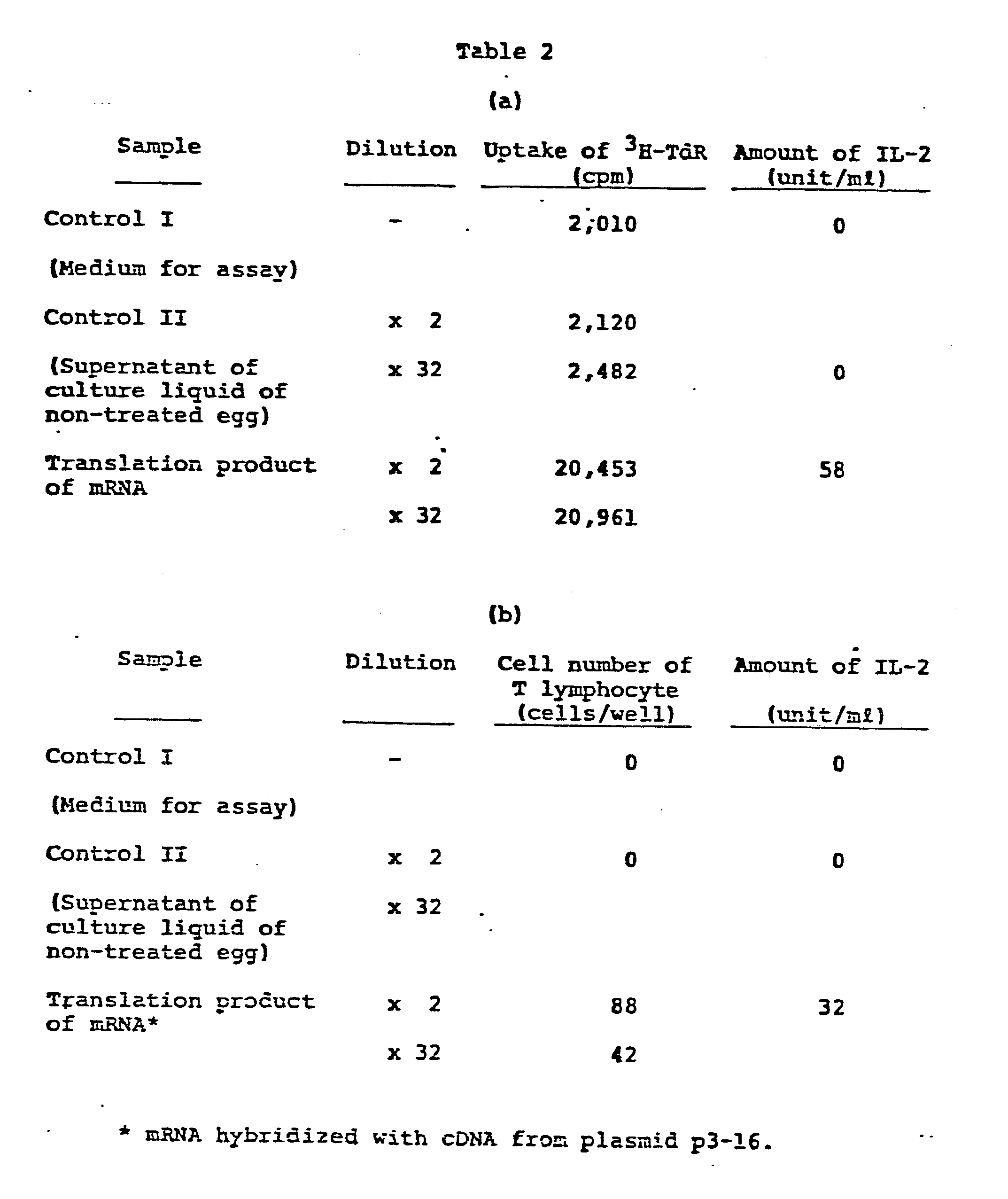
Claims (13)
Applications Claiming Priority (2)
| Application Number | Priority Date | Filing Date | Title |
|---|---|---|---|
| GB838327880A GB8327880D0 (en) | 1983-10-18 | 1983-10-18 | Saccharomyces cerevisiae |
| GB8327880 | 1983-10-18 |
Publications (1)
| Publication Number | Publication Date |
|---|---|
| EP0142268A1 true EP0142268A1 (en) | 1985-05-22 |
Family
ID=10550399
Family Applications (1)
| Application Number | Title | Priority Date | Filing Date |
|---|---|---|---|
| EP84306934A Withdrawn EP0142268A1 (en) | 1983-10-18 | 1984-10-11 | Saccharomyces cerevisiae possessing gene coding for interleukin-2 polypeptide and method for producing interleukin-2 using the yeast |
Country Status (3)
| Country | Link |
|---|---|
| EP (1) | EP0142268A1 (en) |
| JP (1) | JPS6091995A (en) |
| GB (1) | GB8327880D0 (en) |
Cited By (22)
| Publication number | Priority date | Publication date | Assignee | Title |
|---|---|---|---|---|
| EP0162898A4 (en) * | 1983-11-14 | 1987-07-23 | Chiron Corp | Interleukin-2 production using cloned genes for interleukin-2 and yeast alpha-factor. |
| FR2598433A1 (en) * | 1986-05-12 | 1987-11-13 | Hoffmann La Roche | PROCESS FOR THE PRODUCTION OF HUMAN INTERLEUKIN-2, INTERLEUKIN-2 THUS OBTAINED, ITS USE AS A MEDICAMENT AND PHARMACEUTICAL COMPOSITION CONTAINING THE SAME |
| EP0288809A1 (en) * | 1987-04-16 | 1988-11-02 | Hoechst Aktiengesellschaft | Bifunctional proteins |
| US4853332A (en) * | 1982-10-19 | 1989-08-01 | Cetus Corporation | Structural genes, plasmids and transformed cells for producing cysteine depleted muteins of biologically active proteins |
| EP0339568A1 (en) * | 1988-04-25 | 1989-11-02 | Phillips Petroleum Company | Expression of Human Interleukin-2 in Methylotrophic Yeasts |
| US4908433A (en) * | 1984-04-25 | 1990-03-13 | Sloan-Kettering Institute For Cancer Research | Uses of interleukin-2 |
| US4908434A (en) * | 1984-04-25 | 1990-03-13 | Sloan-Kettering Institute For Cancer Research | Process for preparing purified interleukin-2 |
| US4925919A (en) * | 1984-04-25 | 1990-05-15 | Roland Mertelsmann | Purified interleukin 2 |
| WO1991005052A1 (en) * | 1989-09-28 | 1991-04-18 | Leningradsky Gosudarstvenny Universitet | Method for obtaining a polypeptide with human-interleukin-2 activity, secreted by yeast cells, saccharomyces cerevisiae |
| US5324639A (en) * | 1990-09-04 | 1994-06-28 | The Salk Institute Biotechnology/Industrial Assoc, Inc. | Production of insulin-like growth factor-1 in methylotrophic yeast cells |
| US5419899A (en) * | 1984-03-28 | 1995-05-30 | Koths; Kirston | Purified, reduced recombinant interleukin-2 compositions |
| US5541112A (en) * | 1991-04-01 | 1996-07-30 | Salk Institute Biotechnology/Industrial Associates | Genes which influence pichia proteolytic activity, and uses therefor |
| US5612198A (en) * | 1990-09-04 | 1997-03-18 | The Salk Institute | Production of insulin-like growth factor-1 in methylotrophic yeast cells |
| US6689783B2 (en) | 2001-03-29 | 2004-02-10 | Schering Corporation | Aryl oxime-piperazines useful as CCR5 antagonists |
| RU2230781C1 (en) * | 2002-12-27 | 2004-06-20 | Общество с ограниченной ответственностью "Биотех" | Yeast strain saccharomyces cerevisiae 1-60-d578 (msil) as producer of recombinant human interleukin-2 and method for its preparing |
| WO2004085406A1 (en) | 2003-03-24 | 2004-10-07 | F. Hoffmann-La Roche Ag | Benzyl-pyridazinons as reverse transcriptase inhibitors |
| WO2007045573A1 (en) | 2005-10-19 | 2007-04-26 | F. Hoffmann-La Roche Ag | Phenyl-acetamide nnrt inhibitors |
| WO2008019968A1 (en) | 2006-08-16 | 2008-02-21 | F. Hoffmann-La Roche Ag | Non-nucleoside reverse transcriptase inhibitors |
| WO2008071587A2 (en) | 2006-12-13 | 2008-06-19 | F. Hoffmann-La Roche Ag | 2-(piperidin-4-yl)-4-phenoxy- or phenylamino-pyrimidine derivatives as non-nucleoside reverse transcriptase inhibitors |
| DE102007014752A1 (en) | 2007-03-28 | 2008-10-02 | Dusek, Niels, Dr. | Interleukin for use with human identical amino acid sequence and glycosyl residue for use as therapeutic agent for bacterial infections, sepsis, mycoplasma disease, autoimmune disease and multiple sclerosis in humans and animals |
| WO2008145562A1 (en) | 2007-05-30 | 2008-12-04 | F. Hoffmann-La Roche Ag | Non-nucleoside reverse transcriptase inhibitors |
| WO2009080534A1 (en) | 2007-12-21 | 2009-07-02 | F. Hoffmann-La Roche Ag | Heterocyclic antiviral compounds |
Families Citing this family (1)
| Publication number | Priority date | Publication date | Assignee | Title |
|---|---|---|---|---|
| KR100426286B1 (en) * | 1996-01-09 | 2004-06-30 | 주식회사 엘지생명과학 | Process for the preparation of human interleukin-11 in yeast |
Citations (2)
| Publication number | Priority date | Publication date | Assignee | Title |
|---|---|---|---|---|
| EP0091539A1 (en) * | 1982-03-31 | 1983-10-19 | Ajinomoto Co., Inc. | Gene coding for interleukin-2 polypeptide, recombinant DNA carrying said gene, cell lines possessing the recombinant DNA,and method for producing interleukin-2 using said cells |
| EP0775771A1 (en) * | 1995-11-22 | 1997-05-28 | Jensen Ag Burgdorf | Device and method for treating laundry articles |
Family Cites Families (1)
| Publication number | Priority date | Publication date | Assignee | Title |
|---|---|---|---|---|
| JPS58170798A (en) * | 1982-03-31 | 1983-10-07 | Japan Found Cancer | Messenger rna and its preparation |
-
1983
- 1983-10-18 GB GB838327880A patent/GB8327880D0/en active Pending
-
1984
- 1984-09-27 JP JP59200595A patent/JPS6091995A/en active Pending
- 1984-10-11 EP EP84306934A patent/EP0142268A1/en not_active Withdrawn
Patent Citations (2)
| Publication number | Priority date | Publication date | Assignee | Title |
|---|---|---|---|---|
| EP0091539A1 (en) * | 1982-03-31 | 1983-10-19 | Ajinomoto Co., Inc. | Gene coding for interleukin-2 polypeptide, recombinant DNA carrying said gene, cell lines possessing the recombinant DNA,and method for producing interleukin-2 using said cells |
| EP0775771A1 (en) * | 1995-11-22 | 1997-05-28 | Jensen Ag Burgdorf | Device and method for treating laundry articles |
Cited By (29)
| Publication number | Priority date | Publication date | Assignee | Title |
|---|---|---|---|---|
| US4853332A (en) * | 1982-10-19 | 1989-08-01 | Cetus Corporation | Structural genes, plasmids and transformed cells for producing cysteine depleted muteins of biologically active proteins |
| EP0162898A4 (en) * | 1983-11-14 | 1987-07-23 | Chiron Corp | Interleukin-2 production using cloned genes for interleukin-2 and yeast alpha-factor. |
| US5419899A (en) * | 1984-03-28 | 1995-05-30 | Koths; Kirston | Purified, reduced recombinant interleukin-2 compositions |
| US5614185A (en) * | 1984-03-28 | 1997-03-25 | Chiron Corporation | Compositions containing reduced, microbially produced interleukin-2 (IL-2) |
| US4908433A (en) * | 1984-04-25 | 1990-03-13 | Sloan-Kettering Institute For Cancer Research | Uses of interleukin-2 |
| US4925919A (en) * | 1984-04-25 | 1990-05-15 | Roland Mertelsmann | Purified interleukin 2 |
| US4908434A (en) * | 1984-04-25 | 1990-03-13 | Sloan-Kettering Institute For Cancer Research | Process for preparing purified interleukin-2 |
| BE1000717A5 (en) * | 1986-05-12 | 1989-03-21 | Hoffmann La Roche | PRONOUNCED EXPRESSION OF HUMAN INTERLEUKIN-2 IN MAMMALIAN CELLS. |
| GB2190382B (en) * | 1986-05-12 | 1990-08-15 | Hoffmann La Roche | "enhanced expression of human interleukin-2 or analogues in mammalian cells. |
| GB2190382A (en) * | 1986-05-12 | 1987-11-18 | Hoffmann La Roche | Enhanced expression of human interleukin-2 in mammalian cells |
| FR2598433A1 (en) * | 1986-05-12 | 1987-11-13 | Hoffmann La Roche | PROCESS FOR THE PRODUCTION OF HUMAN INTERLEUKIN-2, INTERLEUKIN-2 THUS OBTAINED, ITS USE AS A MEDICAMENT AND PHARMACEUTICAL COMPOSITION CONTAINING THE SAME |
| EP0288809A1 (en) * | 1987-04-16 | 1988-11-02 | Hoechst Aktiengesellschaft | Bifunctional proteins |
| EP0339568A1 (en) * | 1988-04-25 | 1989-11-02 | Phillips Petroleum Company | Expression of Human Interleukin-2 in Methylotrophic Yeasts |
| WO1991005052A1 (en) * | 1989-09-28 | 1991-04-18 | Leningradsky Gosudarstvenny Universitet | Method for obtaining a polypeptide with human-interleukin-2 activity, secreted by yeast cells, saccharomyces cerevisiae |
| US5324639A (en) * | 1990-09-04 | 1994-06-28 | The Salk Institute Biotechnology/Industrial Assoc, Inc. | Production of insulin-like growth factor-1 in methylotrophic yeast cells |
| US5612198A (en) * | 1990-09-04 | 1997-03-18 | The Salk Institute | Production of insulin-like growth factor-1 in methylotrophic yeast cells |
| US5541112A (en) * | 1991-04-01 | 1996-07-30 | Salk Institute Biotechnology/Industrial Associates | Genes which influence pichia proteolytic activity, and uses therefor |
| US5691166A (en) * | 1991-04-01 | 1997-11-25 | Sibia Neurosciences, Inc. | Genes which influence pichia proteolytic activity, and uses therefor |
| US5831053A (en) * | 1991-04-01 | 1998-11-03 | Sibia Neurosciences, Inc. | Genes which influence pichia proteolytic activity, and uses therefor |
| US6051419A (en) * | 1991-04-01 | 2000-04-18 | Sibia Neurosciences, Inc. | Genes which influence pichia proteolytic activity, and uses therefor |
| US6689783B2 (en) | 2001-03-29 | 2004-02-10 | Schering Corporation | Aryl oxime-piperazines useful as CCR5 antagonists |
| RU2230781C1 (en) * | 2002-12-27 | 2004-06-20 | Общество с ограниченной ответственностью "Биотех" | Yeast strain saccharomyces cerevisiae 1-60-d578 (msil) as producer of recombinant human interleukin-2 and method for its preparing |
| WO2004085406A1 (en) | 2003-03-24 | 2004-10-07 | F. Hoffmann-La Roche Ag | Benzyl-pyridazinons as reverse transcriptase inhibitors |
| WO2007045573A1 (en) | 2005-10-19 | 2007-04-26 | F. Hoffmann-La Roche Ag | Phenyl-acetamide nnrt inhibitors |
| WO2008019968A1 (en) | 2006-08-16 | 2008-02-21 | F. Hoffmann-La Roche Ag | Non-nucleoside reverse transcriptase inhibitors |
| WO2008071587A2 (en) | 2006-12-13 | 2008-06-19 | F. Hoffmann-La Roche Ag | 2-(piperidin-4-yl)-4-phenoxy- or phenylamino-pyrimidine derivatives as non-nucleoside reverse transcriptase inhibitors |
| DE102007014752A1 (en) | 2007-03-28 | 2008-10-02 | Dusek, Niels, Dr. | Interleukin for use with human identical amino acid sequence and glycosyl residue for use as therapeutic agent for bacterial infections, sepsis, mycoplasma disease, autoimmune disease and multiple sclerosis in humans and animals |
| WO2008145562A1 (en) | 2007-05-30 | 2008-12-04 | F. Hoffmann-La Roche Ag | Non-nucleoside reverse transcriptase inhibitors |
| WO2009080534A1 (en) | 2007-12-21 | 2009-07-02 | F. Hoffmann-La Roche Ag | Heterocyclic antiviral compounds |
Also Published As
| Publication number | Publication date |
|---|---|
| GB8327880D0 (en) | 1983-11-16 |
| JPS6091995A (en) | 1985-05-23 |
Similar Documents
| Publication | Publication Date | Title |
|---|---|---|
| EP0091539B2 (en) | Gene coding for interleukin-2 polypeptide, recombinant DNA carrying said gene, cell lines possessing the recombinant DNA,and method for producing interleukin-2 using said cells | |
| CA1341562C (en) | Gene coded for interleukin-2 polypeptide, recombinant dna carrying the said gene, a living cell line possessing the recombinant dna, and method for producing interleukin-2 using the said cell | |
| EP0060057B1 (en) | Expression of polypeptides in yeast | |
| EP0077670B1 (en) | Human immune interferon | |
| EP0159714B1 (en) | Production of interferon gamma | |
| EP0456332B1 (en) | Purified interleukin 1 and DNA coding for interleukin 1 and their preparation, vectors containing such DNA and their preparation and use in transforming hosts to permit expression of interleukin 1 | |
| EP0083777A1 (en) | Physiologically active peptide with between 147 and 162 amino acid residues | |
| JP2633227B2 (en) | Animal interferon | |
| US5122459A (en) | Gene encoding biologically active human interleukin 1 | |
| EP0146901A1 (en) | A promotor and use thereof | |
| JPH0659220B2 (en) | Gene encoding a polypeptide having human interleukin 2 activity | |
| EP0343388A2 (en) | Expression of interferon-gamma in methylotrophic yeasts | |
| HU197938B (en) | Process for producing gene encoding interleukin-2 polypeptide, recombinant dna carrying the gene, living cell line having the recombinant dna and process for producing interleukin-2 with such cells | |
| KR940002537B1 (en) | DNA Sequences Encoding Interleukin-2 Polypeptides, Recombinant DNA, and Methods of Making Interleukin-2 | |
| PH26492A (en) | Recombinant human immune interferon |
Legal Events
| Date | Code | Title | Description |
|---|---|---|---|
| PUAI | Public reference made under article 153(3) epc to a published international application that has entered the european phase |
Free format text: ORIGINAL CODE: 0009012 |
|
| AK | Designated contracting states |
Designated state(s): CH DE FR GB IT LI SE |
|
| 17P | Request for examination filed |
Effective date: 19851105 |
|
| 17Q | First examination report despatched |
Effective date: 19861001 |
|
| STAA | Information on the status of an ep patent application or granted ep patent |
Free format text: STATUS: THE APPLICATION IS DEEMED TO BE WITHDRAWN |
|
| 18D | Application deemed to be withdrawn |
Effective date: 19870812 |
|
| RIN1 | Information on inventor provided before grant (corrected) |
Inventor name: TANIGUCHI, TADATSUGU Inventor name: SATO, TAKAAKI Inventor name: HAMURO, JUNJI Inventor name: SANO, KONOSUKE Inventor name: MATSUI, HIROSHI |