EP0134302B1 - Pharmaceutical compositions for treating resistant bacteria including anaerobes - Google Patents
Pharmaceutical compositions for treating resistant bacteria including anaerobes Download PDFInfo
- Publication number
- EP0134302B1 EP0134302B1 EP83109144A EP83109144A EP0134302B1 EP 0134302 B1 EP0134302 B1 EP 0134302B1 EP 83109144 A EP83109144 A EP 83109144A EP 83109144 A EP83109144 A EP 83109144A EP 0134302 B1 EP0134302 B1 EP 0134302B1
- Authority
- EP
- European Patent Office
- Prior art keywords
- ceftazidime
- compound
- bacteroides
- acid
- pharmaceutical composition
- Prior art date
- Legal status (The legal status is an assumption and is not a legal conclusion. Google has not performed a legal analysis and makes no representation as to the accuracy of the status listed.)
- Expired
Links
- 239000008194 pharmaceutical composition Substances 0.000 title claims description 9
- 241000894006 Bacteria Species 0.000 title description 4
- NMVPEQXCMGEDNH-TZVUEUGBSA-N ceftazidime pentahydrate Chemical compound O.O.O.O.O.S([C@@H]1[C@@H](C(N1C=1C([O-])=O)=O)NC(=O)\C(=N/OC(C)(C)C(O)=O)C=2N=C(N)SC=2)CC=1C[N+]1=CC=CC=C1 NMVPEQXCMGEDNH-TZVUEUGBSA-N 0.000 claims abstract description 28
- 229960000484 ceftazidime Drugs 0.000 claims abstract description 27
- GMJQFFRLFJLBSC-XJNRBXITSA-M potassium;(2s,3s,5r)-3-(chloromethyl)-3-methyl-4,4,7-trioxo-4$l^{6}-thia-1-azabicyclo[3.2.0]heptane-2-carboxylate Chemical compound [K+].O=S1(=O)[C@](C)(CCl)[C@H](C([O-])=O)N2C(=O)C[C@H]21 GMJQFFRLFJLBSC-XJNRBXITSA-M 0.000 claims abstract description 12
- 241000606125 Bacteroides Species 0.000 claims abstract description 10
- -1 BL-P 2013 compound Chemical class 0.000 claims description 33
- 150000003839 salts Chemical class 0.000 claims description 13
- 239000002253 acid Substances 0.000 claims description 10
- 150000002148 esters Chemical class 0.000 claims description 10
- 231100000252 nontoxic Toxicity 0.000 claims description 10
- 230000003000 nontoxic effect Effects 0.000 claims description 10
- 239000000203 mixture Substances 0.000 claims description 7
- XAEFZNCEHLXOMS-UHFFFAOYSA-M potassium benzoate Chemical compound [K+].[O-]C(=O)C1=CC=CC=C1 XAEFZNCEHLXOMS-UHFFFAOYSA-M 0.000 claims description 3
- 208000034974 Bacteroides Infections Diseases 0.000 abstract description 6
- 239000000126 substance Substances 0.000 abstract description 5
- 208000020350 Bacteroides infectious disease Diseases 0.000 abstract description 2
- 230000002401 inhibitory effect Effects 0.000 abstract description 2
- 241000124008 Mammalia Species 0.000 abstract 1
- 241000606124 Bacteroides fragilis Species 0.000 description 11
- 208000015181 infectious disease Diseases 0.000 description 11
- 239000004480 active ingredient Substances 0.000 description 5
- JGSARLDLIJGVTE-MBNYWOFBSA-N Penicillin G Chemical compound N([C@H]1[C@H]2SC([C@@H](N2C1=O)C(O)=O)(C)C)C(=O)CC1=CC=CC=C1 JGSARLDLIJGVTE-MBNYWOFBSA-N 0.000 description 4
- 238000001990 intravenous administration Methods 0.000 description 4
- 229930186147 Cephalosporin Natural products 0.000 description 3
- 241000699670 Mus sp. Species 0.000 description 3
- 229930182555 Penicillin Natural products 0.000 description 3
- ZMANZCXQSJIPKH-UHFFFAOYSA-N Triethylamine Chemical compound CCN(CC)CC ZMANZCXQSJIPKH-UHFFFAOYSA-N 0.000 description 3
- 150000003863 ammonium salts Chemical class 0.000 description 3
- 230000003115 biocidal effect Effects 0.000 description 3
- 230000037396 body weight Effects 0.000 description 3
- 229940124587 cephalosporin Drugs 0.000 description 3
- 230000000694 effects Effects 0.000 description 3
- 238000000034 method Methods 0.000 description 3
- 239000003826 tablet Substances 0.000 description 3
- DGAQECJNVWCQMB-PUAWFVPOSA-M Ilexoside XXIX Chemical compound C[C@@H]1CC[C@@]2(CC[C@@]3(C(=CC[C@H]4[C@]3(CC[C@@H]5[C@@]4(CC[C@@H](C5(C)C)OS(=O)(=O)[O-])C)C)[C@@H]2[C@]1(C)O)C)C(=O)O[C@H]6[C@@H]([C@H]([C@@H]([C@H](O6)CO)O)O)O.[Na+] DGAQECJNVWCQMB-PUAWFVPOSA-M 0.000 description 2
- GUBGYTABKSRVRQ-QKKXKWKRSA-N Lactose Natural products OC[C@H]1O[C@@H](O[C@H]2[C@H](O)[C@@H](O)C(O)O[C@@H]2CO)[C@H](O)[C@@H](O)[C@H]1O GUBGYTABKSRVRQ-QKKXKWKRSA-N 0.000 description 2
- 206010058674 Pelvic Infection Diseases 0.000 description 2
- NBIIXXVUZAFLBC-UHFFFAOYSA-N Phosphoric acid Chemical class OP(O)(O)=O NBIIXXVUZAFLBC-UHFFFAOYSA-N 0.000 description 2
- 239000004098 Tetracycline Substances 0.000 description 2
- 150000001412 amines Chemical class 0.000 description 2
- 239000003242 anti bacterial agent Substances 0.000 description 2
- 230000000844 anti-bacterial effect Effects 0.000 description 2
- 229940088710 antibiotic agent Drugs 0.000 description 2
- 239000004599 antimicrobial Substances 0.000 description 2
- 239000002775 capsule Substances 0.000 description 2
- 150000001780 cephalosporins Chemical class 0.000 description 2
- 238000002512 chemotherapy Methods 0.000 description 2
- 239000003085 diluting agent Substances 0.000 description 2
- 229940079593 drug Drugs 0.000 description 2
- 239000003814 drug Substances 0.000 description 2
- 238000007918 intramuscular administration Methods 0.000 description 2
- 238000007912 intraperitoneal administration Methods 0.000 description 2
- 239000008101 lactose Substances 0.000 description 2
- HQKMJHAJHXVSDF-UHFFFAOYSA-L magnesium stearate Chemical compound [Mg+2].CCCCCCCCCCCCCCCCCC([O-])=O.CCCCCCCCCCCCCCCCCC([O-])=O HQKMJHAJHXVSDF-UHFFFAOYSA-L 0.000 description 2
- 239000000463 material Substances 0.000 description 2
- 125000004184 methoxymethyl group Chemical group [H]C([H])([H])OC([H])([H])* 0.000 description 2
- 238000007911 parenteral administration Methods 0.000 description 2
- 229940049954 penicillin Drugs 0.000 description 2
- 229910052708 sodium Inorganic materials 0.000 description 2
- 239000011734 sodium Substances 0.000 description 2
- 238000001228 spectrum Methods 0.000 description 2
- 238000007920 subcutaneous administration Methods 0.000 description 2
- FKENQMMABCRJMK-RITPCOANSA-N sulbactam Chemical compound O=S1(=O)C(C)(C)[C@H](C(O)=O)N2C(=O)C[C@H]21 FKENQMMABCRJMK-RITPCOANSA-N 0.000 description 2
- 230000002195 synergetic effect Effects 0.000 description 2
- 235000019364 tetracycline Nutrition 0.000 description 2
- 150000003522 tetracyclines Chemical class 0.000 description 2
- QJVHTELASVOWBE-AGNWQMPPSA-N (2s,5r,6r)-6-[[(2r)-2-amino-2-(4-hydroxyphenyl)acetyl]amino]-3,3-dimethyl-7-oxo-4-thia-1-azabicyclo[3.2.0]heptane-2-carboxylic acid;(2r,3z,5r)-3-(2-hydroxyethylidene)-7-oxo-4-oxa-1-azabicyclo[3.2.0]heptane-2-carboxylic acid Chemical compound OC(=O)[C@H]1C(=C/CO)/O[C@@H]2CC(=O)N21.C1([C@@H](N)C(=O)N[C@H]2[C@H]3SC([C@@H](N3C2=O)C(O)=O)(C)C)=CC=C(O)C=C1 QJVHTELASVOWBE-AGNWQMPPSA-N 0.000 description 1
- 206010060921 Abdominal abscess Diseases 0.000 description 1
- GUBGYTABKSRVRQ-XLOQQCSPSA-N Alpha-Lactose Chemical compound O[C@@H]1[C@@H](O)[C@@H](O)[C@@H](CO)O[C@H]1O[C@@H]1[C@@H](CO)O[C@H](O)[C@H](O)[C@H]1O GUBGYTABKSRVRQ-XLOQQCSPSA-N 0.000 description 1
- 206010049764 Appendiceal abscess Diseases 0.000 description 1
- 108020004256 Beta-lactamase Proteins 0.000 description 1
- 208000004020 Brain Abscess Diseases 0.000 description 1
- OYPRJOBELJOOCE-UHFFFAOYSA-N Calcium Chemical compound [Ca] OYPRJOBELJOOCE-UHFFFAOYSA-N 0.000 description 1
- 241000588923 Citrobacter Species 0.000 description 1
- 241000193403 Clostridium Species 0.000 description 1
- 206010009657 Clostridium difficile colitis Diseases 0.000 description 1
- 241000193468 Clostridium perfringens Species 0.000 description 1
- BWLUMTFWVZZZND-UHFFFAOYSA-N Dibenzylamine Chemical compound C=1C=CC=CC=1CNCC1=CC=CC=C1 BWLUMTFWVZZZND-UHFFFAOYSA-N 0.000 description 1
- 241000588697 Enterobacter cloacae Species 0.000 description 1
- PIICEJLVQHRZGT-UHFFFAOYSA-N Ethylenediamine Chemical compound NCCN PIICEJLVQHRZGT-UHFFFAOYSA-N 0.000 description 1
- 229930182566 Gentamicin Natural products 0.000 description 1
- CEAZRRDELHUEMR-URQXQFDESA-N Gentamicin Chemical compound O1[C@H](C(C)NC)CC[C@@H](N)[C@H]1O[C@H]1[C@H](O)[C@@H](O[C@@H]2[C@@H]([C@@H](NC)[C@@](C)(O)CO2)O)[C@H](N)C[C@@H]1N CEAZRRDELHUEMR-URQXQFDESA-N 0.000 description 1
- 239000004705 High-molecular-weight polyethylene Substances 0.000 description 1
- 208000036209 Intraabdominal Infections Diseases 0.000 description 1
- 241000588915 Klebsiella aerogenes Species 0.000 description 1
- FYYHWMGAXLPEAU-UHFFFAOYSA-N Magnesium Chemical compound [Mg] FYYHWMGAXLPEAU-UHFFFAOYSA-N 0.000 description 1
- 241001465754 Metazoa Species 0.000 description 1
- 241000588771 Morganella <proteobacterium> Species 0.000 description 1
- HTLZVHNRZJPSMI-UHFFFAOYSA-N N-ethylpiperidine Chemical compound CCN1CCCCC1 HTLZVHNRZJPSMI-UHFFFAOYSA-N 0.000 description 1
- 206010035669 Pneumonia aspiration Diseases 0.000 description 1
- ZLMJMSJWJFRBEC-UHFFFAOYSA-N Potassium Chemical compound [K] ZLMJMSJWJFRBEC-UHFFFAOYSA-N 0.000 description 1
- 208000003100 Pseudomembranous Enterocolitis Diseases 0.000 description 1
- 206010037128 Pseudomembranous colitis Diseases 0.000 description 1
- 206010040067 Septic embolus Diseases 0.000 description 1
- DBMJMQXJHONAFJ-UHFFFAOYSA-M Sodium laurylsulphate Chemical compound [Na+].CCCCCCCCCCCCOS([O-])(=O)=O DBMJMQXJHONAFJ-UHFFFAOYSA-M 0.000 description 1
- 229920002472 Starch Polymers 0.000 description 1
- 206010043593 Thrombophlebitis septic Diseases 0.000 description 1
- JVVXZOOGOGPDRZ-SLFFLAALSA-N [(1R,4aS,10aR)-1,4a-dimethyl-7-propan-2-yl-2,3,4,9,10,10a-hexahydrophenanthren-1-yl]methanamine Chemical compound NC[C@]1(C)CCC[C@]2(C)C3=CC=C(C(C)C)C=C3CC[C@H]21 JVVXZOOGOGPDRZ-SLFFLAALSA-N 0.000 description 1
- XAKBSHICSHRJCL-UHFFFAOYSA-N [CH2]C(=O)C1=CC=CC=C1 Chemical group [CH2]C(=O)C1=CC=CC=C1 XAKBSHICSHRJCL-UHFFFAOYSA-N 0.000 description 1
- 206010000269 abscess Diseases 0.000 description 1
- 229910052783 alkali metal Inorganic materials 0.000 description 1
- 229910000147 aluminium phosphate Inorganic materials 0.000 description 1
- 229960000723 ampicillin Drugs 0.000 description 1
- AVKUERGKIZMTKX-NJBDSQKTSA-N ampicillin Chemical compound C1([C@@H](N)C(=O)N[C@H]2[C@H]3SC([C@@H](N3C2=O)C(O)=O)(C)C)=CC=CC=C1 AVKUERGKIZMTKX-NJBDSQKTSA-N 0.000 description 1
- 239000002246 antineoplastic agent Substances 0.000 description 1
- 239000007864 aqueous solution Substances 0.000 description 1
- 239000007900 aqueous suspension Substances 0.000 description 1
- 201000009807 aspiration pneumonia Diseases 0.000 description 1
- 244000052616 bacterial pathogen Species 0.000 description 1
- JUHORIMYRDESRB-UHFFFAOYSA-N benzathine Chemical compound C=1C=CC=CC=1CNCCNCC1=CC=CC=C1 JUHORIMYRDESRB-UHFFFAOYSA-N 0.000 description 1
- 239000003781 beta lactamase inhibitor Substances 0.000 description 1
- 102000006635 beta-lactamase Human genes 0.000 description 1
- 229940126813 beta-lactamase inhibitor Drugs 0.000 description 1
- 239000008280 blood Substances 0.000 description 1
- 210000004369 blood Anatomy 0.000 description 1
- 239000011575 calcium Substances 0.000 description 1
- 229910052791 calcium Inorganic materials 0.000 description 1
- FPPNZSSZRUTDAP-UWFZAAFLSA-N carbenicillin Chemical compound N([C@H]1[C@H]2SC([C@@H](N2C1=O)C(O)=O)(C)C)C(=O)C(C(O)=O)C1=CC=CC=C1 FPPNZSSZRUTDAP-UWFZAAFLSA-N 0.000 description 1
- 229960003669 carbenicillin Drugs 0.000 description 1
- 239000000969 carrier Substances 0.000 description 1
- 229960000603 cefalotin Drugs 0.000 description 1
- VUFGUVLLDPOSBC-XRZFDKQNSA-M cephalothin sodium Chemical compound [Na+].N([C@H]1[C@@H]2N(C1=O)C(=C(CS2)COC(=O)C)C([O-])=O)C(=O)CC1=CC=CS1 VUFGUVLLDPOSBC-XRZFDKQNSA-M 0.000 description 1
- 229960005091 chloramphenicol Drugs 0.000 description 1
- WIIZWVCIJKGZOK-RKDXNWHRSA-N chloramphenicol Chemical compound ClC(Cl)C(=O)N[C@H](CO)[C@H](O)C1=CC=C([N+]([O-])=O)C=C1 WIIZWVCIJKGZOK-RKDXNWHRSA-N 0.000 description 1
- 229960002227 clindamycin Drugs 0.000 description 1
- KDLRVYVGXIQJDK-AWPVFWJPSA-N clindamycin Chemical compound CN1C[C@H](CCC)C[C@H]1C(=O)N[C@H]([C@H](C)Cl)[C@@H]1[C@H](O)[C@H](O)[C@@H](O)[C@@H](SC)O1 KDLRVYVGXIQJDK-AWPVFWJPSA-N 0.000 description 1
- 230000001010 compromised effect Effects 0.000 description 1
- 239000000039 congener Substances 0.000 description 1
- 238000012258 culturing Methods 0.000 description 1
- 229940127089 cytotoxic agent Drugs 0.000 description 1
- 230000007812 deficiency Effects 0.000 description 1
- 230000003111 delayed effect Effects 0.000 description 1
- 201000010099 disease Diseases 0.000 description 1
- 208000037265 diseases, disorders, signs and symptoms Diseases 0.000 description 1
- 239000007884 disintegrant Substances 0.000 description 1
- 238000004090 dissolution Methods 0.000 description 1
- 238000009112 empiric therapy Methods 0.000 description 1
- 239000003995 emulsifying agent Substances 0.000 description 1
- 230000001804 emulsifying effect Effects 0.000 description 1
- 229940092559 enterobacter aerogenes Drugs 0.000 description 1
- 210000000416 exudates and transudate Anatomy 0.000 description 1
- 239000000796 flavoring agent Substances 0.000 description 1
- 235000013355 food flavoring agent Nutrition 0.000 description 1
- 235000003599 food sweetener Nutrition 0.000 description 1
- 210000001035 gastrointestinal tract Anatomy 0.000 description 1
- 229960002518 gentamicin Drugs 0.000 description 1
- 239000011521 glass Substances 0.000 description 1
- 230000002489 hematologic effect Effects 0.000 description 1
- 125000000623 heterocyclic group Chemical group 0.000 description 1
- 238000000338 in vitro Methods 0.000 description 1
- 238000001727 in vivo Methods 0.000 description 1
- 230000002458 infectious effect Effects 0.000 description 1
- 239000003112 inhibitor Substances 0.000 description 1
- 230000000968 intestinal effect Effects 0.000 description 1
- 210000000936 intestine Anatomy 0.000 description 1
- 230000003834 intracellular effect Effects 0.000 description 1
- 229960000318 kanamycin Drugs 0.000 description 1
- 229930027917 kanamycin Natural products 0.000 description 1
- SBUJHOSQTJFQJX-NOAMYHISSA-N kanamycin Chemical compound O[C@@H]1[C@@H](O)[C@H](O)[C@@H](CN)O[C@@H]1O[C@H]1[C@H](O)[C@@H](O[C@@H]2[C@@H]([C@@H](N)[C@H](O)[C@@H](CO)O2)O)[C@H](N)C[C@@H]1N SBUJHOSQTJFQJX-NOAMYHISSA-N 0.000 description 1
- 229930182823 kanamycin A Natural products 0.000 description 1
- 210000004185 liver Anatomy 0.000 description 1
- 231100000053 low toxicity Toxicity 0.000 description 1
- 239000007937 lozenge Substances 0.000 description 1
- 239000000314 lubricant Substances 0.000 description 1
- 201000003453 lung abscess Diseases 0.000 description 1
- 239000011777 magnesium Substances 0.000 description 1
- 229910052749 magnesium Inorganic materials 0.000 description 1
- 235000019359 magnesium stearate Nutrition 0.000 description 1
- 229940057948 magnesium stearate Drugs 0.000 description 1
- 210000004400 mucous membrane Anatomy 0.000 description 1
- 210000000056 organ Anatomy 0.000 description 1
- 239000002245 particle Substances 0.000 description 1
- 229940056360 penicillin g Drugs 0.000 description 1
- 150000002960 penicillins Chemical class 0.000 description 1
- 125000005633 phthalidyl group Chemical group 0.000 description 1
- 229920001223 polyethylene glycol Polymers 0.000 description 1
- 229910052700 potassium Inorganic materials 0.000 description 1
- 239000011591 potassium Substances 0.000 description 1
- 159000000001 potassium salts Chemical class 0.000 description 1
- 239000000843 powder Substances 0.000 description 1
- 238000002360 preparation method Methods 0.000 description 1
- MFDFERRIHVXMIY-UHFFFAOYSA-N procaine Chemical compound CCN(CC)CCOC(=O)C1=CC=C(N)C=C1 MFDFERRIHVXMIY-UHFFFAOYSA-N 0.000 description 1
- 229960004919 procaine Drugs 0.000 description 1
- 230000001681 protective effect Effects 0.000 description 1
- 239000001509 sodium citrate Substances 0.000 description 1
- NLJMYIDDQXHKNR-UHFFFAOYSA-K sodium citrate Chemical compound O.O.[Na+].[Na+].[Na+].[O-]C(=O)CC(O)(CC([O-])=O)C([O-])=O NLJMYIDDQXHKNR-UHFFFAOYSA-K 0.000 description 1
- 235000019333 sodium laurylsulphate Nutrition 0.000 description 1
- 159000000000 sodium salts Chemical class 0.000 description 1
- 239000000243 solution Substances 0.000 description 1
- 239000008107 starch Substances 0.000 description 1
- 235000019698 starch Nutrition 0.000 description 1
- 239000008174 sterile solution Substances 0.000 description 1
- 239000013589 supplement Substances 0.000 description 1
- 239000000375 suspending agent Substances 0.000 description 1
- 239000003765 sweetening agent Substances 0.000 description 1
- 235000020357 syrup Nutrition 0.000 description 1
- 239000006188 syrup Substances 0.000 description 1
- 230000009885 systemic effect Effects 0.000 description 1
- 239000000454 talc Substances 0.000 description 1
- 229910052623 talc Inorganic materials 0.000 description 1
- 235000012222 talc Nutrition 0.000 description 1
- 229960002180 tetracycline Drugs 0.000 description 1
- 229930101283 tetracycline Natural products 0.000 description 1
- 229940040944 tetracyclines Drugs 0.000 description 1
- 231100000331 toxic Toxicity 0.000 description 1
- 230000002588 toxic effect Effects 0.000 description 1
- 125000005270 trialkylamine group Chemical group 0.000 description 1
- 210000001215 vagina Anatomy 0.000 description 1
- XLYOFNOQVPJJNP-UHFFFAOYSA-N water Chemical compound O XLYOFNOQVPJJNP-UHFFFAOYSA-N 0.000 description 1
- 239000008215 water for injection Substances 0.000 description 1
- 229940126085 β‑Lactamase Inhibitor Drugs 0.000 description 1
Classifications
-
- A—HUMAN NECESSITIES
- A61—MEDICAL OR VETERINARY SCIENCE; HYGIENE
- A61K—PREPARATIONS FOR MEDICAL, DENTAL OR TOILETRY PURPOSES
- A61K31/00—Medicinal preparations containing organic active ingredients
- A61K31/33—Heterocyclic compounds
- A61K31/395—Heterocyclic compounds having nitrogen as a ring hetero atom, e.g. guanethidine or rifamycins
- A61K31/54—Heterocyclic compounds having nitrogen as a ring hetero atom, e.g. guanethidine or rifamycins having six-membered rings with at least one nitrogen and one sulfur as the ring hetero atoms, e.g. sulthiame
- A61K31/542—Heterocyclic compounds having nitrogen as a ring hetero atom, e.g. guanethidine or rifamycins having six-membered rings with at least one nitrogen and one sulfur as the ring hetero atoms, e.g. sulthiame ortho- or peri-condensed with heterocyclic ring systems
- A61K31/545—Compounds containing 5-thia-1-azabicyclo [4.2.0] octane ring systems, i.e. compounds containing a ring system of the formula:, e.g. cephalosporins, cefaclor, or cephalexine
Definitions
- the present invention discloses drug, bio-affecting and body treating compositions containing semisynthetic heterocyclic active ingredients of the penicillin and cephalosporin series (USPTO Class/subclass 424/271).
- Anaerobes exist as normal flora in the oropharnyx, vagina, and intestine and are associated with 90- percent of intraabdominal abscesses, 95 percent of appendiceal abscesses, 75 percent of upper tract female pelvic infections, 90 percent of aspiration pneumonia, 95 percent of lung abscesses, and 85 percent of brain abscesses.
- Anaerobes of the genus Bacteroides and particularly Bacteroides fragilis are found in 70 percent of intraabdominal and pelvic infections (Gorbach, S. L. J. Infect. Diseases 135, Supplement, March, 1977 pp. S2 and S3).
- Chemotherapeutic agents effective against B. fragilis are blighted by serious deficiencies. Clindamycin, the presently preferred antibiotic for the treatment of Bacteroides infection is compromised by the problem of pseudomembranous colitis which is sometimes fatal. Tetracycline and its congeners are relatively, inactive against 30 to 50 percent of the strains of B. fragilis and intravenous treatment with large doses of the tetracyclines has serious liver, renal and intestinal complications. Chloramphenicol has a wide spectrum of activity against B. fragilis but is plagued by hematologic complications. Carbenicillin once believed to be widely effective against B. fragilis now appears to be roughly equivalent to penicillin G and is only effective against about 10 to 20 percent of the strains of B. fragilis (Gorbach, S. L., op, cit.).
- Ceftazidime also referred to as GR 20263, is a new parenteral aminothiazolyl cephalosporin which has the advantages of stability to a wide range of ⁇ -lactamases, a broad antibacterial spectrum, and low toxicity. Ceftazidime, however, has low activity against B. fragilis and is believed to be ineffective in treating infections caused by that organism (Wise, R. et al., Antimicrobial Agents & Chemotherapy 17, 884-889 (1980)). Ceftazidime has the following structural formula and is the subject of U.S. Patent 4,258,041 patented March 24, 1981:
- ceftazidime is intended to include not only the antibiotic having the foregoing structural formula but also its non-toxic salts such as the sodium salt and its non-toxic metabolically labile esters.
- Various salts and esters of the type contemplated are identified in the foregoing patent at column 4 beginning at line 46 and continuing to column 5 at line 20.
- the entire disclosure of U.S. Patent 4,258,041 is incorporated herein by reference.
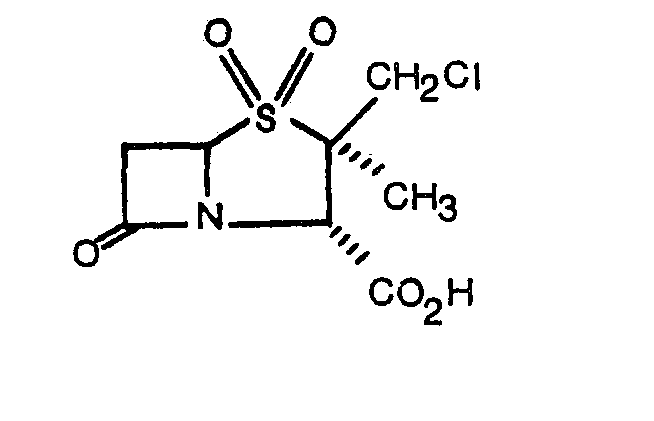
- BL-P 2013 is an acid which with its pharmaceutically acceptable salts and physiologically hydrolyzable esters are the subject of Belgian Patent No. 887,173.
- BL-P 2013 acid has the following structural formula:
- BL-P 2013 compound when used herein is intended to include the acid having the preceding formula, its pharmaceutically acceptable salts, and the physiologically hydrolyzable estes thereof.
- the pharmaceutically acceptable salts referred to above include the non-toxic metallic salts such as the sodium, potassium, calcium, magnesium, and ammonium salts, and the substituted ammonium salts, e.g. salts of such non-toxic amines as trialkylamines (e.g. triethylamine), procaine, dibenzylamine, N-benzyl-p-phenethylamine, 1-ephenamine, N,N'-dibenzyl-ethylenediamine, dehydroabietylamine, N,N'-bis(dehydro- abietyl)ethylenediamine, N-(lower)alkylpiperidine (e.g.
- non-toxic metallic salts such as the sodium, potassium, calcium, magnesium, and ammonium salts
- substituted ammonium salts e.g. salts of such non-toxic amines as trialkylamines (e.g. triethylamine), procaine, dibenzylamine, N-benzyl-
- N-ethylpiperidine and other amines which have been used to form pharmaceutically acceptable salts of penicillins and cephalosporins.
- the most preferred salts are the alkali metal salts, i.e. the sodium and potassium salts, and the ammonium salt.
- esters and "metabolically labile esters” refer to those pharmaceutically acceptable esters known in the art to hydrolyze to the free acid form in vivo.
- esters include phenacyl, acetoxymethyl, pivaloyloxymethyl, a-acetoxyethyl, a-acetoxybenzyl, a-pivaloyloxyethyl, phthalidyl (3-phthalidyl), indanyl (5-indanyl), methoxymethyl, benzoyloxymethyl, a-ethylbutyryloxymethyl, propionyloxymethyl, valeryloxymethyl, isobutyryloxymethyl, and others with which medicinal chemists are familiar.
- the preferred esters are acetoxymethyl, pivaloyloxymethyl, methoxymethyl, 3-phthalidyl, and 5-indanyl.
- the present invention provides a composition for the treatment of bacteroides infections.
- the compositions of the present invention contain the antibiotic ceftazidime together with a BL-P 2013 compound. These compositions containing both ceftazidime and the BL-P 2013 compound are administered parenterally to a mammalian host having an infection caused by a bacteroides species.
- the present invention provides also pharmaceutical compositions containing a non-toxic amount of ceftazidime and separated therefrom a BL-P 2013 compound.
- ceftazidime is administered parenterally to a mammylian host having an infection caused by a bacteroides species.
- the BL-P 2013 compound is concurrently administered either parenterally or orally.
- ceftazidime is administered in a well tolerated non-toxic dose which in itself is ineffective to inhibit the growth of the bacteroides organism.
- the BL-P 2013 compound is administered concurrently in a non-toxic physiologically acceptable dose of sufficient size to be effective with the ceftazidime to inhibit the growth of the bacteroides organism.
- bacteria infection is intended to apply to infections wherein a Bacteroides is isolated in pure or mixed culture from the infected zone. Certain infectious processes involve several strains of bacteria which behave in a cooperative fashion to produce an infection. Such conditions are also subject to treatment according to the present invention when a Bacteroides is a member of such a mixed culture. (Gorbach, S. I. et al., New England Journal of Medicine 290, 1289-94 (1974)).
- Treatment according to the present invention should not be delayed to await positive identification when a bacteroides infection is suspected or presumed. Empirical therapy should be commenced when the above criteria are observed. Treatment is continued as long as infection persists and for 10 days or more thereafter.
- the dosage employed for adult human treatment with ceftazidime is preferably in the range of from 500 to 6,000 mg per day administered intravenously or intramuscularly.
- a dose is employed which is in itself ineffective to abate the infection, but which is well tolerated by the host and without toxic effect.
- the daily dose is administered as several divided portions during each day of treatment.
- BL-P 2013 is useful when given orally or parenterally concomitantly with ceftazidime.
- Parenteral dosage compositions containing both BL-P 2013 and ceftazidime may be employed. On a weight basis the dosage of BL-P 2013 is from 1/5 to 5 times, and preferably equal to, that of ceftazidime. As indicated they may be given either in admixture or concomitantly as separate dosage units.
- Parenteral administration includes intramuscular, subcutaneous, intraperitoneal, and intravenous administration.
- a carrier or diluent is ordinarily used in administering the BL-P 2013 compound and ceftazidime and is chosen on the basis of the intended mode of administration.
- the BL-P 2013 compound can be used in the form of tablets, capsules, lozenges, troches, powders, syrups, elixirs, aqueous solutions, and the like, in accordance with standard pharmaceutical practice.
- the proportional ratio of active ingredients to carrier will naturally depend on the chemical nature, solubility, stability and potency of the active ingredients, as well as the dosage contemplated. However, these pharmaceutical compositions will likely contain from about 5% to about 80% of carrier.
- carriers which are commonly used include lactose, sodium citrate and salts of phosphoric acid.
- Various disintegrants such as starch, and lubricating agents, such as magnesiumstearate, sodium lauryl sulfate and talc, are commonly used in tablets.
- useful diluents are lactose and high molecular weight polyethylene glycols.
- the active ingredients are combined with emulsifying and suspending agents. If desired, certain sweetening and/or flavoring agents can be added.
- parenteral administration which includes intramuscular, intraperitoneal, subcutaneous and intravenous use
- sterile solutions of the active ingredients are usually prepared, and the pH of the solutions are suitably adjusted and buffered.
- the total concentration of solutes should be preferably controlled to render the preparation substantially isotonic.
- the prescribing physician will decide the dosage to be used in a human subject including the ratio of the dosage weight of BL-P 2013 compound and ceftazidime.
- the daily oral dosage of BL-P 2013 compound will normally be in the range of from 10 to about 200 milligrams per kilogram of body weight and the daily parenteral dosage will normally be in the range of about 10 to about 100 milligrams per kilogram of body weight. In some cases it may be necessary to use dosages outside these limits and these figures are to be considered illustrative only.
- BL-P 2013 as the potassium salt was tested in vitro for synergism with ceftazidime as to the minimum inhibitory concentrations of the two substances alone and in combination on an equal weight basis against a variety of bacteria.
- Marked synergism was found with respect to various ceftazidime resistant strains of Enterobacter cloacae, Clostridium perfringens, Enterobacter aerogenes, Clostridium freundii, Citrobacter species, and Morganella morganni.
- Marginal synergism was seen in some instances with the two substances tested together as above against ceftazidime sensitive strains of these and other bacteria, but not against others.
- 16 Bacteroides fragilis strains tested all were resistant to ceftazidime and all were inhibited by a 1:1 ceftazidime-BL-P 2013 combination. The results are given below:
- Operative blood concentrations of BL-P 2013 are produced in mice following oral administration of doses of 25 to 100 mg./kg. of body weight of the following BL-P 2013 compounds to mice.
- Mice may be infected according to established technique with B. fragilis and PD 50 values (protective dose for 50% of the animals) determined employing various combinations of the foregoing substances with ceftazidime in various proportions.
- the foregoing materials, all having approximately the same particle size are dry-blended and then loaded into glass vial which is sterilized and sealed. This material is constituted for use by dissolution aseptically in from 4 to 10 ml. of water for injection.
Landscapes
- Health & Medical Sciences (AREA)
- Chemical & Material Sciences (AREA)
- Medicinal Chemistry (AREA)
- Pharmacology & Pharmacy (AREA)
- Epidemiology (AREA)
- Life Sciences & Earth Sciences (AREA)
- Animal Behavior & Ethology (AREA)
- General Health & Medical Sciences (AREA)
- Public Health (AREA)
- Veterinary Medicine (AREA)
- Pharmaceuticals Containing Other Organic And Inorganic Compounds (AREA)
- Acyclic And Carbocyclic Compounds In Medicinal Compositions (AREA)
- Medicines Containing Material From Animals Or Micro-Organisms (AREA)
Abstract
Description
- The present invention discloses drug, bio-affecting and body treating compositions containing semisynthetic heterocyclic active ingredients of the penicillin and cephalosporin series (USPTO Class/subclass 424/271).
- Anaerobes exist as normal flora in the oropharnyx, vagina, and intestine and are associated with 90- percent of intraabdominal abscesses, 95 percent of appendiceal abscesses, 75 percent of upper tract female pelvic infections, 90 percent of aspiration pneumonia, 95 percent of lung abscesses, and 85 percent of brain abscesses. Anaerobes of the genus Bacteroides and particularly Bacteroides fragilis are found in 70 percent of intraabdominal and pelvic infections (Gorbach, S. L. J. Infect. Diseases 135, Supplement, March, 1977 pp. S2 and S3).
- Chemotherapeutic agents effective against B. fragilis are blighted by serious deficiencies. Clindamycin, the presently preferred antibiotic for the treatment of Bacteroides infection is compromised by the problem of pseudomembranous colitis which is sometimes fatal. Tetracycline and its congeners are relatively, inactive against 30 to 50 percent of the strains of B. fragilis and intravenous treatment with large doses of the tetracyclines has serious liver, renal and intestinal complications. Chloramphenicol has a wide spectrum of activity against B. fragilis but is plagued by hematologic complications. Carbenicillin once believed to be widely effective against B. fragilis now appears to be roughly equivalent to penicillin G and is only effective against about 10 to 20 percent of the strains of B. fragilis (Gorbach, S. L., op, cit.).
- A mixture of amoxicillin and clavulanic acid has recently demonstrated good activity against experimentally induced Bacteroides fragilis infection (Comber, K. R. et al., 20th Interscience Conference on Antimicrobial Agents and Chemotherapy, New Orleans, La., Abstract No. 609 (Sept., 1980)). Penicillanic acid-1,1-dioxide (CP-45,899), a β-Iactamase inhibitor which is the subject of U.S. Patent No. 4,234,579, is reported to be highly synergistic with ampicillin and sporadically synergistic with other antibiotics against B. fragilis (R. J. Fass, ibid., Abstract No. 605 (Sept., 1980)).
- Ceftazidime, also referred to as GR 20263, is a new parenteral aminothiazolyl cephalosporin which has the advantages of stability to a wide range of β-lactamases, a broad antibacterial spectrum, and low toxicity. Ceftazidime, however, has low activity against B. fragilis and is believed to be ineffective in treating infections caused by that organism (Wise, R. et al., Antimicrobial Agents & Chemotherapy 17, 884-889 (1980)). Ceftazidime has the following structural formula and is the subject of U.S. Patent 4,258,041 patented March 24, 1981:
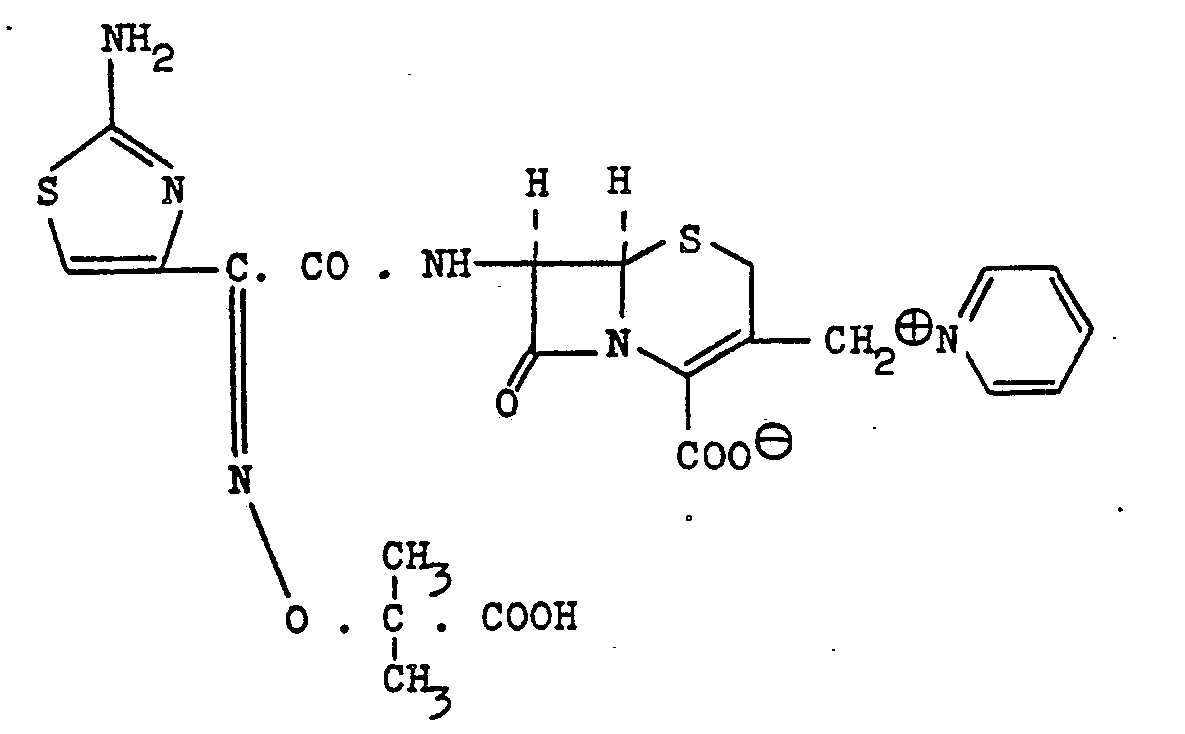
- The term "ceftazidime" is intended to include not only the antibiotic having the foregoing structural formula but also its non-toxic salts such as the sodium salt and its non-toxic metabolically labile esters. Various salts and esters of the type contemplated are identified in the foregoing patent at column 4 beginning at line 46 and continuing to column 5 at line 20. The entire disclosure of U.S. Patent 4,258,041 is incorporated herein by reference.
- The β-lactamase inhibitor BL-P 2013 is an acid which with its pharmaceutically acceptable salts and physiologically hydrolyzable esters are the subject of Belgian Patent No. 887,173. BL-P 2013 acid has the following structural formula:

- The term "BL-P 2013 compound" when used herein is intended to include the acid having the preceding formula, its pharmaceutically acceptable salts, and the physiologically hydrolyzable estes thereof.
- The pharmaceutically acceptable salts referred to above include the non-toxic metallic salts such as the sodium, potassium, calcium, magnesium, and ammonium salts, and the substituted ammonium salts, e.g. salts of such non-toxic amines as trialkylamines (e.g. triethylamine), procaine, dibenzylamine, N-benzyl-p-phenethylamine, 1-ephenamine, N,N'-dibenzyl-ethylenediamine, dehydroabietylamine, N,N'-bis(dehydro- abietyl)ethylenediamine, N-(lower)alkylpiperidine (e.g. N-ethylpiperidine) and other amines which have been used to form pharmaceutically acceptable salts of penicillins and cephalosporins. The most preferred salts are the alkali metal salts, i.e. the sodium and potassium salts, and the ammonium salt.
- The terms "physiologically hydrolyzed esters" and "metabolically labile esters" refer to those pharmaceutically acceptable esters known in the art to hydrolyze to the free acid form in vivo. Examples of such esters include phenacyl, acetoxymethyl, pivaloyloxymethyl, a-acetoxyethyl, a-acetoxybenzyl, a-pivaloyloxyethyl, phthalidyl (3-phthalidyl), indanyl (5-indanyl), methoxymethyl, benzoyloxymethyl, a-ethylbutyryloxymethyl, propionyloxymethyl, valeryloxymethyl, isobutyryloxymethyl, and others with which medicinal chemists are familiar. The preferred esters are acetoxymethyl, pivaloyloxymethyl, methoxymethyl, 3-phthalidyl, and 5-indanyl.
- The present invention provides a composition for the treatment of bacteroides infections. The compositions of the present invention contain the antibiotic ceftazidime together with a BL-P 2013 compound. These compositions containing both ceftazidime and the BL-P 2013 compound are administered parenterally to a mammalian host having an infection caused by a bacteroides species.
- The present invention provides also pharmaceutical compositions containing a non-toxic amount of ceftazidime and separated therefrom a BL-P 2013 compound. In this case ceftazidime is administered parenterally to a mammylian host having an infection caused by a bacteroides species. The BL-P 2013 compound is concurrently administered either parenterally or orally.
- In both cases ceftazidime is administered in a well tolerated non-toxic dose which in itself is ineffective to inhibit the growth of the bacteroides organism. The BL-P 2013 compound is administered concurrently in a non-toxic physiologically acceptable dose of sufficient size to be effective with the ceftazidime to inhibit the growth of the bacteroides organism.
- The presence of bacteroides infection should be presumed and treatment according to the present invention commenced when the following criteria are met (Sweet, R. L., American Journal of Obstetrics and Gynecology 122, 891-901 (1975)).
- 1. Systemic infections complicating manipulations of the gastrointestinal tract or female pelvic organs.
- 2. Foul smelling exudates containing Gram negative bacilli which fail to grow on routine aerobic cultures.
- 3. Presence of gas within an abscess.
- 4. Presence of septic pelvic thrombophlebitis or septic emboli.
- 5. Failure to respond to the commonly used bactericidal antibiotics such as kanamycin, gentamicin, penicillin and cephalothin.
- 6. The presence of poorly stained Gram negative pleomorphic rods particularly when large numbers of organism are intracellular.
- Such infections are frequently associated with damaged epithelial surfaces or mucous membranes. The term "bacteroides infection" as used herein is intended to apply to infections wherein a Bacteroides is isolated in pure or mixed culture from the infected zone. Certain infectious processes involve several strains of bacteria which behave in a cooperative fashion to produce an infection. Such conditions are also subject to treatment according to the present invention when a Bacteroides is a member of such a mixed culture. (Gorbach, S. I. et al., New England Journal of Medicine 290, 1289-94 (1974)).
- The culturing and identification of anaerobes from clinical specimens requires sophisticated methods and may require several days or even weeks. Treatment according to the present invention should not be delayed to await positive identification when a bacteroides infection is suspected or presumed. Empirical therapy should be commenced when the above criteria are observed. Treatment is continued as long as infection persists and for 10 days or more thereafter.
- The dosage employed for adult human treatment with ceftazidime is preferably in the range of from 500 to 6,000 mg per day administered intravenously or intramuscularly. A dose is employed which is in itself ineffective to abate the infection, but which is well tolerated by the host and without toxic effect. Usually the daily dose is administered as several divided portions during each day of treatment.
- BL-P 2013 is useful when given orally or parenterally concomitantly with ceftazidime. Parenteral dosage compositions containing both BL-P 2013 and ceftazidime may be employed. On a weight basis the dosage of BL-P 2013 is from 1/5 to 5 times, and preferably equal to, that of ceftazidime. As indicated they may be given either in admixture or concomitantly as separate dosage units. Parenteral administration includes intramuscular, subcutaneous, intraperitoneal, and intravenous administration.
- A carrier or diluent is ordinarily used in administering the BL-P 2013 compound and ceftazidime and is chosen on the basis of the intended mode of administration. For example, when considering the oral mode of administration, the BL-P 2013 compound can be used in the form of tablets, capsules, lozenges, troches, powders, syrups, elixirs, aqueous solutions, and the like, in accordance with standard pharmaceutical practice. The proportional ratio of active ingredients to carrier will naturally depend on the chemical nature, solubility, stability and potency of the active ingredients, as well as the dosage contemplated. However, these pharmaceutical compositions will likely contain from about 5% to about 80% of carrier. In the case of tablets for oral use, carriers which are commonly used include lactose, sodium citrate and salts of phosphoric acid. Various disintegrants such as starch, and lubricating agents, such as magnesiumstearate, sodium lauryl sulfate and talc, are commonly used in tablets. For oral administration in capsule form, useful diluents are lactose and high molecular weight polyethylene glycols. When aqueous suspensions are required for oral use, the active ingredients are combined with emulsifying and suspending agents. If desired, certain sweetening and/or flavoring agents can be added.
- For parenteral administration, which includes intramuscular, intraperitoneal, subcutaneous and intravenous use, sterile solutions of the active ingredients are usually prepared, and the pH of the solutions are suitably adjusted and buffered. For intravenous use, the total concentration of solutes should be preferably controlled to render the preparation substantially isotonic.
- The prescribing physician will decide the dosage to be used in a human subject including the ratio of the dosage weight of BL-P 2013 compound and ceftazidime. The daily oral dosage of BL-P 2013 compound will normally be in the range of from 10 to about 200 milligrams per kilogram of body weight and the daily parenteral dosage will normally be in the range of about 10 to about 100 milligrams per kilogram of body weight. In some cases it may be necessary to use dosages outside these limits and these figures are to be considered illustrative only.
- BL-P 2013 as the potassium salt was tested in vitro for synergism with ceftazidime as to the minimum inhibitory concentrations of the two substances alone and in combination on an equal weight basis against a variety of bacteria. Marked synergism was found with respect to various ceftazidime resistant strains of Enterobacter cloacae, Clostridium perfringens, Enterobacter aerogenes, Clostridium freundii, Citrobacter species, and Morganella morganni. Marginal synergism was seen in some instances with the two substances tested together as above against ceftazidime sensitive strains of these and other bacteria, but not against others. Importantly, of 16 Bacteroides fragilis strains tested, all were resistant to ceftazidime and all were inhibited by a 1:1 ceftazidime-BL-P 2013 combination. The results are given below:


- Operative blood concentrations of BL-P 2013 are produced in mice following oral administration of doses of 25 to 100 mg./kg. of body weight of the following BL-P 2013 compounds to mice.

- BL-P 2013 potassiium salt R is K
- BL-P 2024 R is

- BL-P 2036 R is

- Mice may be infected according to established technique with B. fragilis and PD50 values (protective dose for 50% of the animals) determined employing various combinations of the foregoing substances with ceftazidime in various proportions.

Claims (7)



Priority Applications (3)
| Application Number | Priority Date | Filing Date | Title |
|---|---|---|---|
| AT83109144T ATE27772T1 (en) | 1983-09-15 | 1983-09-15 | PHARMACEUTICAL COMPOSITIONS TO COMBAT THE RESISTANCE OF BACTERIAL ANAEROBIA. |
| EP83109144A EP0134302B1 (en) | 1983-09-15 | 1983-09-15 | Pharmaceutical compositions for treating resistant bacteria including anaerobes |
| DE8383109144T DE3372068D1 (en) | 1983-09-15 | 1983-09-15 | Pharmaceutical compositions for treating resistant bacteria including anaerobes |
Applications Claiming Priority (1)
| Application Number | Priority Date | Filing Date | Title |
|---|---|---|---|
| EP83109144A EP0134302B1 (en) | 1983-09-15 | 1983-09-15 | Pharmaceutical compositions for treating resistant bacteria including anaerobes |
Publications (2)
| Publication Number | Publication Date |
|---|---|
| EP0134302A1 EP0134302A1 (en) | 1985-03-20 |
| EP0134302B1 true EP0134302B1 (en) | 1987-06-16 |
Family
ID=8190683
Family Applications (1)
| Application Number | Title | Priority Date | Filing Date |
|---|---|---|---|
| EP83109144A Expired EP0134302B1 (en) | 1983-09-15 | 1983-09-15 | Pharmaceutical compositions for treating resistant bacteria including anaerobes |
Country Status (3)
| Country | Link |
|---|---|
| EP (1) | EP0134302B1 (en) |
| AT (1) | ATE27772T1 (en) |
| DE (1) | DE3372068D1 (en) |
Families Citing this family (1)
| Publication number | Priority date | Publication date | Assignee | Title |
|---|---|---|---|---|
| AT392903B (en) * | 1987-10-08 | 1991-07-10 | Hoechst Ag | Pharmaceutical preparation containing a cephalosporin and a penem antibiotic |
Family Cites Families (3)
| Publication number | Priority date | Publication date | Assignee | Title |
|---|---|---|---|---|
| US4234579A (en) * | 1977-06-07 | 1980-11-18 | Pfizer Inc. | Penicillanic acid 1,1-dioxides as β-lactamase inhibitors |
| PH16771A (en) * | 1978-04-19 | 1984-02-22 | Ciba Geigy Ag | Synergistic mixtures of cepsulodin sodium and an aminoglycoside |
| IL61880A (en) * | 1980-01-21 | 1984-11-30 | Bristol Myers Co | 2beta-chloromethyl-2alpha-methylpenam-3alpha-carboxylic acid sulfone derivatives,their preparation and pharmaceutical compositions containing them |
-
1983
- 1983-09-15 DE DE8383109144T patent/DE3372068D1/en not_active Expired
- 1983-09-15 AT AT83109144T patent/ATE27772T1/en not_active IP Right Cessation
- 1983-09-15 EP EP83109144A patent/EP0134302B1/en not_active Expired
Also Published As
| Publication number | Publication date |
|---|---|
| DE3372068D1 (en) | 1987-07-23 |
| ATE27772T1 (en) | 1987-07-15 |
| EP0134302A1 (en) | 1985-03-20 |
Similar Documents
| Publication | Publication Date | Title |
|---|---|---|
| Moellering Jr et al. | The carbapenems: new broad spectrum β-lactam antibiotics | |
| US4956179A (en) | Antibacterial combination of penicillin and cephalosporin | |
| CN103648496B (en) | The pharmaceutical composition that comprises beta-Lactam antibiotic, Sulbactam and beta-lactamase inhibitor | |
| RU2397768C2 (en) | Intended for injection compositions for overcoming beta-lactamase-mediated resistance to antibiotics with application of beta-lactamase inhibitor | |
| EP1034784A2 (en) | Pharmaceutical formulations containing clavulanic acid and an antibacterial agent | |
| US4406887A (en) | Method for treating resistant bacteria including anaerobes | |
| US4861768A (en) | 2 β-substituted thiomethylpenicillin derivatives and their preparation and use | |
| US20030109503A1 (en) | Pharmaceutical formulations comprising clavulanic acid alone or in combination with other beta-lactam antibiotics | |
| EP0134302A1 (en) | Pharmaceutical compositions for treating resistant bacteria including anaerobes | |
| US5049384A (en) | Antibacterial composition for medical use and a process for the preparation thereof | |
| EP2124935B1 (en) | Antibacterial combination and its use | |
| US4324783A (en) | Antibacterial composition for medical use | |
| US20110172200A1 (en) | Use of inhibitor of beta-lactamases and its combination with beta-lactam antibiotics | |
| US4919932A (en) | Pharmaceutical formulation for the treatment of bacterial infections | |
| US8168622B2 (en) | β-lactamase-resistant cephalosporin ester compounds and salts of thereof | |
| US4428936A (en) | Antibacterial composition for medical use | |
| US3952094A (en) | Antibacterial compositions | |
| EP0384410B1 (en) | Antimicrobial composition | |
| US4898731A (en) | Antibiotic combinations of penicillins | |
| JPH09506886A (en) | Pharmaceutical composition containing ceftriaxone and penem | |
| JPS6061528A (en) | Treatment of tolerated bacteria containing anaerobe | |
| US4203972A (en) | Penicillin composition | |
| EP0606506A1 (en) | Beta-lactamase resistant antibacterial composition | |
| US4221781A (en) | Synergistic penicillin-cephalosporin compositions and methods | |
| US3953593A (en) | Antibacterial compositions |
Legal Events
| Date | Code | Title | Description |
|---|---|---|---|
| PUAI | Public reference made under article 153(3) epc to a published international application that has entered the european phase |
Free format text: ORIGINAL CODE: 0009012 |
|
| AK | Designated contracting states |
Designated state(s): AT BE CH DE FR GB IT LI LU NL SE |
|
| 17P | Request for examination filed |
Effective date: 19850726 |
|
| 17Q | First examination report despatched |
Effective date: 19861008 |
|
| GRAA | (expected) grant |
Free format text: ORIGINAL CODE: 0009210 |
|
| AK | Designated contracting states |
Kind code of ref document: B1 Designated state(s): AT BE CH DE FR GB IT LI LU NL SE |
|
| REF | Corresponds to: |
Ref document number: 27772 Country of ref document: AT Date of ref document: 19870715 Kind code of ref document: T |
|
| REF | Corresponds to: |
Ref document number: 3372068 Country of ref document: DE Date of ref document: 19870723 |
|
| ET | Fr: translation filed | ||
| ITF | It: translation for a ep patent filed | ||
| PLBE | No opposition filed within time limit |
Free format text: ORIGINAL CODE: 0009261 |
|
| STAA | Information on the status of an ep patent application or granted ep patent |
Free format text: STATUS: NO OPPOSITION FILED WITHIN TIME LIMIT |
|
| 26N | No opposition filed | ||
| ITTA | It: last paid annual fee | ||
| EPTA | Lu: last paid annual fee | ||
| EAL | Se: european patent in force in sweden |
Ref document number: 83109144.2 |
|
| PGFP | Annual fee paid to national office [announced via postgrant information from national office to epo] |
Ref country code: SE Payment date: 19990907 Year of fee payment: 17 |
|
| PGFP | Annual fee paid to national office [announced via postgrant information from national office to epo] |
Ref country code: FR Payment date: 19990909 Year of fee payment: 17 |
|
| PGFP | Annual fee paid to national office [announced via postgrant information from national office to epo] |
Ref country code: CH Payment date: 19990913 Year of fee payment: 17 Ref country code: AT Payment date: 19990913 Year of fee payment: 17 |
|
| PGFP | Annual fee paid to national office [announced via postgrant information from national office to epo] |
Ref country code: GB Payment date: 19990915 Year of fee payment: 17 |
|
| PGFP | Annual fee paid to national office [announced via postgrant information from national office to epo] |
Ref country code: LU Payment date: 19990917 Year of fee payment: 17 |
|
| PGFP | Annual fee paid to national office [announced via postgrant information from national office to epo] |
Ref country code: DE Payment date: 19990927 Year of fee payment: 17 |
|
| PGFP | Annual fee paid to national office [announced via postgrant information from national office to epo] |
Ref country code: NL Payment date: 19990930 Year of fee payment: 17 |
|
| PGFP | Annual fee paid to national office [announced via postgrant information from national office to epo] |
Ref country code: BE Payment date: 19991119 Year of fee payment: 17 |
|
| PG25 | Lapsed in a contracting state [announced via postgrant information from national office to epo] |
Ref country code: LU Free format text: LAPSE BECAUSE OF NON-PAYMENT OF DUE FEES Effective date: 20000915 Ref country code: GB Free format text: LAPSE BECAUSE OF NON-PAYMENT OF DUE FEES Effective date: 20000915 Ref country code: AT Free format text: LAPSE BECAUSE OF NON-PAYMENT OF DUE FEES Effective date: 20000915 |
|
| PG25 | Lapsed in a contracting state [announced via postgrant information from national office to epo] |
Ref country code: SE Free format text: THE PATENT HAS BEEN ANNULLED BY A DECISION OF A NATIONAL AUTHORITY Effective date: 20000929 |
|
| PG25 | Lapsed in a contracting state [announced via postgrant information from national office to epo] |
Ref country code: LI Free format text: LAPSE BECAUSE OF NON-PAYMENT OF DUE FEES Effective date: 20000930 Ref country code: CH Free format text: LAPSE BECAUSE OF NON-PAYMENT OF DUE FEES Effective date: 20000930 Ref country code: BE Free format text: LAPSE BECAUSE OF NON-PAYMENT OF DUE FEES Effective date: 20000930 |
|
| BERE | Be: lapsed |
Owner name: BRISTOL-MYERS CY Effective date: 20000930 |
|
| PG25 | Lapsed in a contracting state [announced via postgrant information from national office to epo] |
Ref country code: NL Free format text: LAPSE BECAUSE OF NON-PAYMENT OF DUE FEES Effective date: 20010401 |
|
| GBPC | Gb: european patent ceased through non-payment of renewal fee |
Effective date: 20000915 |
|
| REG | Reference to a national code |
Ref country code: CH Ref legal event code: PL |
|
| EUG | Se: european patent has lapsed |
Ref document number: 83109144.2 |
|
| PG25 | Lapsed in a contracting state [announced via postgrant information from national office to epo] |
Ref country code: FR Free format text: LAPSE BECAUSE OF NON-PAYMENT OF DUE FEES Effective date: 20010531 |
|
| NLV4 | Nl: lapsed or anulled due to non-payment of the annual fee |
Effective date: 20010401 |
|
| PG25 | Lapsed in a contracting state [announced via postgrant information from national office to epo] |
Ref country code: DE Free format text: LAPSE BECAUSE OF NON-PAYMENT OF DUE FEES Effective date: 20010601 |
|
| REG | Reference to a national code |
Ref country code: FR Ref legal event code: ST |