EP0133736A2 - Di-enzymatic dentifrice - Google Patents
Di-enzymatic dentifrice Download PDFInfo
- Publication number
- EP0133736A2 EP0133736A2 EP84302162A EP84302162A EP0133736A2 EP 0133736 A2 EP0133736 A2 EP 0133736A2 EP 84302162 A EP84302162 A EP 84302162A EP 84302162 A EP84302162 A EP 84302162A EP 0133736 A2 EP0133736 A2 EP 0133736A2
- Authority
- EP
- European Patent Office
- Prior art keywords
- dentifrice
- amount
- per gram
- lactoperoxidase
- oxidoreductase enzyme
- Prior art date
- Legal status (The legal status is an assumption and is not a legal conclusion. Google has not performed a legal analysis and makes no representation as to the accuracy of the status listed.)
- Granted
Links
Classifications
-
- A—HUMAN NECESSITIES
- A61—MEDICAL OR VETERINARY SCIENCE; HYGIENE
- A61Q—SPECIFIC USE OF COSMETICS OR SIMILAR TOILETRY PREPARATIONS
- A61Q11/00—Preparations for care of the teeth, of the oral cavity or of dentures; Dentifrices, e.g. toothpastes; Mouth rinses
-
- B—PERFORMING OPERATIONS; TRANSPORTING
- B63—SHIPS OR OTHER WATERBORNE VESSELS; RELATED EQUIPMENT
- B63B—SHIPS OR OTHER WATERBORNE VESSELS; EQUIPMENT FOR SHIPPING
- B63B35/00—Vessels or similar floating structures specially adapted for specific purposes and not otherwise provided for
-
- A—HUMAN NECESSITIES
- A61—MEDICAL OR VETERINARY SCIENCE; HYGIENE
- A61K—PREPARATIONS FOR MEDICAL, DENTAL OR TOILETRY PURPOSES
- A61K8/00—Cosmetics or similar toiletry preparations
- A61K8/18—Cosmetics or similar toiletry preparations characterised by the composition
- A61K8/30—Cosmetics or similar toiletry preparations characterised by the composition containing organic compounds
- A61K8/64—Proteins; Peptides; Derivatives or degradation products thereof
- A61K8/66—Enzymes
Definitions
- This invention relates to dentifrice compositions and, more particularly, to antiseptic dentifrice compositions wherein hypothiocyanate, a bacterial inhibitor, is produced in situ during oral utilization of the dentifrice.
- Dentifrices in powder, paste, cream and liquid forms, are used for both cosmetic and therapeutic purposes. Consistent with these purposes, such dentifrices are formulated to contain active ingredients such as cleansing and polishing materials, as well as various antibacterial and anticaries agents for use as aids in the prevention of tooth decay. It is also suggested in the prior art that chewable dentifrices such as chewing gum and chewable tablets and lozenges be formulated with antiseptic-type compositions for beneficially effecting dental care. '
- doctor refers to oral compositions in powder, paste, cream and liquid forms as well as chewing gum, and chewable and orally soluble tablets, troches, lozenges, drops and the like and further includes flossing materials.
- a wide variety of materials have been considered for use as decay-preventative agents in dentifrice compositions.
- Some of the substances which have been so considered include para-aminobenzoic acid, a combination of urea and urease to produce ammonia during oral application of the dentifrice, ! chlorophyll, perflourinated long chain organic compounds, complex iodine, penicillin, benzohydroxamic acid, and glucose oxidase to produce hydrogen peroxide during oral application of the dentifrice.
- Substances which have been considered in connection with chewable dentifrices include: carbolic acid, menthol, thymol and eucalyptus; peroxides and perborates such as calcium peroxide and sodium perborate; and glucose oxidase, an oxidoreductase enzyme; to produce hydrogen peroxide during oral chewing of the dentifrice.
- U .S. Patent 1,171,392 discloses an antiseptic chewing gum comprising chicle, glucose and sugar together with an admixture of powdered chalk and an antiseptic such as carbolic acid, menthol, thymol or eucalyptus.
- U.S. Patent 2,290,862 (Canning, 1942) discloses an antiseptic chewing gum comprising chicle, glucose, flavoring material and sugar together with an admixture of hydrogenated peanut oil and calcium peroxide.
- U.S. Patent 2,891,868 (Heggie et al., 1959) discloses that chewing gum which is formulated with an oxygen sensitive flavoring agent can be protected against oxidative deterioration of the flavoring agent by incorporating into the formulation an enzyme system containing glucose, glucose oxidase and catalase, and that this protection is effective in the presence of bound water only and does not require free water.
- oral bacteria through enzyme systems having SH-groups, effect glycolysis of food products containing sugars and point out that lactoperoxidase, which is present in saliva, provides the means for transferring oxygen from hydroger peroxide to the oral bacteria resulting in the oxidation of the SH-containing enzymes into inactive disulfide enzymes.
- the dentifrice may be formulated with potassium thiocyanate.
- U.S. Patent 4,269,822 discloses an antiseptic dentifrice containing an oxidizable amino acid substrate and an oxidoreductase enzyme specific to such substrate for producing hydrogen peroxide and ammonia upon oral application of the dentifrice, with pre-application stability being maintained by limiting the quantity of any water present in the dentifrice.
- lactoperoxidase, sodium thiocyanate and hydrogen peroxide define a bacterial inhibitory system; that in vivo production of hydrogen peroxide might be generated by microorganisms; and that the lactoperoxidase antimicrobiological system (which also includes hydrogen peroxide and thiocyanate) is reversed by catalase, which competes with lactoperoxidase for available hydrogen peroxide.
- hypothiocyanate ion is the bacterial inhibitor formed by the system containing lactoperoxdiase, thiocyanate and hydrogen peroxide and further disclose that a high concentration of hydrogen peroxide inactivates lactoperoxdiase.
- a di-enzymatic dentifrice containing, per gram of dentrifice, from about 0.015 to about 0.6 millimole of oxidizable substrate and from about 0.5 to about 500 International Units of an oxidoreductase enzyme specific to such substrate for producing hydrogen peroxide upon oral utilization of said dentifrice and further containing from about 0.0001 to about 0.01 millimole of a thiocyanate salt and from about 0.01 to about 50 International Units of lactoperoxidase for interacting with hydrogen peroxide to produce a hypothiocyanate bacterial inhibitor, wherein the concentration of lactoperoxdiase in International Units is at least about 2% of the concentration of the oxidoreductase enzyme in International Units to thereby limit the ratio of hydrogen peroxide to lactoperoxidase during oral utilization of the dentifrice.
- the di-enzymatic dentifrice of this invention comprises a first enzyme system containing an oxidizable substrate and an oxidoreductase enzyme specific to such substrate for producing hydrogen peroxide upon oral utilization of the dentifrice, with.the chemical environment of the oral cavity providing the source of the additional reactant (oxygen) or reactants (oxygen, water) to effect the enzymatic reaction.
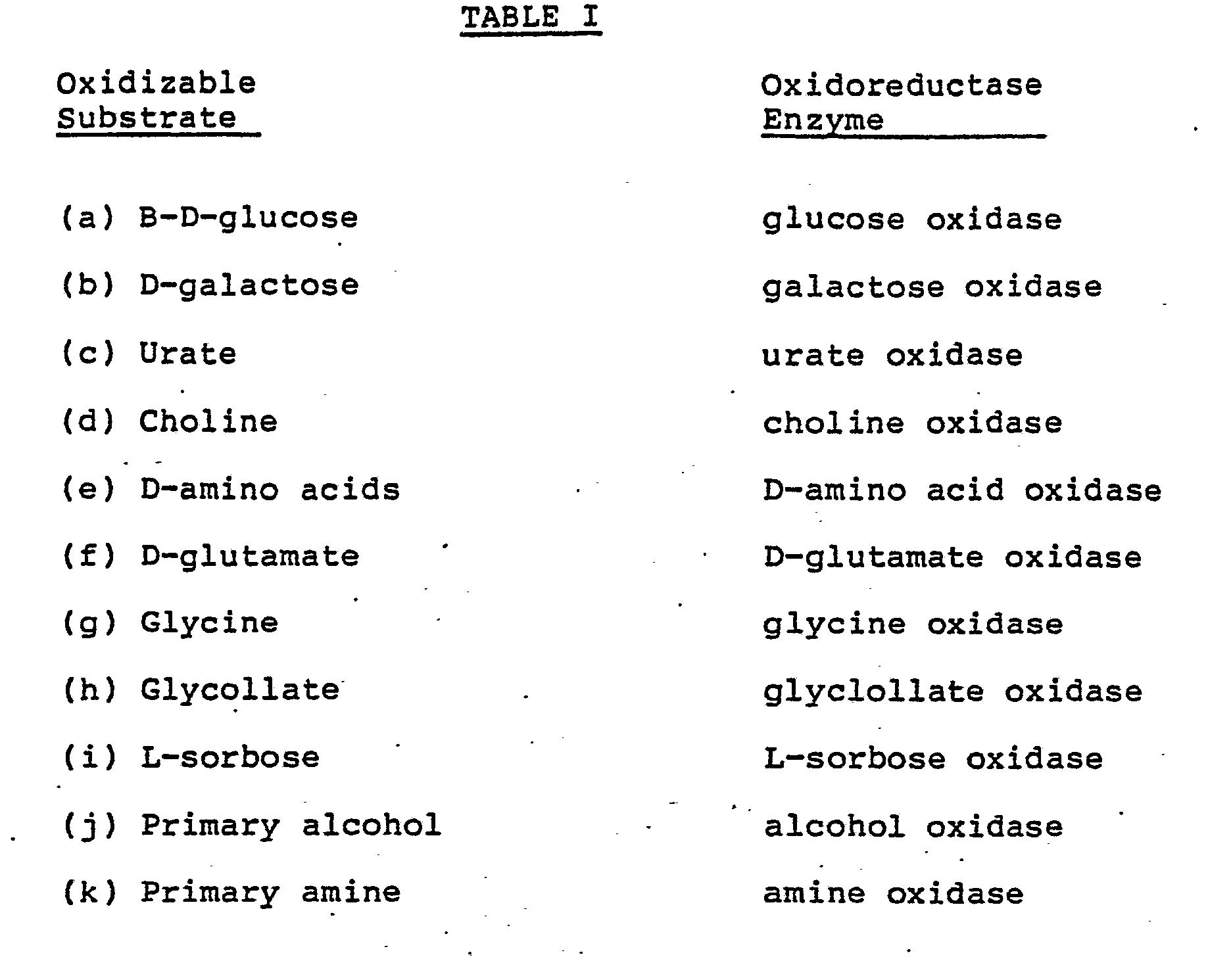
- the components of the first enzyme system which can be incorporated into the dentifrice compositions to produce hydrogen peroxide upon oral utilization of the dentifrice are illustrated by the substrate/enzyme combinations set forth in Table I.
- the oxidizable substrate is generally present in the dentifrice in an amount from about 0.015 to about 0.6 millimole per gram of dentifrice and, preferably, from about 0.025 to about 0.1 millimole per gram of dentifrice while the oxidoreductase enzyme specific to the substrate is generally present in the dentifrice in an amount from about 0.5 to about 500 International Units (hereinafter sometimes abbreviated IU) per gram of dentifrice and preferably, from about 1.0 to about 40 IU per gram of dentifrice.
- IU International Units
- millimole identifies that quantity in grams corresponding to the molecular weight of the composition divided by one thousand.
- International Unit(s) identifies that amount of enzyme that will effect catalysis of 1.0 micromole of substrate per minute at pH 7.0 and 25° C.
- Oxidoreductase enzymes are supplied in dry or liquid form with the label specifying the concentration in International Units on a per gram or per milliliter basis, as appropriate.
- the di-enzymatic dentifrice of this invention is provided with a second enzyme system containing a thiocyanate'salt and lactoperoxidase for interacting with hydrogen peroxide to produce a bacterial inhibitor in the form of a negative, monovalent hypothiocyanate ion (OSCN) which exists in solution in acid-base equilibrium with hydrogen hypothiocyanate (HOSCN).
- OSCN monovalent hypothiocyanate ion
- the thiocyanate salts which can be used in the dentifrice include sodium thiocyanate, potassium thiocyanate, ammonium thiocyanate, and mixtures thereof.
- the thiocyanate salt is generally present in the dentifrice in an amount from about 0.0001 to about 0.01 millimole per gram of dentifrice and, preferably, from about 0.001 to about 0.006 millimole per gram of dentifrice. Care should be taken in formulating the di-enzymatic dentifrice so as to avoid the use of metal compounds which inhibit or impair the effectiveness of oxidoreductase enzymes and/or peroxidase enzymes.
- Lactoperoxidase is a glycoprotein which, in one commercial embodiment, is a lyophilized powder derived from milk This commercial peroxidase has an activity of 80 IU/mg and a projected molecular weight of 93,000 from L-Tyrosine Iodination.
- the physical-chemical properties reported for lactoperoxidase include: molecular weight 78,000; partial specific volume 0.74; and heme/mole 1.0.
- Lactoperoxidase is generally present in the dentifrice in an amount from'about 0.01 to about 50 IU per gram of dentifrice and, preferably, in an amount from about 0.2 to about 4.0 IU per gram of dentifrice.
- the ratio of hydrogen peroxide to lactoperoxidase should be limited, since excess hydrogen peroxide can inhibit lactoperoxidase.
- This limitation can be effected by providing a di-enzymatic system wherein the concentration of lactoperoxidase in International Units is at least about 2% of the concentration of the oxidoreductase enzyme in International Units.
- concentration of lactoperoxidase as a percentage of the oxidoreductase enzyme is below about 2%, the inhibition of lactoperoxidase becomes so rapid that the beneficial effects of the di-enzymatic system are terminated long before the end of the utilization cycle.
- the operable integrity of the di-enzymatic system is also affected by catalase which is present in commercial glucose oxidase as well as oral surface tissue.
- Catalase which is extraneous to the di-enzymatic system of this invention, competes with lactoperoxidase for hydrogen peroxide.
- an effective amount of an enzymatic inhibitor specific to catalase can be advantageously incorporated into the di-enzymatic dentifrice.
- An ascorbate salt such as sodium ascorbate, potassium ascorbate, ascorbyl palmitate, or mixtures thereof can be used as an enzymatic inhibitor which is specific to catalase.
- an effective amount of ascorbate salt for catalase inhibition is from about 0.000001 to about 0.0001 millimole per gram of dentrifrice.
- Iron salts such as ferrous sulfate can be incorporated into the di-enzymatic dentifrice as a potentiator for ascorbate salt in its role as catalase inhibitor.
- the di-enzymatic dentifrice of this invention may advantageously be formulted with an aminohexose as, for example, an aminoglucose such as glucosamine, N-acetyl glucosamine or mixtures thereof in order to increase the yield or accumulation of the hypothiocyanate ion.
- the aminoglucose is generally present in the dentifrice in an amount from about 0.0001 to about 0.002 millimole per gram of dentifrice and, preferably, in an amount from about 0.0003 to about 0.001 millimole per gram of dentifrice.
- the use of water in formulating the dentifrice compositions should be at a relatively low concentration level in order to impart maximum stability and shelf life to the compositions.
- the unbound water should be limited to an amount not more than about 1.0 wt.%.
- a finely divided aqueous desicant such as silica aerogel may advantageously be included in the dentrifice in an amount from about 1 to about 5 wt.%.
- a buffering agent is sodium bicarbonate which can be present in the dentifrice in an amount up to about 6 wt.% as, for example, in an amount from about 4 to about 6 wt.%.
- CHEWABLE DENTIFRICE-Formulations, equipment and processing techniques have been well developed in the art for preparing and packaging chewing gum and chewable tablets and lozenges.
- the di-enzymatic system of this invention is adapted to be incorporated into these formulations.
- the enzymes described herein are subject to degradation and inactivation under conditions such as high shear and elevated temperatures. Accordingly, processing conditions should be controlled during the time span that the enzymes are being admixed with the other ingredients of the formulation and converted into finished ! products so that the temperature does not rise above 55 0 C for any extended period of time.
- the admixture used in the preparation of the di-enzymatic chewable dentifrice should be substantially free of unbound water and the finished product should be packaged in a manner so as to minimize exposure to air and moisture.
- formulations (a) and (b) illustrate chewing gum compositions while formulations (c) and (d) illustrate tablet and lozenge compositions.
- Aspartame can be substituted for sodium saccharin in these formulations.
- a di-enzymatic chewing gum was prepared having the following formulation:
- composition was formed into sticks, each of which weighed 3 grams.
- Each of 5 individuals in Group (a) was given a stick of the gum with instructions to chew the gum for 10 minutes.
- Saliva samples were separately collected from the individuals in accordance with the following time sequence: individual 1, immediately after the chewing cycle; individual 2, 60 minutes after the chewing cycle; individual 3, 120 minutes after the chewing cycle; individual 4, 180 minutes after the chewing cycle; and individual 5, 240 minutes after the chewing cycle.
- the di-enzymatic system of this inventions is adapted to be incorporated into toothpaste.
- a non-aqueous fluid carrier is advantageously employed in the toothpaste formulation so as to provide the formulation with pressure responsive flow characteristics. Any suitable non-aqueous fluid may be used for this purpose.
- Organic fluid carriers, such as glycerine or propylene glycol provide a stable toothpaste environment for the enzyme systems of this invention.
- the non-aqueous fluid carrier is generally present in the dentifrice composition in an amount from about about 30 to about 60 wt.% and, preferably, in an amount from about 45 to about 55 wt.%.
- toothpaste compositions typically contain an abrasive polishing material and a surfactant as well as flavoring, sweetening and coloring agents. Toothpaste usually also contains humectants and thickeners.
- any abrasive polishing material which does not excessively abrade dentin and is compatible with glucose oxidase can be used in the toothpaste compositions of this ' invention.
- abrasive polishing material which does not excessively abrade dentin and is compatible with glucose oxidase can be used in the toothpaste compositions of this ' invention.
- These include, for example, calcium carbonate, calcium pyrophosphate, dicalcium phosphate, zirconium oxide and aluminum oxide.
- the abrasive polishing material is usually present in toothpaste in an amount from about 20 to about 60 wt.%.
- the surfactants which can be used are those which yield substantial levels of foam and which are otherwise acceptable for use in the oral cavity and compatible with glucose oxidase.
- Nonionic surfactants are preferred because they have been found to be most compatible with glucose oxidase.
- the surfactants can be employed at concentration levels ranging from about 0.5 to about 5.0 wt.%.
- the enzymatic dentifrice in the form of a toothpaste, can be prepared in any suitable manner as, for example, by blending the dry ingredients into the liquid ingredients, , with agitation, until a smooth mixture is obtained.
- the addition of any surfactant to the mixture should take place as the last step in order to minimize foaming of the batch.
- blending should be carried out under moderate conditions so as to avoid any impairment of the enzyme.
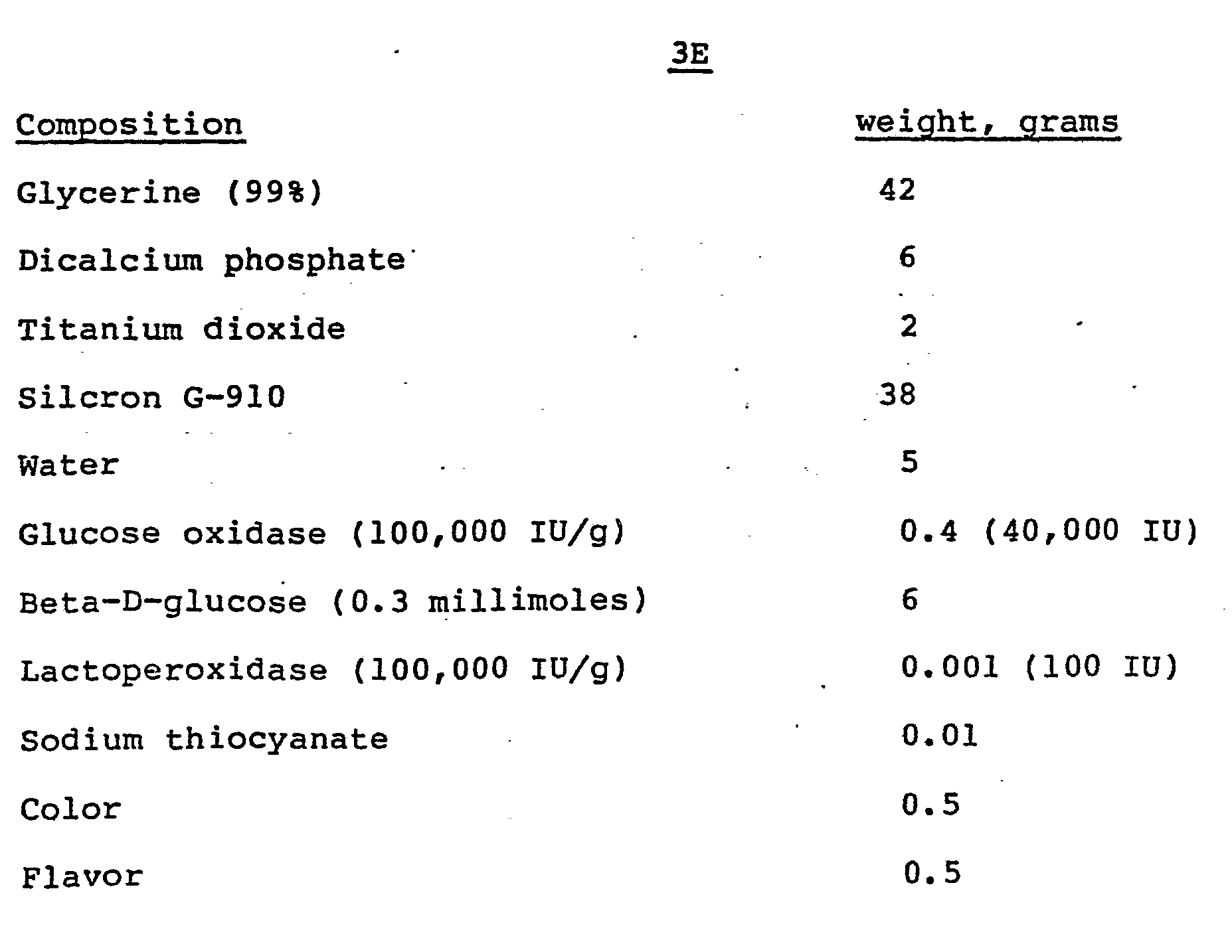
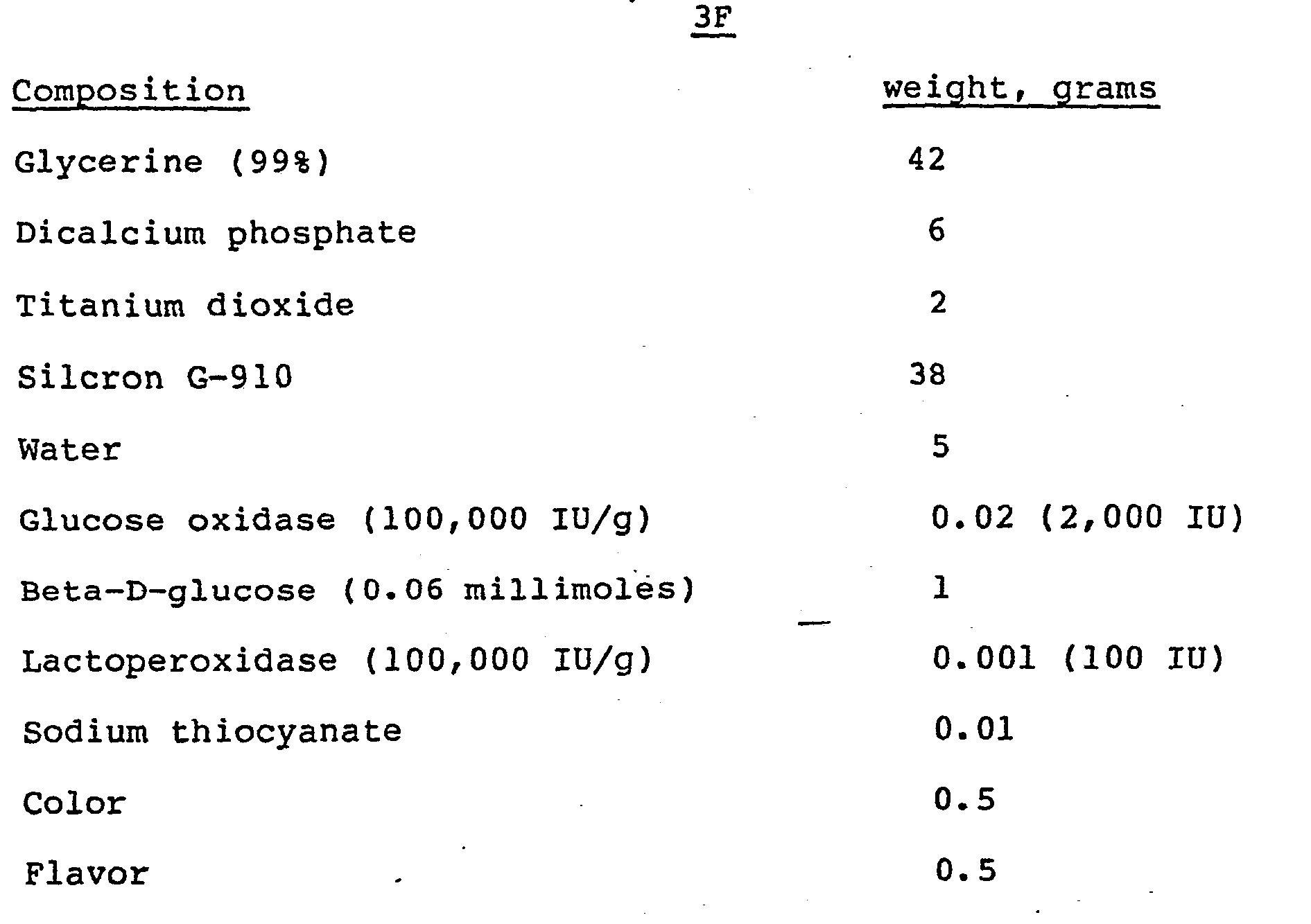
- the following examples show enzymatic toothpaste compositions containing a first enzyme system comprising glucose oxidase and Beta-D-glucose and which have been further formulated with a second enzyme system containing lactoperoxidasp and thiocyanate so as to be self contained with respect to the production of the hypothiocyanate bacterial inhibitor upon oral application of the toothpaste.
- a first enzyme system comprising glucose oxidase and Beta-D-glucose
- a second enzyme system containing lactoperoxidasp and thiocyanate so as to be self contained with respect to the production of the hypothiocyanate bacterial inhibitor upon oral application of the toothpaste.
- the term "Arlasolve 200" used in the examples is the trademark for a polyoxyethylene (20) isohexadecyl ether supplied as a 100% active paste.
- Silcron G-910 used in the examples is the trademark for a polishing agent comprising a micron-sized hydrated silica gel.
- the di-enzymatic system of this invention can be incorporated into dental floss as, for example, by solution deposition onto the floss fiber or by incorporation into a floss coating.
Landscapes
- Health & Medical Sciences (AREA)
- Life Sciences & Earth Sciences (AREA)
- Veterinary Medicine (AREA)
- Public Health (AREA)
- General Health & Medical Sciences (AREA)
- Animal Behavior & Ethology (AREA)
- Birds (AREA)
- Epidemiology (AREA)
- Oral & Maxillofacial Surgery (AREA)
- Chemical & Material Sciences (AREA)
- Ocean & Marine Engineering (AREA)
- Mechanical Engineering (AREA)
- Combustion & Propulsion (AREA)
- Engineering & Computer Science (AREA)
- Cosmetics (AREA)
Abstract
Description
- This invention relates to dentifrice compositions and, more particularly, to antiseptic dentifrice compositions wherein hypothiocyanate, a bacterial inhibitor, is produced in situ during oral utilization of the dentifrice.
- Dentifrices, in powder, paste, cream and liquid forms, are used for both cosmetic and therapeutic purposes. Consistent with these purposes, such dentifrices are formulated to contain active ingredients such as cleansing and polishing materials, as well as various antibacterial and anticaries agents for use as aids in the prevention of tooth decay. It is also suggested in the prior art that chewable dentifrices such as chewing gum and chewable tablets and lozenges be formulated with antiseptic-type compositions for beneficially effecting dental care. '
- The term "dentifrice" as used herein refers to oral compositions in powder, paste, cream and liquid forms as well as chewing gum, and chewable and orally soluble tablets, troches, lozenges, drops and the like and further includes flossing materials.
- It is generally understood in the dental art that certain kinds of tooth decay are initiated by acid etching of the tooth enamel with the source of the acid being a metabolite resulting from bacterial and enzymatic action on food particles in the oral cavity. It is generally accepted that plaque--which is a soft accumulation on the tooth surfaces consisting of an organized structure of microorganisms, proteinaceous and carbohydrate substances, epithelial cells, and food debris--is a contributory factor in the development of various pathological conditions of the teeth and soft tissue of the oral cavity. It has been suggested that the saccharolytic organisms of the oral cavity, which are associated with the plaque, cause decalcification beneath the plaque matrix through metabolic activity which results in the accumulation and localized concentration of organic acids. The etching and decalcification of the enamel may continue until the pulp chamber of the tooth is reached.
- A wide variety of materials have been considered for use as decay-preventative agents in dentifrice compositions. Some of the substances which have been so considered include para-aminobenzoic acid, a combination of urea and urease to produce ammonia during oral application of the dentifrice, ! chlorophyll, perflourinated long chain organic compounds, complex iodine, penicillin, benzohydroxamic acid, and glucose oxidase to produce hydrogen peroxide during oral application of the dentifrice. Substances which have been considered in connection with chewable dentifrices include: carbolic acid, menthol, thymol and eucalyptus; peroxides and perborates such as calcium peroxide and sodium perborate; and glucose oxidase, an oxidoreductase enzyme; to produce hydrogen peroxide during oral chewing of the dentifrice.
- U.S. Patent 1,171,392 (Meier, 1916) discloses an antiseptic chewing gum comprising chicle, glucose and sugar together with an admixture of powdered chalk and an antiseptic such as carbolic acid, menthol, thymol or eucalyptus.
- U.S. Patent 2,290,862 (Canning, 1942) discloses an antiseptic chewing gum comprising chicle, glucose, flavoring material and sugar together with an admixture of hydrogenated peanut oil and calcium peroxide.
- Commercial glucose oxidase which also contains catalase is promoted to the food and beverage industry as an agent for protecting their suspectible packaged products against deterioration in the presence of oxygen and/or glucose by effecting an enzymatic in situ reaction which results in the consumption of oxygen and glucose with an intermediate product being hydrogen peroxide and the ultimate end product of the enzymatic reaction being gluconic acid.
- U.S. Patent 2,891,868 (Heggie et al., 1959) discloses that chewing gum which is formulated with an oxygen sensitive flavoring agent can be protected against oxidative deterioration of the flavoring agent by incorporating into the formulation an enzyme system containing glucose, glucose oxidase and catalase, and that this protection is effective in the presence of bound water only and does not require free water.
- U.S. Patent 4,150,113 (Hoogendoorn et al., 1979) and U.S. Patent 4,178,362 (Hoogendoorn et al., 1979) disclose, respectively, an enzymatic toothpaste and an enzymatic chewable dentifrice containing glucose oxidase which acts on glucose present in saliva and tooth plaque to produce hydrogen peroxide. The patentees note that oral bacteria, through enzyme systems having SH-groups, effect glycolysis of food products containing sugars and point out that lactoperoxidase, which is present in saliva, provides the means for transferring oxygen from hydroger peroxide to the oral bacteria resulting in the oxidation of the SH-containing enzymes into inactive disulfide enzymes. It is further disclosed that the dentifrice may be formulated with potassium thiocyanate.
- U.S. Patent 4,269,822 (Pellico et al., 1981) discloses an antiseptic dentifrice containing an oxidizable amino acid substrate and an oxidoreductase enzyme specific to such substrate for producing hydrogen peroxide and ammonia upon oral application of the dentifrice, with pre-application stability being maintained by limiting the quantity of any water present in the dentifrice.
- Morrison et al., Biology of the Mouth, American Association for the Advancement of Science, 1968, pp. 89-110 disclose: that lactoperoxidase, sodium thiocyanate and hydrogen peroxide define a bacterial inhibitory system; that in vivo production of hydrogen peroxide might be generated by microorganisms; and that the lactoperoxidase antimicrobiological system (which also includes hydrogen peroxide and thiocyanate) is reversed by catalase, which competes with lactoperoxidase for available hydrogen peroxide.
- Hoogendoorn et al., Caries Research, 11:77-84, 1977, disclose that the hypothiocyanate ion is the bacterial inhibitor formed by the system containing lactoperoxdiase, thiocyanate and hydrogen peroxide and further disclose that a high concentration of hydrogen peroxide inactivates lactoperoxdiase.
- Thomas et al., Journal of Dental Research, 60(4), pp. 785-796, April, 1981, disclose with respect to the salivary antimicrobial system consisting of peroxidase enzyme(s), hydrogen peroxide and thiocyanate ion: (a) that peroxidase is synthesized by the salivary glands, (b) that production of hydrogen peroxide in saliva may be due to leucocytes or to oral bacteria primarily streptococci and lactobacilli, (c) that the salivary glands concentrate thiocyanate ion from blood and (d) that the antimicrobial activity of the peroxidase system is due to peroxidase catalyzed oxidation of thiocyanate ion (SCN) to hypothiocyanate ion (OSCN); and (e) further disclose that the yield or accumulation of hypothiocyanate from the aforesaid antimicrobial system can be increased by the presence of aminohexoses, namely, glucosamine and N-acetyl glucosamine.
- The effectiveness of a glucose oxidase dentifrice (U.S. Patent 4,150,113 and U.S. Patent 4,178,362) as a bacterial inhibitor through the production of hypothiocyanate is dependent, to a significant extent, upon the subsisting oral concentration of glucose, potassium thiocyanate and lactoperoxdiase as well as hydrogen peroxide at the time of oral utilization of the dentifrice. The concentration of those ingredients supplied by saliva, including potassium thiocyanate and lactoperoxdiase, varies as a direct function of biological production and salivary flow. Thus, when salivary flow is at a diminished level either as a natural event or as an event arising out of certain types of medical treatment, the oral concentration of potassium thiocyanate and lactoperoxdiase will be correspondingly reduced which, in turn, is a limiting factor in the oral production of hypothiocyanate bacterial inhibitor. Moreover, when the oral concentration of lactoperoxdiase is suppressed through diminished salivary flow, the oral concentration of hydrogen peroxide produced by the glucose oxidase/carbohydrase system, as described in U.S. Patents 4,150,113 and 4,178,362, may rise to the threshold level which can impede the effectiveness of lactoperoxidase. Accordingly, it would be advantageous to provide a substantially self-contained, hypothiocyanate generating, enzymatic dentifrice which is not dependent upon the naturally occurring, oral concentration of glucose, potassium thiocyanate or lactoperoxidiase for antibacterial effectiveness, upon oral utilization of the dentifrice.
- . In accordance with this.invention, there is provided a di-enzymatic dentifrice containing, per gram of dentrifice, from about 0.015 to about 0.6 millimole of oxidizable substrate and from about 0.5 to about 500 International Units of an oxidoreductase enzyme specific to such substrate for producing hydrogen peroxide upon oral utilization of said dentifrice and further containing from about 0.0001 to about 0.01 millimole of a thiocyanate salt and from about 0.01 to about 50 International Units of lactoperoxidase for interacting with hydrogen peroxide to produce a hypothiocyanate bacterial inhibitor, wherein the concentration of lactoperoxdiase in International Units is at least about 2% of the concentration of the oxidoreductase enzyme in International Units to thereby limit the ratio of hydrogen peroxide to lactoperoxidase during oral utilization of the dentifrice.
- The di-enzymatic dentifrice of this invention comprises a first enzyme system containing an oxidizable substrate and an oxidoreductase enzyme specific to such substrate for producing hydrogen peroxide upon oral utilization of the dentifrice, with.the chemical environment of the oral cavity providing the source of the additional reactant (oxygen) or reactants (oxygen, water) to effect the enzymatic reaction.
- The components of the first enzyme system which can be incorporated into the dentifrice compositions to produce hydrogen peroxide upon oral utilization of the dentifrice are illustrated by the substrate/enzyme combinations set forth in Table I.
- The reactions of representative enzyme systems from Table I, which are activated in the chemical environment of the oral cavity to produce hydrogen peroxide, are set forth in Table II.


- The characteristics of representative oxidoreductase enzymes identified in Table I, from specific sources, are set forth in Table III.


- The oxidizable substrate is generally present in the dentifrice in an amount from about 0.015 to about 0.6 millimole per gram of dentifrice and, preferably, from about 0.025 to about 0.1 millimole per gram of dentifrice while the oxidoreductase enzyme specific to the substrate is generally present in the dentifrice in an amount from about 0.5 to about 500 International Units (hereinafter sometimes abbreviated IU) per gram of dentifrice and preferably, from about 1.0 to about 40 IU per gram of dentifrice. The term millimole identifies that quantity in grams corresponding to the molecular weight of the composition divided by one thousand. The term International Unit(s) identifies that amount of enzyme that will effect catalysis of 1.0 micromole of substrate per minute at pH 7.0 and 25° C. Oxidoreductase enzymes are supplied in dry or liquid form with the label specifying the concentration in International Units on a per gram or per milliliter basis, as appropriate.
- In addition to the first enzyme system comprising oxidizable substrate and oxidoreductase enzyme specific to such substrate for producing hydrogen perioxide, the di-enzymatic dentifrice of this invention is provided with a second enzyme system containing a thiocyanate'salt and lactoperoxidase for interacting with hydrogen peroxide to produce a bacterial inhibitor in the form of a negative, monovalent hypothiocyanate ion (OSCN) which exists in solution in acid-base equilibrium with hydrogen hypothiocyanate (HOSCN).
- The thiocyanate salts which can be used in the dentifrice include sodium thiocyanate, potassium thiocyanate, ammonium thiocyanate, and mixtures thereof. The thiocyanate salt is generally present in the dentifrice in an amount from about 0.0001 to about 0.01 millimole per gram of dentifrice and, preferably, from about 0.001 to about 0.006 millimole per gram of dentifrice. Care should be taken in formulating the di-enzymatic dentifrice so as to avoid the use of metal compounds which inhibit or impair the effectiveness of oxidoreductase enzymes and/or peroxidase enzymes.
- Lactoperoxidase is a glycoprotein which, in one commercial embodiment, is a lyophilized powder derived from milk This commercial peroxidase has an activity of 80 IU/mg and a projected molecular weight of 93,000 from L-Tyrosine Iodination. The physical-chemical properties reported for lactoperoxidase include: molecular weight 78,000; partial specific volume 0.74; and heme/mole 1.0. Lactoperoxidase is generally present in the dentifrice in an amount from'about 0.01 to about 50 IU per gram of dentifrice and, preferably, in an amount from about 0.2 to about 4.0 IU per gram of dentifrice.
- In order to preserve the operable integrity of the di-enzymatic system, the ratio of hydrogen peroxide to lactoperoxidase should be limited, since excess hydrogen peroxide can inhibit lactoperoxidase. This limitation can be effected by providing a di-enzymatic system wherein the concentration of lactoperoxidase in International Units is at least about 2% of the concentration of the oxidoreductase enzyme in International Units. When the concentration of lactoperoxidase as a percentage of the oxidoreductase enzyme is below about 2%, the inhibition of lactoperoxidase becomes so rapid that the beneficial effects of the di-enzymatic system are terminated long before the end of the utilization cycle.
- The operable integrity of the di-enzymatic system is also affected by catalase which is present in commercial glucose oxidase as well as oral surface tissue. Catalase, which is extraneous to the di-enzymatic system of this invention, competes with lactoperoxidase for hydrogen peroxide. In order to reduce loss of hydrogen peroxide through the presence of catalase, an effective amount of an enzymatic inhibitor specific to catalase can be advantageously incorporated into the di-enzymatic dentifrice. An ascorbate salt such as sodium ascorbate, potassium ascorbate, ascorbyl palmitate, or mixtures thereof can be used as an enzymatic inhibitor which is specific to catalase. An effective amount of ascorbate salt for catalase inhibition is from about 0.000001 to about 0.0001 millimole per gram of dentrifrice. Iron salts such as ferrous sulfate can be incorporated into the di-enzymatic dentifrice as a potentiator for ascorbate salt in its role as catalase inhibitor.
- The di-enzymatic dentifrice of this invention may advantageously be formulted with an aminohexose as, for example, an aminoglucose such as glucosamine, N-acetyl glucosamine or mixtures thereof in order to increase the yield or accumulation of the hypothiocyanate ion. The aminoglucose is generally present in the dentifrice in an amount from about 0.0001 to about 0.002 millimole per gram of dentifrice and, preferably, in an amount from about 0.0003 to about 0.001 millimole per gram of dentifrice.
- Since water promotes the oxidation/reduction reactions of this invention and is also a reactant in certain reactions, the use of water in formulating the dentifrice compositions should be at a relatively low concentration level in order to impart maximum stability and shelf life to the compositions. For this purpose, it has been found to be essential to limit any water present in the dentifrice, bound and unbound, to not more than about 10 wt.%. However, for the dentifrice in chewable form, the unbound water should be limited to an amount not more than about 1.0 wt.%. A finely divided aqueous desicant such as silica aerogel may advantageously be included in the dentrifice in an amount from about 1 to about 5 wt.%.
- Where the products of the activated enzyme system include a weak organic acid, it is advantageous to formulate the dentifrice with a buffering agent to neutralize the organic acid. A suitable buffering agent is sodium bicarbonate which can be present in the dentifrice in an amount up to about 6 wt.% as, for example, in an amount from about 4 to about 6 wt.%.
- CHEWABLE DENTIFRICE-Formulations, equipment and processing techniques have been well developed in the art for preparing and packaging chewing gum and chewable tablets and lozenges. The di-enzymatic system of this invention is adapted to be incorporated into these formulations. However, the enzymes described herein are subject to degradation and inactivation under conditions such as high shear and elevated temperatures. Accordingly, processing conditions should be controlled during the time span that the enzymes are being admixed with the other ingredients of the formulation and converted into finished ! products so that the temperature does not rise above 550C for any extended period of time. In order to enhance shelf stability, the admixture used in the preparation of the di-enzymatic chewable dentifrice should be substantially free of unbound water and the finished product should be packaged in a manner so as to minimize exposure to air and moisture.
- Illustrative base formulations for chewing gum and for chewable tablets and lozenges, which can be used in the preparation of the di-enzymatic chewable dentifrice, are set .forth in Table IV as follows:

- In Table IV, formulations (a) and (b) illustrate chewing gum compositions while formulations (c) and (d) illustrate tablet and lozenge compositions. Aspartame can be substituted for sodium saccharin in these formulations.
- The following examples show varying ingredients and concentration levels which can be used in the preparation of di-enzymatic chewable dentifrices:


- This example shows the antibacterial effectiveness of the di-enzymatic chewable dentifrice of this invention. A di-enzymatic chewing gum was prepared having the following formulation:

- The above composition was formed into sticks, each of which weighed 3 grams. Each of 5 individuals in Group (a) was given a stick of the gum with instructions to chew the gum for 10 minutes. Saliva samples were separately collected from the individuals in accordance with the following time sequence: individual 1, immediately after the chewing cycle; individual 2, 60 minutes after the chewing cycle; individual 3, 120 minutes after the chewing cycle; individual 4, 180 minutes after the chewing cycle; and individual 5, 240 minutes after the chewing cycle.
- Five bacterial specimens were prepared by pouring 10 ml of Brain-Heart Infusion agar containing 10,000 colony units of streptococcus mutans (strain C67-1) into each of 5 Petri dishes.
- Promptly following the collection of saliva from each individual, a 5 milliliter portion of the saliva was added with stirring to a Petri dish containing the bacterial specimens and the resulting admixture was incubated in an oven at 350C for 10 minutes. Upon completion of the incubation period, the bacterial specimen admixture was removed from the oven and microscopically evaluated for bacterial inhibition as determined by visible colony count. The foregoing procedure was repeated with 5 individuals in Group (b) except that the chewing gum contained gum base, sorbitol, color and flavor and did not include the di-enzymatic system. The results of this study are set forth in Table IX.

- The di-enzymatic system of this inventions is adapted to be incorporated into toothpaste. In view of the aforesaid water limitation, a non-aqueous fluid carrier is advantageously employed in the toothpaste formulation so as to provide the formulation with pressure responsive flow characteristics. Any suitable non-aqueous fluid may be used for this purpose. Organic fluid carriers, such as glycerine or propylene glycol provide a stable toothpaste environment for the enzyme systems of this invention. The non-aqueous fluid carrier is generally present in the dentifrice composition in an amount from about about 30 to about 60 wt.% and, preferably, in an amount from about 45 to about 55 wt.%.
- In addition to the fluid carrier, toothpaste compositions typically contain an abrasive polishing material and a surfactant as well as flavoring, sweetening and coloring agents. Toothpaste usually also contains humectants and thickeners.
- Any abrasive polishing material which does not excessively abrade dentin and is compatible with glucose oxidase can be used in the toothpaste compositions of this' invention. These include, for example, calcium carbonate, calcium pyrophosphate, dicalcium phosphate, zirconium oxide and aluminum oxide. The abrasive polishing material is usually present in toothpaste in an amount from about 20 to about 60 wt.%.
- The surfactants which can be used are those which yield substantial levels of foam and which are otherwise acceptable for use in the oral cavity and compatible with glucose oxidase. Nonionic surfactants are preferred because they have been found to be most compatible with glucose oxidase. The surfactants can be employed at concentration levels ranging from about 0.5 to about 5.0 wt.%.
- The enzymatic dentifrice, in the form of a toothpaste, can be prepared in any suitable manner as, for example, by blending the dry ingredients into the liquid ingredients, , with agitation, until a smooth mixture is obtained. The addition of any surfactant to the mixture should take place as the last step in order to minimize foaming of the batch. Also, blending should be carried out under moderate conditions so as to avoid any impairment of the enzyme.
- The following examples show enzymatic toothpaste compositions containing a first enzyme system comprising glucose oxidase and Beta-D-glucose and which have been further formulated with a second enzyme system containing lactoperoxidasp and thiocyanate so as to be self contained with respect to the production of the hypothiocyanate bacterial inhibitor upon oral application of the toothpaste. The term "Arlasolve 200" used in the examples is the trademark for a polyoxyethylene (20) isohexadecyl ether supplied as a 100% active paste. The term "Silcron G-910" used in the examples is the trademark for a polishing agent comprising a micron-sized hydrated silica gel.




- The di-enzymatic system of this invention can be incorporated into dental floss as, for example, by solution deposition onto the floss fiber or by incorporation into a floss coating.
- In view of the foregoing description and examples, it will become apparent to those of ordinary skill in the art that equivalent modifications thereof may be made without departing from the spirit and scope of this invention.
Claims (18)
Applications Claiming Priority (4)
| Application Number | Priority Date | Filing Date | Title |
|---|---|---|---|
| US501383 | 1983-06-06 | ||
| US06/501,383 US4537764A (en) | 1981-08-13 | 1983-06-06 | Stabilized enzymatic dentifrice containing B-D-glucose and glucose oxidase |
| US559474 | 1983-12-08 | ||
| US06/559,474 US4564519A (en) | 1983-06-06 | 1983-12-08 | Di-enzymatic chewable dentifrice |
Publications (3)
| Publication Number | Publication Date |
|---|---|
| EP0133736A2 true EP0133736A2 (en) | 1985-03-06 |
| EP0133736A3 EP0133736A3 (en) | 1986-02-05 |
| EP0133736B1 EP0133736B1 (en) | 1989-12-13 |
Family
ID=27053798
Family Applications (1)
| Application Number | Title | Priority Date | Filing Date |
|---|---|---|---|
| EP84302162A Expired EP0133736B1 (en) | 1983-06-06 | 1984-03-29 | Di-enzymatic dentifrice |
Country Status (4)
| Country | Link |
|---|---|
| US (1) | US4564519A (en) |
| EP (1) | EP0133736B1 (en) |
| KR (1) | KR910002667B1 (en) |
| DE (1) | DE3480691D1 (en) |
Cited By (10)
| Publication number | Priority date | Publication date | Assignee | Title |
|---|---|---|---|---|
| FR2600250A1 (en) * | 1986-06-23 | 1987-12-24 | Bio Serae | PROCESS FOR CONDITIONING ANTIBACTERIAL COMPOSITION AND CONDITIONED ANTIBACTERIAL COMPOSITION |
| WO1988002600A1 (en) * | 1986-10-20 | 1988-04-21 | Otto Melchior Poulsen | Enzyme-containing bactericidal composition, and dental and wound treatment preparations comprising this composition |
| WO1991011105A1 (en) * | 1990-02-03 | 1991-08-08 | The Boots Company Plc | Anti-microbial compositions |
| WO1992001466A1 (en) * | 1990-07-19 | 1992-02-06 | Universite Libre De Bruxelles | Prophylactic and therapeutic applications of peroxidases |
| EP0461530A3 (en) * | 1990-06-13 | 1992-06-03 | Haarmann & Reimer Corp. | Synergistic antimicrobial compositions |
| US5328692A (en) * | 1988-05-30 | 1994-07-12 | Dominique Dana | New liquid dentifrice composition |
| WO1997006775A1 (en) * | 1995-08-18 | 1997-02-27 | Novo Nordisk A/S | Tooth bleaching |
| FR2860154A1 (en) * | 2003-09-29 | 2005-04-01 | Chris Cardon | COMPOSITION FOR THE TREATMENT OF MALE BREATH |
| WO2011068514A1 (en) | 2009-12-04 | 2011-06-09 | Colgate-Palmolive Company | Non-aqueous, single tube dentrifice whitening compositions, methods of use and manufacture thereof |
| US11185080B2 (en) | 2014-04-30 | 2021-11-30 | Matoke Holdings Limited | Antimicrobial compositions |
Families Citing this family (35)
| Publication number | Priority date | Publication date | Assignee | Title |
|---|---|---|---|---|
| US4617190A (en) * | 1984-08-27 | 1986-10-14 | Laclede Professional Products, Inc. | Enzymatic powder milk |
| US4740368A (en) * | 1985-12-11 | 1988-04-26 | Plevy Donald J | Amylase containing breath cleansing confection |
| US4937072A (en) * | 1986-05-12 | 1990-06-26 | Kessler Jack H | In situ sporicidal disinfectant |
| ES2037073T3 (en) * | 1987-01-08 | 1993-06-16 | Douwe Egberts Koninklijke Tabaksfabriek- Koffiebranderijen-Theehandel N.V. | A PRODUCT FOR THE CARE OF THE MOUTH. |
| US5262151A (en) * | 1991-11-25 | 1993-11-16 | Montgomery Robert E | Stabilized enzymatic antimicrobial compositions |
| US5310541A (en) * | 1992-08-27 | 1994-05-10 | Montgomery Robert E | Antimicrobial rawhide animal chew containing an oxidoreductase and oxidoreductase substrate |
| US5453284A (en) * | 1993-01-29 | 1995-09-26 | Pellico; Michael A. | Stabilized enzymatic dentifrice |
| US5573398A (en) * | 1994-06-10 | 1996-11-12 | Towle; Lawrence E. | Dental hygiene device and cleaning solution |
| US6224376B1 (en) | 1994-06-10 | 2001-05-01 | Richard A. Cloonan | Dental cleaning liquid and gel |
| US5837222A (en) * | 1994-06-10 | 1998-11-17 | Cloonan; Richard A. | Liquid dental cleaning solution |
| US5747005A (en) * | 1995-08-02 | 1998-05-05 | Barels; Ronald R. | Oil-based, anti-plaque dentifrice composition |
| US5908614A (en) * | 1995-08-15 | 1999-06-01 | Montgomery; Robert Eric | Peroxidase-activating oral compositions |
| SE506529C2 (en) * | 1996-01-23 | 1997-12-22 | Semper Ab | Use of a lactoperoxidase system for the preparation of a drug against Helicobacter pylori |
| FR2747570B1 (en) * | 1996-04-19 | 1998-07-24 | Dogself | ANTI-SCALE COMPOSITION AND ITS USE IN ANIMAL FEED SUPPLEMENTS |
| US20030198605A1 (en) * | 1998-02-13 | 2003-10-23 | Montgomery R. Eric | Light-activated tooth whitening composition and method of using same |
| EP1068871A1 (en) * | 1999-07-07 | 2001-01-17 | Jean-Paul Perraudin | Novel methods and medicament for treating infections diseases involving microbial biofilms |
| ES2161631B1 (en) * | 1999-11-17 | 2002-06-01 | Univ Illes Balears | PRODUCT FOR DENTAL WHITENING. |
| US6214339B1 (en) | 2000-01-12 | 2001-04-10 | Michael A. Pellico | Di-enzymatic treatment of outer ear infection in dogs and cats |
| US6485709B2 (en) * | 2001-01-23 | 2002-11-26 | Addent Inc. | Dental bleaching gel composition, activator system and method for activating a dental bleaching gel |
| US6696058B2 (en) | 2002-01-29 | 2004-02-24 | Laclede, Inc. | Aqueous enzymatic denture adhesives |
| GB0216413D0 (en) * | 2002-07-15 | 2002-08-21 | Nestle Sa | Tabletted chewing gum sweet |
| DK1589825T4 (en) * | 2003-02-04 | 2012-11-05 | Gumlink As | Compressed gum tablet |
| ES2325396T3 (en) * | 2003-02-04 | 2009-09-03 | Gumlink A/S | COMPRESSED MASK RUBBER PAD. |
| DK1474995T3 (en) * | 2003-05-06 | 2013-02-18 | Gumlink As | Process for the preparation of chewing gum granules, a rubber composition extruder and granulation system and a chewing gum product |
| EP1474993B1 (en) | 2003-05-06 | 2008-08-20 | Gumlink A/S | A method for producing chewing gum granules and compressed gum products, and a chewing gum granulating system |
| US7354569B2 (en) * | 2003-07-11 | 2008-04-08 | Colgate-Palmolive Company | Chewable antiplaque confectionery dental composition |
| ATE480150T1 (en) * | 2003-12-30 | 2010-09-15 | Gumlink As | COMPRESSABLE BIODEGRADABLE CHEWING GUM |
| US7238334B2 (en) * | 2004-07-15 | 2007-07-03 | The Board Of Regents Of The University Of Oklahoma | Synthesis and use of hypothiocyanite |
| DK200401195A (en) * | 2004-08-06 | 2004-08-06 | Gumlink As | Layered chewing gum tablet has layer comprising gum base in compressed gum granules having specified average diameter |
| US9540631B1 (en) | 2004-09-14 | 2017-01-10 | Peter T. Pugliese | Immobilized glucose oxidase for use in oral hygiene |
| EP1956929A2 (en) * | 2005-10-21 | 2008-08-20 | Danisco A/S | An edible composition |
| PL1978817T3 (en) * | 2006-02-03 | 2018-01-31 | Wrigley W M Jun Co | Calcium phosphate salts in oral compositions suitable as a tooth remineralizing agent |
| JP5337701B2 (en) * | 2006-10-10 | 2013-11-06 | ラクリード、インコーポレイテッド | Methods and compositions for the treatment of vaginal diseases using peroxide-generating enzymes and peroxidases |
| US20100028274A1 (en) | 2007-02-28 | 2010-02-04 | Morinaga Milk Industry Co., Ltd. | Oral disinfectant, and food additive comprising the disinfectant |
| US20150147365A1 (en) | 2012-05-31 | 2015-05-28 | Dsm Ip Assets B.V. | Oral preparation |
Family Cites Families (10)
| Publication number | Priority date | Publication date | Assignee | Title |
|---|---|---|---|---|
| US1052872A (en) * | 1911-05-13 | 1913-02-11 | William Erastus Williams | Chewing-gum composition. |
| US1171392A (en) * | 1913-10-09 | 1916-02-08 | Adolphus G Meier | Chewing-gum and method of making the same. |
| US2290862A (en) * | 1939-10-03 | 1942-07-28 | Gum Lab Inc | Chewing gum and process of making same |
| US2891868A (en) * | 1957-11-21 | 1959-06-23 | American Chicle Co | Chewing gum and confectionery composition |
| US4178362A (en) * | 1969-06-03 | 1979-12-11 | Telec S.A. | Enzymatic dentifrices |
| US4150113A (en) * | 1969-06-03 | 1979-04-17 | Telec S.A. | Enzymatic dentifrices |
| US4335101A (en) * | 1971-08-10 | 1982-06-15 | Merck & Co., Inc. | Oral hygiene enzymes and method for preparation |
| GB2047091B (en) * | 1979-04-19 | 1983-05-18 | Muhlemann H R | Orally administrable compositions containing urea hydrogen peroxide |
| US4269822A (en) * | 1979-07-20 | 1981-05-26 | Laclede Professional Products, Inc. | Antiseptic dentifrice |
| JPS57165312A (en) * | 1981-04-03 | 1982-10-12 | Handai Biseibutsubiyou Kenkyukai | Production of oral composition |
-
1983
- 1983-12-08 US US06/559,474 patent/US4564519A/en not_active Expired - Lifetime
-
1984
- 1984-03-29 DE DE8484302162T patent/DE3480691D1/en not_active Expired - Lifetime
- 1984-03-29 EP EP84302162A patent/EP0133736B1/en not_active Expired
- 1984-04-10 KR KR1019840001876A patent/KR910002667B1/en not_active Expired
Cited By (19)
| Publication number | Priority date | Publication date | Assignee | Title |
|---|---|---|---|---|
| FR2600250A1 (en) * | 1986-06-23 | 1987-12-24 | Bio Serae | PROCESS FOR CONDITIONING ANTIBACTERIAL COMPOSITION AND CONDITIONED ANTIBACTERIAL COMPOSITION |
| WO1987007838A1 (en) * | 1986-06-23 | 1987-12-30 | Societe Bio Serae Sarl | Method for conditioning an antibacterial composition and antibacterial composition thus conditioned |
| US4978528A (en) * | 1986-06-23 | 1990-12-18 | Bio Serae Laboratoires S.A. | Process for preventing degradation of an anti-bacterial composition |
| WO1988002600A1 (en) * | 1986-10-20 | 1988-04-21 | Otto Melchior Poulsen | Enzyme-containing bactericidal composition, and dental and wound treatment preparations comprising this composition |
| US5328692A (en) * | 1988-05-30 | 1994-07-12 | Dominique Dana | New liquid dentifrice composition |
| WO1991011105A1 (en) * | 1990-02-03 | 1991-08-08 | The Boots Company Plc | Anti-microbial compositions |
| EP0461530A3 (en) * | 1990-06-13 | 1992-06-03 | Haarmann & Reimer Corp. | Synergistic antimicrobial compositions |
| WO1992001466A1 (en) * | 1990-07-19 | 1992-02-06 | Universite Libre De Bruxelles | Prophylactic and therapeutic applications of peroxidases |
| WO1997006775A1 (en) * | 1995-08-18 | 1997-02-27 | Novo Nordisk A/S | Tooth bleaching |
| US5989526A (en) * | 1995-08-18 | 1999-11-23 | Novo Nordisk A/S | Tooth bleaching |
| FR2860154A1 (en) * | 2003-09-29 | 2005-04-01 | Chris Cardon | COMPOSITION FOR THE TREATMENT OF MALE BREATH |
| WO2005030154A1 (en) * | 2003-09-29 | 2005-04-07 | Christiaan Cardon | Composition for treating bad breath |
| WO2011068514A1 (en) | 2009-12-04 | 2011-06-09 | Colgate-Palmolive Company | Non-aqueous, single tube dentrifice whitening compositions, methods of use and manufacture thereof |
| CN102639109A (en) * | 2009-12-04 | 2012-08-15 | 高露洁-棕榄公司 | Single tube non-aqueous dentifrice whitening composition and its use and preparation method |
| AU2009356172B2 (en) * | 2009-12-04 | 2013-05-02 | Colgate-Palmolive Company | Non-aqueous, single tube dentrifice whitening compositions, methods of use and manufacture thereof |
| RU2526906C2 (en) * | 2009-12-04 | 2014-08-27 | Колгейт-Палмолив Компани | Non-aqueous one-tube formulations of tooth-bleaching agents, methods for using and preparing them |
| TWI469799B (en) * | 2009-12-04 | 2015-01-21 | Colgate Palmolive Co | Non-aqueous single-tube tooth whitening composition, use and manufacturing method thereof |
| US11185080B2 (en) | 2014-04-30 | 2021-11-30 | Matoke Holdings Limited | Antimicrobial compositions |
| US11311017B2 (en) | 2014-04-30 | 2022-04-26 | Matoke Holdings Limited | Antimicrobial compositions |
Also Published As
| Publication number | Publication date |
|---|---|
| EP0133736B1 (en) | 1989-12-13 |
| DE3480691D1 (en) | 1990-01-18 |
| EP0133736A3 (en) | 1986-02-05 |
| US4564519A (en) | 1986-01-14 |
| KR910002667B1 (en) | 1991-05-03 |
| KR850000233A (en) | 1985-02-26 |
Similar Documents
| Publication | Publication Date | Title |
|---|---|---|
| EP0133736B1 (en) | Di-enzymatic dentifrice | |
| US4578265A (en) | Di-enzymatic dentifrice | |
| US4269822A (en) | Antiseptic dentifrice | |
| US5176899A (en) | Antimicrobial dentifrice | |
| US5262151A (en) | Stabilized enzymatic antimicrobial compositions | |
| US6331292B1 (en) | Tooth bleaching compositions | |
| CN1315455C (en) | Tooth bleaching | |
| RU2333768C2 (en) | Ferment-containing composition of improved stability for oral cavity | |
| RU2289392C2 (en) | Antibacterial agent for teeth cleaning, removing of dental plaque and respiratory refreshing | |
| US4842846A (en) | Superoxide dismutase composition for periodontal use | |
| RU2416391C1 (en) | Composition for oral cavity care | |
| RU2287322C2 (en) | Antibacterial preparation for cleaning teeth of improved properties against dental covering and for refreshed breathing | |
| RU2300366C2 (en) | Enzyme-containing bicomponent composition against dental deposit | |
| US5453284A (en) | Stabilized enzymatic dentifrice | |
| US6645472B1 (en) | Oral hygiene powder composition and method | |
| US5270033A (en) | Antimicrobial composition and method of making same | |
| CN100435776C (en) | Enzyme-containing dual component toothpaste composition | |
| Firestone et al. | Effect of topical application of urea peroxide on caries incidence and plaque accumulation in rats | |
| JPH0425924B2 (en) | ||
| US9540631B1 (en) | Immobilized glucose oxidase for use in oral hygiene | |
| EP1023037A1 (en) | Plaque-inhibiting oral compositions | |
| Mühlemann et al. | Effect on rat caries of endogenous and exogenous hydrogen peroxide | |
| CA2238764C (en) | Tooth bleaching compositions | |
| EP0086290B1 (en) | Dental hygiene compositions and their production | |
| KR20040041471A (en) | functional toothpaste component |
Legal Events
| Date | Code | Title | Description |
|---|---|---|---|
| PUAI | Public reference made under article 153(3) epc to a published international application that has entered the european phase |
Free format text: ORIGINAL CODE: 0009012 |
|
| AK | Designated contracting states |
Designated state(s): CH DE FR GB IT LI NL |
|
| PUAL | Search report despatched |
Free format text: ORIGINAL CODE: 0009013 |
|
| AK | Designated contracting states |
Designated state(s): CH DE FR GB IT LI NL |
|
| 17P | Request for examination filed |
Effective date: 19860923 |
|
| 17Q | First examination report despatched |
Effective date: 19880728 |
|
| GRAA | (expected) grant |
Free format text: ORIGINAL CODE: 0009210 |
|
| AK | Designated contracting states |
Kind code of ref document: B1 Designated state(s): CH DE FR GB IT LI NL |
|
| PG25 | Lapsed in a contracting state [announced via postgrant information from national office to epo] |
Ref country code: LI Effective date: 19891213 Ref country code: IT Free format text: LAPSE BECAUSE OF FAILURE TO SUBMIT A TRANSLATION OF THE DESCRIPTION OR TO PAY THE FEE WITHIN THE PRESCRIBED TIME-LIMIT;WARNING: LAPSES OF ITALIAN PATENTS WITH EFFECTIVE DATE BEFORE 2007 MAY HAVE OCCURRED AT ANY TIME BEFORE 2007. THE CORRECT EFFECTIVE DATE MAY BE DIFFERENT FROM THE ONE RECORDED. Effective date: 19891213 Ref country code: CH Effective date: 19891213 |
|
| REF | Corresponds to: |
Ref document number: 3480691 Country of ref document: DE Date of ref document: 19900118 |
|
| REG | Reference to a national code |
Ref country code: CH Ref legal event code: PL |
|
| ET | Fr: translation filed | ||
| PLBE | No opposition filed within time limit |
Free format text: ORIGINAL CODE: 0009261 |
|
| STAA | Information on the status of an ep patent application or granted ep patent |
Free format text: STATUS: NO OPPOSITION FILED WITHIN TIME LIMIT |
|
| 26N | No opposition filed | ||
| REG | Reference to a national code |
Ref country code: GB Ref legal event code: IF02 |
|
| REG | Reference to a national code |
Ref country code: GB Ref legal event code: 732E |
|
| PGFP | Annual fee paid to national office [announced via postgrant information from national office to epo] |
Ref country code: GB Payment date: 20030313 Year of fee payment: 20 |
|
| PGFP | Annual fee paid to national office [announced via postgrant information from national office to epo] |
Ref country code: FR Payment date: 20030328 Year of fee payment: 20 Ref country code: DE Payment date: 20030328 Year of fee payment: 20 |
|
| PGFP | Annual fee paid to national office [announced via postgrant information from national office to epo] |
Ref country code: NL Payment date: 20030331 Year of fee payment: 20 |
|
| PG25 | Lapsed in a contracting state [announced via postgrant information from national office to epo] |
Ref country code: GB Free format text: LAPSE BECAUSE OF EXPIRATION OF PROTECTION Effective date: 20040328 |
|
| PG25 | Lapsed in a contracting state [announced via postgrant information from national office to epo] |
Ref country code: NL Free format text: LAPSE BECAUSE OF EXPIRATION OF PROTECTION Effective date: 20040329 |
|
| REG | Reference to a national code |
Ref country code: GB Ref legal event code: PE20 |
|
| NLV7 | Nl: ceased due to reaching the maximum lifetime of a patent |
Effective date: 20040329 |