EP0132814B1 - Ester derivative of substituted acetic acid and preparing the same - Google Patents
Ester derivative of substituted acetic acid and preparing the same Download PDFInfo
- Publication number
- EP0132814B1 EP0132814B1 EP84108652A EP84108652A EP0132814B1 EP 0132814 B1 EP0132814 B1 EP 0132814B1 EP 84108652 A EP84108652 A EP 84108652A EP 84108652 A EP84108652 A EP 84108652A EP 0132814 B1 EP0132814 B1 EP 0132814B1
- Authority
- EP
- European Patent Office
- Prior art keywords
- compound
- ethyl
- mmol
- olefinic
- aromatic
- Prior art date
- Legal status (The legal status is an assumption and is not a legal conclusion. Google has not performed a legal analysis and makes no representation as to the accuracy of the status listed.)
- Expired
Links
Classifications
-
- C—CHEMISTRY; METALLURGY
- C07—ORGANIC CHEMISTRY
- C07D—HETEROCYCLIC COMPOUNDS
- C07D209/00—Heterocyclic compounds containing five-membered rings, condensed with other rings, with one nitrogen atom as the only ring hetero atom
- C07D209/02—Heterocyclic compounds containing five-membered rings, condensed with other rings, with one nitrogen atom as the only ring hetero atom condensed with one carbocyclic ring
- C07D209/04—Indoles; Hydrogenated indoles
- C07D209/10—Indoles; Hydrogenated indoles with substituted hydrocarbon radicals attached to carbon atoms of the hetero ring
- C07D209/18—Radicals substituted by carbon atoms having three bonds to hetero atoms with at the most one bond to halogen, e.g. ester or nitrile radicals
- C07D209/26—Radicals substituted by carbon atoms having three bonds to hetero atoms with at the most one bond to halogen, e.g. ester or nitrile radicals with an acyl radical attached to the ring nitrogen atom
- C07D209/28—1-(4-Chlorobenzoyl)-2-methyl-indolyl-3-acetic acid, substituted in position 5 by an oxygen or nitrogen atom; Esters thereof
-
- A—HUMAN NECESSITIES
- A61—MEDICAL OR VETERINARY SCIENCE; HYGIENE
- A61P—SPECIFIC THERAPEUTIC ACTIVITY OF CHEMICAL COMPOUNDS OR MEDICINAL PREPARATIONS
- A61P25/00—Drugs for disorders of the nervous system
- A61P25/04—Centrally acting analgesics, e.g. opioids
-
- A—HUMAN NECESSITIES
- A61—MEDICAL OR VETERINARY SCIENCE; HYGIENE
- A61P—SPECIFIC THERAPEUTIC ACTIVITY OF CHEMICAL COMPOUNDS OR MEDICINAL PREPARATIONS
- A61P29/00—Non-central analgesic, antipyretic or antiinflammatory agents, e.g. antirheumatic agents; Non-steroidal antiinflammatory drugs [NSAID]
Definitions
- the present invention relates to novel ester derivatives of substituted acetic acid having an excellent pharmacological activity and the process for preparing the same.
- IM and DF have been broadly used as acid nonsteroidal anti-inflammatory drug for a clinical use.
- IM and DF have a strong anti-inflammatory action, and are regarded as first choice drugs among other nonsteroidal anti-inflammatory drugs when used as an antirheumatic drug.
- both IM and DF have unfavorable side effects, for instance, gastrointestinal disorder such as loss of appetite, nausea, vomiting, stomachache or ulcers; and the like.
- IM it has other unfavorable side effects, for instance, central nervous disturbances such as headache, sleepiness or giddiness and the like.
- IM or DF are administered to a rheumatic patient in need of a continuous IM- or DF-administration for a long period, especially a patient having a gastrointestinal disorder or a central nervous disturbance
- a use or an administration of IM or DF cannot but be limited or stopped for the reason described above.
- its use or administration to the physical weak such as the aged or infants is also restricted owing to its strong side effects.
- US-A-4 165 428 discloses indoleacetic acid ester derivatives having pharmacological activity and potentially being useful as analgesics, anti-inflammatories and anti-pyretics.
- Another object of the invention is to provide a process for preparing the above-mentioned drug.
- R' is an indolylmethyl group of the formula (1): or an anilinophenylmethyl group of the formula (2): n is 1 or 2, R2is hydrogen atom or a lower alkyl group having 1 to 3 carbon atoms when n is 1, R 2 is hydrogen atom when n is 2 and R 3 is an alkyl group having 1 to 15 carbon atoms or an alkenyl group having 2 to 15 carbon atoms, provided that R 3 is an alkenyl group, when R' is an indolylmethyl group of formula 1.
- the compounds of the present invention of the general formula (I) are alkylcarbonyloxyalkylester or alkenylcarbonyloxyalkylester derivatives of indolylacetic acid or anilinophenylacetic acid.
- the present invention also provides a process for preparing the compounds of the general formula (I).
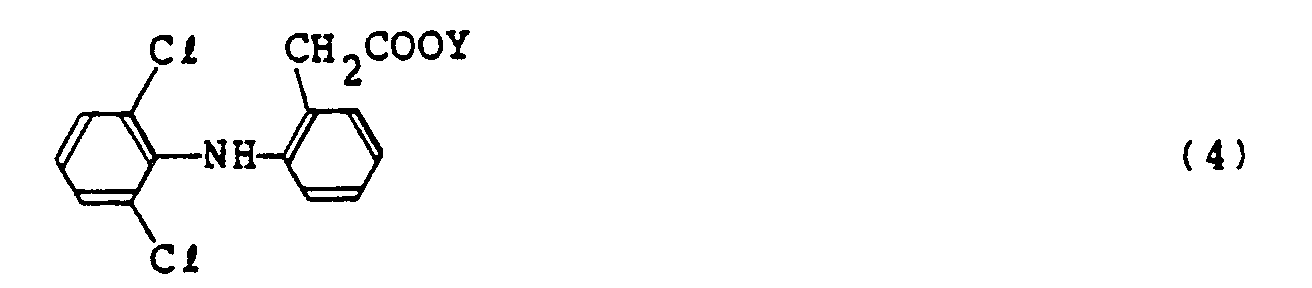
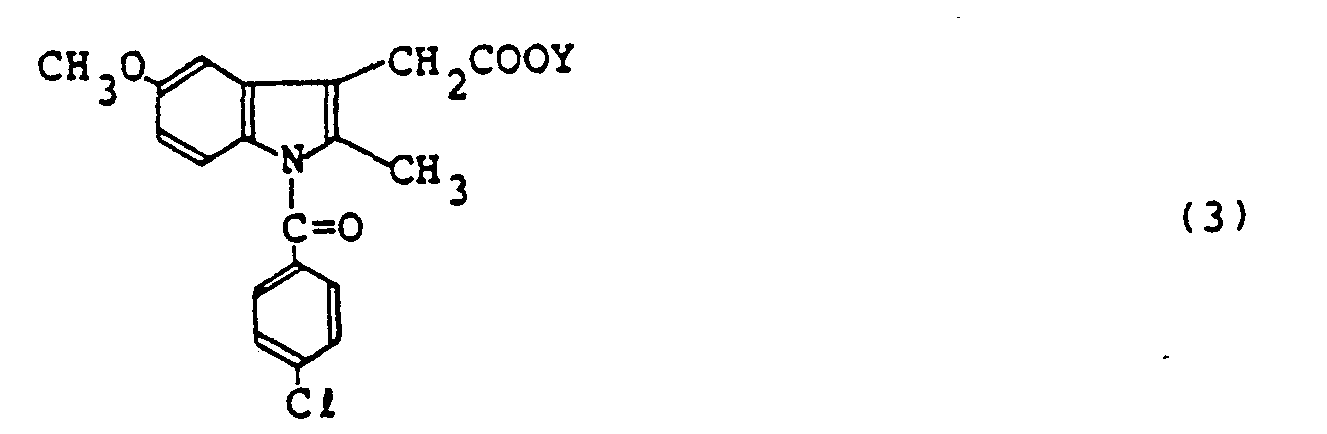
- the compound of the present invention is prepared by an esterification reaction in which an alkyl- carbonyloxyalkyl halide or alkenylcarbonyloxyalkyl halide of the general formula (II): wherein X is a halogen atom and n, R 2 and R 3 are as defined above, is reacted with a compound selected from the group consisting of a compound of the general formula (3): wherein Y is hydrogen atom or a metal salt, and a compound of the general formula (4): wherein Y is as defined above.
- the esterification reaction employable in the present invention can be carried out by any conventional known methods and are not limited to any specific methods, but the following method is preferably employed from the viewpoint of a yield and an industrial utility; e.g. generally, in a presence of an alkaline metal carbonate such as potassium carbonate, sodium carbonate, sodium bicarbonate or potassium bicarbonate; a hydroxide of an alkaline metal such as sodium hydroxide or potassium hydroxide; a hydride of an alkaline metal such as sodium hydride, potassium hydride or lithium hydride; an organic base, for instance, a tertiary amine such as pyridine, triethylamine, N,N-dimethylaniline or tetramethylethylenediamine, or the like; an iodide of an alkaline metal such as sodium iodide or potassium iodide; a phase transfer catalyst, for instance, a crown ether such as 15-crown-5 or 18-crown-6, a crypt
- Typical examples of the metal salt of the compound of the general formula (3) or (4) usable in the present invention are, for instance, a silver salt, a copper salt, an alkaline metal salt such as lithium salt, sodium salt or potassium salt, and the like.
- the reaction temperature of the esterification reaction employable in the present invention is not limited to any specific temperature range, but the reaction is preferably carried out at a temperature of 10 to 120°C.
- not less than 1 mole, preferably 1 to 1.5 moles of an alkylcarbonyl- oxyalkyl halide or an alkenylcarbonyloxyalkyl halide of the general formula (II) is advantageously used per 1 mole of a carboxylic acid residue of the general formula (3) or (4) in the esterification reaction from the economical viewpoint.
- reaction time is altered according to a used solvent, basic catalyst and reaction temperature, but the reaction is generally completed in 1 to 24 hrs.
- An alkylcarbonyloxyalkylester or alkenylcarbonyloxyalkylester derivative of indolylacetic acid or anilinophenylacetic acid of the present invention prepared by the reaction condition described above is an anti-inflammatory drug of high safety, reduced remarkably an side effect such as a gastrointestinal disorder or a central nervous disturbance which is a drawback of conventional acid nonsteroidal anti-inflammatory drugs, and has an equal anti-inflammation or analgesic activity to IM and DF and an improved duration of the pharmacological activity.
- the compound of the present invention has a high fat-solubility and is superior in absorbability via mucous membrane and skin. Therefore, when an oily base is employed applicably in a pharmaceutical preparation using the compound of the present invention, the obtained drug has an advantage that it exhibits the increased pharmacological activity more rapidly and an advanced durability of the activity. In that case, the compound of the present invention is an anti-inflammatory drug capable of an advanced application.
- Gastrointestinal ulcer formation action which is a principal side effect of an acid anti-inflammatory drug, was investigated according to the method of Okabe et al [cf. Nippon Yakurigaku Zasshi (FOLIA PHARMACOLOGICA JAPONICA), 74, 773 (1978)] as follows: Male Wister rats weighing 130 to 170 g were subjected to fasting for 24 hrs. The compounds of the present invention, IM, DF and acemethacin were suspended in 5% Tween-80 solution and administered orally 1 ml/100 g body weight to the rats, respectively.
- mice Male ddY mice weighing 20 to 24 g were subjected to fasting for 15 hrs. The compound 1,3 and 8, IM and DF were suspended in 5% Tween-80 solution and administered orally 1 ml/100 g body weight to the mice, respectively, while to the control was administered orally only 5% Tween-80 solution. At 30 mins after the administration, thiopental sodium was injected intravenously to each of the mice in an amount of 35 mg/I kg body weight, and then, the sleeping time was observed.
- the obtained reaction mixture was cooled with ice, and the inorganic materials were filtered off, and then, the solvent was distilled out under reduced pressure.
- To the residue was added 100 ml of diethylether.
- the solution was washed with successive, water, a 10% aqueous solution of sodium carbonate and a saturated aqueous solution of sodium chloride, and dried over anhydrous magnesium sulfate.
- the organic solvent was distilled out under reduced pressure to give 6 g of yellow crude crystals.
- Example 2 The procedure of Example 2 was repeated except that there were employed 1.79 g (5 mmol) of IM, 20 ml of anhydrous DMF, 0.7 g (5 mmol) of anhydrous potassium carbonate and 0.9 g (7.5 mmol) of 2-(acetyl- oxy)ethylchloride to give 1.78 g of Compound 3 in the form of white crystals having a melting point of 109 to 111°C (yield: 80.4%).
- the characteristic properties of the obtained Compound 3 are shown below.
- Example 2 The procedure of Example 2 was repeated except that there were employed as the starting materials 3.57 g (10 mmol) of 1M, 50 ml of anhydrous DMF, 1.38 g (10 mmol) of anhydrous potassium carbonate and 2.07 g (10 mmol) of 2-(3,3-dimethylacryloyloxy)ethylbromide to give 3.12 g of Compound 5 in the form of pale yellow crystals having a melting point of 87 to 90°C (yield: 64.5%).
- the characteristic properties of the obtained Compound 5 are shown below.
- Example 2 The procedure of Example 2 was repeated except that there were employed as the starting materials 1.47 g (4 mmol) of IM, 10 ml of anhydrous DMF, 0.6 g (4 mmol) of anhydrous potassium carbonate and 0.9 g (4.1 mmol) of 2-(2.4-hexadienoyloxy)ethylbromide to give 1.1 g of Compound 6 in the form of yellow crystals having a melting point of 145 to 148°C (yield: 55.4%).
- the characteristic properties of the obtained Compound 6 are shown below.
- Example 2 The procedure of Example 2 was repeated except that there were employed as the starting materials 3.57 g (10 mmol) of IM, 20 ml of anhydrous DMF, 1.38 g (10 mmol) of anhydrous potassium carbonate and 2.75 g (10 mmol) of 2-(3,7-dimethyl-2,6-octadienoyloxy)ethylbromide to give 3.59 g of Compound 7 in the form of pale yellow crystals having a melting point of 76 to 78°C (yield: 65.1%). The characteristic properties of the obtained Compound 7 are shown below.
- Example 2 The procedure of Example 2 was repeated except that there were employed as the starting materials 2.5 g (7 mmol) of IM, 15 ml of anhydrous DMF, 1 g (7.2 mmol) of anhydrous potassium carbonate and 1.04 g (7 mmol) of 1-(crotonoyloxy)ethylchloride to give 1.7 g of Compound 8 in the form of yellow crystals having a melting point of 72 to 75°C (yield: 51.7%).
- the characteristic properties of the obtained Compound 8 are shown below.
- Example 2 The procedure of Example 2 was repeated except that there were employed as the starting materials 3.57 g (10 mmol) of IM, 20 ml of anhydrous DMF, 1.38 g (10 mmol) of anhydrous potassium carbonate and 2.43 g (15 mmol) of 1-(3,3-dimethylacryloyloxy)ethylchloride to give 3.1 g of Compound 9 in the form of yellow crystals having a melting point of 85 to 87°C (yield: 64.1%).
- the characteristic properties of the obtained Compound 9 are shown below.
- Example 2 The procedure of Example 2 was repeated except that there were employed as the starting materials 3.57 g (10 mmol) of IM, 30 ml of anhydrous DMF, 1.38 g 10 mmol) of anhydrous potassium carbonate and 1.74 g (10 mmol) of 1-(2,4-hexadienoyloxy)ethylchloride to give 3.2 g of Compound 10 in the form of yellow crystals having a melting point of 125 to 129°C (yield: 64.6%).
- the characteristic properties of the obtained Compound 10 are shown below.
- Example 2 The procedure of Example 1 was repeated except that there were employed as the starting materials 2.54 g (8 mmol) of sodium salt of DF, 30 ml of dry acetonitrile, 0.81 g (8 mmol) of triethylamine, 1.33 g (8 mmol) of potassium iodide and 1.49 g (10 mmol) of 3,3-dimethylacryloyloxymethylchloride, and that the obtained product was purified by means of a silica gel column chromatography to give 1.63 g of Compound 12 in the form of an orange oil (yield: 50%). The characteristic properties of the obtained Compound 12 are shown below.
- Example 10 The procedure of Example 10 was repeated except that there were employed as the starting materials 2.96 g (10 mmol) of DF, 35 ml of anhydrous DMF, 1.38 g (10 mmol) of anhydrous potassium carbonate and 2.0 g (13 mmol) of distilled 2,4-hexadienoyloxymethylchloride to give 1.89 g of Compound 13 in the form of white crystals having a melting point of 87 to 89°C (yield: 45%). The characteristic properties of the obtained Compound 13 are shown below.
- Example 11 The procedure of Example 11 was repeated except that there were employed as the starting materials 2.96 g (10 mmol) of DF, 25 ml of anhydrous DMF, 1.38 g (10 mmol) of anhydrous potassium carbonate and 1.83 g (15 mmol) of 2-(acetyloxy)ethylchloride to give 1.9 g of Compound 14 in the form of a yellow oil (yield; 49,7%), The characteristic properties of the obtained Compound 14 are shown below.
- Example 4 The procedure of Example 4 was repeated except that there were employed as the starting materials 2.23 g (7 mmol) of sodium salt of DF, 50 ml of anhydrous acetonitrile, 0.1 g of 18-crown-6 and 1.47 g (7 mmol) of 2-(3,3-dimethylacryloyloxy)ethylbromide, and that the obtained product was purified according to the procedure described in Example 13 to give 1.92 g of Compound 15 in the form of an orange oil (yield: 65.2%). The characteristic properties of the obtained Compound 15 are shown below.
- Example 11 The procedure of Example 11 was repeated except that there were employed as the starting materials 2.96 g (10 mmol) of DF, 25 ml of anhydrous DMF, 1.86 g (20 mmol) of sodium hydrogencarbonate and 1.83 g (15 mmol) of 1-acetyloxy)ethylchloride to give 2.57 g of Compound 16 in the form of a red oil (yield: 67.2%).
- the characteristic properties of the obtained Compound 16 are shown below.
- Example 11 The procedure of Example 11 was repeated except that there were employed as the starting materials 1.75 g (5.9 mmol) of DF, 25 ml of anhydrous DMF, 1.72 g (12 mmol) of sodium carbonate and 1.25 g (8.4 mmol) of 1-crotonoyloxy)ethylchloride to give 1.2 g of Compound 17 in the form of an orange oil (yield: 49.8%).
- the characteristic properties of the obtained Compound 17 are shown below.
- Example 11 The procedure of Example 11 was repeated except that there were employed as the starting materials 2.96 g (10 mmol) of anhydrous DMF, 1.38 g (10 mmol) of anhydrous potassium carbonate and 2.1 g (13 mmol) of 1-(3,3-dimethylacryloyloxy)ethylchloride to give 2.23 g of Compound 18 in the form of an orange oil (yield: 53%).
- the characteristic properties of the obtained Compound 18 are shown below.
- Example 11 The procedure of Example 11 was repeated except that there were employed as the starting materials 2.96 g (10 mmol) of DF, 20 ml of anhydrous DMF, 1.38 g (10 mmol) of anhydrous potassium carbonate and 2.27 g (13 mmol) of 1-(2,4-hexadienoyloxy)ethylchloride to give 1.99 g of Compound 18 in the form of an orange oil (yield: 42.9%).
- the characteristic properties of the obtained Compound 19 are shown below.
Landscapes
- Chemical & Material Sciences (AREA)
- Organic Chemistry (AREA)
- Health & Medical Sciences (AREA)
- General Health & Medical Sciences (AREA)
- Veterinary Medicine (AREA)
- General Chemical & Material Sciences (AREA)
- Medicinal Chemistry (AREA)
- Nuclear Medicine, Radiotherapy & Molecular Imaging (AREA)
- Chemical Kinetics & Catalysis (AREA)
- Pharmacology & Pharmacy (AREA)
- Life Sciences & Earth Sciences (AREA)
- Animal Behavior & Ethology (AREA)
- Pain & Pain Management (AREA)
- Public Health (AREA)
- Rheumatology (AREA)
- Engineering & Computer Science (AREA)
- Bioinformatics & Cheminformatics (AREA)
- Biomedical Technology (AREA)
- Neurology (AREA)
- Neurosurgery (AREA)
- Organic Low-Molecular-Weight Compounds And Preparation Thereof (AREA)
- Pharmaceuticals Containing Other Organic And Inorganic Compounds (AREA)
- Indole Compounds (AREA)
- Acyclic And Carbocyclic Compounds In Medicinal Compositions (AREA)
Description
- The present invention relates to novel ester derivatives of substituted acetic acid having an excellent pharmacological activity and the process for preparing the same.
- Hitherto, indomethacin (hereinafter referred to as IM) and diclofenac (hereinafter referred to as DF) have been broadly used as acid nonsteroidal anti-inflammatory drug for a clinical use. IM and DF have a strong anti-inflammatory action, and are regarded as first choice drugs among other nonsteroidal anti-inflammatory drugs when used as an antirheumatic drug. However, both IM and DF have unfavorable side effects, for instance, gastrointestinal disorder such as loss of appetite, nausea, vomiting, stomachache or ulcers; and the like. Further, as for IM, it has other unfavorable side effects, for instance, central nervous disturbances such as headache, sleepiness or giddiness and the like. Therefore, they are used restrictedly from the clinical viewpoint in spite of their strong therapeutic effect. Consequently, in the case that IM or DF are administered to a rheumatic patient in need of a continuous IM- or DF-administration for a long period, especially a patient having a gastrointestinal disorder or a central nervous disturbance, there is a possibility that a use or an administration of IM or DF cannot but be limited or stopped for the reason described above. Moreover, its use or administration to the physical weak such as the aged or infants is also restricted owing to its strong side effects.
- US-A-4 165 428 discloses indoleacetic acid ester derivatives having pharmacological activity and potentially being useful as analgesics, anti-inflammatories and anti-pyretics.
- As mentioned above, with respect to acid nonsteroidal anti-inflammatory drugs, there is a serious problem that they have a disadvantageous side effect such as a gastrointestinal disorder or a central nervous disturbance. Consequently, it is desired that an anti-inflammatory drug having an excellent pharmacological activity and reduced side effects is developed.
- It is an object of the present invention to prepare an anti-inflammatory drug, which exhibits rapidly a pharmacological activity in man and maintains the activity for a long time, having a reduced side effect, e.g. a gastrointestinal disorder or a central nervous disturbance that is a drawback of a conventional acid nonsteroidal anti-inflammatory drug and, therefore, a wide safety margin.
- Another object of the invention is to provide a process for preparing the above-mentioned drug.
- These and other objects of the present invention will become apparent from the description hereinafter.
- In accordance with the present invention, there are provided compounds of the general formula (I):


- The compounds of the present invention of the general formula (I) are alkylcarbonyloxyalkylester or alkenylcarbonyloxyalkylester derivatives of indolylacetic acid or anilinophenylacetic acid.
- The present invention also provides a process for preparing the compounds of the general formula (I).
- Typical examples of the compounds of the present invention of the general formula (I) are as follows:
- Compound 1: Crotonoyloxymethyl[1-(p-chlorobenzoyl)-5-methoxy-2-methyl-3-indolyl]acetate,
- Compound 2: 3,3-Dimethylacryloyloxymethyl[1-(p-chlorobenzoyl)-5-methoxy-2-methyl-3- indolyl]acetate,
- Compound 3: 2-(Acetoxy)ethyl[1-(p-chlorobenzoyl)-5-methoxy-2-methyl-3-indolyl]acetate, which is known from US-A-4165428,
- Compound 4: 2-(Crotonoyloxy)ethyl[1-(p-chlorobenzoyl)-5-methoxy-2-methyl-3-indolyl]acetate,
- Compound 5: 2-(3,3-Dimethylacryloyloxy)ethyl[1-(p-chlorobenzoyl)-5-methoxy-2-methyl-3- indolyl]acetate,
- Compound 6: 2-(2,4-Hexadienoyloxy)ethyl[1-(p-chlorobenzoyl)-5-methoxy-2-methyl-3-indolyl]acetate,
- Compound 7: 2-(3,7-Dimethyl-2,6-octadienoyloxy)ethyl[1-(p-chlorobenzoyl)-5-methoxy-2-methyl-3- indolyl]acetate,
- Compound 8: 1-(Crotonoyloxy)ethyl[1-(p-chlorobenzoyl)-5-methoxy-2-methyl-3-indolyl]acetate,
- Compound 9: 1-(3,3-Dimethylacryloyloxy)ethyl[1-(p-chlorobenzoyl)-5-methoxy-2-methyl-3- indolyl]acetate,
- Compound 10: 1-(2,4-Hexadienoyloxy)ethyl[1-(p-chlorobenzoyl)-5-methoxy-2-methyl-3-indolyl]acetate,
- Compound 11: Crotonoyloxymethyl-2-(2,6-dichloroanilino)phenylacetate,
- Compound 12: 3,3-Dimethylacryloyloxymethyl-2-(2,6-dichloroanilino)phenylacetate,
- Compound 13: 2,4-Hexadienoyloxymethyl-2-(2,6-dichloroanilino)phenylacetate,
- Compound 14: 2-(Acetoxy)ethyl-2-(2,6-dichloroanilino)phenylacetate,
- Compound 15: 2-(3,3-Dimethylacryloyloxy)ethyl-2-(2,6-dichloroanilino)phenylacetate,
- Compound 16: 1.-(Acetoxy)ethyl-2-(2,6-dichloroanilino)phenylacetate,
- Compound 17: 1-(Crotonoyloxy)ethyl-2-(2,6-dichloroanilino)phenylacetate,
- Compound 18: 1-(3,3-Dimethylacryloyloxy)ethyl-2-(2,6-dichloroanilino)phenylacetate,
- Compound 19: 1-(2,4-Hexadienoyloxy)ethyl-2-(2,6-dichloroanilino)phenylacetate.
- The compound of the present invention is prepared by an esterification reaction in which an alkyl- carbonyloxyalkyl halide or alkenylcarbonyloxyalkyl halide of the general formula (II):


- The esterification reaction employable in the present invention can be carried out by any conventional known methods and are not limited to any specific methods, but the following method is preferably employed from the viewpoint of a yield and an industrial utility; e.g. generally, in a presence of an alkaline metal carbonate such as potassium carbonate, sodium carbonate, sodium bicarbonate or potassium bicarbonate; a hydroxide of an alkaline metal such as sodium hydroxide or potassium hydroxide; a hydride of an alkaline metal such as sodium hydride, potassium hydride or lithium hydride; an organic base, for instance, a tertiary amine such as pyridine, triethylamine, N,N-dimethylaniline or tetramethylethylenediamine, or the like; an iodide of an alkaline metal such as sodium iodide or potassium iodide; a phase transfer catalyst, for instance, a crown ether such as 15-crown-5 or 18-crown-6, a cryptand such as [2,2,2]-cryptate or [2,2,2]-benzocryptate; or the like, in a non-protonic organic solvent such as N,N-dimethylformamide (hereinafter referred to as DMF), dimethylsulfoxide or hexamethylsulfonyltriamide; an organic solvent such as acetonitrile, dichloromethane, dichloroethane, chloroform, benzene, ether, acetone or tetrahydrofuran; or a mixture thereof, the reaction is carried out.
- Typical examples of the metal salt of the compound of the general formula (3) or (4) usable in the present invention are, for instance, a silver salt, a copper salt, an alkaline metal salt such as lithium salt, sodium salt or potassium salt, and the like.
- The reaction temperature of the esterification reaction employable in the present invention is not limited to any specific temperature range, but the reaction is preferably carried out at a temperature of 10 to 120°C.
- According to the present invention, not less than 1 mole, preferably 1 to 1.5 moles of an alkylcarbonyl- oxyalkyl halide or an alkenylcarbonyloxyalkyl halide of the general formula (II) is advantageously used per 1 mole of a carboxylic acid residue of the general formula (3) or (4) in the esterification reaction from the economical viewpoint.
- The reaction time is altered according to a used solvent, basic catalyst and reaction temperature, but the reaction is generally completed in 1 to 24 hrs.
- An alkylcarbonyloxyalkylester or alkenylcarbonyloxyalkylester derivative of indolylacetic acid or anilinophenylacetic acid of the present invention prepared by the reaction condition described above is an anti-inflammatory drug of high safety, reduced remarkably an side effect such as a gastrointestinal disorder or a central nervous disturbance which is a drawback of conventional acid nonsteroidal anti-inflammatory drugs, and has an equal anti-inflammation or analgesic activity to IM and DF and an improved duration of the pharmacological activity.
- Moreover, the compound of the present invention has a high fat-solubility and is superior in absorbability via mucous membrane and skin. Therefore, when an oily base is employed applicably in a pharmaceutical preparation using the compound of the present invention, the obtained drug has an advantage that it exhibits the increased pharmacological activity more rapidly and an advanced durability of the activity. In that case, the compound of the present invention is an anti-inflammatory drug capable of an advanced application.
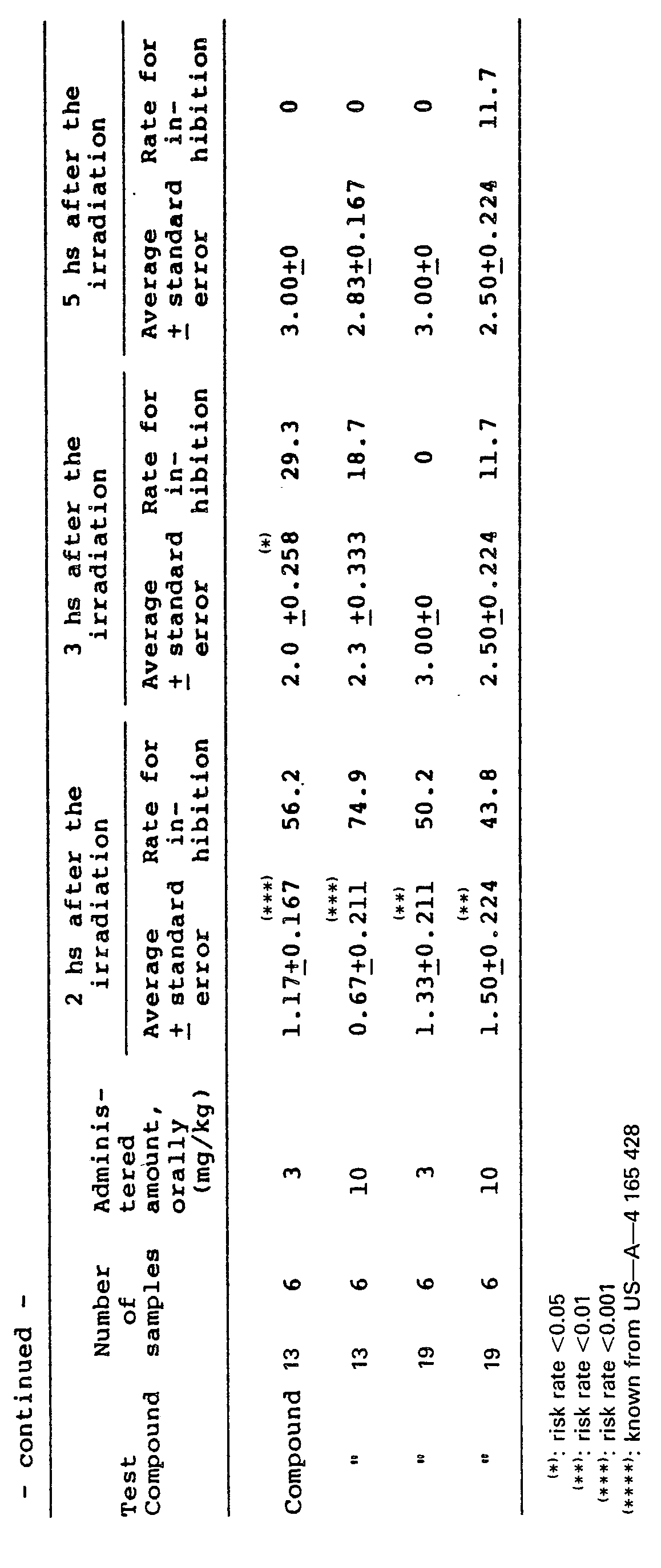
- With respect to the compound of the present invention as well as compound 3, IM, DF and acemethacin, the tests for pharmacological action, acute toxicity and a rate of hydrolysis were performed. The results of the tests are shown in Table 1 and Table 2.


- Anti-inflammatory action was investigated according to the method of Winter et al [cf. Pro. Soc. Exp. Biol. Med., 111, 544 (1962)] by the inhibition test of carrageenan edema employing a foot-pad edema method using carrageenan as an irritating agent and male Wister rats weighing 130 to 170 g. As is clearly seen in Table 1, the compounds of the present invention exhibit a more excellent pharmacological effect than IM and DF. Compounds 1, and 8 have an equal anti-inflammatory activity to IM and Compounds 13, 14,16 and 18 have an almost equal anti-inflammatory activity to DF.
- Gastrointestinal ulcer formation action, which is a principal side effect of an acid anti-inflammatory drug, was investigated according to the method of Okabe et al [cf. Nippon Yakurigaku Zasshi (FOLIA PHARMACOLOGICA JAPONICA), 74, 773 (1978)] as follows: Male Wister rats weighing 130 to 170 g were subjected to fasting for 24 hrs. The compounds of the present invention, IM, DF and acemethacin were suspended in 5% Tween-80 solution and administered orally 1 ml/100 g body weight to the rats, respectively. At 6 hrs after the administration, the state of glandstomach was observed by means of a dissecting microscope whether the ulcer having a diameter more than 1 mm was generated or not. As the result, the rate of ulcer generation of compounds 1, 2, 4 to 6, 8,13 to 14 and 19 was about 1/3 of that of IM and DF as clearly understood from Table 1.
- Effect on central nervous system, which is another side effect of IM, was investigated according to the potentiating effect on thiopental-induced sleep in mice as follows: Male ddY mice weighing 20 to 24 g were subjected to fasting for 15 hrs. The compound 1,3 and 8, IM and DF were suspended in 5% Tween-80 solution and administered orally 1 ml/100 g body weight to the mice, respectively, while to the control was administered orally only 5% Tween-80 solution. At 30 mins after the administration, thiopental sodium was injected intravenously to each of the mice in an amount of 35 mg/I kg body weight, and then, the sleeping time was observed. When the sleeping time of the mice to which the Test Compound was administered was longer than 2 times that of the control to which only Tween-80 was administered, the given Test Compound was judged to be effective on thiopental-induced sleep potentiating effect. As the result, DF did not show the potentiating effect. With respect to Compounds 1, and 8, and IM, Dso for the potentiation of thiopental-induced sleep are shown in Table 3.
- As is clearly seen in Table 3, the potentiating effect of Compounds 1, and 8 was 1/4.3,1/5.7 and 1/2.5 of that of IM, respectively. Therefore, it was easily understood that the central nervous effect of the compound of the present invention was weaker than IM.

- With respect to Compounds 1 to 2,13 and 19 which are especially useful as an anti-inflammatory drug, IM and DF, inhibition action for ultraviolet erythema was investigated according to the method of Adames et al [cf. Nature, London, 181, 773 (1958)] using guinea pigs as follows: Male Hartley guinea pigs weighing 250 to 350 g were shaved at their sides the day before and two hrs before the ultraviolet irradiation. To the guinea pigs were administered orally Compounds 1 to 3, 13 and 19, IM and DF in amounts as described in Table 2, respectively. To the control group was administered orally only Tween-80. At 1 hr after the time of administration, the guinea pigs were irradiated at their shaved sides by ultraviolet beam for 40 seconds.
- The reaction of the ultraviolet erythema was evaluated at 2 hrs, 3 hrs and 5 hrs after irradiation according to the method of Winder et al [cf. Arch. int. Pharmacodyn., 116, 261 (1958)]. As the result, easily understood from Table 2, Compounds 3, 13 and 19 exhibit the equal inhibition effect for ultraviolet erythema to that of IM and DF. Compounds 1 and 2 show a duration of the pharmacological effect over 5 hrs, contrary to that IM has a duration of 2 hrs.
- The present invention is more specifically described and explained by means of the following Examples.
- In 30 ml of anhydrous acetonitrile was suspended 3.05 g (7.7 mmol) of potassium salt of IM. To this suspension were added 0.81 g (8 mmol) of triethylamine and 1.22 g (7.7 mmol) of potassium iodide, and then, was added 1.34 g (10 mmol) of chloromethylcrotonate with stirring at room temperature. The reaction mixture was heated to 60°C and stirred for 5 hrs.
- After cooling the reaction mixture, the insoluble materials were filtered off, and to the filtrate was added 100 ml of dietylether. The filtrate was washed with successive, a 10% aqueous solution of sodium carbonate, water and a saturated aqueous solution of sodium chloride, and dried over anhydrous magnesium sulfate. The solvent was distilled out under reduced pressure to give yellow crystals.
- The crystals were recrystallized twice from a mixed solvent system of benzene and n-pentane, and 2.3 g of Compound 1 in the form of yellow crystals having a melting point of 93 to 94°C was obtained (yield: 65.6%). The characteristic properties of the obtained Compound 1 are shown below.
- Elementary analysis for C24H22NO6Cl (in molecular weight of 455.9):
- Calcd. (%): C 63.23, H 4.86
- Found (%): C 63.41, H 4.87
- NMR spectrum (solvent: CCI4, internal standard: TMS): 5 values (ppm)
- 1.79 and 1.80 (d, d, 3H, -CH=CH-CH3),
- 2.26 (s, 3H,

- 3.47 (s, 2H,

- 3.63 (s, 3H, ph-OCH3),
- 5.43 to 5.58 (m, 1H, olefinic H),
- 5.52 (s, 2H,

- 6.24 to 6.76 (m, 4H, aromatic and olefinic H),
- 6.99 to 7.40 (m, 4H, aromatic H).
- Mass spectrum (direct injection, 20eV): m/e
- 455 (M t),
- 457 (M+2)+,
- 312 [M-

- 139 [COC6H4Cl]+ (base aeak).
- 69

- Infrared absorption spectrum (vKBr mar cm-1):
- 3600 to 3300, 3100 to 2850 (aromatic and alkyl C-H),
- 1750 and 1740 (ester C=O),
- 1680 (NC=O).
- 7.15 g (20 mmol) of IM, 50 ml of DMF and 2.76 g (20 mmol) of anhydrous potassium carbonate were mixed and stirred at 60°C for 1 hr. To the resulting mixture was added dropwise 2.97 g (20 mmol) of distilled 3,3-dimethylacryloyloxymethylchloride, and then, the admixture was stirred at 50 to 60°C for 3 hrs.
- The obtained reaction mixture was cooled with ice, and the inorganic materials were filtered off, and then, the solvent was distilled out under reduced pressure. To the residue was added 100 ml of diethylether. The solution was washed with successive, water, a 10% aqueous solution of sodium carbonate and a saturated aqueous solution of sodium chloride, and dried over anhydrous magnesium sulfate. The organic solvent was distilled out under reduced pressure to give 6 g of yellow crude crystals.
- The crystals were recrystallized from methanol, whereby 5.7 g of Compound 2 in the form of white crystals having a melting point of 84 to 86°C was obtained (yield: 60.8%). The characteristic properties of the obtained Compound 2 are shown below.
- Elementary analysis for C25H24NO6Cl (in molecular weight of 469.6):
- Calcd. (%): C 63.88, H 5.11
- Found (%): C 64.01, H 5.12
- NMR spectrum (solvent: CCI4, internal standard: TMS): 5 values (ppm)
- 1.84 (s, 3H, olefinic-CH3),
- 2.12 (s, 3H, olefinic -CH3),
- 2.36 (s, 3H,

- 3.60 (s, 2H,

- 3.76 (s, 3H, ph-OCH3),
- 5.51 to 5.54 (m, 1H, olefinic H),

- 6.40 to 6.82 (m, 3H, aromatic H),
- 7.25 to 7.63 (m, 4H, aromatic H).
- Mass spectrum (direct injection, 20eV): m/e
- 469 (M+),
- 471 (M+2)+,

- 139 [COC6H4Cl]+ (base peak),
- 83 [COCH=C(CH3)2]+.
- Infrared absorption spectrum (vKBr max cm-1):
- 3600 to 3350, 3100 to 2850 (aromatic and alkyl C-H),
- 1760 and 1740 (ester C=O),
- 1690 (NC=O),
- 1650 to 1600 (C=C).
- The procedure of Example 2 was repeated except that there were employed 1.79 g (5 mmol) of IM, 20 ml of anhydrous DMF, 0.7 g (5 mmol) of anhydrous potassium carbonate and 0.9 g (7.5 mmol) of 2-(acetyl- oxy)ethylchloride to give 1.78 g of Compound 3 in the form of white crystals having a melting point of 109 to 111°C (yield: 80.4%). The characteristic properties of the obtained Compound 3 are shown below.
- Elementary analysis for C13H22NO6Cl (in molecular weight of 443.7):
- Calcd. (%): C 62.26, H 4.96
- Found (%): C 62.44, H 4.98
- NMR spectrum (solvent: CCI4, internal standard: TMS): 5 values (ppm)
- 1.75 (s, 3H,

- 2.22 (s, 3H,

- 3.35 (s, 2H,

- 3.55 (s, 3H, ph-OCH3),
- 3.96 (s, 4H,

- 6.12 to 6.56 (m, 3H, aromatic H),
- 6.99 to 7.32 (m, 4H, aromatic H).
- Mass spectrum (direct injection, 20eV): m/e
- 443 (M t),
- 445 (M+2)+,
- 312 [M-

- 139 [COC6H4Cl)+ (base peak),
- 131

- 87 [CH 2 CH 2 1

- Infrared absorption spectrum (vKBr max cm-1):
- 3100 to 2850 (aromatic and alkyl C-H),
- 1765 (ester C=O),
- 1690 (NC=O).
- To 200 ml of dry acetonitrile was added 0.1 g of 18-crown-6, and the mixture was stirred at room temperature for 30 mins. To the mixture was added 3.95 g (10 mmol) of potassium salt of IM and 2.08 g (11 mmol) of 2-(crotonoyloxy)ethylchloride, and the admixture was stirred at 50°C for 5 hrs. After cooling the reaction mixture, 200 ml of diethylether was added to the mixture. Then, the reaction mixture was worked up exactly according to the procedure described in Example 2 to give 3.15 g of purified Compound 4 in the form of pale yellow crystals having a melting point of 102 to 105°C (yield: 67%). The characteristic properties of the obtained Compound 4 are shown below.
- Elementary analysis for C25H24NO6Cl (in molecular weight of 469.6):
- Calcd. (%): C 63.88, H.5.11
- Found (%): C 64.07, H 5.13
- NMR spectrum (solvent: CCI4, internal standard: TMS): 8 values (ppm)
- 1.80 and 1.84 (d, d,.3H, olefinic-CH3),
- 2.32 (s, 3H,

- 3.60 (s, 2H,

- 3.71 (s, 3H, ph-OCH3),
- 4.20 (s, 4H,

- 5.56 and 5.58 (d, d, 1H, olefinic H),
- 6.41 to 6.82 (m, 4H, aromatic and olefinic H),
- 7.06 to 7.49 (m, 4H, aromatic H).
- Mass spectrum (direct injection, 20eV): m/e
- 469 (M t),
- 471 (M+2)+.
- 312 [M-

- 139 [COC6H4Cl]+ (base peak),
- 69 [COCH=CHCH3] +.
- Infrared absorption spectrum (vKBr max cm-1):
- 3600 to 3350, 3100 to 2850 (aromatic and alkyl C-H),
- 1732 and 1720 (ester C=O),
- 1680 (NC=O),
- 1590 to 1630 (C=O).
- The procedure of Example 2 was repeated except that there were employed as the starting materials 3.57 g (10 mmol) of 1M, 50 ml of anhydrous DMF, 1.38 g (10 mmol) of anhydrous potassium carbonate and 2.07 g (10 mmol) of 2-(3,3-dimethylacryloyloxy)ethylbromide to give 3.12 g of Compound 5 in the form of pale yellow crystals having a melting point of 87 to 90°C (yield: 64.5%). The characteristic properties of the obtained Compound 5 are shown below.
- Elementary analysis for C26H26NO6Cl (in molecular weight of 483.9):
- Calcd. (%): C 64.48, H 5.37
- Found (%): C 64.64, H 5.38
- NMR spectrum (solvent: CCI4, internal standard: TMS): 5 values (ppm)
- 1.80 (s, 3H, olefinic-CH3),
- 2.02 (s, 3H, olefinic-CH3),
- 2.27 (s, 3H,
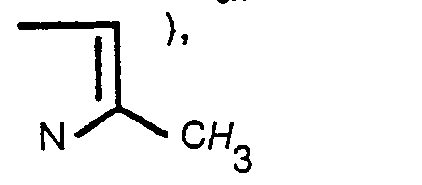
- 3.44 (s, 2H,

- 3.64 (s, 3H, ph-OCH3),
- 4.06 (s, 4H,

- 5.28 to 5.35 (m, 1H, olefinic H),
- 6.24 to 6.65 (m, 3H, aromatic H),
- 7.10 to 7.42 (m, 4H, aromatic H).
- Mass spectrum (direct injection, 20eV): m/e
- 483 (M t),
- 485 (M+2)+,
- 312 [M-
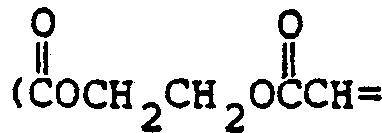
- 139 [COC2H4Cl]+ (base peak),
- 83 [COCH=C(CH3)2]+.
- Infrared absorption spectrum (vKBr max cm-1):
- 3600 to 3350, 3100 to 2850 (aromatic and alkyl C-H),
- 1735 and 1715 (ester C=O),
- 1680 (NC=O),
- 1655 to 1595 (C=C).
- The procedure of Example 2 was repeated except that there were employed as the starting materials 1.47 g (4 mmol) of IM, 10 ml of anhydrous DMF, 0.6 g (4 mmol) of anhydrous potassium carbonate and 0.9 g (4.1 mmol) of 2-(2.4-hexadienoyloxy)ethylbromide to give 1.1 g of Compound 6 in the form of yellow crystals having a melting point of 145 to 148°C (yield: 55.4%). The characteristic properties of the obtained Compound 6 are shown below.
- Elementary analysis for C27H26NO6Cl (in molecular weight of 496):
- Calcd. (%): C 65.32, H 5.24
- Found (%): C 65.55, H 5.26
- NMR spectrum (solvent: CCI4, internal standard: TMS): 5 values (ppm)
- 1.85 (d, 3H, olefinic -CH3),
- 2.36 (s, 3H,

- 3.64 (s, 2H

- 3.80 (s, 3H, ph-OCH3),
- 4.28 (s, 4H,

- 5.55 and 5.70 (d, 1H, olefinic H),
- 6.03 to 6.12 (m, 2H, olefinic H),
- 6.59 to 6.88 (m, 4H, aromatic and olefinic H),
- 7.32 to 7.61 (m, 4H, aromatic H).
- Mass spectrum (direct injection, 20eV): m/e
- 495 (M t),
- 497 (M+2)+,
- 312 [M-(

- 139 [COC6H5Cl]+ (base peak),
- 95 [COCH=CH-CH=CHCH3]+.
- Infrared absorption spectrum (vKBr max cm-1):
- 3600 to 3350, 3050 to 2850 (aromatic and alkyl C-H),
- 1730 and 1715 (ester C=O),
- 1675 (NC=O),
- 1640 to 1580 (C=O).
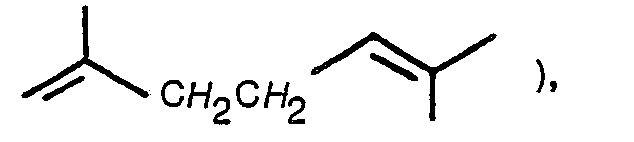
- The procedure of Example 2 was repeated except that there were employed as the starting materials 3.57 g (10 mmol) of IM, 20 ml of anhydrous DMF, 1.38 g (10 mmol) of anhydrous potassium carbonate and 2.75 g (10 mmol) of 2-(3,7-dimethyl-2,6-octadienoyloxy)ethylbromide to give 3.59 g of Compound 7 in the form of pale yellow crystals having a melting point of 76 to 78°C (yield: 65.1%). The characteristic properties of the obtained Compound 7 are shown below.
- Elementary analysis for C31H34NO6Cl (in molecular weight of 551.8):
- Calcd. (%): C 67.42, H 6.16
- Found (%): C 67.55, H 6.18
- NMR spectrum (solvent: CCI4, internal standard: TMS): 5 values (ppm)
- 1.57 and 1.65 (s, s, 6H, olefinic terminal-CH3 x 2),
- 2.12 (m, 7H, olefinic -CH3,
- 2.37 (s, 3H,
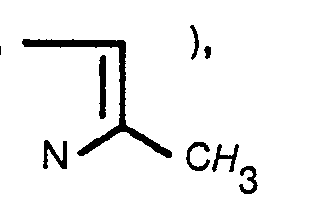
- 3.68 (s, 2H,

- 3.79 (s, 3H, ph-OCH3),
- 4.24 (s, 4H,

- 4.90 to 5.12 (m, broad, 1H, olefinic H),
- 5.54 (s, 1 H, olefinic H),
- 6.50 to 6.86 (m, 3H, aromatic H),
- 7.32 to 7.60 (m, 4H, aromatic H).
- Mass spectrum (direct injection, 20eV): m/e
- 551 (M t),
- 553 (M+2)+,
- 312[M-
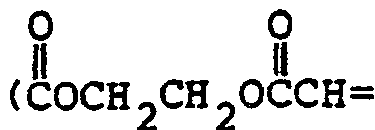
- 151 [COCH=CH(CH3)CH2CH2CH=C(CH3)2]+,
- 139 [COC6H5Cl]+ (base peak).
- Infrared absorption spectrum (vKBr maxcm-1):
- 3600 to 3350, 3070 to 2870 (aromatic and alkyl C-H),
- 1725 and 1715 (ester C=O),
- 1675 (NC=O),
- 1645 to 1600 (C=C).
- The procedure of Example 2 was repeated except that there were employed as the starting materials 2.5 g (7 mmol) of IM, 15 ml of anhydrous DMF, 1 g (7.2 mmol) of anhydrous potassium carbonate and 1.04 g (7 mmol) of 1-(crotonoyloxy)ethylchloride to give 1.7 g of Compound 8 in the form of yellow crystals having a melting point of 72 to 75°C (yield: 51.7%). The characteristic properties of the obtained Compound 8 are shown below.
- Elementary analysis for C25H24NO6Cl (in molecular weight of 496.6):
- Calcd. (%): C 63.94, H 5.15
- Found (%): C 64.04, H 5.18
- NMR spectrum (solvent: CCI4, internal standard: TMS): δ values (ppm)
- 1.48 (d, 3H,

- 1.82 and 1.80 (d, d, 3H, olefinic -CH3),
- 2.32 (s, 3H,

- 3.57 (s, 2H,

- 3.73 (s, 3H, ph-OCH3),
- 5.60 to 5.76 (m, 1H, olefinic H),
- 6.46 to 6.76 (m. 5H. aromatic 3H. olefinic H.

- 7.30 to 7.64 (m, 4H, aromatic H).
- Mass spectrum (direct injection, 20eV): m/e
- 469 (M t),
- 471 (M+2)+,

- 139 [COC6H4Cl]+ (base peak),
- 69 [COCH=CHCH3]+.
- Infrared absorption spectrum (Vneat max (NaCI) cm-1):
- 3100 to 2850 (aromatic and alkyl C-H),
- 1750 (ester C=O),
- 1690 (NC=O),
- 1630 to 1590 (C=O).
- The procedure of Example 2 was repeated except that there were employed as the starting materials 3.57 g (10 mmol) of IM, 20 ml of anhydrous DMF, 1.38 g (10 mmol) of anhydrous potassium carbonate and 2.43 g (15 mmol) of 1-(3,3-dimethylacryloyloxy)ethylchloride to give 3.1 g of Compound 9 in the form of yellow crystals having a melting point of 85 to 87°C (yield: 64.1%). The characteristic properties of the obtained Compound 9 are shown below.
- Elementary analysis for C26H26NO6Cl (in molecular weight of 483.6):
- Calcd. (%): C 64.58, H 5.42
- Found (%): C 64.77, H 5.44
- NMR spectrum (solvent: CCl4, internal standard: TMS): δ values (ppm)
- 1.49 (d, 3H,

- 1.92 (s, 3H, olefinic -CH3),
- 2.10 (s, 3H, olefinic -CH3),
- 2.36 (s, 3H,

- 3.58 (s, 2H,

- 3.78 (s, 3H, ph-OCH3),
- 5.53 to 5.62 (m, 1H, olefinic H),
- 6.45 to 6.87 (m, 4H, aromatic 3H, -CH-CH3),
- 7.34 to 7.72 (m, 4H, aromatic H).
- Mass spectrum (direct injection, 20eV): m/e
- 483 (M t),
- 485 (M+9)+

- 139 [COC6H4Cl]+ (base peak),
- 83 [COCH=C(CH3)2]+.
- Infrared absorption spectrum (VKBr max cm-1):
- 3050 to 2850 (aromatic and alkyl C-H),
- 1750 (ester C=O),
- 1675 (NC=O),
- 1650 to 1600 (C=C).
- The procedure of Example 2 was repeated except that there were employed as the starting materials 3.57 g (10 mmol) of IM, 30 ml of anhydrous DMF, 1.38 g 10 mmol) of anhydrous potassium carbonate and 1.74 g (10 mmol) of 1-(2,4-hexadienoyloxy)ethylchloride to give 3.2 g of Compound 10 in the form of yellow crystals having a melting point of 125 to 129°C (yield: 64.6%). The characteristic properties of the obtained Compound 10 are shown below.
- Elementary analysis for C27H26NO6Cl (in molecular weight of 495.6):
- Calcd. (%): C 65.44, H 5.29
- Found (%): C 65.64, H 5.31
- NMR spectrum (solvent: CCI4, internal standard: TMS): δ values (ppm)
- 1.49 (d, 3H, -CH-CH3), I
- 1.85 (d, 3H, olefinic -CH3),
- 2.36 (s, 3H,

- 3.64 (s, 2H

- 3.80 (s, 3H, ph-OCH3),
- 5.63 (d, 1H, olefinic H),
- 6.03 to 6.12 (m, 2H, olefinic H),
- 6.54 to 6.88 (m, 5H, aromatic 3H, olefinic H, -CH-CH2),
- 7.32 to 7.61 (m, 4H, aromatic H).
- Mass spectrum (direct injection, 20eV): m/e
- 495 (M t),
- 497 (M+21+.

- 139 [COC6H4Cl]+ (base peak),
- 95 [COCH=CH―CH=CHCH3]+.
- Infrared absorption spectrum (VKBr max cm-1):
- 3450, 3100 to 2850 (aromatic and alkyl C-H),
- 1753 (ester C=O),
- 1680 (NC=O),
- 1650 to 1600 (C=C).
- 2.96 g (10 mmol) of DF was dissolved in 25 ml of anhydrous DMF, and to the solution was added 1.64 g (20 mmol) of sodium bicarbonate, and then, the mixture was stirred at room temperature for 1 hr. To the resulting mixture, was added dropwise 1.74 g (13 mmol) of crotonoyloxymethylchloride, and the mixture was stirred at 50°C for 2 hrs.
- After cooling the reaction mixture with ice, the inorganic materials were filtered off and the solvent was distilled out. To the residue was added 50 ml of diethylether, and the solution was washed with successive, water, a saturated aqueous solution of sodium hydrogencarbonate and a saturated aqueous solution of sodium chloride, and then, dried over anhydrous magnesium sulfate. The solvent was distilled out to give an orange oily substance. The thus obtained substance was purified by means of a silica gel column chromatography (silica gel: 40 g of Kieselgel 60F made by MERCK & CO., INC.; eluent: benzene) to give 2.5 g of Compound 11 in the form of an orange oil (yield: 63.9%). The characteristic properties of the obtained Compound 11 are shown below.
- Elementary analysis for C19H17NOsCl (in molecular weight of 394.2):
- Calcd. (%): C 57.91, H 4.35
- Found (%): C 58.05, H 4.36
- NMR spectrum (solvent: CCl4, internal standard: TMS): δ values (ppm)
- 1.90 and 1.93 (d, d, 3H, olefinic -CH3),
- 3.78 (s, 2H, ph-CH2―COO―),
- 5.65 to 5.84 (m, 1H, olefinic H),
- 5.75 (s, 2H,

- 6.41 to 7.24 (m, 9H, aromatic and olefinic H, ph-NH-).
- Mass spectrum (direct injection, 20eV): m/e
- 393 (M+),
- 395 (M+2)+,
- 69 [COCH=CHCH3]+ (base peak).
- Infrared absorption spectrum (vneat max (NaCl) cm-1):
- 3350 (N-H),
- 3100 to 2850 (aromatic and alkyl C-H),
- 1745 (ester C=O),
- 1660 (C=C).
- Refractive index (n27 D): 1.5810.
- The procedure of Example 1 was repeated except that there were employed as the starting materials 2.54 g (8 mmol) of sodium salt of DF, 30 ml of dry acetonitrile, 0.81 g (8 mmol) of triethylamine, 1.33 g (8 mmol) of potassium iodide and 1.49 g (10 mmol) of 3,3-dimethylacryloyloxymethylchloride, and that the obtained product was purified by means of a silica gel column chromatography to give 1.63 g of Compound 12 in the form of an orange oil (yield: 50%). The characteristic properties of the obtained Compound 12 are shown below.
- Elementary analysis for C20H19NO4Cl2 (in molecular weight of 408.3):
- Calcd. (%): C 58.83, H 4.69
- Found (%): C 59.00, H 4.70
- NMR spectrum (solvent: CCI4, internal standard: TMS): 5 values (ppm)
- 1.82 (s, 3H, olefinic -CH3),
- 2.06 (s, 3H, olefinic -CH3),
- 3.64 (s, 2H, ph-CH2-COO-),
- 5.39 to 5.46 (m, 1H, olefinic H),
- 5.56 (s, 2H,

- 6.18 to 7.04 (m, 8H, aromatic H, ph-NH-).
- Mass spectrum (direct injection, 20eV): m/e
- 407 (M t),
- 409 (M+2)+,
- 83 [COCH=C(CH3)2]+ (base peak).
- Infrared absorption spectrum (vneat max (NaCl) cm-1):
- 3350 (N-H),
- 3100 to 2850 (aromatic and alkyl C-H),
- 1740 (ester C=O),
- 1660 (C=C).
- Refractive index (n27 D): 1.5815.
- The procedure of Example 10 was repeated except that there were employed as the starting materials 2.96 g (10 mmol) of DF, 35 ml of anhydrous DMF, 1.38 g (10 mmol) of anhydrous potassium carbonate and 2.0 g (13 mmol) of distilled 2,4-hexadienoyloxymethylchloride to give 1.89 g of Compound 13 in the form of white crystals having a melting point of 87 to 89°C (yield: 45%). The characteristic properties of the obtained Compound 13 are shown below.
- Elementary analysis for C21H19NO4Cl2 (in molecular weight of 420.3):
- Calcd. (%): C 60.01, H 4.56
- Found (%): C 60.19, H 4.57
- NMR spectrum (solvent: CCI4, internal standard: TMS): δ values (ppm)
- 1.88 (d, 3H, olefinic―CH3),
- 3.78 (s, 2H, ph-CH2―COO―),
- 5.67 (d, 1H, olefinic H),
- 5.72 (s, 2H,
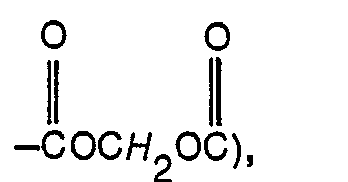
- 6.05 to 6.12 (m, 2H, olefinic H),
- 6.40 to 7.23 (m, 9H, aromatic and olefinic H, ph-NH-).
- Mass spectrum (direct injection, 20eV): m/e
- 419 (M+),
- 421 (M+2)+,
- 95 [COCH=CH-CH=CHCH3] + (base peak).
- Infrared absorption spectrum (vKBr max cm-1):
- 3330 (N-H),
- 3100 to 2850 (aromatic and alkyl C-H),
- 1740 (ester C=O),
- 1645 (C=C).
- The procedure of Example 11 was repeated except that there were employed as the starting materials 2.96 g (10 mmol) of DF, 25 ml of anhydrous DMF, 1.38 g (10 mmol) of anhydrous potassium carbonate and 1.83 g (15 mmol) of 2-(acetyloxy)ethylchloride to give 1.9 g of Compound 14 in the form of a yellow oil (yield; 49,7%), The characteristic properties of the obtained Compound 14 are shown below.
- Elementary analysis for C18H17NO4Cl2 (in molecular weight of 382.1):
- Calcd. (%): C 56.58, H 4.45
- Found (%): C 56.75, H 4.46
- NMR spectrum (solvent: CCI4, internal standard: TMS): δ values (ppm)
- 1.86 (s, 3H,

- 3.59 (s, 2H, -ph-CH2


- 6.16 to 7.0 (m, 8H, aromatic H, ph-NH-ph).
- Mass spectrum (direct injection, 20eV): m/e
- 381 (M t),
- 383 (M+2)+,
- 87 (CH2CH2

- 43 [COCH3]+.
- Infrared absorption spectrum (vneat max (NaCl) cm-1):
- 3350 (N-H),
- 3100 to 2850 (aromatic and alkyl C-H),
- 1743 (ester C=O).
- Refractive index (n27 D): 1.5747.
- The procedure of Example 4 was repeated except that there were employed as the starting materials 2.23 g (7 mmol) of sodium salt of DF, 50 ml of anhydrous acetonitrile, 0.1 g of 18-crown-6 and 1.47 g (7 mmol) of 2-(3,3-dimethylacryloyloxy)ethylbromide, and that the obtained product was purified according to the procedure described in Example 13 to give 1.92 g of Compound 15 in the form of an orange oil (yield: 65.2%). The characteristic properties of the obtained Compound 15 are shown below.
- Elementary analysis for C21H21NO4Cl2 (in molecular weight of 422.3):
- Calcd. (%): C 59.73, H 5.01
- Found (%): C 59.88, H 5.03
- NMR spectrum (solvent: CCI4, internal standard: TMS): 5 values (ppm)
- 1.84 (s, 3H, olefinic -CH3),
- 2.10 (s, 3H, olefinic -CH3),
- 3.76 (s, 2H, ph-CH2―COO―),
- 4.26 (s, 4H,
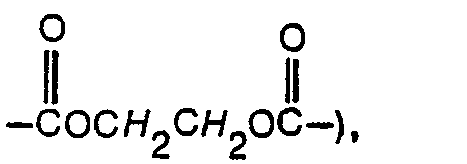
- 5.53 to 5.62 (m, 1H, olefinic H),
- 6.41 to 7.26 (m, 8H, aromatic H, ph-NH-).
- Mass spectrum (direct injection, 20eV): m/e
- 421 (M t),
- 423 (M+2)+,
- 127 (CH2 CH 2

- 83 [COCH=C(CH3)2]+.
- Infrared absorption spectrum (vneat max (NaCl) cm-1):
- 3350 (N―H),
- 3100 to 2850 (aromatic and alkyl H),
- 1725 (ester C=O), 1655 (C=C).
- Refractive index (n27 D): 1.5716.
- The procedure of Example 11 was repeated except that there were employed as the starting materials 2.96 g (10 mmol) of DF, 25 ml of anhydrous DMF, 1.86 g (20 mmol) of sodium hydrogencarbonate and 1.83 g (15 mmol) of 1-acetyloxy)ethylchloride to give 2.57 g of Compound 16 in the form of a red oil (yield: 67.2%). The characteristic properties of the obtained Compound 16 are shown below.
- Elementary analysis for C18H17NO4Cl2 (in molecular weight of 382.1):
- Calcd. (%): C 56.58, H 4.45
- Found (%): C 56.69, H 4.47
- NMR spectrum (solvent: CCI4, internal standard: TMS): 5 values (ppm)
- 1.39 (d, 3H,

- 1.84 (s, 3H,

- 3.58 (s, 2H, ph-CH2
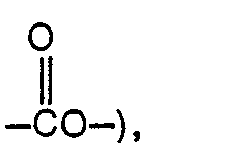
- 6.16 to 7.0 (m, 9H, aromatic H,

- Mass spectrum (direct injection, 20eV): m/e
- 381 (M+),
- 383 (M+2)+,
- 277 (base peak),
- 43 [COCH3].
- Infrared absorption spectrum (neat max (NaCl) cm-1):
- 3350 (N-H),
- 3100 to 2850 (aromatic and alkyl C-H),
- 1740 (ester C=O).
- Refractive index (n27 D): 1.5696.
- The procedure of Example 11 was repeated except that there were employed as the starting materials 1.75 g (5.9 mmol) of DF, 25 ml of anhydrous DMF, 1.72 g (12 mmol) of sodium carbonate and 1.25 g (8.4 mmol) of 1-crotonoyloxy)ethylchloride to give 1.2 g of Compound 17 in the form of an orange oil (yield: 49.8%). The characteristic properties of the obtained Compound 17 are shown below.
- Elementary analysis for C20H19NO4Cl (in molecular weight of 408.2):
- Calcd. (%): C 58.85, H 4.65
- Found (%): C 59.03, H 4.66
- NMR spectrum (solvent: CCI4, internal standard: TMS): 5 values (ppm)
- 1.51 (d, 3H,

- 1.86 and 1.90 (d, d, 3H, olefinic -CH3),
- 3.73 (s, 2H, ph-CH2―COO―),
- 5.66 to 5.82 (m, 1H, olefinic H),
- 6.44 to 7.28 (m, 9H, aromatic and olefinic H, ph-NH-).
- Mass spectrum (direct injection, 20eV): m/e
- 407 (M+),
- 409 (M+2)+,
- 277 (base peak),
- 69 [COCH=CHCH3]+.
- Infrared absorption spectrum (vneat max (NaCl) cm-1):
- 3350 (N-H),
- 3100 to 2850 (aromatic and alkyl C-H),
- 1745 (ester C=O),
- 1660 (C=C).
- Refractive index (n27 D): 1.5710.
- The procedure of Example 11 was repeated except that there were employed as the starting materials 2.96 g (10 mmol) of anhydrous DMF, 1.38 g (10 mmol) of anhydrous potassium carbonate and 2.1 g (13 mmol) of 1-(3,3-dimethylacryloyloxy)ethylchloride to give 2.23 g of Compound 18 in the form of an orange oil (yield: 53%). The characteristic properties of the obtained Compound 18 are shown below.
- Elementary analysis for C21H21NO4Cl2 (in molecular weight of 422.3):
- Calcd. (%): C 59.73, H 5.01
- Found (%): C 59.88, H 5.02
- NMR spectrum (solvent: CCI4, internal standard: TMS): δ values (ppm)
- 1.51 (d, 3H, -CH-CH3),
- 1.88 (s, 3H, olefinic -CH3),
- 2.11 (s, 3H, olefinic -CH3),
- 3.76 (s, 2H, ph-CH2COO-),
- 5.52 to 5.61 (m, 1H, olefinic H),
- 6.41 to 7.28 (m, 9H, aromatic H, -CH-CH3, ph-NH-).
- Mass spectrum (direct injection, 20eV): m/e
- 421 (M+),
- 423 (M+2)+,
- 83 [COCH=C(CH3)2]+ (base peak).
- Infrared absorption spectrum (vneat max(NaCl) cm-1):
- 3350 (N-H),
- 3100 to 2850 (aromatic and alkyl C-H),
- 1743 (ester C=O),
- 1655 (C=C).
- Refractive index (n27 D): 1.5651.
- The procedure of Example 11 was repeated except that there were employed as the starting materials 2.96 g (10 mmol) of DF, 20 ml of anhydrous DMF, 1.38 g (10 mmol) of anhydrous potassium carbonate and 2.27 g (13 mmol) of 1-(2,4-hexadienoyloxy)ethylchloride to give 1.99 g of Compound 18 in the form of an orange oil (yield: 42.9%). The characteristic properties of the obtained Compound 19 are shown below.
- Elementary analysis for C22H21NO4Cl2 (in molecular weight of 434.2):
- Calcd. (%): C 60.86, H 4.84
- Found (%): C 61.04, H 4.85
- NMR spectrum (solvent: CCI4, internal standard: TMS): 5 values (ppm)
- 1.48 (d, 3H,

- 1.83 (d, 3H, olefinic -CH3),
- 3.64 (s, 2H, ph-CH2―COO―),
- 5.47 (d, 1 H, olefinic H),
- 5.86 to 5.98 (m, 2H, olefinic H),
- 6.28 (d, 1H, aromatic H),
- 6.58 to 7.07 (m, 9H, aromatic and olefinic H,

- Mass spectrum (direct injection, 20eV): m/e
- 433 (M t),
- 435 (M+2)+,
- 95 [COCH=CH―CH=CHCH3]+ (base peak).
- Infrared absorption spectrum (vneat max (NaCl) cm-1):
- 3350 (N-H),
- 3100 to 2850 (aromatic and alkyl C-H),
- 1740 (ester C=O),
- 1645 (C=C).
- Refractive index (n27 D): 1.5835.
- In addition to the ingredieents used in the Example, other ingredients can be used in the Example as set forth in the specification to obtain substantially the same results.
Claims (23)



Applications Claiming Priority (2)
| Application Number | Priority Date | Filing Date | Title |
|---|---|---|---|
| JP137188/83 | 1983-07-27 | ||
| JP58137188A JPS6028957A (en) | 1983-07-27 | 1983-07-27 | Ester derivatives of indolyl acetic acid and phenylacetic acid and their production method |
Publications (2)
| Publication Number | Publication Date |
|---|---|
| EP0132814A1 EP0132814A1 (en) | 1985-02-13 |
| EP0132814B1 true EP0132814B1 (en) | 1988-12-21 |
Family
ID=15192853
Family Applications (1)
| Application Number | Title | Priority Date | Filing Date |
|---|---|---|---|
| EP84108652A Expired EP0132814B1 (en) | 1983-07-27 | 1984-07-21 | Ester derivative of substituted acetic acid and preparing the same |
Country Status (6)
| Country | Link |
|---|---|
| US (1) | US4603217A (en) |
| EP (1) | EP0132814B1 (en) |
| JP (1) | JPS6028957A (en) |
| CA (1) | CA1286309C (en) |
| DE (1) | DE3475705D1 (en) |
| ES (1) | ES8506257A1 (en) |
Families Citing this family (5)
| Publication number | Priority date | Publication date | Assignee | Title |
|---|---|---|---|---|
| US5939455A (en) * | 1997-03-11 | 1999-08-17 | Beacon Laboratories, Inc. | Therapeutic augmentation of oxyalkylene diesters and butyric acid derivatives |
| US6110955A (en) * | 1997-03-11 | 2000-08-29 | Beacon Laboratories, Inc. | Metabolically stabilized oxyalkylene esters and uses thereof |
| JP2014523911A (en) * | 2011-07-21 | 2014-09-18 | 黒▲龍▼江宝▲慶▼隆生物技▲術▼有限責任公司 | Ibuprofen compounds, methods for their preparation, uses and formulations |
| CN104230736B (en) * | 2014-05-26 | 2017-01-04 | 中国人民解放军第二军医大学 | A kind of antiinflammatory, analgesic medicine and preparation thereof |
| TWI874828B (en) * | 2022-05-11 | 2025-03-01 | 陳建文 | Long-term slow release effect of diclofenac prodrug in joint cavity, method for preparing the same and use of the same |
Family Cites Families (3)
| Publication number | Priority date | Publication date | Assignee | Title |
|---|---|---|---|---|
| NL137301C (en) * | 1966-03-30 | |||
| JPS52156862A (en) * | 1976-06-22 | 1977-12-27 | Hisamitsu Pharmaceut Co Inc | Novel indoleacetic acid ester derivatives |
| CA1187488A (en) * | 1982-02-02 | 1985-05-21 | Yoichiro Ogawa | Indoleacetic ester derivatives and process for preparing same |
-
1983
- 1983-07-27 JP JP58137188A patent/JPS6028957A/en active Pending
-
1984
- 1984-07-20 CA CA000459408A patent/CA1286309C/en not_active Expired - Lifetime
- 1984-07-21 DE DE8484108652T patent/DE3475705D1/en not_active Expired
- 1984-07-21 EP EP84108652A patent/EP0132814B1/en not_active Expired
- 1984-07-25 US US06/634,252 patent/US4603217A/en not_active Expired - Fee Related
- 1984-07-26 ES ES534625A patent/ES8506257A1/en not_active Expired
Also Published As
| Publication number | Publication date |
|---|---|
| US4603217A (en) | 1986-07-29 |
| DE3475705D1 (en) | 1989-01-26 |
| EP0132814A1 (en) | 1985-02-13 |
| ES534625A0 (en) | 1985-07-01 |
| CA1286309C (en) | 1991-07-16 |
| JPS6028957A (en) | 1985-02-14 |
| ES8506257A1 (en) | 1985-07-01 |
Similar Documents
| Publication | Publication Date | Title |
|---|---|---|
| JPS60112793A (en) | 6-vinyl-furo-(3,4-c)-pyridine derivative, manufacture and medicinal composition | |
| PT726899E (en) | NEW PYRAZINOCARBOXAMIDE DERIVATIVES ITS PREPARATION AND ITS USE IN MEDICINES | |
| CA1275102A (en) | Intermediates for diphenyl and phenyl pyridyl anti- histamines | |
| JPH0313235B2 (en) | ||
| EP0081756B1 (en) | New compounds with antiinflammatory and antitussive activity, process for their preparation and relative pharmaceutical compositions | |
| EP0055450B1 (en) | Pyrazoloindazole derivatives, process for preparing the same, and pharmaceutical composition containing the same | |
| CA1286309C (en) | Ester derivative of substituted acetic acid and preparing the same | |
| EP0023633B1 (en) | Pyrazoloindazole derivatives and process for preparing the same and pharmaceutical compositions | |
| JPS62187445A (en) | Organic compound and medicinal use | |
| US4806663A (en) | Certain 3-substituted 2-alkyl benzofuran derivatives | |
| CA1078395A (en) | Anti-inflammatory 1-oxo-isoindoline derivatives and processes for their preparation | |
| US4204998A (en) | N-Amino indole derivatives having pharmacological activity | |
| US4139621A (en) | N-(4-substituted-3,5-dichloro-phenyl)-piperazines | |
| US4108894A (en) | Amidines | |
| US4143143A (en) | Substituted imidazo[5,1-a]isoquinolines | |
| EP0123146B1 (en) | Compound with antiinflammatory activity, process for preparation thereof and pharmaceutical compositions therefrom | |
| US3766245A (en) | 3,5-dialkoxyalkoxy-4-substituted benzoic acid esters | |
| US3465002A (en) | (succinimidoaryloxy)alkanoic acids,esters and amides thereof | |
| US3420847A (en) | Pyrrolyl-lower-alkyl-amidoximes | |
| US5015657A (en) | 2-halogen-substituted N-indolylethyl-sulphonamides and inhibiting platelet aggregation and antagonizing thromboxane A2 therewith | |
| US3442890A (en) | Substituted 3-benzazocin-16-ones | |
| US3535334A (en) | 1-piperonoyl-3-indolyl aliphatic acid derivatives | |
| JPS63227570A (en) | Isoquinoline derivative | |
| US5292751A (en) | 5,7-dihydroxy-2-methyl-8-(4-(3-hydroxy-1-(1-propyl))piperidinyl)-4H-1-benzopyran-4-one, its preparation and its use | |
| US4031094A (en) | N-meta-trifluoromethylpiperazines |
Legal Events
| Date | Code | Title | Description |
|---|---|---|---|
| PUAI | Public reference made under article 153(3) epc to a published international application that has entered the european phase |
Free format text: ORIGINAL CODE: 0009012 |
|
| AK | Designated contracting states |
Designated state(s): CH DE FR GB IT LI NL SE |
|
| 17P | Request for examination filed |
Effective date: 19850806 |
|
| 17Q | First examination report despatched |
Effective date: 19860819 |
|
| GRAA | (expected) grant |
Free format text: ORIGINAL CODE: 0009210 |
|
| AK | Designated contracting states |
Kind code of ref document: B1 Designated state(s): CH DE FR GB IT LI NL SE |
|
| PG25 | Lapsed in a contracting state [announced via postgrant information from national office to epo] |
Ref country code: SE Effective date: 19881221 Ref country code: NL Effective date: 19881221 |
|
| REF | Corresponds to: |
Ref document number: 3475705 Country of ref document: DE Date of ref document: 19890126 |
|
| ET | Fr: translation filed | ||
| ITF | It: translation for a ep patent filed | ||
| NLV1 | Nl: lapsed or annulled due to failure to fulfill the requirements of art. 29p and 29m of the patents act | ||
| PLBE | No opposition filed within time limit |
Free format text: ORIGINAL CODE: 0009261 |
|
| STAA | Information on the status of an ep patent application or granted ep patent |
Free format text: STATUS: NO OPPOSITION FILED WITHIN TIME LIMIT |
|
| 26N | No opposition filed | ||
| PGFP | Annual fee paid to national office [announced via postgrant information from national office to epo] |
Ref country code: GB Payment date: 19900723 Year of fee payment: 7 |
|
| PGFP | Annual fee paid to national office [announced via postgrant information from national office to epo] |
Ref country code: FR Payment date: 19900727 Year of fee payment: 7 |
|
| ITTA | It: last paid annual fee | ||
| PGFP | Annual fee paid to national office [announced via postgrant information from national office to epo] |
Ref country code: CH Payment date: 19900801 Year of fee payment: 7 |
|
| PGFP | Annual fee paid to national office [announced via postgrant information from national office to epo] |
Ref country code: DE Payment date: 19900906 Year of fee payment: 7 |
|
| PG25 | Lapsed in a contracting state [announced via postgrant information from national office to epo] |
Ref country code: GB Effective date: 19910721 |
|
| PG25 | Lapsed in a contracting state [announced via postgrant information from national office to epo] |
Ref country code: LI Effective date: 19910731 Ref country code: CH Effective date: 19910731 |
|
| GBPC | Gb: european patent ceased through non-payment of renewal fee | ||
| PG25 | Lapsed in a contracting state [announced via postgrant information from national office to epo] |
Ref country code: FR Effective date: 19920331 |
|
| REG | Reference to a national code |
Ref country code: CH Ref legal event code: PL |
|
| PG25 | Lapsed in a contracting state [announced via postgrant information from national office to epo] |
Ref country code: DE Effective date: 19920401 |
|
| REG | Reference to a national code |
Ref country code: FR Ref legal event code: ST |