EP0124783B1 - Benzofuran- and benzopyran-carboxamide derivatives - Google Patents
Benzofuran- and benzopyran-carboxamide derivatives Download PDFInfo
- Publication number
- EP0124783B1 EP0124783B1 EP84103843A EP84103843A EP0124783B1 EP 0124783 B1 EP0124783 B1 EP 0124783B1 EP 84103843 A EP84103843 A EP 84103843A EP 84103843 A EP84103843 A EP 84103843A EP 0124783 B1 EP0124783 B1 EP 0124783B1
- Authority
- EP
- European Patent Office
- Prior art keywords
- methyl
- dihydrobenzofuran
- group
- alkyl group
- pyrrolidinylmethyl
- Prior art date
- Legal status (The legal status is an assumption and is not a legal conclusion. Google has not performed a legal analysis and makes no representation as to the accuracy of the status listed.)
- Expired
Links
- 0 CC1CC(*)C(C)C1 Chemical compound CC1CC(*)C(C)C1 0.000 description 5
Classifications
-
- C—CHEMISTRY; METALLURGY
- C07—ORGANIC CHEMISTRY
- C07D—HETEROCYCLIC COMPOUNDS
- C07D307/00—Heterocyclic compounds containing five-membered rings having one oxygen atom as the only ring hetero atom
- C07D307/77—Heterocyclic compounds containing five-membered rings having one oxygen atom as the only ring hetero atom ortho- or peri-condensed with carbocyclic rings or ring systems
- C07D307/78—Benzo [b] furans; Hydrogenated benzo [b] furans
- C07D307/79—Benzo [b] furans; Hydrogenated benzo [b] furans with only hydrogen atoms, hydrocarbon or substituted hydrocarbon radicals, directly attached to carbon atoms of the hetero ring
-
- A—HUMAN NECESSITIES
- A61—MEDICAL OR VETERINARY SCIENCE; HYGIENE
- A61P—SPECIFIC THERAPEUTIC ACTIVITY OF CHEMICAL COMPOUNDS OR MEDICINAL PREPARATIONS
- A61P1/00—Drugs for disorders of the alimentary tract or the digestive system
- A61P1/08—Drugs for disorders of the alimentary tract or the digestive system for nausea, cinetosis or vertigo; Antiemetics
-
- A—HUMAN NECESSITIES
- A61—MEDICAL OR VETERINARY SCIENCE; HYGIENE
- A61P—SPECIFIC THERAPEUTIC ACTIVITY OF CHEMICAL COMPOUNDS OR MEDICINAL PREPARATIONS
- A61P25/00—Drugs for disorders of the nervous system
-
- A—HUMAN NECESSITIES
- A61—MEDICAL OR VETERINARY SCIENCE; HYGIENE
- A61P—SPECIFIC THERAPEUTIC ACTIVITY OF CHEMICAL COMPOUNDS OR MEDICINAL PREPARATIONS
- A61P25/00—Drugs for disorders of the nervous system
- A61P25/18—Antipsychotics, i.e. neuroleptics; Drugs for mania or schizophrenia
-
- A—HUMAN NECESSITIES
- A61—MEDICAL OR VETERINARY SCIENCE; HYGIENE
- A61P—SPECIFIC THERAPEUTIC ACTIVITY OF CHEMICAL COMPOUNDS OR MEDICINAL PREPARATIONS
- A61P25/00—Drugs for disorders of the nervous system
- A61P25/24—Antidepressants
-
- A—HUMAN NECESSITIES
- A61—MEDICAL OR VETERINARY SCIENCE; HYGIENE
- A61P—SPECIFIC THERAPEUTIC ACTIVITY OF CHEMICAL COMPOUNDS OR MEDICINAL PREPARATIONS
- A61P25/00—Drugs for disorders of the nervous system
- A61P25/26—Psychostimulants, e.g. nicotine, cocaine
-
- C—CHEMISTRY; METALLURGY
- C07—ORGANIC CHEMISTRY
- C07D—HETEROCYCLIC COMPOUNDS
- C07D405/00—Heterocyclic compounds containing both one or more hetero rings having oxygen atoms as the only ring hetero atoms, and one or more rings having nitrogen as the only ring hetero atom
- C07D405/02—Heterocyclic compounds containing both one or more hetero rings having oxygen atoms as the only ring hetero atoms, and one or more rings having nitrogen as the only ring hetero atom containing two hetero rings
- C07D405/12—Heterocyclic compounds containing both one or more hetero rings having oxygen atoms as the only ring hetero atoms, and one or more rings having nitrogen as the only ring hetero atom containing two hetero rings linked by a chain containing hetero atoms as chain links
Definitions
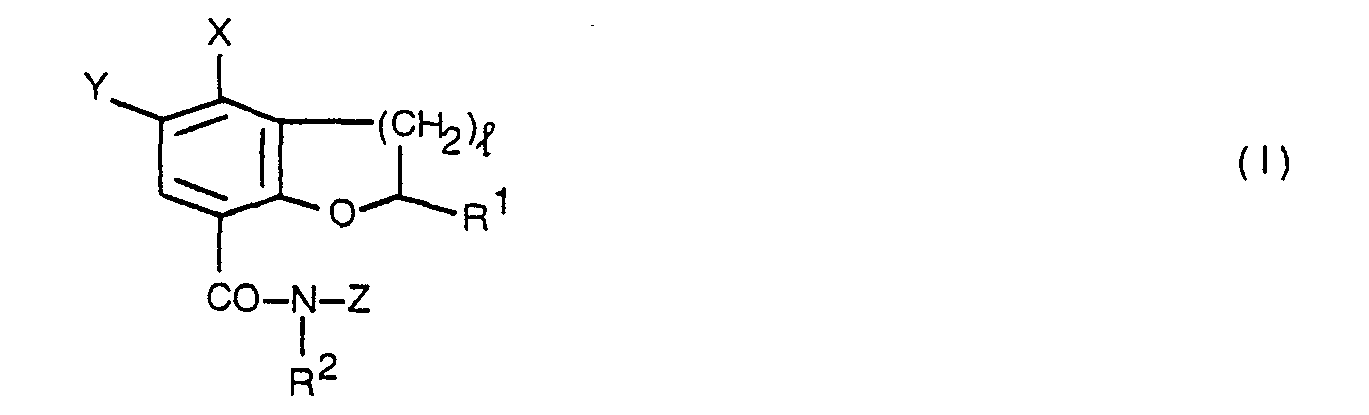
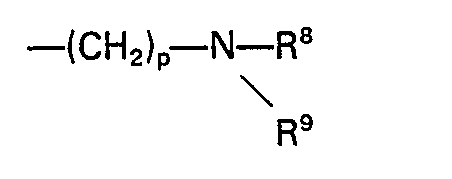
- This invention relates to novel and pharmaceutically useful benzofuran- or benzopyran-carboxamide derivatives represented by the formula: wherein I is 1 or 2; X is a hydrogen atom, an amino group or a halogen atom; Y is -S(O) m -R 3 wherein R 3 is a C 1-4 alkyl group and m is 0, 1 or 2, or wherein R 4 and R 5 are the same or different and each is a hydrogen atom or a C 1-4 alkyl group; R 1 is a hydrogen atom, a C 1-4 alkyl group, a phenylthiomethyl group, a halogenomethyl group or wherein R 6 and R 7 are the same or different and each is a hydrogen atom or a C 1-4 alkyl group or R 6 and R 7 form, together with the adjacent nitrogen atom, a pyrrolidine, piperidine, morpholine or 4-methyl-1-piperazine group; R 2 is a hydrogen atom or a C 1-4 al
- the C 1-4 alkyl group includes, e.g. methyl, ethyl, propyl, isopropyl, butyl, tert-butyl;
- the halogen atom includes, e.g. fluorine, chlorine, bromine;
- the halogenomethyl group includes, e.g. chloromethyl, bromomethyl, iodomethyl.
- sulpiride represented by the formula: has been known to have anti-schizophrenic actions as well as anti-ulcer actions.
- the sulpiride as a psychotropic agent is reported to have less side effects on the extra-pyramidal system and weak cataleptogenic activity, as opposed to existing drugs of this kind such as butyrophenone-series compounds, e.g. haloperidol or phenothiazine-series compounds, e.g. chlorpromazine.
- 5sulpiride has more selectivity to the dopamine antagonistic action in the mesolimbic system rather than the dopamine neuron blockade in the nigrostriatum.
- sulpiride is also known to have a low uptake rate in living organisms upon oral administration and to be difficult to cross the blood-brain barrier.
- the compounds of this invention are useful as a medicament for psychosomatic diseases such as 5 gastric ulcer, duodenal ulcer, etc. or for suppression of vomiting or as a therapeutical agent for psychic disturbances and mental disorders such as schizophrenia, depressive psychosis or anxiety, etc.
- the compounds of Formula (I) with which this invention is concerned are produced by reacting a carboxylic acid of the general formula: wherein the symbols are the same as defined above, or its reactive derivative and a compound of the formula: wherein the symbols are the same as defined above.
- the inert solvent to be used in the aforementioned condensation reactions includes for example, benzene, toluene, xylene, methanol, ethanol, isopropanol, ethyl ether, dioxane, tetrahydrofuran, chloroform, dichloromethane, dichloroethane, hexamethylphosphorictriamide, diethylene glycol, dimethylformamide, etc. singly or in combination and is chosen appropriately depending on the kind of the reactive derivatives.
- the compounds of Formula (I), wherein R 1 is not hydrogen and/or the radical of Z contains chiral carbon atoms represent racemic mixtures.
- the present invention covers the respective optically active isomers of the compounds (I), as well.
- the racemic mixture if desired, can be optically resolved in conventional manner with an optically active acid (e.g. tartaric acid, dibenzoyltartaric acid, mandelic acid, 10-camphorsulfonic acid) by availing itself of its basicity. It is also possible to prepare stereo-selectively the intended compounds (I) having desired steric configuration by subjecting an optically active carboxylic acid (II) or its reactive derivative obtained from a racemate (II) (R' * H) by the optical resolution of it with an optically active base (e.g.
- an optically active base e.g.
- an optically active compound (III) prepared by the resolution with an optically active acid (e.g. tartaric acid, dibenzoyltartaric acid, mandelic acid, 10-camphorsulfonic acid, etc.) to the condensation reaction.
- an optically active acid e.g. tartaric acid, dibenzoyltartaric acid, mandelic acid, 10-camphorsulfonic acid, etc.
- the compounds of Formula (I) can be converted into their physiologically acceptable acid addition salts, e.g. hydrochloride, hydrobromide, phosphate, fumarate, tartarate, sulfate, citrate, lactate, maleate, toluenesulfonate.
- physiologically acceptable acid addition salts e.g. hydrochloride, hydrobromide, phosphate, fumarate, tartarate, sulfate, citrate, lactate, maleate, toluenesulfonate.
- mice Groups of 5 male dd-strain mice were used. Test compounds were orally administered and 60 minutes thereafter, 0.5 mg/kg of apomorphine hydrochloride was subcutaneously administered. Immediately thereafter, spontaneous motility of the mice was measured with the aid of Animex (manufactured by Columbus Company, U.S.A.) for 20 minutes. The procedure was repeated three times with respective groups. The dose of test compounds required for 50% suppression of spontaneous motility of control group was graphically mapped out and determined as ED 50 value. The results are shown in Table 1.
- Test compounds were orally administered, 60 minutes thereafter, apomorphine hydrochloride was intravenously administered at a dosage of 1.25 mg/kg. After 5 minutes and 20 minutes, respectively, it was observed whether gnawing behavior (stereotyped behavior) appears or not during the period of 5 minutes. The dose of test compounds required for 50% suppression of the appearance was evaluated as ED 50 value by probit method. The results are shown in Table 1.
- Test compounds are intraperitoneally administered and 15 minutes thereafter, 5 mg/kg of methamphetamine hydrochloride was intraperitoneally administered. The number of rats which died within one week was counted. In the second to fourth week, the same experiment was repeated at one week intervals by the administration of test compounds and methamphetamine hydrochloride. The results are shown in Table 2.
- Test Compounds correspond to, as shown in Table 3 below, those of Examples which will be hereinafter described.
- the compounds of this invention when used as medicaments, can be administered in the form of tablets, pellets, capsules, powders, solutions or injectable solutions suitably in the combination with excipients, bulking agents, diluents, etc.
- the dose for adult human beings is usually in the range of 0.01-10 mg/kg per one dosage, but may vary depending on the compounds chosen, conditions of disease, age, etc.
- the starting material of the formula: wherein R 4 and R 5 are the same as defined above, and R' 2 is hydrogen atom or lower alkyl group is prepared by reacting a compound of the formula: wherein R 12 is the same as defined above, and chlorosulfonic acid at 0-70°C, preferably 0-30°C to produce a compound of the formula: wherein R 12 is the same as above, and subsequently by reacting the resulting product and a compound of the formula: wherein R 4 and R 5 are the same as defined above, at 0-30°C.
- ester compounds (IV) thus obtained wherein R 12 is lower alkyl group can be converted into the carboxylic acids (IV) wherein R12 is hydrogen by alkaline hydrolysis.
- carboxylic acids (IV) can be converted into the ester compounds (IV) by esterification with a lower alkanol and an acid catalyst.
- 2-Methyl-2,3-dihydrobenzofuran-7-carboxylic acid 50 g is incorporated little by little into 140 ml of chlorosulfonic acid under ice-cooling. After the addition, the whole is agitated under ice-cooling for 15 minutes and at room temperature for 15 hours. The reactant soution is portionwise incorporated with stirring into 1.5 I of ice water. Precipitated crystals are collected by suction filtration and washed with cold water three times. Immediately thereafter, the crystals are added with stirring to 250 ml of ammonia water, and stirring is conducted at room temperature for one hour.
- a suspension of 10 g of methyl 2-methyl-5-sulfamoyl-2,3-dihydrobenzofuran-7-carboxylate and 7.0 g of 1-ethyl-2-aminomethylpyrrolidine in 50 ml of diethylene glycol is heated at 120-130°C and stirred for 18 hours.
- the reactant solution is cooled to room temperature and added slowly with stirring to 300-400 ml of water. Under ice-cooling crystals are thoroughly deposited.
- the crude crystals are collected by suction filtration and washed with cold water.
- the crude crystals obtained are dried and recrystallized from about 220-230 ml of ethyl acetate by the use of decolorizing charcoal to give crystals of N-(1-ethyl-2-pyrrolidinylmethyl)-2-methyl-5-sulfamoyl-2,3-dihydrobenzofuran-7-carboxamide, m.p. 167-169°C.
- (+)-2-aminomethyl-1-ethylpyrrolidine is added, and the reactant is stirred at room temperature for 20 minutes and allowed to stand overnight. Excess triethylamine and acetone are distilled off under diminished pressure and the resulting residue is incorporated while stirring into 500-600 ml of water. Precipitated crystals are collected by suction filtration, washed with water and dried.
- a suspension of 4.0 g of methyl 2-methyl-5-sulfamoyl-2,3-dihydrobenzofuran-7-carboxylate and 3.37 g of 1-benzyl-2-aminomethyl-pyrrolidine in 15 ml of diethylene glycol is heated at 120-130°C and stirred for 30-31 hours.
- the reaction solution is cooled to room temperature, poured into 150-200 ml of water, and extracted with ethyl acetate three times. The ethyl acetate extract is washed with water followed by sodium chloride saturated water.
- the product is dried over magnesium sulfate and the solvent is distilled off under diminished pressure.
- a suspension of 5.2 g of methyl 2-methyl-5-sulfamoyl-2,3-dihydrobenzofuran-7-carboxylate and 4.5 g of 1-isobutyl-2-aminomethylpyrrolidine in 20 ml of diethylene glycol is heated at 130-140°C and stirred for 18-19 hours.
- the reaction solution is cooled to room temperature and poured into 150-200 ml of water while stirring. Under ice-cooling crystals are deposited thoroughly and collected by suction filtration.
- Crystals obtained are recrystallized from about 35 ml of methanol to give crystals of N-(1-isobutyl-2-pyrrolidinylmethyl)-2-methyl-5-sulfamoyl-2,3-dihydrobenzofuran-7-carboxamide, m.p. 182-184°C.
- a suspension of 4.4 g of methyl 2-methyl-5-sulfamoyl-2,3-dihydrobenzofuran-7-carboxylate and 3.3 g of 1-butyl-2-aminomethylpyrrolidine in 25 ml of diethylene glycol is heated at 120-130° and stirred for 18-20 hours.
- the reaction solution is cooled to room temperature and added slowly to 150-200 ml of water while stirring. Under ice-cooling crystals are precipitated thoroughly and collected by suction filtration.
- 2-Methyl-5-methylsulfamoyl-2,3-dihydrobenzofuran-7-carboxylic acid 5.0 g, is dissolved in a mixed solvent of 50 ml of dimethylformamide and 50 ml of acetone, 5.7 ml of triethylamine is added, and the solution is stirred. Under cooling at 15-18°C 2.1 g of ethyl chlorocarbonate is added dropwise for 10 minutes. After stirring at room temperature for 40-45 minutes, 3.0 g of 1-ethyl-2-aminomethylpyrrolidine is added. The reactant is stirred at room temperature for 20 minutes and allowed to stand for 15 hours.
- 2-Methyl-5-methylsulfonyl-2,3-dihydrobenzofuran-7-carboxylic acid 5.0 g, is dissolved in a mixed solvent of 40 ml of dimethylformamide and 20 ml of acetone, 6.5 ml of triethylamine is added, and the whole is stirred.
- a mixed solvent of 40 ml of dimethylformamide and 20 ml of acetone 6.5 ml of triethylamine is added, and the whole is stirred.
- 2.3 g of ethyl chlorocarbonate is added and the solution is stirred for one hour.
- 3.0 g of 1-ethyl-2-aminomethylpyrrolidine is added, and the reactant is stirred for one and a half hours and allowed to stand for 15 hours.
- 2-Methyl-5-sulfamoyl-2,3-dihydrobenzofuran-7-carboxylic acid 5.0 g, is dissolved in a mixed solvent of 50 ml of dimethylformamide and 50 ml of acetone, 6.5 ml of triethylamine is added and the solution is stirred. Under cooling at 15-18°C, 2.2 g of ethyl chlorocarbonate is added dropwise for 10 minutes, and the solution is stirred at room temperature for one hour. Thereafter, 2.7 g of 1-methyl-2-aminomethyl- pyrrolidine is added and the whole is stirred at room temperature for 3 hours and allowed to stand for 15 hours.
- a suspension of 5.2 g of 2-methyl-5-sulfamoyl-2,3-dihydrobenzofuran-7-carboxylic acid in 50 ml of thionyl chloride is refluxed and stirred for about 8 hours to give a transparent solution.
- the reaction solution is cooled to room temperature and excess thionyl chloride is distilled off under diminished pressure.
- To the residue obtained is added 20 ml of chloroform and the chloroform is distilled off under reduced pressure.
- the residue is dissolved into 50 ml of chloroform, and g of triethylamine followed by 5.0 g of 4-amino-1-benzylpiperidine is dropwise added with stirring.
Landscapes
- Chemical & Material Sciences (AREA)
- Organic Chemistry (AREA)
- Health & Medical Sciences (AREA)
- Engineering & Computer Science (AREA)
- Bioinformatics & Cheminformatics (AREA)
- Animal Behavior & Ethology (AREA)
- General Health & Medical Sciences (AREA)
- Chemical Kinetics & Catalysis (AREA)
- General Chemical & Material Sciences (AREA)
- Medicinal Chemistry (AREA)
- Nuclear Medicine, Radiotherapy & Molecular Imaging (AREA)
- Veterinary Medicine (AREA)
- Pharmacology & Pharmacy (AREA)
- Life Sciences & Earth Sciences (AREA)
- Public Health (AREA)
- Neurology (AREA)
- Neurosurgery (AREA)
- Biomedical Technology (AREA)
- Psychiatry (AREA)
- Pain & Pain Management (AREA)
- Hospice & Palliative Care (AREA)
- Otolaryngology (AREA)
- Plural Heterocyclic Compounds (AREA)
- Pharmaceuticals Containing Other Organic And Inorganic Compounds (AREA)
- Furan Compounds (AREA)
- Pyrane Compounds (AREA)
- Detergent Compositions (AREA)
- Cosmetics (AREA)
- Low-Molecular Organic Synthesis Reactions Using Catalysts (AREA)
Abstract
Description
- This invention relates to novel and pharmaceutically useful benzofuran- or benzopyran-carboxamide derivatives represented by the formula:


- More specifically stated with the aforementioned generic formula, the C1-4 alkyl group includes, e.g. methyl, ethyl, propyl, isopropyl, butyl, tert-butyl; the halogen atom includes, e.g. fluorine, chlorine, bromine; the halogenomethyl group includes, e.g. chloromethyl, bromomethyl, iodomethyl.
- It is an object of this invention to provide the compounds of the foregoing generic formula (I) which are useful for therapeutic treatment of psychosomatic diseases and psychic disturbances or mental disorders.
- Recently, sulpiride represented by the formula:

- On the other hand, sulpiride is also known to have a low uptake rate in living organisms upon oral administration and to be difficult to cross the blood-brain barrier.
- With the foregoing problems in view, the present inventors have investigated a series of new ' benzofuran- or benzopyran-carboxamides. As a result, this invention has been accomplished by finding such compounds that have excellent oral uptake and blood-brain barrier permeability, anti-dopamine action having a high affinity to the mesolimbic system, potent methamphetamine potentiation, potent antiemetic action, and low toxicity.
- Thus, the compounds of this invention are useful as a medicament for psychosomatic diseases such as 5 gastric ulcer, duodenal ulcer, etc. or for suppression of vomiting or as a therapeutical agent for psychic disturbances and mental disorders such as schizophrenia, depressive psychosis or anxiety, etc.
- The compounds of Formula (I) with which this invention is concerned are produced by reacting a carboxylic acid of the general formula:


- (1) Where the compound (II) is a free carboxylic acid, the reaction is carried out in the presence of a condensation agent such as dicyclohexylcarbodiimide, titanium tetrachloride, phosphorus halogenide (e.g. phosphorus trichloride, phosphorus oxychloride), diethylchlorphosphite, o-phenylenechlorphosphite, ethyldichlorphosphite, etc. in an inert solvent under cooling, at room temperature or under warming. It is also possible preliminarily to react phosphorus halogenide with the compound (III) and then to condense the obtained product with the compound (II). For instance, in case of phosphorus trichloride, beforehand, about 1/2 mol of phosphorus trichloride is reacted with the compound (III) in an inert solvent in the presence of a tertiary amine such as triethylamine, pyridine, N,N-dimethylaniline, etc. under cooling or at room temperature and subsequently, the resulting product is reacted with the compound (II) in an inert solvent at room temperature or under warming, preferably under heating and reflux.
- (2) Where the reactive derivative of the carboxylic acid of Formula (II) is an acid halide, e.g. acid chloride or acid bromide, the reaction is carried out in an inert solvent in the presence of a tertiary amine, e.g. triethylamine, pyridine, N,N-dimethylaniline under cooling or at room temperature or in the presence of alkali, e.g. sodium hydroxide, potassium hydroxide, etc. in water under cooling or at room temperature.
- (3) Where the reactive derivative of the compound (II) is an acid azide, the reaction is carried out in the presence of alkali, e.g. sodium hydroxide, potassium hydroxide, etc. in water under cooling or at room temperature.
- (4) Where the reactive derivative of the compound (II) is an ester derivative, e.g. methyl ester, ethyl ester, p-nitrophenyl ester, p-chlorophenyl ester, etc., the reaction is carried out in an inert solvent (the excess amount of the compound (III) may be used as a solvent, too) at room temperature or under warming, preferably under heating and reflux.
- (5) Where the reactive derivative of the compound (II) is a symmetrical acid anhydride or mixed acid anhydride, e.g. mixed alkylcarbonic acid anhydride, mixed alkylphosphoric acid anhydride, mixed alkylphosphorous acid anhydride, mixed sulfuric acid anhydride, etc., the reaction is carried out in an inert solvent in the presence of a tertiary amine such as triethylamine, pyridine, N,N-dimethylaniline under cooling, at room temperature or under warming.
- (6) Where the reactive derivative of the compound (II) is an active amide, e.g. acid imidazolide, acid pyrrolizide, 2,4-dimethylpyrazolide, etc., the reaction is carried out in an inert solvent at room temperature or under warming.
- The inert solvent to be used in the aforementioned condensation reactions includes for example, benzene, toluene, xylene, methanol, ethanol, isopropanol, ethyl ether, dioxane, tetrahydrofuran, chloroform, dichloromethane, dichloroethane, hexamethylphosphorictriamide, diethylene glycol, dimethylformamide, etc. singly or in combination and is chosen appropriately depending on the kind of the reactive derivatives.
- According to this invention the compounds of Formula (I), wherein R1 is not hydrogen and/or the radical of Z contains chiral carbon atoms, represent racemic mixtures. The present invention covers the respective optically active isomers of the compounds (I), as well.
- The racemic mixture, if desired, can be optically resolved in conventional manner with an optically active acid (e.g. tartaric acid, dibenzoyltartaric acid, mandelic acid, 10-camphorsulfonic acid) by availing itself of its basicity. It is also possible to prepare stereo-selectively the intended compounds (I) having desired steric configuration by subjecting an optically active carboxylic acid (II) or its reactive derivative obtained from a racemate (II) (R' * H) by the optical resolution of it with an optically active base (e.g. cinchonine, cinchonidine, brucine, quinine or a-methylbenzylamine, etc.) and an optically active compound (III) prepared by the resolution with an optically active acid (e.g. tartaric acid, dibenzoyltartaric acid, mandelic acid, 10-camphorsulfonic acid, etc.) to the condensation reaction.
- The compounds of Formula (I) can be converted into their physiologically acceptable acid addition salts, e.g. hydrochloride, hydrobromide, phosphate, fumarate, tartarate, sulfate, citrate, lactate, maleate, toluenesulfonate. The good pharmacological activities of the compounds of the invention will be hereinafter described.
- Dopamine antagonism was observed by the antagonism to
- (1) hypermotility in mice, and
- (2) stereotyped behavior in rats induced by the administration of apomorphine to the animals which drug acts on dopamine. The response of (1) is considered to be due to the action of dopamine on the mesolimbic system whereas the response of (2) is regarded mainly as the action of dopamine on the extrapyramidal system. As a consequence, a drug having high selectivity to the antagonism to the response of (1) is deemed to be more useful with less extrapyramidal side effects. An activation effect was construed as lethality increasing effect of a test drug on rats which were administered with methamphetamine at a non-lethal dose every week. Accordingly, it is considered that the greater the number of rats which died at a lower dose in an earlier week, the higher is the activation activity.
- Groups of 5 male dd-strain mice were used. Test compounds were orally administered and 60 minutes thereafter, 0.5 mg/kg of apomorphine hydrochloride was subcutaneously administered. Immediately thereafter, spontaneous motility of the mice was measured with the aid of Animex (manufactured by Columbus Company, U.S.A.) for 20 minutes. The procedure was repeated three times with respective groups. The dose of test compounds required for 50% suppression of spontaneous motility of control group was graphically mapped out and determined as ED50 value. The results are shown in Table 1.
- Groups of 7 female Wistar rats were used. Test compounds were orally administered, 60 minutes thereafter, apomorphine hydrochloride was intravenously administered at a dosage of 1.25 mg/kg. After 5 minutes and 20 minutes, respectively, it was observed whether gnawing behavior (stereotyped behavior) appears or not during the period of 5 minutes. The dose of test compounds required for 50% suppression of the appearance was evaluated as ED50 value by probit method. The results are shown in Table 1.
- Groups of 8 male Wistar rats weighing above 400 g were used. Test compounds are intraperitoneally administered and 15 minutes thereafter, 5 mg/kg of methamphetamine hydrochloride was intraperitoneally administered. The number of rats which died within one week was counted. In the second to fourth week, the same experiment was repeated at one week intervals by the administration of test compounds and methamphetamine hydrochloride. The results are shown in Table 2.


- Test Compounds correspond to, as shown in Table 3 below, those of Examples which will be hereinafter described.

- The compounds of this invention, when used as medicaments, can be administered in the form of tablets, pellets, capsules, powders, solutions or injectable solutions suitably in the combination with excipients, bulking agents, diluents, etc.
- The following is an example of formulations when a compound of the invention is administered for therapeutical purposes:
- Tablets (120 mg) are prepared from the ingredients:

- The dose for adult human beings is usually in the range of 0.01-10 mg/kg per one dosage, but may vary depending on the compounds chosen, conditions of disease, age, etc.
- The compounds of Formula (II), as one of the starting materials, are novel. For instance, the starting material of the formula:


- The ester compounds (IV) thus obtained wherein R12 is lower alkyl group can be converted into the carboxylic acids (IV) wherein R12 is hydrogen by alkaline hydrolysis. Conversely, the carboxylic acids (IV) can be converted into the ester compounds (IV) by esterification with a lower alkanol and an acid catalyst.
- 2-Methyl-2,3-dihydrobenzofuran-7-carboxylic acid, 50 g, is incorporated little by little into 140 ml of chlorosulfonic acid under ice-cooling. After the addition, the whole is agitated under ice-cooling for 15 minutes and at room temperature for 15 hours. The reactant soution is portionwise incorporated with stirring into 1.5 I of ice water. Precipitated crystals are collected by suction filtration and washed with cold water three times. Immediately thereafter, the crystals are added with stirring to 250 ml of ammonia water, and stirring is conducted at room temperature for one hour. Excess ammonia is roughly distilled off under reduced pressure and concentrated hydrochloric acid is added with stirring to the resulting residue to render it strongly acidic. Under ice-cooling, crystals are thoroughly deposited and collected by suction filtration. After washing with cold water three times, the crystals are recrystallized from methanol containing 10% water to give crystals of 2-methyl-5-sulfamoyl-2,3-dihydrobenzofuran-7-carboxylic acid, m.p. 245-246°C.
- The following compounds can be produced in the same procedure as Reference Example above:
- 2-Methyl-5-methylsulfamoyl-2,3-dihydrobenzofuran-7-carboxylic acid, m.p. 205207°C
- 2-Methyl-5-ethylsulfamoyl-2,3-dihydrobenzofuran-7-carboxylic acid, m.p. 194-196°C
- Methyl-2-methyl-5-sulfamoyl-2,3-dihydrobenzofuran-7-carboxylate, m.p. 191-193°C
- 2-Methyl-5-butylsulfamoyl-2,3-dihydrobenzofuran-7-carboxylic acid, m.p. 189-190°C
- 2-Methyl-5-dimethylsulfamoyl-2,3-dihydrobenzofuran-7-carboxylic acid, m.p. 181-183°C
- The invention will be hereinafter described in more detail with reference to the following Examples, but should not be construed as being limited to them.
- A suspension of 10 g of methyl 2-methyl-5-sulfamoyl-2,3-dihydrobenzofuran-7-carboxylate and 7.0 g of 1-ethyl-2-aminomethylpyrrolidine in 50 ml of diethylene glycol is heated at 120-130°C and stirred for 18 hours. The reactant solution is cooled to room temperature and added slowly with stirring to 300-400 ml of water. Under ice-cooling crystals are thoroughly deposited. The crude crystals are collected by suction filtration and washed with cold water. The crude crystals obtained are dried and recrystallized from about 220-230 ml of ethyl acetate by the use of decolorizing charcoal to give crystals of N-(1-ethyl-2-pyrrolidinylmethyl)-2-methyl-5-sulfamoyl-2,3-dihydrobenzofuran-7-carboxamide, m.p. 167-169°C.
- To a solution of 6 g of (-)-2-methyl-5-sulfamoyl-2,3-dihydrobenzofuran-7-carboxylic acid, [[a]o = -17.04° (dimethylformamide, c=1)] in a mixed solvent of 55 ml of dimethylformamide and 55 ml of acetone is added 5.9 g of triethylamine, and the whole is stirred. The solution is cooled to 15°C, and 2.7 g of ethyl chlorocarbonate is added dropwise for 10 minutes. After stirring at room temperature for 40-45 minutes, 7.5 g of (-)-2-aminomethyl-1-ethylpyrrolidine is added and the reactant is stirred at room temperature for 20 minutes and allowed to stand overnight. Excess triethylamine and acetone are distilled off under diminished pressure and the residue obtained is poured with stirring into 500-600 ml of water. Precipitated crystals are collected by suction filtration, washed with water and dried. The aqueous filtrate is extracted with ethyl acetate three times and the extract layer is washed with water and dried. Ethyl acetate is distilled off under reduced pressure to afford crude crystals. Both the crude crystals are combined and recrystallized from ethyl acetate to give crystals of N-(1-ethyl-2-pyrrolidinylmethyl)-2-methyl-5-sulfamoyl-2,3-dihydrobenzofuran-7-carboxamide, m.p. 155-156°C, [a]0=-64.671° (dimethylformamide, c=1), which is an optically active compound.
- (+)-2-Methyl-5-sulfamoyl-2,3-dihydrobenzofuran-7-carboxylic acid [[a]D=+16.670 (dimethylformamide, c=1 )], 6 g, is dissolved in a mixed solvent of 55 ml of dimethylformamide and 55 ml of acetone and 5.9 g of triethylamine is added, and the whole is stirred. Under cooling at 15°C 2.7 g of ethyl chlorocarbonate is added dropwise for 10 minutes and the solution is stirred at room temperature for 40-45 minutes. Then, (-)-1-ethyl-2-aminomethylpyrrolidine, 7.5 g, is added and the reactant is stirred at room temperature for 20 minutes and allowed to stand overnight. Excess triethylamine and acetone are distilled off under reduced pressure and the resulting residue is poured while stirring into 500-600 ml of water. Precipitated crystals are separated by suction filtration, washed with water and dried. The aqueous filtrate is extracted with ethyl acetate three times. The extract layer is washed with water and dried, and ethyl acetate is distilled off under reduced pressure to give crude crystals. Both the crude crystals are put together and recrystallized from ethyl acetate to afford crystals of N-(1-ethyl-2-pyrrolidinylmethyl)-2-methyl-5-sulfamoyl-2,3-dihydrobenzofuran-7-carboxamide, m.p. 164-165°C, [α]D=-50.867° (dimethylformamide, c=1), which is an optically active compound.
- To a solution of 6 g of (-)-2-methyl-5-sulfamoyl-2,3-dihydrobenzofuran-7-carboxylic acid [[a]D=-17.04° (dimethylformamide, c=1 )] in a mixed solvent of 55 ml of dimethylformamide and 55 ml of acetone is added 5.9 g of triethylamine, and the whole is stirred. The system is cooled to 15°C and 2.7 g of ethyl chlorocarbonate is added dropwise for 10 minutes. After stirring at room temperature for 40-45 minutes, 7.5 g of (+)-2-amino-methyl-1-ethylpyrrolidine is added. The reactant is stirred at room temperature for 20 minutes and allowed to stand overnight. Excess triethylamine and acetone are distilled off under reduced pressure and the residue obtained is poured into 500-600 ml of water while stirring. Precipitated crystals are collected by suction filtration, washed with water and dried. The crude crystals are recrystallized from ethyl acetate to giuve crystals of N-(1-ethyl-2-pyrrolidinylmethyl)-2-methyl-5-sulfamoyl-2,3-dihydrobenzofuran-7-carboxamide which is an optically active compound and has a m.p. of 163-164°C and [a]D=+50.815° (dimethylformamide, c=1).
- To a solution of 6 g of (+)-2-methyl-5-sulfamoyl-2,3-dihydrobenzofuran-7-carboxylic acid [[a]D=+16.67° (dimethylformamide, c=1)] in a mixed solvent of 55 ml of dimethylformamide and 55 ml of acetone is added 8.2 ml of triethylamine, and the solution is stirred. Under cooling at 15°C, 2.7 g of ethyl chlorocarbonate is added dropwise for 10 minutes. After stirring at room temperature for 40-45 minutes 7.5 g of (+)-2-aminomethyl-1-ethylpyrrolidine is added, and the reactant is stirred at room temperature for 20 minutes and allowed to stand overnight. Excess triethylamine and acetone are distilled off under diminished pressure and the resulting residue is incorporated while stirring into 500-600 ml of water. Precipitated crystals are collected by suction filtration, washed with water and dried. The crystals are recrystallized from ethyl acetate to give an optically active isomer, crystals of N-(1-ethyl-2-pyrrolidinylmethyl)-2-methyl-5-sulfamoyl-2,3-dihydrobenzofuran-7-carboxamide, m.p. 156-157°C, [a]o=+64.648° (dimethylformamide, c=1).
- A suspension of 4.0 g of methyl 2-methyl-5-sulfamoyl-2,3-dihydrobenzofuran-7-carboxylate and 3.37 g of 1-benzyl-2-aminomethyl-pyrrolidine in 15 ml of diethylene glycol is heated at 120-130°C and stirred for 30-31 hours. The reaction solution is cooled to room temperature, poured into 150-200 ml of water, and extracted with ethyl acetate three times. The ethyl acetate extract is washed with water followed by sodium chloride saturated water. The product is dried over magnesium sulfate and the solvent is distilled off under diminished pressure. The resulting residue is recrystallized from isopropanol by the use of decolorizing charcoal to give crystals of N-(1-benzyl-2-pyrrolidinylmethyl)-2-methyl-5-sulfamoyl-2,3-dihydrobenzofuran-7-carboxamide, m.p. 161-170°C.
- A suspension of 5.2 g of methyl 2-methyl-5-sulfamoyl-2,3-dihydrobenzofuran-7-carboxylate and 4.5 g of 1-isobutyl-2-aminomethylpyrrolidine in 20 ml of diethylene glycol is heated at 130-140°C and stirred for 18-19 hours. The reaction solution is cooled to room temperature and poured into 150-200 ml of water while stirring. Under ice-cooling crystals are deposited thoroughly and collected by suction filtration. The crude crystals are washed with cold water, dissolved in chloroform and separated on a column of silica gel (developing solvent: methanol/chloroform=1/9). Crystals obtained are recrystallized from about 35 ml of methanol to give crystals of N-(1-isobutyl-2-pyrrolidinylmethyl)-2-methyl-5-sulfamoyl-2,3-dihydrobenzofuran-7-carboxamide, m.p. 182-184°C.
- A suspension of 4.4 g of methyl 2-methyl-5-sulfamoyl-2,3-dihydrobenzofuran-7-carboxylate and 3.3 g of 1-butyl-2-aminomethylpyrrolidine in 25 ml of diethylene glycol is heated at 120-130° and stirred for 18-20 hours. The reaction solution is cooled to room temperature and added slowly to 150-200 ml of water while stirring. Under ice-cooling crystals are precipitated thoroughly and collected by suction filtration. The crude crystals are dried and recrystallized from ethyl acetate to give crystals of N-(1-butyl-2-pyrrolidinylmethyl)-2-methyl-5-sulfamoyl-2,3-dihydrobenzofuran-7-carboxamide, m.p. 169.5-170.5°C.
- 2-Methyl-5-methylsulfamoyl-2,3-dihydrobenzofuran-7-carboxylic acid, 5.0 g, is dissolved in a mixed solvent of 50 ml of dimethylformamide and 50 ml of acetone, 5.7 ml of triethylamine is added, and the solution is stirred. Under cooling at 15-18°C 2.1 g of ethyl chlorocarbonate is added dropwise for 10 minutes. After stirring at room temperature for 40-45 minutes, 3.0 g of 1-ethyl-2-aminomethylpyrrolidine is added. The reactant is stirred at room temperature for 20 minutes and allowed to stand for 15 hours. Then, excess triethylamine and acetone are distilled off, and the resulting residue is poured into 400 ml of water and extracted with ethyl acetate three times. The ethyl acetate extract layer is washed with water and dried and the ethyl acetate is distilled off under reduced pressure. The residue obtained is dissolved in chloroform and hydrogen chloride gas is blown into the solution. Excess hydrogen chloride gas and chloroform are distilled off under diminished pressure. The resulting residue is crystallized from isopropanol/ methanol (3/1) to give crystals of N-(1-ethyl-2-pyrrolidinylmethyl)-2-methyl-5-methylsulfamoyl-2,3-dihydrobenzofuran-7-carboxamide hydrochloride, m.p. 202-205°C.
- 2-Methyl-5-methylthio-2,3-dihydrobenzofuran-7-carboxylic acid, 4.6 g, is dissolved in 50 ml of acetone, 6.9 ml of triethylamine is added and the whole is stirred. Under cooling at 10°C 2.7 g of ethyl chlorocarbonate is added dropwise for 3-5 minutes. After stirring at room temperature for 30 minutes, 3.4 g of 1-ethyl-2-aminomethylpyrrolidine is added and the reactant is stirred at room temperature for 20 minutes and allowed to stand for 15 hours. Then, excess triethylamine and acetone are distilled off under reduced pressure. To the resulting residue is added 50 ml of water, and the solution is extracted three times with ethyl acetate. The ethyl acetate extract layer is washed with sodium bicarbonate saturated aqueous solution, water and sodium chloride saturated water in this sequence, and dried. Hydrogen chloride gas is then blown into the resulting solution. Excess hydrogen chloride gas and ethyl acetate are distilled off under reduced pressure. To the residue are added 60 ml of ethyl acetate and 30 ml of ether to cause crystallization at 0°C. Deposited crude crystals are recrystallized from a mixed solvent of ethyl acetate/ isopropanol (100/7) to give crystals of N-(1-ethyl-2-pyrrolidinylmethyl)-2-methyl-5-methylthio-2,3-dihydrobenzofuran-7-carboxamide hydrochloride, m.p. 145-150°C.
- 2-Methyl-5-methylsulfonyl-2,3-dihydrobenzofuran-7-carboxylic acid, 5.0 g, is dissolved in a mixed solvent of 40 ml of dimethylformamide and 20 ml of acetone, 6.5 ml of triethylamine is added, and the whole is stirred. At room temperature, 2.3 g of ethyl chlorocarbonate is added and the solution is stirred for one hour. Thereafter, 3.0 g of 1-ethyl-2-aminomethylpyrrolidine is added, and the reactant is stirred for one and a half hours and allowed to stand for 15 hours. After excess triethylamine and acetone are distilled off under reduced pressure, the residue obtained is poured into 300-400 ml of water and extracted three times with ethyl acetate. The extract layer is washed with aqueous acetate. The extract layer is washed with aqueous sodium bicarbonate solution and water and dried. The ethyl acetate is distilled off under diminished pressure and the resulting residue is again dissolved in chloroform and hydrogen chloride gas is blown into the solution. Excess hydrogen chloride gas and chloroform are distilled off under reduced pressure and the resulting residue is dissolved into 35-40 ml of isopropanol and filtered. To the filtrate solution is added 110-120 ml of ethyl acetate and the system is cooled with ice to give crystals of N-(1-ethyl-2-pyrrolidinylmethyl)-2-methyl-5-methylsulfonyl-2,3-dihydrobenzofuran-7-carboxamide hydrochloride, m.p. 186-189°C.
- To a solution of 5 g of 2-methyl-5-sulfamoyl-2,3-dihydrobenzofuran-7-carboxylic acid in a mixed solvent of 50 ml of dimethylformamide and 50 ml of acetone is added 6.5 ml of triethylamine and the solution is stirred. Under cooling at 15-18°C 2.2 g of ethyl chlorocarbonate is added dropwise for 10 minutes and the whole is stirred at room temperature for 40 minutes. Then, 3.3 of 1-propyl-2-aminomethyl- pyrrolidine is added and the reactant is stirred at room temperature for 40 minutes. After it is allowed to stand for 19 hours, excess triethylamine and acetone are distilled off and the resulting residue is slowly poured into 400 ml of water with stirring. Under ice-cooling, crystals are precipitated thoroughly and collected by suction filtration. The crystals are washed with water and dried. The aqueous filtrate is further extracted with chloroform three times, and the extract chloroform layer is washed with aqueous sodium bicarbonate solution and water and dried. The chloroform is distilled off under reduced pressure and isopropanol is added to the residue obtained. Crystals are deposited and collected by suction filtration. Both the crude crystals are put together and recrystallized from isopropanol/methanol (1/1) to give crystals of N-(I-propyl-2-pyrrolidinylmethyl)-2-methyl-5-sulfamoyl-2,3-dihydrobenzofuran-7-carboxamide, m.p. 177-180°C.
- 2-Methyl-5-sulfamoyl-2,3-dihydrobenzofuran-7-carboxylic acid, 5.0 g, is dissolved in a mixed solvent of 50 ml of dimethylformamide and 50 ml of acetone, 6.5 ml of triethylamine is added and the solution is stirred. Under cooling at 15-18°C, 2.2 g of ethyl chlorocarbonate is added dropwise for 10 minutes, and the solution is stirred at room temperature for one hour. Thereafter, 2.7 g of 1-methyl-2-aminomethyl- pyrrolidine is added and the whole is stirred at room temperature for 3 hours and allowed to stand for 15 hours. Excess triethylamine and acetone are distilled off under reduced pressure and the resulting residue is poured into 300-400 ml of water. The aqueous layer is extracted with chloroform three times and the extract layer is washed with aqueous sodium bicarbonate solution, water and sodium chloride saturated water in this sequence. After drying, the chloroform is distilled off under reduced pressure and the residue obtained is recrystallized from ethyl acetate to give crystals of N-(1-methyl-2-pyrrolidinyl-methyl)-2-methyl-5-sulfamoyl-2,3-dihydrobenzofuran-7-carboxamide, m.p. 187-189°C.
- A suspension of 5.2 g of 2-methyl-5-sulfamoyl-2,3-dihydrobenzofuran-7-carboxylic acid in 50 ml of thionyl chloride is refluxed and stirred for about 8 hours to give a transparent solution. The reaction solution is cooled to room temperature and excess thionyl chloride is distilled off under diminished pressure. To the residue obtained is added 20 ml of chloroform and the chloroform is distilled off under reduced pressure. The residue is dissolved into 50 ml of chloroform, and g of triethylamine followed by 5.0 g of 4-amino-1-benzylpiperidine is dropwise added with stirring. After stirring at room temperature for 2 hours, the reaction solution is washed with water to deposit crystals. The crystals are collected by suction filtration, washed with water and dried. The filtrate, chloroform layer is separated and dried, and the chloroform is distilled off to separate out crude crystals. Both the crude crystals are combined and recrystallized from a mixed solvent of chloroform/methanol (2/1) to give crystals of N-(1-benzyl-4-piperidinyl)-2-methyl-5-sulfamoyl-2,3-dihydrobenzofuran-7-carboxamide, m.p. 226-228°C.
- The following compounds are prepared in the same procedures as in the Examples above.
- 15. N-[2-(diethylamino)ethyl]-2-methyl-5-sulfamoyl-2,3-dihydrobenzofuran-7-carboxamide, m.p. 145-147°C
- 16. N-(2-morpholinoethyl)-2-methyl-5-sulfamoyl-2,3-dihydrobenzofuran-7-carboxamide, m.p. 225-226°C
- 17. N-(2-piperidinoethyl)-2-methyl-5-sulfamoyl-2,3-dihydrobenzofuran-7-carboxamide, m.p. 154-155°C
- 18. N-(1-phenethyl-4-piperidinyl)-2-methyl-5-sulfamoyl-2,3-dihydrobenzofuran-7-carboxamide, m.p. 231233°C
- 19. N-(1-benzyl-3-pyrrolidinylmethyl)-2-methyl-5-sulfamoyl-2,3-dihydrobenzofuran-7-carboxamide, m.p. 163-165°C
- 20. N-(1-benzyl-3-pyrrolidinyl)-2-methyl-5-sulfamoyl-2,3-dihydrobenzofuran-7-carboxamide, m.p. 194-196°C
- 21. N-(1-phenethyl-2-pyrrolidinylmethyl)-2-methyl-5-sulfamoyl-2,3-dihydrobenzofuran-7-carboxamide, m.p. 204-209°C
- 22. N-(1-ethyl-2-pyrrolidinylmethyl)-5-sulfamoyl-2,3-dihydrobenzofuran-7-carboxamide monohydrate, m.p. 189-190°C
- 23. N-(1-benzyl-2-pyrrolidinylmethyl)-5-sulfamoyl-2,3-dihydrobenzofuran-7-carboxamide, m.p. 208-209°C
- 24. N-(1-ethyl-2-pyrrolidinylmethyl)-6-sulfamoylchroman-8-carboxamide, m.p. 179-181°C
- 25. N-(1-ethyl-2-pyrrolidinylmethyl)-2-piperidinomethyl-5-sulfamoyl-2,3-dihydrobenzofuran-7-carboxamide, m.p. 158-160°C
- 26. N-(1-ethyl-2-pyrrolidinylmethyl)-2-phenylthiomethyl-5-sulfamoyl-2,3-dihydrobenzofuran-7-carboxamide hydrochloride, m.p. 229-231°C
- 27. N-(1-allyl-2-pyrrolidinylmethyl)-2-methyl-5-sulfamoyl-2,3-dihydrobenzofuran-7-carboxamide, m.p. 167-168°C
- 28. N-(1-propargyl-2-pyrrolidinylmethyl)-2-methyl-5-sulfamoyl-2,3-dihydrobenzofuran-7-carboxamide
- 29. N-(1-p-fluorobenzyl-2-pyrrolidinylmethyl)-2-methyl-5-sulfamoyl-2,3-dihydrobenzofuran-7-carboxamide, m.p.133-135°C
- 30. N-(1-ethyl-2-pyrrolidinylmethyl)-2-methyl-5-dimethylsulfamoyl-2,3-dihydrobenzofuran-7-carboxamide hydrochloride, 0.1 isopropanol adduct, m.p. 109-111°C
- 31. N-(1-ethyl-2-pyrrolidinylmethyl)-2-methyl-5-ethylsulfamoyl-2,3-dihydrobenzofuran-7-carboxamide hydrochloride, m.p. 102-105°C
- 32. N-(1-ethyl-2-pyrrolidinylmethyl)-2-methyl-5-butylsulfamoyl-2,3-dihydrobenzofuran-7-carboxamide hydrochloride, m.p. 150-152°C
- 33. N-(1-ethyl-2-pyrrolidinylmethyl)-2-methyl-5-methylsulfinyl-2,3-dihydrobenzofuran-7-carboxamide, m.p. 131-134°C
- 34. N-(1-ethyl-2-pyrrolidinylmethyl)-N,2-dimethyl-5-sulfamoyl-2,3-dihydrobenzofuran-7-carboxamide, m.p. 148-150°C
- 35. N-(1-ethyl-2-pyrrolidinylmethyl)-2-methyl-4-amino-5-sulfamoyl-2,3-dihydrobenzofuran-7-carboxamide,
- 36. N-(1-ethyl-2-pyrrolidinylmethyl)-2-methyl-4-chloro-5-sulfamoyl-2,3-dihydrobenzofuran-7-carboxamide,
- 37. N-(I-ethyl-2-pyrrolidinylmethyl)-2-bromomethyl-5-sulfamoyl-2,3-dihydrobenzofuran-7-carboxamide
- 38. N-(1-methyl-2-pyrrolidinylmethyl)-2-methyl-5-methylsulfamoyl-2,3-dihydrobenzofuran-7-carboxamide, m.p. 132-135°C
- 39. N-(1-propyl-2-pyrrolidinylmethyl)-2-methyl-5-methylsulfamoyl-2,3-dihydrobenzofuran-7-carboxamide, m.p. 141-143°C
- 40. N-(1-isopropyl-2-pyrrolidinylmethyl)-2-methyl-5-methylsulfamoyl-2,3-dihydrobenzofuran-7-carboxamide, m.p. 144-147°C
- 41. N-(1-isobutyl-2-pyrrolidinylmethyl)-2-methyl-5-methylsulfamoyl-2,3-dihydrobenzofuran-7-carboxamide hydrochloride, m.p. 168-172°C
- 42. N-(1-benzyl-2-pyrrolidinylmethyl)-2-methyl-5-methylthio-2,3-dihydrobenzofuran-7-carboxamide fumarate, m.p. 118-120°C
- 43. N-(1-propyl-2-pyrrolidinylmethyl)-2-methyl-5-methylsulfonyl-2,3-dihydrobenzofuran-7-carboxamide hydrochloride, m.p. 215-217°C
- 44. N-(1-isobutyl-2-pyrrolidinylmethyl)-2-methyl-5-methylsulfonyl-2,3-dihydrobenzofuran-7-carboxamide hydrochloride, 0.5 hydrate, m.p. 177-181°C
- 45. N-(1-ethyl-2-pyrrolidinylmethyl)-2-dimethylaminomethyl-5-sulfamoyl-2,3-dihydrobenzofuran-7-carboxamide, m.p. 152-153°C
- 46. N-(1-p-chlorobenzyl-2-pyrrolidinylmethyl)-2-methyl-5-sulfamoyl-2,3-dihydrobenzofuran-7-carboxamide, m.p. 167-169°C
- 47. N-(1-isobutyl-2-pyrrolidinylmethyl)-5-sulfamoyl-2,3-dihydrobenzofuran-7-carboxamide
- 48. N-(1-cyclohexyl-2-pyrrolidinylmethyl)-2-methyl-5-sulfamoyl-2,3-dihydrobenzofuran-7-carboxamide, m.p. 183-184°C
- 49. N-(1-propyl-2-pyrrolidinylmethyl)-2-methyl-5-methylthio-2,3-dihydrobenzofuran-7-carboxamide fumarate, m.p. 160-162°C
- 50. N-(1-propyl-2-pyrrolidinylmethyl)-2-methyl-5-methylsulfinyl-2,3-dihydrobenzofuran-7-carboxamide, m.p. 143-145°C
Claims (13)




Priority Applications (1)
| Application Number | Priority Date | Filing Date | Title |
|---|---|---|---|
| AT84103843T ATE31307T1 (en) | 1983-04-08 | 1984-04-06 | BENZOFURAN AND BENZOPYRANCARBOXAMIDE DERIVATIVES. |
Applications Claiming Priority (2)
| Application Number | Priority Date | Filing Date | Title |
|---|---|---|---|
| JP62554/83 | 1983-04-08 | ||
| JP58062554A JPS59186969A (en) | 1983-04-08 | 1983-04-08 | Benzofurancarboxamide and benzopyranecarboxamide derivative |
Publications (2)
| Publication Number | Publication Date |
|---|---|
| EP0124783A1 EP0124783A1 (en) | 1984-11-14 |
| EP0124783B1 true EP0124783B1 (en) | 1987-12-09 |
Family
ID=13203591
Family Applications (1)
| Application Number | Title | Priority Date | Filing Date |
|---|---|---|---|
| EP84103843A Expired EP0124783B1 (en) | 1983-04-08 | 1984-04-06 | Benzofuran- and benzopyran-carboxamide derivatives |
Country Status (8)
| Country | Link |
|---|---|
| US (1) | US4617314A (en) |
| EP (1) | EP0124783B1 (en) |
| JP (1) | JPS59186969A (en) |
| KR (1) | KR910002883B1 (en) |
| AT (1) | ATE31307T1 (en) |
| CA (1) | CA1238906A (en) |
| DE (1) | DE3468024D1 (en) |
| ES (1) | ES8507135A1 (en) |
Families Citing this family (27)
| Publication number | Priority date | Publication date | Assignee | Title |
|---|---|---|---|---|
| US5175173A (en) * | 1983-12-22 | 1992-12-29 | Sun Jung Hui | Carboxamides useful as antiemetic or antipsychotic agents |
| CA1297877C (en) * | 1983-12-22 | 1992-03-24 | Daniel Lednicer | Benzofurancarboxamides useful as antiemetic or antipsychotic agents |
| US5122528A (en) * | 1983-12-22 | 1992-06-16 | Erbamont, Inc. | Analgesic use of benzobicyclic carboxamides |
| US4888353A (en) * | 1986-02-28 | 1989-12-19 | Erbamont, Inc. | Carboxamides useful as antiemetic or antipsychotic agents |
| SE8503055D0 (en) * | 1985-06-19 | 1985-06-19 | Astra Laekemedel Ab | PIPERONYLCARBOXAMIDO DERIVATIVES |
| FR2593504B1 (en) * | 1986-01-30 | 1988-12-09 | Ile De France | NOVEL DIHYDROBENZOFURANNE - AND CHROMANE - CARBOXAMIDE DERIVATIVES, PROCESSES FOR THEIR PREPARATION AND THEIR USE AS NEUROLEPTICS |
| JPS62234083A (en) * | 1986-02-28 | 1987-10-14 | アーバモント インク ディビーエイ アドリヤ ラボラトリーズ | Carboxamides useful as antiemetic and mental disease remedy |
| US4772459A (en) * | 1986-09-09 | 1988-09-20 | Erbamont, Inc. | Method for controlling emesis caused by chemotherapeutic agents and antiemetic agents useful therein |
| DE3724756A1 (en) * | 1987-07-25 | 1989-02-09 | Basf Ag | BASICLY SUBSTITUTED BENZOFURANCARBONIC ACID AMIDES, PROCESS FOR THEIR PRODUCTION AND THERAPEUTIC AGENTS CONTAINING THE SAME |
| EP0314483A1 (en) * | 1987-10-29 | 1989-05-03 | Erbamont, Inc. | Preparation of benzamides |
| US5374637A (en) * | 1989-03-22 | 1994-12-20 | Janssen Pharmaceutica N.V. | N-(3-hydroxy-4-piperidinyl)(dihydrobenzofuran, dihydro-2H-benzopyran or dihydrobenzodioxin)carboxamide derivatives |
| US5122361A (en) * | 1989-04-17 | 1992-06-16 | Trustees Of The University Of Pennsylvania | Dopamine receptor ligands and imaging agents |
| GB9005014D0 (en) * | 1990-03-06 | 1990-05-02 | Janssen Pharmaceutica Nv | N.(4.piperidinyl)(dihydrobenzofuran or dihydro.2h.benzopyran)carboxamide derivatives |
| AU667874B2 (en) * | 1992-02-06 | 1996-04-18 | Smithkline Beecham Plc | Benzopyran, benzothiopyran and benzofuran derivatives as 5-HT4 antagonists |
| FR2699533A1 (en) * | 1992-12-21 | 1994-06-24 | Mouhtaram Mohamed | N-2-piperazinyl 4-amino:benzamide derivs. having antiemetic and antipsychotic activity |
| GB9317987D0 (en) * | 1993-08-26 | 1993-10-13 | Glaxo Group Ltd | Chemical compounds |
| JP3593037B2 (en) * | 1998-11-20 | 2004-11-24 | エフ.ホフマン−ラ ロシュ アーゲー | Pyrrolidine derivative CCR-3 receptor antagonist |
| AU2002322720B2 (en) | 2001-07-25 | 2008-11-13 | Raptor Pharmaceutical Inc. | Compositions and methods for modulating blood-brain barrier transport |
| US7728155B2 (en) | 2003-10-24 | 2010-06-01 | Wyeth Llc | Dihydrobenzofuranyl alkanamines and methods for using same as cns agents |
| CA2604915A1 (en) * | 2005-04-22 | 2006-11-02 | Wyeth | New therapeutic combinations for the treatment or prevention of depression |
| CN102379684B (en) | 2005-04-28 | 2014-11-19 | 普罗透斯数字保健公司 | Pharma-informatics system |
| KR20090071598A (en) | 2006-09-18 | 2009-07-01 | 랩터 파마슈티컬 인코포레이티드 | Treatment of liver disease by administration of receptor binding protein (RAP) -conjugates |
| EP2398500B1 (en) | 2009-02-20 | 2019-03-13 | 2-BBB Medicines B.V. | Glutathione-based drug delivery system |
| ES2942923T3 (en) | 2009-05-06 | 2023-06-07 | Laboratory Skin Care Inc | Dermal delivery compositions comprising complexes of active agent-calcium phosphate particles and methods of use thereof |
| US20120077778A1 (en) | 2010-09-29 | 2012-03-29 | Andrea Bourdelais | Ladder-Frame Polyether Conjugates |
| CN103908548A (en) * | 2014-04-02 | 2014-07-09 | 郭卫杰 | Traditional Chinese medicine for treating manic-depressive psychosis and preparation method thereof |
| US20180305334A1 (en) * | 2015-10-14 | 2018-10-25 | Aquinnah Pharmaceuticals, Inc. | Compounds, compositions and methods of use against stress granules |
Family Cites Families (9)
| Publication number | Priority date | Publication date | Assignee | Title |
|---|---|---|---|---|
| NL281394A (en) * | 1961-07-25 | |||
| US3342826A (en) * | 1964-01-13 | 1967-09-19 | Ile De France | Heterocyclic aminoalkyl benzamides |
| MC807A1 (en) * | 1968-07-29 | 1970-07-30 | Soc Et Scient Et Ind De L Ile | Process for the preparation of substituted or unsubstituted 3-alkoxy-thianaphtene-carboxamide |
| US3860619A (en) * | 1969-05-09 | 1975-01-14 | Novo Terapeutisk Labor As | Sulphonylurea derivatives |
| GB1358684A (en) * | 1970-06-15 | 1974-07-03 | Novo Terapeutisk Labor As | Carboxylic acids |
| DE2152230A1 (en) * | 1971-10-20 | 1973-04-26 | Boehringer Mannheim Gmbh | SULPHONYLAMINOPYRIMIDINES AND METHOD FOR PRODUCING THEREOF |
| US3953462A (en) * | 1973-10-29 | 1976-04-27 | Xeerox Corporation | Imaging process |
| US4205080A (en) * | 1977-07-21 | 1980-05-27 | Shell Oil Company | 2,3-Dihydro benzofuran carboxamides |
| US4525356A (en) * | 1982-11-02 | 1985-06-25 | Hokuriku Pharmaceutical Co., Ltd. | N-substituted flavone-8-carboxamides |
-
1983
- 1983-04-08 JP JP58062554A patent/JPS59186969A/en active Granted
-
1984
- 1984-03-20 US US06/591,363 patent/US4617314A/en not_active Expired - Fee Related
- 1984-03-21 CA CA000450167A patent/CA1238906A/en not_active Expired
- 1984-03-29 ES ES531121A patent/ES8507135A1/en not_active Expired
- 1984-04-06 DE DE8484103843T patent/DE3468024D1/en not_active Expired
- 1984-04-06 AT AT84103843T patent/ATE31307T1/en not_active IP Right Cessation
- 1984-04-06 EP EP84103843A patent/EP0124783B1/en not_active Expired
- 1984-04-07 KR KR1019840001850A patent/KR910002883B1/en not_active Expired
Also Published As
| Publication number | Publication date |
|---|---|
| DE3468024D1 (en) | 1988-01-21 |
| US4617314A (en) | 1986-10-14 |
| KR910002883B1 (en) | 1991-05-09 |
| CA1238906A (en) | 1988-07-05 |
| KR840009092A (en) | 1984-12-24 |
| EP0124783A1 (en) | 1984-11-14 |
| JPS6119630B2 (en) | 1986-05-17 |
| ATE31307T1 (en) | 1987-12-15 |
| ES531121A0 (en) | 1985-09-01 |
| JPS59186969A (en) | 1984-10-23 |
| ES8507135A1 (en) | 1985-09-01 |
Similar Documents
| Publication | Publication Date | Title |
|---|---|---|
| US4617314A (en) | Benzofuran- and benzopyran-carboxamide derivatives | |
| AU643337B2 (en) | Condensed heterocyclic compounds, their production and use | |
| JPS6049192B2 (en) | New substituted benzamides, their production methods, and psychotropic drugs containing them as active ingredients | |
| JP2002504484A (en) | New compound | |
| KR910006863B1 (en) | Process for preparing indole-3-carboxamide derivatives | |
| US4879300A (en) | Novel piperidine derivatives | |
| US3974158A (en) | 2-(Substituted anilino)methylmorpholines | |
| JPH0245629B2 (en) | ||
| US5190953A (en) | Heterocyclic carboxylic acid amides and esters of azabicyclic compounds as gastric prokinetic, antiemetic, anxiolytic and antiarrhythmic agents | |
| IE913175A1 (en) | Aryl-fused and hetaryl-fused-2, 4-diazepine and 2,¹4-diazocine antiarrhythmic agents | |
| EP0104614B1 (en) | Phenylpiperazine derivatives and process for producing the same | |
| CA1079277A (en) | 10(.omega.-(BENZOYLPIPERIDINYL)ALKYL) PHENOTHIAZINES | |
| EP0737678B1 (en) | 4-Indolylpiperazinyl derivatives | |
| US5519025A (en) | 4-indolylpiperazinyl derivatives | |
| KR950010073B1 (en) | Substituted pyrido [2,3-b] [1,4] benzodiazepin-6-one, preparation method thereof and medicament containing same | |
| CA1207774A (en) | 1-phenylindazol-3-one compounds, a method of preparing them and pharmaceutical compositions containing these compounds | |
| US3419559A (en) | 5-substituted-2-oxazolidinones | |
| US3729477A (en) | Certain 4-(3-amino-2-hydroxypropoxy)-1,2,5-thiadiazole-3-carboxamides | |
| NZ228046A (en) | Tertiary amines and medicaments | |
| US3337562A (en) | Substituted 2-pyrrylketones | |
| JPH01104072A (en) | Benzofuran and benzopyrane compound | |
| US3549656A (en) | Antidepressant 1 - aminoalkyl - thiophthalanes and acid addition salts thereof | |
| US4251541A (en) | 1-Substituted-3-arylthio-4-hydroxypyrrolidines | |
| US4029786A (en) | Morpholine derivatives for treating depression | |
| US4205074A (en) | Anti-spasmodic substituted quinolizidine and indolizidine compounds |
Legal Events
| Date | Code | Title | Description |
|---|---|---|---|
| PUAI | Public reference made under article 153(3) epc to a published international application that has entered the european phase |
Free format text: ORIGINAL CODE: 0009012 |
|
| AK | Designated contracting states |
Designated state(s): AT BE DE FR GB IT SE |
|
| 17P | Request for examination filed |
Effective date: 19841005 |
|
| 17Q | First examination report despatched |
Effective date: 19860401 |
|
| ITF | It: translation for a ep patent filed | ||
| GRAA | (expected) grant |
Free format text: ORIGINAL CODE: 0009210 |
|
| AK | Designated contracting states |
Kind code of ref document: B1 Designated state(s): AT BE DE FR GB IT SE |
|
| REF | Corresponds to: |
Ref document number: 31307 Country of ref document: AT Date of ref document: 19871215 Kind code of ref document: T |
|
| REF | Corresponds to: |
Ref document number: 3468024 Country of ref document: DE Date of ref document: 19880121 |
|
| ET | Fr: translation filed | ||
| PLBE | No opposition filed within time limit |
Free format text: ORIGINAL CODE: 0009261 |
|
| STAA | Information on the status of an ep patent application or granted ep patent |
Free format text: STATUS: NO OPPOSITION FILED WITHIN TIME LIMIT |
|
| 26N | No opposition filed | ||
| ITTA | It: last paid annual fee | ||
| PGFP | Annual fee paid to national office [announced via postgrant information from national office to epo] |
Ref country code: GB Payment date: 19920324 Year of fee payment: 9 |
|
| PGFP | Annual fee paid to national office [announced via postgrant information from national office to epo] |
Ref country code: FR Payment date: 19920415 Year of fee payment: 9 |
|
| PGFP | Annual fee paid to national office [announced via postgrant information from national office to epo] |
Ref country code: SE Payment date: 19920423 Year of fee payment: 9 |
|
| PGFP | Annual fee paid to national office [announced via postgrant information from national office to epo] |
Ref country code: AT Payment date: 19920428 Year of fee payment: 9 |
|
| PGFP | Annual fee paid to national office [announced via postgrant information from national office to epo] |
Ref country code: BE Payment date: 19920506 Year of fee payment: 9 |
|
| PGFP | Annual fee paid to national office [announced via postgrant information from national office to epo] |
Ref country code: DE Payment date: 19920629 Year of fee payment: 9 |
|
| PG25 | Lapsed in a contracting state [announced via postgrant information from national office to epo] |
Ref country code: GB Effective date: 19930406 Ref country code: AT Effective date: 19930406 |
|
| PG25 | Lapsed in a contracting state [announced via postgrant information from national office to epo] |
Ref country code: SE Effective date: 19930407 |
|
| PG25 | Lapsed in a contracting state [announced via postgrant information from national office to epo] |
Ref country code: BE Effective date: 19930430 |
|
| BERE | Be: lapsed |
Owner name: YOSHITOMI PHARMACEUTICAL INDUSTRIE LTD Effective date: 19930430 |
|
| GBPC | Gb: european patent ceased through non-payment of renewal fee |
Effective date: 19930406 |
|
| PG25 | Lapsed in a contracting state [announced via postgrant information from national office to epo] |
Ref country code: FR Effective date: 19931229 |
|
| PG25 | Lapsed in a contracting state [announced via postgrant information from national office to epo] |
Ref country code: DE Effective date: 19940101 |
|
| REG | Reference to a national code |
Ref country code: FR Ref legal event code: ST |
|
| EUG | Se: european patent has lapsed |
Ref document number: 84103843.3 Effective date: 19931110 |