EP0114704B1 - Nickel-based catalyst, its preparation and its application - Google Patents
Nickel-based catalyst, its preparation and its application Download PDFInfo
- Publication number
- EP0114704B1 EP0114704B1 EP19840200028 EP84200028A EP0114704B1 EP 0114704 B1 EP0114704 B1 EP 0114704B1 EP 19840200028 EP19840200028 EP 19840200028 EP 84200028 A EP84200028 A EP 84200028A EP 0114704 B1 EP0114704 B1 EP 0114704B1
- Authority
- EP
- European Patent Office
- Prior art keywords
- nickel
- process according
- precipitation
- reactor
- carrier
- Prior art date
- Legal status (The legal status is an assumption and is not a legal conclusion. Google has not performed a legal analysis and makes no representation as to the accuracy of the status listed.)
- Expired
Links
Images
Classifications
-
- B—PERFORMING OPERATIONS; TRANSPORTING
- B01—PHYSICAL OR CHEMICAL PROCESSES OR APPARATUS IN GENERAL
- B01J—CHEMICAL OR PHYSICAL PROCESSES, e.g. CATALYSIS OR COLLOID CHEMISTRY; THEIR RELEVANT APPARATUS
- B01J23/00—Catalysts comprising metals or metal oxides or hydroxides, not provided for in group B01J21/00
- B01J23/70—Catalysts comprising metals or metal oxides or hydroxides, not provided for in group B01J21/00 of the iron group metals or copper
- B01J23/74—Iron group metals
-
- B—PERFORMING OPERATIONS; TRANSPORTING
- B01—PHYSICAL OR CHEMICAL PROCESSES OR APPARATUS IN GENERAL
- B01J—CHEMICAL OR PHYSICAL PROCESSES, e.g. CATALYSIS OR COLLOID CHEMISTRY; THEIR RELEVANT APPARATUS
- B01J23/00—Catalysts comprising metals or metal oxides or hydroxides, not provided for in group B01J21/00
- B01J23/70—Catalysts comprising metals or metal oxides or hydroxides, not provided for in group B01J21/00 of the iron group metals or copper
- B01J23/74—Iron group metals
- B01J23/755—Nickel
-
- B—PERFORMING OPERATIONS; TRANSPORTING
- B01—PHYSICAL OR CHEMICAL PROCESSES OR APPARATUS IN GENERAL
- B01J—CHEMICAL OR PHYSICAL PROCESSES, e.g. CATALYSIS OR COLLOID CHEMISTRY; THEIR RELEVANT APPARATUS
- B01J35/00—Catalysts, in general, characterised by their form or physical properties
- B01J35/30—Catalysts, in general, characterised by their form or physical properties characterised by their physical properties
- B01J35/391—Physical properties of the active metal ingredient
- B01J35/392—Metal surface area
-
- B—PERFORMING OPERATIONS; TRANSPORTING
- B01—PHYSICAL OR CHEMICAL PROCESSES OR APPARATUS IN GENERAL
- B01J—CHEMICAL OR PHYSICAL PROCESSES, e.g. CATALYSIS OR COLLOID CHEMISTRY; THEIR RELEVANT APPARATUS
- B01J35/00—Catalysts, in general, characterised by their form or physical properties
- B01J35/30—Catalysts, in general, characterised by their form or physical properties characterised by their physical properties
- B01J35/391—Physical properties of the active metal ingredient
- B01J35/393—Metal or metal oxide crystallite size
-
- B—PERFORMING OPERATIONS; TRANSPORTING
- B01—PHYSICAL OR CHEMICAL PROCESSES OR APPARATUS IN GENERAL
- B01J—CHEMICAL OR PHYSICAL PROCESSES, e.g. CATALYSIS OR COLLOID CHEMISTRY; THEIR RELEVANT APPARATUS
- B01J35/00—Catalysts, in general, characterised by their form or physical properties
- B01J35/40—Catalysts, in general, characterised by their form or physical properties characterised by dimensions, e.g. grain size
-
- B—PERFORMING OPERATIONS; TRANSPORTING
- B01—PHYSICAL OR CHEMICAL PROCESSES OR APPARATUS IN GENERAL
- B01J—CHEMICAL OR PHYSICAL PROCESSES, e.g. CATALYSIS OR COLLOID CHEMISTRY; THEIR RELEVANT APPARATUS
- B01J35/00—Catalysts, in general, characterised by their form or physical properties
- B01J35/40—Catalysts, in general, characterised by their form or physical properties characterised by dimensions, e.g. grain size
- B01J35/45—Nanoparticles
-
- B—PERFORMING OPERATIONS; TRANSPORTING
- B01—PHYSICAL OR CHEMICAL PROCESSES OR APPARATUS IN GENERAL
- B01J—CHEMICAL OR PHYSICAL PROCESSES, e.g. CATALYSIS OR COLLOID CHEMISTRY; THEIR RELEVANT APPARATUS
- B01J35/00—Catalysts, in general, characterised by their form or physical properties
- B01J35/60—Catalysts, in general, characterised by their form or physical properties characterised by their surface properties or porosity
-
- B—PERFORMING OPERATIONS; TRANSPORTING
- B01—PHYSICAL OR CHEMICAL PROCESSES OR APPARATUS IN GENERAL
- B01J—CHEMICAL OR PHYSICAL PROCESSES, e.g. CATALYSIS OR COLLOID CHEMISTRY; THEIR RELEVANT APPARATUS
- B01J35/00—Catalysts, in general, characterised by their form or physical properties
- B01J35/70—Catalysts, in general, characterised by their form or physical properties characterised by their crystalline properties, e.g. semi-crystalline
- B01J35/77—Compounds characterised by their crystallite size
-
- B—PERFORMING OPERATIONS; TRANSPORTING
- B01—PHYSICAL OR CHEMICAL PROCESSES OR APPARATUS IN GENERAL
- B01J—CHEMICAL OR PHYSICAL PROCESSES, e.g. CATALYSIS OR COLLOID CHEMISTRY; THEIR RELEVANT APPARATUS
- B01J21/00—Catalysts comprising the elements, oxides, or hydroxides of magnesium, boron, aluminium, carbon, silicon, titanium, zirconium, or hafnium
- B01J21/06—Silicon, titanium, zirconium or hafnium; Oxides or hydroxides thereof
- B01J21/08—Silica
-
- B—PERFORMING OPERATIONS; TRANSPORTING
- B01—PHYSICAL OR CHEMICAL PROCESSES OR APPARATUS IN GENERAL
- B01J—CHEMICAL OR PHYSICAL PROCESSES, e.g. CATALYSIS OR COLLOID CHEMISTRY; THEIR RELEVANT APPARATUS
- B01J2235/00—Indexing scheme associated with group B01J35/00, related to the analysis techniques used to determine the catalysts form or properties
-
- B—PERFORMING OPERATIONS; TRANSPORTING
- B01—PHYSICAL OR CHEMICAL PROCESSES OR APPARATUS IN GENERAL
- B01J—CHEMICAL OR PHYSICAL PROCESSES, e.g. CATALYSIS OR COLLOID CHEMISTRY; THEIR RELEVANT APPARATUS
- B01J37/00—Processes, in general, for preparing catalysts; Processes, in general, for activation of catalysts
- B01J37/02—Impregnation, coating or precipitation
- B01J37/03—Precipitation; Co-precipitation
- B01J37/031—Precipitation
Definitions
- the invention relates to a nickel-based catalyst, to its preparation and to its application for hydrogenation reactions.
- Nickel-based catalysts are well-known and are widely used as hydrogenation catalysts. It is customary to prepare them by precipitating nickel-hydroxide and/or -carbonate from an aqueous solution of a nickel salt using an alkaline reactant, often in the presence of a carrier.
- GB-A-1 367 088 discloses the preparation of a catalyst by precipitating nickel on guhr, keeping temperature, pH, alkalinity and residence time within narrow ranges.
- the nickel hydroxide is slowly precipitated from a diluted solution in a reaction vessel, after which the solid components are separated.
- Precipitation and post-reaction (the latter normally being referred to as "ageing") take place in the same reaction vessel, which therefore has to be relatively big, under the same reaction conditions.
- new, improved nickel-based catalysts as defined in claim 1 can be prepared by carrying out this process in at least two separate steps, to wit: (i) A very rapid precipitation step, in which under vigorous agitation the nickel hydroxide/carbonate is precipitated in a precipitation reactor with a mean residence time of 0.01 to 10, preferably 0.2 to 4.5 minutes, rather even less than 3.5 minutes, during which the normality of the solution in the reactor, containing excess alkali, is between 0.05 and 0.5, preferably between 0.1 and 0.3 N and the temperature of the liquid in the precipitation reactor is kept between 5 and 95°, preferably between 20 and 55°C.
- At least one separate, longer ageing step with a mean residence time in the post- reactor of 20 to 180 min, and a temperature that remains between 60 and 100°, preferably between 90 and 98° C. It is sometimes preferred for the temperature during the ageing step(s) to differ from that during the precipitation step; in particular it may be advantageous to perform the ageing step at somewhat higher temperatures, e.g. with a difference of 10°C above the precipitation temperature.
- the nickel-based catalysts according to the present invention comprise a water-insoluble carrier material which is present or added during preparation.
- Suitable carrier materials are for example silica-containing materials such as kieselguhr, aluminium trioxide, and silicates such as bentonite. Kieselguhr is the preferred material, particularly kieselguhr containing from 50 to 90 wt.% of amorphous silica.
- the carrier material can be added (a) directly as such, (b) as an aqueous suspension, (c) preferably as a suspension in an aqueous nickel salt solution, (d) as a suspension in an aqueous solution of the alkaline compound.
- the carrier can be added before or during precipitation. According to embodiments (a), (b) or (d), however, the carrier can also be added entirely or partly (the latter being preferred) after precipitation, but also before or during ageing.
- the solids are separated from the liquid, optionally washed, dried and activated by contacting them with hydrogen at an elevated temperature in a manner known per se.
- Nickel compounds which can be used as starting materials for the preparation of the catalysts according to the present invention are water-soluble nickel compounds such as nitrate, sulphate, acetate and chloride.
- the solutions that are fed into the precipitation reactor preferably contain between 10 and 80 g nickel per litre; particularly preferred is the use of solutions containing between 25 and 60 g nickel per litre.
- Alkaline compounds which can be used as starting material in the process according to the present invention are alkalimetal hydroxides, alkalimetal carbonate, alkalimetal bicarbonate, the corresponding ammonium compounds and mixtures of the above-mentioned compounds.
- the concentration of the alkaline solution fed into the precipitation reactor is preferably 20-300 g of anhydrous material per litre (as far as the solubility permits this), particularly between 50 and 250 g per litre.
- the nickel-containing solution and the alkaline solution are fed at such rates that a slight excess of alkaline compound is present during the precipitation step, namely such that the normality of the liquid ranges from 0.05 to 0.5, preferably from 0.1 to 0,3 (said normality being determined by titration with aqueous hydrochloric acid using methylorange as the indicator).
- the normality being determined by titration with aqueous hydrochloric acid using methylorange as the indicator.
- the precipitation reactor comprises a means for vigorous agitation of the reacting fluid and its dimensions are such in rotation to the amounts of fluid fed that the short mean residence times indicated can be obtained.
- Preferred mean residence times in the precipitation reactor are normally between 0.01 and 10, particularly between 0.2 and 4.5 minutes.
- the precipitation step and also the ageing step can be carried out batchwise, continuously and semi-continuously (e.g. according to the cascade method).
- step i the rate of addition of the solutions to the precipitation reactor is controlled by continuously or discontinuously measuring the alkalinity (normality) of the discharged liquid. This can sometimes also be done by monitoring the pH. Also the temperatures of the reacting liquids fed into the precipitation reactor are used to control the temperature at which precipitation takes place.
- the required vigorous agitation of the liquid in the precipitation reactor preferably takes place with an energy input of 5-25 K watts per 1000 kg of solution. Jet mixing is also a suitable method, involving much larger specific energy inputs of up to 2000 watts/kg.
- reaction mixture obtained from the precipitation reactor is subsequently led into a significantly larger post-reactor, in which the liquid is further agitated.
- additional ingredients can be incorporated here, such as carrier material, alkaline solution as defined hereinbefore and/or possibly promoters.
- the temperature of the liquid in the postreactor i.e. during the ageing step, is kept at a temperature between 60 and 100°C, preferably between 90 and 98°C.
- the normality of the liquid in the post-reactor during the ageing step (step ii) is kept in the same range as during the precipitation step (step i); it may be required to add some further alkali.
- the ageing step can be performed in one or more post-reactors, the (overall) mean residence time being kept between 20 and 180 min, preferably between 60 and 150 min. If two or more postreactors are used it is desirable to arrange this in such a way that in the second or following post-reactor the temperature of the liquid is 10 to 15 centrigrades below the temperature in the first post-reactor.
- the solids are separated from the mother liquor, usually washed, dried, optionally ground and/or calcinated and subsequently activated with hydrogen gas at an elevated temperature usually ranging between 250 and 500°, preferably between 300 and 400°C. This activation can take place at atmospheric or higher pressure. Atmospheric pressure is preferred.
- Promoters comprise amounts of 0.05 to 10%, calculated on the weight of nickel, of metals/compounds such as copper, cobalt, zirconium, molybdenum, silver, magnesium, any other metals and combinations thereof.
- the separated solid is preferably washed with water, sometimes made slightly alkaline, or water with a detergent added thereto.
- Organic solvents can sometimes be used advantageously. Drying takes place preferably with forced air circulation. Spray-drying and freeze-drying are also quite well possible.
- the present invention provides new, improved nickelbased catalysts which comprise 10-90 parts by weight of nickel/nickel compounds and 90-10 parts by weight of a water -insoluble carrier material, as well as 0-10, preferably 0.05-5-parts by weight of a metal promoter, which catalysts have an active nickel surface of 70-200 m 2 /g, preferably more than 100 m 2 /g, said catalysts further comprising aggregates which mainly consist of nickel/ nickel compounds with an average particle size of 2 to 100 micrometers ⁇ m, preferably between 5 and 25 micrometers pm, and which aggregates have an (outer) surface which is for at least 60% free of carrier particles attached thereto.
- the nickel/nickel compound aggregates have a surface which is for more than 80%, particularly for more than 90% free of carrier particles.
- the nickel-based catalyst comprising an insoluble carrier and optionally a promotor can be prepared by a process involving precipitation of nickelhydroxide/carbonate, ageing,separation and reduction characterized in that there are at least two steps to wit (I) a rapid precipitation step, in which under vigorous agitation the nickel hydroxide/carbonate is precipitated in a precipitation reactor with a mean residence time of 0.01 to 10, preferably 0.2 to 4.5 minutes, during which the normality of the solution in the reactor, containing excess alkali, is between 0.05 and 0.5, preferably between 0.1 and 0.3 N and the temperature of the liquid in the precipitation reactor is kept between 5 and 95°, preferably between 20 and 55° C followed by (11) at least one separate, longer ageing step with a mean residence time in the post-reactor of 20 to 180 min., preferably between 60 and 100°, preferably between 90 and 98°C, after which the solid is separated, dried and reduced with hydrogen in a manner known per se.
- the nickel/nickel compound aggregates consist mainly, i.e. for more than 80%, preferably more than 90%, of nickel and nickel oxides, but some promoter material may also be present. These aggregates preferably contain nickel crystallites with an average diameter between 0.5 and 10, more particularly between 1 and 3 nanometers ⁇ m
- the catalyst according to the invention is used for the hydrogenation of unsaturated organic compounds, in particular oils and fats, fatty acid and derivatives thereof.
- An aqueous suspension was prepared by suspending kieselguhr (containing 7.0% amorphous Si0 2 ) in a NiS0 4 solution (35 g Ni/I and 1.2 N), in such a way that the Ni:Si0 2 -ratio was 1:2.3. Also an aqueous soda solution, containing 75 g of Na 2 CO 3 (anh) per litre and 1.4 N, was prepared. Subsequently both solutions were continuously pumped into a vigorously agitated pump reactor, in about equal volumes, resulting in precipitation of nickelhydroxide/carbonate at a temperature of 80° C. The alkalinity of the suspension so obtained was 0.096 N.
- the suspension had a residence time of 4 minutes, after which the suspension was immediately passed to the first of a series of two postreactors.
- the precipitate was aged for 50 minutes (mean residence time) at temperatures of 97° and 80°C, respectively.
- the aged precipitate was then continuously filtered off and the green filter cake thus obtained was washed with water, dried and activated with hydrogen under atmospheric pressure at a temperature of 350° C.
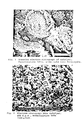
- Electron microscopy and microrontgen analysis showed that the catalyst consisted of nickel crystallites averaging 2 nanometers ( ⁇ m) and aggregates averaging 21 micrometers ( ⁇ ).
- the surface of the nickel/nickel compound aggregates was for about 85% free of carrier particles and also the original shape of the siliceous skeletons was largely uncovered and well and freely perceptible.
- Table lll gives an impression of fatty acid hydrogenation plotted against time (relation between iodine value and hydrogenation time under otherwise equal conditions).
- Table III demonstrates that the iodine value of the hydrogenated fatty acid of about 15.2, obtained with the conventional catalyst widely used for this purpose after about 150 minutes, was already reached in about 60 minutes with the catalyst according to the invention, which is a considerable technological improvement.
- a 10% aqueous soda solution and a 3.5% aqueous nickel sulphate (calculated as nickel) solution in which kieselguhr (22 g per litre) had been blended were both continuously pumped into a small precipitation reactor (75 ml capacity) whilst the reactor was heavily agitated (energy input 6 Watts per litre of solution).
- the two liquids were fed into the reactor in such rates that the pH in the precipitation reactor was 9.3.
- the residence time was 0.5 minutes.
- the slurry contained about 4% of solids and this slurry was continuously aged in a relatively larger vessel (capacity 4.5 1) with moderate stirring.
- the ageing temperature was 97° C and the pH was 8.9.
- the average residence time in the ageing reactor was about 30 minutes.
- the green cakes were reduced at 400°C with a hydrogen flow of 15 N (S:T:P) m 3 /kg Ni for 30 minutes.
- the active nickel surface area was determined by hydrogen chemisorption and yielded a value of 110 m 2 /g nickel.
- the average size of the nickel crystallites was calculated to be 3 nanometers ( ⁇ m) and the size of the nickel/nickel compound aggregates was found to be 30 micrometers ( ⁇ m).
- This catalyst had excellent properties for the hydrogenation of soybean and fish oils.
Landscapes
- Chemical & Material Sciences (AREA)
- Engineering & Computer Science (AREA)
- Materials Engineering (AREA)
- Organic Chemistry (AREA)
- Chemical Kinetics & Catalysis (AREA)
- Catalysts (AREA)
- Organic Low-Molecular-Weight Compounds And Preparation Thereof (AREA)
- Low-Molecular Organic Synthesis Reactions Using Catalysts (AREA)
- Fats And Perfumes (AREA)
Abstract
Description
- The invention relates to a nickel-based catalyst, to its preparation and to its application for hydrogenation reactions.
- Nickel-based catalysts are well-known and are widely used as hydrogenation catalysts. It is customary to prepare them by precipitating nickel-hydroxide and/or -carbonate from an aqueous solution of a nickel salt using an alkaline reactant, often in the presence of a carrier.
- In the preparation of these catalysts measures are often taken to precipitate the insoluble nickel compounds as gradually as possible from the solution onto the carrier particles suspended therein. To this end, for example, a carrier suspension in a solution of a nickel-ammonia complex is heated so as to allow the ammonia to escape, thereby causing the nickel to precipitate (cf. GB-A-926 235). Alternatively, urea is incorporated in the solution in which the carrier is suspended, after which the urea is decomposed by heating (cf. GB-A-1 220 105), causing the nickel hydroxide to precipitate. The aim of this very gradual precipitation of the nickel is to cover the carrier particles entirely or largely with nickel compound. Furthermore, GB-A-1 367 088 discloses the preparation of a catalyst by precipitating nickel on guhr, keeping temperature, pH, alkalinity and residence time within narrow ranges. In this process the nickel hydroxide is slowly precipitated from a diluted solution in a reaction vessel, after which the solid components are separated. Precipitation and post-reaction (the latter normally being referred to as "ageing") take place in the same reaction vessel, which therefore has to be relatively big, under the same reaction conditions.
- It has now been found however that new, improved nickel-based catalysts as defined in claim 1 can be prepared by carrying out this process in at least two separate steps, to wit: (i) A very rapid precipitation step, in which under vigorous agitation the nickel hydroxide/carbonate is precipitated in a precipitation reactor with a mean residence time of 0.01 to 10, preferably 0.2 to 4.5 minutes, rather even less than 3.5 minutes, during which the normality of the solution in the reactor, containing excess alkali, is between 0.05 and 0.5, preferably between 0.1 and 0.3 N and the temperature of the liquid in the precipitation reactor is kept between 5 and 95°, preferably between 20 and 55°C. (ii) At least one separate, longer ageing step with a mean residence time in the post- reactor of 20 to 180 min, and a temperature that remains between 60 and 100°, preferably between 90 and 98° C. It is sometimes preferred for the temperature during the ageing step(s) to differ from that during the precipitation step; in particular it may be advantageous to perform the ageing step at somewhat higher temperatures, e.g. with a difference of 10°C above the precipitation temperature.
- The nickel-based catalysts according to the present invention comprise a water-insoluble carrier material which is present or added during preparation. Suitable carrier materials are for example silica-containing materials such as kieselguhr, aluminium trioxide, and silicates such as bentonite. Kieselguhr is the preferred material, particularly kieselguhr containing from 50 to 90 wt.% of amorphous silica.
- The carrier material can be added (a) directly as such, (b) as an aqueous suspension, (c) preferably as a suspension in an aqueous nickel salt solution, (d) as a suspension in an aqueous solution of the alkaline compound.
- According to embodiments (a) - (d) the carrier can be added before or during precipitation. According to embodiments (a), (b) or (d), however, the carrier can also be added entirely or partly (the latter being preferred) after precipitation, but also before or during ageing.
- After precipitation and ageing according to the invention the solids are separated from the liquid, optionally washed, dried and activated by contacting them with hydrogen at an elevated temperature in a manner known per se.
- Nickel compounds which can be used as starting materials for the preparation of the catalysts according to the present invention are water-soluble nickel compounds such as nitrate, sulphate, acetate and chloride. The solutions that are fed into the precipitation reactor preferably contain between 10 and 80 g nickel per litre; particularly preferred is the use of solutions containing between 25 and 60 g nickel per litre.
- Alkaline compounds which can be used as starting material in the process according to the present invention are alkalimetal hydroxides, alkalimetal carbonate, alkalimetal bicarbonate, the corresponding ammonium compounds and mixtures of the above-mentioned compounds. The concentration of the alkaline solution fed into the precipitation reactor is preferably 20-300 g of anhydrous material per litre (as far as the solubility permits this), particularly between 50 and 250 g per litre.
- It has practical advantages to use the two solutions (nickel-containing and alkaline, respectively) in about equal concentrations expressed in equivalents, resulting in the use of about equal volumes.
- The nickel-containing solution and the alkaline solution are fed at such rates that a slight excess of alkaline compound is present during the precipitation step, namely such that the normality of the liquid ranges from 0.05 to 0.5, preferably from 0.1 to 0,3 (said normality being determined by titration with aqueous hydrochloric acid using methylorange as the indicator). In the ageing step it may sometimes be desirable to add further alkaline solution in order to maintain the alkalinity (normality) in the abovedefined range.
- The precipitation reactor comprises a means for vigorous agitation of the reacting fluid and its dimensions are such in rotation to the amounts of fluid fed that the short mean residence times indicated can be obtained. Preferred mean residence times in the precipitation reactor are normally between 0.01 and 10, particularly between 0.2 and 4.5 minutes. The precipitation step and also the ageing step can be carried out batchwise, continuously and semi-continuously (e.g. according to the cascade method).
- In the preferred continuous precipitation process (step i) the rate of addition of the solutions to the precipitation reactor is controlled by continuously or discontinuously measuring the alkalinity (normality) of the discharged liquid. This can sometimes also be done by monitoring the pH. Also the temperatures of the reacting liquids fed into the precipitation reactor are used to control the temperature at which precipitation takes place. The required vigorous agitation of the liquid in the precipitation reactor preferably takes place with an energy input of 5-25 K watts per 1000 kg of solution. Jet mixing is also a suitable method, involving much larger specific energy inputs of up to 2000 watts/kg.
- The reaction mixture obtained from the precipitation reactor is subsequently led into a significantly larger post-reactor, in which the liquid is further agitated. If desired, additional ingredients can be incorporated here, such as carrier material, alkaline solution as defined hereinbefore and/or possibly promoters.
- Preferably the temperature of the liquid in the postreactor, i.e. during the ageing step, is kept at a temperature between 60 and 100°C, preferably between 90 and 98°C.
- The normality of the liquid in the post-reactor during the ageing step (step ii) is kept in the same range as during the precipitation step (step i); it may be required to add some further alkali. The ageing step can be performed in one or more post-reactors, the (overall) mean residence time being kept between 20 and 180 min, preferably between 60 and 150 min. If two or more postreactors are used it is desirable to arrange this in such a way that in the second or following post-reactor the temperature of the liquid is 10 to 15 centrigrades below the temperature in the first post-reactor.
- After completion of the ageing step the solids are separated from the mother liquor, usually washed, dried, optionally ground and/or calcinated and subsequently activated with hydrogen gas at an elevated temperature usually ranging between 250 and 500°, preferably between 300 and 400°C. This activation can take place at atmospheric or higher pressure. Atmospheric pressure is preferred.
- Preferably before drying, or during any previous step promoters can conveniently be added. Promoters comprise amounts of 0.05 to 10%, calculated on the weight of nickel, of metals/compounds such as copper, cobalt, zirconium, molybdenum, silver, magnesium, any other metals and combinations thereof.
- The separated solid is preferably washed with water, sometimes made slightly alkaline, or water with a detergent added thereto.
- Organic solvents can sometimes be used advantageously. Drying takes place preferably with forced air circulation. Spray-drying and freeze-drying are also quite well possible.
- The present invention provides new, improved nickelbased catalysts which comprise 10-90 parts by weight of nickel/nickel compounds and 90-10 parts by weight of a water -insoluble carrier material, as well as 0-10, preferably 0.05-5-parts by weight of a metal promoter, which catalysts have an active nickel surface of 70-200 m2/g, preferably more than 100 m2/g, said catalysts further comprising aggregates which mainly consist of nickel/ nickel compounds with an average particle size of 2 to 100 micrometers µm, preferably between 5 and 25 micrometers pm, and which aggregates have an (outer) surface which is for at least 60% free of carrier particles attached thereto. Preferably the nickel/nickel compound aggregates have a surface which is for more than 80%, particularly for more than 90% free of carrier particles.
- The nickel-based catalyst, comprising an insoluble carrier and optionally a promotor can be prepared by a process involving precipitation of nickelhydroxide/carbonate, ageing,separation and reduction characterized in that there are at least two steps to wit (I) a rapid precipitation step, in which under vigorous agitation the nickel hydroxide/carbonate is precipitated in a precipitation reactor with a mean residence time of 0.01 to 10, preferably 0.2 to 4.5 minutes, during which the normality of the solution in the reactor, containing excess alkali, is between 0.05 and 0.5, preferably between 0.1 and 0.3 N and the temperature of the liquid in the precipitation reactor is kept between 5 and 95°, preferably between 20 and 55° C followed by (11) at least one separate, longer ageing step with a mean residence time in the post-reactor of 20 to 180 min., preferably between 60 and 100°, preferably between 90 and 98°C, after which the solid is separated, dried and reduced with hydrogen in a manner known per se.
- The nickel/nickel compound aggregates consist mainly, i.e. for more than 80%, preferably more than 90%, of nickel and nickel oxides, but some promoter material may also be present. These aggregates preferably contain nickel crystallites with an average diameter between 0.5 and 10, more particularly between 1 and 3 nanometers ηm
- The catalyst according to the invention is used for the hydrogenation of unsaturated organic compounds, in particular oils and fats, fatty acid and derivatives thereof.
- The invention is illustrated by the following Examples.
- An aqueous suspension was prepared by suspending kieselguhr (containing 7.0% amorphous Si02) in a NiS04 solution (35 g Ni/I and 1.2 N), in such a way that the Ni:Si02-ratio was 1:2.3. Also an aqueous soda solution, containing 75 g of Na2CO3 (anh) per litre and 1.4 N, was prepared. Subsequently both solutions were continuously pumped into a vigorously agitated pump reactor, in about equal volumes, resulting in precipitation of nickelhydroxide/carbonate at a temperature of 80° C. The alkalinity of the suspension so obtained was 0.096 N. In the reactor in which the precipitation took place the suspension had a residence time of 4 minutes, after which the suspension was immediately passed to the first of a series of two postreactors. In each of these post-reactors the precipitate was aged for 50 minutes (mean residence time) at temperatures of 97° and 80°C, respectively. The aged precipitate was then continuously filtered off and the green filter cake thus obtained was washed with water, dried and activated with hydrogen under atmospheric pressure at a temperature of 350° C.
- Electron microscopy and microrontgen analysis showed that the catalyst consisted of nickel crystallites averaging 2 nanometers (ηm) and aggregates averaging 21 micrometers (µ). The surface of the nickel/nickel compound aggregates was for about 85% free of carrier particles and also the original shape of the siliceous skeletons was largely uncovered and well and freely perceptible.
- Following the procedure as described in Example 1 further catalysts were prepared according to the invention, while varying the amounts and conditions, as is shown in Table I. Measures were taken to keep the other conditions unchanged.
- In Table ll, showing the hydrogenation characteristics of this catalyst, comparisons are made with a catalyst known from the literature.
- On fatty acid hydrogenation it was found that for achieving a certain iodine value, with catalysts according to the invention less than half the hydrogenation time was sufficient and that in the case of fish oil the catalyst also retained its activity for a longer period. From the melting points it appeared that the new catalyst had a greater selectivity, i.e. less tri-saturated triglyceride was formed.
- On fatty acid hydrogenation it turned out that hydrogenation could be carried through to lower iodine values in the same hydrogenation time and thus proceeded more rapidly than with the known catalyst used for comparison. Furthermore, the hydrogenations can also be performed with excellent results at a lower hydrogenation temperature. In addition, the new catalyst could be filtered very effectively, in any case better than the known catalyst.
- Table lll below gives an impression of fatty acid hydrogenation plotted against time (relation between iodine value and hydrogenation time under otherwise equal conditions).

- Table III demonstrates that the iodine value of the hydrogenated fatty acid of about 15.2, obtained with the conventional catalyst widely used for this purpose after about 150 minutes, was already reached in about 60 minutes with the catalyst according to the invention, which is a considerable technological improvement.

- Catalysts 1-5 contained 70% nickel and 30% Si02;
- catalysts 6 and 7 contained 64% nickel and 36% SiO2.
- Active nickel surfaces ranged between 120 and 150 m2/g nickel.
- Nickel aggregates were found to range between 9 and 26 micrometers (µm)
- and the catalyst of Example 4 was shown to have nickel aggregates the surface of
- which proved to be for 85% free of carrier particles.

- A 10% aqueous soda solution and a 3.5% aqueous nickel sulphate (calculated as nickel) solution in which kieselguhr (22 g per litre) had been blended were both continuously pumped into a small precipitation reactor (75 ml capacity) whilst the reactor was heavily agitated (energy input 6 Watts per litre of solution). The two liquids were fed into the reactor in such rates that the pH in the precipitation reactor was 9.3. The residence time was 0.5 minutes.
- After precipitation the slurry contained about 4% of solids and this slurry was continuously aged in a relatively larger vessel (capacity 4.5 1) with moderate stirring. The ageing temperature was 97° C and the pH was 8.9. The average residence time in the ageing reactor was about 30 minutes.
- After 1.5 hours the flows were stopped and 4.5 of slurry were filtered in a Buchner funnel under vacuum. After filtration the solids (filter cake) were washed with 4 litres of distilled water. The filter cake was then dried overnight in an oven at 120°C.
- Samples of the green filter cake were investigated by electron microscopy (
magnification 500 and 1000 x). The photos showed small nickel/nickel compound aggregates of which 80% were free of carrier particles and also the original shapes of the siliceous skeletons were largely uncovered by nickel/nickel compounds and freely perceptible. - The green cakes were reduced at 400°C with a hydrogen flow of 15 N (S:T:P) m3/kg Ni for 30 minutes.
- The active nickel surface area was determined by hydrogen chemisorption and yielded a value of 110 m2/g nickel. The average size of the nickel crystallites was calculated to be 3 nanometers (ηm) and the size of the nickel/nickel compound aggregates was found to be 30 micrometers (µm).
- This catalyst had excellent properties for the hydrogenation of soybean and fish oils.
Claims (20)
Priority Applications (1)
| Application Number | Priority Date | Filing Date | Title |
|---|---|---|---|
| AT84200028T ATE20577T1 (en) | 1983-01-20 | 1984-01-11 | NICKEL-CONTAINING CATALYST, ITS PRODUCTION AND USE. |
Applications Claiming Priority (2)
| Application Number | Priority Date | Filing Date | Title |
|---|---|---|---|
| NL8300218A NL191511C (en) | 1983-01-20 | 1983-01-20 | Process for the preparation of a nickel-containing catalyst. |
| NL8300218 | 1983-01-20 |
Publications (4)
| Publication Number | Publication Date |
|---|---|
| EP0114704A2 EP0114704A2 (en) | 1984-08-01 |
| EP0114704A3 EP0114704A3 (en) | 1984-08-15 |
| EP0114704B1 true EP0114704B1 (en) | 1986-07-02 |
| EP0114704B2 EP0114704B2 (en) | 1995-01-04 |
Family
ID=19841263
Family Applications (1)
| Application Number | Title | Priority Date | Filing Date |
|---|---|---|---|
| EP84200028A Expired - Lifetime EP0114704B2 (en) | 1983-01-20 | 1984-01-11 | Nickel-based catalyst, its preparation and its application |
Country Status (15)
| Country | Link |
|---|---|
| US (2) | US4670416A (en) |
| EP (1) | EP0114704B2 (en) |
| JP (1) | JPS59209647A (en) |
| KR (1) | KR870000713B1 (en) |
| AT (1) | ATE20577T1 (en) |
| AU (1) | AU562496B2 (en) |
| BR (1) | BR8400218A (en) |
| CA (1) | CA1219575A (en) |
| DE (1) | DE3460257D1 (en) |
| DK (1) | DK161379C (en) |
| ES (1) | ES529002A0 (en) |
| IN (1) | IN162193B (en) |
| MX (1) | MX169224B (en) |
| NL (1) | NL191511C (en) |
| ZA (1) | ZA84413B (en) |
Cited By (1)
| Publication number | Priority date | Publication date | Assignee | Title |
|---|---|---|---|---|
| US6852668B2 (en) | 2001-12-03 | 2005-02-08 | University Of Western Ont | Catalyst for hydrocarbon reforming reaction |
Families Citing this family (27)
| Publication number | Priority date | Publication date | Assignee | Title |
|---|---|---|---|---|
| NL190750C (en) * | 1984-06-21 | 1994-08-01 | Unilever Nv | Nickel aluminate catalyst, its preparation and the hydrogenation of unsaturated organic compounds therewith. |
| US4920089A (en) * | 1987-05-08 | 1990-04-24 | Unilever Patent Holdings B.V. | Hydrogenation catalyst |
| DE3880113T2 (en) * | 1987-12-21 | 1993-07-15 | Unilever Nv | NICKEL SILICONE CATALYSTS AND THEIR PREPARATION. |
| NL8901049A (en) * | 1988-08-10 | 1990-03-01 | Unilever Nv | PROCESS FOR PREPARING NICKEL / ALUMINUM OXIDE CATALYSTS. |
| DD299623A5 (en) * | 1989-05-16 | 1992-04-30 | ��������@��@�@�����@�������@��@������������@�}����������@�k�� | NICKEL / SILICON CATALYST AND METHOD AND MANUFACTURE THEREOF |
| NL9001536A (en) * | 1990-07-05 | 1992-02-03 | Meern Bv Engelhard De | SULFUR-PROMOTED NICKEL CATALYST AND PREPARATION THEREOF. |
| EP0496448B1 (en) * | 1991-01-23 | 1994-03-30 | Unichema Chemie B.V. | Preparation of hydrogenation catalysts |
| DE4142897A1 (en) * | 1991-12-23 | 1993-06-24 | Sued Chemie Ag | CATALYST SHAPED BODY |
| US5258346A (en) * | 1992-07-13 | 1993-11-02 | United Catalysts Inc. | Nickel hydrogenation catalyst |
| DE4310053A1 (en) * | 1993-03-27 | 1994-09-29 | Hoechst Ag | Hydrogenation catalyst, a method of preparation and use |
| FR2767722B1 (en) * | 1997-08-29 | 1999-12-31 | Inst Francais Du Petrole | NEW CATALYST FOR USE IN ORGANIC COMPOUND TRANSACTION REACTIONS |
| CN1060466C (en) * | 1997-12-10 | 2001-01-10 | 中国科学院广州化学研究所 | Reduction-esterification process synthesizing carboxylate |
| US6087455A (en) * | 1997-12-19 | 2000-07-11 | Shell Oil Company | Process for hydrogenation of macromolecular organic substrates |
| DE19909176A1 (en) * | 1999-03-03 | 2000-09-07 | Kataleuna Gmbh Catalysts | Hydrogenation catalyst and process for its manufacture |
| DE19909177A1 (en) * | 1999-03-03 | 2000-09-07 | Kataleuna Gmbh Catalysts | Functional group hydrogenation catalyst and process for its preparation |
| US7468342B2 (en) * | 2001-05-22 | 2008-12-23 | Mitsubishi Gas Chemical Company, Inc. | Catalysts and process for producing aromatic amines |
| EP1656439A4 (en) * | 2003-07-31 | 2010-11-10 | Cargill Inc | Low trans-fatty acid fat compositions; low-temperature hydrogenation, e.g., of edible oils |
| US7585990B2 (en) * | 2003-07-31 | 2009-09-08 | Cargill, Incorporated | Low trans-fatty acid fat compositions; low-temperature hydrogenation, e.g., of edible oils |
| US20080318766A1 (en) * | 2007-06-21 | 2008-12-25 | Quaid-E-Azam University | Novel nanocatalyst for edible oil hydrogenation |
| WO2011075494A1 (en) | 2009-12-18 | 2011-06-23 | Invista Technologies S.A.R.L. | Nickel metal compositions and nickel complexes derived from basic nickel carbonates |
| EP2371937A1 (en) * | 2010-03-26 | 2011-10-05 | BASF Corporation | Process for the hydrogenation of fatty acids using a promoted supported nickel catalyst |
| DE102010021792B4 (en) * | 2010-05-27 | 2022-03-31 | Clariant Produkte (Deutschland) Gmbh | Catalysts and processes for their production |
| WO2012033555A1 (en) | 2010-09-07 | 2012-03-15 | Invista Technologies S.A.R.L. | Nickel compositions for preparing nickel metal and nickel complexes |
| EP2718013A2 (en) | 2011-06-10 | 2014-04-16 | Invista Technologies S.à.r.l. | Nickel calcination and reduction process including a fluidizing bed reactor |
| JP6054957B2 (en) | 2011-06-10 | 2016-12-27 | インヴィスタ テクノロジーズ エスアエルエルINVISTA TECHNOLOGIES S.a.r.l. | Particulate nickel containing nickel crystallites |
| BR112014008917B1 (en) | 2011-10-12 | 2024-02-27 | Basf Corporation | Catalyst, droplet, process for preparing a catalyst, process for hydrogenating an unsaturated fatty material and using a catalyst |
| KR102300826B1 (en) * | 2018-12-28 | 2021-09-09 | 한화솔루션 주식회사 | Catalyst for hydrogenation reaction and processing method thereof |
Family Cites Families (29)
| Publication number | Priority date | Publication date | Assignee | Title |
|---|---|---|---|---|
| CA712568A (en) * | 1965-06-29 | W. Aitken Robert | Supported nickel catalysts | |
| US2602070A (en) * | 1950-09-15 | 1952-07-01 | Int Nickel Co | Process for the preparation of pure nickel hydroxide |
| US2776245A (en) * | 1953-05-11 | 1957-01-01 | Wigton Abbott Corp | Preparation of nickel carbonate catalysts and utilization thereof for desulfurization |
| GB926235A (en) * | 1959-10-01 | 1963-05-15 | Chemetron Corp | Catalyst and the production thereof |
| DE1277232B (en) * | 1967-03-18 | 1968-09-12 | Basf Ag | Process for the preparation of saturated aliphatic alcohols |
| GB1263131A (en) * | 1968-04-01 | 1972-02-09 | Exxon Research Engineering Co | Process for removal of trace quantities of oxygen from inert gases |
| LU57716A1 (en) * | 1968-12-30 | 1970-07-01 | ||
| US3649563A (en) * | 1969-08-28 | 1972-03-14 | Lever Brothers Ltd | Catalyst composition |
| US3652458A (en) * | 1969-11-07 | 1972-03-28 | Georges Gobron | Hydrogenation catalysts comprising nickel or copper deposited on silica |
| US3868332A (en) * | 1970-10-26 | 1975-02-25 | Exxon Research Engineering Co | Massive nickel catalysts |
| GB1367088A (en) * | 1970-12-21 | 1974-09-18 | Unilever Ltd | Catalysts |
| US3959181A (en) * | 1971-12-17 | 1976-05-25 | N.V. Internationale Octrooi Maatschappij "Octropa" | Catalysts |
| GB1400719A (en) * | 1971-12-17 | 1975-07-23 | Unilever Ltd | Supported nickel catalysts |
| JPS5545616B2 (en) * | 1973-05-26 | 1980-11-19 | ||
| NL7316235A (en) * | 1973-11-28 | 1975-05-30 | Stamicarbon | METHOD OF PREPARING A NICKEL CATALYST. |
| NL7316234A (en) * | 1973-11-28 | 1975-05-30 | Stamicarbon | NICKEL CATALYST. |
| US3997475A (en) * | 1974-02-15 | 1976-12-14 | Lever Brothers Company | Supported nickel catalyst |
| US4191664A (en) * | 1975-06-16 | 1980-03-04 | Union Oil Company Of California | Thermally stable nickel-alumina catalysts useful for methanation and other reactions |
| US4014519A (en) * | 1976-01-30 | 1977-03-29 | Fmc Corporation | Hydraulic jack with mechanical locking device |
| GB1578122A (en) * | 1976-02-11 | 1980-11-05 | Johnson Matthey Co Ltd | Catalytic hydrogenation of fatty oils |
| US4114982A (en) * | 1976-04-15 | 1978-09-19 | Raymond Buckley | Screens suitable for use in photo-engraving and photo-lithographic processes and in color television |
| US4073750A (en) * | 1976-05-20 | 1978-02-14 | Exxon Research & Engineering Co. | Method for preparing a highly dispersed supported nickel catalyst |
| US4184982A (en) * | 1977-06-14 | 1980-01-22 | Basf Aktiengesellschaft | Preparation of a silicate hydrogenation catalyst |
| FR2402477A2 (en) * | 1977-09-09 | 1979-04-06 | Anvar | NEW CATALYST FOR ELECTROLYTIC OXIDATION OF HYDROGEN |
| US4251394A (en) * | 1978-08-25 | 1981-02-17 | Exxon Research & Engineering Co. | Coprecipitated copper-nickel-silica catalysts, preparation and use thereof |
| US4273680A (en) * | 1979-11-06 | 1981-06-16 | Exxon Research & Engineering Co. | Supported non-ferrous group VIII aluminate coprecipitated hydrogenation catalysts and process for their preparation |
| CA1132966A (en) * | 1979-12-12 | 1982-10-05 | John Torok | Supported nickel catalysts and process for their preparation |
| NL8007105A (en) * | 1980-01-02 | 1981-08-03 | Ceskoslovenska Akademie Ved | NICKEL-BASED CATALYST APPLIED ON A CARRIER, METHOD OF PREPARING IT AND USE IN A HYDROGENATION PROCESS OF MULTIPLY UNSATURATED ORGANIC COMPOUNDS UNTIL THE PART OF THE PART AT THE SAME TIME OR AT THE SAME TIME. |
| US4251344A (en) * | 1980-01-22 | 1981-02-17 | E. I. Du Pont De Nemours And Company | Porous nickel coated electrodes |
-
1983
- 1983-01-20 NL NL8300218A patent/NL191511C/en not_active IP Right Cessation
-
1984
- 1984-01-04 US US06/568,261 patent/US4670416A/en not_active Expired - Lifetime
- 1984-01-10 IN IN22/CAL/84A patent/IN162193B/en unknown
- 1984-01-11 EP EP84200028A patent/EP0114704B2/en not_active Expired - Lifetime
- 1984-01-11 AT AT84200028T patent/ATE20577T1/en active
- 1984-01-11 DE DE8484200028T patent/DE3460257D1/en not_active Expired
- 1984-01-17 AU AU23523/84A patent/AU562496B2/en not_active Ceased
- 1984-01-18 DK DK022084A patent/DK161379C/en active
- 1984-01-19 ES ES529002A patent/ES529002A0/en active Granted
- 1984-01-19 ZA ZA84413A patent/ZA84413B/en unknown
- 1984-01-19 BR BR8400218A patent/BR8400218A/en not_active IP Right Cessation
- 1984-01-19 CA CA000445587A patent/CA1219575A/en not_active Expired
- 1984-01-20 MX MX200101A patent/MX169224B/en unknown
- 1984-01-20 KR KR1019840000253A patent/KR870000713B1/en not_active Expired
- 1984-01-20 JP JP59008394A patent/JPS59209647A/en active Granted
-
1985
- 1985-02-01 US US06/698,581 patent/US4666635A/en not_active Expired - Lifetime
Cited By (1)
| Publication number | Priority date | Publication date | Assignee | Title |
|---|---|---|---|---|
| US6852668B2 (en) | 2001-12-03 | 2005-02-08 | University Of Western Ont | Catalyst for hydrocarbon reforming reaction |
Also Published As
| Publication number | Publication date |
|---|---|
| ATE20577T1 (en) | 1986-07-15 |
| US4670416A (en) | 1987-06-02 |
| US4666635A (en) | 1987-05-19 |
| EP0114704A3 (en) | 1984-08-15 |
| NL191511C (en) | 1995-08-21 |
| DK22084D0 (en) | 1984-01-18 |
| ES8502877A1 (en) | 1985-02-01 |
| DK22084A (en) | 1984-07-21 |
| NL8300218A (en) | 1984-08-16 |
| CA1219575A (en) | 1987-03-24 |
| DK161379B (en) | 1991-07-01 |
| JPS59209647A (en) | 1984-11-28 |
| NL191511B (en) | 1995-04-18 |
| MX169224B (en) | 1993-06-24 |
| DE3460257D1 (en) | 1986-08-07 |
| DK161379C (en) | 1991-12-16 |
| IN162193B (en) | 1988-04-16 |
| EP0114704A2 (en) | 1984-08-01 |
| AU562496B2 (en) | 1987-06-11 |
| ES529002A0 (en) | 1985-02-01 |
| BR8400218A (en) | 1984-08-28 |
| ZA84413B (en) | 1985-08-28 |
| KR870000713B1 (en) | 1987-04-09 |
| KR840007360A (en) | 1984-12-07 |
| JPH0375218B2 (en) | 1991-11-29 |
| EP0114704B2 (en) | 1995-01-04 |
| AU2352384A (en) | 1984-07-26 |
Similar Documents
| Publication | Publication Date | Title |
|---|---|---|
| EP0114704B2 (en) | Nickel-based catalyst, its preparation and its application | |
| EP0168091B1 (en) | Nickel/alumina catalyst, its preparation and use | |
| EP0398668B1 (en) | Nickel/silica catalyst and the preparation and use thereof | |
| EP0145094B1 (en) | Process for preparing a transition metal-silicate catalyst | |
| US5087599A (en) | Nickel/silica catalysts and their preparation | |
| EP0496448B1 (en) | Preparation of hydrogenation catalysts | |
| CA1238627A (en) | Process for producing ethylene glycol, catalyst composition therefor and process for producing the catalyst composition | |
| EP0168096B1 (en) | Hydrogenation catalysts | |
| EP0354612B1 (en) | Process for the preparation of nickel/alumina catalysts |
Legal Events
| Date | Code | Title | Description |
|---|---|---|---|
| PUAI | Public reference made under article 153(3) epc to a published international application that has entered the european phase |
Free format text: ORIGINAL CODE: 0009012 |
|
| PUAL | Search report despatched |
Free format text: ORIGINAL CODE: 0009013 |
|
| AK | Designated contracting states |
Designated state(s): AT BE CH DE FR GB IT LI NL SE |
|
| AK | Designated contracting states |
Designated state(s): AT BE CH DE FR GB IT LI NL SE |
|
| 17P | Request for examination filed |
Effective date: 19840816 |
|
| GRAA | (expected) grant |
Free format text: ORIGINAL CODE: 0009210 |
|
| AK | Designated contracting states |
Kind code of ref document: B1 Designated state(s): AT BE CH DE FR GB IT LI NL SE |
|
| REF | Corresponds to: |
Ref document number: 20577 Country of ref document: AT Date of ref document: 19860715 Kind code of ref document: T |
|
| REF | Corresponds to: |
Ref document number: 3460257 Country of ref document: DE Date of ref document: 19860807 |
|
| ET | Fr: translation filed | ||
| ITF | It: translation for a ep patent filed | ||
| PLBI | Opposition filed |
Free format text: ORIGINAL CODE: 0009260 |
|
| 26 | Opposition filed |
Opponent name: RUHRCHEMIE AKTIENGESELLSCHAFT Effective date: 19870330 |
|
| NLR1 | Nl: opposition has been filed with the epo |
Opponent name: RUHRCHEMIE AKTIENGESELLSCHAFT |
|
| ITPR | It: changes in ownership of a european patent |
Owner name: ASSUNZIONE O VARIAZIONE MANDATO;MODIANO & ASSOCIAT |
|
| PLAB | Opposition data, opponent's data or that of the opponent's representative modified |
Free format text: ORIGINAL CODE: 0009299OPPO |
|
| R26 | Opposition filed (corrected) |
Opponent name: HOECHST AKTIENGESELLSCHAFT,FRANKFURT(MAIN) Effective date: 19870330 |
|
| NLXE | Nl: other communications concerning ep-patents (part 3 heading xe) |
Free format text: IN PAT.BUL.12/87,CORR.:HOECHST AG |
|
| RAP4 | Party data changed (patent owner data changed or rights of a patent transferred) |
Owner name: UNILEVER PLC Owner name: UNILEVER N.V. |
|
| ITTA | It: last paid annual fee | ||
| PUAH | Patent maintained in amended form |
Free format text: ORIGINAL CODE: 0009272 |
|
| STAA | Information on the status of an ep patent application or granted ep patent |
Free format text: STATUS: PATENT MAINTAINED AS AMENDED |
|
| 27A | Patent maintained in amended form |
Effective date: 19950104 |
|
| AK | Designated contracting states |
Kind code of ref document: B2 Designated state(s): AT BE CH DE FR GB IT LI NL SE |
|
| EAL | Se: european patent in force in sweden |
Ref document number: 84200028.3 |
|
| REG | Reference to a national code |
Ref country code: CH Ref legal event code: AEN |
|
| ET3 | Fr: translation filed ** decision concerning opposition | ||
| NLR2 | Nl: decision of opposition | ||
| ITF | It: translation for a ep patent filed | ||
| NLR3 | Nl: receipt of modified translations in the netherlands language after an opposition procedure | ||
| REG | Reference to a national code |
Ref country code: FR Ref legal event code: TP |
|
| NLS | Nl: assignments of ep-patents |
Owner name: UNICHEMA CHEMIE B.V. |
|
| REG | Reference to a national code |
Ref country code: GB Ref legal event code: 732E |
|
| REG | Reference to a national code |
Ref country code: CH Ref legal event code: PUE Owner name: UNILEVER N.V. TRANSFER- UNICHEMA CHEMIE B.V. |
|
| PGFP | Annual fee paid to national office [announced via postgrant information from national office to epo] |
Ref country code: FR Payment date: 20001211 Year of fee payment: 18 |
|
| PGFP | Annual fee paid to national office [announced via postgrant information from national office to epo] |
Ref country code: AT Payment date: 20010207 Year of fee payment: 18 |
|
| PGFP | Annual fee paid to national office [announced via postgrant information from national office to epo] |
Ref country code: CH Payment date: 20010216 Year of fee payment: 18 |
|
| PGFP | Annual fee paid to national office [announced via postgrant information from national office to epo] |
Ref country code: SE Payment date: 20010223 Year of fee payment: 18 |
|
| REG | Reference to a national code |
Ref country code: GB Ref legal event code: IF02 |
|
| PG25 | Lapsed in a contracting state [announced via postgrant information from national office to epo] |
Ref country code: AT Free format text: LAPSE BECAUSE OF NON-PAYMENT OF DUE FEES Effective date: 20020111 |
|
| PG25 | Lapsed in a contracting state [announced via postgrant information from national office to epo] |
Ref country code: SE Free format text: LAPSE BECAUSE OF NON-PAYMENT OF DUE FEES Effective date: 20020112 |
|
| PG25 | Lapsed in a contracting state [announced via postgrant information from national office to epo] |
Ref country code: LI Free format text: LAPSE BECAUSE OF NON-PAYMENT OF DUE FEES Effective date: 20020131 Ref country code: CH Free format text: LAPSE BECAUSE OF NON-PAYMENT OF DUE FEES Effective date: 20020131 |
|
| EUG | Se: european patent has lapsed |
Ref document number: 84200028.3 |
|
| REG | Reference to a national code |
Ref country code: CH Ref legal event code: PL |
|
| PG25 | Lapsed in a contracting state [announced via postgrant information from national office to epo] |
Ref country code: FR Free format text: LAPSE BECAUSE OF NON-PAYMENT OF DUE FEES Effective date: 20020930 |
|
| REG | Reference to a national code |
Ref country code: FR Ref legal event code: ST |
|
| PGFP | Annual fee paid to national office [announced via postgrant information from national office to epo] |
Ref country code: NL Payment date: 20021212 Year of fee payment: 20 Ref country code: GB Payment date: 20021212 Year of fee payment: 20 |
|
| PGFP | Annual fee paid to national office [announced via postgrant information from national office to epo] |
Ref country code: DE Payment date: 20021213 Year of fee payment: 20 |
|
| PGFP | Annual fee paid to national office [announced via postgrant information from national office to epo] |
Ref country code: BE Payment date: 20021218 Year of fee payment: 20 |
|
| REG | Reference to a national code |
Ref country code: GB Ref legal event code: 732E |
|
| NLS | Nl: assignments of ep-patents |
Owner name: JOHNSON MATTHEY PLC |
|
| PG25 | Lapsed in a contracting state [announced via postgrant information from national office to epo] |
Ref country code: GB Free format text: LAPSE BECAUSE OF EXPIRATION OF PROTECTION Effective date: 20040110 |
|
| PG25 | Lapsed in a contracting state [announced via postgrant information from national office to epo] |
Ref country code: NL Free format text: LAPSE BECAUSE OF EXPIRATION OF PROTECTION Effective date: 20040111 |
|
| BE20 | Be: patent expired |
Owner name: *JOHNSON MATTHEY PLC Effective date: 20040111 |
|
| REG | Reference to a national code |
Ref country code: GB Ref legal event code: PE20 |
|
| NLV7 | Nl: ceased due to reaching the maximum lifetime of a patent |
Effective date: 20040111 |
|
| APAH | Appeal reference modified |
Free format text: ORIGINAL CODE: EPIDOSCREFNO |