EP0106565B1 - Leukotriene antagonists, their production, and compositions containing them - Google Patents
Leukotriene antagonists, their production, and compositions containing them Download PDFInfo
- Publication number
- EP0106565B1 EP0106565B1 EP83305587A EP83305587A EP0106565B1 EP 0106565 B1 EP0106565 B1 EP 0106565B1 EP 83305587 A EP83305587 A EP 83305587A EP 83305587 A EP83305587 A EP 83305587A EP 0106565 B1 EP0106565 B1 EP 0106565B1
- Authority
- EP
- European Patent Office
- Prior art keywords
- hydroxy
- acetyl
- propylphenoxy
- acid
- alkyl
- Prior art date
- Legal status (The legal status is an assumption and is not a legal conclusion. Google has not performed a legal analysis and makes no representation as to the accuracy of the status listed.)
- Expired
Links
- -1 their production Substances 0.000 title claims abstract description 40
- 239000000203 mixture Substances 0.000 title description 20
- 239000003199 leukotriene receptor blocking agent Substances 0.000 title description 2
- 150000001875 compounds Chemical class 0.000 claims abstract description 203
- 125000004178 (C1-C4) alkyl group Chemical group 0.000 claims abstract description 16
- 229910052736 halogen Inorganic materials 0.000 claims abstract description 15
- 150000002367 halogens Chemical class 0.000 claims abstract description 15
- 150000002617 leukotrienes Chemical class 0.000 claims abstract description 13
- 229910052760 oxygen Inorganic materials 0.000 claims abstract description 12
- 125000004169 (C1-C6) alkyl group Chemical group 0.000 claims abstract description 11
- 125000002485 formyl group Chemical group [H]C(*)=O 0.000 claims abstract description 11
- QVGXLLKOCUKJST-UHFFFAOYSA-N atomic oxygen Chemical compound [O] QVGXLLKOCUKJST-UHFFFAOYSA-N 0.000 claims abstract description 10
- 239000001301 oxygen Substances 0.000 claims abstract description 10
- 125000001997 phenyl group Chemical group [H]C1=C([H])C([H])=C(*)C([H])=C1[H] 0.000 claims abstract description 10
- 229910052717 sulfur Inorganic materials 0.000 claims abstract description 9
- 125000000217 alkyl group Chemical group 0.000 claims abstract description 8
- 125000004432 carbon atom Chemical group C* 0.000 claims abstract description 8
- 239000008194 pharmaceutical composition Substances 0.000 claims abstract description 8
- 150000003457 sulfones Chemical class 0.000 claims abstract description 8
- 150000003462 sulfoxides Chemical class 0.000 claims abstract description 7
- NINIDFKCEFEMDL-UHFFFAOYSA-N Sulfur Chemical compound [S] NINIDFKCEFEMDL-UHFFFAOYSA-N 0.000 claims abstract description 6
- 239000011593 sulfur Substances 0.000 claims abstract description 6
- 125000003545 alkoxy group Chemical group 0.000 claims abstract description 5
- 150000003839 salts Chemical class 0.000 claims abstract description 5
- 125000006273 (C1-C3) alkyl group Chemical group 0.000 claims abstract description 4
- 125000004191 (C1-C6) alkoxy group Chemical group 0.000 claims abstract description 4
- 125000004429 atom Chemical group 0.000 claims abstract description 4
- 125000001797 benzyl group Chemical group [H]C1=C([H])C([H])=C(C([H])=C1[H])C([H])([H])* 0.000 claims abstract description 4
- 239000003937 drug carrier Substances 0.000 claims abstract description 4
- 125000005842 heteroatom Chemical group 0.000 claims abstract description 4
- 125000002950 monocyclic group Chemical group 0.000 claims abstract description 4
- 125000002861 (C1-C4) alkanoyl group Chemical group 0.000 claims abstract description 3
- 125000000229 (C1-C4)alkoxy group Chemical group 0.000 claims abstract description 3
- 239000004215 Carbon black (E152) Substances 0.000 claims abstract description 3
- 125000002015 acyclic group Chemical group 0.000 claims abstract description 3
- RXKJFZQQPQGTFL-UHFFFAOYSA-N dihydroxyacetone Chemical compound OCC(=O)CO RXKJFZQQPQGTFL-UHFFFAOYSA-N 0.000 claims abstract description 3
- 229930195733 hydrocarbon Natural products 0.000 claims abstract description 3
- 229910052739 hydrogen Inorganic materials 0.000 claims abstract description 3
- 239000001257 hydrogen Substances 0.000 claims abstract description 3
- CBOIHMRHGLHBPB-UHFFFAOYSA-N hydroxymethyl Chemical compound O[CH2] CBOIHMRHGLHBPB-UHFFFAOYSA-N 0.000 claims abstract description 3
- 125000003170 phenylsulfonyl group Chemical group C1(=CC=CC=C1)S(=O)(=O)* 0.000 claims abstract description 3
- 150000003536 tetrazoles Chemical class 0.000 claims abstract description 3
- 125000002252 acyl group Chemical group 0.000 claims abstract 2
- 125000003342 alkenyl group Chemical group 0.000 claims abstract 2
- 125000002887 hydroxy group Chemical group [H]O* 0.000 claims abstract 2
- 125000002924 primary amino group Chemical group [H]N([H])* 0.000 claims abstract 2
- 150000004702 methyl esters Chemical class 0.000 claims description 55
- 238000000034 method Methods 0.000 claims description 14
- WBPXLSDIZAPANN-UHFFFAOYSA-N 2-[4-[3-(4-acetyl-3-hydroxy-2-propylphenoxy)propylsulfonyl]-2,3-dichlorophenyl]acetic acid Chemical compound CCCC1=C(O)C(C(C)=O)=CC=C1OCCCS(=O)(=O)C1=CC=C(CC(O)=O)C(Cl)=C1Cl WBPXLSDIZAPANN-UHFFFAOYSA-N 0.000 claims description 4
- NFMICUAMAOKKHN-UHFFFAOYSA-N 4-[3-(4-acetyl-3-hydroxy-2-propylphenoxy)-2-hydroxypropyl]sulfonyl-3-fluorobenzoic acid Chemical compound CCCC1=C(O)C(C(C)=O)=CC=C1OCC(O)CS(=O)(=O)C1=CC=C(C(O)=O)C=C1F NFMICUAMAOKKHN-UHFFFAOYSA-N 0.000 claims description 4
- 241000124008 Mammalia Species 0.000 claims description 4
- 150000003254 radicals Chemical class 0.000 claims description 4
- 125000000896 monocarboxylic acid group Chemical group 0.000 claims description 3
- XWLRSHVOYUQODV-UHFFFAOYSA-N 1-[4-[3-[4-(1,4-dihydroxybutyl)phenyl]sulfonylpropoxy]-2-hydroxy-3-propylphenyl]ethanone Chemical compound C1=CC(C(C)=O)=C(O)C(CCC)=C1OCCCS(=O)(=O)C1=CC=C(C(O)CCCO)C=C1 XWLRSHVOYUQODV-UHFFFAOYSA-N 0.000 claims description 2
- FBLCCADLLDRZLS-UHFFFAOYSA-N 2-[4-[3-(4-acetyl-3-hydroxy-2-propylphenoxy)propylsulfanyl]-3-fluorophenyl]-2-hydroxyacetic acid Chemical compound CCCC1=C(O)C(C(C)=O)=CC=C1OCCCSC1=CC=C(C(O)C(O)=O)C=C1F FBLCCADLLDRZLS-UHFFFAOYSA-N 0.000 claims description 2
- 125000000882 C2-C6 alkenyl group Chemical group 0.000 claims description 2
- OKTJSMMVPCPJKN-UHFFFAOYSA-N Carbon Chemical group [C] OKTJSMMVPCPJKN-UHFFFAOYSA-N 0.000 claims description 2
- UFHFLCQGNIYNRP-UHFFFAOYSA-N Hydrogen Chemical compound [H][H] UFHFLCQGNIYNRP-UHFFFAOYSA-N 0.000 claims description 2
- YNPNZTXNASCQKK-UHFFFAOYSA-N Phenanthrene Natural products C1=CC=C2C3=CC=CC=C3C=CC2=C1 YNPNZTXNASCQKK-UHFFFAOYSA-N 0.000 claims description 2
- DGEZNRSVGBDHLK-UHFFFAOYSA-N [1,10]phenanthroline Chemical compound C1=CN=C2C3=NC=CC=C3C=CC2=C1 DGEZNRSVGBDHLK-UHFFFAOYSA-N 0.000 claims description 2
- 125000001188 haloalkyl group Chemical group 0.000 claims description 2
- 125000000449 nitro group Chemical group [O-][N+](*)=O 0.000 claims description 2
- 125000004433 nitrogen atom Chemical group N* 0.000 claims description 2
- 125000005010 perfluoroalkyl group Chemical group 0.000 claims description 2
- 125000002088 tosyl group Chemical group [H]C1=C([H])C(=C([H])C([H])=C1C([H])([H])[H])S(*)(=O)=O 0.000 claims description 2
- 125000005034 trifluormethylthio group Chemical group FC(S*)(F)F 0.000 claims description 2
- 125000002023 trifluoromethyl group Chemical group FC(F)(F)* 0.000 claims description 2
- 230000003042 antagnostic effect Effects 0.000 claims 2
- ZOFZLJMHRHPKOG-UHFFFAOYSA-N 2-[4-[3-(4-acetyl-3-hydroxy-2-propylphenoxy)-2-hydroxypropyl]sulfanyl-2-fluorophenyl]acetic acid Chemical compound CCCC1=C(O)C(C(C)=O)=CC=C1OCC(O)CSC1=CC=C(CC(O)=O)C(F)=C1 ZOFZLJMHRHPKOG-UHFFFAOYSA-N 0.000 claims 1
- ZOLCKIDHVSAZBR-UHFFFAOYSA-N 2-[4-[3-(4-acetyl-3-hydroxy-2-propylphenoxy)propylsulfanyl]-3-chlorophenyl]acetic acid Chemical compound CCCC1=C(O)C(C(C)=O)=CC=C1OCCCSC1=CC=C(CC(O)=O)C=C1Cl ZOLCKIDHVSAZBR-UHFFFAOYSA-N 0.000 claims 1
- MENKFEFVRNSIDZ-UHFFFAOYSA-N 2-[4-[3-(4-acetyl-3-hydroxy-2-propylphenoxy)propylsulfanyl]-3-fluorophenyl]acetic acid Chemical compound CCCC1=C(O)C(C(C)=O)=CC=C1OCCCSC1=CC=C(CC(O)=O)C=C1F MENKFEFVRNSIDZ-UHFFFAOYSA-N 0.000 claims 1
- 239000005711 Benzoic acid Substances 0.000 claims 1
- 125000004001 thioalkyl group Chemical group 0.000 claims 1
- 239000000126 substance Substances 0.000 abstract description 6
- 239000005557 antagonist Substances 0.000 abstract description 2
- 125000006274 (C1-C3)alkoxy group Chemical group 0.000 abstract 1
- 125000006700 (C1-C6) alkylthio group Chemical group 0.000 abstract 1
- 125000000094 2-phenylethyl group Chemical group [H]C1=C([H])C([H])=C(C([H])=C1[H])C([H])([H])C([H])([H])* 0.000 abstract 1
- 206010002198 Anaphylactic reaction Diseases 0.000 abstract 1
- 230000002378 acidificating effect Effects 0.000 abstract 1
- 230000036783 anaphylactic response Effects 0.000 abstract 1
- 208000003455 anaphylaxis Diseases 0.000 abstract 1
- 125000002618 bicyclic heterocycle group Chemical group 0.000 abstract 1
- 125000003178 carboxy group Chemical group [H]OC(*)=O 0.000 abstract 1
- 125000004093 cyano group Chemical group *C#N 0.000 abstract 1
- PXBRQCKWGAHEHS-UHFFFAOYSA-N dichlorodifluoromethane Chemical compound FC(F)(Cl)Cl PXBRQCKWGAHEHS-UHFFFAOYSA-N 0.000 abstract 1
- 238000006467 substitution reaction Methods 0.000 abstract 1
- 238000002360 preparation method Methods 0.000 description 68
- 239000000047 product Substances 0.000 description 21
- 150000002148 esters Chemical class 0.000 description 17
- 0 *C(c(c(*)c(*)c(O)c1)c1O)=O Chemical compound *C(c(c(*)c(*)c(O)c1)c1O)=O 0.000 description 15
- XLYOFNOQVPJJNP-UHFFFAOYSA-N water Chemical compound O XLYOFNOQVPJJNP-UHFFFAOYSA-N 0.000 description 14
- 239000000243 solution Substances 0.000 description 13
- ZWEHNKRNPOVVGH-UHFFFAOYSA-N 2-Butanone Chemical compound CCC(C)=O ZWEHNKRNPOVVGH-UHFFFAOYSA-N 0.000 description 12
- 239000004480 active ingredient Substances 0.000 description 11
- YMWUJEATGCHHMB-UHFFFAOYSA-N Dichloromethane Chemical compound ClCCl YMWUJEATGCHHMB-UHFFFAOYSA-N 0.000 description 9
- OKKJLVBELUTLKV-UHFFFAOYSA-N Methanol Chemical compound OC OKKJLVBELUTLKV-UHFFFAOYSA-N 0.000 description 9
- 238000006243 chemical reaction Methods 0.000 description 9
- VLKZOEOYAKHREP-UHFFFAOYSA-N n-Hexane Chemical compound CCCCCC VLKZOEOYAKHREP-UHFFFAOYSA-N 0.000 description 9
- 239000011541 reaction mixture Substances 0.000 description 9
- XEKOWRVHYACXOJ-UHFFFAOYSA-N Ethyl acetate Chemical compound CCOC(C)=O XEKOWRVHYACXOJ-UHFFFAOYSA-N 0.000 description 8
- WYURNTSHIVDZCO-UHFFFAOYSA-N Tetrahydrofuran Chemical compound C1CCOC1 WYURNTSHIVDZCO-UHFFFAOYSA-N 0.000 description 8
- 238000000655 nuclear magnetic resonance spectrum Methods 0.000 description 8
- RTZKZFJDLAIYFH-UHFFFAOYSA-N Diethyl ether Chemical compound CCOCC RTZKZFJDLAIYFH-UHFFFAOYSA-N 0.000 description 7
- 125000000325 methylidene group Chemical group [H]C([H])=* 0.000 description 6
- BWHMMNNQKKPAPP-UHFFFAOYSA-L potassium carbonate Chemical compound [K+].[K+].[O-]C([O-])=O BWHMMNNQKKPAPP-UHFFFAOYSA-L 0.000 description 6
- 239000007787 solid Substances 0.000 description 6
- 239000000725 suspension Substances 0.000 description 6
- VYPSYNLAJGMNEJ-UHFFFAOYSA-N Silicium dioxide Chemical compound O=[Si]=O VYPSYNLAJGMNEJ-UHFFFAOYSA-N 0.000 description 5
- 239000002585 base Substances 0.000 description 5
- 238000004587 chromatography analysis Methods 0.000 description 5
- 239000007788 liquid Substances 0.000 description 5
- 125000002496 methyl group Chemical group [H]C([H])([H])* 0.000 description 5
- 239000000651 prodrug Substances 0.000 description 5
- 229940002612 prodrug Drugs 0.000 description 5
- 239000000741 silica gel Substances 0.000 description 5
- 229910002027 silica gel Inorganic materials 0.000 description 5
- 159000000000 sodium salts Chemical class 0.000 description 5
- MBVVPFIRCPAZMG-UHFFFAOYSA-N 2-[4-[3-(4-acetyl-3-hydroxy-2-propylphenoxy)-2-hydroxypropyl]sulfonyl-2-fluorophenyl]acetic acid Chemical compound CCCC1=C(O)C(C(C)=O)=CC=C1OCC(O)CS(=O)(=O)C1=CC=C(CC(O)=O)C(F)=C1 MBVVPFIRCPAZMG-UHFFFAOYSA-N 0.000 description 4
- NHQDETIJWKXCTC-UHFFFAOYSA-N 3-chloroperbenzoic acid Chemical compound OOC(=O)C1=CC=CC(Cl)=C1 NHQDETIJWKXCTC-UHFFFAOYSA-N 0.000 description 4
- CSCPPACGZOOCGX-UHFFFAOYSA-N Acetone Chemical compound CC(C)=O CSCPPACGZOOCGX-UHFFFAOYSA-N 0.000 description 4
- HEDRZPFGACZZDS-UHFFFAOYSA-N Chloroform Chemical compound ClC(Cl)Cl HEDRZPFGACZZDS-UHFFFAOYSA-N 0.000 description 4
- 239000007832 Na2SO4 Substances 0.000 description 4
- PMZURENOXWZQFD-UHFFFAOYSA-L Sodium Sulfate Chemical compound [Na+].[Na+].[O-]S([O-])(=O)=O PMZURENOXWZQFD-UHFFFAOYSA-L 0.000 description 4
- 235000019439 ethyl acetate Nutrition 0.000 description 4
- 239000000843 powder Substances 0.000 description 4
- 238000010992 reflux Methods 0.000 description 4
- 229910052938 sodium sulfate Inorganic materials 0.000 description 4
- 239000003826 tablet Substances 0.000 description 4
- YLQBMQCUIZJEEH-UHFFFAOYSA-N tetrahydrofuran Natural products C=1C=COC=1 YLQBMQCUIZJEEH-UHFFFAOYSA-N 0.000 description 4
- YBHJEGWOCHZSGY-UHFFFAOYSA-N 2-(2-fluoro-4-hydroxyphenyl)acetic acid Chemical compound OC(=O)CC1=CC=C(O)C=C1F YBHJEGWOCHZSGY-UHFFFAOYSA-N 0.000 description 3
- NMFGLCWLXLDLBZ-UHFFFAOYSA-N 2-[4-(dimethylcarbamothioyloxy)-2-fluorophenyl]acetic acid Chemical compound CN(C)C(=S)OC1=CC=C(CC(O)=O)C(F)=C1 NMFGLCWLXLDLBZ-UHFFFAOYSA-N 0.000 description 3
- MJTNTZQDNJGKPZ-UHFFFAOYSA-N 2-[4-(dimethylcarbamoylsulfanyl)-2-fluorophenyl]acetic acid Chemical compound CN(C)C(=O)SC1=CC=C(CC(O)=O)C(F)=C1 MJTNTZQDNJGKPZ-UHFFFAOYSA-N 0.000 description 3
- KVHBUGRIDGENTC-UHFFFAOYSA-N 2-[4-[3-(4-acetyl-3-hydroxy-2-propylphenoxy)-2-hydroxypropyl]sulfanyl-2,3-dichlorophenyl]acetic acid Chemical compound CCCC1=C(O)C(C(C)=O)=CC=C1OCC(O)CSC1=CC=C(CC(O)=O)C(Cl)=C1Cl KVHBUGRIDGENTC-UHFFFAOYSA-N 0.000 description 3
- DCDSQLJYNKLOLB-UHFFFAOYSA-N 2-[4-[3-(4-acetyl-3-hydroxy-2-propylphenoxy)-2-hydroxypropyl]sulfanyl-3-chlorophenyl]acetic acid Chemical compound CCCC1=C(O)C(C(C)=O)=CC=C1OCC(O)CSC1=CC=C(CC(O)=O)C=C1Cl DCDSQLJYNKLOLB-UHFFFAOYSA-N 0.000 description 3
- ZKIFXWCHGYSQQJ-UHFFFAOYSA-N 2-[4-[3-(4-acetyl-3-hydroxy-2-propylphenoxy)-2-hydroxypropyl]sulfonyl-2,3-dichlorophenyl]acetic acid Chemical compound CCCC1=C(O)C(C(C)=O)=CC=C1OCC(O)CS(=O)(=O)C1=CC=C(CC(O)=O)C(Cl)=C1Cl ZKIFXWCHGYSQQJ-UHFFFAOYSA-N 0.000 description 3
- FJYXCMVTOXFDBO-UHFFFAOYSA-N 2-[4-[3-(4-acetyl-3-hydroxy-2-propylphenoxy)-2-hydroxypropyl]sulfonyl-3-chlorophenyl]acetic acid Chemical compound CCCC1=C(O)C(C(C)=O)=CC=C1OCC(O)CS(=O)(=O)C1=CC=C(CC(O)=O)C=C1Cl FJYXCMVTOXFDBO-UHFFFAOYSA-N 0.000 description 3
- NNCPAIRSPLQVIK-UHFFFAOYSA-N 2-[4-[3-(4-acetyl-3-hydroxy-2-propylphenoxy)-2-methylpropyl]sulfanylphenyl]acetic acid Chemical compound C1=CC(C(C)=O)=C(O)C(CCC)=C1OCC(C)CSC1=CC=C(CC(O)=O)C=C1 NNCPAIRSPLQVIK-UHFFFAOYSA-N 0.000 description 3
- YCEFQKUVXOZLLS-UHFFFAOYSA-N 2-[4-[3-(4-acetyl-3-hydroxy-2-propylphenoxy)propyl-cyanoamino]phenyl]acetic acid Chemical compound C1=CC(C(C)=O)=C(O)C(CCC)=C1OCCCN(C#N)C1=CC=C(CC(O)=O)C=C1 YCEFQKUVXOZLLS-UHFFFAOYSA-N 0.000 description 3
- CTMJAUAVKUOYHT-UHFFFAOYSA-N 2-[4-[3-(4-acetyl-3-hydroxy-2-propylphenoxy)propylsulfonyl]phenyl]acetic acid Chemical compound CCCC1=C(O)C(C(C)=O)=CC=C1OCCCS(=O)(=O)C1=CC=C(CC(O)=O)C=C1 CTMJAUAVKUOYHT-UHFFFAOYSA-N 0.000 description 3
- HEMHJVSKTPXQMS-UHFFFAOYSA-M Sodium hydroxide Chemical compound [OH-].[Na+] HEMHJVSKTPXQMS-UHFFFAOYSA-M 0.000 description 3
- YXFVVABEGXRONW-UHFFFAOYSA-N Toluene Chemical compound CC1=CC=CC=C1 YXFVVABEGXRONW-UHFFFAOYSA-N 0.000 description 3
- 230000015572 biosynthetic process Effects 0.000 description 3
- 230000037396 body weight Effects 0.000 description 3
- AXCZMVOFGPJBDE-UHFFFAOYSA-L calcium dihydroxide Chemical compound [OH-].[OH-].[Ca+2] AXCZMVOFGPJBDE-UHFFFAOYSA-L 0.000 description 3
- 239000000920 calcium hydroxide Substances 0.000 description 3
- 229910001861 calcium hydroxide Inorganic materials 0.000 description 3
- KRKNYBCHXYNGOX-UHFFFAOYSA-N citric acid Chemical compound OC(=O)CC(O)(C(O)=O)CC(O)=O KRKNYBCHXYNGOX-UHFFFAOYSA-N 0.000 description 3
- 238000002425 crystallisation Methods 0.000 description 3
- 230000008025 crystallization Effects 0.000 description 3
- 239000000706 filtrate Substances 0.000 description 3
- 239000004615 ingredient Substances 0.000 description 3
- LZWILJSSTXMWBV-UHFFFAOYSA-N methyl 2-(2,3-dichloro-4-methoxyphenyl)acetate Chemical compound COC(=O)CC1=CC=C(OC)C(Cl)=C1Cl LZWILJSSTXMWBV-UHFFFAOYSA-N 0.000 description 3
- 229910000027 potassium carbonate Inorganic materials 0.000 description 3
- HFEASCCDHUVYKU-UHFFFAOYSA-N 1,2-dichloro-3-methoxybenzene Chemical compound COC1=CC=CC(Cl)=C1Cl HFEASCCDHUVYKU-UHFFFAOYSA-N 0.000 description 2
- SMGXHVWYXQYMNN-UHFFFAOYSA-N 1,3-dibromo-2-methylpropane Chemical compound BrCC(C)CBr SMGXHVWYXQYMNN-UHFFFAOYSA-N 0.000 description 2
- QGGRBWUQXAFYEC-UHFFFAOYSA-N 1-(2,4-dihydroxy-3-propylphenyl)ethanone Chemical compound CCCC1=C(O)C=CC(C(C)=O)=C1O QGGRBWUQXAFYEC-UHFFFAOYSA-N 0.000 description 2
- APQYKSBQKVKNHI-UHFFFAOYSA-N 1-[4-[3-(2-chlorophenyl)sulfanylpropoxy]-2-hydroxy-3-propylphenyl]ethanone Chemical compound CCCC1=C(O)C(C(C)=O)=CC=C1OCCCSC1=CC=CC=C1Cl APQYKSBQKVKNHI-UHFFFAOYSA-N 0.000 description 2
- XVYDOFCSPORPNF-UHFFFAOYSA-N 2-(2,3-dichloro-4-hydroxyphenyl)acetic acid Chemical compound OC(=O)CC1=CC=C(O)C(Cl)=C1Cl XVYDOFCSPORPNF-UHFFFAOYSA-N 0.000 description 2
- FCHJHMZWWSHMEH-UHFFFAOYSA-N 2-(2,3-dichloro-4-sulfanylphenyl)acetic acid Chemical compound OC(=O)CC1=CC=C(S)C(Cl)=C1Cl FCHJHMZWWSHMEH-UHFFFAOYSA-N 0.000 description 2
- WGODSCYEKWDSAV-UHFFFAOYSA-N 2-(2-fluoro-4-methoxyphenyl)acetic acid Chemical compound COC1=CC=C(CC(O)=O)C(F)=C1 WGODSCYEKWDSAV-UHFFFAOYSA-N 0.000 description 2
- ORXSLDYRYTVAPC-UHFFFAOYSA-N 2-(4-sulfanylphenyl)acetic acid Chemical group OC(=O)CC1=CC=C(S)C=C1 ORXSLDYRYTVAPC-UHFFFAOYSA-N 0.000 description 2
- QRGFGVLDBSIJPH-UHFFFAOYSA-N 2-[3-chloro-4-(dimethylcarbamothioyloxy)phenyl]acetic acid Chemical compound CN(C)C(=S)OC1=CC=C(CC(O)=O)C=C1Cl QRGFGVLDBSIJPH-UHFFFAOYSA-N 0.000 description 2
- WUHLZRAPBUNXMZ-UHFFFAOYSA-N 2-[3-chloro-4-(dimethylcarbamoylsulfanyl)phenyl]acetic acid Chemical compound CN(C)C(=O)SC1=CC=C(CC(O)=O)C=C1Cl WUHLZRAPBUNXMZ-UHFFFAOYSA-N 0.000 description 2
- KLRZGXGQAOXCCB-UHFFFAOYSA-N 2-[4-(cyanoamino)phenyl]acetic acid Chemical compound OC(=O)CC1=CC=C(NC#N)C=C1 KLRZGXGQAOXCCB-UHFFFAOYSA-N 0.000 description 2
- FLBDYCPADSNGKA-UHFFFAOYSA-N 2-[4-(dimethylcarbamothioyloxy)-3-fluorophenyl]acetic acid Chemical compound CN(C)C(=S)OC1=CC=C(CC(O)=O)C=C1F FLBDYCPADSNGKA-UHFFFAOYSA-N 0.000 description 2
- NYSGSQZXMQEYBE-UHFFFAOYSA-N 2-[4-(dimethylcarbamoylsulfanyl)-3-fluorophenyl]acetic acid Chemical compound CN(C)C(=O)SC1=CC=C(CC(O)=O)C=C1F NYSGSQZXMQEYBE-UHFFFAOYSA-N 0.000 description 2
- SMZFABTYOUZISK-UHFFFAOYSA-N 2-[4-[3-(4-acetyl-3-hydroxy-2-propylphenoxy)-2-hydroxypropyl]sulfanyl-3-fluorophenyl]acetic acid Chemical compound CCCC1=C(O)C(C(C)=O)=CC=C1OCC(O)CSC1=CC=C(CC(O)=O)C=C1F SMZFABTYOUZISK-UHFFFAOYSA-N 0.000 description 2
- QTNGJIYWFMCLFE-UHFFFAOYSA-N 2-[4-[3-(4-acetyl-3-hydroxy-2-propylphenoxy)-2-hydroxypropyl]sulfanylphenyl]acetic acid Chemical compound C1=CC(C(C)=O)=C(O)C(CCC)=C1OCC(O)CSC1=CC=C(CC(O)=O)C=C1 QTNGJIYWFMCLFE-UHFFFAOYSA-N 0.000 description 2
- YRDXBBKGTIUCLA-UHFFFAOYSA-N 2-[4-[3-(4-acetyl-3-hydroxy-2-propylphenoxy)prop-1-enylsulfonyl]-2-fluorophenyl]acetic acid Chemical compound CCCC1=C(O)C(C(C)=O)=CC=C1OCC=CS(=O)(=O)C1=CC=C(CC(O)=O)C(F)=C1 YRDXBBKGTIUCLA-UHFFFAOYSA-N 0.000 description 2
- GRUMSVXBWHMLNV-UHFFFAOYSA-N 2-[4-[3-(4-acetyl-3-hydroxy-2-propylphenoxy)propylsulfanyl]phenyl]acetic acid Chemical compound CCCC1=C(O)C(C(C)=O)=CC=C1OCCCSC1=CC=C(CC(O)=O)C=C1 GRUMSVXBWHMLNV-UHFFFAOYSA-N 0.000 description 2
- DQRZTSXAPNTZPN-UHFFFAOYSA-N 2-[4-[3-(4-acetyl-3-hydroxy-2-propylphenoxy)propylsulfonyl]-3-chlorophenyl]acetic acid Chemical compound CCCC1=C(O)C(C(C)=O)=CC=C1OCCCS(=O)(=O)C1=CC=C(CC(O)=O)C=C1Cl DQRZTSXAPNTZPN-UHFFFAOYSA-N 0.000 description 2
- YMNYHZSZXAOERC-UHFFFAOYSA-N 4-(dimethylcarbamothioyloxy)-3-fluorobenzoic acid Chemical compound CN(C)C(=S)OC1=CC=C(C(O)=O)C=C1F YMNYHZSZXAOERC-UHFFFAOYSA-N 0.000 description 2
- LMNSDCYLJIXGHE-UHFFFAOYSA-N 4-(dimethylcarbamoylsulfanyl)-3-fluorobenzoic acid Chemical compound CN(C)C(=O)SC1=CC=C(C(O)=O)C=C1F LMNSDCYLJIXGHE-UHFFFAOYSA-N 0.000 description 2
- CRRXQPRJYUMMQL-UHFFFAOYSA-N 4-[3-(4-acetyl-3-hydroxy-2-propylphenoxy)propylsulfonyl]-3-fluorobenzoic acid Chemical compound CCCC1=C(O)C(C(C)=O)=CC=C1OCCCS(=O)(=O)C1=CC=C(C(O)=O)C=C1F CRRXQPRJYUMMQL-UHFFFAOYSA-N 0.000 description 2
- MZRVEZGGRBJDDB-UHFFFAOYSA-N N-Butyllithium Chemical compound [Li]CCCC MZRVEZGGRBJDDB-UHFFFAOYSA-N 0.000 description 2
- KDLHZDBZIXYQEI-UHFFFAOYSA-N Palladium Chemical compound [Pd] KDLHZDBZIXYQEI-UHFFFAOYSA-N 0.000 description 2
- CDBYLPFSWZWCQE-UHFFFAOYSA-L Sodium Carbonate Chemical compound [Na+].[Na+].[O-]C([O-])=O CDBYLPFSWZWCQE-UHFFFAOYSA-L 0.000 description 2
- DTQVDTLACAAQTR-UHFFFAOYSA-N Trifluoroacetic acid Chemical compound OC(=O)C(F)(F)F DTQVDTLACAAQTR-UHFFFAOYSA-N 0.000 description 2
- OIAJDOBODDJIMB-UHFFFAOYSA-N acetic acid;3-fluorophenol Chemical compound CC(O)=O.OC1=CC=CC(F)=C1 OIAJDOBODDJIMB-UHFFFAOYSA-N 0.000 description 2
- 239000002253 acid Substances 0.000 description 2
- 239000000443 aerosol Substances 0.000 description 2
- VSCWAEJMTAWNJL-UHFFFAOYSA-K aluminium trichloride Chemical compound Cl[Al](Cl)Cl VSCWAEJMTAWNJL-UHFFFAOYSA-K 0.000 description 2
- 239000002775 capsule Substances 0.000 description 2
- 239000000969 carrier Substances 0.000 description 2
- 210000004027 cell Anatomy 0.000 description 2
- 230000000694 effects Effects 0.000 description 2
- OAYLNYINCPYISS-UHFFFAOYSA-N ethyl acetate;hexane Chemical compound CCCCCC.CCOC(C)=O OAYLNYINCPYISS-UHFFFAOYSA-N 0.000 description 2
- 239000000284 extract Substances 0.000 description 2
- 239000008187 granular material Substances 0.000 description 2
- 238000004128 high performance liquid chromatography Methods 0.000 description 2
- 150000001261 hydroxy acids Chemical class 0.000 description 2
- CGIGDMFJXJATDK-UHFFFAOYSA-N indomethacin Chemical compound CC1=C(CC(O)=O)C2=CC(OC)=CC=C2N1C(=O)C1=CC=C(Cl)C=C1 CGIGDMFJXJATDK-UHFFFAOYSA-N 0.000 description 2
- 239000012442 inert solvent Substances 0.000 description 2
- 239000003112 inhibitor Substances 0.000 description 2
- 238000001990 intravenous administration Methods 0.000 description 2
- 239000010410 layer Substances 0.000 description 2
- 238000001819 mass spectrum Methods 0.000 description 2
- 150000004682 monohydrates Chemical class 0.000 description 2
- 238000000465 moulding Methods 0.000 description 2
- 239000012044 organic layer Substances 0.000 description 2
- VLTRZXGMWDSKGL-UHFFFAOYSA-N perchloric acid Chemical compound OCl(=O)(=O)=O VLTRZXGMWDSKGL-UHFFFAOYSA-N 0.000 description 2
- 230000002093 peripheral effect Effects 0.000 description 2
- 238000000746 purification Methods 0.000 description 2
- 238000003786 synthesis reaction Methods 0.000 description 2
- 239000003039 volatile agent Substances 0.000 description 2
- IYTUKSIOQKTZEG-UHFFFAOYSA-N (3-chloro-4-hydroxyphenyl)acetic acid Chemical group OC(=O)CC1=CC=C(O)C(Cl)=C1 IYTUKSIOQKTZEG-UHFFFAOYSA-N 0.000 description 1
- MAUMSNABMVEOGP-UHFFFAOYSA-N (methyl-$l^{2}-azanyl)methane Chemical compound C[N]C MAUMSNABMVEOGP-UHFFFAOYSA-N 0.000 description 1
- ZJJATABWMGVVRZ-UHFFFAOYSA-N 1,12-dibromododecane Chemical compound BrCCCCCCCCCCCCBr ZJJATABWMGVVRZ-UHFFFAOYSA-N 0.000 description 1
- UXAFLFGXSIWWMY-UHFFFAOYSA-N 1,3-dibromo-2,2-dimethylpropane Chemical compound BrCC(C)(C)CBr UXAFLFGXSIWWMY-UHFFFAOYSA-N 0.000 description 1
- XZNGUVQDFJHPLU-UHFFFAOYSA-N 1,3-dibromobutane Chemical compound CC(Br)CCBr XZNGUVQDFJHPLU-UHFFFAOYSA-N 0.000 description 1
- VEFLKXRACNJHOV-UHFFFAOYSA-N 1,3-dibromopropane Chemical compound BrCCCBr VEFLKXRACNJHOV-UHFFFAOYSA-N 0.000 description 1
- HTSGKJQDMSTCGS-UHFFFAOYSA-N 1,4-bis(4-chlorophenyl)-2-(4-methylphenyl)sulfonylbutane-1,4-dione Chemical compound C1=CC(C)=CC=C1S(=O)(=O)C(C(=O)C=1C=CC(Cl)=CC=1)CC(=O)C1=CC=C(Cl)C=C1 HTSGKJQDMSTCGS-UHFFFAOYSA-N 0.000 description 1
- ULTHEAFYOOPTTB-UHFFFAOYSA-N 1,4-dibromobutane Chemical compound BrCCCCBr ULTHEAFYOOPTTB-UHFFFAOYSA-N 0.000 description 1
- OCJBOOLMMGQPQU-UHFFFAOYSA-N 1,4-dichlorobenzene Chemical compound ClC1=CC=C(Cl)C=C1 OCJBOOLMMGQPQU-UHFFFAOYSA-N 0.000 description 1
- IBODDUNKEPPBKW-UHFFFAOYSA-N 1,5-dibromopentane Chemical compound BrCCCCCBr IBODDUNKEPPBKW-UHFFFAOYSA-N 0.000 description 1
- SGRHVVLXEBNBDV-UHFFFAOYSA-N 1,6-dibromohexane Chemical compound BrCCCCCCBr SGRHVVLXEBNBDV-UHFFFAOYSA-N 0.000 description 1
- LVWSZGCVEZRFBT-UHFFFAOYSA-N 1,7-dibromoheptane Chemical compound BrCCCCCCCBr LVWSZGCVEZRFBT-UHFFFAOYSA-N 0.000 description 1
- DKEGCUDAFWNSSO-UHFFFAOYSA-N 1,8-dibromooctane Chemical compound BrCCCCCCCCBr DKEGCUDAFWNSSO-UHFFFAOYSA-N 0.000 description 1
- WGAXVZXBFBHLMC-UHFFFAOYSA-N 1,9-dibromononane Chemical compound BrCCCCCCCCCBr WGAXVZXBFBHLMC-UHFFFAOYSA-N 0.000 description 1
- GMCUFZZWMZKWAC-UHFFFAOYSA-N 1-[4-(3-bromopropylsulfanyl)phenyl]-4-hydroxybutan-1-one Chemical compound OCCCC(=O)C1=CC=C(SCCCBr)C=C1 GMCUFZZWMZKWAC-UHFFFAOYSA-N 0.000 description 1
- ZJSZQQZMRFINAL-UHFFFAOYSA-N 1-[4-(3-bromopropylsulfanyl)phenyl]butane-1,4-diol Chemical compound OCCCC(O)C1=CC=C(SCCCBr)C=C1 ZJSZQQZMRFINAL-UHFFFAOYSA-N 0.000 description 1
- RNBYRWCQVVXARX-UHFFFAOYSA-N 1-[4-[3-[4-(1,4-dihydroxybutyl)phenyl]sulfanylpropoxy]-2-hydroxy-3-propylphenyl]ethanone Chemical compound C1=CC(C(C)=O)=C(O)C(CCC)=C1OCCCSC1=CC=C(C(O)CCCO)C=C1 RNBYRWCQVVXARX-UHFFFAOYSA-N 0.000 description 1
- AVMHMVJVHYGDOO-UHFFFAOYSA-N 1-bromobut-2-ene Chemical compound CC=CCBr AVMHMVJVHYGDOO-UHFFFAOYSA-N 0.000 description 1
- MFJNOXOAIFNSBX-UHFFFAOYSA-N 1-fluoro-3-methoxybenzene Chemical group COC1=CC=CC(F)=C1 MFJNOXOAIFNSBX-UHFFFAOYSA-N 0.000 description 1
- OSCGIPCCLAREOX-UHFFFAOYSA-N 2-(3-chloro-4-sulfanylphenyl)acetic acid Chemical compound OC(=O)CC1=CC=C(S)C(Cl)=C1 OSCGIPCCLAREOX-UHFFFAOYSA-N 0.000 description 1
- GWEFSZCAYXVWTI-UHFFFAOYSA-N 2-(3-fluoro-4-sulfanylphenyl)acetic acid Chemical compound OC(=O)CC1=CC=C(S)C(F)=C1 GWEFSZCAYXVWTI-UHFFFAOYSA-N 0.000 description 1
- CSEWAUGPAQPMDC-UHFFFAOYSA-N 2-(4-aminophenyl)acetic acid Chemical compound NC1=CC=C(CC(O)=O)C=C1 CSEWAUGPAQPMDC-UHFFFAOYSA-N 0.000 description 1
- RMCCFVGNRMUZMM-UHFFFAOYSA-N 2-[4-[3-(4-acetyl-3-hydroxy-2-propylphenoxy)propoxy]phenyl]-2-hydroxyacetic acid Chemical compound C1=CC(C(C)=O)=C(O)C(CCC)=C1OCCCOC1=CC=C(C(O)C(O)=O)C=C1 RMCCFVGNRMUZMM-UHFFFAOYSA-N 0.000 description 1
- HVOSJHMZOCUWNL-UHFFFAOYSA-N 2-[4-[3-(4-acetyl-3-hydroxy-2-propylphenoxy)propylsulfanyl]-2,3-dichlorophenyl]acetic acid Chemical compound CCCC1=C(O)C(C(C)=O)=CC=C1OCCCSC1=CC=C(CC(O)=O)C(Cl)=C1Cl HVOSJHMZOCUWNL-UHFFFAOYSA-N 0.000 description 1
- JTVBHLALWVVYHC-UHFFFAOYSA-N 2-[4-[3-(4-acetyl-3-hydroxy-2-propylphenoxy)propylsulfanyl]-3-bromophenyl]-2-hydroxyacetic acid Chemical compound CCCC1=C(O)C(C(C)=O)=CC=C1OCCCSC1=CC=C(C(O)C(O)=O)C=C1Br JTVBHLALWVVYHC-UHFFFAOYSA-N 0.000 description 1
- KZEAPEMNRPQPIZ-UHFFFAOYSA-N 2-[4-[3-(4-acetyl-3-hydroxy-2-propylphenoxy)propylsulfonyl]phenyl]-2-hydroxyacetic acid Chemical compound C1=CC(C(C)=O)=C(O)C(CCC)=C1OCCCS(=O)(=O)C1=CC=C(C(O)C(O)=O)C=C1 KZEAPEMNRPQPIZ-UHFFFAOYSA-N 0.000 description 1
- XJFZOSUFGSANIF-UHFFFAOYSA-N 3-chloro-2-(chloromethyl)prop-1-ene Chemical compound ClCC(=C)CCl XJFZOSUFGSANIF-UHFFFAOYSA-N 0.000 description 1
- IUSDEKNMCOUBEE-UHFFFAOYSA-N 3-fluoro-4-hydroxybenzoic acid Chemical group OC(=O)C1=CC=C(O)C(F)=C1 IUSDEKNMCOUBEE-UHFFFAOYSA-N 0.000 description 1
- SUMWYGWHLVGJQD-UHFFFAOYSA-N 4-[3-(4-acetyl-3-hydroxy-2-propylphenoxy)-2-hydroxypropyl]sulfanyl-3-fluorobenzoic acid Chemical compound CCCC1=C(O)C(C(C)=O)=CC=C1OCC(O)CSC1=CC=C(C(O)=O)C=C1F SUMWYGWHLVGJQD-UHFFFAOYSA-N 0.000 description 1
- GJJSNBJZBQCIAH-UHFFFAOYSA-N 4-[4-(3-bromopropylsulfanyl)phenyl]-4-oxobutanoic acid Chemical compound OC(=O)CCC(=O)C1=CC=C(SCCCBr)C=C1 GJJSNBJZBQCIAH-UHFFFAOYSA-N 0.000 description 1
- NFLLKCVHYJRNRH-UHFFFAOYSA-N 8-chloro-1,3-dimethyl-7H-purine-2,6-dione 2-(diphenylmethyl)oxy-N,N-dimethylethanamine Chemical compound O=C1N(C)C(=O)N(C)C2=C1NC(Cl)=N2.C=1C=CC=CC=1C(OCCN(C)C)C1=CC=CC=C1 NFLLKCVHYJRNRH-UHFFFAOYSA-N 0.000 description 1
- 206010006458 Bronchitis chronic Diseases 0.000 description 1
- 238000005821 Claisen rearrangement reaction Methods 0.000 description 1
- 206010012438 Dermatitis atopic Diseases 0.000 description 1
- YXHKONLOYHBTNS-UHFFFAOYSA-N Diazomethane Chemical compound C=[N+]=[N-] YXHKONLOYHBTNS-UHFFFAOYSA-N 0.000 description 1
- 208000000059 Dyspnea Diseases 0.000 description 1
- 206010013975 Dyspnoeas Diseases 0.000 description 1
- BRLQWZUYTZBJKN-UHFFFAOYSA-N Epichlorohydrin Chemical compound ClCC1CO1 BRLQWZUYTZBJKN-UHFFFAOYSA-N 0.000 description 1
- 238000005727 Friedel-Crafts reaction Methods 0.000 description 1
- 206010020751 Hypersensitivity Diseases 0.000 description 1
- HEFNNWSXXWATRW-UHFFFAOYSA-N Ibuprofen Chemical compound CC(C)CC1=CC=C(C(C)C(O)=O)C=C1 HEFNNWSXXWATRW-UHFFFAOYSA-N 0.000 description 1
- PWWVAXIEGOYWEE-UHFFFAOYSA-N Isophenergan Chemical compound C1=CC=C2N(CC(C)N(C)C)C3=CC=CC=C3SC2=C1 PWWVAXIEGOYWEE-UHFFFAOYSA-N 0.000 description 1
- 201000004681 Psoriasis Diseases 0.000 description 1
- 206010039085 Rhinitis allergic Diseases 0.000 description 1
- VMHLLURERBWHNL-UHFFFAOYSA-M Sodium acetate Chemical compound [Na+].CC([O-])=O VMHLLURERBWHNL-UHFFFAOYSA-M 0.000 description 1
- HEDRZPFGACZZDS-MICDWDOJSA-N Trichloro(2H)methane Chemical compound [2H]C(Cl)(Cl)Cl HEDRZPFGACZZDS-MICDWDOJSA-N 0.000 description 1
- GCFBKZGXORACDR-UHFFFAOYSA-N acetic acid;2-fluorophenol Chemical group CC(O)=O.OC1=CC=CC=C1F GCFBKZGXORACDR-UHFFFAOYSA-N 0.000 description 1
- WETWJCDKMRHUPV-UHFFFAOYSA-N acetyl chloride Chemical compound CC(Cl)=O WETWJCDKMRHUPV-UHFFFAOYSA-N 0.000 description 1
- 239000012346 acetyl chloride Substances 0.000 description 1
- 150000008065 acid anhydrides Chemical class 0.000 description 1
- 150000001266 acyl halides Chemical class 0.000 description 1
- 150000001335 aliphatic alkanes Chemical group 0.000 description 1
- 229910000288 alkali metal carbonate Inorganic materials 0.000 description 1
- 150000008041 alkali metal carbonates Chemical class 0.000 description 1
- 125000005055 alkyl alkoxy group Chemical group 0.000 description 1
- 150000001350 alkyl halides Chemical class 0.000 description 1
- 208000026935 allergic disease Diseases 0.000 description 1
- 201000010105 allergic rhinitis Diseases 0.000 description 1
- 230000007815 allergy Effects 0.000 description 1
- 238000004458 analytical method Methods 0.000 description 1
- 239000000730 antalgic agent Substances 0.000 description 1
- 230000003266 anti-allergic effect Effects 0.000 description 1
- 230000001088 anti-asthma Effects 0.000 description 1
- 239000002260 anti-inflammatory agent Substances 0.000 description 1
- 229940121363 anti-inflammatory agent Drugs 0.000 description 1
- 239000000043 antiallergic agent Substances 0.000 description 1
- 239000000924 antiasthmatic agent Substances 0.000 description 1
- 239000000739 antihistaminic agent Substances 0.000 description 1
- 229940125715 antihistaminic agent Drugs 0.000 description 1
- 208000006673 asthma Diseases 0.000 description 1
- 201000008937 atopic dermatitis Diseases 0.000 description 1
- 208000010668 atopic eczema Diseases 0.000 description 1
- 229940088007 benadryl Drugs 0.000 description 1
- 239000011230 binding agent Substances 0.000 description 1
- 210000004369 blood Anatomy 0.000 description 1
- 239000008280 blood Substances 0.000 description 1
- 238000009835 boiling Methods 0.000 description 1
- UWTDFICHZKXYAC-UHFFFAOYSA-N boron;oxolane Chemical compound [B].C1CCOC1 UWTDFICHZKXYAC-UHFFFAOYSA-N 0.000 description 1
- 239000012267 brine Substances 0.000 description 1
- 210000000621 bronchi Anatomy 0.000 description 1
- 206010006451 bronchitis Diseases 0.000 description 1
- 150000001721 carbon Chemical group 0.000 description 1
- 229910052799 carbon Inorganic materials 0.000 description 1
- 125000002915 carbonyl group Chemical group [*:2]C([*:1])=O 0.000 description 1
- 150000001732 carboxylic acid derivatives Chemical class 0.000 description 1
- 239000003054 catalyst Substances 0.000 description 1
- 238000009903 catalytic hydrogenation reaction Methods 0.000 description 1
- 210000000170 cell membrane Anatomy 0.000 description 1
- 208000007451 chronic bronchitis Diseases 0.000 description 1
- 239000007891 compressed tablet Substances 0.000 description 1
- 230000006835 compression Effects 0.000 description 1
- 238000007906 compression Methods 0.000 description 1
- 230000008602 contraction Effects 0.000 description 1
- ATDGTVJJHBUTRL-UHFFFAOYSA-N cyanogen bromide Chemical compound BrC#N ATDGTVJJHBUTRL-UHFFFAOYSA-N 0.000 description 1
- 238000006297 dehydration reaction Methods 0.000 description 1
- 229940117389 dichlorobenzene Drugs 0.000 description 1
- HUPFGZXOMWLGNK-UHFFFAOYSA-N diflunisal Chemical compound C1=C(O)C(C(=O)O)=CC(C=2C(=CC(F)=CC=2)F)=C1 HUPFGZXOMWLGNK-UHFFFAOYSA-N 0.000 description 1
- 229960000616 diflunisal Drugs 0.000 description 1
- 239000003085 diluting agent Substances 0.000 description 1
- PCHPORCSPXIHLZ-UHFFFAOYSA-N diphenhydramine hydrochloride Chemical compound [Cl-].C=1C=CC=CC=1C(OCC[NH+](C)C)C1=CC=CC=C1 PCHPORCSPXIHLZ-UHFFFAOYSA-N 0.000 description 1
- 239000002270 dispersing agent Substances 0.000 description 1
- 150000004252 dithioacetals Chemical class 0.000 description 1
- 239000002552 dosage form Substances 0.000 description 1
- 229940099182 dramamine Drugs 0.000 description 1
- 239000000428 dust Substances 0.000 description 1
- 230000002526 effect on cardiovascular system Effects 0.000 description 1
- 230000002500 effect on skin Effects 0.000 description 1
- 239000000839 emulsion Substances 0.000 description 1
- 238000001704 evaporation Methods 0.000 description 1
- 230000008020 evaporation Effects 0.000 description 1
- ZPAKPRAICRBAOD-UHFFFAOYSA-N fenbufen Chemical compound C1=CC(C(=O)CCC(=O)O)=CC=C1C1=CC=CC=C1 ZPAKPRAICRBAOD-UHFFFAOYSA-N 0.000 description 1
- 229960001395 fenbufen Drugs 0.000 description 1
- 239000007789 gas Substances 0.000 description 1
- 150000008282 halocarbons Chemical class 0.000 description 1
- 238000010438 heat treatment Methods 0.000 description 1
- 125000004356 hydroxy functional group Chemical group O* 0.000 description 1
- 229960001680 ibuprofen Drugs 0.000 description 1
- 238000001727 in vivo Methods 0.000 description 1
- 229960000905 indomethacin Drugs 0.000 description 1
- 239000003701 inert diluent Substances 0.000 description 1
- 238000007918 intramuscular administration Methods 0.000 description 1
- 150000002596 lactones Chemical group 0.000 description 1
- 210000000265 leukocyte Anatomy 0.000 description 1
- XGZVUEUWXADBQD-UHFFFAOYSA-L lithium carbonate Chemical compound [Li+].[Li+].[O-]C([O-])=O XGZVUEUWXADBQD-UHFFFAOYSA-L 0.000 description 1
- 229910052808 lithium carbonate Inorganic materials 0.000 description 1
- OVEHNNQXLPJPPL-UHFFFAOYSA-N lithium;n-propan-2-ylpropan-2-amine Chemical compound [Li].CC(C)NC(C)C OVEHNNQXLPJPPL-UHFFFAOYSA-N 0.000 description 1
- 239000000314 lubricant Substances 0.000 description 1
- 210000004072 lung Anatomy 0.000 description 1
- 239000012528 membrane Substances 0.000 description 1
- HNJJXZKZRAWDPF-UHFFFAOYSA-N methapyrilene Chemical group C=1C=CC=NC=1N(CCN(C)C)CC1=CC=CS1 HNJJXZKZRAWDPF-UHFFFAOYSA-N 0.000 description 1
- SORDNHWUDRONHX-UHFFFAOYSA-N methyl 2-[4-[3-(4-acetyl-3-hydroxy-2-propylphenoxy)-2-hydroxypropyl]sulfanylphenyl]acetate Chemical compound C1=CC(C(C)=O)=C(O)C(CCC)=C1OCC(O)CSC1=CC=C(CC(=O)OC)C=C1 SORDNHWUDRONHX-UHFFFAOYSA-N 0.000 description 1
- FKWFBGFJXQPYPK-UHFFFAOYSA-N methyl 2-[4-[3-(4-acetyl-3-hydroxy-2-propylphenoxy)propylsulfanyl]phenyl]acetate Chemical compound CCCC1=C(O)C(C(C)=O)=CC=C1OCCCSC1=CC=C(CC(=O)OC)C=C1 FKWFBGFJXQPYPK-UHFFFAOYSA-N 0.000 description 1
- PHWISQNXPLXQRU-UHFFFAOYSA-N n,n-dimethylcarbamothioyl chloride Chemical compound CN(C)C(Cl)=S PHWISQNXPLXQRU-UHFFFAOYSA-N 0.000 description 1
- 239000000041 non-steroidal anti-inflammatory agent Substances 0.000 description 1
- 229940021182 non-steroidal anti-inflammatory drug Drugs 0.000 description 1
- 239000007764 o/w emulsion Substances 0.000 description 1
- 230000003287 optical effect Effects 0.000 description 1
- 150000004967 organic peroxy acids Chemical class 0.000 description 1
- 229940094443 oxytocics prostaglandins Drugs 0.000 description 1
- 125000006503 p-nitrobenzyl group Chemical group [H]C1=C([H])C(=C([H])C([H])=C1[N+]([O-])=O)C([H])([H])* 0.000 description 1
- 229940107333 phenergan Drugs 0.000 description 1
- 230000000069 prophylactic effect Effects 0.000 description 1
- 239000002599 prostaglandin synthase inhibitor Substances 0.000 description 1
- 150000003180 prostaglandins Chemical class 0.000 description 1
- 125000006239 protecting group Chemical group 0.000 description 1
- 230000002685 pulmonary effect Effects 0.000 description 1
- 230000008707 rearrangement Effects 0.000 description 1
- 238000001953 recrystallisation Methods 0.000 description 1
- 229920006395 saturated elastomer Polymers 0.000 description 1
- 238000007493 shaping process Methods 0.000 description 1
- 208000017520 skin disease Diseases 0.000 description 1
- 210000002460 smooth muscle Anatomy 0.000 description 1
- 239000011734 sodium Substances 0.000 description 1
- KJPHAIPNWIGOOD-UHFFFAOYSA-M sodium 3-fluoro-4-sulfanylbenzoate Chemical compound SC1=C(C=C(C(=O)[O-])C=C1)F.[Na+] KJPHAIPNWIGOOD-UHFFFAOYSA-M 0.000 description 1
- 239000001632 sodium acetate Substances 0.000 description 1
- 235000017281 sodium acetate Nutrition 0.000 description 1
- 229910000030 sodium bicarbonate Inorganic materials 0.000 description 1
- 229910000029 sodium carbonate Inorganic materials 0.000 description 1
- HPALAKNZSZLMCH-UHFFFAOYSA-M sodium;chloride;hydrate Chemical compound O.[Na+].[Cl-] HPALAKNZSZLMCH-UHFFFAOYSA-M 0.000 description 1
- 239000002904 solvent Substances 0.000 description 1
- 239000007921 spray Substances 0.000 description 1
- 238000003756 stirring Methods 0.000 description 1
- 238000007920 subcutaneous administration Methods 0.000 description 1
- 125000001424 substituent group Chemical group 0.000 description 1
- 125000004434 sulfur atom Chemical group 0.000 description 1
- MLKXDPUZXIRXEP-MFOYZWKCSA-N sulindac Chemical compound CC1=C(CC(O)=O)C2=CC(F)=CC=C2\C1=C/C1=CC=C(S(C)=O)C=C1 MLKXDPUZXIRXEP-MFOYZWKCSA-N 0.000 description 1
- 229960000894 sulindac Drugs 0.000 description 1
- 239000004094 surface-active agent Substances 0.000 description 1
- LMBFAGIMSUYTBN-MPZNNTNKSA-N teixobactin Chemical compound C([C@H](C(=O)N[C@@H]([C@@H](C)CC)C(=O)N[C@@H](CO)C(=O)N[C@H](CCC(N)=O)C(=O)N[C@H]([C@@H](C)CC)C(=O)N[C@@H]([C@@H](C)CC)C(=O)N[C@@H](CO)C(=O)N[C@H]1C(N[C@@H](C)C(=O)N[C@@H](C[C@@H]2NC(=N)NC2)C(=O)N[C@H](C(=O)O[C@H]1C)[C@@H](C)CC)=O)NC)C1=CC=CC=C1 LMBFAGIMSUYTBN-MPZNNTNKSA-N 0.000 description 1
- KLBIUKJOZFWCLW-UHFFFAOYSA-N thallium(iii) nitrate Chemical compound [Tl+3].[O-][N+]([O-])=O.[O-][N+]([O-])=O.[O-][N+]([O-])=O KLBIUKJOZFWCLW-UHFFFAOYSA-N 0.000 description 1
- 238000011287 therapeutic dose Methods 0.000 description 1
- 230000001225 therapeutic effect Effects 0.000 description 1
- 238000002560 therapeutic procedure Methods 0.000 description 1
- 150000003595 thromboxanes Chemical class 0.000 description 1
- 230000000699 topical effect Effects 0.000 description 1
- 210000003437 trachea Anatomy 0.000 description 1
- 230000001960 triggered effect Effects 0.000 description 1
- YFNKIDBQEZZDLK-UHFFFAOYSA-N triglyme Chemical compound COCCOCCOCCOC YFNKIDBQEZZDLK-UHFFFAOYSA-N 0.000 description 1
- 230000002792 vascular Effects 0.000 description 1
- 229960003414 zomepirac Drugs 0.000 description 1
- ZXVNMYWKKDOREA-UHFFFAOYSA-N zomepirac Chemical compound C1=C(CC(O)=O)N(C)C(C(=O)C=2C=CC(Cl)=CC=2)=C1C ZXVNMYWKKDOREA-UHFFFAOYSA-N 0.000 description 1
Classifications
-
- C—CHEMISTRY; METALLURGY
- C07—ORGANIC CHEMISTRY
- C07C—ACYCLIC OR CARBOCYCLIC COMPOUNDS
- C07C255/00—Carboxylic acid nitriles
-
- A—HUMAN NECESSITIES
- A61—MEDICAL OR VETERINARY SCIENCE; HYGIENE
- A61P—SPECIFIC THERAPEUTIC ACTIVITY OF CHEMICAL COMPOUNDS OR MEDICINAL PREPARATIONS
- A61P11/00—Drugs for disorders of the respiratory system
-
- A—HUMAN NECESSITIES
- A61—MEDICAL OR VETERINARY SCIENCE; HYGIENE
- A61P—SPECIFIC THERAPEUTIC ACTIVITY OF CHEMICAL COMPOUNDS OR MEDICINAL PREPARATIONS
- A61P29/00—Non-central analgesic, antipyretic or antiinflammatory agents, e.g. antirheumatic agents; Non-steroidal antiinflammatory drugs [NSAID]
-
- A—HUMAN NECESSITIES
- A61—MEDICAL OR VETERINARY SCIENCE; HYGIENE
- A61P—SPECIFIC THERAPEUTIC ACTIVITY OF CHEMICAL COMPOUNDS OR MEDICINAL PREPARATIONS
- A61P37/00—Drugs for immunological or allergic disorders
- A61P37/08—Antiallergic agents
-
- A—HUMAN NECESSITIES
- A61—MEDICAL OR VETERINARY SCIENCE; HYGIENE
- A61P—SPECIFIC THERAPEUTIC ACTIVITY OF CHEMICAL COMPOUNDS OR MEDICINAL PREPARATIONS
- A61P43/00—Drugs for specific purposes, not provided for in groups A61P1/00-A61P41/00
-
- A—HUMAN NECESSITIES
- A61—MEDICAL OR VETERINARY SCIENCE; HYGIENE
- A61P—SPECIFIC THERAPEUTIC ACTIVITY OF CHEMICAL COMPOUNDS OR MEDICINAL PREPARATIONS
- A61P9/00—Drugs for disorders of the cardiovascular system
-
- C—CHEMISTRY; METALLURGY
- C07—ORGANIC CHEMISTRY
- C07C—ACYCLIC OR CARBOCYCLIC COMPOUNDS
- C07C317/00—Sulfones; Sulfoxides
-
- C—CHEMISTRY; METALLURGY
- C07—ORGANIC CHEMISTRY
- C07C—ACYCLIC OR CARBOCYCLIC COMPOUNDS
- C07C323/00—Thiols, sulfides, hydropolysulfides or polysulfides substituted by halogen, oxygen or nitrogen atoms, or by sulfur atoms not being part of thio groups
-
- C—CHEMISTRY; METALLURGY
- C07—ORGANIC CHEMISTRY
- C07C—ACYCLIC OR CARBOCYCLIC COMPOUNDS
- C07C45/00—Preparation of compounds having >C = O groups bound only to carbon or hydrogen atoms; Preparation of chelates of such compounds
- C07C45/45—Preparation of compounds having >C = O groups bound only to carbon or hydrogen atoms; Preparation of chelates of such compounds by condensation
- C07C45/46—Friedel-Crafts reactions
-
- C—CHEMISTRY; METALLURGY
- C07—ORGANIC CHEMISTRY
- C07C—ACYCLIC OR CARBOCYCLIC COMPOUNDS
- C07C45/00—Preparation of compounds having >C = O groups bound only to carbon or hydrogen atoms; Preparation of chelates of such compounds
- C07C45/61—Preparation of compounds having >C = O groups bound only to carbon or hydrogen atoms; Preparation of chelates of such compounds by reactions not involving the formation of >C = O groups
- C07C45/67—Preparation of compounds having >C = O groups bound only to carbon or hydrogen atoms; Preparation of chelates of such compounds by reactions not involving the formation of >C = O groups by isomerisation; by change of size of the carbon skeleton
- C07C45/68—Preparation of compounds having >C = O groups bound only to carbon or hydrogen atoms; Preparation of chelates of such compounds by reactions not involving the formation of >C = O groups by isomerisation; by change of size of the carbon skeleton by increase in the number of carbon atoms
- C07C45/70—Preparation of compounds having >C = O groups bound only to carbon or hydrogen atoms; Preparation of chelates of such compounds by reactions not involving the formation of >C = O groups by isomerisation; by change of size of the carbon skeleton by increase in the number of carbon atoms by reaction with functional groups containing oxygen only in singly bound form
- C07C45/71—Preparation of compounds having >C = O groups bound only to carbon or hydrogen atoms; Preparation of chelates of such compounds by reactions not involving the formation of >C = O groups by isomerisation; by change of size of the carbon skeleton by increase in the number of carbon atoms by reaction with functional groups containing oxygen only in singly bound form being hydroxy groups
-
- C—CHEMISTRY; METALLURGY
- C07—ORGANIC CHEMISTRY
- C07C—ACYCLIC OR CARBOCYCLIC COMPOUNDS
- C07C49/00—Ketones; Ketenes; Dimeric ketenes; Ketonic chelates
- C07C49/76—Ketones containing a keto group bound to a six-membered aromatic ring
- C07C49/84—Ketones containing a keto group bound to a six-membered aromatic ring containing ether groups, groups, groups, or groups
-
- C—CHEMISTRY; METALLURGY
- C07—ORGANIC CHEMISTRY
- C07C—ACYCLIC OR CARBOCYCLIC COMPOUNDS
- C07C59/00—Compounds having carboxyl groups bound to acyclic carbon atoms and containing any of the groups OH, O—metal, —CHO, keto, ether, groups, groups, or groups
- C07C59/40—Unsaturated compounds
- C07C59/76—Unsaturated compounds containing keto groups
- C07C59/90—Unsaturated compounds containing keto groups containing singly bound oxygen-containing groups
Definitions
- SRS slow reacting substances
- the present invention provides compounds of Formula XI and XII below, and compounds that are their pharmaceutically acceptable salts.
- Compounds of these formulae can act as antagonists to prevent leukotriene action or as inhibitors to prevent synthesis, and can prevent or reverse leukotriene action or prevent leukotriene synthesis when administered orally.
- the compounds can be administered by insufflation, intravenously, rectally, topically, parenterally, including subcutaneously and intramuscarly, or nasally, and the present invention also provides pharmaceutical compositions containing the said compounds and a pharmaceutical carrier. Such compositions may be suitable for administration in the ways stated.
- compounds of the present invention are useful as anti-asthmatic, anti-allergic, and anti-inflammatory agents and are useful in treating allergic rhinitis and chronic bronchitis and for amelioration of skin diseases like psoriasis and atopic eczema. These compounds are also useful to antagonize or inhibit the properties of leukotrienes relating to cardiovascular and vascular systems.
- the compounds of the present invention have the formulae:
- each independently or its equivalent is used to describe a number of possible position isomers and/or structural variations.
- R 2 is the letters r and q denoting that G 1-6 alkane chains each having the R 6 and R 7 substituent groups, may or may not be present. On each carbon atom of any such alkane chain, R 6 and/or R 7 may be the same or different.
- the above description therefore contemplates structures such as the following for the segments -(CR 6 R 7 ) r - and -(CR 6 R 7 ) q -:
- the compounds of the present invention may be prepared by several different routes. According to one method a compound of Formula I is reacted with an optionally alkyl substituted alkenyl halide of Formula II where X is halogen and each R 6 is independently H or C 1 - 4 alkyl to yield the corresponding 2-hydroxy-4-alkenyloxy-acetophenone of Formula III. The compound of Formula III is then subjected to a Claisen rearrangement to yield a 2-4-dihydroxy-3-alkenyl-acetophenone compound of Formula IV.
- This rearrangement occurs on heating the compound of Formula III either neat or in a high boiling solvent, such as a halogenated hydrocarbon, e.g., dichlorobenzene, at from about 160 to about 210°C.
- a high boiling solvent such as a halogenated hydrocarbon, e.g., dichlorobenzene
- the double bond in the compound of Formula IV may then be reduced, e.g., by catalytic hydrogenation with a catalyst such as Pd/C, to yield the corresponding saturated compound of Formula V.
- the compound of Formula V is then reacted with a dihaloalkane of Formula Via or a dihaloalkene of Formula Vb wherein X, R and m have the meaning given previously, to yield a 4-(haloalkyloxy)-3-alkyl-2-hydroxyacetophenone compound of Formula VII.
- the reaction takes place by refluxing a mixture of the compounds of Formulae V and Via or Vlb in an inert solvent such as, for example, methylethylketone (MEK), acetone, tetrahydrofuran (THF), triglyme or dichloromethane in the presence of a base.
- the reflux temperature is preferably in the range of from about 60 to about 130°C.
- the base may be an alkali metal carbonate, for example, Li 2 CO 3 , Na 2 CO 3 or K 2 CO 3 .
- dihaloalkane compounds of Formula Via are 1,3-dibromopropane, 2-methyl-1,3-dibromopropane, 2,2-dimethyl-1,3-dibromopropane, 3-chloro-2-chloromethyl-1-propene, 1,3-dibromobutane, 1,4-dibromobutane, 1,5-dibromopentane, 1,6-dibromohexane, 1,7-dibromoheptane, 1,8-dibromo- octane, 1,9-dibromononane, 1,10,-dibromodecane, and 1,12-dibromododecane.
- a specific example of a dihaloalkene compound of Formula Vlb is 1,4-bromo-2-butene. wherein Q is
- the compound of Formula IV or V may be reacted with ar epihalohydrin, e.g., epichlorohydrin, under the same conditions to yield the 4-(2,3-epoxypropyloxy)-3-alky or 3-alkenyl-2-hydroxy-acetophenone compound of Formula Vlll.
- ar epihalohydrin e.g., epichlorohydrin
- Y' is methylene or carbonyl
- a stronger base such as, for example, lithium diisopropylamine or butyl lithium is employed in an inert solvent such as tetrahydrofuran with a suitable compound of Formula X.
- a compound of Formula X is prepared by subjecting a compound of the Formula XIII wherein P is H or a protecting group such as, for example, methyl, benzyl, p-nitrobenzyl or 3-(m-nitrophenyl)-1-phenyl-1-oxo-3-propyl to a Friedel-Crafts reaction with an acyl halide or an acid anhydride.
- Other compounds of Formula XI and XII are obtained by reacting a compound of Formula VII with a compound of Formula X under the same conditions used to react a compound of Formula V with a compound of Formula Via or Vlb.
- the compounds of Formulae XI and XII may be prepared by reacting a compound of Formula X with a compound of Formula Via or Vlb or an epihalohydrin under the same conditions as described for the preparation of the compound of Formula VII to give a compound of the Formula XIVa, XIVb or XIVc respectively. The latter are then reacted under the same conditions with a compound of the Formula V to give compounds of the Formulae XI or XII.
- the compounds of Formulae IV or V, X and either Via, Vlb or epihalohydrin may be reacted simultaneously under the conditions described above for reacting a compound of Formula Via or Vlb or epihalohydrin with a compound of Formula X.
- Prodrug ester derivatives of the compounds of Formulae XI and XII may be prepared using conventional synthetic techniques available to the skilled person.
- compounds of the Formula XVI: may be prepared as follows:
- Method A the carboxylic acid of Formula XVII is reacted in the presence of a base with an alkylhalide compound to provide the prodrug ester.
- Method B the sulfone carboxylic acid of Formula XVIII is similarly reacted with an appropriate alkylhalide in the presence of base to provide the corresponding prodrug ester.
- Method C the product of the Method A reaction, a prodrug ester, may be selectively oxidized to yield the sulfone or the sulfoxide compound.
- a lactone ring may be formed which would act as a prodrug form of the hydroxy acid.
- a dehydration reaction of the compound having the Formula XIX: such as, by reaction with trifluoroacetic acid would yield a lactone compound having the formula: which when administered orally to a mammal would release the hydroxy acid form of the compound in vivo.
- a prophylactic or therapeutic dose of a compound of Formula XI or XII will, of course, vary with the nature of the severity of the condition to be treated and with the particular compound of Formula XI or XII and its route of administration. In general, the daily dose range lies within the range of from 0.2 mg to 100 mg per kg body weight of a mammal.
- compositions of the present invention comprise a compound of Formula XI or XII as an active ingredient, and may also contain a pharmaceutically acceptable carrier and optionally other therapeutic ingredients.
- the compositions include compositions suitable for oral, rectal, ophthalmic, pulmonary, nasal, dermal, topical or parenteral (including subcutaneous, intramuscular and intravenous) administration, although the most suitable route in any given case will depend on the nature and severity of the conditions being treated and on the nature of the active ingredient. They may be conveniently presented in unit dosage form and prepared by any of the methods well-known in the art of pharmacy.
- a suitable dosage range is from 0.2 to 20 mg (preferably from about 1 to about 10 mg) of a compound of Formula XI or XII per kg of body weight per day and in the case of an oral composition a suitable dosage range is, e.g. from 1 to 100 mg of a compound of Formula XI or Xll per kg of body weight per day, preferably from 5 to 40 mg/kg.
- the compounds of the present invention are conveniently delivered in the form of an aerosol spray presentation from pressurized packs or a nebuliser.
- the preferred composition for inhalation is a powder which may be formulated as a cartridge from which the powder composition may be inhaled with the aid of a suitable device.
- the dosage unit may be determined by providing a valve to deliver a metered amount.
- compositions of the present invention suitable for oral administration and by inhalation in the case of asthma therapy may be presented as discrete units such as capsules, cachets or tablets each containing a predetermined amount of the active ingredient, as a powder or granules, or as a solution or a suspension in an aqueous liquid, a non-aqueous liquid, an oil-in-water emulsion or a water-in- oil liquid emulsion.
- Such compositions may be prepared by any of the methods of pharmacy but all methods include the step of bringing into association the active ingredients with the carrier which constitutes one or more necessary ingredients.
- compositions are prepared by uniformly and intimately admixing the active ingredient with liquid carriers or finely divided solid carriers or both, and then, if necessary, shaping the product into the desired presentation.
- a tablet may be prepared by compression or moulding, optionally with one or more accessory ingredients.
- Compressed tablets may be prepared by compressing in a suitable machine, the active ingredient in a free-flowing form such as powder or granules, optionally mixed with a binder, lubricant, inert diluent, or surface active or dispersing agent.
- Moulded tablets may be made by moulding, in a suitable machine, a mixture of the powdered compound moistened with an inert liquid diluent.
- each tablet contains from 25 mg to 500 mg of the active ingredient and each cachet or capsule contains from 25 to 500 mg of the active ingredient.
- the pharmaceutical compositions can also contain other active ingredients, such as non-steroidal anti-inflammatory agents e.g. indomethacin, ibuprofen, sulindac and fenbufen, peripheral analgesic agents such as zomepirac and diflunisal or cyclooxygenase inhibitors. They may also contain inhibitors of the biosynthesis of the leukotrienes, e.g., those disclosed in European Patent Specification EPA-0 115 394. These pharmaceutical compositions may also contain antihistaminic agents such as Benadryl, Dramamine, Histadyl and Phenergan.
- active ingredients such as non-steroidal anti-inflammatory agents e.g. indomethacin, ibuprofen, sulindac and fenbufen, peripheral analgesic agents such as zomepirac and diflunisal or cyclooxygenase inhibitors. They may also contain inhibitors of the biosynthesis of the leukotriene
- compositions containing Formulae XI or XII compounds and a second active ingredient are another embodiment of the invention.
- the weight ratio of the Formula XI or XII compound: second active ingredient may be varied and may range from 10:1 1 to 1:10.
- Step B Preparation of 2,3-dichloro-4-methoxybenzene acetic acid, methyl ester
- Step C Preparation of 2,3-dichloro-4-hydroxy-benzeneacetic acid, methyl ester.
- Step D Preparation of 2,3-dichloro-4-dimethyl-thiocarbamoyloxybenzeneacetic acid, methyl ester
- Step G Preparation of 4-(3-(4-acetyl-3-hydroxy-2-propylphenoxy)propylthio-2,3-dichlorobenzeneacetic acid, methyl ester
- Step F To 30 mL of the solution obtained in Step F was added 4-(3-bromopropoxy)-3-propyl-2-hydroxyacetophenone, 1.73 gm, and the reaction mixture was refluxed for 2 hours. It was then poured in water and extracted with EtOAc. The extract was washed with water, dried (Na 2 SO 4 ) and concentrated in vacuo. The title compound, mp 82 ⁇ 85°C was obtained by chromatography of the residue on silica gel.
- Step H Preparation of 4-(3-(4-acetyl-3-hydroxy-2-propylphenoxy)propylthio)-2,3-dichlorobenzeneacetic acid
- Step A Preparation of 4-(3-(4-acetyl-3-hydroxy-2-propylphenoxy)-2-hydroxypropylthio)-2,3-dichlorobenzeneacetic acid, methyl ester
- Step B 4-(3-(4-acetyl-3-hydroxy-2-propylphenoxy)-2-hydroxypropylthio)-2,3-dichlorobenzeneacetic acid
- Step H of Example 1 but substituting the product of Step A of this example for the ester of Step G of Example 1, the title compound, mp 151-153°C, was obtained.
- Step A Preparation of 4-(3-(4-acetyl-3-hydroxy-2-propylphenoxy)propylthio)-2,3-dichlorobenzene-acetic acid-S-oxide, methyl ester
- Step B Preparation of 4-(3-(4-acetyl-3-hydroxy-2-propylphenoxy)propylthio)-2,3-dichlorobenzeneacetic acid-S-oxide
- Step A Preparation of 4-(3-(4-acetyl3-hydroxy-2-propylphenoxy)propylsulfonyl)-2,3-dichlorobenzeneacetic acid, methyl ester
- Step B Preparation of 4-(3-(4-acetyl-3-hydroxy-2-propylphenoxy)propylsulfonyl)-2,3-dichlorobenzeneacetic acid
- Step A Preparation of 4-(3-(4-acetyl-3-hydroxy-2-propylphenoxy)-2-hydroxypropylthio)-2,3-dichlorobenzeneacetic acid-S-oxide, methyl ester
- Step B Preparation of 4-(3-(4-acetyl-3-hydroxy-2-propylphenoxy)-2-hydroxypropylthio)-2,3-dichlorobenzeneacetic acid-S-oxide
- Step A Preparation of 4-(3-(4-acetyl3-hydroxy-2-propylphenoxy)-2-hydroxypropylsulfonyl)-2,3-dichlorobenzeneacetic acid, methyl ester
- Step A of Example 4 but substituting the product of Step A of Example 2 for the ster from Step G of Example 1, the title compound, mp 122-125-C, was obtained.
- Step B Preparation of 4-(3-(4-acetyl-3-hydroxy-2-propylphenoxy)-2-hydroxypropylsulfonyl)-2,3-dichlorobenzeneacetic acid
- Step B Preparation of 4-methoxy-2-fluorobenzeneacetic acid, methyl ester
- Step D Preparation of 2-fluoro-4-dimethylthiocarbamoyloxybenzeneacetic acid, methyl ester
- Step E Preparation of 2-fluoro-4-dimethylcarbamoylthiobenzeneacetic acid, methyl ester
- Step F Preparation of the sodium salt of 2-fluoro-4-mercaptobenzeneacetic acid, methyl ester
- Step G Preparation of 4-(3-(4-acetyl-3-hydroxy-2-propylphenoxy)propylthio-2-fluorobenzeneacetic acid, methyl ester
- Step G of Example 1 By following Step G of Example 1 but substituting the product of Step F of this example for the product of Step F of Example 1, the title compound, mp 63 ⁇ 65°C, was obtained.
- Step H Preparation of 4-(3-(4-acetyl-3-hydroxy-2-propylphenoxy)propylthio-2-fluorobenzeneacetic acid
- Step A Preparation of 4-(3-(4-acetyl-3-hydroxy-2-propylphenoxy)-2-hydroxypropylthio-2-fluorobenzeneacetic acid, methyl ester
- Step B Preparation of the sodium salt of 4-(3-(4-acetyl-3-hydroxy-2-propylphenoxy)-2-hydroxypropylthio-2-fluorobenzeneacetic acid, monohydrate
- Step A Preparation of 4-(3-(4-acetyl-3-hydroxy-2-propylphenoxy)-2-hydroxypropylthio)-2-fluorobenzene- acetic acid-S-oxide, methyl ester
- Step B Preparation 4-(3-(4-acetyl-3-hydroxy-2-propylphenoxy)-2-hydroxypropylthio)-2-fluorobenzene- acetic acid-S-oxide
- Step A Preparation of 4-(3-(4-acetyl-3-hydroxy-2-propylphenoxy)-2-hydroxypropylsulfonyl)-2-fluorobenzeneacetic acid, methyl ester
- Step A of Example 4 but substituting the product of Step A of Example 8 for the title compound of Step G of Example 1, the title compound, mp 118-119°C, was obtained.
- Step B Preparation of 4-(3-(4-acetyl-3-hydroxy-2-propylphenoxy)-2-hydroxypropylsulfonyl)-2-fluorobenzeneacetic acid; and 4-(3-(4-acetyl-3-hydroxy-2-propylphenoxy)-1 propenylsulfonyl)-2-fluorobenzeneacetic acid
- Step A Preparation of 4-dimethylthiocarbamoyloxy-3-fluorobenzeneacetic acid, methyl ester
- Step B Preparation of 4-dimethylcarbamoylthio-3-fluorobenzeneacetic acid, methyl ester
- Step C Preparation of the sodium salt of 3-fluoro-4-mercaptobenzeneacetic acid, methyl ester
- Step D Preparation of 4-(3-(4-acetyl-3-hydroxy-2-propylphenoxy)-propylthio)-3-fluorobenzeneacetic acid,
- Step E Preparation of 4-(3-(4-acetyl-3-hydroxy-2-propylphenoxy)-propylthio)-3-fluorobenzeneacetic acid
- Step A Preparation of 4-(3-(4-acetyl-3-hydroxy-2-propylphenoxy)-2-hydroxypropylthio)-3-fluorobenzene- acetic acid, methyl ester
- Step B Preparation of 4-(3-(4-acetyl-3-hydroxy-2-propylphenoxy)-2-hydroxypropylthio-3-fluorobenzene- acetic acid
- Step H of Example 1 By following Step H of Example 1, but substituting the title compound of Step A of this example for 4-(3-(4-acetyl-3-hydroxy-2-propylphenoxy)-propylthio-2,3-dichlorobenzeneacetic acid, methyl ester, the title compound, mp 113-114°C, was obtained.
- Step A Preparation of 4-dimethylthiocarbamoyloxy-3-chlorobenzeneacetic acid, methyl ester
- Step B Preparation of 4-dimethylcarbamoylthio-3-chlorobenzeneacetic acid, methyl ester
- Step C Preparation of the sodium salt of 3-chloro-4-mercaptobenzeneacetic acid, methyl ester
- Step D Preparation of 4-(3-(4-acetyl-3-hydroxy-2-propylphenoxy)-3-propylthio)-3-chlorobenzeneacetic acid, methyl ester
- Step E Preparation of 4-(3-(4-acetyl-3-hydroxy-2-propylphenoxy)-propylthio)-3-chlorobenzene acetic acid
- Step A Preparation of 4-(3-(4-acetyl-3-hydroxy-2-propylphenoxy)-propylthio)-3-chlorobenzene acetic acid-S-oxide, methyl ester
- Step B Preparation of 4-(3-(4-acetyl-3-hydroxy-2-propylphenoxy)-propylthio)-3-chlorobenzene acetic acid-S-oxide
- Step A Preparation of 4-(3-(4-acetyl-3-hydroxy-2-propylphenoxy)-propylsulfonyl)-3-chlorobenzeneacetic acid, methyl ester
- Step B Preparation of 4-(3-(4-acetyl-3-hydroxy-2-propylphenoxy)-propylsulfonyl)-3-chlorobenzeneacetic acid
- Step A Preparation of 4-(3-(4-acetyl-3-hydroxy-2-propylphenoxy)-2-hydroxypropylthio)-3-chlorobenzene- acetic acid, methyl ester
- Step B Preparation of 4-(3-(4-acetyl-3-hydroxy-2-propylphenoxy)-2-hydroxypropylthio)-3-chlorobenzene- acetic acid
- Step H of Example 1 By following Step H of Example 1, but substituting the title compound of Step A of this example for 4-(3-(4-acetyl-3-hydroxy-propylphenoxy)-propylthio-2,3-dichlorobenzeneacetic acid, methyl ester, the title compound, mp 128-129°C, was obtained.
- Step A Preparation of 4-(3-(4-acetyl-3-hydroxy-2-propylphenoxy)-2-hydroxypropylthio)-3-chloro- benzeneacetic acid-S-oxide, methyl ester
- Step B Preparation of 4-(3-(4-acetyl-3-hydroxy-2-propylphenoxy)-2-hydroxypropylthio)-3-chlorobenzene- acetic acid-S-oxide
- Step H of Example 1 but substituting the product of Step A of this example for the ester of Step G of Example 1, the title compound, mp 119-123°C, was obtained.
- Step A Preparation of 4-(3-(4-acetyl-3-hydroxy-2-propylphenoxy)-2-hydroxypropylsulfonyl)-3-chlorobenzeneacetic acid, methyl ester
- Step B Preparation of 4-(3-(4-acetyl-3-hydroxy-2-propylphenoxy)-2-hydroxypropylsulfonyl)-3-chlorobenzeneacetic acid
- Step A Preparation of 4-(3-(4-acetyl-3-hydroxy-2-propylphenoxy)-propylthio)benzeneacetic acid methyl ester
- Step B Preparation of 4-(3-(4-acetyl-3-hydroxy-2-propylphenoxy)-propylthio)benzeneacetic acid
- Step A Preparation of 4-(3-(4-acetyl3-hydroxy-2-propylphenoxy)-propylsulfonyl)-benzeneacetic acid, methyl ester
- Step B Preparation of 4-(3-(4-acetyl-3-hydroxy-2-propylphenoxy)-propylsulfonyl)-benzeneacetic acid
- Step B Preparation of 4-(3-(4-acetyl-3-hydroxy-2-propylphenoxy)-2-methylpropylthio)-benzeneacetic acid, methyl ester
- Step C Preparation of 4-(3-(4-acetyl-3-hydroxy-2-propylphenoxy)-2-methylpropylthio)-benzeneacetic acid
- Step A Preparation of 4-(3-(4-acetyl-3-hydroxy-2-propylphenoxy)-2-hydroxypropylthio)-benzeneacetic acid methyl ester
- Step B Preparation of 4-(3-(4-acetyl-3-hydroxy-2-propylphenoxy)-2-hydroxypropylthio)-benzeneacetic acid
- Step A Preparation of 4-dimethylthiocarbamoyloxy-3-fluorobenzoic acid, methyl ester
- Step B Preparation of 4-dimethylcarbamoylthio-3-fluorobenzoic acid, methyl ester
- Step C Preparation of the sodium salt 4-mercapto-3-fluorobenzoic acid, methyl ester
- Step D Preparation of 4-(3-(4-acetyl-3-hydroxy-2-propylphenoxy)-2-hydroxypropylthio)-3-fluorobenzoic acid, methyl ester
- Step E Preparation of 4-(3-(4-acetyl3-hydroxy-2-propylphenoxy)-2-hydroxypropylthio)-3-fluorobenzoic acid
- Step A Preparation of 4-(3-(4-acetyl-3-hydroxy-2-propylphenoxy)-2-hydroxypropylthio)-3-fluorobenzoic acid-S-oxide, methyl ester
- Step B Preparation of 4-(3-(4-acetyl-3-hydroxy-2-propylphenoxy)-2-hydroxypropylthio)-3-fluorobenzoic acid-S-oxide
- Step A Preparation of 4-(3-(4-acetyl-3-hydroxy-2-propylphenoxy)-2-hydroxypropylsulfonyl)-3-fluorobenzoic acid, methyl ester
- Step B Preparation of 4-(3-(4-acetyl-3-hydroxy-2-propylphenoxy)-2-hydroxypropylsulfonyl)-3-fluorobenzoic acid
- Step A Preparation of 4-(3-(4-Acetyl-3-hydroxy-2-propylphenoxy)-propylthio-3-fluorobenzoic acid, methyl ester
- Step B Preparation of 4-(3-(4-acetyl-3-hydroxy-2-propylphenoxy)-propylthio-3-fluorobenzoic acid
- Step A Preparation of 4-(3-(4-acetyl-3-hydroxy-2-propylphenoxy)-propylthio)-3-fluorobenzoic acid-S-oxide, methyl ester
- Step B Preparation of 4-(3-(4-acetyl-3-hydroxy-2-propylphenoxy)-propylthio)-3-fluorobenzoic acid-S-oxide
- Step A Preparation of 4-(3-(4-acetyl-3-hydroxy-2-propylphenoxy)-propylsulfonyl)-3-fluorobenzoic acid, methyl ester
- Step B Preparation of 4-(3-(4-acetyl-3-hydroxy-2-propylphenoxy)-propylsulfonyl)-3-fluorobenzoic acid
- Step B Preparation of 4-(3-(4-acetyl-3-hydroxy-2-propylphenoxy)-propylcyanamido)-benzeneacetic acid, methyl ester
- Step C Preparation of 4-(3-(4-acetyl-3-hydroxy-2-propylphenoxy)-propylcyanamido)-benzeneacetic acid
- Step A Preparation of I: 4-(3-bromopropylthio)-delta-oxo-benzenebutanol and II: 4-(3-bromopropylthio)-delta-hydroxybenzenebutanol
- Step B Preparation of 4-(3-(4-Acetyl-3-hydroxy-2-propylphenoxy)-propylthio)delta-hydroxybenzenebutanol
- Example 30 The compound of Example 30, Step B, (1.0 g, 2.32 mmole) was dissolved in chloroform and cooled to 0°. A solution of m-chloroperbenzoic acid (1.0 g, 4.8 meq.) in chloroform was added dropwise. The reaction stirred at 0°C for one hour. Calcium hydroxide (590 mg) was added and the reaction stirred twenty-five minutes. The mixture was filtered and evaporated to dryness. Crystallization of the residue from ethyl acetate-hexane afforded the title compound, m.p. 74-75°.
- the present invention includes the racemic mixture as well as the individual resolved optical isomers.
Landscapes
- Chemical & Material Sciences (AREA)
- Organic Chemistry (AREA)
- Health & Medical Sciences (AREA)
- Chemical Kinetics & Catalysis (AREA)
- General Health & Medical Sciences (AREA)
- Animal Behavior & Ethology (AREA)
- Veterinary Medicine (AREA)
- General Chemical & Material Sciences (AREA)
- Medicinal Chemistry (AREA)
- Nuclear Medicine, Radiotherapy & Molecular Imaging (AREA)
- Public Health (AREA)
- Pharmacology & Pharmacy (AREA)
- Life Sciences & Earth Sciences (AREA)
- Bioinformatics & Cheminformatics (AREA)
- Engineering & Computer Science (AREA)
- Pulmonology (AREA)
- Rheumatology (AREA)
- Cardiology (AREA)
- Immunology (AREA)
- Pain & Pain Management (AREA)
- Heart & Thoracic Surgery (AREA)
- Acyclic And Carbocyclic Compounds In Medicinal Compositions (AREA)
- Organic Low-Molecular-Weight Compounds And Preparation Thereof (AREA)
- Plural Heterocyclic Compounds (AREA)
- Pharmaceuticals Containing Other Organic And Inorganic Compounds (AREA)
- Medicines That Contain Protein Lipid Enzymes And Other Medicines (AREA)
- Medicines Containing Material From Animals Or Micro-Organisms (AREA)
- Peptides Or Proteins (AREA)
Abstract
Description
- Although the chemical identity of leukotrienes was not discovered until 1979, their history actually began in Australia in 1938 when researchers discovered slow reacting substances (SRS) which caused slow contractions of smooth muscle. When their chemical identity was learned, SRS was found to be a mixture of three previously unknown substances which are related chemically to the prostaglandins and thromboxanes. They were named leukotrienes because they are made by leukocytes and have three conjugated double bonds. Leukotrienes have major effects on the smaller peripheral airways of the lungs and on the larger central passages which include the trachea and the bronchi. In the presence of an allergy trigger, like pollen or dust, leukotrienes are manufactured from fatty substances trapped in the membrane of a triggered cell. A series of reactions within the cell generates a set of different leukotrienes which are transported through the cell membrane into the blood. Then they bring about a constriction of the air passages leading to breathlessness.
- The present invention provides compounds of Formula XI and XII below, and compounds that are their pharmaceutically acceptable salts. Compounds of these formulae can act as antagonists to prevent leukotriene action or as inhibitors to prevent synthesis, and can prevent or reverse leukotriene action or prevent leukotriene synthesis when administered orally. The compounds can be administered by insufflation, intravenously, rectally, topically, parenterally, including subcutaneously and intramuscarly, or nasally, and the present invention also provides pharmaceutical compositions containing the said compounds and a pharmaceutical carrier. Such compositions may be suitable for administration in the ways stated.
- Because of their activity as leukotriene antagonists, compounds of the present invention are useful as anti-asthmatic, anti-allergic, and anti-inflammatory agents and are useful in treating allergic rhinitis and chronic bronchitis and for amelioration of skin diseases like psoriasis and atopic eczema. These compounds are also useful to antagonize or inhibit the properties of leukotrienes relating to cardiovascular and vascular systems.
- The compounds of the present invention have the formulae:
-
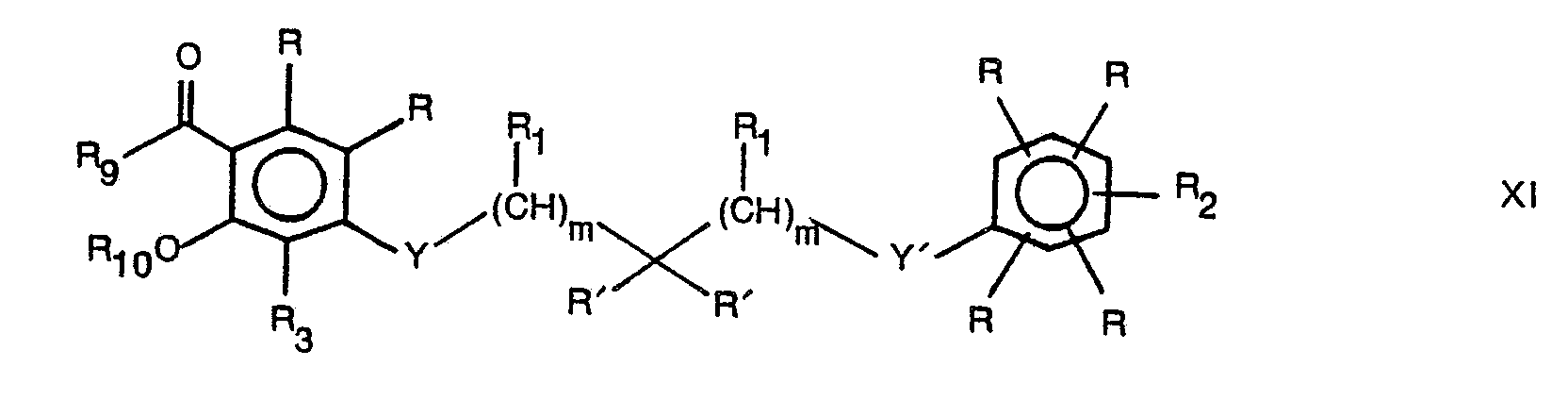

- each R, independently of the others, is H, OH, C1-6alkyl; C2-6alkenyl; trifluoromethyl; C1-6alkoxy; C1-6thioalkyl; phenyl; phenyl substituted by alkyl of 1 to 3 carbon atoms or by halogen; benzyl; phen(C2-4alkyl; halogen, COOR4 where R4 is H or C1-6 alkyl; CN; trifluoromethylthio; or nitro;
- each R' is independently R4; OR4; COOR4; N(R4)2; SR4: CH2OR4; CHO; or together R' and R' are O; CH2; or

- each of Y and Y', which are the same as or different from one another, is oxygen, sulfur, sulfoxide, sulfone;


- each R1, independently of the others, is hydrogen or G1-3alkyl;
- each m, independently of the others, is 0, 1, 2 or 3;
- R2 is

- each R6, independently of the others, is H or C1-4alkyl;
- each R7, independently of the others, is H, OH, or C1-4alkyl;
- each Ra, independently of the others, is H or C1-4alkyl; and is absent when a triple bond is present;
- R5 is COOR4; CH2OH; CHO; tetrazole; hydroxymethylketone; CONHSO2R14; CN; CON(R7)2; or COOR15 where R15 is:

- each of r and q, independently of the other, is 0 or an integer from 1 to 6, provided that r+q does not exceed 10;
- p is 0 or 1;
- R3 is C1-6alkyl or C3-6alkenyl;
- Rg is OH, CC1-6alkyl or C1-6alkoxy;
- R10 is H; R4CO- or R4OCH2-;
- R14 is C1-6alkyl, phenyl, phenyl substituted by C1-3alkyl or alkoxy groups, halogen, hydroxy, haloalkyl, COOH, CN, formyl, C1-6acyl or C1-4 perfluoroalkyl; and all carbon chains in all radicals are straight or branched; or are pharmaceutically acceptable or acid-addition salts thereof.
- As used herein, the term "each independently" or its equivalent is used to describe a number of possible position isomers and/or structural variations. For example, as described above, R2 is


- The compounds of the present invention may be prepared by several different routes. According to one method a compound of Formula I is reacted with an optionally alkyl substituted alkenyl halide of Formula II where X is halogen and each R6 is independently H or C1-4 alkyl to yield the corresponding 2-hydroxy-4-alkenyloxy-acetophenone of Formula III. The compound of Formula III is then subjected to a Claisen rearrangement to yield a 2-4-dihydroxy-3-alkenyl-acetophenone compound of Formula IV. This rearrangement occurs on heating the compound of Formula III either neat or in a high boiling solvent, such as a halogenated hydrocarbon, e.g., dichlorobenzene, at from about 160 to about 210°C. The double bond in the compound of Formula IV may then be reduced, e.g., by catalytic hydrogenation with a catalyst such as Pd/C, to yield the corresponding saturated compound of Formula V.

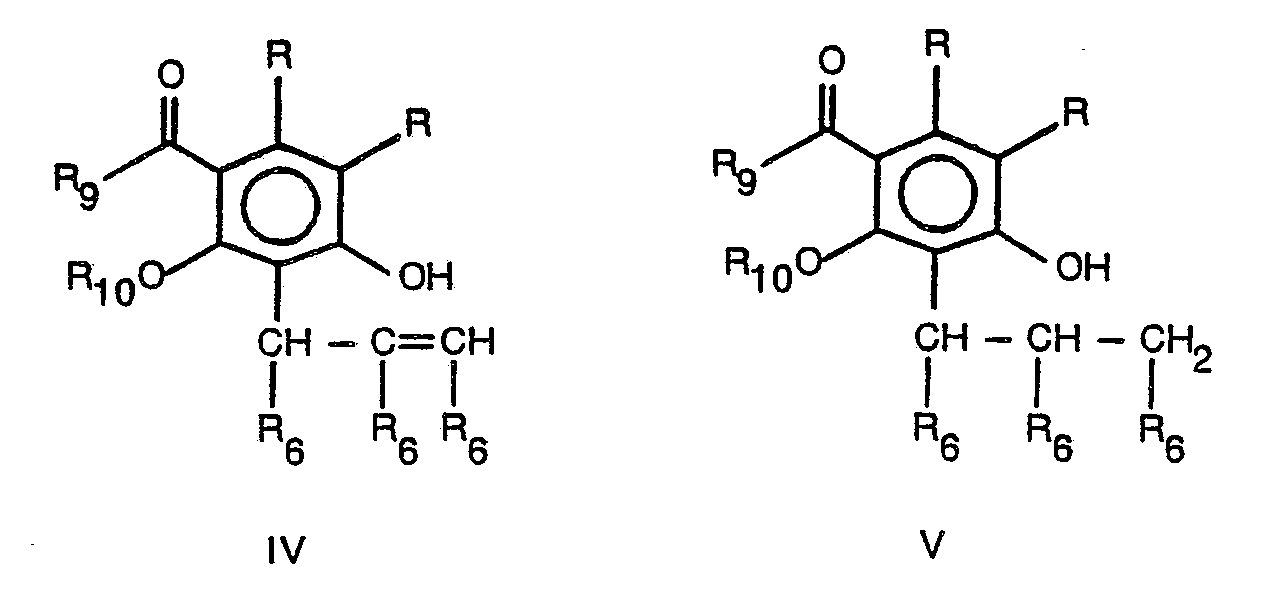
- The compound of Formula V is then reacted with a dihaloalkane of Formula Via or a dihaloalkene of Formula Vb wherein X, R and m have the meaning given previously, to yield a 4-(haloalkyloxy)-3-alkyl-2-hydroxyacetophenone compound of Formula VII. The reaction takes place by refluxing a mixture of the compounds of Formulae V and Via or Vlb in an inert solvent such as, for example, methylethylketone (MEK), acetone, tetrahydrofuran (THF), triglyme or dichloromethane in the presence of a base. The reflux temperature is preferably in the range of from about 60 to about 130°C. The base may be an alkali metal carbonate, for example, Li2CO3, Na2CO3 or K2CO3.
- Specific examples of dihaloalkane compounds of Formula Via are 1,3-dibromopropane, 2-methyl-1,3-dibromopropane, 2,2-dimethyl-1,3-dibromopropane, 3-chloro-2-chloromethyl-1-propene, 1,3-dibromobutane, 1,4-dibromobutane, 1,5-dibromopentane, 1,6-dibromohexane, 1,7-dibromoheptane, 1,8-dibromo- octane, 1,9-dibromononane, 1,10,-dibromodecane, and 1,12-dibromododecane. A specific example of a dihaloalkene compound of Formula Vlb is 1,4-bromo-2-butene.


- In lieu of the dihaloalkane or dihaloalkene, the compound of Formula IV or V may be reacted with ar epihalohydrin, e.g., epichlorohydrin, under the same conditions to yield the 4-(2,3-epoxypropyloxy)-3-alky or 3-alkenyl-2-hydroxy-acetophenone compound of Formula Vlll.

- An alternative procedure is to react a compound of Formula II with a compound of Formula V to yield a 4-alkenyloxy-3-alkyl-2-hydroxy-acetophenone compound of Formula IX which is then epoxidized with an organic peracid such as, for example, m-chloroperbenzoic acid to give the compound of Formula VIII.

- The reaction of a compound of Formula VII with a compound of Formula X, under the same conditions used to react a compound of Formula V with a compound of Formula Via or Vlb, gives compounds of the Formulae XI or XII.
- The reaction of a compound of Formula VIII with a compound of Formula X under the same conditions used to react a compound of Formula V with a compound of Formula Via or Vlb gives a compound of Formula XI wherein each m is 1.

- When Y' is -CH2-, HY' is methyl. When Y' is -C-,
- HY' is a protected aldehyde, such as, for example, dithioacetal.
- When Y' is methylene or carbonyl a stronger base such as, for example, lithium diisopropylamine or butyl lithium is employed in an inert solvent such as tetrahydrofuran with a suitable compound of Formula X.
- A compound of Formula X is prepared by subjecting a compound of the Formula XIII

- Alternatively, the compounds of Formulae XI and XII may be prepared by reacting a compound of Formula X with a compound of Formula Via or Vlb or an epihalohydrin under the same conditions as described for the preparation of the compound of Formula VII to give a compound of the Formula XIVa, XIVb or XIVc respectively. The latter are then reacted under the same conditions with a compound of the Formula V to give compounds of the Formulae XI or XII.


- Alternatively, but not preferably, the compounds of Formulae IV or V, X and either Via, Vlb or epihalohydrin may be reacted simultaneously under the conditions described above for reacting a compound of Formula Via or Vlb or epihalohydrin with a compound of Formula X.
- Prodrug ester derivatives of the compounds of Formulae XI and XII may be prepared using conventional synthetic techniques available to the skilled person. For example, compounds of the Formula XVI:


- In Method A the carboxylic acid of Formula XVII is reacted in the presence of a base with an alkylhalide compound to provide the prodrug ester.

- In Method B the sulfone carboxylic acid of Formula XVIII is similarly reacted with an appropriate alkylhalide in the presence of base to provide the corresponding prodrug ester.

- In Method C, the product of the Method A reaction, a prodrug ester, may be selectively oxidized to yield the sulfone or the sulfoxide compound.
- In the above structures, when R7=OH and R5=COOH, a lactone ring may be formed which would act as a prodrug form of the hydroxy acid. For example, a dehydration reaction of the compound having the Formula XIX:


- The magnitude of a prophylactic or therapeutic dose of a compound of Formula XI or XII will, of course, vary with the nature of the severity of the condition to be treated and with the particular compound of Formula XI or XII and its route of administration. In general, the daily dose range lies within the range of from 0.2 mg to 100 mg per kg body weight of a mammal.
- The pharmaceutical compositions of the present invention comprise a compound of Formula XI or XII as an active ingredient, and may also contain a pharmaceutically acceptable carrier and optionally other therapeutic ingredients. The compositions include compositions suitable for oral, rectal, ophthalmic, pulmonary, nasal, dermal, topical or parenteral (including subcutaneous, intramuscular and intravenous) administration, although the most suitable route in any given case will depend on the nature and severity of the conditions being treated and on the nature of the active ingredient. They may be conveniently presented in unit dosage form and prepared by any of the methods well-known in the art of pharmacy.
- For use for intravenous administration, a suitable dosage range is from 0.2 to 20 mg (preferably from about 1 to about 10 mg) of a compound of Formula XI or XII per kg of body weight per day and in the case of an oral composition a suitable dosage range is, e.g. from 1 to 100 mg of a compound of Formula XI or Xll per kg of body weight per day, preferably from 5 to 40 mg/kg.
- For administration by inhalation, the compounds of the present invention are conveniently delivered in the form of an aerosol spray presentation from pressurized packs or a nebuliser. The preferred composition for inhalation is a powder which may be formulated as a cartridge from which the powder composition may be inhaled with the aid of a suitable device. In the case of a pressurized aerosol, the dosage unit may be determined by providing a valve to deliver a metered amount.
- Pharmaceutical compositions of the present invention suitable for oral administration and by inhalation in the case of asthma therapy may be presented as discrete units such as capsules, cachets or tablets each containing a predetermined amount of the active ingredient, as a powder or granules, or as a solution or a suspension in an aqueous liquid, a non-aqueous liquid, an oil-in-water emulsion or a water-in- oil liquid emulsion. Such compositions may be prepared by any of the methods of pharmacy but all methods include the step of bringing into association the active ingredients with the carrier which constitutes one or more necessary ingredients. In general, the compositions are prepared by uniformly and intimately admixing the active ingredient with liquid carriers or finely divided solid carriers or both, and then, if necessary, shaping the product into the desired presentation. For example, a tablet may be prepared by compression or moulding, optionally with one or more accessory ingredients. Compressed tablets may be prepared by compressing in a suitable machine, the active ingredient in a free-flowing form such as powder or granules, optionally mixed with a binder, lubricant, inert diluent, or surface active or dispersing agent. Moulded tablets may be made by moulding, in a suitable machine, a mixture of the powdered compound moistened with an inert liquid diluent. Desirably, each tablet contains from 25 mg to 500 mg of the active ingredient and each cachet or capsule contains from 25 to 500 mg of the active ingredient.
- In addition to the compounds of Formulae XI and XII the pharmaceutical compositions can also contain other active ingredients, such as non-steroidal anti-inflammatory agents e.g. indomethacin, ibuprofen, sulindac and fenbufen, peripheral analgesic agents such as zomepirac and diflunisal or cyclooxygenase inhibitors. They may also contain inhibitors of the biosynthesis of the leukotrienes, e.g., those disclosed in European Patent Specification EPA-0 115 394. These pharmaceutical compositions may also contain antihistaminic agents such as Benadryl, Dramamine, Histadyl and Phenergan. These pharmaceutical compositions containing Formulae XI or XII compounds and a second active ingredient are another embodiment of the invention. The weight ratio of the Formula XI or XII compound: second active ingredient may be varied and may range from 10:1 1 to 1:10.
- The following examples illustrate but do not limit the present invention. All temperatures are expressed in degrees Celsius.
- To a suspension of AlCl3, 80 gm, in CH2Cl2, 1000 mL, was added dropwise acetylchloride, 31.6 gm. The solution was cooled at -5°C and 2,3-dichloroanisole, 70.8 gm, dissolved in CH2CI2, 50 mL was then added. The solution was allowed to warm to room temperature and was stirred for 4 hours. The reaction mixture was poured on ice and stirred for 30 minutes. The organic layer was decanted and the aqueous layer was extracted with CH2CI2. The combined fractions were washed with brine, dried (Na2SO4) and concentrated to a small volume. The addition of hexane caused crystallization of a solid which was filtered to yield the title compound, mp 73-77°C.

- To a mixture of 2,3-dichloro-4-methoxyacetophenone, 58 gm, methanol, 450 mL, and 70% perchloric acid, 88 mL, cooled to 0°C, there was added thallium trinitrate trihydrate, 117 gm. The reaction mixture was allowed to warm to room temperature and was stirred for 18 hours. The mixture was poured in water, 700 mL, and was extracted twice with CH2Cl2, 500 mL. The combined organic fractions were washed successively with water, 5% NaHC03 and with water, dried (Na2S04) and concentrated in vacuo to yield, after purification by chromatography on silica gel, the title compound, as an oil, readily characterized by its NMR spectrum: (ppm) (CDCI3) 3.85 (3H, s), 3.73 (2H, s), 3.68 (3H, s).
- 2,3-Dichloro-4-methoxybenzeneacetic acid, methyl ester, 46 gm, was refluxed for 18 hours in concentrated HBr, 350 mL. The reaction mixture was poured in water, 1.4 L, and the solution was extracted with EtOAc, 2 x 500 mL. The organic layers were washed with water, dried (Na2SO4) and concentrated to dryness. The residue was slurried in 20% EtOAc-hexane to yield 2,3-dichloro-4-hydroxybenzeneacetic acid, mp 189-190°C. The acid was stirred at room temperature in methanolic HCI, 100 mL, for 30 minutes. The volatiles were removed in vacuo and the residue was slurried in hexane, filtered and air-dried to yield the title compound, mp 105-106°C.
-

- Sodium hydride, 99%, 1.3 gm, was added to a solution of 2,3-dichloro-4-hydroxybenzeneacetic acid, methyl ester, 11.4 gm, in DMF, 100 mL. The mixture was stirred until evolution of H2 gas subsided. Dimethylthiocarbamoyl chloride, 6.5 gm, was then added and the reaction mixture was stirred at room temperature for 18 hours. The reaction mixture was poured in water, 200 mL, and was extracted with ether, 500 mL. The ether layer was washed with water, dried (Na2SO4) and concentrated in vacuo to yield an oil that was purified by chromatography on silica gel to yield the title compound, mp 87-93°C.

- 2,3-Dichloro-4-dimethylthiocarbamoyloxybenzeneacetic acid, methyl ester, 10.7 gm, was heated under N2 atmosphere at 250°C for 30 minutes. The reaction mixture was cooled to room temperature and affter a purification by chromatography on silica gel, the title compound, was obtained, mp 119-122°C.

- 2,3-Dichloro-4-dimethylcarbamoylthiobenzeneacetic acid, methyl ester, 3.22 gm, was refluxed in methanol, 60 mL, containing sodium methoxide, 855 mg, for 1 hour. The reaction mixture, containing about 10 millimoles of the sodium salt of the title compound, in 60 mL MeOH, was used as such in Step G. Step G: Preparation of 4-(3-(4-acetyl-3-hydroxy-2-propylphenoxy)propylthio-2,3-dichlorobenzeneacetic acid, methyl ester
- To 30 mL of the solution obtained in Step F was added 4-(3-bromopropoxy)-3-propyl-2-hydroxyacetophenone, 1.73 gm, and the reaction mixture was refluxed for 2 hours. It was then poured in water and extracted with EtOAc. The extract was washed with water, dried (Na2SO4) and concentrated in vacuo. The title compound, mp 82―85°C was obtained by chromatography of the residue on silica gel.
- The ester prepared in Steg G, 964 mg, dissolved in 1 N NaOH, 10 mL and in methanol, 30 mL, was refluxed for 30 minutes. The volatiles were evaporated in vacuo. The residue was taken up in water and the resulting solution was acidified with 20% citric acid. The mixture was extracted with EtOAc, the extracts were washed with water, dried (NaS04) and concentrated in vacuo to yield the title compound, mp 119-122°C.
- By following Step G of Example 1, but substituting 4-(2,3-epoxypropoxy)-3-propyl-2-hydroxyacetophenone for 4-(3-bromopropoxy)-3-propyl-2-hydroxyacetophenone, the title compound, mp 85-88°C, was obtained.
- By following Step H of Example 1, but substituting the product of Step A of this example for the ester of Step G of Example 1, the title compound, mp 151-153°C, was obtained.
- The product obtained in Step G of Example 1, 1.4 gm, in CH2Cl2, 35 mL, was treated with m-chloroperbenzoic acid, 560 mg, for 15 minutes at 0°C. (Ca(OH)2, 3 gm, was added and the resulting suspension was stirred for 10 minutes. The solids were filtered off and the filtrate was concentrated in vacuo to yield the title compound, mp 153-155°C.
- By following Step H of Example 1, but substituting the product of Step A of this example for the ester of Step G of Example 1, the title compound, mp 162-164°C, was obtained.
- The product obtained in Step G of Example 1, 1.4 gm, in CH2CI2, 35 mL, was treated with m-chloroperbenzoic acid, 1.15 gm, for 2 hours at room temperature. Ca(OH)2, 4 gm, was added and the resulting suspension was stirred for 10 minutes. The solids were filtered off and the filtrate was concentrated in vacuo to yield the title compound, mp 115―118°C.
- By following Step H of Example 1, but substituting the product of Step A of this example for the ester of Step G of Example 1, the title compound, mp 180-181°C, was obtained.
- By following Step A of Example 3, but substituting the product of Step A of Example 2 for the ester of Step G of Example 1, the title compound mp 149-152°C, was obtained.
- By following Step H of Example 1 but substituting the product of Step A of this example for the ester of Step G of Example 1, the title compound, mp 166-170°C, was obtained.
- By following Step A of Example 4, but substituting the product of Step A of Example 2 for the ster from Step G of Example 1, the title compound, mp 122-125-C, was obtained.
- By following Step H of Example 1, but substituting the product from Step A of this example for the ester of Step G of Example 1, the title compound, mp 181-183°C, was obtained.
- By following Step A of Example 1, but substituting m-fluoroanisole for 2,3-dichloroanisole, the title compound, mp 50-52°C, was obtained.
- By following Step B of Example 1 but substituting 4-methoxy-2-fluoroacetophenone for 2,3-dichloro-4-methoxyacetophenone, the title compound, bp 112-115°C/I Torr, was obtained.
- By following Step C of Example 1 but substituting 4-methoxy-2-fluorobenzeneacetic acid, methyl ester for 2,3-dichloro-4-methoxybenzeneacetic acid, methyl ester, 4-hydroxy-2-fluorobenzeneacetic acid was obtained as a sticky solid which was treated with methanolic HCI to yield the title compound as an oil. It was characterized by its NMR spectrum: (ppm) (CDCI3) 3.70 (3H, s, CH30), 3.55 (2H, s, CH2).
- By following Step D of Example 1 but substituting 4-hydroxy-2-fluorobenzeneacetic acid, methyl ester for 4-hydroxy-2,3-dichlorobenzeneacetic acid, methyl ester, the title compound, mp 113-114°C, was obtained.
- By following Step E of Example 1 but substituting 2-fluoro-4-dimethylcarbamoyloxybenzeneacetic acid, methyl ester for 2,3-dichloro-4-dimethylthiocarbamoyloxybenzeneacetic acid, methyl ester, the title compound, mp 79―81°C, was obtained.
- By following Step F of Example 1 but substituting 2-fluoro-4-dimethylcarbamoylthiobenzeneacetic acid, methyl ester for 2,3-dichloro-4-dimethylcarbamoylthiobenzeneacetic acid, methyl ester a solution of the title compound was obtained and was used as such in the following Step.
- By following Step G of Example 1 but substituting the product of Step F of this example for the product of Step F of Example 1, the title compound, mp 63―65°C, was obtained.
- By following Step H of Example 1, but substituting the methyl ester of Step G of this example for the methyl ester of Step G of Example 1, the title compound, mp 154-156°C, was obtained.
- By following Step G of Example 7, but substituting 4-(2,3-epoxypropoxy)-3-propyl-2-hydroxyacetophenone for 4-(3-bromopropoxy)-3-propyl-2-hydroxyacetophenone, the title compound was obtained as an oil.

- By following Step H of Example 7, but substituting the product of Step A of this example for the ester of Step G of Example 7, the corresponding acid of the title compound was obtained as an oil. It was treated with one equivalent of sodium hydroxide in water to yield, after evaporation of the water, the title compound, mp 75―83°C.

- By following Step A of Example 3, but substituting the title compound of Step A of Example 8 for the title compound of Step G of Example 1, the title compound is obtained.
- By following Step H of Example 1, but substituting the product of Step A of this example for the ester of Step G of Example 1, the title compound is obtained.
- By following Step A of Example 4, but substituting the product of Step A of Example 8 for the title compound of Step G of Example 1, the title compound, mp 118-119°C, was obtained.
- Byfollowing Step H of Example 1, but substituting the product of Step A of this example for the ester of Step G of Example 1, a mixture was obtained. After recrystallization from diethyl ether, 4-(3-(4-acetyl-3-hydroxy-2-propylphenoxy)-2-hydroxypropylsulfonyl)-2-fluorobenzeneacetic acid, mp 119-120°C, was obtained. The mother liquors were purified by chromatography on silica gel to yield 4-(3-(4-acetyl-3-hydroxy-2-propylphenoxy)-1-propenyl-sulfonyl)-2-fluoro-benzene acetic acid, mp 249-251°C.
- By following Step D of Example 7, but substituting 4-hydroxy-3-fluorobenzene acetic acid, methyl ester for 4-hydroxy-2-fluorobenzeneacetic acid, methyl ester, the title compound, was obtained as an oil which was characterized by its NMR spectrum: (ppm) (CDCI3) 3.70 (3H, s, CH30), 3.60 (2H, s, CH2), 3.40 (3H, s, CH3N), 3.33 (3H, s, CH3N).
- By following Step E of Example 7, but substituting 4-dimethylthiocarbamoyloxy-3-fluorobenzeneacetic acid, methyl ester for 4-dimethylthiocarbamoyloxy-2-fluorobenzeneacetic acid, methyl ester, the title compound, was obtained as an oil which was characterized by its NMR spectrum: (ppm) (CDCI3) 3.70 (3H, s, CH3), 3.63 (2H, s, CH2), 3.07 (6H, s, (CH3)2N).
- By following Step F of Example 7, but substituting 4-dimethylcarbamoylthio-3-fluorobenzeneacetic acid, methyl ester for fluoro-4-dimethylcarbamoylthiobenzeneacetic acid, methyl ester, a solution of the title compound was obtained and was used as such in the following Step.
- By following Step G of Example 7, but substituting the product of Step C of this example for the product of Step F of Example 1, the title compound was obtained as an oil which was characterized by its NMR spectrum: (ppm) (CDCI3) 12.70 (1 H, s, phenolic OH), 7.53 (1H, d, J=9Hz, H ortho to acetyl), 6.33 (1 H, d, J=9Hz H meta to acetyl), 4.13 (2H, t, J=7Hz, CH2O), 3.67 (3H, s, CH3O), 3.57 (2H, s, CH2), 2.53 (3H, s, CH3CO).
- By following Step H of Example 7, but substituting the methyl ester of Step D of this example for the product of Step G of Example 7, the title compound, mp 84-85°C, was obtained.
- By following Step D of Example 11, but substituting 4-(2,3-epoxypropoxy)-3-propyl-2-hydroxyacetophenone for 4-(3-bromopropoxy)-3-propyl-2-hydroxyacetophenone, the title compound was obtained as an oil which was characterized by its NMR spectrum: (ppm) (CDCI3) 12.70 (1H, s), 7.53 (1H, d, J=9Hz), 6.33 (1H, d, J=9Hz), 3.67 (3H, s), 3.57 (2H, s), 2.53 (3H, s).
- By following Step H of Example 1, but substituting the title compound of Step A of this example for 4-(3-(4-acetyl-3-hydroxy-2-propylphenoxy)-propylthio-2,3-dichlorobenzeneacetic acid, methyl ester, the title compound, mp 113-114°C, was obtained.
- By following Step D of Example 7, but substituting 4-hydroxy-3-chlorobenzeneacetic acid, methyl ester for 4-hydroxy-2-fluorobenzene acetic acid, methyl ester, the title compound, mp 76-78°C was obtained.
- By following Step E of Example 7, but substituting 4-dimethylthiocarbamoyloxy-3-chlorobenzeneacetic acid, methyl ester for 4-dimethylthiocarbamoyloxy-2-fluorobenzeneacetic acid, methyl ester, the title compound, was obtained as an oil which was characterized by its NMR spectrum; (ppm) (CDCI3) 3.60 (3H, s), 3.50 (2H, s), 2.90 (6H, s).
- By following Step F of Example 7, but substituting 4-dimethylcarbamoylthio-3-chlorobenzeneacetic acid, methyl ester for 4-dimethylcarbamoylthio-2-fluorobenzeneacetic acid, methyl ester, a solution of the title compound was obtained and was used as such in the following Step.
- By following Step G of Example 7, but substituting the product of Step C of this example for the product of Step F of Example 1, the title compound, mp 66-68°C, was obtained.
- By following Step H of Example 7, but substituting the methyl ester of Step D of this example for the product of Step G of Example 7, the title compound, mp 79-81°C, was obtained.
- By following Step A of Example 3, but substituting the title compound of Step D of Example 13 forthe title compound of Step G of Example 1, the title compound, mp 90-91°C, was obtained.
- By following Step H of Example 1, but substituting the product of Step A of this example for the ester of Step G of Example 1, the title compound, mp 130―132°C, was obtained.
- By following Step A of Example 4, but substituting the product of Step D of-Example 13 for the title compound of Step G of Example 1, the title compound, mp 98-100°C, was obtained
- By following Step H of Example 1, but substituting the product of Step A of this example for the ester of Step G of Example 1, the title compound, mp 132-134°C, was obtained.
- By following Step D of Example 13, but substituting 4-(2,3-epoxypropoxy)-3-propyl-2-hydroxyacetophenone for 4-(3-bromopropoxy)-3-propyl-2-hydroxyacetophenone, the title compound, mp 5&-58°C, was obtained.
- By following Step H of Example 1, but substituting the title compound of Step A of this example for 4-(3-(4-acetyl-3-hydroxy-propylphenoxy)-propylthio-2,3-dichlorobenzeneacetic acid, methyl ester, the title compound, mp 128-129°C, was obtained.
- Step A: Preparation of 4-(3-(4-acetyl-3-hydroxy-2-propylphenoxy)-2-hydroxypropylthio)-3-chloro- benzeneacetic acid-S-oxide, methyl ester
- By following Step A of Example 3, but substituting the title compound of Step A of Example 16 for the title compound of Step G of Example 1, the title compound, mp 103-104°C, was obtained.
- By following Step H of Example 1, but substituting the product of Step A of this example for the ester of Step G of Example 1, the title compound, mp 119-123°C, was obtained.
- By following Step A of Example 4, but substituting the title compound of Step A of Example 16 for the title compound of Step G of Example 1, the title compound, mp 96―98°C, was obtained.
- By following Step H of Example 1, but substituting the product of Step A of this example for the ester of Step G of Example 1, the title compound, mp 110―112°C, was obtained.
- By following Step G of Example 1, but substituting 4-mercaptobenzeneacetic acid, methyl ester for 2,3-dichloro-4-mercaptobenzeneacetic acid, methyl ester, the title compound, was obtained as an oil which was characterized by its NMR spectrum: (ppm) (CDCI3) 12.67 (1H, s), 7.63 (1H, d, J=9Hz), 6.40 (1H, d, J=9Hz), 4.13 (2H, t, J=6Hz), 3.70 (3H, s), 3.60 (2H, s), 2.57 (3H, s).
- By following Step H of Example 1, but substituting the product of Step A of this example for the title compound of Step G of Example 1, the title compound, mp 94°C, was obtained.
- By following Step A of Example 4, but substituting the title compound of Step A of Example 19 for the title compound of Step G of Example 1, the title compound, was obtained as an oil which was characterized by its NMR spectrum: (ppm) (CDCI3) 12.67 (1H, s), 7.63 (1H, d, J=9Hz), 6.40 (1H, d, J=9Hz), 4.13 (2H, t, J=6Hz), 3.70 (3H, s), 3.60 (2H, s), 2.57 (3H, s).
- By following Step H of Example 1, but substituting the title compound of Step A of this example for the title compound of Step G of Example 1, the title compound, mp 132-134°C; was obtained.
- To a solution of 2,4-dihydroxy-3-propylacetophenone, 10 gm, in methylethyl ketone, 250 mL, was added successively 2-methyl-1,3-dibromopropane, 33.4 gm, and potassium carbonate, 11 gm. The suspension was stirred at reflux for 4 hours. The solids were filtered off, and were washed thoroughly with acetone. The filtrate was evaporated to dryness to yield the title compound as an oil after purification by chromatography on silica gel. NMR (ppm) (CDC13) 3.95 (2H, d, J=7Hz), 3.55 (2H, d, J=7Hz), 1.20 (3H, d, J=7Hz).
- By following Step A of Example 19, but substituting the title compound of Step A of this example for 4-(3-(bromopropoxy)-3-propyl-2-hydroxyacetophenone, the title compound was obtained as an oil, NMR (ppm) (CDCI3) 12.65 (1H, s), 7.58 (1H, d, J=9Hz), 6.40 (1H, d, J=9Hz), 3.60 (3H, s), 3.50 (2H, s) 2.55 (3H, s).
- By following Step H of Example 1, but substituting the title compound of Step B of this example for the title compound of Step G of Example 1, the title compound, mp 96-98°C, was obtained.
- By following Step A of Example 2, but substituting 4-mercaptobenzeneacetic acid, methyl ester for the title compound of Step F of Example 1, the title compound, was obtained as an oil. NMR (ppm) (CDCI3) 12.77 (1H, s), 7.67 (1H, d, J=9Hz), 7.27 (2H, d, J=9Hz), 6.93 (2H, d, J=9Hz), 6.50 (1H, d, J=9Hz), 3.67 (3H, s).
- By following Step H of Example 1, but substituting the title compound of Step A of this example for the title compound of Step G of Example 1, the title compound, mp 105.4°C, was obtained.
- By following Step D of Example 7, but substituting 4-hydroxy-3-fluoro-benzoic acid, methyl ester for 4-hydroxy-2-fluorobenzeneacetic acid, methyl ester, the title compound, mp 103-104°C, was obtained.
- By following Step E of Example 7, but substituting 4-dimethylthiocarbamoyloxy-3-fluorobenzoic acid, methyl ester for 4-dimethylthiocarbamoyloxy-2-fluorobenzeneacetic acid, methyl ester, the title compound, mp 72-74°C, was obtained.
- By following Step F of Example 7, but substituting 4-dimethylcarbamoylthio-3-fluorobenzoic acid, methyl ester doe 4-dimethylcarbamoylthio-2-fluorobenzeneacetic acid, methyl ester, a solution of the title compound was obtained and was used as such in the following step.
- By following Step A of Example 12, but substituting 4-mercapto-3-fluorobenzoic acid, methyl ester for 4-mercapto-3-fluorobenzeneacetic acid, methyl ester, the title compound, mp 123-125°C, was obtained.
- By following Step H of Example 1, but substituting the title compound of Step D of this example for the title compound of Step G of Example 1, the title compound, mp 171-175°C, was obtained.
- By following Step A of Example 3 but substituting the title compound of Step D of Example 23 for the title compound of Step G of Example 1, the title compound, mp 103-104°C, was obtained.
- By following Step H of Example 1, but substituting the title compound of Step A of this example for the title compound of Step G of Example 1, the title compound, mp 72-74°C, was obtained.
- By following the indications of Step A of Example 4, but substituting the title compound of Step D of Example 23 for the title compound of Step G of Example 1, the title compound was obtained as an oil. NMR (ppm) (CDCI3) 12.75 (1H, s), 7.85 (1H, d, J=9Hz), 6.35 (1H, d, J=9Hz), 3.95 (3H, s), 2.54 (3H, s).
- By following Step H of Example 1, but substituting the title compound of Step A of this example for the title compound of Step G of Example 1, the title compound, mp 128-129°C, was obtained.
- By following Step D of Example 23, but substituting 4-(3-bromopropoxy)-3-propyl-2-hydroxyacetophenone for 4-(2,3-epoxypropoxy)-3-propyl-2-hydroxyacetophenone, the title compound, mp 62-65°C, was obtained.
- By following Step H of Example 1, but substituting the title compound of Step A of this example for the title compound of Step G of Example 1, the title compound, mp 128-129°C, was obtained.
- By following Step A of Example 3, but substituting the title compound of Step A of Example 26 for the title compound of Step G of Example 1, the title compound, mp 108-109°C, was obtained.
- By following Step H of Example 1, but substituting the title compound of Step A of this example for the title compound of Step G of Example 1, the title compound, mp 175-176°C, was obtained.
- By following Step A of Example 4, but substituting the title compound of Step A of Example 26 for the title compound of Step G of Example 1, the title compound, mp 102-103°C, was obtained.
- By following Step H of Example 1, but substituting the title compound of Step A of this example for the title compound of Step G of Example 1, the title compound, mp 181-182°C, was obtained.
- To a mixture of p-aminobenzeneacetic acid, methyl ester, 1.65 gm, and sodium acetate, 1.4 gm, in H20, 15 mL, cooled at 0°C, was added CNBr, 1.3 gm. The suspension was allowed to warm to room temperature and was stirred overnight. The title compound was then filtered off and has mp 77-79°C after crystallization from EtOAc/hexane.
- By following Step G of Example 1, but substituting 4-cyanamidobenzeneacetic acid, methyl ester for 4-mercapto-2,3-dichlorobenzeneacetic acid, methyl ester, the title compound, mp 92-93°C, was obtained.
- By following Step H of Example 1, but substituting the title compound of Step B of this example for the title compound of Step G of Example 1, the title compound, mp 130-131°C, was obtained.
- 4-(3-Bromopropylthio)-gamma-oxobenzenebutanoic acid (3.4 g, 10.3 mmoles) was dissolved in THF (25 ml) and cooled to -15°. Borane-THF complex (10 ml, 10.4 mmoles) was added dropwise over one hour. The solution warmed to room temperature with stirring over twelve hours. The reaction mixture was diluted with methanol and stirred for thirty minutes. The solution was evaporated to dryness, dissolved in toluene, cooled to 0°C and treated with an excess of diazomethane. After twelve hours the reaction was evaporated to dryness and purified by HPLC to yield the title compounds:
- I mass spectrum M+ 298
- ` mass spectrum M+ 300
- The compound II from Step A above, (2.0 g, 6.25 mmoles), 2,4-dihydroxy-3-propylacetophenone, (1.94 g, 10 mmoles) and potassium carbonate (2.76 g, 20 mmoles) were heated at reflux in methyl ethyl ketone (20 ml) for six hours. The reaction mixture was cooled to room temperature, filtered and evaporated to dryness. HPLC afforded the title compound.

- The compound of Example 30, Step B, (1.0 g, 2.32 mmole) was dissolved in chloroform and cooled to 0°. A solution of m-chloroperbenzoic acid (1.0 g, 4.8 meq.) in chloroform was added dropwise. The reaction stirred at 0°C for one hour. Calcium hydroxide (590 mg) was added and the reaction stirred twenty-five minutes. The mixture was filtered and evaporated to dryness. Crystallization of the residue from ethyl acetate-hexane afforded the title compound, m.p. 74-75°.

- Similarly there may be prepared the following compounds.
-

-

- Analysis, calculated: C, 65.66; H, 6.51.
- Observed: C, 65.79; H, 6.56.
- It is understood that for those compounds which contain asymmetric centers, the present invention includes the racemic mixture as well as the individual resolved optical isomers.
Claims (16)


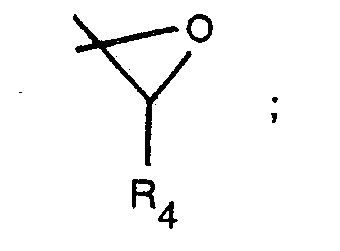


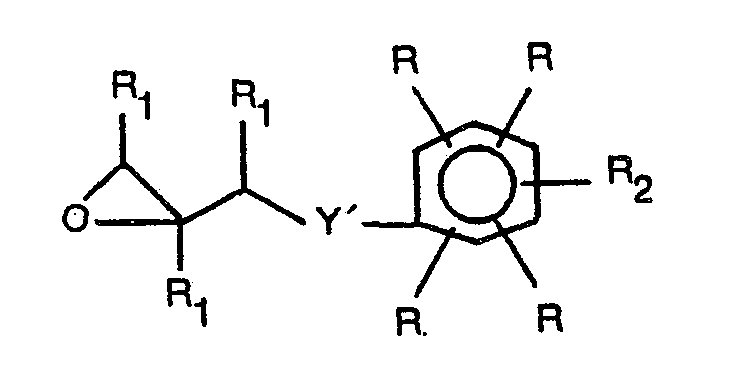


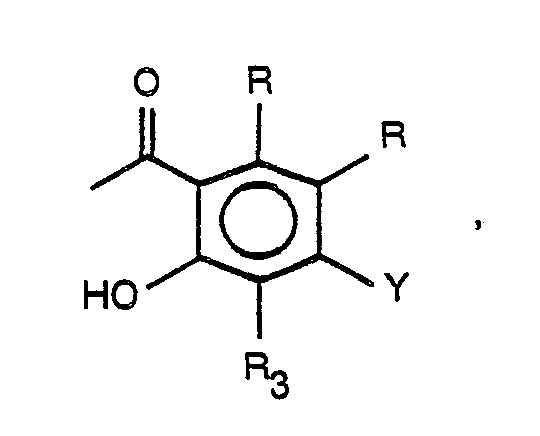


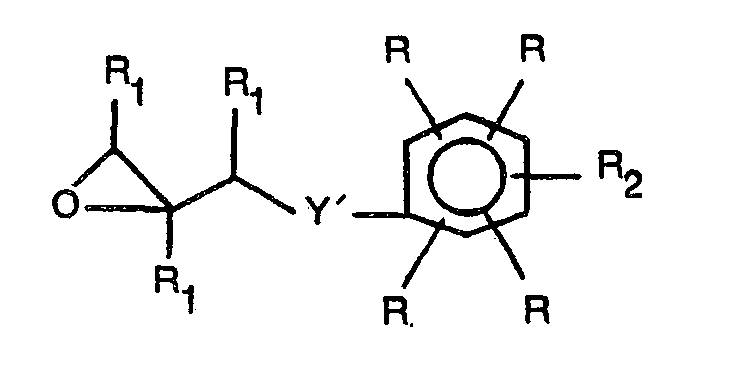


Priority Applications (1)
| Application Number | Priority Date | Filing Date | Title |
|---|---|---|---|
| AT83305587T ATE22072T1 (en) | 1982-09-30 | 1983-09-21 | LEUKOTRIAN ANTAGONISTS, THEIR PREPARATION AND COMPOSITIONS CONTAINING THEM. |
Applications Claiming Priority (2)
| Application Number | Priority Date | Filing Date | Title |
|---|---|---|---|
| US43194482A | 1982-09-30 | 1982-09-30 | |
| US431944 | 1989-11-06 |
Publications (2)
| Publication Number | Publication Date |
|---|---|
| EP0106565A1 EP0106565A1 (en) | 1984-04-25 |
| EP0106565B1 true EP0106565B1 (en) | 1986-09-10 |
Family
ID=23714091
Family Applications (1)
| Application Number | Title | Priority Date | Filing Date |
|---|---|---|---|
| EP83305587A Expired EP0106565B1 (en) | 1982-09-30 | 1983-09-21 | Leukotriene antagonists, their production, and compositions containing them |
Country Status (7)
| Country | Link |
|---|---|
| EP (1) | EP0106565B1 (en) |
| JP (1) | JPS5993043A (en) |
| AT (1) | ATE22072T1 (en) |
| CA (1) | CA1273349A (en) |
| DE (1) | DE3366107D1 (en) |
| DK (1) | DK446383A (en) |
| ES (1) | ES8503636A1 (en) |
Families Citing this family (17)
| Publication number | Priority date | Publication date | Assignee | Title |
|---|---|---|---|---|
| US5135940A (en) * | 1982-09-23 | 1992-08-04 | Merck Frosst Canada, Inc. | Leukotriene antagonists |
| US4820867A (en) * | 1983-04-21 | 1989-04-11 | Merck Frosst Canada, Inc. | Phenoxypropoxy halophenylacetic acids as leukotriene antagonists |
| EP0123541B1 (en) * | 1983-04-21 | 1987-07-22 | Merck Frosst Canada Inc. | Leukotriene antagonists |
| US5105017A (en) * | 1983-07-18 | 1992-04-14 | Eli Lilly And Company | Leukotriene antagonist intermediates |
| ES8602588A1 (en) * | 1983-10-27 | 1985-12-01 | Merck Frosst Canada Inc | Leukotriene antagonists. |
| US4990526A (en) * | 1985-06-18 | 1991-02-05 | Merck Frosst Canada, Inc. | Leukotriene antagonists, compositions and methods of use thereof |
| CA1309557C (en) | 1985-06-18 | 1992-10-27 | Robert N. Young | Leukotriene antagonists |
| DE3786030T2 (en) | 1986-03-27 | 1993-12-02 | Merck Frosst Canada Inc | Tetrahydrocarbazole esters. |
| PT85110A (en) * | 1986-06-23 | 1987-07-01 | Merck Frosst Canada Inc | Process for preparing benzenealkanoic acid derivatives useful as leukotriene antagonists |
| US4906658A (en) * | 1987-04-21 | 1990-03-06 | Merck Frosst Canada, Inc. | Fluoro-sulfones |
| US5428033A (en) | 1990-10-12 | 1995-06-27 | Merck Frosst Canada, Inc. | Saturated hydroxyalkylquinoline acids as leukotriene antagonists |
| US5410054A (en) * | 1993-07-20 | 1995-04-25 | Merck Frosst Canada, Inc. | Heteroaryl quinolines as inhibitors of leukotriene biosynthesis |
| ES2217392T3 (en) * | 1996-02-02 | 2004-11-01 | MERCK & CO., INC. | ANTIDIABETIC AGENTS. |
| HUE028213T2 (en) | 2003-09-19 | 2016-12-28 | Janssen Pharmaceutica Nv | 4-((phenoxyalkyl)thio)-phenoxyacetic acids for use in treating PPAR-delta mediated conditions |
| EP2100877B1 (en) * | 2003-09-19 | 2012-01-25 | Janssen Pharmaceutica N.V. | 4-((Phenoxyalkyl)thio)-phenoxyacetic acids and analogs |
| JO3006B1 (en) | 2005-09-14 | 2016-09-05 | Janssen Pharmaceutica Nv | Novel Lysine Salts of 4-((Phenoxy Alkyl)Thio)-Phenoxy Acetic Acid Derivatives |
| UY30288A1 (en) | 2006-04-18 | 2007-08-31 | Janssen Pharmaceutica Nv | DERIVATIVES OF BENZOAZEPIN-OXI-ACETIC ACID AS PPAR-DELTA AGONISTS USED TO INCREASE HDL-C. REDUCE LDL-C AND REDUCE CHOLESTEROL |
Family Cites Families (6)
| Publication number | Priority date | Publication date | Assignee | Title |
|---|---|---|---|---|
| GB1199871A (en) * | 1967-05-11 | 1970-07-22 | Consolidation Coal Co | Improvements in or relating to Sulfur-Containing Bisphenols |
| JPS508095B1 (en) * | 1970-01-22 | 1975-04-02 | ||
| GB2058785B (en) * | 1979-09-05 | 1983-05-25 | Glaxo Group Ltd | Phenol derivatives |
| US4410548A (en) * | 1980-07-09 | 1983-10-18 | Reckitt & Colman Products Limited | Propanolamine derivatives |
| EP0056172B1 (en) * | 1981-01-09 | 1985-04-03 | FISONS plc | Phenoxy- and thiophenoxy compounds, methods for their preparation and pharmaceutical formulations containing them |
| FR2509725A1 (en) * | 1981-07-15 | 1983-01-21 | Choay Sa | 3-Phenyl:thio-1-propanol normolipaemic cpds. - e.g. 3-4-chloro-phenyl-thio 1-methyl 1-ethyl or propyl-propanol, used to treat atherosclerosis etc. |
-
1983
- 1983-09-21 EP EP83305587A patent/EP0106565B1/en not_active Expired
- 1983-09-21 AT AT83305587T patent/ATE22072T1/en active
- 1983-09-21 DE DE8383305587T patent/DE3366107D1/en not_active Expired
- 1983-09-27 CA CA000437653A patent/CA1273349A/en not_active Expired - Lifetime
- 1983-09-29 DK DK446383A patent/DK446383A/en not_active Application Discontinuation
- 1983-09-29 ES ES526065A patent/ES8503636A1/en not_active Expired
- 1983-09-30 JP JP58180998A patent/JPS5993043A/en active Pending
Also Published As
| Publication number | Publication date |
|---|---|
| CA1273349A (en) | 1990-08-28 |
| ES526065A0 (en) | 1985-04-01 |
| EP0106565A1 (en) | 1984-04-25 |
| ES8503636A1 (en) | 1985-04-01 |
| JPS5993043A (en) | 1984-05-29 |
| DK446383D0 (en) | 1983-09-29 |
| DE3366107D1 (en) | 1986-10-16 |
| DK446383A (en) | 1984-03-31 |
| ATE22072T1 (en) | 1986-09-15 |
Similar Documents
| Publication | Publication Date | Title |
|---|---|---|
| EP0104885B1 (en) | Leukotriene antagonists, their production, and compositions containing them | |
| EP0142801B1 (en) | Indene derivatives useful as paf-antagonists | |
| EP0106565A1 (en) | Leukotriene antagonists, their production, and compositions containing them | |
| SI9111318A (en) | Acetamide derivatives | |
| FI86847C (en) | Process for the preparation of therapeutically useful 4-phenyl-but-3-ene-2-parent derivatives | |
| US5110831A (en) | Vinylogous hydroxamic acids and derivatives thereof as 5-lipoxygenase inhibitors | |
| EP0202759B1 (en) | Leukotriene antagonists | |
| US4886835A (en) | Alkadiene derivatives, their preparation, and pharmaceutical compositions containing them | |
| EP1511723A1 (en) | Sulfone liver x-receptor modulators | |
| JPS609716B2 (en) | 1,2-Benzinthiazolin-3-ones, their production method and use as medicine | |
| BE1007245A3 (en) | Di-substituted derivatives of n, n'-ditrimethoxybenzoyle piperazine, a process for their preparation and therapeutic compositions containing. | |
| CA1276025C (en) | Aminoalkylpyridineamides | |
| AU620037B2 (en) | Leukotriene antagonists | |
| CH630623A5 (en) | PROCESS FOR THE PREPARATION OF PROPIONIC ACID DERIVATIVES. | |
| US4560696A (en) | Analgesic, antipyretic or anti-inflammatory imidazole compounds | |
| FR2521992A1 (en) | NOVEL PYRIDINE COMPOUNDS USEFUL AS MEDICAMENTS | |
| Brouillette et al. | Soft drugs. 21. Design and evaluation of soft analogs of propantheline | |
| EP0153009B1 (en) | Leukotriene antagonists | |
| EP0284202B1 (en) | Substituted hydantoin compounds | |
| AU745639B2 (en) | Substituted diphenyl indanone, indane and indole compounds and analogues thereof useful for the treatment or prevention of diseases characterized by abnormal cell proliferation | |
| US3997670A (en) | 1-Dioxolanylpropyl-3-indoleacrylic acid esters | |
| US3953525A (en) | α-Substituted-4-(2,2-dimethyl-1-hydroxypropyl)benzyl alcohols and esters | |
| FR2556592A1 (en) | PHARMACEUTICAL COMPOSITIONS CONTAINING CAMPHO-METHYLIDENE CINNAMIC ACID DERIVATIVES | |
| EP0120741B1 (en) | Medicines derived from 4-chloro-1,2-dithiol-3-one and medicinal compositions containing them | |
| WO1991016889A1 (en) | Five-membered ring alkanoic acid leukotriene antagonists |
Legal Events
| Date | Code | Title | Description |
|---|---|---|---|
| PUAI | Public reference made under article 153(3) epc to a published international application that has entered the european phase |
Free format text: ORIGINAL CODE: 0009012 |
|
| AK | Designated contracting states |
Designated state(s): AT BE CH DE FR GB IT LI LU NL SE |
|
| ITCL | It: translation for ep claims filed |
Representative=s name: SOCIETA' ITALIANA BREVETTI S.P.A. |
|
| 17P | Request for examination filed |
Effective date: 19840912 |
|
| GRAA | (expected) grant |
Free format text: ORIGINAL CODE: 0009210 |
|
| AK | Designated contracting states |
Kind code of ref document: B1 Designated state(s): AT BE CH DE FR GB IT LI LU NL SE |
|
| REF | Corresponds to: |
Ref document number: 22072 Country of ref document: AT Date of ref document: 19860915 Kind code of ref document: T |
|
| PG25 | Lapsed in a contracting state [announced via postgrant information from national office to epo] |
Ref country code: LU Free format text: LAPSE BECAUSE OF NON-PAYMENT OF DUE FEES Effective date: 19860930 |
|
| PGFP | Annual fee paid to national office [announced via postgrant information from national office to epo] |
Ref country code: AT Payment date: 19860930 Year of fee payment: 4 |
|
| ITF | It: translation for a ep patent filed | ||
| REF | Corresponds to: |
Ref document number: 3366107 Country of ref document: DE Date of ref document: 19861016 |
|
| ET | Fr: translation filed | ||
| RIN2 | Information on inventor provided after grant (corrected) |
Free format text: BELANGER, PATRICE C. * FORTIN, REJEAN * GUINDON, YVAN * ROKACH, JOSHUA * YOAKIM, CHRISTIANE |
|
| PLBE | No opposition filed within time limit |
Free format text: ORIGINAL CODE: 0009261 |
|
| STAA | Information on the status of an ep patent application or granted ep patent |
Free format text: STATUS: NO OPPOSITION FILED WITHIN TIME LIMIT |
|
| 26N | No opposition filed | ||
| PG25 | Lapsed in a contracting state [announced via postgrant information from national office to epo] |
Ref country code: AT Effective date: 19880921 |
|
| PG25 | Lapsed in a contracting state [announced via postgrant information from national office to epo] |
Ref country code: BE Effective date: 19880930 |
|
| BERE | Be: lapsed |
Owner name: MERCK FROSST CANADA INC. Effective date: 19880930 |
|
| PG25 | Lapsed in a contracting state [announced via postgrant information from national office to epo] |
Ref country code: SE Effective date: 19890922 |
|
| ITTA | It: last paid annual fee | ||
| PGFP | Annual fee paid to national office [announced via postgrant information from national office to epo] |
Ref country code: CH Payment date: 19920629 Year of fee payment: 10 |
|
| PGFP | Annual fee paid to national office [announced via postgrant information from national office to epo] |
Ref country code: FR Payment date: 19920730 Year of fee payment: 10 |
|
| PGFP | Annual fee paid to national office [announced via postgrant information from national office to epo] |
Ref country code: DE Payment date: 19920825 Year of fee payment: 10 |
|
| PGFP | Annual fee paid to national office [announced via postgrant information from national office to epo] |
Ref country code: NL Payment date: 19920930 Year of fee payment: 10 |
|
| PGFP | Annual fee paid to national office [announced via postgrant information from national office to epo] |
Ref country code: GB Payment date: 19930707 Year of fee payment: 11 |
|
| PG25 | Lapsed in a contracting state [announced via postgrant information from national office to epo] |
Ref country code: LI Effective date: 19930930 Ref country code: CH Effective date: 19930930 |
|
| PG25 | Lapsed in a contracting state [announced via postgrant information from national office to epo] |
Ref country code: NL Effective date: 19940401 |
|
| NLV4 | Nl: lapsed or anulled due to non-payment of the annual fee | ||
| PG25 | Lapsed in a contracting state [announced via postgrant information from national office to epo] |
Ref country code: FR Free format text: LAPSE BECAUSE OF NON-PAYMENT OF DUE FEES Effective date: 19940531 |
|
| REG | Reference to a national code |
Ref country code: CH Ref legal event code: PL |
|
| PG25 | Lapsed in a contracting state [announced via postgrant information from national office to epo] |
Ref country code: DE Effective date: 19940601 |
|
| REG | Reference to a national code |
Ref country code: FR Ref legal event code: ST |
|
| PG25 | Lapsed in a contracting state [announced via postgrant information from national office to epo] |
Ref country code: GB Effective date: 19940921 |
|
| EUG | Se: european patent has lapsed |
Ref document number: 83305587.4 Effective date: 19900521 |
|
| GBPC | Gb: european patent ceased through non-payment of renewal fee |
Effective date: 19940921 |