EP0106123B1 - Novel n-nitroso compounds, compositions containing such compounds and processes for their preparation - Google Patents
Novel n-nitroso compounds, compositions containing such compounds and processes for their preparation Download PDFInfo
- Publication number
- EP0106123B1 EP0106123B1 EP83108853A EP83108853A EP0106123B1 EP 0106123 B1 EP0106123 B1 EP 0106123B1 EP 83108853 A EP83108853 A EP 83108853A EP 83108853 A EP83108853 A EP 83108853A EP 0106123 B1 EP0106123 B1 EP 0106123B1
- Authority
- EP
- European Patent Office
- Prior art keywords
- chloroethyl
- nitrosourea
- ethyl
- alkylene
- hydrogen
- Prior art date
- Legal status (The legal status is an assumption and is not a legal conclusion. Google has not performed a legal analysis and makes no representation as to the accuracy of the status listed.)
- Expired
Links
- 0 BN(*S(NC)(=O)=O)C(NC)=O Chemical compound BN(*S(NC)(=O)=O)C(NC)=O 0.000 description 2
Classifications
-
- C—CHEMISTRY; METALLURGY
- C07—ORGANIC CHEMISTRY
- C07C—ACYCLIC OR CARBOCYCLIC COMPOUNDS
- C07C311/00—Amides of sulfonic acids, i.e. compounds having singly-bound oxygen atoms of sulfo groups replaced by nitrogen atoms, not being part of nitro or nitroso groups
- C07C311/48—Amides of sulfonic acids, i.e. compounds having singly-bound oxygen atoms of sulfo groups replaced by nitrogen atoms, not being part of nitro or nitroso groups having nitrogen atoms of sulfonamide groups further bound to another hetero atom
-
- C—CHEMISTRY; METALLURGY
- C07—ORGANIC CHEMISTRY
- C07D—HETEROCYCLIC COMPOUNDS
- C07D295/00—Heterocyclic compounds containing polymethylene-imine rings with at least five ring members, 3-azabicyclo [3.2.2] nonane, piperazine, morpholine or thiomorpholine rings, having only hydrogen atoms directly attached to the ring carbon atoms
- C07D295/22—Heterocyclic compounds containing polymethylene-imine rings with at least five ring members, 3-azabicyclo [3.2.2] nonane, piperazine, morpholine or thiomorpholine rings, having only hydrogen atoms directly attached to the ring carbon atoms with hetero atoms directly attached to ring nitrogen atoms
- C07D295/26—Sulfur atoms
-
- A—HUMAN NECESSITIES
- A61—MEDICAL OR VETERINARY SCIENCE; HYGIENE
- A61P—SPECIFIC THERAPEUTIC ACTIVITY OF CHEMICAL COMPOUNDS OR MEDICINAL PREPARATIONS
- A61P35/00—Antineoplastic agents
-
- C—CHEMISTRY; METALLURGY
- C07—ORGANIC CHEMISTRY
- C07C—ACYCLIC OR CARBOCYCLIC COMPOUNDS
- C07C311/00—Amides of sulfonic acids, i.e. compounds having singly-bound oxygen atoms of sulfo groups replaced by nitrogen atoms, not being part of nitro or nitroso groups
- C07C311/30—Sulfonamides, the carbon skeleton of the acid part being further substituted by singly-bound nitrogen atoms, not being part of nitro or nitroso groups
- C07C311/45—Sulfonamides, the carbon skeleton of the acid part being further substituted by singly-bound nitrogen atoms, not being part of nitro or nitroso groups at least one of the singly-bound nitrogen atoms being part of any of the groups, X being a hetero atom, Y being any atom, e.g. N-acylaminosulfonamides
- C07C311/47—Y being a hetero atom
Definitions
- This invention relates to novel aminosulfonylalkyl nitrosoureas having an antitumor activity and to the preparation thereof.
- the invention is also concerned with pharmaceutical compositions containing said compounds.
- tumours tend to develop resistance to the anticancer therapy employed, thus rendering the therapy without curative effect.
- novel aminosulfonyl nitrosoureas of the present invention possess improved chemotherapeutic properties in comparison with several known and clinically used nitrosourea antitumour agents.
- the compounds of the invention show improved therapeutic indexes and good oral cytostatic activity against the Walker 256 carcinosarcoma and the L1210 lymphatic leukemia.
- the new compounds also possess a greater ameliorative or curative potential as shown by the L1210 experimental results.
- the compounds of the invention can be employed in disorders responsive to treatment with anticancer agents both in single therapy and in combination with other anticancer agents or immunosuppressive agents.
- the compounds can be used as such or combined with either solid or liquid carriers or diluents and made available in varying amounts in such pharmaceutical forms as e.g., tablets, pills, capsules, pellets, powders, ointments, suppositories and aqueous or non-aqueous suspensions and solutions.
- one object of the invention is to provide new compounds of the general formula (I), having the aforesaid activity, preferably also with a relatively low degree of toxicity.
- a second object is to provide such type of compounds, which can be employed in disorders reponsive to treatment with anticancer agents and with immunosuppressive agents for the amelioration or palliation thereof.
- Another object of the invention is to provide processes for preparing the new compounds having the general formula (I).
- a further object of the invention is to provide a method of treating a living animal body suffering from a disorder responsive to treatment with anticancer agents and with immunosuppressive agents, which comprises the step of administering to said living animal body an effective amount of a compound having the general formula (I), said compound being administered in an amount sufficient to at least mitigate said disorder.
- Yet another object of the invention is to provide compositions containing as an active ingredient one or more of the compounds, having the general formula (I), preferably together with a pharmaceutically acceptable carrier and, if desired, other pharmacologically active agents.
- novel compounds having the general formula: wherein A is lower alkyl or halolower alkyl; B is hydrogen, lower alkenyl, lower alkynyl, 3-6 C cycloalkyl, -RS0 2 NR 3 R 4 , or lower alkyl optionally monosubstituted with lower alkoxy, or 3-6 C cycloalkyl;
- halo means fluorine, chlorine, bromine or iodine.
- this substituent is 2-chloroethyl or 2-fluoroethyl, especially 2-chloroethyl.
- substituent B it is preferred that this substituent is hydrogen or lower alkyl, especially hydrogen.
- R is unsubstituted straight 2-5 C alkylene or wherein R is ethylene, especially unsubstituted ethylene.
- Especially preferred compounds are such wherein one of the substituents R' and R 2 is methyl and the other is lower alkyl or 2-hydroxyethyl, or wherein R' and R 2 are the same and are hydrogen, methyl, ethyl, or propyl, or wherein R' and R 2 together are 5 C alkylene.
- R' and R 2 are hydrogen and/or methyl.
- the compounds having the general formula (I) may be prepared by conventional methods.
- the process may be performed at ambient temperatures, normally subambient temperatures such as around 0°C and sometimes even substantially lower, e.g., around -60°C, are employed, thus to prevent thermal degradation of the compounds of the general formula (I). Normally, temperatures of -10° to +25°C, inclusive, are suitable. Also protection from light is advantageous to prevent the corresponding photolytic degradation.
- the process may be carried out in an inert solvent medium which, depending on the choice of nitrosating agent, may be a chlorinated hydrocarbon, e.g., carbon tetrachloride, methylene chloride, chloroform; dimethyl formamide, acetic anhydride, pyridine, an alcohol, e.g., ethanol, water; and in nitrosation with a metal nitrite the acid used in this conjunction may also function as the solvent medium, either alone or in a mixture with the above inert solvent medium. Mixtures of more than one solvent may also be employed.
- a chlorinated hydrocarbon e.g., carbon tetrachloride, methylene chloride, chloroform
- dimethyl formamide e.g., acetic anhydride
- pyridine e.g., ethanol
- an alcohol e.g., ethanol
- Mixtures of more than one solvent may also be employed.
- nitrosating agents e.g., nitrosyl chloride, dinitrogen tetroxide and nitrosylsulphuric acid
- a suitable base e.g., potassium acetate
- This may similarly also be accomplished by using e.g., pyridine as both solvent and base.
- Nitrosation of a urea (II) with an alkyl nitrite is performed in the presence of a suitable nucleophilic anionic catalyst, e.g., chloride or isothiocyanat anions.
- a suitable nucleophilic anionic catalyst e.g., chloride or isothiocyanat anions.
- L the following may be mentioned: Azido (N 3 -); substituted phenoxy, i.e. ortho- or para-nitrophenoxy, ortho-or para-cyanophenoxy, polyhalophenoxy such as 2,4,5-trichloro-, penta-chloro-, or pentafluorophenoxy; and 1-(2,5-pyrrolidinedione)oxy-.
- subambient temperatures such as around 0°C
- temperatures of -10° to +25°C, inclusive are suitable.
- protection from light is advantageous to prevent the corresponding photolytic degradation.
- Suitable inert solvents which may be employed in the process are, e.g., dimethyl formamide, chlorinated hydrocarbons such as methylene chloride, alcohols such as methanol, ethanol, n- and iso-propanol, and pyridine.
- each group of compounds involved must be compatible with the process in question or, if necessary, protected during one or more reaction steps and then converted to the desired group.
- Pertinent examples of groups that may be protected are hydroxy, carboxyl, sulfonic acid, primary or secondary amino groups. Examples of such protecting groups are found in, e.g., references (13, 14, 15).
- the compounds of the invention are generally characterized by the pharmacological activity hereinbefore stated, making them useful in counteracting certain physiological abnormalities in a living animal body.
- Effective quantities of the pharmacologically active compounds of the invention may be administered to a living animal body in any one of various ways, for example, orally as in capsules or tablets, parenterally in the form of sterile solutions, suspensions, and by pellet implantation.
- routes of parenteral administration are intravenously, subcutaneously, intramuscularly, intraperitoneally, intraarterially, and intradermally.
- Other modes of administration are vaginally, rectally, and topically, as e.g., in the form of ointments, suppositories, and powders.
- compositions are usually prepared from a predetermined quantity of one or more of the compounds of the invention.
- Such formulations may take the form of powders, syrups, suppositories, ointments, solutions, pills, capsules, pellets or tablets, suspensions, emulsions, oil solutions, etc, with or without, but preferably with, any one of a large variety of pharmaceutically acceptable vehicles or carriers.
- the active ingredient When in a mixture with a pharmaceutical vehicle or carrier, the active ingredient usually comprises from about 0.01 to about 75 per cent, normally from about 0.05 to about 15 per cent, by weight of the composition.
- Carriers such as cellulose, sugar, talc, commonly used synthetic and natural gums, water, and the like, may be used in such formulations.
- Binders such as polyvinylpyrrolidone and lubricants such as sodium stearate, may be used to form tablets.
- Disintegrating agents such as starch may also be included in tablets.
- unit dosages are preferably five milligrams or above and preferably ten, twenty-five, or fifty, or even higher, depending of course upon the subject treated and the particular result desired, as will be apparent to one skilled in the art. Broader ranges appear to be 1 to 500 milligrams per unit dose.
- the active agents of the invention may be combined for administration with other pharmaceutically active agents such as analgesics, steroids or hormones, or the like, or with buffers, antacids, or the like, and the proportion of the active agent or agents in the compositions may be varied widely. It is only necessary that the active ingredient of the invention constitutes an effective amount, i.e., such that a suitable effective dosage will be obtained consistent with the dosage form employed, Obviously, several unit dosage forms may be administered at about the same time. The exact individual dosage as well as daily dosages in a particular case will of course be determined according to well established medical and/or veterinary principles under the supervision of the physician or veterinarian in charge.
- the present compounds when used therapeutically, may be administered in a quantity of 1 to 500 milligrams, preferred ranges being 5-100 milligrams per day per subject or patient, divided into 1 to 4 or more doses, over a suitable period and depending upon the subject and the type of subject being treated.
- the reaction mixture is added to a mix of ice and water, and the reaction product is extracted with diethyl ether which is then washed with water, 5% aqueous sodium carbonate solution and water. After drying over anhydrous sodium sulphate the diethyl ether is evaporated in vacuo.
- the product, 1 - (2 - chloroethyl) - 3 - (2 - [dimethylaminosulfonyl]ethyl) - 1 - nitrosourea (the same compound as 1:1), is isolated and purified by preparative HPLC, is pure by TLC, and has a melting point of 65-67.5°C.
- the product obtained 3 - (2 - [aminosulfonyl]ethyl) - 1 - (2 - chloroethyl) - 1 - nitrosourea (the same compound as 1:3), is pure in TLC without further chromatographic purification and is dried in vacuo over phosphorus pentoxide.
- the melting point of the product obtained is 115-118°C.
- the product obtained 3 - (2 - [aminosulfonyl]ethyl) - 1 - (2 - chloroethyl) - 1 - nitrosourea (the same compound as 1:3), is pure in TLC without further chromatographic purification, and is dried in vacuo over phosphorus pentoxide.
- the melting point of the product obtained is 115-118°C.
- the product the potassium salt of 2-phtalimidoethanesulfonic acid, is dried in vacuo. It is characterized by NMR, and elementary analysis.
- the above product (132 g, 0.45 mol) is suspended in 660 ml of benzene. In order to remove traces of moisture 150 ml of the benzene is distilled off. The mixture is cooled to room temperature, whereupon phosphorus pentachloride (67.5 g, 0.32 mol) is added while stirring. The mixture is then refluxed for 1 hr and a further amount (67.5 g, 0.32 mol) of phosphorus pentachloride is added. The stirring and heating is continued for another 1.5 hrs, whereupon the solvent is removed in vacuo. Another 200 ml of benzene are added and the mixture is again evaporated to dryness. The residue is mixed with 900 g of crushed ice and left overnight. The solid, 2-phtalimidoethanesulfonyl chloride, is filtered off, washed with water and dried in vacuo. The product is characterized by NMR, and has a melting point of 159-162°C.
- the reaction mixture is stirred at room temperature for 2 hrs, whereupon 250 ml of water are added slowly.
- the precipitated compound, 2-phtalimidoethylsulfonyl dimethylamide, is washed with water and dried in vacuo.
- the product is pure in TLC, is characterized by NMR, and has a melting point of 154-156°C.
- the precipitated product is filtered off and the filtrate is evaporated to dryness.
- the residue is combined with the filtered product and the mixture is slurried in 180 ml of hot water, pH is adjusted to about 3 and the mixture left overnight in the refrigerator.
- the product is pure in TLC, is characterized by NMR and quantitative analysis, and has a melting point of 144-146°C.
- a mixture of phtalimide (100 g, 0.68 mol), potassium carbonate (50 g, 0.36 mol) and trimethylenedibromide (350 g, 1.73 mol.) is gradually heated until reaction begins.
- the reaction is carried out in a vessel equipped with an efficient double mantled condenser.
- the crystallised product is extracted with petroleum ether.
- the extract is evaporated to dryness, leaving the 3-bromopropylphtalimide (m.p. 72-73°C) as a white crystalline solid.
- the crystallised thiuronium acetate is filtered off and then suspended in a mixture of 340 ml of water and 4.5 g of concentrated hydrochloric acid.
- On cooling (0-5°C) chlorine is passed into the solution while stirring.
- the 3-phtalimidopropane-1-sulfonyl chloride is filtered off and washed with water.
- the product is purified by dissolving it in hot benzene, filtering the solution and precipitating the product by addition of light petroleum.
- the product has a m.p. of 77-78°C (when dried in vacuo over H Z S0 4 ).
- the reaction mixture is stirred at room temperature for 2 hrs, whereupon 250 ml of water are added slowly.
- the precipitated compound, 3 - phtalimidopropane - 1 - sulfonyldimethylamide is washed with water and dried in vacuo.
- the product is pure in TLC and is characterized by NMR.
- the precipitated product is filtered off and the filtrate is evaporated to dryness.
- the residue is combined with the filtered product and the mixture is slurried in 180 ml of hot water, pH is adjusted to about 3 and the mixture left overnight in the refrigerator.
- the product is pure in TLC and is characterized by NMR and quantitative analysis.
- a therapeutic index is an indication of the therapeutic usefulness of a compound, and such an index may be defined in various ways.
- One type of therapeutic index commonly used is the ratio LD50/ED50, wherein LD50 is the dose that causes a 50 per cent lethality, and ED50 is the dose that causes a 50 per cent reduction of tumour size.
- Another type of therapeutic index, useful in evaluation of increasing survival time, is the ratio between maximum and minimum effective dose. Both these types of therapeutic indexes are used and given in the experimental results below.
- the manner of administration of the compounds is by the oral (p. o.) route in each case.
- This example shows that the new compounds are useful to prevent the growth of tumours and can therefore be employed in treating a living animal body suffering from disorders responsive to treatment with anti-cancer agents and immunosuppressive agents.
- Tumour pieces with 2-3 mm diameter implanted subcutaneously
- the compound is administered p.o. once on the day after the implantation
- the animals are killed on the 9th day after implantation
- Weight of tumour is determined in test animals and compared with those of control animals. For each compound the LD50 and ED50 dose (as defined above) are determined. The therapeutic index, T.I., (LD50/ED50) is calculated.
- tumour cells implanted intraperitoneally (i.p.)
- the compounds were administered p.o. once on the day following the implantation.
- the animals were killed on the 60th day after the implantation. Living animals on the 60th day are termed long term survivors.
- the substances are mixed and filled into capsules
- the substances are dissolved in distilled water
- the solution is dispensed in vials and freeze-dried.
- two or more Active Compounds of the invention may be used in combination in the compositions illustrated, and also if desired in combination with other pharmacologically active agents.
Landscapes
- Organic Chemistry (AREA)
- Chemical & Material Sciences (AREA)
- Health & Medical Sciences (AREA)
- General Health & Medical Sciences (AREA)
- Veterinary Medicine (AREA)
- Nuclear Medicine, Radiotherapy & Molecular Imaging (AREA)
- General Chemical & Material Sciences (AREA)
- Pharmacology & Pharmacy (AREA)
- Life Sciences & Earth Sciences (AREA)
- Animal Behavior & Ethology (AREA)
- Chemical Kinetics & Catalysis (AREA)
- Public Health (AREA)
- Medicinal Chemistry (AREA)
- Pharmaceuticals Containing Other Organic And Inorganic Compounds (AREA)
- Organic Low-Molecular-Weight Compounds And Preparation Thereof (AREA)
- Acyclic And Carbocyclic Compounds In Medicinal Compositions (AREA)
- Indole Compounds (AREA)
- Gyroscopes (AREA)
- Optical Head (AREA)
- Reverberation, Karaoke And Other Acoustics (AREA)
- Low-Molecular Organic Synthesis Reactions Using Catalysts (AREA)
- Medicines That Contain Protein Lipid Enzymes And Other Medicines (AREA)
Abstract
Description
- This invention relates to novel aminosulfonylalkyl nitrosoureas having an antitumor activity and to the preparation thereof. The invention is also concerned with pharmaceutical compositions containing said compounds.
- Specific 1 - (2 - chloroethyl) - 1 - nitrosoureas, e.g. carmustine (BCNU; 1,2 - bis - (2 - chloroethyl) - nitrosourea), lomustine (CCNU; 1 - (2 - chloroethyl) - 3 - cyclohexyl - 1 - nitrosourea) and semustine (Methyl-CCNU; 1 - (2 - chloroethyl) - 3 - (4 - methyl - cyclohexyl) - 1 - nitrosourea) are used as chemotherapeutic agents for the treatment of a number of experimental and clinical tumours (1).
- It is generally known, however, that these compounds have several serious toxic effects, e.g. damaging effects on liver, kidney, lung organs, and also bone marrow depression, neurotoxicity and gastrointestinal toxicity (1-4).
- One new compound of the same type, chlorozotocin or 2 - [3 - (2 - chloroethyl) - 3 - nitrosoureido] - D - glucopyranose, which is under clinical evaluation, has been shown to possess decreased bone marrow toxicity (5), but the other types of toxicities are still evident, e.g., liver and lung toxicity (6, 7).
- It is also generally known that after some time tumours tend to develop resistance to the anticancer therapy employed, thus rendering the therapy without curative effect.
- Thus, the need exists for new and improved chemotherapeutic agents of this type, either or both with increased antitumour activity and decreased toxicity.
- It has now, surprisingly, been found that the novel aminosulfonyl nitrosoureas of the present invention corresponding to the general formula (I) as defined below, possess improved chemotherapeutic properties in comparison with several known and clinically used nitrosourea antitumour agents. Thus, the compounds of the invention show improved therapeutic indexes and good oral cytostatic activity against the Walker 256 carcinosarcoma and the L1210 lymphatic leukemia. The new compounds also possess a greater ameliorative or curative potential as shown by the L1210 experimental results.
- The compounds of the invention can be employed in disorders responsive to treatment with anticancer agents both in single therapy and in combination with other anticancer agents or immunosuppressive agents. The compounds can be used as such or combined with either solid or liquid carriers or diluents and made available in varying amounts in such pharmaceutical forms as e.g., tablets, pills, capsules, pellets, powders, ointments, suppositories and aqueous or non-aqueous suspensions and solutions.
- Accordingly, one object of the invention is to provide new compounds of the general formula (I), having the aforesaid activity, preferably also with a relatively low degree of toxicity.
- A second object is to provide such type of compounds, which can be employed in disorders reponsive to treatment with anticancer agents and with immunosuppressive agents for the amelioration or palliation thereof.
- Another object of the invention is to provide processes for preparing the new compounds having the general formula (I).
- A further object of the invention is to provide a method of treating a living animal body suffering from a disorder responsive to treatment with anticancer agents and with immunosuppressive agents, which comprises the step of administering to said living animal body an effective amount of a compound having the general formula (I), said compound being administered in an amount sufficient to at least mitigate said disorder.
- Yet another object of the invention is to provide compositions containing as an active ingredient one or more of the compounds, having the general formula (I), preferably together with a pharmaceutically acceptable carrier and, if desired, other pharmacologically active agents.
- Other objects of the invention will be apparent to one skilled in the art, and still other objects will become apparent hereinafter.
- According to the invention there are provided novel compounds having the general formula:

- R is straight or branched 2-5 C alkylene, optionally monosubstituted with SO2NR3R4 or CONR3R4, said alkylene always containing at least two carbon atoms separating the N of the urea from any SO2NR1R2 or SO2NR3R4;
- R' and R2 are the same or different and selected from hydrogen, 5-6 C cycloalkyl, lower alkoxy, phenyl, benzyl and straight or branched 1-6 C alkyl, optionally monosubstituted with hydroxy, lower alkoxy, SO2NR3R4, or CONR 3 R 4 ;
- R' and R2 may also together form a 4-5 C alkylene;
- R3 and R4 are the same or different and selected from hydrogen or lower alkyl, R3 and R4 may also together form a 4-5 C alkylene.
- In this disclosure the expression "lower" means that the group referred to contains 1-4 C (C=carbon) atoms, inclusive. Thus, lower alkyl, lower alkenyl, lower alkynyl and lower alkoxy include for instance: methyl, ethyl, propyl, isopropyl, butyl, secondary butyl, isobutyl, tertiary butyl, allyl, propargyl, methoxy, ethoxy, propoxy, isopropoxy, butoxy, isobutoxy, secondary butoxy and tertiary butoxy.
- Furthermore the expression "halo" means fluorine, chlorine, bromine or iodine.
- As regards the substituent A, it is preferred that this substituent is 2-chloroethyl or 2-fluoroethyl, especially 2-chloroethyl.
- Also, as regards the substituent B, it is preferred that this substituent is hydrogen or lower alkyl, especially hydrogen.
- Furthermore, such compounds are preferred wherein R is unsubstituted straight 2-5 C alkylene or wherein R is ethylene, especially unsubstituted ethylene.
- Especially preferred compounds are such wherein one of the substituents R' and R2 is methyl and the other is lower alkyl or 2-hydroxyethyl, or wherein R' and R2 are the same and are hydrogen, methyl, ethyl, or propyl, or wherein R' and R2 together are 5 C alkylene.
- Most preferred compounds are such wherein R' and R2 are hydrogen and/or methyl.
- The following compounds are preferred:
- a) 1 - (2 - chloroethyl) - 3 - [2 - (dimethylaminosulfonyl)ethyl] - 1 - nitrosourea
- b) 1 - (2 - chloroethyl) - 3 - [2 - (diethylaminosulfonyl)ethyl] - 1 - nitrosourea
- c) 3 - [2 - (aminosulfonyl)ethyl] - 1 - (2 - chloroethyl) - 1 - nitrosourea
- d) 1 - (2 - chloroethyl) - 1 - nitroso - 3 - [2 - (1 - piperidinosulfonyl)ethyl] - urea
- e) 1 - (2 - chloroethyl) - 3 - [2 - (methylaminosulfonyl)ethyl] - 1 - nitrosourea
- f) 1 - (2 - chloroethyl) - 3 - [2 - (dipropylaminosulfonyl)ethyl] - 1 - nitrosourea
- g) 1 - (2 - chloroethyl) - 3 - [2 - (2 - hydroxyethylaminosulfonyl)ethyl] - 1 - nitrosourea
- h) 1 - (2 - chloroethyl) - 3 - [2 - (N 2 - hydroxyethyl - N - methyl - aminosulfonyl) - ethyl] - 1 - nitrosourea
- i) 1 - (2 - chloroethyl) - 3 - (2 - [2 - methoxyethylaminosulfonyl]ethyl) - 1 - nitrosourea
- j) 1 - (2 - chloroethyl) - 3 - [2 - (dimethylaminosulfon)ethyl] - 3 - methyl - 1 - nitrosourea
- k) 1 - (2 - chloroethyl) - 3 - (5 - [dimethylaminosulfonyl]pentyl) - 1 - nitrosourea
- 1) 1 - (2 - chloroethyl) - 3 - (3 - [dimethylaminosulfonyl]propyl) - 1 - nitrosourea
- m) 1 - (2 - chloroethyl) - 3 - (4 - [dimethylaminosulfonyl]butyl) - 1 - nitrosourea
- n) 1 - (2 - chloroethyl) - 3 - (2 - [N - ethyl - N - propylaminosulfonyl]ethyl) - 1 - nitrosourea
- The compounds having the general formula (I) may be prepared by conventional methods.
- A general process (Method 1 below) for preparing compounds having the general formula (I) is as follows:
- Compounds of the general formula (I) are prepared by N-nitrosation of a corresponding urea having the general formula

- Among other methods for preparing compounds having the general formula (I) the following may be mentioned:
- An amine having the general formula


- Methods 1 and 2 are illustrated by the following processes:
- A. A process according to Method 1, characterized by reacting a urea (II) with a nitrosating agent. Several different such agents are known and the following may be mentioned: Metal nitrites, such as alkali metal nitrites, e.g., sodium, potassium and lithium nitrite, in combination with an acid, e.g. hydrochloric acid, acetic acid, formic acid and methane sulfonic acid; nitrosyl chloride (NOCI); dinitrogen trioxide (N203); dinitrogen tetroxide (N204); mixtures of various nitrogen oxides; nitrosyl sulfuric acid (H03S-ONO); nitrosonium tetrafluoroborate (NOBF4); alkyl nitrites, e.g. propyl nitrite and isoamyl nitrite; and nitric acid in combination with a suitable reducing agent, e.g., copper dust.
- Although the process may be performed at ambient temperatures, normally subambient temperatures such as around 0°C and sometimes even substantially lower, e.g., around -60°C, are employed, thus to prevent thermal degradation of the compounds of the general formula (I). Normally, temperatures of -10° to +25°C, inclusive, are suitable. Also protection from light is advantageous to prevent the corresponding photolytic degradation.
- The process may be carried out in an inert solvent medium which, depending on the choice of nitrosating agent, may be a chlorinated hydrocarbon, e.g., carbon tetrachloride, methylene chloride, chloroform; dimethyl formamide, acetic anhydride, pyridine, an alcohol, e.g., ethanol, water; and in nitrosation with a metal nitrite the acid used in this conjunction may also function as the solvent medium, either alone or in a mixture with the above inert solvent medium. Mixtures of more than one solvent may also be employed.
- Some nitrosating agents, e.g., nitrosyl chloride, dinitrogen tetroxide and nitrosylsulphuric acid, release a strong acid in the reaction with a urea (II), and in such cases a suitable base, e.g., potassium acetate, may be used in the process to neutralize such formed strong acid. This may similarly also be accomplished by using e.g., pyridine as both solvent and base.
- Nitrosation of a urea (II) with an alkyl nitrite is performed in the presence of a suitable nucleophilic anionic catalyst, e.g., chloride or isothiocyanat anions.
- Some of the foregoing methods for preparation of compounds of the general formula (I) are summarized in reference (10).
- Method 1 above is further illustrated in Examples 1-3, inclusive.
- B. A process according to Method 2, characterized by reacting an amine (III) with an N - alkyl - N - nitroso carbamoyl derivative (IV), wherein the group L of (IV) is a suitable leaving group.
- Among such leaving groups, L, the following may be mentioned: Azido (N3-); substituted phenoxy, i.e. ortho- or para-nitrophenoxy, ortho-or para-cyanophenoxy, polyhalophenoxy such as 2,4,5-trichloro-, penta-chloro-, or pentafluorophenoxy; and 1-(2,5-pyrrolidinedione)oxy-.
- Although the process may be performed at ambient temperatures, subambient temperatures, such as around 0°C, may be employed and may also be advantageous to prevent thermal degradation of the compounds of the general formulas (I) and (IV). Normally, temperatures of -10° to +25°C, inclusive, are suitable. Also, protection from light is advantageous to prevent the corresponding photolytic degradation.
- Suitable inert solvents which may be employed in the process are, e.g., dimethyl formamide, chlorinated hydrocarbons such as methylene chloride, alcohols such as methanol, ethanol, n- and iso-propanol, and pyridine.
- Some of the foregoing procedures for preparation of compounds of the general formula (I) are given in reference (11) and references given therein.
- Method 2 above is further illustrated in Examples 4-8, inclusive.
-
- a) The compounds of the general formula (II), which are useful in Method 1 above as starting materials for the preparation of the compounds of the general formula (I) are prepared by known methods, for example: Methods a-1 and a-2 below:
- a-1) A compound of the general formula (III) is reacted with an alkyl isocyanate to give a compound of the general formula (II), e.g. according to reference (12). This method is further illustrated in Example 9.
- a-2) A compound of the general formula (III) is reacted with phosgene to give the corresponding isocyanate or carbamoyl chloride (e.g. according to reference[18]), followed by reaction with a primary amine as in the above method to give a compound of the general formula (II).
- This two step procedure is further illustrated in Example 10.
- b) The compounds of the general formula (III), which are useful as starting materials in Method 2 above for the preparation of the compounds of the general formula (I), are prepared by known methods, for example methods b-1, b-2, b-3 and b-4 below:
- b-1) An aminoalkylsulfonic acid having the general formula


- This method is further illustrated in Example 11.
- b-2) A bis(aminoalkyl)disulfide having the general formula


- b-3) A dihaloalkene, e.g. a dibromoalkene having the general formula

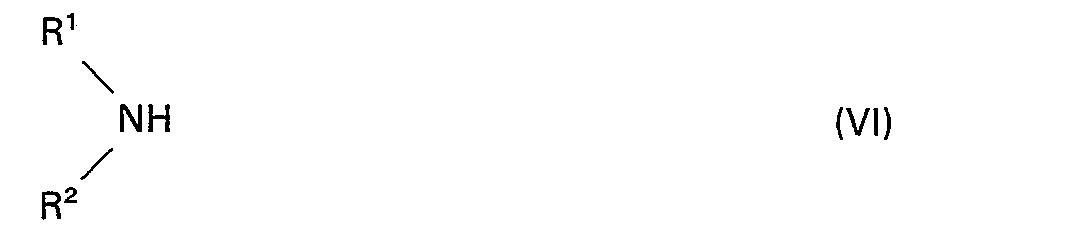
- This method is further illustrated in Example 12.
- b-4) Other routes for the preparation of compounds of the general formula (III) are also known, as described e.g. in reference (9).
- c) The compounds of the general formula (IV), which are useful in Method 2 above as starting materials for the preparation of the compounds of the general formula (I) are prepared by known methods, e.g. according to references (10), (11), (12) and references given therein.
- b-1) An aminoalkylsulfonic acid having the general formula
- In synthesizing the compounds having the general formulas (II), (III) and (IV), each group of compounds involved must be compatible with the process in question or, if necessary, protected during one or more reaction steps and then converted to the desired group. Pertinent examples of groups that may be protected are hydroxy, carboxyl, sulfonic acid, primary or secondary amino groups. Examples of such protecting groups are found in, e.g., references (13, 14, 15).
- The compounds of the invention are generally characterized by the pharmacological activity hereinbefore stated, making them useful in counteracting certain physiological abnormalities in a living animal body. Effective quantities of the pharmacologically active compounds of the invention may be administered to a living animal body in any one of various ways, for example, orally as in capsules or tablets, parenterally in the form of sterile solutions, suspensions, and by pellet implantation. Among routes of parenteral administration are intravenously, subcutaneously, intramuscularly, intraperitoneally, intraarterially, and intradermally. Other modes of administration are vaginally, rectally, and topically, as e.g., in the form of ointments, suppositories, and powders.
- As representative of living animal bodies, which may be treated with the compounds and compositions of the invention, and according to the method of treatment of the invention, for alleviation of the same and/or similar conditions as those described, in addition to homo sapiens the following may be mentioned: domestic animals such as dogs and cats, and farm animals such as horses, cows, sheep, and goats.
- Pharmaceutical formulations are usually prepared from a predetermined quantity of one or more of the compounds of the invention. Such formulations may take the form of powders, syrups, suppositories, ointments, solutions, pills, capsules, pellets or tablets, suspensions, emulsions, oil solutions, etc, with or without, but preferably with, any one of a large variety of pharmaceutically acceptable vehicles or carriers. When in a mixture with a pharmaceutical vehicle or carrier, the active ingredient usually comprises from about 0.01 to about 75 per cent, normally from about 0.05 to about 15 per cent, by weight of the composition. Carriers such as cellulose, sugar, talc, commonly used synthetic and natural gums, water, and the like, may be used in such formulations. Binders such as polyvinylpyrrolidone and lubricants such as sodium stearate, may be used to form tablets. Disintegrating agents such as starch may also be included in tablets.
- Although relatively small quantities of the active materials of the invention, even as low as 5.0 milligrams, may be used in cases of administration to subjects having a relatively low body weight, unit dosages are preferably five milligrams or above and preferably ten, twenty-five, or fifty, or even higher, depending of course upon the subject treated and the particular result desired, as will be apparent to one skilled in the art. Broader ranges appear to be 1 to 500 milligrams per unit dose.
- The active agents of the invention may be combined for administration with other pharmaceutically active agents such as analgesics, steroids or hormones, or the like, or with buffers, antacids, or the like, and the proportion of the active agent or agents in the compositions may be varied widely. It is only necessary that the active ingredient of the invention constitutes an effective amount, i.e., such that a suitable effective dosage will be obtained consistent with the dosage form employed, Obviously, several unit dosage forms may be administered at about the same time. The exact individual dosage as well as daily dosages in a particular case will of course be determined according to well established medical and/or veterinary principles under the supervision of the physician or veterinarian in charge. As a rule, however, when used therapeutically, the present compounds may be administered in a quantity of 1 to 500 milligrams, preferred ranges being 5-100 milligrams per day per subject or patient, divided into 1 to 4 or more doses, over a suitable period and depending upon the subject and the type of subject being treated.
- The following examples are intended to illustrate but not to limit the scope of the invention, although the compounds named are of particular interest for our intended purposes. These compounds have been designated by underlined numbers in the examples where their systematic names are given. The compounds are later referred to by a number code, a:b, where a means the number of the example wherein the preparation of the compound in question is described, and b refers to the order of the compounds prepared according to that example. Thus, compound 1:2 means the second compound prepared according to Example 1.
- The structures of the compounds found in Examples 1-12 are confirmed the NMR and elementary analysis. The NMR data are obtained using a 60 MHz instrument (Perkin Elmer R 12).
- 1 - (2 - chloroethyl) - 3 - [2 - (dimethylaminosulfonyl)ethyl]urea (54.2 g, 0.02 mol) is dissolved in a mixture of glacial acetic acid (20 ml) and acetic anhydride (100 ml). The solution is cooled to 0°C and sodium nitrite (27.6 g, 0.4 mol) is added while stirring over a period of 2 hours. The reaction mixture is maintained at 0°C for 10 hours and then added to a mixture of ice and water. The reaction product is extracted with ether, which is then washed with water, 5% aqueous sodium carbonate solution, and water. After drying over anhydrous sodium sulphate, the ether is evaporated in vacuo.
- The product, 1 - (2 - chloroethyl) - 3 - [2 - (dimethylaminosulfonyl)ethyl] - 1 - nitrosourea (1), is isolated and purified by preparative HPLC, is pure by TLC and has a melting point of 65-67.5°C.
- In essentially the same manner the following compounds are obtained from the corresponding starting materials.
- 2. 1-(2-chloroethyl)-3-(2-[diethylaminosulfonyl]ethyl)-1-nitrosourea, m.p. 68°C.
- 3. 3-(2-[aminosulfonyl]ethyl)-1-(2-chloroethyl)-1-nitrosourea, m.p. 115-118°C.
- 4. 1-(2-chloroethyl)-1-nitroso-3-(2-[1-piperidinosulfonyl]ethyl)-urea, m.p. 83°C.
- 5. 1-(2-chloroethyl)-3-(2-[methylaminosulfonyl]ethyl)-1-nitrosourea, m.p. 84―86°C.
- 6. 1-(2-chloroethyl)-3-(2-[dipropylaminosulfonyl]ethyl)-1-nitrosourea, m.p. 69°C.
- 7. 3-(2-[benzylaminosulfonyl]ethyl)-1-(2-chloroethyl)-1-nitrosourea, m.p. 76-78°C.
- 8. 1-(2-chloroethyl)-3-(2-[2-methoxyethylaminosulfonyl]ethyl)-1-nitrosourea, m.p. about 15°C.
- 9. 3-12-[butylaminosulfonyl]ethyl)-1-(2-chloroethyl)-1-nitrosourea, m.p. 55-56°C.
- 10. 3-(2-[t-butylaminosulfonyl]ethyl)-1-(2-chloroethyl)-1-nitrosourea
- 11. 1-(2-chloroethyl)-3-(2-[cyclohexylaminosulfonyl]ethyl)-1-nitrosourea, m.p. 85-87°C.
- 12. 3-(2-[bis(2-hydroxyethyl)aminosulfonyl]ethyl)-1-(2-chloroethyl)-1-nitrosourea
- 13. 1-(2-chloroethyl)-3-(2-[1-methylpentylaminosulfonyl]ethyl)-1-nitrosourea, m.p. 24-26°C.
- 14. 1-(2-chloroethyl)-3-(2-[2-hydroxyethylaminosulfonyl]ethyl)-1-nitrosourea
- 15. 1-(2-chloroethyl)-3-(2-[N-2-hydroxyethyl-N-methyl-aminosulfonyl]ethyl)-1-nitrosourea, m.p. about 15°C.
- 16. 1-(2-chloroethyl)-3-(2-[1,1-dimethyl-2-hydroxyethylaminosulfonyl]-ethyl)-1-nitrosourea
- 17. 3-(2-[N-benzyl-N-methylaminosulfonyl]ethyl)-1-(2-chloroethyl)-1-nitrosourea, m.p. 74^75°C.
- 18. 1-(2-chloroethyl)-3-(2-[N-methyl-N-phenylaminosulfonyl]ethyl)-1-nitrosourea, m.p. 83°C.
- 19. 1-(2-chloroethyl)-3-(5-[dimethylaminosulfonyl]pentyl)-1-nitrosourea, m.p. 59-60°C.
- 20. 1-(2-chloroethyl)-3-(2-[N-methoxy-N-methylaminosulfonyl]ethyl)-1-nitrosourea, m.p. 55°C.
- 21. 1-(2-chloroethyl)-3-(3-[dimethylaminosulfonyl]propyl)-1-nitrosourea, m.p. 99°C.
- 22. 1-(2-chloroethyl)-3-12-[4-methylbenzylaminosulfonyl]ethyl)-1-nitrosourea, m.p. 70°C.
- 23. 1-(2-chloroethyl)-3-(2-[2-(dimethylaminosulfonyl)ethylaminosulfonyl]ethyl)-1-nitrosourea, m.p. 70―72°C.
- 24. 1-(2-chloroethyl)-3-(4-[dimethylaminosulfonyl]butyl)-1-nitrosourea, m.p. 83°C.
- 25. 3-(2-[dimethylaminosulfonyl]ethyl)-1-(2-fluoroethyl)-1-nitrosourea
- 26. 3-(2-[dimethylaminosulfonyl]ethyl)-1-methyl-1-nitrosourea
- 27. 1-(2-bromoethyl)-3-(2-[dimethylaminosulfonyl]ethyl)-1-nitrosourea
- 28. 1-(2-chloroethyl)-3-(2-[N-cyclohexyl-N-methylaminosulfonyl]ethyl)-1-nitrosourea
- 29. 1-(2-chloroethyl)-3-(2-[cyclopentylaminosulfonyl]ethyl)-1-nitrosourea
- 30. 3-(2-[2-(aminosulfonyl)ethylaminosulfonyl]ethyl)-1-(2-chloroethyl)-1-nitrosourea
- 31. 1-(2-chloroethyl)-3-(2-[2-(methylaminosulfonyl)ethylaminosulfonyl]-ethyl)-1-nitrosourea
- 32. 3-(2-[2-(aminocarbonyl)ethylaminosulfonyl]ethyl)-1-(2-chloroethyl)-1-nitrosourea
- 33. 1-(2-chloroethyl)-3-{2-[2-(methylaminocarbonyl)ethylaminosulfonyl]ethyl)-1-nitrosourea
- 34. 1-(2-chloroethyl)-3-(2-[2-(dimethylaminocarbonyl)ethylaminosulfonyl]ethyl)-1-nitrosourea
- 35. 1-(2-chloroethyl)-3-(1-[dimethylaminocarbonyl]-2-[dimethylaminosulfonyl]ethyl)-1-nitrosourea
- 36. 1-(2-chloroethyl)-3-(2-[dimethylaminosulfonyl]propyl)-1-nitrosourea
- 37. 3-(bis-2,3[dimethylaminosulfonyl]propyl)-1-(2-chloroethyl)-1-nitrosourea
- 38. 3-(bis-1,3-[dimethylaminosulfonyf]propan-2-yl)-1-(2-chloroethyl)-1-nitrosourea
- 39. 1-(2-chloroethyl)-3-(1-[dimethylaminocarbonyl]-3-[dimethylaminosulfonyl]-propan-2-yl)-1-nitrosourea
- 40. 1-(2-chloroethyl)-3-(1-[dimethylaminosulfonyl]-2-methylpropan-2-yl)-1-nitrosourea
- 41. 1-(2-chloroethyl)-3-(1-[dimethylaminosulfonyl]propan-2-yl)-1-nitrosourea
- 42. 1-(2-chloroethyl)-3-(1-[dimethylaminosulfonyl]-butan-2-yl)-1-nitrosourea
- 43. 3-(bis-1,3-[aminosulfonyl]propan-2-yl)-1-(2-chloroethyl)-1-nitrosourea
- 44. 3-(1-[aminocarbonyl]-2-[aminosulfonyl]ethyl)-1-(2-chloroethyl)-1-nitrosourea
- 45. 1-(2-chloroethyl)-3-(2-[dimethylaminosulfonyl]ethyl)-3-methyl-1-nitrosourea
- 46. 3-allyl-1-(2-chloroethyl)-3-[2-(dimethylaminosulfonyl)ethyl]-1-nitrosourea
- 47. 1-(2-chloroethyl)-3-propargyl-3-[2-(dimethylaminosulfonyl)ethyl]-1-nitrosourea
- 48. 1-(2-chloroethyl)-3-(2-methoxyethyl)-3-[2-(dimethylaminosulfonyl)ethyl]-1-nitrosourea
- 49. 1-(2-chloroethyl)-3-cyclohexyl-3-[2-(dimethylaminosulfonyl)ethyl]-1-nitrosourea
- 50. 1-(2-chloroethyl)-3-cyclopropylmethyl-3-[2-(dimethylaminosulfonyl)ethyl]-1-nitrosourea
- 51. 3,3-bis-[2-(dimethylaminosulfonyl)ethyl]-1-nitrosourea
- 52. 1-(2-chloroethyl)-3-(2-[N-ethyl-N-methylaminosulfonyl]ethyl)-I-nitrosourea, m.p. -25°C
- 53. 1-(2-chloroethyl)-3-(2-[N-ethyl-N-propylaminosulfonyl]ethyl)-1-nitrosourea, m.p. -20°C
- 54. 1-(2-chloroethyl)-3-(2-[dimethylaminosulfonyl]ethyl)-3-ethyl-1-nitrosourea.
- To a cooled (-60°C) solution of dinitrogen tetroxide (4.14 g, 0.045 mol) in glacial acetic acid (50 ml) anhydrous sodium acetate (7.38 g, 0.09 mol) is added. The temperature is raised to 0°C, and 1 - (2 - chloroethyl) - 3 - (2 - [dimethylaminosulfonyllethyl)urea (7.73 g, 0.03 mol) is added while stirring. After continued stirring at 0°C for 30 minutes the mixture is added to a mix of ice and water. The reaction product is extracted with ether, which is then washed with water, 5% aqueous sodium carbonate solution, and water. After drying over anhydrous sodium sulphate the ether is evaporated in vacuo. The product, 1 - (2 - chloroethyl) - 3 - (2 - [dimethylaminosulfonyl]ethyl) - 1 - nitrosourea (the same compound as 1:1), is isolated and purified by preparative HPLC, is pure by TLC and has a melting point of 65-67.5°C.
- 1 - (2 - chloroethyl) - 3 - (2 - [dimethylaminosulfonyl]ethyl)urea (5.16 g, 0.02 mol) is dissolved in a mixture of glacial acetic acid (100 ml) and acetic anhydride (40 ml), and freshly fused potassium acetate (16 g) and phosphorus pentoxide (4 g) is added. The resulting mixture is cooled to +5°C, and a solution of nitrosyl chloride (5 g) in acetic anhydride (25 ml) is added dropwise while stirring. After the addition, stirring is continued for 2 hours at +10°C. The reaction mixture is added to a mix of ice and water, and the reaction product is extracted with diethyl ether which is then washed with water, 5% aqueous sodium carbonate solution and water. After drying over anhydrous sodium sulphate the diethyl ether is evaporated in vacuo. The product, 1 - (2 - chloroethyl) - 3 - (2 - [dimethylaminosulfonyl]ethyl) - 1 - nitrosourea (the same compound as 1:1), is isolated and purified by preparative HPLC, is pure by TLC, and has a melting point of 65-67.5°C.
- A solution of 2 - amino - N,N - dimethyl - ethanesulfonamide hydrochloride (4.72, 0.025 mol) in abs. ethanol (30 ml) is cooled to 0°C. Triethyl amine (3.5 ml) is added and the mixture is added dropwise to a solution of N - (2 - chloroethyl) - N - nitroso carbamoyl azide (5.4 g, 0.03 mol). The reaction mixture is stirred for 2 hours at 0°C and is then evaporated to dryness in vacuo. Diethyl ether is added to the residue, and the precipitated triethyl amine hydrochloride is filtered off. The diethyl ether solution is evaporated in vacuo to dryness. The product, 1 - (2 - chloroethyl) - 3 - (2 - [dimethylaminosulfonyl]ethyl) - 1 - nitrosourea (the same compound as 1:1), is isolated and purified by preparative HPLC, is pure by TLC and has a melting point of 65―67.5°C.
- In essentially the same manner compounds 1:2 to 1:44, inclusive, and 1:54 are obtained from the corresponding starting materials.
- To a solution of 2 - amino - N,N - dimethyl - ethanesulfonamide hydrochloride (5 g, 0.026 mol) in methanol (60 ml) is added triethyl amine (2.68 g). The mixture is stirred for 10 minutes, and p-nitrophenyl N - (2 - chloroethyl) - N - nitroso carbamate (7.25 g, 0.026 mol) is added. After stirring at room temperature for 2 hours the mixture is evaporated in vacuo to dryness, and methylene chloride (50 ml) and triethyl amine (10 ml) is added. The resulting solution is washed twice with water (50 ml), twice with 2 M hydrochloric acid (40 ml), and with'water. After drying over anhydrous sodium sulphate the solution is evaporated to dryness in vacuo. The product, 1 - (2 - chloroethyl) - 3 - (2 - [dimethylamino- sulfonyl]ethyl) -1 - nitrosourea (the same compound as 1:1), is isolated and purified by preparative HPLC, is pure by TLC and has a melting point of 65-76.5°C.
- In essentially the same manner compounds 1:2 to 1:44, inclusive, and 1:54 are obtained from the corresponding starting materials.
- 1 - (2 - chloroethyl) - 3 - (2 - [dimethylaminosulfonyl]ethyl) - 1 - nitrosourea (the same compound as 1:1) is also prepared essentially in the same manner from the same above mentioned amine and o-nitrophenyl N - (2 - chloroethyl) - N - nitroso carbamate or o-cyanophenyl N - (2 - chloroethyl) - N - nitroso carbamate.
- To a solution of 2-aminoethansulfonamide hydrochloride (5 g, 0.030 mol) in methanol (70 ml) triethylamine (3.13 g) is added. The mixture is stirred for 10 minutes and p-nitrophenyl N - (2 - chloroethyl) - N - nitroso carbamate (8.75 g, 0.032 mol) is added. After stirring at room temperature for 2 hours the mixture is evaporated in vacuo to dryness, and the residue is extracted with methylene chloride (30 ml). The undissolved crystalline material is filtered off and washed with methylene chloride. The product obtained, 3 - (2 - [aminosulfonyl]ethyl) - 1 - (2 - chloroethyl) - 1 - nitrosourea (the same compound as 1:3), is pure in TLC without further chromatographic purification and is dried in vacuo over phosphorus pentoxide. The melting point of the product obtained is 115-118°C.
- To a solution of 2 - amino - N,N - dimethyl - ethanesulfonamide hydrochloride (5 g, 0.026 mol) in methanol (60 ml) triethyl amine (2.68 g) is added. The mixture is stirred for 10 minutes and 1 - [N - (2 - chloroethyl)N - nitrosoaminocarbonyloxy] - 2,5 - pyrrolidine - dione (6.94 g, 0.028 mol) is added. After stirring at room temperature for 2 hours the reaction mixture is evaporated in vacuo to dryness and the residue is dissolved in methylene chloride. The solution is washed with water (4x50 ml) and dried over sodium sulphate. After filtration the dry solution is evaporated in vacuo to dryness. The product, 1 - (2 - chloroethyl) - 3 - (2 - [dimethylaminosulfonyl]ethyl) - 1 - nitrosourea (the same compound as 1:1), is isolated and purified by preparative HPLC, is pure in TLC and has a melting point of 65-67.5°C.
- To a solution of 2 - aminoethanesulfonamide hydrochloride (5 g, 0.030 mol) in methanol (70 ml) triethyl amine (3.13 g) is added. The mixture is stirred for 10 minutes and p - cyanophenyl - N - (2 - chloroethyl) - N - nitroso carbamate (8.11 g, 0.032 mol) is added. After stirring at room temperature for 3 hours the reaction mixture is evaporated in vacuo to dryness and the residue is extracted with cold methylene chloride. The undissolved crystalline material is filtered off and washed with cold methylene chloride. The product obtained, 3 - (2 - [aminosulfonyl]ethyl) - 1 - (2 - chloroethyl) - 1 - nitrosourea (the same compound as 1:3), is pure in TLC without further chromatographic purification, and is dried in vacuo over phosphorus pentoxide. The melting point of the product obtained is 115-118°C.
- 2 - amino - N,N - dimethylethanesulfonamide hydrochloride (5.64 g, 0.03 mol) is dissolved in chloroform (50 ml) while adding triethylamine (4.7 ml). The solution is cooled to 0°C and a mixture of 2-chloroethyl isocyanate (2.83 ml, 0.04 mol) and chloroform (25 ml) is added dropwise. The reaction mixture is stirred for 4 hours at room temperature and washed with water (3X50 ml). The organic phase is dried over anhydrous sodium sulphate, filtered and evaporated in vacuo to dryness. The product obtained is 1 - (2 - chloroethyl) - 3 - (2 - [dimethylaminosulfonyl]ethyl) - urea, m.p. 126°C.
- In essentially the same manner other compounds of the general formula (II) above are obtained from the corresponding compounds of the general formula (III) by reaction with the corresponding isocyanate.
- 2 - amino - N,N - dimethylethanesulfonamide (4.72 g, 0.025 mol) is dissolved in chloroform (50 ml) while adding triethyl amine (3.8 ml, 0.027 mol). The solution is cooled to 0°C and triethyl amine (3.8 ml, 0.027 mol) is added. A solution of phosgene (3 g, 0.03 mol) in chloroform (25 ml) is added dropwise while stirring. The reaction mixture is stirred for about 1 hour. A solution of 2-fluoroethyl amine hydrochloride (3.0 g, 0.03 mol), triethyl amine (4 ml, 0.03 mol) in chloroform (50 ml) is added dropwise while stirring and cooling. The reaction mixture is stirred at room temperature for 1 hour and then washed with 0.1 M hydrochloric acid (50 ml) and water (2x50 ml). The organic phase is dried and evaporated in vacuo to dryness. The product obtained is 3 - (2 - [dimethylaminosulfonyl]ethyl) - 1 - (2 - fluoroethyl) - urea.
- In essentially the same manner the following compound is obtained from the corresponding starting materials.
- 2. 1-(2-bromoethyl)-3-(2-[dimethylaminosulfonyl]ethyll-urea.
- A mixture of taurine (100 g, 0,8 mol), potassium acetate (83,8 g, 1.4 mol) and glacial acetic acid (283 ml) is boiled under stirring and reflux for 10 minutes.
- To the boiling mixture is added phtalic acid anhydride (126.2 g, 0.85 mol) and the reaction mixture is boiled for another 2,5 hrs.
- After cooling to room temperature the mixture is filtered and the solid is washed successively with glacial acetic acid and ethanol.
- The product, the potassium salt of 2-phtalimidoethanesulfonic acid, is dried in vacuo. It is characterized by NMR, and elementary analysis.
- The above product (132 g, 0.45 mol) is suspended in 660 ml of benzene. In order to remove traces of moisture 150 ml of the benzene is distilled off. The mixture is cooled to room temperature, whereupon phosphorus pentachloride (67.5 g, 0.32 mol) is added while stirring. The mixture is then refluxed for 1 hr and a further amount (67.5 g, 0.32 mol) of phosphorus pentachloride is added. The stirring and heating is continued for another 1.5 hrs, whereupon the solvent is removed in vacuo. Another 200 ml of benzene are added and the mixture is again evaporated to dryness. The residue is mixed with 900 g of crushed ice and left overnight. The solid, 2-phtalimidoethanesulfonyl chloride, is filtered off, washed with water and dried in vacuo. The product is characterized by NMR, and has a melting point of 159-162°C.
- The above product (58.7 g, 0.215 mol) is dissolved in 400 ml of toluene. A solution of dimethylamine (32.3 ml, 0.43 mol) in 80 ml of toluene is added with cooling and stirring.
- The reaction mixture is stirred at room temperature for 2 hrs, whereupon 250 ml of water are added slowly. The precipitated compound, 2-phtalimidoethylsulfonyl dimethylamide, is washed with water and dried in vacuo. The product is pure in TLC, is characterized by NMR, and has a melting point of 154-156°C.
- The above product (55 g, 0.195 mol) is suspended in 360 ml of 95% ethanol whereupon hydrazine hydrate (9.8 g, 0.195 mol) is added. The reaction mixture is boiled under reflux for 3 hrs.
- The precipitated product is filtered off and the filtrate is evaporated to dryness. The residue is combined with the filtered product and the mixture is slurried in 180 ml of hot water, pH is adjusted to about 3 and the mixture left overnight in the refrigerator.
- The mixture is filtered and the filtrate is evaporated to dryness. The residue, 2 - aminoethylsulfonyl dimethylamide hydrochloride, is recrystallised from 240 ml of isopropanol.
- The product is pure in TLC, is characterized by NMR and quantitative analysis, and has a melting point of 144-146°C.
- In essentially the same manner other compounds of the general formula (III) above are obtained from the corresponding aminoalkylsulfonic acid.
- A mixture of phtalimide (100 g, 0.68 mol), potassium carbonate (50 g, 0.36 mol) and trimethylenedibromide (350 g, 1.73 mol.) is gradually heated until reaction begins. The reaction is carried out in a vessel equipped with an efficient double mantled condenser.
- When a clear reaction mixture is obtained, the heating is maintained for 2 hrs whereupon excess of trimethylenedibromide is distilled off by means of steam distillation. The residue is recrystallised from 100 ml of ethanol.
- The crystallised product is extracted with petroleum ether. The extract is evaporated to dryness, leaving the 3-bromopropylphtalimide (m.p. 72-73°C) as a white crystalline solid.
- A mixture of the above product (103 g, 0.38 mol.), thiourea (29.3 g, 0.38 mol.) and 200 ml of 95% aqueous ethanol is boiled under reflux for 8 hrs.
- On cooling, the S-3-phtalimidopropyl thiuronium bromide precipitates and is filtered off and washed with ethanol. Recrystallisation from water gives a pure product (m.p. 225-227°C).
- To a hot aqueous solution of the above product (50 g, 0.15 mol.) is added a solution of potassium acetate (56 g., 0.57 mol.) in 50 ml of hot water. The mixture is stirred and kept at 80°C for 1 hr.
- After cooling, the crystallised thiuronium acetate is filtered off and then suspended in a mixture of 340 ml of water and 4.5 g of concentrated hydrochloric acid. On cooling (0-5°C) chlorine is passed into the solution while stirring. After about 3 hrs. the 3-phtalimidopropane-1-sulfonyl chloride is filtered off and washed with water. The product is purified by dissolving it in hot benzene, filtering the solution and precipitating the product by addition of light petroleum.
- The product has a m.p. of 77-78°C (when dried in vacuo over HZS04).
- The above product (61.9 g, 0.215 mol.) is dissolved in 400 ml of toluene. A solution of dimethylamine (32.3 ml, 0.43 mol.) in 80 ml of toluene is added with cooling and stirring.
- The reaction mixture is stirred at room temperature for 2 hrs, whereupon 250 ml of water are added slowly. The precipitated compound, 3 - phtalimidopropane - 1 - sulfonyldimethylamide is washed with water and dried in vacuo. The product is pure in TLC and is characterized by NMR.
- The above product (55 g, 0.195 mol.) is suspended in 360 ml of 95% ethanol whereupon hydrazine hydrate (9.75 g, 0.195 mol.) is added. The reaction mixture is boiled under reflux for 3 hrs.
- The precipitated product is filtered off and the filtrate is evaporated to dryness. The residue is combined with the filtered product and the mixture is slurried in 180 ml of hot water, pH is adjusted to about 3 and the mixture left overnight in the refrigerator.
- The mixture is filtered and the filtrate is evaporated to dryness. The residue, crude 3 - aminopropyl - 1 - sulfonyldimethylamide hydrochloride is recrystallised from 240 ml of isopropanol and dried in vacuo.
- The product is pure in TLC and is characterized by NMR and quantitative analysis.
- This example illustrates the effect of compounds of the present invention in inhibiting the growth of several tumours. From the results obtained it is obvious that the compounds of the present invention have improved toxicological and therapeutic properties, resulting in increased therapeutic indexes, in comparison with commercially available antitumour agents.
- A therapeutic index is an indication of the therapeutic usefulness of a compound, and such an index may be defined in various ways. One type of therapeutic index commonly used is the ratio LD50/ED50, wherein LD50 is the dose that causes a 50 per cent lethality, and ED50 is the dose that causes a 50 per cent reduction of tumour size. Another type of therapeutic index, useful in evaluation of increasing survival time, is the ratio between maximum and minimum effective dose. Both these types of therapeutic indexes are used and given in the experimental results below.
- The experimental design and interpretation of the results are in accordance with the standards set by the CCNSC (see reference (16)) and by the DR & D (see reference (17)).
- The manner of administration of the compounds is by the oral (p. o.) route in each case.
- Some of the results obtained are given in Table 1-2.3 below.
- This example shows that the new compounds are useful to prevent the growth of tumours and can therefore be employed in treating a living animal body suffering from disorders responsive to treatment with anti-cancer agents and immunosuppressive agents.
- Female Sprague Dawley rats
- Tumour pieces with 2-3 mm diameter, implanted subcutaneously
- The compound is administered p.o. once on the day after the implantation
- The animals are killed on the 9th day after implantation
- Weight of tumour is determined in test animals and compared with those of control animals. For each compound the LD50 and ED50 dose (as defined above) are determined. The therapeutic index, T.I., (LD50/ED50) is calculated.

- In preliminary experiments the following additional compounds are found to exhibit significant activity in the foregoing test in a dose of 8 mg/kg: 1:8 to 1:13, inclusive; 1:16 to 1:18, inclusive; 1:20 to 1:23, inclusive; 1:25 to 1:45, inclusive; 1:48, 1:52 and 1:54.
- Female BDF, mice
- 105 tumour cells implanted intraperitoneally (i.p.)
- The compounds were administered p.o. once on the day following the implantation.
- The animals were killed on the 60th day after the implantation. Living animals on the 60th day are termed long term survivors.
-
- a) Evaluation of therapeutic dose range for survival time increase: Survival times at various dose levels are determined, and the survival time of the test animals (t) is expressed as the percentage of that of the control animals (c):


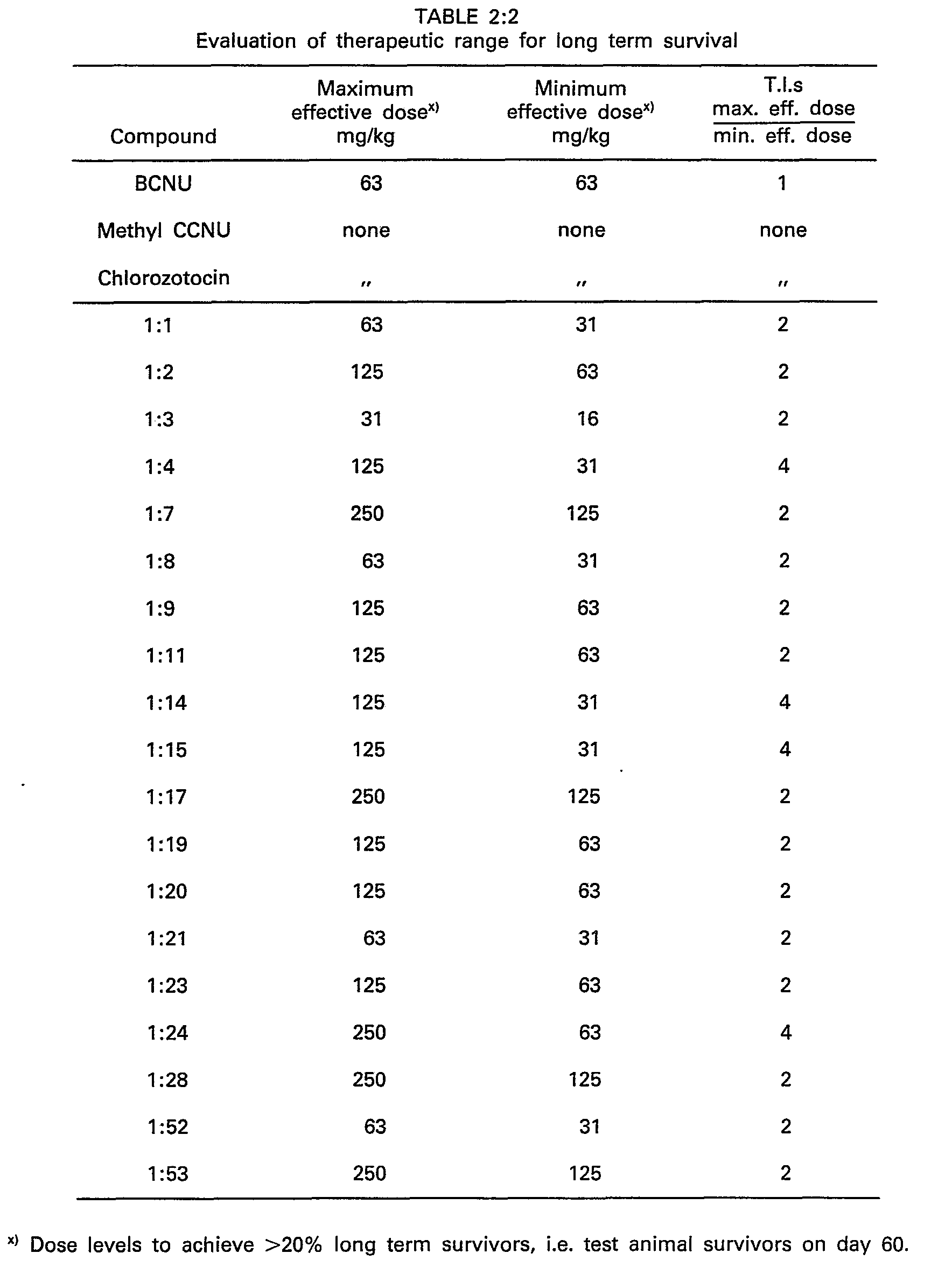
- b) Evaluation of therapeutic dose range for long term survival: Long time survival is determined at various dose levels and is expressed as surviving test animals on day 60 (T) as the percentage of that of the total number of test animals (To):


- c) Evaluation of cure potential: The normal survival time for test animals receiving no therapeutic treatment is 9-11 days. Surviving test animals on the 60th day after implantation showing no sign of tumour presence are regarded as cured animals. Long term survival is determined as under b) above, and the effective dose or dose range to achieve a long term survival T. 100To≥90% is determined as an evaluation of the cure potential. Some of the results obtained are shown in Table 2:3.

- The following additional compounds are found to exhibit significant activity (i.e. median survival time per cent of control ≥125%) in a dose of 125 mg/kg in the foregoing test: 1:10; 1:13; 1:18; 1:25―1:27, inclusive; 1:29-1:45, inclusive; and 1:54.

-

- +) The mesh standard is according to the international system of code DIN 4189/1968.
- 10.5 mm round, flat, scored, bevel-edged
- Mix the screened substances I thoroughly and then moisten with II, whereupon the mixture is granulated through a stainless sieve No. 10 (mesh 25). Dry the granulate in an oven at a maximum temperature of 25°C, then repeat sieving through sieve No. 10. Add the substances under III and mix thoroughly. Punch tablets with a gross weight of about 325 mg.
-

-

-

-

-

-

- The solution is dispensed in vials and freeze-dried.
- In the foregoing Examples 14-20 relating to compositions the Active Compounds are those covered by the general formula (I) above. Those Active Compounds which are disclosed in the foregoing Examples 1-8 are preferred as Active Compounds.
- Also, it is to be noted that two or more Active Compounds of the invention may be used in combination in the compositions illustrated, and also if desired in combination with other pharmacologically active agents.
- Various modifications and equivalents will be apparent to one skilled in the art and may be used in the compounds, compositions and methods of the present invention without departing from the spirit or scope thereof, and it is therefore to be understood that the invention is not to be limited to the specific examples and embodiments disclosed herein.
-
- 1. Carter, Bakowski, Hellman-Chemotherapy of Cancer, Wiley, 1977, p. 70-72
- 2. Wasserman-Cancer 36 (1975), 1258
- 3. Schacht-Cancer 48 (1981), 1328
- 4. Weiss-Cancer Treatment Reviews 8 (1981), 111
- 5. Schein-Cancer and Chemotherapy, vol. III, Academic Press, 1981, p. 37
- 6. Belt-Cancer Treatment Reports 64 (1980):12, 1235
- 7. Ahlgren-Cancer Treatment Reports 65 (1981), 223
- 8. Sandler, Karo-Functional Groupe Preparations, vol. 2 (1971), Academic Press, chapter 17
- 9. Houben-Weyl, vol. 9 (1955), 343
- 10. Sandler, Karo-Functional Group Preparations, vol. 2 (1971), Academic Press, chapters 10,11 and 17
- 11. Martinez-J. Med. Chem. 25 (1982), 178
- 12. Sandler, Karo-Functional Group Preparations, vol. 2 (1971), Academic Press, chapter 6
- 13. McOmie-Protective Groups in Organic Chemistry, Plenum Press, 1973
- 14. Greene-Protective Groups in Organic Synthesis, Wiley, 1981
- 15. Hoyben-Weyl, vol. 15/1 (1974)
- 16. Cancer Chemotherapy Reports, December, 1962
- 17. Cancer Chemotherapy Reports, September, 1972, vol. 3 No. 2
- 18. Sandler, Karo-Functional Group Preparations, vol. 1 (1968), Academic Press, chapter 12
- 19. Mead, Koepfli-J. Org. Chem. 12 (1947), 295
- 20. Mcllwain-J. Chem. Soc. 1941, 75
- 21. Brynes-J. Med. Chem. 21 (1981), 45
- 22. Griffin, Hey-J. Chem. Soc. 1952, 3334
Claims (13)


Priority Applications (1)
| Application Number | Priority Date | Filing Date | Title |
|---|---|---|---|
| AT83108853T ATE17235T1 (en) | 1982-09-17 | 1983-09-08 | N-NITROUS COMPOUNDS, COMPOSITIONS CONTAINING THEM AND PROCESSES FOR THEIR PREPARATION. |
Applications Claiming Priority (2)
| Application Number | Priority Date | Filing Date | Title |
|---|---|---|---|
| SE8205324 | 1982-09-17 | ||
| SE8205324A SE8205324L (en) | 1982-09-17 | 1982-09-17 | NEW N-NITROSO SOCIETIES, COMPOSITIONS CONTAINING SUCH SOCIETIES, MANUFACTURING PROCEDURES AND METHODS OF TREATMENT |
Publications (2)
| Publication Number | Publication Date |
|---|---|
| EP0106123A1 EP0106123A1 (en) | 1984-04-25 |
| EP0106123B1 true EP0106123B1 (en) | 1986-01-02 |
Family
ID=20347890
Family Applications (1)
| Application Number | Title | Priority Date | Filing Date |
|---|---|---|---|
| EP83108853A Expired EP0106123B1 (en) | 1982-09-17 | 1983-09-08 | Novel n-nitroso compounds, compositions containing such compounds and processes for their preparation |
Country Status (23)
| Country | Link |
|---|---|
| US (1) | US4613695A (en) |
| EP (1) | EP0106123B1 (en) |
| JP (1) | JPS5973562A (en) |
| KR (1) | KR910006763B1 (en) |
| AT (1) | ATE17235T1 (en) |
| AU (1) | AU559738B2 (en) |
| CA (1) | CA1242200A (en) |
| DE (1) | DE3361719D1 (en) |
| DK (1) | DK423983A (en) |
| ES (1) | ES8405367A1 (en) |
| FI (1) | FI76553C (en) |
| GR (1) | GR79656B (en) |
| HK (1) | HK35389A (en) |
| HU (1) | HU194817B (en) |
| IE (1) | IE55901B1 (en) |
| IL (1) | IL69660A0 (en) |
| NO (1) | NO159084C (en) |
| NZ (1) | NZ205534A (en) |
| PH (1) | PH21576A (en) |
| PT (1) | PT77349B (en) |
| SE (1) | SE8205324L (en) |
| SG (1) | SG789G (en) |
| ZA (1) | ZA836569B (en) |
Families Citing this family (2)
| Publication number | Priority date | Publication date | Assignee | Title |
|---|---|---|---|---|
| US5001158A (en) * | 1984-04-11 | 1991-03-19 | Centre National De La Recherche Scientifique | Nitrosoureas compounds preparation thereof and utilization thereof in anticancerous |
| JP2004516237A (en) | 2000-06-21 | 2004-06-03 | ブリストル−マイヤーズ・スクイブ・ファーマ・カンパニー | Piperidine amides as modulators of chemokine receptor activity |
Family Cites Families (1)
| Publication number | Priority date | Publication date | Assignee | Title |
|---|---|---|---|---|
| IE50228B1 (en) * | 1979-10-03 | 1986-03-05 | Kefalas As | Nitrosourea derivatives,process for preparing them,and pharmaceutical compositions containing them |
-
1982
- 1982-09-17 SE SE8205324A patent/SE8205324L/en not_active Application Discontinuation
-
1983
- 1983-08-26 IE IE2006/83A patent/IE55901B1/en not_active IP Right Cessation
- 1983-09-05 IL IL69660A patent/IL69660A0/en not_active IP Right Cessation
- 1983-09-05 AU AU18707/83A patent/AU559738B2/en not_active Ceased
- 1983-09-05 ZA ZA836569A patent/ZA836569B/en unknown
- 1983-09-06 US US06/529,718 patent/US4613695A/en not_active Expired - Fee Related
- 1983-09-08 DE DE8383108853T patent/DE3361719D1/en not_active Expired
- 1983-09-08 AT AT83108853T patent/ATE17235T1/en not_active IP Right Cessation
- 1983-09-08 KR KR1019830004238A patent/KR910006763B1/en not_active Expired
- 1983-09-08 EP EP83108853A patent/EP0106123B1/en not_active Expired
- 1983-09-09 NZ NZ205534A patent/NZ205534A/en unknown
- 1983-09-13 FI FI833266A patent/FI76553C/en not_active IP Right Cessation
- 1983-09-15 GR GR72451A patent/GR79656B/el unknown
- 1983-09-15 PH PH29543A patent/PH21576A/en unknown
- 1983-09-16 CA CA000436928A patent/CA1242200A/en not_active Expired
- 1983-09-16 ES ES525662A patent/ES8405367A1/en not_active Expired
- 1983-09-16 DK DK423983A patent/DK423983A/en not_active Application Discontinuation
- 1983-09-16 HU HU833220A patent/HU194817B/en not_active IP Right Cessation
- 1983-09-16 NO NO833354A patent/NO159084C/en unknown
- 1983-09-16 PT PT77349A patent/PT77349B/en not_active IP Right Cessation
- 1983-09-16 JP JP58171054A patent/JPS5973562A/en active Granted
-
1989
- 1989-01-05 SG SG7/89A patent/SG789G/en unknown
- 1989-04-27 HK HK353/89A patent/HK35389A/en unknown
Also Published As
| Publication number | Publication date |
|---|---|
| AU559738B2 (en) | 1987-03-19 |
| HK35389A (en) | 1989-05-05 |
| AU1870783A (en) | 1984-03-22 |
| DK423983A (en) | 1984-03-18 |
| FI76553B (en) | 1988-07-29 |
| IE55901B1 (en) | 1991-02-14 |
| NZ205534A (en) | 1986-10-08 |
| FI833266A0 (en) | 1983-09-13 |
| DK423983D0 (en) | 1983-09-16 |
| SG789G (en) | 1989-07-14 |
| PT77349A (en) | 1983-10-01 |
| ZA836569B (en) | 1984-04-25 |
| SE8205324D0 (en) | 1982-09-17 |
| SE8205324L (en) | 1984-03-18 |
| IE832006L (en) | 1984-03-17 |
| HU194817B (en) | 1988-03-28 |
| NO833354L (en) | 1984-03-19 |
| KR840006330A (en) | 1984-11-29 |
| CA1242200A (en) | 1988-09-20 |
| PH21576A (en) | 1987-12-11 |
| ES525662A0 (en) | 1984-06-01 |
| ATE17235T1 (en) | 1986-01-15 |
| GR79656B (en) | 1984-10-31 |
| JPS5973562A (en) | 1984-04-25 |
| US4613695A (en) | 1986-09-23 |
| KR910006763B1 (en) | 1991-09-02 |
| EP0106123A1 (en) | 1984-04-25 |
| IL69660A0 (en) | 1983-12-30 |
| NO159084B (en) | 1988-08-22 |
| NO159084C (en) | 1988-11-30 |
| DE3361719D1 (en) | 1986-02-13 |
| PT77349B (en) | 1986-04-17 |
| FI833266A7 (en) | 1984-03-18 |
| ES8405367A1 (en) | 1984-06-01 |
| JPH0333152B2 (en) | 1991-05-16 |
| FI76553C (en) | 1988-11-10 |
Similar Documents
| Publication | Publication Date | Title |
|---|---|---|
| US3424760A (en) | 3-ureidopyrrolidines | |
| DE1795292C3 (en) | Cephalosporin derivatives and processes for their preparation | |
| US3639477A (en) | Novel propoxyguanidine compounds and means of producing the same | |
| EP0297610A1 (en) | N-[(2,6-disubstituted)phenyl]-urea and carbamate inhibitors of acyl-CoA:cholesterol acyl-transferase | |
| EP0165422A1 (en) | Substituted bis-(4-aminophenyl)-sulphones, their preparation and their use as medicines | |
| US4148921A (en) | Antitumor agents | |
| IE43278B1 (en) | Substituted diphenyl sulphides | |
| CH498125A (en) | (A) Cpds. (I) and (II): R' = alkyl opt. subst. by opt. subst. aryl, oxo, O-acyl, O-alkyl, O-aralkyl, CO2-alkyl, CO2-aralkyl, carbamoyloxy, opt. subst. carbamoyl | |
| EP0106123A1 (en) | Novel N-nitroso compounds, compositions containing such compounds and processes for their preparation | |
| GB2024814A (en) | Acyl (bicyclic aryl) - aminoalkanoic acids | |
| US2878279A (en) | Process of making bis-carbamic acid ester compounds | |
| EP0069527B1 (en) | Cystine derivatives | |
| JPS6310958B2 (en) | ||
| JPH082865B2 (en) | Method for producing compound having antiulcer action | |
| US3560565A (en) | 1-amino-n-sulfonylcyclopentane-carboxamides | |
| AU685980B2 (en) | Inhibition of leukotriene biosynthesis with urea derivatives | |
| US3074850A (en) | Analgesic, antipyretic n-methyl-n'-halophenyl-urea | |
| US4251515A (en) | Novel nitrosourea derivatives | |
| US6320079B1 (en) | Process for the preparation of S(ω-aminoalkylamino) alkyl aryl sulfide dihydrochlorides | |
| PT79158B (en) | NITROSOUREES DERIVATIVES, PROCESS FOR THEIR PREPARATION AND PHARMACEUTICAL COMPOSITIONS CONTAINING SAME | |
| US3798268A (en) | 1-benzyl-3-(2-phenoxy-5-(n-ethyl-n-phenyl-sulfamoyl)phenyl)-2-thioureas and congeners | |
| DE69314929T2 (en) | BENZENE DERIVATIVES | |
| Smith, Jr et al. | Improved Procedure for Preparing 3-, 5-, or 3, 5-Substituted Hydantoins | |
| JPS63280054A (en) | Manufacture of activated nitrosocarbamate | |
| US3912769A (en) | N-(4-sulfanilylphenyl) phosphoric acid triamides |
Legal Events
| Date | Code | Title | Description |
|---|---|---|---|
| PUAI | Public reference made under article 153(3) epc to a published international application that has entered the european phase |
Free format text: ORIGINAL CODE: 0009012 |
|
| AK | Designated contracting states |
Designated state(s): AT BE CH DE FR GB IT LI LU NL SE |
|
| 17P | Request for examination filed |
Effective date: 19840528 |
|
| GRAA | (expected) grant |
Free format text: ORIGINAL CODE: 0009210 |
|
| ITF | It: translation for a ep patent filed | ||
| AK | Designated contracting states |
Designated state(s): AT BE CH DE FR GB IT LI LU NL SE |
|
| REF | Corresponds to: |
Ref document number: 17235 Country of ref document: AT Date of ref document: 19860115 Kind code of ref document: T |
|
| REF | Corresponds to: |
Ref document number: 3361719 Country of ref document: DE Date of ref document: 19860213 |
|
| ET | Fr: translation filed | ||
| PLBE | No opposition filed within time limit |
Free format text: ORIGINAL CODE: 0009261 |
|
| STAA | Information on the status of an ep patent application or granted ep patent |
Free format text: STATUS: NO OPPOSITION FILED WITHIN TIME LIMIT |
|
| 26N | No opposition filed | ||
| ITTA | It: last paid annual fee | ||
| PGFP | Annual fee paid to national office [announced via postgrant information from national office to epo] |
Ref country code: GB Payment date: 19930901 Year of fee payment: 11 |
|
| PGFP | Annual fee paid to national office [announced via postgrant information from national office to epo] |
Ref country code: DE Payment date: 19930908 Year of fee payment: 11 |
|
| PGFP | Annual fee paid to national office [announced via postgrant information from national office to epo] |
Ref country code: FR Payment date: 19930909 Year of fee payment: 11 Ref country code: AT Payment date: 19930909 Year of fee payment: 11 |
|
| PGFP | Annual fee paid to national office [announced via postgrant information from national office to epo] |
Ref country code: CH Payment date: 19930915 Year of fee payment: 11 |
|
| PGFP | Annual fee paid to national office [announced via postgrant information from national office to epo] |
Ref country code: SE Payment date: 19930917 Year of fee payment: 11 |
|
| PGFP | Annual fee paid to national office [announced via postgrant information from national office to epo] |
Ref country code: NL Payment date: 19930930 Year of fee payment: 11 Ref country code: LU Payment date: 19930930 Year of fee payment: 11 |
|
| PGFP | Annual fee paid to national office [announced via postgrant information from national office to epo] |
Ref country code: BE Payment date: 19931012 Year of fee payment: 11 |
|
| EPTA | Lu: last paid annual fee | ||
| PG25 | Lapsed in a contracting state [announced via postgrant information from national office to epo] |
Ref country code: LU Free format text: LAPSE BECAUSE OF NON-PAYMENT OF DUE FEES Effective date: 19940908 Ref country code: GB Effective date: 19940908 Ref country code: AT Effective date: 19940908 |
|
| PG25 | Lapsed in a contracting state [announced via postgrant information from national office to epo] |
Ref country code: SE Effective date: 19940909 |
|
| PG25 | Lapsed in a contracting state [announced via postgrant information from national office to epo] |
Ref country code: LI Effective date: 19940930 Ref country code: CH Effective date: 19940930 Ref country code: BE Effective date: 19940930 |
|
| EAL | Se: european patent in force in sweden |
Ref document number: 83108853.9 |
|
| BERE | Be: lapsed |
Owner name: A.B. LEO Effective date: 19940930 |
|
| PG25 | Lapsed in a contracting state [announced via postgrant information from national office to epo] |
Ref country code: NL Effective date: 19950401 |
|
| GBPC | Gb: european patent ceased through non-payment of renewal fee |
Effective date: 19940908 |
|
| NLV4 | Nl: lapsed or anulled due to non-payment of the annual fee | ||
| PG25 | Lapsed in a contracting state [announced via postgrant information from national office to epo] |
Ref country code: FR Effective date: 19950531 |
|
| REG | Reference to a national code |
Ref country code: CH Ref legal event code: PL |
|
| PG25 | Lapsed in a contracting state [announced via postgrant information from national office to epo] |
Ref country code: DE Effective date: 19950601 |
|
| EUG | Se: european patent has lapsed |
Ref document number: 83108853.9 |
|
| REG | Reference to a national code |
Ref country code: FR Ref legal event code: ST |