EP0103265B1 - Biphenylylpropionic acid derivative, process for preparing the same and pharmaceutical composition containing the same - Google Patents
Biphenylylpropionic acid derivative, process for preparing the same and pharmaceutical composition containing the same Download PDFInfo
- Publication number
- EP0103265B1 EP0103265B1 EP19830108796 EP83108796A EP0103265B1 EP 0103265 B1 EP0103265 B1 EP 0103265B1 EP 19830108796 EP19830108796 EP 19830108796 EP 83108796 A EP83108796 A EP 83108796A EP 0103265 B1 EP0103265 B1 EP 0103265B1
- Authority
- EP
- European Patent Office
- Prior art keywords
- formula
- carbon atoms
- group
- ethyl
- compound
- Prior art date
- Legal status (The legal status is an assumption and is not a legal conclusion. Google has not performed a legal analysis and makes no representation as to the accuracy of the status listed.)
- Expired
Links
Classifications
-
- C—CHEMISTRY; METALLURGY
- C07—ORGANIC CHEMISTRY
- C07D—HETEROCYCLIC COMPOUNDS
- C07D307/00—Heterocyclic compounds containing five-membered rings having one oxygen atom as the only ring hetero atom
- C07D307/02—Heterocyclic compounds containing five-membered rings having one oxygen atom as the only ring hetero atom not condensed with other rings
- C07D307/26—Heterocyclic compounds containing five-membered rings having one oxygen atom as the only ring hetero atom not condensed with other rings having one double bond between ring members or between a ring member and a non-ring member
- C07D307/30—Heterocyclic compounds containing five-membered rings having one oxygen atom as the only ring hetero atom not condensed with other rings having one double bond between ring members or between a ring member and a non-ring member with hetero atoms or with carbon atoms having three bonds to hetero atoms with at the most one bond to halogen, e.g. ester or nitrile radicals, directly attached to ring carbon atoms
- C07D307/32—Oxygen atoms
- C07D307/33—Oxygen atoms in position 2, the oxygen atom being in its keto or unsubstituted enol form
Definitions
- the present invention relates to novel biphenylylpropionic acid ester derivatives. More particularly, the present invention relates to biphenylylpropionic acid ester derivatives having the formula (1): wherein R is
- FP 2-(2-fluoro-4-biphenylyl)propionic acid
- the present inventors have now found that a satisfactory drug which has no irritation, an excellent pharmacological effect being several times higher than that of FP and less side effects. That is, the compound (I) of the present invention prepared from FP by esterifying has no irritation. Moreover, the compound (I) is excellent in absorption from mucosa or skin because of its high hydrophobic property. Thus, the pharmacological effect of the compound (I) is quickly appeared and increased. On the other hand, when the compound (I) is formulated in combination with an oleaginous base, the pharmacological effect of the compound (I) is increased and prolonged, and the bioavailability of the compound (I) is increased.
- the compound (I) is hard to bind with plasma proteins because of its physicochemical properties such as no free polar group and oil. Asa result, the tissue distribution and metabolism of the compound (I) after administration are different from those of FP. Accordingly, the concentration of the compound (I) at an inflammation site is increased to show excellent pharmacological effects.
- the compound (I) of the present invention gains a prolongation of a pharmacological effect by advantageously utilizing reaction of metabolic enzyme. More particularly, since the compound (I) in which R 1 is a lower alkyl group or R is a lactone having the formula (III) is consisted of diastereomers having two asymmetric carbon atoms in a molecular, there shows a difference of hydrolyzing rate among the diastereomers when the compound (I) is hydrolyzed by metabolic enzymes in tissues. In case of measuring by gas chromatography, for instance, there shows about 5-fold difference in the hydrolyzing rate in plasma. Thus, FP being a parent material of the compound (I) as a physiologically active form is slowly and complementarily released in tissues to prolong an effective blood concentration of FP.
- the compound (I) is excellent as a drug having no irritation, excellent pharmacological effects, rapid and long-acting, and large safety margin.
- a further object of the invention is to provide a process for preparing FP ester derivatives.
- Another object of the invention is to provide a pharmaceutical composition containing FP ester derivatives as effective ingredients.
- the preferable substituent group defined as R in the formula (I) is acetoxymethyl, propionyloxymethyl, isobutyryloxymethyl, pivaloyloxymethyl, palmitoyloxymethyl, crotonoyloxymethyl, 3,3-dimethylacryloyloxymethyl, 1-acetoxyethyl, 1-acetoxypropyl, 1-propionyloxyethyl, 1-isobutyryloxyethyl, 1-pivaloyloxyethyl, 1-palmitoyloxyethyl, 1-crotonoyloxyethyl, 1-(3,3-dimethylacryloyloxy)ethyl, 1-(2,4-hexadienoyloxy)-ethyl, 2-acetoxyethyl, 2-propionyloxyethyl, 2-crotonoyloxyethyl, 2-(3,3-dimethylacryloyloxy)ethyl, 2-(2,4-hexa
- the FP derivatives (I) of the present invention are prepared by reacting FP or the salt thereof having the formula (IV): wherein Y is hydrogen atom or a metal cation, with a compound having the formula (V): wherein R 1 , R 2 and m are as defined above and X is a halogen atom, or a compound having the formula (VI): wherein R 3 , R 4 and n are as defined above.
- the FP derivatives having the formula (l o ): wherein R 0 is an alkylcarbonyloxyalkyl group or an alkenylcarbonyloxyalkyl group having the formula (II 0 ): wherein R 2 is an alkyl group having 1 to 15 carbon atoms or an alkenyl group having 2 to 8 carbon atoms, are also prepared by reaction 2-hydroxyethyl ester of FP having the formula (VII): with an acid anhydride having the formula (VIII): wherein R 5 is a lower alkyl group having 1 to 2 carbon atoms or an alkenyl group having 2 to 7 carbon atoms, or by reacting a 2-haloethyl ester FP having the formula (IX): wherein X is a as defined above,
- esterifying reactions between FP or the salt thereof having the formula (IV) and the compound (V), and the compound (IX) and the compound (X) are generally carried out in an aprotic solvent such as N,N-dimethylformamide, dimethylsulfoxide or hexamethylsulfonyltriamide, or an organic solvent such as acetonitrile, dichloromethane, dichloroethane, chloroform, benzene, ether or tetrahydrofuran, in the presence or absence of an alkali metal carbonate such as sodium carbonate, potassium carbonate, sodium bicarbonate or potassium bicarbonate, an alkali hydroxide such as sodium hydroxide or potassium hydroxide, an alkali metal hydride such as sodium hydride, potassium hydride or lithium hydride, an organic base such as pyridine, triethylamine, N,N-dimethylaniline or tetramethylethylenediamine, an alkali metal iodide such
- Examples of the salt of the compound (IV) employed in the above reaction are, for instance, metal salts such as silver and copper salt, alkali metal salts such as lithium, sodium and potassium salts.
- the above-mentioned aprotic solvents may also be employed in combination with ether, tetrahydrofuran, benzene, chloroform, dichloromethane, dichloroethane or acetone.
- esterifying reaction between a FP derivative (IV) and an alcohol derivative (VI) is carried out by dehydration condensation in an organic solvent, under neutral condition and in the absence or presence of a catalyst or a dehydrating agent.
- Suitable examples of the organic solvent employed in the above reaction are, for instance, dichloromethane, chloroform, ether, benzene, tetrahydrofuran, and the like.
- Examples of the dehydrating agent employed in the above reaction are, for instance, N,N-dicyclohexylcarbodiimide, 1-ethyl-3(3-dimethylaminopropyl)carbodiimide (water soluble carbodiimide), their hydrochlorides, and the like.
- Examples of the catalyst employed in the above reaction are, for instance, pyridine, halogenopyridine, tributylamine, aminopyridine, p-dimethylaminopyridine, and the like. The use of p-dimethylaminopyridine produces a particularly high yield.
- the desired compound (I) may be prepared by reacting an imidazoate obtained by reacting a FP derivative (IV) with carbonyldiimidazole, with the above alcohol derivative (VI).
- the desired compound (I) may be also prepared in a high yield by dehydration condensation conducted by using triphenylphosphin or triethyl phosfite and azodicarboxylic acid dialkyl ester.
- the amounts of the compounds (V) or (VI), (VIII) and (X) to be used in the above reactions are usually employed in an amount not less than 1.0 mole, preferably 1.0 to 1.5 moles, per mole of the compounds (IV), (VIII) and (IX), respectively.
- the reaction temperature is not particularly limited, but the reaction is usually carried out at a temperature of 0° to 120°C. Though the reaction time is varied depending on the reaction conditions such as kinds of solvent or catalyst and temperature, the reaction is usually carried out for several minutes to more than ten hours.
- the FP derivatives (I) of the present invention have excellent anti-inflammatory, analgesic and antipyretic activities, and also a high degree of biological hydrolysis. Particularly, 1-(acetoxy)ethyl 2-(2-fluoro-4-biphenylyl)propionate, 1-(propionyloxy)ethyl 2-(2-fluoro-4-biphenylyl)propionate, 1-(crotonoyloxy)ethyl 2(2-fluoro-4-biphenylyl)propionate and 3,3-dimethyt-2-[2-(2-f!uoro-4-bipheny!yi)propiony!oxy]-y-butyrolactone show excellent pharmaceutical effects.
- the FP derivatives (I) are very useful as anti- inflammatory, analgesic, antipyretic and anti-rheumatoid agents. They can be formulated in a usual manner into compositions in the form of tablet, capsule, suppository and cream with conventional pharmaceutical carriers. Any conventional carriers used in preparations can be employed in the present invention. Examples of the carrier are, for instance, excipients, binders, lubricants, coloring agents, sterilized water, plant oil, harmless organic solvent, perfumes, emulsifying agents, dispersing agents, and the like.
- the compounds (I) of the present invention have excellent pharmacological effects in comparison with the comparative compounds such as acemethacin, indomethacin and FP.
- the inhibitory effect on carrageenan-induced edema of the compound (I) is about 8 times that of indomethacin and the same as that of FP.
- the activity of Compound No. 8 is about 6 times that of FP and about 25 times that of indomethacin.
- the ulceration with the compound (I) is about one third that of FP.
- LD so of the compound (I) is 1.5 to 2.0 times higher than that of FP.
- the acute toxicity of the compound (I) is considerably reduced.
- the safety margin of the compound (I) expressed by a ratio of UD so to ED 50 is about 3 times broader than that of FP.
- the effective dose of the compound (I) is about 20 to about 700 mg./day to adult.
- Boiling point 86° to 87°C./24 mmHg.
- Boiling point 111° to 112°C./18 mmHg.
- Example 2 The procedure of Example 2 was repeated except that 4.08 g. (30 mmoles) of isobutylyloxymethyl chloride was employed instead of propionyloxymethyl chloride, to give 7.29 g. (yield: 70.6%) of the desired compound being an oily material having a boiling point of 188° to 190°C./0.4 mmHg.
- Example 2 The procedure of Example 2 was repeated except that 4 g. (30 mmoles) of crotonoyloxymethyl chloride instead of propionyloxymethyl chloride was employed, to give 5.57 g. (yield: 54.3%) of the desired compound being an oily material having a boiling point of 217° to 219°C./0.4 mmHg.
- Example 2 The procedure of Example 2 was repeated except that 5.8 g. (39 mmoles) of 3,3-dimethylacryloyloxymethyl chloride instead of propionyloxymethyl chloride was employed, to give 6.57 g. (yield: 61.5%) of the desired compound being an oily material having a boiling point of 210° to 214°C./0.5 mmHg.
- Example 2 The procedure of Example 2 was repeated except that an ether solution of 11.9 g. (39 mmoles) of palmitoyloxymethyl chloride instead of propionyloxymethyl chloride was employed, to give 9.7 g. (yield: 73.1 %) of white crystals of the crude desired compound.
- Example 2 The procedure of Example 2 was repeated except that 4.51 g. (30 mmoles) of pivaloyloxymethyl chloride instead of propionyloxymethyl chloride was employed to give 7.73 g. (yield: 72.0%) of the desired compound being an oily material having a boiling point of 191° to 194°C./0.4 mmHg.
- Example 9 The procedure of Example 9 was repeated except that 1.30 g. (10 mmoles) of (1-chloroethyl)propionate instead of (1-chloroethyl)acetate was employed to give 2.5 g. (yield: 73%) of the desired compound being a clear oily material.
- Example 9 The procedure of Example 9 was repeated except that 1.50 g. (10 mmoles) of 1-chloroethyl isobutylate instead of 1-chloroethyl acetate was employed to give 2.72 g. (yield: 76%) of the desired compound being a clear oily material.
- Example 9 The procedure of Example 9 was repeated except that 2.1 g. (13 mmoles) of (1-chloroethyl) 2,2-dimethyl propionate instead of (1-chloroethyl)acetate was employed to give 2.1 g. (yield: 56%) of the desired compound being a clear oily material.
- Example 9 The procedure of Example 9 was repeated except that 3.18 g. (10 mmoles) of (1-chloroethyl)palmitate instead of (1-chloroethyl)acetate was employed to give 3.1 g. of clear oil material.
- Example 9 The procedure of Example 9 was repeated except that 1.38 g. (10 mmoles) of (1-chloroethyl)cronate purified by distillation instead of (1-chloroethyl) acetate was employed to give 1.6 g. (yield: 44.9%) of the desired compound being a clear oily material.
- Example 9 The procedure of Example 9 was repeated except that 2.43 g. (15 mmoles) of (1-chloroethyl)-3,3-dimethylacrylate purified by distillation instead of (1-chloroethyl)acetate was employed to give 3.19 g. (yield: 85.1 %) of the desired compound being a clear oily material.
- Example 13 The procedure of Example 13 was repeated except that 2.26 g. (13 mmoles) of (1-chloroethyl)-2,4-hexadienoate purified by distillation instead of (1-chloroethyl)palmitate was employed to give 3.17 g. [yield: 83.0%) of the desired compound being a clear oily material.
- Example 13 The procedure of Example 13 was repeated except that 1.4 g. (10 mmoles) of (1-chloropropyl)acetate purified by distillation instead of (1-chloroethyl) palmitate was employed to give 1.2 g. (yield: 34.8%) of the desired compound being a blown oily material.
- Example 9 The procedure of Example 9 was repeated except that 1.67 g. (10 mmoles) of (1-bromoethyl)acetate instead of (1-chloroethyl)acetate was employed to give 2.56 g. (yield: 81%) of the desired compound being a clear oily material.
- Yield: 81%) of the desired compound being a clear oily material.
- the physicochemical properties of the compound were consistent with those obtained in Example 9.
- Example 24 The procedure of Example 24 was repeated except that 2.89 g. (15 mmoles) of (2-crotonoyloxy)ethyl bromide instead of (2-propionyloxy)ethyl chloride was employed to give 3.39 g. (yield: 63.4%) of the desired compound being a clear oily material having a boiling point of 205° to 215°C./1.5 mmHg.
- Example 24 The procedure of Example 24 was repeated except that 3.10 g. (15 mmoles) of 2-(3,3-dimethyl- acryloyloxy)ethylbromide instead of (2-propionyloxy)ethyl chloride, was employed to. give 3.31 g. (yield: 59.6%) of the desired compound being a clear oily material having a boiling point of 225° to 228°C./0.8 mmHg.
- Example 24 The procedure of Example 24 was repeated except that 1.68 g. (10 mmoles) of 3,7-dimethyl-2,6-octadienoic acid, 10 ml. of anhydrous DMF, 1.38 g. (10 mmoles) of anhydrous potassium carbonate and 3.51 g. (10 mmoles) of 2-bromoethyl 2-(2-fluoro-4-biphenylyl)propionate were employed.
- the resulting residue was purified by chromatography of silica gel (Kiesel gel 60 F (90 g.); Developing solvent: a mixed solvent of dichloromethane and cycohexane) to give 3.1 g. (yield: 83.7% of the desired compound being a clear oily material having a boiling point of not less than 250°C./mmHg.
- Witepsol H-15 mixture of triglyceride and monoglyceride made by Dinamit Novel Co., Ltd., Witepsol; registered trademark
- Witepsol E-85 made by Dinamit Novel Co., Ltd.
- PEG 400 polyethyleneglycol
- 1-(acetoxy)ethyl 2-(2-fluoro-4-biphenylyl)propionate 100 mg.
- 200 mg. of the resulting solution was filled up in a soft gelatin capsule (made by R. P. Scherer Co., Ltd.; size 3 to 2 round A).
- a 1% gel cream was prepared as follows:
- the compounds to be tested (Compound Nos. 1 to 16) and the compounds to be tested (Compound Nos. 17 to 23) were, respectively, added to 1 ml. of human plasma and 1 ml. of rat plasma, in an amount corresponding to 50 ⁇ g. of FP. Each reaction mixture was incubated at 37°C. for one hour.
- mice 5 week old weighing 25 to 30 g. were used as one group.
- the compound to be tested was orally administered using a stomach tube.
- the animals were kept under observation for 2 weeks.
- the numbers of dead animals were counted and the LD 50 values were calculated by the method of Litchfield Wilconxon.
- the resutls are shown in Table 5.
Landscapes
- Chemical & Material Sciences (AREA)
- Organic Chemistry (AREA)
- Organic Low-Molecular-Weight Compounds And Preparation Thereof (AREA)
- Acyclic And Carbocyclic Compounds In Medicinal Compositions (AREA)
- Pharmaceuticals Containing Other Organic And Inorganic Compounds (AREA)
Description
- The present invention relates to novel biphenylylpropionic acid ester derivatives. More particularly, the present invention relates to biphenylylpropionic acid ester derivatives having the formula (1):

- a) an alkylcarbonyloxyalkyl group or an alkenylcarbonyloxyalkyl group having the formula (II):

- b) a lactone having the formula (III):

- It is known that 2-(2-fluoro-4-biphenylyl)propionic acid (hereinafter referred to as "FP") has strong anti- inflammatory, analgesic and antipyretic activities. However, the formulation form of FP is limited in the form of injection, syrup, or an external preparation such as ophthalmic agent, suppository, cream or plaster because of its irritation. Thus, various modifications are required for a pharmaceutical preparation of FP and the preparation is difficult.
- As a result of various studies, the present inventors have now found that a satisfactory drug which has no irritation, an excellent pharmacological effect being several times higher than that of FP and less side effects. That is, the compound (I) of the present invention prepared from FP by esterifying has no irritation. Moreover, the compound (I) is excellent in absorption from mucosa or skin because of its high hydrophobic property. Thus, the pharmacological effect of the compound (I) is quickly appeared and increased. On the other hand, when the compound (I) is formulated in combination with an oleaginous base, the pharmacological effect of the compound (I) is increased and prolonged, and the bioavailability of the compound (I) is increased. Further, the compound (I) is hard to bind with plasma proteins because of its physicochemical properties such as no free polar group and oil. Asa result, the tissue distribution and metabolism of the compound (I) after administration are different from those of FP. Accordingly, the concentration of the compound (I) at an inflammation site is increased to show excellent pharmacological effects.
- Though a sustained-release agent is generally utilized in order to prolong a pharmacological effect, the compound (I) of the present invention gains a prolongation of a pharmacological effect by advantageously utilizing reaction of metabolic enzyme. More particularly, since the compound (I) in which R1 is a lower alkyl group or R is a lactone having the formula (III) is consisted of diastereomers having two asymmetric carbon atoms in a molecular, there shows a difference of hydrolyzing rate among the diastereomers when the compound (I) is hydrolyzed by metabolic enzymes in tissues. In case of measuring by gas chromatography, for instance, there shows about 5-fold difference in the hydrolyzing rate in plasma. Thus, FP being a parent material of the compound (I) as a physiologically active form is slowly and complementarily released in tissues to prolong an effective blood concentration of FP.
- Therefore, the compound (I) is excellent as a drug having no irritation, excellent pharmacological effects, rapid and long-acting, and large safety margin.
- It is an object of the present invention to provide novel FP ester derivatives which are useful and characteristic pro-drugs utilizing advantageously enzyme reactions and having excellent anti- inflammatory, analgesic and antipyretic activities, less side effects and high safety.
- A further object of the invention is to provide a process for preparing FP ester derivatives.
- Another object of the invention is to provide a pharmaceutical composition containing FP ester derivatives as effective ingredients.
- These and other objects of the invention will become apparent from the description hereinafter.
- In accordance with the present invention, there can be provided a FP ester derivative having the formula (I):

- a) an alkylcarbonyloxyalkyl group or an alkenylcarbonyloxyalkyl group having the formula (II):

- b) a lactone having the formula (III):

- The preferable substituent group defined as R in the formula (I) is acetoxymethyl, propionyloxymethyl, isobutyryloxymethyl, pivaloyloxymethyl, palmitoyloxymethyl, crotonoyloxymethyl, 3,3-dimethylacryloyloxymethyl, 1-acetoxyethyl, 1-acetoxypropyl, 1-propionyloxyethyl, 1-isobutyryloxyethyl, 1-pivaloyloxyethyl, 1-palmitoyloxyethyl, 1-crotonoyloxyethyl, 1-(3,3-dimethylacryloyloxy)ethyl, 1-(2,4-hexadienoyloxy)-ethyl, 2-acetoxyethyl, 2-propionyloxyethyl, 2-crotonoyloxyethyl, 2-(3,3-dimethylacryloyloxy)ethyl, 2-(2,4-hexadienoyloxy)ethyl, '2-(3,7-dimethyl-2,6-octadienoyloxy)ethyl or 3,3-dimethyl-γ-butyrolactorie-2-yl group.
- Representative compounds among the FP derivatives (I) are as follows:
- Compound No. 1: acetoxymethyl 2-(2-fluoro-4-biphenylyl)propionate
- Compound No. 2: propionyloxymethyl 2-(2-fluoro-4-biphenylyl)propionate
- Compound No. 3: isobutyryloxymethyl 2-(2-fluoro-4-biphenylyl)propionate
- Compound No. 4: crotonoyloxymethyl 2-(2-fluoro-4-biphenylyl)propionate
- Compound No. 5: 3,3-dimethyl-acryloyloxymethyl 2-(2-fluoro-4-biphenylyl)propionate
- Compound No. 6: palmitoyloxymethyl 2-(2-fluoro-4-biphenylyl)propionate
- Compound No. 7: pivaloyloxymethyl 2-(2-fluoro-4-biphenylyl)propionate
- Compound No. 8: 1-(acetoxy)ethyl 2-(2-fluoro-4-biphenylyl)propionate
- Compound No. 9: 1-(propionyloxy)ethyl 2-(2-fluoro-4-biphenylyl)propionate
- Compound No. 10: 1-(isobutyryloxy)ethyl 2-(2-fluoro-4-biphenylyl)propionate
- Compound No. 11:1-(pivaloyloxy)ethyl 2-(2-fluoro-4-biphenylyl)propionate
- Compound No. 12: 1-(palmitoyloxy)ethyl 2-(2-fluoro-4-biphenylyl)propionate
- Compound No. 13: 1-(acetoxy)propyl 2-(2-fluoro-4-biphenylyl)propionate
- Compound No. 14: 1-(crotonoyloxy)ethyl 2-(2-fluoro-4-biphenylyl)propionate
- Compound No. 15: [1-(3,3-dimethylacryloyloxy)ethyl] 2-(2-fluoro-4-biphenylyl)propionate
- Compound No. 16: [1-(2,4-hexadienoyloxy)ethyl] 2-(2-fluoro-4-biphenylyl)propionate
- Compound No. 17: 2-(acetoxy)ethyl 2-(2-fluoro-4-biphenylyl)propionate
- Compound No. 18: 2-(propionyloxy)ethyl 2-(2-fluoro-4-biphenylyl)propionate
- Compound No. 19: 2-(crotonoyloxy)ethyl 2-(2-fluoro-4-biphenylyl)propionate
- Compound No. 20: 2-(3,3-dimethylacryloyloxy)ethyl 2-(2-fluoro-4-biphenylyl)propionate
- Compound No. 21: 2-(2,4-hexadienoyloxy)ethyl 2-(2-fluoro-4-biphenylyl)propionate
- Compound No. 22: 2-(3,7-dimethyl-2,6-octadienoyloxy)ethyl 2-(2-fluoro-4-biphenylyl)propionate
- Compound No. 23: 3,3-dimethyl-2-[2-(2-fluoro-4-biphenylyl)propionyloxy]-y-butyrolactone
- The FP derivatives (I) of the present invention are prepared by reacting FP or the salt thereof having the formula (IV):


- The FP derivatives having the formula (lo):



- with a compound having the formula (X):

- Though the above reactions can be conducted by employing any conventional esterifying reaction, the following method is preferred in point of yield and industrial production.
- That is, the esterifying reactions between FP or the salt thereof having the formula (IV) and the compound (V), and the compound (IX) and the compound (X) are generally carried out in an aprotic solvent such as N,N-dimethylformamide, dimethylsulfoxide or hexamethylsulfonyltriamide, or an organic solvent such as acetonitrile, dichloromethane, dichloroethane, chloroform, benzene, ether or tetrahydrofuran, in the presence or absence of an alkali metal carbonate such as sodium carbonate, potassium carbonate, sodium bicarbonate or potassium bicarbonate, an alkali hydroxide such as sodium hydroxide or potassium hydroxide, an alkali metal hydride such as sodium hydride, potassium hydride or lithium hydride, an organic base such as pyridine, triethylamine, N,N-dimethylaniline or tetramethylethylenediamine, an alkali metal iodide such as sodium iodide or potassium iodide, or a phase transfer catalyst such as a crown ether, e.g. 15-crown-5 or 18-crown-6, [2,2,2]-cryptand or [2,2,2]-benzocryptand.
- Examples of the salt of the compound (IV) employed in the above reaction are, for instance, metal salts such as silver and copper salt, alkali metal salts such as lithium, sodium and potassium salts. The above-mentioned aprotic solvents may also be employed in combination with ether, tetrahydrofuran, benzene, chloroform, dichloromethane, dichloroethane or acetone.
- On the other hand, the esterifying reaction between a FP derivative (IV) and an alcohol derivative (VI) is carried out by dehydration condensation in an organic solvent, under neutral condition and in the absence or presence of a catalyst or a dehydrating agent.
- Suitable examples of the organic solvent employed in the above reaction are, for instance, dichloromethane, chloroform, ether, benzene, tetrahydrofuran, and the like. Examples of the dehydrating agent employed in the above reaction are, for instance, N,N-dicyclohexylcarbodiimide, 1-ethyl-3(3-dimethylaminopropyl)carbodiimide (water soluble carbodiimide), their hydrochlorides, and the like. Examples of the catalyst employed in the above reaction are, for instance, pyridine, halogenopyridine, tributylamine, aminopyridine, p-dimethylaminopyridine, and the like. The use of p-dimethylaminopyridine produces a particularly high yield.
- As one of the applications of an active esterifying reaction, the desired compound (I) may be prepared by reacting an imidazoate obtained by reacting a FP derivative (IV) with carbonyldiimidazole, with the above alcohol derivative (VI). The desired compound (I) may be also prepared in a high yield by dehydration condensation conducted by using triphenylphosphin or triethyl phosfite and azodicarboxylic acid dialkyl ester.
- The amounts of the compounds (V) or (VI), (VIII) and (X) to be used in the above reactions are usually employed in an amount not less than 1.0 mole, preferably 1.0 to 1.5 moles, per mole of the compounds (IV), (VIII) and (IX), respectively.
- The reaction temperature is not particularly limited, but the reaction is usually carried out at a temperature of 0° to 120°C. Though the reaction time is varied depending on the reaction conditions such as kinds of solvent or catalyst and temperature, the reaction is usually carried out for several minutes to more than ten hours.
- The FP derivatives (I) of the present invention have excellent anti-inflammatory, analgesic and antipyretic activities, and also a high degree of biological hydrolysis. Particularly, 1-(acetoxy)ethyl 2-(2-fluoro-4-biphenylyl)propionate, 1-(propionyloxy)ethyl 2-(2-fluoro-4-biphenylyl)propionate, 1-(crotonoyloxy)ethyl 2(2-fluoro-4-biphenylyl)propionate and 3,3-dimethyt-2-[2-(2-f!uoro-4-bipheny!yi)propiony!oxy]-y-butyrolactone show excellent pharmaceutical effects. Accordingly, the FP derivatives (I) are very useful as anti- inflammatory, analgesic, antipyretic and anti-rheumatoid agents. They can be formulated in a usual manner into compositions in the form of tablet, capsule, suppository and cream with conventional pharmaceutical carriers. Any conventional carriers used in preparations can be employed in the present invention. Examples of the carrier are, for instance, excipients, binders, lubricants, coloring agents, sterilized water, plant oil, harmless organic solvent, perfumes, emulsifying agents, dispersing agents, and the like.
- With respect to the representative compounds of the present invention (the above-mentioned Compound Nos. 1 to 23), the values of EDso (50% effective dose) orally or intravenously in rats by a carrageenan-induced edema inhibitory test, UDso (50% ulcerative dose) orally in rats by a gastric irritation test, hydrolyzing rate in human plasma and LD50 (50% lethal dose) orally in mice are shown in Table 1.

- As is clear from Table 1, the compounds (I) of the present invention have excellent pharmacological effects in comparison with the comparative compounds such as acemethacin, indomethacin and FP. For example, the inhibitory effect on carrageenan-induced edema of the compound (I) is about 8 times that of indomethacin and the same as that of FP. Especially, in the case of intravenously administration, the activity of Compound No. 8 is about 6 times that of FP and about 25 times that of indomethacin. With respect to ulceration which is one of the main side effects of anti-inflammatory agents, the ulceration with the compound (I) is about one third that of FP. LDso of the compound (I) is 1.5 to 2.0 times higher than that of FP. Thus, the acute toxicity of the compound (I) is considerably reduced. Furthermore, the safety margin of the compound (I) expressed by a ratio of UDso to ED50 is about 3 times broader than that of FP.
- The effective dose of the compound (I) is about 20 to about 700 mg./day to adult.
- The present invention is more particularly described and explained by means of the following Examples, in which all % are by weight unless otherwise noted. In order to illustrate the preparation of (1-chloroethyl)crotonate, (1-chloroethyl)-3,3-dimethylacrylate, (1-chloroethyl)-2,4-hexadienoate, (2-hydroxyethyl)-2-(2-fluoro-4-biphenylyl)propionate and (2-bromoethyl) 2-(2-fluoro-4-biphenylyl)propionate employed as starting materials for preparing the FP derivatives (I) of the invention, the following Reference Examples are also presented.
- Into a reaction vessel were added 4.8 g. of paraldehyde and 0.14 g. of 96% zinc chloride. To the resulting mixture was added dropwise 10.5 g. (0.1 mole) of crotonoyl chloride with ice-cooling, and then the reaction mixture was reacted with stirring at a room temperature for 2 hours. The resulting reaction mixture was poured into cold water and extracted with 100 ml of ether. The obtained extract was washed successively with a saturated sodium hydrogencarbonate solution and two portions of a saturated sodium chloride solution. After drying the organic layer with anhydrous magnesium sulfate, the solvent was distilled away under reduced pressure to give a yellow liquor. The product was further distilled under reduced pressure (bp: 87 to 88°C./37 mmHg) in an atmosphere of nitrogen gas to give 8.44 g. (yield: 56.8%) of the desired compound being a clear solution.
- GC-MS (20 eV) m/e: 148 (m+), 150 (M+2), 113, 86, 69 (base peak), 41 and 27.
- The procedure of Reference Example 1 was repeated except that 6.8 g of paraldehyde, 0.2 g (2 mmoles) of 96% zinc chloride and 18.5 g (0.156 mole) of 3,3-dimethylacryloyl chloride were employed, to give 21.54 g. (yield: 85%) of the desired compound being a clear solution.
- Boiling point: 86° to 87°C./24 mmHg.
- GC-MS (20 eV) m/e: 162 (m+), 164 (M+2), 126, 100, 83 (base peak), 63, 55 and 29.
- A mixture of 5.6 g. (50 mmoles) ofsorbic acid and 7.8 g. (65 mmoles) of thionyl chloride was stirred at a room temperature for one hour, and then reacted at 50°C. for 30 minutes with stirring to complete the reaction. The end point of the reaction was judged by cessation of S02 gas production and disappearance (dissolution) of sorbic acid. The resulting reaction mixture was cooled with ice, and then 0.27 g. (2 mmoles) of 96% zinc chloride was added thereto. After adding dropwise 2.2 g. of paraldehyde at 0°C., the reaction was carried out at a room temperature for one hour. The resulting reaction mixture was treated and purified in the same manner as in Reference Example 1 to give 5.43 g. (yield: 64.2%) of the desired compound being a clear solution.
- Boiling point: 111° to 112°C./18 mmHg.
- GC-MS (20 eV) m/e: 175 (m+), 176 (M+2), 111, 97, 95 (base peak), 67 and 41.
- In 45 ml. of anhydrous dimethylformamide (hereinafter referred to as "DMF") was dissolved 12.2 g. (50 mmoles) of FP. To the resulting solution was added 6.9 g. (50 mmles) of anhydrous potassium carbonate. After adding dropwise 6.25 g. (50 mmoles) of ethylene bromohydrin with ice-cooling, the reaction was carried out at 60° to 70°C. for 15 hours with stirring. After cooling the reaction mixture with ice, the resulting inorganic material was filtered off, and then the solvent was distilled away under reduced pressure. To the resulting residue was added 50 ml. of diethyl ether, and then the resulting mixture was washed successively with water, 10% sodium carbonate solution and a saturated sodium chloride solution, and the organic layer was dried with magnesium sulfate. The solvent was distilled away under reduced pressure to give 13.8 g. of clear oily material. The resulting oily material was further purified by chromatography of silica gel (Kiesel gel 60 F made by Merck & Co., Inc.; Developing solvent: (1) dichloromethane (2) dichloromethane:ether = 9:1 (3) dichloromethane:ether = 8:2) to give 9.97 g. (yield: 69.2%) of white crystal of the desired compound having a melting point of 73° to 75°C.
- Mass spectrum (20 eV, Direct) m/e:
- 288 (m+), 244, 199 (base peak), 184, 178 and 45.
- In 40 ml. of dichloromethane was dissolved 12.2 g. (50 mmoles) of FP. To the resulting solution were added 6.25 g. (50 mmoles) of ethylene bromohydrin and 0.3 g. (2.5 mmoles) of p-dimethylaminopyridine. After adding dropwise 10.3 g. (50 mmoles) of dicyclohexylcarbodiimide dissolved in dichloromethane, the reaction was carried out at a room temperature for 30 minutes with stirring. After cooling the reaction mixture with ice, the insoluble material was filtered off, and then the organic layer was washed successively with 0.1N hydrochloride, saturated sodium hydrogencarbonate solution and saturated sodium chloride solution, and dried with anhydrous magnesium sulfate. After distilling away the solvent under reduced pressure, the precipitated dicyclohexylurea was filtered off. The resulting yellowish oily material was purified in the same manner as in Reference Example 4 to give 15.6 g. (yield: 89%) of the desired compound being a clear oily material.
- Mass spectrum (20 eV, Direct) m/e:
- 351 (m+), 353 (M+2), 244, 199 (base peak), 184, 178, 108 and 110.
- In 100 ml. of anhydrous DMF was dissolved 7.32 g. (30 mmoles) of FP. To the resulting solution was added 2.1 g. (15 mmoles) of anhydrous potassium carbonate with ice-cooling, and then the resulting mixture was stirred for one hour. After adding dropwise 3.3 g. (30 mmoles) of acetoxymethyl chloride purified by distillation at 0° to 5°C. for 10 minutes, the reaction was carried out with stirring at a room temperature for 2 hours. After cooling the resulting reaction mixture with ice and filtering off the inorganic materials, the solvent was distilled away under reduced pressure. To the obtained residue was added 150 ml. of diethyl ether, and then the residue was washed successively with water, 10% of sodium carbonate solution and a saturated sodium chloride solution. The obtained organic layer was dried with anhydrous magnesium sulfate, and then the solvent was distilled away under reduced pressure to give 8.24 g. (yield: 86.9%) of the desired compound being an oily material.
- The product was further distilled under reduced pressure in an atmosphere of nitrogen gas to give 6.55 g. (yield: 69.1 %) of an oily material having a boiling point of 195° to 197°C./0.4 mmHg.

- Nuclear magnetic resonance spectrum (in CCI4, TMS, 6 (ppm):
- 1.49 (d, 3H, >CH-CH3), 2.00 (s, 3H, ―OCO―CH3), 3.74 (q, 1H, CH3-CH<), 5.71 (s, 2H, ―O―CH2―O―), 7.03 to 7.56 (m, 8H, aromatic H).
- Mass spectrum (20 eV, Direct) m/e:
- 316 (M t), 226 ([M―OCH2OAc]+), 199 (base beak, [M―CO2CH2OAc]+), 73 [―CH2OAc]+ and 43 [-COCH3]+
- Infrared absorption spectrum (v cm.-1):
- 3100 to 2850 (aromatic, alkyl v C-H), 1760 (v COOR), 1625 to 1420 (aromatic, v C=C) and 1370 (v COCH3).
- Refractive index: n66 = 1.5488.
- Ultraviolet absorption: A max = 248 nm.
- In 100 ml. of anhydrous DMF was dissolved 7.32 g. (30 mmoles) of FP. To the resulting solution was added 2.1 g. (15 mmoles) of anhydrous potassium carbonate with ice-cooling, and then the reaction mixture was stirred for one hour. After adding dropwise 4.78 g. (39 mmoles) of propionyloxymethyl chloride purified by distillation with ice-cooling, the reaction was carried out with stirring at a room temperature for 2 hours, and then at 60° to 70°C. for one hour. After completion of the reaction, the reaction mixture was cooled, and then the inorganic material was filtered off. After distilling away the solvent under reduced pressure, 150 ml. of dimethyl ether was added to the residue, and then the organic layer was washed successively with water, 10% sodium carbonate solution and a saturated sodium chloride solution. After drying the obtained organic layer with anhydrous magnesium sulfate, the solvent was distilled away under reduced pressure. The resulting product was further distilled under reduced pressure in an atmosphere of nitrogen gas to give 7.35 g. (yield: 74.2%) of the desired compound being a colorless oily material having a boiling point of 195° to 196°C./0.8 mmHg.
- Elementary analysis for C19H19O4F (MW: 330):
- Calcd. (%): C 69.09 H 5.76
- Found (%): C 69.33 H 5.98
- Nuclear magnetic resonance spectrum (in CCI4, TMS), 6 (ppm):
- 1.08 (t, 3H,―CH2―CH3),1.52 (d, 3H, CH3-CH), 2.26 (q, 2H,―CH2―CH3), 3.72 (q, 1 H, CH3―CH), 5.69 (s, 2H, ―O―CH2―O―) and 7.06 to 7.55 (m, 8H, aromatic H)
- Mass spectrum (20 eV, Direct) m/e:
- 330 (M t),

- Infrared absorption spectrum (v cm.-1):
- 3100 to 2850 (aromatic, alkyl v C-H), 1760 (v R-COO-R) and 1625 to 1420 (aromatic v C=C).
- Refractive index:

- Ultraviolet absorption: X max = 248 nm.
- The procedure of Example 2 was repeated except that 4.08 g. (30 mmoles) of isobutylyloxymethyl chloride was employed instead of propionyloxymethyl chloride, to give 7.29 g. (yield: 70.6%) of the desired compound being an oily material having a boiling point of 188° to 190°C./0.4 mmHg.
- Elementary analysis for C2oH2104F (MW: 344)

- Nuclear magnetic resonance spectrum (in CCI4, TMS), 6 (ppm):
- 0.98 to 1.20 (m, 6H,

- 3.72 (q, 1H, CH3-CH), 5.69 (s, 2H, ―O―CH2―O―) and 7.00 to 7.60 (m, 8H, aromatic H). Mass spectrum (20 eV, Direct) m/e:


- 71 ([―COCH(CH3)2]+) and 43 ([―CH(CH3)2]+). Infrared absorption spectrum (v cm.-1):
- 3100 to 2850 (aromatic, alkyl v C-H), 1755 (v COO-R) and 1625 to 1420 (aromatic v C=C). Refractive index:

- The procedure of Example 2 was repeated except that 4 g. (30 mmoles) of crotonoyloxymethyl chloride instead of propionyloxymethyl chloride was employed, to give 5.57 g. (yield: 54.3%) of the desired compound being an oily material having a boiling point of 217° to 219°C./0.4 mmHg.
- Elementary analysis for C20H19O4F (MW: 342)
- Calcd. (%): C 70.18 H 5.55
- Found (%): C 70.46 H 5.79.
- Nuclear magnetic resonance spectrum (in CCI4, TMS), 6 (ppm):
- 1.52 (d, 3H, CH3―CH<), 1.68 to 1.95 (m, 3H, olefinic CH3), 3.73 (q, 1H, CH3-CH<), 5.67 to 5.94 (m, 1H, olefinic H), 5.75 (s, 2H, ―O―CH2―O―), 6.80 to 6.98 (m, 1H, olefinic H) and 7.00 to 7.52 (m, 8H, aromatic H).
- Mass spectrum (20 eV, Direct) m/e:

- Infrared absorption spectrum (v cm.-1):
- 3100 to 2850 (aromatic, alkyl v C-H), 1740 (v COO-R) and

- Refractive index:

- Ultraviolet absorption: λ max = 248 nm.
- The procedure of Example 2 was repeated except that 5.8 g. (39 mmoles) of 3,3-dimethylacryloyloxymethyl chloride instead of propionyloxymethyl chloride was employed, to give 6.57 g. (yield: 61.5%) of the desired compound being an oily material having a boiling point of 210° to 214°C./0.5 mmHg.
- Elementary analysis for C21H21O4F (MW: 356):

- Nuclear magnetic resonance spectrum (in CCI4, TMS), δ (ppm):
- 1.52 (d, 3H, CH3―CH<), 1.94 (s, 3H, olefinic CH3), 2.10 (s, 3H, olefinic CH3), 3.70 (q, 1 H, CH3―CH<),
- 5.55 to 5.69 (m, 1H, olefinic H), 5.72 (s, 2H, ―O―CH2―O―) and 7.00 to 7.51 (m, 8H, aromatic H).
- Mass spectrum (20 eV, Direct) m/e:
- 356 (M+), 226 (

- 83 (base peak,

- Infrared absorption spectrum (v cm.-1):
- 3100 to 2850 (aromatic, alkyl v C-H), 1745 (v COO-R),
- 1645 (olefinic v

- Refractive index:

- The procedure of Example 2 was repeated except that an ether solution of 11.9 g. (39 mmoles) of palmitoyloxymethyl chloride instead of propionyloxymethyl chloride was employed, to give 9.7 g. (yield: 73.1 %) of white crystals of the crude desired compound. The resulting product was purified by centrifugal liquid chromatography (carrier: KT 2106 made by Fuji Gel Co., Ltd.; Eluent: cyclohexane:dichloromethane = 1:1) to give 7.3 g. (yield: 47.5%) of white crystals of the desired compound having a melting point of 45.5° to 48°C.
- Elementary analysis for C32H45O4F (MW: 512):

- Nuclear magnetic resonance spectrum (in CCI4, TMS), 6 (ppm):
- 0.88 (t, 3H, ―CH2CH3), 1.11 to 1.42 (m, 26H, alkyl H), 1.51 (d, 3H, CH3-CH<), 2.23 (t, 2H, ―OCO―CH2―CH2―), 3.71 (q, 1 H, CH3-CH<), 5.65 (s, 2H, ―O―CH2―O―) and 7.00 to 7.67 (m, 8H, aromatic H).
- Mass spectrum (20 eV, Direct) m/e:
- 512 (M+),

- 199 (base peak,

- Infrared absorption spectrum (v cm.-1):
- 3100 to 2800 (aromatic, alkyl v C-H), 1755 (v R COO-R) and 1625 to 1420 (aromatic v C=C)
- The procedure of Example 2 was repeated except that 4.51 g. (30 mmoles) of pivaloyloxymethyl chloride instead of propionyloxymethyl chloride was employed to give 7.73 g. (yield: 72.0%) of the desired compound being an oily material having a boiling point of 191° to 194°C./0.4 mmHg.
- Elementary analysis for C21H23FO4 (MW: 358):
- Calcd. (%): C 70.45 H 6.49
- Found (%): C 69.73 H 6.88.
- Nuclear magnetic resonance spectrum (in CCI4, TMS), 6 (ppm):
- 1.10 (s, 9H, ―C(CH3)3], 1.50 (d, 3H, CH3-CH<), 3.72 (q, 1 H, CH3―CH<), 5.69 (s, 2H,―O―CH2―O―) and 7.00 to 7.60 (m, 8H, aromatic H).
- Mass spectrum (20 eV, Direct) m/e:
- 358 ( M+), 243

- 199 (base peak,

- 85 [―COC(CH3)3]+ and 57 [―C(CH3)3]+.
- Infrared absorption spectrum (v cm.-1):
- 3100 to 2850 (aromatic, alkyl v C-H), 1755 (v COOR) and 1625-1420 (aromatic v C=C).
- Refractive index: n66 = 1.5398.
- Ultraviolet absorption: λ max = 248 nm.
- In 150 ml. of anhydrous DMF was dissolved 2.8 g. of potassium salt of FP. To the resulting solution was added 1.2 g. of acetoxymethyl chloride, and the reaction mixture was stirred at a room temperature for one hour. The resulting reaction mixture was treated and purified in the same manner as in Example 1 to give 2.56 g. (yield: 81%) of the desired compound. The physicochemical properties of the obtained compound were consistent with those obtained in Example 1.
- In 20 ml. of anhydrous DMF was dissolved 2.44 g. (10 mmoles) of FP. To the resulting solution was added 1.38 g. (10 mmoles) of anhydrous potassium carbonate, and then the reaction mixture was stirred at a room temperature for 30 minutes. After adding dropwise 1.45 g. (12 mmoles) of (1-chloroethyl)acetate purified by distillation at 0° to 5°C., the reaction was carried out at 60° to 70°C. for one hour with stirring.
- After completion of the reaction, the reaction mixture was cooled with ice, and then the inorganic material was filtered off. After distilling away the solvent under reduced pressure, 50 ml. of diethyl ether was added to the obtained residue. The resulting mixture was treated in the same manner as in Example 2 to give 2.97 g. (crude yield: 90%) of light yellowish oily material.
- The resulting product was further distilled under reduced pressure in an atmosphere of nitrogen gas to give 2.4 g. (yield: 74%) of the desired compound being a clear oily material having a boiling point of 173° to 174°C./0.8 mmHg.
- Elementary analysis for C19H19FO4 (MW: 330):
- Calcd. (%): C 69.09 H 5.76
- Found (%): C 69.16 H 5.89.
- Nuclear maqnetic resonance spectrum (in CC14, TMS), 6 (ppm):
- 1.34 (d, 3H,

- 1.95 (2s, 3H,

- 6.68 to 6.89 (2q, 1 H, -

- Mass spectrum (20 eV, Direct) m/e:
- 330 (M t), 244


- Infrared absorption spectrum (v cm.-1):
- 3060 to 2875 (aromatic, alkyl, v C-H), 1770 (v C=O ester) and 1630 (aromatic v C=C).
- Refractive index:

- Ultraviolet absorption: λ max = 247 nm.
- The procedure of Example 9 was repeated except that 1.30 g. (10 mmoles) of (1-chloroethyl)propionate instead of (1-chloroethyl)acetate was employed to give 2.5 g. (yield: 73%) of the desired compound being a clear oily material.
- Elementary analysis for C20H21FO4 (MW: 344):
- Calcd. (%): C 69.77 H 6.10 .
- Found (%): C 69.97 H 6.12.
- Nuclear magnetic resonance spectrum (in CCI4, TMS), δ (ppm):
- 1.02 and 1.10 (2t, 3H, ―COCH2CH3), 1.34 (d, 3H,

- 3.66 (q, 1 H,

- 6.79 to 7.32 (m, 8H, aromatic H).
- Mass spectrum (20 eV, Direct) m/e:
- 344 (M +), 266

-

- 57 [COC2H5]+ and 29 [C2H5]+.
- Infrared absorption spectrum (v cm.-1):
- 3060 to 2875 cm.-1 (aromatic, alkyl v C-H), 1760 (v C=O ester) and 1630 (aromatic v C=C).
- Refractive index:
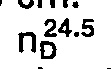
- Ultraviolet absorption λ max = 247 nm.
- Boiling point: 188° to 191°C./0.4 mmHg.
- The procedure of Example 9 was repeated except that 1.50 g. (10 mmoles) of 1-chloroethyl isobutylate instead of 1-chloroethyl acetate was employed to give 2.72 g. (yield: 76%) of the desired compound being a clear oily material.
- Elementary analysis for C21H23FO4 (MW: 358):
- Calcd. (%): C 70.39 H 6.42
- Found (%): C 70.57 H 6.44.
- Nuclear magnetic resonance spectrum (in CCI4, TMS), 6 (ppm):
- 1.14 (2d, 6H ―CH(CH3)2, 1.39 to 1.54 (m, 6H,

- 3.64 and 3.67 (2q, 1 H,

- 6.95 to 7.43 (m, 8H, aromatic H).
- Mass spectrum (20 eV, Direct) m/e:
- 358 (M t), 226


- 71 [COCH(CH3)2]+, 43 [CH(CH3)2]+.
- Infrared absorption spectrum (v cm.-1):
- 3060 to 2875 (aromatic, alkyl v C-H), 1760 (v C=O ester) and 1630 (aromatic v C=C).
- Refractive index:

- Ultraviolet absorption: λmax = 247 nm.
- Boiling point: 160° to 165°C./0.5 mmHg.
- The procedure of Example 9 was repeated except that 2.1 g. (13 mmoles) of (1-chloroethyl) 2,2-dimethyl propionate instead of (1-chloroethyl)acetate was employed to give 2.1 g. (yield: 56%) of the desired compound being a clear oily material.
- Elementary anaysis for C22H25F04 (MW: 372):
- Calcd. (%): C 70.97 H 6.72
- Found (%): C 71.18 H 6.68.
- Nuclear magnetic resonance spectrum (in CCI4, TMS), δ (ppm):
- 1.14 (2s, 9H, ―C(CH3)3, 1.39 to 1.54 (2d, 6H,

- 6.61 to 6.81 (m, 1 H,

- 6.95 to 7.43 (m, 8H, aromatic H).
- Mass spectrum (20 eV, Direct) m/e:


- 85 [COC(CH3)3]+, 57 (C(CH3)3]+
- Infrared absorption spectrum (v cm.-1):
- 3060 to 2875 (aromatic, alkyl v C-H), 1760 (v C=O ester), 1630 (aromatic v C=C).
- Refractive index:

- Ultraviolet absorption: λ max = 247 nm.
- Boiling point: 166° to 172°C./0.55 mmHg.
- The procedure of Example 9 was repeated except that 3.18 g. (10 mmoles) of (1-chloroethyl)palmitate instead of (1-chloroethyl)acetate was employed to give 3.1 g. of clear oil material. The obtained product was purified by chromatography of silica gel [Kiesel gel 60 made by Merck & Co., Inc. (60 g.); Eluent: (1) cyclohexane, (2) cyclohexane:dichloromethane = 8:2, (3) cyclohexane:dichloromethane = 6:4] to give 2.67 g. (yield: 50.7%) of the desired compound being a clear oily material.
- Elementary analysis for C33H47FO4 (MW: 326):
- Calcd. (%): C 75.29 H 8.94
- Found (%): C 75.51 H 8.97.
- Nuclear magnetic resonance spectrum (in CCI4, TMS), 6 (ppm):
- 0.83 to 1.72 (m, 35H, alkyl H),
- 2.18 (t, 2H,

- 6.98 to 7.52 (m, 8H, aromatic H).
- Mass spectrum (20 eV, Direct) m/e:
- 526 (M +), 239 [base peak, (CO(CH2)14CH3)+] and

- Infrared absorption spectrum (v cm.-1):
- 3075 to 2875 (aromatic, alkyl v C-H), 1770 (v C=O ester),. 1630 (aromatic v C=C).
- Refractive index:

- Ultraviolet absorption: λ max = 247 nm.
- The procedure of Example 9 was repeated except that 1.38 g. (10 mmoles) of (1-chloroethyl)cronate purified by distillation instead of (1-chloroethyl) acetate was employed to give 1.6 g. (yield: 44.9%) of the desired compound being a clear oily material.
- Elementary analysis for C21H21FO4 (MW: 356):
- Calcd. (%): C 70.79 H 5.90
- Found (%): C 71.00 H 5.93.
- Nuclear magnetic resonance spectrum (in CC14, TMS), 6 (ppm):
- 1.40 (d, 3H,

- 1.73 to 1.87 (m, 3H, ―CH=CH―CH3), 3.66 (q, 1H,
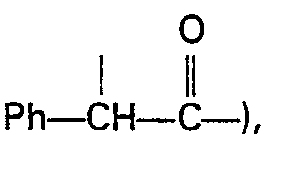
- 5.58 to 5.86 (m, 1H, -CH=CH-CH3), 6.72 to 6.98 (m, 2H,

- 7.02 to 7.40 (m, 8H, aromatic H).
- Mass spectrum (20 eV, Direct) m/e:
- 356 (M t), 226


- 69 [base peak, (COCH=CH―CH3)+] and 41 [CH=CH-CH3]+.
- Infrared absorption spectrum (v cm.-1)(
- 3100 to 2900 (aromatic, alkyl v C-H), 1750 (v C=O ester) and 1665 (v C=C di-substituted olefine).
- Refractive index:

- Ultraviolet absorption: λ max = 247 nm. and 206 nm.
- Boiling point: 195° to 197°C./0.3 mmHg.
- The procedure of Example 9 was repeated except that 2.43 g. (15 mmoles) of (1-chloroethyl)-3,3-dimethylacrylate purified by distillation instead of (1-chloroethyl)acetate was employed to give 3.19 g. (yield: 85.1 %) of the desired compound being a clear oily material.
- Elementary analysis for C22H23F04 (MW: 370):
- Calcd. (%): C 71.35 H 6.22
- Found (%): C 71.14 H 6.21.
- Nuclear magnetic resonance spectrum (in CCI4, TMS), δ (ppm):
- 1.48 and 1:38 (d, 6H,

- 1.85 (d, 3H

- 3.66 (q, 1H,

- 6.69 to 6.89 (2q, 1H, -COOCH-OCO) and
- 6.95 to 7.38 (m, 8H, aromatic H).
- Mass spectrum (20 eV, Direct) m/e:
- 370 (M +),


- 83 [base peak, COCH=C(CH3)2 +] and 55 [CH=C(CH3)2]+. Infrared absorption spectrum (v cm.-1):
- 3075 to 2900 (aromatic, alkyl v C-H), 1750 (v C=O ester), 1660 (v C=C, tri-substituted olefine). Refractive index:

- Ultraviolet absorption: λ max = 224 nm. and 206 nm.
- Boiling point: 194°C./0.6 mmHg.
- The procedure of Example 13 was repeated except that 2.26 g. (13 mmoles) of (1-chloroethyl)-2,4-hexadienoate purified by distillation instead of (1-chloroethyl)palmitate was employed to give 3.17 g. [yield: 83.0%) of the desired compound being a clear oily material.

- Nuclear magnetic resonance spectrum (in CC14, TMS), 5 (ppm):
- 1.40 to 1.55 (m, 6H,

- 1.77 to 1.89 (m, 3H, ―CH=CH―CH3), 3.69 (q, 1H,

- 5.54 to 5.79 (2d, 2H, olefinic H), 6.03 to 6.20 (m, 1 H, olefinic H),
- 6.75 to 6,93 (m, 2H, olefinic H,
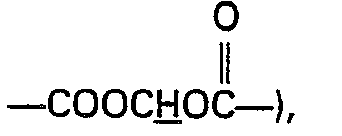
- 7.00 to 7.46 (m, 8H, aromatic H).
- Mass spectrum (20 eV, Direct) m/e:
- 382 (M +),


- 95 [base peak, (COCH=CH―CH=CH―CH3)+] and 67 [CH=CH―CH=CH―CH3]+.
- Infrared absorption spectrum (v cm.-1):
- 3075 to 2875 (aromatic, alkyl v C-H), 1755 (v C=O ester), 1652 (olefinic v C=C).
- Refractive index:

- Ultraviolet absorption: λ max = 254 nm.
- The procedure of Example 13 was repeated except that 1.4 g. (10 mmoles) of (1-chloropropyl)acetate purified by distillation instead of (1-chloroethyl) palmitate was employed to give 1.2 g. (yield: 34.8%) of the desired compound being a blown oily material.
- Elementary analysis for C2oH21F04 (MW: 344):

- Nuclear magnetic resonance spectrum (in CCI4, TMS), 6 (ppm):
- 0.72 to 1.00 (m, 3H,

- 1.50 (d, 3H,

- 3.66 (q, 1 H,

- 6.95 to 7.35 (m, 8H, aromatic H).
- Mass spectrum (20 eV, Direct) m/e:
- 344 (M t), 199

- Infrared absorption spectrum (v cm.-'):
- 3080 to 2900 (aromatic, alkyl v C-H), 1770 (v C=O ester), 1632 (aromatic v C=C).
- Refractive index:

- Ultraviolet absorption: \ max = 247 nm.
- Into 140 ml. of anhydrous DMF was suspended 2.82 g. (10 mmoles) of potassium salt of FP. To the resulting supsension was added dropwise 1.47 g. (12 mmoles) of (1-chloroethyl)acetate dissolved in 10 ml. of anhydrous DMF while keeping the reaction mixture at a temperature of 60°C., and then the resulting reaction mixture was stirred at 80°C. for one hour. After completion of the reaction, the resulting reaction mixture was treated and purified in the same manner as in Example 9 to give 2.5 g. (yield: 75%) of the desired compound being a clear oily material.
- The physicochemical properties of the compound were consistent with those obtained in Example 9.
- To 30 ml. of dehydrated acetonitrile were added 0.84 g. (3 mmoles) of potassium salt of FP, 0.3 g. (3 mmoles) of triethylamine and 0.5 g. (3 mmoles) of potassium iodide.
- To the resulting reaction mixture was added 0.47 g. (4 mmoles) of (1-chloroethyl)propionate at a room temperature with stirring, and then the reaction was carried out at 60°C. for 5 hours. After cooling, the resulting residue was filtered off, and then 100 ml. of ether was added to the filtrate. The resulting organic layer was washed successively with 10% sodium carbonate solution, water and a saturated sodium chloride aqueous solution by a conventional method, and then dried with magnesium sulfate. After distilling away the solvent, the obtained oily material was distilled under reduced pressure to give 0.84 g. (yield: 83%) of the desired compound. The physicochemical properties of the compound were consistent with those obtained in Example 10.
- To 40 mi. of dehydrated acetonitrile was added 20 mg. of 18-crown-6, and then the resulting reaction mixture was stirred at room temperature for 30 minutes. To the resulting reaction mixture were added 0.56 g. (2 mmoles) of potassium salt of FP and then 0.49 g. (3 mmoles) of (1-chloroethyl)-2,2-dimethyl- propionate, and the reaction was carred out at 50°C. for 8 hours. After cooling and added 100 ml. of ether, the resulting reaction mixture was treated and purified in the same manner as in Example 12 to give 0.37 g. (yield: 50%) of the desired compound. The physicochemical properties of the compound were consistent with those obtained in Example 12.
- In 25 ml. of acetonitrile was dissolved 2.44 g. (10 mmoles) of FP. To the resulting solution was added 1.38 g (10 mmoles) of anhydrous potassium carbonate, and then the reaction mixture was stirred at a room temperature for 30 minutes. After adding dropwise 2.4 g. (20 mmoles) of (1-chloroethyl)acetate purified by distillation, the reaction was carried out at a room temperature for 4 hours, and then at 40°C. for one hour with stirring. After cooling, the resulting residue was filtered off, and 100 ml. of ether was added to the filtrate. The resultling organic layer was washed successively with 10% sodium carbonate solution, water and a saturated sodium chloride aqueous solution, and then dried with magnesium sulfate. After distilling away the solvent, the obtained oily material was distilled under reduced pressure to give 2.3 g. (yield: 71 %) of the desired compound. The physicochemical properties of the compound were consistent with those obtained in Example 9.
- The procedure of Example 9 was repeated except that 1.67 g. (10 mmoles) of (1-bromoethyl)acetate instead of (1-chloroethyl)acetate was employed to give 2.56 g. (yield: 81%) of the desired compound being a clear oily material. The physicochemical properties of the compound were consistent with those obtained in Example 9.
- In 25 ml. of anhydrous dichloromethane was dissolved 2.44 g. (10 mmoles) of FP. To the resulting solution were added 1.04 g. (10 mmoles) of (2-acetoxy)ethyl alcohol and 0.13 g. (1 mmole) of p-dimethylaminopyridine with stirring at 0°C. After adding dropwise 2.3 g. (11 mmoles) of dicyclohexylcarbodiimide dissolved in anhydrous dichloromethane, the reaction was carried out at room temperature for one hour. After ice-cooling, the insoluble material was filtered off, and then the organic layer was washed successively with 0.1 N hydrochloride, a saturated sodium hydrogencarbonate solution and a saturated sodium chloride solution, and dried with anhydrous magnesium sulfate. After distilling away the solvent under reduced pressure, the resulting clear oily material was distilled under reduced pressure for purification. The fractions of distillate having a boiling point of 234° to 238°C./mmHg were collected to give 2.6 g. (yield: 80%) of the desired compound being a clear oily material.
- Elementary analysis for C19H19FO4 (MW: 330.4):
- Calcd. (%): C 69.07 H 5.75
- Found (%): C 69.28 H 5.77.
- Nuclear magnetic resonance spectrum (in CCI4, TMS), 6 (ppm):
- 1.55 (d, 3H,

- 3.74 (q, 1 H,

- 6.90 to 7.42 (m, 3H, aromatic proton).
- Mass spectrum (20 eV, Direct) m/e:
- 330 (M t), 226, 199 [base peak,

-

- Infrared absorption spectrum (.v cm.-1):
- 3100 to 2850 (aromatic, alkyl v C-H), 1760 (ester v C=O), 1625 to 1420 (aromatic v C=C).
- Refractive index: nõ7 = 1.5427.
- In 25 ml. of anhydrous DMF was dissolved 2.44 g. (10 mmoles) of FP. To the resulting solution was added (1.38 g. (10 mmoles) of anhydrous potassium carbonate, and the reaction mixture was stirred at a room temperature for one hour. After adding dropwise 1.77 g. (13 mmoles) of (2-propionyloxy)ethyl chloride, the reaction was carried out at 40° to 50°C. for one hour with stirring. After ice-cooling, the inorganic material was filtered off, and then the solvent was distilled away under reduced pressure. After adding 50 ml. of diethyl ether to the resulting residue, the mixture was washed successively with water, 10% sodium carbonate solution and a saturated sodium chloride solution, and then the organic layer was dried with anhydrous magnesium sulfate. After distilling away the solvent under reduced pressure, the resulting clear oily material was distilled under reduced pressure for purification. The fractions of distillate having a boiling point of 225°C. to 228°C./0.5 mmHg were collected to give 2.55 g. (yield: 74%) of the desired compound bieng a clear oily material.
- Elementary analysis for C20H21FO4 (MW: 344.4):
- Calcd. (%): C 69.69 H 6.10
- Found (%): C 69.90 H 6.12.
- Nuclear magnetic spectrum (in CCI4, TMS), 5 (ppm):
- 1.08 (t, 3H, ―CH2CH3), 1.52

- 2.75 (q, 1 H, -

- 6.90 to 7.42 (m, 8H, aromatic proton).
- Mass spectrum (20 eV, Direct) m/e:
- 344 (M t), 226, 199 [base peak

-

- Infrared absorption spectrum (v cm.-1):
- 3100 to 2850 (aromatic alkyl v C-H), 1760 (ester v C=O), 1625 to 1420 (aromatic v C=C).
- Refractive index:

- The procedure of Example 24 was repeated except that 2.89 g. (15 mmoles) of (2-crotonoyloxy)ethyl bromide instead of (2-propionyloxy)ethyl chloride was employed to give 3.39 g. (yield: 63.4%) of the desired compound being a clear oily material having a boiling point of 205° to 215°C./1.5 mmHg.
- Elementary analysis for C21H21FO4 (MW: 356.4):
- Calcd. (%): C 70.77 H 5.89
- Found (%): C 70.98 H5.91.
- Nuclear magnetic resonance (in CCI4, TMS), 5 (ppm):
- 1.40 (d, 3H,

- 3.57 (q, 1 H,

- 5.54, 5.51 (dd, 1H, olefinic proton), 6.44 to 7.33 (m, 9H, aromatic, olefinic proton).
- Mass spectrum (20 eV, Direct) m/e:
- 356 (M +), 226, 199 [base peak,

-

- Infrared absorption spectrum (δ cm.-'):
- 3100 to 2850 (aromatic alkyl v C-H), 1720 to 1750 (ester v C=O), 1665 (olefinic v C=C).
- Refractive index:

- The procedure of Example 24 was repeated except that 3.10 g. (15 mmoles) of 2-(3,3-dimethyl- acryloyloxy)ethylbromide instead of (2-propionyloxy)ethyl chloride, was employed to. give 3.31 g. (yield: 59.6%) of the desired compound being a clear oily material having a boiling point of 225° to 228°C./0.8 mmHg.
- Elementary analysis for C22H23FO4 (MW: 370.5):
- Calcd. (%): C 71.32 H 6.21
- Found (%): C 71.53 H 6.24.
- Nuclear magnetic resonance spectrum (in CCI4, TMS), 6 (ppm):
-

-

- Mass spectrum (20 eV, Direct) m/e:
- 370 (M t), 226, 199 [base peak,

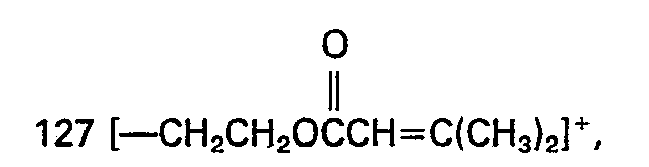
- 83 [-COCH=C(CH3)2] + and 55 [―CH=C(CH3)2]+.
- Infrared absorption spectrum (v cm.-1):
- 3100 to 2850 (aromatic alkyl v C-H), 1745, 1725 (ester v C=O) and 1655.
- Refractive index:

- The procedure of Example 24 was repeated except that 1.68 g. (10 mmoles) of 3,7-dimethyl-2,6-octadienoic acid, 10 ml. of anhydrous DMF, 1.38 g. (10 mmoles) of anhydrous potassium carbonate and 3.51 g. (10 mmoles) of 2-bromoethyl 2-(2-fluoro-4-biphenylyl)propionate were employed. The resulting residue was purified by chromatography of silica gel (Kiesel gel 60 F (90 g.); Developing solvent: a mixed solvent of dichloromethane and cycohexane) to give 3.1 g. (yield: 83.7% of the desired compound being a clear oily material having a boiling point of not less than 250°C./mmHg.
- Elementary analysis for C27H31FO4 (MW: 438.6):
- Calcd. (%): C 73.94 H 7.07
- Found (%): C 74.16 H 7.06.
- Nuclear magnetic resonance spectrum (in CCI4, TMS), 6 (ppm):
-

-

- Mass spectrum (20 eV, Direct) m/e:
- 438 (M +), 226, [base peak
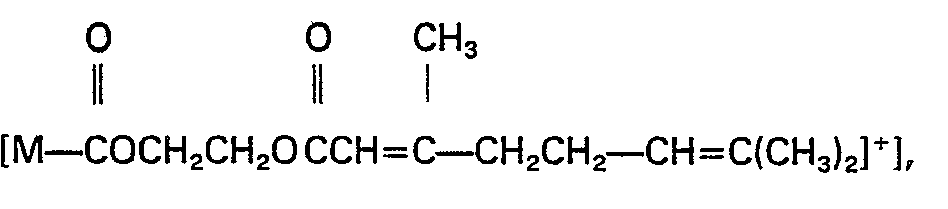

- 151 [―COCH=C(CH3)CH2CH2CH=C(CH3)2]+ and 69 [―CH2CH=C(CH3)2]+.
- Infrared absorption spectrum (v cm.-1):
- 3100 to 2850 (aromatic alkyl v C-H), 1745, 1730 (ester v C=O) and 1650 (olefinic v C=C).
- Refractive index:

- To 200 ml. of anhydrous acetonitrile were added 0.1 g. of 18-crown-6,1.5 g. (20 mmoles) of potassium sorbate and 3.5 g. (10 mmoles) of (2-bromoethyl) 2-(2-fluoro-4-biphenylyl)propionate, and then the resulting reaction mixture was stirred at 50°C. for 8 hours. The resulting reaction mixture was treated and purified by conventional methods in the same manner as in Example 27 to give 3.5 g. (yield: 91.6 %) of the desired compound being a white crystal having a melting point of 59° to 61°C.
- Elementary analysis for C23H23FO4 (MV: 382.3):

- Nuclear magnetic resonance spectrum (in CCI4, TMS), 6 (ppm):
- 1.44 (d, 3H,

- I 3.48 (q, 1 H, Ph―CH―CH3), 4.00 (s, 4H,

- 5.24 and 5.38 (d, 1H, olefinic proton), 5.63 to 5.72 (m, 2H, olefinic proton) and 6.60 to 7.18 (m, 9H, aromatic, olefinic proton).
- Mass spectrum (20 eV, Direct) m/e:
- 382 (M t), 271


- 95 [-COCH=CH-CH-CHCH3] + and 67 [-CH=CH-CH=CHCH3] +.
- Infrared absorption spectrum (v cm.-1):
- 3100 to 2850 (aromatic, alkyl v C-H), 1745, 1710 (ester v C=O) and 1655 (olefinic v C=C).
- In 35 ml. of anhydrous pyridine was dissolved 7.55 g. (26.2 mmoles) of 2-hydroxyethyl-2-(2-fluoro-4-biphenylyl)propionate. To the resulting solution was added dropwise 4 g. (39.3 mmoles) of acetic anhydride with ice-cooling. After completion of the addition, the resulting reaction mixture was stirred at 40°C. for 3 hours, and then cooled. The reaction mixture was poured into water added with ice and extracted with 400 ml. of diethyl ether. The resulting extract was washed successively with 10% hydrochloride and water, and the organic layer was dried with anhydrous magnesium sulfate. After distilling away the solvent under reduced pressure, the obtained clear oily material was distilled under reduced pressure for purification to give 7.61 g. (yield: 88%) of the desired compound being a clear oily material.
- The physicochemical properties of the obtained compound were consistent with those obtained in Example 23.
- To 100 ml. of anhydrous acetonitrile were added 2.82 g. (10 mmoles) of potassium salt of FP, 0.1 g. of 18-crown-6 and 1.22 g. (10 mmoles) of 2-acetoxyethyl chloride, and the reaction mixture was stirred at a room temperature for 8 hours. The resulting reaction mixture was treated by a conventional method and purified in the same manner as in example 23 to give 1.48 g. (yield: 44.8%) of the desired compound being a clear oily material.
- The physicochemical properties of the obtained compound were consistent with those obtained in Example 23.
- To 100 ml. of anhydrous, acetonitrile were added 2.82 g. (10 mmoles) of potassium salt of FP, 1.4 g. (10 mmoles) of 2-propionyloxyethyl chloride, 1 g. of triethylamine and 1.6 g. of potassium iodide, and then the reaction mixture was stirred at 60°C. for 5 hours. The resulting reaction mixture was post-treated by a conventional method, and distilled under reduced pressure for purification to give 2.86 g. (yield: 83%) of the desired compound being a clear oily material.
- The physicochemical properties of the obtained compound were consistent with those obtained in Example 24.
- In 40 ml. of anhydrous dichloromethane were dissolved 2.44 g. (10 mmoles) of FP, 1.3 g. (10 mmoles) of 2-hydroxy-3,3-dimethylbutyrolactone and 0.1 g. of p-dimethylaminopyridine. To the resulting solution was added dropwise 2.0 g. (10 mmoles) of dicyclohexylcarbodiimide, and the resulting reaction mixture was stirred at a room temperature for one hour. After completion of the reaction, the reaction mixture was cooled to a temperature of 0°C., and the precipitated dicyclohexylurea was filtered off. The resulting filtrate was washed successively with 0.1 N hydrochloride, a saturated sodium bicarbonate solution and a saturated sodium chloride solution, and then the organic layer was dried with anhydrous magnesium sulfate. After distilling away the solvent under reduced pressure, the resulting light yellowish liquor was distilled under reduced pressure for purification to give 2.41 g. (yield: 68%) of the desired compound being an oily material having a boiling point of 198° to 209°C./0.9 mmHg.
- Elementarv analysis C21H21FO4 (MW; 356):

- Nuclear magnetic resonance spectrum (in CCI4, TMS), 6 (ppm):
- 0.86 to 1.17 (s x 4, 6H, lactone CH3 x 2), 1.54 to 1.67 (d x 2, 3H,

- 5.26 to 5.30 (s x 2, 1H, ―COOCH―COO) and 7.08 to 7.43 (m, 8H, aromatic H).
- Mass spectrum (20 eV, Direct) m/e:
- 356 (M+), 243


- Infrared absorption spectrum (v cm.-1):
- 3100 to 2900 (aromatic, alkyl v C-H), 1760 (v C=O ester) and 1800 (y-lactone v C=O).
- Refractive index:

- Ultraviolet absorption: X max = 247 nm.
- In 50 ml. of anhydrous tetrahydrofuran were dissolved 2.44 g. (10 mmoles) of FFP, 1.3 g. (10 mmoles) of D,L-pantoyllactone and 2.6 g. of triphenylphosphin. After adding dropwise 1.7 g. (10 mmoles) of azo- carboxylic acid diethyl ester with stirring at 0°C., the reaction was carried out at 0°C. for one hour, and then at a room temperature for one hour. After adding 20 ml. of ether to the reaction mixture, the resulting precipitate was filtered off. The resulting organic layer was washed three times with water, and then dried with anhydrous magnesium sulfate. After distilling away the solvent, the obtained residue was distilled under reduced pressure for purification to give 2.3 g. (yield: 65%) of the desired compound being a clear oily material.
- The physicochemical properties of the obtained compound were consistent with those obtained in Example 32.
- In 10 ml. of anhydrous DMF was dissolved 2.44 g. (10 mmoles) of FP in an atmosphere replaced with argon gas. After adding dropwise N,N'-carbonyldiimidazole dissolved in anhydrous DMF at a room temperature, the reaction was carried out for one hour with stirring. To the resulting reaction mixture was added dropwise 1.3 g. (10 mmoles) of D,L-pantolactone with ice-cooling. After completion of the addition, the reaction was carried out at a room temperature for 3 hours with stirring. The resulting reaction mixture was concentrated under reduced pressure, and then the residue was dissolved in ether. The resulting mixture was washed successively with water, 10% citric acid, water, a saturated sodium bicarbonate solution and a saturated sodium chloride solution, and then the organic layer was dried with anhydrous magnesium sulfate. After distilling away the solvent under reduced presssure, the obtained residue was distilled under reduced pressure for purification to give 2.5 g. (yield: 71 %) of the desired compound being a clear oily material.
- The physicochemical properties of the obtained compound were consistent with those obtained in Example 32.
- To 100 mg. of 1-(acetoxy)ethyl 2-(2-fluoro-4-biphenylyl)propionate was added 30 mg. of Aerosil (registered trademark, made by Japan Aerosil Co., Ltd.)., and the mixture was pulverized. To the resulting powder were added 35 mg. of dibasic calcium phosphate anhydrous, 45 mg. of Avicel (registered trademark, made by Asahi Kassei Co., ltd.). 6 mg. of ECG 505 (carboxymethyl celllulose calcium salt made by Nichirin Chemical Industry Co., Ltd.) and 4 mg. of calcium stearate, and then the mixture was blended and compressed to give a tablet.
- A mixture of 1240 mg. of Witepsol H-15 (mixture of triglyceride and monoglyceride made by Dinamit Novel Co., Ltd., Witepsol; registered trademark) and 310 mg. of Witepsol E-85 (made by Dinamit Novel Co., Ltd.) was melted at 60° to 70°C. After cooling the mixture to a temperature of 45°C., 150 mg. of 1-(acetoxy)ethyl 2-(2-fluoro-4-biphenylyl) propionate was added thereto. The resulting mixture was stirred until it become homogeneous, and then 1.7 g. thereof was injected in a container of 1.9 ml. at 40°C. to make solid with cooling.
- In 100 mg. of PEG 400 (polyethyleneglycol) was dissolved 100 mg. of 1-(acetoxy)ethyl 2-(2-fluoro-4-biphenylyl)propionate, and then 200 mg. of the resulting solution was filled up in a soft gelatin capsule (made by R. P. Scherer Co., Ltd.; size 3 to 2 round A).
- In 260 mg. of PEG 400 was dissolved 150 mg. of 1-(acetoxy)ethyl 2-(2-fluoro-4-biphenylyl)propionate, and then 410 mg. of the resulting solution was filled up in a soft gelatin capsule (made by R. P. Scherer Co., Ltd.; size: 85 to 86 suppository A).
- According to the following formulation, a 1% gel cream was prepared as follows:

- In myristin isopropyl was dissolved 1-(acetoxy)ethyl 2-(2-fluoro-4-biphenylyl)propionate. To the resulting solution were added ethanol, carboxyvinyl polymer-940 swelled in 500 ml. of water and polyoxyethylene dissolved in 100 ml. of water, and then the resulting mixture was thoroughly stirred until it become homogeneous. To the homogeneous mixture were added coconut oil blended in 100 ml. of water and sufficient amount of distilled water, and then the resulting mixture was thoroughly stirred until it become homogeneous.
- With respect to the present FP derivatives (Compound Nos. 1 to 23), there was tested inhibitory effect on carrageenan-induced edema.
- Five Wistar male rates weighing about 150 g. were used as one group. A 1% dispersion of carrageenan was injected intracutaneously into the foot pad of the right hind foot in a dose of 0.1 ml./rat. The compounds to be tested were orally administered to the rats fasted for 15 hours one hour before the carrageenan injection, or intraveneously administered 2 hours after the carrageenan injection. The volume of the foot subjected to the injection was measured by a mercury plethysmography 3 hours after the carrageenan injection on the test by oral route or 2 hours after the carrageenan injection on the test by intravenous route, an dthe carrageenan-induced edema was estimated from the obtained measurements. The results are shown in Table 2.

- With respectto the present FP derivatives (Compound Nos. 1 to 23), there was tested gastric ulceration.
- Five Wistar male rates weighing about 150 g. were used as one group. The rats were fasted for 24 hours before the test.
- Six hours after orally administration of the present compounds to be tested, there was observed an existence of gastric ulcer by the method of Okabe et al (Ohyoyokuri, 16, 241 to 247 (1978). The UD50 values were calculated from the ulcer incidence of gastric ulcer by the method of Litchfiled-Wilcoxon. The results are shown in Table 3.

- With respect to the present FP derivatives (Compound Nos. 1 to 23), there was tested the hydrolysis rate in human plasma or rat plasma.
- The compounds to be tested (Compound Nos. 1 to 16) and the compounds to be tested (Compound Nos. 17 to 23) were, respectively, added to 1 ml. of human plasma and 1 ml. of rat plasma, in an amount corresponding to 50 µg. of FP. Each reaction mixture was incubated at 37°C. for one hour.
- The free FP formed by esterase in the plasma was extracted with benzene. After treating the extract with N,O-bis(trimethylsilylacetamide) for trimethylsilylation, the obtained material was determined by gas- liquid chromatography. The results are shown in Table 4.

- Eight male SLC-ddY mice 5 week old weighing 25 to 30 g. were used as one group. The compound to be tested was orally administered using a stomach tube. The animals were kept under observation for 2 weeks. The numbers of dead animals were counted and the LD50 values were calculated by the method of Litchfield Wilconxon. The resutls are shown in Table 5.

Claims (8)





Priority Applications (1)
| Application Number | Priority Date | Filing Date | Title |
|---|---|---|---|
| AT83108796T ATE23988T1 (en) | 1982-09-10 | 1983-09-07 | BIPHENYLPROPIONIC ACID DERIVATIVE, METHOD OF MANUFACTURE AND PHARMACEUTICAL COMPOSITION CONTAINING IT. |
Applications Claiming Priority (6)
| Application Number | Priority Date | Filing Date | Title |
|---|---|---|---|
| JP15857882A JPS5948445A (en) | 1982-09-10 | 1982-09-10 | Biphenylylpropionic acid derivative and its preparation |
| JP158578/82 | 1982-09-10 | ||
| JP58026559A JPS59152348A (en) | 1983-02-19 | 1983-02-19 | Biphenylylpropionate derivatives and their production method |
| JP26559/83 | 1983-02-19 | ||
| JP101519/83 | 1983-06-06 | ||
| JP10151983A JPS59225143A (en) | 1983-06-06 | 1983-06-06 | Biphenylylpropionic acid derivative and its preparation |
Publications (3)
| Publication Number | Publication Date |
|---|---|
| EP0103265A2 EP0103265A2 (en) | 1984-03-21 |
| EP0103265A3 EP0103265A3 (en) | 1984-07-25 |
| EP0103265B1 true EP0103265B1 (en) | 1986-12-03 |
Family
ID=27285454
Family Applications (1)
| Application Number | Title | Priority Date | Filing Date |
|---|---|---|---|
| EP19830108796 Expired EP0103265B1 (en) | 1982-09-10 | 1983-09-07 | Biphenylylpropionic acid derivative, process for preparing the same and pharmaceutical composition containing the same |
Country Status (5)
| Country | Link |
|---|---|
| EP (1) | EP0103265B1 (en) |
| AU (1) | AU559633B2 (en) |
| DE (1) | DE3368046D1 (en) |
| ES (1) | ES8502962A1 (en) |
| NZ (1) | NZ205516A (en) |
Cited By (2)
| Publication number | Priority date | Publication date | Assignee | Title |
|---|---|---|---|---|
| US7790708B2 (en) | 2001-06-11 | 2010-09-07 | Xenoport, Inc. | Prodrugs of GABA analogs, compositions and uses thereof |
| US8048917B2 (en) | 2005-04-06 | 2011-11-01 | Xenoport, Inc. | Prodrugs of GABA analogs, compositions and uses thereof |
Families Citing this family (2)
| Publication number | Priority date | Publication date | Assignee | Title |
|---|---|---|---|---|
| US5196567A (en) * | 1983-02-19 | 1993-03-23 | Kaken Pharmaceutical Co., Ltd. | Biphenylylpropionic acid derivative, process for preparing the same and pharmaceutical composition containing the same |
| JPS601122A (en) * | 1983-06-20 | 1985-01-07 | Green Cross Corp:The | Fat emulsion of biphenylylpropionic acid derivative |
Family Cites Families (2)
| Publication number | Priority date | Publication date | Assignee | Title |
|---|---|---|---|---|
| GB1359987A (en) * | 1970-10-12 | 1974-07-17 | Boots Co Ltd | 2-substituted biphenylyl propionic acids |
| EP0032620B2 (en) * | 1979-12-19 | 1987-02-04 | The Upjohn Company | Process for preparing therapeutic 2-arylpropionic acids and esters, and novel arylmethylmalonate esters |
-
1983
- 1983-09-06 AU AU18772/83A patent/AU559633B2/en not_active Ceased
- 1983-09-07 EP EP19830108796 patent/EP0103265B1/en not_active Expired
- 1983-09-07 NZ NZ20551683A patent/NZ205516A/en unknown
- 1983-09-07 DE DE8383108796T patent/DE3368046D1/en not_active Expired
- 1983-09-08 ES ES525498A patent/ES8502962A1/en not_active Expired
Cited By (5)
| Publication number | Priority date | Publication date | Assignee | Title |
|---|---|---|---|---|
| US7790708B2 (en) | 2001-06-11 | 2010-09-07 | Xenoport, Inc. | Prodrugs of GABA analogs, compositions and uses thereof |
| US8168623B2 (en) | 2001-06-11 | 2012-05-01 | Xenoport, Inc. | Prodrugs of GABA analogs, compositions and uses thereof |
| US8367722B2 (en) | 2001-06-11 | 2013-02-05 | Xenoport, Inc. | Methods of using prodrugs of pregabalin |
| US9238616B2 (en) | 2001-06-11 | 2016-01-19 | Xenoport, Inc. | Prodrugs of gaba analogs, compositions and uses thereof |
| US8048917B2 (en) | 2005-04-06 | 2011-11-01 | Xenoport, Inc. | Prodrugs of GABA analogs, compositions and uses thereof |
Also Published As
| Publication number | Publication date |
|---|---|
| AU559633B2 (en) | 1987-03-19 |
| DE3368046D1 (en) | 1987-01-15 |
| NZ205516A (en) | 1986-01-24 |
| AU1877283A (en) | 1984-03-15 |
| EP0103265A3 (en) | 1984-07-25 |
| ES525498A0 (en) | 1985-02-01 |
| ES8502962A1 (en) | 1985-02-01 |
| EP0103265A2 (en) | 1984-03-21 |
Similar Documents
| Publication | Publication Date | Title |
|---|---|---|
| EP0112130B1 (en) | Ethoxycarbonyloxy ethyl esters of non-steroidal anti-inflammatory carboxylic acids, their preparation and use | |
| US4699925A (en) | Biphenylylpropionic acid derivative and pharmaceutical composition containing the same | |
| JP2603620B2 (en) | Eicosatriinamide-5,8,11 compound, method for producing the same, and pharmaceutical composition | |
| US5196567A (en) | Biphenylylpropionic acid derivative, process for preparing the same and pharmaceutical composition containing the same | |
| US4057641A (en) | Method of treating inflammation with 2-(2,3-dihydro-2-isopropyl-4-oxo-4H-1-benzopyran-6-yl)propionic acid | |
| US4539326A (en) | 5-Oxo-5H-(1)benzopyrano(2,3-b)pyridine derivatives, their production and use as anti-inflammatory agents | |
| US4151179A (en) | 2-(4H-1-Benzopyran-6-yl)propionic acids | |
| EP0515777A1 (en) | PLA2 inhibitors | |
| US4421927A (en) | New cinnamoyl-cinnamic acid derivative, and its use as pharmaceutical | |
| GB1559977A (en) | Amines | |
| EP0103265A2 (en) | Biphenylylpropionic acid derivative, process for preparing the same and pharmaceutical composition containing the same | |
| EP0251039B1 (en) | Esters of salsalate with guaiacol, for treating phlogistic bronchopneumopathies | |
| US4766148A (en) | Biphenylylpropionic acid derivative and pharmaceutical composition containing the same | |
| EP0082404B1 (en) | Novel forms of diflunisal and related compounds | |
| EP0088734B1 (en) | A novel ester of the 1-methyl-5-p-toluoylpyrrolyl-2-acetic acid having antiinflammatory, mucolytic and antitussive properties, process for its preparation and pharmaceutical compositions containing them | |
| US4542158A (en) | Prodrug esters of diflunisal and related compounds | |
| GB2125786A (en) | Esters of indomethacin | |
| SU1072801A3 (en) | Process of preparing derivatives of prostacycline or their epimers | |
| EP0045473B1 (en) | A pharmaceutical composition containing a benzofuran-carboxamide derivative as the active ingredient | |
| EP0094738B1 (en) | Pharmaceutical benzodioxane compounds and process for their manufacture | |
| US4172949A (en) | 2,4-Disubstituted-5-oxo-5H-dibenzo[a,d]cycloheptenes | |
| US4166125A (en) | 2-oxo-phenylbutanoic acid derivatives | |
| KR950008316B1 (en) | 1-hydroxy-5-oxo-5H-pyrido [3,2-a] phenoxazine-3-carboxylic acid ester | |
| KR880001052B1 (en) | Analgesic and anti-inflammatory compounds | |
| US4218473A (en) | Derivatives of 4-cyclohexyl-1-naphthalene-acetic acid and their use as drugs |
Legal Events
| Date | Code | Title | Description |
|---|---|---|---|
| PUAI | Public reference made under article 153(3) epc to a published international application that has entered the european phase |
Free format text: ORIGINAL CODE: 0009012 |
|
| AK | Designated contracting states |
Designated state(s): AT BE CH DE FR GB IT LI LU NL |
|
| PUAL | Search report despatched |
Free format text: ORIGINAL CODE: 0009013 |
|
| AK | Designated contracting states |
Designated state(s): AT BE CH DE FR GB IT LI LU NL |
|
| 17P | Request for examination filed |
Effective date: 19841220 |
|
| GRAA | (expected) grant |
Free format text: ORIGINAL CODE: 0009210 |
|
| AK | Designated contracting states |
Kind code of ref document: B1 Designated state(s): AT BE CH DE FR GB IT LI LU NL |
|
| REF | Corresponds to: |
Ref document number: 23988 Country of ref document: AT Date of ref document: 19861215 Kind code of ref document: T |
|
| ITF | It: translation for a ep patent filed | ||
| REF | Corresponds to: |
Ref document number: 3368046 Country of ref document: DE Date of ref document: 19870115 |
|
| ET | Fr: translation filed | ||
| PLBE | No opposition filed within time limit |
Free format text: ORIGINAL CODE: 0009261 |
|
| STAA | Information on the status of an ep patent application or granted ep patent |
Free format text: STATUS: NO OPPOSITION FILED WITHIN TIME LIMIT |
|
| 26N | No opposition filed | ||
| ITTA | It: last paid annual fee | ||
| EPTA | Lu: last paid annual fee | ||
| PGFP | Annual fee paid to national office [announced via postgrant information from national office to epo] |
Ref country code: BE Payment date: 19950915 Year of fee payment: 13 |
|
| PGFP | Annual fee paid to national office [announced via postgrant information from national office to epo] |
Ref country code: CH Payment date: 19950922 Year of fee payment: 13 Ref country code: AT Payment date: 19950922 Year of fee payment: 13 |
|
| PGFP | Annual fee paid to national office [announced via postgrant information from national office to epo] |
Ref country code: NL Payment date: 19950929 Year of fee payment: 13 |
|
| PGFP | Annual fee paid to national office [announced via postgrant information from national office to epo] |
Ref country code: LU Payment date: 19951001 Year of fee payment: 13 |
|
| PG25 | Lapsed in a contracting state [announced via postgrant information from national office to epo] |
Ref country code: LU Free format text: LAPSE BECAUSE OF NON-PAYMENT OF DUE FEES Effective date: 19960907 Ref country code: AT Effective date: 19960907 |
|
| PG25 | Lapsed in a contracting state [announced via postgrant information from national office to epo] |
Ref country code: LI Effective date: 19960930 Ref country code: CH Effective date: 19960930 Ref country code: BE Effective date: 19960930 |
|
| BERE | Be: lapsed |
Owner name: KAKEN PHARMACEUTICAL CO. LTD Effective date: 19960930 |
|
| PG25 | Lapsed in a contracting state [announced via postgrant information from national office to epo] |
Ref country code: NL Effective date: 19970401 |
|
| REG | Reference to a national code |
Ref country code: CH Ref legal event code: PL |
|
| NLV4 | Nl: lapsed or anulled due to non-payment of the annual fee |
Effective date: 19970401 |
|
| PGFP | Annual fee paid to national office [announced via postgrant information from national office to epo] |
Ref country code: FR Payment date: 19990831 Year of fee payment: 17 |
|
| PGFP | Annual fee paid to national office [announced via postgrant information from national office to epo] |
Ref country code: GB Payment date: 19990901 Year of fee payment: 17 |
|
| PGFP | Annual fee paid to national office [announced via postgrant information from national office to epo] |
Ref country code: DE Payment date: 19991019 Year of fee payment: 17 |
|
| PG25 | Lapsed in a contracting state [announced via postgrant information from national office to epo] |
Ref country code: GB Free format text: LAPSE BECAUSE OF NON-PAYMENT OF DUE FEES Effective date: 20000907 |
|
| GBPC | Gb: european patent ceased through non-payment of renewal fee |
Effective date: 20000907 |
|
| PG25 | Lapsed in a contracting state [announced via postgrant information from national office to epo] |
Ref country code: FR Free format text: LAPSE BECAUSE OF NON-PAYMENT OF DUE FEES Effective date: 20010531 |
|
| PG25 | Lapsed in a contracting state [announced via postgrant information from national office to epo] |
Ref country code: DE Free format text: LAPSE BECAUSE OF NON-PAYMENT OF DUE FEES Effective date: 20010601 |
|
| REG | Reference to a national code |
Ref country code: FR Ref legal event code: ST |