EP0096703B1 - Fresh blood (unfixed) hematology control - Google Patents
Fresh blood (unfixed) hematology control Download PDFInfo
- Publication number
- EP0096703B1 EP0096703B1 EP83900246A EP83900246A EP0096703B1 EP 0096703 B1 EP0096703 B1 EP 0096703B1 EP 83900246 A EP83900246 A EP 83900246A EP 83900246 A EP83900246 A EP 83900246A EP 0096703 B1 EP0096703 B1 EP 0096703B1
- Authority
- EP
- European Patent Office
- Prior art keywords
- suspension
- range
- fluid
- cells
- disaccharide
- Prior art date
- Legal status (The legal status is an assumption and is not a legal conclusion. Google has not performed a legal analysis and makes no representation as to the accuracy of the status listed.)
- Expired
Links
- 210000004369 blood Anatomy 0.000 title description 17
- 239000008280 blood Substances 0.000 title description 17
- 210000004027 cell Anatomy 0.000 claims description 57
- 239000000725 suspension Substances 0.000 claims description 32
- 239000012530 fluid Substances 0.000 claims description 26
- 210000003743 erythrocyte Anatomy 0.000 claims description 22
- 150000002016 disaccharides Chemical class 0.000 claims description 19
- GUBGYTABKSRVRQ-QKKXKWKRSA-N lactose group Chemical group OC1[C@H](O)[C@@H](O)[C@H](O[C@H]2[C@H](O)[C@@H](O)[C@@H](O)[C@H](O2)CO)[C@H](O1)CO GUBGYTABKSRVRQ-QKKXKWKRSA-N 0.000 claims description 10
- 239000000203 mixture Substances 0.000 claims description 10
- 239000008101 lactose Substances 0.000 claims description 9
- 239000012528 membrane Substances 0.000 claims description 7
- 150000004676 glycans Chemical class 0.000 claims description 6
- 235000015097 nutrients Nutrition 0.000 claims description 6
- 229920001282 polysaccharide Polymers 0.000 claims description 6
- 239000005017 polysaccharide Substances 0.000 claims description 6
- 108010071390 Serum Albumin Proteins 0.000 claims description 5
- 102000007562 Serum Albumin Human genes 0.000 claims description 5
- CZMRCDWAGMRECN-UGDNZRGBSA-N Sucrose Chemical compound O[C@H]1[C@H](O)[C@@H](CO)O[C@@]1(CO)O[C@@H]1[C@H](O)[C@@H](O)[C@H](O)[C@@H](CO)O1 CZMRCDWAGMRECN-UGDNZRGBSA-N 0.000 claims description 5
- 229930006000 Sucrose Natural products 0.000 claims description 5
- 230000002489 hematologic effect Effects 0.000 claims description 5
- 229910001415 sodium ion Inorganic materials 0.000 claims description 5
- 239000005720 sucrose Substances 0.000 claims description 5
- 229920002307 Dextran Polymers 0.000 claims description 4
- 239000000872 buffer Substances 0.000 claims description 4
- LWIHDJKSTIGBAC-UHFFFAOYSA-K tripotassium phosphate Chemical compound [K+].[K+].[K+].[O-]P([O-])([O-])=O LWIHDJKSTIGBAC-UHFFFAOYSA-K 0.000 claims description 4
- 230000003204 osmotic effect Effects 0.000 claims description 3
- OWEGMIWEEQEYGQ-UHFFFAOYSA-N 100676-05-9 Natural products OC1C(O)C(O)C(CO)OC1OCC1C(O)C(O)C(O)C(OC2C(OC(O)C(O)C2O)CO)O1 OWEGMIWEEQEYGQ-UHFFFAOYSA-N 0.000 claims description 2
- GUBGYTABKSRVRQ-PICCSMPSSA-N Maltose Natural products O[C@@H]1[C@@H](O)[C@H](O)[C@@H](CO)O[C@@H]1O[C@@H]1[C@@H](CO)OC(O)[C@H](O)[C@H]1O GUBGYTABKSRVRQ-PICCSMPSSA-N 0.000 claims description 2
- GUBGYTABKSRVRQ-QUYVBRFLSA-N beta-maltose Chemical compound OC[C@H]1O[C@H](O[C@H]2[C@H](O)[C@@H](O)[C@H](O)O[C@@H]2CO)[C@H](O)[C@@H](O)[C@@H]1O GUBGYTABKSRVRQ-QUYVBRFLSA-N 0.000 claims description 2
- 229910000160 potassium phosphate Inorganic materials 0.000 claims description 2
- 235000011009 potassium phosphates Nutrition 0.000 claims description 2
- 239000003381 stabilizer Substances 0.000 claims description 2
- 238000002360 preparation method Methods 0.000 description 29
- 238000000034 method Methods 0.000 description 17
- WQZGKKKJIJFFOK-GASJEMHNSA-N Glucose Natural products OC[C@H]1OC(O)[C@H](O)[C@@H](O)[C@@H]1O WQZGKKKJIJFFOK-GASJEMHNSA-N 0.000 description 9
- 239000008103 glucose Substances 0.000 description 9
- 238000005534 hematocrit Methods 0.000 description 7
- 239000004615 ingredient Substances 0.000 description 7
- 150000002772 monosaccharides Chemical class 0.000 description 6
- 230000006641 stabilisation Effects 0.000 description 6
- 238000011105 stabilization Methods 0.000 description 6
- 230000009089 cytolysis Effects 0.000 description 5
- 238000012986 modification Methods 0.000 description 5
- 230000004048 modification Effects 0.000 description 5
- 206010018910 Haemolysis Diseases 0.000 description 4
- FAPWRFPIFSIZLT-UHFFFAOYSA-M Sodium chloride Chemical compound [Na+].[Cl-] FAPWRFPIFSIZLT-UHFFFAOYSA-M 0.000 description 4
- 230000008588 hemolysis Effects 0.000 description 4
- 230000008569 process Effects 0.000 description 4
- 239000011780 sodium chloride Substances 0.000 description 4
- 239000000243 solution Substances 0.000 description 4
- 239000006228 supernatant Substances 0.000 description 4
- 108091003079 Bovine Serum Albumin Proteins 0.000 description 3
- 102000001554 Hemoglobins Human genes 0.000 description 3
- 108010054147 Hemoglobins Proteins 0.000 description 3
- DGAQECJNVWCQMB-PUAWFVPOSA-M Ilexoside XXIX Chemical compound C[C@@H]1CC[C@@]2(CC[C@@]3(C(=CC[C@H]4[C@]3(CC[C@@H]5[C@@]4(CC[C@@H](C5(C)C)OS(=O)(=O)[O-])C)C)[C@@H]2[C@]1(C)O)C)C(=O)O[C@H]6[C@@H]([C@H]([C@@H]([C@H](O6)CO)O)O)O.[Na+] DGAQECJNVWCQMB-PUAWFVPOSA-M 0.000 description 3
- FKNQFGJONOIPTF-UHFFFAOYSA-N Sodium cation Chemical compound [Na+] FKNQFGJONOIPTF-UHFFFAOYSA-N 0.000 description 3
- 230000002411 adverse Effects 0.000 description 3
- 229940098773 bovine serum albumin Drugs 0.000 description 3
- 239000006285 cell suspension Substances 0.000 description 3
- 230000002950 deficient Effects 0.000 description 3
- 239000003085 diluting agent Substances 0.000 description 3
- 239000000523 sample Substances 0.000 description 3
- GUBGYTABKSRVRQ-XLOQQCSPSA-N Alpha-Lactose Chemical compound O[C@@H]1[C@@H](O)[C@@H](O)[C@@H](CO)O[C@H]1O[C@@H]1[C@@H](CO)O[C@H](O)[C@H](O)[C@H]1O GUBGYTABKSRVRQ-XLOQQCSPSA-N 0.000 description 2
- 150000001540 azides Chemical class 0.000 description 2
- 238000004820 blood count Methods 0.000 description 2
- 230000000052 comparative effect Effects 0.000 description 2
- 238000007796 conventional method Methods 0.000 description 2
- 238000011067 equilibration Methods 0.000 description 2
- 238000012423 maintenance Methods 0.000 description 2
- 239000000463 material Substances 0.000 description 2
- 230000002035 prolonged effect Effects 0.000 description 2
- 239000013643 reference control Substances 0.000 description 2
- 238000007430 reference method Methods 0.000 description 2
- 229910052708 sodium Inorganic materials 0.000 description 2
- 239000011734 sodium Substances 0.000 description 2
- 238000005406 washing Methods 0.000 description 2
- 229930024421 Adenine Natural products 0.000 description 1
- GFFGJBXGBJISGV-UHFFFAOYSA-N Adenine Chemical compound NC1=NC=NC2=C1N=CN2 GFFGJBXGBJISGV-UHFFFAOYSA-N 0.000 description 1
- 108010088751 Albumins Proteins 0.000 description 1
- 102000009027 Albumins Human genes 0.000 description 1
- 239000006173 Good's buffer Substances 0.000 description 1
- 229930010555 Inosine Natural products 0.000 description 1
- UGQMRVRMYYASKQ-KQYNXXCUSA-N Inosine Chemical compound O[C@@H]1[C@H](O)[C@@H](CO)O[C@H]1N1C2=NC=NC(O)=C2N=C1 UGQMRVRMYYASKQ-KQYNXXCUSA-N 0.000 description 1
- ZLMJMSJWJFRBEC-UHFFFAOYSA-N Potassium Chemical compound [K] ZLMJMSJWJFRBEC-UHFFFAOYSA-N 0.000 description 1
- 239000000654 additive Substances 0.000 description 1
- 229960000643 adenine Drugs 0.000 description 1
- 239000000427 antigen Substances 0.000 description 1
- 102000036639 antigens Human genes 0.000 description 1
- 108091007433 antigens Proteins 0.000 description 1
- 210000000601 blood cell Anatomy 0.000 description 1
- 239000007853 buffer solution Substances 0.000 description 1
- 230000008859 change Effects 0.000 description 1
- 238000011109 contamination Methods 0.000 description 1
- 230000006378 damage Effects 0.000 description 1
- 230000007812 deficiency Effects 0.000 description 1
- 230000006866 deterioration Effects 0.000 description 1
- -1 dextran Chemical class 0.000 description 1
- 230000000694 effects Effects 0.000 description 1
- 238000009472 formulation Methods 0.000 description 1
- 230000006872 improvement Effects 0.000 description 1
- 229960003786 inosine Drugs 0.000 description 1
- 230000003993 interaction Effects 0.000 description 1
- 210000000265 leukocyte Anatomy 0.000 description 1
- 238000005259 measurement Methods 0.000 description 1
- 239000013610 patient sample Substances 0.000 description 1
- 229910052700 potassium Inorganic materials 0.000 description 1
- 239000011591 potassium Substances 0.000 description 1
- 239000008057 potassium phosphate buffer Substances 0.000 description 1
- 239000003755 preservative agent Substances 0.000 description 1
- 230000002335 preservative effect Effects 0.000 description 1
- 230000000284 resting effect Effects 0.000 description 1
- 238000012552 review Methods 0.000 description 1
- 239000012064 sodium phosphate buffer Substances 0.000 description 1
- 230000000087 stabilizing effect Effects 0.000 description 1
- 238000010561 standard procedure Methods 0.000 description 1
Images


Classifications
-
- G—PHYSICS
- G01—MEASURING; TESTING
- G01N—INVESTIGATING OR ANALYSING MATERIALS BY DETERMINING THEIR CHEMICAL OR PHYSICAL PROPERTIES
- G01N33/00—Investigating or analysing materials by specific methods not covered by groups G01N1/00 - G01N31/00
- G01N33/48—Biological material, e.g. blood, urine; Haemocytometers
- G01N33/50—Chemical analysis of biological material, e.g. blood, urine; Testing involving biospecific ligand binding methods; Immunological testing
- G01N33/96—Chemical analysis of biological material, e.g. blood, urine; Testing involving biospecific ligand binding methods; Immunological testing involving blood or serum control standard
-
- G—PHYSICS
- G01—MEASURING; TESTING
- G01N—INVESTIGATING OR ANALYSING MATERIALS BY DETERMINING THEIR CHEMICAL OR PHYSICAL PROPERTIES
- G01N2333/00—Assays involving biological materials from specific organisms or of a specific nature
- G01N2333/435—Assays involving biological materials from specific organisms or of a specific nature from animals; from humans
- G01N2333/76—Assays involving albumins other than in routine use for blocking surfaces or for anchoring haptens during immunisation
- G01N2333/765—Serum albumin, e.g. HSA
-
- G—PHYSICS
- G01—MEASURING; TESTING
- G01N—INVESTIGATING OR ANALYSING MATERIALS BY DETERMINING THEIR CHEMICAL OR PHYSICAL PROPERTIES
- G01N2400/00—Assays, e.g. immunoassays or enzyme assays, involving carbohydrates
- G01N2400/10—Polysaccharides, i.e. having more than five saccharide radicals attached to each other by glycosidic linkages; Derivatives thereof, e.g. ethers, esters
- G01N2400/12—Homoglycans, i.e. polysaccharides having a main chain consisting of one single sugar
- G01N2400/14—Homoglycans, i.e. polysaccharides having a main chain consisting of one single sugar alpha-D-Glucans, i.e. having alpha 1,n (n=3,4,6) linkages between saccharide units, e.g. pullulan
- G01N2400/22—Dextran
-
- G—PHYSICS
- G01—MEASURING; TESTING
- G01N—INVESTIGATING OR ANALYSING MATERIALS BY DETERMINING THEIR CHEMICAL OR PHYSICAL PROPERTIES
- G01N2496/00—Reference solutions for assays of biological material
- G01N2496/05—Reference solutions for assays of biological material containing blood cells or plasma
-
- Y—GENERAL TAGGING OF NEW TECHNOLOGICAL DEVELOPMENTS; GENERAL TAGGING OF CROSS-SECTIONAL TECHNOLOGIES SPANNING OVER SEVERAL SECTIONS OF THE IPC; TECHNICAL SUBJECTS COVERED BY FORMER USPC CROSS-REFERENCE ART COLLECTIONS [XRACs] AND DIGESTS
- Y10—TECHNICAL SUBJECTS COVERED BY FORMER USPC
- Y10T—TECHNICAL SUBJECTS COVERED BY FORMER US CLASSIFICATION
- Y10T436/00—Chemistry: analytical and immunological testing
- Y10T436/10—Composition for standardization, calibration, simulation, stabilization, preparation or preservation; processes of use in preparation for chemical testing
- Y10T436/101666—Particle count or volume standard or control [e.g., platelet count standards, etc.]
-
- Y—GENERAL TAGGING OF NEW TECHNOLOGICAL DEVELOPMENTS; GENERAL TAGGING OF CROSS-SECTIONAL TECHNOLOGIES SPANNING OVER SEVERAL SECTIONS OF THE IPC; TECHNICAL SUBJECTS COVERED BY FORMER USPC CROSS-REFERENCE ART COLLECTIONS [XRACs] AND DIGESTS
- Y10—TECHNICAL SUBJECTS COVERED BY FORMER USPC
- Y10T—TECHNICAL SUBJECTS COVERED BY FORMER US CLASSIFICATION
- Y10T436/00—Chemistry: analytical and immunological testing
- Y10T436/10—Composition for standardization, calibration, simulation, stabilization, preparation or preservation; processes of use in preparation for chemical testing
- Y10T436/105831—Protein or peptide standard or control [e.g., hemoglobin, etc.]
-
- Y—GENERAL TAGGING OF NEW TECHNOLOGICAL DEVELOPMENTS; GENERAL TAGGING OF CROSS-SECTIONAL TECHNOLOGIES SPANNING OVER SEVERAL SECTIONS OF THE IPC; TECHNICAL SUBJECTS COVERED BY FORMER USPC CROSS-REFERENCE ART COLLECTIONS [XRACs] AND DIGESTS
- Y10—TECHNICAL SUBJECTS COVERED BY FORMER USPC
- Y10T—TECHNICAL SUBJECTS COVERED BY FORMER US CLASSIFICATION
- Y10T436/00—Chemistry: analytical and immunological testing
- Y10T436/10—Composition for standardization, calibration, simulation, stabilization, preparation or preservation; processes of use in preparation for chemical testing
- Y10T436/107497—Preparation composition [e.g., lysing or precipitation, etc.]
-
- Y—GENERAL TAGGING OF NEW TECHNOLOGICAL DEVELOPMENTS; GENERAL TAGGING OF CROSS-SECTIONAL TECHNOLOGIES SPANNING OVER SEVERAL SECTIONS OF THE IPC; TECHNICAL SUBJECTS COVERED BY FORMER USPC CROSS-REFERENCE ART COLLECTIONS [XRACs] AND DIGESTS
- Y10—TECHNICAL SUBJECTS COVERED BY FORMER USPC
- Y10T—TECHNICAL SUBJECTS COVERED BY FORMER US CLASSIFICATION
- Y10T436/00—Chemistry: analytical and immunological testing
- Y10T436/10—Composition for standardization, calibration, simulation, stabilization, preparation or preservation; processes of use in preparation for chemical testing
- Y10T436/108331—Preservative, buffer, anticoagulant or diluent
Definitions
- This invention is directed to a composition. More specifically, this invention concerns itself with hematologic control fluids which are substantially plasma-free, have properties comparable to fresh blood and a shelf life comparable to stabilized cells. This invention is also inclusive of hematologic fluids useful in the calibration of automated hematology analyzers.
- control fluids is essential in assessing the accuracy and precision of results in the clinical hematology laboratory.
- commercial controls are comprised of stabilized blood suspensions which have been carefully assayed for the differing blood parameters. These parameters include the white blood count (WBC), red blood count (RBC), hemoglobin (Hb), hematocrit (Hct) and derived parameters such as mean cell volume (MCV), mean cell hemoglobin (MCH) and mean cell hemoglobin concentration (MCHC).
- WBC white blood count
- RBC red blood count
- Hb hemoglobin
- Hct hematocrit
- MCV mean cell volume
- MCH mean cell hemoglobin
- MCHC mean cell hemoglobin concentration
- Controls are not intended to be used in the calibration of hematology instruments.
- the generally recommended procedure for calibration of hematology analyzers usually requires the use of 10 to 20 fresh blood samples. Values for these samples are obtained by performing replicate determinations using accepted reference methods. The reference values obtained in this fashion are thereupon used to set or adjust the instrument so that valid results can be obtained on controls and on patient samples.
- the most tedious, time consuming and error-prone part of the fresh blood calibration is the establishment of these reference values.
- a blood calibrator which has been carefully assayed and has stable, reliable parameter values can be used in place of fresh blood calibration, thus, helping to eliminate errors which are inherent in the fresh blood reference procedures. With the availability of such a calibrator, the function of accuracy of the instrument can be checked more frequently and with greater ease.
- the various type of hematology cell controls can be divided into two separate and distinct groups.
- the first such group is comprised of a fresh cell preparation in a nutrient medium (which may contain glucose). Due to its relative instability, such fresh cell controls have abbreviated shelf life (approximately 30 days) and are often susceptable to mishandling both in shipment and in laboratory use.
- the second type of control material is characterized as a semi-fixed or stabilized cell preparation. "Stabilized" in this context contemplates the treatment given to the cell to increase their stability while at the same time preserving the cells ability to undergo lysis.
- the above stabilization processes also generally increase supernatant hemolysis to unacceptable levels, which interferes with the measuring processes of certain light sensing instruments.
- such hemolysis can distort the control's hematocrit measurement result which is determined by a light sensing means within that device.
- Similar adverse results are experienced in instruments which count and size cells using laser technology.
- supernatant hemolysis together with the increased resistance to lysis resulting from the stabilization process, make such stabilized cell controls less desirable for these particular types of instruments.
- Differences are also experienced when one compares fresh cells controls with stabilized cell controls in a Coulter Model S series instrument utilizing an azide-containing diluent in lieu of an azide-free diluent.
- the reference microhematocrit differs from the hematocrit obtained on instruments calibrated with fresh blood.
- US-A-4 299 726 discloses reference controls to be used in hematology comprising red blood cells, lactose in the range of 29 to 146 mM and sodium, and having a pH between 6 and 7.5 and an osmolality between 280 and 380.
- U S-A-4 102 810 dicloses a stabilized hematological suspension containing red blood cells, lactose at a concentration of 125 mM, serum albumin and sodium, and having a pH in the range 7-8, and an osmolality of 370 mOs/kg.
- JP-56 139 419 discloses an erythrocyte preservative solution comprising sucrose or lactose in a concentration 50-500 mM.
- the tonicity of the solution is physiological and therefore the osmolality is about 297 mOs/kg.
- the pH of the solution is also physiological.
- US-A-4 224 313 discloses the use of sucrose or albumin to inhibit the destruction of erythrocytes membranes.
- hematology control fluid which possesses both the properties of fresh cells and yet the shelf life of a stabilized cell preparation.
- a fluid suspension for use as a hemotologic control and calibration standard comprising washed red blood cells in a buffered medium having a pH in the range of about 6.8 to about 8 and a disaccharide in an amount effective, even in the absence of any other stabilizer, to stabilize the cells, the osmolality of the suspension being in the range of from about 240 to about 340 mos/kg and the concentrations of the disaccharide and any sodium ions being such as to preserve the native ionic concentration within the red blood cells, whereby an osmotic equilibrium across the red blood cell membranes is achieved thereby minimizing ionic transport across the red blood cell membranes.
- cell stability refers to the absence of mean cell volume (MCV) variations.
- the suspension according to the invention provides a stable hematology control having an extended useful shelf life, is free from the problems associated with more traditional methods of stabilization and equivalent in performance to fresh blood.
- Such controls may be further modified through the addition of appropriate quantities of bovine serum albumin and polysaccharides, such as dextran, for use as calibrators of hematology instruments.
- bovine serum albumin and polysaccharides such as dextran
- the surprising and prolonged stability of the cells in this fluid suspension is believed to be attributable to the judicious and conscious control of the osmolality of the suspension so as to minimize ionic transport across the red blood cell (RBC) membrane and thus place the cells in an environment which attempts to preserve the native ionic concentration within the red blood cells.
- RBC red blood cell
- This maintenance of an osmotic equilibrium across the RBC membrane is achieved, in part, through minimization of sodium ion concentration in the buffer solution and through the relatively high concentration of disaccharide in the fluid suspension.
- the relatively large concentration of disaccharide and low osmolality medium helps insure maintenance of the cells in a resting state.
- sodium ion concentration in the buffer is believed to be a contributing factor to the cell instability, the use of a potassium buffer is generally preferred.
- the disaccharide may be selected from lactose, sucrose, maltose and mixtures thereof.
- Both the hematology controls and calibrators contemplated within the scope of this invention can be readily prepared utilizing standard techniques and readily available materials. Either freshly drawn or outdated red blood cells may be used since the stabilizing medium of this invention is effective to prevent either from further deterioration. Employing standard cell washing techniques, the cells are washed with enough saline to remove essentially all plasma. Plasma removal is necessary since it contains antibodies which can react with antigens of different blood groups. Thereafter, the washed cells of different blood groups can be combined and the resulting mixture used in the preparation of the hematology controls and calibrator preparations of this invention.
- the cells are again washed and resuspended in a buffered medium.
- the components of the buffered medium can vary depending on whether or not the intent is to prepare simply a control or to prepare a calibrator.
- Fixed cells, to simulate white blood cells, and if desired, platelets, can also be added to the buffered medium containing the essentially plasma-free red blood cells. All of the foregoing steps in the formulation of the above hematology preparations are performed using aseptic techniques. Because there is less physical manipulation of the red blood cells in the above procedure than in conventional stabilized cell preparation, there is less likelihood of contamination.
- the resultant preparation will undergo an equilibration period, during which time the mean cell volume and hematocrit values will stabilize.
- This stabilization can vary from a few days to several weeks, depending upon the various concentrations of components within the medium and whether or not any nutrient, such as glucose, is also present in the medium.
- the conscious addition of glucose is preferably minimized in the preparation of these controls and calibrators.
- the hematology cell preparation suitable for use as controls requires a buffered environment and relatively high concentrations of disaccharide (on the order of 5 to 50 grams per liter of buffered medium).
- the buffer which is suitable for use in preparation of these controls may be a sodium or potassium phosphate buffer capable of maintaining the supsensions at a pH in the range of from about 6.8 to about 8. In one of the preferred embodiments of this invention, the sodium ion concentration of the preparation is minimized even further.
- a potassium phosphate buffered medium and various Good's buffers are among those suitable for use in this regard.
- the concentration of various ingredients within the suspension is also carefully controlled in order to maintain its osmolality within the range of about 240 to 340 mos/kg.
- concentration of one component of the suspension is changed, there also must be a corresponding change in the relative concentrations of other components present therein in order to maintain the osmolality within the prescribed range for maximum cell stability.
- the hematology control fluids suitable for use as controls can be further modified through the addition of certain ingredients and, thus, function as calibrators for hematology instruments.
- Two ingredients which can be added to the control fluid to impart calibrator properties are serum albumin (SA) and high molecular weight polysaccharides, such as dextran.
- SA serum albumin
- high molecular weight polysaccharides such as dextran.
- the relative concentration of serum albumin in the control in the range from about 2 to 8 gr/deciliter have been found to impart calibration properties to the fluid.
- the relative concentration of polysaccharide (preferably having mean molecular weight of approximately 500,000 or greater) should be in the range of from above 0.1 to about 1.0 gr/dl.
- optional ingredients which can be added to the medium to modify and/or alter its properties include such standard additives as adenine and inosine. These optional components can be added to the calibrator medium at the usual and customary relative concentrations for hematology fluids. As noted previously, the suspension should be maintained essentially free of nutrients, such as monosaccharides. In addition to the foregoing required and optional ingredients, such controls and calibrators can also contain other ingredients to the extent that such ingredients do not include plasma and nutrients and do not effect, in an adverse fashion, either the cell stability, the interaction of the essential components of the suspension with the red blood cells or the osmolality of the fluid suspension.
- Red blood cells are separated from a whole blood specimen by conventional techniques, washed with saline for removal of essentially all plasma and thereafter resuspended in a buffered medium.
- the cell concentration in such medium is in the range of 45 ⁇ 10° per cubic microliter.
- the other components of the medium are as follows:
- Fig. 1 illustrates the relative stability of these 4 preparations.
- the cell preparation which is essentially deficient in glucose, does not require a prolonged equilibration period (on the order of 50 days) before it is stabilized sufficiently to have utility as a hematology control.
- the cell preparation depicted in Fig. 1 it is obvious that their relative stability deteriorates progressively with the passage of time.
- the samples which are prepared have differing concentrations of glucose, bovine serum albumin (BSA) and disaccharide (lactose).
- BSA bovine serum albumin
- lactose disaccharide
- Example 1 The procedures of Example 1 are repeated except for modification in the composition of the control, which is as follows: Base Concentration of:
- Example 1 The procedure of Example 1 is repeated except for the modification in the composition of the control which is as follows:
- Example 1 The procedure of Example 1 is repeated except for modification in the composition of the control preparation, which is as follows:
- the stability of the sample is essentially linear when measured as a function of mean cell volume or hematocrit.
Landscapes
- Health & Medical Sciences (AREA)
- Life Sciences & Earth Sciences (AREA)
- Hematology (AREA)
- Engineering & Computer Science (AREA)
- Molecular Biology (AREA)
- Biomedical Technology (AREA)
- Chemical & Material Sciences (AREA)
- Immunology (AREA)
- Urology & Nephrology (AREA)
- Biotechnology (AREA)
- Biochemistry (AREA)
- Cell Biology (AREA)
- Food Science & Technology (AREA)
- Medicinal Chemistry (AREA)
- Physics & Mathematics (AREA)
- Analytical Chemistry (AREA)
- Microbiology (AREA)
- General Health & Medical Sciences (AREA)
- General Physics & Mathematics (AREA)
- Pathology (AREA)
- Investigating Or Analysing Biological Materials (AREA)
- Medicines Containing Material From Animals Or Micro-Organisms (AREA)
- Agricultural Chemicals And Associated Chemicals (AREA)
Description
- This invention is directed to a composition. More specifically, this invention concerns itself with hematologic control fluids which are substantially plasma-free, have properties comparable to fresh blood and a shelf life comparable to stabilized cells. This invention is also inclusive of hematologic fluids useful in the calibration of automated hematology analyzers.
- The use of control fluids is essential in assessing the accuracy and precision of results in the clinical hematology laboratory. Usually, commercial controls are comprised of stabilized blood suspensions which have been carefully assayed for the differing blood parameters. These parameters include the white blood count (WBC), red blood count (RBC), hemoglobin (Hb), hematocrit (Hct) and derived parameters such as mean cell volume (MCV), mean cell hemoglobin (MCH) and mean cell hemoglobin concentration (MCHC). When platelets are added to these controls, platelet parameters are also assayed. Clinical laboratories use commercial controls to assist them in assessing the accuracy and precision of their instruments and methods and, thus, the accuracy of patient blood sample parameters reported by such instruments.
- Controls are not intended to be used in the calibration of hematology instruments. The generally recommended procedure for calibration of hematology analyzers usually requires the use of 10 to 20 fresh blood samples. Values for these samples are obtained by performing replicate determinations using accepted reference methods. The reference values obtained in this fashion are thereupon used to set or adjust the instrument so that valid results can be obtained on controls and on patient samples. By far, the most tedious, time consuming and error-prone part of the fresh blood calibration is the establishment of these reference values. A blood calibrator which has been carefully assayed and has stable, reliable parameter values can be used in place of fresh blood calibration, thus, helping to eliminate errors which are inherent in the fresh blood reference procedures. With the availability of such a calibrator, the function of accuracy of the instrument can be checked more frequently and with greater ease.
- The various type of hematology cell controls can be divided into two separate and distinct groups. The first such group is comprised of a fresh cell preparation in a nutrient medium (which may contain glucose). Due to its relative instability, such fresh cell controls have abbreviated shelf life (approximately 30 days) and are often susceptable to mishandling both in shipment and in laboratory use. The second type of control material is characterized as a semi-fixed or stabilized cell preparation. "Stabilized" in this context contemplates the treatment given to the cell to increase their stability while at the same time preserving the cells ability to undergo lysis.
- While such stabilized cells are more resistant to mishandling in shipment and to misuse in the laboratory, such stabilization processes can alter, in an adverse fashion, some properties of the cell which are subject to such treatment. Frequently, cells which are subjected to such stabilization are more resistant to lysis than fresh cells and may behave differently than fresh cells. Moreover, such stabilized blood cells are generally more difficult to mix than fresh red cells making them difficult to use and thus affecting their function in instrument control.
- The above stabilization processes also generally increase supernatant hemolysis to unacceptable levels, which interferes with the measuring processes of certain light sensing instruments. For example, in the Technicon Hemalog D, such hemolysis can distort the control's hematocrit measurement result which is determined by a light sensing means within that device. Similar adverse results are experienced in instruments which count and size cells using laser technology. Thus, such supernatant hemolysis, together with the increased resistance to lysis resulting from the stabilization process, make such stabilized cell controls less desirable for these particular types of instruments. Differences are also experienced when one compares fresh cells controls with stabilized cell controls in a Coulter Model S series instrument utilizing an azide-containing diluent in lieu of an azide-free diluent. The reference microhematocrit differs from the hematocrit obtained on instruments calibrated with fresh blood.
- It is thus obvious from the foregoing discussion, that an improved control is required which would possess increased stability and yet preserve its behaviour as a fresh cell both with regard to lysis and relative supernatant clarity. Ideally, such a control should also exhibit no azide vs. azide-free diluent bias. The above properties would also be highly desirable in a calibrator. In addition, it is essential that a calibrator perform as fresh blood when analyzed by reference methods. A critical parameter in this regard is the hematocrit. The microhematocrit should "match" hematocrits obtained on fresh blood calibrated instruments. Thus, if the control, with slight modification, could also be used as a calibrator, it would also offer substantial improvement to the systems currently available.
- US-A-4 299 726 discloses reference controls to be used in hematology comprising red blood cells, lactose in the range of 29 to 146 mM and sodium, and having a pH between 6 and 7.5 and an osmolality between 280 and 380.
- U S-A-4 102 810 dicloses a stabilized hematological suspension containing red blood cells, lactose at a concentration of 125 mM, serum albumin and sodium, and having a pH in the range 7-8, and an osmolality of 370 mOs/kg.
- JP-56 139 419 discloses an erythrocyte preservative solution comprising sucrose or lactose in a concentration 50-500 mM. The tonicity of the solution is physiological and therefore the osmolality is about 297 mOs/kg. The pH of the solution is also physiological.
- US-A-4 224 313 discloses the use of sucrose or albumin to inhibit the destruction of erythrocytes membranes.
- The use of a polysaccharide (dextran) in stabilized solutions for hematologic reference controls is described in US 3 873 46.
- It is the principle object of this invention to remedy the above as well as related deficiencies in both fresh cells and stabilized cell controls used in the clinical hematology laboratory.
- More specifically, it is the object of this invention to provide a hematology control fluid which possesses both the properties of fresh cells and yet the shelf life of a stabilized cell preparation.
- It is yet another object of this invention to provide a hematology control fluid which possesses essentially the same tendency of fresh cells to undergo lysis and yet is essentially free of supernatant induced hemolysis.
- It is still yet another object of this invention to provide a hemotology control fluid which is also suitable in the calibration of hematology instruments.
- In accordance with the present invention, there is provided a fluid suspension for use as a hemotologic control and calibration standard, the fluid being essentially free of plasma and essentially devoid of nutrient, comprising washed red blood cells in a buffered medium having a pH in the range of about 6.8 to about 8 and a disaccharide in an amount effective, even in the absence of any other stabilizer, to stabilize the cells, the osmolality of the suspension being in the range of from about 240 to about 340 mos/kg and the concentrations of the disaccharide and any sodium ions being such as to preserve the native ionic concentration within the red blood cells, whereby an osmotic equilibrium across the red blood cell membranes is achieved thereby minimizing ionic transport across the red blood cell membranes.
- It is to be understood that in the context of this description and the appended claims, cell stability refers to the absence of mean cell volume (MCV) variations.
- The suspension according to the invention provides a stable hematology control having an extended useful shelf life, is free from the problems associated with more traditional methods of stabilization and equivalent in performance to fresh blood. Such controls may be further modified through the addition of appropriate quantities of bovine serum albumin and polysaccharides, such as dextran, for use as calibrators of hematology instruments. The surprising and prolonged stability of the cells in this fluid suspension is believed to be attributable to the judicious and conscious control of the osmolality of the suspension so as to minimize ionic transport across the red blood cell (RBC) membrane and thus place the cells in an environment which attempts to preserve the native ionic concentration within the red blood cells. This maintenance of an osmotic equilibrium across the RBC membrane is achieved, in part, through minimization of sodium ion concentration in the buffer solution and through the relatively high concentration of disaccharide in the fluid suspension. The relatively large concentration of disaccharide and low osmolality medium (on the order of 240 to 310 mos/kg) helps insure maintenance of the cells in a resting state. Because sodium ion concentration in the buffer is believed to be a contributing factor to the cell instability, the use of a potassium buffer is generally preferred. The disaccharide may be selected from lactose, sucrose, maltose and mixtures thereof.
-
- Fig. 1 graphically illustrates changes in mean cell volume of a fresh red blood cell suspension when varying concentrations of a glucose are added to the suspension.
- Fig. 2 graphically illustrates a comparison between a fresh cell preparation containing disaccharide and a preparation of deficient in disaccharide.
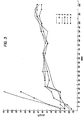
- Fig. 3 graphically illustrates the comparative stability of fresh red blood cell suspensions containing various monosaccharides and various disaccharides.
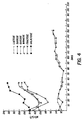
- Fig. 4 graphically illustrates the comparative stability of fresh red blood cell suspensions containing various monosaccharides and various disaccharides.
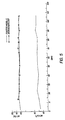
- Fig. 5 graphically illustrates the essentially linear stability of certain of the preferred controls of this invention. Description of the invention including preferred embodiments
- Both the hematology controls and calibrators contemplated within the scope of this invention can be readily prepared utilizing standard techniques and readily available materials. Either freshly drawn or outdated red blood cells may be used since the stabilizing medium of this invention is effective to prevent either from further deterioration. Employing standard cell washing techniques, the cells are washed with enough saline to remove essentially all plasma. Plasma removal is necessary since it contains antibodies which can react with antigens of different blood groups. Thereafter, the washed cells of different blood groups can be combined and the resulting mixture used in the preparation of the hematology controls and calibrator preparations of this invention. Subsequent to the washing of the cells with saline, the saline is removed by conventional methods, the cells are again washed and resuspended in a buffered medium. The components of the buffered medium can vary depending on whether or not the intent is to prepare simply a control or to prepare a calibrator. Fixed cells, to simulate white blood cells, and if desired, platelets, can also be added to the buffered medium containing the essentially plasma-free red blood cells. All of the foregoing steps in the formulation of the above hematology preparations are performed using aseptic techniques. Because there is less physical manipulation of the red blood cells in the above procedure than in conventional stabilized cell preparation, there is less likelihood of contamination. Once having prepared the control/calibrator suspension, the resultant preparation will undergo an equilibration period, during which time the mean cell volume and hematocrit values will stabilize. This stabilization can vary from a few days to several weeks, depending upon the various concentrations of components within the medium and whether or not any nutrient, such as glucose, is also present in the medium. Thus, the conscious addition of glucose is preferably minimized in the preparation of these controls and calibrators.
- The hematology cell preparation suitable for use as controls requires a buffered environment and relatively high concentrations of disaccharide (on the order of 5 to 50 grams per liter of buffered medium). The buffer which is suitable for use in preparation of these controls may be a sodium or potassium phosphate buffer capable of maintaining the supsensions at a pH in the range of from about 6.8 to about 8. In one of the preferred embodiments of this invention, the sodium ion concentration of the preparation is minimized even further. A potassium phosphate buffered medium and various Good's buffers are among those suitable for use in this regard.
- The concentration of various ingredients within the suspension is also carefully controlled in order to maintain its osmolality within the range of about 240 to 340 mos/kg. Thus, when the concentration of one component of the suspension is changed, there also must be a corresponding change in the relative concentrations of other components present therein in order to maintain the osmolality within the prescribed range for maximum cell stability.
- The hematology control fluids suitable for use as controls can be further modified through the addition of certain ingredients and, thus, function as calibrators for hematology instruments. Two ingredients which can be added to the control fluid to impart calibrator properties are serum albumin (SA) and high molecular weight polysaccharides, such as dextran. The relative concentration of serum albumin in the control in the range from about 2 to 8 gr/deciliter have been found to impart calibration properties to the fluid. The relative concentration of polysaccharide (preferably having mean molecular weight of approximately 500,000 or greater) should be in the range of from above 0.1 to about 1.0 gr/dl.
- Other optional ingredients which can be added to the medium to modify and/or alter its properties include such standard additives as adenine and inosine. These optional components can be added to the calibrator medium at the usual and customary relative concentrations for hematology fluids. As noted previously, the suspension should be maintained essentially free of nutrients, such as monosaccharides. In addition to the foregoing required and optional ingredients, such controls and calibrators can also contain other ingredients to the extent that such ingredients do not include plasma and nutrients and do not effect, in an adverse fashion, either the cell stability, the interaction of the essential components of the suspension with the red blood cells or the osmolality of the fluid suspension.
- Subsequent to the preparation of the controls and calibrators in the matter described hereinabove, they are evaluated utilizing both manual and automated techniques in order to determine the relative stability of the preparation and reproducibility of results. In addition, the various preparations within the scope of this invention are also compared with one another in order to determine the optimal levels of the various components present therein.
- The examples which follow further define, describe and illustrate a number of the preferred embodiments of this invention including comparison thereof to the more traditionally available controls and calibrators. Parts and percentages appearing in such examples are by weight unless otherwise stipulated. Apparatus and techniques which are used in both the preparation of the following controls and calibrators are either performed manually or on commercially available automated equipment utilizing generally accepted and established practices.
- Red blood cells are separated from a whole blood specimen by conventional techniques, washed with saline for removal of essentially all plasma and thereafter resuspended in a buffered medium. The cell concentration in such medium is in the range of 45× 10° per cubic microliter. The other components of the medium are as follows:

- The means cell volume stability of 4 samples containing, 100, 200 and 500 milligrams of glucose per deciliter are compared with a sample essentially devoid of any glucose. Fig. 1 illustrates the relative stability of these 4 preparations. As is readily apparent from review of the graphical data, the cell preparation, which is essentially deficient in glucose, does not require a prolonged equilibration period (on the order of 50 days) before it is stabilized sufficiently to have utility as a hematology control. In all the cell preparations depicted in Fig. 1, it is obvious that their relative stability deteriorates progressively with the passage of time.
- The procedures of Example 1 repeated except for modification in composition of the control, which is as follows: Base


- As noted hereinabove, the samples which are prepared have differing concentrations of glucose, bovine serum albumin (BSA) and disaccharide (lactose). As is evident, from the graphical depiction of mean cell stability in Fig. 2. the preparations containing the monosaccharide (glucose) are considerably less stable than the preparation containing the disaccharide (lactose).
- The procedures of Example 1 are repeated except for modification in the composition of the control, which is as follows: Base


- The stability of these controls, as measured by variation in mean cell volume, is depicted for the 6 samples in Fig. 3. As is evident from the graphical illustrated contained in Fig. 3, the preparations deficient in lactose are unstable when compared to the other preparations illustrated therein.
- The procedure of Example 1 is repeated except for the modification in the composition of the control which is as follows:

- From a comparison of the mean cell volume stabilities from the samples prepared with either a monosaccharide or a disaccharide, it is apparent from Fig. 4 that the preparations containing disaccharides exhibit essentially linear stability in comparison with those containing the monosaccharide. Of the two samples which exhibit good mean cell volume stability, there is essentially no difference between the sucrose containing preparation and the lactose containing preparation.
- The procedure of Example 1 is repeated except for modification in the composition of the control preparation, which is as follows:

- As evident from the graphical illustration in Fig. 5, three of the compositions prepared according to the foregoing recipe, the stability of the sample is essentially linear when measured as a function of mean cell volume or hematocrit.
Claims (11)
Applications Claiming Priority (2)
| Application Number | Priority Date | Filing Date | Title |
|---|---|---|---|
| US332781 | 1981-12-21 | ||
| US06/332,781 US4489162A (en) | 1981-12-21 | 1981-12-21 | Fresh blood (unfixed) hematology control |
Publications (3)
| Publication Number | Publication Date |
|---|---|
| EP0096703A1 EP0096703A1 (en) | 1983-12-28 |
| EP0096703A4 EP0096703A4 (en) | 1984-06-19 |
| EP0096703B1 true EP0096703B1 (en) | 1988-11-17 |
Family
ID=23299826
Family Applications (1)
| Application Number | Title | Priority Date | Filing Date |
|---|---|---|---|
| EP83900246A Expired EP0096703B1 (en) | 1981-12-21 | 1982-12-02 | Fresh blood (unfixed) hematology control |
Country Status (6)
| Country | Link |
|---|---|
| US (1) | US4489162A (en) |
| EP (1) | EP0096703B1 (en) |
| JP (1) | JPS58502166A (en) |
| DE (1) | DE3279220D1 (en) |
| ES (1) | ES518378A0 (en) |
| WO (1) | WO1983002328A1 (en) |
Families Citing this family (30)
| Publication number | Priority date | Publication date | Assignee | Title |
|---|---|---|---|---|
| US4579824A (en) * | 1983-05-18 | 1986-04-01 | Louderback Allan Lee | Hematology control |
| US4727042A (en) * | 1984-05-24 | 1988-02-23 | Southeast Vetlab Inc. | Calibrator composition and method of producing and using same for veterinary applications |
| US5310679A (en) * | 1985-05-13 | 1994-05-10 | Artiss Joseph D | Composition for reducing turbidity in samples of biological fluids |
| US4626511A (en) * | 1985-05-13 | 1986-12-02 | Wayne State University | Composition for reducing turbidity in samples of biological fluids |
| US4695460A (en) * | 1986-03-19 | 1987-09-22 | American Red Cross | Synthetic, plasma-free, transfusible platelet storage medium |
| US5248506A (en) * | 1986-03-19 | 1993-09-28 | American National Red Cross | Synthetic, plasma-free, transfusible storage medium for red blood cells and platelets |
| US4961928A (en) * | 1986-03-19 | 1990-10-09 | American Red Cross | Synthetic, plasma-free, transfusible storage medium for red blood cells and platelets |
| US4777139A (en) * | 1987-06-25 | 1988-10-11 | Fisher Scientific Company | Hematology control or calibrator with red cell components of enhanced stability |
| US5071741A (en) * | 1988-04-18 | 1991-12-10 | Cryolife, Inc. | Cryoprotective agent and its use in cryopreservation of cellular matter |
| US5318910A (en) * | 1988-11-10 | 1994-06-07 | International Technidyne Corp. | Standard whole blood composition for determining the potency of blood clotting inhibitory substances |
| IL93565A0 (en) * | 1989-05-15 | 1990-11-29 | Technicon Instr | Optical standards for automated blood analysis instruments |
| DE3938907C2 (en) * | 1989-11-24 | 1999-11-04 | Dade Behring Marburg Gmbh | Means for storing and suspending cells, in particular erythrocytes |
| IE76319B1 (en) * | 1990-07-23 | 1997-10-22 | Becton Dickinson Co | Preservation of cells as controls or standards in cellular analysis |
| US6509192B1 (en) * | 1992-02-24 | 2003-01-21 | Coulter International Corp. | Quality control method |
| US5763204A (en) * | 1992-09-14 | 1998-06-09 | Coulter Corporation | Preparation of preserved, non-infectious control cell for use in the identification of a disease through blood testing |
| US5342754A (en) * | 1992-09-14 | 1994-08-30 | Coulter Corporation | Preserved, non-infectious control cell for use in the identification of a disease through blood testing |
| US5409826A (en) * | 1993-06-08 | 1995-04-25 | Coulter Corporation | Preserved, non-infectious control cells prepared by the modulation or modification of normal cells |
| US5888822A (en) * | 1995-10-04 | 1999-03-30 | Hycor Biomedical Inc. | Erythrocyte sedimentation rate control |
| US5895760A (en) * | 1997-02-04 | 1999-04-20 | Hycor Biomedical, Inc. | Erythrocyte sedimentation rate control |
| US6074879A (en) * | 1997-06-23 | 2000-06-13 | Bayer Corporation | Synthetic polymer particles for use as standards and calibrators in flow cytometry |
| US7049110B2 (en) | 1998-07-21 | 2006-05-23 | Gambro, Inc. | Inactivation of West Nile virus and malaria using photosensitizers |
| US7498156B2 (en) | 1998-07-21 | 2009-03-03 | Caridianbct Biotechnologies, Llc | Use of visible light at wavelengths of 500 to 550 nm to reduce the number of pathogens in blood and blood components |
| US6124089A (en) | 1999-04-30 | 2000-09-26 | Streck Laboratories, Inc. | Blood control and system for erythrocyte sedimentation measurement |
| US6159682A (en) * | 1999-04-30 | 2000-12-12 | Streck Laboratories, Inc. | Blood control and system for erythrocyte sedimentation measurement |
| US7220747B2 (en) | 1999-07-20 | 2007-05-22 | Gambro, Inc. | Method for preventing damage to or rejuvenating a cellular blood component using mitochondrial enhancer |
| US6531321B1 (en) | 2000-09-15 | 2003-03-11 | Streck Laboratories, Inc. | Blood control and system for erythrocyte sedimentation measurement |
| US6569682B2 (en) * | 2001-07-27 | 2003-05-27 | Coulter International Corp. | Hematology control product with increased closed vial stability |
| WO2006091918A2 (en) * | 2005-02-23 | 2006-08-31 | Streck, Inc. | Process, composition and kit for providing a stable whole blood calibrator/control |
| US20060188995A1 (en) * | 2005-02-24 | 2006-08-24 | Ryan Wayne L | Process, composition and kit for providing a stable whole blood calibrator/control |
| US7531357B2 (en) | 2005-04-04 | 2009-05-12 | Bio-Rad Laboratories, Inc. | Preparation of platelet analogs |
Family Cites Families (12)
| Publication number | Priority date | Publication date | Assignee | Title |
|---|---|---|---|---|
| US4027971A (en) * | 1973-01-08 | 1977-06-07 | Philip Kolman | Method of simultaneously counting blood cells |
| US3873467A (en) * | 1974-02-01 | 1975-03-25 | United Medical Lab Inc | Hematologic reference control |
| US3962125A (en) * | 1975-01-13 | 1976-06-08 | Coulter Diagnostics, Inc. | Multi-purpose diluent for use in blood analysis by electronic instrumentation of the coulter type |
| US3973913A (en) * | 1976-01-29 | 1976-08-10 | Louderback Allan Lee | Blood control standard |
| DE2655801C2 (en) * | 1976-12-09 | 1986-06-26 | Kernforschungsanlage Jülich GmbH, 5170 Jülich | Injectable suspension of membrane vesicles from erythrocytes and method for making the suspension |
| DE2656746C2 (en) * | 1976-12-15 | 1986-06-26 | Kernforschungsanlage Jülich GmbH, 5170 Jülich | Use of loaded red blood cells |
| US4213876A (en) * | 1978-08-22 | 1980-07-22 | Coulter Electronics, Inc. | Multi-purpose blood diluent for use in electronic blood analysis instrumentation |
| US4224942A (en) * | 1979-04-25 | 1980-09-30 | Northwestern University | Cell fractionating method |
| US4299726A (en) * | 1979-05-07 | 1981-11-10 | Coulter Electronics, Inc. | Process for preparing whole blood reference controls having long term stability, preconditioning diluent and media therefor |
| US4267269A (en) * | 1980-02-05 | 1981-05-12 | Baxter Travenol Laboratories, Inc. | Red cell storage solution |
| JPS56139419A (en) * | 1980-03-31 | 1981-10-30 | Kuraray Co Ltd | Erythrocytic preservative and erythrocytic pharmaceutical for preservation |
| DD152719A1 (en) * | 1980-09-02 | 1981-12-09 | Klinke Birgit | METHOD OF PRESERVING ERYTHROCYTES |
-
1981
- 1981-12-21 US US06/332,781 patent/US4489162A/en not_active Expired - Fee Related
-
1982
- 1982-12-02 DE DE8383900246T patent/DE3279220D1/en not_active Expired
- 1982-12-02 JP JP83500314A patent/JPS58502166A/en active Pending
- 1982-12-02 EP EP83900246A patent/EP0096703B1/en not_active Expired
- 1982-12-02 WO PCT/US1982/001684 patent/WO1983002328A1/en not_active Ceased
- 1982-12-20 ES ES518378A patent/ES518378A0/en active Granted
Also Published As
| Publication number | Publication date |
|---|---|
| WO1983002328A1 (en) | 1983-07-07 |
| EP0096703A4 (en) | 1984-06-19 |
| JPS58502166A (en) | 1983-12-15 |
| US4489162A (en) | 1984-12-18 |
| EP0096703A1 (en) | 1983-12-28 |
| ES8406197A1 (en) | 1984-08-01 |
| DE3279220D1 (en) | 1988-12-22 |
| ES518378A0 (en) | 1984-08-01 |
Similar Documents
| Publication | Publication Date | Title |
|---|---|---|
| US4489162A (en) | Fresh blood (unfixed) hematology control | |
| EP0628166B1 (en) | Suspension media for hematological composition and method for its use | |
| US5304491A (en) | Stable hemoglobin reference solution | |
| US5320964A (en) | Hematology control composition including leukocyte analogs; and methods for their preparation and use | |
| US4299726A (en) | Process for preparing whole blood reference controls having long term stability, preconditioning diluent and media therefor | |
| US4711852A (en) | Control for blood gas analyzers and hemoglobin analysis | |
| WO1985005450A1 (en) | Hematology control compositions for three populations of leukocytes: and methods for their preparation and use in whole blood control systems | |
| US12332256B2 (en) | Erythrocyte simulating particle, preparation method therefor, and quality control or calibrator containing same | |
| US4126575A (en) | Blood control standard | |
| JP4283670B2 (en) | Blood control product with improved closed vial stability | |
| CN110987553A (en) | A kind of red blood cell processing reagent and its application | |
| US5558985A (en) | Stable hemoglobin reference solution | |
| CN112986065B (en) | Whole blood quality control product for hematology analyzer and preparation method thereof | |
| JPH03505482A (en) | Synthetic matrix and resulting assay calibrator | |
| CA1120835A (en) | Multiple analysis hematology reference control reagent and method of making the same | |
| Sigström et al. | A modified method for the determination of Na-K-ATPase | |
| Fyffe et al. | Preparation of material to control precision of calcium selective electrodes |
Legal Events
| Date | Code | Title | Description |
|---|---|---|---|
| PUAI | Public reference made under article 153(3) epc to a published international application that has entered the european phase |
Free format text: ORIGINAL CODE: 0009012 |
|
| AK | Designated contracting states |
Designated state(s): BE CH DE FR GB LI |
|
| 17P | Request for examination filed |
Effective date: 19831205 |
|
| RAP1 | Party data changed (applicant data changed or rights of an application transferred) |
Owner name: BAXTER TRAVENOL LABORATORIES, INC. |
|
| GRAA | (expected) grant |
Free format text: ORIGINAL CODE: 0009210 |
|
| RAP1 | Party data changed (applicant data changed or rights of an application transferred) |
Owner name: BAXTER INTERNATIONAL INC. |
|
| AK | Designated contracting states |
Kind code of ref document: B1 Designated state(s): BE CH DE FR GB LI |
|
| REF | Corresponds to: |
Ref document number: 3279220 Country of ref document: DE Date of ref document: 19881222 |
|
| ET | Fr: translation filed | ||
| PLBE | No opposition filed within time limit |
Free format text: ORIGINAL CODE: 0009261 |
|
| STAA | Information on the status of an ep patent application or granted ep patent |
Free format text: STATUS: NO OPPOSITION FILED WITHIN TIME LIMIT |
|
| PGFP | Annual fee paid to national office [announced via postgrant information from national office to epo] |
Ref country code: FR Payment date: 19890928 Year of fee payment: 8 |
|
| PGFP | Annual fee paid to national office [announced via postgrant information from national office to epo] |
Ref country code: GB Payment date: 19890930 Year of fee payment: 8 |
|
| PGFP | Annual fee paid to national office [announced via postgrant information from national office to epo] |
Ref country code: BE Payment date: 19891013 Year of fee payment: 8 |
|
| 26N | No opposition filed | ||
| REG | Reference to a national code |
Ref country code: FR Ref legal event code: ST |
|
| PGFP | Annual fee paid to national office [announced via postgrant information from national office to epo] |
Ref country code: DE Payment date: 19891229 Year of fee payment: 8 |
|
| PGFP | Annual fee paid to national office [announced via postgrant information from national office to epo] |
Ref country code: CH Payment date: 19900104 Year of fee payment: 8 |
|
| REG | Reference to a national code |
Ref country code: FR Ref legal event code: AR |
|
| REG | Reference to a national code |
Ref country code: FR Ref legal event code: BR |
|
| PG25 | Lapsed in a contracting state [announced via postgrant information from national office to epo] |
Ref country code: GB Effective date: 19901202 |
|
| PG25 | Lapsed in a contracting state [announced via postgrant information from national office to epo] |
Ref country code: LI Effective date: 19901231 Ref country code: CH Effective date: 19901231 Ref country code: BE Effective date: 19901231 |
|
| BERE | Be: lapsed |
Owner name: BAXTER INTERNATIONAL INC. Effective date: 19901231 |
|
| GBPC | Gb: european patent ceased through non-payment of renewal fee | ||
| PG25 | Lapsed in a contracting state [announced via postgrant information from national office to epo] |
Ref country code: FR Effective date: 19910830 |
|
| REG | Reference to a national code |
Ref country code: CH Ref legal event code: PL |
|
| PG25 | Lapsed in a contracting state [announced via postgrant information from national office to epo] |
Ref country code: DE Effective date: 19910903 |
|
| REG | Reference to a national code |
Ref country code: FR Ref legal event code: ST |