EP0091512B1 - 6-fluoro-3-(3-(1-heterocyclo)propyl)-1,2-benzisoxazoles, a process for their preparation, pharmaceutical compositions thereof and their use as medicaments - Google Patents
6-fluoro-3-(3-(1-heterocyclo)propyl)-1,2-benzisoxazoles, a process for their preparation, pharmaceutical compositions thereof and their use as medicaments Download PDFInfo
- Publication number
- EP0091512B1 EP0091512B1 EP82109802A EP82109802A EP0091512B1 EP 0091512 B1 EP0091512 B1 EP 0091512B1 EP 82109802 A EP82109802 A EP 82109802A EP 82109802 A EP82109802 A EP 82109802A EP 0091512 B1 EP0091512 B1 EP 0091512B1
- Authority
- EP
- European Patent Office
- Prior art keywords
- phenyl
- formula
- group
- hydrogen
- fluoro
- Prior art date
- Legal status (The legal status is an assumption and is not a legal conclusion. Google has not performed a legal analysis and makes no representation as to the accuracy of the status listed.)
- Expired
Links
- 0 C*(C)*CN(CCCC(C1)=*1c1n[o]c2cc(C)ccc12)C*CN Chemical compound C*(C)*CN(CCCC(C1)=*1c1n[o]c2cc(C)ccc12)C*CN 0.000 description 2
- TVVCEQKZBBJTPU-UHFFFAOYSA-N CCc1n[o]c2cc(F)ccc12 Chemical compound CCc1n[o]c2cc(F)ccc12 TVVCEQKZBBJTPU-UHFFFAOYSA-N 0.000 description 2
Classifications
-
- C—CHEMISTRY; METALLURGY
- C07—ORGANIC CHEMISTRY
- C07D—HETEROCYCLIC COMPOUNDS
- C07D413/00—Heterocyclic compounds containing two or more hetero rings, at least one ring having nitrogen and oxygen atoms as the only ring hetero atoms
- C07D413/02—Heterocyclic compounds containing two or more hetero rings, at least one ring having nitrogen and oxygen atoms as the only ring hetero atoms containing two hetero rings
- C07D413/06—Heterocyclic compounds containing two or more hetero rings, at least one ring having nitrogen and oxygen atoms as the only ring hetero atoms containing two hetero rings linked by a carbon chain containing only aliphatic carbon atoms
-
- A—HUMAN NECESSITIES
- A61—MEDICAL OR VETERINARY SCIENCE; HYGIENE
- A61P—SPECIFIC THERAPEUTIC ACTIVITY OF CHEMICAL COMPOUNDS OR MEDICINAL PREPARATIONS
- A61P25/00—Drugs for disorders of the nervous system
- A61P25/04—Centrally acting analgesics, e.g. opioids
-
- A—HUMAN NECESSITIES
- A61—MEDICAL OR VETERINARY SCIENCE; HYGIENE
- A61P—SPECIFIC THERAPEUTIC ACTIVITY OF CHEMICAL COMPOUNDS OR MEDICINAL PREPARATIONS
- A61P25/00—Drugs for disorders of the nervous system
- A61P25/18—Antipsychotics, i.e. neuroleptics; Drugs for mania or schizophrenia
-
- A—HUMAN NECESSITIES
- A61—MEDICAL OR VETERINARY SCIENCE; HYGIENE
- A61P—SPECIFIC THERAPEUTIC ACTIVITY OF CHEMICAL COMPOUNDS OR MEDICINAL PREPARATIONS
- A61P9/00—Drugs for disorders of the cardiovascular system
- A61P9/12—Antihypertensives
-
- C—CHEMISTRY; METALLURGY
- C07—ORGANIC CHEMISTRY
- C07D—HETEROCYCLIC COMPOUNDS
- C07D261/00—Heterocyclic compounds containing 1,2-oxazole or hydrogenated 1,2-oxazole rings
- C07D261/20—Heterocyclic compounds containing 1,2-oxazole or hydrogenated 1,2-oxazole rings condensed with carbocyclic rings or ring systems
-
- C—CHEMISTRY; METALLURGY
- C07—ORGANIC CHEMISTRY
- C07D—HETEROCYCLIC COMPOUNDS
- C07D491/00—Heterocyclic compounds containing in the condensed ring system both one or more rings having oxygen atoms as the only ring hetero atoms and one or more rings having nitrogen atoms as the only ring hetero atoms, not provided for by groups C07D451/00 - C07D459/00, C07D463/00, C07D477/00 or C07D489/00
- C07D491/02—Heterocyclic compounds containing in the condensed ring system both one or more rings having oxygen atoms as the only ring hetero atoms and one or more rings having nitrogen atoms as the only ring hetero atoms, not provided for by groups C07D451/00 - C07D459/00, C07D463/00, C07D477/00 or C07D489/00 in which the condensed system contains two hetero rings
- C07D491/10—Spiro-condensed systems
Definitions
- the present invention also relates to 3- ⁇ 3-[N-(1-piperidino)]aminopropyl ⁇ -6-fluoro-1,2-benzisoxazole, processes for the preparation thereof, and method of treating psychoses and alleviating pain employing the compound and compositions thereof.
- halogen refers to a member of a family consisting of chlorine, fluorine, bromine or iodine.
- optical antipodes and as the racemic forms thereof.
- the optical antipode may be prepared from the corresponding racemic forms by standard optical resolution techniques, involving, for example, the separation of diastereomeric salts of those instant compounds characterized by the presence of a basic amino group and an optically active acid, or by synthesis from optically active precursors.
- the present invention comprehends all optical isomers and racemic forms thereof.
- the formulas of the compounds shown herein are intended to encompass all possible optical isomers of the compounds so depicted.
- alkali metal halides such as, for example, sodium iodide and potassium iodide, and sodium bromide and potassium bromide. Potassium iodide is preferred.
- suitable solvents there may be mentioned polar aprotic substances such as, for example, dimethylformamide, dimethylacetamide and hexamethylphosphoramide. Dimethylformamide is preferred.
- the temperature at which the condensation is conducted is not narrowly critical. It is desirable, however to perform the condensation at a temperature within the range of about 50°C to about 130°C to assure a reasonable rate of conversion. A reaction temperature within the range of about 70°C to 110°C is per f erred.
- the compound of the formula II can for example be prepared according to European Pat. Appl. No. 82103432.9 by cyclizing a compound of the formula wherein R is C 1 ⁇ C 5 alkanoyl or benzoyl.
- the cyclic ketal cleavage is conveniently performed by conventional methods such as, for example, by contacting the ketal of formula I with hydrochloric acid in aqueous ethanol at moderate temperatures to furnish the carbonyl compound of formula I.
- the reduction is also conveniently performed by conventional methods such as, for example, by contacting the carbonyl compound of formula I with sodium borohydride in aqueous 2-propanol at ambient temperature to furnish the carbinol of formula I.
- Ether formation is accomplished by treating the carbinol of formula I with a phenol of formula IV in an aromatic solvent such as benzene, toluene or xylene, in the presence of a phosphine such as triethylphosphine, tri-n-butylphosphine or triphenylphosphine, and a diloweralkyl azodicarboxylate such as dimethylazodicarboxylate or diethyl azodicarboxylate.
- Benzene is the preferred aromatic solvent.
- Triphenylphosphine is the preferred phosphine and diethyl azodicarboxylate is the preferred diloweralkyl azodicarboxylate.
- the reaction temperature is not critical. However, to assure a reasonable rate of conversion, it is desirable to conduct it within the range of about -15°C to 25°C, preferably at a temperature of about 5° to 10°C.
- Thioether formation is effected by treating the carbinol of formula I with a thiophthalimide of formula V in an aromatic solvent such as benzene, toluene or xylene in the presence of a phosphine such as triethylphosphine, tri-n-butylphosphine or triphenylphosphine.
- a phosphine such as triethylphosphine, tri-n-butylphosphine or triphenylphosphine.
- Benzene is the preferred aromatic solvent and tri-n-butylphosphine is the preferred phosphine.
- the temperature at which the reaction is conducted is not narrowly critical, it is desirable to perform it at a temperature within the range of about 0° to about 50°C. The preferred reaction temperature is about ambient temperature.
- alkali metal borohydrides there may be mentioned lithium borohydride, sodium borohydride and potassium borohydride. Sodium borohydride is preferred.
- alkanols there may be mentioned methanol, ethanol, 1-propanol and 2-propanol.
- mixtures of alkanols there may be mentioned methanol and ethanol, ethanol and 2-propanol and methanol and 2-propanol, a mixture of methanol and 2-propanol is preferred.
- a reduction temperature of about ambient temperature is also preferred.
- the 6-fluoro-3-[3-(1-heterocyclo]propyl]-1,2-benzisoxazoles of the present invention are useful as analgesic agents due to their ability to alleviate pain in mammals which is demonstrated in the phenyl-para-quinone writhing assay in mice, a standard assay for analgesia [Proc. Soc. Exptl. Biol. Med., 95, 729 (1957)].
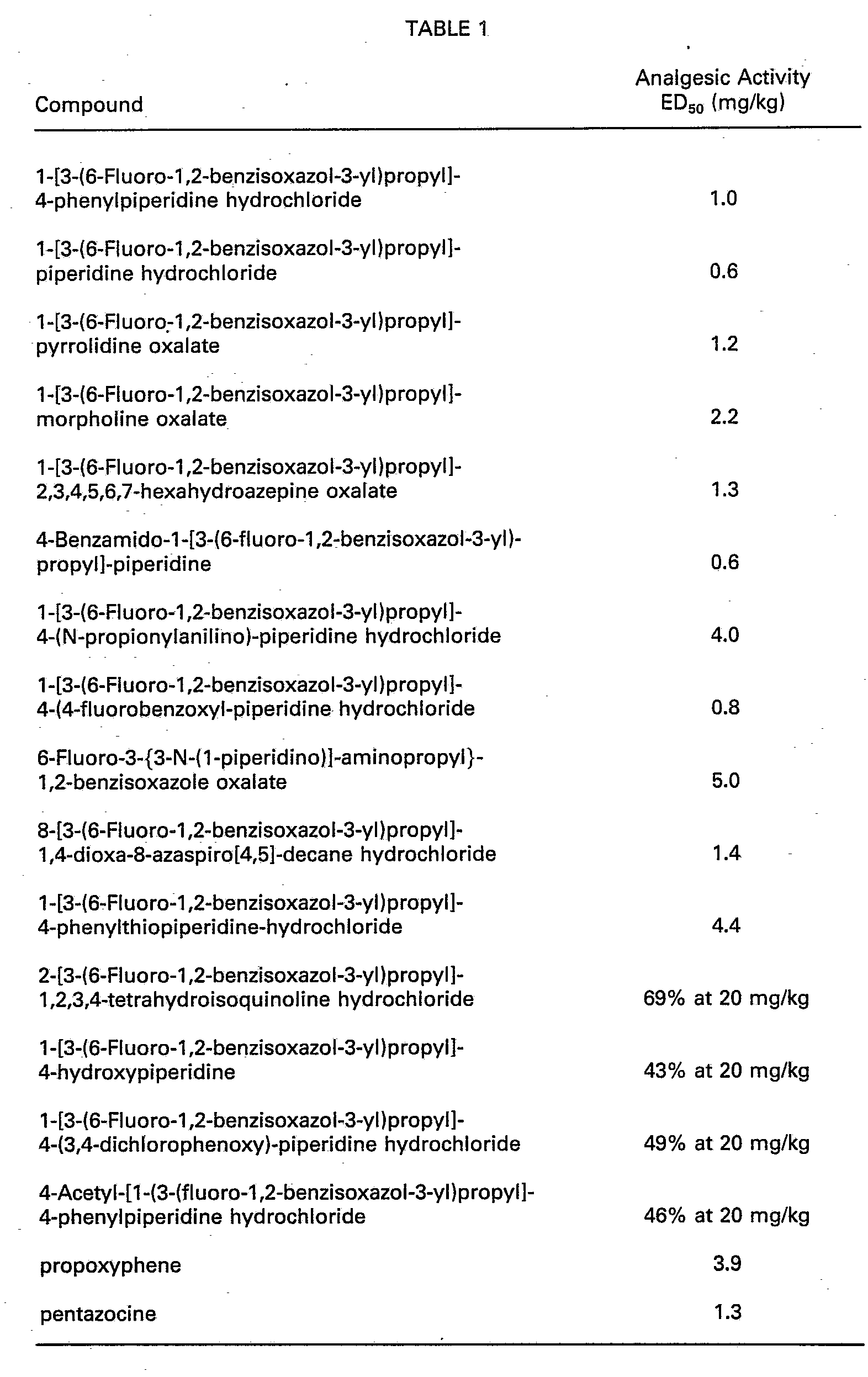
- Table I is the analgesic effect of some of the compounds of the invention.
- Analgesia production is achieved when the present 6-fluoro-3-[3-heterocyclo)propyll-1,2-benzisoxa- zoles are administered to a subject requiring such treatment as an effective oral, parenteral or intravenous dose of from 0.01 to 100 mg/kg of body weight per day. A particularly effective amount is about 10 mg/kg of body weight per day. It is to be understood, however, that for any particular subject, specific dosage regimens should be adjusted according to the individual need and the professional judgement of the person administering or supervising the administration of the aforesaid compound. It is to be further understood that the dosages set forth herein are exemplary only and that they do not, to any extent, limit the scope or practice of the invention.
- the 6-fluoro-3-[3-(1-heterocyclo)propyl]-1,2-benzisoxazoles of the present invention are also useful as antihypertensives due to their ability to reduce blood pressure in mammals.
- Antihypertensive activity is measured in the spontaneous hypertensive rat by the indirect tail cuff method described by A. Schwartz, Ed., "Methods in Pharmacology", Vol. 1, Appleton-Century-Crofts, New York, N.Y., 1971, page 135. According to this procedure, the test compound is administered orally to a group of 5 rats for 3 days in relation to a control group of the same number. The decrease in blood pressure is measured on the third day of administration.
- the antihypertensive activity expressed as the decrease in mean arterial blood pressure (mm or mercury) in this procedure of some of the compounds of the present invention is presented in Table II.
- Blood pressure reduction is achieved when the present 6-fluoro-3-[3-(1-heterocyclo)propyl]-1,2-benzisoxazoles are administered to a subject requiring such treatment as an effective oral, parenteral or intravenous dose of from 0.01 to 50 mg/kg of body weight per day.
- a particularly preferred effective amount is about 25 mg/kg of body weight per day. It is to be understood, however, that for any particular subject, specific dosage regimens should be adjusted according to the individual need and the professional judgement of the person administering or superivising the administration of the aforesaid compound. It is to be further understood that the dosages set forth herein are exemplary only and they do not, to any extent, limit the scope or practice of the invention.
- 6-fluoro-3-[3-(l-heterocyclo)propyll-1,2-benzisoxazoles of the present invention are useful for treating psychoses by virtue of their ability to block apomorphine-induced climbing in mammals.
- Antipsychotic activity is determined in the climbing mice assay by a method similar to those described by P. Protais, et al., Psychopharmacol., 50, 1 (1976) and B. Costall, Eur. J. Pharmacol., 50, 39 (1978).
- mice The subject CD-1 male mice (23-27 grams) are group-housed under standard laboratory conditions. The mice are individually placed in wire mesh stick cages (4" x 4" by 10") and are allowed one hour for adaptation and exploration of the new environment. Then apomorphine is injected subcutaneously at 1.5 mg/kg, a dose causing climbing in all subjects for 30 minutes. Compounds to be tested for antipsychotic _ activity are injected intraperitoneally 30 minutes prior to he apomorphine challenge at a screening dose of 10 mg/kg.
- the climbing scores are individually totaled (maximal score: 6 per mouse over 3 readings) and the total score of the control group (vehicle intraperitoneally ⁇ apomorphine subcutaneously) is set to 100%.
- ED 50 values with 95% confidence limits are calculated by a Linear Regression Analysis.
- Antipsychotic activity expressed as the percentage decrease in climbing score or the estimated dose at which the animals experience at 50% decrease climbing scores of some of the instant 6-fluoro-3-[3-(1-heterocyclo)propyl]-1,2-benzisoxazoles as well as standard antipsychotics are presented in Table III.
- Antipsychotic activity is achieved when the present 6-f)uoro-3-[3-(1-heterocyc)o)propy)]-1,2-benzisoxazoles are administered to a subject requiring such treatment as an effective oral, parenteral or intravenous dose of from 0.01 to 50 mg/kg of body weight per day. A particularly preferred effective amount is about 5 mg/kg of body weight per day. It is to be understood, however, that for any particular subject, specific dosage regimens should be adjusted according to the individual need and the professional judgment of the person administering or supervising the administration of the aforesaid compound. It is to be further understood that the dosages set forth herein are exemplary and they do not, to any extent, limit the scope or practice of the invention.
- Effective amounts of the compounds of the invention may be administered to a subject by any one of various methods, for example, orally as in capsules or tablets, parenterally in the form of sterile solutions or suspensions, and in some cases intravenously in the form of sterile solutions.
- the free base final products while effective themselves, may be formulated and administered in the form of their pharmaceutically acceptable addition salts for purposes of stability, convenience or crystallization, increased solubility and the like.
- Preferred pharmaceutically acceptable addition salts include salts of mineral acids, for example, hydrochloric acid, sulfuric acid or nitric acid, salts of monobasic carboxylic acids such as, for example, acetic acid or propionic acid, salts of dibasic carboxylic acids such as, for example, maleic acid, fumaric acid or oxalic acid, and salts of tribasic carboxylic acids such as, for example, carboxysuccinic acid or citric acid.
- mineral acids for example, hydrochloric acid, sulfuric acid or nitric acid
- salts of monobasic carboxylic acids such as, for example, acetic acid or propionic acid
- salts of dibasic carboxylic acids such as, for example, maleic acid, fumaric acid or oxalic acid
- salts of tribasic carboxylic acids such as, for example, carboxysuccinic acid or citric acid.
- the active compounds of the present invention may be administered orally, for example, with an inert diluent or with an edible carrier. They may be enclosed in gelatin capsules or compressed into tablets.
- the aforesaid compounds may be incorporated with excipients and used in the form of tablets, troches, capsules, elixirs, suspensions, syrups, wafers or chewing gums.
- These preparations should contain at least 0.5% of active compound, but may be varied depending upon the particular form and may conveniently be between 4% to about 75% of the weight of the unit.
- the amount of present compound in such composition is such that a suitable dosage will be obtained.
- Preferred compositions and preparations according to the present invention are prepared so that an oral dosage unit form contains between 1.0-300 mg of active compound.
- the tablets, pills, capsules, troches may also contain the following ingredients: a binder such as microcrystalline cellulose, gum tragacanth or gelatin; and excipient such as starch or lactose, a disintegrating agent such as alginic acid or corn starch; a lubricant such a magnesium stearate; a glidant such as colloidal silicon dioxide; and a sweetening agent such as sucrose or saccarin or a flavoring agent such as peppermint, methyl salicylate, orange flavoring may be added.
- a binder such as microcrystalline cellulose, gum tragacanth or gelatin
- excipient such as starch or lactose, a disintegrating agent such as alginic acid or corn starch
- a lubricant such as magnesium stearate
- a glidant such as colloidal silicon dioxide
- a sweetening agent such as sucrose or saccarin or a flavoring agent such as peppermint, methyl salicylate, orange
- dosage unit forms may contain other various materials which modify the physical form of the dosage unit, for example, as coatings.
- tablets or pills may be coated with sugar, shellac, or other enteric coating agents.
- a syrup may contain, in addition to active compounds, sucrose as a sweetening agent and certain preservatives, dyes and colorings and flavors. Materials used in preparing these various compositions should be pharmaceutically pure and non-toxic in the amounts used.
- the active compounds of the invention may be incorporated into a solution or suspension. These preparations should contain at least 0.1% of the aforesaid compound, but may be varied between 0.5 and about 50% of the weight thereof. The amount of active compound in such compositions is such that a suitable dosage will be obtained. Preferred compositions and preparations according to the present invention are prepared so that a parenteral dosage unit contains between 0.5 top 100 mgs of active compound.
- the solutions or suspensions may also include the following components: a sterile dituent such as water for injection, saline solution, fixed oils, polyethylene glycols, glycerine, propylene glycol or other synthetic solvents; antibacterial, agents such as benzyl alcohol or methyl parabens; antioxidants such as ascorbic acid or sodium bisulfite; chelating agents such as ethylenediaminetetraacetic acid; buffers such as adjustment of tonicity such as sodium chloride or dextrose.
- a sterile dituent such as water for injection, saline solution, fixed oils, polyethylene glycols, glycerine, propylene glycol or other synthetic solvents
- antibacterial, agents such as benzyl alcohol or methyl parabens
- antioxidants such as ascorbic acid or sodium bisulfite
- chelating agents such as ethylenediaminetetraacetic acid
- buffers such as adjustment of tonicity such as sodium chloride or dext
- the salt was immediate rebasified to give an oil, which was purified by column chromatography (silica gel, tetrahydrofuran). The purified oil was treated with ethereal hydrogen chloride, and the resultant salt was recrystallized from ethyl acetate/methanol to give 2.8 g (31 %) of product, mp 188°-189°C.
- the salt was rebasified to give an oil, which was purified by column chromatography (silca gel, tetrahydrofuran). The purified oil was treated with ethereal hydrogen chloride, and the resultant salt was recrystallized from ethyl acetate/methanol to give 2.4 g (23%) of product, mp 212°-214°C.
- the oil was purified by column chromatography (silica gel, tetrahydrofuran). The purified oil was treated with ethereal hydrogen chloride and the resultant salt immediately recrystallized from ethyl acetate/methanol to give 3.3 g (34%) of product, mp 174°-175°C.
Landscapes
- Chemical & Material Sciences (AREA)
- Organic Chemistry (AREA)
- Health & Medical Sciences (AREA)
- Engineering & Computer Science (AREA)
- Bioinformatics & Cheminformatics (AREA)
- Life Sciences & Earth Sciences (AREA)
- Veterinary Medicine (AREA)
- General Chemical & Material Sciences (AREA)
- Medicinal Chemistry (AREA)
- Nuclear Medicine, Radiotherapy & Molecular Imaging (AREA)
- Chemical Kinetics & Catalysis (AREA)
- Pharmacology & Pharmacy (AREA)
- Public Health (AREA)
- Animal Behavior & Ethology (AREA)
- General Health & Medical Sciences (AREA)
- Biomedical Technology (AREA)
- Neurology (AREA)
- Neurosurgery (AREA)
- Cardiology (AREA)
- Heart & Thoracic Surgery (AREA)
- Psychiatry (AREA)
- Pain & Pain Management (AREA)
- Pharmaceuticals Containing Other Organic And Inorganic Compounds (AREA)
- Heterocyclic Carbon Compounds Containing A Hetero Ring Having Nitrogen And Oxygen As The Only Ring Hetero Atoms (AREA)
- Plural Heterocyclic Compounds (AREA)
- Nitrogen And Oxygen Or Sulfur-Condensed Heterocyclic Ring Systems (AREA)
- Nitrogen Condensed Heterocyclic Rings (AREA)
Abstract
Description
- The present invention relates to novel 3-[3-(1-heterocyclo)propylj-1,2-benzisoxazoles. More particularly, the present invention relates to 6-fluoro-3-[3-(1-heterocyclo)propyl]-1,2-benzisoxazoles of Formula I


- Subgeneric to the 6-fluoro-3-[3-(1-heterocyclo)propyl]-1,2-benzisoxazoles of formula I are those wherein:
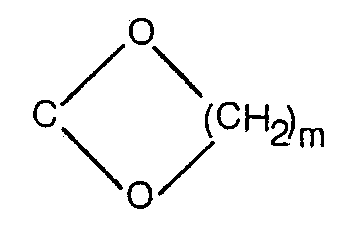
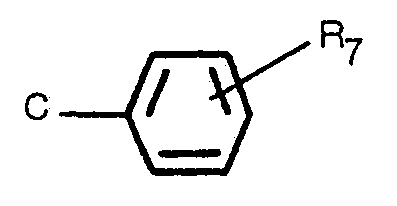
- (a) X is CR1R2 wherein R1 is hydrogen, C1―C5-alkyl, phenyl or phenyl-Cl-Cs-alkyl and R2 is hydrogen, cyano, C1―C5-alkylcarbonyl, phenylcarbonyl in which the phenyl group is substituted by halogen, a group of the formula


- (b) X is CR1R2 wherein R1 is hydrogen, C1―C5-alkyl, phenyl or phenyl-C1―C5-alkyl and R2 is hydrogen; and n is 1, 2 or 3;
- (c) X is CHZR4 wherein Z is 0 or S and R4 is hydrogen or phenyl substituted by trifluoromethyl or one or two halogen groups;
- (d) X is C=O or a group of the formula

- (e) X is CHNR5R6 wherein R5 is hydrogen or phenyl and R6 is phenylcarbonyl or Cl-Cs-alkylcarbonyl;
- (f) X is O; and
- (g) X and Y taken together form phenyl nucleus.
- The present invention also relates to 3-{3-[N-(1-piperidino)]aminopropyl}-6-fluoro-1,2-benzisoxazole, processes for the preparation thereof, and method of treating psychoses and alleviating pain employing the compound and compositions thereof.
- As used through the specification and appended claims, the term "halogen" refers to a member of a family consisting of chlorine, fluorine, bromine or iodine.
- The compounds of the present invention which lack an element of symmetry exist as optical antipodes and as the racemic forms thereof. The optical antipode may be prepared from the corresponding racemic forms by standard optical resolution techniques, involving, for example, the separation of diastereomeric salts of those instant compounds characterized by the presence of a basic amino group and an optically active acid, or by synthesis from optically active precursors.
- The present invention comprehends all optical isomers and racemic forms thereof. The formulas of the compounds shown herein are intended to encompass all possible optical isomers of the compounds so depicted.
- The novel 6-fluoro-3-{3-(1-heterocyclo)propyl]-1,2-benzisoxazoles of formula I wherein X is O, a group of the formula


- To prepare 3-[3-(1-heterocyclo)propyl]-1,2-benzisoxazoles of formula I wherein X is C=O or CHZR4 wherein Z is 0 or S and R4 is hydrogen or phenyl substituted by trifluoromethyl or one or two halogen groups; Y is CH2; and n is 1, 2 or 3, a cyclic ketal of formula I wherein X is a group of the formula


- The cyclic ketal cleavage is conveniently performed by conventional methods such as, for example, by contacting the ketal of formula I with hydrochloric acid in aqueous ethanol at moderate temperatures to furnish the carbonyl compound of formula I.
- The reduction is also conveniently performed by conventional methods such as, for example, by contacting the carbonyl compound of formula I with sodium borohydride in aqueous 2-propanol at ambient temperature to furnish the carbinol of formula I.
- Ether formation is accomplished by treating the carbinol of formula I with a phenol of formula IV in an aromatic solvent such as benzene, toluene or xylene, in the presence of a phosphine such as triethylphosphine, tri-n-butylphosphine or triphenylphosphine, and a diloweralkyl azodicarboxylate such as dimethylazodicarboxylate or diethyl azodicarboxylate. Benzene is the preferred aromatic solvent. Triphenylphosphine is the preferred phosphine and diethyl azodicarboxylate is the preferred diloweralkyl azodicarboxylate. The reaction temperature is not critical. However, to assure a reasonable rate of conversion, it is desirable to conduct it within the range of about -15°C to 25°C, preferably at a temperature of about 5° to 10°C.
- Thioether formation is effected by treating the carbinol of formula I with a thiophthalimide of formula V in an aromatic solvent such as benzene, toluene or xylene in the presence of a phosphine such as triethylphosphine, tri-n-butylphosphine or triphenylphosphine. Benzene is the preferred aromatic solvent and tri-n-butylphosphine is the preferred phosphine. Even though the temperature at which the reaction is conducted is not narrowly critical, it is desirable to perform it at a temperature within the range of about 0° to about 50°C. The preferred reaction temperature is about ambient temperature.
- To prepare 3-[3-(1-heterocyclo)propyl]-1,2-benzisoxazoles of formula I wherein X is CRlR2 wherein R1 is ohenvl and R, is

- The 6-fluoro-3-[3-(1-heterocyclo]propyl]-1,2-benzisoxazoles of the present invention are useful as analgesic agents due to their ability to alleviate pain in mammals which is demonstrated in the phenyl-para-quinone writhing assay in mice, a standard assay for analgesia [Proc. Soc. Exptl. Biol. Med., 95, 729 (1957)]. Presented in Table I is the analgesic effect of some of the compounds of the invention. Expressed as the subcutaneous dose at which 50% of the phenyl-para-quinone induced writhing is inhibited in the animals, i.e., the ED50 value and, as the percent decrease in writhing at a given dose.
- Analgesia production is achieved when the present 6-fluoro-3-[3-heterocyclo)propyll-1,2-benzisoxa- zoles are administered to a subject requiring such treatment as an effective oral, parenteral or intravenous dose of from 0.01 to 100 mg/kg of body weight per day. A particularly effective amount is about 10 mg/kg of body weight per day. It is to be understood, however, that for any particular subject, specific dosage regimens should be adjusted according to the individual need and the professional judgement of the person administering or supervising the administration of the aforesaid compound. It is to be further understood that the dosages set forth herein are exemplary only and that they do not, to any extent, limit the scope or practice of the invention.
- The 6-fluoro-3-[3-(1-heterocyclo)propyl]-1,2-benzisoxazoles of the present invention are also useful as antihypertensives due to their ability to reduce blood pressure in mammals. Antihypertensive activity is measured in the spontaneous hypertensive rat by the indirect tail cuff method described by A. Schwartz, Ed., "Methods in Pharmacology", Vol. 1, Appleton-Century-Crofts, New York, N.Y., 1971, page 135. According to this procedure, the test compound is administered orally to a group of 5 rats for 3 days in relation to a control group of the same number. The decrease in blood pressure is measured on the third day of administration. The antihypertensive activity expressed as the decrease in mean arterial blood pressure (mm or mercury) in this procedure of some of the compounds of the present invention is presented in Table II.

- Blood pressure reduction is achieved when the present 6-fluoro-3-[3-(1-heterocyclo)propyl]-1,2-benzisoxazoles are administered to a subject requiring such treatment as an effective oral, parenteral or intravenous dose of from 0.01 to 50 mg/kg of body weight per day. A particularly preferred effective amount is about 25 mg/kg of body weight per day. It is to be understood, however, that for any particular subject, specific dosage regimens should be adjusted according to the individual need and the professional judgement of the person administering or superivising the administration of the aforesaid compound. It is to be further understood that the dosages set forth herein are exemplary only and they do not, to any extent, limit the scope or practice of the invention.
- The 6-fluoro-3-[3-(l-heterocyclo)propyll-1,2-benzisoxazoles of the present invention are useful for treating psychoses by virtue of their ability to block apomorphine-induced climbing in mammals.
- Antipsychotic activity is determined in the climbing mice assay by a method similar to those described by P. Protais, et al., Psychopharmacol., 50, 1 (1976) and B. Costall, Eur. J. Pharmacol., 50, 39 (1978).
- The subject CD-1 male mice (23-27 grams) are group-housed under standard laboratory conditions. The mice are individually placed in wire mesh stick cages (4" x 4" by 10") and are allowed one hour for adaptation and exploration of the new environment. Then apomorphine is injected subcutaneously at 1.5 mg/kg, a dose causing climbing in all subjects for 30 minutes. Compounds to be tested for antipsychotic _ activity are injected intraperitoneally 30 minutes prior to he apomorphine challenge at a screening dose of 10 mg/kg.
- For evaluation of climbing, 3 readings are taken at 10, 20 and 30 minutes after apomorphine administration according to the following scale:

- Mice consistently climbing before the injection of apomorphine will be discarded.
- With full-developed apomorphine climbing, the animals are hanging onto the cage walls, rather motionless, over longer periods of time. By contrast, climbs due to mere motor stimulation usually only last a few seconds.
- The climbing scores are individually totaled (maximal score: 6 per mouse over 3 readings) and the total score of the control group (vehicle intraperitoneally― apomorphine subcutaneously) is set to 100%. ED50 values with 95% confidence limits are calculated by a Linear Regression Analysis. Antipsychotic activity expressed as the percentage decrease in climbing score or the estimated dose at which the animals experience at 50% decrease climbing scores of some of the instant 6-fluoro-3-[3-(1-heterocyclo)propyl]-1,2-benzisoxazoles as well as standard antipsychotics are presented in Table III.

- Antipsychotic activity is achieved when the present 6-f)uoro-3-[3-(1-heterocyc)o)propy)]-1,2-benzisoxazoles are administered to a subject requiring such treatment as an effective oral, parenteral or intravenous dose of from 0.01 to 50 mg/kg of body weight per day. A particularly preferred effective amount is about 5 mg/kg of body weight per day. It is to be understood, however, that for any particular subject, specific dosage regimens should be adjusted according to the individual need and the professional judgment of the person administering or supervising the administration of the aforesaid compound. It is to be further understood that the dosages set forth herein are exemplary and they do not, to any extent, limit the scope or practice of the invention.
- Effective amounts of the compounds of the invention may be administered to a subject by any one of various methods, for example, orally as in capsules or tablets, parenterally in the form of sterile solutions or suspensions, and in some cases intravenously in the form of sterile solutions. The free base final products, while effective themselves, may be formulated and administered in the form of their pharmaceutically acceptable addition salts for purposes of stability, convenience or crystallization, increased solubility and the like.
- Preferred pharmaceutically acceptable addition salts include salts of mineral acids, for example, hydrochloric acid, sulfuric acid or nitric acid, salts of monobasic carboxylic acids such as, for example, acetic acid or propionic acid, salts of dibasic carboxylic acids such as, for example, maleic acid, fumaric acid or oxalic acid, and salts of tribasic carboxylic acids such as, for example, carboxysuccinic acid or citric acid.
- The active compounds of the present invention may be administered orally, for example, with an inert diluent or with an edible carrier. They may be enclosed in gelatin capsules or compressed into tablets. For the purpose of oral therapeutic administration, the aforesaid compounds may be incorporated with excipients and used in the form of tablets, troches, capsules, elixirs, suspensions, syrups, wafers or chewing gums. These preparations should contain at least 0.5% of active compound, but may be varied depending upon the particular form and may conveniently be between 4% to about 75% of the weight of the unit. The amount of present compound in such composition is such that a suitable dosage will be obtained. Preferred compositions and preparations according to the present invention are prepared so that an oral dosage unit form contains between 1.0-300 mg of active compound.
- The tablets, pills, capsules, troches may also contain the following ingredients: a binder such as microcrystalline cellulose, gum tragacanth or gelatin; and excipient such as starch or lactose, a disintegrating agent such as alginic acid or corn starch; a lubricant such a magnesium stearate; a glidant such as colloidal silicon dioxide; and a sweetening agent such as sucrose or saccarin or a flavoring agent such as peppermint, methyl salicylate, orange flavoring may be added. When the dosage unit form is a capsule, it may contain, in addition to materials of the above type, a liquid carrier such as fatty oil. Other dosage unit forms may contain other various materials which modify the physical form of the dosage unit, for example, as coatings. Thus tablets or pills may be coated with sugar, shellac, or other enteric coating agents. A syrup may contain, in addition to active compounds, sucrose as a sweetening agent and certain preservatives, dyes and colorings and flavors. Materials used in preparing these various compositions should be pharmaceutically pure and non-toxic in the amounts used.
- For the purpose of parenteral therapeutic administration, the active compounds of the invention may be incorporated into a solution or suspension. These preparations should contain at least 0.1% of the aforesaid compound, but may be varied between 0.5 and about 50% of the weight thereof. The amount of active compound in such compositions is such that a suitable dosage will be obtained. Preferred compositions and preparations according to the present invention are prepared so that a parenteral dosage unit contains between 0.5 top 100 mgs of active compound.
- The solutions or suspensions may also include the following components: a sterile dituent such as water for injection, saline solution, fixed oils, polyethylene glycols, glycerine, propylene glycol or other synthetic solvents; antibacterial, agents such as benzyl alcohol or methyl parabens; antioxidants such as ascorbic acid or sodium bisulfite; chelating agents such as ethylenediaminetetraacetic acid; buffers such as adjustment of tonicity such as sodium chloride or dextrose. The parenteral preparation can be enclosed in ampoules, disposable syringes or multiple dose vials made of glass or plastic.
- The following Examples are for illustrative purposes only and are not to be construed as limiting the invention.
- To 50 ml of dry dimethylformamide, was added 4.2 g of 3-(3-chloropropyl)-6-fluoro-1,2-benzisoxazole, 5.0 ml of pyrrolidine, 8.0 g of sodium bicarbonate, and a crystal of potassium iodide. After stirring at 70°C for four hrs, the mixture was filtered and the filtrate was evaporated to an oil. The oil was stirred with 100 ml of water for five mins and then extracted with ether. The ether extract was washed with water (2x), saturated sodium chloride solution and dried over anhydrous magnesium sulfate. After filtering, the solvent was evaporated to an oil. The oil was treated with etheral oxalic acid, and the resultant salt was recrystallized twice from ethyl acetate/methanol/ether to give 2.7 g, (44%) of product, mp 190°-200°C (dec.).
- Analysis:
- Calculated for C,4H17FN20.(C02H): 56.80%C 5.66%H 8.28%N
- Found: 56.38%C 5.64%H 8.34%N
- To 30 ml of dry dimethylformamide, was added 4.2 g of (3-chloropropyl)-6-fluoro-1,2-benzisoxazole, 2.0 ml of piperidine, 8.0 g of sodium bicarbonate, and a crystal of potassium iodide. After stirring at 80°C for two hrs, the mixture was filtered and the filtrate was evaporated to an oil. The oil was stirred with 100 ml of water for five mins and then extracted with ether. The ether extract was washed with water (2x), saturated sodium chloride solution and dried over anhydrous magnesium sulfate. After filtering, the solvent was evaporated to an oil. The oil was treated with ethereal hydrogen chloride, and the resultant salt was twice recrystallized from ethyl acetate/methanol/ether to give 2.5 g of (42%) product, mp 163°-165°C.
- Analysis:
- Calculated for C15H19FN2O·HCl: 60.29%C 6.75%H 9.38%N
- Found: 60.03%C 6.76%H 9.24%N
- To 40 ml of dry dimethylformamide, was added 4.2 g of 3-(3-chloropropyl)-6-fluoro-1,2-benzisoxazole, 2.3 ml of hexamethyleneimine, 8.0 g of sodium bicarbonate, and a crystal of potassium iodide. After stirring at 80°C for three hrs, the mixture was filtered and the filtrate was evaporated to an oil. The oil was stirred with 100 ml of water for five mins and then extracted with ether. The ether extract was washed with water (2x), saturated sodium chloride solution and dried over anhydrous magnesium sulfate. After filtering, the solvent was evaporated to an oil. The oil was treated with ethereal hydrogen chloride, and the resultant salt was recrystallized twice from ethyl acetate/methanol/ether to give 2.4 g (33%) product, mp 141°-142°C.
- Analysis:
- Calculated for C16H21FN2O (CO2H)2: 59.00%C 6.33%H 7.65%N
- Found: 59.08%C 6.40%H 7.59%H
- To 35 ml of dry dimethylformamide, was added 4.2 g of 3-(3-chloropropyl)-6-fluoro-1,2-benzisoxazole, 3.0 ml of morpholine, 8.0 g of sodium bicarbonate, and a crystal of potassium iodide. After stirring at 90°C for three hrs, the mixture was filtered and the filtrate was evaporated to an oil. The oil was stirred with 100 ml of water for five mins and then extracted with ether. The ether extract was washed with water (2x), saturated sodium chloride solution and dried over anhydrous magnesium sulfate. After filtering, the solvent was evaporated to an oil. The oil was treated with ethereal hydrogen chloride, and the resultant salt was recrystallized twice from ethyl acetate/methanol/ether to give the analytical sample, mp 178°-180°C (dec.).
- Analysis:
- Calculated for C14H17FN2O·(CO2H)2: 54.23%C 5.40%H 7.91%N
- Found: 53.89%C 5.32%H 7.96%N
- To 30 mi of dry dimethylformamide, was added 2.13 g of 1,2,3,4-tetrahydroisoquinoline; 3.4 ml of 3-(3-chloropropyl)-6-fluoro-1,2-benzisoxazole, 8.0 g of sodium bicarbonate, and a crystal of potassium iodide. After stirring at 100°C for two hrs, the mixture was evaporated to an oil. The oil was stirred with 100 ml of water for five mins and then extracted with ether. The ether extract was washed with water (2x), saturated sodium chloride solution and dried over anhydrous magnesium sulfate. After filtering, the solvent was evaporated to an oil. A 4.5 g-portion of the oil was dissolved in ether and hydrogen chloride, and the resultant salt was recrystallized from ethyl acetate/methanol/ether to give 3.0 g of (54%) of product, mp 174°-176°C.
- Analysis:
- Calculated for C19H19FN2O·HCl: 65.79%C 5.81%H 8.08%N
- Found: 65.93%C 5.75%H 8.00%N
- To 30 ml of dry dimethylformamide, was added 2.4 g of 4-phenylpiperidine, 3.4 g of 3-(3-chloropropyl)-6.fluoro-1,2-benzisoxazole, 8.0 g of sodium bicarbonate, and a few crystals of potassium iodide. After stirring at 100°C for three hrs, the mixture was filtered and the filtrate was evaporated to an oil. The oil was stirred with 100 ml of water for five mins and then extracted into ether. The ether extract was washed with water (2x), saturated sodium chloride solution and dried over anhydrous magnesium sulfate. After filtering, the solvent was evaporated to an oil. The oil was dissolved in ether and treated with ethereal hydrogen chloride, and the resultant salt was twice recrystallized from ethyl acetate/methanol/ether to give 3.0 g (53%) of product, mp 213°-214°C.
- Analysis:
- Calculated for C21H23FN2O·HCl: 67.28%C 6.45%H 7.47%N
- Found: 67.58%C 6.54%H 7.47%N
- To 40 ml of dry dimethylformamide, was added 4.06 g of 4-(3-phenylpropyl)piperidine, 3.4 g of 3-(3-chloropropyl)-6-fluoro-1,2-benzisoxazole, 10 g of milled potassium carbonate, and 0.01 g of potassium iodide. After stirring at 90°C forthree hrs, the mixture was cooled, filtered and the filtrate was evaporated to an oil. The oil was stirred with 100 ml of water for ten mins and then extracted with ether. The ether extract was washed with water (2x), saturated sodium chloride solution and dried over anhydrous magnesium sulfate. After filtering, the solvent was acidified to pH 1 with ethereal hydrogen chloride. The resultant precipitate was collected and dried to give 5.0 g (60%) of product, mp 95°. Recrystallization from ethyl acetate/methanol (5:1) gave the analytical sample, mp 136°-137°C.
- Analysis:
- Calculated for C24H29FN2O·HCl: 69.13%C 7.25%H 6.72%N
- Found: 69.28%C 7.25%H 6.72%N
- A mixture of 5 g 3-(3-chloropropyl)-6-fluoro-1,2-benzisoxazole, 5 g of 4-benzylipieridine, 10 g of potassium carbonate and a few crystals potassium iodide in 50 ml of dimethylformamide was stirred at 70°C for 4.5 hr. The mixture was cooled, filtered and concentrated to an oil. The oil was stirred with water and extracted with ether. The organic extracts were washed with water (2x), saturated sodium chloride solution and dried over anhydrous magnesium sulfate, filtered and concentrated. The residue was treated with ethereal hydrogen chloride to give a salt. The salt was immediate rebasified to give an oil, which was purified by column chromatography (silica gel, tetrahydrofuran). The purified oil was treated with ethereal hydrogen chloride, and the resultant salt was recrystallized from ethyl acetate/methanol to give 2.8 g (31 %) of product, mp 188°-189°C.
- Analysis:
- Calculated for C22H25FN2O·HCl: 67.94%C 6.74%H 7.20%N
- Found: 67.62%C 6.78%H 7.08%N
- A mixture of 5 g 3-(3-chloropropyl)-6-fluoro-1,2-benzisoxazole, 2.9 g of 4-methylpiperidine, 10 g of potassium carbonate and a few crystals potassium iodide in 50 ml of dimethylformamide was stirred at 65°-70°C for four hrs. The mixture was cooled, filtered and concentrated to an oil. The oil was stirred with water and extracted with ether. The organic extracts were washed with water (2x), saturated sodium chloride solution, dried over anhydrous magnesium sulfate, filtered and concentrated. The residue was treated with ethereal hydrogen chloride to give 4 g (55%) of product, mp 180°-182°C. Recrystallization from ethyl acetate/methanol gave the analytical sample, 189 =190°C.
- Analysis:
- Calculated for C16H21FN2O·HCl: 61.43%C 7.09%H 8.96%N
- Found: 61.06%C 7.02%H 8.80%N
- To 30 ml of dry dimethylformamide, was added, 3.7 g of 4-(4-chlorophenyl)-1,2,3,6-tetrahydropyridine, 4.2 g of 3-(3-chloropropyl)-6-fluoro-1,2-benzisoxazole, 10 g of sodium bicarbonate, and a few crystals of potassium iodide. After stirring at 80°C for one hr, the mixture was cooled, filtered and the filtrate was evaporated to an oil. The oil was stirred with 100 ml of water for five mins and then extracted with ether/ ethyl acetate. The organic extract was washed with water (2x), saturated sodium chloride solution and dried over anhydrous magnesium sulfate. After filtering, the solvent was evaporated to an oil. The oil was dissolved in ether, filtered and treated with ethereal oxalic acid solution to give 5.2 g (56%) of product, mp 185°C (dec.). Two recrystallizations from ethyl acetate/methanol (9:1) gave the analytical sample, mp 207°-209°C (dec.).
- Analysis:
- Calculated for C21H20ClFN2O·(CO2H)2: 59.93%C 4.81%H 6.08%N
- Found: 60.11%C 4.81%H 5.97%N
- A mixture of 9.8 g 3-(3-chloropropyl)-6-fluoro-1,2-benzisoxazole, 10 g of 4-(N-propionylanilino)piperidine, 7.1 g of potassium carbonate and a few crystals potassium iodide in 125 ml of dimethylformamide was stirred at 75°C for three hrs. The reaction mixture was cooled, filtered and concentrated to an oil. The oil was stirred with water and extracted with ether. The organic extracts were washed with water (2x), saturated sodium chloride solution, dried over anhydrous magnesium sulfate, filtered and concentrated. The residue was treated with ethereal hydrogen chloride to give 10 g (55%) of product, mp 155°―160°C.
- Analysis:
- Calculated for C24H28FN3O2·HCl: 64.63%C 6.55%H 9.42%N
- Found: 64.76%C 6.53%H 9.41 %N
- A mixture of 3.7 g of 4-benzamidopiperidine, 4.3 g of 3-(3-chloropropyl)-6-fluoro-1,2-benzisoxazole, 8 g of sodium bicarbonate and a few crystals potassium iodide in 30 ml of dimethylformamide was stirred at 55°Cfor 2.5 hrs. The reaction mixture was cooled and concentrated to an oil. The oil was stirred with water and extracted with ether/ethyl acetate. The organic extracts were washed with water, saturated sodium 'chloride solution, dried over anhydrous magnesium sulfate, filtered and concentrated. The residue with isopropyl ether gave 1.2g g (17%) of product, mp 150°-151°C.
- Analysis:
- Calculated for C22H24FN3O2: 69.27%C 6.34%H
- Found: 69.11%C 6.35%H
- To 40 ml of dry dimethylformamide was added 4.2 g of 3-(3-chloropropyl)-6-fluoro-1,2-benzisoxazole, 3.0 g of N-aminopiperidine, 8.0 g of sodium bicarbonate, and a few crystals of potassium iodide. After stirring at 100°C for two hrs, the mixture was evaporated. The residue was stirred with 100 ml of water for five mins and then extracted into ether. The ether extract was washed with water (2x), saturated sodium chloride solution and dried over anhydrous magnesium sulfate and filtered. The filtrate was treated with ethereal oxalic acid, and the resultant salt was recrystallized from ethyl acetate/methanol/ether to give 2.8 g (38%) of product, mp 151°-153°C. Recrystallization from ethyl acetate/methanol/ether gave the analytical sample, mp 155°-157°C.
- Analysis:
- Calculated for C15H20FN3O·(CO2H)2: 55.58%C 6.04%H 11.44%N
- Found: 55.66%C 5.98%H 11.07%N
- A mixture of 15 g 1,4-dioxa-8-azaspiro-[4.5]decane, 25 g of 3-(3-chloropropyl)-6-fluoro-1,2-benzisoxazole, 29 g of potassium carbonate and a few crystals potassium iodide in 80 ml of dimethylformamide was stirred at 70°―75°C for two hrs. The mixture was cooled, filtered and concentrated to an oil. The oil was stirred with water and extracted with ether. The organic extracts were washed with water (2x), saturated sodium chloride solution, dried over anhydrous magnesium sulfate, filtered and concentrated. The residue was treated with ethereal hydrogen chloride to give 18 g (48%) of product, mp 170°-173°C. Recrystallization from ethyl acetate/methanol gave the analytical sample, mp 178°-179°C.
- Analysis:
- Calculated for C17H21FN2O3·HCl: 57.22%C 6.21%H 7.85%N
- Found: 57.45%C 6.13%H 7.88%N
- A mixture of 51 g of 8-[3-(6-fluoro-1,2-benzisoxazole-3-yl)propyl]-1,4-dioxa-8-azaspiro[4.5]decane hydrochloride, 100 ml of water, 100 ml of ethanol and 150 ml of 3N hydrochloric acid was heated at 75-80°C for 3 hrs and at ambient temperature overnight, with stirring. The mixture was cooled, basified with 3N sodium hydroxide solution and extracted with ethyl acetate-ether. The organic extracts were washed with water, saturated sodium chloride solution, dried over anhydrous magnesium sulfate and concentrated to give 37 g (96%) of product as an oil.
- A solution of 5 g 1-[3-(6-fluoro-1,2-benzisoxazole-3-yl)propyl]-4-piperidone and 1.4 g of sodium borohydride in 50 ml of isopropanol was stirred at ambient temperature for twenty hrs. The reaction mixture was quenched with methanol and concentrated. The residue was stirred with water and extracted with ether. The organic extracts were washed with water (2x), saturated sodium chloride solution, dried over anhydrous magnesium sulfate, filtered and concentrated to give 4.5 g (90%) of product. Recrystallization from ether gave the analytical sample, mp 88°-89°C.
- Analysis:
- Calculated for C15H19FN2O: 64.73%C 6.88%H
- Found: 64.60%C 6.95%H
- To a solution of 6.4 g 1-[3-(6-Fluoro-1,2-benzisoxazole-3-yl)propyl]-4-piperidine, 3.7 g of 3,4-dichlorophenol and 6.6 g of triphenylphosphine in 200 ml of benzene, cooled with an ice bath, was slowly added over one hr a solution of 4.4 g of diethyl azodicarboxylate in 50 ml of benzene. After stirring twenty hrs at ambient temperature, the reaction mixture was filtered and the filtrate was concentrated. The residue was treated with ethereal hydrogen chloride to yield a salt. The salt was rebasified to give an oil, which was purified by column chromatography (silca gel, tetrahydrofuran). The purified oil was treated with ethereal hydrogen chloride, and the resultant salt was recrystallized from ethyl acetate/methanol to give 2.4 g (23%) of product, mp 212°-214°C.
- Analysis:
- Calculated for C21H21Cl2FN2O2·HCl: 54.86%C 4.82%H
- Found: 54.71%C 4.82%H
- To a solution of 7.7 g of 1-[3-(6-Fluoro-1,2-benzisoxazol-3-yl)propyl]-4-piperidine, 4.5 g of a,a,a-trifluoromethyl-p-cresol and 8 g of triphenylphosphine in 200 ml of benzene, cooled with an ice-bath, was slowly added over one hour a solution of 5.3 g of diethyl azodicarboxylate in 50 ml of benzene. After stirring twenty hrs at ambient temperature, the reaction mixture was filtered and concentrated to an oil. The oil was treated with ethereal hydrogen chloride and the resultant solid was immediately recrystallized from ethyl acetate/methanol to give 2.5 g (20%) of product, mp 224°-225°C.
- Analysis:
- Calculated for C22H22F4N2O2·HCl: 57.58%C 5.05%H
- Found: 57.49%C 5.07%H
- To a solution of 9.5 g 1-[3-(6-fluoro-1,2-benzisoxazol-3-yl)propyl]-4-hydroxypiperidine, 4.5 g of 4-chlorophenol and 9.8 g triphenylphosphine in 250 ml of benzene, cooled with an ice-bath, was slowly added over one hour a solution of diethyl azodicarboxylate in 60 ml of benzene. After stirring one hr at ambient temperature, the reaction mixture was filtered and then concentrated to an oil. The oil was treated with ethereal hydrogen chloride to give 4.6 g (32%) of product, mp 209°-211°C. Recrystallization from ethyl acetate/methanol gave the analytical sample, mp 212°-213°C (dec.).
- Analysis:
- Calculated for C21H22ClFN2O2·HCl: 59.30%C 5.45%H
- Found: 59.17%C 5.46%H
- To a suspension of 7 g of N-phenylthiophthalimide in 75 ml of benzene at 23°C, was added 5.6 g of tri-n-butylphosphine. The pot temperature rose to 29°C. After the temperature had fallen by 23°C, a solution of 6.7 g of 1-[3-fluoro-1,2-benzisoxazol-3-yl)propyll-4-hydroxypiperidine in 20 ml of benzene was slowly added. After the addiotion was complete, the reaction mixture was stirred twenty hrs at ambient temperature. The reaction mixture was filtered and concentrated. The residue was treated with ethereal hydrogen chloride. The resultant salt was immediately basified to give an oil. The oil was purified by column chromatography (silica gel, tetrahydrofuran). The purified oil was treated with ethereal hydrogen chloride and the resultant salt immediately recrystallized from ethyl acetate/methanol to give 3.3 g (34%) of product, mp 174°-175°C.
- Analysis:
- Calculated for C,lH23FN20S.HCI: 61.98%C 5.94%H
- Found: 61.89%C 5.92%H
- To 50 ml dimethylformamide was added 4.4 g of 4-cyano-4-phenylpiperidine hydroch)oride,'6.4 g of 3-(3-chloropropyl)-6-fluoro-1,2-benzisoxazole, 10 g of milled potassium carbonate, and 0.01 g of potassium iodide. After stirring at 90°C for three hrs, the mixture was cooled, filtered, and the filtrate was evaporated to an oil. The oil was stirred with 100 ml of water for ten mins and then extracted with ether. The ether solution was washed with water (2x), saturated sodium chloride solution and dried over anhydrous magnesium sulfate. After filtering, the solvent was evaporated. The residue was filtered through silica gel column with tetrahydrofuran. The eluant was evaporated to an oil. The oil was dissolved in ether and treated with ethereal hydrogen chloride to give 2.4 g (29%) of product, mp 235°C (dec.). Recrystallization from ethyl acetate/methanol gave the analytical sample, mp 239°C.
- Analysis:
- Calculated for C22H22FN3O·HCl: 66.07%C 5.80%H 10.51%N
- Found: 66.20%C 5.67%H 10.46%N
- To 35 ml dimethylformamide was added 4.06 g of 4-acetyl-4-phenylpiperidine, 5.0 g of 3-(3-chloropropyl)-6-fluoro-1,2-benzisoxazole, 10 g of milled potassium carbonate, and a few crystals of potassium iodide. After stirring at 80°C for two hrs, the mixture was filtered. The filtrate was evaporated and the residue was stirred with 100 ml of water and then extracted into ether. The ether solution was washed with water (2x), saturated sodium chloride solution and dried over anhydrous magnesium sulfate. After filtering, the solution was acidified with ethereal hydrogen chloride and the resultant precipitate was collected and dried to yield 5.5 g (66%) of product, mp 170°C (dec.). Three recrystallizations from ethyl acetate:methanol (9:1) gave the analytical sample, mp 200°-203°C
- Analysis:
- Calculated for C23H25FN2O2·HCl: 66.25%C 6.29%H 6.72%N
- Found: 65.73%C 6.56%H 6.50%N
- To a mixture of 50 ml of 2-propanol and 10.0 ml of methanol, was added 2.8 g of 4-acetyl-1-[3-(6-fluoro-1,2-benzisoxazol-3-yl)propyl]-4-phenylpiperidine hydrochloride and 0.76 g of sodium borohydride. After stirring at ambient temperature for twenty hrs, the mixture was evaporated. The residue was stirred with 100 ml of water for ten mins and then extracted with ether. The ether extract was washed with water (2x), saturated sodium chloride solution and dried over anhydrous magnesium sulfate. After filtering, the ether solution was acidified to pH 1 with ethereal hydrogen chloride. The resultant precipitate was collected and dried to give 2.3 g (78%) of product, mp 80°C. Recrystallization from ethyl acetate/methanol (9: 1) gave the analytical sample, mp 143°-147°C.
- Analysis:
- Calculated for C23H27FN2O2·HCl: 65.94%C 6.69%H 6.69%N
- Found: 65.84%C 6.91%H 6.63%N
- To 30 ml dimethylformamide was added 3.4 g of 3-(3-chloropropyl)-6-fluoro-1,2-benzisoxazole, 3.1 g of 4-(4-fluorobenzoyl) piperidine, 8.0 g of sodium bicarbonate, and a crystal of potassium iodide. After stirring at 100°C for two hrs, the mixture was filtered and the filtrate was evaporated. The residue was stirred with 100 ml of water and then extracted into ether. The ether extract was washed with water. (2x), saturated sodium chloride solution and dried over anhydrous magnesium sulfate. After filtering, the ether solution was acidified with ethereal hydrogen chloride and the precipitate was collected and dried. The precipitate was recrystallized from ethyl acetate/methanol/ether to yield 3.0 g (48%) of product, mp 240°-243°C. Recrystallization from ethyl acetate/methanol/ether gave the analytical sample, mp 247°-248°C.
- Analysis:
- Calculated for C22H22F2N2O2·HCl: 62.78%C 5.51%H 6.66%N
- Found: 63.00%C 5.49%H 6.65%N
Claims (15)







Priority Applications (1)
| Application Number | Priority Date | Filing Date | Title |
|---|---|---|---|
| AT82109802T ATE34172T1 (en) | 1982-04-09 | 1982-10-23 | 6-FLUORO-3-(3-(1-HETEROCYCLO)PROPYL)-1,2BENZISOXAZOLE, PROCESS FOR THEIR PRODUCTION, THEIR PHARMACEUTICAL COMPOSITIONS AND THEIR USE AS MEDICINAL PRODUCTS. |
Applications Claiming Priority (2)
| Application Number | Priority Date | Filing Date | Title |
|---|---|---|---|
| US366245 | 1982-04-09 | ||
| US06/366,245 US4458075A (en) | 1982-04-09 | 1982-04-09 | 6-Fluoro-3-[3-(1-heterocyclo)propyl]-1,2-benzisoxazoles |
Publications (3)
| Publication Number | Publication Date |
|---|---|
| EP0091512A2 EP0091512A2 (en) | 1983-10-19 |
| EP0091512A3 EP0091512A3 (en) | 1984-12-12 |
| EP0091512B1 true EP0091512B1 (en) | 1988-05-11 |
Family
ID=23442245
Family Applications (1)
| Application Number | Title | Priority Date | Filing Date |
|---|---|---|---|
| EP82109802A Expired EP0091512B1 (en) | 1982-04-09 | 1982-10-23 | 6-fluoro-3-(3-(1-heterocyclo)propyl)-1,2-benzisoxazoles, a process for their preparation, pharmaceutical compositions thereof and their use as medicaments |
Country Status (18)
| Country | Link |
|---|---|
| US (1) | US4458075A (en) |
| EP (1) | EP0091512B1 (en) |
| JP (1) | JPS58177981A (en) |
| AT (1) | ATE34172T1 (en) |
| AU (1) | AU560513B2 (en) |
| CA (1) | CA1189858A (en) |
| DE (1) | DE3278472D1 (en) |
| DK (1) | DK474582A (en) |
| ES (1) | ES8308560A1 (en) |
| FI (1) | FI823434L (en) |
| GR (1) | GR77705B (en) |
| HU (1) | HU191076B (en) |
| IL (1) | IL66868A (en) |
| NO (1) | NO823557L (en) |
| NZ (1) | NZ202045A (en) |
| PH (1) | PH18365A (en) |
| PT (1) | PT75728B (en) |
| ZA (1) | ZA827814B (en) |
Families Citing this family (10)
| Publication number | Priority date | Publication date | Assignee | Title |
|---|---|---|---|---|
| US4894461A (en) * | 1981-04-27 | 1990-01-16 | Hoechst-Roussel Pharmaceuticals, Inc. | 3-(γ-chloropropyl)-6-fluoro-1,2-benzisoxazole |
| US4980365A (en) * | 1987-07-13 | 1990-12-25 | Hoechst-Roussel Pharmaceuticals Inc. | N-substituted-5,6-dimethoxy-1,2-benzisoxazole-3-propanamine and related compounds as analgesic and hypotensive agents |
| US4914204A (en) * | 1988-03-14 | 1990-04-03 | Hoechst-Roussel Pharmaceuticals Incorporated | 4-Pentafluorophenoxypiperidines |
| US4954511A (en) * | 1988-03-14 | 1990-09-04 | Hoechst-Roussell Pharmaceuticals Inc. | 4-pentafluorophenoxypiperidines |
| US4861889A (en) * | 1988-03-14 | 1989-08-29 | Hoechst-Roussel Pharmaceuticals, Inc. | 3-(2,3,4,5,6-pentafluorophenoxy)-8-azabicyclo[3.2.1]octanes |
| US5114936A (en) * | 1990-08-23 | 1992-05-19 | Hoechst-Roussel Pharmaceuticals Incorporated | 6,7-dihydro-3-phenyl-1,2-benzisoxazol-4(5h)-ones and -ols, compositions and pharmaceutical use |
| US5750542A (en) | 1993-09-28 | 1998-05-12 | Pfizer | Benzisoxazole and benzisothizole derivatives as cholinesterase inhibitors |
| EP1535912A1 (en) * | 2000-04-28 | 2005-06-01 | Arcadia Pharmaceuticals Inc. | Muscarinic agonists |
| RU2269523C2 (en) | 2000-04-28 | 2006-02-10 | Акадиа Фармасьютикалз, Инк. | Muscarinic agonists |
| DE102019103847A1 (en) | 2019-02-15 | 2020-08-20 | Vetron Typical Europe Gmbh | sewing machine |
Family Cites Families (5)
| Publication number | Priority date | Publication date | Assignee | Title |
|---|---|---|---|---|
| JPS4970963A (en) * | 1972-11-09 | 1974-07-09 | ||
| GB1488003A (en) * | 1973-10-23 | 1977-10-05 | Lilly Industries Ltd | 1,2-benzisoxazole derivatives processes for their preparation and their use as pharmaceuticals |
| FI60390C (en) * | 1975-03-05 | 1982-01-11 | Sumitomo Chemical Co | FOER FARING FRAMSTAELLNING AV NEUROLEPTIC BUTYROFENONER |
| JPS51136666A (en) * | 1975-05-19 | 1976-11-26 | Dainippon Pharmaceut Co Ltd | Process for preparing 3-aminoalkyl-1,2-benzisoxazole derivatives. |
| JPS6043064B2 (en) * | 1979-11-28 | 1985-09-26 | ウェルファイド株式会社 | New isoxazole derivative |
-
1982
- 1982-04-09 US US06/366,245 patent/US4458075A/en not_active Expired - Lifetime
- 1982-09-24 IL IL66868A patent/IL66868A/en unknown
- 1982-09-30 NZ NZ202045A patent/NZ202045A/en unknown
- 1982-10-08 FI FI823434A patent/FI823434L/en not_active Application Discontinuation
- 1982-10-22 GR GR69602A patent/GR77705B/el unknown
- 1982-10-22 PT PT75728A patent/PT75728B/en unknown
- 1982-10-23 EP EP82109802A patent/EP0091512B1/en not_active Expired
- 1982-10-23 DE DE8282109802T patent/DE3278472D1/en not_active Expired
- 1982-10-23 AT AT82109802T patent/ATE34172T1/en not_active IP Right Cessation
- 1982-10-26 PH PH28038A patent/PH18365A/en unknown
- 1982-10-26 ES ES516828A patent/ES8308560A1/en not_active Expired
- 1982-10-26 NO NO823557A patent/NO823557L/en unknown
- 1982-10-26 CA CA000414158A patent/CA1189858A/en not_active Expired
- 1982-10-26 HU HU823416A patent/HU191076B/en unknown
- 1982-10-26 ZA ZA827814A patent/ZA827814B/en unknown
- 1982-10-26 JP JP57186908A patent/JPS58177981A/en active Pending
- 1982-10-26 DK DK474582A patent/DK474582A/en not_active Application Discontinuation
- 1982-10-26 AU AU89777/82A patent/AU560513B2/en not_active Ceased
Also Published As
| Publication number | Publication date |
|---|---|
| ATE34172T1 (en) | 1988-05-15 |
| DK474582A (en) | 1983-10-10 |
| ES516828A0 (en) | 1983-09-16 |
| IL66868A0 (en) | 1982-12-31 |
| PT75728B (en) | 1985-11-11 |
| JPS58177981A (en) | 1983-10-18 |
| FI823434A0 (en) | 1982-10-08 |
| GR77705B (en) | 1984-09-25 |
| ZA827814B (en) | 1983-08-31 |
| IL66868A (en) | 1987-07-31 |
| NO823557L (en) | 1983-10-10 |
| EP0091512A2 (en) | 1983-10-19 |
| EP0091512A3 (en) | 1984-12-12 |
| US4458075A (en) | 1984-07-03 |
| CA1189858A (en) | 1985-07-02 |
| FI823434A7 (en) | 1983-10-10 |
| AU8977782A (en) | 1983-10-13 |
| NZ202045A (en) | 1986-03-14 |
| HU191076B (en) | 1987-01-28 |
| PH18365A (en) | 1985-06-13 |
| AU560513B2 (en) | 1987-04-09 |
| ES8308560A1 (en) | 1983-09-16 |
| FI823434L (en) | 1983-10-10 |
| DE3278472D1 (en) | 1988-06-16 |
| PT75728A (en) | 1982-11-01 |
Similar Documents
| Publication | Publication Date | Title |
|---|---|---|
| EP0959075B1 (en) | Heteroarylpiperidines and piperazines and their use as antipsychotics and analgetics | |
| EP0135781B1 (en) | 3-(piperidinyl)- and 3-(pyrrolidinyl)-1h-indazoles, a process for their preparation and their use as a medicament | |
| EP0127167B1 (en) | 3-(4-piperidinyl)-1,2-benzisothiazoles and derivatives, a process for their preparation and their use as medicaments | |
| EP0068331B1 (en) | Tetrahydrofuran compounds and analogs thereof | |
| JP3018619B2 (en) | 6,7-dihydro-3-phenyl-1,2-benzisoxazol-4 (5H) -one and ol, a process for producing the same and a medicament containing the same | |
| US4458075A (en) | 6-Fluoro-3-[3-(1-heterocyclo)propyl]-1,2-benzisoxazoles | |
| JP3161755B2 (en) | 3- [1-thiazolidinylbutyl-4-piperazinyl] -1H-indazole | |
| US4396770A (en) | 1-[3-(6-Fluoro-1,2-benzisoxazol-3-yl)propyl]-4-hydroxy-4-phenylpiperidines | |
| EP0091511B1 (en) | 1-(3-(6-fluoro-1,2-benzisoxazol-3-yl)propyl)-4-(substituted)-piperazines and -piperidines, a process for the preparation thereof, pharmaceutical compositions containing the same and their use as medicaments | |
| US4374245A (en) | 8-[3-(6-Fluoro-1,2-benzisoxazol-3-yl)propyl]-1-phenyl-1,3,8-triazaspiro[4.5]decan-4-one | |
| US4598152A (en) | 6-fluoro-3-[3-(oxoheterocyclo)propyl]-1,2-benzisoxazoles | |
| US4524209A (en) | 6-Fluoro-3-[3-(1-heterocyclo)propyl]-1,2-benzisoxazoles | |
| US4591586A (en) | 6-fluoro-3-[3-(1-heterocyclo)propyl]-1,2-benzisoxazoles for treatment of pain, hypertension and psychoses | |
| EP0063799B1 (en) | 1-(3-(6-fluoro-1,2-benzisoxasol-3-yl)propyl)-4-hydroxy-4-phenylpiperidines, a process for their preparation and their use as medicaments | |
| US4415581A (en) | 1-[3-6-Fluoro-1,2-benzisoxazol-3-yl)propyl]-4-hydroxy-4-phenylpiperidines to treat psychoses | |
| US4536578A (en) | 1-[3-(6-Fluoro-1,2-benzisoxazol-3-yl)propyl]-4-(substituted)piperazines | |
| US4604395A (en) | 1-[3-(6-fluoro-1,2-benzisoxazol-3-yl)propyl]-4-(substituted)piperazines | |
| US4409230A (en) | Pharmaceutical compositions and methods employing 8-[3-(6-fluoro-1,2-benzisoxazol-3-yl)propyl]-1-phenyl-1,3,8-triazaspiro-[4.]decan-4-one and derivatives thereof | |
| JPH0435470B2 (en) | ||
| IE913756A1 (en) | 8-azabicyclo[3.2.1]octylalkylthiazolidinones, a process for¹their preparation and their use as medicaments | |
| US4610988A (en) | 1-[3-(6-fluoro-1,2-benzisoxazol-3-yl)propyl]-4-(substituted)piperazines useful for alleviating pain | |
| US4822796A (en) | 1-((Phenothiazin-10-yl)alkyl)-alpha-phenyl-4-piperidinemethanols and pharmaceutical use | |
| US4788201A (en) | 3-methylenespiro (benzofuranpiperidines) | |
| US4416887A (en) | 1-[3-(6-Fluoro-1,2-benzisoxazol-3-yl)propyl]-4-hydroxyl-4-phenylpiperidines to treat pain | |
| US4418067A (en) | 8-[3-(6-Fluoro-1,2-benzisoxazol-3-yl)propyl]-1-phenyl-1,3,8-triazaspiro[4.5]dec.5)decan-4-one to treat pain |
Legal Events
| Date | Code | Title | Description |
|---|---|---|---|
| PUAI | Public reference made under article 153(3) epc to a published international application that has entered the european phase |
Free format text: ORIGINAL CODE: 0009012 |
|
| AK | Designated contracting states |
Designated state(s): AT BE CH DE FR GB IT LI LU NL SE |
|
| PUAL | Search report despatched |
Free format text: ORIGINAL CODE: 0009013 |
|
| AK | Designated contracting states |
Designated state(s): AT BE CH DE FR GB IT LI LU NL SE |
|
| 17P | Request for examination filed |
Effective date: 19850226 |
|
| 17Q | First examination report despatched |
Effective date: 19861013 |
|
| GRAA | (expected) grant |
Free format text: ORIGINAL CODE: 0009210 |
|
| AK | Designated contracting states |
Kind code of ref document: B1 Designated state(s): AT BE CH DE FR GB IT LI LU NL SE |
|
| REF | Corresponds to: |
Ref document number: 34172 Country of ref document: AT Date of ref document: 19880515 Kind code of ref document: T |
|
| REF | Corresponds to: |
Ref document number: 3278472 Country of ref document: DE Date of ref document: 19880616 |
|
| ITF | It: translation for a ep patent filed | ||
| ET | Fr: translation filed | ||
| PG25 | Lapsed in a contracting state [announced via postgrant information from national office to epo] |
Ref country code: LU Free format text: LAPSE BECAUSE OF NON-PAYMENT OF DUE FEES Effective date: 19881031 |
|
| PLBE | No opposition filed within time limit |
Free format text: ORIGINAL CODE: 0009261 |
|
| STAA | Information on the status of an ep patent application or granted ep patent |
Free format text: STATUS: NO OPPOSITION FILED WITHIN TIME LIMIT |
|
| 26N | No opposition filed | ||
| PG25 | Lapsed in a contracting state [announced via postgrant information from national office to epo] |
Ref country code: GB Effective date: 19891023 Ref country code: AT Effective date: 19891023 |
|
| PG25 | Lapsed in a contracting state [announced via postgrant information from national office to epo] |
Ref country code: SE Effective date: 19891024 |
|
| PG25 | Lapsed in a contracting state [announced via postgrant information from national office to epo] |
Ref country code: LI Effective date: 19891031 Ref country code: CH Effective date: 19891031 Ref country code: BE Effective date: 19891031 |
|
| BERE | Be: lapsed |
Owner name: HOECHST-ROUSSEL PHARMACEUTICALS INC. Effective date: 19891031 |
|
| PG25 | Lapsed in a contracting state [announced via postgrant information from national office to epo] |
Ref country code: NL Effective date: 19900501 |
|
| NLV4 | Nl: lapsed or anulled due to non-payment of the annual fee | ||
| GBPC | Gb: european patent ceased through non-payment of renewal fee | ||
| PG25 | Lapsed in a contracting state [announced via postgrant information from national office to epo] |
Ref country code: FR Effective date: 19900629 |
|
| REG | Reference to a national code |
Ref country code: CH Ref legal event code: PL |
|
| PG25 | Lapsed in a contracting state [announced via postgrant information from national office to epo] |
Ref country code: DE Effective date: 19900703 |
|
| REG | Reference to a national code |
Ref country code: FR Ref legal event code: ST |
|
| EUG | Se: european patent has lapsed |
Ref document number: 82109802.7 Effective date: 19900705 |