EP0090516B1 - Substituted hexahydropyrrolo(1,2-a)-quinoline, hexahydro-1h-pyrido(1,2-a)-quinoline, hexahydrobenzo(3)indene and octahydrophenanthrene cns agents - Google Patents
Substituted hexahydropyrrolo(1,2-a)-quinoline, hexahydro-1h-pyrido(1,2-a)-quinoline, hexahydrobenzo(3)indene and octahydrophenanthrene cns agents Download PDFInfo
- Publication number
- EP0090516B1 EP0090516B1 EP83301224A EP83301224A EP0090516B1 EP 0090516 B1 EP0090516 B1 EP 0090516B1 EP 83301224 A EP83301224 A EP 83301224A EP 83301224 A EP83301224 A EP 83301224A EP 0090516 B1 EP0090516 B1 EP 0090516B1
- Authority
- EP
- European Patent Office
- Prior art keywords
- formula
- compound
- mixture
- alkoxy
- alkyl
- Prior art date
- Legal status (The legal status is an assumption and is not a legal conclusion. Google has not performed a legal analysis and makes no representation as to the accuracy of the status listed.)
- Expired
Links
- 0 CC(CCCC1)([C@]1(*)CC1O)C2=C1C(*)=CC(*)C2 Chemical compound CC(CCCC1)([C@]1(*)CC1O)C2=C1C(*)=CC(*)C2 0.000 description 9
Classifications
-
- C—CHEMISTRY; METALLURGY
- C07—ORGANIC CHEMISTRY
- C07D—HETEROCYCLIC COMPOUNDS
- C07D207/00—Heterocyclic compounds containing five-membered rings not condensed with other rings, with one nitrogen atom as the only ring hetero atom
- C07D207/02—Heterocyclic compounds containing five-membered rings not condensed with other rings, with one nitrogen atom as the only ring hetero atom with only hydrogen or carbon atoms directly attached to the ring nitrogen atom
- C07D207/04—Heterocyclic compounds containing five-membered rings not condensed with other rings, with one nitrogen atom as the only ring hetero atom with only hydrogen or carbon atoms directly attached to the ring nitrogen atom having no double bonds between ring members or between ring members and non-ring members
- C07D207/08—Heterocyclic compounds containing five-membered rings not condensed with other rings, with one nitrogen atom as the only ring hetero atom with only hydrogen or carbon atoms directly attached to the ring nitrogen atom having no double bonds between ring members or between ring members and non-ring members with hydrocarbon radicals, substituted by hetero atoms, attached to ring carbon atoms
-
- C—CHEMISTRY; METALLURGY
- C07—ORGANIC CHEMISTRY
- C07C—ACYCLIC OR CARBOCYCLIC COMPOUNDS
- C07C35/00—Compounds having at least one hydroxy or O-metal group bound to a carbon atom of a ring other than a six-membered aromatic ring
- C07C35/22—Compounds having at least one hydroxy or O-metal group bound to a carbon atom of a ring other than a six-membered aromatic ring polycyclic, at least one hydroxy group bound to a condensed ring system
-
- A—HUMAN NECESSITIES
- A61—MEDICAL OR VETERINARY SCIENCE; HYGIENE
- A61P—SPECIFIC THERAPEUTIC ACTIVITY OF CHEMICAL COMPOUNDS OR MEDICINAL PREPARATIONS
- A61P1/00—Drugs for disorders of the alimentary tract or the digestive system
- A61P1/08—Drugs for disorders of the alimentary tract or the digestive system for nausea, cinetosis or vertigo; Antiemetics
-
- A—HUMAN NECESSITIES
- A61—MEDICAL OR VETERINARY SCIENCE; HYGIENE
- A61P—SPECIFIC THERAPEUTIC ACTIVITY OF CHEMICAL COMPOUNDS OR MEDICINAL PREPARATIONS
- A61P1/00—Drugs for disorders of the alimentary tract or the digestive system
- A61P1/12—Antidiarrhoeals
-
- A—HUMAN NECESSITIES
- A61—MEDICAL OR VETERINARY SCIENCE; HYGIENE
- A61P—SPECIFIC THERAPEUTIC ACTIVITY OF CHEMICAL COMPOUNDS OR MEDICINAL PREPARATIONS
- A61P1/00—Drugs for disorders of the alimentary tract or the digestive system
- A61P1/16—Drugs for disorders of the alimentary tract or the digestive system for liver or gallbladder disorders, e.g. hepatoprotective agents, cholagogues, litholytics
-
- A—HUMAN NECESSITIES
- A61—MEDICAL OR VETERINARY SCIENCE; HYGIENE
- A61P—SPECIFIC THERAPEUTIC ACTIVITY OF CHEMICAL COMPOUNDS OR MEDICINAL PREPARATIONS
- A61P11/00—Drugs for disorders of the respiratory system
- A61P11/14—Antitussive agents
-
- A—HUMAN NECESSITIES
- A61—MEDICAL OR VETERINARY SCIENCE; HYGIENE
- A61P—SPECIFIC THERAPEUTIC ACTIVITY OF CHEMICAL COMPOUNDS OR MEDICINAL PREPARATIONS
- A61P25/00—Drugs for disorders of the nervous system
-
- A—HUMAN NECESSITIES
- A61—MEDICAL OR VETERINARY SCIENCE; HYGIENE
- A61P—SPECIFIC THERAPEUTIC ACTIVITY OF CHEMICAL COMPOUNDS OR MEDICINAL PREPARATIONS
- A61P25/00—Drugs for disorders of the nervous system
- A61P25/04—Centrally acting analgesics, e.g. opioids
-
- A—HUMAN NECESSITIES
- A61—MEDICAL OR VETERINARY SCIENCE; HYGIENE
- A61P—SPECIFIC THERAPEUTIC ACTIVITY OF CHEMICAL COMPOUNDS OR MEDICINAL PREPARATIONS
- A61P25/00—Drugs for disorders of the nervous system
- A61P25/18—Antipsychotics, i.e. neuroleptics; Drugs for mania or schizophrenia
-
- A—HUMAN NECESSITIES
- A61—MEDICAL OR VETERINARY SCIENCE; HYGIENE
- A61P—SPECIFIC THERAPEUTIC ACTIVITY OF CHEMICAL COMPOUNDS OR MEDICINAL PREPARATIONS
- A61P27/00—Drugs for disorders of the senses
- A61P27/02—Ophthalmic agents
-
- A—HUMAN NECESSITIES
- A61—MEDICAL OR VETERINARY SCIENCE; HYGIENE
- A61P—SPECIFIC THERAPEUTIC ACTIVITY OF CHEMICAL COMPOUNDS OR MEDICINAL PREPARATIONS
- A61P7/00—Drugs for disorders of the blood or the extracellular fluid
- A61P7/10—Antioedematous agents; Diuretics
-
- C—CHEMISTRY; METALLURGY
- C07—ORGANIC CHEMISTRY
- C07C—ACYCLIC OR CARBOCYCLIC COMPOUNDS
- C07C205/00—Compounds containing nitro groups bound to a carbon skeleton
- C07C205/27—Compounds containing nitro groups bound to a carbon skeleton the carbon skeleton being further substituted by etherified hydroxy groups
- C07C205/33—Compounds containing nitro groups bound to a carbon skeleton the carbon skeleton being further substituted by etherified hydroxy groups having nitro groups or etherified hydroxy groups bound to carbon atoms of rings other than six-membered aromatic rings of the carbon skeleton
-
- C—CHEMISTRY; METALLURGY
- C07—ORGANIC CHEMISTRY
- C07C—ACYCLIC OR CARBOCYCLIC COMPOUNDS
- C07C309/00—Sulfonic acids; Halides, esters, or anhydrides thereof
-
- C—CHEMISTRY; METALLURGY
- C07—ORGANIC CHEMISTRY
- C07C—ACYCLIC OR CARBOCYCLIC COMPOUNDS
- C07C33/00—Unsaturated compounds having hydroxy or O-metal groups bound to acyclic carbon atoms
- C07C33/18—Monohydroxylic alcohols containing only six-membered aromatic rings as cyclic part
- C07C33/20—Monohydroxylic alcohols containing only six-membered aromatic rings as cyclic part monocyclic
-
- C—CHEMISTRY; METALLURGY
- C07—ORGANIC CHEMISTRY
- C07D—HETEROCYCLIC COMPOUNDS
- C07D211/00—Heterocyclic compounds containing hydrogenated pyridine rings, not condensed with other rings
- C07D211/04—Heterocyclic compounds containing hydrogenated pyridine rings, not condensed with other rings with only hydrogen or carbon atoms directly attached to the ring nitrogen atom
- C07D211/06—Heterocyclic compounds containing hydrogenated pyridine rings, not condensed with other rings with only hydrogen or carbon atoms directly attached to the ring nitrogen atom having no double bonds between ring members or between ring members and non-ring members
- C07D211/08—Heterocyclic compounds containing hydrogenated pyridine rings, not condensed with other rings with only hydrogen or carbon atoms directly attached to the ring nitrogen atom having no double bonds between ring members or between ring members and non-ring members with hydrocarbon or substituted hydrocarbon radicals directly attached to ring carbon atoms
- C07D211/18—Heterocyclic compounds containing hydrogenated pyridine rings, not condensed with other rings with only hydrogen or carbon atoms directly attached to the ring nitrogen atom having no double bonds between ring members or between ring members and non-ring members with hydrocarbon or substituted hydrocarbon radicals directly attached to ring carbon atoms with substituted hydrocarbon radicals attached to ring carbon atoms
- C07D211/34—Heterocyclic compounds containing hydrogenated pyridine rings, not condensed with other rings with only hydrogen or carbon atoms directly attached to the ring nitrogen atom having no double bonds between ring members or between ring members and non-ring members with hydrocarbon or substituted hydrocarbon radicals directly attached to ring carbon atoms with substituted hydrocarbon radicals attached to ring carbon atoms with hydrocarbon radicals, substituted by carbon atoms having three bonds to hetero atoms with at the most one bond to halogen, e.g. ester or nitrile radicals
-
- C—CHEMISTRY; METALLURGY
- C07—ORGANIC CHEMISTRY
- C07D—HETEROCYCLIC COMPOUNDS
- C07D307/00—Heterocyclic compounds containing five-membered rings having one oxygen atom as the only ring hetero atom
- C07D307/02—Heterocyclic compounds containing five-membered rings having one oxygen atom as the only ring hetero atom not condensed with other rings
- C07D307/04—Heterocyclic compounds containing five-membered rings having one oxygen atom as the only ring hetero atom not condensed with other rings having no double bonds between ring members or between ring members and non-ring members
- C07D307/10—Heterocyclic compounds containing five-membered rings having one oxygen atom as the only ring hetero atom not condensed with other rings having no double bonds between ring members or between ring members and non-ring members with substituted hydrocarbon radicals attached to ring carbon atoms
-
- C—CHEMISTRY; METALLURGY
- C07—ORGANIC CHEMISTRY
- C07D—HETEROCYCLIC COMPOUNDS
- C07D307/00—Heterocyclic compounds containing five-membered rings having one oxygen atom as the only ring hetero atom
- C07D307/02—Heterocyclic compounds containing five-membered rings having one oxygen atom as the only ring hetero atom not condensed with other rings
- C07D307/04—Heterocyclic compounds containing five-membered rings having one oxygen atom as the only ring hetero atom not condensed with other rings having no double bonds between ring members or between ring members and non-ring members
- C07D307/10—Heterocyclic compounds containing five-membered rings having one oxygen atom as the only ring hetero atom not condensed with other rings having no double bonds between ring members or between ring members and non-ring members with substituted hydrocarbon radicals attached to ring carbon atoms
- C07D307/16—Radicals substituted by carbon atoms having three bonds to hetero atoms with at the most one bond to halogen, e.g. ester or nitrile radicals
-
- C—CHEMISTRY; METALLURGY
- C07—ORGANIC CHEMISTRY
- C07D—HETEROCYCLIC COMPOUNDS
- C07D309/00—Heterocyclic compounds containing six-membered rings having one oxygen atom as the only ring hetero atom, not condensed with other rings
- C07D309/02—Heterocyclic compounds containing six-membered rings having one oxygen atom as the only ring hetero atom, not condensed with other rings having no double bonds between ring members or between ring members and non-ring members
- C07D309/04—Heterocyclic compounds containing six-membered rings having one oxygen atom as the only ring hetero atom, not condensed with other rings having no double bonds between ring members or between ring members and non-ring members with only hydrogen atoms, hydrocarbon or substituted hydrocarbon radicals, directly attached to ring carbon atoms
-
- C—CHEMISTRY; METALLURGY
- C07—ORGANIC CHEMISTRY
- C07D—HETEROCYCLIC COMPOUNDS
- C07D311/00—Heterocyclic compounds containing six-membered rings having one oxygen atom as the only hetero atom, condensed with other rings
- C07D311/02—Heterocyclic compounds containing six-membered rings having one oxygen atom as the only hetero atom, condensed with other rings ortho- or peri-condensed with carbocyclic rings or ring systems
- C07D311/78—Ring systems having three or more relevant rings
-
- C—CHEMISTRY; METALLURGY
- C07—ORGANIC CHEMISTRY
- C07D—HETEROCYCLIC COMPOUNDS
- C07D455/00—Heterocyclic compounds containing quinolizine ring systems, e.g. emetine alkaloids, protoberberine; Alkylenedioxy derivatives of dibenzo [a, g] quinolizines, e.g. berberine
- C07D455/03—Heterocyclic compounds containing quinolizine ring systems, e.g. emetine alkaloids, protoberberine; Alkylenedioxy derivatives of dibenzo [a, g] quinolizines, e.g. berberine containing quinolizine ring systems directly condensed with at least one six-membered carbocyclic ring, e.g. protoberberine; Alkylenedioxy derivatives of dibenzo [a, g] quinolizines, e.g. berberine
- C07D455/04—Heterocyclic compounds containing quinolizine ring systems, e.g. emetine alkaloids, protoberberine; Alkylenedioxy derivatives of dibenzo [a, g] quinolizines, e.g. berberine containing quinolizine ring systems directly condensed with at least one six-membered carbocyclic ring, e.g. protoberberine; Alkylenedioxy derivatives of dibenzo [a, g] quinolizines, e.g. berberine containing a quinolizine ring system condensed with only one six-membered carbocyclic ring, e.g. julolidine
-
- C—CHEMISTRY; METALLURGY
- C07—ORGANIC CHEMISTRY
- C07D—HETEROCYCLIC COMPOUNDS
- C07D471/00—Heterocyclic compounds containing nitrogen atoms as the only ring hetero atoms in the condensed system, at least one ring being a six-membered ring with one nitrogen atom, not provided for by groups C07D451/00 - C07D463/00
- C07D471/02—Heterocyclic compounds containing nitrogen atoms as the only ring hetero atoms in the condensed system, at least one ring being a six-membered ring with one nitrogen atom, not provided for by groups C07D451/00 - C07D463/00 in which the condensed system contains two hetero rings
- C07D471/04—Ortho-condensed systems
-
- C—CHEMISTRY; METALLURGY
- C07—ORGANIC CHEMISTRY
- C07C—ACYCLIC OR CARBOCYCLIC COMPOUNDS
- C07C2603/00—Systems containing at least three condensed rings
- C07C2603/02—Ortho- or ortho- and peri-condensed systems
- C07C2603/04—Ortho- or ortho- and peri-condensed systems containing three rings
- C07C2603/22—Ortho- or ortho- and peri-condensed systems containing three rings containing only six-membered rings
- C07C2603/26—Phenanthrenes; Hydrogenated phenanthrenes
Definitions
- the invention relates to certain novel tricyclic benzo fused compounds, more particularly to certain hexahydropyrrolo[1,2-a]quinoline, hexahydro-1H-pyrido-[1,2-a]quinoline, hexahydrobenzo[e]indene and octahydrophenanthrene compounds of the formula and pharmaceutically acceptable cationic and acid addition salts thereof, useful as CNS agents, especially as analgesic and antiemetic agents for use in mammals, including man; methods for their use, pharmaceutical compositions containing them and intermediates therefor.
- analgesic agents Despite the current availability of a number of analgesic agents, the search for new and improved agents continues, thus pointing to the lack of an agent useful for the control of broad levels of pain and accompanied by a minimum of side-effects.
- the most commonly used agent, aspirin is of no practical value for the control of severe pain and is known to exhibit various undesirable side-effects.
- Other, more potent analgesics such as d-propoxyphene, codeine, and morphine, possess addictive liability. The need for improved and potent analgesics is, therefore, evident.
- U.S. 4,188,495 discloses analgesic 1,9-dihydroxy-octahydrophenanthrenes, 1-hydroxyoctahydro-phenanthren-9-ones and derivatives thereof which are prepared from intermediates of the formula where M a is CH 2 , R a and R b are certain alkyl and aralkyl groups and R c and.Za have many of the values given herein for R 1 and Z, respectively. ,
- U.S. 4,260,764 discloses compounds of the above formula wherein M a is NR d where R d is H or certain alkyl, aralkyl, carboxy substituted alkyl or acyl groups, and R a , R b , R c and Z a are as defined above.
- U.S. patent no. 4,473,704 discloses various substituted dodecahydrotriphenylenes, decahydro-1H-cyclopenta[1]phenanthrenes, decahydro-1H-pyrido[1,2-f]phenanthridines and decahydropyrro-[1,2-f]-phenanthridines having activity as CNS agents.
- hexahydropyrrolo[1,2-a]quinoline hexahydro-1H-pyrido[1,2-a]-quinoline
- hexahydrobenz[e]indene and octahydrophenanthrene compounds are useful in mammals as tranquillizers, anticonvulsants, diuretics, antidiarrheals, antitussives and as agents for treatment of glaucoma. They are particularly effective in mammals, including man, as analgesics and as agents for treatment and prevention of emesis and nausea, especially that induced by antineoplastic drugs.
- Said invention compounds which are nonnarcotic and free of addiction liability, are of the formula and pharmaceutically acceptable cationic and acid addition salts thereof, wherein n is 1 and t is 1 or 2, M is CH or N, R 1 is H or (C 1 -C 5 )-alkanoyl,
- bracketed ranges of carbon atoms are intended to encompass the range of carbon atoms of the entire group which follows.
- (C 1 ⁇ C 5 )alkanoyl encompasses HCO- to C 4 H 9 CO ⁇
- (C 9 ⁇ C 14 )phenylalkyl encompasses (C 6 H 5 )C 3 H 6 ⁇ to (C 6 H 5 )C 8 H 16 ⁇ .
- Particularly preferred intermediates of formula (II) and (III) are those wherein R 16 and R 17 are each hydrogen, R 15 is H, CH 3 acetyl or benzyl; and Z 1 is OH, benzyloxy, methoxy or one of the particularly preferred values of Z, above.
- Particularly preferred compounds of formula (I) wherein M is N are those having the absolute or relative stereochemistry specified in the formula
- Particularly preferred compounds of formula (I) wherein M is CH are those having the absolute or relative stereochemistry specified in the formula
- the compounds of (II) are named as cyclic mono- or diketones having the above ring systems and numbering
- the compounds of formula (III) are named as lactones of the corresponding compounds of formula (I) where R, is H, n is 1 and Q is COOH or the corresponding unsaturated carboxylic acid.
- pharmaceutically acceptable cationic and acid addition salts of the compounds of formula (I) are also included in this invention.
- pharmaceutically acceptable cationic salts of the compounds of the invention is meant the salts of those compounds of formula (I) where Q is a carboxylic acid group, said salts are formed by neutralization of the carboxylic acid by bases of pharmaceutically acceptable metals, ammonia and amines. Examples of such metals are sodium, potassium, calcium and magnesium. Examples of such amines are ethanolamine and N-methylglucamine.
- pharmaceutically acceptable acid addition salts is meant the addition salts formed between those compounds of formula (I) having one or more basic nitrogen atoms in substituents M, R i , Q or Z, and a pharmaceutically acceptable acid.
- acids are acetic, benzoic, hydrobromic, hydrochloric, citric, sulfosalicylic, tartaric, glycolic, malonic, maleic, fumaric, malic, 2-hydroxy-3-naphthoic, pamoic, salicylic, phthalic, succinic, gluconic, mandelic, lactic, sulfuric, phosphoric, nitric and methanesulfonic acids.
- mono-, di- or higher addition salts may be obtained by employing one, two or more equivalents of acid to form the desired acid addition salt.
- the compounds of the invention are particularly useful as analgesics, and as antiemetic and antinausea agents for use in mammals, including man.
- compositions for use as analgesics as well as those suitable for use in prevention and treatment of nausea, comprising an effective amount of compound of the invention and a pharmaceutically acceptable carrier.
- the ketone of formula (IX) is reacted under Reformatsky reaction conditions with an alpha-haloester in the presence of zinc metal, but preferably with a lithio acetic acid ester reagent of the formula LiCH 2 Q 1 , where Q, is COOR 4 and R 4 is alkyl having from one to four carbon atoms.
- a lithio acetic acid ester reagent of the formula LiCH 2 Q 1 , where Q, is COOR 4 and R 4 is alkyl having from one to four carbon atoms for an extensive review of the Reformatsky reaction, see, e.g. Rathke, Organic Reactions, 22 423-460 (1975).
- LiCH 2 Q 1 When the preferred lithio reagents, LiCH 2 Q 1 , are employed to prepare the intermediates of formula (IV), they may be prepared by any of several methods known in the art; see, for example, Fieser, "Reagents for Organic Chemistry", Wiley-Interscience, New York, Vol. 3,1972. However, a preferred method, exemplified herein, employs a lithium dialkylamide and an acetic acid ester in reaction inert solvent. A particularly preferred lithium dialkylamide is lithium dicyclohexylamide. The latter compound is prepared, for example, from equimolar amounts of n-butyl lithium and dicyclohexylamine in reaction inert solvent.
- reaction is ordinarily completed in from about one to ten hours, after which the reaction mixture is quenched by addition of an equivalent amount of weak acid, e.g., acetic acid, to decompose the lithium sa.lt of the desired product.
- weak acid e.g., acetic acid
- the product is then isolated by standard methods and purified, if desired, as described above.
- the reaction inert solvents which may be employed and preferred such solvents are those mentioned above for the reaction employing haloester reagents.
- the 5,5- (or 6,6-)hydroxy-CH 2 Q 1 -disubstituted compounds of formula (IV), obtained as described above, are then subjected to dehydration to provide compounds of the formula (X) followed by hydrogenation to give compounds of the formula (Xi) and removal of hydroxy protecting methyl or benzyl groups, R is , to provide compounds offormula (XII).
- the hydrogenation of compounds offormula (X) where Q, is COOR 4 is ordinarily carried out by means of hydrogen in the presence of a noble metal catalyst. Examples of noble metals which may be employed are nickel, palladium, platinum and rhodium.
- the catalyst is ordinarily employed in catalytic amounts, e.g., from about 0.01 to 10 weight-percent and preferably from about 0.1 to 2.5 weight-percent, based on the compound of formula (X). It is often convenient to suspend the catalyst on an inert support, a particularly preferred catalyst is palladium suspended on an inert support such as carbon.
- One convenient method of carrying out this transformation is to stir or shake a solution of the compound of formula (X) under an atmosphere of hydrogen in the presence of one of the above noble metal catalysts.
- Suitable solvents for this hydrogenolysis reaction are those which substantially dissolve the starting compound of the formula (X) but which do not themselves suffer hydrogenation or hydrogenolysis.
- solvents examples include the lower alkanols such as methanol, ethanol and isopropanol; ethers such as diethyl ether, tetrahydrofuran, dioxan and 1,2-dimethoxyethane; low molecular weight esters such as ethyl acetate and butyl acetate; tertiary amides such as N,N-dimethylformamide, N,N-dimethylacetamide and N-methylpyrrolidone; and mixtures thereof.
- Introduction of the hydrogen gas into the reaction medium is usually accomplished by carrying out the reaction in a sealed vessel, containing the compound of formula (X), the solvent, the catalyst and the hydrogen.
- the pressure inside the reaction vessel can vary from about 1 to about 100 bar.
- the preferred pressure range when the atmosphere inside the reaction vessel is substantially pure hydrogen, is from about 2 to about 5 bar.
- the hydrogenolysis is generally run at a temperature of from about 0°C to about 60°C., and preferably from about 25°to about 50°C. Utilizing the preferred temperature and pressure values, hydrogenolysis generally takes place in a few hours, e.g., from about 2 hours to about 24 hours.
- the product is then isolated by standard methods known in the art, e.g., filtration to remove the catalyst and evaporation of solvent or partitioning between water and a water immiscible solvent and evaporation of the dried extract.
- the mixture thus obtained may be used as is or may be separated by well known methods, e.g., by crystallization and/or chromatography on silica gel.
- reducing agents e.g., hydrides such as lithium aluminum hydride or lithium borohydride, aluminum borohydride, borane, aluminum hydride and lithium triethylborohydride and by catalytic hydrogenation over noble metal catalysts.
- Preferred reducing agents are the above hydrides and especially preferred is lithium aluminum hydride for reasons of economy and efficiency.
- the reduction is carried out under anhydrous conditions and in the presence of a suitable reaction inert solvent e.g., ethyl ether, tetrahydrofuran, 1,2-dimethoxyethane and diethyleneglycol dimethylether.
- a suitable reaction inert solvent e.g., ethyl ether, tetrahydrofuran, 1,2-dimethoxyethane and diethyleneglycol dimethylether.
- a suitable reaction inert solvent e.g., ethyl ether, tetrahydrofuran, 1,2-dimethoxyethane and diethyleneglycol dimethylether.
- a suitable reaction inert solvent e.g., ethyl ether, tetrahydrofuran, 1,2-dimethoxyethane and diethyleneglycol dimethylether.
- the compound of formula (XII, Q, C0 2 R 4 )
- the reduction is substantially complete in from about 2 to 24 hours, after which the excess reducing agent is quenched, e.g., by cautious addition of wet solvent or ethyl acetate and the product isolated by known techniques, e.g., washing the reaction mixture with water and evaporation of the dried organic phase. Purification, if desired, is carried out, e.g., by recrystallization or column chromatography.
- lactones (III) wherein the broken line is no bond are also useful as intermediates for production of the corresponding lactols of formula (XXVI) by means of reagents and conditions known to selectively reduce the lactone carbonyl group to a carbinol without ring cleavage.
- a preferred such reagent is diisobutylaluminum hydride (DIBALH).
- the saturated lactone (III) is dissolved in a reaction inert solvent, such as an aromatic hydrocarbon solvent, preferably toluene, the solution is cooled to a temperature of from about -90 to -50°C., preferably about -80° to -60°C., under anhydrous conditions and in the presence of an inert atmosphere such as nitrogen or argon.
- An equimolar amount of DIBALH is then added slowly while maintaining the mixture within the preferred temperature range.
- the reaction is allowed to proceed under these conditions until substantially complete, which ordinarily requires from about one to ten hours.
- the reaction mixture is then quenched, for example, by addition of methanol, then allowed to warm to room temperature.
- the desired lactol (XXVI) is then isolated, e.g., by washing with water, drying and evaporation of solvent.
- acetal formation up to the boiling point of the alcohol, preferably room temperature, until acetal formation is complete.
- the time required for completion is ordinarily about 4 ⁇ 48 hours.
- the acetal is isolated by known methods, e.g., by pouring into water, extracting with ether, drying the extracts and evaporation of solvent.
- the product thus provided is ordinarily a mixture of the alpha- and beta-anomeric acetals which can be separated, e.g., by chromatography on silica gel.
- a condensing agent e.g., dicyclohexylcarbodiimide
- the reactants of formula (XVI) and (XVII) are combined in approximately equimolar amounts in the presence of acetic acid and shaken with a catalytic amount of platinum at ambient temperature under a hydrogen atmosphere until the reduction of the Schiff base formed is complete. After removal of catalyst and evaporation of the bulk of the acetic acid, the residue is added to refluxing HBr/acetic acid to affect cyclization and hydrolysis to the acid of formula (XVIII) or the ketolactam (XIX). When the product is the acid (XVIII), it is further cyclized under dehydration conditions to afford the corresponding compound (XIX).
- One sequence available for the preparation of numerous starting compounds of formula (VIII, M is CH) employs as a first stage the heating of cyclohexanone or cyclopentanone with a suitable substituted phenyl Grignard in a high boiling, reaction inert solvent to produce a compound of the formula wherein t is as defined above, R 15 is methyl or benzyl and Z, is methoxy, benzyloxy, (C 5 ⁇ C 13 )alkyl, C 1 ⁇ C 13 )alkoxyalkyl, (C 9 ⁇ C 14 )phenylalkyl, or (C 9 ⁇ C 14 )phenylalkoxyalkyl.
- suitable substituted aromatic aldehydes are condensed with nitromethane to yield trans-1-(disubstituted phenyl)-2-nitroethylenes of the formula wherein R 15 is as defined above and Z 2 is methoxy, benzyloxy or Z is as defined above. Condensation of the latter with butadiene under Diehls-Alder conditions yields the corresponding 4-(substituted phenyl)-5-nitro-cyclohexene.
- the Nef reaction converts the nitro compound to the unsaturated cyclohexanone derivative, viz, 6-(disubstituted phenyl)-3-cyclohexen-1-one which is hydrogenated according to methods detailed above (with simultaneous removal of benzyl, if present); demethylated if methyl ether is present (with simultaneous dealkylation if Z2 is an alkoxy derivative); and alkylated if Z is an alkoxy derivative to yield a ketone of the formula wherein Z is as defined above. It will be noted that inversion occurs in such alkylation reactions, e.g., 5-phenyl-2S-pentyl mesylate yields Z as 5-phenyl-2R-pentyloxy.
- anilines, aromatic halides or aromatic aldehydes required as starting materials for the present syntheses are available commercially or their syntheses are reported in the literature.
- the anilines required for the present syntheses are prepared by methods previously set forth by Johnson, U.S. Patent 4,260,764. The latter are converted to the corresponding aromatic bromides and chlorides according to procedures set forth by Bigelow, Organic Syntheses I, pp. 135-137 (1941) and then reacted with magnesium to provide the required Grignard reagents. While a variew of methods are available for the synthesis of the required aldehydes they are also broadly available from the anilines of Johnson.
- the anilines are converted to the corresponding nitriles by the method of Clarke and Read, Organic Syntheses I, pp. 514-516 (1941).
- the nitriles are subjected to the Stephen reduction to yield the aldehyde directly.
- the nltriles are hydrolyzed to acid, then converted to acid chloride and hydrogenated under Rosemund conditions.
- Acid chlorides can also be converted to the thiol ester and desulfurized to aldehydes according to Wolfram et al., J. Am. Chem. Soc. 68, pp. 1455 ⁇ 1546.
- aldehydes are obtained from the corresponding benzyl.
- aldehydes by oxidation in dimethylsulfoxide according to Kornblum et al., J. Am. Chem. Soc. 81, pp. 4113 ⁇ 4114.
- the benzyl bromides are prepared according to methods set forth in Althuis et al., U.S. Patent 4,188,495.
- Aldehydes are also available by reaction of aromatic Grignard reagents with ethyl orthoformate.
- resolution is accomplished by formation and separation of diastereomeric salts derived from an optically active amine/acid with an acidic/basic intermediate or end product according to methods well known in the chemical art.
- alcohol intermediates are resolved by formation of diasteromeric esters, e.g. optically active amine salts of hemiphthalate esters or are formed directly by use of optically active reagents. It is preferred, however, to carry out the resolution at an early stage in the process in order to avoid unnecessary processing of material which is not desired.
- the pharmaceutically acceptable acid addition salts of the present invention are readily prepared by contacting the free base with the appropriate mineral or organic acid in either aqueous solution or in a suitable organic solvent. The salt can then be obtained by precipitation or by evaporation of the solvent.
- the pharmaceutically acceptable acid addition salts of this invention include, but are not limited to, those formed with hydrochloric, hydrobromic, nitric, phosphoric, sulfuric, benzenesulfonic, citric, laurylsulfonic, fumaric, oxalic, maleic, methanesulfonic, tartaric, p-toluenesulfonic, and succinic acid. With polybasic acids, the salt can include more than one mole of base per mole of acid. However, the acid addition salts which are mole for mole are preferred. If desired, these salts are isolated directly from reaction mixtures by suitable modification of the isolation procedure, without isolation of the intermediate free acid.
- the pharmaceutically acceptable cationic salts of the compounds of the present invention are readily prepared by reacting the acid forms with an appropriate base, usually one equivalent, in a co-solvent.
- pharmaceutically acceptable cationic salts is intended salts such as the alkali metal salts, e.g., sodium and potassium; alkaline earth metal salts such as calcium and magnesium; aluminum salts; ammonium salts; and salts with organic bases, e.g., amines such as benzathine (N,N'-dibenzylethylenediamine), choline, diethanolamine, ethylenediamine, meglumine (N-methylglucamine), benethamine (N-benzylphenethylamine), diethylamine, piperazine, and tromethamine (2-amino-2-hydroxymethyl-1,3-propanediol).
- Typical bases employed in the preparation of these cationic salts are sodium hydroxide, sodium methoxide, sodium ethoxide, sodium hydride, potassium methoxide, magnesium hydroxide, calcium hydroxide, benzathine, choline, diethanolamine, ethylenediamine, meglumine, benethamine, diethylamine, piperazine and tromethamine.
- the salt is isolated by concentration to dryness or by addition of a non-solvent.
- salts can be prepared by mixing a solution of the acid with a solution of a different salt of the cation (e.g., sodium ethylhexanoate, magnesium oleate), employing a solvent in which the desired cationic salt precipitates, or can be otherwise isolated by concentration and/or addition of a non-solvent. If desired, these salts are isolated directly from reaction mixtures by suitable isolation procedures, without isolation of the intermediate free acid.
- a different salt of the cation e.g., sodium ethylhexanoate, magnesium oleate
- Phenolic esters of compounds of formula (I) wherein R 1 is benzoyl, alkanoyl or -CO-(CH 2 )p-NR 2 R 3 are readily prepared by reacting formula (I) compounds wherein R 1 is hydrogen with benzoic acid, the appropriate alkanoic acid or acid of formula HOOC ⁇ (CH 2 ) p -NR 2 R 3 in the presence of a condensing agent such as dicyclohexylcarbodiimide.
- the analgesic properties of the compounds of this invention are determined by tests using thermal nociceptive stimuli, such as the mouse tail flick procedure, or chemical nociceptive stimuli, such as measuring the ability of a compound to suppress phenyl benzoquinone irritant-induced writhing in mice. These tests and others are described below.
- the method used is mo.dified after Woolfe and MacDonald, J. Pharmacol. Exp. Ther., 80, 300-307 (1944).
- a controlled heat stimulus is applied to the feet of mice on a 1/8" thick aluminum plate.
- a 250 watt reflector infrared heat lamp is placed_ under the bottom of the aluminum plate.
- a thermal regulator connected to thermistors on the plate surface, programs the heat lamp to maintain a constant temperature .of 57°C.
- Each mouse is dropped into a glass cylinder (61/2" diameter) resting on the hot plate, and timing is begun when the animal's feet touch the plate.
- the physician will determine the dosage which will be most suitable for an individual patient and it will vary with the age, weight and response of the particular patient and the route of administration. Generally, 'however, the initial analgesic dosage in adults is from 0.01 to 500 mg. per day in single or divided doses. In many instances, it is not necessary to exceed 100 mg. daily.
- the favored oral dosage range is from 0.01 to about 300 mg./day; the preferred range is from 0.10 to about 50 mg./day.
- the favored parenteral dose is from 0.01 to 100 mg./day; the preferred range is from 0.01 to 20 mg./day.
- test drug is conveniently used in a solution such as the following: test drug (1 mg.), ethanol (0.05 ml.), Tween 80 (polyoxyalkylene derivative of sorbitan monooleate, available from Atlas Powder Co., Wilmington, Del. 19899; 50 mg.) and saline (to make 1 ml.), or in a more concentrated solution wherein the ingredients are present in proportions of 10 mg., 0.10 mi., 100 mg. and 1 ml., respectively.
- the compounds of the present invention are tested for their ability to reduce intraocular pressure in normal rabbits according to the method of Elsohly et al., J. Clin. Pharmacol. 21, pp. 472S ⁇ 478S (1981).
- concentrations of drug from 0.01 mg./kg. to 10 mg.kg. are useful.
- the antiemetic properties of the compounds of the present invention are determined in unanesthetized unrestrained cats according to the procedure described by McCarthy and Borison, J. Clin. Pharmacol., 21, 308 ⁇ 37S (1981).
- the dosage ranges for this utility is also the same as that noted above with respect to their analgesic utility.
- This invention also provides pharmaceutical compositions, including unit dosage forms, valuable for the use of the herein described compounds as analgesics and other utilities disclosed herein.
- the dosage form may be given in single or multiple doses, as previously noted, to achieve the daily dosage effective for a particular utility.
- the compounds (drugs) described herein can be formulated for administration in solid or liquid form for oral or parenteral administration.
- Capsules containing drugs of this invention i.e.; compounds of formulae (I), (V) or (VI) are prepared by mixing one part by weight of drug with nine parts of excipient such as starch or milk sugar and then loading the mixture into telescoping gelatin capsules such that each capsule contains 100 parts of the mixture.
- Tablets containing the same compounds are prepared by compounding suitable mixtures of drug and standard ingredients used in preparing tablets, such as starch, binders and lubricants, such that each tablet contains from 0.01 to 100 mg. of drug per tablet.
- Suspensions and solutions of these drugs of formulae (I), (V) or (VI) are generally prepared just prior to use in order to avoid problems of stability of the drug (e.g. oxidation) or of suspensions or solution (e.g. precipitation) of the drug upon storage.
- Compositions suitable for such are generally dry solid compositions which are reconstituted for injectable administration.
- a five liter round bottom flask was fitted with a mechanical stirrer, thermometer and a one liter addition funnel.
- the addition funnel was in turn fitted with a septum into which was introduced a nitrogen line, an equalizing line and a liquid reagent inlet line.
- the equalizing line was further connected with tubing to a straight vacuum adapter and this adapter was fitted between the addition funnel and the five liter flask.
- THF anhydrous tetrahydrofuran
- the ether layer was washed with 2 x 500 ml., 0.5N hydrochloric acid (some solids precipitated with the first wash and were filtered; no precipitate was observed with the second wash).
- the organic layer was washed with 500 ml. H 2 0, 500 ml. saturated sodium bicarbonate solution, 500 ml. H 2 0, 500 ml. brine, and finally dried over anhydrous magnesium sulfate.
- Diastereomer A obtained above 18 g., was triturated with ethyl acetate leaving 6.8 g. of solid material, M.P. 116-132°C. which was found to be 3:2.
- Diastereomer A/Diastereomer B by NMR assay The mother liquor from the trituration was evaporated to dryness in vacuo to obtain 11 g. of purified Diastereomer A.
- Example 9 When the procedure of Example 9 is carried out, but starting with Diastereomer B of d/-6-benzyloxy-8-(5-phenyl-2-pentyloxy)-3a,4-dihydro-(2H,3H)-pyrrolo[1,2-a]quinolin-1,5-dione, provided in Example 8, in place of the Diastereomer A, the corresponding product is obtained in like manner.
- This product is carried, in turn, through the procedures of Example 10, 11 and 12, but with the following modifications, to provide the title compound:
- Example 10 In the procedure of Example 10, the debenzylation was carried out with 250 ml. ethyl acetate instead of 500 ml. ethanol. The product obtained was a solid, M.P. 123-125°C.
- Example 12 In the procedure of Example 12, the product obtained was a milky oil.
- Diastereomer B of the title compound was obtained by the same procedure and in the same yield as above, but employing as starting material the product obtained in Example 13.
- the aqueous phase was adjusted to pH 9 with 6N sodium hydroxide, extracted with 4 x 100 ml. methylene chloride, the extracts washed with water, brine, dried (MgS0 4 ) and evaporated in vacuo to afford 16.7 g. of residual oil.
- the orange solid was placed on a silica gel column and eluted with methylene chloride/ethyl acetate.
- the mother liquors from above were acidified with 167 ml. 1 N hydrochloric acid, extracted with 5 x 125 ml. ethyl acetate, the extracts combined, washed with brine, dried (MgS0 4 ) and the solvent evaporated to obtain 49 g. of residue. This was dissolved in 350 ml. warm ethyl acetate, 22.4 g. 1-(-)-alpha-methylbenzylamine added and the solution cooled to room temperature. Ethyl ether, 350 ml. was added and the mixture refrigerated overnight. The precipitated solid was collected by filtration, washed with cold ether and dried in vacuo to obtain 44.0 g. of salt.
- the LP product was identified by its 1 H ⁇ NMR spectrum as dl - 6 - ethoxycarbonylmethylene - 7,9 - dimethoxy - 1,2,3,4,4a,5 - hexahydropyrido[1,2 - a]quinoline.
- the MP product was likewise identified as d/ - 6 - ethoxycarbonylmethyl - 7,9 - dimethoxy - 2,3,4,4a - tetrahydro - (1H) - pyrido[1,2 - a]quinoline.
- reaction was quenched by addition of water, the pH adjusted to 6.0 with 1 N hydrochloric acid and the mixture partitioned between water and ethyl acetate.
- the combined organic layers were washed with brine, dried (MgS0 4 ) and evaporated to dryness to provide 275 mg. of the desired dihydroxy compound as an oil.
- a stainless steel pressure'vessel was charged with 28.6 g. (0.137 mole) 3,5-dimethoxy-beta-nitrostyrene, 20 g. (0.378 mole) butadiene, 40 mi. toluene and a few crystals of hydroquinone.
- the vessel was cooled to-78°C. under a nitrogen atmosphere and seaJed.
- the sealed vessel was heated at 100°C. for 48 hours, cooled and the reaction mixture concentrated under nitrogen.
- the residual solid was crystallized from methanol to afford 29.8 g. of title compound, M.P. 80.5-82°C. J. Org. Chem., 27 376 (1962) reported M.P. 73 ⁇ 75°C.
- This product was obtained from 28.7 g. (0.109 mole) 4-(3,5-dimethoxyphenyl)-5-nitrocyclohexene in the Nef reaction using the procedure of Wildman, J. Org. Chem., 17, 588 (1952) for preparing 6-phenyl-3-cyclohexen-1-ones.
- 23.6 g. of the title compound was obtained, M.P. 60 ⁇ 62°C., lit. [J. Org. Chem. 27, 376 (1962)], M.P. 65.5-66.6°C.
- the saturated lactone is prepared from the 6,8-dimethoxy-9-one compound provided in Example 38 by sequential operation of the procedures of Examples 25 through 29.
- ammonium chloride the ammonia evaporated under a stream of nitrogen, the residue taken up in water, acidified to pH 3 with 1N hydrochloric acid and extracted with ethyl acetate. The extracts were dried (Na 2 S0 4 ) and evaporated in vacuo to give 2.1 g. of crude product which was purified by chromatography on silica gel, eluting with isopropyl ether/hexane mixtures to afford 440 mg. of title compound.
- reaction mixture was filtered and the supernate concentrated to a light yellow oil (2800 g.) which was dissolved in chloroform (2 liters) and washed with water (4 x 1 liter), brine (1 x 1 liter), charcoal treated (50 g.), dried (MgS0 4 ), filtered through diatomaceous earth and concentrated to a light orange oil (687 g., 95% yield). This material was suitable for use without further purification.
- the reaction mixture was cooled to 25°, the toluene layer separated and the aqueous layer washed 3 x 20 ml. toluene.
- the toluene layers were combined, washed 1 x 20 ml. saturated NaCl, dried (MgS0 4 ), filtered and concentrated to yield title product as an oil (1.91 g.), purified by distillation in vacuo (1.64 g., b.p. 85 ⁇ 92°/0.1 mm, [alpha] + 8.24 to +8.57°).
- the resulting slurry was filtered with 100 ml. ethanol wash. The filtrate and wash were combined and concentrated in vacuo to 150 ml.
- the concentrate was diluted with 200 ml. of water and 300 ml. of ethyl acetate, the pH was adjusted from 1.5 to 9.0 with 50 ml. of 4N NaOH (causing precipitated solids to dissolve) and the layers were separated.
- the aqueous phase was washed 1 x 100 ml. and then 1 x 50 ml. of ethyl acetate.
- the three organic layers were combined, washed 2 x 150 ml. H 2 0 and then 1 x 150 ml.
- reaction mixture was then heated and stirred at 122-126°C. for 2 hours (during which solids precipitated), cooled to 70°C., diluted with 350 mi. toluene and 560 ml. of ice water, and the resulting layers separated.
- the aqueous layer was extracted 3 x 150 mi. toluene.
- the four organic layers were combined, washed 3 x 150 ml. H 2 0 and then 1 x 150 ml.
- Ethyl 2-benzoyl-4S-benzyloxyvalerate (89 g., 0.26 mole), ethanol (175 ml.), water (175 ml.) and KOH (85%, 51. g., 0.8 mole) were combined with stirring under nitrogen, during which the temperature rose to 45°C.
- the reaction mixture was heated to 79°C. under a reflux condenser and held for 18 hours.
- the reaction mixture was cooled to 25°C., diluted with 350 ml. of water and 300 ml. of toluene, the layers separated, and the aqueous layer washed 1 x 200ml. and 2 x 150 ml. toluene.
Landscapes
- Chemical & Material Sciences (AREA)
- Organic Chemistry (AREA)
- Health & Medical Sciences (AREA)
- Engineering & Computer Science (AREA)
- Bioinformatics & Cheminformatics (AREA)
- Medicinal Chemistry (AREA)
- Chemical Kinetics & Catalysis (AREA)
- General Chemical & Material Sciences (AREA)
- Nuclear Medicine, Radiotherapy & Molecular Imaging (AREA)
- Pharmacology & Pharmacy (AREA)
- Life Sciences & Earth Sciences (AREA)
- Animal Behavior & Ethology (AREA)
- General Health & Medical Sciences (AREA)
- Public Health (AREA)
- Veterinary Medicine (AREA)
- Neurology (AREA)
- Neurosurgery (AREA)
- Biomedical Technology (AREA)
- Pain & Pain Management (AREA)
- Otolaryngology (AREA)
- Psychiatry (AREA)
- Gastroenterology & Hepatology (AREA)
- Diabetes (AREA)
- Hematology (AREA)
- Hospice & Palliative Care (AREA)
- Pulmonology (AREA)
- Ophthalmology & Optometry (AREA)
- Pharmaceuticals Containing Other Organic And Inorganic Compounds (AREA)
- Nitrogen Condensed Heterocyclic Rings (AREA)
- Organic Low-Molecular-Weight Compounds And Preparation Thereof (AREA)
- Acyclic And Carbocyclic Compounds In Medicinal Compositions (AREA)
- Pyrane Compounds (AREA)
- Hydrogenated Pyridines (AREA)
Description
- The invention relates to certain novel tricyclic benzo fused compounds, more particularly to certain hexahydropyrrolo[1,2-a]quinoline, hexahydro-1H-pyrido-[1,2-a]quinoline, hexahydrobenzo[e]indene and octahydrophenanthrene compounds of the formula

- Despite the current availability of a number of analgesic agents, the search for new and improved agents continues, thus pointing to the lack of an agent useful for the control of broad levels of pain and accompanied by a minimum of side-effects. The most commonly used agent, aspirin, is of no practical value for the control of severe pain and is known to exhibit various undesirable side-effects. Other, more potent analgesics such as d-propoxyphene, codeine, and morphine, possess addictive liability. The need for improved and potent analgesics is, therefore, evident.
- U.S. 4,188,495 discloses analgesic 1,9-dihydroxy-octahydrophenanthrenes, 1-hydroxyoctahydro-phenanthren-9-ones and derivatives thereof which are prepared from intermediates of the formula

- U.S. 4,260,764 discloses compounds of the above formula wherein Ma is NRd where Rd is H or certain alkyl, aralkyl, carboxy substituted alkyl or acyl groups, and Ra, Rb, Rc and Za are as defined above.
- U.S. patent no. 4,473,704 discloses various substituted dodecahydrotriphenylenes, decahydro-1H-cyclopenta[1]phenanthrenes, decahydro-1H-pyrido[1,2-f]phenanthridines and decahydropyrro-[1,2-f]-phenanthridines having activity as CNS agents.
- The nomenclature employed herein is based on Rigaudy and Klesney, I.U.P.A.C. Nomenclature of Organic Chemistry- 1979 Edition, Permangon Press, New York, including the use of R and S to designate absolute stereochemistry and R* and S* to designate relative stereochemistry. Formulae showing dotted and heavy bonds are generally intended to specify relative stereochemistry, unless otherwise specified in the text.
- It has now been found that certain hexahydropyrrolo[1,2-a]quinoline, hexahydro-1H-pyrido[1,2-a]-quinoline, hexahydrobenz[e]indene and octahydrophenanthrene compounds are useful in mammals as tranquillizers, anticonvulsants, diuretics, antidiarrheals, antitussives and as agents for treatment of glaucoma. They are particularly effective in mammals, including man, as analgesics and as agents for treatment and prevention of emesis and nausea, especially that induced by antineoplastic drugs. Said invention compounds, which are nonnarcotic and free of addiction liability, are of the formula

- Q is CO2R4 CH2(OR7), CONH2 or Q and OR1 are taken together to form

- R8 is H, OH or (C1―C4) alkoxy;
- R4 is H, (C1―C4)alkyl or benzyl;
- R7 is H or (C2-C4)alkanoyl;
- Z is (C5―C13)alkyl, (C5―C13)alkoxy, (C5―C13)alkoxyalkyl, (C9―C14)phenylalkyl, or (C9―C14)phenyl-alkoxy, wherein said phenyl groups are optionally substituted by chloro or fluoro; or a pharmaceutically acceptable salt thereof.
- Here and elsewhere in this application, the bracketed ranges of carbon atoms are intended to encompass the range of carbon atoms of the entire group which follows. For example (C1―C5)alkanoyl encompasses HCO- to C4H9CO―, while (C9―C14)phenylalkyl encompasses (C6H5)C3H6― to (C6H5)C8H16―.
- Compounds of the present invention having particular utility as intermediates are of the formulae

- t and M are as defined above, the broken line is a bond or no bond, R15 is H, (C,-C4)alkyl acetyl or benzyl; when M is N, R16 and R17 are each hydrogen or taken together they form =0 (a carbonyl oxygen atom), and when M is CH, R16 and R17 are each H;
- Q, is COOR4; and
- Z1 is (C1―C13)alkoxy, (C5―C13)alkyl, (C5―C13)alkoxyalkyl, (C9―C14)phenylalkyl or (C9―C14)phenyl-alkoxy.
- Particularly preferred compounds of formula (I) are those wherein:
- R, is H or acetyl,
- n is 1, .
- Q is COOR4, especially those where R4 is H, CH3 or C2H5; CH20R7, especially where R7 is H or acetyl; or CONH2; -
- Z is (C5―13)alkyl, especially C(CH3)2(CH2)5CH3; (C5―C13)alkoxy, especially OCH(CH3)(CH2)4CH3; (C5―13)-alkoxyalkyl, (C9―C14)phenylalkyl, or (C9―C14)phenylalkoxy, especially OCH(CH3)(CH2)3C6H5. A more especially preferred value of Z is 5-phenyl-2-pentyloxy and 5-phenyl-2S-pentyloxy, i.e.

- Particularly preferred intermediates of formula (II) and (III) are those wherein R16 and R17 are each hydrogen, R15 is H, CH3 acetyl or benzyl; and Z1 is OH, benzyloxy, methoxy or one of the particularly preferred values of Z, above.
- Particularly preferred compounds of formula (I) wherein M is N are those having the absolute or relative stereochemistry specified in the formula

- Particularly preferred compounds of formula (I) wherein M is CH are those having the absolute or relative stereochemistry specified in the formula

- The ring systems and numbering used herein for the compounds of the present invention are as follows:


- Thus the compounds of formula (V) and (VI) are named as follows:
- (V), t=1: 1,2,3,3aS,4,5R-hexahydro-5-[(CH2)nQ-substituent]-6-(OR1-substituent)-8-(Z-substituent)-pyrrolo[1,2-a]quinoline;
- (V), t=2: 2,3,4,4aS,5,6R-hexahydro-6-[(CH2)nQ-substituent]-7-(OR1-substituent)-9-(Z-substituent)-1H-pyrido[1,2-a]quinoline;
- (VI), t=1: 2,3,3aS,4,5,9bR-hexahydro-5-[(CH2)2Q-substituent]-6-(OR1-substituent)-8-(Z-substituent)-1H-benz[e]indene; and
- (VI), t=2: 1,2,3,4,4aS,5,6,lObR-octahydro-6-[(CH2)nQ-substituent]-7-(OR1-substituent)-9-(Z-substituent)phenanthrene.
- Likewise, the compounds of (II) are named as cyclic mono- or diketones having the above ring systems and numbering, the compounds of formula (III) are named as lactones of the corresponding compounds of formula (I) where R, is H, n is 1 and Q is COOH or the corresponding unsaturated carboxylic acid.
- Also included in this invention are pharmaceutically acceptable cationic and acid addition salts of the compounds of formula (I). By pharmaceutically acceptable cationic salts of the compounds of the invention is meant the salts of those compounds of formula (I) where Q is a carboxylic acid group, said salts are formed by neutralization of the carboxylic acid by bases of pharmaceutically acceptable metals, ammonia and amines. Examples of such metals are sodium, potassium, calcium and magnesium. Examples of such amines are ethanolamine and N-methylglucamine.
- By the term pharmaceutically acceptable acid addition salts is meant the addition salts formed between those compounds of formula (I) having one or more basic nitrogen atoms in substituents M, Ri, Q or Z, and a pharmaceutically acceptable acid. Examples of such acids are acetic, benzoic, hydrobromic, hydrochloric, citric, sulfosalicylic, tartaric, glycolic, malonic, maleic, fumaric, malic, 2-hydroxy-3-naphthoic, pamoic, salicylic, phthalic, succinic, gluconic, mandelic, lactic, sulfuric, phosphoric, nitric and methanesulfonic acids. Of course, when more than one basic nitrogen atom is present in the free base of formula (I), mono-, di- or higher addition salts may be obtained by employing one, two or more equivalents of acid to form the desired acid addition salt.
- Compounds having the formulae (I), (III), (V) and (VI), above, contain asymmetric centers at the carbon sharing the ring juncture with M, at the carbon bearing ―(CH2)nQ and M when it is CH. There may be additional asymmetric centers in the substituents Q, Ri and Z. The present invention includes the racemates of formula (I), the diastereomeric mixtures, pure enantiomers and diastereomers thereof. The utility of the racemic mixtures, the diastereomeric mixtures, as well as of the pure enantiomers and diastereomers is determined by the biological evaluations described below.
- As mentioned above, the compounds of the invention are particularly useful as analgesics, and as antiemetic and antinausea agents for use in mammals, including man.
- Also provided are pharmaceutical compositions for use as analgesics, as well as those suitable for use in prevention and treatment of nausea, comprising an effective amount of compound of the invention and a pharmaceutically acceptable carrier.
- Methods which can be employed to provide the valuable intermediates of formulae (IX), (IV) and (III) and their conversion to the therapeutically active compounds of formula (I) where M is N or CH and n is 1, are outlined in Flow Chart A.

- The enantiomeric or racemic starting materials of formula (VIII) wherein t, M, R,S and Z, are as previously defined and R15 is preferably benzyl or methyl are cyclized under dehydrating conditions to form the corresponding tricyclic ketones of formula (IX). In a typical reaction of this type the compound (VIII) is treated with a mixture of acetic acid/acetic anhydride or trifluoroacetic acid/trifluoroacetic anhydride in molar excess, at a temperature of from about 0° to 100°C. until the cyclization is substantially complete, which usually requires from a few minutes up to several hours. The volatiles are then evaporated under reduced pressure, the product isolated by standard extraction methods and purified if desired by crystallization or by chromatographic methods.
- In the second step of this reaction sequence the ketone of formula (IX) is reacted under Reformatsky reaction conditions with an alpha-haloester in the presence of zinc metal, but preferably with a lithio acetic acid ester reagent of the formula LiCH2Q1, where Q, is COOR4 and R4 is alkyl having from one to four carbon atoms. For an extensive review of the Reformatsky reaction, see, e.g. Rathke, Organic Reactions, 22 423-460 (1975).
- When the preferred lithio reagents, LiCH2Q1, are employed to prepare the intermediates of formula (IV), they may be prepared by any of several methods known in the art; see, for example, Fieser, "Reagents for Organic Chemistry", Wiley-Interscience, New York, Vol. 3,1972. However, a preferred method, exemplified herein, employs a lithium dialkylamide and an acetic acid ester in reaction inert solvent. A particularly preferred lithium dialkylamide is lithium dicyclohexylamide. The latter compound is prepared, for example, from equimolar amounts of n-butyl lithium and dicyclohexylamine in reaction inert solvent. In a typical reaction the two reagents are contacted under anhydrous conditions and in the presence of an inert atmosphere, e.g., nitrogen, at -80 to -70°C. in reaction inert solvent and to the resulting slurry is added an equimolar amount of reagent of formula CH3Q, at the same temperature. The resulting lithio reagent, LiCH2Ql is then reacted immediately with the intermediate ketone (IX) in reaction inert solvent also at a temperature of from about -80 to -70°C. The reaction is ordinarily completed in from about one to ten hours, after which the reaction mixture is quenched by addition of an equivalent amount of weak acid, e.g., acetic acid, to decompose the lithium sa.lt of the desired product. The product is then isolated by standard methods and purified, if desired, as described above. Examples of the reaction inert solvents which may be employed and preferred such solvents are those mentioned above for the reaction employing haloester reagents.
- The 5,5- (or 6,6-)hydroxy-CH2Q1-disubstituted compounds of formula (IV), obtained as described above, are then subjected to dehydration to provide compounds of the formula (X) followed by hydrogenation to give compounds of the formula (Xi) and removal of hydroxy protecting methyl or benzyl groups, Ris, to provide compounds offormula (XII). The hydrogenation of compounds offormula (X) where Q, is COOR4 is ordinarily carried out by means of hydrogen in the presence of a noble metal catalyst. Examples of noble metals which may be employed are nickel, palladium, platinum and rhodium. The catalyst is ordinarily employed in catalytic amounts, e.g., from about 0.01 to 10 weight-percent and preferably from about 0.1 to 2.5 weight-percent, based on the compound of formula (X). It is often convenient to suspend the catalyst on an inert support, a particularly preferred catalyst is palladium suspended on an inert support such as carbon.
- One convenient method of carrying out this transformation is to stir or shake a solution of the compound of formula (X) under an atmosphere of hydrogen in the presence of one of the above noble metal catalysts. Suitable solvents for this hydrogenolysis reaction are those which substantially dissolve the starting compound of the formula (X) but which do not themselves suffer hydrogenation or hydrogenolysis. Examples of such solvents include the lower alkanols such as methanol, ethanol and isopropanol; ethers such as diethyl ether, tetrahydrofuran, dioxan and 1,2-dimethoxyethane; low molecular weight esters such as ethyl acetate and butyl acetate; tertiary amides such as N,N-dimethylformamide, N,N-dimethylacetamide and N-methylpyrrolidone; and mixtures thereof. Introduction of the hydrogen gas into the reaction medium is usually accomplished by carrying out the reaction in a sealed vessel, containing the compound of formula (X), the solvent, the catalyst and the hydrogen. The pressure inside the reaction vessel can vary from about 1 to about 100 bar. The preferred pressure range, when the atmosphere inside the reaction vessel is substantially pure hydrogen, is from about 2 to about 5 bar. The hydrogenolysis is generally run at a temperature of from about 0°C to about 60°C., and preferably from about 25°to about 50°C. Utilizing the preferred temperature and pressure values, hydrogenolysis generally takes place in a few hours, e.g., from about 2 hours to about 24 hours.
- The product is then isolated by standard methods known in the art, e.g., filtration to remove the catalyst and evaporation of solvent or partitioning between water and a water immiscible solvent and evaporation of the dried extract.
- When the starting compound employed in the hydrogenation is of formula (X) wherein R,5 is hydrogen or benzyl and Q, is COOR4, the product obtained is ordinarily a mixture of the corresponding carboxylic acid or ester of formula (XII) and the lactone of formula (111) formed by elimination of the elements of R40H from (XII), (XI) or (X) where R15 = H. The mixture thus obtained may be used as is or may be separated by well known methods, e.g., by crystallization and/or chromatography on silica gel.
- Of course, when the starting compound for the hydrogenation is of formula (X) wherein R15 is alkyl, as defined above and Q, is COOR4, the only product obtained is the corresponding OR'5-substituted derivative of formula (XI). Removal of the hydroxy protecting group R15, by methods known in the art for cleaving ethers e.g., by means of HBr/acetic acid, then affords the desired compound of (XII) or its mixture with lactone (111).
- The products of formulae (XII, Q, = CO2R4) and (111), as well as mixtures thereof, are useful intermediates for production of the corresponding hydroxy compounds of formula (XV) by means of known reducing agents, e.g., hydrides such as lithium aluminum hydride or lithium borohydride, aluminum borohydride, borane, aluminum hydride and lithium triethylborohydride and by catalytic hydrogenation over noble metal catalysts. Preferred reducing agents are the above hydrides and especially preferred is lithium aluminum hydride for reasons of economy and efficiency. The reduction is carried out under anhydrous conditions and in the presence of a suitable reaction inert solvent e.g., ethyl ether, tetrahydrofuran, 1,2-dimethoxyethane and diethyleneglycol dimethylether. Typically, the compound of formula (XII, Q, = C02R4), the lactone (III) or mixture thereof dissolved in one of the above reaction inert solvents is added to a solution of an approximately equimolar amount of hydride, e.g., lithium aluminum hydride, in the same solvent and the mixture maintained at a temperature of from about -50 to 50°C., and preferably from about 0 to 30°C. Under these conditions the reduction is substantially complete in from about 2 to 24 hours, after which the excess reducing agent is quenched, e.g., by cautious addition of wet solvent or ethyl acetate and the product isolated by known techniques, e.g., washing the reaction mixture with water and evaporation of the dried organic phase. Purification, if desired, is carried out, e.g., by recrystallization or column chromatography.
- The lactones (III) wherein the broken line is no bond are also useful as intermediates for production of the corresponding lactols of formula (XXVI) by means of reagents and conditions known to selectively reduce the lactone carbonyl group to a carbinol without ring cleavage. A preferred such reagent is diisobutylaluminum hydride (DIBALH). In a typical reaction, the saturated lactone (III) is dissolved in a reaction inert solvent, such as an aromatic hydrocarbon solvent, preferably toluene, the solution is cooled to a temperature of from about -90 to -50°C., preferably about -80° to -60°C., under anhydrous conditions and in the presence of an inert atmosphere such as nitrogen or argon. An equimolar amount of DIBALH is then added slowly while maintaining the mixture within the preferred temperature range. After the addition is complete, the reaction is allowed to proceed under these conditions until substantially complete, which ordinarily requires from about one to ten hours. The reaction mixture is then quenched, for example, by addition of methanol, then allowed to warm to room temperature. The desired lactol (XXVI) is then isolated, e.g., by washing with water, drying and evaporation of solvent.

- Reaction of the lactols of formula (XXVI) with alcohols of formula (Rs)'OH, where (R8)' is alkyl having from one to four carbon atoms, under acidic conditions known to convert lactols (hemiacetals) to acetals provides the corresponding acetals. In a typical reaction, the lactol is dissolved in a large excess, e.g., a solvent amount of the alcohol of formula (R8)'OH, dry hydrogen chloride or concentrated sulfuric acid added in from a catalytic amount up to an amount equimolar to the lactol and the mixture maintained at a temperature of from about 0°C. up to the boiling point of the alcohol, preferably room temperature, until acetal formation is complete. The time required for completion is ordinarily about 4―48 hours. After which the acetal is isolated by known methods, e.g., by pouring into water, extracting with ether, drying the extracts and evaporation of solvent. The product thus provided is ordinarily a mixture of the alpha- and beta-anomeric acetals which can be separated, e.g., by chromatography on silica gel.
- Flow Chart C, below outlines an alternative method for preparing.5-(2-hydroxyethyl)hexahydro-pyrrolo[1,2-a]quinoline and 6-(2-hydroxyethyl)hexahydropyrido-[1,2-a]quinoline compounds of the formula (XXV), (XV, M is N) or (I, n is 1, Q is CH20H).
- In the initial step of this reaction sequence the 3-oxoadipate diester or 3-oxopimelate diester of formula (XVI), prepared by condensation of the half ester acid chloride of succinic or glutaric acid with ethyl lithio-acetate in the presence of a condensing agent, e.g., dicyclohexylcarbodiimide; is contacted with a 3-(OR,,-substituted)-5-Zi-substituted-aniline offormula (XVII) under hydrogenation conditions. Typically the reactants of formula (XVI) and (XVII) are combined in approximately equimolar amounts in the presence of acetic acid and shaken with a catalytic amount of platinum at ambient temperature under a hydrogen atmosphere until the reduction of the Schiff base formed is complete. After removal of catalyst and evaporation of the bulk of the acetic acid, the residue is added to refluxing HBr/acetic acid to affect cyclization and hydrolysis to the acid of formula (XVIII) or the ketolactam (XIX). When the product is the acid (XVIII), it is further cyclized under dehydration conditions to afford the corresponding compound (XIX). In the, intermediates (XVIII) and (XIX) produced from starting anilines (XVII) wherein R15 is alkyl or benzyl.

- The remaining steps to form intermediates (XXI), (XXII), (XXIII), (XXIV) are carried out as previously described for the corresponding steps depicted in Flow Chart A to provide compounds of formulae (IV), (X), (XI), (XII) and (III). The final step, to reduce to lactam-lactone (XXIV), is ordinarily carried out by hydride reduction, preferably employing lithium aluminum hydride, by methods described above for reduction of lactones (III).
- One sequence available for the preparation of numerous starting compounds of formula (VIII, M is CH) employs as a first stage the heating of cyclohexanone or cyclopentanone with a suitable substituted phenyl Grignard in a high boiling, reaction inert solvent to produce a compound of the formula


- Alternatively, suitable substituted aromatic aldehydes are condensed with nitromethane to yield trans-1-(disubstituted phenyl)-2-nitroethylenes of the formula


- Corresponding tricyclic nitrogen analogs are conveniently prepared from 3,omega-dihalo acids and disubstituted anilines, e.g.,


- Many of the anilines, aromatic halides or aromatic aldehydes required as starting materials for the present syntheses are available commercially or their syntheses are reported in the literature. When not otherwise available, the anilines required for the present syntheses are prepared by methods previously set forth by Johnson, U.S. Patent 4,260,764. The latter are converted to the corresponding aromatic bromides and chlorides according to procedures set forth by Bigelow, Organic Syntheses I, pp. 135-137 (1941) and then reacted with magnesium to provide the required Grignard reagents. While a variew of methods are available for the synthesis of the required aldehydes they are also broadly available from the anilines of Johnson. The anilines are converted to the corresponding nitriles by the method of Clarke and Read, Organic Syntheses I, pp. 514-516 (1941). The nitriles are subjected to the Stephen reduction to yield the aldehyde directly. Alternatively, the nltriles are hydrolyzed to acid, then converted to acid chloride and hydrogenated under Rosemund conditions. Acid chlorides can also be converted to the thiol ester and desulfurized to aldehydes according to Wolfram et al., J. Am. Chem. Soc. 68, pp. 1455―1546. Alternatively, aldehydes are obtained from the corresponding benzyl. aldehydes by oxidation in dimethylsulfoxide according to Kornblum et al., J. Am. Chem. Soc. 81, pp. 4113―4114. The benzyl bromides are prepared according to methods set forth in Althuis et al., U.S. Patent 4,188,495. Aldehydes are also available by reaction of aromatic Grignard reagents with ethyl orthoformate.
- When Z is (C5―C13)alkoxy, or (C9―C14)phenylalkoxy (the phenyl group optionally substituted with a chloro orfluoro), the required halide or mesylate, if not available commercially, is readily obtained from the corresponding alcohol using conditions standard in the chemical art. The alcohols in turn are available commercially or by literature methods. For example primary alcohols are available by hydride reduction of aldehydes, acids or esters, while secondary alcohols are available by hydride reduction of ketones. All varieties of alcohols are available by the hydration of olefins, or by the reaction of epoxides with Grignard reagents. Furthermore, many halides suitable for the introduction of the sidechain are available by direct halogenation of olefins or addition of hydrogen halides to olefins.
- When the optically active variant of one of the compounds of the present invention is desired, resolution is accomplished by formation and separation of diastereomeric salts derived from an optically active amine/acid with an acidic/basic intermediate or end product according to methods well known in the chemical art. Alternatively, alcohol intermediates are resolved by formation of diasteromeric esters, e.g. optically active amine salts of hemiphthalate esters or are formed directly by use of optically active reagents. It is preferred, however, to carry out the resolution at an early stage in the process in order to avoid unnecessary processing of material which is not desired.
- The pharmaceutically acceptable acid addition salts of the present invention are readily prepared by contacting the free base with the appropriate mineral or organic acid in either aqueous solution or in a suitable organic solvent. The salt can then be obtained by precipitation or by evaporation of the solvent. The pharmaceutically acceptable acid addition salts of this invention include, but are not limited to, those formed with hydrochloric, hydrobromic, nitric, phosphoric, sulfuric, benzenesulfonic, citric, laurylsulfonic, fumaric, oxalic, maleic, methanesulfonic, tartaric, p-toluenesulfonic, and succinic acid. With polybasic acids, the salt can include more than one mole of base per mole of acid. However, the acid addition salts which are mole for mole are preferred. If desired, these salts are isolated directly from reaction mixtures by suitable modification of the isolation procedure, without isolation of the intermediate free acid.
- The pharmaceutically acceptable cationic salts of the compounds of the present invention are readily prepared by reacting the acid forms with an appropriate base, usually one equivalent, in a co-solvent. By the expression "pharmaceutically acceptable cationic salts" is intended salts such as the alkali metal salts, e.g., sodium and potassium; alkaline earth metal salts such as calcium and magnesium; aluminum salts; ammonium salts; and salts with organic bases, e.g., amines such as benzathine (N,N'-dibenzylethylenediamine), choline, diethanolamine, ethylenediamine, meglumine (N-methylglucamine), benethamine (N-benzylphenethylamine), diethylamine, piperazine, and tromethamine (2-amino-2-hydroxymethyl-1,3-propanediol). Typical bases employed in the preparation of these cationic salts are sodium hydroxide, sodium methoxide, sodium ethoxide, sodium hydride, potassium methoxide, magnesium hydroxide, calcium hydroxide, benzathine, choline, diethanolamine, ethylenediamine, meglumine, benethamine, diethylamine, piperazine and tromethamine. The salt is isolated by concentration to dryness or by addition of a non-solvent. In some cases, salts can be prepared by mixing a solution of the acid with a solution of a different salt of the cation (e.g., sodium ethylhexanoate, magnesium oleate), employing a solvent in which the desired cationic salt precipitates, or can be otherwise isolated by concentration and/or addition of a non-solvent. If desired, these salts are isolated directly from reaction mixtures by suitable isolation procedures, without isolation of the intermediate free acid.
- Phenolic esters of compounds of formula (I) wherein R1 is benzoyl, alkanoyl or -CO-(CH2)p-NR2R3 are readily prepared by reacting formula (I) compounds wherein R1 is hydrogen with benzoic acid, the appropriate alkanoic acid or acid of formula HOOC―(CH2)p-NR2R3 in the presence of a condensing agent such as dicyclohexylcarbodiimide. Alternatively, they are prepared by reaction of the formula (I) (R,=H) compound with the appropriate acid chloride or anhydride, e.g., benzoyl chloride, acetyl chloride or acetic anhydride, in the presence of a base such as pyridine.
- The presence of a basic group in the ester moiety (OR,) in the compounds of this invention permits formation of acid-addition salts involving said basic group. When the herein described basic esters are prepared via condensation of the appropriate amino acid hydrochloride (or other acid addition salt) with the appropriate compound of formula (I) in the presence of a condensing agent, the hydrochloride salt of the basic ester is produced. Careful neutralization affords the free base. The free base form can then be converted to other acid addition salts by known procedures.
- The analgesic properties of the compounds of this invention are determined by tests using thermal nociceptive stimuli, such as the mouse tail flick procedure, or chemical nociceptive stimuli, such as measuring the ability of a compound to suppress phenyl benzoquinone irritant-induced writhing in mice. These tests and others are described below.
- The method used is mo.dified after Woolfe and MacDonald, J. Pharmacol. Exp. Ther., 80, 300-307 (1944). A controlled heat stimulus is applied to the feet of mice on a 1/8" thick aluminum plate. A 250 watt reflector infrared heat lamp is placed_ under the bottom of the aluminum plate. A thermal regulator, connected to thermistors on the plate surface, programs the heat lamp to maintain a constant temperature .of 57°C. Each mouse is dropped into a glass cylinder (61/2" diameter) resting on the hot plate, and timing is begun when the animal's feet touch the plate. At 0.5 and 2 hours after treatment with the test compound the mouse is observed for the first "flicking" movements of one or both hind feet, or until 10 seconds elapse without such movements. Morphine has an MPESO = 4-5.6 mg.kg. (s.c.).
- The physician will determine the dosage which will be most suitable for an individual patient and it will vary with the age, weight and response of the particular patient and the route of administration. Generally, 'however, the initial analgesic dosage in adults is from 0.01 to 500 mg. per day in single or divided doses. In many instances, it is not necessary to exceed 100 mg. daily. The favored oral dosage range is from 0.01 to about 300 mg./day; the preferred range is from 0.10 to about 50 mg./day. The favored parenteral dose is from 0.01 to 100 mg./day; the preferred range is from 0.01 to 20 mg./day.
- The use of these compounds for the treatment of glaucoma is believed to be due to their ability to reduce intraocular pressure. Their effects on intraocular pressure are determined by tests on dogs. The test drug is instilled into the eye of a dog in the form of a solution or is administered systemically at various periods of time after which the eye is anesthetized by instillation oftetracaine hydrochloride, 1/2%, 2 drops. Afew minutes after this local anesthesia, introocular pressure readings are taken with a Schiotz mechanical tonometer and after fluorescein dye is'administered, with a Holberg hand application tonometer. The test drug is conveniently used in a solution such as the following: test drug (1 mg.), ethanol (0.05 ml.), Tween 80 (polyoxyalkylene derivative of sorbitan monooleate, available from Atlas Powder Co., Wilmington, Del. 19899; 50 mg.) and saline (to make 1 ml.), or in a more concentrated solution wherein the ingredients are present in proportions of 10 mg., 0.10 mi., 100 mg. and 1 ml., respectively. Alternatively the compounds of the present invention are tested for their ability to reduce intraocular pressure in normal rabbits according to the method of Elsohly et al., J. Clin. Pharmacol. 21, pp. 472S―478S (1981). For human use, concentrations of drug from 0.01 mg./kg. to 10 mg.kg. are useful.
- Their activity as diuretic agents is determined by the procedure of Lipschitz etal., J. Pharmacol., 79, 97 (1943) which utilizes rats as the test animals. The dosage range for this use is the same as that noted above with respect to their use as analgesic agents.
- The antiemetic properties of the compounds of the present invention are determined in unanesthetized unrestrained cats according to the procedure described by McCarthy and Borison, J. Clin. Pharmacol., 21, 308―37S (1981). The dosage ranges for this utility is also the same as that noted above with respect to their analgesic utility.
- This invention also provides pharmaceutical compositions, including unit dosage forms, valuable for the use of the herein described compounds as analgesics and other utilities disclosed herein. The dosage form may be given in single or multiple doses, as previously noted, to achieve the daily dosage effective for a particular utility.
- The compounds (drugs) described herein can be formulated for administration in solid or liquid form for oral or parenteral administration. Capsules containing drugs of this invention; i.e.; compounds of formulae (I), (V) or (VI), are prepared by mixing one part by weight of drug with nine parts of excipient such as starch or milk sugar and then loading the mixture into telescoping gelatin capsules such that each capsule contains 100 parts of the mixture. Tablets containing the same compounds are prepared by compounding suitable mixtures of drug and standard ingredients used in preparing tablets, such as starch, binders and lubricants, such that each tablet contains from 0.01 to 100 mg. of drug per tablet.
- Suspensions and solutions of these drugs of formulae (I), (V) or (VI) are generally prepared just prior to use in order to avoid problems of stability of the drug (e.g. oxidation) or of suspensions or solution (e.g. precipitation) of the drug upon storage. Compositions suitable for such are generally dry solid compositions which are reconstituted for injectable administration.
- The present invention is illustrated by the following examples. However, it should be understood that the invention is not limited to the specific details of these examples.
- When compounds containing more than one asymmetric center contains a center of unspecified absolute or relative stereochemistry (e.g. 5-phenyl-2-pentyl) it will be understood by those skilled in the art that the product is a mixture of two diastereoisomers or two racemates, respectively, usually in a ratio of about 1:1. _
- A five liter round bottom flask was fitted with a mechanical stirrer, thermometer and a one liter addition funnel. The addition funnel was in turn fitted with a septum into which was introduced a nitrogen line, an equalizing line and a liquid reagent inlet line. The equalizing line was further connected with tubing to a straight vacuum adapter and this adapter was fitted between the addition funnel and the five liter flask. The flask was charged with nitrogen then with 976 ml. (2.05 moles = 2.25 equiv.) n-butyllithium in 800 ml. anhydrous tetrahydrofuran (THF) and the mixture was cooled to -78°C. in a dry ice/acetone bath. To this was added 408 ml. (2.05 moles) of dicyclohexylamine in 375 ml. THF dropwise over 45 minutes (temperature kept below -67°C.). After equilibrating to -78°C., 201 ml. (2.05 moles) of freshly distilled ethyl acetate in 100 ml. THF was added dropwise over 45 minutes (below -67°C.). After addition, the mixture was allowed to stir at -78°C. for 15 minutes. After 15 minutes 150 g. (0.91 moles) of methyl 4-(chloroformyl)butyrate dissolved in 200 mi. THF was added dropwise over 30 minutes (below -70°C.). The mixture was then stirred one hour at -78°C., after which 231 ml. (2.05 moles) of glacial acetic acid was added dropwise over 25 minutes. After addition was complete the dry ice/acetone bath was removed and the reaction mixture was allowed to warm to 0°C. After diluting with one liter of ethyl ether, the precipitated inorganic material was filtered and washed well with ether. The combined organic solvents were evaporated in vacuo. The residue was partitioned between Et20/H20 (1000 ml. of each) and separated. The ether layer was washed with 2 x 500 ml., 0.5N hydrochloric acid (some solids precipitated with the first wash and were filtered; no precipitate was observed with the second wash). The organic layer was washed with 500 ml. H20, 500 ml. saturated sodium bicarbonate solution, 500 ml. H20, 500 ml. brine, and finally dried over anhydrous magnesium sulfate.
- The ether was filtered and the solvent evaporated in vacuo to yield 108.5 g. (55.1%) of 3-oxopimelic acid, ethyl, methyl diester as a gold colored mobile liquid;'H-NMR (CDCI3) ppm (delta): 1.25 (t, CHzCH20), 1.7-2.7 (m, ―CH2CH2CH2―), 3.4 (s, ―C―CH2C―), 3.6 (s, CH3O―), 4.1 (q, CH3CHO-). Mass spectrum (m/e): 216 (M+).
- When the procedure of Example 1 was repeated, but using methyl 3-(chloroformyl)propionate in place of methyl 4-(chloroformyl)butyrate the crude title compound was obtained in quantitative yield as a light orange oil which was distilled to afford the pure diester, B.P. 125-135°C. (1.5-2.5 mm.) in 48% yield. 'H-NMR (CDC'3) ppm (delta): 1.28 (t, 3H, J=7Hz), 2.06-3.13 (m, 4H), 3.47 (s, 2H), 3.70 (s, 3H), 4.16 (q, 2H, J=7Hz).
- In a pressure bottle were combined 48.5 g. (0.32 mole) 3,5-dimethoxyaniline, 1.4 g. platinum dioxide, 64.0 g. (0.32 mole) O1-ethyl 06-methyl 3-oxohexandioate and 140 ml. glacial acetic acid and shaken under hydrogen at 40―50 psi (2.8―3.5 bar) for 90 hours. The mixture was filtered through diatomaceous earth, washing with 3 x 40 ml. acetic acid. The combined filtrate and washings were evaporated in vacuo to obtain about 125 ml. of residue.
- In a separate flask 490 ml. 48% hydrobromic acid and 270 ml. acetic acid were heated to reflux with stirring. To this was added dropwise the ~125 ml. residue from above. The addition required about 30 minutes, during which gas evolution was vigorous. The resulting mixture was refluxed for an additional 30 minutes. The flask was fitted with a distillation head and condensor and 700 ml. of distillate was collected over three hours. The residual mixture was poured onto a liter of crushed ice and the resulting red solids collected by filtration (62 g.). Extraction of the filtrate with ethyl acetate (2 liters), drying and evaporation of solvent gave an additional 7 g. of red solid. The combined red solids were dissolved in 3.5 liters of boiling methanol. Upon cooling and filtration of precipitate, 25.4 g. of light orange solids was obtained. Evaporation of the mother liquor to one liter and cooling affords an additional 10.2 g. orange solids. A third crop was collected after evaporation of the mother liquor to ~250 ml. (5.7 g.). Total yield, 41.3 g. (55.4%), M.P. 250° (decomp.).'H-NMR [C(D3)2SO] ppm (delta): 1.5-2.3 (m, 2H), 2.4-3.8 (m, 4H), 4.0-4.7 (m, 1H), 6.0 (d, 1H, J=2.5Hz), 7.6 (d, 1H, J=2.5Hz), 9.3 (s, 1H), 10.4 (s, 1 H). Infrared spectrum (KBr) microns: 2.9 (OH), 3.5 (OH), 5.95 (CO), 6.1 (CO).

- A. A mixture of 41.0 g. (0.19 mole) 0'-ethyl 0'-methyl 3-oxoheptandioate, 1.0 g. PtO2 catalyst, 29.1 g. (0.19 mole) 3,5-dimethoxyaniline and 80 ml. glacial acetic acid was hydrogenated at 50 psi (3.5 bar) for 36 hours. The catalyst was removed by filtration, washing with acetic acid and the filtrate evaporated in vacuo to 100 ml.
- This was added dropwise under nitrogen, to a refluxing mixture of 360 ml. 48% hydrobromic acid and 200 ml. glacial acetic acid. The resulting mixture was heated at reflux for 30 minutes after the addition was completed. The mixture was concentrated, under a nitrogen stream, by distillation, 500 mi. of distillate being collected overthree hours. The residue was cooled to room temperature, poured onto 500 ml. ice and extracted with 4 x 500 ml. ethyl acetate. The extracts were dried (MgS04) and solvent evaporated in vacuo to yield 33 g. (65.5%) of 4-[2,3-dihydro-5,7-dihydroxy-(1H)-quinolin-4-one-2-yl]butyric acid as a light brown gum. 1H―NMR [(CD3)2SO] ppm (delta): 1.6―3.55 (m, 10H), 5.58 and 5.75 (2H, split doublets), 6.75 (1H, OH), 10.2 (1H, OH), 12.75 (1H, COOH). Mass spectrum (m/e): 265 M+. Infrared (KBr) 5.89 microns (GOOH).

- B. A mixture of 26 g. (0.098 mole) 4-[2,3-dihydro-5,7-dihydroxy-(1H)-quinolin-4-one-2-yl]butyric acid and 260 mi. methanesulfonic acid was heated under a nitrogen atmosphere at 140°C. for two hours. The reaction mixture was cooled to room temperature and poured onto 1000 ml. ice. To this was added 4 liters ethyl acetate, 1 liter water, 250 g. sodium chloride and the resulting mixture stirred at room temperature overnight. The layers were separated, the aqueous phase extracted with 4 x.500 ml. ethyl acetate and the combined organic layers washed with saturated sodium bicarbonate solution until the pH was 7 and no effervescence was observed. The extract was then washed with water (1000 ml.), brine (1000 ml.) and dried (MgS04). The solvent was evaporated in vacuo, the residue redissolved in a small amount of hot ethyl acetate, diluted with ethyl ether and cooled to 0°C. The precipitated solid was collected by filtration and dried in vacuo to afford 9.4 g. (38.8%) of the title compound, M.P. 259-268°C. (decomp.). 'H-NMR [(CD3)2SO] ppm (delta): 1.75-3.25 (m, 11H), 6.1 and 6.95 (2H, split doublets, meta aryl). Mass spectrum (m/e): 247 M+.

- Under anhydrous conditions and in a nitrogen atmosphere, 70 g. (0.30 mole) 6,8-dihydroxy-3a,4-dihydro-(2H,3H)-pyrrolo[1,2-a]quinolin-1,5-dione was dissolved in 750 ml. dimethylformamide by warming to 60°C. To the resulting deep red solution was added 51.6 g. (0.675 mole) potassium carbonate. The mixture was heated to 70°C., a solution of 2-methylsulfonyloxy-5-phenylpentane in 250 mi. dimethylformamide was added in a fast stream, and heated at 75―80°C. for 12 hours. Additional portions of 2-methylsulfonyloxy-5-phenylpentane (5.3 g.) and potassium carbonate (3.8 g.) and heating continued at 75―80°C. for two hours. The mixture was poured over a mixture (one liter each) ethyl acetate and ice and, after shaking in a separatory funnel, the layers were separated. The aqueous phase was extracted with 5 x 1000 ml. ethyl acetate. The combined organic layers were washed with 3 x 4 liters water, 3 x 2 liters of 0.5N hydrochloric acid, dried (MgS04) and concentrated to a volume of about 2.5 liters. Upon cooling, the precipitated product which formed was collected: 9.0 g., M.P. 151-153°C. The mother liquor was concentrated to half volume, cooled, and a second crop, 34.2 g.,M.P. 148―151°C., was collected. Total yield by crystallization: 52.2 g. This material was shown to be primarily a single diastereomer, designated as "Diastereomer B." Upon recrystallization from ethyl acetate, colorless crystals were obtained, M.P. 159-161°C. This was found to be about 90% diastereomer B. 1H―NMR (CDCI3) ppm (delta): 1.33 (d, 3H, J=6Hz).
- The mother liquor was then evaporated to dryness in vacuo to afford 68 g. of residual oil. The oil was chromatographed on a column of silica gel (1 kg., 48―63 microns) eluting first with eight liters of 9:1 toluene/ethyl ether then with four liters of 85:15 toluene/ethyl ether. Fractions were monitored by TLC using a 1:1 toluene/ethyl ether solvent and developing with phosphomolybdic acid. Like fractions were combined and evaporated in vacuo to afford 48.6 g. of oil which was predominantly "Diastereomer A." The total yield was 52.2 g. (B) plus 48.6 g. (A) = 88.6%.
- The Diastereomer A obtained above, 18 g., was triturated with ethyl acetate leaving 6.8 g. of solid material, M.P. 116-132°C. which was found to be 3:2. Diastereomer A/Diastereomer B by NMR assay. The mother liquor from the trituration was evaporated to dryness in vacuo to obtain 11 g. of purified Diastereomer A.
- Under a nitrogen atmosphere and employing anhydrous conditions and reagents, a mixture of 19.5 g. (0.079 mole) d/-4a,5-dihydro-7,9-dihydroxy-(2H,3H,4H)-pyrido[1,2-a]quinoline-1,6-dione, 24.0 g. (0.174 mole) potassium carbonate and 110 ml. dimethylformamide (DMF) is heated at 90°C. for 10 minutes, then cooled to room temperature. To this mixture was added over 5 minutes 21.0 g. (0.087 mole) 2-methylsulfonyloxy-5-phenylpentane dissolved in 20 ml. DMF. The reaction mixture was heated at 90°C. for one hour, poured into water (800 ml.) and extracted with ethyl acetate (4 x 500 ml.). The organic layers were combined with sodium bicarbonate solution (3 x 300 ml.), water (300 ml.), brine (300 ml.) and dried (MgS04). Evaporation of solvent in vacuo gave a residual yellow oil which was separated by chromatography on 1.5 kg. silica gel (0.063-0.20 mm.), eluting with 2:1 by volume toluene/ethyl ether. Fractions were monitored by TLC employing 98% ethyl ether/2% methanol: the- starting material (dihydroxydione) Rf 0.25; product, Rf 0.40.
- Similar fractions were combined and solvent evaporated in vacuo to afford 13.6 g. (43.7%) of the title compound as a viscous yellow-orange oil. 1H―NMR (CDCl3) ppm (delta): 1.05―4.25 (m, 19H), 6.05 and 6.9 (split doublets, meta aryl), 7.02 (s, 5H), 10.9 (s, 1H). Mass spectrum (m/e): 393 M+.
- To a flask under a nitrogen atmosphere, is added 1.27 g. (26.54 mmole) sodium hydride (50% suspension in oil). The oil was removed by washing with hexane (4 x 250 ml.), then 125 ml. dimethylformamide (DMF) was added and the slurry cooled to 5°C. A solution of 8.76 g. (23.08 mmole) of 'Diastereomer A, obtained in Example 5, in 125 ml. DMF was added dropwise over 3-5 minutes while maintaining the reaction temperature at or below 8°C. The mixture was then allowed to warm to room temperature and stirred for 4 hours. The mixture was then cooled to 10°C., a solution of 4.54 g. (3.16 ml., 26.54 mmole) benzyl bromide in 30 ml. DMF added over one minute and stirred at room temperature for 17 hours. It was then poured into a mixture of 500 ml. each of water and ethyl acetate, stirred and the layers separated. The aqueous phase was extracted three times with 500 ml. portions of ethyl acetate, the combined extracts washed in turn with 500 ml. portions each of water, 0.5N hydrochloric acid, 5% aqueous sodium bicarbonate, brine, then dried (MgS04). Evaporation in vacuo gave a residual oil which was taken up in boiling ethyl ether and hot hexane carefully added (~50 ml.) to the cloud point. The mixture was cooled in ice and filtered to obtain 3.99 g. light yellow solid, collected in two crops.
- The mother liquor was concentrated to dryness in vacuo and the residue, 6.5 g. separated by chromatography on a column containing 420 g. silica gel, eluting with toluene/ethyl ether. Evaporation of the product-containing fractions gave 1.2 g. of the title compound. Total yield: 5.19 g. (48%). Several crystallizations from methanol afforded pure Diastereomer A benzyl ether, M.P. 123-124°C.
- 'H-NMR (CDCI3) ppm (delta): 1.32 (d, 3H, J=6Hz, 8-OCHCH3), 1.45-1.93 (m, 5H), 2.02-2.93 (m, 7H), 3.90-4.73 (m, 2H, 8-OCHCH3 and 3a-H), 5.10 (s, broad, 2H, OCHC6H5), 6.23 (d, 1 H, J=2Hz, 7-H), 6.88-7.77 (m, 10H, phenyls), 7.97 (d, 1H, J=2Hz, 9-H). Infrared (KBr) cm-': 2900 (CH), 1709, 1680 (C=0).

- Employing 17.0 g. (44.81 mmole) of Diastereomer B of 6-hydroxy-8-(5-phenyl-2-pentyloxy)-3a,4-dihydro-(2H,3H)-pyrrolo[1,2-a]quinolin-1,5-dione obtained in Example 5 (recrystallized solids, M.P. 158-161°C.) in place of Diastereomer A in the procedure of the previous Example, and 2.47 g. (51.53 mmole) sodium hydride, 6.13 ml. (51.53 mmole) benzyl bromide and 1000 ml. DMF, provided 15.43 g. (73.4%) of the title compound. A purified product, M.P. 103.5-105°C. was obtained after several recrystallizations from ethyl ether. 'H-NMR (CDCI3) ppm (delta): 1.31 (d, 3H, J=6Hz, 8-OCHCH3), 1.53-2.02 (m, 5H), 2.09-2.92 (m, 7H), 4.03-4.80 (m, 2H, 8-OCHCH3 and 3a-H), 5.11 (s, broad, 2H, OCH2C6H5), 6.24 (d, 1H, J=2Hz, 7-H), 6.72-7.68 (m, 10H, phenyls), 7.98 (d, 1H, J=2Hz, 9-H). Infrared (KBr) cm-': 2900 (CH), 1690, 1650 (C=O). High resonance mass spectrum molecular ion:

- Base peak (m/e) 91.

- Under a nitrogen atmosphere employing anhydrous reagents and conditions, to a round bottomed flask was charged 8.24 mi. n-butyllithium (2.4M in hexane, 19.8 mmole) and tetrahydrofuran (THF), 10 ml. The mixture was cooled to -78°C., a solution of 2.78 ml. (19.8 mmole) diisopropylamine in 10 ml. THF was added dropwise over two minutes while maintaining the internal temperature below -65°C. Then a solution of 1.93 ml. (19.8 mmole) ethyl acetate in 5 mi. THF was added dropwise over 2 minutes at the same temperature (<-65°C.). When the addition was complete, the reaction mixture was stirred at -78°C. for 0.25 hour. To this was added 7.14 g. (15.2 mmole) d/-6-benzyloxy-8-(5-phenyl-2-pentyloxy)-3aS*,4-dihydro(2H,3H)-pyrrolo[1,2-a]quinoline-1,5-dione, Diastereomer A, M.P. 122-125°C. provided in Example 7, dissolved in 80 ml. THF. This addition was also carried out below -65°C. The reaction mixture was stirred for 0.3 hour, then 1.13 ml. (19.8 mmole) acetic acid was added, followed by 75 ml. water. The organic solvents were evaporated in vacuo at room temperature, the aqueous residue diluted with 500 ml. ethyl ether and 100 ml. water, the mixture shaker and the layers separated. The ether layer was washed (150 ml. each) with 0.5N hydrochloric acid, sodium bicarbonate solution, brine, dried (MgS04) and the ether evaporated in vacuo to afford 8.37 g. of product as a colorless solid. 'H-NMR (CDCl3) ppm (delta): 0.79-1.43 (m, 6H, methyls), 1.47-2.33 (m, 7H), 2.37-2.97 (m 6H), 6.5 (d, 1 H, J=14Hz), 3.77-4.63 (m, 4H), 4.70 (s, broad, OH), 5.13 (s, broad, 2H), 6.4 (d, 1H, J=2Hz), 7.00-7.67 (m, 10H, phenyls), 8.27 (d, 1H, J=2Hz).
- The benzyl ether obtained in the previous Example, (8.27 g., 14.85 mmole) was dissolved in 500 ml. ethanol, 6 g. palladium/carbon (5%) was added and the mixture was hydrogenated at 40-50 psi (2.8-3.5 kg./cm.2) for 0.66 hour. The catalyst was removed by filtration, and the filtrate was evaporated in vacuo. The residue was taken up in methylene chloride, filtered, and evaporated in vacuo to afford 6.59 g. colorless foam (95%).
- 'H-NMR (CDCI3) ppm (delta): 1.10―1.45 (m, 6H, methyls), 1.48-2.25 (m, 7H), 2.26-2.97 (m, 6H), 3.22 (d, 1 H, J=14Hz), 3.75-4.63 (m, 4H), 5.4 (s, broad, OH), 6.25 (d, 1 H, J=2Hz), 7.0-7.42 (m, 5H), 7.93 (d, 1 H, J=2Hz), 8.83 (s, broad, OH).
- The product obtained in the previous Example, 6.49 g. (13.90 mmole) was dissolved in 350 ml. methylene chloride, 30 ml. (21.5 mmole) triethylamine and 4.3 ml. (45 mmole) acetic anhydride were added and the mixture stirred at room temperature for 0.75 hours. Aqueous sodium bicarbonate solution, 50 mi., was added and the organic solvent was evaporated in vacuo. The aqueous residue was shaken with 700 mi. ethyl ether, the extract washed with 400 ml. water, 200 mi. 0.5N hydrochloric acid, 400 ml. brine and dried over anhydrous magnesium sulfate. Evaporation of the ether, in vacuo at room temperature, gave an opaque oil. This was taken up in hot methanol (~65 ml.), upon cooling a colorless solid precipitated, 5.59 g., M.P. 98-102°C.
- 'H-NMR (CDCI3) ppm (delta): 1.03-1.47 (m, 6H), 1.49―2.12 (m, 6H), 2.17―2.32 (m, 4H), 2.33―2.87 (m, 6H), 3.63-4.70 (m, 4H), 6.27-6.50 (m, 2H), 6.97-7.53 (m, 5H), 8.40 (d, 1 H, J=2Hz).
- The olefin obtained in the previous Example, 3.50 g. (7.13 mmole), was dissolved in 250 ml. ethyl acetate, 3.50 g. 5% Pd/C catalyst was added and the mixture was hydrogenated at 40-50 psi (2.8-3.5 bar) for four hours. The catalyst was removed by filtration, washing with 3 x 80 ml. ethyl acetate. The combined filtrate and washings were evaporated in vacuo, the residual oil dissolved in 135 ml. boiling methanol and the resulting solution allowed to cool. Upon filtration, 2.32 g. of product, M.P. 94-96°C. was obtained. The mother liquor was concentrated in vacuo to an oil, and the oil triturated with ethyl ether to provide a second crop, 0.28 g., M.P. 94-96°C.
- 'H-NMR (CDCI3) ppm (delta): 1.025-1.308 (m, 6H), 1.325-1.858 (m, 6H), 2.075-2.342 (m, 4H), 2.350-2.733 (m, 5H), 3.062 (q, 2H, J=3, 14Hz), 3.250-3.375 (m, 1 H), 3.533-3.850 (m, 1 H), 4.235 (q, 2H, J=6, 6Hz), 4.267―4.442 (m, 1H), 6.39 (d, 1H, J=2Hz), 7.067-7.500 (m, 5H), 8.008 (d, 1H, J=2Hz). Infrared (KBr) cm-': 2900, 1830, 1760, 1690. High resonance mass spectrum:


- When the procedure of Example 9 is carried out, but starting with Diastereomer B of d/-6-benzyloxy-8-(5-phenyl-2-pentyloxy)-3a,4-dihydro-(2H,3H)-pyrrolo[1,2-a]quinolin-1,5-dione, provided in Example 8, in place of the Diastereomer A, the corresponding product is obtained in like manner. This product is carried, in turn, through the procedures of Example 10, 11 and 12, but with the following modifications, to provide the title compound:
- In the procedure of Example 10, the debenzylation was carried out with 250 ml. ethyl acetate instead of 500 ml. ethanol. The product obtained was a solid, M.P. 123-125°C.
- In the procedure of Example 11, the product obtained was a solid, M.P. 80.5―83.5°C.
- In the procedure of Example 12, the product obtained was a milky oil.
- The overall yield was 78%.
- Under anhydrous conditions and a nitrogen atmosphere, 2.235 g. (4.53 mmole) d/-6-acetoxy-5-ethoxycarbony[methyl-8-(5-phenyl-2-pentyloxy)-3,3aS*,4,5-tetrahydro-(2H)-pyrrolo[1,2-a]quinolin-1-one (Diastereomer A), provided in Example 12, was dissolved in 100 ml. anhydrous tetrahydrofuran, 0.688 g. (18.13 mmole) lithium aluminum hydride was added and the mixture refluxed for two hours. The mixture was cooled to -6°C. and 20 ml. 10% by weight aqueous sodium hydroxide was added dropwise over 10 minutes at such a rate that the temperature did not exceed 0°C. The resulting mixture was filtered, washing with 5 x 200 ml. ethyl acetate. The filtrate and washings were combined and washed with 500 ml. brine, dried (MgS04) and the solvent evaporated in vacuo to afford 1.87 g. of off-white foam. The foam was dissolved in 20 ml. methylene chloride, 2 ml. (21.1 mmole) acetic anhydride and 4 ml. (28.6 mmole) triethylamine were added and the mixture stirred overnight at ambient temperature. After addition of 600 ml. ethyl ether, the layers were separated, the ether phase was washed with 250 ml. brine, dried (MgS04) and the ether evaporated in vacuo to yield 2 g. of light green oil. Column chromatography on 110 g. silica gel (48-63 microns), eluting with two liters of 95:5 toluene/ethyl ether afforded 1.65 g. of product as the free base (oil). The free base was dissolved in 250 ml. ethyl ether and 20 ml. of hydrogen chloride saturated ethyl ether was added. The precipitated solid was collected by decantation of ether, washing with 2 x 25 ml. of the same solvent. Residual solvent was removed in vacuo to afford a clear glassy solid.
- 'H-NMR (free base) (CDCI3) ppm (delta): 1.27 (d, 3H), 1.38-3.54 (m, 18H), 2.03 (s, 3H), 2.29 (s, 3H), 3.88-4.40 (m, 3H), 5.92 (s, 2H), 6.92-7.64 (m, 5H). Infrared (CHCI3) microns: 3.45, 5.65, 5.75. High resonance mass spectrum (M+):


- Diastereomer B of the title compound was obtained by the same procedure and in the same yield as above, but employing as starting material the product obtained in Example 13.
- When the procedures of Examples 8 through 12 are repeated in turn, but starting with the mixture of diastereomers of 4a,5-dihydro-7-hydroxy-9-(5-phenyl-2-pentyloxy)-(2H,3H,4H)-pyrido[1,2-a]quinoline-1,6-dione in the procedure of Example 8, the title compound is obtained in like manner as a mixture of diastereomers.
- To 2-tetrahydrofurfuryl alcohol (20.4 g.) and triphenylphosphine (58 g.) was added over 1.5 hours 32.5 g. N-bromosuccinimide. The reaction mixture was distilled at reduced pressure to afford 20 g. of product. Redistillation gave 15 g. pure bromide, B.P. 38―40°C. (2 mm.).
- To a solution of 1.3 g. (5 mmole) 18-crown-6 and 9.05 g. (0.05 mole) 2-tetrahydrofurfuryl bromide in 80 ml. acetonitrile was added 16.25 g. (0.25 mole) potassium cyanide. The mixture was heated at 90°C. for 48 hours, cooled, filtered, washing with ethyl ether and the filtrate and washings evaporated in vacuo without heating. The residue was distilled to afford 4.25 g. (77%) of product, B.P. 50°C. (2 mm.). 'H-NMR (CDCl3) ppm (delta): 2.60 (d, 2H, CH2CN).
- A solution of 90 g. (0.81 mole) 2-cyanomethyltetrahydrofuran, 130 g. (3.2 mole) sodium hydroxide, 250 ml. methanol and 300 ml. water was heated at reflux for 20 hours. The reaction mixture was evaporated in vacuo, the residue taken up in chloroform and acidified to pH 5 with 6N hydrochloric acid. The organic layer was separated, the aqueous phase extracted with chloroform, the combined extracts dried (MgS04) and the solvent evaporated to give 62 g. of crude acid. Distillation afforded 52.6 g. of product, B.P. 110°C. (2 mm.). 1H―NMR (CDCl3) ppm (delta): 2.50 (d, 2H, CH2COOH), 11.10 (s, 1H, COOH).
- To 800 mi. glacial acetic acid saturated with anhydrous hydrogen bromide was added 56 g. 2-(tetrahydrofuran-2-yl)acetic acid in one portion and the mixture heated at 100°C. for 60 hours. The volatiles were evaporated, the residue taken up in ethyl ether and washed.with water. The ether layer was dried (MgS04) and solvent evaporated to afford 120 g. of crude 3,6-dibromocaproic acid. Distillation gave 115 g. of product, B.P. 116-124°C. (2 mm.). 1H―NMR (CDCl3) ppm (delta): 3.00 (d, 2H, CH2COOH), 3.40 (m, 2H), 4.30 (m, 1H).
- Esterification in refluxing methanolic hydrogen chloride gave 118 g. of methyl ester. 1H―NMR (CDCl3) ppm (delta): 2.90 (d, 2H), 3.45 (m, 2H), 3.70 (s, 3H), 4.30 (m, 1H).
- E. Under a nitrogen atmosphere, a mixture of 52 g. (0.340 mole) 3,5-dimethoxyaniline, 108.8 g. (0.378 mole) methyl d/-3,6-dibromocaproate, 60 ml. pyridine and 160 mi. tetrahydrofuran were stirred at room temperature overnight. The tetrahydrofuran was distilled off at atmospheric pressure and the remaining mixture heated at 100°C. for 2.5 hours. Additional methyl d/-3,6-dibromocaproate (5.7 g.) and pyridine (3.16 ml.) was added and heating at 100°C. resumed for an additional 2.5 hours. The pyridine was evaporated in vacuo, the residue partitioned between water and methylene chloride, the aqueous phase extracted with 4 x 150 ml. methylene chloride and the combined organic layers washed with 75 mi. 1 N hydrochloric acid, 75 ml. water and 75 ml. brine. The washed extracts were dried (MgS04) and solvent evaporated to afford 57.5 g. of orange solid.
- The aqueous phase was adjusted to pH 9 with 6N sodium hydroxide, extracted with 4 x 100 ml. methylene chloride, the extracts washed with water, brine, dried (MgS04) and evaporated in vacuo to afford 16.7 g. of residual oil. The orange solid was placed on a silica gel column and eluted with methylene chloride/ethyl acetate.
- The product fractions were combined and evaporated in vacuo to afford 53.6 g. (56%) of product. 'H-NMR (CDCI3) ppm (delta): 3.70 (s, 3H,―COOCH3), 3.78 (s, 6H, OCH3), 5.80 (s, 3H, aromatic).
- A mixture of 53.6 g. (0.192 mole) methyl d/-2-[1-(3,5-dimethoxyphenyl)pyrrolidin-2-yl]acetate, 250 ml. methanol and 22.8 g. (0.57 mole) sodium hydroxide in 200 ml. water was stirred at room temperature for 2.5 hours. The methanol was evaporated and the aqueous residue cooled in ice. To this was added dropwise 48 mi. concentrated hydrochloric acid, the mixture extracted with 4 x 150 ml. methylene chloride, the extract washed with water, dried (MgS04) and the solvent evaporated to afford 48.9 g. (96%) of product. 'H-NMR (CDCI3) ppm (delta): 3.80 (s, 6H, OCH3), 4.10 (m, 1H, N-CH), 5.82 (s, 3H, aromatic), 11.0 (s, 1H, COOH). Mass spectrum (m/e): 206 (base peak), 265 (M+).
- A mixture of 52.3 g. (0.197 mole) d/-2-[1-(3,5-dimethoxyphenyl)pyrrolidin-2-yl)acetic acid and 370 ml. ethyl acetate was heated to affect solution, 24.4 g. (0.201 moles) d-(+)-alpha-methylbenzylamine was added. The mixture was stirred for 10 minutes, then allowed to stand at room temperature for three hours to initiate crystallization. Then 370 ml. ethyl ether was added and the resulting mixture refrigerated overnight. Filtration and washing with cold ether gave 72.2 g. of solids. Evaporation of the mother liquors afforded an additional 4.7 g. of brown solid.
- To the first crop (72.2 g.) was added 1440 ml. ethyl acetate and the mixture heated until a solution was obtained. The solution was allowed to stand overnight at room temperature, filtered, the crystals washed with cold ether and dried in vacuo to afford 40.9 g., M.P. 129-130°C., [alpha]D +13.5°. After two recrystallizations from ethyl acetate, 9.7 g. of pure salt was obtained,.M.P. 141-142°C., [alpha]D +32°.
- The mother liquors from above were acidified with 167 ml. 1 N hydrochloric acid, extracted with 5 x 125 ml. ethyl acetate, the extracts combined, washed with brine, dried (MgS04) and the solvent evaporated to obtain 49 g. of residue. This was dissolved in 350 ml. warm ethyl acetate, 22.4 g. 1-(-)-alpha-methylbenzylamine added and the solution cooled to room temperature. Ethyl ether, 350 ml. was added and the mixture refrigerated overnight. The precipitated solid was collected by filtration, washed with cold ether and dried in vacuo to obtain 44.0 g. of salt. This was dissolved in 880 ml. ethyl acetate and set aside at room temperature for six hours. Filtration gave 12.4 g., M.P. 139-140°C. After standing overnight, the mother liquor afforded a second crop, 11.66 g., M.P. 139-140°C. The optical rotation (in chloroform) for the first crop was [alpha]D -30.9°, and [alpha]D -26.6° for the second crop.
- The two crops were combined and recrystallized from 480 ml. ethyl acetate to afford 18.0 g. of salt, M.P. 141-142°C., [alpha]D -34.4°.
- The dextrorotatory salt, obtained in the previous Example, 22.0 g., was recrystallized from ethyl acetate (440 ml.) to obtain 17.5 g. of salt, M.P. 142-143°C., [alpha]D +33.8°. This was treated with 47 ml. 1N hydrochloric acid, extracted with 4 x 100 ml. ethyl acetate, and the extracts washed with brine and dried over magnesium sulfate. Evaporation of solvent in vacuo gave 12.9 g. of d-(+)-acid as a green oil. A portion was decolorized by passing it through a short column of silica gel, [alpha]D +31.4°.
- To 18.0 g. of the levorotatory salt obtained in the previous Example, was added 46.5 ml. 1N hydrochloric acid and the resulting mixture worked up as in Part A, above, to obtain 13.2 g. of product [alpha]D -36.4°.
- A mixture of 13.2 g. (46.5 mmole) l-(-)-2-[1-(3,5-dimethoxyphenyl)pyrrolidin-2-yl]acetic acid, 6.5 g. sodium acetate, 100 ml. acetic acid and 100 ml. acetic anhydride was heated on the steam bath for 35 minutes. The volatiles were evaporated in vacuo, the residue mixed with methylene chloride, and the organic layer separated. After washing the organic phase with sodium bicarbonate solution (3 x 50 ml.), drying (MgS04) and evaporation of solvent, 11.2 g. (91%) of crude product was obtained. A 300 mg. portion was crystallized from methylene chloride/hexane, m.p. 126-127°C., [alpha]D +141° (c = 1, CHCI3). Mass spectrum (m/e): 247 M+.
- A mixture of 12.9 g. (48.6 mole) d-(+)-2-[1-(3,5-dimethoxyphenyl)pyrrolidin-2-yl]acetic acid, 6.4 g. sodium acetate and 50 ml. each of acetic acid and acetic anhydride gave 11.2 g. of crude product by the above procedure. Recrystallization of a portion from methylene chloride gave purified isomer, m.p. 129―130°C., [alpha]D -146.2° (c = 1, CHCI3).
- By the same procedure, d/-2-[1-(3,5-dimethoxyphenyl)pyrrolidin-2-yl]acetic acid is converted to dl-6,8-dimethoxy-2,3,3a,4-tetrahydro-1H-pyrrolo[1,2-a]quinolin-5-one.
- A mixture of 11.2 g. (45.3 mmole) d-(+)-6,8-dimethoxy-2,3,3a,4-tetrahydro-1 H-pyrrolo[1,2-a]quinolin-5-one and 100 mi. each of acetic acid and 48% hydrobromic acid was heated under a nitrogen atmosphere at 67°C. for 2.5 hours. The reaction mixture was concentrated in vacuo, the residue mixed with water and adjusted to pH 7.0 with sodium bicarbonate solution. The neutral mixture was extracted with 6 x 100 ml. ethyl acetate, the combined extracts washed with brine, dried (MgS04) and the solvent evaporated in vacuo to afford 9.0 g. (91 %) of product as a yellow solid. A 100 mg. sample was crystallized from chloroform, m.p. 202-203°C., [alpha]D +108° (c = 1, CHCI3). Mass spectrum (m/e): 218 (base peak), 219 (M+).
- By the same procedure 10.2 g. l-(-)-6,8-dimethoxy-2,3,3a,4-tetrahydro-1 H-pyrrolo[1,2-a]quinolin-5-one and 50 mi. each of acetic acid and 48% hydrobromic acid afforded 9.2 g. of product, m.p. 190-192°C., [alpha]D -91.4° (c = 1, CHCI3).
- By the same procedure d/-6,8-dimethoxy-2,3,3a,4-tetrahydro-1H-pyrrolo[1,2-a]quinolin-5-one is converted to d/-6,8-dihydroxy-2,3,3a,4-tetrahydro-1H-pyrrolo[1,2-a]quinolin-5-one.
- A mixture of 7.4 g. (33.8 mmole) d-(+)-6,8-dihydroxy-2,3,3a,4-tetrahydro-1H-pyrrolo[1,2-a]quinolin-5-one, 9.55 g. (69.2 mmole) powdered potassium carbonate and 37 ml. dimethylformamide was heated to 80°C. under a nitrogen atmosphere, 8.391 g. (34.6 mmole) 5-phenyl-2S-pentyl mesylate is added and heating at 80°C. continued for 90 minutes. The dimethylformamide was evaporated in vacuo, the residue extracted with 5 x 50 mi. methylene chloride and the combined extracts washed with water, brine, and dried (MgS04). Evaporation of solvent in vacuo afforded 13.7 g. of crude product which was purified on a column of silica gel, eluting with a mixture of equal volumes of methylene chloride and hexane and methylene chloride/ethyl acetate. The product fractions were combined and evaporated to provide 8.52 g. of the desired product. 1H―NMR (CDCI3) ppm (delta): 1.30 (d, 3H), 5.35 (m, 1H), 5.65 (m, 1H), 7.1 (s, 5H), 12.7 (s, 1H, OH).
- A mixture of 3.138 g. (8.6 mmole) of the 6-hydroxy compound obtained in the preceding Example, 30 mi. pyridine and 9 ml. acetic anhydride was-heated, under nitrogen, at 80°C. overnight. The pyridine was removed by evaporation in vacuo, the residue taken up in methylene chloride, washed with water and dried (MgS04). Evaporation of solvent afforded a residual oil which was purified by chromatography on a silica gel column, eluting with methylene chloride. The product-containing fractions were combined and the solvent evaporated in vacuo to provide 2.193 g. of the desired product. Reaction of the combined less polar fractions (1.11 g.) with fresh acetic anhydride by the above procedure and work-up as above gave an additional 1.105 g. of product. 1H―NMR (CDCl3) ppm (delta): 1.30 (d, 3H), 2.30 (s, 3H), 5.80 (s, 2H, aromatic), 7.20 (s, 5H, phenyl).
- Under a nitrogen atmosphere and anhydrous conditions 70 ml. dry tetrahydrofuran was cooled to -5°C. and 1.490 g. (14.76 mmole) diisopropylamine was added followed by dropwise addition of 9.22 mi. (14.76 mmole) n-butyllithium in hexane while keeping the mixture below 0°C. After the addition was completed, the mixture was stirred at -5°C. for 30 minutes and cooled to -67°C. Ethyl acetate (648 mg., 7.36 mmole) was added dropwise while keeping the reaction mixture below -67°C. After the addition, the resulting mixture was stirred at -67°C. for one hour. To this was added 1.989 g. (4.9 mmole) of the 6-acetoxy compound, obtained in the preceding Example, dissolved in 10 mi. tetrahydrofuran and the resulting mixture stirred at -74°C. for 3.5 hours. Acetic acid was added to adjust the mixture to pH 5.5. After allowing to warm to room temperature, the mixture was extracted with methylene chloride, the combined extracts washed with water, dried (MgS04) and the solvent evaporated at reduced pressure. The residual oil was chromatographed on silica gel, eluting with methylene chloride/hexane and finally with ethyl acetate. Product fractions were combined and evaporated to dryness to yield 1.13 g. of the title lactone. 'H-NMR (CDCI3) ppm (delta): 1.30 (d, 3H), 5.70 (m, 2H, aromatic), 6.05 (m, 1 H, olefin), 7.10 (s, 5H, phenyl).
- A solution of 1.157 g. (2.98 mmole) of the unsaturated lactone obtained in the previous Example in 100 ml. methanol was heated to 50°C., and 15 ml. 5N sodium hydroxide and 1.41 g. of Raney alloy was added, the latter being added in portions over about five minutes. The mixture was then stirred at 55°C. for 3.5 hours, filtered to remove the Raney alloy, the cake washed with methanol and the solvent evaporated in vacuo. To the residue, 75 ml. 1N hydrochloric acid was added, the precipitated solid was extracted with ethyl acetate, the extracts dried (MgS04) and evaporated to obtain 622 mg. of crude product as an oil. The oil was purified by chromatography on silica gel, eluting with methylene chloride (15 fractions), ethyl acetate (3 fractions) and stripping the column with methanol, the product containing fraction combined (fractions 2-10) and evaporated in vacuo to provide 322 mg. of the desired lactone. 1H―NMR (CDCl3) ppm (delta): 1.30 (d, 3H), 4.15 (m, 1H), 5.57-5.93 (m, 2H), 7.08 (s, 5H).
- A mixture of 10 ml. dry tetrahydrofuran and 340 mg. (0.87 mmole) of the saturated lactone obtained in the preceding Example was stirred to affect solution, 33 mg. (0.87 mmole) lithium aluminum hydride added and the mixture stirred at room temperature for two hours. The reaction was quenched by addition of a few drops of water, the pH adjusted to 6.0 with 1N hydrochloric acid and the mixture extracted with ethyl acetate. The combined extracts were washed with brine, dried (MgS04) and the solvent evaporated in vacuo to afford 344 mg. residual oil. The oil was placed on a silica gel column and eluted with methylene chloride/ethyl acetate and stripped with methanol. Product fractions were combined and evaporated to dryness in vacuo to yield 323 mg. of an oil, [alpha]D +46.5 (c = 1, CHCI3). 1H―NMR (CDCl3) ppm (delta): 1.20 (d, 3H), 3.60 (t, 2H, CH2OH), 4.10 (m, 1H), 5.65 (m, 2H), 7.10 (s, 5H).
- Repeating the procedure of Example 16, Part B, but employing 2-chloromethyltetrahydropyran in place of 2-tetrahydrofurfuryl bromide and heating for 6 days gave a 52% yield of product, B.P. 65-74°C. (3 mm.). 'H-NMR (CDCI3) ppm (delta): 2.50 (d, 2H, CH2CN).
- Alkaline hydrolysis of the above nitrile by the procedure of Example 16, Part C, gave the desired product, M.P. 46-50°C. in 77% yield.
- Treatment of the above acid with HBr/acetic acid by the procedure of Example 16, Part D gave a 94% yield of 3,7-dibromoheptanoic acid.'H-NMR (CDCI3) ppm (delta): 2.90 (d, 2H), 4.30 (m, 1 H), 11.30 (s, 1 H)..
- The dibromo acid was esterified in methanol saturated with dry hydrogen chloride to give the desired methyl ester in 95% yield.'H-NMR (CDCI3) ppm (delta): 3.95 (d, 2H, CH2COOCH3), 4.35 (m, 1 H, 3-position), 4.75 (s, 3H, COOCH3).
- D. By the procedure of Example 16, 23.7 g. (0.155 mole) 3,5-dimethoxyaniline and 52.3 g. (0.173 mole) of methyl 3,7-dibromoheptanoate, 26.9 g. pyridine and 80 ml. tetrahydrofuran (THF) were combined and stirred overnight at room temperature. The THF was removed by distillation at atmospheric pressure and an additional 5.8 g. 3,7-dibromoheptanoate and 3.3 g. of pyridine were added. The mixture was heated at 100°C. for five hours, then concentrated in vacuo. The residue was dissolved in methylene chloride and worked up as described in Example 16 to afford 38 g. of crude product. The crude material was taken up in toluene and placed on a column of 400 g of silica gel and eluted with ethyl acetate/methanol. Product fractions were combined and evaporated to dryness to give 14.6 g. of material: 'H-NMR (CDCI3) ppm (delta): 2.58 (d, 2H, CH2CO2CH3), 3.64 (s, 3H, CO2CH3), 3.78 (s, 6H, OCH3), 4.30 (m, 1H,―NCH―CH2CO2CH3), 6.2-5.8 (m, 3H, aromatic).
- A mixture of 14.5 g. (0.049 mole) methyl d/-2-[/-3,5-dimethoxyphenyl)piperidin-2-yl]acetate, 49 ml. 5N sodium hydroxide and 100 mi. methanol was stirred at room temperature overnight. Water, 250 ml. was added, the mixture acidified with 1 N hydrochloric acid to pH 5 and extracted with ethyl acetate. The extracts were combined, washed with brine, dried (MgS04) and evaporated in vacuo to yield 12.2 g. (90%) of d/ product as an oil. 1H―NMR (CDCl3) ppm (delta): 2.55 (d, 2H, CH2COOH), 3.80 (s, 6H), 6.30―5.80 (m, 3H), 11.0 (s, 1H, COOH).
- Under a nitrogen atmosphere, a mixture of 12.1 g. (0.043 mole) d/-2-[1-(3,5-dimethoxyphenyl)piperidin-2-yl]acetic acid, 100 mi. glacial acetic acid, 6.0 g. sodium acetate and 100 mi. acetic anhydride was stirred at room temperature overnight. The acetic acid and acetic anhydride were removed by evaporation in vacuo, the residue partitioned between methylene chloride and saturated aqueous sodium bicarbonate solution, and the organic phase washed with sodium bicarbonate, water, brine and dried (MgS04). The extracts were evaporated to dryness to give 13 g. of a green oil. The oil was purified by chromatography on a column containing 300 g. of silica gel, eluting with ethyl acetate. Product fractions were combined and evaporated to afford 5.5 g. of the desired dl product, M.P. 91―94°C. 1H―NMR (CDCI3) ppm (delta): 2.50 (m, 2H, CH2CO), 3.79 (s, 3H), 3.81 (s, 3H), 5.90 (m, 2H). After recrystallization from isopropyl ether, 2.6 g. of crystals were obtained, M.P. 92-93°C.
- To a solution of 5.05 g. (0.05 mole) diisopropylamine in 100 ml. tetrahydrofuran (THF) under a nitrogen atmosphere and anhydrous conditions at 0°C. was added dropwise 31.25 ml. (0.05 mole) 1.6M n-butyllithium in hexane, the mixture stirred at 0°C. for 20 minutes, then cooled to -78°C. A solution of 4.4 g. (0.05 mole) ethyl acetate in 20 ml. THF was added dropwise, the resulting mixture stirred at -78°C. for one hour, then a solution of 3.0 g. (0.0115 mole) dl-7,9-dimethoxy-6-oxo-1,2,3,4,4a,5-hexahydropyrido[1,2-a]quinoline in 20 ml. THF was added dropwise over 30 minutes. The mixture was stirred for 15 minutes after the addition was completed, quenched by addition of 3.6 g. acetic acid at -78°C. and poured into water. Extraction with ethyl ether and evaporation of solvent from the extracts gave 4.0 g. of crude product. This was purified by chromatography on 200 g. silica gel, eluting with ethyl ether afforded 3.0 g. of purified product. 1H―NMR (CDCI3) ppm (delta): 1.35 (t, 3H), 4.20 (q, 2H), 4.70 (s, 1H, OH), 5.90 (m, 2H, aromatic).
- The less polar chromatography fractions were combined and evaporated to dryness to give 600 mg. of olefinic material.
-

- To a suspension of 6 g. of florisil in 30 ml. benzene was added 3.0 g. of dl - 6 - ethoxycarbonylmethyl - 6 - hydroxy - 7,9 - dimethoxy - 1,2,3,4,4a,5 - hexahydropyrido[1,2 - a]quinoline and the mixture was heated at reflux for two hours. Thin-layer chromatography of a sample on a silica gel plate, eluting with ethyl ether showed two spots, Rf 0.7 and 0.5, identical to the less polar fraction (600 mg.) obtained in the previous Example.
- The above reaction mixture was filtered to remove florisil and the benzene evaporated to give 2.6 g. of crude material which was combined with the less polar mixture (600 mg.) from the previous Example. The crude mixture (3.2 g.) was placed on a silica gel column and eluted with hexane/ethyl ether to afford 1.5 g. of LP product (Rf 0.7) with infrared carbonyl band at 1715 cm-' and 1.5 g. of MP material (Rf 0.5) with infrared carbonyl band at 1750 cm-'.
- The LP product was identified by its 1H―NMR spectrum as dl - 6 - ethoxycarbonylmethylene - 7,9 - dimethoxy - 1,2,3,4,4a,5 - hexahydropyrido[1,2 - a]quinoline.
- The MP product was likewise identified as d/ - 6 - ethoxycarbonylmethyl - 7,9 - dimethoxy - 2,3,4,4a - tetrahydro - (1H) - pyrido[1,2 - a]quinoline.
- In a flask equipped with magnetic stirrer, condenser and nitrogen inlet was placed 986 mg. (2.97 mole) dl - 6 - ethoxycarbonylmethylene - 7,9 - dimethoxy - 1,2,3,4,4a,5 - hexahydropyrido[1,2 - a]quinoline and 130 ml. absolute methanol. The mixture was warmed to 40°C., then 74 ml. 1 N sodium hydroxide was added dropwise, the temperature was increased to 45-50°C and 1.39 g. Raney alloy was added in portions. The resulting mixture was stirred 70 minutes, allowed to cool, filtered and the filtrate evaporated. The liquid residue was partitioned between water and chloroform, acidified to pH 5 with 1 N hydrochloric acid, shaken and the layers separated. The aqueous layer was reextracted with chloroform and the combined organic phase washed with brine and dried (MgS04). The solvent was evaporated to obtain 826 mg. of crude product. Mass spectrum (m/e): 305 (M+), 246 (M―CH2COOH).
-

- In a flask fitted with magnetic stirrer and dry ice condenser was placed 826 mg. dl - 6 - carboxymethyl - 7,9 - dimethoxy - 2,3,4,4a,5,6 - hexahydro - (1H) - pyrido[1,2 - a]quinoline, 50 ml. glacial acetic acid and 50 mi. 48% hydrobromic acid. The flask was heated at 100°C. for 24 hours and the reaction mixture evaporated. The residue was diluted with water, adjusted to pH 6-7 with 6N sodium hydroxide, the mixture saturated with sodium chloride and extracted with ethyl acetate. The extracts were dried (Na2S04) and solvent evaporated in vacuo to provide the crude title compound as an oily foam, 702 mg. This was purified by chromatography on a column of silica gel, eluting with chloroform/ethyl ether. The product-containing fractions were combined and evaporated to yield 390 mg. Mass spectrum (m/e): 259 (M+), 1H―NMR (CDCI3) ppm (delta): 1―4 (m, 15H, aliphatic and OH), 6.0 (m, 2H, aromatic).
-

- In a flame dried flask equipped with magnetic stirrer, condenser and nitrogen inlet capillary was placed a solution of 390 mg. (1.5 mmole) dl - 6 - carboxymethyl - 7,9 - dihydroxy - 2,3,4,4a,5,6 - hexahydro(1H)-pyrido(1,2 - a]quinoline lactone in 3 ml. dimethylformamide followed by 500 mg. (3.62 mmole) powdered potassium carbonate. The resulting mixture was heated at 70°C. for 30 minutes, a solution of 452 mg. (1.95 mmole) dl - 5 - phenyl - 2 - methylsulfonyloxypentane in 2 ml. dimethylformamide was added and the mixture was heated at 80°C. for 3.5 hours. An additional 135 mg. of d/ - 5 - phenyl - 2 - methylsulfonyloxypentane in one ml. DMF was added and heating at 80°C. continued for a further 1.8 hours. The reaction mixture was allowed to cool and stirred at room temperature overnight. The mixture was again heated to 80°C., 250 mg. of potassium carbonate (powder) was added, and the mixture held at 80°C. for 4 hours. Another increment (135 mg.) of d/ - 5 - phenyl - 2 - methylsulfonyloxypentane in 1 ml. DMF was added, heating continued for one hour and the mixture again stirred overnight at room temperature. The mixture was combined with water, extracted with ethyl acetate and the combined extracts washed with water, brine and dried (MgS04). Evaporation of solvent in vacuo afforded a brown oil which was purified by chromatography on a silica gel column (50 g., 70-230 mesh) packed with chloroform and eluted with the same solvent. The product-containing fractions were combined and rechromatographed, eluting with isopropyl ether/hexane, 2:1 to provide 263 mg. of the desired product. The 'H-NMR spectrum was consistent with the structure of the title compound: 1.30 (d, 3H), 4.15 (m, 1H), 5.95-6.25 (m, 2H, aromatic), 7.20 (s, 2H, phenyl), peaks, ppm (delta).
- A. Under a nitrogen atmosphere and anhydrous conditions, to a solution of 263 mg. (0.65 mmole) the lactone of d/ - 6 - carboxymethyl - 7 - hydroxy - 9 - (5 - phenyl - 2 - pentyloxy) - 2,3,4,4a,5,6 - hexahydro(1H)pyrido[1,2 - a]quinoline in 20 ml. tetrahydrofuran (THF) was added in portions over three minutes, 25 mg. (0.66 mmole) lithium aluminum hydride. The resulting mixture was stirred at ambient temperature overnight. The reaction was quenched by addition of water, the pH adjusted to 6.0 with 1 N hydrochloric acid and the mixture partitioned between water and ethyl acetate. The combined organic layers were washed with brine, dried (MgS04) and evaporated to dryness to provide 275 mg. of the desired dihydroxy compound as an oil.
- B. The product of Part A, 266 mg. (0.65 mmole) was dissolved in 10 ml. methylene chloride and 1.8 ml. pyridine. To this was added 0.6 ml. acetic anhydride and the mixture was stirred under nitrogen at room temperature for 48 hours. The reaction mixture was concentrated in vacuo, the residue dissolved in ethyl acetate, washed with water, brine and dried (MgS04). Evaporation of solvent gave 317 mg. of crude product. This was purified by chromatography on 50 g. silica gel (70-230 mesh), eluting with chloroform. Fractions 3―8 were combined and evaporated to dryness to yield 215 mg. of the purified diacetate. 'H-NMR (CDCI3) ppm (delta): 1.30 (d, 3H), 2.05 (s, 3H, acetate), 2.30 (s, 3H, phenolic acetate), 6.05 (d, 1H), 6.20 (broad singlet, 1H), 7.20 (s, 5H); mass spectrum (m/e): 493 (M+), 406 (M-CH2CH20COCH3).
- C. To 10 mi. methanol was added 0.79 ml. 1N sodium hydroxide solution and 187 mg. (0.38 mmole) of the diacetate obtained in Part B, above. The reaction mixture was stirred under nitrogen, in the dark for two hours. The mixture was neutralized with 1 N hydrochloric acid, evaporated to dryness, the residue taken up in ethyl ether, washed with water and dried (MgS04). Evaporation of ether gave 148 mg. of dihydroxy compound. Mass spectrum (m/e): 409 (M+), 364 (M―CH2CH2OH). 1H―NMR (CDCI3) ppm (delta): 1.30 (d, 3H), 5.90 (s, 2H, aromatic), 7.20 (s, 5H, phenyl).
- A solution of 34.5 g. (0.208 mole) 3,5-dimethoxybenzaldehyde and 12.68 g. (0.208 mole) nitromethane in 40 mi. methanol was cooled to 0°C. under a nitrogen atmosphere. To this was added dropwise a cold solution of 8.43 g. (0.211 mole) sodium hydroxide in 30mi. water and stirring continued at 0°C. for 15 minutes after the addition was completed. The mixture was diluted with ice-water and added slowly to a solution of 40 ml. concentrated hydrochloric acid in 60 ml. water. The precipitated product (44 g.) was collected by filtration and recrystallized from methanol to give 28.6 g., M.P. 132°C. J. Org. Chem., 27, 376 (1976) reported M.P. 133.5-134.5°C.
- A stainless steel pressure'vessel was charged with 28.6 g. (0.137 mole) 3,5-dimethoxy-beta-nitrostyrene, 20 g. (0.378 mole) butadiene, 40 mi. toluene and a few crystals of hydroquinone. The vessel was cooled to-78°C. under a nitrogen atmosphere and seaJed. The sealed vessel was heated at 100°C. for 48 hours, cooled and the reaction mixture concentrated under nitrogen. The residual solid was crystallized from methanol to afford 29.8 g. of title compound, M.P. 80.5-82°C. J. Org. Chem., 27 376 (1962) reported M.P. 73―75°C. 1H―NMR (CDCl3) ppm (delta): 3.75 (s, 6H, OCH3), 4.95 (m, 1H, CHNO2), 5.75 (s, 2H, olefin), 6.40 (s, 3H, aromatic).
- This product was obtained from 28.7 g. (0.109 mole) 4-(3,5-dimethoxyphenyl)-5-nitrocyclohexene in the Nef reaction using the procedure of Wildman, J. Org. Chem., 17, 588 (1952) for preparing 6-phenyl-3-cyclohexen-1-ones. After recrystallization of the crude product from isopropanol/ethyl ether, 23.6 g. of the title compound was obtained, M.P. 60―62°C., lit. [J. Org. Chem. 27, 376 (1962)], M.P. 65.5-66.6°C.
- A mixture of 23.6 g. 2-(3,5-dimethoxyphenyl)-4-cyclohexen-1-one, 300 ml. ethanol and 3 g. 10% Pd/C catalyst was hydrogenated at 40 psi (2.8 bar). After hydrogen uptake ceased, the mixture was filtered, the filtrate evaporated in vacuo and the residue recrystallized from isopropyl ether to obtain 17 g. of product, M.P. 61-62°C., lit [J. Org. Chem., 27 376 (1962)], M.P. 62.5―63°C.
- To a suspension of 3.9 g. (0.081 mole) 50% sodium hydride in 500 ml. anhydrous tetrahydrofuran (THF) was added dropwise at room temperature a solution of 16.2 g. (0.089 mole) trimethylphosphonoacetate in 50 ml. THF and the mixture stirred for 15 minutes. A solution of 17.4 g. (0.074 mole) 2-(3,5-dimethoxyphenyl)cyclohexanone in 100 ml. THF was added in portions after which the mixture was heated at 70°C. for three hours and cooled to 0°C. Glacial acetic acid, 5.4 g., was added and the resulting mixture diluted with water and extracted with ethyl acetate. The extracts were dried (Na2S04) and evaporated to give 22 g. of crude product which was crystallized from isopropyl ether; 20.4 g., M.P. 80―81°C. 1H―NMR (CDCI3) ppm (delta): 3.60 (s, 3H, COOCH3), 3.80 (s, 6H, OCH3), 5.20 (s, 1H, olefin), 6.34 (s, 3H, aromatic). Mass spectrum, exact mass for C17H24O4: 292.3783. Found: 292.1658.
- To a solution of 20 g. of the above methyl ester in 100 ml. methanol, 50 ml. water and 50 ml. tetrahydrofuran was added 42 ml. 5N sodium hydroxide and the mixture heated on the steam-bath for three hours. After dilution with ice-water, 220 ml. 1N hydrochloric acid was added, the mixture extracted with ethyl acetate, the extracts dried (Na2S04) and evaporated in vacuo to give 20 g. of crude acid. Recrystallization from methylene chloride/ethyl ether yielded 16.7 g. of product, M.P. 154―156°C. Mass spectrum, exact mass for C16H22O4: 278.3515. Found: 278.1526.
- 1H―NMR (CDCI3) ppm (delta): 3.70 (s, 6H), 5.15 (s, 1H), 6.30 (s, 3H), 10.90 (s, 1H, COOH).
- To a solution of 15 g. (0.054 mole) 2 - (3,5 - dimethoxyphenyl - 1 - carboxymethylene - 1 - (carboxymethylene)cyclohexane in 200ml. tetrahydrofuran and one liter of liquid ammonia at -33°C. was added 832 mg. (0.119 mole) lithium metal. After a blue color formed and persisted for two minutes, the reaction was quenched by addition of 15 g. ammonium chloride. The ammonia was evaporated under a stream of nitrogen. Water (200 ml.) was added and the solution acidified to pH 3.5 with 6N hydrochloric acid. The aqueous layer was extracted with methylene chloride, the extracts dried (Na2S04) and evaporated to give 15 g. of crude product. This was triturated with hexane and filtered to afford 14.8 g. of product, M.P. 110―111.5°C. 1H―NMR (CDCI3) ppm (delta) 270 MHz: 1.90 (d, 1H, J=14.6Hz), 2.16 (dd, 2H, J=14.7, 2.3), 2.17 (td, 1H, J=11, 3).
- From the above NMR data the relative stereochemical structure below, was assigned.

- To a solution of 14.7 g. (0.052 mole) trans - 2 - [2 - (3,5 - dimethoxyphenyl)cyclohexyl]acetic acid, obtained above, in 28m1. trifluoroacetic acid at 0°C. was added 20 mi. trifluoroacetic anhydride and the mixture stirred at 0°C. for 15 minutes. The volatiles were evaporated, the residue taken up in methylene chloride, washed in turn with water, sodium bicarbonate solution, brine and dried over anhydrous sodium sulfate. Evaporation of solvent gave 15.7 g. of crude product which was recrystallized from ethyl ether to afford 12.5 g. of title compound, M.P. 110-111°C. Mass spectrum, exact mass calculated for C16H20O3: 260.3358 Found: 260.1404.
- A solution of 12.3 g. (0.047 mole) dl - 4a,10b - trans - 7,9 - dimethoxy - 2,3,4,4a,5,10b - hexahydro - 1H - phenanthrene - 6 - one in 220 ml. glacial acetic acid and 220 ml. 48% hydrobromic acid was heated under a nitrogen atmosphere for 36 hours at 100°C. The volatiles were evaporated under reduced pressure and the residue purified by chromatography on silica gel, eluting with ethyl acetate to give 12 g. of product, M.P. 189―200°C. Recrystallization from ethyl acetate/chloroform gave 10 g. of pure product, M.P. 200-201°C. 1H―NMR (CD3COCD3) ppm (delta): 6.50-6.10 (m, 2H, aromatic), 13.0 (s, 1H, OH). Mass spectrum, exact mass calculated for C14H16O3( 232.2816 Found: 232.1097.
- A mixture of 9.9 g. (0.043 mole) dl-trans - 7,9 - dihydroxy - 2,3,4,4a,5,10b hexahydro - 1 H - phenanthren - 6 - one, 7.1 g. (0.103 mole) potassium carbonate and 120 ml. dimethylformamide (DMF) was heated at 70°C. for thirty minutes. A solution of 13.55 g. (0.056 mole) 2-methylsulfonyloxy-5-phenyl-pentane in 10 ml. DMF was added in one portion and the mixture heated under nitrogen at 80°C. overnight. The reaction mixture was diluted with ice-water, extracted with ethyl acetate, the extracts dried (Na2S04) and evaporated in vacuo to give 21 g. of crude product. Column chromatography on 750 g. silica gel, eluting first with chloroform/hexane, then chloroform alone and finally with chloroform/ethyl ether, gave 14 g. of product as an oil. 1H-NMR (CDCl3) ppm (delta): 1.40 (d, 3H), 4.45 (m, 1H), 6.20―6.50 (m, 2H), 7.30 (s, 5H), 13.10 (s, 1H).
- To a suspension of 720 mg. (0.015 mole) of a 50% oil dispersion of sodium hydride in 25 ml. dimethylformamide (DMF) at 0°C. was added dropwise a solution of 5.0 g. (0.013 mole) dl - trans - 7 - hydroxy - 9 - (5 - phenyl - 2 - pentyloxy) - 2,3,4,4a,5,10b - hexahydro - 1 H - phenanthrene - 6 - one in 15 ml. DMF and the mixture allowed to warm to room temperature. To this was added in one portion 2.56 g. (0.015 mole) benzyl bromide and the mixture stirred under nitrogen for 18 hours at room temperature. Water was added to dilute the mixture, which was then extracted with ethyl acetate. The extracts were dried (Na2S04) and solvent evaporated to give 7 g. of crude product which was purified by chromatography on silica gel, eluting with ethyl ether/hexane. Evaporation of the product-containing fractions gave 5.8 g. 'H-NMR (CDCl3) ppm (delta): 1.10 (d, 3H), 5.10 (s, 2H), 6.23-6.54 (m, 2H), 6.95-7.70 (m, 10H).
- To a solution of 4.07 g. (0.0403 mole) diisopropylamine in 100 ml. tetrahydrofuran (THF) at 0°C. was added dropwise a solution of 16.8 ml. (0.0403 mole) 2.4M n-butyllithium in hexane and the mixture stirred under a nitrogen atmosphere for one hour, then cooled to -78°C. A mixture of 3.55 g. (0.0403 mole) ethyl acetate in 10 ml. THF was added dropwise, stirring continued for 30 minutes at -78°C., then 5.8 g. (0.0124 mole) dl - trans - 7 - benzyloxy - 9 - (5 - phenyl - 2 - pentyloxy) - 2,3,4,4a,5,10b - hexahydro - 1 H - phenanthrene -6 - one dissolved in 20ml. THF was added dropwise and the resulting mixture stirred for 10 minutes. Glacial acetic acid (2.5 g.) was added and extracted with ethyl acetate. The extracts were dried (Na2SO4) and the solvent evaporated in vacuo to give 6.9 g. of product which was used without further. purification. 1H―NMR (CDCl3) ppm (delta): 4.105 (q, 2H), 4.605 (s, 1H, OH), 5.055 (S, 2H, CH2C6H5).
- A mixture of 6.9 g. dl - trans - 7 - benzyloxy - 6 - hydroxy - 6 - ethoxycarbonylmethyl - 9 - (5 - phenyl - 2 - pentyloxy) - 2,3,4,4a,5,10b - hexahydro - 1H - phenanthrene, 250 ml. ethanol and 3.g. 5% Pd/ C catalyst was hydrogenated at 40 psi (2.8 bar). Removal'of catalyst by filtration and evaporation of the filtrate gave 5.7 g. of residue. This was taken up in 100 mi. methylene chloride, 4.5 g. acetic anhydride and 8.0 g. triethylamine added and the mixture allowed to stand overnight. The volatiles were evaporated in vacuo, the residue dissolved in ethyl acetate, washed with water, dried (Na2S04) and the solvent evaporated to give 5.6 g. of product which was used without purification.
-

- A. To a solution of 5.6 g. (0.011 mole) d/ - trans - 7 - acetoxy - 6 - ethoxycarbonylmethylene - 9 - (5 - phenyl - 2 - pentyloxy) - 2,3,4,4a,5,10b - hexahydro - 1H - phenanthrene in 75 ml. tetrahydrofuran and 25 mi. methanol was added 56 ml. 1 N sodium hydroxide and the mixture stirred at room temperature for one hour. Then 56 mi. 1 N hydrochloric acid was added, the mixture extracted with ethyl acetate and the extracts dried over anhydrous sodium sulfate. Evaporation of solvent gave 5 g. of crude product which was, purified by chromatography on 400 g. silica gel eluting with ethyl ether/hexane. Fractions containing like product were combined and evaporated to dryness to obtain 1.44 g. of a less polar product and 2.2 g. of the more polar title compound. Infrared spectrum (CHCI3): 1710 cm-'. Mass spectrum, exact mass, calculated for C27H30O3: 402.538. Found: 402.218.
- B. The less polar product was identified as the corresponding saturated lactone. Infrared spectrum (CHCI3): 1725 cm-1. Mass spectrum, exact mass, calculated for C27H32O3: 404.554 Found: 404.239.
- Alternatively, the saturated lactone is prepared from the 6,8-dimethoxy-9-one compound provided in Example 38 by sequential operation of the procedures of Examples 25 through 29.
- A solution of dl - 4a,10b - trans - 7 - hydroxy - 6 - carboxymethylene - 9 - (5 - phenyl - 2 - pentyloxy) - 2,3,4,4a,5,10b - hexahydro - 1H - phenanthrene lactone (2.1 g., 5.2 mmole) in 100 mi. ethyl ether was added to 400ml. liquid ammonia. Lithium metal (84 mg., 12 mmole) was added in portions and the blue color allowed to persist for two minutes. The reaction was quenched with 2.1 g. ammonium chloride, the ammonia evaporated under a stream of nitrogen, the residue taken up in water, acidified to pH 3 with 1N hydrochloric acid and extracted with ethyl acetate. The extracts were dried (Na2S04) and evaporated in vacuo to give 2.1 g. of crude product which was purified by chromatography on silica gel, eluting with isopropyl ether/hexane mixtures to afford 440 mg. of title compound. 1H―NMR (CDCl3) ppm (delta): 1.15 (d, 3H, CH3), 3.80 (t, 2H, CH2OH), 4.25 (m, 1 H, OCH), 6.25-6.50 (m, 2H, aromatic), 7.20 (s, 5H, phenyl).
-

- A solution of 630 mg. (1.60 mmole) of the saturated lactone obtained in Example 45, Part B, in 20ml. toluene was cooled to -78°C. and 1.6 ml. of 1N diisobutylaluminum hydride (DIBAL-H) in hexane was added. The resulting mixture was stirred at -78°C. for 15 minutes, methanol added to quench the reaction, the mixture poured into ethyl ether and washed with 50% aqueous sodium potassium tartrate. The ether layer was dried (MgS04) and the solvent evaporated to give 640 mg. of crude lactol which was used without further purification.
- To a stirred solution of 5-phenyl-2-pentanol (482 g.; 2.94 moles) in tetrahydrofuran (2250 ml.) at 0°C was added methanesulfonyl chloride (300 ml.) at such a rate that the'internal temperature does not rise above 10°C. (total addition time 4.5 hours). After addition is complete, the reaction mixture was allowed to warm to room temperature and stirring was continued for an additional hour. The reaction mixture was filtered and the supernate concentrated to a light yellow oil (2800 g.) which was dissolved in chloroform (2 liters) and washed with water (4 x 1 liter), brine (1 x 1 liter), charcoal treated (50 g.), dried (MgS04), filtered through diatomaceous earth and concentrated to a light orange oil (687 g., 95% yield). This material was suitable for use without further purification.
- 'H-NMR (CDCI3): 7.23 (s, 5H, aromatic), 4.53-5.13 (m, 1H, ―CH―O―) 2.93 (s, 3H, O―SO2―CH3), 2.42-2.93 (m, 2H ―CH2C6H5), 1.50-1.92 [m 4H, ―(CH2)2―], 1.23 (s, 3H, O―CH―CH) ppm.
- By the method of Preparation 1, 4-phenyl-1-butanol was converted to title product, a yellow oil; m/e 228; 'H-NMR (CDCI3): 7.22 (bs, 5H, aromatic), 4.08-4.34 (m, 2H, ―CH2―O―), 3.93 (s, 3H, S02CH3), 2.40-2.82 (m, 2H, CH2C6H5], 1.51-1.93 (m, 4H, ―CH2CH2―) ppm.
- By the method of Preparation 1, the optically active forms of 2-octanol were converted to:
- 1(-)-2-octyl mesylate, a colorless oil, [alpha]

- d(+)-2-octyl mesylate, [alpha]

- Brucine (57.6 g., 0.146 mole) in 105 ml. of acetonitrile was added to the acetonitrile solution of 5-phenyl-2-pentyl hydrogen phthalate and the mixture heated to 55-60°. Maintaining this temperature, isopropyl ether (610 ml.) is added in a steady stream. The solution is cooled gradually to 23°, and the crystalline material which begins to form at 45-55°, granulated for 16 hours, recovered by filtration and air dried at 55° (33 g.). Highly resolved material has [alpha]D CHCl3 +40.0. If at this stage the rotation is less than +38.5°, it is recrystallized from acetonitrile-isopropyl ether (for 33 g. of crude, 130 ml. of acetonitrile and 300 mi. of isopropyl ether was used, with recovery of 26 g. of purified title product).
- S-Brucine salt of the preceding Preparation (10.0 g., 14.2 mmoles) was combined with 125 ml. of toluene and 150 mi. of water. With stirring the pH was adjusted to 1.7 with about 6 ml. of 3N HCI. The aqueous layer was separated and extracted 2 x 40 ml, toluene. Brucine was precipitated from the aqueous layer by adjusting the pH to 11.5 with 50% NaOH. Recrystallization from isopropyl alcohol provides material suitable for reuse. The toluene layers were combined, back-washed with 75 ml. of water, concentrated to 45―50 ml. Fresh water (65 ml.) and then KOH (85%, 1.90 g., 28.8 mmoles) were added and the mixture stirred for 1 hour at room temperature and then 2 hours at 82―84°. The reaction mixture was cooled to 25°, the toluene layer separated and the aqueous layer washed 3 x 20 ml. toluene. The toluene layers were combined, washed 1 x 20 ml. saturated NaCl, dried (MgS04), filtered and concentrated to yield title product as an oil (1.91 g.), purified by distillation in vacuo (1.64 g., b.p. 85―92°/0.1 mm, [alpha]

- To a solution of racemic 5-phenylpentan-2-ol (4.9 g., 0.03 mole) in 50 mi. toluene was added d-mandelic acid (4.5 g., 0.03 mole) and a trace of p-toluenesulfonic acid. This mixture was heated for 10 hours at reflux using a Dean Stark device to remove water. Upon cooling, 50 mi. of benzene was added and the reaction washed with 3 x 100mi. of saturated NaHC03 solution, the organic phase dried (MgS04) and concentrated to yield 7.0 g. of a colorles oil (78%). A portion of this oil (5.4 g.) was subjected to column chromatographic separation using 500 g. of silica gel and an ethyl ether-hexane (1 to 4) solvent system. The separation of the diastereomeric mandelates could conveniently be followed by 1H―NMR. The first eluting 5-phenyl-2R-pentanol had the CH3 doublet (J = 7.0) centered at 1.05 ppm and the second eluting 5-phenyl-2S-pentanol at 1.25 ppm. Using a fraction collector, 150 15 mi. fractions were collected from the above column. Fractions 101-110 show an isomer ratio of ca. 95:5 of the first eluting isomer (HPLC). These fractions were combined and concentrated to yield 0.90 g.; [alpha]D≦5 = 37.56°'(CHCI3).
- A portion of the purified first eluting isomer (0.80 g., 0.0027 mole) was dissolved in 25 ml. of methanol and 2.0 mi. of H20 and 0.50 g. of K2C03 (0.0036 mole) was added and this reaction stirred for 24 hours at 25°.. Water (10 ml.) was then added and the reaction extracted with 2 x 25 ml. of EtOAc; the organic layers combined, dried (MgS04) and concentrated to yield 0.40 g. (90%) of 5-phenylpentan-2-ol, [alpha]

- Under nitrogen, benzyl methanesulfonate (181.5 g., 0.975 mole) was combined and stirred with S-ethyl lactate (ethyl 2S-hydroxypropionate; 393 g., 3.33 moles) and the resulting solution heated on a steam bath to 94°C. over 15 minutes and held for 1.5 hours at this temperature. The reaction mixture was cooled to " 45°C., poured into 2 litres of cold toluene. Water (500 ml.) was added and the mixture stirred for 5 minutes. The aqueous phase was separated and extracted with 200 ml. fresh toluene. The organic layers were combined, washed in sequence 2 x 500ml. H20, 1 x 500 ml. saturated NaHC03, 2 x 500 ml. water and 1 x 500ml. saturated NaCI, dried over MgS04, filtered, and evaporated in vacuo to yield crude product as an oil [228 g., 112% [alpha]


- Fractions 2-9 and 12 from the above distillation (106.1 g. total weight. 0.45 moles of ethyl 2S-benzyloxypropionate and 0.25 moles of S ethyl lactate) was dissolved in 100ml. of anhydrous ethanol and the solution added dropwise to a stirred mixture of NaBH4 (37.85 g., 1.0 mole) and 500 ml. of anhydrous ethanol under nitrogen over a one hour period. The temperature was maintained at 25-30°C. during addition by cooling with a 20°C. water bath. After stirring for 20 hours at ambient temperature, the reaction mixture was cooled to 10°C. and 95 mi. of 12N HCI (1.14 mole) added dropwise over 15 minutes under a sweep of nitrogen. The resulting slurry was filtered with 100 ml. ethanol wash. The filtrate and wash were combined and concentrated in vacuo to 150 ml. The concentrate was diluted with 200 ml. of water and 300 ml. of ethyl acetate, the pH was adjusted from 1.5 to 9.0 with 50 ml. of 4N NaOH (causing precipitated solids to dissolve) and the layers were separated. The aqueous phase was washed 1 x 100 ml. and then 1 x 50 ml. of ethyl acetate. The three organic layers were combined, washed 2 x 150 ml. H20 and then 1 x 150 ml. saturated NaCI, dried over MgS04, filtered, and evaporated to yield title product as an oil [50.5 g.; [alpha]

- Under nitrogen, 2S-benzyloxy-1-propanol (49.8 g., 0.3 mole), 400 mi. of CH2CI2 and triethylamine (40.5 g., 0.4 mole) were combined, stirred and cooled to -5°C. in an ice-water-acetone bath. Maintaining -5°C., methanesulfonyl chloride (37.8 g., 0.33 mole) in 30 ml. CH2CI2 was added over one hour. After stirring at -5°C. for 0.5 hour, H20 (200 ml. at 5°C.) was added. The layers were separated and the aqueous layer washed 1 x 100 ml. CH2CI2. The combined organic layers were washed in sequence 1 x 100 ml. H20, 1 x 100 ml. H20, 1 x 100 ml. 1 N HCI, 1 x 100 ml. H20, 1 x 100 ml. saturated NaHC03 and 1 x 100 ml. H20, dried over MgS04, filtered, and concentrated in vacuo to yield title product as an oil [72.2 g., 98.5%; [alpha]

- Under nitrogen with stirring, sodium iodide (90 g., 0.6 mole) was dissolved in one liter dry acetone. At 32°C., 2S-benzyloxy-1-propyl mesylate (71.5 g., 0.293 mole) was added. The reaction mixture was warmed to 59-60°C. (gentle reflux) and held for 20 hours, at which time tic indicated about 20% starting material to remain. Additional sodium iodide (30 g., 0.2 mole) was added and refluxing continued for 3 hours. The reaction was cooled to room temperature and filtered with acetone wash. The combined filtrate and wash was concentrated to 150ml. of oily solids, diluted with 300 ml. toluene and 200ml. H20, the layers separated and the aqueous phase extracted 2 x 100 ml. toluene. The three organic layers were combined, washed 2 x 200 ml. H20, dried over MgS04, filtered and evaporated to yield title product as an oil [79 g., 96%; [alpha]D = +8.0°, C = 1.08 (CHCl3), 1H-NMR (CDCl3) delta (ppm): 1.4 (d, 3H), 3―3.6 (m, 3H), 4.6 (s, 2H), 7.35 (s, 5H)].
- Under nitrogen, sodium hydride (50% in oil, 13.6 g., 0.283 mole) was washed with 3 x 200 mi. of dry hexane. To the resulting hexane wet NaH, 130 ml. dimethylformamide was added, followed by the dropwise addition of ethyl benzoylacetate (54.4 g., 0.283 mole) over 45 minutes, maintaining the temperature 28―32°C. with a 10°C. water bath and sweeping away evolved H2 with N2. After stirring for 85 minutes at 25°C., 2S-benzyloxy-1-propyl iodide (78 g., 0.283 mole) was added with 40ml. of dimethylformamide for rinse. The reaction mixture was then heated and stirred at 122-126°C. for 2 hours (during which solids precipitated), cooled to 70°C., diluted with 350 mi. toluene and 560 ml. of ice water, and the resulting layers separated. The aqueous layer was extracted 3 x 150 mi. toluene. The four organic layers were combined, washed 3 x 150 ml. H20 and then 1 x 150 ml. saturated NaCl, dried over MgS04, filtered and concentrated in vacuo to yield title product as an oiJ (90 g., 94%; [alpha]

- Ethyl 2-benzoyl-4S-benzyloxyvalerate (89 g., 0.26 mole), ethanol (175 ml.), water (175 ml.) and KOH (85%, 51. g., 0.8 mole) were combined with stirring under nitrogen, during which the temperature rose to 45°C. The reaction mixture was heated to 79°C. under a reflux condenser and held for 18 hours. The reaction mixture was cooled to 25°C., diluted with 350 ml. of water and 300 ml. of toluene, the layers separated, and the aqueous layer washed 1 x 200ml. and 2 x 150 ml. toluene. The organic layers were combined, washed 2 x 200 ml. H20 and 1 x 200 ml. saturated NaCl, dried over MgS04, filtered and concentrated in vacuo to yield title product as an oil [45.5 g., 65%; [alpha]

- 4S-Benzyloxy-1-phenyl-1-pentanone (45 g., 0.168 mole) in 150 ml. of toluene, 15ml. of absolute alcohol and 3 drops concentrated HCI were hydrogenated over 4 g. 50% water wet 5% Pd/C at 50-60 psig (3.5-4.2 bar) and 25°C. After hydrogenating for 6 hours, an additional 4 g. catalyst was charged and hydrogenation continued for 2.5 hours, by which time three equivalents of hydrogen were consumed and there had been no uptake over the final 1.5 hour period. The catalyst was recovered by filtration. The filtrate was neutralized by stirring over a 5 cc volume of solid NaHCO3, dried over MgS04, filtered and concentrated in. vacuo to yield title product as an oil [22 g., 80%; [alpha]

Claims (18)


is contacted with lithioacetic acid ester of the formula
where Q, is COOR4, and R4 is H, (C1―C4)alkyl or benzyl; in the presence of reaction inert solvent at a temperature of from -70 to -80°C. to form an intermediate compound of the formula '

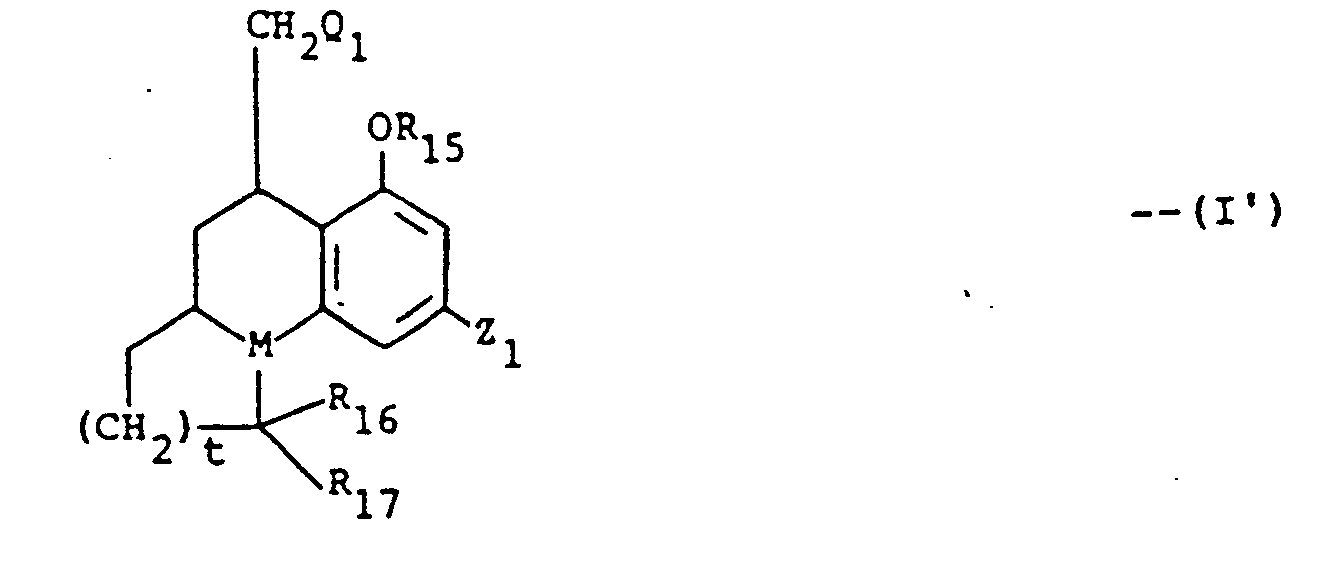

and when compounds of formula (I) wherein Q and OR, taken together form


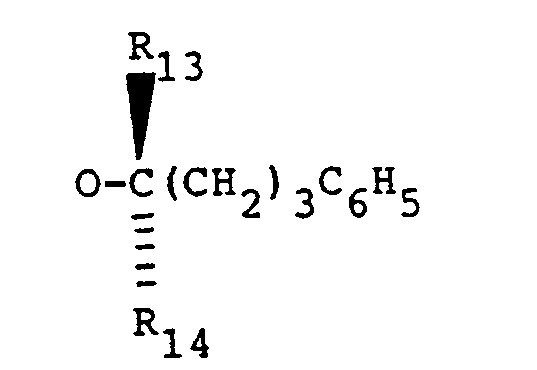


Priority Applications (1)
| Application Number | Priority Date | Filing Date | Title |
|---|---|---|---|
| AT83301224T ATE35544T1 (en) | 1982-03-16 | 1983-03-08 | SUBSTITUTED HEXAHYDROPYRROLO(1,2-A)QUINOLINES, HEXAHYDRO-1H-PYRIDO(1,2-A)-QUINOLINES, HEXAHYDROBENZO(E)INDENE AND OCTAHYDROPHENANTHRENE AS CENTRAL NERVOUS SYSTEM ACTING AGENT. |
Applications Claiming Priority (2)
| Application Number | Priority Date | Filing Date | Title |
|---|---|---|---|
| US358569 | 1982-03-16 | ||
| US06/358,569 US4476131A (en) | 1982-03-16 | 1982-03-16 | Substituted hexahydropyrrolo[1,2-a]-quinolines, hexahydro-1H-pyrido[1,2-a]-q |
Publications (2)
| Publication Number | Publication Date |
|---|---|
| EP0090516A1 EP0090516A1 (en) | 1983-10-05 |
| EP0090516B1 true EP0090516B1 (en) | 1988-07-06 |
Family
ID=23410189
Family Applications (1)
| Application Number | Title | Priority Date | Filing Date |
|---|---|---|---|
| EP83301224A Expired EP0090516B1 (en) | 1982-03-16 | 1983-03-08 | Substituted hexahydropyrrolo(1,2-a)-quinoline, hexahydro-1h-pyrido(1,2-a)-quinoline, hexahydrobenzo(3)indene and octahydrophenanthrene cns agents |
Country Status (27)
| Country | Link |
|---|---|
| US (1) | US4476131A (en) |
| EP (1) | EP0090516B1 (en) |
| JP (2) | JPS58170724A (en) |
| KR (2) | KR870001126B1 (en) |
| AR (1) | AR240936A1 (en) |
| AT (1) | ATE35544T1 (en) |
| AU (1) | AU543215B2 (en) |
| CA (1) | CA1254567A (en) |
| CS (1) | CS249126B2 (en) |
| DD (2) | DD210270A5 (en) |
| DE (1) | DE3377280D1 (en) |
| DK (1) | DK85183A (en) |
| ES (2) | ES8503510A1 (en) |
| FI (1) | FI76334C (en) |
| GR (1) | GR77127B (en) |
| HU (1) | HU189906B (en) |
| IE (1) | IE54897B1 (en) |
| IL (1) | IL68131A (en) |
| NO (1) | NO162385B (en) |
| NZ (1) | NZ203577A (en) |
| PH (1) | PH19998A (en) |
| PL (2) | PL141501B1 (en) |
| PT (1) | PT76390B (en) |
| RO (2) | RO88221B (en) |
| SU (1) | SU1355130A3 (en) |
| YU (2) | YU44736B (en) |
| ZA (1) | ZA831781B (en) |
Families Citing this family (9)
| Publication number | Priority date | Publication date | Assignee | Title |
|---|---|---|---|---|
| US4576964A (en) * | 1982-03-16 | 1986-03-18 | Pfizer Inc. | Substituted hexahydrobenzo[e]indene and octahydrophenanthrene CNS agents and pharmaceutical compositions thereof |
| US4670562A (en) * | 1985-03-13 | 1987-06-02 | Hoechst-Roussel Pharmaceuticals Inc. | Dihydropyrrolo[1,2-b]isoquinolinedione oximes |
| US5629345A (en) * | 1993-07-23 | 1997-05-13 | Vide Pharmaceuticals | Methods and compositions for ATP-sensitive K+ channel inhibition for lowering intraocular pressure |
| US5965620A (en) * | 1993-07-23 | 1999-10-12 | Vide Pharmaceuticals | Methods and compositions for ATP-sensitive K+ channel inhibition for lowering intraocular pressure |
| CA2187257A1 (en) * | 1995-10-12 | 1997-04-13 | Enrique Luis Michelotti | Aryl-substituted cycloalkanes and cycloalkenes and herbicidal use thereof |
| CN1075498C (en) * | 1997-05-08 | 2001-11-28 | 车庆明 | New compound and its derivatives and their use |
| US6316734B1 (en) | 2000-03-07 | 2001-11-13 | 3M Innovative Properties Company | Flexible circuits with static discharge protection and process for manufacture |
| ITGE20080051A1 (en) | 2008-06-04 | 2009-12-05 | Matteucci Francesco | METHOD FOR THE REALIZATION OF DIAMOND-REINFORCED CABLES FOR CUTTING STRUCTURES AND MATERIALS IN STEEL, CONCRETE, STEEL AND CONCRETE, LITOIDI OR SIMILAR MATERIALS AND REINFORCED DIAMOND CABLE OBTAINED THROUGH THIS METHOD. |
| CN112778241A (en) * | 2021-03-09 | 2021-05-11 | 中国科学院兰州化学物理研究所 | Preparation method of tetrahydrofuran acetic acid and ester compound thereof |
Family Cites Families (4)
| Publication number | Priority date | Publication date | Assignee | Title |
|---|---|---|---|---|
| US3045020A (en) * | 1962-07-17 | x xcooa | ||
| FR1490023A (en) * | 1965-08-17 | 1967-07-28 | Sandoz Sa | Isoquinoline derivatives and their preparation |
| US4260764A (en) * | 1976-12-22 | 1981-04-07 | Pfizer Inc. | 9-Hydroxyoctahydrobenzo [C] quinolines and intermediates therefor |
| US4188495A (en) * | 1977-11-14 | 1980-02-12 | Pfizer Inc. | 1,9-Dihydroxyoctahydrophenanthrenes and intermediates therefor |
-
1982
- 1982-03-16 US US06/358,569 patent/US4476131A/en not_active Expired - Fee Related
-
1983
- 1983-02-24 DK DK85183A patent/DK85183A/en not_active Application Discontinuation
- 1983-03-08 AT AT83301224T patent/ATE35544T1/en not_active IP Right Cessation
- 1983-03-08 EP EP83301224A patent/EP0090516B1/en not_active Expired
- 1983-03-08 DE DE8383301224T patent/DE3377280D1/en not_active Expired
- 1983-03-11 PL PL1983240989A patent/PL141501B1/en unknown
- 1983-03-11 PL PL1983245846A patent/PL141640B1/en unknown
- 1983-03-14 PH PH28641A patent/PH19998A/en unknown
- 1983-03-14 YU YU606/83A patent/YU44736B/en unknown
- 1983-03-14 CA CA000423530A patent/CA1254567A/en not_active Expired
- 1983-03-14 DD DD83248795A patent/DD210270A5/en not_active IP Right Cessation
- 1983-03-14 DD DD83265108A patent/DD219765A5/en not_active IP Right Cessation
- 1983-03-15 ZA ZA831781A patent/ZA831781B/en unknown
- 1983-03-15 IL IL68131A patent/IL68131A/en unknown
- 1983-03-15 ES ES520630A patent/ES8503510A1/en not_active Expired
- 1983-03-15 GR GR70801A patent/GR77127B/el unknown
- 1983-03-15 PT PT76390A patent/PT76390B/en unknown
- 1983-03-15 FI FI830857A patent/FI76334C/en not_active IP Right Cessation
- 1983-03-15 IE IE559/83A patent/IE54897B1/en unknown
- 1983-03-15 NO NO830900A patent/NO162385B/en unknown
- 1983-03-15 HU HU842146A patent/HU189906B/en not_active IP Right Cessation
- 1983-03-15 NZ NZ203577A patent/NZ203577A/en unknown
- 1983-03-15 AU AU12448/83A patent/AU543215B2/en not_active Ceased
- 1983-03-15 RO RO114407A patent/RO88221B/en unknown
- 1983-03-15 KR KR1019830001021A patent/KR870001126B1/en not_active Expired
- 1983-03-15 RO RO110332A patent/RO85382B/en unknown
- 1983-03-16 CS CS831822A patent/CS249126B2/en unknown
- 1983-03-16 JP JP58042538A patent/JPS58170724A/en active Pending
- 1983-11-07 ES ES527075A patent/ES527075A0/en active Granted
- 1983-11-28 SU SU833665902A patent/SU1355130A3/en active
-
1985
- 1985-03-11 AR AR299708A patent/AR240936A1/en active
- 1985-11-11 YU YU1757/85A patent/YU44899B/en unknown
-
1986
- 1986-11-07 KR KR1019860009393A patent/KR880002412B1/en not_active Expired
-
1987
- 1987-07-28 JP JP62188673A patent/JPS63183542A/en active Granted
Also Published As
Similar Documents
| Publication | Publication Date | Title |
|---|---|---|
| JP2556821B2 (en) | Tricyclic aromatic compound | |
| US3420851A (en) | Novel dibenzoxepines | |
| KR910007239B1 (en) | Method for preparing substituted octahydrobenzo (f) quinoline | |
| EP0090516B1 (en) | Substituted hexahydropyrrolo(1,2-a)-quinoline, hexahydro-1h-pyrido(1,2-a)-quinoline, hexahydrobenzo(3)indene and octahydrophenanthrene cns agents | |
| EP0375210B1 (en) | Pyrazoloisoquinoline derivatives, process for their preparation and pharmaceutical compositions containing them | |
| EP0045171B1 (en) | 9-amino-1-hydroxyoctahydrobenzo(c)quinolines and derivatives thereof | |
| US4576964A (en) | Substituted hexahydrobenzo[e]indene and octahydrophenanthrene CNS agents and pharmaceutical compositions thereof | |
| EP0028717B1 (en) | 6,7-benzomorphan derivatives, processes for their production, pharmaceutical compositions containing said derivatives and their use as pharmaceuticals | |
| JP2001114781A (en) | New polycyclic azaindole compound, method for preparing the same and pharmaceutical composition comprising the same | |
| DK168216B1 (en) | Substituted 1,3,4,9-tetrahydropyrano [3,4-b] indole-1-acetic acids, their preparation and pharmaceutical preparation containing them | |
| NO831678L (en) | PROCEDURE FOR THE PREPARATION OF THERAPEUTIC ACTIVE PYRAZOLOPYRIDINE DERIVATIVES. | |
| SU953981A3 (en) | Process for producing derivatives of benzo (c) quinolines or their pharmaceutically acceptable acid salts | |
| EP0090526B1 (en) | Substituted dodecahydrotriphenylenes, decahydro-1h-cyclopenta(1)phenanthrenes, decahydro-1h-pyrido(1,2-f)phenanthridines and decahydropyrrolo(1,2-f)phenanthridines as cns agents | |
| NO147028B (en) | ANALOGUE PROCEDURE FOR THE PREPARATION OF PHARMASOYTIC ACTIVE 1-HYDROXYOCTAHYDROBENZO (C) QUINOLINES | |
| US4920221A (en) | Substituted decahydro-1H-pyrido[1,2-f]phenanthridines and decahydropyrrolo[1,2-f]phenanthridines | |
| US4642373A (en) | Substituted dodecahydrotripheylenes, and decahydropyrrolo[1,2-f]phenanthridines as CNS agents | |
| EP0153055B1 (en) | Saturated tricyclic nitrogen-containing diones, a process for preparing the same and a pharmaceutical composition containing the compounds | |
| Dunn et al. | Dibenzotropone-and dibenzosuberonecarboxylic acids with bronchodilator activity | |
| CS249537B2 (en) | Method of substituted hexahydropyrrolo(1,2-a)quinolines,hexahydro-1h-pyrido-(182-a)quinolines,hexahydrobenzo(e)-indenes and octahydrophenanthrenes production |
Legal Events
| Date | Code | Title | Description |
|---|---|---|---|
| PUAI | Public reference made under article 153(3) epc to a published international application that has entered the european phase |
Free format text: ORIGINAL CODE: 0009012 |
|
| 17P | Request for examination filed |
Effective date: 19830310 |
|
| AK | Designated contracting states |
Designated state(s): AT BE CH DE FR GB IT LI LU NL SE |
|
| GRAA | (expected) grant |
Free format text: ORIGINAL CODE: 0009210 |
|
| AK | Designated contracting states |
Kind code of ref document: B1 Designated state(s): AT BE CH DE FR GB IT LI LU NL SE |
|
| REF | Corresponds to: |
Ref document number: 35544 Country of ref document: AT Date of ref document: 19880715 Kind code of ref document: T |
|
| REF | Corresponds to: |
Ref document number: 3377280 Country of ref document: DE Date of ref document: 19880811 |
|
| ET | Fr: translation filed | ||
| ITF | It: translation for a ep patent filed | ||
| PLBE | No opposition filed within time limit |
Free format text: ORIGINAL CODE: 0009261 |
|
| STAA | Information on the status of an ep patent application or granted ep patent |
Free format text: STATUS: NO OPPOSITION FILED WITHIN TIME LIMIT |
|
| 26N | No opposition filed | ||
| PGFP | Annual fee paid to national office [announced via postgrant information from national office to epo] |
Ref country code: FR Payment date: 19901218 Year of fee payment: 9 |
|
| PGFP | Annual fee paid to national office [announced via postgrant information from national office to epo] |
Ref country code: GB Payment date: 19901219 Year of fee payment: 9 |
|
| PGFP | Annual fee paid to national office [announced via postgrant information from national office to epo] |
Ref country code: SE Payment date: 19901227 Year of fee payment: 9 Ref country code: BE Payment date: 19901227 Year of fee payment: 9 |
|
| PGFP | Annual fee paid to national office [announced via postgrant information from national office to epo] |
Ref country code: DE Payment date: 19901228 Year of fee payment: 9 |
|
| PGFP | Annual fee paid to national office [announced via postgrant information from national office to epo] |
Ref country code: AT Payment date: 19910109 Year of fee payment: 9 |
|
| PGFP | Annual fee paid to national office [announced via postgrant information from national office to epo] |
Ref country code: LU Payment date: 19910114 Year of fee payment: 9 |
|
| PGFP | Annual fee paid to national office [announced via postgrant information from national office to epo] |
Ref country code: CH Payment date: 19910318 Year of fee payment: 9 |
|
| ITTA | It: last paid annual fee | ||
| PGFP | Annual fee paid to national office [announced via postgrant information from national office to epo] |
Ref country code: NL Payment date: 19910331 Year of fee payment: 9 |
|
| EPTA | Lu: last paid annual fee | ||
| PG25 | Lapsed in a contracting state [announced via postgrant information from national office to epo] |
Ref country code: LU Free format text: LAPSE BECAUSE OF NON-PAYMENT OF DUE FEES Effective date: 19920308 Ref country code: GB Effective date: 19920308 Ref country code: AT Effective date: 19920308 |
|
| PG25 | Lapsed in a contracting state [announced via postgrant information from national office to epo] |
Ref country code: SE Effective date: 19920309 |
|
| PG25 | Lapsed in a contracting state [announced via postgrant information from national office to epo] |
Ref country code: LI Effective date: 19920331 Ref country code: CH Effective date: 19920331 Ref country code: BE Effective date: 19920331 |
|
| BERE | Be: lapsed |
Owner name: PFIZER INC. Effective date: 19920331 |
|
| PG25 | Lapsed in a contracting state [announced via postgrant information from national office to epo] |
Ref country code: NL Effective date: 19921001 |
|
| GBPC | Gb: european patent ceased through non-payment of renewal fee | ||
| NLV4 | Nl: lapsed or anulled due to non-payment of the annual fee | ||
| PG25 | Lapsed in a contracting state [announced via postgrant information from national office to epo] |
Ref country code: FR Effective date: 19921130 |
|
| REG | Reference to a national code |
Ref country code: CH Ref legal event code: PL |
|
| PG25 | Lapsed in a contracting state [announced via postgrant information from national office to epo] |
Ref country code: DE Effective date: 19921201 |
|
| REG | Reference to a national code |
Ref country code: FR Ref legal event code: ST |
|
| EUG | Se: european patent has lapsed |
Ref document number: 83301224.8 Effective date: 19921005 |