EP0089231B1 - Silver halide photographic material - Google Patents
Silver halide photographic material Download PDFInfo
- Publication number
- EP0089231B1 EP0089231B1 EP19830301427 EP83301427A EP0089231B1 EP 0089231 B1 EP0089231 B1 EP 0089231B1 EP 19830301427 EP19830301427 EP 19830301427 EP 83301427 A EP83301427 A EP 83301427A EP 0089231 B1 EP0089231 B1 EP 0089231B1
- Authority
- EP
- European Patent Office
- Prior art keywords
- silver halide
- photographic material
- halide photographic
- formula
- material according
- Prior art date
- Legal status (The legal status is an assumption and is not a legal conclusion. Google has not performed a legal analysis and makes no representation as to the accuracy of the status listed.)
- Expired
Links
- -1 Silver halide Chemical class 0.000 title claims description 61
- 239000000463 material Substances 0.000 title claims description 49
- 229910052709 silver Inorganic materials 0.000 title claims description 45
- 239000004332 silver Substances 0.000 title claims description 45
- 150000001875 compounds Chemical class 0.000 claims description 57
- 239000011230 binding agent Substances 0.000 claims description 10
- 239000007859 condensation product Substances 0.000 claims description 10
- 125000002947 alkylene group Chemical group 0.000 claims description 8
- 125000001424 substituent group Chemical group 0.000 claims description 8
- 125000004429 atom Chemical group 0.000 claims description 5
- 125000000217 alkyl group Chemical group 0.000 claims description 4
- 125000005842 heteroatom Chemical group 0.000 claims description 4
- 125000004435 hydrogen atom Chemical class [H]* 0.000 claims description 4
- 150000002894 organic compounds Chemical class 0.000 claims description 4
- 229920001515 polyalkylene glycol Polymers 0.000 claims description 4
- 229910052739 hydrogen Inorganic materials 0.000 claims description 3
- 239000001257 hydrogen Substances 0.000 claims description 3
- 125000002252 acyl group Chemical group 0.000 claims description 2
- 150000008431 aliphatic amides Chemical class 0.000 claims description 2
- 125000003710 aryl alkyl group Chemical group 0.000 claims description 2
- 125000004432 carbon atom Chemical group C* 0.000 claims description 2
- 125000003178 carboxy group Chemical group [H]OC(*)=O 0.000 claims description 2
- 125000002057 carboxymethyl group Chemical group [H]OC(=O)C([H])([H])[*] 0.000 claims description 2
- 125000005843 halogen group Chemical group 0.000 claims description 2
- 125000002887 hydroxy group Chemical group [H]O* 0.000 claims description 2
- DNIAPMSPPWPWGF-GSVOUGTGSA-N (R)-(-)-Propylene glycol Chemical compound C[C@@H](O)CO DNIAPMSPPWPWGF-GSVOUGTGSA-N 0.000 claims 1
- KXGFMDJXCMQABM-UHFFFAOYSA-N 2-methoxy-6-methylphenol Chemical compound [CH]OC1=CC=CC([CH])=C1O KXGFMDJXCMQABM-UHFFFAOYSA-N 0.000 claims 1
- UFHFLCQGNIYNRP-UHFFFAOYSA-N Hydrogen Chemical compound [H][H] UFHFLCQGNIYNRP-UHFFFAOYSA-N 0.000 claims 1
- ISWSIDIOOBJBQZ-UHFFFAOYSA-N Phenol Chemical compound OC1=CC=CC=C1 ISWSIDIOOBJBQZ-UHFFFAOYSA-N 0.000 claims 1
- ZBCBWPMODOFKDW-UHFFFAOYSA-N diethanolamine Chemical compound OCCNCCO ZBCBWPMODOFKDW-UHFFFAOYSA-N 0.000 claims 1
- 229920001568 phenolic resin Polymers 0.000 claims 1
- 229920000233 poly(alkylene oxides) Polymers 0.000 description 24
- 239000010410 layer Substances 0.000 description 17
- 108010010803 Gelatin Proteins 0.000 description 16
- 239000008273 gelatin Substances 0.000 description 16
- 229920000159 gelatin Polymers 0.000 description 16
- 235000019322 gelatine Nutrition 0.000 description 16
- 235000011852 gelatine desserts Nutrition 0.000 description 16
- 239000000839 emulsion Substances 0.000 description 15
- 229920003171 Poly (ethylene oxide) Polymers 0.000 description 14
- 238000000034 method Methods 0.000 description 14
- 230000035945 sensitivity Effects 0.000 description 9
- 239000011248 coating agent Substances 0.000 description 8
- 238000000576 coating method Methods 0.000 description 8
- 230000006866 deterioration Effects 0.000 description 7
- 239000000203 mixture Substances 0.000 description 6
- 239000004848 polyfunctional curative Substances 0.000 description 6
- 229920000642 polymer Polymers 0.000 description 6
- 239000000243 solution Substances 0.000 description 6
- 239000003795 chemical substances by application Substances 0.000 description 5
- 238000002844 melting Methods 0.000 description 5
- 230000008018 melting Effects 0.000 description 5
- 239000000047 product Substances 0.000 description 5
- 229920001577 copolymer Polymers 0.000 description 4
- 239000000123 paper Substances 0.000 description 4
- 239000011347 resin Substances 0.000 description 4
- 229920005989 resin Polymers 0.000 description 4
- ZUNKMNLKJXRCDM-UHFFFAOYSA-N silver bromoiodide Chemical compound [Ag].IBr ZUNKMNLKJXRCDM-UHFFFAOYSA-N 0.000 description 4
- 239000000126 substance Substances 0.000 description 4
- 0 *1C2(C3)C1CC3C2 Chemical compound *1C2(C3)C1CC3C2 0.000 description 3
- JKFYKCYQEWQPTM-UHFFFAOYSA-N 2-azaniumyl-2-(4-fluorophenyl)acetate Chemical compound OC(=O)C(N)C1=CC=C(F)C=C1 JKFYKCYQEWQPTM-UHFFFAOYSA-N 0.000 description 3
- WVDDGKGOMKODPV-UHFFFAOYSA-N Benzyl alcohol Chemical class OCC1=CC=CC=C1 WVDDGKGOMKODPV-UHFFFAOYSA-N 0.000 description 3
- WSFSSNUMVMOOMR-UHFFFAOYSA-N Formaldehyde Chemical compound O=C WSFSSNUMVMOOMR-UHFFFAOYSA-N 0.000 description 3
- OKKJLVBELUTLKV-UHFFFAOYSA-N Methanol Chemical compound OC OKKJLVBELUTLKV-UHFFFAOYSA-N 0.000 description 3
- 229910021612 Silver iodide Inorganic materials 0.000 description 3
- HEMHJVSKTPXQMS-UHFFFAOYSA-M Sodium hydroxide Chemical compound [OH-].[Na+] HEMHJVSKTPXQMS-UHFFFAOYSA-M 0.000 description 3
- 239000000470 constituent Substances 0.000 description 3
- 238000001035 drying Methods 0.000 description 3
- RLSSMJSEOOYNOY-UHFFFAOYSA-N m-cresol Chemical compound CC1=CC=CC(O)=C1 RLSSMJSEOOYNOY-UHFFFAOYSA-N 0.000 description 3
- 229940045105 silver iodide Drugs 0.000 description 3
- 230000003595 spectral effect Effects 0.000 description 3
- 239000004094 surface-active agent Substances 0.000 description 3
- HBEDSQVIWPRPAY-UHFFFAOYSA-N 2,3-dihydrobenzofuran Chemical compound C1=CC=C2OCCC2=C1 HBEDSQVIWPRPAY-UHFFFAOYSA-N 0.000 description 2
- LFQSCWFLJHTTHZ-UHFFFAOYSA-N Ethanol Chemical compound CCO LFQSCWFLJHTTHZ-UHFFFAOYSA-N 0.000 description 2
- 239000005977 Ethylene Substances 0.000 description 2
- PEDCQBHIVMGVHV-UHFFFAOYSA-N Glycerine Chemical compound OCC(O)CO PEDCQBHIVMGVHV-UHFFFAOYSA-N 0.000 description 2
- 239000002202 Polyethylene glycol Substances 0.000 description 2
- 239000004743 Polypropylene Substances 0.000 description 2
- 206010070834 Sensitisation Diseases 0.000 description 2
- BQCADISMDOOEFD-UHFFFAOYSA-N Silver Chemical compound [Ag] BQCADISMDOOEFD-UHFFFAOYSA-N 0.000 description 2
- NINIDFKCEFEMDL-UHFFFAOYSA-N Sulfur Chemical compound [S] NINIDFKCEFEMDL-UHFFFAOYSA-N 0.000 description 2
- 230000015572 biosynthetic process Effects 0.000 description 2
- WQAQPCDUOCURKW-UHFFFAOYSA-N butanethiol Chemical compound CCCCS WQAQPCDUOCURKW-UHFFFAOYSA-N 0.000 description 2
- 238000007796 conventional method Methods 0.000 description 2
- 239000013078 crystal Substances 0.000 description 2
- 230000003247 decreasing effect Effects 0.000 description 2
- 239000000975 dye Substances 0.000 description 2
- PCHJSUWPFVWCPO-UHFFFAOYSA-N gold Chemical compound [Au] PCHJSUWPFVWCPO-UHFFFAOYSA-N 0.000 description 2
- 229910052737 gold Inorganic materials 0.000 description 2
- 239000010931 gold Substances 0.000 description 2
- 229910052736 halogen Inorganic materials 0.000 description 2
- 150000002367 halogens Chemical class 0.000 description 2
- VNWKTOKETHGBQD-UHFFFAOYSA-N methane Chemical compound C VNWKTOKETHGBQD-UHFFFAOYSA-N 0.000 description 2
- 229920001223 polyethylene glycol Polymers 0.000 description 2
- 229920000139 polyethylene terephthalate Polymers 0.000 description 2
- 239000005020 polyethylene terephthalate Substances 0.000 description 2
- 229920001155 polypropylene Polymers 0.000 description 2
- 229920001451 polypropylene glycol Polymers 0.000 description 2
- 229920002451 polyvinyl alcohol Polymers 0.000 description 2
- 230000008313 sensitization Effects 0.000 description 2
- ADZWSOLPGZMUMY-UHFFFAOYSA-M silver bromide Chemical compound [Ag]Br ADZWSOLPGZMUMY-UHFFFAOYSA-M 0.000 description 2
- 239000003381 stabilizer Substances 0.000 description 2
- 230000003068 static effect Effects 0.000 description 2
- 229910052717 sulfur Inorganic materials 0.000 description 2
- 239000011593 sulfur Substances 0.000 description 2
- 238000003786 synthesis reaction Methods 0.000 description 2
- 239000002562 thickening agent Substances 0.000 description 2
- 238000005406 washing Methods 0.000 description 2
- XLYOFNOQVPJJNP-UHFFFAOYSA-N water Substances O XLYOFNOQVPJJNP-UHFFFAOYSA-N 0.000 description 2
- TXUICONDJPYNPY-UHFFFAOYSA-N (1,10,13-trimethyl-3-oxo-4,5,6,7,8,9,11,12,14,15,16,17-dodecahydrocyclopenta[a]phenanthren-17-yl) heptanoate Chemical compound C1CC2CC(=O)C=C(C)C2(C)C2C1C1CCC(OC(=O)CCCCCC)C1(C)CC2 TXUICONDJPYNPY-UHFFFAOYSA-N 0.000 description 1
- QGKMIGUHVLGJBR-UHFFFAOYSA-M (4z)-1-(3-methylbutyl)-4-[[1-(3-methylbutyl)quinolin-1-ium-4-yl]methylidene]quinoline;iodide Chemical compound [I-].C12=CC=CC=C2N(CCC(C)C)C=CC1=CC1=CC=[N+](CCC(C)C)C2=CC=CC=C12 QGKMIGUHVLGJBR-UHFFFAOYSA-M 0.000 description 1
- LUMLZKVIXLWTCI-NSCUHMNNSA-N (e)-2,3-dichloro-4-oxobut-2-enoic acid Chemical compound OC(=O)C(\Cl)=C(/Cl)C=O LUMLZKVIXLWTCI-NSCUHMNNSA-N 0.000 description 1
- VEFLKXRACNJHOV-UHFFFAOYSA-N 1,3-dibromopropane Chemical compound BrCCCBr VEFLKXRACNJHOV-UHFFFAOYSA-N 0.000 description 1
- KJUGUADJHNHALS-UHFFFAOYSA-N 1H-tetrazole Substances C=1N=NNN=1 KJUGUADJHNHALS-UHFFFAOYSA-N 0.000 description 1
- KTICIZCDOMAKJB-UHFFFAOYSA-N 2,3-bis(2,4,4-trimethylpentan-2-yl)phenol Chemical compound CC(C)(C)CC(C)(C)C1=CC=CC(O)=C1C(C)(C)CC(C)(C)C KTICIZCDOMAKJB-UHFFFAOYSA-N 0.000 description 1
- UTBVIMLZIRIFFR-UHFFFAOYSA-N 2-methylthio-1,3-benzothiazole Chemical compound C1=CC=C2SC(SC)=NC2=C1 UTBVIMLZIRIFFR-UHFFFAOYSA-N 0.000 description 1
- PYSRRFNXTXNWCD-UHFFFAOYSA-N 3-(2-phenylethenyl)furan-2,5-dione Chemical compound O=C1OC(=O)C(C=CC=2C=CC=CC=2)=C1 PYSRRFNXTXNWCD-UHFFFAOYSA-N 0.000 description 1
- HVBSAKJJOYLTQU-UHFFFAOYSA-N 4-aminobenzenesulfonic acid Chemical compound NC1=CC=C(S(O)(=O)=O)C=C1 HVBSAKJJOYLTQU-UHFFFAOYSA-N 0.000 description 1
- WLHCBQAPPJAULW-UHFFFAOYSA-N 4-methylbenzenethiol Chemical compound CC1=CC=C(S)C=C1 WLHCBQAPPJAULW-UHFFFAOYSA-N 0.000 description 1
- QHPQWRBYOIRBIT-UHFFFAOYSA-N 4-tert-butylphenol Chemical compound CC(C)(C)C1=CC=C(O)C=C1 QHPQWRBYOIRBIT-UHFFFAOYSA-N 0.000 description 1
- HRPVXLWXLXDGHG-UHFFFAOYSA-N Acrylamide Chemical compound NC(=O)C=C HRPVXLWXLXDGHG-UHFFFAOYSA-N 0.000 description 1
- 229920001817 Agar Polymers 0.000 description 1
- 102000009027 Albumins Human genes 0.000 description 1
- 108010088751 Albumins Proteins 0.000 description 1
- NOWKCMXCCJGMRR-UHFFFAOYSA-N Aziridine Chemical compound C1CN1 NOWKCMXCCJGMRR-UHFFFAOYSA-N 0.000 description 1
- 229930185605 Bisphenol Natural products 0.000 description 1
- 229920002284 Cellulose triacetate Polymers 0.000 description 1
- VYZAMTAEIAYCRO-UHFFFAOYSA-N Chromium Chemical compound [Cr] VYZAMTAEIAYCRO-UHFFFAOYSA-N 0.000 description 1
- 229940126062 Compound A Drugs 0.000 description 1
- 239000004593 Epoxy Substances 0.000 description 1
- VGGSQFUCUMXWEO-UHFFFAOYSA-N Ethene Chemical compound C=C VGGSQFUCUMXWEO-UHFFFAOYSA-N 0.000 description 1
- IAYPIBMASNFSPL-UHFFFAOYSA-N Ethylene oxide Chemical group C1CO1 IAYPIBMASNFSPL-UHFFFAOYSA-N 0.000 description 1
- SXRSQZLOMIGNAQ-UHFFFAOYSA-N Glutaraldehyde Chemical compound O=CCCCC=O SXRSQZLOMIGNAQ-UHFFFAOYSA-N 0.000 description 1
- 229920000084 Gum arabic Polymers 0.000 description 1
- NLDMNSXOCDLTTB-UHFFFAOYSA-N Heterophylliin A Natural products O1C2COC(=O)C3=CC(O)=C(O)C(O)=C3C3=C(O)C(O)=C(O)C=C3C(=O)OC2C(OC(=O)C=2C=C(O)C(O)=C(O)C=2)C(O)C1OC(=O)C1=CC(O)=C(O)C(O)=C1 NLDMNSXOCDLTTB-UHFFFAOYSA-N 0.000 description 1
- DGAQECJNVWCQMB-PUAWFVPOSA-M Ilexoside XXIX Chemical compound C[C@@H]1CC[C@@]2(CC[C@@]3(C(=CC[C@H]4[C@]3(CC[C@@H]5[C@@]4(CC[C@@H](C5(C)C)OS(=O)(=O)[O-])C)C)[C@@H]2[C@]1(C)O)C)C(=O)O[C@H]6[C@@H]([C@H]([C@@H]([C@H](O6)CO)O)O)O.[Na+] DGAQECJNVWCQMB-PUAWFVPOSA-M 0.000 description 1
- PEEHTFAAVSWFBL-UHFFFAOYSA-N Maleimide Chemical compound O=C1NC(=O)C=C1 PEEHTFAAVSWFBL-UHFFFAOYSA-N 0.000 description 1
- 239000000020 Nitrocellulose Substances 0.000 description 1
- 239000004698 Polyethylene Substances 0.000 description 1
- 239000004793 Polystyrene Substances 0.000 description 1
- 239000004372 Polyvinyl alcohol Substances 0.000 description 1
- BUGBHKTXTAQXES-UHFFFAOYSA-N Selenium Chemical compound [Se] BUGBHKTXTAQXES-UHFFFAOYSA-N 0.000 description 1
- 241000978776 Senegalia senegal Species 0.000 description 1
- 229910021607 Silver chloride Inorganic materials 0.000 description 1
- 229920000147 Styrene maleic anhydride Polymers 0.000 description 1
- 229910021626 Tin(II) chloride Inorganic materials 0.000 description 1
- NNLVGZFZQQXQNW-ADJNRHBOSA-N [(2r,3r,4s,5r,6s)-4,5-diacetyloxy-3-[(2s,3r,4s,5r,6r)-3,4,5-triacetyloxy-6-(acetyloxymethyl)oxan-2-yl]oxy-6-[(2r,3r,4s,5r,6s)-4,5,6-triacetyloxy-2-(acetyloxymethyl)oxan-3-yl]oxyoxan-2-yl]methyl acetate Chemical compound O([C@@H]1O[C@@H]([C@H]([C@H](OC(C)=O)[C@H]1OC(C)=O)O[C@H]1[C@@H]([C@@H](OC(C)=O)[C@H](OC(C)=O)[C@@H](COC(C)=O)O1)OC(C)=O)COC(=O)C)[C@@H]1[C@@H](COC(C)=O)O[C@@H](OC(C)=O)[C@H](OC(C)=O)[C@H]1OC(C)=O NNLVGZFZQQXQNW-ADJNRHBOSA-N 0.000 description 1
- FJWGYAHXMCUOOM-QHOUIDNNSA-N [(2s,3r,4s,5r,6r)-2-[(2r,3r,4s,5r,6s)-4,5-dinitrooxy-2-(nitrooxymethyl)-6-[(2r,3r,4s,5r,6s)-4,5,6-trinitrooxy-2-(nitrooxymethyl)oxan-3-yl]oxyoxan-3-yl]oxy-3,5-dinitrooxy-6-(nitrooxymethyl)oxan-4-yl] nitrate Chemical compound O([C@@H]1O[C@@H]([C@H]([C@H](O[N+]([O-])=O)[C@H]1O[N+]([O-])=O)O[C@H]1[C@@H]([C@@H](O[N+]([O-])=O)[C@H](O[N+]([O-])=O)[C@@H](CO[N+]([O-])=O)O1)O[N+]([O-])=O)CO[N+](=O)[O-])[C@@H]1[C@@H](CO[N+]([O-])=O)O[C@@H](O[N+]([O-])=O)[C@H](O[N+]([O-])=O)[C@H]1O[N+]([O-])=O FJWGYAHXMCUOOM-QHOUIDNNSA-N 0.000 description 1
- SJOOOZPMQAWAOP-UHFFFAOYSA-N [Ag].BrCl Chemical compound [Ag].BrCl SJOOOZPMQAWAOP-UHFFFAOYSA-N 0.000 description 1
- XCFIVNQHHFZRNR-UHFFFAOYSA-N [Ag].Cl[IH]Br Chemical compound [Ag].Cl[IH]Br XCFIVNQHHFZRNR-UHFFFAOYSA-N 0.000 description 1
- 239000000205 acacia gum Substances 0.000 description 1
- 235000010489 acacia gum Nutrition 0.000 description 1
- 239000002253 acid Substances 0.000 description 1
- 150000001252 acrylic acid derivatives Chemical class 0.000 description 1
- 125000003647 acryloyl group Chemical group O=C([*])C([H])=C([H])[H] 0.000 description 1
- 239000000654 additive Substances 0.000 description 1
- 230000002411 adverse Effects 0.000 description 1
- 239000008272 agar Substances 0.000 description 1
- 235000010419 agar Nutrition 0.000 description 1
- 150000001298 alcohols Chemical class 0.000 description 1
- 150000001299 aldehydes Chemical class 0.000 description 1
- 239000000783 alginic acid Substances 0.000 description 1
- 235000010443 alginic acid Nutrition 0.000 description 1
- 229920000615 alginic acid Polymers 0.000 description 1
- 229960001126 alginic acid Drugs 0.000 description 1
- 150000004781 alginic acids Chemical class 0.000 description 1
- 125000001931 aliphatic group Chemical group 0.000 description 1
- 150000001447 alkali salts Chemical class 0.000 description 1
- 229940037003 alum Drugs 0.000 description 1
- 229910052782 aluminium Inorganic materials 0.000 description 1
- XAGFODPZIPBFFR-UHFFFAOYSA-N aluminium Chemical compound [Al] XAGFODPZIPBFFR-UHFFFAOYSA-N 0.000 description 1
- 239000002280 amphoteric surfactant Substances 0.000 description 1
- 125000000129 anionic group Chemical group 0.000 description 1
- 239000003945 anionic surfactant Substances 0.000 description 1
- 239000007864 aqueous solution Substances 0.000 description 1
- 150000003851 azoles Chemical class 0.000 description 1
- QVQLCTNNEUAWMS-UHFFFAOYSA-N barium oxide Chemical compound [Ba]=O QVQLCTNNEUAWMS-UHFFFAOYSA-N 0.000 description 1
- 229910001864 baryta Inorganic materials 0.000 description 1
- 235000019445 benzyl alcohol Nutrition 0.000 description 1
- IISBACLAFKSPIT-UHFFFAOYSA-N bisphenol A Chemical compound C=1C=C(O)C=CC=1C(C)(C)C1=CC=C(O)C=C1 IISBACLAFKSPIT-UHFFFAOYSA-N 0.000 description 1
- 150000001718 carbodiimides Chemical class 0.000 description 1
- 239000005018 casein Substances 0.000 description 1
- BECPQYXYKAMYBN-UHFFFAOYSA-N casein, tech. Chemical compound NCCCCC(C(O)=O)N=C(O)C(CC(O)=O)N=C(O)C(CCC(O)=N)N=C(O)C(CC(C)C)N=C(O)C(CCC(O)=O)N=C(O)C(CC(O)=O)N=C(O)C(CCC(O)=O)N=C(O)C(C(C)O)N=C(O)C(CCC(O)=N)N=C(O)C(CCC(O)=N)N=C(O)C(CCC(O)=N)N=C(O)C(CCC(O)=O)N=C(O)C(CCC(O)=O)N=C(O)C(COP(O)(O)=O)N=C(O)C(CCC(O)=N)N=C(O)C(N)CC1=CC=CC=C1 BECPQYXYKAMYBN-UHFFFAOYSA-N 0.000 description 1
- 235000021240 caseins Nutrition 0.000 description 1
- 125000002091 cationic group Chemical group 0.000 description 1
- 239000003093 cationic surfactant Substances 0.000 description 1
- 239000001913 cellulose Substances 0.000 description 1
- 229920002678 cellulose Polymers 0.000 description 1
- 235000010980 cellulose Nutrition 0.000 description 1
- 229920002301 cellulose acetate Polymers 0.000 description 1
- 239000007795 chemical reaction product Substances 0.000 description 1
- VZWXIQHBIQLMPN-UHFFFAOYSA-N chromane Chemical compound C1=CC=C2CCCOC2=C1 VZWXIQHBIQLMPN-UHFFFAOYSA-N 0.000 description 1
- 239000000084 colloidal system Substances 0.000 description 1
- 238000001816 cooling Methods 0.000 description 1
- 230000001627 detrimental effect Effects 0.000 description 1
- 229920005994 diacetyl cellulose Polymers 0.000 description 1
- AFOSIXZFDONLBT-UHFFFAOYSA-N divinyl sulfone Chemical compound C=CS(=O)(=O)C=C AFOSIXZFDONLBT-UHFFFAOYSA-N 0.000 description 1
- LQZZUXJYWNFBMV-UHFFFAOYSA-N dodecan-1-ol Chemical compound CCCCCCCCCCCCO LQZZUXJYWNFBMV-UHFFFAOYSA-N 0.000 description 1
- 239000000428 dust Substances 0.000 description 1
- 230000000694 effects Effects 0.000 description 1
- 239000010408 film Substances 0.000 description 1
- 238000009472 formulation Methods 0.000 description 1
- 239000011086 glassine Substances 0.000 description 1
- 125000005456 glyceride group Chemical group 0.000 description 1
- 235000011187 glycerol Nutrition 0.000 description 1
- 150000004693 imidazolium salts Chemical class 0.000 description 1
- 230000001771 impaired effect Effects 0.000 description 1
- 150000002484 inorganic compounds Chemical class 0.000 description 1
- 229910010272 inorganic material Inorganic materials 0.000 description 1
- 150000002500 ions Chemical class 0.000 description 1
- 150000002503 iridium Chemical class 0.000 description 1
- 239000012948 isocyanate Substances 0.000 description 1
- CTAPFRYPJLPFDF-UHFFFAOYSA-N isoxazole Chemical compound C=1C=NOC=1 CTAPFRYPJLPFDF-UHFFFAOYSA-N 0.000 description 1
- 239000004816 latex Substances 0.000 description 1
- 229920000126 latex Polymers 0.000 description 1
- 239000000314 lubricant Substances 0.000 description 1
- 239000011976 maleic acid Substances 0.000 description 1
- 239000000178 monomer Substances 0.000 description 1
- ZAKLKBFCSHJIRI-UHFFFAOYSA-N mucochloric acid Natural products OC1OC(=O)C(Cl)=C1Cl ZAKLKBFCSHJIRI-UHFFFAOYSA-N 0.000 description 1
- 229920001220 nitrocellulos Polymers 0.000 description 1
- 229910000510 noble metal Inorganic materials 0.000 description 1
- 239000002736 nonionic surfactant Substances 0.000 description 1
- 230000003287 optical effect Effects 0.000 description 1
- 150000002940 palladium Chemical class 0.000 description 1
- 230000035699 permeability Effects 0.000 description 1
- 150000002989 phenols Chemical class 0.000 description 1
- 230000000704 physical effect Effects 0.000 description 1
- 239000004014 plasticizer Substances 0.000 description 1
- 150000003057 platinum Chemical class 0.000 description 1
- 229920002401 polyacrylamide Polymers 0.000 description 1
- 229920000768 polyamine Polymers 0.000 description 1
- 229920000728 polyester Polymers 0.000 description 1
- 229920000573 polyethylene Polymers 0.000 description 1
- 229920002557 polyglycidol polymer Polymers 0.000 description 1
- 229920002223 polystyrene Polymers 0.000 description 1
- 229920002689 polyvinyl acetate Polymers 0.000 description 1
- 239000011118 polyvinyl acetate Substances 0.000 description 1
- 229920000036 polyvinylpyrrolidone Polymers 0.000 description 1
- 239000001267 polyvinylpyrrolidone Substances 0.000 description 1
- 235000013855 polyvinylpyrrolidone Nutrition 0.000 description 1
- 238000002360 preparation method Methods 0.000 description 1
- 239000011241 protective layer Substances 0.000 description 1
- 235000018102 proteins Nutrition 0.000 description 1
- 108090000623 proteins and genes Proteins 0.000 description 1
- 102000004169 proteins and genes Human genes 0.000 description 1
- 239000001397 quillaja saponaria molina bark Substances 0.000 description 1
- 230000002829 reductive effect Effects 0.000 description 1
- 150000003283 rhodium Chemical class 0.000 description 1
- 230000005070 ripening Effects 0.000 description 1
- 229930182490 saponin Natural products 0.000 description 1
- 150000007949 saponins Chemical class 0.000 description 1
- 229910052711 selenium Inorganic materials 0.000 description 1
- 239000011669 selenium Substances 0.000 description 1
- HKZLPVFGJNLROG-UHFFFAOYSA-M silver monochloride Chemical compound [Cl-].[Ag+] HKZLPVFGJNLROG-UHFFFAOYSA-M 0.000 description 1
- 229910052708 sodium Inorganic materials 0.000 description 1
- 239000011734 sodium Substances 0.000 description 1
- 239000002904 solvent Substances 0.000 description 1
- 238000001228 spectrum Methods 0.000 description 1
- 239000001119 stannous chloride Substances 0.000 description 1
- 235000011150 stannous chloride Nutrition 0.000 description 1
- 229950000244 sulfanilic acid Drugs 0.000 description 1
- BDHFUVZGWQCTTF-UHFFFAOYSA-M sulfonate Chemical compound [O-]S(=O)=O BDHFUVZGWQCTTF-UHFFFAOYSA-M 0.000 description 1
- 150000003536 tetrazoles Chemical class 0.000 description 1
- 125000003831 tetrazolyl group Chemical group 0.000 description 1
- 150000003852 triazoles Chemical class 0.000 description 1
- 229920001567 vinyl ester resin Polymers 0.000 description 1
- 125000000391 vinyl group Chemical group [H]C([*])=C([H])[H] 0.000 description 1
- 229920002554 vinyl polymer Polymers 0.000 description 1
Classifications
-
- C—CHEMISTRY; METALLURGY
- C07—ORGANIC CHEMISTRY
- C07D—HETEROCYCLIC COMPOUNDS
- C07D513/00—Heterocyclic compounds containing in the condensed system at least one hetero ring having nitrogen and sulfur atoms as the only ring hetero atoms, not provided for in groups C07D463/00, C07D477/00 or C07D499/00 - C07D507/00
- C07D513/02—Heterocyclic compounds containing in the condensed system at least one hetero ring having nitrogen and sulfur atoms as the only ring hetero atoms, not provided for in groups C07D463/00, C07D477/00 or C07D499/00 - C07D507/00 in which the condensed system contains two hetero rings
- C07D513/04—Ortho-condensed systems
-
- G—PHYSICS
- G03—PHOTOGRAPHY; CINEMATOGRAPHY; ANALOGOUS TECHNIQUES USING WAVES OTHER THAN OPTICAL WAVES; ELECTROGRAPHY; HOLOGRAPHY
- G03C—PHOTOSENSITIVE MATERIALS FOR PHOTOGRAPHIC PURPOSES; PHOTOGRAPHIC PROCESSES, e.g. CINE, X-RAY, COLOUR, STEREO-PHOTOGRAPHIC PROCESSES; AUXILIARY PROCESSES IN PHOTOGRAPHY
- G03C1/00—Photosensitive materials
- G03C1/005—Silver halide emulsions; Preparation thereof; Physical treatment thereof; Incorporation of additives therein
- G03C1/04—Silver halide emulsions; Preparation thereof; Physical treatment thereof; Incorporation of additives therein with macromolecular additives; with layer-forming substances
- G03C1/043—Polyalkylene oxides; Polyalkylene sulfides; Polyalkylene selenides; Polyalkylene tellurides
-
- G—PHYSICS
- G03—PHOTOGRAPHY; CINEMATOGRAPHY; ANALOGOUS TECHNIQUES USING WAVES OTHER THAN OPTICAL WAVES; ELECTROGRAPHY; HOLOGRAPHY
- G03C—PHOTOSENSITIVE MATERIALS FOR PHOTOGRAPHIC PURPOSES; PHOTOGRAPHIC PROCESSES, e.g. CINE, X-RAY, COLOUR, STEREO-PHOTOGRAPHIC PROCESSES; AUXILIARY PROCESSES IN PHOTOGRAPHY
- G03C1/00—Photosensitive materials
- G03C1/005—Silver halide emulsions; Preparation thereof; Physical treatment thereof; Incorporation of additives therein
- G03C1/06—Silver halide emulsions; Preparation thereof; Physical treatment thereof; Incorporation of additives therein with non-macromolecular additives
-
- G—PHYSICS
- G03—PHOTOGRAPHY; CINEMATOGRAPHY; ANALOGOUS TECHNIQUES USING WAVES OTHER THAN OPTICAL WAVES; ELECTROGRAPHY; HOLOGRAPHY
- G03C—PHOTOSENSITIVE MATERIALS FOR PHOTOGRAPHIC PURPOSES; PHOTOGRAPHIC PROCESSES, e.g. CINE, X-RAY, COLOUR, STEREO-PHOTOGRAPHIC PROCESSES; AUXILIARY PROCESSES IN PHOTOGRAPHY
- G03C1/00—Photosensitive materials
- G03C1/005—Silver halide emulsions; Preparation thereof; Physical treatment thereof; Incorporation of additives therein
- G03C1/06—Silver halide emulsions; Preparation thereof; Physical treatment thereof; Incorporation of additives therein with non-macromolecular additives
- G03C1/34—Fog-inhibitors; Stabilisers; Agents inhibiting latent image regression
- G03C1/346—Organic derivatives of bivalent sulfur, selenium or tellurium
Definitions
- the present invention relates to a silver halide photographic material that is designed to produce an image having an minimum quality deterioration and providing stable photographic characteristics.
- Recent versions of silver halide photographic materials are required to satisfy various needs for high performance, especially stable photographic characteristics for high to superhigh sensitivity materials.
- X-ray films that involve human exposure to X-rays are required to have a sensitivity high enough to produce more information with less exposure to X-rays without increasing fog and sacrificing good image quality.
- polyalkylene oxide compounds have one great problem in that if their concentration exceeds a certain limit, the resulting image has reduced quality and its photographic characteristics are greatly impaired. This problem is particularly serious with X-ray films which must be rapidly processed (within 20 to 50 seconds) at high pHs under elevated temperatures (30 to 40°C).
- X-ray films which must be rapidly processed (within 20 to 50 seconds) at high pHs under elevated temperatures (30 to 40°C).
- One typical method is to use a "hardener" for hardening gelatin used as a binder in the photographic material.
- hardeners are inorganic compounds such as chrom alum, as well as organic compounds such as aldehyde compounds (e.g.
- Another method for preparing a silver halide photographic material capable of producing a quality image after rapid processing under elevated temperatures is to incorporate more gelatin (binder) with respect to the amount of silver in the photographic material, but this method either reduces the sensitivity or renders the photographic material less compatible with development, fixing or washing procedures. Therefore, it has long been desired to devise a technique for preparing a silver halide photographic material that allows the use of a sufficient amount of a polyalkylene oxide compound for producing a quality image by rapid processing at elevated temperatures.
- the object of the present invention is to provide a silver halide photographic material capable of minimizing the deterioration of the quality of a photographic image even when a polyalkylene oxide compound which imparts very effective characteristics to the silver halide photographic material is used in sufficient amount enabling the material to be capable of producing a quality image when it is subjected to rapid processing at high pHs and under elevated temperatures.
- a silver halide photographic material comprising a support and one or more layers thereon, at least one layer containing (a) at least one compound of formula (1) and (b) at least one compound having an alkylene oxide chain with an average molecular weight of 250 or more which is a polyalkylene glycol or a condensation product of alkylene oxide and an organic compound having active hydrogen, the compound of formula (I) being present in an amount from 0.001 to 2 mg per gram of total binder present in a hydrophilic colloidal layer.
- a and B each independently represent the nonmetallic atoms necessary for forming a hetero ring; and X is a negative ion (e.g. CI-, Br - , C104 - or CH 3 SO 3 - 1.
- the present invention is characterized by incorporating at least one polyalkylene oxide compound and a compound of formula (I) in combination in one or more of the constituent layers of a silver halide photographic material. At least one compound of each type may be incorporated in at least one constituent layer, or the two compounds may be incorporated separately in two or more constituent layers on the same side of the support on which the silver halide emulsion layers are formed.
- the objects of the present invention can be achieved in either way.
- the compound of formula (I) (hereunder referred to as compound A) is added to a silver halide emulsion layer and the polyalkylene oxide compound is incorporated in the same emulsion layer and/or a non-sensitive layer.
- Preferred compounds (A) are such that groups A and/or B or non-metallic atoms necessary to form a hetero ring are represented by wherein R is a hydrogen atom or a lower alkyl group, generally of 1 to 6 carbon atoms; and n is 2 or 3.
- Non-metallic atoms A necessary to form a hetero ring have the following formula: wherein R 1 is a hydroxyl group, a halogen atom, an alkyl group which may have a substituent, an aralkyl group which may have a substituent, an acyl group which may have a substituent, a carboxymethyl group which may have a substituent, or a -COOH or -S0 3 H group; and m is 0, 1 or 2, and where non-metallic atoms B are as defined above.
- Compounds (A) can be easily synthesized from azole compounds having a methyl mercapto group, as illustrated below.
- Compound [A-7] can be synthesized by the method described in Chemical Abstracts, 72,31666 (1970).
- the amount of compounds (A) to be used in the present invention varies with the type of binder (e.g. gelatin), the drying conditions used in their preparation, and the composition of silver halide in the specific emulsion, but they are used in an amount of 0.001 to 2 mg per gram of the total binder present in the hydrophilic colloidal layer on the same side of the support as the photosensitive silver halide emulsion layers.
- An amount of 0.01 to 1 mg is particularly preferred, and the compounds are generally applied as a 0.1 to 1 % by weight solution in water or a solvent such as methanol.
- Compounds (A) may be incorporated in any. step prior to the coating and drying steps in the process of preparing the photographic material.
- the compound (A) used in the present invention is described in Japanese Patent Publications Nos. 41095/72, 39169/73 and 48172/74 as a material capable of hardening protein, forming a gelatin hardened image or curing a vinyl polymer. But none of these prior art references suggest a method of minimizing the deterioration of a photographic image on a silver halide photographic material that occurs due to the use of the polyalkylene oxide compound which is another feature of the present invention.
- the present invention does not depend on the hardening of a binder such as gelatin for minimizing the above described image deterioration due to the use of the polyalkylene oxide compound. Therefore, the photographic material of the present invention possesses highly stable photographic characteristics that can hardly be accomplished by a gelatin hardener or gelatin hardening method. This finding is quite unexpected in that compound (A) is very effective in minimizing the deterioration of a silver halide photographic image due to the use of the polyalkylene oxide compound, and that this can be achieved without causing any detrimental effects (e.g. increased fog and decreased sensitivity) on the properties of the silver halide photographic material that may be incidental to the use of the hardening of a binder such as gelatin.
- compound (A) is very effective in minimizing the deterioration of a silver halide photographic image due to the use of the polyalkylene oxide compound, and that this can be achieved without causing any detrimental effects (e.g. increased fog and decreased sensitivity) on the properties of the silver hal
- polyalkylene oxide compounds may be combined with compounds (A), and they include polyalkylene glycols, condensation products of aliphatic alcohols, aliphatic amines or aliphatic amides and polyalkylene oxide condensation products of phenols and polyalkylene oxide, condensates of polyalkylene oxide and anhydrohexitol, and addition polymers of polyalkylene oxide and phenol-formalin resins.
- Any polyalkylene oxide compound having an alkylene oxide chain with an average molecular weight of 250 or more can be used, and those having alkylene oxide chains with an average molecular weight of 500 to 4,000 are preferred.
- polyalkylene oxide compounds having alkylene oxide chains with higher molecular weights may be used.
- polyalkylene oxide compounds that can be used in the present invention may be prepared by any of the methods described in prior art references such as Japanese Patent Publications Nos. 13822/68, 8742/ 72,11116/72 and 378/65; Japanese Patent Application Nos. 19213/73, 10722/74, 74929/74, 13072/74, 57427/ 75 and 3219n6; U.S. Patents No. 2,240,472, 1,970,573, 2,400,532, 2,423,549, 2,441,389, 3,017,271, 3,062,647, 2,312,553 and 3,026,202; and British Patent No. 805,826. Typical examples are listed below, with the average molecular weight of each ethylene oxide chain being put within parentheses:
- the amount of the polyalkylene oxide compounds to be used in the present invention varies with the type of the silver halide emulsion and photographic material used, but preferably, they are used in an amount of 0.1 to 20 g per liter of the coating solution.
- Illustrative silver halides that can be incorporated in the silver halide photographic material of the present invention are silver chloride, silver bromide, silver iodide, silver chlorobromide, silver iodobromide, silver chloroiodobromide and mixtures thereof; silver iodobromide is most preferred.
- Gelatin is most preferred as a binder or hydrophilic colloid for use in the present invention, but if necessary, gelatin may be used together with, e.g., gelatin derivatives, colloidal albumin, agar, gum arabic, alginic acid, cellulose derivatives, acrylamide, imidated polyacrylamide, casein, and polymers such as vinyl alcohol polymers, polyvinyl alcohol, polyvinyl pyrrolidone or hydrolyzed polyvinyl acetate.
- gelatin derivatives colloidal albumin
- agar gum arabic
- alginic acid alginic acid
- cellulose derivatives acrylamide
- imidated polyacrylamide casein
- polymers such as vinyl alcohol polymers, polyvinyl alcohol, polyvinyl pyrrolidone or hydrolyzed polyvinyl acetate.
- the silver halide photographic emulsion used in the present invention may contain any of the known photographic addenda such as chemical sensitizers, spectral sensitizers, antifoggants, hard contrasting agents, gelatin hardeners, surfactants, film property modifying agents, thickeners and halftone dot modifying agents.
- chemical sensitizers include activated gelatin; noble metal sensitizers such as water soluble gold.saits, platinum salts, palladium salts, rhodium salts and iridium salts; sulfur sensitizers; selenium sensitizers; and reduction sensitizers such as polyamine and stannous chloride. These chemical sensitizers may be used either alone or in combination.
- spectral sensitizers that can be added are not limited to any particular compounds, and common spectra sensitizers such as cyanine or merocyanin dyes like zero-, mono-, di- and tri-methine dyes may be used either individually or in mixture for optical sensitization.
- common spectra sensitizers such as cyanine or merocyanin dyes like zero-, mono-, di- and tri-methine dyes may be used either individually or in mixture for optical sensitization.
- Suitable sensitizers may be selected depending upon the region of wavelengths for which the emulsion is sensitized, as well as the sensitivity and other factors of the photographic material.
- the emulsion for use in the silver halide photographic material of the present invention may contain other additives such as stabilizers or antifoggants (e.g. azaindenes triazoles, tetrazoles, imidazolium salts, tetrazolium salts and polyhydroxy compounds); hardeners (e.g. aldehyde, aziridine, isoxazole, vinyl sulfone, acryloyl, carbodiimide, maleimide, methane, sulfonate ester and triazine compounds); development accelerators (e.g. benzyl alcohol and polyoxyethylene compounds); image stabilizers (e.g.
- stabilizers or antifoggants e.g. azaindenes triazoles, tetrazoles, imidazolium salts, tetrazolium salts and polyhydroxy compounds
- hardeners e.g. aldehyde, aziridine, isoxazole, vinyl
- chroman, coumaran, bisphenol and phosphorous acid ester compounds e.g. wax, glyceride of higher aliphatic acids, and higher alcohol esters of higher aliphatic acids.
- lubricants e.g. wax, glyceride of higher aliphatic acids, and higher alcohol esters of higher aliphatic acids.
- Surfactants may be used as coating aids, agents to improve the permeability to processing solutions, defoamers or agents to control various physical properties of the photographic material, and any of the cationic, anionic, nonionic or amphoteric surfactants may be employed.
- Suitable antistats are diacetyl cellulose, styrene-perfluoroalkyl lithium maleate copolymers, and alkali salts of the reaction product of styrene-maleic anhydride copolymer and p-aminobenzenesulfonic acid.
- a latex may be added to provide better film properties, and suitable examples are copolymers of acrylate esters or vinyl esters and other ethylene-containing monomers.
- Illustrative gelatin plasticizers include glycerin and glycolic compounds, and suitable thickeners are styrene-sodium maleate copolymers and alkylvinylether-maleic acid copolymers.
- the silver halide photographic material of the present invention can be formed by coating silver halide photographic emulsions onto supports optionally through subbing layers or intermediate layers, and any known method may be used to apply the silver halide emulsions.
- Suitable supports include baryta paper, polyethylene-coated paper, synthetic polypropylene paper, glassine paper, cellulose acetate, cellulose nitrate, polyvinylacetal, polypropylene, polyesters such as polyethylene terephthalate, and polystyrene.
- the silver halide photographic material of the present invention may be used in either black-and-white or color photography. It may be used for general purposes, for printing, as well as for X-ray and other radiographic applications, and particularly significant advantages are accomplished when the material is used as a high-sensitivity silver bromide photographic material.
- the silver halide photographic material of the present invention may be subjected to not only ordinary exposure but also to short-time or flash exposure, and it may be processed by the conventional method of photographic processing. Two basic steps are development and fixing, which may be effected simultaneously.
- the samples were exposed to a white light in a Model KS-1 sensitometer product of Konishiroku Photo Industry Co., Ltd. by the method specified in JIS, and processed by a continuous roller transport type automatic processor that effected development, fixing, washing and drying in sequence.
- the development period was 30 seconds at 35°C and the developing solution used had the following formulation.
- the samples according to the present invention had high sensitivities and produced good images with minimum fog. Furthermore, their melting points were not as high as to cause excessive hardening of the emulsion layer.
Landscapes
- Chemical & Material Sciences (AREA)
- Physics & Mathematics (AREA)
- Spectroscopy & Molecular Physics (AREA)
- Chemical Kinetics & Catalysis (AREA)
- Engineering & Computer Science (AREA)
- Materials Engineering (AREA)
- General Physics & Mathematics (AREA)
- Organic Chemistry (AREA)
- Silver Salt Photography Or Processing Solution Therefor (AREA)
Description
- The present invention relates to a silver halide photographic material that is designed to produce an image having an minimum quality deterioration and providing stable photographic characteristics.
- Recent versions of silver halide photographic materials are required to satisfy various needs for high performance, especially stable photographic characteristics for high to superhigh sensitivity materials. In particular, X-ray films that involve human exposure to X-rays are required to have a sensitivity high enough to produce more information with less exposure to X-rays without increasing fog and sacrificing good image quality.
- One conventional method for increasing the sensitivity of silver halide photographic materials is described in "The Theory of the Photographic Process", 3rd ed., Macmillan, 1967, pp. 369-370 and consists of incorporating polyalkylene oxide, especially polyethylene oxide compounds, in silver halide photographic materials. Many researchers-have reported that polyalkylene oxide compounds are also useful as antistats to prevent troubles due to static buildup in the photographic materials (e.g. static marks and dust collection). Also reported in many papers is the use of polyalkylene oxide surfactants to enable uniform coating of layers in the photographic material such as photosensitive layers and protective layers.
- In spite of the many advantages they provide for silver halide photographic materials, polyalkylene oxide compounds have one great problem in that if their concentration exceeds a certain limit, the resulting image has reduced quality and its photographic characteristics are greatly impaired. This problem is particularly serious with X-ray films which must be rapidly processed (within 20 to 50 seconds) at high pHs under elevated temperatures (30 to 40°C). Many studies have been made on the method of producing silver halide photographic materials that withstand the severe conditions employed for rapid processing at elevated temperatures. One typical method is to use a "hardener" for hardening gelatin used as a binder in the photographic material. Known hardeners are inorganic compounds such as chrom alum, as well as organic compounds such as aldehyde compounds (e.g. formaldehyde and glutaraldehyde), compounds having active halogens as described in U.S. Patent No. 3,288,755, compounds having reactive ethylenically unsaturated bonds as described in U.S. Patent No. 3,635,718, epoxy compounds of the type described in U.S. Patent No. 3,091,537, and halogen carboxyaldehydes such as mucochloric acid. But if these hardeners are incorporated in the silver halide photographic material in the amount necessary for making the material withstand rapid processing at increased temperatures, they cause adverse effects on the properties of the photographic material by increasing the fog, decreasing the sensitivity, varying the gradation or reducing the maximum density, or their hardening power changes with time to cause "after-hardening". Another method for preparing a silver halide photographic material capable of producing a quality image after rapid processing under elevated temperatures is to incorporate more gelatin (binder) with respect to the amount of silver in the photographic material, but this method either reduces the sensitivity or renders the photographic material less compatible with development, fixing or washing procedures. Therefore, it has long been desired to devise a technique for preparing a silver halide photographic material that allows the use of a sufficient amount of a polyalkylene oxide compound for producing a quality image by rapid processing at elevated temperatures.
- The object of the present invention is to provide a silver halide photographic material capable of minimizing the deterioration of the quality of a photographic image even when a polyalkylene oxide compound which imparts very effective characteristics to the silver halide photographic material is used in sufficient amount enabling the material to be capable of producing a quality image when it is subjected to rapid processing at high pHs and under elevated temperatures.
- These objects of the present invention can be accomplished by a silver halide photographic material comprising a support and one or more layers thereon, at least one layer containing (a) at least one compound of formula (1) and (b) at least one compound having an alkylene oxide chain with an average molecular weight of 250 or more which is a polyalkylene glycol or a condensation product of alkylene oxide and an organic compound having active hydrogen, the compound of formula (I) being present in an amount from 0.001 to 2 mg per gram of total binder present in a hydrophilic colloidal layer.
-

- The present invention is characterized by incorporating at least one polyalkylene oxide compound and a compound of formula (I) in combination in one or more of the constituent layers of a silver halide photographic material. At least one compound of each type may be incorporated in at least one constituent layer, or the two compounds may be incorporated separately in two or more constituent layers on the same side of the support on which the silver halide emulsion layers are formed. The objects of the present invention can be achieved in either way. In a preferred embodiment, the compound of formula (I) (hereunder referred to as compound A) is added to a silver halide emulsion layer and the polyalkylene oxide compound is incorporated in the same emulsion layer and/or a non-sensitive layer.
- Preferred compounds (A) are such that groups A and/or B or non-metallic atoms necessary to form a hetero ring are represented by

- Compounds (A) to be used in the present invention are most preferred in the case where non-metallic atoms A necessary to form a hetero ring have the following formula:

- Typical examples of compounds (A) that can be used in the present invention are listed below.


- Compounds (A) can be easily synthesized from azole compounds having a methyl mercapto group, as illustrated below.
- A mixture of 2-methylthiobenzothiazole (16 g) and 1,3-dibromopropane (25 g) was heated at 160°C for 4 hours. After cooling, the resulting crystals were filtered off and recrystallized from ethanol to produce acicular crystals of the end compound (14 g) having a melting point of 260°C.
- Compound [A-7] can be synthesized by the method described in Chemical Abstracts, 72,31666 (1970).
- The amount of compounds (A) to be used in the present invention varies with the type of binder (e.g. gelatin), the drying conditions used in their preparation, and the composition of silver halide in the specific emulsion, but they are used in an amount of 0.001 to 2 mg per gram of the total binder present in the hydrophilic colloidal layer on the same side of the support as the photosensitive silver halide emulsion layers. An amount of 0.01 to 1 mg is particularly preferred, and the compounds are generally applied as a 0.1 to 1 % by weight solution in water or a solvent such as methanol. Compounds (A) may be incorporated in any. step prior to the coating and drying steps in the process of preparing the photographic material.
- The compound (A) used in the present invention is described in Japanese Patent Publications Nos. 41095/72, 39169/73 and 48172/74 as a material capable of hardening protein, forming a gelatin hardened image or curing a vinyl polymer. But none of these prior art references suggest a method of minimizing the deterioration of a photographic image on a silver halide photographic material that occurs due to the use of the polyalkylene oxide compound which is another feature of the present invention.
- In addition, the present invention does not depend on the hardening of a binder such as gelatin for minimizing the above described image deterioration due to the use of the polyalkylene oxide compound. Therefore, the photographic material of the present invention possesses highly stable photographic characteristics that can hardly be accomplished by a gelatin hardener or gelatin hardening method. This finding is quite unexpected in that compound (A) is very effective in minimizing the deterioration of a silver halide photographic image due to the use of the polyalkylene oxide compound, and that this can be achieved without causing any detrimental effects (e.g. increased fog and decreased sensitivity) on the properties of the silver halide photographic material that may be incidental to the use of the hardening of a binder such as gelatin.
- Both compound (A) and polyalkylene oxide compound were individually known as components of silver halide emulsions, but it was unexpected that a great advantage would be obtained by combining the two compounds and by using a specific type for each compound.
- Various polyalkylene oxide compounds may be combined with compounds (A), and they include polyalkylene glycols, condensation products of aliphatic alcohols, aliphatic amines or aliphatic amides and polyalkylene oxide condensation products of phenols and polyalkylene oxide, condensates of polyalkylene oxide and anhydrohexitol, and addition polymers of polyalkylene oxide and phenol-formalin resins. Any polyalkylene oxide compound having an alkylene oxide chain with an average molecular weight of 250 or more can be used, and those having alkylene oxide chains with an average molecular weight of 500 to 4,000 are preferred. Of course, polyalkylene oxide compounds having alkylene oxide chains with higher molecular weights may be used.
- The polyalkylene oxide compounds that can be used in the present invention may be prepared by any of the methods described in prior art references such as Japanese Patent Publications Nos. 13822/68, 8742/ 72,11116/72 and 378/65; Japanese Patent Application Nos. 19213/73, 10722/74, 74929/74, 13072/74, 57427/ 75 and 3219n6; U.S. Patents No. 2,240,472, 1,970,573, 2,400,532, 2,423,549, 2,441,389, 3,017,271, 3,062,647, 2,312,553 and 3,026,202; and British Patent No. 805,826. Typical examples are listed below, with the average molecular weight of each ethylene oxide chain being put within parentheses:
- [E-1] polyethylene glycol (400)
- [E-2] polyethylene glycol (1,500)
- [E-3] a block condensation product of polyethylene oxide and polypropylene oxide (3,000)
- [E-4] a condensation product of polyethylene oxide and para-tert-butylphenol (1,350)
- [E-5] an additon polymer of polyethylene oxide and nonyl-phenol-formalin resin (500)
- [E-6] a condensation product of polyethylene oxide and p-thiocresol (1,500)
- [E-7J an addition polymer prepared by adding 1 mol of n-butyl mercaptan to a polymer of polyethylene oxide and polypropylene oxide (1,000)
- [E-8] a condensation product of polyethylene oxide and lauryl alcohol (1,250)
- [E-9] an addition product of polyethylene oxide and P-ethylene thioethyl isocyanate (600)
- [E-10] N-lauryl-N,N-dipolyoxyethylene-N-carboxymethylbetaine (1,000)
- [E-11] a condensation product of N-tridecylamide and polyethylene oxide (350)
- [E-12] an addition product of polyethylene oxide and octylphenol-formalin resin (800)
- [E-13] a condensation product of polyethylene oxide and m-cresol (500)
- [E-14] an addition polymer of polyethylene oxide and nonyl-phenol-formalin resin of polyglycidol (500)
- [E-15] a sodium sulfonate of an addition product of di-t-octylphenol and polyethylene oxide (650).
- The amount of the polyalkylene oxide compounds to be used in the present invention varies with the type of the silver halide emulsion and photographic material used, but preferably, they are used in an amount of 0.1 to 20 g per liter of the coating solution.
- Illustrative silver halides that can be incorporated in the silver halide photographic material of the present invention are silver chloride, silver bromide, silver iodide, silver chlorobromide, silver iodobromide, silver chloroiodobromide and mixtures thereof; silver iodobromide is most preferred.
- Gelatin is most preferred as a binder or hydrophilic colloid for use in the present invention, but if necessary, gelatin may be used together with, e.g., gelatin derivatives, colloidal albumin, agar, gum arabic, alginic acid, cellulose derivatives, acrylamide, imidated polyacrylamide, casein, and polymers such as vinyl alcohol polymers, polyvinyl alcohol, polyvinyl pyrrolidone or hydrolyzed polyvinyl acetate.
- The silver halide photographic emulsion used in the present invention may contain any of the known photographic addenda such as chemical sensitizers, spectral sensitizers, antifoggants, hard contrasting agents, gelatin hardeners, surfactants, film property modifying agents, thickeners and halftone dot modifying agents. Illustrative chemical sensitizers include activated gelatin; noble metal sensitizers such as water soluble gold.saits, platinum salts, palladium salts, rhodium salts and iridium salts; sulfur sensitizers; selenium sensitizers; and reduction sensitizers such as polyamine and stannous chloride. These chemical sensitizers may be used either alone or in combination. The spectral sensitizers that can be added are not limited to any particular compounds, and common spectra sensitizers such as cyanine or merocyanin dyes like zero-, mono-, di- and tri-methine dyes may be used either individually or in mixture for optical sensitization. For details of the spectral sensitizers, see various prior art references such as U.S. Patents Nos. 2,688,545, 2,912,329, 3,397,060, 3,615,635, and 3,628,964; British Patents Nos. 1,195,302, 1,242,588 and 1,293,862; DE-A-2,030,326 and 2,121,780; and Japanese Patent Publications Nos. 4936/68 and 14030/69. Suitable sensitizers may be selected depending upon the region of wavelengths for which the emulsion is sensitized, as well as the sensitivity and other factors of the photographic material.
- The emulsion for use in the silver halide photographic material of the present invention may contain other additives such as stabilizers or antifoggants (e.g. azaindenes triazoles, tetrazoles, imidazolium salts, tetrazolium salts and polyhydroxy compounds); hardeners (e.g. aldehyde, aziridine, isoxazole, vinyl sulfone, acryloyl, carbodiimide, maleimide, methane, sulfonate ester and triazine compounds); development accelerators (e.g. benzyl alcohol and polyoxyethylene compounds); image stabilizers (e.g. chroman, coumaran, bisphenol and phosphorous acid ester compounds); lubricants (e.g. wax, glyceride of higher aliphatic acids, and higher alcohol esters of higher aliphatic acids). Surfactants may be used as coating aids, agents to improve the permeability to processing solutions, defoamers or agents to control various physical properties of the photographic material, and any of the cationic, anionic, nonionic or amphoteric surfactants may be employed. Suitable antistats are diacetyl cellulose, styrene-perfluoroalkyl lithium maleate copolymers, and alkali salts of the reaction product of styrene-maleic anhydride copolymer and p-aminobenzenesulfonic acid. A latex may be added to provide better film properties, and suitable examples are copolymers of acrylate esters or vinyl esters and other ethylene-containing monomers. Illustrative gelatin plasticizers include glycerin and glycolic compounds, and suitable thickeners are styrene-sodium maleate copolymers and alkylvinylether-maleic acid copolymers.
- The silver halide photographic material of the present invention can be formed by coating silver halide photographic emulsions onto supports optionally through subbing layers or intermediate layers, and any known method may be used to apply the silver halide emulsions. Suitable supports include baryta paper, polyethylene-coated paper, synthetic polypropylene paper, glassine paper, cellulose acetate, cellulose nitrate, polyvinylacetal, polypropylene, polyesters such as polyethylene terephthalate, and polystyrene.
- The silver halide photographic material of the present invention may be used in either black-and-white or color photography. It may be used for general purposes, for printing, as well as for X-ray and other radiographic applications, and particularly significant advantages are accomplished when the material is used as a high-sensitivity silver bromide photographic material. The silver halide photographic material of the present invention may be subjected to not only ordinary exposure but also to short-time or flash exposure, and it may be processed by the conventional method of photographic processing. Two basic steps are development and fixing, which may be effected simultaneously.
- The present invention is hereunder described in greater detail by reference to illustrative examples to which the scope of the invention is by no means limited.
- A high-sensitivity negative emulsion 1 kg of which contained 40 g of silver iodobromide (containing 3.5 mol% silver iodide) and 45 g of gelatin and which had been subjected to sulfur and gold sensitizations was heated at40°C and divided into 38 portions. To half of the portibns, compounds (A) and polyalkylene oxide compounds were added in the amounts indicated in Table 1. The resulting coating solutions were applied to cellulose triacetate film supports to give a thickness of 4 µm and dried. The melting points of the respective samples were measured in an aqueous solution of 0.2 N sodium hydroxide. Then, the samples were exposed to a white light in a Model KS-1 sensitometer product of Konishiroku Photo Industry Co., Ltd. by the method specified in JIS, and processed by a continuous roller transport type automatic processor that effected development, fixing, washing and drying in sequence. The development period was 30 seconds at 35°C and the developing solution used had the following formulation.

- The so processed samples were subjected to sensitometry to determine their photographic characteristics which are shown in Table 1 wherein the sensititivity is indicated as relative values with that of controls (Samples Nos. 1 and 20) being taken as 100. The image quality was evaluated by visually inspecting the deterioration of developed silver grains at a density of 0.8. The criteria were 0 (good), A (moderate) and x (very.poor). The combination of two of these symbols indicate the state in between those represented by the respective symbols.

- As Table 1 shows, the image quality deterioration due to the polyalkylene oxide compounds was effectively eliminated by compounds (A) without increasing the melting points of the samples.
- An X-ray silver iodobromide emulsion in gelatin that contained 2 mol% of silver iodide was subjected to the second ripening and mixed with saponin as a coating aid. The mixture was then divided into 20 portions. Compounds (A) and polyalkylene oxide compounds were added in the amounts indicated in Table 2. The resulting coating solutions were applied onto polyethylene terephthalate film supports to give a dry thickness of 5 µm and dried. The respective samples were subjected to X-ray sensitometry through a medium-sensitivity fluorescent intensifying screen (product of Toshiba Corp.) and an aluminum step wedge at a tube voltage of 60 kV and a tube current of 200 mA. The samples were then processed as in Example 1 to evaluate their sensitivity and the degree of fog, and the results are shown in Table 2. At the same time, the melting points of the samples were measured as in Example 1 to evaluate the quality of the resulting images. The results are also shown in Table 2.


- As Table 2 shows, the samples according to the present invention had high sensitivities and produced good images with minimum fog. Furthermore, their melting points were not as high as to cause excessive hardening of the emulsion layer.
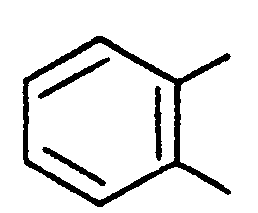
Claims (11)



Applications Claiming Priority (2)
| Application Number | Priority Date | Filing Date | Title |
|---|---|---|---|
| JP4038282A JPS58158630A (en) | 1982-03-15 | 1982-03-15 | Photosensitive silver halide material |
| JP40382/82 | 1982-03-15 |
Publications (2)
| Publication Number | Publication Date |
|---|---|
| EP0089231A1 EP0089231A1 (en) | 1983-09-21 |
| EP0089231B1 true EP0089231B1 (en) | 1987-05-20 |
Family
ID=12579101
Family Applications (1)
| Application Number | Title | Priority Date | Filing Date |
|---|---|---|---|
| EP19830301427 Expired EP0089231B1 (en) | 1982-03-15 | 1983-03-15 | Silver halide photographic material |
Country Status (3)
| Country | Link |
|---|---|
| EP (1) | EP0089231B1 (en) |
| JP (1) | JPS58158630A (en) |
| DE (1) | DE3371707D1 (en) |
Families Citing this family (2)
| Publication number | Priority date | Publication date | Assignee | Title |
|---|---|---|---|---|
| JPS60147728A (en) * | 1984-01-12 | 1985-08-03 | Konishiroku Photo Ind Co Ltd | Silver halide photosensitive material |
| JPH0685065B2 (en) * | 1984-11-30 | 1994-10-26 | コニカ株式会社 | Silver halide photographic light-sensitive material |
Family Cites Families (8)
| Publication number | Priority date | Publication date | Assignee | Title |
|---|---|---|---|---|
| US2240472A (en) * | 1940-03-19 | 1941-04-29 | Eastman Kodak Co | Photographic gelatin layer containing a di-(polyalkylene glycoxy) alkane |
| GB805826A (en) * | 1956-06-07 | 1958-12-17 | Ilford Ltd | Improvements in or relating to photographic light-sensitive materials |
| US3026202A (en) * | 1958-08-07 | 1962-03-20 | Eastman Kodak Co | Gelatin coating compositions |
| DE2133053A1 (en) * | 1970-07-02 | 1972-01-05 | Fuji Photo Film Co Ltd | Process for hardening proteins |
| JPS4839169B1 (en) * | 1970-10-19 | 1973-11-22 | ||
| JPS4948172B1 (en) * | 1970-12-28 | 1974-12-19 | ||
| JPS5644413B2 (en) * | 1973-05-12 | 1981-10-19 | ||
| JPS5952815B2 (en) * | 1976-12-21 | 1984-12-21 | 富士写真フイルム株式会社 | How to form a high-contrast image |
-
1982
- 1982-03-15 JP JP4038282A patent/JPS58158630A/en active Pending
-
1983
- 1983-03-15 EP EP19830301427 patent/EP0089231B1/en not_active Expired
- 1983-03-15 DE DE8383301427T patent/DE3371707D1/en not_active Expired
Also Published As
| Publication number | Publication date |
|---|---|
| JPS58158630A (en) | 1983-09-20 |
| DE3371707D1 (en) | 1987-06-25 |
| EP0089231A1 (en) | 1983-09-21 |
Similar Documents
| Publication | Publication Date | Title |
|---|---|---|
| US5266442A (en) | Method for increasing the contrast of photographic silver images | |
| US4883748A (en) | Negative silver halide photographic emulsion | |
| JPS6129837A (en) | Silver halide photographic sensitive material and formation of very contrasty negative image using it | |
| US5068167A (en) | High contrast photographic materials | |
| JPS6255643A (en) | Silver halide photographic sensitive material and super-contrasty negative image forming method using it | |
| EP0089231A1 (en) | Silver halide photographic material | |
| EP0465730B1 (en) | Photographic infrared sensitized material containing a speed enhancing agent | |
| US5185232A (en) | Method of image formation | |
| EP0702265A1 (en) | Silver halide photographic material comprising mercapto-tetrazole compound(s). | |
| JP2813747B2 (en) | Image forming method | |
| JPH0216902B2 (en) | ||
| JP2694364B2 (en) | Image forming method using silver halide photographic light-sensitive material | |
| US4840889A (en) | High whiteness silver halide photographic paper for direct positives | |
| EP0610608B1 (en) | Silver halide light-sensitive photographic material for use as a laser recorded medical hardcopy material and method of processing | |
| JPS58200232A (en) | Photosensitive silver halide material | |
| JPS5934530A (en) | Silver halide photosensitive material | |
| JPS606940A (en) | Silver halide photosensitive material | |
| JP3473816B2 (en) | Silver halide photographic materials | |
| JPH1090830A (en) | Graphic art recording film having blue base | |
| EP1148379B1 (en) | Single-side coated silver halide photographic film material having reduced tendency to curl. | |
| EP0089230A1 (en) | Silver halide photographic material | |
| JPH04234034A (en) | Stabilization of plate-shaped particle with pyrimidine derivative | |
| JPH0271254A (en) | Silver halide photographic sensitive material | |
| JPS59228249A (en) | Silver halide photosensitive material | |
| JPH08211536A (en) | Silver halide photographic material containing pyridinium carbamoyl hardener |
Legal Events
| Date | Code | Title | Description |
|---|---|---|---|
| PUAI | Public reference made under article 153(3) epc to a published international application that has entered the european phase |
Free format text: ORIGINAL CODE: 0009012 |
|
| AK | Designated contracting states |
Designated state(s): DE FR GB |
|
| 17P | Request for examination filed |
Effective date: 19840306 |
|
| GRAA | (expected) grant |
Free format text: ORIGINAL CODE: 0009210 |
|
| AK | Designated contracting states |
Kind code of ref document: B1 Designated state(s): DE FR GB |
|
| REF | Corresponds to: |
Ref document number: 3371707 Country of ref document: DE Date of ref document: 19870625 |
|
| ET | Fr: translation filed | ||
| PLBE | No opposition filed within time limit |
Free format text: ORIGINAL CODE: 0009261 |
|
| STAA | Information on the status of an ep patent application or granted ep patent |
Free format text: STATUS: NO OPPOSITION FILED WITHIN TIME LIMIT |
|
| 26N | No opposition filed | ||
| PGFP | Annual fee paid to national office [announced via postgrant information from national office to epo] |
Ref country code: FR Payment date: 19900319 Year of fee payment: 8 |
|
| PGFP | Annual fee paid to national office [announced via postgrant information from national office to epo] |
Ref country code: GB Payment date: 19900331 Year of fee payment: 8 |
|
| PGFP | Annual fee paid to national office [announced via postgrant information from national office to epo] |
Ref country code: DE Payment date: 19900430 Year of fee payment: 8 |
|
| PG25 | Lapsed in a contracting state [announced via postgrant information from national office to epo] |
Ref country code: GB Effective date: 19910315 |
|
| GBPC | Gb: european patent ceased through non-payment of renewal fee | ||
| PG25 | Lapsed in a contracting state [announced via postgrant information from national office to epo] |
Ref country code: FR Effective date: 19911129 |
|
| PG25 | Lapsed in a contracting state [announced via postgrant information from national office to epo] |
Ref country code: DE Effective date: 19920101 |
|
| REG | Reference to a national code |
Ref country code: FR Ref legal event code: ST |