EP0084333B1 - Polysaccharide substance, process for the production of same, pharmaceutical compositions containing the same and their use as medicaments - Google Patents
Polysaccharide substance, process for the production of same, pharmaceutical compositions containing the same and their use as medicaments Download PDFInfo
- Publication number
- EP0084333B1 EP0084333B1 EP83100111A EP83100111A EP0084333B1 EP 0084333 B1 EP0084333 B1 EP 0084333B1 EP 83100111 A EP83100111 A EP 83100111A EP 83100111 A EP83100111 A EP 83100111A EP 0084333 B1 EP0084333 B1 EP 0084333B1
- Authority
- EP
- European Patent Office
- Prior art keywords
- substance
- polysaccharide
- microorganism
- polysaccharide substance
- same
- Prior art date
- Legal status (The legal status is an assumption and is not a legal conclusion. Google has not performed a legal analysis and makes no representation as to the accuracy of the status listed.)
- Expired
Links
Images


Classifications
-
- C—CHEMISTRY; METALLURGY
- C12—BIOCHEMISTRY; BEER; SPIRITS; WINE; VINEGAR; MICROBIOLOGY; ENZYMOLOGY; MUTATION OR GENETIC ENGINEERING
- C12P—FERMENTATION OR ENZYME-USING PROCESSES TO SYNTHESISE A DESIRED CHEMICAL COMPOUND OR COMPOSITION OR TO SEPARATE OPTICAL ISOMERS FROM A RACEMIC MIXTURE
- C12P19/00—Preparation of compounds containing saccharide radicals
- C12P19/26—Preparation of nitrogen-containing carbohydrates
-
- A—HUMAN NECESSITIES
- A61—MEDICAL OR VETERINARY SCIENCE; HYGIENE
- A61P—SPECIFIC THERAPEUTIC ACTIVITY OF CHEMICAL COMPOUNDS OR MEDICINAL PREPARATIONS
- A61P35/00—Antineoplastic agents
-
- A—HUMAN NECESSITIES
- A61—MEDICAL OR VETERINARY SCIENCE; HYGIENE
- A61P—SPECIFIC THERAPEUTIC ACTIVITY OF CHEMICAL COMPOUNDS OR MEDICINAL PREPARATIONS
- A61P37/00—Drugs for immunological or allergic disorders
- A61P37/02—Immunomodulators
- A61P37/04—Immunostimulants
Definitions
- This invention relates to the polysaccharide substance MP-67, a process for the production of the same, and their use as medicaments.
- the present invention is based on the discovery that a specific microorganism produces the novel polysaccharide substance MP-67, and this substance has anti-tumor activity and immunopotentiating activity.
- the polysaccharide substance MP-67 of this invention shows the following analysis and properties:
- the polysaccharide substance MP-67 is present in the fermentation broth of a microorganism belonging to the genus Alteromonas and can be obtained by recovering therefrom.
- the polysaccharide substance MP-67 of this invention is produced by the cultivation of the microorganism A/teromonas vaga MP-67 (FERM P-6281) or one of its mutants capable of producing said polysaccharide in a medium consisting of carbon sources, nitrogen sources, inorganic ions, and if necessary, organic nutrients such as vitamins and amino acids, dissolved in seawater (including artificial seawater), and the polysaccharide substance MP-67 produced and accumulated in the fermentation broth is separated and recovered.
- Any carbon sources which are usually used for the cultivation of microorganisms can be used in the present invention.
- Preferred examples of such carbon sources are carbohydrates such as glucose, sucrose, starch and dextrin.
- nitrogen sources which are usually used for the cultivation of microorganisms can be used in the present invention. Examples of such nitrogen sources include peptone, yeast extract, meat extract, corn steep liquor, soybean powder, casein and ammonium ions.
- the cultivation temperature can be appropriately selected within a range which permits the MP-67-producing microorganism to grow and produce the polysaccharide substance MP-67, and it is usually preferred to be from 10°C to 35°C and more preferably from 24°C to 30°C.
- the cultivation is performed until a sufficient amount of the desired polysaccharide substance MP-67 is accumulated in the fermentation broth. Usually, the cultivation time is from 15 hours to 100 hours.
- the microorganism capable of producing the polysaccharide substance MP-67 of the present invention is Alteromonas vaga MP-67 (FERM P-6281
- r Alteromonas vaga (Baumann et al., 1972) is in accordance with the strain of the present invention possessing the following characteristics: a DNA-GC content of 46.2%, negativeness of oxidase, no growth at 40°C, and no decomposition of starch.
- the present strain has been deposited in the Fermentation Research Institute, Agency of Industrial Science and Technology, Ministry of International Trade and Industry of Japan under the acccession number of FERM P-6281.
- any mutants obtained either by artificially such as by irradiation with ultraviolet rays or by X-rays, treatment with chemicals, or by spontaneous mutation can be used in the present invention as long as they have the ability to produce the polysaccharide substance MP-67 of the present invention.
- the polysaccharide substance MP-67 of this invention can be removed from the fermentation broth by known methods. For example, the fermentation broth is subjected to centrifugal separation at 7,500 rpm for fifteen minutes to provide a supernatant liquid. A lower alkanol, preferably ethanol is added to the supernatant liquid, and the resulting mixture is allowed to stand in an ice chamber to cause precipitation. The precipitate is isolated, and dried under reduced pressure to obtain a crude form of the polysaccharide substance MP-67.
- the crude polysaccharide substance MP-67 thus obtained is then further purified.
- various methods can be used. For example, chloroform and n-butanol are added to an aqueous solution of the crude substance, and the resulting mixture is stirred and then subjected to centrifugal separation to obtain a supernatant liquid. The same procedure as above is applied repeatedly once to several times to the supernatant liquid. To the supernatant liquid thus obtained is added ethanol to precipitate a purified form of the polysaccharide substance MP-67. A 0.05 N-NaCI solution of this purified substance is passed through a Sepharose CL-4B @ column and eluted with 0.05 N-NaCI at a suitable flow rate.
- the eluate is fractionated in a predetermined amount, and MP-67-containing fractions are collected and dialyzed to remove NaCI therefrom. Then, ethanol is added to cause precipitation whereby a purified MP-67 fraction can be obtained.
- the physical and chemical properties of the polysaccharide substance MP-67 of this invention are described below. 0.5 ml of 72% sulfuric acid was added to 10 mg of the polysaccharide substance MP-67, and the mixture was allowed to stand for two hours at room temperature. To the mixture was added 7 ml of water, and the resulting mixture was placed in a sealed tube. The tube was heated in an oil bath at 105°C for two hours.
- the polysaccharide substance MP-67 of this invention is hygroscopic, and thus difficult to analyze accurately.
- One example of its elemental analysis is C: 39.87%; H: 6.89%; and N: 1.98%.
- the average molecular weight determined by a gel filtration method using Sepharose CL-4B @ is 2 x 10 5 to 4 x 10 5 .
- the infrared absorption spectrum employing the KBr tablet is shown in Fig. 3.
- the ultraviolet absorption spectrum for an aqueous solution (1 mg/ml) is shown in Fig. 4.
- the polysaccharide substance MP-67 of the present invention is white. This substance is insoluble in organic solvents, but soluble in water. The substance is positive in a color development test by the phenol-sulfuric acid method.
- the components of the polysaccharide substance MP-67 of this invention contain an unidentified substance.
- the solution was subjected to thinlayer chromatography on a plate (Kieselgel 60 F, a product of Merck), using a 4:4:2 mixture of isopropanol, acetone and 0.1 M lactic acid as a developing agent.
- the plate had been dipped in a 0.5 M NaH 2 P0 4 solution, air-dried, and heated at 105°C for one hour.
- the thinlayer chromatography gave the results shown in Table 2.
- the sugars were detected by spraying the plate with an anisaldehyde-sulfuric acid solution, followed by heating the sprayed plate at 105°C.
- the substance having an Rf of 0.27 was compared with arabinose, sorbose, glucoheptose, talose, altrose, tagatose, fructose, and ribose. However, this substance did not conform to any of these sugars.
- the polysaccharide substance MP-67 of this invention has very strong immunopotentiating activity, and it is therefore useful for prevention and treatment of infectious diseases.
- this substance exhibits its anti-cancer effect mediated by immunological response of host. This invention is described in greater detail below with reference to the following examples.
- A/teromonas vaga MP-67 strain (FERM P-6281) was inoculated in a 30-liter jar fermentor containing 15 liters of a medium (pH 7.2) of-artificial seawater (Jamarin S, a product of Jamarin Laboratory) containing 0.8% glucose, 0.5% polypeptone and 0.1 % yeast extract, and incubated at 27°C for 23 hours under stirring at 300 rpm and aeration at 1/3 vvm.
- the fermentation broth was centrifuged at 7500 rpm for fifteen minutes to remove the bacterial cell and to obtain a supernatant.
- To the supernatant was added a 1.5-fold volume of ethanol.
- the mixture was allowed to stand overnight in an ice chamber to cause precipitation.
- the precipitate thus formed was collected, and dried under reduced pressure to obtain a crude form of the polysaccharide substance MP-67 (hereinafter referred to as Sample I) in a yield of 4.47 g.
- the crude polysaccharide substance MP-67 had a sugar content, determined by the phenolsulfuric acid method (standard sample:glucose), of 35.6% and a protein content, determined by the Lowry method (standard sample:bovine serum albumin), of 11.6%.
- Sample II dry mass
- the resulting purified sample solution was dialyzed three times against 5 liters of deionized water, and the dialyzate was desalted by passage through a Sephadex G-50 0 (5 cm 0 x 40 cm) column. The resulting eluate was then concentrated into 10 ml. The concentrate was dialyzed against deionized water, and ethanol in an amount of two times the amount of the dialyzate was added to the dialyzate to cause precipitation. The precipitate formed was dried under reduced pressure to obtain 140 mg of a pure polysaccharide product (hereinafter referred to as Sample III) as white powder. This product had a sugar content of 38.0% and a protein content of 8%. A chromatogram of Sample III is shown in Fig. 2. Sample III had the aforementioned physical and chemical properties.
- Example 2 A 3-liter flask was charged with.1 liter of a medium having the same composition as in Example 1 except that the medium had a glucose content of 0.6%.
- the same strain as shown in Example 1 was inoculated into the medium, and incubated at 27°C for three days under reciprocating shake. Then, the same procedure as used in Example 1 was employed to obtain 310 mg of the crude-form polysaccharide substance MP-67. This substance had a sugar content of 37% and a protein content of 13.3%.
- mice Five weeks old, female were intraperitoneally transplanted 1 x 10 6 Sarcoma-180 tumor cells. For 10 days from the day subsequent to the transplantation, a predetermined dose of sample were intraperitoneally administered. The average number of survival days and life-prolonged effect were determined. The results are shown in Table 3.
- Spleen cells were collected from CDF 1 mice (6 weeks old, female), and suspended in an RPMI 1640 medium containing 1% of fetal calf serum in a proportion of 1 x 10 6 cells per milliliter.
Landscapes
- Health & Medical Sciences (AREA)
- Organic Chemistry (AREA)
- Chemical & Material Sciences (AREA)
- Life Sciences & Earth Sciences (AREA)
- Immunology (AREA)
- Engineering & Computer Science (AREA)
- General Health & Medical Sciences (AREA)
- Chemical Kinetics & Catalysis (AREA)
- General Chemical & Material Sciences (AREA)
- Animal Behavior & Ethology (AREA)
- Pharmacology & Pharmacy (AREA)
- Nuclear Medicine, Radiotherapy & Molecular Imaging (AREA)
- Medicinal Chemistry (AREA)
- Bioinformatics & Cheminformatics (AREA)
- Public Health (AREA)
- Veterinary Medicine (AREA)
- Zoology (AREA)
- Wood Science & Technology (AREA)
- Microbiology (AREA)
- Biotechnology (AREA)
- Molecular Biology (AREA)
- Biochemistry (AREA)
- General Engineering & Computer Science (AREA)
- Genetics & Genomics (AREA)
- Pharmaceuticals Containing Other Organic And Inorganic Compounds (AREA)
- Preparation Of Compounds By Using Micro-Organisms (AREA)
- Polysaccharides And Polysaccharide Derivatives (AREA)
Abstract
Description
- This invention relates to the polysaccharide substance MP-67, a process for the production of the same, and their use as medicaments.
- A number of polysaccharides have heretofore been discovered, and it is known that they have a wide variety of uses. The present invention is based on the discovery that a specific microorganism produces the novel polysaccharide substance MP-67, and this substance has anti-tumor activity and immunopotentiating activity.
- The polysaccharide substance MP-67 of this invention shows the following analysis and properties:
- a. A carbon to nitrogen ratio, determined by elemental analysis, of 20:1, although accurate analysis is difficult because said substance is hygroscopic;
- b. An average molecular weight, determined by gel filtration using Sepharose CL-4B@, of 2 x 10⁵ to 4 x 10 5 ;
- c. Insoluble in organic solvents and soluble in water;
- d. Positive in a color development test by the phenol-sulfuric acid method;
- e. The sugar composition determined by gas chromatography: 53 ± 5% rhamnose, 21 ± 2% glucose, 7.0 ± 0.7% mannose and 6.0 ± 0.6% galactose;
- f. An infrared absorption spectrum as shown in Fig. 3, and
- g. An ultraviolet absorption spectrum as shown in Fig. 4.
- The polysaccharide substance MP-67 is present in the fermentation broth of a microorganism belonging to the genus Alteromonas and can be obtained by recovering therefrom. The polysaccharide substance MP-67 of this invention is produced by the cultivation of the microorganism A/teromonas vaga MP-67 (FERM P-6281) or one of its mutants capable of producing said polysaccharide in a medium consisting of carbon sources, nitrogen sources, inorganic ions, and if necessary, organic nutrients such as vitamins and amino acids, dissolved in seawater (including artificial seawater), and the polysaccharide substance MP-67 produced and accumulated in the fermentation broth is separated and recovered.
- Any carbon sources which are usually used for the cultivation of microorganisms can be used in the present invention. Preferred examples of such carbon sources are carbohydrates such as glucose, sucrose, starch and dextrin. Also, nitrogen sources which are usually used for the cultivation of microorganisms can be used in the present invention. Examples of such nitrogen sources include peptone, yeast extract, meat extract, corn steep liquor, soybean powder, casein and ammonium ions.
- Cultivation is performed preferably under aerated conditions with stirring. The cultivation temperature can be appropriately selected within a range which permits the MP-67-producing microorganism to grow and produce the polysaccharide substance MP-67, and it is usually preferred to be from 10°C to 35°C and more preferably from 24°C to 30°C. The cultivation is performed until a sufficient amount of the desired polysaccharide substance MP-67 is accumulated in the fermentation broth. Usually, the cultivation time is from 15 hours to 100 hours.
- The microorganism capable of producing the polysaccharide substance MP-67 of the present invention is Alteromonas vaga MP-67 (FERM P-6281
- This strain is collected and isolated from marine environment and has the following microbiological characteristics:
- a. Morphological Characteristics
- 1. Form and size of the cell: Rod and 0.3 to 0.5 x 0.7 to 0.9 pm
- 2. Pleomorphism: Non-pleomorphic
- 3. Motility/flagellation: Motile/polar flagella
- 4. Sporogenicity: Non-sporulating
- 5. Gram's stain: Negative
- 6. Acid-fastness: Negative
- b. Culture Characteristics on Various Media
- 1. Bouillon agar plate culture: No growth
- 1'. Marine agar 2216 medium plate culture: Medium growth, circular, flat to semilenticular, entire margin, smooth, glistening, translucent, butyraceous, and pale yellow to light yellow.
- 2. Bouillon agar slant culture: No growth
- 2'. Marine agar 2216 medium slant culture: Moderate growth, membranous, thread-like, glistening, and pale yellow to light yellow
- 3. Bouillon liquid culture: No growth
- 3'. Marine 2216 medium liquid culture: Slightly turbid, no membrane formation on the surface, and powder precipitation
- 4. Bouillon gelatin stab culture: No changes
- 4'. Marine 2116 medium gelatin stab culture: Liquefaction
- 5. Litmus milk: No changes.
- 1. Bouillon agar plate culture: No growth
- c. Physiological Characteristics
- 1. Reduction of nitrates: Negative
- 2. Denitrification: Negative
- 3. MR test: Negative
- 4. VP test: Negative
- 5. Production of indole: Negative
- 6. Production of hydrogen sulfide: Negative
- 7. Hydrolysis of starch: Negative
- 8. Utilization of citric acid: Positive on a Koser medium, and positive on a Christensen medium.
- 9. Utilization of inorganic nitrogen source: Utilizes nitrates and ammonium salts.
- 10. Production of pigment: No formation of water-soluble pigment
- 11. Urease: Negative
- 12. Oxidase: Negative
- 13. Catalase: Positive
- 14. Growth ranges: Temperature: Good growth at 14°C to 37°C; optimum temperature: 26°C to 34°C; and no growth at 40°C. pH: 6 to 9.
- 15. Oxygen demand: Aerobic
- 16. O-F test (according to the Hugh & Leifson method): No acid is formed.
- 17. Production of acids and gases from Saccharides:

- 18. Arginine dihydrolase reaction (according to the method of Stanier et al.): Negative
- 19. Decomposition of casein: Negative
- 20. Accumulation of poly-hydroxybutyric acid: Negative
- 21. Nutrient requirement: No growth occurs unless seawater is added.
- 22. Utilization of the following compounds (Stanier medium + Marine Salts)

- 23. GC content of DNA: 46.2%.
- In view of the above microbiological characteristics, Bergey's Manual of Determinative Bacteriology, 8th Ed. has been referred to forthe identification of the strain used in the present invention. This strain does not agree with the genus Pseudomonas having a DNA-GC content of 58 to 70%. Vibrio, Photobacterium, Beneckea and Lucibacterium species are inconsistent with the strain because these species are facultative anaerobes and the other characteristics of them are also different from those of the strain. Acinetobacter and Moraxella species, non-motile bacteria, differ from the strain. Bdelloxibrio species, obligatory parasites, do not conform to the strain. Halobacterium species, having a DNA-GC content of 57 to 68%, do not agree with the strain. The strain of the invention thus differs from the genera described in said manual in terms of important characteristics and does not conform to any of the genera.
- Search through taxonomic systems other than revealed in said manual has shown the strain of the invention to be in good agreement with the genus Alteromonas (Gram-negative, rod, non-fermentative, polar flagellate, DNA-GC content of 40 to 50%, marine bacteria, aerobic) proposed by Baumann et al. (Taxonomy of aerobic marine eubacteria, J. Bacteriol. 110, 402-429, 1972). This strain has therefore been identified as a bacterium belonging to the genus Alteromonas. Among the known species of this genus, r Alteromonas vaga (Baumann et al., 1972) is in accordance with the strain of the present invention possessing the following characteristics: a DNA-GC content of 46.2%, negativeness of oxidase, no growth at 40°C, and no decomposition of starch. The present strain has been deposited in the Fermentation Research Institute, Agency of Industrial Science and Technology, Ministry of International Trade and Industry of Japan under the acccession number of FERM P-6281. Any mutants obtained either by artificially such as by irradiation with ultraviolet rays or by X-rays, treatment with chemicals, or by spontaneous mutation can be used in the present invention as long as they have the ability to produce the polysaccharide substance MP-67 of the present invention. The polysaccharide substance MP-67 of this invention can be removed from the fermentation broth by known methods. For example, the fermentation broth is subjected to centrifugal separation at 7,500 rpm for fifteen minutes to provide a supernatant liquid. A lower alkanol, preferably ethanol is added to the supernatant liquid, and the resulting mixture is allowed to stand in an ice chamber to cause precipitation. The precipitate is isolated, and dried under reduced pressure to obtain a crude form of the polysaccharide substance MP-67.
- The crude polysaccharide substance MP-67 thus obtained is then further purified. For this purpose, various methods can be used. For example, chloroform and n-butanol are added to an aqueous solution of the crude substance, and the resulting mixture is stirred and then subjected to centrifugal separation to obtain a supernatant liquid. The same procedure as above is applied repeatedly once to several times to the supernatant liquid. To the supernatant liquid thus obtained is added ethanol to precipitate a purified form of the polysaccharide substance MP-67. A 0.05 N-NaCI solution of this purified substance is passed through a Sepharose CL-4B@ column and eluted with 0.05 N-NaCI at a suitable flow rate. The eluate is fractionated in a predetermined amount, and MP-67-containing fractions are collected and dialyzed to remove NaCI therefrom. Then, ethanol is added to cause precipitation whereby a purified MP-67 fraction can be obtained. The physical and chemical properties of the polysaccharide substance MP-67 of this invention are described below. 0.5 ml of 72% sulfuric acid was added to 10 mg of the polysaccharide substance MP-67, and the mixture was allowed to stand for two hours at room temperature. To the mixture was added 7 ml of water, and the resulting mixture was placed in a sealed tube. The tube was heated in an oil bath at 105°C for two hours. The reaction mixture was neutralized with barium hydroxide, and the resulting barium sulfate was removed by filtration. The filtrate was dried under reduced pressure, and trimethylsilylated with a commercially available trimethylsilylating agent. Gas chromatographic analysis with reference to a standard sample shows that the polysaccharide substance MP-67 of this invention has the composition given in Table 1.

- Similar to other polysaccharides, the polysaccharide substance MP-67 of this invention is hygroscopic, and thus difficult to analyze accurately. One example of its elemental analysis is C: 39.87%; H: 6.89%; and N: 1.98%. The carbon/nitrogen ratio of the polysaccharide substance MP-67 of this invention is C: N = 20:1.
- The average molecular weight determined by a gel filtration method using Sepharose CL-4B@ is 2 x 10⁵ to 4 x 10⁵. The infrared absorption spectrum employing the KBr tablet is shown in Fig. 3. The ultraviolet absorption spectrum for an aqueous solution (1 mg/ml) is shown in Fig. 4. The polysaccharide substance MP-67 of the present invention is white. This substance is insoluble in organic solvents, but soluble in water. The substance is positive in a color development test by the phenol-sulfuric acid method. The components of the polysaccharide substance MP-67 of this invention contain an unidentified substance. To identify this substance, further investigation was carried out in the following way: 1 ml of 1 N-H2S04 was added to about 5 mg of Sample III to be described later. The mixture was placed in a sealed tube, and heated in an oil bath at 100°C for five hours for hydrolysis. After cooling, the reaction mixture was neutralized with a saturated solution of barium hydroxide, and centrifuged at 3000 rpm for fifteen minutes to remove the precipitate formed. The supernatant was lyophilized and dissolved in 0.5 ml of water. The solution was subjected to thinlayer chromatography on a plate (Kieselgel 60 F, a product of Merck), using a 4:4:2 mixture of isopropanol, acetone and 0.1 M lactic acid as a developing agent. The plate had been dipped in a 0.5 M NaH2P04 solution, air-dried, and heated at 105°C for one hour. The thinlayer chromatography gave the results shown in Table 2. The sugars were detected by spraying the plate with an anisaldehyde-sulfuric acid solution, followed by heating the sprayed plate at 105°C.
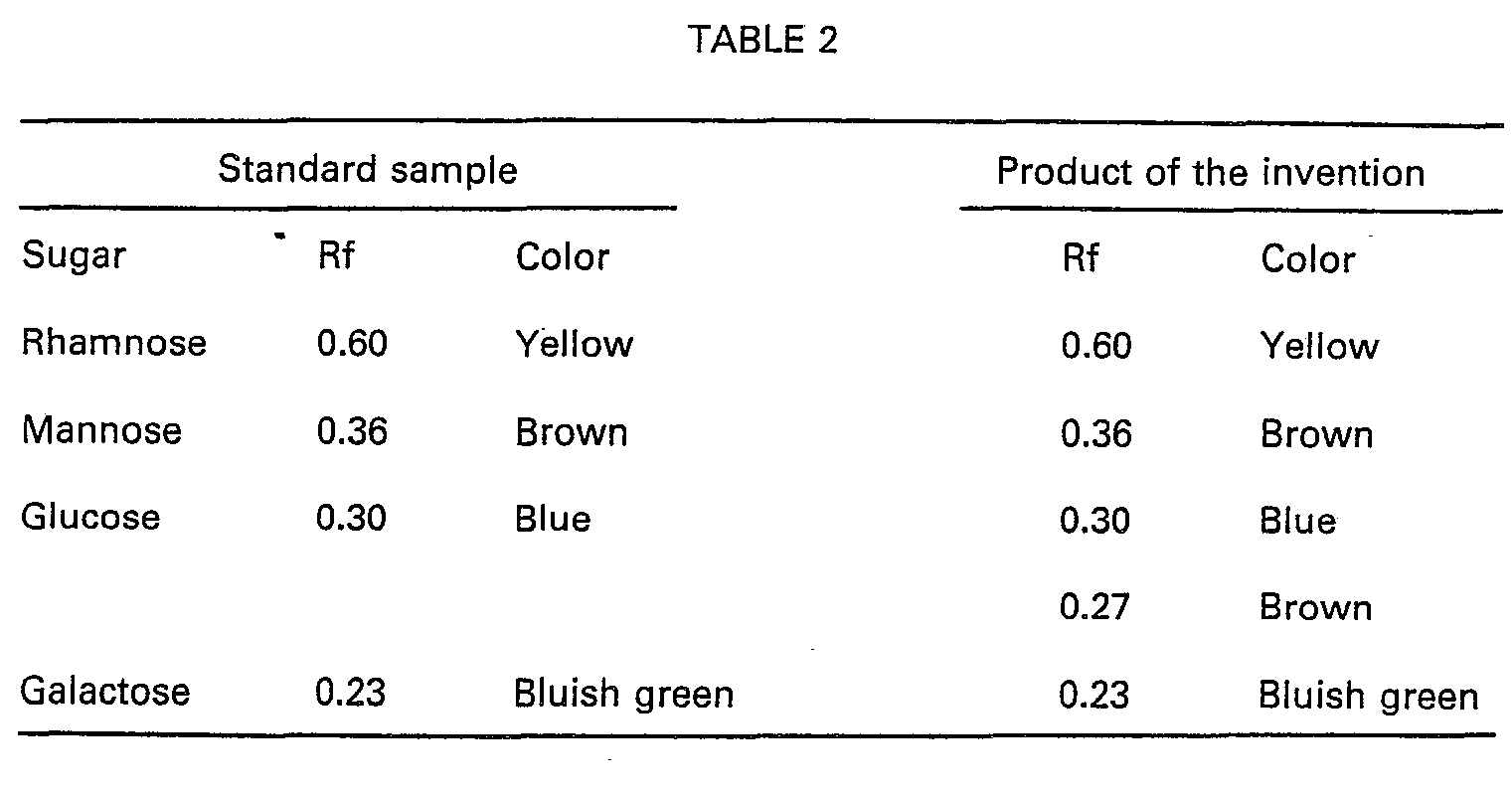
- The substance having an Rf of 0.27 was compared with arabinose, sorbose, glucoheptose, talose, altrose, tagatose, fructose, and ribose. However, this substance did not conform to any of these sugars.
- The polysaccharide substance MP-67 of this invention has very strong immunopotentiating activity, and it is therefore useful for prevention and treatment of infectious diseases. In addition, this substance exhibits its anti-cancer effect mediated by immunological response of host. This invention is described in greater detail below with reference to the following examples.
- A/teromonas vaga MP-67 strain (FERM P-6281) was inoculated in a 30-liter jar fermentor containing 15 liters of a medium (pH 7.2) of-artificial seawater (Jamarin S, a product of Jamarin Laboratory) containing 0.8% glucose, 0.5% polypeptone and 0.1 % yeast extract, and incubated at 27°C for 23 hours under stirring at 300 rpm and aeration at 1/3 vvm.
- The fermentation broth was centrifuged at 7500 rpm for fifteen minutes to remove the bacterial cell and to obtain a supernatant. To the supernatant was added a 1.5-fold volume of ethanol. The mixture was allowed to stand overnight in an ice chamber to cause precipitation. The precipitate thus formed was collected, and dried under reduced pressure to obtain a crude form of the polysaccharide substance MP-67 (hereinafter referred to as Sample I) in a yield of 4.47 g. The crude polysaccharide substance MP-67 had a sugar content, determined by the phenolsulfuric acid method (standard sample:glucose), of 35.6% and a protein content, determined by the Lowry method (standard sample:bovine serum albumin), of 11.6%. 1 g of Sample I was dissolved in 200 ml of 0.05 M-NaCI, and each 10 ml, per chromatography, of this solution was passed through a Sepharose CL-6B® column (7.5 cm 0 x 60 cm, 0.05 M-Na-CI), and eluted with 0.05 M-NaCI at a flow rate of 80 ml/hr. The eluate was fractionated into fractions of every 20 ml. Fig. 1 shows the respective gel filtration chromatogram. Fraction A (shown in Fig.) was collected.
- Fraction A was concentrated and dialyzed. To 58 ml of the dialyzate was added ethanol in an amount of 2 times the amount of dialyzate to cause precipitation. The precipitate formed was recovered and dried under reduced pressure to obtain dry mass (hereinafter referred to as Sample II) in a yield of 500 mg. The same analyses as for Sample I showed that Sample II has a sugar content of 36.1 % and a protein content of 8.6%. 320 mg of Sample II was dissolved in 32 ml of 0.05 N-NaCI, and the solution was purified by gel filtration in the same by way as described above except that 5 ml of the solution was used. The resulting purified sample solution was dialyzed three times against 5 liters of deionized water, and the dialyzate was desalted by passage through a Sephadex G-500 (5 cm 0 x 40 cm) column. The resulting eluate was then concentrated into 10 ml. The concentrate was dialyzed against deionized water, and ethanol in an amount of two times the amount of the dialyzate was added to the dialyzate to cause precipitation. The precipitate formed was dried under reduced pressure to obtain 140 mg of a pure polysaccharide product (hereinafter referred to as Sample III) as white powder. This product had a sugar content of 38.0% and a protein content of 8%. A chromatogram of Sample III is shown in Fig. 2. Sample III had the aforementioned physical and chemical properties.
- A 3-liter flask was charged with.1 liter of a medium having the same composition as in Example 1 except that the medium had a glucose content of 0.6%. The same strain as shown in Example 1 was inoculated into the medium, and incubated at 27°C for three days under reciprocating shake. Then, the same procedure as used in Example 1 was employed to obtain 310 mg of the crude-form polysaccharide substance MP-67. This substance had a sugar content of 37% and a protein content of 13.3%.
- To ICR mice (five weeks old, female) were intraperitoneally transplanted 1 x 10⁶ Sarcoma-180 tumor cells. For 10 days from the day subsequent to the transplantation, a predetermined dose of sample were intraperitoneally administered. The average number of survival days and life-prolonged effect were determined. The results are shown in Table 3.

- Spleen cells were collected from CDF1 mice (6 weeks old, female), and suspended in an RPMI 1640 medium containing 1% of fetal calf serum in a proportion of 1 x 10⁶ cells per milliliter.
- To 0.2 ml of the cell suspension was added 10 microliters of a sample solution, and the mixture was cultured at 37°C in the presence of 5%, C02. Fifty-four hours later, 0.1 uCi of 3H-thymidine was added, and cultivation was continued for an additional 18 hours. Then, the 3H-thymidine incorporation to the cultured spleen cells were determined by counting the radioactivity. The results are shown in Table 4.

Claims (8)
Priority Applications (1)
| Application Number | Priority Date | Filing Date | Title |
|---|---|---|---|
| AT83100111T ATE20360T1 (en) | 1982-01-14 | 1983-01-08 | POLYSACCHARIDE SUBSTANCE, PROCESS FOR THE PRODUCTION THEREOF, PHARMACEUTICAL COMPOSITIONS CONTAINING THE SAME AND THEIR USE AS MEDICATIONS. |
Applications Claiming Priority (2)
| Application Number | Priority Date | Filing Date | Title |
|---|---|---|---|
| JP57003410A JPS58121798A (en) | 1982-01-14 | 1982-01-14 | Polysaccharide mp-67 and its production |
| JP3410/82 | 1982-01-14 |
Publications (2)
| Publication Number | Publication Date |
|---|---|
| EP0084333A1 EP0084333A1 (en) | 1983-07-27 |
| EP0084333B1 true EP0084333B1 (en) | 1986-06-11 |
Family
ID=11556606
Family Applications (1)
| Application Number | Title | Priority Date | Filing Date |
|---|---|---|---|
| EP83100111A Expired EP0084333B1 (en) | 1982-01-14 | 1983-01-08 | Polysaccharide substance, process for the production of same, pharmaceutical compositions containing the same and their use as medicaments |
Country Status (4)
| Country | Link |
|---|---|
| EP (1) | EP0084333B1 (en) |
| JP (1) | JPS58121798A (en) |
| AT (1) | ATE20360T1 (en) |
| DE (1) | DE3363975D1 (en) |
Families Citing this family (3)
| Publication number | Priority date | Publication date | Assignee | Title |
|---|---|---|---|---|
| JPH0568288A (en) * | 1991-09-06 | 1993-03-19 | Hanshin Electric Co Ltd | Remote control type automatic hot water supply system |
| FR2701488B1 (en) * | 1993-02-15 | 1995-05-05 | Ifremer | Bacteria of the Alteromonas type, polysaccharides produced by these bacteria, dares contained in these polysaccharides and applications. |
| FR2755142B1 (en) * | 1996-10-30 | 1999-01-15 | Ifremer | MARINE BACTERIAL STRAIN OF THE GENUS ALTEROMONAS, WATER-SOLUBLE EXOPOLYSACCHARIDES PRODUCED BY THIS STRAIN, AND USES THEREOF |
-
1982
- 1982-01-14 JP JP57003410A patent/JPS58121798A/en active Granted
-
1983
- 1983-01-08 EP EP83100111A patent/EP0084333B1/en not_active Expired
- 1983-01-08 AT AT83100111T patent/ATE20360T1/en not_active IP Right Cessation
- 1983-01-08 DE DE8383100111T patent/DE3363975D1/en not_active Expired
Also Published As
| Publication number | Publication date |
|---|---|
| JPS58121798A (en) | 1983-07-20 |
| EP0084333A1 (en) | 1983-07-27 |
| ATE20360T1 (en) | 1986-06-15 |
| JPS61361B2 (en) | 1986-01-08 |
| DE3363975D1 (en) | 1986-07-17 |
Similar Documents
| Publication | Publication Date | Title |
|---|---|---|
| JPS6215560B2 (en) | ||
| EP0459367B1 (en) | Method for preparing an antitumor dextran | |
| EP0084334B1 (en) | Polysaccharide substance, process for the production of same, pharmaceutical compositions containing the same and their use as medicaments | |
| US4209507A (en) | Novel anti-tumor substance and preparation thereof | |
| US6436680B1 (en) | Marine bacterial strain of the genus vibrio, water-soluble polysaccharides produced by said strain and their uses | |
| EP0084333A1 (en) | Polysaccharide substance, process for the production of same, pharmaceutical compositions containing the same and their use as medicaments | |
| US4016260A (en) | Novel polypeptide produced by pseudomonas | |
| EP0254223A1 (en) | Bisucaberin, a process for producing this compound and its use as a medicament | |
| EP0067000B1 (en) | Production of a nitrogen-containing polysaccharide having antitumour activity | |
| AU644604B2 (en) | Extracellular exopolymer, process for its preparation and pharmaceutical compositions containing the said exopolymer | |
| EP0053800B1 (en) | Heteroglycan, process for the production of same, and immunological activator containing same | |
| US3173848A (en) | Production of 5-amino-4-imidazole-carboxamide riboside and related compounds | |
| EP0024206A2 (en) | Antitumor substance, composition comprising it and process for preparing said substance | |
| KR860001213B1 (en) | Novel process for preparing substance having carcinostatic and immunostimulating activity | |
| KR890002256B1 (en) | Process for preparing anticanser tf-2 | |
| Manzoni et al. | Influence of the culture conditions on extracellular lyase activity related to K5 polysaccharide | |
| US4824945A (en) | Hypocholesterolemically active RNA fractions | |
| EP0496351A2 (en) | Acid heteropolysaccharide, sulfated polysaccharide and process for producing the same | |
| EP0142121B1 (en) | Ws 7739 substances, their preparation and pharmaceutical composition containing the same | |
| SU1756349A1 (en) | Strain bacteria corynebacterium sepedonicum - a producer of polysaccharide, inducing interferon production | |
| JPH0342070B2 (en) | ||
| JPS5934896A (en) | Preparation of antitumor polysaccharide | |
| JPS61289898A (en) | Production of factor for suppressing sporulation of phytopathogenic fungus | |
| EP0067038A1 (en) | High molecular antitumor antibiotics AN-7D | |
| JPH0144721B2 (en) |
Legal Events
| Date | Code | Title | Description |
|---|---|---|---|
| PUAI | Public reference made under article 153(3) epc to a published international application that has entered the european phase |
Free format text: ORIGINAL CODE: 0009012 |
|
| AK | Designated contracting states |
Designated state(s): AT BE CH DE FR GB IT LI NL SE |
|
| 17P | Request for examination filed |
Effective date: 19830930 |
|
| GRAA | (expected) grant |
Free format text: ORIGINAL CODE: 0009210 |
|
| AK | Designated contracting states |
Kind code of ref document: B1 Designated state(s): AT BE CH DE FR GB IT LI NL SE |
|
| REF | Corresponds to: |
Ref document number: 20360 Country of ref document: AT Date of ref document: 19860615 Kind code of ref document: T |
|
| ITF | It: translation for a ep patent filed | ||
| REF | Corresponds to: |
Ref document number: 3363975 Country of ref document: DE Date of ref document: 19860717 |
|
| ET | Fr: translation filed | ||
| PLBE | No opposition filed within time limit |
Free format text: ORIGINAL CODE: 0009261 |
|
| STAA | Information on the status of an ep patent application or granted ep patent |
Free format text: STATUS: NO OPPOSITION FILED WITHIN TIME LIMIT |
|
| 26N | No opposition filed | ||
| ITTA | It: last paid annual fee | ||
| PGFP | Annual fee paid to national office [announced via postgrant information from national office to epo] |
Ref country code: NL Payment date: 19890131 Year of fee payment: 9 |
|
| PGFP | Annual fee paid to national office [announced via postgrant information from national office to epo] |
Ref country code: FR Payment date: 19891214 Year of fee payment: 8 |
|
| PGFP | Annual fee paid to national office [announced via postgrant information from national office to epo] |
Ref country code: SE Payment date: 19891220 Year of fee payment: 8 |
|
| PGFP | Annual fee paid to national office [announced via postgrant information from national office to epo] |
Ref country code: AT Payment date: 19891222 Year of fee payment: 8 |
|
| PGFP | Annual fee paid to national office [announced via postgrant information from national office to epo] |
Ref country code: GB Payment date: 19891231 Year of fee payment: 8 |
|
| PGFP | Annual fee paid to national office [announced via postgrant information from national office to epo] |
Ref country code: BE Payment date: 19900112 Year of fee payment: 8 |
|
| PGFP | Annual fee paid to national office [announced via postgrant information from national office to epo] |
Ref country code: DE Payment date: 19900315 Year of fee payment: 8 |
|
| PGFP | Annual fee paid to national office [announced via postgrant information from national office to epo] |
Ref country code: CH Payment date: 19900326 Year of fee payment: 8 |
|
| PG25 | Lapsed in a contracting state [announced via postgrant information from national office to epo] |
Ref country code: GB Effective date: 19910108 Ref country code: AT Effective date: 19910108 |
|
| PG25 | Lapsed in a contracting state [announced via postgrant information from national office to epo] |
Ref country code: SE Effective date: 19910109 |
|
| PG25 | Lapsed in a contracting state [announced via postgrant information from national office to epo] |
Ref country code: CH Effective date: 19910131 Ref country code: LI Effective date: 19910131 Ref country code: BE Effective date: 19910131 |
|
| PG25 | Lapsed in a contracting state [announced via postgrant information from national office to epo] |
Ref country code: NL Effective date: 19910801 |
|
| GBPC | Gb: european patent ceased through non-payment of renewal fee | ||
| NLV4 | Nl: lapsed or anulled due to non-payment of the annual fee | ||
| PG25 | Lapsed in a contracting state [announced via postgrant information from national office to epo] |
Ref country code: FR Effective date: 19910930 |
|
| REG | Reference to a national code |
Ref country code: CH Ref legal event code: PL |
|
| PG25 | Lapsed in a contracting state [announced via postgrant information from national office to epo] |
Ref country code: DE Effective date: 19911001 |
|
| REG | Reference to a national code |
Ref country code: FR Ref legal event code: ST |
|
| EUG | Se: european patent has lapsed |
Ref document number: 83100111.0 Effective date: 19910910 |