EP0082599B1 - M-hydroxyphenyl substituted compounds - Google Patents
M-hydroxyphenyl substituted compounds Download PDFInfo
- Publication number
- EP0082599B1 EP0082599B1 EP82306162A EP82306162A EP0082599B1 EP 0082599 B1 EP0082599 B1 EP 0082599B1 EP 82306162 A EP82306162 A EP 82306162A EP 82306162 A EP82306162 A EP 82306162A EP 0082599 B1 EP0082599 B1 EP 0082599B1
- Authority
- EP
- European Patent Office
- Prior art keywords
- alkyl
- hydrogen
- oxocyclohex
- enyl
- methylazepin
- Prior art date
- Legal status (The legal status is an assumption and is not a legal conclusion. Google has not performed a legal analysis and makes no representation as to the accuracy of the status listed.)
- Expired
Links
- 150000001875 compounds Chemical class 0.000 title claims description 39
- -1 M-hydroxyphenyl Chemical group 0.000 title claims description 9
- 125000000217 alkyl group Chemical group 0.000 claims description 28
- 238000000034 method Methods 0.000 claims description 23
- CPELXLSAUQHCOX-UHFFFAOYSA-N Hydrogen bromide Chemical group Br CPELXLSAUQHCOX-UHFFFAOYSA-N 0.000 claims description 18
- 239000001257 hydrogen Substances 0.000 claims description 16
- 229910052739 hydrogen Inorganic materials 0.000 claims description 16
- 125000004435 hydrogen atom Chemical group [H]* 0.000 claims description 15
- VEXZGXHMUGYJMC-UHFFFAOYSA-N Hydrochloric acid Chemical compound Cl VEXZGXHMUGYJMC-UHFFFAOYSA-N 0.000 claims description 8
- GDTBXPJZTBHREO-UHFFFAOYSA-N bromine Chemical group BrBr GDTBXPJZTBHREO-UHFFFAOYSA-N 0.000 claims description 8
- 229910052794 bromium Chemical group 0.000 claims description 8
- 229910000042 hydrogen bromide Inorganic materials 0.000 claims description 8
- WKBOTKDWSSQWDR-UHFFFAOYSA-N Bromine atom Chemical group [Br] WKBOTKDWSSQWDR-UHFFFAOYSA-N 0.000 claims description 7
- 125000001997 phenyl group Chemical group [H]C1=C([H])C([H])=C(*)C([H])=C1[H] 0.000 claims description 7
- 125000003342 alkenyl group Chemical group 0.000 claims description 5
- 125000003118 aryl group Chemical group 0.000 claims description 5
- 239000000460 chlorine Substances 0.000 claims description 5
- 125000000753 cycloalkyl group Chemical group 0.000 claims description 5
- HTMHIQSSYCFMSW-UHFFFAOYSA-N 3-(2-bromo-3-oxocyclohexen-1-yl)-1-methylazepan-2-one Chemical compound O=C1N(C)CCCCC1C1=C(Br)C(=O)CCC1 HTMHIQSSYCFMSW-UHFFFAOYSA-N 0.000 claims description 4
- KZQTTZFOMAYISG-UHFFFAOYSA-N 3-(2-chloro-3-oxocyclohexen-1-yl)-1-methylazepan-2-one Chemical compound O=C1N(C)CCCCC1C1=C(Cl)C(=O)CCC1 KZQTTZFOMAYISG-UHFFFAOYSA-N 0.000 claims description 4
- NQRYJNQNLNOLGT-UHFFFAOYSA-N Piperidine Chemical class C1CCNCC1 NQRYJNQNLNOLGT-UHFFFAOYSA-N 0.000 claims description 4
- 239000003377 acid catalyst Substances 0.000 claims description 4
- 125000000304 alkynyl group Chemical group 0.000 claims description 4
- 229910052801 chlorine Inorganic materials 0.000 claims description 4
- 230000000269 nucleophilic effect Effects 0.000 claims description 4
- RWRDLPDLKQPQOW-UHFFFAOYSA-N tetrahydropyrrole Natural products C1CCNC1 RWRDLPDLKQPQOW-UHFFFAOYSA-N 0.000 claims description 4
- HERVQLYSEVIRDL-UHFFFAOYSA-N 3-(2-bromo-3-oxocyclohexen-1-yl)-3-ethyl-1-methylazepan-2-one Chemical compound BrC=1C(=O)CCCC=1C1(CC)CCCCN(C)C1=O HERVQLYSEVIRDL-UHFFFAOYSA-N 0.000 claims description 3
- YVVPRKXQMOGYCL-UHFFFAOYSA-N 3-(2-chloro-3-oxocyclohexen-1-yl)-3-ethyl-1-methylazepan-2-one Chemical compound ClC=1C(=O)CCCC=1C1(CC)CCCCN(C)C1=O YVVPRKXQMOGYCL-UHFFFAOYSA-N 0.000 claims description 3
- 125000004432 carbon atom Chemical group C* 0.000 claims description 3
- 125000001309 chloro group Chemical group Cl* 0.000 claims description 3
- 238000004519 manufacturing process Methods 0.000 claims description 3
- 150000003235 pyrrolidines Chemical class 0.000 claims description 3
- GEZBMUZCWGPLMI-UHFFFAOYSA-N 3-(2-bromo-3-oxocyclohexen-1-yl)-1-propylpiperidin-2-one Chemical compound O=C1N(CCC)CCCC1C1=C(Br)C(=O)CCC1 GEZBMUZCWGPLMI-UHFFFAOYSA-N 0.000 claims description 2
- NINIDFKCEFEMDL-UHFFFAOYSA-N Sulfur Chemical compound [S] NINIDFKCEFEMDL-UHFFFAOYSA-N 0.000 claims description 2
- 239000005864 Sulphur Substances 0.000 claims description 2
- QVGXLLKOCUKJST-UHFFFAOYSA-N atomic oxygen Chemical compound [O] QVGXLLKOCUKJST-UHFFFAOYSA-N 0.000 claims description 2
- 125000002057 carboxymethyl group Chemical group [H]OC(=O)C([H])([H])[*] 0.000 claims description 2
- 125000005842 heteroatom Chemical group 0.000 claims description 2
- IXCSERBJSXMMFS-UHFFFAOYSA-N hydrogen chloride Substances Cl.Cl IXCSERBJSXMMFS-UHFFFAOYSA-N 0.000 claims description 2
- 229910000041 hydrogen chloride Inorganic materials 0.000 claims description 2
- 125000002950 monocyclic group Chemical group 0.000 claims description 2
- 125000004433 nitrogen atom Chemical group N* 0.000 claims description 2
- 239000001301 oxygen Substances 0.000 claims description 2
- 229910052760 oxygen Inorganic materials 0.000 claims description 2
- QTBSBXVTEAMEQO-UHFFFAOYSA-N Acetic acid Chemical compound CC(O)=O QTBSBXVTEAMEQO-UHFFFAOYSA-N 0.000 description 29
- HEDRZPFGACZZDS-UHFFFAOYSA-N Chloroform Chemical compound ClC(Cl)Cl HEDRZPFGACZZDS-UHFFFAOYSA-N 0.000 description 16
- XEKOWRVHYACXOJ-UHFFFAOYSA-N Ethyl acetate Chemical compound CCOC(C)=O XEKOWRVHYACXOJ-UHFFFAOYSA-N 0.000 description 16
- WYURNTSHIVDZCO-UHFFFAOYSA-N Tetrahydrofuran Chemical compound C1CCOC1 WYURNTSHIVDZCO-UHFFFAOYSA-N 0.000 description 16
- YMWUJEATGCHHMB-UHFFFAOYSA-N Dichloromethane Chemical compound ClCCl YMWUJEATGCHHMB-UHFFFAOYSA-N 0.000 description 15
- 229960000583 acetic acid Drugs 0.000 description 10
- VLKZOEOYAKHREP-UHFFFAOYSA-N n-Hexane Chemical compound CCCCCC VLKZOEOYAKHREP-UHFFFAOYSA-N 0.000 description 9
- 239000000047 product Substances 0.000 description 8
- 239000000243 solution Substances 0.000 description 8
- 239000002904 solvent Substances 0.000 description 8
- UAOMVDZJSHZZME-UHFFFAOYSA-N diisopropylamine Chemical compound CC(C)NC(C)C UAOMVDZJSHZZME-UHFFFAOYSA-N 0.000 description 7
- 235000019439 ethyl acetate Nutrition 0.000 description 7
- ZCSHNCUQKCANBX-UHFFFAOYSA-N lithium diisopropylamide Chemical compound [Li+].CC(C)[N-]C(C)C ZCSHNCUQKCANBX-UHFFFAOYSA-N 0.000 description 7
- XLYOFNOQVPJJNP-UHFFFAOYSA-N water Substances O XLYOFNOQVPJJNP-UHFFFAOYSA-N 0.000 description 7
- RTZKZFJDLAIYFH-UHFFFAOYSA-N Diethyl ether Chemical compound CCOCC RTZKZFJDLAIYFH-UHFFFAOYSA-N 0.000 description 6
- MZRVEZGGRBJDDB-UHFFFAOYSA-N N-Butyllithium Chemical compound [Li]CCCC MZRVEZGGRBJDDB-UHFFFAOYSA-N 0.000 description 6
- PCLIMKBDDGJMGD-UHFFFAOYSA-N N-bromosuccinimide Chemical compound BrN1C(=O)CCC1=O PCLIMKBDDGJMGD-UHFFFAOYSA-N 0.000 description 6
- YXFVVABEGXRONW-UHFFFAOYSA-N Toluene Chemical compound CC1=CC=CC=C1 YXFVVABEGXRONW-UHFFFAOYSA-N 0.000 description 6
- 150000001450 anions Chemical class 0.000 description 6
- 238000002360 preparation method Methods 0.000 description 6
- 0 CC(CCCN1*)C1=O Chemical compound CC(CCCN1*)C1=O 0.000 description 5
- 238000006243 chemical reaction Methods 0.000 description 5
- 150000003951 lactams Chemical class 0.000 description 5
- VHUUQVKOLVNVRT-UHFFFAOYSA-N Ammonium hydroxide Chemical compound [NH4+].[OH-] VHUUQVKOLVNVRT-UHFFFAOYSA-N 0.000 description 4
- QGZKDVFQNNGYKY-UHFFFAOYSA-N ammonia Natural products N QGZKDVFQNNGYKY-UHFFFAOYSA-N 0.000 description 4
- VYFYYTLLBUKUHU-UHFFFAOYSA-N dopamine Chemical compound NCCC1=CC=C(O)C(O)=C1 VYFYYTLLBUKUHU-UHFFFAOYSA-N 0.000 description 4
- 239000000203 mixture Substances 0.000 description 4
- 239000012074 organic phase Substances 0.000 description 4
- 239000003960 organic solvent Substances 0.000 description 4
- 239000007787 solid Substances 0.000 description 4
- 125000001424 substituent group Chemical group 0.000 description 4
- VZGDMQKNWNREIO-UHFFFAOYSA-N tetrachloromethane Chemical compound ClC(Cl)(Cl)Cl VZGDMQKNWNREIO-UHFFFAOYSA-N 0.000 description 4
- WEVYAHXRMPXWCK-UHFFFAOYSA-N Acetonitrile Chemical compound CC#N WEVYAHXRMPXWCK-UHFFFAOYSA-N 0.000 description 3
- UHOVQNZJYSORNB-UHFFFAOYSA-N Benzene Chemical compound C1=CC=CC=C1 UHOVQNZJYSORNB-UHFFFAOYSA-N 0.000 description 3
- OKKJLVBELUTLKV-UHFFFAOYSA-N Methanol Chemical compound OC OKKJLVBELUTLKV-UHFFFAOYSA-N 0.000 description 3
- HEMHJVSKTPXQMS-UHFFFAOYSA-M Sodium hydroxide Chemical compound [OH-].[Na+] HEMHJVSKTPXQMS-UHFFFAOYSA-M 0.000 description 3
- 239000003795 chemical substances by application Substances 0.000 description 3
- 238000001914 filtration Methods 0.000 description 3
- 239000000543 intermediate Substances 0.000 description 3
- 239000012434 nucleophilic reagent Substances 0.000 description 3
- 239000011541 reaction mixture Substances 0.000 description 3
- 239000007858 starting material Substances 0.000 description 3
- MFQSRAGDXYOERL-UHFFFAOYSA-N 2-bromo-3-methoxycyclohex-2-en-1-one Chemical compound COC1=C(Br)C(=O)CCC1 MFQSRAGDXYOERL-UHFFFAOYSA-N 0.000 description 2
- HTSNFXAICLXZMA-UHFFFAOYSA-N 3-(1-propyl-3-piperidinyl)phenol Chemical compound C1N(CCC)CCCC1C1=CC=CC(O)=C1 HTSNFXAICLXZMA-UHFFFAOYSA-N 0.000 description 2
- IBNKFKLIUOMAQB-UHFFFAOYSA-N 3-(3-hydroxyphenyl)-1-methylazepan-2-one Chemical compound O=C1N(C)CCCCC1C1=CC=CC(O)=C1 IBNKFKLIUOMAQB-UHFFFAOYSA-N 0.000 description 2
- YFSJZMANJNLCOQ-UHFFFAOYSA-N 3-ethyl-3-(3-hydroxyphenyl)-1-methylazepan-2-one Chemical compound C=1C=CC(O)=CC=1C1(CC)CCCCN(C)C1=O YFSJZMANJNLCOQ-UHFFFAOYSA-N 0.000 description 2
- 102000007527 Autoreceptors Human genes 0.000 description 2
- 108010071131 Autoreceptors Proteins 0.000 description 2
- JRNVZBWKYDBUCA-UHFFFAOYSA-N N-chlorosuccinimide Chemical compound ClN1C(=O)CCC1=O JRNVZBWKYDBUCA-UHFFFAOYSA-N 0.000 description 2
- ZWXPDGCFMMFNRW-UHFFFAOYSA-N N-methylcaprolactam Chemical compound CN1CCCCCC1=O ZWXPDGCFMMFNRW-UHFFFAOYSA-N 0.000 description 2
- VYPSYNLAJGMNEJ-UHFFFAOYSA-N Silicium dioxide Chemical compound O=[Si]=O VYPSYNLAJGMNEJ-UHFFFAOYSA-N 0.000 description 2
- 239000002253 acid Substances 0.000 description 2
- 125000003545 alkoxy group Chemical group 0.000 description 2
- 230000000202 analgesic effect Effects 0.000 description 2
- 230000003110 anti-inflammatory effect Effects 0.000 description 2
- 239000007864 aqueous solution Substances 0.000 description 2
- UWTDFICHZKXYAC-UHFFFAOYSA-N boron;oxolane Chemical compound [B].C1CCOC1 UWTDFICHZKXYAC-UHFFFAOYSA-N 0.000 description 2
- 230000031709 bromination Effects 0.000 description 2
- 238000005893 bromination reaction Methods 0.000 description 2
- 229940043279 diisopropylamine Drugs 0.000 description 2
- 229960003638 dopamine Drugs 0.000 description 2
- 125000001495 ethyl group Chemical group [H]C([H])([H])C([H])([H])* 0.000 description 2
- 230000026030 halogenation Effects 0.000 description 2
- 238000005658 halogenation reaction Methods 0.000 description 2
- 238000007871 hydride transfer reaction Methods 0.000 description 2
- JLICHNCFTLFZJN-HNNXBMFYSA-N meptazinol Chemical compound C=1C=CC(O)=CC=1[C@@]1(CC)CCCCN(C)C1 JLICHNCFTLFZJN-HNNXBMFYSA-N 0.000 description 2
- 229960000365 meptazinol Drugs 0.000 description 2
- 125000002496 methyl group Chemical group [H]C([H])([H])* 0.000 description 2
- SCYULBFZEHDVBN-UHFFFAOYSA-N 1,1-Dichloroethane Chemical compound CC(Cl)Cl SCYULBFZEHDVBN-UHFFFAOYSA-N 0.000 description 1
- PYOFHCFMVFHGGF-UHFFFAOYSA-N 1-propylpiperidin-2-one Chemical compound CCCN1CCCCC1=O PYOFHCFMVFHGGF-UHFFFAOYSA-N 0.000 description 1
- XMSWGYQEWPUOKA-UHFFFAOYSA-N 2-[3-(3-hydroxyphenyl)-2,3-dimethylpiperidin-1-yl]-1-phenylethanone Chemical compound C1CCC(C=2C=C(O)C=CC=2)(C)C(C)N1CC(=O)C1=CC=CC=C1 XMSWGYQEWPUOKA-UHFFFAOYSA-N 0.000 description 1
- HABIZGZDPQTGMC-UHFFFAOYSA-N 2-chloro-3-methoxycyclohex-2-en-1-one Chemical compound COC1=C(Cl)C(=O)CCC1 HABIZGZDPQTGMC-UHFFFAOYSA-N 0.000 description 1
- 125000000094 2-phenylethyl group Chemical group [H]C1=C([H])C([H])=C(C([H])=C1[H])C([H])([H])C([H])([H])* 0.000 description 1
- 125000003903 2-propenyl group Chemical group [H]C([*])([H])C([H])=C([H])[H] 0.000 description 1
- 125000001494 2-propynyl group Chemical group [H]C#CC([H])([H])* 0.000 description 1
- VFUGCQKESINERB-UHFFFAOYSA-N 3-(1-methyl-3-propylpyrrolidin-3-yl)phenol Chemical compound C=1C=CC(O)=CC=1C1(CCC)CCN(C)C1 VFUGCQKESINERB-UHFFFAOYSA-N 0.000 description 1
- OXJNQDRDYXYHGW-UHFFFAOYSA-N 3-(3-hydroxyphenyl)-1-propylpiperidin-2-one Chemical compound O=C1N(CCC)CCCC1C1=CC=CC(O)=C1 OXJNQDRDYXYHGW-UHFFFAOYSA-N 0.000 description 1
- FXLAUIBPJLQPNB-UHFFFAOYSA-N 3-(azepan-1-yl)phenol Chemical class OC1=CC=CC(N2CCCCCC2)=C1 FXLAUIBPJLQPNB-UHFFFAOYSA-N 0.000 description 1
- BMYNFMYTOJXKLE-UHFFFAOYSA-N 3-azaniumyl-2-hydroxypropanoate Chemical compound NCC(O)C(O)=O BMYNFMYTOJXKLE-UHFFFAOYSA-N 0.000 description 1
- TWJZVJYUCAHEGB-UHFFFAOYSA-N 3-ethyl-1-methylazepan-2-one Chemical compound CCC1CCCCN(C)C1=O TWJZVJYUCAHEGB-UHFFFAOYSA-N 0.000 description 1
- XWNSFEAWWGGSKJ-UHFFFAOYSA-N 4-acetyl-4-methylheptanedinitrile Chemical compound N#CCCC(C)(C(=O)C)CCC#N XWNSFEAWWGGSKJ-UHFFFAOYSA-N 0.000 description 1
- ZAMOUSCENKQFHK-UHFFFAOYSA-N Chlorine atom Chemical compound [Cl] ZAMOUSCENKQFHK-UHFFFAOYSA-N 0.000 description 1
- LFQSCWFLJHTTHZ-UHFFFAOYSA-N Ethanol Chemical compound CCO LFQSCWFLJHTTHZ-UHFFFAOYSA-N 0.000 description 1
- UFHFLCQGNIYNRP-UHFFFAOYSA-N Hydrogen Chemical compound [H][H] UFHFLCQGNIYNRP-UHFFFAOYSA-N 0.000 description 1
- DGAQECJNVWCQMB-PUAWFVPOSA-M Ilexoside XXIX Chemical compound C[C@@H]1CC[C@@]2(CC[C@@]3(C(=CC[C@H]4[C@]3(CC[C@@H]5[C@@]4(CC[C@@H](C5(C)C)OS(=O)(=O)[O-])C)C)[C@@H]2[C@]1(C)O)C)C(=O)O[C@H]6[C@@H]([C@H]([C@@H]([C@H](O6)CO)O)O)O.[Na+] DGAQECJNVWCQMB-PUAWFVPOSA-M 0.000 description 1
- WHXSMMKQMYFTQS-UHFFFAOYSA-N Lithium Chemical compound [Li] WHXSMMKQMYFTQS-UHFFFAOYSA-N 0.000 description 1
- 238000007126 N-alkylation reaction Methods 0.000 description 1
- ZLMJMSJWJFRBEC-UHFFFAOYSA-N Potassium Chemical compound [K] ZLMJMSJWJFRBEC-UHFFFAOYSA-N 0.000 description 1
- 239000004153 Potassium bromate Substances 0.000 description 1
- VMHLLURERBWHNL-UHFFFAOYSA-M Sodium acetate Chemical compound [Na+].CC([O-])=O VMHLLURERBWHNL-UHFFFAOYSA-M 0.000 description 1
- 239000000556 agonist Substances 0.000 description 1
- 238000005804 alkylation reaction Methods 0.000 description 1
- PNEYBMLMFCGWSK-UHFFFAOYSA-N aluminium oxide Inorganic materials [O-2].[O-2].[O-2].[Al+3].[Al+3] PNEYBMLMFCGWSK-UHFFFAOYSA-N 0.000 description 1
- 229940035676 analgesics Drugs 0.000 description 1
- 239000000730 antalgic agent Substances 0.000 description 1
- 238000005899 aromatization reaction Methods 0.000 description 1
- 238000010533 azeotropic distillation Methods 0.000 description 1
- 125000001797 benzyl group Chemical group [H]C1=C([H])C([H])=C(C([H])=C1[H])C([H])([H])* 0.000 description 1
- 125000000051 benzyloxy group Chemical group [H]C1=C([H])C([H])=C(C([H])=C1[H])C([H])([H])O* 0.000 description 1
- 230000005540 biological transmission Effects 0.000 description 1
- 125000001246 bromo group Chemical group Br* 0.000 description 1
- 125000000484 butyl group Chemical group [H]C([*])([H])C([H])([H])C([H])([H])C([H])([H])[H] 0.000 description 1
- VDQQXEISLMTGAB-UHFFFAOYSA-N chloramine T Chemical compound [Na+].CC1=CC=C(S(=O)(=O)[N-]Cl)C=C1 VDQQXEISLMTGAB-UHFFFAOYSA-N 0.000 description 1
- 125000000068 chlorophenyl group Chemical group 0.000 description 1
- IJOOHPMOJXWVHK-UHFFFAOYSA-N chlorotrimethylsilane Chemical compound C[Si](C)(C)Cl IJOOHPMOJXWVHK-UHFFFAOYSA-N 0.000 description 1
- 125000004186 cyclopropylmethyl group Chemical group [H]C([H])(*)C1([H])C([H])([H])C1([H])[H] 0.000 description 1
- 201000010099 disease Diseases 0.000 description 1
- 208000037265 diseases, disorders, signs and symptoms Diseases 0.000 description 1
- 239000003814 drug Substances 0.000 description 1
- 238000000605 extraction Methods 0.000 description 1
- 239000000706 filtrate Substances 0.000 description 1
- 239000012362 glacial acetic acid Substances 0.000 description 1
- 229910052736 halogen Inorganic materials 0.000 description 1
- 150000002367 halogens Chemical class 0.000 description 1
- 230000007062 hydrolysis Effects 0.000 description 1
- 238000006460 hydrolysis reaction Methods 0.000 description 1
- 125000002887 hydroxy group Chemical group [H]O* 0.000 description 1
- 229910052744 lithium Inorganic materials 0.000 description 1
- 239000012280 lithium aluminium hydride Substances 0.000 description 1
- 239000000463 material Substances 0.000 description 1
- 229950009273 myfadol Drugs 0.000 description 1
- SJUGPXBWZCQTKM-UHFFFAOYSA-N n-chloro-4-methylbenzenesulfonamide;sodium Chemical compound [Na].CC1=CC=C(S(=O)(=O)NCl)C=C1 SJUGPXBWZCQTKM-UHFFFAOYSA-N 0.000 description 1
- 230000007935 neutral effect Effects 0.000 description 1
- 150000007530 organic bases Chemical class 0.000 description 1
- 150000003053 piperidines Chemical class 0.000 description 1
- 239000002798 polar solvent Substances 0.000 description 1
- 229910052700 potassium Inorganic materials 0.000 description 1
- 239000011591 potassium Substances 0.000 description 1
- 229940094037 potassium bromate Drugs 0.000 description 1
- 235000019396 potassium bromate Nutrition 0.000 description 1
- 239000002244 precipitate Substances 0.000 description 1
- 229950004859 profadol Drugs 0.000 description 1
- 125000001436 propyl group Chemical group [H]C([*])([H])C([H])([H])C([H])([H])[H] 0.000 description 1
- 125000006239 protecting group Chemical group 0.000 description 1
- 238000001953 recrystallisation Methods 0.000 description 1
- 150000003839 salts Chemical class 0.000 description 1
- 239000000377 silicon dioxide Substances 0.000 description 1
- 229910052708 sodium Inorganic materials 0.000 description 1
- 239000011734 sodium Substances 0.000 description 1
- 239000001632 sodium acetate Substances 0.000 description 1
- 235000017281 sodium acetate Nutrition 0.000 description 1
- YBBRCQOCSYXUOC-UHFFFAOYSA-N sulfuryl dichloride Chemical compound ClS(Cl)(=O)=O YBBRCQOCSYXUOC-UHFFFAOYSA-N 0.000 description 1
- YLQBMQCUIZJEEH-UHFFFAOYSA-N tetrahydrofuran Natural products C=1C=COC=1 YLQBMQCUIZJEEH-UHFFFAOYSA-N 0.000 description 1
Classifications
-
- C—CHEMISTRY; METALLURGY
- C07—ORGANIC CHEMISTRY
- C07D—HETEROCYCLIC COMPOUNDS
- C07D211/00—Heterocyclic compounds containing hydrogenated pyridine rings, not condensed with other rings
- C07D211/04—Heterocyclic compounds containing hydrogenated pyridine rings, not condensed with other rings with only hydrogen or carbon atoms directly attached to the ring nitrogen atom
- C07D211/06—Heterocyclic compounds containing hydrogenated pyridine rings, not condensed with other rings with only hydrogen or carbon atoms directly attached to the ring nitrogen atom having no double bonds between ring members or between ring members and non-ring members
- C07D211/08—Heterocyclic compounds containing hydrogenated pyridine rings, not condensed with other rings with only hydrogen or carbon atoms directly attached to the ring nitrogen atom having no double bonds between ring members or between ring members and non-ring members with hydrocarbon or substituted hydrocarbon radicals directly attached to ring carbon atoms
- C07D211/18—Heterocyclic compounds containing hydrogenated pyridine rings, not condensed with other rings with only hydrogen or carbon atoms directly attached to the ring nitrogen atom having no double bonds between ring members or between ring members and non-ring members with hydrocarbon or substituted hydrocarbon radicals directly attached to ring carbon atoms with substituted hydrocarbon radicals attached to ring carbon atoms
- C07D211/20—Heterocyclic compounds containing hydrogenated pyridine rings, not condensed with other rings with only hydrogen or carbon atoms directly attached to the ring nitrogen atom having no double bonds between ring members or between ring members and non-ring members with hydrocarbon or substituted hydrocarbon radicals directly attached to ring carbon atoms with substituted hydrocarbon radicals attached to ring carbon atoms with hydrocarbon radicals, substituted by singly bound oxygen or sulphur atoms
- C07D211/22—Heterocyclic compounds containing hydrogenated pyridine rings, not condensed with other rings with only hydrogen or carbon atoms directly attached to the ring nitrogen atom having no double bonds between ring members or between ring members and non-ring members with hydrocarbon or substituted hydrocarbon radicals directly attached to ring carbon atoms with substituted hydrocarbon radicals attached to ring carbon atoms with hydrocarbon radicals, substituted by singly bound oxygen or sulphur atoms by oxygen atoms
-
- C—CHEMISTRY; METALLURGY
- C07—ORGANIC CHEMISTRY
- C07D—HETEROCYCLIC COMPOUNDS
- C07D211/00—Heterocyclic compounds containing hydrogenated pyridine rings, not condensed with other rings
- C07D211/04—Heterocyclic compounds containing hydrogenated pyridine rings, not condensed with other rings with only hydrogen or carbon atoms directly attached to the ring nitrogen atom
- C07D211/68—Heterocyclic compounds containing hydrogenated pyridine rings, not condensed with other rings with only hydrogen or carbon atoms directly attached to the ring nitrogen atom having one double bond between ring members or between a ring member and a non-ring member
- C07D211/72—Heterocyclic compounds containing hydrogenated pyridine rings, not condensed with other rings with only hydrogen or carbon atoms directly attached to the ring nitrogen atom having one double bond between ring members or between a ring member and a non-ring member with hetero atoms or with carbon atoms having three bonds to hetero atoms, with at the most one bond to halogen, directly attached to ring carbon atoms
- C07D211/74—Oxygen atoms
- C07D211/76—Oxygen atoms attached in position 2 or 6
-
- C—CHEMISTRY; METALLURGY
- C07—ORGANIC CHEMISTRY
- C07D—HETEROCYCLIC COMPOUNDS
- C07D223/00—Heterocyclic compounds containing seven-membered rings having one nitrogen atom as the only ring hetero atom
- C07D223/02—Heterocyclic compounds containing seven-membered rings having one nitrogen atom as the only ring hetero atom not condensed with other rings
- C07D223/06—Heterocyclic compounds containing seven-membered rings having one nitrogen atom as the only ring hetero atom not condensed with other rings with hetero atoms or with carbon atoms having three bonds to hetero atoms with at the most one bond to halogen, e.g. ester or nitrile radicals, directly attached to ring carbon atoms
- C07D223/08—Oxygen atoms
- C07D223/10—Oxygen atoms attached in position 2
Definitions
- This invention relates to m-hydroxyphenyl substituted compounds, to their preparation and to intermediates used in their preparation.
- m-hydroxyphenyl substituted compounds are known and are useful particularly as pharmaceuticals.
- analgesic 3-hydroxyphenyl-hexahydroazepines such as meptazinol are disclosed in U.K. Patent Specification No. 1,285,025.
- Profadol and related pyrrolidines are described in J. Med. Chem. 1965, 8, 316 and Belgium Patent Specification No. 850,777 while myfadol and related piperidines are described in J. Med. Chem., 1965, 8 313.
- a process for preparing m-hydroxyphenyl substituted compounds of the general formula (wherein R is carboxymethyl, -CH 2 COO(lower)alkyl or a monocyclic or bicyclic heterocyclic radical containing one or more oxygen, sulphur or nitrogen atoms as hetero atoms and R' is hydrogen, lower alkyl, phenyl or substituted phenyl) which process comprises dehydrohalogenating a compound of the general formula (where R and R' are as defined above and X is chlorine or bromine) in the presence of a strong nucleophilic acid catalyst.
- radicals R and R' may be modified under the conditions of the reaction so that the radical R or R 1 in the starting material may be different from the radical R or R' in the product.
- R' is hydrogen.
- R is a mono- or bi-cyclic heterocyclic radical it can be, for example, an optionally substituted pyrrolidine, piperidine or hexahydroazepine radical, particularly a radical of the formula (III). where n is 2, 3 or 4 (preferably 4), R 2 is hydrogen or lower alkyl and R 3 is hydrogen, lower alkyl, lower alkenyl, lower alkynyl, cycloalkyl(lower)alkyl or aryl(lower)alkyl.
- the term "lower” as used herein means that the radical referred to contains 1 to 6 carbon atoms.
- the radical preferably contains 1 to 4 carbon atoms.
- a lower alkyl radical is preferably methyl, ethyl, propyl or butyl.
- lower alkenyl and lower alkynyl radicals are allyl, propargyl, 3,3-dimethylallyl and 1-methyl-2-propynyl.
- An example of cycloalkyl(lower)alkyl is cyclopropylmethyl.
- aryl(lower)alkyl are phenethyl or benzyl in which the phenyl group may be substituted by one or more substituents such as halogen, alkoxy, trifluoromethyi or other substituents common in medicinal chemistry.
- the compound of formula (I) in which R 1 is hydrogen and R has the formula (III) may be reduced e.g. with a hydride transfer agent, such as lithium aluminium hydride to a compound of formula (IV) (where R 4 is lower alkyl and n and R 3 have the meanings given above).
- a hydride transfer agent such as lithium aluminium hydride
- the compounds of general formula (IV) are useful as analgesics or as intermediates therefor as explained, for example, in the above mentioned references.
- the compound of general formula (IV) in which R 3 is methyl, n is 4 and R 4 is ethyl is the analgesic, meptazinol.
- the process of the invention may also be used, for example, in the preparation of compounds of formula (I) in which R is carboxymethyl radical or a derivative therefor such as -CH 2 COO(lower)alkyl and R' is (lower)alkyl, phenyl or substituted phenyl such as chlorophenyl (the substituent R' being meta to both the R group and the hydroxy group).
- R is carboxymethyl radical or a derivative therefor such as -CH 2 COO(lower)alkyl and R' is (lower)alkyl, phenyl or substituted phenyl such as chlorophenyl (the substituent R' being meta to both the R group and the hydroxy group).
- Such compounds have anti-inflammatory activity or are useful as intermediates for anti-inflammatory compounds as disclosed by Tamura et al, J.Med.Chem. 1977 20, 709-714.
- the process of the invention may also be used in the preparation of a compound of formula (I) in which R' is hydrogen and R is i.e. a m-hydroxyphenyl substituted compound of formula
- the compound is prepared by dehydrohalogenating a compound of general formula where X is chlorine or bromine (preferably bromine) by the process of the invention.
- the product of general formula (VI) may be reduced with, for example, a hydride transfer agent (preferably borane-tetrahydrofuran complex) to give a 3-(1-propyl-3-piperidinyl)phenol of formula
- the compound of general formula (VIII) and its pharmaceutically acceptable acid addition salts are known and stated to be selective dopamine autoreceptor agonists which can be used e.g. for the treatment of disease states associated with disturbances in central dopamine autoreceptor transmission.
- the process of the invention may be carried out in a solvent such as methylene chloride, chloroform or acetic acid, e.g. under substantially anhydrous conditions.
- the reaction may be carried out at ambient temperatures.
- the strong nucleophilic acid catalyst may be for example, hydrogen bromide or hydrogen chloride.
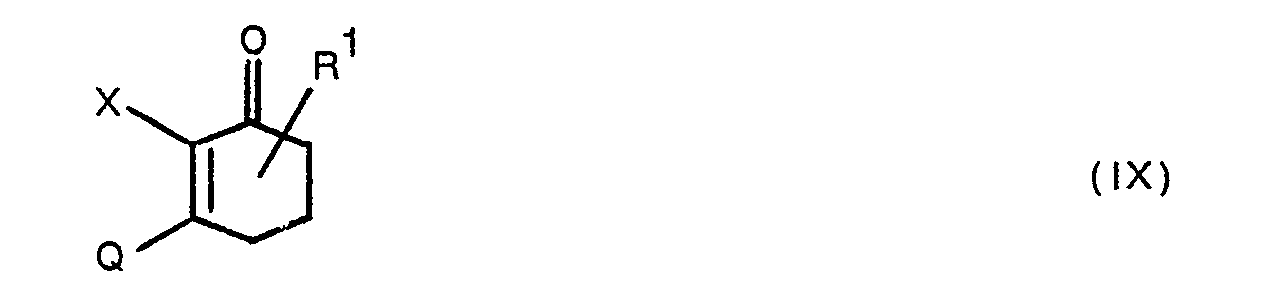
- the starting material, of formula (11) may be prepared by reacting a 2-halocyclohexenone derivative of general formula (IX) where X and R' are as defined above and Q is a hydrolysable protecting group such as lower alkoxy, benzyloxy or trialkyl-, triaryl- or triaralkyl-siloxy (e.g. trimethylsilyloxy) with a nucleophilic reagent and subjecting the product to hydrolysis.
- a hydrolysable protecting group such as lower alkoxy, benzyloxy or trialkyl-, triaryl- or triaralkyl-siloxy (e.g. trimethylsilyloxy)
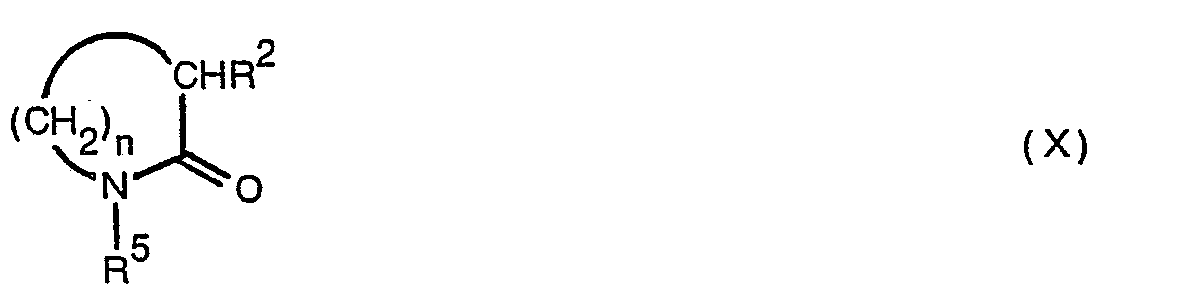
- the nucleophilic reagent may be an anion or dianion of a lactam of general formula (X) (where n and R 2 are as defined above and R S is hydrogen, lower alkyl, aryllower alkyl, or trialkyl-, triaryl or triaralkyl-silyl).
- X lactam of general formula
- R S is hydrogen, lower alkyl, aryllower alkyl, or trialkyl-, triaryl or triaralkyl-silyl.
- the preparation and reactions of the anion or dianion of the lactam of formula (VI) is described in, for example, European Patent Application 0003253.
- the nucleophilic reagent may be an anion (preferably the sodium, potassium, lithium or MgHal anion) of a lactam of general formula (XI)
- the anion of the lactam may be prepared by reacting the lactam with e.g. lithium diisopropylamide.
- the halogenation step (XI) to (XII) may be carried out by methods known in the art (by reaction with, e.g. N-bromosuccinimide or N-chlorosuccinimide in a solvent such as carbon tetrachloride, with sulphuryl chloride in a solvent such as chloroform or with chlorine or bromine).
- a solvent such as carbon tetrachloride
- sulphuryl chloride in a solvent such as chloroform or with chlorine or bromine
- the halogenation step (XIII) to (IX) may also be carried out be methods known in the art.
- X is bromine and the bromination may be carried out, e.g. with bromine in, for example, sodium acetate/acetic acid or with N-bromosuccinimide in, for example, carbon tetrachloride.
- the bromination is effected with N-bromosuccinimide in a more polar solvent such as dichloroethane or acetonitrile.
- steps (XI) to (XIII) and (XII) to (IX) may be carried out by methods known in the art, for example (XI) or (XII) may be reacted with an alcohol in a solvent such as toluene in the presence of an acid with azeotropic removal of water. Reaction of compounds (XII) or (XIII) with silylating agents (such as trimethylsilyl chloride in the presence of an organic base) gives compounds in which Q is trialkyl-, triaryl- or triaralkyl-silyloxy.
- silylating agents such as trimethylsilyl chloride in the presence of an organic base
- Lithium diisopropylamide was prepared from n-butyllithium (1.55M in hexane, 6.45 ml) and diisopropylamine (1.4 ml) in tetrahydrofuran (10 ml). It was treated at 0°C with 1-methylcaprolactam (1.27 g) and then with 2-chloro-3-methoxycyclohexenone (1.61 g) in THF (5 ml). The reaction mixture was stirred for 5 minutes and then poured on to cold 2N hydrochloric acid. After hour toluene was added and the layers separated.
- Lithium diisopropylamide was made from n-butyl lithium (1.55M in hexane, 12.9 ml) and diisopropylamine (2.8 ml) in THF (13 ml). The mixture was treated with 1-methyl-caprolactam (2.54 g) and then with 2-bromo-3-methoxycyclohexenone (4.1 g) in THF (15 ml). After 1 min. the reaction mixture was poured onto 5NHCI (8 ml) and cold water (100 ml). After 0.5 h ether was added and the organic phase separated, dried and evaporated. Recrystallisation of the residue from ethyl acetate gave the title compound (4.9 g), m.p. 112 ⁇ 115°C (d). (Found: C, 51.7; H, 6.2; N, 4.7%. C 13 H 18 BrNO 2 requires: C, 52.0; H, 6.0; N, 4.7%).
- Example 8 The product of Example 8 (10.5 g, 33.4 mM) in dichloromethane (70 ml) was treated with 48% hydrogen bromide in acetic acid (ca 0.5 ml). After 16 h the solvent was evaporated under reduced pressure and the residue was partitioned between chloroform and water. The organic phase was dried and evaporated and th residue was chromatographed on alumina (neutral, grade 3) using 4% methanol in chloroform as eluant. The appropriate fractions were evaporated and recrystallised from ether to yield the title compound (6.8 g) m.p. 61-3° (Found: C, 71.9; H, 7.8; N, 5.6% C 14 H 19 NO 2 requires C, 72.1; H, 8.2; N, 6.0%).
- Example 9 The product of Example 9 (4.87 g, 21 mM) in THF (50 ml) was treated with borane-THF (63 ml, 63 mM). After 3h the mixture was poured on to water and the THF evaporated under reduced pressure. The residue was acidified with 2N hydrochloric acid and the resulting solid removed by filtration. The filtrate was basified (pH10) and extracted with chloroform and the organic phase was dried and evaporated. The resulting oil was converted to the hydrobromide salt (3.0 g) m.p. 144-5° (Found: C, 55.1; H, 7.3; N, 4.6% requires: C, 55.2; H, 7.3; N, 4.6%).
Landscapes
- Chemical & Material Sciences (AREA)
- Organic Chemistry (AREA)
- Pharmaceuticals Containing Other Organic And Inorganic Compounds (AREA)
- Plural Heterocyclic Compounds (AREA)
- Organic Low-Molecular-Weight Compounds And Preparation Thereof (AREA)
Description
- This invention relates to m-hydroxyphenyl substituted compounds, to their preparation and to intermediates used in their preparation.
- Many m-hydroxyphenyl substituted compounds are known and are useful particularly as pharmaceuticals. For example analgesic 3-hydroxyphenyl-hexahydroazepines such as meptazinol are disclosed in U.K. Patent Specification No. 1,285,025. Profadol and related pyrrolidines are described in J. Med. Chem. 1965, 8, 316 and Belgium Patent Specification No. 850,777 while myfadol and related piperidines are described in J. Med. Chem., 1965, 8 313. We have now found a novel process for preparing m-hydroxyphenyl substituted compounds. The process can be used in the preparation of pharmacologically active compounds such as those mentioned above.
- According to the invention there is provided a process for preparing m-hydroxyphenyl substituted compounds of the general formula


- Some substituents in the radicals R and R' may be modified under the conditions of the reaction so that the radical R or R1 in the starting material may be different from the radical R or R' in the product.
- Preferably R' is hydrogen. When R is a mono- or bi-cyclic heterocyclic radical it can be, for example, an optionally substituted pyrrolidine, piperidine or hexahydroazepine radical, particularly a radical of the formula (III).

- Compounds of general formula II in which X has the meaning given above, R' has the meaning given above (preferably hydrogen) and the radical R has formula (III) are novel compounds and are provided by the invention.
- The compound of formula (I) in which R1 is hydrogen and R has the formula (III) (where R2 is lower alkyl and R3 and n are as defined above) may be reduced e.g. with a hydride transfer agent, such as lithium aluminium hydride to a compound of formula (IV)

- The process of the invention may also be used, for example, in the preparation of compounds of formula (I) in which R is carboxymethyl radical or a derivative therefor such as -CH2COO(lower)alkyl and R' is (lower)alkyl, phenyl or substituted phenyl such as chlorophenyl (the substituent R' being meta to both the R group and the hydroxy group). Such compounds have anti-inflammatory activity or are useful as intermediates for anti-inflammatory compounds as disclosed by Tamura et al, J.Med.Chem. 1977 20, 709-714.
- The process of the invention may also be used in the preparation of a compound of formula (I) in which R' is hydrogen and R is


- The compound is prepared by dehydrohalogenating a compound of general formula

- The product of general formula (VI) may be reduced with, for example, a hydride transfer agent (preferably borane-tetrahydrofuran complex) to give a 3-(1-propyl-3-piperidinyl)phenol of formula

- The compound of general formula (VIII) and its pharmaceutically acceptable acid addition salts are known and stated to be selective dopamine autoreceptor agonists which can be used e.g. for the treatment of disease states associated with disturbances in central dopamine autoreceptor transmission.
- The process of the invention may be carried out in a solvent such as methylene chloride, chloroform or acetic acid, e.g. under substantially anhydrous conditions. The reaction may be carried out at ambient temperatures. The strong nucleophilic acid catalyst may be for example, hydrogen bromide or hydrogen chloride. The process has advantages over conventional processes of aromatisation since the starting materials are normally easily isolated, the process employs mild conditions and the process avoids the use of bromine which is difficult to handle on a large scale and which tends to result in overbrominated products.
- The starting material, of formula (11) may be prepared by reacting a 2-halocyclohexenone derivative of general formula (IX)

- The anion of the lactam may be prepared by reacting the lactam with e.g. lithium diisopropylamide.
- The 2-halocyclohexanone derivatives of general formula (IX) are known or can be prepared by the process illustrated below

- The halogenation step (XI) to (XII) may be carried out by methods known in the art (by reaction with, e.g. N-bromosuccinimide or N-chlorosuccinimide in a solvent such as carbon tetrachloride, with sulphuryl chloride in a solvent such as chloroform or with chlorine or bromine). However, for superior yields, we prefer to brominate using aqueous potassium bromate in aqueous hydrobromic acid or to chlorinate with an aqueous solution of Chloramine T (N-chloro-4-methylbenzenesulphonamide sodium salt).
- The halogenation step (XIII) to (IX) may also be carried out be methods known in the art. Preferably in this step X is bromine and the bromination may be carried out, e.g. with bromine in, for example, sodium acetate/acetic acid or with N-bromosuccinimide in, for example, carbon tetrachloride. However, preferably the bromination is effected with N-bromosuccinimide in a more polar solvent such as dichloroethane or acetonitrile.
- The steps (XI) to (XIII) and (XII) to (IX) may be carried out by methods known in the art, for example (XI) or (XII) may be reacted with an alcohol in a solvent such as toluene in the presence of an acid with azeotropic removal of water. Reaction of compounds (XII) or (XIII) with silylating agents (such as trimethylsilyl chloride in the presence of an organic base) gives compounds in which Q is trialkyl-, triaryl- or triaralkyl-silyloxy.
- The following Examples illustrate the invention:
- Lithium diisopropylamide was prepared from n-butyllithium (1.55M in hexane, 6.45 ml) and diisopropylamine (1.4 ml) in tetrahydrofuran (10 ml). It was treated at 0°C with 1-methylcaprolactam (1.27 g) and then with 2-chloro-3-methoxycyclohexenone (1.61 g) in THF (5 ml). The reaction mixture was stirred for 5 minutes and then poured on to cold 2N hydrochloric acid. After hour toluene was added and the layers separated. The organic phase was washed with aqueous NaOH and water, dried and evaporated to give the crystalline product (1.9 g) m.p. 118-120°C. (Found: C, 61.4; H, 7.3: N, 5.3% C13H18CINO2 requires C, 61.1; H, 7.1; N, 5.5%).
- Lithium diisopropylamide was made from n-butyl lithium (1.55M in hexane, 12.9 ml) and diisopropylamine (2.8 ml) in THF (13 ml). The mixture was treated with 1-methyl-caprolactam (2.54 g) and then with 2-bromo-3-methoxycyclohexenone (4.1 g) in THF (15 ml). After 1 min. the reaction mixture was poured onto 5NHCI (8 ml) and cold water (100 ml). After 0.5 h ether was added and the organic phase separated, dried and evaporated. Recrystallisation of the residue from ethyl acetate gave the title compound (4.9 g), m.p. 112―115°C (d). (Found: C, 51.7; H, 6.2; N, 4.7%. C13H18BrNO2 requires: C, 52.0; H, 6.0; N, 4.7%).
- Following the procedures of Examples 1 and 2 but using the appropriate halomagnesium anion of 3-ethyl-1-methylhexahydroazepin-2-one, the following compounds were prepared:
- (a) 3-(2-bromo-3-oxocyclohex-1-enyl)-3-ethyl-hexahydro-1-methylazepin-2-one, m.p. 106-7°C (Found: C, 54.7; H, 6.8; N, 4.2%. C'5H22BrN02 requires: C, 54.9; H, 6.8; N, 4.3%)
- (b) 3-(2-chloro-3-oxocyclohex-1-enyl)-3-ethylhexahydro-1-methylazepin-2-one m.p. 115-116°C" (Found: 63.7; H, 7.9; N, 4.85%. Cl,H22CIN02 requires C, 63.5; H, 7.8; N, 4.9%).
-
- (a) 3-(2-Bromo-3-oxocyclohex-1-enyl)-hexahydro-1-methylazepin-2-one (1.48 g) in methylene chloride (10 ml) was treated with 48% HBr in acetic acid. After 3 hours water was added and the organic solvent removed under reduced pressure. The product (844 mg) crystallised from the aqueous solution, m.p. 190-192°C, identical with authentic material.
- (b) A solution of 3-(2-bromo-3-oxocyclohex-1-enyl)-hexahydro-1-methylazepin-2-one (6g) in chloroform (60 ml) was treated with 48% HBr in acetic acid (1 ml). After 4 hours, NMR indicated completion. Aqueous ammonia was added and the organic solvent removed under reduced pressure to yield the title compound as a crystalline solid, m.p. 192-3° (EtOAc).
-
- (a) Using chloroform as solvent. A solution of 3-(2-chloro-3-oxocyclohex-1-enyl)-hexahydro-1-methylazepin-2-one (5.12 g) in chloroform (50 ml) was treated with 48% HBr in acetic acid (2 ml). After 12 hours the organic solvent was removed under reduced pressure and the residue triturated with aqueous ammonia to yield the title compound m.p. 192-3°C (EtOAc).
- (b) Using acetic acid as solvent. A solution of 3-(2-chloro-3-oxocyclohex-1-enyl)-hexahydro-1-methyl- azepin-2-one (5.12 g) in glacial acetic acid (50 ml) was treated with 48% HBr in acetic acid (2 ml). After 12 hours the reaction mixture was poured on to water and the resulting precipitate removed by filtration to yield the title compound m.p. 192-3°C (EtOAc).
- A Solution of 3-(2-bromo-3-oxocyclohex-1-enyl)-3-ethylhexahydro-1-methylazepin-2-one (6.57 g) in dichloromethane (70 ml) was treated with 48% HBr in acetic acid (1 ml). After 3 hours NMR indicated completion. The solvent was removed under reduced pressure and the residue triturated with aqueous ammonia to yield the title compound as a white crystalline solid, m.p. 178-80°C (EtOAc).
- A solution of 3-(2-chloro-3-oxocyclohex-1-enyl)-3-ethylhexahydro-1-methylazepin-2-one (5.68 g) in dichloromethane (60 ml) was treated with 48% HBr in acetic acid (2 ml). After 12 hours the mixture was treated with excess aqueous ammonia, the organic solvent removed under reduced pressure and the resulting solid removed by filtration to give the title compound, m.p. 178-80°C (EtOAc).
- A solution of 1-propyl-2-piperidone (50mM) in benzene (40 ml) was added dropwise to a solution of lithium di-isopropylamide [ex n-butyl lithium in hexane (32.3 ml, 50 mM), di-isopropylamine (7 ml, 50 mM) and THF (33 ml)]. A solution of 2-bromo-3-methoxycyclohex-2-en-1-one (10.25 g, 50 mM) in THF (40 ml) was added, and after 5 minutes the mixture was quenched by pouring on to excess aqueous hydrochloric acid. Ether extraction followed by passage through a short silica pad using ethyl acetate as eluant gave the title compound as a colourless oil (10.75 g).
- The product of Example 8 (10.5 g, 33.4 mM) in dichloromethane (70 ml) was treated with 48% hydrogen bromide in acetic acid (ca 0.5 ml). After 16 h the solvent was evaporated under reduced pressure and the residue was partitioned between chloroform and water. The organic phase was dried and evaporated and th residue was chromatographed on alumina (neutral, grade 3) using 4% methanol in chloroform as eluant. The appropriate fractions were evaporated and recrystallised from ether to yield the title compound (6.8 g) m.p. 61-3° (Found: C, 71.9; H, 7.8; N, 5.6% C14H19NO2 requires C, 72.1; H, 8.2; N, 6.0%).
- The product of Example 9 (4.87 g, 21 mM) in THF (50 ml) was treated with borane-THF (63 ml, 63 mM). After 3h the mixture was poured on to water and the THF evaporated under reduced pressure. The residue was acidified with 2N hydrochloric acid and the resulting solid removed by filtration. The filtrate was basified (pH10) and extracted with chloroform and the organic phase was dried and evaporated. The resulting oil was converted to the hydrobromide salt (3.0 g) m.p. 144-5° (Found: C, 55.1; H, 7.3; N, 4.6%

Claims (10)


Priority Applications (1)
| Application Number | Priority Date | Filing Date | Title |
|---|---|---|---|
| AT82306162T ATE17477T1 (en) | 1981-12-02 | 1982-11-18 | META-HYDROXYPHENYL-SUBSTITUTED COMPOUNDS. |
Applications Claiming Priority (4)
| Application Number | Priority Date | Filing Date | Title |
|---|---|---|---|
| GB8136364 | 1981-12-02 | ||
| GB8136364 | 1981-12-02 | ||
| GB8220721 | 1982-07-16 | ||
| GB8220721 | 1982-07-16 |
Publications (2)
| Publication Number | Publication Date |
|---|---|
| EP0082599A1 EP0082599A1 (en) | 1983-06-29 |
| EP0082599B1 true EP0082599B1 (en) | 1986-01-15 |
Family
ID=26281440
Family Applications (1)
| Application Number | Title | Priority Date | Filing Date |
|---|---|---|---|
| EP82306162A Expired EP0082599B1 (en) | 1981-12-02 | 1982-11-18 | M-hydroxyphenyl substituted compounds |
Country Status (7)
| Country | Link |
|---|---|
| US (1) | US4463177A (en) |
| EP (1) | EP0082599B1 (en) |
| AU (1) | AU555960B2 (en) |
| DE (1) | DE3268602D1 (en) |
| DK (1) | DK157542C (en) |
| GR (1) | GR77800B (en) |
| IE (1) | IE54154B1 (en) |
Families Citing this family (1)
| Publication number | Priority date | Publication date | Assignee | Title |
|---|---|---|---|---|
| DE3601066A1 (en) * | 1986-01-16 | 1987-07-23 | Basf Ag | CYCLOHEXENON DERIVATIVES, A METHOD FOR THE PRODUCTION THEREOF AND THEIR USE AS HERBICIDES AND REGULATIVE AGENTS FOR REGULATING THE PLANT |
Family Cites Families (5)
| Publication number | Priority date | Publication date | Assignee | Title |
|---|---|---|---|---|
| US2197241A (en) * | 1938-06-20 | 1940-04-16 | Frank A Garbutt | Method of treating vanadium ores |
| GB1285025A (en) * | 1968-08-16 | 1972-08-09 | Wyeth John & Brother Ltd | Hexahydroazepines |
| BE850777A (en) * | 1976-01-28 | 1977-07-26 | Sandoz Sa | NEW DERIVATIVES OF PYRROLIDINE |
| GB1593888A (en) * | 1977-12-22 | 1981-07-22 | Wyeth John & Brother Ltd | Hexahydroazepine piperidine and pyrrolidine derivatives |
| DE2862170D1 (en) * | 1977-12-22 | 1983-03-03 | Wyeth John & Brother Ltd | Hexahydroazepine, piperidine and pyrrolidine derivatives and processes for preparing them |
-
1982
- 1982-11-16 IE IE2733/82A patent/IE54154B1/en not_active IP Right Cessation
- 1982-11-18 DE DE8282306162T patent/DE3268602D1/en not_active Expired
- 1982-11-18 EP EP82306162A patent/EP0082599B1/en not_active Expired
- 1982-11-22 AU AU90780/82A patent/AU555960B2/en not_active Ceased
- 1982-11-25 GR GR69906A patent/GR77800B/el unknown
- 1982-11-26 US US06/444,653 patent/US4463177A/en not_active Expired - Lifetime
- 1982-11-30 DK DK532582A patent/DK157542C/en not_active IP Right Cessation
Non-Patent Citations (1)
| Title |
|---|
| Koskawer et al., I. Org. Chem., 1963, 28, 633 * |
Also Published As
| Publication number | Publication date |
|---|---|
| DK157542C (en) | 1990-06-25 |
| IE822733L (en) | 1983-06-02 |
| EP0082599A1 (en) | 1983-06-29 |
| AU555960B2 (en) | 1986-10-16 |
| DK157542B (en) | 1990-01-22 |
| DK532582A (en) | 1983-06-03 |
| US4463177A (en) | 1984-07-31 |
| DE3268602D1 (en) | 1986-02-27 |
| GR77800B (en) | 1984-09-25 |
| IE54154B1 (en) | 1989-07-05 |
| AU9078082A (en) | 1983-06-09 |
Similar Documents
| Publication | Publication Date | Title |
|---|---|---|
| US4115400A (en) | 1-Azoniabicyclo[3.1.0]hexanes | |
| US4081450A (en) | 1,3,4-Trisubstituted-4-arylpiperidines and their preparation | |
| HU193161B (en) | Process for preparing new n-alkyl-norscopines | |
| US3976660A (en) | Pyrrolidine derivatives | |
| US4463177A (en) | Process for making m-hydroxyphenyl substituted compounds | |
| CA2322501C (en) | Processes for the preparation of (r)-.alpha.-(2,3-dimethoxyphenyl)-1-[2-(4-fluorophenyl)ethyl]-4-piperidinemethanol | |
| US4197241A (en) | Hexahydroazepine, piperidine and pyrrolidine derivatives | |
| NZ191763A (en) | 7-beta-phenyl-quinolidines, intermediates and pharmaceutical compositions | |
| US4366158A (en) | 1-(8-Quinolyl)-2-pyrrolidone and its pharmaceutical compositions | |
| GB2113676A (en) | m-Hydroxyphenyl substituted compounds | |
| US4251659A (en) | Polyfluorohydroxyisopropyl-heterocyclic compounds | |
| IE67871B1 (en) | Novel benzothiopyranylamines | |
| US6153755A (en) | Process for preparing pharmaceutically active compounds and intermediates thereof | |
| JPH051259B2 (en) | ||
| US4175197A (en) | 1,3,4-Trisubstituted-4-aryl-1,4,5,6-tetra-hydropyridines | |
| EP0033632B1 (en) | 7,8-amino, hydroxy-1-phenyl-2,3,4,5-tetrahydro-1h-3-benzazepines, process for their preparation and pharmaceutical compositions containing them | |
| EP0021772B1 (en) | Method of preparing 2-oxo- and 2-unsubstituted-hexahydroazepine derivatives | |
| GB2145089A (en) | Pyrrolidones, piperidones and hexahydroazepinones | |
| IE54155B1 (en) | Pyrrolidines, piperidones and hexahydroazepinones | |
| US3644350A (en) | 4-(1-substituted-3-pyrrolidinyl)-2h-1 4-benzoxazin-3(4h)-ones | |
| US4216325A (en) | 4-(p-Fluorobenzoyl)-1-[3-(p-fluorobenzoyl)propyl]piperidine | |
| GB1593889A (en) | Hexahydroazepine piperidine and pyrrolidine derivatives | |
| US4159381A (en) | 4-(P-Fluorobenzoyl)-1-[3-(p-fluorobenzoyl)propyl]piperidine | |
| AU2007200674C1 (en) | Novel antihistaminic piperidine derivatives and intermediates for the preparation thereof | |
| US3678056A (en) | Process for the preparation of 1,2,3,4,5,6-hexahydro-2,6-methano-3-benzazocines |
Legal Events
| Date | Code | Title | Description |
|---|---|---|---|
| PUAI | Public reference made under article 153(3) epc to a published international application that has entered the european phase |
Free format text: ORIGINAL CODE: 0009012 |
|
| AK | Designated contracting states |
Designated state(s): AT BE CH DE FR IT LI LU NL SE |
|
| 17P | Request for examination filed |
Effective date: 19831020 |
|
| ITF | It: translation for a ep patent filed | ||
| GRAA | (expected) grant |
Free format text: ORIGINAL CODE: 0009210 |
|
| AK | Designated contracting states |
Designated state(s): AT BE CH DE FR IT LI LU NL SE |
|
| REF | Corresponds to: |
Ref document number: 17477 Country of ref document: AT Date of ref document: 19860215 Kind code of ref document: T |
|
| ET | Fr: translation filed | ||
| REF | Corresponds to: |
Ref document number: 3268602 Country of ref document: DE Date of ref document: 19860227 |
|
| PLBE | No opposition filed within time limit |
Free format text: ORIGINAL CODE: 0009261 |
|
| STAA | Information on the status of an ep patent application or granted ep patent |
Free format text: STATUS: NO OPPOSITION FILED WITHIN TIME LIMIT |
|
| 26N | No opposition filed | ||
| ITTA | It: last paid annual fee | ||
| EPTA | Lu: last paid annual fee | ||
| EAL | Se: european patent in force in sweden |
Ref document number: 82306162.7 |
|
| PGFP | Annual fee paid to national office [announced via postgrant information from national office to epo] |
Ref country code: FR Payment date: 19991011 Year of fee payment: 18 |
|
| PGFP | Annual fee paid to national office [announced via postgrant information from national office to epo] |
Ref country code: AT Payment date: 19991013 Year of fee payment: 18 |
|
| PGFP | Annual fee paid to national office [announced via postgrant information from national office to epo] |
Ref country code: SE Payment date: 19991018 Year of fee payment: 18 Ref country code: CH Payment date: 19991018 Year of fee payment: 18 |
|
| PGFP | Annual fee paid to national office [announced via postgrant information from national office to epo] |
Ref country code: NL Payment date: 19991027 Year of fee payment: 18 |
|
| PGFP | Annual fee paid to national office [announced via postgrant information from national office to epo] |
Ref country code: DE Payment date: 19991028 Year of fee payment: 18 |
|
| PGFP | Annual fee paid to national office [announced via postgrant information from national office to epo] |
Ref country code: BE Payment date: 19991122 Year of fee payment: 18 |
|
| PGFP | Annual fee paid to national office [announced via postgrant information from national office to epo] |
Ref country code: LU Payment date: 19991126 Year of fee payment: 18 |
|
| PG25 | Lapsed in a contracting state [announced via postgrant information from national office to epo] |
Ref country code: LU Free format text: LAPSE BECAUSE OF NON-PAYMENT OF DUE FEES Effective date: 20001118 Ref country code: AT Free format text: LAPSE BECAUSE OF NON-PAYMENT OF DUE FEES Effective date: 20001118 |
|
| PG25 | Lapsed in a contracting state [announced via postgrant information from national office to epo] |
Ref country code: SE Free format text: THE PATENT HAS BEEN ANNULLED BY A DECISION OF A NATIONAL AUTHORITY Effective date: 20001129 |
|
| PG25 | Lapsed in a contracting state [announced via postgrant information from national office to epo] |
Ref country code: LI Free format text: LAPSE BECAUSE OF NON-PAYMENT OF DUE FEES Effective date: 20001130 Ref country code: CH Free format text: LAPSE BECAUSE OF NON-PAYMENT OF DUE FEES Effective date: 20001130 Ref country code: BE Free format text: LAPSE BECAUSE OF NON-PAYMENT OF DUE FEES Effective date: 20001130 |
|
| BERE | Be: lapsed |
Owner name: JOHN WYETH & BROTHER LTD Effective date: 20001130 |
|
| PG25 | Lapsed in a contracting state [announced via postgrant information from national office to epo] |
Ref country code: NL Free format text: LAPSE BECAUSE OF NON-PAYMENT OF DUE FEES Effective date: 20010601 |
|
| REG | Reference to a national code |
Ref country code: CH Ref legal event code: PL |
|
| EUG | Se: european patent has lapsed |
Ref document number: 82306162.7 |
|
| PG25 | Lapsed in a contracting state [announced via postgrant information from national office to epo] |
Ref country code: FR Free format text: LAPSE BECAUSE OF NON-PAYMENT OF DUE FEES Effective date: 20010731 |
|
| NLV4 | Nl: lapsed or anulled due to non-payment of the annual fee |
Effective date: 20010601 |
|
| PG25 | Lapsed in a contracting state [announced via postgrant information from national office to epo] |
Ref country code: DE Free format text: LAPSE BECAUSE OF NON-PAYMENT OF DUE FEES Effective date: 20010801 |
|
| REG | Reference to a national code |
Ref country code: FR Ref legal event code: ST |