EP0082402B1 - Succinimide derivates and process for preparation thereof - Google Patents
Succinimide derivates and process for preparation thereof Download PDFInfo
- Publication number
- EP0082402B1 EP0082402B1 EP82111295A EP82111295A EP0082402B1 EP 0082402 B1 EP0082402 B1 EP 0082402B1 EP 82111295 A EP82111295 A EP 82111295A EP 82111295 A EP82111295 A EP 82111295A EP 0082402 B1 EP0082402 B1 EP 0082402B1
- Authority
- EP
- European Patent Office
- Prior art keywords
- group
- formula
- bicyclo
- exo
- piperazinyl
- Prior art date
- Legal status (The legal status is an assumption and is not a legal conclusion. Google has not performed a legal analysis and makes no representation as to the accuracy of the status listed.)
- Expired
Links
- 0 CC(C(*)C(*)(*)C(NC)=O)=O Chemical compound CC(C(*)C(*)(*)C(NC)=O)=O 0.000 description 10
Classifications
-
- C—CHEMISTRY; METALLURGY
- C07—ORGANIC CHEMISTRY
- C07D—HETEROCYCLIC COMPOUNDS
- C07D401/00—Heterocyclic compounds containing two or more hetero rings, having nitrogen atoms as the only ring hetero atoms, at least one ring being a six-membered ring with only one nitrogen atom
- C07D401/02—Heterocyclic compounds containing two or more hetero rings, having nitrogen atoms as the only ring hetero atoms, at least one ring being a six-membered ring with only one nitrogen atom containing two hetero rings
- C07D401/12—Heterocyclic compounds containing two or more hetero rings, having nitrogen atoms as the only ring hetero atoms, at least one ring being a six-membered ring with only one nitrogen atom containing two hetero rings linked by a chain containing hetero atoms as chain links
-
- C—CHEMISTRY; METALLURGY
- C07—ORGANIC CHEMISTRY
- C07D—HETEROCYCLIC COMPOUNDS
- C07D209/00—Heterocyclic compounds containing five-membered rings, condensed with other rings, with one nitrogen atom as the only ring hetero atom
- C07D209/56—Ring systems containing three or more rings
- C07D209/58—[b]- or [c]-condensed
- C07D209/72—4,7-Endo-alkylene-iso-indoles
- C07D209/76—4,7-Endo-alkylene-iso-indoles with oxygen atoms in positions 1 and 3
-
- C—CHEMISTRY; METALLURGY
- C07—ORGANIC CHEMISTRY
- C07D—HETEROCYCLIC COMPOUNDS
- C07D403/00—Heterocyclic compounds containing two or more hetero rings, having nitrogen atoms as the only ring hetero atoms, not provided for by group C07D401/00
- C07D403/02—Heterocyclic compounds containing two or more hetero rings, having nitrogen atoms as the only ring hetero atoms, not provided for by group C07D401/00 containing two hetero rings
- C07D403/12—Heterocyclic compounds containing two or more hetero rings, having nitrogen atoms as the only ring hetero atoms, not provided for by group C07D401/00 containing two hetero rings linked by a chain containing hetero atoms as chain links
Definitions
- This invention relates to novel succinimide derivatives. More particularly, it relates to novel succinimide derivatives substituted with piperazinylalkyl group at the imido-nitrogen atom, which have antianxious activity, and process for preparation thereof and pharmaceutical composition comprising the same for treatment of anxiety state.
- piperazinylalkyl group at the imido-nitrogen atom which have antianxious activity
- pharmaceutical composition comprising the same for treatment of anxiety state.
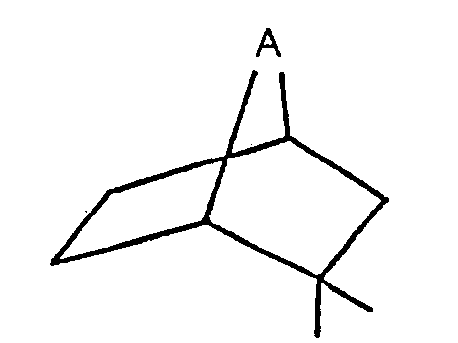
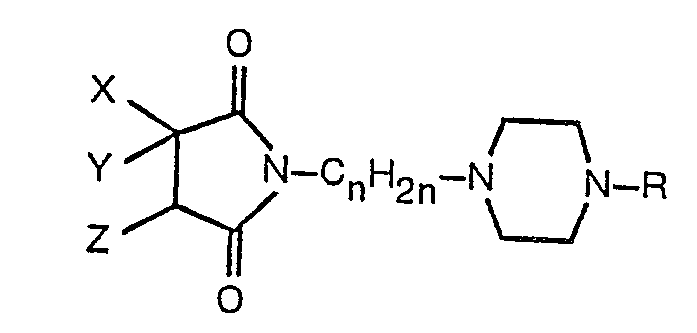
- the succinimide derivatives of this invention are represented by the following formula: wherein X and Y are combined to form a group of the formula: (wherein A is an oxygen atom, a methylene group or an ethylene group and a full line accompanying a broken line (-- --) is a single bond or a double bond) and Z is a hydrogen atom or, X and Z are combined to form a group of the formula: (wherein A and a full line accompanying a broken line are each as defined above) and Y is a hydrogen atom, R is a phenyl group, optionally substituted with halogen, C 1 ⁇ C 4 alkyl, C 1 -C 4 alkoxy ortrifluoromethyl, a 2-pyridyl group or a 2-pyrimidinyl group and n is an integer of 3 or 4, and pharmaceutically acceptable acid addition salts thereof.
- Partial structure is intended to mean both of Accordingly, it is to be understood that the formula (1) includes two series of compounds, one of which is represented by the formula: wherein X' and Y' are combined to form a group of the formula: (wherein A is as defined above) and Z 1 is a hydrogen atom or, X' and Z 1 are combined to form a group of the formula: (wherein A is as defined above) and Y 1 is a hydrogen atom, and R and n are each as defined above, and the other is represented by the formula: wherein X 2 and Y 2 are combined to form a group of the formula: (wherein A is as defined above) and Z 2 is a hydrogen atom, or X 2 and Z 2 are combined to form a group of the formula: (wherein A is as defined above) and Y 2 is a hydrogen atom, and R and n are each as defined above.
- the succinimide derivative (I) has partial structure of the following formula: which is intended to mean both of the geometric formulae: wherein A is as defined above.
- the formulae (a) and (b) represent different partial structures.
- the formula (a) represents a partial structure in which A and the imido group are located on the same side in respect of the six-membered carbocycle, and is referred to as "exo".
- the formula (b) represents a partial structure in which A and the imido group are located on the different side in respect of the six-membered carbocycle, and is referred to as "endo". It is to be understood that the compound (I) includes both of the "exo" isomer and "endo" isomer, and the mixture of them.
- halogen may include chlorine, bromine, iodine and fluorine.
- C l -C 4 alkyl may include a residue of straight or branched alkane having 1 to 4 carbon atoms such as methyl, ethyl, propyl, isopropyl, butyl and isobutyl.
- C l -C 4 alkoxy may include a residue in which straight or branched alkane having 1 to 4 carbon atoms is bonded with a bivalent oxygen such as methoxy, ethoxy, propoxy, isopropoxy and butoxy.
- the group “ ⁇ C n H 2n ⁇ ” may include a residue of straight or branched alkylene having 3 or 4 carbon atoms-such as trimethylene, methyltrimethylene and tetramethylene.
- Preferable compounds in the succinimide derivatives (I) are those represented by the formulae: and wherein A' is a methylene group or an ethylene group.
- Suitable pharmaceutically acceptable acid addition salts are conventional non-toxic salts and may be a salt with an inorganic acid such as hydrochloric acid, hydrobromic acid, sulfuric acid, phosphoric acid, etc. or a salt with an organic acid such as acetic acid, propionic acid, butyric acid, tartaric acid, citric acid, maleic acid, fumaric acid, etc.
- the succinimide derivatives of this invention can be prepared by processes as shown in the following scheme: wherein X 1 , X 2 , Y 1 , Y 2 , Z 1 , Z 2 , n and R are each as defined above.
- the compound (la) can be prepared by reacting the compound (Ila) with the amine (III).
- the starting compound (Ila) can be prepared by a process reported by T. V. Auken et al. (J. Org. Chem., 23, 626 (1958)) or Inokuma et al. (Japanese Patent Publn. (unexamined) No. 145650/1979).
- the reaction is usually carried out by heating the compound (Ila) and the amine (III) in a conventional inert solvent.
- Suitable solvents may include pyridine and n-butanol.
- the reaction includes in its scope the cases that a half-amide compound of the formula: wherein X 1 , Y 1 , Z 1 , R and n are each as defined above is formed.
- the compound (lVa) takes in some cases a long period of time for cyclization to the compound (la). In such case, the cyclization may be easily effected by heating the compound (lVa) in an acetic anhydride.
- the obtained compound (la) may optionally be reduced to the compound (lb).
- the reduction is usually carried out by hydrogenating the compound (la) in the presence of a hydrogenation catalyst in a solvent.
- Suitable hydrogenation catalysts may include conventional ones such as platinum catalysts (e.g. platinum black, platinum dioxide, platinum colloid), palladium catalysts (e.g. palladium black, palladium on carbon, palladium colloid), a rhodium catalyst and nickel catalysts (e.g. Raney nickel, nickel oxide).
- Suitable solvents ickel oxide).
- Suitable solvents may include lower alkanol (e.g. methanol, ethanol, isopropanol, water, acetic acid, ethyl acetate, tetrahydrofuran and dioxane.
- the hydrogenation may be carried out under either atmospheric pressure or increased pressure and at either ordinary temperature or elevated temperature.
- the compound (lb) can be prepared by reducing the compound (Ila) and then reacting the resultant compound (Ilb) with the amine (III).
- the reduction of the compound (Ila) to the compound (Ilb) and the reaction of the compound (llb) with the amine (III) may be conducted in a manner similar to that of the reduction of the compound (la) to the compound (lb) and the reaction of the compound (Ila) with the amine (III), respectively.
- the reaction of the compound (Ilb) with the amine (III) to produce the compound (lb) includes in its scope the cases that a half-amide compound of the formula: wherein X 2 , Y 2 , Z 2 , R and n are each as defined above is formed as an intermediate, and the compound (lVb) may be imidated to the compound (lb) in a manner similar to that of the compound (IVa).
- the antianxious activity of the succinimide derivative according to the invention could be proved by anti-conflict test.
- The. anti-conflict test was carried out according to the process of Geller and Seifter [Psychopharmacoloqia, 1, 482 (1960)1.
- the compound (I) or the salt thereof is used in the form of conventional pharmaceutical preparations suitable for oral administration, for example, tablet, capsule, syrup, suspension, etc., or those suitable for parenteral administration, for example, solution, emulsion, suspension, etc. for injection, or suppository for rectal administration. If needed, there may be included in the above preparations buffers, solubilizer, isotonizers, etc.
- the dosage of the compound (I) may vary from and also depend upon the degree of the infection, age and weight of patient and dosage forms, the active compound can be, in general, administered to an adult in an amount between 1 mg and 300 mg, preferably 5 mg and 100 mg per day in single dose or divided doses.
Landscapes
- Chemical & Material Sciences (AREA)
- Organic Chemistry (AREA)
- Pharmaceuticals Containing Other Organic And Inorganic Compounds (AREA)
- Pyrrole Compounds (AREA)
- Plural Heterocyclic Compounds (AREA)
- Nitrogen Condensed Heterocyclic Rings (AREA)
Abstract
Description
- This invention relates to novel succinimide derivatives. More particularly, it relates to novel succinimide derivatives substituted with piperazinylalkyl group at the imido-nitrogen atom, which have antianxious activity, and process for preparation thereof and pharmaceutical composition comprising the same for treatment of anxiety state. In US-A-3,184,456, US-A-2,928,846 and FR-A-2,506,771 structurally similar imides having different effects are disclosed.
- The succinimide derivatives of this invention are represented by the following formula:
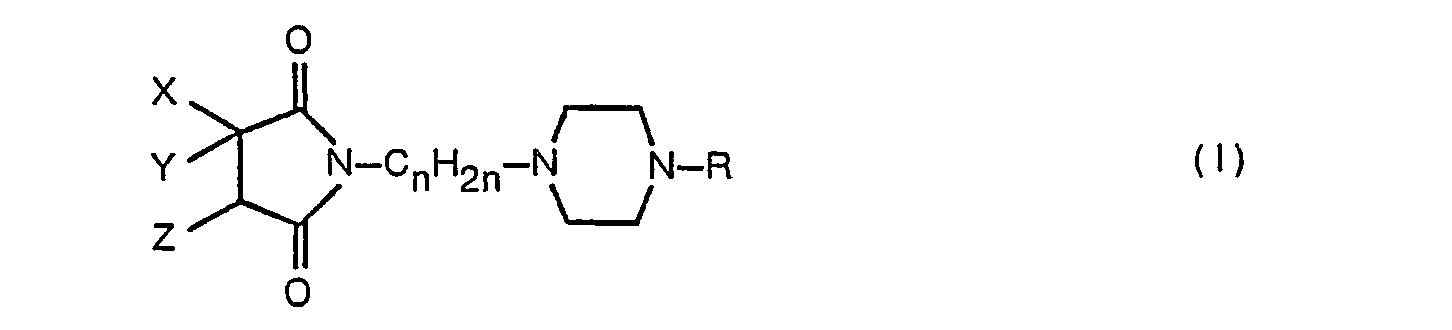


- The term and definitions used in this specification are illustrated as follows:
- Partial structure


Accordingly, it is to be understood that the formula (1) includes two series of compounds, one of which is represented by the formula:



- When X and Z are combined to form a group of the formula:


- When A and

- The term "halogen" may include chlorine, bromine, iodine and fluorine. The term "Cl-C4 alkyl" may include a residue of straight or branched alkane having 1 to 4 carbon atoms such as methyl, ethyl, propyl, isopropyl, butyl and isobutyl. The term "Cl-C4 alkoxy" may include a residue in which straight or branched alkane having 1 to 4 carbon atoms is bonded with a bivalent oxygen such as methoxy, ethoxy, propoxy, isopropoxy and butoxy. The group "―CnH2n―" may include a residue of straight or branched alkylene having 3 or 4 carbon atoms-such as trimethylene, methyltrimethylene and tetramethylene.
- Preferable compounds in the succinimide derivatives (I) are those represented by the formulae:
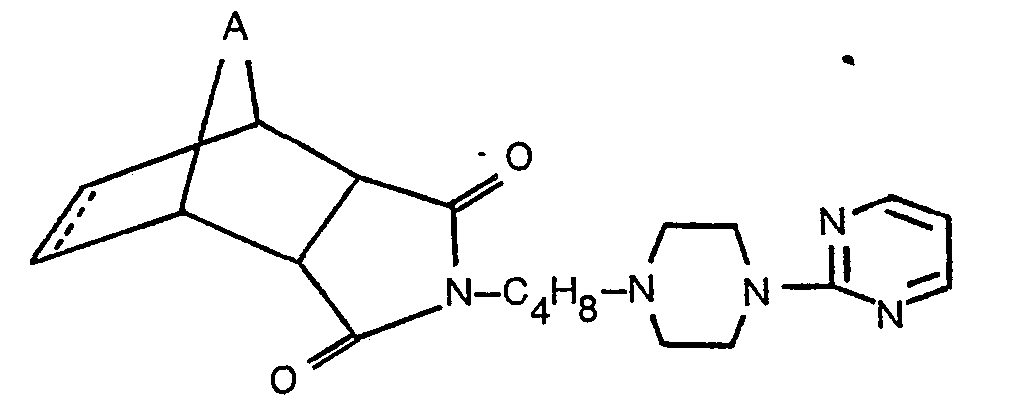

- Suitable pharmaceutically acceptable acid addition salts are conventional non-toxic salts and may be a salt with an inorganic acid such as hydrochloric acid, hydrobromic acid, sulfuric acid, phosphoric acid, etc. or a salt with an organic acid such as acetic acid, propionic acid, butyric acid, tartaric acid, citric acid, maleic acid, fumaric acid, etc.
- The succinimide derivatives of this invention can be prepared by processes as shown in the following scheme:

- Said processes are explained in details in the following:
- The compound (la) can be prepared by reacting the compound (Ila) with the amine (III). The starting compound (Ila) can be prepared by a process reported by T. V. Auken et al. (J. Org. Chem., 23, 626 (1958)) or Inokuma et al. (Japanese Patent Publn. (unexamined) No. 145650/1979).
- The reaction is usually carried out by heating the compound (Ila) and the amine (III) in a conventional inert solvent. Suitable solvents may include pyridine and n-butanol.
- The reaction includes in its scope the cases that a half-amide compound of the formula:

- The reduction is usually carried out by hydrogenating the compound (la) in the presence of a hydrogenation catalyst in a solvent. Suitable hydrogenation catalysts may include conventional ones such as platinum catalysts (e.g. platinum black, platinum dioxide, platinum colloid), palladium catalysts (e.g. palladium black, palladium on carbon, palladium colloid), a rhodium catalyst and nickel catalysts (e.g. Raney nickel, nickel oxide). Suitable solvents ickel oxide). Suitable solvents may include lower alkanol (e.g. methanol, ethanol, isopropanol, water, acetic acid, ethyl acetate, tetrahydrofuran and dioxane. The hydrogenation may be carried out under either atmospheric pressure or increased pressure and at either ordinary temperature or elevated temperature.
- The compound (lb) can be prepared by reducing the compound (Ila) and then reacting the resultant compound (Ilb) with the amine (III).
- The reduction of the compound (Ila) to the compound (Ilb) and the reaction of the compound (llb) with the amine (III) may be conducted in a manner similar to that of the reduction of the compound (la) to the compound (lb) and the reaction of the compound (Ila) with the amine (III), respectively.
- The reaction of the compound (Ilb) with the amine (III) to produce the compound (lb) includes in its scope the cases that a half-amide compound of the formula:

- Some examples of the compound of the formula (I) are listed below:
- N-[4-{4-(2-Pyrimidinyl)-1-piperazinyl}butyl]bicyclo[2.2.1 ]heptane-2,3-di-exo-carboximide;
- N-[4-{4-(2-Pyridyl)-1-piperazinyl}butyl]bicyclo[2.2.1 ]heptane-2,3-di-exo-carboximide;
- N-[4-{4-(2-Chlorophenyl)-1-piperazinyl}butyl]bicyclo[2.2.1 ]heptane-2,3-di-exo-carboximide;
- N-[4-{4-(2-Trifluoromèthylphenyl)-1-piperazinyl}butyl]bicyclo[2.2.1]heptane-2,3-di-exo-carboximide;
- N-[4-{4-(2-Methylphenyl)-1-piperazinyl}butyl]bicyclo[2.2.1 ]heptane-2,3-di-exo-carboximide;
- N-[4-{4-(2-Methoxyphenyl)-1-piperazinyl}butyl]bicyclo[2.2.1]heptane-2,3-di-exo-carboximide;
- N-[3-{4-(2-Pyrimidinyl)-1-piperazinyl}propyl]bicyclo[2.2.1]heptane-2,3-di-exo-carboximide;
- N-[3-{4-(2-Pyridyl)-1-piperazinyl}propyl]bicyclo[2.2.1 heptane-2,3-di-exo-carboximide;
- N-[3-(4-Phenyl-1-piperazinyl)propyl]bicyclo[2.2.1]heptane-2,3-di-exo-carboximide;
- N-[3-{4-(2-Chlorophenyl)-1-piperazinyl}propyl]bicyclo[2.2.1]heptane-2,3-di-exo-carboximide;
- N-[4-{4-(2-Pyriniidinyl)-1-piperazinyl}butyl]bicyclo[2.2.1]heptane-2,3-di-endo-carboximide;
- N-[4-{4-(2-Pyridyl)-1-piperazinyl}butyl]bicyclo[2.2.1]heptane-2,3-di-endo-carboximide;
- N-[3-{4-(2-Pyrimidinyl)-1-piperazinyl}propyl]bicyclo[2.2.1]heptane-2,3-di-endo-carboximide;
- N-[4-{4-(2-Pyrimidinyl)-1-piperazinyl}butyl]bicyclo[2.2.2]octane-2,3-dicarboximide;
- N-[4-{4-(2-Pyridyl)-1-piperazinyl}butyl]bicyclo[2.2.2]octane-2,3-dicarboximide;
- N-[4-{4-(2-Pyrimidinyl)-1-piperazinyl}butyl]-7-oxabicyclo[2.2.1]heptane-2,3-di-exo-carboximide;
- N-[4-{4-(2-Pyridyl)-1-piperazinyl}butyl]-7-oxabicyclo[2.2.1]heptane-2,3-di-exo-carboximide;
- N-[4-{4-(2-Pyrimidinyl)-1-piperazinyl}butyl]bicyclo[2.2.1]hept-5-ene-2,3-di-exo-carboximide;
- N-[4-{4-(2-Pyridyl)-1-piperazinyl}butyl]bicyclo[2.2.1]hept-5-ene-2,3-di-exo-carboximide;
- N-[4-{4-(2-Pyrimidinyl)-1-piperazinyl}butyl]bicyclo[2.2.1]hept-5-ene-2,3-di-endo-carbOximide;
- N-[4-{4-(2-Pyridyl)-1-piperazinyl}butyl]bicyclo[2.2.1] hept-5-ene-2,3-di-endo-ca rboxi m ide; .
- N-[4-{4-(2-Pyrimidinyll-1-piperazinyl}butyl]bicyclo[2.2.1]oct-5-ene-2,3-di-endo-carboximide;
- N-[4-{4-(2-Pyridyl)-1-piperazinyl}butyl]bicyclo[2.2.1]oct-5-ene-2,3-di-endo-carboximide;
- N-[4-{4-(2-Pyrimidinyl)-1-piperazinyl}butyl]-7-oxabicyclo[2.2.1]hept-5-ene-2,3-di-exo-carboximide;
- N-[4-{4-(2-Pyridyl)-1-piperazinyl}butyl]-7-oxabicyclo[2.2.1]hept-5-ene-2,3-di-exo-carboximide;
- N-[4-{4-(3-Chlorophenyl)-1-piperazinyl}butyl]bicyclo[2.2.1]heptane-2,3-di-exo-carboximide;
- N-[4-{4-(4-Chloropheriyl)-1-piperazinyl}butyl]bicyclo[2.2.1]heptane-2,3-di-exo-carboximide;
- N-[4-{4-(2-Pyrimidinyl)-1-piperazinyl}butyl]bicyclo[2.2.1]heptane-2-exo-2-endo-methylenedicarboximide;
- N-[4-{4-(2-Pyridyl)-1-piperazinyl}butyl]bicyclo[2.2.1]heptane-2-exo-2-endo-methylenedicarboximide;
- N-[4-{4-(2-Chlorophenyl)-1-piperazinyl}butyl]bicyclo[2.2.1]heptane-2-exo-2-endo-methylenedicarboximide;
- N-[4-{(4-(2-Trifluoromethylphenyl)-1-piperazinyl}butyl]bicyclo[2.2.1]heptane-2-exo-2-endo- methylenedicarboximide;
- N-[4-{4-(2-Methylphenyl)-1-piperazinyl}butyt]bicyclo[2.2.1]heptane-2-exo-2-endo-methylenedicarboximide;
- N-[4-{4-(2-Methoxyphenyl)-1-piperazinyl}butyl]bicyclo[2.2.1]heptane-2-exo-2-endo-methylenedicarboximide;
- N-[4-(4-Phenylpiperazinyl)butyl]bicyclo[2.2.1]heptane-2-exo-2-endo-methylenedicarboximide;
- N-[4-{4-(2-Pyrimidinyl)-1-piperazinyl}butyl]bicyclo[2.2.1]hept-5-ene-2-exo-2-endo-methylenedicarboximide;
- N-[4-{4-(2-Pyridyl)-1-piperazinyl}butyl]bicyclo[2.2.1]hept-5-ene-2-exo-2-endo-methylenedicarboximide;
- N-[4-{4-(2-Chlorophenyl)-1-piperazinyl}butyl]bieyclo[2.2.1]hept-5-ene-2-exo-2-endo-methylenedicarboximide;
- N-[4-{4-(2-Methylphenyl)-1-piperazinyl}butyl]bicyclo[2.2.1 ]hept-5-ene-2-exo-2-endo-methylenedicarboximide;
- N-[4-{4-(2-Methoxyphenyl)-1-piperazinyl}butyl]bicyclo[2.2.1]hept-5-ene-2-exo-2-endo-methylenedicarboximide;
- N-[4-(4-Phenylpiperazinyl)butyl]bicyclo[2.2.1]hept-5-ene-2-exo-2-endo-methylenedicarboximide;
- N-[3-{4-(2-Pyrimidinyl)-1-piperazinyl}propyl]bicycfo[2.2.1]heptane-2-exo-2-endo-methylenedicarboximide;
- N-[3-{4-(2-Pyridyl)-1-piperazinyl}propyl]bicyclo[2.2.1]heptane-2-exo-2-endo-methylenedicarboximide;
- N-[3-{4-(2-Chlorophenyl)-1-piperazinyl}propyl]bicyclo(2.2.1]heptane-2-exo-2-endo-methylenedicarboximide;
- N-[3-{4-(2-Methylphenyl)-1-piperazinyl}propyl]bicyclo[2.2.1]heptane-2-exo-2-endo-methylenedicarboximide;
- N-[3-{4-(2-Methoxyphenyl)-1-piperazinyl}propyl]bicyclo[2.2.1]heptane-2-exo-2-endo-methylenedicarboximide;
- N-[3-[4-Phenylpiperazinyl)propyl]bicyclo[2.2.1]heptane-2-exo-2-endo-methylenedicarboximide;
- N-[3-{4-(2-Pyrimidinyl)-1-piperazinyl}propyl]bicyclo[2.2.1]hept-5-ene-2-exo-2-endo-methylenedicarboximide;
- N-[3-{4-(2-Pyridyl)-1-piperazinyl}propyl]bicyclo[2.2.1]hept-5-ene-2-exo-2-endo-methylenedicarboximide;
- N-[3-{4-(2-Chlorophenyl)-1-piperazinyl}propyl]bicyclo[2.2.1]hept-5-ene-2-exo-2-endo-methylenedicarboximide;
- N-[3-{4-(2-Methylphenyl)-1-piperazinyl}propyl]bicyclo[2.2.1]hept-5-ene-2-exo-2-endo-methylenedicarboximide;
- N-[3-{4-(2-Methoxy.phenyl)-1-piperazinyl}propyl]bicyclo[2.2.1]hept-5-ene-2-exo-2-endo-methylenedicarboximide;
- N-[3-(4-Phenylpiperazinyl)propyl]bicyclo[2.2.1]hept-5-ene-2-exo-2-endo-methylenedicarboximide;
- N-[4-{4-(2-Pyrimidinyl)-1-piperazinyl}butyl]bicyclo[2.2.2]octane-2-exo-2-endo-methylenedicarboximide;
- N-[4-{4-(2-Pyridyl)-1-piperazinyl}butyl]bicyclo[2.2.2]octane-2-exo-2-endo-methylenedicarboximide;
- N-[4-{4-(2-Chlorophenyll-1-piperazinyl}butyl]bicyclo[2.2.2]octane-2-exo-2-endo-methylenedicarboximide;
- N-[4-{4-(2-Trifluoromethylphenyl)-1-piperazinyl}butyl]bicyclo[2.2.2]octane-2-exo-2-endo-methylenedicarboximide;
- N-[4-{4-(2-Methylphenyl)-1-piperazinyl}butyl]bicyclo[2.2.2]octane-2-exo-2-endo-methylenedicarboximide;
- N-[4-{4-(2-Methoxyphenyl)-1-piperazinyl}butyl]bicyclo[2.2.2]octane-2-exo-2-endo-methylenedicarboximide;
- ' N-[4-(4-Phenylpiperazinyl)butylJbicyclo[2.2.2]octane-2-exo-2-endo-methylenedicarboximide;
- N-[4-{4-(2-Pyrimidinyl)-1-piperazinyl}butyl]bicyclo[2.2.2]oct-5-ene-2-exo-2-endo-methylenedicarboximide;
- N-(4-{4-(2-Pyridyl)-1-piperazinyl}butyl]bicyclo[2.2.21oct-5-ene-2-exo-2-endo-methylenedicarboximide;
- N-[4-{4-(2-Chlorophenyl)-1-piperazinyl}butyl]bicyclo[2.2.2]oct-5-ene-2-exo-2-endo-methylenedicarboximide;
- N-[4-{4-(2-Methylphenyl)-1-piperazinyl}butyl]bicyclo[2.2.2]oct-5-ene-2-exo-2-endo-methylenedicarboximide;
- N-[4-{4-(2-Methoxyphenyl)-1-piperazinyl}butyl]bicyclo[2.2.2]oct-5-ene-2-exo-2-endo-methylenedicarboximide;
- N-[4-(4-Phenylpiperazinyl)butyl]bicyclo[2.2.2]oct-5-ene-2-exo-2-endo-methylenedicarboximide;
- N-[3-{4-(2-Pyrimidinyl)-1-piperazinyl}propyl]bicyclo[2.2.2]octane-2-exo-2-endo-methylenedicarboximide;
- N-[3-{4-(2-Pyridyl)-1-piperazinyl}propyl]bicyclo[2.2.2]octane-2-exo-2-endo-methylenedicarboximide;
- N-[3-{4-(2-Chlorophenyl)-1-piperazinyl}propyl]bicyclo[2.2.2]octane-2-exo-2-endo-methylenedicarboximide;
- N-[3-{4-(2-Methylphenyl)-1-piperazinyl}propyl]bicyclo[2.2.2]octane-2-exo-2-endo-methylenedicarboximide;
- N-(3-{4-(2-Methoxyphenyll-1-piperazinyl}propyl]bicyclo[2.2.2]octane-2-exo-2-endo-methylenedicarboximide;
- N-[3-(4-Phenylpiperazinyl)propyl]bicyclo[2.2.2]octane-2-exo-2-endo-methylenedicarboximide;
- N-[3-{4-(2-Pyrimidinyl)-1-piperazinyl}propyl]bicyclo[2.2.2]oct-5-ene-2-exo-2-endo-methylenedicarboximide;
- N-[3-{4-(2-Pyridyl)-1-piperazinyl}propyl]bicyclo[2.2.2]oct-5-ene-2-exo-2-endo-methylenedicarboximide;
- N-[3-{4-(2-Chlorophenyl)-1-piperazinyl}propyl]bicyclo[2.2.2]oct-5-ene-2-exo-2-endo-methylenedicarboximide;
- N-[3-{4-(2-Methylphenyl)-1-piperazinyl}propyl]bicyclo[2.2.2]oct-5-ene-2-exo-2-endo-methylenedicarboximide;
- N-[3-{4-(2-Methoxyphenyl)-1-piperazinyl}propyl]bicyclo[2.2.2]oct-5-ene-2-exo-2-endo-methylenedicarboximide;
- N-(3-(4-Plienylpiperazinyl)propyl]bicyclo[2.2.2]oct-5-ene-2-exo-2-endo-methylenedicarboximide; etc.
- . The antianxious activity of the succinimide derivative according to the invention could be proved by anti-conflict test. The. anti-conflict test was carried out according to the process of Geller and Seifter [Psychopharmacoloqia, 1, 482 (1960)1.
- were negatively reinforced by receiving an electric shock on levering. As a result, the rats fell into conflict and stopped levering. When antianxiety substance was administered to the rats, the rats restarted levering despite receiving the electric shock. Frequency of the levering under the electric shock was used for indication of anti-conflict activity or antianxious activity of test substance. The test substances were administered intraperitoneally to the rats. Test were carried out while the activity of the substances were the maximum. The known antianxiety drug "Diazepam" was used for the control. Each dose of 2 mg/kg (i.p.) of N - [4 - {4 - (2 - pyrimidinyl) - 1 - piperazinyl}butyl]bicyclo[2.2.1]heptane - 2 - exo - 2 - endo - methylenedicarboximide hydrochloride (Compound A), N - [4 - {4 - (2 - pyrimidinyl) - 1 - piperazinyl}- butyl]bicyclo[2.2.2]octane - 2 - exo - 2 - endo - methylenedicarboximide hydrochloride (Compound B) or N - [4 - {4 - (2 - pyrimidinyl) - 1 - piperazinyl}butyl]bicyclo[2.2.1]heptane - 2,3 - di - exo - carboximide hydrochloride (Compound C) had an approximately equal anti-conflict activity or antianxiety activity to 1 mg/kg (i.p.) of Diazepam, and afforded no substantial influence on the general behavior.
- Further, none of the compounds (A), (B) and (C) showed any significant effect at a dose of 100 mg/kg (per os) on hexobarbital anesthesia which is an indication of depressing side effects such as sleepiness, while Diazepam reinforced the anesthesia significantly. It was proved from these results that the compounds (A), (B) and (C) are selective antianxiety drugs with less central nervous side effects.
- For therapeutic administration, the compound (I) or the salt thereof is used in the form of conventional pharmaceutical preparations suitable for oral administration, for example, tablet, capsule, syrup, suspension, etc., or those suitable for parenteral administration, for example, solution, emulsion, suspension, etc. for injection, or suppository for rectal administration. If needed, there may be included in the above preparations buffers, solubilizer, isotonizers, etc.
- While the dosage of the compound (I) may vary from and also depend upon the degree of the infection, age and weight of patient and dosage forms, the active compound can be, in general, administered to an adult in an amount between 1 mg and 300 mg, preferably 5 mg and 100 mg per day in single dose or divided doses.
- The invention will now be further illustrated by means of the following Examples, which are not, however, intended to limit the scope of the invention.
- A mixture of norbornane - 2,3 - di - endo - carboxylic anhydride (500 mg, 3 mmol), 1 - (4 - aminobutyl) - 4 - (2 - pyrimidinyl)piperazine (708 mg, 3 mmol) and pyridine (12.1 ml) was refluxed for 5 hours. The solvent was removed from the mixture under reduced pressure. The residue was purified by silica gel chromatography using chloroform as an eluent. The oily substance obtained was treated with 6% hydrogen chloride/isopropanol. The solvent .was removed and the residue was recrystallized from isopropanol to give N - [4 - {4 - (2 - pyrimidinyl) - 1 - piperazinyl}butyl]bicyclo[2.2.1 ]heptane - 2,3 - di - endo - carboximide hydrochloride (920 mg, 67.2%). M.P., 202-203°C.
- A mixture of norbornane - 2,3 - di - exo - carboxylic anhydride (636 mg, 3.8 mmol), 1 - (4 - aminobutyl) 4 - (2 - pyrimidinyl)piperazine (900 mg, 3.8 mmol) and pyridine (15.4 ml) was refluxed for 11 hours. Then the mixture was post-treated in a manner similar to that in Example 1 to give N - [4 - {4 - (2 - pyrimidinyl) - 1 - piperazinyl}butyl]bicyclo[2.2.1]heptane - 2,3 - di - exo - carboximide hydrochloride (from isopropanol). M.P., 227-229°C.
- A mixture of bicyclo[2.2.2]octane - 2,3 - dicarboxylic anhydride (541 mg, 3 mmol), 1 - (4 - aminobutyl) - 4 - (2 - pyrimidinyl)piperazine (708 mg, 3 mmol) and pyridine (12.1 ml) was refluxed for 10 hours. The solvent was removed from the mixture under reduced pressure. The residue was extracted with chloroform and water. The chloroform layer was dried over anhydrous sodium sulfate and concentrated under reduced pressure to give crude crystals (1 g), which were treated with 6% hydrogen chloride/ isopropanol. The solvent was removed to give N - [4 - {4 - (2 - pyrimidinyl) - 1 - piperazinyl}butyl]-bicyclo[2.2.2]octane - 2,3 - dicarboxamide hydrochloride (from ethanol). M.P., 198-200°C.
- A mixture of 7 - oxabicyclo[2.2.1]heptane - 2,3 - di - exo - carboxylic anhydride (1 g, 5.95 mmol), 1 - (4 - aminobutyl) - 4 - (2 - pyrimidinyl)piperazine (1.4 g, 5.95 mmol) and pyridine (23.9 ml) was refluxed for 12 hours. Then, the mixture was post-treated in a manner similar to that in Example 1 to give N - [4 - {4 - (2 - pyrimidinyl) - 1 - piperazinyl}butyl] - 7 - oxabicyclo[2.2.1]heptane - 2,3 - di - exo - carboximide hydrochloride (from isopropanol). M.P., 210-213°C.
- A mixture of bicyclo[2.2.1]hept - 5 - ene - 2,3 - di - exo - carboxylic anhydride (2.2 g, 13.56 mmol), 1 - (3 - aminopropyl) - 4 - (2 - pyrimidinyl)piperazine (3 g, 13.56 mmol) and pyridine (53 ml) was refluxed for 7 hours. The solvent was removed from the mixture under reduced pressure. The residue was dissolved in chloroform and filtered through a pad of silica gel. The filtrate was concentrated under reduced pressure to give crystals (3.91 g, 78%), which were treated with 5% hydrogen chloridelisopropanol. The solvent was removed and the residue was recrystallized from isopropanol to give N - [3 - {4 - (2 - pyrimidinyl) - 1 - piperazinyl}propyl]bicyclo[2.2.1]hept - 5 - ene - 2,3 - di - exo - carboximide hydrochloride. M.P., 209-212°C.
- A mixture of N - [3 - {4 - (2 - pyrimidinyl) -1 - piperazinyl}propyl]bicyclo[2.2.1 ]hept - 5 - ene - 2,3 - di - exo - carboximide (2.7 g, 7.35 mmol), 5% palladium on carbon (270 mg) and tetrahydrofuran (27 ml) was hydrogenated for 2 hours. The mixture was filtered and the filtrate was concentrated under reduced pressure to give crude crystals, which were treated with 5% hydrogen chloride/isopropanol. The solvent was removed and the residue was recrystallized from ethanol/isopropanol to give N - [3 - {4 - (2 - pyrimidinyl) - 1 - piperazinyl}propyl]bicyclo[2.2.1]heptane - 2,3 - di - exo - carboximide hydrochloride. M.P. 216-217°C.
- A mixture of bicyclo[2.2.1]hept - 5 - ene - 2,3 - di - exo - carboxylic anhydride (2.4 g, 14.5 mmol), 1 - (3 - aminopropyl) - 4 - (2 - pyridyl)piperazine (3.2 g, 14.5 mmol) and pyridine (58.2 ml) was refluxed for 6 hours. The solvent was removed from the mixture under reduced pressure. Acetic anhydride (58.2 ml) was added to the residue and the mixture was refluxed for 30 minutes. Again, the solvent was removed from the mixture and the residue was purified by silica gel chromatography using chloroform as an eluent. The oily substance obtained was treated with 15% hydrogen chloride/isopropanol. The solvent was removed and the residue was recrystallized to give N - [3 - {4 - (2 - pyridyl) -1 -piperazinyl}propyl]bicyclo[2.2.1]-hept - 5 - ene - 2,3 - di - exo - carboximide hydrochloride. M.P., 248-250°C.
- A mixture of N - [3 - {4 - (2 - pyridyl) - 1 - piperazinyl}propyl]bicyclo[2.2.1]hept - 5 - ene - 2,3 - di - exo - carboximide hydrochloride (3.8 g, 10.3 mmol), 5% palladium on carbon (380 mg) and methanol (38 ml) was hydrogenated for 6 hours. Then, the mixture was treated in a manner similar to that in Example 6 to give N - [3 - {4 - (2 - pyridyl) - 1 - piperazinyl}propyl]bicyclo[2.2.1,]heptane - 2,3 - di - exo - carboximide hydrochloride (from isopropanol). M.P., 254-256°C.
- A mixture of bicyclo[2.2.1]hept - 5 - ene - 2,3 - bi - exo - carboxylic anhydride (1.5 g, 9.03 mmol), 1 - (3 - aminopropyl) - 4 - phenylpiperazine (2 g, 9.03 mmol) and pyridine (36 ml) was refluxed for 7 hours. The solvent was removed from the mixture to give crude crystals (3.6 g). The crude crystals were dissolved in chloroform and treated with activated carbon (72 mg) and silica gel (7.1 g) at room temperature for 1 hour. The mixture was filtered and the filtrate was concentrated under reduced pressure. The residue was treated with 15% hydrogen chloride/isopropanol. The solvent was removed to give N - [3 - (4 - phenyl - 1 - piperazinyl)propyl]bicyclo[2.2.1]heptane - 2,3 - di - exo - carboximide hydrochloride. M.P., 245-248°C.
- A mixture of bicyclo[2.2.1]hept - 5 - ene - 2,3 - di - exo - carboxylic anhydride (1.9 g, 11.8 mmol), 1 - (3 - aminopropyl) - 4 - (2 - chlorophenyl)piperazine (3 g, 11.8 mmol) and pyridine (47.4 ml) was refluxed for 7 hours. Then, the mixture was post-treated in a manner similar to that in Example 9 to give N - [3 - (4 - (2 - chlorophenyl) - 1 - piperazinyl}propyl]bicyclo[2.2.1]hept - 5 - ene - 2,3 - di - exo - carboximide hydrochloride. M.P., 204-206°C.
- A mixture of N - [3 - {4 - (2 - chlorophenyl) - 1 - piperazinyl}propyl]bicyclo[2.2.1]hept - 5 - ene - 2,3 - di - exo - carboximide (2 g, 5 mmol), 5% palladium or carbon (200 g) and tetrahydrofuran (20 ml) was hydrogenated for 6 hours. Then, the mixture was post-treated in a manner similar to that in Example 6 to give N - [3 - {4 - (2 - chlorophenyl) - 1 - piperazinyl}propyl]bicyclo[2.2.1]heptane - 2,3 - di - exo - carboximide hydrochloride. M.P., 207-209°C.
- A mixture of bicyclo[2.2.1]hept -5 -ene -2,3 -di endo - carboxylic anhydride (1.76 g, 11 mmol), 1 - (3 - aminopropyl) - 4 - (2 - pyrimidinyl)piperazine (2.37 g, 11 mmol) and pyridine (43 ml) was refluxed for 13 hours. Then, the mixture was post-treated in a manner similar to that in Example 1 to give N - [3 - {4 - (2 - pyrimidinyl) - 1 - piperazinyl}propyl]bicyclo[2.2.9]hept - 5 - ene - 2,3 - di - endo - carboximide hydrochloride (from isopropanol). M.P., 244-245°C.
- A mixture of N - [3 - {4 - (2 - pyrimidinyl) - 1 - piperazinyl}propyl]bicyclo[2.2.1 ]hept - 5 - ene - 2,3 - di - endo - carboximide (3.4 g, 9.25 mmol), 5% palladium on carbon (340 mg) and tetrahydrofuran (34 ml) was hydrogenated for 3 hours. The, the mixture was post-treated in a manner similar to that in Example 6 to give N - [3 - {4 - (2 - pyrimidinyl) - 1 - piperazinyl}propyl]bicyclo[2.2.1]heptane - 2,3 - di - endo - carboximide hydrochloride (from isopropanol). M.P., 228-230°C.
- A mixture of bicyclo[2.2.1]heptane - 2 - exo - 2 - endo - methylenedicarboxylic anhydride (765 mg, 4,25 mmol), 1 - (4 - aminobutyl) - 4 - (2 - pyrimidinyl)piperazine (1 g, 4.25 mmol) and pyridine (17.1 ml) was refluxed for 6 hours. Then, the solvent was removed from the mixture under reduced pressure and the residue was purified by silica gel chromatography using chloroform as an eluent. The oily substance obtained was treated with 15% hydrogen chloride/isopropanol to give N - [4 - {4 - (2 - pyrimidinyl) -1 - piperazinyl}butyl]bicyclo[2.2.1]heptane - 2 - exo - 2 - endo - methylenedicarboximide hydrochloride. M.P., 230-235°C.
- A mixture of bicyclo[2.2.1]heptane - 2 - exo - 2 - endo - methylenedicarboxylic anhydride (1.63 g, 9.04 mmol), 1 - (3 - aminopropyl) - 4 - (2 - pyrimidinyl)piperazine (2 g, 9.04 mmol) and n-butanol (20 ml) was refluxed for 9 3/4 hours. Then, the mixture was post-treated in the similar manner as that in Example 14 except that 5% hydrogen chloride was used in place of 15% hydrogen chloride to give N - [3 - {4 - (2 - pyrimidinyl -1 piperazinyl}propyl]bicyclo[2.2.1]heptane - 2 - exo - 2 - endo - methylenedicarboximide hydrochloride (from isopropanol) (1.9 g, 46.3%). M.P., 199-202°C.
- A mixture of bicyclo[2.2.1]heptane - 2 - exo - 2 - endo - methylenedicarboxylic anhydride (1.64 g, 9.09 mmol), 1 - (3 - aminopropyl) - 4 - (2 - pyridyl)piperazine (2 g, 9.08 mmol) and n-butanol (20 ml) was refluxed for 6 hours. Then, the mixture was post-treated in the similar manner as that in Example 14 except that 5% hydrogen chloride was used in place of 15% hydrogen chloride to give N - [3 - {4 - (2 - pyridyl) - 1 - piperazinyl}propyl]bicyclo[2.2.1]heptane - 2 - exo - 2 - endo - methylenedicarboximide hydrochloride (from ethanol/isopropanol) (2.9 g, 70.7%). M.P., 235-239°C.
- A mixture of bicyclo[2.2.1]heptane - 2 - exo - 2 - endo - methylenedicarboxylic anhydride (1.64 g, 9.08 mmol), 1 - (3 - aminopropyl) - 4 phenyl piperazine (2 g, 9.08 mmol) and n-butanol (20 ml) was refluxed for 8 1/6 hours. Then, the mixture was post-treated in the similar manner as that in Example 14 . except that 5% hydrogen chloride was used in place of 15% hydrogen chloride to give N - [3 - (4 - phenyl- piperazinyl}propyl]bicyclo[2.2.1]heptane - 2 - exo - 2 - endo - methylenedicarboximide hydrochloride (from isopropanol) (2.1 g, 51.2%). M.P., 229-234°C.
- A mixture of bicyclo[2.2.1]heptane - 2 - exo - 2 - endo - methylenedicarboxylic anhydride (1.07 g, 5.91 mmol), 1 - (3 - aminopropyl) - 4 - (2 - chlorophenyl)piperazine (1.5 g, 5.91 mmol) and n-butanol (15 ml) was refluxed for 6.5 hours. Then, the mixture was post-treated in the similar manner as that in Example 14 except that 5% hydrogen chloride was used in place of 15% hydrogen chloride to give N - [3 - {4 - (2 - chlorophenyl) - 1 - piperazinyl}propyl]bicyclo[2.2.1]heptane - 2 - exo - 2 - endo - methylenedicarboximide hydrochloride (from isopropanol) (1.39 g, 51.5%). M.P., 220-221°C.
- A mixture of bicyclo[2.2.1 ]oct - 5 - ene - 2 - exo - 2 - endo - methylenedicarboxylic anhydride (1.6 g, 8.07 mmol), 1 - (4 - aminobutyl) - 4 - (2 - pyrimidinyl)piperazine (1.9 g, 8.07 mmol) and n-butanol (19 ml) was refluxed for 6 hours. The solvent was removed from the mixture under reduced pressure and the residue was purified by silica gel chromatography using chloroform as an eluent to give an oily substance (2.8 g, 84.9%). The oily substance (500 mg) was treated with 5% hydrogen chloride/isopropanol and recrystallized from isopropanol to give N - [4 - {4 - (2 - pyrimidinyl) 1 - piperazinyl}butyl]bicyclo[2.2.1 ]-oct - 5 - ene - 2 - exo - 2 - endo - methylenedicarboximide hydrochloride (340 mg). M.P., 202-206°C.
- A mixture of N - [4 - {4 - (2 - pyrimidinyl) - 1 - piperazinyl}butyl]bicyclo[2.2.2]oct - 5 - ene - 2 - exo - 2 - endo - methylenedicarboximide (2.3 g, 5.62 mmol), 5% palladium on carbon (690 mg) and tetrahydrofuran (23 ml) was hydrogenated at an internal temperature of 50-60°C for 5 5/6 hours. Floating matter was removed by filtration and the filtrate was concentrated under reduced pressure. The residue was treated with 5% hydrogen chloride/isopropanol and recrystallized from isopropanol to give N - [4 - {4 - (2 - pyrimidinyl) - 1 - piperazinyl}butyl]bicyclo[2.2.2]octane - 2 - exo - 2 - endo - methylenedicarboximide hydrochloride (780 mg, 28.7%). M.P., 245-247°C.
- A mixture of bicyclo[2.2.2]octane - 2 - exo - 2 - endo - methylenedicarboxylic anhydride (725 mg, 3.73 mmol), 1 - (4 - aminobutyl) - 4 - (2 - chlorophenyl)piperazine (1 g, 3.73 mmol) and n-butanol (10 ml) was refluxed for 1.5 hours. The solvent was removed from the mixture under reduced pressure and the residue was purified by silica gel chromatography using chloroform as an eluent. The oily substance obtained was treated with 5% hydrogen chloride/isopropanol and recrystallized from isopropanol/ether to give N - [4 - {4 - (2 - chlorophenyl) - 1 - piperazinyl}butyl]bicyclo[2.2.2]octane - 2 - exo - 2 - endo - methylenedicarboximide hydrochloride (970 mg, 50.3%). M.P., 203-204°C.
- A mixture of bicyclo[2.2.2]octane - 2 - exo - 2 - endo - methylenedicarboxylic anhydride (600 mg, 3.09 mmol), 1 - (3 - aminopropyl) - 4 - (2 - pyrimidinyl)piperazine (684 mg, 3.09 mmol) and n-butanol (6.8 ml) was refluxed for 5 hours. Then, the mixture was treated in a similar manner to that in Example 21 to give N - [3 - {4 - (2 - pyrimidinyl) - 1 - piperazinyl}propyl]bicyclo[2.2.2]octane - 2 - exo - 2 - endo - methylenedicarboximide hydrochloride (from isopropanol (1.0 g, 66.2%). M.P., 201-203°C
- A mixture of bicyclo[2.2.2]octane - 2 - exo - 2 - endo - methylenedicarboxylic anhydride (600 mg, 3.09 mmol), 1 - (3 - aminopropyl) - 4 - (2 - pyridyl)piperazine (681 mg, 3.09 mmol) and n-butanol (6.8 ml) was refluxed for 5 hours. Then, the mixture was treated in a similar manner to that in Example 21 to give N - [3 - {4 - (2 - pyridyl) - 1 - piperazinyl}propyl]bicyclo[2.2.2]octane - 2 - exo - 2 - endo - methylenedicarboximide hydrochloride (from isopropanol) (940 mg, 64.8%). M.P., 214―215°C.
- A mixture of bicyclo[2.2.2]octane - 2 - exo - 2 - endo - methylenedicarboxylic anhydride (600 mg, 3.09 mmol), 1 - (3 - aminopropyl) - 4 - phenylpiperazine (678 mg, 3.09 mmol) and n-butanol (6.8 ml) was refluxed for 3 1/6 hours. Then, the mixture was treated in a similar manner to that in Example 21 to give N - [3 - (4 - phenylpiperazinyl)propyl]bicyclo[2.2.2]octane - 2 - exo - 2 - endo - methylenedicarboximide hydrochloride (from methanol/ethanol) (880 mg, 60.7%). M.P., 233-235°C.
Claims (8)




Applications Claiming Priority (4)
| Application Number | Priority Date | Filing Date | Title |
|---|---|---|---|
| JP20837981A JPS58126865A (en) | 1981-12-22 | 1981-12-22 | Cyclic imide derivative and its acid addition salt |
| JP208379/81 | 1981-12-22 | ||
| JP95763/82 | 1982-06-03 | ||
| JP9576382A JPH0235749B2 (en) | 1982-06-03 | 1982-06-03 | KANJOIMIDOJUDOTAIOYOBISONOSANFUKAEN |
Publications (3)
| Publication Number | Publication Date |
|---|---|
| EP0082402A2 EP0082402A2 (en) | 1983-06-29 |
| EP0082402A3 EP0082402A3 (en) | 1983-11-23 |
| EP0082402B1 true EP0082402B1 (en) | 1986-04-02 |
Family
ID=26436953
Family Applications (1)
| Application Number | Title | Priority Date | Filing Date |
|---|---|---|---|
| EP82111295A Expired EP0082402B1 (en) | 1981-12-22 | 1982-12-06 | Succinimide derivates and process for preparation thereof |
Country Status (6)
| Country | Link |
|---|---|
| US (2) | US4507303A (en) |
| EP (1) | EP0082402B1 (en) |
| AT (1) | ATE18910T1 (en) |
| CA (1) | CA1184915A (en) |
| DE (1) | DE3270307D1 (en) |
| MX (2) | MX154758A (en) |
Cited By (7)
| Publication number | Priority date | Publication date | Assignee | Title |
|---|---|---|---|---|
| US6953679B2 (en) | 2000-09-19 | 2005-10-11 | Bristol-Myers Squibb Company | Method for the preparation of fused heterocyclic succinimide compounds and analogs thereof |
| US6960474B2 (en) | 2000-06-28 | 2005-11-01 | Bristol-Myers Squibb Company | Method for the treatment of a condition remediable by administration of a selective androgen receptor modulator |
| US7001911B2 (en) | 2000-06-28 | 2006-02-21 | Bristol-Myers Squibb Company | Fused cyclic modulators of nuclear hormone receptor function |
| US7141578B2 (en) | 2000-09-19 | 2006-11-28 | Bristol-Myers Squibb Company | Fused heterocyclic succinimide compounds and analogs thereof, modulators of nuclear hormone receptor function |
| US7291637B2 (en) | 2001-12-19 | 2007-11-06 | Bristol-Myers Squibb Company | Fused heterocyclic compounds and analogs thereof, modulators of nuclear hormone receptor function |
| US7655689B2 (en) | 2000-06-28 | 2010-02-02 | Bristol-Myers Squibb Company | Fused heterocyclic succinimide compounds and analogs thereof, modulators of nuclear hormone receptor function |
| US7655688B2 (en) | 2001-02-27 | 2010-02-02 | Bristol-Myers Squibb Company | Fused cyclic succinimide compounds and analogs thereof, modulators of nuclear hormone receptor function |
Families Citing this family (47)
| Publication number | Priority date | Publication date | Assignee | Title |
|---|---|---|---|---|
| JPS5976059A (en) * | 1982-10-21 | 1984-04-28 | Sumitomo Chem Co Ltd | Cyclic imide derivative and its acid addition salt |
| DE3321969A1 (en) * | 1983-06-18 | 1984-12-20 | Troponwerke GmbH & Co KG, 5000 Köln | 2-PYRIMIDINYL-1-PIPERAZINE DERIVATIVES, METHOD FOR THE PRODUCTION THEREOF AND MEDICINAL PRODUCTS CONTAINING THE SAME |
| US4524206A (en) * | 1983-09-12 | 1985-06-18 | Mead Johnson & Company | 1-Heteroaryl-4-(2,5-pyrrolidinedion-1-yl)alkyl)piperazine derivatives |
| JPH0625181B2 (en) * | 1985-03-27 | 1994-04-06 | 住友製薬株式会社 | New imide derivative |
| JPS61238784A (en) * | 1985-04-17 | 1986-10-24 | Sumitomo Seiyaku Kk | Succinimide derivative and its acid adduct |
| CA1286672C (en) * | 1985-10-16 | 1991-07-23 | Magid A. Abou-Gharbia | Fused bicyclic imides with psychotropic activity |
| US4812567A (en) * | 1985-10-16 | 1989-03-14 | American Home Products Corporation | Polycyclic spiroimides with psychotropic activity |
| AU593194B2 (en) * | 1986-09-26 | 1990-02-01 | Sumitomo Pharmaceuticals Company, Limited | Imide derivatives ,and their production and use |
| US4777254A (en) * | 1986-12-02 | 1988-10-11 | American Home Products Corp. | Cyclic imides as H1 -antagonists |
| US4797488A (en) * | 1987-04-03 | 1989-01-10 | American Home Products Corporation | Psychotropic polycyclic imides |
| US5242911A (en) * | 1988-06-17 | 1993-09-07 | Pfizer Inc. | Bridged bicyclic imides as anxiolytics and antidepressants |
| US5077295A (en) * | 1988-09-16 | 1991-12-31 | Pfizer Inc. | Antipsychoic 4-(4-(3-benzisothiazolyl)-1-piperazinyl)buytl bridged bicycle imides |
| US5011841B1 (en) * | 1989-11-14 | 1994-09-06 | Pfizer | Treatment of depression |
| FR2654934B1 (en) * | 1989-11-29 | 1994-09-30 | Midy Spa | USE OF DERIVATIVE [4- (2-PYRIMIDINYL) -1-PIPERAZINYL] BUTYLIC FOR THE PREPARATION OF MEDICINES FOR COMBATING INTESTINAL MOTORITY DISORDERS. |
| US5096908A (en) * | 1990-05-04 | 1992-03-17 | Eli Lilly And Company | Method of inhibiting gastric acid secretion |
| US5258379A (en) * | 1990-05-04 | 1993-11-02 | Eli Lilly And Company | Method of inhibiting gastric acid secretion with n-arylpiperazines |
| JP2800953B2 (en) * | 1990-07-06 | 1998-09-21 | 住友製薬株式会社 | New imide derivatives |
| DK0482696T3 (en) * | 1990-10-23 | 1996-05-20 | Akzo Nobel Nv | 4- (4- or 6- (trifluoromethyl-2-pyridinyl)) - 1-piperazinylalkyl-substituted lactams |
| AU9164591A (en) * | 1990-12-14 | 1992-07-08 | New York University | Functional interactions between glial s-100b and central nervous system serotonergic neurons |
| US5246711A (en) * | 1992-02-27 | 1993-09-21 | Alza Corporation | Dosage form for treating dysthymia |
| US5688518A (en) * | 1992-02-27 | 1997-11-18 | Alza Corporation | Antidepressive therapy |
| US5246710A (en) * | 1992-02-27 | 1993-09-21 | Alza Corporation | Dosage form for treating cyclothymia |
| US5858407A (en) * | 1992-02-27 | 1999-01-12 | Alza Corporation | Method for administering tandospirone |
| US5330762A (en) * | 1992-02-27 | 1994-07-19 | Alza Corporation | Tandospiaine antidepressive therapy |
| US5185158A (en) * | 1992-02-27 | 1993-02-09 | Alza Corporation | Dosage form comprising succinimide drug for treating depressive disorders and composition comprising same |
| US5521313A (en) * | 1994-05-05 | 1996-05-28 | Bristol-Myers Squibb Company | Process for preparing certain azapirones |
| ES2094690B1 (en) * | 1994-11-22 | 1997-08-01 | Univ Madrid Complutense | NEW DERIVATIVES OF IMIDA-PIPERAZINES. |
| US6312717B1 (en) | 1998-07-07 | 2001-11-06 | Bristol-Myers Squibb Company | Method for treatment of anxiety and depression |
| WO2000006163A1 (en) * | 1998-07-30 | 2000-02-10 | Bristol-Myers Squibb Company | Improved method for treatment of sleep-related respiratory disorders |
| US6566361B2 (en) | 1999-06-30 | 2003-05-20 | Laboratories, Upsa | Azapirone pain treatment |
| CN1115389C (en) * | 2000-10-08 | 2003-07-23 | 南京化工大学 | Promoter of catalytic activity for petroleum hydrogenation procedure |
| WO2003084928A1 (en) * | 2002-04-08 | 2003-10-16 | Ranbaxy Laboratories Limited | Alpha, omega-dicarboximide derivatives as useful uro-selective α1α adrenoceptor blockers |
| US20040002500A1 (en) * | 2002-06-28 | 2004-01-01 | Fabre Kramer Pharmaceutical, Inc. | Methods for treating attention deficit disorder |
| JP2004262812A (en) * | 2003-02-28 | 2004-09-24 | Rohto Pharmaceut Co Ltd | Ocular hypotensive |
| CN101880274A (en) * | 2010-06-28 | 2010-11-10 | 北大国际医院集团西南合成制药股份有限公司 | A kind of preparation method of tandospirone and its analog |
| US20130303497A1 (en) | 2010-08-05 | 2013-11-14 | Conrig Pharma Aps | Deuterated 5-ht1a receptor agonists |
| CN103641818B (en) * | 2011-08-04 | 2015-08-12 | 四川科瑞德制药有限公司 | A kind of SM-3997 compound and its production and use |
| CZ304027B6 (en) * | 2011-08-18 | 2013-08-28 | Farmak, A. S. | Process for preparing (1R,2S,3R,4S)-N-[(1R,2R)-2-[4-(1,2-benzisothiazol-3-yl)-1-piperazinylmethyl]-1-cyclohexylmethyl[2,3-bicyclo[2.2.1]heptanedicarboxamide hydrochloride |
| CN103755687B (en) * | 2013-12-25 | 2015-10-21 | 四川科瑞德制药有限公司 | Hydrochloric acid Tandospirone crystalline form I and preparation method thereof |
| CN105175398A (en) * | 2014-06-06 | 2015-12-23 | 四川科瑞德制药有限公司 | Tandospirone oxalate compound |
| CN105218528A (en) * | 2014-06-06 | 2016-01-06 | 四川科瑞德制药有限公司 | A kind of L-tandospirone tartrate compound |
| CN106963766B (en) * | 2016-01-13 | 2021-09-17 | 四川科瑞德制药股份有限公司 | Azaspiroanone pharmaceutical composition and preparation method thereof |
| US10758535B1 (en) | 2019-04-26 | 2020-09-01 | Sumitomo Dainippon Pharma Co., Ltd. | Therapeutic drug for dyskinesia |
| US11559525B2 (en) | 2019-04-26 | 2023-01-24 | Sumitomo Pharma Co., Ltd. | Therapeutic drug for dyskinesia |
| AU2021332775A1 (en) | 2020-08-31 | 2023-04-27 | Sumitomo Pharma Co., Ltd. | Therapeutic agent for motor complications in parkinson's disease |
| CN116283926B (en) * | 2021-12-20 | 2025-02-25 | 重庆圣华曦药业股份有限公司 | Preparation method of tandospirone citrate and application thereof in preparations |
| CN115611866B (en) * | 2022-10-31 | 2024-04-23 | 南京海纳医药科技股份有限公司 | A kind of preparation method of tandospirone citrate |
Family Cites Families (11)
| Publication number | Priority date | Publication date | Assignee | Title |
|---|---|---|---|---|
| US2928846A (en) * | 1957-01-15 | 1960-03-15 | Pfizer & Co C | Imides of bicycloheptene adducts |
| US3184456A (en) * | 1960-09-12 | 1965-05-18 | Sterling Drug Inc | Reduced maleimide adducts of alpha-phellandrene |
| US3398151A (en) * | 1966-02-01 | 1968-08-20 | Mead Johnson & Co | Azaspirodecanediones and azaspiroundecanediones |
| BE759371A (en) * | 1969-11-24 | 1971-05-24 | Bristol Myers Co | HETEROCYCLICAL AZASPIRODECANEDIONES AND METHODS FOR THEIR PREPARATION |
| US3850921A (en) * | 1972-09-20 | 1974-11-26 | I Matuo | Derivatives of 2,3-norbornanedicarboxamide |
| US3976776A (en) * | 1972-12-06 | 1976-08-24 | Mead Johnson & Company | Tranquilizer process employing N-(heteroarcyclic)piperazinylalkylazaspiroalkanediones |
| US4182763A (en) * | 1978-05-22 | 1980-01-08 | Mead Johnson & Company | Buspirone anti-anxiety method |
| DE2907070A1 (en) * | 1979-02-23 | 1980-09-04 | Hoechst Ag | HETEROCYCLIC SPIRO-LINKED AMIDINE AND METHOD FOR THE PRODUCTION THEREOF |
| US4305944A (en) * | 1980-09-08 | 1981-12-15 | Mead Johnson & Company | N-[(4-[3-cyano substituted pyridyl]piperazino)alkyl]-azaspirodecanediones |
| US4351939A (en) * | 1980-10-16 | 1982-09-28 | Mead Johnson & Company | Spiro-quaternary ammonium halides and N-(2-pyrimidinyl)piperazinylalkylazaspiroalkanedione process |
| JPS57197265A (en) * | 1981-05-29 | 1982-12-03 | Eisai Co Ltd | Carboxylic acid imide derivative, its preparation and medicament containing the same |
-
1982
- 1982-12-01 US US06/446,047 patent/US4507303A/en not_active Expired - Lifetime
- 1982-12-06 DE DE8282111295T patent/DE3270307D1/en not_active Expired
- 1982-12-06 EP EP82111295A patent/EP0082402B1/en not_active Expired
- 1982-12-06 AT AT82111295T patent/ATE18910T1/en not_active IP Right Cessation
- 1982-12-07 MX MX827201A patent/MX154758A/en unknown
- 1982-12-07 CA CA000417145A patent/CA1184915A/en not_active Expired
-
1985
- 1985-01-08 US US06/689,776 patent/US4543355A/en not_active Expired - Lifetime
-
1992
- 1992-06-23 MX MX9203165A patent/MX9203165A/en unknown
Cited By (11)
| Publication number | Priority date | Publication date | Assignee | Title |
|---|---|---|---|---|
| US6960474B2 (en) | 2000-06-28 | 2005-11-01 | Bristol-Myers Squibb Company | Method for the treatment of a condition remediable by administration of a selective androgen receptor modulator |
| US7001911B2 (en) | 2000-06-28 | 2006-02-21 | Bristol-Myers Squibb Company | Fused cyclic modulators of nuclear hormone receptor function |
| US7432267B2 (en) | 2000-06-28 | 2008-10-07 | Bristol-Myers Squibb Comapny | Fused cyclic modulators of nuclear hormone receptor function |
| US7655689B2 (en) | 2000-06-28 | 2010-02-02 | Bristol-Myers Squibb Company | Fused heterocyclic succinimide compounds and analogs thereof, modulators of nuclear hormone receptor function |
| US6953679B2 (en) | 2000-09-19 | 2005-10-11 | Bristol-Myers Squibb Company | Method for the preparation of fused heterocyclic succinimide compounds and analogs thereof |
| US7141578B2 (en) | 2000-09-19 | 2006-11-28 | Bristol-Myers Squibb Company | Fused heterocyclic succinimide compounds and analogs thereof, modulators of nuclear hormone receptor function |
| US7517904B2 (en) | 2000-09-19 | 2009-04-14 | Bristol-Myers Squibb Company | Fused heterocyclic succinimide compounds and analogs thereof, modulators of nuclear hormone receptor function |
| US7655688B2 (en) | 2001-02-27 | 2010-02-02 | Bristol-Myers Squibb Company | Fused cyclic succinimide compounds and analogs thereof, modulators of nuclear hormone receptor function |
| US7470797B2 (en) | 2001-06-20 | 2008-12-30 | Bristol-Myers Squibb Company | Fused heterocyclic imido and amido compounds |
| US7291637B2 (en) | 2001-12-19 | 2007-11-06 | Bristol-Myers Squibb Company | Fused heterocyclic compounds and analogs thereof, modulators of nuclear hormone receptor function |
| US7342034B2 (en) | 2001-12-19 | 2008-03-11 | Bristol-Myers Squibb Company | Fused heterocyclic compounds and analogs thereof, modulators of nuclear hormone receptor function |
Also Published As
| Publication number | Publication date |
|---|---|
| MX154758A (en) | 1987-12-10 |
| US4507303A (en) | 1985-03-26 |
| DE3270307D1 (en) | 1986-05-07 |
| ATE18910T1 (en) | 1986-04-15 |
| MX9203165A (en) | 1992-07-01 |
| CA1184915A (en) | 1985-04-02 |
| EP0082402A2 (en) | 1983-06-29 |
| US4543355A (en) | 1985-09-24 |
| EP0082402A3 (en) | 1983-11-23 |
Similar Documents
| Publication | Publication Date | Title |
|---|---|---|
| US4543355A (en) | Substituted succinimides, compositions and method of use | |
| EP0196096B1 (en) | Imide derivatives, their production and use | |
| US5618833A (en) | 1-benzyl-1,3-dihydroindol-2-one derivatives, their preparation and the pharmaceutical compositions in which they are present | |
| US6175015B1 (en) | Fused indolecarboxamides: dopamine receptor subtype specific ligands | |
| EP0109562B1 (en) | Succinimide derivatives and their production | |
| NZ264122A (en) | Substituted 1-benzenesulphonyl dihydroindolones; medicaments | |
| JPH0853447A (en) | Novel 1,3-dihydro-2h-pyrrolo(2,3-b)pyridin-2-one and oxazolo(4,5-b)pyridin-2(3h)-one compound,their production,and drug composition containing them | |
| JPH09502177A (en) | Indole and indoline derivatives for 5HT1D receptor antagonists | |
| RU2095349C1 (en) | Diamino phthalimide derivatives or pharmaceutically acceptable salts thereof, and pharmaceutical composition having proteintyrosine kinase or serine-threoninekinase | |
| EP0314098B1 (en) | Imide derivatives, their production and use | |
| PL119501B1 (en) | Process for manufacturing novel,condensed pyrimidine derivatives pirimidina | |
| CA1268459A (en) | Succinimide derivatives, and their production and use | |
| US4213984A (en) | 11-(Piperazino-acetyl)-5,11-dihydro-6H-pyrido[2,3-b][1,4]benzodiazepin-6-ones and salts thereof | |
| JP3040182B2 (en) | Imidazopyridazine derivatives, their uses and production methods | |
| NO161618B (en) | ANALOGUE PROCEDURE FOR THE PREPARATION OF THERAPEUTICALLY ACTIVE PHENYLALKYL (PIPERAZINYL OR HOMOPIPERAZINYL) -ALKYL (URINE OR TIOURINE) DERIVATIVES. | |
| JPS6310786A (en) | Novel imide derivative and production thereof | |
| CA1244434A (en) | Pyrazolo¬1,5-a|pyridine derivatives, process for their preparations and compositions containing them | |
| IE55377B1 (en) | 1,5-diphenylpyrazolin-3-one compounds,method for preparing them,and pharmaceutical compositions containing these compounds | |
| US4228168A (en) | Azepino [1,2,3-lm]-β-carboline compounds and pharmaceutical composition thereof | |
| US4469694A (en) | 2-(1-Piperazinyl)-2,4,6-cycloheptatrien-1-one derivatives | |
| JPS6383067A (en) | Novel succinic imide derivative | |
| JPS6383085A (en) | Novel imide derivative | |
| JPS63132887A (en) | Novel imide derivative | |
| CS241026B2 (en) | Method of pyrazolo(1,5-c)-quinozoline derivatives production | |
| KR850001039B1 (en) | Process for preparing allophanoyl piperazine compound |
Legal Events
| Date | Code | Title | Description |
|---|---|---|---|
| PUAI | Public reference made under article 153(3) epc to a published international application that has entered the european phase |
Free format text: ORIGINAL CODE: 0009012 |
|
| AK | Designated contracting states |
Designated state(s): AT BE CH DE FR GB IT LI NL SE |
|
| PUAL | Search report despatched |
Free format text: ORIGINAL CODE: 0009013 |
|
| AK | Designated contracting states |
Designated state(s): AT BE CH DE FR GB IT LI NL SE |
|
| 17P | Request for examination filed |
Effective date: 19840514 |
|
| GRAA | (expected) grant |
Free format text: ORIGINAL CODE: 0009210 |
|
| AK | Designated contracting states |
Kind code of ref document: B1 Designated state(s): AT BE CH DE FR GB IT LI NL SE |
|
| REF | Corresponds to: |
Ref document number: 18910 Country of ref document: AT Date of ref document: 19860415 Kind code of ref document: T |
|
| ITF | It: translation for a ep patent filed | ||
| REF | Corresponds to: |
Ref document number: 3270307 Country of ref document: DE Date of ref document: 19860507 |
|
| ET | Fr: translation filed | ||
| BECA | Be: change of holder's address |
Free format text: 860402 *SUMITOMO PHARMACEUTICALS CY LTD40 DOSHO-MACHI 2 CHOME, OSAKA-SHI OSAKA-FU |
|
| BECH | Be: change of holder |
Free format text: 860402 *SUMITOMO PHARMACEUTICALS CY LTD |
|
| PLBE | No opposition filed within time limit |
Free format text: ORIGINAL CODE: 0009261 |
|
| STAA | Information on the status of an ep patent application or granted ep patent |
Free format text: STATUS: NO OPPOSITION FILED WITHIN TIME LIMIT |
|
| 26N | No opposition filed | ||
| REG | Reference to a national code |
Ref country code: CH Ref legal event code: PUE Owner name: SUMITOMO PHARMACEUTICALS COMPANY, LIMITED |
|
| REG | Reference to a national code |
Ref country code: FR Ref legal event code: TP |
|
| REG | Reference to a national code |
Ref country code: GB Ref legal event code: 732 |
|
| NLS | Nl: assignments of ep-patents |
Owner name: SUMITOMO PHARMACEUTICALS COMPANY, LIMITED TE OSAKA |
|
| ITPR | It: changes in ownership of a european patent |
Owner name: CESSIONE;SUMITOMO PHARMACEUTICALS COMPANY LIMITED |
|
| ITTA | It: last paid annual fee | ||
| EAL | Se: european patent in force in sweden |
Ref document number: 82111295.0 |
|
| PGFP | Annual fee paid to national office [announced via postgrant information from national office to epo] |
Ref country code: SE Payment date: 20011108 Year of fee payment: 20 |
|
| PGFP | Annual fee paid to national office [announced via postgrant information from national office to epo] |
Ref country code: BE Payment date: 20011113 Year of fee payment: 20 |
|
| PGFP | Annual fee paid to national office [announced via postgrant information from national office to epo] |
Ref country code: GB Payment date: 20011130 Year of fee payment: 20 |
|
| PGFP | Annual fee paid to national office [announced via postgrant information from national office to epo] |
Ref country code: CH Payment date: 20011213 Year of fee payment: 20 |
|
| PGFP | Annual fee paid to national office [announced via postgrant information from national office to epo] |
Ref country code: AT Payment date: 20011220 Year of fee payment: 20 |
|
| PGFP | Annual fee paid to national office [announced via postgrant information from national office to epo] |
Ref country code: FR Payment date: 20011228 Year of fee payment: 20 |
|
| PGFP | Annual fee paid to national office [announced via postgrant information from national office to epo] |
Ref country code: NL Payment date: 20011231 Year of fee payment: 20 |
|
| REG | Reference to a national code |
Ref country code: GB Ref legal event code: IF02 |
|
| PGFP | Annual fee paid to national office [announced via postgrant information from national office to epo] |
Ref country code: DE Payment date: 20020130 Year of fee payment: 20 |
|
| PG25 | Lapsed in a contracting state [announced via postgrant information from national office to epo] |
Ref country code: LI Free format text: LAPSE BECAUSE OF EXPIRATION OF PROTECTION Effective date: 20021205 Ref country code: GB Free format text: LAPSE BECAUSE OF EXPIRATION OF PROTECTION Effective date: 20021205 Ref country code: CH Free format text: LAPSE BECAUSE OF EXPIRATION OF PROTECTION Effective date: 20021205 |
|
| PG25 | Lapsed in a contracting state [announced via postgrant information from national office to epo] |
Ref country code: NL Free format text: LAPSE BECAUSE OF EXPIRATION OF PROTECTION Effective date: 20021206 Ref country code: AT Free format text: LAPSE BECAUSE OF EXPIRATION OF PROTECTION Effective date: 20021206 |
|
| REG | Reference to a national code |
Ref country code: GB Ref legal event code: PE20 Effective date: 20021205 |
|
| BE20 | Be: patent expired |
Owner name: *SUMITOMO PHARMACEUTICALS CY LTD Effective date: 20021206 |
|
| REG | Reference to a national code |
Ref country code: CH Ref legal event code: PL |
|
| NLV7 | Nl: ceased due to reaching the maximum lifetime of a patent | ||
| EUG | Se: european patent has lapsed |