EP0067041B1 - Process for measuring calcium - Google Patents
Process for measuring calcium Download PDFInfo
- Publication number
- EP0067041B1 EP0067041B1 EP19820302865 EP82302865A EP0067041B1 EP 0067041 B1 EP0067041 B1 EP 0067041B1 EP 19820302865 EP19820302865 EP 19820302865 EP 82302865 A EP82302865 A EP 82302865A EP 0067041 B1 EP0067041 B1 EP 0067041B1
- Authority
- EP
- European Patent Office
- Prior art keywords
- carbonate
- bicarbonate
- buffer solution
- solution
- calcium
- Prior art date
- Legal status (The legal status is an assumption and is not a legal conclusion. Google has not performed a legal analysis and makes no representation as to the accuracy of the status listed.)
- Expired
Links
- 238000000034 method Methods 0.000 title claims description 25
- 239000011575 calcium Substances 0.000 title claims description 23
- OYPRJOBELJOOCE-UHFFFAOYSA-N Calcium Chemical compound [Ca] OYPRJOBELJOOCE-UHFFFAOYSA-N 0.000 title claims description 22
- 229910052791 calcium Inorganic materials 0.000 title claims description 22
- 239000007853 buffer solution Substances 0.000 claims description 34
- 239000003153 chemical reaction reagent Substances 0.000 claims description 25
- 239000000243 solution Substances 0.000 claims description 24
- BVKZGUZCCUSVTD-UHFFFAOYSA-L Carbonate Chemical compound [O-]C([O-])=O BVKZGUZCCUSVTD-UHFFFAOYSA-L 0.000 claims description 21
- 210000002966 serum Anatomy 0.000 claims description 21
- BWHMMNNQKKPAPP-UHFFFAOYSA-L potassium carbonate Chemical compound [K+].[K+].[O-]C([O-])=O BWHMMNNQKKPAPP-UHFFFAOYSA-L 0.000 claims description 12
- BVKZGUZCCUSVTD-UHFFFAOYSA-M Bicarbonate Chemical compound OC([O-])=O BVKZGUZCCUSVTD-UHFFFAOYSA-M 0.000 claims description 6
- 238000005259 measurement Methods 0.000 claims description 6
- 239000011736 potassium bicarbonate Substances 0.000 claims description 6
- 229910000028 potassium bicarbonate Inorganic materials 0.000 claims description 6
- 235000015497 potassium bicarbonate Nutrition 0.000 claims description 6
- 229910000027 potassium carbonate Inorganic materials 0.000 claims description 6
- 235000011181 potassium carbonates Nutrition 0.000 claims description 6
- TYJJADVDDVDEDZ-UHFFFAOYSA-M potassium hydrogencarbonate Chemical compound [K+].OC([O-])=O TYJJADVDDVDEDZ-UHFFFAOYSA-M 0.000 claims description 5
- ATRRKUHOCOJYRX-UHFFFAOYSA-N Ammonium bicarbonate Chemical compound [NH4+].OC([O-])=O ATRRKUHOCOJYRX-UHFFFAOYSA-N 0.000 claims description 4
- CDBYLPFSWZWCQE-UHFFFAOYSA-L Sodium Carbonate Chemical compound [Na+].[Na+].[O-]C([O-])=O CDBYLPFSWZWCQE-UHFFFAOYSA-L 0.000 claims description 4
- 239000001099 ammonium carbonate Substances 0.000 claims description 4
- 239000007864 aqueous solution Substances 0.000 claims description 3
- 238000004737 colorimetric analysis Methods 0.000 claims description 3
- 230000000873 masking effect Effects 0.000 claims description 3
- 239000000203 mixture Substances 0.000 claims description 3
- MCJGNVYPOGVAJF-UHFFFAOYSA-N quinolin-8-ol Chemical compound C1=CN=C2C(O)=CC=CC2=C1 MCJGNVYPOGVAJF-UHFFFAOYSA-N 0.000 claims description 3
- 239000005725 8-Hydroxyquinoline Substances 0.000 claims description 2
- LGDFHDKSYGVKDC-UHFFFAOYSA-N 8-hydroxyquinoline-5-sulfonic acid Chemical compound C1=CN=C2C(O)=CC=C(S(O)(=O)=O)C2=C1 LGDFHDKSYGVKDC-UHFFFAOYSA-N 0.000 claims description 2
- 229910000013 Ammonium bicarbonate Inorganic materials 0.000 claims description 2
- UIIMBOGNXHQVGW-DEQYMQKBSA-M Sodium bicarbonate-14C Chemical compound [Na+].O[14C]([O-])=O UIIMBOGNXHQVGW-DEQYMQKBSA-M 0.000 claims description 2
- 125000004202 aminomethyl group Chemical group [H]N([H])C([H])([H])* 0.000 claims description 2
- 235000012538 ammonium bicarbonate Nutrition 0.000 claims description 2
- 235000012501 ammonium carbonate Nutrition 0.000 claims description 2
- 239000003795 chemical substances by application Substances 0.000 claims description 2
- XGZVUEUWXADBQD-UHFFFAOYSA-L lithium carbonate Chemical compound [Li+].[Li+].[O-]C([O-])=O XGZVUEUWXADBQD-UHFFFAOYSA-L 0.000 claims description 2
- 229910052808 lithium carbonate Inorganic materials 0.000 claims description 2
- HQRPHMAXFVUBJX-UHFFFAOYSA-M lithium;hydrogen carbonate Chemical compound [Li+].OC([O-])=O HQRPHMAXFVUBJX-UHFFFAOYSA-M 0.000 claims description 2
- 229960003540 oxyquinoline Drugs 0.000 claims description 2
- 229910000029 sodium carbonate Inorganic materials 0.000 claims description 2
- 235000017550 sodium carbonate Nutrition 0.000 claims description 2
- 238000011088 calibration curve Methods 0.000 description 13
- XLYOFNOQVPJJNP-UHFFFAOYSA-N water Chemical compound O XLYOFNOQVPJJNP-UHFFFAOYSA-N 0.000 description 12
- 238000002835 absorbance Methods 0.000 description 10
- JCAYXDKNUSEQRT-UHFFFAOYSA-N 2-aminoethoxyboronic acid Chemical compound NCCOB(O)O JCAYXDKNUSEQRT-UHFFFAOYSA-N 0.000 description 8
- VEXZGXHMUGYJMC-UHFFFAOYSA-N Hydrochloric acid Chemical compound Cl VEXZGXHMUGYJMC-UHFFFAOYSA-N 0.000 description 8
- 238000004040 coloring Methods 0.000 description 7
- ZMANZCXQSJIPKH-UHFFFAOYSA-N Triethylamine Chemical compound CCN(CC)CC ZMANZCXQSJIPKH-UHFFFAOYSA-N 0.000 description 6
- 238000001479 atomic absorption spectroscopy Methods 0.000 description 6
- 150000001875 compounds Chemical class 0.000 description 6
- 238000007796 conventional method Methods 0.000 description 5
- 230000035945 sensitivity Effects 0.000 description 5
- 230000000052 comparative effect Effects 0.000 description 4
- QTBSBXVTEAMEQO-UHFFFAOYSA-N Acetic acid Chemical compound CC(O)=O QTBSBXVTEAMEQO-UHFFFAOYSA-N 0.000 description 3
- NBIIXXVUZAFLBC-UHFFFAOYSA-N Phosphoric acid Chemical group OP(O)(O)=O NBIIXXVUZAFLBC-UHFFFAOYSA-N 0.000 description 3
- HEMHJVSKTPXQMS-UHFFFAOYSA-M Sodium hydroxide Chemical compound [OH-].[Na+] HEMHJVSKTPXQMS-UHFFFAOYSA-M 0.000 description 3
- KGBXLFKZBHKPEV-UHFFFAOYSA-N boric acid Chemical compound OB(O)O KGBXLFKZBHKPEV-UHFFFAOYSA-N 0.000 description 3
- 239000004327 boric acid Substances 0.000 description 3
- 239000000872 buffer Substances 0.000 description 3
- KRKNYBCHXYNGOX-UHFFFAOYSA-N citric acid Chemical compound OC(=O)CC(O)(C(O)=O)CC(O)=O KRKNYBCHXYNGOX-UHFFFAOYSA-N 0.000 description 3
- 238000011109 contamination Methods 0.000 description 3
- 239000012153 distilled water Substances 0.000 description 3
- CURLTUGMZLYLDI-UHFFFAOYSA-N Carbon dioxide Chemical compound O=C=O CURLTUGMZLYLDI-UHFFFAOYSA-N 0.000 description 2
- 206010056367 Joint tuberculosis Diseases 0.000 description 2
- QAOWNCQODCNURD-UHFFFAOYSA-N Sulfuric acid Chemical compound OS(O)(=O)=O QAOWNCQODCNURD-UHFFFAOYSA-N 0.000 description 2
- 150000008044 alkali metal hydroxides Chemical class 0.000 description 2
- 210000000988 bone and bone Anatomy 0.000 description 2
- HPNMFZURTQLUMO-UHFFFAOYSA-N diethylamine Chemical compound CCNCC HPNMFZURTQLUMO-UHFFFAOYSA-N 0.000 description 2
- 230000006870 function Effects 0.000 description 2
- 201000008383 nephritis Diseases 0.000 description 2
- 239000002504 physiological saline solution Substances 0.000 description 2
- 238000001556 precipitation Methods 0.000 description 2
- 238000005070 sampling Methods 0.000 description 2
- HZAXFHJVJLSVMW-UHFFFAOYSA-N 2-Aminoethan-1-ol Chemical compound NCCO HZAXFHJVJLSVMW-UHFFFAOYSA-N 0.000 description 1
- KJBRRGQEZWQGGF-UHFFFAOYSA-N 2-aminoethanol;boric acid;hydrochloride Chemical compound Cl.NCCO.OB(O)O KJBRRGQEZWQGGF-UHFFFAOYSA-N 0.000 description 1
- CPBJMKMKNCRKQB-UHFFFAOYSA-N 3,3-bis(4-hydroxy-3-methylphenyl)-2-benzofuran-1-one Chemical compound C1=C(O)C(C)=CC(C2(C3=CC=CC=C3C(=O)O2)C=2C=C(C)C(O)=CC=2)=C1 CPBJMKMKNCRKQB-UHFFFAOYSA-N 0.000 description 1
- WSAWCZQGMIRDJL-UHFFFAOYSA-N 3-carboxy-3,5-dihydroxy-5-oxopentanoate;2-hydroxyethylazanium Chemical compound NCCO.OC(=O)CC(O)(C(O)=O)CC(O)=O WSAWCZQGMIRDJL-UHFFFAOYSA-N 0.000 description 1
- 102000002260 Alkaline Phosphatase Human genes 0.000 description 1
- 108020004774 Alkaline Phosphatase Proteins 0.000 description 1
- 206010068975 Bone atrophy Diseases 0.000 description 1
- BTBUEUYNUDRHOZ-UHFFFAOYSA-N Borate Chemical compound [O-]B([O-])[O-] BTBUEUYNUDRHOZ-UHFFFAOYSA-N 0.000 description 1
- 208000013725 Chronic Kidney Disease-Mineral and Bone disease Diseases 0.000 description 1
- KCXVZYZYPLLWCC-UHFFFAOYSA-N EDTA Chemical compound OC(=O)CN(CC(O)=O)CCN(CC(O)=O)CC(O)=O KCXVZYZYPLLWCC-UHFFFAOYSA-N 0.000 description 1
- 201000002980 Hyperparathyroidism Diseases 0.000 description 1
- 206010020915 Hypervitaminosis Diseases 0.000 description 1
- 206010023129 Jaundice cholestatic Diseases 0.000 description 1
- 206010027476 Metastases Diseases 0.000 description 1
- 208000034578 Multiple myelomas Diseases 0.000 description 1
- 206010028980 Neoplasm Diseases 0.000 description 1
- 206010029164 Nephrotic syndrome Diseases 0.000 description 1
- 201000005267 Obstructive Jaundice Diseases 0.000 description 1
- 206010033645 Pancreatitis Diseases 0.000 description 1
- 206010033647 Pancreatitis acute Diseases 0.000 description 1
- 201000005702 Pertussis Diseases 0.000 description 1
- OAICVXFJPJFONN-UHFFFAOYSA-N Phosphorus Chemical compound [P] OAICVXFJPJFONN-UHFFFAOYSA-N 0.000 description 1
- 206010035664 Pneumonia Diseases 0.000 description 1
- 206010038519 Renal rickets Diseases 0.000 description 1
- 229930003316 Vitamin D Natural products 0.000 description 1
- QYSXJUFSXHHAJI-XFEUOLMDSA-N Vitamin D3 Natural products C1(/[C@@H]2CC[C@@H]([C@]2(CCC1)C)[C@H](C)CCCC(C)C)=C/C=C1\C[C@@H](O)CCC1=C QYSXJUFSXHHAJI-XFEUOLMDSA-N 0.000 description 1
- 238000010521 absorption reaction Methods 0.000 description 1
- 239000002253 acid Substances 0.000 description 1
- 230000001154 acute effect Effects 0.000 description 1
- 201000003229 acute pancreatitis Diseases 0.000 description 1
- 239000003513 alkali Substances 0.000 description 1
- 229910000288 alkali metal carbonate Inorganic materials 0.000 description 1
- 150000008041 alkali metal carbonates Chemical class 0.000 description 1
- 229910000147 aluminium phosphate Inorganic materials 0.000 description 1
- 150000001412 amines Chemical class 0.000 description 1
- 150000001413 amino acids Chemical class 0.000 description 1
- 150000003863 ammonium salts Chemical class 0.000 description 1
- 206010003246 arthritis Diseases 0.000 description 1
- 230000033228 biological regulation Effects 0.000 description 1
- 238000007664 blowing Methods 0.000 description 1
- 210000001124 body fluid Anatomy 0.000 description 1
- 239000010839 body fluid Substances 0.000 description 1
- 229910021538 borax Inorganic materials 0.000 description 1
- 150000001642 boronic acid derivatives Chemical class 0.000 description 1
- 201000011510 cancer Diseases 0.000 description 1
- 239000001569 carbon dioxide Substances 0.000 description 1
- 229910002092 carbon dioxide Inorganic materials 0.000 description 1
- 125000002057 carboxymethyl group Chemical group [H]OC(=O)C([H])([H])[*] 0.000 description 1
- 230000003915 cell function Effects 0.000 description 1
- 239000013522 chelant Substances 0.000 description 1
- 239000007979 citrate buffer Substances 0.000 description 1
- 230000003247 decreasing effect Effects 0.000 description 1
- 238000003745 diagnosis Methods 0.000 description 1
- 201000010099 disease Diseases 0.000 description 1
- 208000037265 diseases, disorders, signs and symptoms Diseases 0.000 description 1
- AJFXNBUVIBKWBT-UHFFFAOYSA-N disodium;boric acid;hydrogen borate Chemical compound [Na+].[Na+].OB(O)O.OB(O)O.OB(O)O.OB([O-])[O-] AJFXNBUVIBKWBT-UHFFFAOYSA-N 0.000 description 1
- 210000000750 endocrine system Anatomy 0.000 description 1
- 238000003912 environmental pollution Methods 0.000 description 1
- 230000005284 excitation Effects 0.000 description 1
- 230000013632 homeostatic process Effects 0.000 description 1
- 239000012535 impurity Substances 0.000 description 1
- 229910010272 inorganic material Inorganic materials 0.000 description 1
- 239000011147 inorganic material Substances 0.000 description 1
- 229910052500 inorganic mineral Inorganic materials 0.000 description 1
- 239000007788 liquid Substances 0.000 description 1
- 230000009401 metastasis Effects 0.000 description 1
- 239000011707 mineral Substances 0.000 description 1
- 235000010755 mineral Nutrition 0.000 description 1
- 201000009925 nephrosclerosis Diseases 0.000 description 1
- 208000009928 nephrosis Diseases 0.000 description 1
- 231100001027 nephrosis Toxicity 0.000 description 1
- 230000002232 neuromuscular Effects 0.000 description 1
- 150000007524 organic acids Chemical class 0.000 description 1
- 230000003204 osmotic effect Effects 0.000 description 1
- 239000011574 phosphorus Substances 0.000 description 1
- 229910052698 phosphorus Inorganic materials 0.000 description 1
- 229910052700 potassium Inorganic materials 0.000 description 1
- 201000006409 renal osteodystrophy Diseases 0.000 description 1
- 208000007442 rickets Diseases 0.000 description 1
- 201000000306 sarcoidosis Diseases 0.000 description 1
- 229910052708 sodium Inorganic materials 0.000 description 1
- 239000011734 sodium Substances 0.000 description 1
- 235000010339 sodium tetraborate Nutrition 0.000 description 1
- 239000012086 standard solution Substances 0.000 description 1
- 229910001631 strontium chloride Inorganic materials 0.000 description 1
- AHBGXTDRMVNFER-UHFFFAOYSA-L strontium dichloride Chemical compound [Cl-].[Cl-].[Sr+2] AHBGXTDRMVNFER-UHFFFAOYSA-L 0.000 description 1
- IIACRCGMVDHOTQ-UHFFFAOYSA-N sulfamic acid Chemical compound NS(O)(=O)=O IIACRCGMVDHOTQ-UHFFFAOYSA-N 0.000 description 1
- 239000006228 supernatant Substances 0.000 description 1
- UEUXEKPTXMALOB-UHFFFAOYSA-J tetrasodium;2-[2-[bis(carboxylatomethyl)amino]ethyl-(carboxylatomethyl)amino]acetate Chemical compound [Na+].[Na+].[Na+].[Na+].[O-]C(=O)CN(CC([O-])=O)CCN(CC([O-])=O)CC([O-])=O UEUXEKPTXMALOB-UHFFFAOYSA-J 0.000 description 1
- 238000004448 titration Methods 0.000 description 1
- YNJBWRMUSHSURL-UHFFFAOYSA-N trichloroacetic acid Chemical compound OC(=O)C(Cl)(Cl)Cl YNJBWRMUSHSURL-UHFFFAOYSA-N 0.000 description 1
- 235000019166 vitamin D Nutrition 0.000 description 1
- 239000011710 vitamin D Substances 0.000 description 1
- 150000003710 vitamin D derivatives Chemical class 0.000 description 1
- 229940046008 vitamin d Drugs 0.000 description 1
- 239000002351 wastewater Substances 0.000 description 1
Images



Classifications
-
- A—HUMAN NECESSITIES
- A61—MEDICAL OR VETERINARY SCIENCE; HYGIENE
- A61B—DIAGNOSIS; SURGERY; IDENTIFICATION
- A61B5/00—Measuring for diagnostic purposes; Identification of persons
- A61B5/145—Measuring characteristics of blood in vivo, e.g. gas concentration or pH-value ; Measuring characteristics of body fluids or tissues, e.g. interstitial fluid or cerebral tissue
- A61B5/1495—Calibrating or testing of in-vivo probes
-
- G—PHYSICS
- G01—MEASURING; TESTING
- G01N—INVESTIGATING OR ANALYSING MATERIALS BY DETERMINING THEIR CHEMICAL OR PHYSICAL PROPERTIES
- G01N31/00—Investigating or analysing non-biological materials by the use of the chemical methods specified in the subgroup; Apparatus specially adapted for such methods
- G01N31/22—Investigating or analysing non-biological materials by the use of the chemical methods specified in the subgroup; Apparatus specially adapted for such methods using chemical indicators
-
- G—PHYSICS
- G01—MEASURING; TESTING
- G01N—INVESTIGATING OR ANALYSING MATERIALS BY DETERMINING THEIR CHEMICAL OR PHYSICAL PROPERTIES
- G01N33/00—Investigating or analysing materials by specific methods not covered by groups G01N1/00 - G01N31/00
- G01N33/48—Biological material, e.g. blood, urine; Haemocytometers
- G01N33/50—Chemical analysis of biological material, e.g. blood, urine; Testing involving biospecific ligand binding methods; Immunological testing
- G01N33/84—Chemical analysis of biological material, e.g. blood, urine; Testing involving biospecific ligand binding methods; Immunological testing involving inorganic compounds or pH
Definitions
- This invention relates to a process for measuring the amount of calcium in a sample, living or non- living, such as serum.
- Calcium is an inorganic material contained in a living body in the largest amount. On the one hand it together with phosphoric acid forms and maintains bones, it is widely distributed in a living body together with Na and K as one component of an electolyte connected with various important functions. That is, calcium is connected with the control of osmotic pressure of cells and plays a great role in fundamental procedures concerned with the essence of cell functions such as excitation in neuromuscular transporting portions, etc. Thus, the homeostasis is established in a living body mainly via functions of the endocrine system, while the amount of calcium is fixed in a constant narrow concentration range dynamically equilibrated in a body fluid.
- the measurement of the amount of calcium is essential for diagnosis of these diseases together with the measurements of serum inorganic phosphorus and alkaline phosphatase. On measuring the amount of calcium, since the changes in amounts are very slight, high precision for the measurement is required.
- a direct colorimetric method using 3,3'-bis[N,N-di(carboxymethyl)-aminomethyl]-ortho-cresoIphthalein (usually called ortho-cresolphthalein complexone, hereinafter referred to as "OCPC") as color reagent is presently mainly used.
- OCPC ortho-cresolphthalein complexone
- color comparison of an OCPC-Ca chelate is conducted at about 570 nm, while masking Mg at pH 10-11 using 8-oxyquinoline or 8-oxyquinoline-5-sulphonic acid.
- Said method is used widely due to its high sensitivity and relatively low blank value but has the following many disadvantages:
- U.S. patent 3 822 116 there is disclosed a process for measuring calcium using OCPC and an amino acid buffer. There is no disclosure of a carbonate buffer.
- U.S. patent 3 798 000 there is a disclosed with a different colour reagent a buffer of amidosulfonic acid, disodium tetraborate and an alkali carbonate but there is no indication of a carbonate buffer as in the present invention.
- Japanese Patent Appln Kokai (Laid-Open) No. 36996/79 proposes the use of a borate buffer solution which belongs to an inorganic system in place of a conventional triethylamine, diethylamine, or monoethanolamine- borate buffer solution so as to improve the differences of degree of coloring due to temperature
- Japanese Patent Appln No. 40555/81 proposes the use of a monoethanolamine-citrate buffer solution so as to improve the linearity of the calibration curve. But these proposals are insufficient to overcome the disadvantages mentioned above.
- This invention provide a process for measuring the amount of calcium in a sample using as a color reagent 3,3'-bis [N,N-di(carboxy-methyl)amino-methyl]-ortho-cresolphthalein and a buffer solution, characterized by using a carbonate and/or bicarbonate solution as buffer solution.
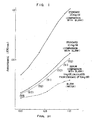
- Fig. 1 is a graph showing an influence of pH using a carbonate buffer solution
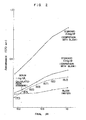
- Fig. 2 is a graph showing an influence of pH using a manoethanolamine-borate buffer solution
- Fig. 3 is a graph showing calibration curves when the pH is changed from 10 to 11 using a carbonate buffer solution
- Fig. 4 is a graph showing an influence of pH on calibration curves using a monoethanolamine-borate buffer solution
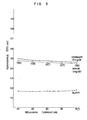
- Fig. 5 is a graph showing an influence of temperature using a carbonate buffer solution
- Fig. 6 is a graph showing the influence of temperature using a monoethanolamine-borate- hydrochloride buffer solution.
- the carbonate and/or bicarbonate buffer solution used in this invention can be prepared by blowing carbon dioxide into an aqueous solution of alkali metal hydroxide, or by dissolving in distilled water an alkali metal carbonate or bicarbonate such as lithium carbonate, lithium bicarbonate, sodium carbonate, sodium bicarbonate, potassium carbonate, potassium bicarbonate, or an ammonium salt such as ammonium carbonate or ammonium bicarbonate, alone or as a mixture thereof.
- the buffer solution is used in combination with a mineral acid such as hydrochloric acid or sulfuric acid, or an organic acid such as acetic acid or citric acid, or an alkali metal hydroxide in order to adjust the pH to the most preferable value.
- potassium carbonate or bicarbonate is used in order to suppress contamination by impurities, there can be obtained low reagent blank values.
- the carbonate ion concentration is preferably in the range of 0.02 to 0.5 mole/liter.
- the most suitable pH is about 10.7 as in the case of conventional processes, so that a conventional masking agent for Mg, e.g., 8-hydroxyquinoline or 8-hydroxyquinoline-5-sulfonic acid, can be used.
- a conventional masking agent for Mg e.g., 8-hydroxyquinoline or 8-hydroxyquinoline-5-sulfonic acid
- Table 1 shows comparison of measured serum values calcium according to the process of this invention, by a conventional method using OCPC, and by an atomic-absorption spectroscopy.
- the results of Table 1 show that the measured values according to the process of this invention are in good agreement with those obtained by the atomic-absorption spectroscopy, while the measured values according to the conventional method using OCPC and the monoethanolamine-borate buffer solution are lower than those obtained by the atomic-absorption spectroscopy and thus are not precise.
- distilled water was added to make a total amount of 100 ml.
- Trichloroacetic acid in an amount of 4 g was dissolved in water to make a total amount of 100 ml.
- Strontium chloride in an amount of 3.6 g was dissolved in water to make a total amount 100 ml.
Landscapes
- Life Sciences & Earth Sciences (AREA)
- Health & Medical Sciences (AREA)
- Engineering & Computer Science (AREA)
- Physics & Mathematics (AREA)
- Chemical & Material Sciences (AREA)
- Molecular Biology (AREA)
- Immunology (AREA)
- Pathology (AREA)
- General Health & Medical Sciences (AREA)
- Biomedical Technology (AREA)
- Biophysics (AREA)
- General Physics & Mathematics (AREA)
- Biochemistry (AREA)
- Analytical Chemistry (AREA)
- Urology & Nephrology (AREA)
- Hematology (AREA)
- Cell Biology (AREA)
- Animal Behavior & Ethology (AREA)
- Biotechnology (AREA)
- Veterinary Medicine (AREA)
- Public Health (AREA)
- Optics & Photonics (AREA)
- Microbiology (AREA)
- Inorganic Chemistry (AREA)
- Food Science & Technology (AREA)
- Medicinal Chemistry (AREA)
- Surgery (AREA)
- Medical Informatics (AREA)
- Heart & Thoracic Surgery (AREA)
- Investigating Or Analysing Biological Materials (AREA)
- Investigating Or Analyzing Non-Biological Materials By The Use Of Chemical Means (AREA)
Description
- This invention relates to a process for measuring the amount of calcium in a sample, living or non- living, such as serum.
- Calcium is an inorganic material contained in a living body in the largest amount. On the one hand it together with phosphoric acid forms and maintains bones, it is widely distributed in a living body together with Na and K as one component of an electolyte connected with various important functions. That is, calcium is connected with the control of osmotic pressure of cells and plays a great role in fundamental procedures concerned with the essence of cell functions such as excitation in neuromuscular transporting portions, etc. Thus, the homeostasis is established in a living body mainly via functions of the endocrine system, while the amount of calcium is fixed in a constant narrow concentration range dynamically equilibrated in a body fluid. On the other hand, since the serum calcium is reduced in the case of hypervitaminosis of vitamin D, multiple myelome, acute bone atrophy, tuberculosis of bones and joints, arthritis deformans, sarcoidosis, metastasis of cancer to bones, mild nephritis, hyperparathyroidism, renal rickets, urinemia, last stage nephritis, nephrosclerosis, nephropyelitis, hypoproteinosis, nephrosis, acute pancreatitis, obstructive jaundice, atropic tuberculosis of bones and joints, rickets, pneumonia and whooping cough, the measurement of the amount of calcium is essential for diagnosis of these diseases together with the measurements of serum inorganic phosphorus and alkaline phosphatase. On measuring the amount of calcium, since the changes in amounts are very slight, high precision for the measurement is required.
- Among various methods for measuring the amount of calcium such as atomic-absorption spectroscopy, a precipitation method, an EDTA titration method and a direct colorimetric method, a direct colorimetric method using 3,3'-bis[N,N-di(carboxymethyl)-aminomethyl]-ortho-cresoIphthalein (usually called ortho-cresolphthalein complexone, hereinafter referred to as "OCPC") as color reagent is presently mainly used. According to said method, color comparison of an OCPC-Ca chelate is conducted at about 570 nm, while masking Mg at pH 10-11 using 8-oxyquinoline or 8-oxyquinoline-5-sulphonic acid. Said method is used widely due to its high sensitivity and relatively low blank value but has the following many disadvantages:
- (1) The calibration curve is not straight.
- (2) The measured serum value is lower than that of other methods.
- (3) Degree of coloring changes greatly depending on temperature, so that strict temperature control is necessary for the measurement.
- (4) Since the amount of sample to be measured is very small because of high sensitivity, degree of contamination from test tubes and other apparatus is great.
- (5) Boric acid is contained; this is not preferable from the viewpoint of regulations of waste water.
- These disadvantages are almost fatal ones to the measurement of calcium which requires high precision as mentioned above. Removal of these disadvantages has long been desired in the field of clinical biochemistry.
- In U.S. patent 3 822 116 there is disclosed a process for measuring calcium using OCPC and an amino acid buffer. There is no disclosure of a carbonate buffer. In U.S. patent 3 798 000 there is a disclosed with a different colour reagent a buffer of amidosulfonic acid, disodium tetraborate and an alkali carbonate but there is no indication of a carbonate buffer as in the present invention.
- An attempt to remove some of these disadvantages were unsuccesfully tried by the following proposals. For example, Japanese Patent Appln Kokai (Laid-Open) No. 36996/79 proposes the use of a borate buffer solution which belongs to an inorganic system in place of a conventional triethylamine, diethylamine, or monoethanolamine- borate buffer solution so as to improve the differences of degree of coloring due to temperature, and Japanese Patent Appln No. 40555/81 proposes the use of a monoethanolamine-citrate buffer solution so as to improve the linearity of the calibration curve. But these proposals are insufficient to overcome the disadvantages mentioned above.
- It is an object of this invention to provide a process for measuring the amount of calcium in a sample overcoming the disadvantages mentioned above.
- This invention provide a process for measuring the amount of calcium in a sample using as a color reagent 3,3'-bis [N,N-di(carboxy-methyl)amino-methyl]-ortho-cresolphthalein and a buffer solution, characterized by using a carbonate and/or bicarbonate solution as buffer solution.
- In the attached drawings, Fig. 1 is a graph showing an influence of pH using a carbonate buffer solution, Fig. 2 is a graph showing an influence of pH using a manoethanolamine-borate buffer solution, Fig. 3 is a graph showing calibration curves when the pH is changed from 10 to 11 using a carbonate buffer solution, Fig. 4 is a graph showing an influence of pH on calibration curves using a monoethanolamine-borate buffer solution, Fig. 5 is a graph showing an influence of temperature using a carbonate buffer solution, and Fig. 6 is a graph showing the influence of temperature using a monoethanolamine-borate- hydrochloride buffer solution.
- In this invention, since a carbonate buffer solution is used in place of.conventional buffer solutions containing diethylamine, triethylamine or monoethanolamine and hydrochloric acid or boric acid, the calibration curve becomes linear, the degree of coloring is hardly influenced by temperature changes, and the measured values of serum calcium are in good agreement with those obtained by the atomic-absorption spectroscopy. Although the sensitivity according to the process of this invention is about 40% of that of conventional methods, this makes the present process advantageous by rationally increasing the amount of sample compared with the conventional methods in which a very fine amount of sample is used disregarding sampling precision, which results in making sampling easy and relatively reducing contamination from apparatus and instruments.
- The carbonate and/or bicarbonate buffer solution used in this invention can be prepared by blowing carbon dioxide into an aqueous solution of alkali metal hydroxide, or by dissolving in distilled water an alkali metal carbonate or bicarbonate such as lithium carbonate, lithium bicarbonate, sodium carbonate, sodium bicarbonate, potassium carbonate, potassium bicarbonate, or an ammonium salt such as ammonium carbonate or ammonium bicarbonate, alone or as a mixture thereof. The buffer solution is used in combination with a mineral acid such as hydrochloric acid or sulfuric acid, or an organic acid such as acetic acid or citric acid, or an alkali metal hydroxide in order to adjust the pH to the most preferable value. When potassium carbonate or bicarbonate is used in order to suppress contamination by impurities, there can be obtained low reagent blank values. In such case, the carbonate ion concentration is preferably in the range of 0.02 to 0.5 mole/liter.
- In the process of this invention, the most suitable pH is about 10.7 as in the case of conventional processes, so that a conventional masking agent for Mg, e.g., 8-hydroxyquinoline or 8-hydroxyquinoline-5-sulfonic acid, can be used.
- This invention will be explained referring to the attached drawings.
- Fig. 1 shows a relationship between pH and sensitivities (absorbance at 570 nm) of blank (water as control), standards (20 mg/di, 10 mg/dl) (blank, control) and serum (blank, control) (together with concentration, mg/dl, calculated from a standard of 10 mg/dl) using a potassium carbonate and potassium bicarbonate buffer solution according to Example 1 mentioned below. In such a case, the carbonate buffer solution (Reagent solution A) was prepared to give a final pH as shown in the abscissa axis by changing the mixing ratio of potassium carbonate and potassium bicarbonate. Fig. 2 shows a relationship between pH and sensitivities (absorbance at 570 nm) of blank (water as control), standards and serum (in the same manner as described above) using a monoethanolamine-borate buffer solution according to Comparative Example 1 mentioned below. In such a case, the hydrochloric acid concentration in Reagent solution B was adjusted so as to give a final pH as shown in the abscissa axis. According to the conventional buffer solution, the degree of coloring of standard and that of serum do not change in parallel with a change of pH and the measured serum values are different at different pHs, whereas using the carbonate buffer solution, the degrees of coloring of standard and serum change in parallel with a change of pH and the measured serum values do not change depending on the change of pH, although the blank values increase greatly with an increase of pH.
- Fig. 3 shows calibration curves of the carbonate buffer solution according to Example 1 when pH is changed from 10 to 11. Fig. 4 shows calibration curves of the monoethanolamine-borate buffer solution according to Comparative Example 1 when pH is changed from 10 to 11. In the case of the carbonate buffer solution, the calibration curves are linear between pH 10.5 and pH 11.0, whereas in the case of the monoethanolamine-borate buffer solution, the calibration curves tend upwardly, not passing an original point.
- Fig. 5 shows a relationship between degree of coloring (absorbance at 570 nm) of blank (water as control), standard (10 mg/dl) and serum (concentration in mg/dl calculated from the standard) and measuring temperatures changing from 15 to 40°C using the carbonate buffer solution. Fig. 6 shows a relationship between degree of coloring of blank, standard and serum and measuring temperatures changing from 15 to 40°C as mentioned above in the case of the monoethanolamine-borate buffer solution. In the case of the carbonate buffer solution, the blank absorbance slightly increases but absorbances of standard and serum slightly decrease with an increase of the temperature, but the degree of lowering is proportional and the measured serum values are not changed. On the other hand, in the case of the monoethanolamine-borate buffer solution, absorbances of blank, standard and serum are decreased relatively greatly with an increase of the temperature. Further, since the degree of lowering in absorbance in the standard and serum is not parallel with an increase of the temperature and a greater lowering is observed as to the serum, measured serum values are lowered with an increase of the measuring temperature.
- Table 1 shows comparison of measured serum values calcium according to the process of this invention, by a conventional method using OCPC, and by an atomic-absorption spectroscopy. The results of Table 1 show that the measured values according to the process of this invention are in good agreement with those obtained by the atomic-absorption spectroscopy, while the measured values according to the conventional method using OCPC and the monoethanolamine-borate buffer solution are lower than those obtained by the atomic-absorption spectroscopy and thus are not precise.

- This invention will be explained in more detail by way of the following Examples.
-

- To these compounds, water was added to make a total amount 100 ml.
-

- To these compounds, water was added to make a total amount 100 ml.
- To 50 µl of a sample, 1.5 ml of Reagent solution A and 1.5 ml of Reagent solution B were added and allowed to stand at room temperature for 10 minutes. Then, absorbance at 570 nm was measured. The concentration of calcium in the sample was obtained by using calibration curves previously prepared.
-

- To these compounds, water was added to make a total amount 100 ml.
-

- To these compounds, water was added to make a total amount about 90 ml. The pH was adjusted by using sodium hydroxide and hydrochloric acid to pH 5.5 and the total amount was made 100 ml.
- Equal amounts of Reagent solution A and Reagent solution B were mixed. (The resulting mixture could be used at room temperature for at least 3 days without changing performance.) To 50 µl of a sample, 3.0 ml of the mixed color reagent was added and allowed to stand at room temperature for 10 minutes. Then, absorbance at 570 nm was measured. The concentration of calcium in the sample was obtained by using calibration curves previously prepared.
-

- To these compounds, distilled water was added to make a total amount 100 ml.
-

- To these compounds, distilled water was added to make a total amount of 100 ml.
- To 20 µl of a sample, 2.0 ml of Reagent solution A and 0.5 ml of Reagent solution B were added and allowed to stand at 20°C for 10 minutes. Then, absorbance at 570 nm was measured. The concentration of calcium in the sample was obtained by using calibration curves previously prepared.
- Trichloroacetic acid in an amount of 4 g was dissolved in water to make a total amount of 100 ml.
- Strontium chloride in an amount of 3.6 g was dissolved in water to make a total amount 100 ml.
- To 200 µI of a sample, 1.0 ml of Reagent solution A was added and stirred, followed by addition of 4.0 ml of Reagent solution B. After centrifugal precipitation, the concentration of calcium in the supernatant liquid was measured by using an atomic-absorption spectrometer. Caliburation curves were previously prepared by using physiological saline and standard solutions of calcium in physiological saline. The concentration of calcium in the sample was obtained by using the calibration curves.
- As mentioned above, by using the carbonate buffer solution in place of the conventional amine series or borate series buffer solution, disadvantages of the conventional method using OCPC are simultaneously overcome. Further, according to this invention, since no phosphoric acid or boric acid is used, there is no problem in environmental pollution; thus, this invention contributes to clinical chemistry greatly.
Claims (7)
Applications Claiming Priority (2)
| Application Number | Priority Date | Filing Date | Title |
|---|---|---|---|
| JP86021/81 | 1981-06-03 | ||
| JP8602181A JPS57199957A (en) | 1981-06-03 | 1981-06-03 | Measuring method for calcium |
Publications (2)
| Publication Number | Publication Date |
|---|---|
| EP0067041A1 EP0067041A1 (en) | 1982-12-15 |
| EP0067041B1 true EP0067041B1 (en) | 1986-08-20 |
Family
ID=13875004
Family Applications (1)
| Application Number | Title | Priority Date | Filing Date |
|---|---|---|---|
| EP19820302865 Expired EP0067041B1 (en) | 1981-06-03 | 1982-06-03 | Process for measuring calcium |
Country Status (3)
| Country | Link |
|---|---|
| EP (1) | EP0067041B1 (en) |
| JP (1) | JPS57199957A (en) |
| DE (1) | DE3272711D1 (en) |
Families Citing this family (5)
| Publication number | Priority date | Publication date | Assignee | Title |
|---|---|---|---|---|
| DE3514695C2 (en) * | 1985-04-24 | 1994-05-11 | Merck Patent Gmbh | Composition and method for the determination of calcium |
| US4740364A (en) * | 1985-09-27 | 1988-04-26 | Eastern Virginia Medical Authority | Predicting predisposition to osteoporosis |
| AU621858B2 (en) * | 1988-03-28 | 1992-03-26 | Abbott Laboratories | Calcium assay reagent |
| US5057435A (en) * | 1990-10-12 | 1991-10-15 | Synermed, Inc. | Reagent and methods for calcium determination |
| CN111239120A (en) * | 2020-02-26 | 2020-06-05 | 绍兴市人民医院 | A kind of blood calcium ion detection test paper |
Family Cites Families (3)
| Publication number | Priority date | Publication date | Assignee | Title |
|---|---|---|---|---|
| BE788232A (en) * | 1971-09-03 | 1973-02-28 | Merck Patent Gmbh | AGENT AND METHOD FOR DETERMINING CALCIUM |
| US3822116A (en) * | 1972-08-30 | 1974-07-02 | Medico Electronic Inc | Reagent and method for calcium determination |
| US3938954A (en) * | 1973-04-11 | 1976-02-17 | The Dow Chemical Company | Determination of calcium |
-
1981
- 1981-06-03 JP JP8602181A patent/JPS57199957A/en active Pending
-
1982
- 1982-06-03 EP EP19820302865 patent/EP0067041B1/en not_active Expired
- 1982-06-03 DE DE8282302865T patent/DE3272711D1/en not_active Expired
Also Published As
| Publication number | Publication date |
|---|---|
| DE3272711D1 (en) | 1986-09-25 |
| EP0067041A1 (en) | 1982-12-15 |
| JPS57199957A (en) | 1982-12-08 |
Similar Documents
| Publication | Publication Date | Title |
|---|---|---|
| Tetsuo et al. | A highly sensitive colorimetric determination of serum zinc using water-soluble pyridylazo dye | |
| Pybus | Determination of calcium and magnesium in serum and urine by atomic absorption spectrophotometry | |
| Putnins et al. | Colorimetric determination of inorganic pyrophosphate by a manual or automated method | |
| Lawrence | Assay of serum inorganic phosphate without deproteinisation: automated and manual micromethods | |
| CH642750A5 (en) | PROCEDURE FOR THE QUICK DETERMINATION OF IRON IN BLOOD SERUM AND MIXTURE FOR THE EXECUTION OF THE PROCEDURE. | |
| EP0075921B1 (en) | Reagent mixture for measuring magnesium | |
| Ohnishi et al. | Characterization of the catalyzed phosphate assay | |
| Kolthoff et al. | Amperometric Determination of Primary and Tertiary Mercaptans | |
| EP0067041A1 (en) | Process for measuring calcium | |
| EP0510190B1 (en) | Reagent and method for serum iron assay | |
| US4273556A (en) | Determination of urea | |
| US3938954A (en) | Determination of calcium | |
| EP0099923A4 (en) | Assay method and ragent for the determination of chloride. | |
| Seidman | Determination of sulfur oxides in stack gases | |
| CA1335251C (en) | Quantitative determination of phosphorus | |
| AU608558B2 (en) | A reagent and method for spectrophotometric assay of serum chloride without the need for mercury or surfactant | |
| Pesce et al. | Automated enzymatic micromethod for determination of uric acid in serum and urine with a centrifugal analyzer | |
| Yañez-Sedeño et al. | Spectrophotometric determination of paraquat with BiI− 4 in the presence of gum arabic | |
| Clark et al. | Spectrophotometric study of a direct determination of serum calcium | |
| EP0404590A2 (en) | Method of and reagent for the prevention of turbidity | |
| Kirk et al. | Micro-and drop-scale titration of oxalate | |
| JPH02167472A (en) | Reagent for turbidmetry determination of potassium | |
| Passey et al. | Quantitation of zinc in nitric acid-digested plasma by atomic absorption spectrophotometry | |
| Lewin et al. | Ultramicrofluorimetric determination of calcium in plasma | |
| EP0702088A1 (en) | Method of determining sodium ion |
Legal Events
| Date | Code | Title | Description |
|---|---|---|---|
| PUAI | Public reference made under article 153(3) epc to a published international application that has entered the european phase |
Free format text: ORIGINAL CODE: 0009012 |
|
| AK | Designated contracting states |
Designated state(s): DE FR IT |
|
| 17P | Request for examination filed |
Effective date: 19830513 |
|
| GRAA | (expected) grant |
Free format text: ORIGINAL CODE: 0009210 |
|
| AK | Designated contracting states |
Kind code of ref document: B1 Designated state(s): DE FR IT |
|
| ITF | It: translation for a ep patent filed | ||
| REF | Corresponds to: |
Ref document number: 3272711 Country of ref document: DE Date of ref document: 19860925 |
|
| ET | Fr: translation filed | ||
| PLBE | No opposition filed within time limit |
Free format text: ORIGINAL CODE: 0009261 |
|
| STAA | Information on the status of an ep patent application or granted ep patent |
Free format text: STATUS: NO OPPOSITION FILED WITHIN TIME LIMIT |
|
| 26N | No opposition filed | ||
| PGFP | Annual fee paid to national office [announced via postgrant information from national office to epo] |
Ref country code: DE Payment date: 19920526 Year of fee payment: 11 |
|
| PGFP | Annual fee paid to national office [announced via postgrant information from national office to epo] |
Ref country code: FR Payment date: 19920625 Year of fee payment: 11 |
|
| ITTA | It: last paid annual fee | ||
| PG25 | Lapsed in a contracting state [announced via postgrant information from national office to epo] |
Ref country code: FR Effective date: 19940228 |
|
| PG25 | Lapsed in a contracting state [announced via postgrant information from national office to epo] |
Ref country code: DE Effective date: 19940301 |
|
| REG | Reference to a national code |
Ref country code: FR Ref legal event code: ST |