EP0063799B1 - 1-(3-(6-fluoro-1,2-benzisoxasol-3-yl)propyl)-4-hydroxy-4-phenylpiperidines, a process for their preparation and their use as medicaments - Google Patents
1-(3-(6-fluoro-1,2-benzisoxasol-3-yl)propyl)-4-hydroxy-4-phenylpiperidines, a process for their preparation and their use as medicaments Download PDFInfo
- Publication number
- EP0063799B1 EP0063799B1 EP82103432A EP82103432A EP0063799B1 EP 0063799 B1 EP0063799 B1 EP 0063799B1 EP 82103432 A EP82103432 A EP 82103432A EP 82103432 A EP82103432 A EP 82103432A EP 0063799 B1 EP0063799 B1 EP 0063799B1
- Authority
- EP
- European Patent Office
- Prior art keywords
- ether
- fluoro
- propyl
- benzisoxazol
- solution
- Prior art date
- Legal status (The legal status is an assumption and is not a legal conclusion. Google has not performed a legal analysis and makes no representation as to the accuracy of the status listed.)
- Expired
Links
- 0 COc(cc(cc1)N)c1C(NC=*)=* Chemical compound COc(cc(cc1)N)c1C(NC=*)=* 0.000 description 1
Classifications
-
- C—CHEMISTRY; METALLURGY
- C07—ORGANIC CHEMISTRY
- C07D—HETEROCYCLIC COMPOUNDS
- C07D261/00—Heterocyclic compounds containing 1,2-oxazole or hydrogenated 1,2-oxazole rings
- C07D261/20—Heterocyclic compounds containing 1,2-oxazole or hydrogenated 1,2-oxazole rings condensed with carbocyclic rings or ring systems
-
- C—CHEMISTRY; METALLURGY
- C07—ORGANIC CHEMISTRY
- C07C—ACYCLIC OR CARBOCYCLIC COMPOUNDS
- C07C45/00—Preparation of compounds having >C = O groups bound only to carbon or hydrogen atoms; Preparation of chelates of such compounds
- C07C45/45—Preparation of compounds having >C = O groups bound only to carbon or hydrogen atoms; Preparation of chelates of such compounds by condensation
- C07C45/46—Friedel-Crafts reactions
-
- C—CHEMISTRY; METALLURGY
- C07—ORGANIC CHEMISTRY
- C07C—ACYCLIC OR CARBOCYCLIC COMPOUNDS
- C07C49/00—Ketones; Ketenes; Dimeric ketenes; Ketonic chelates
- C07C49/76—Ketones containing a keto group bound to a six-membered aromatic ring
- C07C49/82—Ketones containing a keto group bound to a six-membered aromatic ring containing hydroxy groups
- C07C49/825—Ketones containing a keto group bound to a six-membered aromatic ring containing hydroxy groups all hydroxy groups bound to the ring
Definitions
- the present invention relates to novel 1 - [3 - (1,2 - benzisoxazol - 3 - yl)propyl] - 4 - hydroxy - 4 - phenylpiperidines. More particularly, the present invention relates to 1 - [3 - (6 - fluoro - 1,2 - benzisoxazol - 3 - yl)propyll - 4 - phenyl - 4 - hydroxypiperidines of formula 1, wherein X is hydrogen, loweralkyl, loweralkoxy, halogen or trifluoromethyl; Y is hydrogen or trifluoromethyl with the proviso that Y is hydrogen when X is hydrogen, loweralkyl, loweralkoxy ortrifluoromethyl and Y is hydrogen, trifluoromethyl when X is halogen; the optical antipodes thereof, or pharmaceutically acceptable addition salts thereof, which are useful for treating psychoses and alleviating pain, alone or in combination with inert psychoses
- Preferred 1 - [3 - (1,2 - benzisoxazol - 3 - yl)propyl] - 4 - hydroxy - 4 - phenylpiperidines are those wherein X is halogen and Y is hydrogen. Most preferred are those wherein the halogen is bound to the 4- position of the benzene ring.
- alkyl refers to a straight or branched chain hydrocarbon radical containing no unsaturation and having 1 to 7 carbon atoms such as methyl, ethyl, 1-propyl, 2-propyl, 1-butyl, 1-pentyl, 2-pentyl, 3-hexyl, 4-heptyl and the like;
- alkoxy refers to a monovalent substituent which consists of an alkyl group linked through an ether oxygen and having its free valence bond from the ether oxygen such as methoxy, ethoxy, propoxy, butoxy, 1,1-dimethylethoxy, pentoxy, 3-methylpentoxy, 2-ethylpentoxy and the like;
- halogen refers to a member of a family consisting of chlorine, fluorine, bromine or iodine.
- lower as applied to any of the aforementioned groups refers to a group having a carbon skeleton
- optical antipodes and as the racemic forms thereof.
- the optical antipode may be prepared from the corresponding racemic forms by standard optical resolution techniques, involving, for example, the separation of diastereomeric salts of those instant compounds characterized by the presence of a basic amino group and an optically active acid, or by the synthesis from optically active precursors.
- the present invention comprehends all optical isomers and racemic forms thereof.
- the formulas of the compounds shown herein are intended to encompass all possible optical isomers of the compounds so depicted.
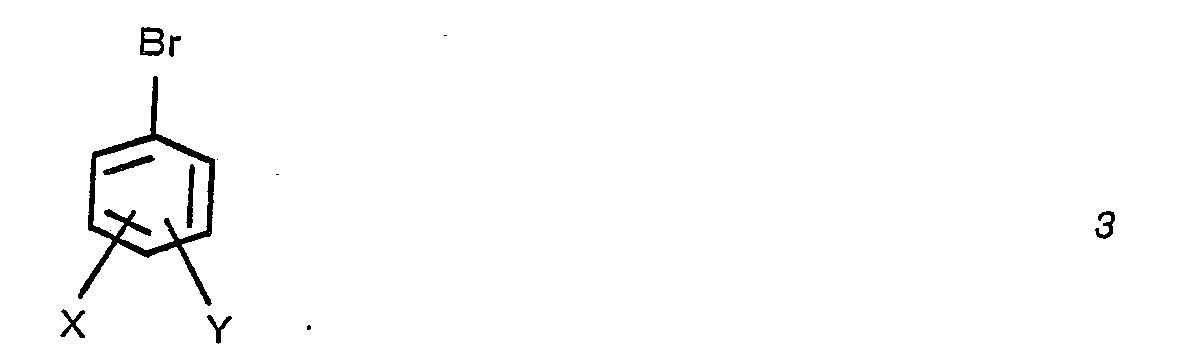
- novel 1 - [3 - (6 - fluoro - 1,2 - benzisoxazol - 3 - yl)propyl] - 4 - hydroxy - 4 - phenylpiperidines of formula 1, the compounds of the present invention, are prepared by condensing a Grignard reagent of formula 2 wherein X and Y are as before, prepared by conventional method from a bromobenzene of formula 3 wherein X and Y are as before with magnesium (see, for example, M. S.
- the condensation temperature is not narrowly critical. It is desirable, however, to conduct the condensation at a temperature within the range of about -10°C to about 40°C to assure a reasonable rate of conversion. A condensation temperature of about ambient temperature is preferred.
- the compounds of the present invention are prepared by condensing 3 - (3 - chloropropyl) - 6 - fluoro - 1,2 - benzisoxazole of formula 5 with readily available 4 - hydroxy - 4 - phenylpiperidines of formula 6 wherein X and Y are as above.
- the condensation is conveniently performed by treating the halide 5 with the piperidine 6 in the presence of an acid acceptor, a displacement promotor and a suitable solvent.
- alkali metal carbonates and alkali metal bicarbonates such as, for example, lithium carbonate, sodium carbonate and potassium carbonate, and lithium bicarbonate, sodium bicarbonate and potassium bicarbonate. Potassium carbonate and sodium bicarbonate are preferred.
- alkali metal halides such as, for example, sodium iodide and potassium iodide, and sodium bromide and potassium bromide. Potassium iodide is preferred.
- suitable solvents there may be mentioned polar aprotic substances such as, for example, dimethylformamide, dimethylacetamide and hexamethylphosphoramide. Dimethylformamide is preferred.
- the temperature at which the condensation is conducted is not narrowly critical. It is desirable, however, to perform the condensation at a temperature within the range of about 50°C to about 130°C to assure a reasonable rate of conversion. A reaction temperature within the range of about 70°C to 110°C is preferred.
- the compound of the formula 4 above can be prepared by condensing a compound of the formula 5 above with the readily available piperidone of the formula
- the condensation is conveniently performed by treating the compound of the formula 4 with the piperidone in the presence of an acid acceptor, a displacement promoter and a suitable solvent.
- acid acceptors there may be mentioned alkali metal carbonates and alkali metal bicarbonates such as, for example, lithium carbonate, sodium carbonate and potassium carbonate, and lithium bicarbonate, sodium bicarbonate and potassium bicarbonate. Potassium carbonate and sodium bicarbonate are preferred.
- alkali metal halides such as, for example, sodium iodide and potassium iodide, and sodium bromide and potassium bromide.
- Potassium iodide is preferred.
- suitable solvents there may be mentioned polar aprotic substances such as, for example, dimethylformamide, dimethylacetamide and hexamethylphosphoramide. Dimethylformamide is preferred.
- the temperature at which the condensation is conducted is not narrowly critical. It is desirable, however to perform the condensation at a temperature within the range of about 50°C to about 130°C to assure a reasonable rate of conversion. A reaction temperature within the range of about 70°C to 110°C is preferred.
- the 1 - [3 - (6 - fluoro - 1,2 - benzisoxazol - 3 - yl)propyl] - 4 - hydroxy - 4 - phenylpiperidines of the present invention are useful as analgesic agents due to their ability to alleviate pain in mammals which is demonstrated in the phenyl-para-quinone writhing assay in mice, a standard assay for analgesia [Proc. Soc. Exptl. Biol. Med., 95, 729 (1953)].
- Table 1 is the analgesic activity of representative compounds of the invention and two standards, expressed as the estimated subcutaneous dose at which the mice experience a 50% reduction in phenyl-para-quinone induced writhes, i.e., the EDg o -vatue.
- Analgesia production is achieved when the present 1 - [3 - (6 - fluoro - 1,2 - benzisoxazol - 3 - yI)propyIl - 4 - hydroxy - 4 - phenylpiperidines are administered to a subject requiring such treatment as an effective oral, parenteral or intravenous dose of from 0.01 to 50 mg/kg of body weight per day. A particularly effective amount is about 25 mg/kg of body weight per day. It is to be understood, however, that for any particular subject, specific dosage regimens should be adjusted according to the individual need and the professional judgment of the person administering or supervising the administration of the aforesaid compound. It is to be further understood that the dosages set forth herein are exemplary only and that they do not, to any exent, limit the.scope or practice of the invention.
- Antipsychotic activity is determined in the climbing mice assay by a method similar to those described by P. Protais et al., Psychopharmacol., 50, 1 (1976) and B. Costall, Eur. J. Pharmacol., 50, 39 (1978).
- mice The subject CK-1 male mice (23-27 grams) are group-housed under standard laboratory conditions. The mice are individually placed in wire mesh stick cages (4" x 4" x 10") and are allowed one hour for adaptation and exploration of the new environment. Then apomorphine is injected subcutaneously at 1.5 mg/kg, a dose causing climbing in all subjects for 30 minutes. Compounds to be tested for antipsychotic activity are injected intraperitoneally 30 minutes prior to the apomorphine challenge at a screening dose of 10 mg/kg.
- the climbing scores are individually totaled (maximal score: 6 per mouse over 3 readings) and the total score of the control group (vehicle intraperitoneally ⁇ apomorphine subcutaneously) is set to 100%.
- EDgo values with 95% confidence limits are calculated by a Linear Regression Analysis.
- Antipsychotic activity expressed as the ED 50 value of representative 1 - [3 - (6 - fluoro - 1,2 - benzisoxazol - 3 - -yl)propyl] 4 - hydroxy - 4 - phenylpiperidines as well as two standard antipsychotics are presented in Table II.
- Antipsychotic activity is achieved when the present 1 - [3 - (6 - fluoro - 1,2 - benzisoxazol - 3 - yl)propyl] - 4 - hydroxy - 4 - phenylpiperidines are administered to a subject requiring such treatment as an effective oral, parenteral or intravenous dose of from 0.01 to 50 mg/kg of body weight per day. A particularly preferred effective amount is about 25 mg/kg of body weight per day. It is to be understood, however, that for any particular subject, specific dosage regimens should be adjusted to the individual need and the professional judgment of the person administering or supervising the administration of the aforesaid compound. It is to be further understood that the dosages set forth herein are exemplary only and they do not, to any extent, limit the scope or practice of the invention.
- Effective amounts of the compounds of the invention may be administered to a subject by any one of various methods, for example, orally as in capsule or tablets, parenterally in the form of sterile solutions or suspensions, and in some cases intravenously in the form of sterile solutions.
- the free base final products while effective themselves, may be formulated and administered in the form of their pharmaceutically acceptable addition salts for purposes of stability, convenience of crystallization, increased solubility and the like.
- Preferred pharmaceutically acceptable addition salts include salts of mineral acids, for example, hydrochloric acid, sulfuric acid, nitric acid and the like, salts of monobasic carboxylic acids such as, for example, acetic acid, propionic acid and the like, salts of dibasic carboxylic acids such as, for example, maleic acid, fumaric acid, oxalic acid and the like, and salts of tribasic caboxylic acids such as, for example, carboxysuccinic acid, citric acid and the like.
- mineral acids for example, hydrochloric acid, sulfuric acid, nitric acid and the like
- salts of monobasic carboxylic acids such as, for example, acetic acid, propionic acid and the like
- salts of dibasic carboxylic acids such as, for example, maleic acid, fumaric acid, oxalic acid and the like
- salts of tribasic caboxylic acids such as, for example, carboxysuccinic acid, citric
- the active compounds of the present invention may be administered orally, for example, with an inert diluent or with an edible carrier. They may be enclosed in gelatin capsules or compressed into tablets.
- the aforesaid compounds may be incorporated with excipients and used in the form of tablets, troches, capsules, elixirs, suspensions, syrups, wafers, chewing gums and the like. These preparations should contain at least 0.5% of active compound, but may be varied depending upon the particular form and may conveniently be between 4% to about 75% of the weight of the unit. The amount of present compound in such composition is such that a suitable dosage will be obtained.
- Preferred compositions and preparations according to the present invention are prepared so that an oral dosage unit form contains between 1.0-300 mgs of active compound.
- the tablets, pills, capsules, troches and the like may also contain the following ingredients: a binder such as microcrystalline cellulose, gum tragacanth or gelatin; an excipient such as starch or lactose, a disintegrating agent such as alginic acid, Primogel, corn starch and the like; a lubricant such as magnesium stearate or Sterotes; a glidant such as colloidal silicon dioxide; and a sweetening agent such as sucrose or saccharin or a flavoring agent such as peppermint, methyl salicylate, or orange flavoring may be added.
- a liquid carrier such as a fatty oil.
- dosage unit forms may contain other various materials which modify the physical form of the dosage unit, for example, as coatings.
- tablets or pills may be coated with sugar, shellac, or other enteric coating agents.
- a syrup may contain, in addition to the active compounds, sucrose as a sweetening agent and certain preservatives, dyes and colorings and flavors. Materials used in preparing these various compositions should be pharmaceutically pure and non-toxic in the amounts used.
- the active compounds of the invention may be incorporated into a solution or suspension. These preparations should contain at least 0.1% of the aforesaid compound, but may be varied between 0.5 and about 50% of the weight thereof. The amount of active compound in such compositions is such that a suitable dosage will be obtained. Preferred compositions and preparations according to the present invention are prepared so that a parenteral dosage unit contains between 0.5 to 100 mgs of the active compound.
- the solutions or suspensions may also include the following components: a sterile diluent such as water for injection, saline solution, fixed oils, polyethylene glycols, glycerine, propylene glycol or other synthetic solvents; antibacterial agents such as benzyl alcohol or methyl parabens; antioxidants such as ascorbic acid or sodium bisulfite; chelating agents such as ethylenediaminetetraacetic acid; buffers such as acetates, citrates or phosphates and agents for the adjustment of tonicity such as sodium chloride or dextrose.
- a sterile diluent such as water for injection, saline solution, fixed oils, polyethylene glycols, glycerine, propylene glycol or other synthetic solvents
- antibacterial agents such as benzyl alcohol or methyl parabens
- antioxidants such as ascorbic acid or sodium bisulfite
- chelating agents such as ethylenediaminetetraacetic acid
Landscapes
- Chemical & Material Sciences (AREA)
- Organic Chemistry (AREA)
- Chemical Kinetics & Catalysis (AREA)
- Pharmaceuticals Containing Other Organic And Inorganic Compounds (AREA)
- Plural Heterocyclic Compounds (AREA)
- Heterocyclic Carbon Compounds Containing A Hetero Ring Having Nitrogen And Oxygen As The Only Ring Hetero Atoms (AREA)
- Hydrogenated Pyridines (AREA)
Description
- The present invention relates to novel 1 - [3 - (1,2 - benzisoxazol - 3 - yl)propyl] - 4 - hydroxy - 4 - phenylpiperidines. More particularly, the present invention relates to 1 - [3 - (6 - fluoro - 1,2 - benzisoxazol - 3 - yl)propyll - 4 - phenyl - 4 - hydroxypiperidines of formula 1,

- Preferred 1 - [3 - (1,2 - benzisoxazol - 3 - yl)propyl] - 4 - hydroxy - 4 - phenylpiperidines are those wherein X is halogen and Y is hydrogen. Most preferred are those wherein the halogen is bound to the 4- position of the benzene ring.
- As used through the specification and appended claims, the term "alkyl" refers to a straight or branched chain hydrocarbon radical containing no unsaturation and having 1 to 7 carbon atoms such as methyl, ethyl, 1-propyl, 2-propyl, 1-butyl, 1-pentyl, 2-pentyl, 3-hexyl, 4-heptyl and the like; the term "alkoxy" refers to a monovalent substituent which consists of an alkyl group linked through an ether oxygen and having its free valence bond from the ether oxygen such as methoxy, ethoxy, propoxy, butoxy, 1,1-dimethylethoxy, pentoxy, 3-methylpentoxy, 2-ethylpentoxy and the like; the term "halogen" refers to a member of a family consisting of chlorine, fluorine, bromine or iodine. The term "lower" as applied to any of the aforementioned groups refers to a group having a carbon skeleton containing up to and including 5 carbon atoms.
- The compounds of the present invention which lack an element of symmetry exist as optical antipodes and as the racemic forms thereof. The optical antipode may be prepared from the corresponding racemic forms by standard optical resolution techniques, involving, for example, the separation of diastereomeric salts of those instant compounds characterized by the presence of a basic amino group and an optically active acid, or by the synthesis from optically active precursors.
- The present invention comprehends all optical isomers and racemic forms thereof. The formulas of the compounds shown herein are intended to encompass all possible optical isomers of the compounds so depicted.
- The novel 1 - [3 - (6 - fluoro - 1,2 - benzisoxazol - 3 - yl)propyl] - 4 - hydroxy - 4 - phenylpiperidines of formula 1, the compounds of the present invention, are prepared by condensing a Grignard reagent of formula 2


- The condensation temperature is not narrowly critical. It is desirable, however, to conduct the condensation at a temperature within the range of about -10°C to about 40°C to assure a reasonable rate of conversion. A condensation temperature of about ambient temperature is preferred.
- Alternatively, the compounds of the present invention, the 1 - [3 - (6 - fluoro - 1,2 - benzisoxazol - 3 - yl)propyl] - 4 - hydroxy - 4 - phenylpiperidines of formula 1, are prepared by condensing 3 - (3 - chloropropyl) - 6 - fluoro - 1,2 - benzisoxazole of formula 5


- The compound of the formula 4 above can be prepared by condensing a compound of the formula 5 above with the readily available piperidone of the formula

- The 1 - [3 - (6 - fluoro - 1,2 - benzisoxazol - 3 - yl)propyl] - 4 - hydroxy - 4 - phenylpiperidines of the present invention are useful as analgesic agents due to their ability to alleviate pain in mammals which is demonstrated in the phenyl-para-quinone writhing assay in mice, a standard assay for analgesia [Proc. Soc. Exptl. Biol. Med., 95, 729 (1953)]. Presented in Table 1 is the analgesic activity of representative compounds of the invention and two standards, expressed as the estimated subcutaneous dose at which the mice experience a 50% reduction in phenyl-para-quinone induced writhes, i.e., the EDgo-vatue.

- Analgesia production is achieved when the present 1 - [3 - (6 - fluoro - 1,2 - benzisoxazol - 3 - yI)propyIl - 4 - hydroxy - 4 - phenylpiperidines are administered to a subject requiring such treatment as an effective oral, parenteral or intravenous dose of from 0.01 to 50 mg/kg of body weight per day. A particularly effective amount is about 25 mg/kg of body weight per day. It is to be understood, however, that for any particular subject, specific dosage regimens should be adjusted according to the individual need and the professional judgment of the person administering or supervising the administration of the aforesaid compound. It is to be further understood that the dosages set forth herein are exemplary only and that they do not, to any exent, limit the.scope or practice of the invention.
- The 1 - [3 - (6 - fluoro - 1,2 - benzisoxazol - 3 - yl)propyl] - 4 - hydroxy - 4 - phenylpiperidines of the present invention are useful for treating psychoses by virtue of their ability to block apomorphine- induced climbing in mammals.
- Antipsychotic activity is determined in the climbing mice assay by a method similar to those described by P. Protais et al., Psychopharmacol., 50, 1 (1976) and B. Costall, Eur. J. Pharmacol., 50, 39 (1978).
- The subject CK-1 male mice (23-27 grams) are group-housed under standard laboratory conditions. The mice are individually placed in wire mesh stick cages (4" x 4" x 10") and are allowed one hour for adaptation and exploration of the new environment. Then apomorphine is injected subcutaneously at 1.5 mg/kg, a dose causing climbing in all subjects for 30 minutes. Compounds to be tested for antipsychotic activity are injected intraperitoneally 30 minutes prior to the apomorphine challenge at a screening dose of 10 mg/kg.
- For evaluation of climbing, 3 readings are taken at 10, 20 and 30 minutes after apomorphine administration according to the following scale:

- Mice consistently climbing before the injection of apormorphine will be discarded.
- With full-developed apomorphine climbing, the animals are hanging onto the cage walls, rather motionless, over longer periods of time. By contrast, climbs due to mere motor stimulation usually only last a few seconds.
- The climbing scores are individually totaled (maximal score: 6 per mouse over 3 readings) and the total score of the control group (vehicle intraperitoneally ― apomorphine subcutaneously) is set to 100%. EDgo values with 95% confidence limits are calculated by a Linear Regression Analysis. Antipsychotic activity expressed as the ED50 value of representative 1 - [3 - (6 - fluoro - 1,2 - benzisoxazol - 3 - -yl)propyl] 4 - hydroxy - 4 - phenylpiperidines as well as two standard antipsychotics are presented in Table II.

- Antipsychotic activity is achieved when the present 1 - [3 - (6 - fluoro - 1,2 - benzisoxazol - 3 - yl)propyl] - 4 - hydroxy - 4 - phenylpiperidines are administered to a subject requiring such treatment as an effective oral, parenteral or intravenous dose of from 0.01 to 50 mg/kg of body weight per day. A particularly preferred effective amount is about 25 mg/kg of body weight per day. It is to be understood, however, that for any particular subject, specific dosage regimens should be adjusted to the individual need and the professional judgment of the person administering or supervising the administration of the aforesaid compound. It is to be further understood that the dosages set forth herein are exemplary only and they do not, to any extent, limit the scope or practice of the invention.
- Effective amounts of the compounds of the invention may be administered to a subject by any one of various methods, for example, orally as in capsule or tablets, parenterally in the form of sterile solutions or suspensions, and in some cases intravenously in the form of sterile solutions. The free base final products, while effective themselves, may be formulated and administered in the form of their pharmaceutically acceptable addition salts for purposes of stability, convenience of crystallization, increased solubility and the like.
- Preferred pharmaceutically acceptable addition salts include salts of mineral acids, for example, hydrochloric acid, sulfuric acid, nitric acid and the like, salts of monobasic carboxylic acids such as, for example, acetic acid, propionic acid and the like, salts of dibasic carboxylic acids such as, for example, maleic acid, fumaric acid, oxalic acid and the like, and salts of tribasic caboxylic acids such as, for example, carboxysuccinic acid, citric acid and the like.
- The active compounds of the present invention may be administered orally, for example, with an inert diluent or with an edible carrier. They may be enclosed in gelatin capsules or compressed into tablets. For the purpose of oral therapeutic administration, the aforesaid compounds may be incorporated with excipients and used in the form of tablets, troches, capsules, elixirs, suspensions, syrups, wafers, chewing gums and the like. These preparations should contain at least 0.5% of active compound, but may be varied depending upon the particular form and may conveniently be between 4% to about 75% of the weight of the unit. The amount of present compound in such composition is such that a suitable dosage will be obtained. Preferred compositions and preparations according to the present invention are prepared so that an oral dosage unit form contains between 1.0-300 mgs of active compound.
- The tablets, pills, capsules, troches and the like may also contain the following ingredients: a binder such as microcrystalline cellulose, gum tragacanth or gelatin; an excipient such as starch or lactose, a disintegrating agent such as alginic acid, Primogel, corn starch and the like; a lubricant such as magnesium stearate or Sterotes; a glidant such as colloidal silicon dioxide; and a sweetening agent such as sucrose or saccharin or a flavoring agent such as peppermint, methyl salicylate, or orange flavoring may be added. When the dosage unit form is a capsule, it may contain, in addition to materials of the above type, a liquid carrier such as a fatty oil. Other dosage unit forms may contain other various materials which modify the physical form of the dosage unit, for example, as coatings. Thus tablets or pills may be coated with sugar, shellac, or other enteric coating agents. A syrup may contain, in addition to the active compounds, sucrose as a sweetening agent and certain preservatives, dyes and colorings and flavors. Materials used in preparing these various compositions should be pharmaceutically pure and non-toxic in the amounts used.
- For the purposes of parenteral therapeutic administration, the active compounds of the invention may be incorporated into a solution or suspension. These preparations should contain at least 0.1% of the aforesaid compound, but may be varied between 0.5 and about 50% of the weight thereof. The amount of active compound in such compositions is such that a suitable dosage will be obtained. Preferred compositions and preparations according to the present invention are prepared so that a parenteral dosage unit contains between 0.5 to 100 mgs of the active compound.
- The solutions or suspensions may also include the following components: a sterile diluent such as water for injection, saline solution, fixed oils, polyethylene glycols, glycerine, propylene glycol or other synthetic solvents; antibacterial agents such as benzyl alcohol or methyl parabens; antioxidants such as ascorbic acid or sodium bisulfite; chelating agents such as ethylenediaminetetraacetic acid; buffers such as acetates, citrates or phosphates and agents for the adjustment of tonicity such as sodium chloride or dextrose. The parenteral preparation can be enclosed in ampoules, disposable syringes or multiple dose vials made of glass or plastic.
- The following Examples are for illustrative purposes only and are not to be construed as limiting the invention.
- To 50 ml of dry dimethylformamide was added, 6.0 g of 4 - hydroxy - 4 - phenylpiperidine, 8.0 g of 3 - (3 - chloropropyl) - 6 - fluoro - 1,2 - benzisoxazole, 13.0 g of sodium bicarbonate, and a few crystals of potassium iodide. After stirring at 80°C for one hr, the mixture was cooled, filtered, and the filtrate evaporated to an oil. The oil was stirred with 100 ml water for five mins, and then extracted with ether/ethyl acetate. The organic layer was washed with water (2x), saturated sodium chloride solution and dried over anhydrous magnesium sulfate. After filtering, the solvents were evaporated. Trituration with ether gave 3.0 g (25%) of product, mp 133°-137°C. Recrystallization twice from ethyl ether gave the analytical sample, mp 138°-139°C.
- Analysis:

- To a suspension of 1.2 g of magnesium shavings and a few drops of dibromoethane in 30 ml of ether was added a solution of 8.7 g of 3-bromochlorobenzene in 20 ml of ether at such a rate so as to maintain reflux. After the addition was complete, the mixture was diluted with 30 ml of tetrahydrofuran and then a solution of 6.3 g of 1 - [3 - (6 - fluoro - 1,2 - benzisoxazol - 3 - yl)propyl] - 4 - piperidone in 30 ml of tetrahydrofuran was slowly added. After one hr, the mixture was diluted with ether, poured into 400 ml of saturated ammonium chloride solution and extracted with ether. The organic extracts were washed with water (2x), saturated sodium chloride solution and dried over anhydrous magnesium sulfate, filtered and concentrated to an oil. The oil was converted to 8.5 g (88%) of product, mp 170°-172°C, by treatment with ethereal hydrogen chloride. An analytical sample was obtained by recrystallization from ethyl acetate/ methanol and had, mp 188°-189°C.
- Analysis:

- To 30 ml of dry dimethylformamide was added 3.0 g of 4 - (4 - chlorophenyl) - 4 - hydroxypiperidine, 2.99 g of 3 - (3 - chloropropyl) - 6 - fluoro - 1,2 - benzisoxazole, 8.0 g of sodium bicarbonate, and a crystal of potassium iodide. After stirring at 90°C for one hr, the mixture was evaporated to an oil. The oil was stirred with 100 ml of water for five mins, and then extracted with ether. The ether solution was washed with water (2x), saturated sodium chloride solution and dried over anhydrous magnesium sulfate. After filtering, the solvent was evaporated. Recrystallization of the residue from ethyl ether gave 3.6 g of product, mp 142°-145°C. The analytical sample was obtained by recrystallization from ethyl ether and had mp 148°-150°C.
- Analysis:

- To a suspension of 1.1 g of magnesium shavings and a few drops of dibromoethane in 30 ml of ether was added a solution of 7.9 g of p-bromofluorobenzene in 20 ml of ether at a rate to maintain reflux of the mixture. After the addition was complete, the mixture was slowly diluted with 30 ml of tetrahydrofuran and then a solution of 5 g of 1 - (3 - (6 - fluoro - 1,2 - benzisoxazol - 3 - yl)propyl] - 4 - piperidone in 30 ml of tetrahydrofuran was slowly added. After one hr, the mixture was diluted with ether, poured into 400 ml of saturated ammonium chloride solution and extracted with ether. The organic extracts were washed with water (2x), saturated sodium chloride solution and dried over anhydrous magnesium sulfate, filtered and concentrated. The residue was recrystallized from hexanes/ether to give 3.6 g (54%) of product, mp 100°-101 °C.
- Analysis:

- To a suspension of 0.9 g of magnesium shavings and a few drops of dibromoethane in 30 ml of ether was added a solution of 6.2 g of 2-bromotoluene in 30 ml of ether. After the addition was complete, the mixture was stirred under reflux for one hr, cooled, and a solution of 5 g of 1 - [3 - (6 - fluoro - 1,2 - benzisoxazol - 3 - yl)propyl] - 4 - piperidone in 50 ml of tetrahydrofuran was added. After one hr, the mixture was diluted with ether, poured into 400 ml of saturated ammonium chloride solution and extracted with ether. The organic extracts were washed with water (2x), saturated sodium chloride solution and dried over anhydrous magnesium sulfate, filtered and concentrated. The residue was converted to 6.4 g (82%) of product by treatment with ethereal hydrogen chloride. Recrystallization from ethyl acetate/methanol gave the analytical sample, mp 191°-192°C (dec).
- Analysis:

- To 50 ml of diethyl ether was added a solution of 15 ml of p-tolylmagnesium bromide (1.96 M in ether). The resultant solution was cooled to 0°C with an ice-bath and a solution of 5.3 g of 1 - [3 - (6 - fluoro - 1,2 -benzisoxazol 4 - -yl)propyl] 4 - piperidone in 50 ml of ether was added over a period of thirty mins, with stirring. The mixture was stirred at ambient temperature for two hrs, poured into 500 ml of ice-cold ammonium chloride solution, stirred for five mins and extracted with ether/ethyl acetate. The organic layer was washed with water (2x), saturated sodium chloride solution and dried over anhydrous magnesium sulfate. After filtering, the solvents were evaporated. Crystallization of the residue from ethyl ether gave 2.6 g (36%) of product, mp 96°-99°C. Recrystallization from ethyl ether gave the analytical sample, mp 98°-100°C.
- Analysis:

- A solution of 6.3 g of 1 - [3 - (6 - fluoro - 1,2 - benzisoxazol - 3 - yl)propyl] - 4 - piperidone in 35 ml of tetrahydrofuran was slowly added to a solution of 49 ml of p-anisylmagnesium bromide (1.4 M in tetrahydrofuran). After the addition was complete, the reaction mixture was stirred at ambient temperature for one hr, diluted with ether, poured into 400 of ml saturated ammonium chloride solution and extracted with ether. The organic extracts were washed with water (2x), saturated sodium chloride solution and dried over anhydrous magnesium sulfate, filtered and concentrated. The residue was converted to 8.5 g (89%) of product, mp 100°-105°C, by treatment with ethereal hydrogen chloride. An analytical sample was obtained by recrystallization from ethyl acetate/methanol and had mp 181°-182°C (dec).
- Analysis:

- To a suspension of 1.1 g of magnesium shavings and a few drops of dibromoethane in 30 ml of ether was added a solution of 9.8 g of 3-bromobenzotrifluoride in 30 ml of ether at a rate to maintain reflux of the mixture. Afterthe magnesium was consumed, a solution of 6 g of 1 - [3 (6 - Fluoro - -1,2 - benzisoxazol - 3 - yl)propyl] - 4 - piperidone in 500 ml of tetrahydrofuran was slowly added. After one hr, the mixture was diluted with ether, poured into 400 ml of saturated ammonium chloride solution and extracted with ether. The organic extracts were washed with water (2x), saturated sodium chloride solution and dried over anhydrous magnesium sulfate, filtered and concentrated. Treatment of the residue with ethereal hydrogen chloride gave a salt. Recrystallization from ethyl acetate/methanol gave 4 g (55%) of product, mp 214°-215°C.
- Analysis:
-

- To a suspension of 1.2 g of magnesium shavings and a few drops of dibromoethane in 30 ml of ether was added a solution of 10.3 g of 4-bromobenzotrifluoride in 20 ml of ether at such a rate so as to maintain reflux of the mixture. After the addition was complete, the mixture was diluted with 35 ml of tetrahydrofuran, and a solution of 6.3 g of 1 - [3 - (6 - fluoro - 1,2 - benzisoxazol - 3 - yl)propyl] - 4 - piperidone in 50 ml of tetrahydrofuran was slowly added. After one hr, the mixture was diluted with ether, poured into 400 ml of saturated ammonium chloride solution and extracted with ether. The organic extracts were washed with water (2x), saturated sodium chloride solution and dried over anhydrous magnesium sulfate, filtered and concentrated. Trituration with hexane/ether gave 7 g (73%) of product, mp 150°-152°C. Recrystallization from ether gave the analytical sample, mp 152°-153°C.
- Analysis:

- To a suspension of 0.9 g of magnesium shavings and a few drops of dibromoethane in 30 ml of ether was added a solution of 9.4 g of 5 - bromo - 2 - chlorobenzotrifluoride in 30 ml of ether at a rate to maintain reflux. After the magnesium was consumed a solution of 5 g of 1 - [3 - (6 - fluoro - 1,2 - benzisoxazol - 3 - yl)propyl] - 4 - piperidone. in 50 ml of tetrahydrofuran was added. After thirty mins the reaction mixture was poured into 400 ml of saturated ammonium chloride solution and extracted with ethyl acetate/ether. The organic extracts were washed with water (2x), saturated sodium chloride solution and dried over anhydrous magnesium sulfate, filtered and concentrated to an oil, which was purified by column chromatography (silic gel, tetrahydrofuran). The desired fractions were combined and concentrated to an oil, which was converted to a salt by treatment with ethereal hydrogen chloride. Recrystallization from ethyl acetate/methanol gave 3 g (34%) of product, mp 203°-204°C.
- Analysis:

- To 25 ml of ethyl ether was added 1.0 g of magnenesium turnings, 0.5 ml of 1,2-dibromoethane and a few drops of a solution of 9.4 g of 1,4-dibrgmobenzene in 50 ml of ethyl ether. The reaction was initiated with heat and maintained by the addition of the solution of 1,4-dibromobenzene. The resultant solution was stirred at ambient temperature for fifteen mins and then a solution of 7.0 g of 1 - [3 - (6 - fluoro - 1,2 - benzisoxazol - 3 - yl)propyl] 4 - piperidone in 50 ml of tetrahydrofuran was added with vigorous stirring. After the addition was complete, the mixture was stirred at ambient temperature for thirty mins and then poured into an ice cold solution of ammonium chloride. After dilution with 200 ml of ethyl ether, the organic layer was collected, washed with water (2x), saturated sodium chloride solution and then dried over anyhydrous magnesium sulfate. After filtering, the solvents were evaporated to an oil, which was triturated with petroleum ether. The resultant precipitate was collected and dried to give 4.4 g (41 %) of product, mp 138-145°C. Recrystallization four times from ethyl ether gave the analytical sample, mp 150-1510C.
- Analysis:

Claims (18)
- A process for preparing a compound of the formula 1
 a) condensing a compound of the formula 2
 b) condensing a compound of the formula 5

Priority Applications (3)
| Application Number | Priority Date | Filing Date | Title |
|---|---|---|---|
| DE8484116202T DE3279766D1 (en) | 1981-04-27 | 1982-04-23 | 3-(gamma-chloropropyl)-6-fluor-1,2-benzisoxazole, process for its preparation and its use as an intermediate |
| AT84116202T ATE44025T1 (en) | 1981-04-27 | 1982-04-23 | 3-(GAMMA-CHLOROPROPYL)-6-FLUORO-1,2-BENZISOXAZOLE PROCESS FOR ITS PRODUCTION AND ITS USE AS AN INTERMEDIATE. |
| AT82103432T ATE16705T1 (en) | 1981-04-27 | 1982-04-23 | 1-(3-(6-FLUORO-1,2-BENZISOXAZOLE-3-YL)PROPYL)-4HYDROXY-4-PHENYLPIPERIDINE, PROCESS FOR THEIR PREPARATION AND USE AS A MEDICINAL PRODUCT. |
Applications Claiming Priority (4)
| Application Number | Priority Date | Filing Date | Title |
|---|---|---|---|
| US25769881A | 1981-04-27 | 1981-04-27 | |
| US257698 | 1981-04-27 | ||
| US06/366,247 US4396770A (en) | 1982-04-09 | 1982-04-09 | 1-[3-(6-Fluoro-1,2-benzisoxazol-3-yl)propyl]-4-hydroxy-4-phenylpiperidines |
| US366247 | 1982-04-09 |
Related Child Applications (1)
| Application Number | Title | Priority Date | Filing Date |
|---|---|---|---|
| EP84116202.7 Division-Into | 1984-12-22 |
Publications (3)
| Publication Number | Publication Date |
|---|---|
| EP0063799A2 EP0063799A2 (en) | 1982-11-03 |
| EP0063799A3 EP0063799A3 (en) | 1982-12-15 |
| EP0063799B1 true EP0063799B1 (en) | 1985-11-27 |
Family
ID=26946142
Family Applications (2)
| Application Number | Title | Priority Date | Filing Date |
|---|---|---|---|
| EP84116202A Expired EP0149229B1 (en) | 1981-04-27 | 1982-04-23 | 3-(gamma-chloropropyl)-6-fluor-1,2-benzisoxazole, process for its preparation and its use as an intermediate |
| EP82103432A Expired EP0063799B1 (en) | 1981-04-27 | 1982-04-23 | 1-(3-(6-fluoro-1,2-benzisoxasol-3-yl)propyl)-4-hydroxy-4-phenylpiperidines, a process for their preparation and their use as medicaments |
Family Applications Before (1)
| Application Number | Title | Priority Date | Filing Date |
|---|---|---|---|
| EP84116202A Expired EP0149229B1 (en) | 1981-04-27 | 1982-04-23 | 3-(gamma-chloropropyl)-6-fluor-1,2-benzisoxazole, process for its preparation and its use as an intermediate |
Country Status (10)
| Country | Link |
|---|---|
| EP (2) | EP0149229B1 (en) |
| AU (1) | AU564572B2 (en) |
| DE (1) | DE3267658D1 (en) |
| DK (1) | DK151019C (en) |
| FI (1) | FI821415A7 (en) |
| GR (1) | GR75417B (en) |
| IL (1) | IL65598A (en) |
| NO (1) | NO821361L (en) |
| NZ (1) | NZ200400A (en) |
| PT (1) | PT74799B (en) |
Families Citing this family (4)
| Publication number | Priority date | Publication date | Assignee | Title |
|---|---|---|---|---|
| US4420485A (en) * | 1982-09-29 | 1983-12-13 | Hoechst-Roussel Pharmaceuticals Inc. | 1'-[3-(1,2-Benzisoxazol-3-yl) proply]spiro[benzofuran-2(3H),3' or 4'-piperidines or 3'-pyrrolidines] |
| FR2588860B1 (en) * | 1985-10-21 | 1988-08-12 | Isochem Sa | (CHLORO-3 PROPIONYL) -2 FLUORO-4 PHENOL, PROCESS FOR THE PREPARATION THEREOF, AND APPLICATION TO THE PREPARATION OF FLUORO-6 CHROMANONE-4 |
| US5114936A (en) * | 1990-08-23 | 1992-05-19 | Hoechst-Roussel Pharmaceuticals Incorporated | 6,7-dihydro-3-phenyl-1,2-benzisoxazol-4(5h)-ones and -ols, compositions and pharmaceutical use |
| NZ243065A (en) * | 1991-06-13 | 1995-07-26 | Lundbeck & Co As H | Piperidine derivatives and pharmaceutical compositions |
Family Cites Families (1)
| Publication number | Priority date | Publication date | Assignee | Title |
|---|---|---|---|---|
| JPS6043064B2 (en) * | 1979-11-28 | 1985-09-26 | ウェルファイド株式会社 | New isoxazole derivative |
-
1982
- 1982-04-23 FI FI821415A patent/FI821415A7/en not_active Application Discontinuation
- 1982-04-23 DE DE8282103432T patent/DE3267658D1/en not_active Expired
- 1982-04-23 EP EP84116202A patent/EP0149229B1/en not_active Expired
- 1982-04-23 EP EP82103432A patent/EP0063799B1/en not_active Expired
- 1982-04-25 IL IL65598A patent/IL65598A/en unknown
- 1982-04-26 GR GR67976A patent/GR75417B/el unknown
- 1982-04-26 PT PT74799A patent/PT74799B/en unknown
- 1982-04-26 NZ NZ200400A patent/NZ200400A/en unknown
- 1982-04-26 AU AU83004/82A patent/AU564572B2/en not_active Ceased
- 1982-04-26 DK DK186182A patent/DK151019C/en not_active IP Right Cessation
- 1982-04-26 NO NO821361A patent/NO821361L/en unknown
Also Published As
| Publication number | Publication date |
|---|---|
| FI821415L (en) | 1982-10-28 |
| AU8300482A (en) | 1982-11-04 |
| EP0149229A3 (en) | 1986-10-29 |
| DK151019C (en) | 1988-03-14 |
| AU564572B2 (en) | 1987-08-20 |
| PT74799B (en) | 1984-06-27 |
| PT74799A (en) | 1982-05-01 |
| EP0149229A2 (en) | 1985-07-24 |
| DE3267658D1 (en) | 1986-01-09 |
| EP0063799A2 (en) | 1982-11-03 |
| FI821415A7 (en) | 1982-10-28 |
| DK151019B (en) | 1987-10-12 |
| NO821361L (en) | 1982-10-28 |
| IL65598A (en) | 1985-12-31 |
| NZ200400A (en) | 1987-04-30 |
| IL65598A0 (en) | 1982-07-30 |
| FI821415A0 (en) | 1982-04-23 |
| EP0149229B1 (en) | 1989-06-14 |
| EP0063799A3 (en) | 1982-12-15 |
| DK186182A (en) | 1982-10-28 |
| GR75417B (en) | 1984-07-16 |
Similar Documents
| Publication | Publication Date | Title |
|---|---|---|
| EP0959075B1 (en) | Heteroarylpiperidines and piperazines and their use as antipsychotics and analgetics | |
| US4352811A (en) | 3-(1-Substituted-4-piperidyl)-1,2-benzisoxazoles | |
| EP0127167B1 (en) | 3-(4-piperidinyl)-1,2-benzisothiazoles and derivatives, a process for their preparation and their use as medicaments | |
| US4396770A (en) | 1-[3-(6-Fluoro-1,2-benzisoxazol-3-yl)propyl]-4-hydroxy-4-phenylpiperidines | |
| EP0091512B1 (en) | 6-fluoro-3-(3-(1-heterocyclo)propyl)-1,2-benzisoxazoles, a process for their preparation, pharmaceutical compositions thereof and their use as medicaments | |
| US4374245A (en) | 8-[3-(6-Fluoro-1,2-benzisoxazol-3-yl)propyl]-1-phenyl-1,3,8-triazaspiro[4.5]decan-4-one | |
| US4415581A (en) | 1-[3-6-Fluoro-1,2-benzisoxazol-3-yl)propyl]-4-hydroxy-4-phenylpiperidines to treat psychoses | |
| CA1209146A (en) | 1-¬3-(6-fluoro-1,2-benzisoxazol-3-yl)propyl|-4- (substituted)-piperazines and -piperidines, a process for the preparation thereof, pharmaceutical compositions containing the same and their use as medicaments | |
| US4416887A (en) | 1-[3-(6-Fluoro-1,2-benzisoxazol-3-yl)propyl]-4-hydroxyl-4-phenylpiperidines to treat pain | |
| AU639195B2 (en) | 8-azabicyclo(3.2.1)octylalkylthiazolidinones, a process for their preparation and their use as medicaments | |
| US4409230A (en) | Pharmaceutical compositions and methods employing 8-[3-(6-fluoro-1,2-benzisoxazol-3-yl)propyl]-1-phenyl-1,3,8-triazaspiro-[4.]decan-4-one and derivatives thereof | |
| NZ200400A (en) | 1-(3-(6-fluoro-1,2-benzisoxazol-3-yl)-propyl)-4-phenyl-4-hydroxypiperdine derivatives and pharmaceutical compositions | |
| US4418067A (en) | 8-[3-(6-Fluoro-1,2-benzisoxazol-3-yl)propyl]-1-phenyl-1,3,8-triazaspiro[4.5]dec.5)decan-4-one to treat pain | |
| US4598152A (en) | 6-fluoro-3-[3-(oxoheterocyclo)propyl]-1,2-benzisoxazoles | |
| US4536578A (en) | 1-[3-(6-Fluoro-1,2-benzisoxazol-3-yl)propyl]-4-(substituted)piperazines | |
| US4524209A (en) | 6-Fluoro-3-[3-(1-heterocyclo)propyl]-1,2-benzisoxazoles | |
| US4591586A (en) | 6-fluoro-3-[3-(1-heterocyclo)propyl]-1,2-benzisoxazoles for treatment of pain, hypertension and psychoses | |
| US4604395A (en) | 1-[3-(6-fluoro-1,2-benzisoxazol-3-yl)propyl]-4-(substituted)piperazines | |
| US4822796A (en) | 1-((Phenothiazin-10-yl)alkyl)-alpha-phenyl-4-piperidinemethanols and pharmaceutical use | |
| US4812456A (en) | 1-(N-(2-alkylthio-10H-phenothiazin-10-yl)alkyl)-4-benzoylpiperidines and pharmaceutical use | |
| US4610988A (en) | 1-[3-(6-fluoro-1,2-benzisoxazol-3-yl)propyl]-4-(substituted)piperazines useful for alleviating pain | |
| EP0587048B1 (en) | Heteroarenylpiperazines, a process for their preparation and their use as medicaments | |
| US4524074A (en) | 3-(4-Piperidinyl)-1,2-benzisothiazoles | |
| US4558056A (en) | Analgesic 3-(4-piperidinyl)-1,2-benzisothiazoles | |
| US4609658A (en) | 1-[3-(6-fluoro-1,2-benzisoxazol-3-yl)propyl]-4-(substituted) piperazines useful for reducing blood pressure |
Legal Events
| Date | Code | Title | Description |
|---|---|---|---|
| PUAI | Public reference made under article 153(3) epc to a published international application that has entered the european phase |
Free format text: ORIGINAL CODE: 0009012 |
|
| PUAL | Search report despatched |
Free format text: ORIGINAL CODE: 0009013 |
|
| AK | Designated contracting states |
Designated state(s): AT BE CH DE FR GB IT LU NL SE |
|
| AK | Designated contracting states |
Designated state(s): AT BE CH DE FR GB IT LI LU NL SE |
|
| 17P | Request for examination filed |
Effective date: 19830413 |
|
| GRAA | (expected) grant |
Free format text: ORIGINAL CODE: 0009210 |
|
| AK | Designated contracting states |
Designated state(s): AT BE CH DE FR GB IT LI LU NL SE |
|
| REF | Corresponds to: |
Ref document number: 16705 Country of ref document: AT Date of ref document: 19851215 Kind code of ref document: T |
|
| REF | Corresponds to: |
Ref document number: 3267658 Country of ref document: DE Date of ref document: 19860109 |
|
| ET | Fr: translation filed | ||
| ITF | It: translation for a ep patent filed | ||
| PG25 | Lapsed in a contracting state [announced via postgrant information from national office to epo] |
Ref country code: LU Free format text: LAPSE BECAUSE OF NON-PAYMENT OF DUE FEES Effective date: 19860430 |
|
| PLBE | No opposition filed within time limit |
Free format text: ORIGINAL CODE: 0009261 |
|
| STAA | Information on the status of an ep patent application or granted ep patent |
Free format text: STATUS: NO OPPOSITION FILED WITHIN TIME LIMIT |
|
| 26N | No opposition filed | ||
| PGFP | Annual fee paid to national office [announced via postgrant information from national office to epo] |
Ref country code: FR Payment date: 19890317 Year of fee payment: 8 |
|
| PGFP | Annual fee paid to national office [announced via postgrant information from national office to epo] |
Ref country code: SE Payment date: 19890328 Year of fee payment: 8 |
|
| PGFP | Annual fee paid to national office [announced via postgrant information from national office to epo] |
Ref country code: AT Payment date: 19890329 Year of fee payment: 8 |
|
| PGFP | Annual fee paid to national office [announced via postgrant information from national office to epo] |
Ref country code: LU Payment date: 19890330 Year of fee payment: 8 |
|
| PGFP | Annual fee paid to national office [announced via postgrant information from national office to epo] |
Ref country code: GB Payment date: 19890331 Year of fee payment: 8 |
|
| PGFP | Annual fee paid to national office [announced via postgrant information from national office to epo] |
Ref country code: BE Payment date: 19890413 Year of fee payment: 8 |
|
| ITTA | It: last paid annual fee | ||
| PGFP | Annual fee paid to national office [announced via postgrant information from national office to epo] |
Ref country code: NL Payment date: 19890430 Year of fee payment: 8 |
|
| PGFP | Annual fee paid to national office [announced via postgrant information from national office to epo] |
Ref country code: DE Payment date: 19890615 Year of fee payment: 8 |
|
| PGFP | Annual fee paid to national office [announced via postgrant information from national office to epo] |
Ref country code: CH Payment date: 19890626 Year of fee payment: 8 |
|
| PG25 | Lapsed in a contracting state [announced via postgrant information from national office to epo] |
Ref country code: GB Effective date: 19900423 Ref country code: AT Effective date: 19900423 |
|
| PG25 | Lapsed in a contracting state [announced via postgrant information from national office to epo] |
Ref country code: SE Effective date: 19900424 |
|
| PG25 | Lapsed in a contracting state [announced via postgrant information from national office to epo] |
Ref country code: LI Effective date: 19900430 Ref country code: CH Effective date: 19900430 Ref country code: BE Effective date: 19900430 |
|
| BERE | Be: lapsed |
Owner name: HOECHST-ROUSSEL PHARMACEUTICALS INC. Effective date: 19900430 |
|
| PG25 | Lapsed in a contracting state [announced via postgrant information from national office to epo] |
Ref country code: NL Effective date: 19901101 |
|
| NLV4 | Nl: lapsed or anulled due to non-payment of the annual fee | ||
| GBPC | Gb: european patent ceased through non-payment of renewal fee | ||
| PG25 | Lapsed in a contracting state [announced via postgrant information from national office to epo] |
Ref country code: FR Effective date: 19901228 |
|
| REG | Reference to a national code |
Ref country code: CH Ref legal event code: PL |
|
| PG25 | Lapsed in a contracting state [announced via postgrant information from national office to epo] |
Ref country code: DE Effective date: 19910101 |
|
| REG | Reference to a national code |
Ref country code: FR Ref legal event code: ST |
|
| EUG | Se: european patent has lapsed |
Ref document number: 82103432.9 Effective date: 19910115 |