EP0054432B1 - Use of 2-beta-d-ribofuranosylthiazole-4-carboxamides for the manufacture of medicaments inhibiting malignant tumors - Google Patents
Use of 2-beta-d-ribofuranosylthiazole-4-carboxamides for the manufacture of medicaments inhibiting malignant tumors Download PDFInfo
- Publication number
- EP0054432B1 EP0054432B1 EP81305874A EP81305874A EP0054432B1 EP 0054432 B1 EP0054432 B1 EP 0054432B1 EP 81305874 A EP81305874 A EP 81305874A EP 81305874 A EP81305874 A EP 81305874A EP 0054432 B1 EP0054432 B1 EP 0054432B1
- Authority
- EP
- European Patent Office
- Prior art keywords
- compound
- carboxamide
- ribofuranosylthiazole
- carboxylic acyl
- animals
- Prior art date
- Legal status (The legal status is an assumption and is not a legal conclusion. Google has not performed a legal analysis and makes no representation as to the accuracy of the status listed.)
- Expired - Lifetime
Links
- 239000003814 drug Substances 0.000 title claims description 64
- FVRDYQYEVDDKCR-DBRKOABJSA-N tiazofurine Chemical class NC(=O)C1=CSC([C@H]2[C@@H]([C@H](O)[C@@H](CO)O2)O)=N1 FVRDYQYEVDDKCR-DBRKOABJSA-N 0.000 title claims description 26
- 201000011510 cancer Diseases 0.000 title claims description 22
- 230000002401 inhibitory effect Effects 0.000 title claims description 7
- 238000004519 manufacturing process Methods 0.000 title claims description 6
- 241001465754 Metazoa Species 0.000 claims description 108
- 150000001875 compounds Chemical class 0.000 claims description 79
- -1 carboxylic acyl ester Chemical class 0.000 claims description 31
- 239000000203 mixture Substances 0.000 claims description 28
- XLYOFNOQVPJJNP-UHFFFAOYSA-N water Substances O XLYOFNOQVPJJNP-UHFFFAOYSA-N 0.000 claims description 20
- PQQRHWFRZHFGFM-UHFFFAOYSA-N 1,3-thiazole-4-carboxamide Chemical compound NC(=O)C1=CSC=N1 PQQRHWFRZHFGFM-UHFFFAOYSA-N 0.000 claims description 15
- 150000003839 salts Chemical class 0.000 claims description 14
- 238000000034 method Methods 0.000 claims description 12
- 230000008569 process Effects 0.000 claims description 10
- XHXFXVLFKHQFAL-UHFFFAOYSA-N phosphoryl trichloride Chemical compound ClP(Cl)(Cl)=O XHXFXVLFKHQFAL-UHFFFAOYSA-N 0.000 claims description 8
- OKTJSMMVPCPJKN-UHFFFAOYSA-N Carbon Chemical compound [C] OKTJSMMVPCPJKN-UHFFFAOYSA-N 0.000 claims description 7
- 125000004435 hydrogen atom Chemical group [H]* 0.000 claims description 6
- 239000011541 reaction mixture Substances 0.000 claims description 6
- 239000004480 active ingredient Substances 0.000 claims description 5
- DLYUQMMRRRQYAE-UHFFFAOYSA-N tetraphosphorus decaoxide Chemical compound O1P(O2)(=O)OP3(=O)OP1(=O)OP2(=O)O3 DLYUQMMRRRQYAE-UHFFFAOYSA-N 0.000 claims description 3
- 125000001589 carboacyl group Chemical group 0.000 claims description 2
- 239000003610 charcoal Substances 0.000 claims description 2
- 238000011033 desalting Methods 0.000 claims description 2
- 239000002798 polar solvent Substances 0.000 claims description 2
- 229940079593 drug Drugs 0.000 description 57
- 229940125904 compound 1 Drugs 0.000 description 53
- 238000012360 testing method Methods 0.000 description 50
- 206010028980 Neoplasm Diseases 0.000 description 45
- 230000034994 death Effects 0.000 description 29
- 231100000517 death Toxicity 0.000 description 29
- XEKOWRVHYACXOJ-UHFFFAOYSA-N Ethyl acetate Chemical compound CCOC(C)=O XEKOWRVHYACXOJ-UHFFFAOYSA-N 0.000 description 24
- 238000011282 treatment Methods 0.000 description 20
- 239000003937 drug carrier Substances 0.000 description 18
- 239000000243 solution Substances 0.000 description 16
- 150000002148 esters Chemical class 0.000 description 15
- 230000004083 survival effect Effects 0.000 description 15
- 230000000694 effects Effects 0.000 description 14
- IWUCXVSUMQZMFG-AFCXAGJDSA-N Ribavirin Chemical compound N1=C(C(=O)N)N=CN1[C@H]1[C@H](O)[C@H](O)[C@@H](CO)O1 IWUCXVSUMQZMFG-AFCXAGJDSA-N 0.000 description 12
- 239000002246 antineoplastic agent Substances 0.000 description 12
- 238000001727 in vivo Methods 0.000 description 12
- 208000028018 Lymphocytic leukaemia Diseases 0.000 description 11
- 230000000259 anti-tumor effect Effects 0.000 description 11
- 229940126214 compound 3 Drugs 0.000 description 11
- 208000003747 lymphoid leukemia Diseases 0.000 description 11
- 229960000329 ribavirin Drugs 0.000 description 11
- HZCAHMRRMINHDJ-DBRKOABJSA-N ribavirin Natural products O[C@@H]1[C@H](O)[C@@H](CO)O[C@H]1N1N=CN=C1 HZCAHMRRMINHDJ-DBRKOABJSA-N 0.000 description 11
- 125000002252 acyl group Chemical group 0.000 description 10
- 230000000840 anti-viral effect Effects 0.000 description 10
- WFDIJRYMOXRFFG-UHFFFAOYSA-N Acetic anhydride Chemical class CC(=O)OC(C)=O WFDIJRYMOXRFFG-UHFFFAOYSA-N 0.000 description 9
- 210000004027 cell Anatomy 0.000 description 9
- 229940125782 compound 2 Drugs 0.000 description 9
- IJGRMHOSHXDMSA-UHFFFAOYSA-N Atomic nitrogen Chemical compound N#N IJGRMHOSHXDMSA-UHFFFAOYSA-N 0.000 description 8
- 238000000338 in vitro Methods 0.000 description 8
- 239000002904 solvent Substances 0.000 description 8
- 208000030453 Drug-Related Side Effects and Adverse reaction Diseases 0.000 description 7
- 241000699670 Mus sp. Species 0.000 description 7
- 206010070863 Toxicity to various agents Diseases 0.000 description 7
- 238000011081 inoculation Methods 0.000 description 7
- 231100000419 toxicity Toxicity 0.000 description 7
- 230000001988 toxicity Effects 0.000 description 7
- JUJWROOIHBZHMG-UHFFFAOYSA-N Pyridine Chemical compound C1=CC=NC=C1 JUJWROOIHBZHMG-UHFFFAOYSA-N 0.000 description 6
- 241000700605 Viruses Species 0.000 description 6
- 239000003795 chemical substances by application Substances 0.000 description 6
- 239000007924 injection Substances 0.000 description 6
- 238000002347 injection Methods 0.000 description 6
- 229910052757 nitrogen Inorganic materials 0.000 description 6
- 239000006188 syrup Substances 0.000 description 6
- 235000020357 syrup Nutrition 0.000 description 6
- 208000006552 Lewis Lung Carcinoma Diseases 0.000 description 5
- 230000000977 initiatory effect Effects 0.000 description 5
- 239000000047 product Substances 0.000 description 5
- HEDRZPFGACZZDS-UHFFFAOYSA-N Chloroform Chemical compound ClC(Cl)Cl HEDRZPFGACZZDS-UHFFFAOYSA-N 0.000 description 4
- 229910019142 PO4 Inorganic materials 0.000 description 4
- IXDAHPLEDYPEFV-FDYHWXHSSA-N [(2r,3r,4r,5r)-3,4-diacetyloxy-5-(4-carbamoyl-1,3-thiazol-2-yl)oxolan-2-yl]methyl acetate Chemical compound CC(=O)O[C@@H]1[C@H](OC(C)=O)[C@@H](COC(=O)C)O[C@H]1C1=NC(C(N)=O)=CS1 IXDAHPLEDYPEFV-FDYHWXHSSA-N 0.000 description 4
- 230000015572 biosynthetic process Effects 0.000 description 4
- 230000008499 blood brain barrier function Effects 0.000 description 4
- 210000001218 blood-brain barrier Anatomy 0.000 description 4
- 229910052799 carbon Inorganic materials 0.000 description 4
- 238000006243 chemical reaction Methods 0.000 description 4
- 201000010099 disease Diseases 0.000 description 4
- 208000037265 diseases, disorders, signs and symptoms Diseases 0.000 description 4
- 239000010452 phosphate Substances 0.000 description 4
- 238000003756 stirring Methods 0.000 description 4
- 239000000829 suppository Substances 0.000 description 4
- 238000003786 synthesis reaction Methods 0.000 description 4
- 238000005160 1H NMR spectroscopy Methods 0.000 description 3
- QTBSBXVTEAMEQO-UHFFFAOYSA-N Acetic acid Chemical compound CC(O)=O QTBSBXVTEAMEQO-UHFFFAOYSA-N 0.000 description 3
- WEVYAHXRMPXWCK-UHFFFAOYSA-N Acetonitrile Chemical compound CC#N WEVYAHXRMPXWCK-UHFFFAOYSA-N 0.000 description 3
- QGZKDVFQNNGYKY-UHFFFAOYSA-O Ammonium Chemical compound [NH4+] QGZKDVFQNNGYKY-UHFFFAOYSA-O 0.000 description 3
- 208000003174 Brain Neoplasms Diseases 0.000 description 3
- LFQSCWFLJHTTHZ-UHFFFAOYSA-N Ethanol Chemical compound CCO LFQSCWFLJHTTHZ-UHFFFAOYSA-N 0.000 description 3
- OKKJLVBELUTLKV-UHFFFAOYSA-N Methanol Chemical compound OC OKKJLVBELUTLKV-UHFFFAOYSA-N 0.000 description 3
- VYPSYNLAJGMNEJ-UHFFFAOYSA-N Silicium dioxide Chemical compound O=[Si]=O VYPSYNLAJGMNEJ-UHFFFAOYSA-N 0.000 description 3
- FAPWRFPIFSIZLT-UHFFFAOYSA-M Sodium chloride Chemical compound [Na+].[Cl-] FAPWRFPIFSIZLT-UHFFFAOYSA-M 0.000 description 3
- HEMHJVSKTPXQMS-UHFFFAOYSA-M Sodium hydroxide Chemical compound [OH-].[Na+] HEMHJVSKTPXQMS-UHFFFAOYSA-M 0.000 description 3
- NINIDFKCEFEMDL-UHFFFAOYSA-N Sulfur Chemical group [S] NINIDFKCEFEMDL-UHFFFAOYSA-N 0.000 description 3
- 239000002253 acid Substances 0.000 description 3
- 229910052783 alkali metal Inorganic materials 0.000 description 3
- 239000002775 capsule Substances 0.000 description 3
- 238000002512 chemotherapy Methods 0.000 description 3
- 229940127089 cytotoxic agent Drugs 0.000 description 3
- 238000011065 in-situ storage Methods 0.000 description 3
- 210000004072 lung Anatomy 0.000 description 3
- 239000002773 nucleotide Substances 0.000 description 3
- 125000003729 nucleotide group Chemical group 0.000 description 3
- AICOOMRHRUFYCM-ZRRPKQBOSA-N oxazine, 1 Chemical compound C([C@@H]1[C@H](C(C[C@]2(C)[C@@H]([C@H](C)N(C)C)[C@H](O)C[C@]21C)=O)CC1=CC2)C[C@H]1[C@@]1(C)[C@H]2N=C(C(C)C)OC1 AICOOMRHRUFYCM-ZRRPKQBOSA-N 0.000 description 3
- 239000008194 pharmaceutical composition Substances 0.000 description 3
- 238000002360 preparation method Methods 0.000 description 3
- UMJSCPRVCHMLSP-UHFFFAOYSA-N pyridine Natural products COC1=CC=CN=C1 UMJSCPRVCHMLSP-UHFFFAOYSA-N 0.000 description 3
- 238000012216 screening Methods 0.000 description 3
- 239000000741 silica gel Substances 0.000 description 3
- 229910002027 silica gel Inorganic materials 0.000 description 3
- 239000011780 sodium chloride Substances 0.000 description 3
- 239000003981 vehicle Substances 0.000 description 3
- NLXLAEXVIDQMFP-UHFFFAOYSA-N Ammonia chloride Chemical compound [NH4+].[Cl-] NLXLAEXVIDQMFP-UHFFFAOYSA-N 0.000 description 2
- KXDAEFPNCMNJSK-UHFFFAOYSA-N Benzamide Chemical compound NC(=O)C1=CC=CC=C1 KXDAEFPNCMNJSK-UHFFFAOYSA-N 0.000 description 2
- 241000709661 Enterovirus Species 0.000 description 2
- 102000004190 Enzymes Human genes 0.000 description 2
- 108090000790 Enzymes Proteins 0.000 description 2
- DGAQECJNVWCQMB-PUAWFVPOSA-M Ilexoside XXIX Chemical compound C[C@@H]1CC[C@@]2(CC[C@@]3(C(=CC[C@H]4[C@]3(CC[C@@H]5[C@@]4(CC[C@@H](C5(C)C)OS(=O)(=O)[O-])C)C)[C@@H]2[C@]1(C)O)C)C(=O)O[C@H]6[C@@H]([C@H]([C@@H]([C@H](O6)CO)O)O)O.[Na+] DGAQECJNVWCQMB-PUAWFVPOSA-M 0.000 description 2
- 208000002606 Paramyxoviridae Infections Diseases 0.000 description 2
- ZLMJMSJWJFRBEC-UHFFFAOYSA-N Potassium Chemical compound [K] ZLMJMSJWJFRBEC-UHFFFAOYSA-N 0.000 description 2
- 241000700584 Simplexvirus Species 0.000 description 2
- 150000001340 alkali metals Chemical class 0.000 description 2
- 150000003863 ammonium salts Chemical class 0.000 description 2
- 238000002832 anti-viral assay Methods 0.000 description 2
- 239000003443 antiviral agent Substances 0.000 description 2
- 239000002585 base Substances 0.000 description 2
- 210000004556 brain Anatomy 0.000 description 2
- 239000000872 buffer Substances 0.000 description 2
- 125000003917 carbamoyl group Chemical group [H]N([H])C(*)=O 0.000 description 2
- 150000001733 carboxylic acid esters Chemical class 0.000 description 2
- 238000003255 drug test Methods 0.000 description 2
- 238000006911 enzymatic reaction Methods 0.000 description 2
- 125000001495 ethyl group Chemical group [H]C([H])([H])C([H])([H])* 0.000 description 2
- 238000009472 formulation Methods 0.000 description 2
- 229910052739 hydrogen Inorganic materials 0.000 description 2
- 125000002887 hydroxy group Chemical group [H]O* 0.000 description 2
- 239000005457 ice water Substances 0.000 description 2
- 239000004615 ingredient Substances 0.000 description 2
- 239000007928 intraperitoneal injection Substances 0.000 description 2
- 238000001990 intravenous administration Methods 0.000 description 2
- 229910052943 magnesium sulfate Inorganic materials 0.000 description 2
- 230000003211 malignant effect Effects 0.000 description 2
- 206010061289 metastatic neoplasm Diseases 0.000 description 2
- QPJVMBTYPHYUOC-UHFFFAOYSA-N methyl benzoate Chemical compound COC(=O)C1=CC=CC=C1 QPJVMBTYPHYUOC-UHFFFAOYSA-N 0.000 description 2
- 239000002777 nucleoside Substances 0.000 description 2
- 125000002467 phosphate group Chemical group [H]OP(=O)(O[H])O[*] 0.000 description 2
- 229920001467 poly(styrenesulfonates) Polymers 0.000 description 2
- 229910052700 potassium Inorganic materials 0.000 description 2
- 239000011591 potassium Substances 0.000 description 2
- 239000000843 powder Substances 0.000 description 2
- 230000005855 radiation Effects 0.000 description 2
- 150000003254 radicals Chemical class 0.000 description 2
- 238000001959 radiotherapy Methods 0.000 description 2
- 229920006395 saturated elastomer Polymers 0.000 description 2
- 239000011734 sodium Substances 0.000 description 2
- 229910052708 sodium Inorganic materials 0.000 description 2
- 238000001228 spectrum Methods 0.000 description 2
- 239000000126 substance Substances 0.000 description 2
- 229910052717 sulfur Inorganic materials 0.000 description 2
- 238000001356 surgical procedure Methods 0.000 description 2
- 239000000725 suspension Substances 0.000 description 2
- 239000003826 tablet Substances 0.000 description 2
- AWNXKZVIZARMME-UHFFFAOYSA-N 1-[[5-[2-[(2-chloropyridin-4-yl)amino]pyrimidin-4-yl]-4-(cyclopropylmethyl)pyrimidin-2-yl]amino]-2-methylpropan-2-ol Chemical compound N=1C(NCC(C)(O)C)=NC=C(C=2N=C(NC=3C=C(Cl)N=CC=3)N=CC=2)C=1CC1CC1 AWNXKZVIZARMME-UHFFFAOYSA-N 0.000 description 1
- NOGFHTGYPKWWRX-UHFFFAOYSA-N 2,2,6,6-tetramethyloxan-4-one Chemical compound CC1(C)CC(=O)CC(C)(C)O1 NOGFHTGYPKWWRX-UHFFFAOYSA-N 0.000 description 1
- NGNBDVOYPDDBFK-UHFFFAOYSA-N 2-[2,4-di(pentan-2-yl)phenoxy]acetyl chloride Chemical compound CCCC(C)C1=CC=C(OCC(Cl)=O)C(C(C)CCC)=C1 NGNBDVOYPDDBFK-UHFFFAOYSA-N 0.000 description 1
- IBCYVCMNWVAQBE-UHFFFAOYSA-N 4-hydroxy-1h-pyrazole-5-carboxamide Chemical class NC(=O)C=1NN=CC=1O IBCYVCMNWVAQBE-UHFFFAOYSA-N 0.000 description 1
- VHUUQVKOLVNVRT-UHFFFAOYSA-N Ammonium hydroxide Chemical compound [NH4+].[OH-] VHUUQVKOLVNVRT-UHFFFAOYSA-N 0.000 description 1
- OYPRJOBELJOOCE-UHFFFAOYSA-N Calcium Chemical compound [Ca] OYPRJOBELJOOCE-UHFFFAOYSA-N 0.000 description 1
- 229920002261 Corn starch Polymers 0.000 description 1
- 208000003468 Ehrlich Tumor Carcinoma Diseases 0.000 description 1
- GUBGYTABKSRVRQ-QKKXKWKRSA-N Lactose Natural products OC[C@H]1O[C@@H](O[C@H]2[C@H](O)[C@@H](O)C(O)O[C@@H]2CO)[C@H](O)[C@@H](O)[C@H]1O GUBGYTABKSRVRQ-QKKXKWKRSA-N 0.000 description 1
- WHXSMMKQMYFTQS-UHFFFAOYSA-N Lithium Chemical compound [Li] WHXSMMKQMYFTQS-UHFFFAOYSA-N 0.000 description 1
- FYYHWMGAXLPEAU-UHFFFAOYSA-N Magnesium Chemical compound [Mg] FYYHWMGAXLPEAU-UHFFFAOYSA-N 0.000 description 1
- 239000002202 Polyethylene glycol Substances 0.000 description 1
- 239000004353 Polyethylene glycol 8000 Substances 0.000 description 1
- KEAYESYHFKHZAL-UHFFFAOYSA-N Sodium Chemical compound [Na] KEAYESYHFKHZAL-UHFFFAOYSA-N 0.000 description 1
- 239000005864 Sulphur Substances 0.000 description 1
- FZWLAAWBMGSTSO-UHFFFAOYSA-N Thiazole Chemical compound C1=CSC=N1 FZWLAAWBMGSTSO-UHFFFAOYSA-N 0.000 description 1
- 125000002777 acetyl group Chemical group [H]C([H])([H])C(*)=O 0.000 description 1
- 150000008065 acid anhydrides Chemical class 0.000 description 1
- 230000002378 acidificating effect Effects 0.000 description 1
- 150000007513 acids Chemical class 0.000 description 1
- 150000001263 acyl chlorides Chemical class 0.000 description 1
- 210000004100 adrenal gland Anatomy 0.000 description 1
- 229910052784 alkaline earth metal Inorganic materials 0.000 description 1
- 125000005210 alkyl ammonium group Chemical group 0.000 description 1
- 235000019270 ammonium chloride Nutrition 0.000 description 1
- 239000000908 ammonium hydroxide Substances 0.000 description 1
- 150000008064 anhydrides Chemical class 0.000 description 1
- 159000000032 aromatic acids Chemical class 0.000 description 1
- 210000003567 ascitic fluid Anatomy 0.000 description 1
- 238000003556 assay Methods 0.000 description 1
- CBHOOMGKXCMKIR-UHFFFAOYSA-N azane;methanol Chemical compound N.OC CBHOOMGKXCMKIR-UHFFFAOYSA-N 0.000 description 1
- WPYMKLBDIGXBTP-UHFFFAOYSA-N benzoic acid group Chemical group C(C1=CC=CC=C1)(=O)O WPYMKLBDIGXBTP-UHFFFAOYSA-N 0.000 description 1
- 125000003236 benzoyl group Chemical group [H]C1=C([H])C([H])=C(C([H])=C1[H])C(*)=O 0.000 description 1
- 239000013060 biological fluid Substances 0.000 description 1
- 230000000903 blocking effect Effects 0.000 description 1
- 230000037396 body weight Effects 0.000 description 1
- YHASWHZGWUONAO-UHFFFAOYSA-N butanoyl butanoate Chemical compound CCCC(=O)OC(=O)CCC YHASWHZGWUONAO-UHFFFAOYSA-N 0.000 description 1
- 125000000484 butyl group Chemical group [H]C([*])([H])C([H])([H])C([H])([H])C([H])([H])[H] 0.000 description 1
- 229910052791 calcium Inorganic materials 0.000 description 1
- 239000011575 calcium Substances 0.000 description 1
- 150000001721 carbon Chemical group 0.000 description 1
- 150000003857 carboxamides Chemical class 0.000 description 1
- 239000000969 carrier Substances 0.000 description 1
- 239000006285 cell suspension Substances 0.000 description 1
- 239000001913 cellulose Substances 0.000 description 1
- 229920002678 cellulose Polymers 0.000 description 1
- RLGQACBPNDBWTB-UHFFFAOYSA-N cetyltrimethylammonium ion Chemical compound CCCCCCCCCCCCCCCC[N+](C)(C)C RLGQACBPNDBWTB-UHFFFAOYSA-N 0.000 description 1
- 238000003776 cleavage reaction Methods 0.000 description 1
- 239000007891 compressed tablet Substances 0.000 description 1
- 238000011443 conventional therapy Methods 0.000 description 1
- 239000008120 corn starch Substances 0.000 description 1
- 239000012043 crude product Substances 0.000 description 1
- 230000002939 deleterious effect Effects 0.000 description 1
- 125000005131 dialkylammonium group Chemical group 0.000 description 1
- HPNMFZURTQLUMO-UHFFFAOYSA-O diethylammonium Chemical compound CC[NH2+]CC HPNMFZURTQLUMO-UHFFFAOYSA-O 0.000 description 1
- 230000004064 dysfunction Effects 0.000 description 1
- 238000010828 elution Methods 0.000 description 1
- 239000000839 emulsion Substances 0.000 description 1
- 230000002255 enzymatic effect Effects 0.000 description 1
- LJQKCYFTNDAAPC-UHFFFAOYSA-N ethanol;ethyl acetate Chemical compound CCO.CCOC(C)=O LJQKCYFTNDAAPC-UHFFFAOYSA-N 0.000 description 1
- WUFIZLJHBHJOHX-UHFFFAOYSA-N ethyl acetate;propan-1-ol;hydrate Chemical compound O.CCCO.CCOC(C)=O WUFIZLJHBHJOHX-UHFFFAOYSA-N 0.000 description 1
- 238000001914 filtration Methods 0.000 description 1
- UYTPUPDQBNUYGX-UHFFFAOYSA-N guanine Chemical class O=C1NC(N)=NC2=C1N=CN2 UYTPUPDQBNUYGX-UHFFFAOYSA-N 0.000 description 1
- 230000036541 health Effects 0.000 description 1
- 125000000623 heterocyclic group Chemical group 0.000 description 1
- 239000007943 implant Substances 0.000 description 1
- 230000005917 in vivo anti-tumor Effects 0.000 description 1
- 238000007918 intramuscular administration Methods 0.000 description 1
- 238000007912 intraperitoneal administration Methods 0.000 description 1
- 125000000959 isobutyl group Chemical group [H]C([H])([H])C([H])(C([H])([H])[H])C([H])([H])* 0.000 description 1
- 239000008101 lactose Substances 0.000 description 1
- 229910052744 lithium Inorganic materials 0.000 description 1
- 210000004185 liver Anatomy 0.000 description 1
- 229910052749 magnesium Inorganic materials 0.000 description 1
- 239000011777 magnesium Substances 0.000 description 1
- 230000036210 malignancy Effects 0.000 description 1
- 238000007726 management method Methods 0.000 description 1
- 239000000155 melt Substances 0.000 description 1
- 230000001394 metastastic effect Effects 0.000 description 1
- 229940095102 methyl benzoate Drugs 0.000 description 1
- 230000003278 mimic effect Effects 0.000 description 1
- 238000002156 mixing Methods 0.000 description 1
- 150000004712 monophosphates Chemical class 0.000 description 1
- 150000005209 naphthoic acids Chemical class 0.000 description 1
- 125000004433 nitrogen atom Chemical group N* 0.000 description 1
- 125000003835 nucleoside group Chemical group 0.000 description 1
- IOQPZZOEVPZRBK-UHFFFAOYSA-O octylazanium Chemical compound CCCCCCCC[NH3+] IOQPZZOEVPZRBK-UHFFFAOYSA-O 0.000 description 1
- 238000011275 oncology therapy Methods 0.000 description 1
- 229940100691 oral capsule Drugs 0.000 description 1
- 239000007935 oral tablet Substances 0.000 description 1
- 210000000056 organ Anatomy 0.000 description 1
- 210000001672 ovary Anatomy 0.000 description 1
- 238000004806 packaging method and process Methods 0.000 description 1
- IPCSVZSSVZVIGE-UHFFFAOYSA-N palmitic acid group Chemical group C(CCCCCCCCCCCCCCC)(=O)O IPCSVZSSVZVIGE-UHFFFAOYSA-N 0.000 description 1
- 230000001717 pathogenic effect Effects 0.000 description 1
- NBIIXXVUZAFLBC-UHFFFAOYSA-K phosphate Chemical compound [O-]P([O-])([O-])=O NBIIXXVUZAFLBC-UHFFFAOYSA-K 0.000 description 1
- 239000000902 placebo Substances 0.000 description 1
- 229940068196 placebo Drugs 0.000 description 1
- 229920001223 polyethylene glycol Polymers 0.000 description 1
- 229940085678 polyethylene glycol 8000 Drugs 0.000 description 1
- 235000019446 polyethylene glycol 8000 Nutrition 0.000 description 1
- 229920000136 polysorbate Polymers 0.000 description 1
- 230000008092 positive effect Effects 0.000 description 1
- 125000003186 propargylic group Chemical group 0.000 description 1
- WYVAMUWZEOHJOQ-UHFFFAOYSA-N propionic anhydride Chemical compound CCC(=O)OC(=O)CC WYVAMUWZEOHJOQ-UHFFFAOYSA-N 0.000 description 1
- 125000001501 propionyl group Chemical group O=C([*])C([H])([H])C([H])([H])[H] 0.000 description 1
- 230000009257 reactivity Effects 0.000 description 1
- 230000009467 reduction Effects 0.000 description 1
- 230000004044 response Effects 0.000 description 1
- 230000002441 reversible effect Effects 0.000 description 1
- 238000005096 rolling process Methods 0.000 description 1
- 230000007017 scission Effects 0.000 description 1
- 159000000000 sodium salts Chemical class 0.000 description 1
- 230000003381 solubilizing effect Effects 0.000 description 1
- 241000894007 species Species 0.000 description 1
- 230000001954 sterilising effect Effects 0.000 description 1
- 238000004659 sterilization and disinfection Methods 0.000 description 1
- 210000002784 stomach Anatomy 0.000 description 1
- 238000006467 substitution reaction Methods 0.000 description 1
- 239000004094 surface-active agent Substances 0.000 description 1
- 239000000375 suspending agent Substances 0.000 description 1
- 238000002560 therapeutic procedure Methods 0.000 description 1
- 238000011200 topical administration Methods 0.000 description 1
- ZMANZCXQSJIPKH-UHFFFAOYSA-O triethylammonium ion Chemical compound CC[NH+](CC)CC ZMANZCXQSJIPKH-UHFFFAOYSA-O 0.000 description 1
- GETQZCLCWQTVFV-UHFFFAOYSA-N trimethylamine Chemical compound CN(C)C GETQZCLCWQTVFV-UHFFFAOYSA-N 0.000 description 1
- 210000004881 tumor cell Anatomy 0.000 description 1
Classifications
-
- C—CHEMISTRY; METALLURGY
- C07—ORGANIC CHEMISTRY
- C07D—HETEROCYCLIC COMPOUNDS
- C07D417/00—Heterocyclic compounds containing two or more hetero rings, at least one ring having nitrogen and sulfur atoms as the only ring hetero atoms, not provided for by group C07D415/00
- C07D417/02—Heterocyclic compounds containing two or more hetero rings, at least one ring having nitrogen and sulfur atoms as the only ring hetero atoms, not provided for by group C07D415/00 containing two hetero rings
- C07D417/04—Heterocyclic compounds containing two or more hetero rings, at least one ring having nitrogen and sulfur atoms as the only ring hetero atoms, not provided for by group C07D415/00 containing two hetero rings directly linked by a ring-member-to-ring-member bond
Definitions
- This invention relates to the use of the compound 2- ⁇ -D-ribofuranosylthiazole-4-carboxamide and related compounds (such as esters) for the manufacture of medicaments for inhibiting malignant tumors, and processes for producing certain compounds.
- Tumors are normally classified either as benign or malignant.
- the malignant tumor is distinguished from the benign by its ability to invade both surrounding tissue and to colonize distant sites via metastisis.
- Certain organs are more prone to metastisis than others, and included in this group are the lung, the brain, the liver, the ovaries and the adrenal glands. It has further been suggested that both surgery and radiation of a primary tumor in certain instances actually promotes metastisis.
- Ribavirin is known to be an active in vitro antiviral agent and in vivo antiviral agent and is further known to exhibit no significant antitumor activity. Additionally, certain derivatives of Ribavirin, such as its 5'monophosphate, are also known to be inactive as antitumor compounds.
- Ribavirin While a known antiviral compound, has no antitumor activity, reference is made to the article "The Effects of 1-a-D-ribofuranosyl-1,2,4-Triazole-3-Carboxamide (Ribavirin) on the Transplanted Tumors of Animals" in Europ. J. Cancer, Vol. 13, pp 821-830. The conclusion of the article, on page 829, indicates, in the last sentence, that Ribavirin probably has no value in antitumor therapy, and may even have deleterious effects.
- a basis of the present invention is the discovery that the compound 2- ⁇ -D-ribofuranosylthiazole-4-carboxamide and its esters, including 2-(2,3,5-tri-O-acetyl- ⁇ -D-ribofuranosyl)thiazole-4-carboxamide and 2-(5-O-phosphoryl- ⁇ -D-ribofuranosyl)thiazole-4-carboxamide exhibit antitumor activities of such significance as to be useful as antitumor agents in vivo.
- each of R 1 and R 2 which are the same or different, is a hydrogen atom or a C 1 - 18 carboxylic acyl radical, and R 3 is a hydrogen atom, a C 1-18 carboxylic acyl radical or or a physiologically acceptable salt thereof.
- acyl used herein means “carboxylic acyl”.
- R 1 , R 2 and R 3 are acyl radical
- that radical is a C 1 - 18 acyl radical.
- at least one of the radicals R 1 , R 2 and R 3 is a benzoate ester radical.
- a preferred compound of formula (I), for the use according to the invention, is 2-(5-O-phosphoryl- ⁇ -D-ribofuranosyl)thiazole-4-carboxamide and physiologically acceptable salts thereof.
- a further aspect of the present invention provides the use for the manufacture of a medicament for inhibiting a malignant tumor in a warm blooded animal of a composition containing, in addition to a physiologically acceptable carrier and as an active ingredient, an effective amount of a compound of formula (I), or a physiologically acceptable salt thereof.
- the active compound in the composition may be 2- ⁇ -D-ribofuranosylthiazole-4-carboxamide; or an acyl derivative thereof, for instance where the acyl ester is an acetate ester or benzoate ester; or a phosphoryl ester thereof.
- the present invention also provides a process for producing a compound having the following general formula: wherein R 3 is a C 1 - 18 acyl radical or which process comprises reacting the compound 2- ⁇ -D-ribofuranosylthiazole-4-carboxamide in the presence of a base with a compound selected from an acyl anhydride, an acyl chloride, a phosphoric acid anhydride or a phosphoric acid chloride.
- the present invention further provides a process for producing 2-(5-O-phosphoryl- ⁇ -D-ribofuranosyl)-thiazole-4-carboxamide, which process comprises reacting the compound 2- ⁇ -D-ribofuranosylthiazole-4-carboxamide in the presence of a base with phosphoryl chloride in a polar solvent; and treating the reaction mixture with water and isolating the desired product.
- the desired product is isolated by desalting the reaction mixture with activated charcoal and eluting the product out of the charcoal.
- the compound 2- ⁇ -D-ribofuranosylthiazole-4-carboxamide has been shown to exhibit significant antitumor activity in vivo.
- the present invention relates to the use of this compound and certain related derivatives in the preparation of a medicament for treating malignant tumors in warm blooded animals.
- the antitumor properties of 2- ⁇ -D-ribofuranosylthiazole-4-carboxamide and its related esters may be utilized by administering to a warm blooded animal an effective amount of a pharmaceutical composition containing as the active compound at least 0.1 percent by weight, based on the total weight of the composition, of a compound of the following general formula (I) wherein R 1 , R 2 and R 3 are as defined above, or a physiologically acceptable salt thereof.
- R 1 , R 2 and R 3 as preferred acyl groups are acetyl, propionyl, butyl, isobutyl and benzoyl.
- acceptable salts are the alkali metal and ammonium or substituted ammonium salts such as sodium, potassium and ammonium salts.
- R 3 is H, C 1 - 18 acyl or and, when R 1 and R 2 are C 1 - 18 acyl, R 3 is C 1-18 acyl.
- a pharmaceutical carrier would be utilized such that, preferably, the pharmaceutical carrier would be chosen to allow administration of a suitable concentration of the active compounds of the present invention as solutions or suspensions by injection into an afflicted warm blooded animal.
- administration by injection would be intraveneously, intramuscularly, intracerebrally, subcutaneously, or intraperitoneally.
- composition of the present invention might suitably be formulated in appropriate pharmaceutical carriers allowing for administration by other routes such as oral administration, ophthalmic administration, topical administration or administration by suppository.
- esters of 2- ⁇ -D-ribofuranosylthiazole-4-carboxamide Compound 1, such as 2-(2,3,5-tri-0- acetyl- ⁇ -D-ribofuranosyl)thiazole-4-carboxamide, Compound 2 or 2-(5-O-phosphoryl- ⁇ -D-ribofuranosyl)-thiazole-4-carboxamide, Compound 3, are prepared as described in Examples 2 and 3 respectively. Additionally, other esters, such as the monoester 2-(5-0-acetyi-(3-D-ribofuranosyi)thiazoie-4-carboxamide, Compound 4, can be prepared as in the synthesis described in Example 4.
- substitution of acetic anhydride with a suitable anhydride such as propionic anhydride, butyric anhydride or benzoic anhydride is made.
- a suitable anhydride such as propionic anhydride, butyric anhydride or benzoic anhydride
- the appropriate acid chloride could be substituted for the acid anhydride.
- esters of Compound 1 can assist in delivery of the compound in an afflicted host.
- Such esters of the compound can be formed by reacting one or more of the hydroxyl groups of the sugar moiety of Compound 1 with suitable reversible blocking groups which could be cleaved in vivo from the parent Compound 1 by certain in situ chemical or enzymatic reactions.
- esters such as, but not necessarily limited to, acyl and phosphoryl esters can be considered.
- the acyl groups can be those of acids selected from straight chain, branch chain, substituted, unsaturated, saturated or aromatic acids such as, but not necessarily limited to, acetic, trifluoroacetic, propionic, n-butyric, isobutyric, valeric, caproic, pelargonic, enanthic, capyrlic, lactic, arcylic, propargylic, palmitic, benzoic, phthalic, salicylic, cinnamic and naphthoic acids.
- the phosphoryl ester could be as a free acid or as a salt form.
- Acceptable salts of the phosphate moiety of the phosphoryl ester can be selected from, but not necessarily limited to, the group of alkali metal and alkaline earth metal salts, e.g. sodium, potassium, calcium, magnesium, lithium, ammonium and substituted ammonium trialkylammonium, dialkylammonium, alkylammonium, e.g. triethylammonium, trimethylammonium, diethylammonium, octylammonium, cetyltrimethylammonium and octylpyridinium.
- alkali metal and alkaline earth metal salts e.g. sodium, potassium, calcium, magnesium, lithium, ammonium and substituted ammonium trialkylammonium, dialkylammonium, alkylammonium, e.g. triethylammonium, trimethylammonium, diethylam
- esters of the present invention Compounds 2, 3 and 4 are mentioned.
- tri-O-acyl esters such as the 2',3',5'-tri-O-beqzoyl may be mentioned.
- mono-esters such as the 5'-O-benzoyl can be considered.
- carboxylic esters the preferred esters would include C 1 - 1S acyls, a more preferred group being C 1 - s acyls.
- the phosphate groups would be formed as a salt, preferably as a sodium salt or other alkali metal salt or ammonium.
- Ester forms of Compound 1, as is shown in the examples herein, are useful in delivering the compound to the affected site in an affected host.
- the tri-acetyl ester, Compound 2 is indicated as being an effective antitumor agent when injected intraperitoneally into an affected host.
- the described tri-acetyl compound and any other acyl ester of Compound 1 would be expected to be hydrolyzed to Compound 1 in certain biological fluids such as the acid environment of the stomach or an environment which includes an appropriate enzyme capable of in vivo enzymatic cleavage of the ester to Compound 1.
- Compound 1, or a selected ester form thereof is appropriately mixed with a suitable pharmaceutical carrier which may be as simple as sterilized water or could be a complex carrier having appropriate agents suitably to mimic certain biological environments, i.e. a pH and salt adjusted solution suitable for intraveneous, intramuscular or other injections.
- a suitable pharmaceutical carrier which may be as simple as sterilized water or could be a complex carrier having appropriate agents suitably to mimic certain biological environments, i.e. a pH and salt adjusted solution suitable for intraveneous, intramuscular or other injections.
- a suitable pharmaceutical carrier consideration should be made to the type of tumor, the site of the tumor and the health and age of the host. Additionally, if an ester form of Compound 1 is used, consideration of the chemical reactivity of the ester should also take place. Thus, carboxylic acyl ester would preferredly be suspended or solubilized in an appropriate non-acidic medium. A phosphoryl ester might be appropriately used in the presence of a suitable buffer or as a salt as discussed above.
- Compound 1 or any of the other agents or compounds of the present invention is mixed with an appropriate pharmaceutical carrier such that Compound 1 or a derivative thereof would be suitably soluble in the carrier.
- an appropriate pharmaceutical carrier such that Compound 1 or a derivative thereof would be suitably soluble in the carrier.
- suspensions, emulsions and other formulations of the compounds of the present invention could be used where indicated.
- the pharmaceutical carrier in addition to having solubilizing or suspending agent therein, might also include suitable dilutants, buffers, surface active agents and other similar agents as are typically used in pharmaceutical carriers.
- the total composition of the pharmaceutical carrier would, however; be chosen to be compatible with the site of delivery, the concentration of the active ingredient and other parameters as are standard in pharmaceutical industry.
- Compound 1, or the other agents or compounds of the invention would be suitably mixed with the pharmaceutical carrier such that it would be present in a concentration of at least 0.1 percent by weight of the total composition. Preferredly, it would be present in the pharmaceutical carrier at a concentration of from 10% to 90% by weight of the total composition.
- Effective amounts of Compound 1, or the other compounds of the present invention typically range from 2.5 milligrams per kilogram (mg/kg) of the total body weight of the treated warm blooded animal to 200 mg/kg per day. Preferably, the range is from 12.5 mg/kg to 100 mg/kg, per day. An even more preferred range would be from 15 mg/kg to 50 mg/kg, per day.
- the amount of compound utilized in treating an afflicted animal would take into account parameters such as the type of tumor, the tumor site, the form of administering the compound and the physical size and condition of the host. In any event, the actual amount should be sufficient to provide a chemotherapeutically effective amount of the agent to the host in a convenient volume, which will be readily within the ability of those skilled in the art to determine given the disclosure herein.
- Compound 1 of the invention has been injected at dosages up to 2000 mg/kg into tumor-bearing animals and no deaths of the animals were attributed to the toxicity of Compound 1 on the toxicity day of the test.
- dosages up to 2000 mg/kg into tumor-bearing animals and no deaths of the animals were attributed to the toxicity of Compound 1 on the toxicity day of the test.
- excessive amounts beyond any toxicity range might be indicated if there is any probability of cure of the terminally ill host is commonly practised in current cancer chemotherapy.
- a tumor bearing host was treated once daily with the indicated test compound.
- the daily dose of Compound 1 or any of the other compounds of the present invention might be similarly given; however, the daily dose could also be broken up into sub-unit doses which, in their totality, equal the daily dose.
- the patient at a 50 mg/kg dose level the patient might be appropriately treated four times a day with doses of 12.5 mg/ kg.
- a composition used for inhibiting malignant tumors in warm blooded animals might be suitably prepared by adding Compound 1 or any of the other compounds of the invention, to a pharmaceutically compatible solvent followed by sterilization and packaging in appropriate sealable vials at a known concentration. Appropriate doses of the compound are then withdrawn from the vial and administered by injection to the host.
- Ethyl 2-(2,3,5-tri-o-benzoyl-(3-D-ribofuranosyl)thiazole-4-carboxamide was utilized as prepared in Srivastova et al, J. Med. Chem, 1977, Volume 20, No. 2, 256.
- the solution was applied to a column of activated charcoal (20 g), and the column was washed thoroughly with water until the eluate was salt-free.
- the column was eluted with a solution ethanol-water-concentrated ammonium hydroxide (10:10:1) and the fractions (25 ml each) were collected.
- the fractions containing pure (tlc, silica gel, acetonitrile-0.1 N ammonium chloride (7:3)) nucleotide, compound 3, were collected and evaporated to dryness under vacuum.
- the anhydrous residue was dissolved in water and passed through a column of Dowex 50-X8 (20-50 mesh, H + form, 15 ml). The column was washed with water and the fraction containing the nucleotide was collected.
- the solution was concentrated to a small volume (5 ml) and passed through a column of Dowex 50W-X8 (20-50 mesh, Na + form, 15 ml). The column was washed with water. The nucleotide containing fraction was lyophilized. The residue was triturated with ethanol, collected by filtration and dried (P 2 0 5 ), to provide 560 mg (47%) of compound 3 as monosodium dihvdrate in the crvstalline form.
- the ethyl acetate portion was evaporated in vacuo and the residue was dissolved in 80% acetic acid (25 ml). The solution was heated on a steam bath for 30 mins, and the solvent evaporated in vacuo. The residue was dissolved in ethyl acetate, washed once with water and dried over MgS0 4 . The ethyl acetate portion was evaporated and the crude product was passed through a column of silica gel (100 g, packed in chloroform) and eluted with 20% (VN) ethyl acetate in chloroform. The nucleoside bearing fractions were pooled and evaporated to yield 1.05 g (70%) of compound 4. (C 11 H, 4 N 2 O 6 S).
- examples 5 through 12 are given.
- the efficacy of the compounds is demonstrated using the standard tests against certain malignant tumors.
- the tests utilized in these illustrative examples were conducted by the Developmental Therapeutics Program, Division of Cancer Treatment, National Cancer Institute. The tests were supervised by this agency; utilizing their standard protocols and procedures. All tests conformed to these protocols and all tests were evaluated under the criteria defined by these protocols.
- the following representative examples illustrate confirmed activity of the illustrative compounds of the invention against screening tumor systems of the National Cancer Institute.
- the abbreviation IP stands for intraperitoneal and IV stands for intravenous.
- the mean and median survival times are calculated in instruction 14 (revised 6/78) of the Screening Data Summary, Developmental Therapeutics Program, Division of Cancer Treatment, National Cancer Institute. The contents of this Screening Data Summary including appropriate revisions are herein incorporated by reference.
- the vehicle used as carrier for the drug was injected (minus any drug therein) into the control animals at the same level of use of the vehicle in the drug treated animals in order to eliminate any vehicle effect of the tests.
- compound 1 of the invention was screened against L-1210 lymphoid leukemia in vivo using CD 2 P l male mice as the testing species.
- the parameter of efficacy chosen was based upon the medium survival time of animals treated with the drug vs. appropriate control group animals. Both drug treated animals and control group animals were inoculated IP with 10 5 seed cells of L-1210 lymphoid leukemia in Ascitic fluid.
- the drug group of animals was placed on a regimen of treatment of compound 1 at the dose levels as noted below, table 1.
- the drug treated group of animals was inoculated once daily for five days at the doses noted by IP injection of the test compound appropriately diluted with water.
- Day six was chosen as an indication of drug toxicity. In this example, all drug animals survived through day six. Death of drug treated animals after day six was, therefore, attributed to tumor deaths and not drug toxicity.
- the median death day of the control group was day 8.5. As noted in table 1 below, the median death day of the drug treated group was longer at all levels of drug tested and was significantly longer at greater than 50 mg/Kg (amount of drug/weight of test animal). The results shown in table 1 below indicate that in this multiple dose assay, the drug showed positive activity. A percent of drug treated animals/control animals greater than 125% is taken as positive drug activity.
- Compound 2 2-(2,3,5-tri-O-acetyl-p-D-ribofuranosyl)thiazole-4-carboxamide was screened in a manner similar to that shown in Example 5, however, the tumor system used as the test tumor was P388 lymphocytic leukemia. 10 6 seed cells were used to initiate the tumor in both the control group and the drug treated group of animals. The same strain of mice was used except female mice were substituted for males. Test results were based on mean survival time and are expressed as T/C percentages (treated animals/control animals) as per Example 5.
- Average day of death for the control group was 10.2 days whereas at the lowest level of drug treatment the treated animals survived for more than 15 days. As with Example 5, 125% increase in longevity of treated animals over control animals was taken as indicative of positive drug response.
- Compound 1 is also indicated as being active against P388 lymphocytic leukemia as per Examples 6a, b, and c, and 2-(2,3,5-tri-O-acetyl- ⁇ -D-ribofuranosyl)thiazole-4-carboxamide, compound 2, is indicated also as being active against P388 lymphocytic leukemia as per Example 7.
- the compound successfully passed the DN 2 (Decision Network) criteria of the National Cancer Institute Testing.
- CD Z F 1 female mice were used and challenged with P388 lymphocytic leukemia tumors. The median survival time of the drug treated animals was compared to appropriate control animals and based on this criteria both of the compounds tested were considered as active antitumor agents. The test period was for thirty days in both Examples 7 and 8.
- any animal of the drug treated group which survived beyond the end of the testing period was then evaluated and placed in one of three groups.
- the first group was designated as cured, meaning the animal was successfully cured of the tumor.
- the second group designation was no-takes, meaning survival of the animal was considered to be due to failure of the tumor implant.
- the remaining group was designated as tumor survivors meaning the animals lived beyond the test cut-off date but could not be classified as either cured or no-takes.
- Examples 7 and 8 thirty animals were used as the control group and six animals each were used at each dose level indicated in tables 3 and 4 below in the drug treated groups.
- tumors were induced by IP inoculation of tumor seed cells on day zero followed by initiation of drug treatment on day one.
- saline with tween/80 was used as the drug vehicle.
- water was used as the drug vehicle.
- Example 7b In both the control group and the drug treated group in Examples 7 and 8, the test animals were inoculated on day zero IP with 10 6 seed cells of P388 lymphocytic leukemia. In both Examples 7 and 8, treatment of the drug group was started on day one and the drug was given IP once daily for nine days. Day six was utilized as the cut-off date for death attributable to toxicity of the drug. In only one instance, in Example 7b, was animal mortality attributed to drug toxicity. Efficacy of treatment was determined by comparing median survival time of the drug treated animals compared to median survival time of the control animals, and is expressed as percentage increase of treated animals/control animals (T/C) as per
- drug treated animals were injected IP with the dose level noted in Table 3 below. Six animals were treated at each dose level. No control animals survived beyond day 18 with a median death date of day 12.6. The median death day of the drug treated animals is as shown in Table 3a below. At the 50 mg/Kg level, one drug treated animal survived and was judged as a no-take.
- Example 7a This example was performed as per Example 7a at dose levels as noted in Table 3b below. A survivor at both the 700 and 800 mg/Kg level was judged as cured. No controls survived beyond day 12 and the mean death day of the control group was day 11.
- Example 7a This example was run as per Example 7a above at dose levels noted in Table 3c below. All controls were dead by day 14 with a mean death date of day 11.9. At the 500 mg/Kg level, one animal was judged as a cure.
- Compound 1 is indicated as being active against L-1210 lymphoid leukemia as per Example 9, and successfully passed the DN 2 criteria of the National Cancer Institute testing.
- Example 9a and 9b CD 2 F, male mice were used and challenged with L-1210 lymphoid leukemia. The mean survival time of the test animals was compared to appropriate control animals and based on this criteria, compound 1 was considered as an active antitumor agent. The test period was thirty days. Tests results are expressed at T/C as per Example 5.
- Example 9a 24 control animals were used and six test animals at each drug dose level as is indicated below in table 9a.
- Example 9b forty control animals were used and ten test animals each at drug dose levels as shown in table 9b below.
- tumors were induced by IP inoculation of tumor seed cells on day zero followed by initiation of drug treatment on day one.
- Example 9a water was used as the drug vehicle and for Example 9b saline was used as the drug vehicle.
- Example 9a In both the control groups and the drug treated groups in Examples 9a and 9b, the test animals were inoculated on day zero IP with 10 6 seed cells of L-1210 lymphoid leukemia.
- Example 9a drug treatment was started on day one and compound 1 given once daily for nine days. Day five was utilized as the cut-off date for death attributable to toxicity of the drug. In only one instance in Example 9b was mortality attributed to drug toxicity. Efficacy of treatment was determined by comparing mean survival time of drug treated animals with mean survival time of the control animals and is expressed as percentage increase of treated animals/control animals (T/C) as per Example 5.
- the drug treated animals were injected IP with dose levels noted in table 5a below. Six animals were treated at each dose level. No control animals survived beyond day ten with a mean death date of day 9.7. The mean death day of the drug treated animals is as shown in table 5a below.
- Compound 1 is indicated as being active against Lewis lung carcinoma as per Example 10 and successfully passed the DN 2 criteria of the National Cancer Institute Testing.
- B 6 D 2 F male mice were used and challenged with Lewis lung carcinoma.
- the median survival time of the test animals was compared to appropriate control animals and based on this criteria compound 1 was considered as an effective antitumor agent.
- Example 10 forty control animals were used and ten test animals each at dose levels indicated below in Table 6. For both the control group and the drug treated group, tumors were induced by IV injection on day zero followed by initiating of drug treatment on day one. For Example 10 water was used as the drug vehicle.
- Example 10 In both the control group and the drug treated group in Example 10, the animals were inoculated on day zero with a homogenate of 10 6 seed cells of Lewis lung carcinoma.
- drug treatment was started on day one and compound 1 given once daily for nine days. Day five was utilized as the cut-off day for deaths attributable to toxicity of the drug. There was no mortality attributable to drug toxicity in this example.
- Efficacy of treatment was determined by comparing median survival time of drug treated animals with median survival time of the control animals and is expressed as percentage increase of treated animals/control animals (T/C) as per Example 5.
- test period was for sixty days and at the end of the sixty day period all animals surviving in the test group were evaluated as either cured, no-takes, or tumor survivors as per Example 5 above.
- the drug treated animals were injected IP with the dose level noted in table 6 below. Ten animals were treated at each dose level. No control animals survived beyond day 23 with a median death day of day 18.4. At the test levels of 400, 200 and 25 mg/Kg all test animals survived the sixty day test period. Because of this fact, the T/C ratio noted in table 6 below is a constant figure based on assigning survival day rate of sixty to the treated animals and a median death date of 18.4 days to the control animals.
- Example 10 at both the 200 and 400 mg/Kg level, all ten surviving test animals were judged as cured. At the 100 mg/Kg level, there were eight cures and one tumor survivor with one death noted on day 46. At the 50 mg/Kg level, there were nine cures and one death on day 47.
- Compound 1 is indicated as being an active antitumor agent in the multiple dose studies noted in
- Example 10 compound 1 shows outstanding activity against Lewis lung carcinoma.
- Lewis lung carcinoma is an excellent example of a metastatic tumor system.
- the tests and control animals of Example 10 were inoculated IV with a homogenate of the tumor. Dramatic expression of this tumor is then seen in the lungs.
- the ability to metastasize is a property that uniquely characterizes a malignant tumor from a benign tumor.
- Example 10 not only was the median survival time of drug treated animals dramatically extended but, at the cessation of the test period, except at one dose level, at least 80% cures were noted and at two of those levels 100% cures were present.
- Compound 3 2-(5-O-phosphoryl- ⁇ -D-ribofuranosyl)thiazole-4-carboxamide is indicated as being active against L-1210 Lymphoid leukemia as per example 11 a and 11b. These examples were performed essentially as per example 9 above except as noted.
- the compound dosage test dosage levels are as noted in tables 7a and 7b below for Example 11 a and 11b b respectively. In these examples, thirty-six coated animals were used and six test animals each at the drug dose levels as is shown in tables 7a and 7b. Saline was used as the drug vehicle. No drug toxicity was noted in the test animals for either examples 11 a or 11 b. No control animals survived beyond day 10 in example 11a with a mean death date of day 8.3 and beyond day eleven in example 11b with a mean death date of day 10.1.
- tumors were induced by IP inoculation of tumor seed cells on day zero followed by initiation of drug treatment on day one wherein compound 3 was given once daily for 5 days. Test results are expressed as T/C as per example 5.
- Example 12 compound 1 was given IP to a group of AKD 2 F, mice which were inflicted by intercranial inoculation with Lewis lung seed cells to establish brain tumors.
- Table 8 The results in Table 8 below indicate that the IP inoculation of the afflicted animals with compound 1 resulted in reduction of the brain tumors indicating successful crossing of the blood brain barrier by compound 1 following the IP injection into the afflicted animals.
- test results are expressed as T/C as per
- example 13 illustrates the use of the compounds of the invention in injectables suitable for intravenous or other types of injection into the host animal.
- Example 14 is directed to an oral syrup preparation, Examples 15 to an oral capsule preparation and Example 16 to oral tablets.
- Example 17 is directed to use of the compounds of the invention in suitable suppositories.
- the ingredients are listed followed by the methods of preparing the composition.
- Compound 1 is dissolved in the water and passed through a 0.22 p filter. The filtered solution is added to ampoules or vials, sealed and sterilized.
- Compound 1 is dissolved in the water and to this solution the syrup is added with mild stirring.
Landscapes
- Chemical & Material Sciences (AREA)
- Organic Chemistry (AREA)
- Pharmaceuticals Containing Other Organic And Inorganic Compounds (AREA)
Description
- This invention relates to the use of the compound 2-β-D-ribofuranosylthiazole-4-carboxamide and related compounds (such as esters) for the manufacture of medicaments for inhibiting malignant tumors, and processes for producing certain compounds.
- Complete control of malignant tumors in man and other warm blooded animals still remains an unrealized goal. Within the last few decades, understanding of malignancy has made significant progress; however, conquest of the malignant disease state has not been realized.
- Conventional therapy of both humans and other valuable animal species inflicted with malignant tumors presently includes surgical excision of the tumor, local radiation therapy of the afflicted patient, and chemotherapy by administration of a chemotherapeutic agent to the patient. The death of a significant number of patients inflicted with malignant tumors is attributable not to the primary tumor but instead to metastastis of the primary tumor to secondary sites in the host. If a primary tumor is detected early, it can normally be eliminated by surgery, radiation or chemotherapy or combinations of these. The metastatic colonies of these primary tumors, however, are considerably harder to detect and eliminate, and the unsuccessful management of them remains a serious medical problem.
- Tumors are normally classified either as benign or malignant. The malignant tumor is distinguished from the benign by its ability to invade both surrounding tissue and to colonize distant sites via metastisis. Certain organs are more prone to metastisis than others, and included in this group are the lung, the brain, the liver, the ovaries and the adrenal glands. It has further been suggested that both surgery and radiation of a primary tumor in certain instances actually promotes metastisis.
- In view of the inability of current cancer therapy to control successfully the malignant tumor and its metastisis, it is evident that there exists a need for additional chemotherapeutic agents.
- In a paper entitled Synthesis and Antiviral Activity of Certain Thiazole C-Nucleosides, J. Med. Chem. 1977, Volume 20, No. 2,256, Professor R. K. Robins et al disclosed the synthesis of, and certain preliminary in vitro antiviral activity of, the compounds 2-β-D-ribofuranosylthiazole-4-carboxamide (sometimes hereinafter referred to as the "parent compound) and 2-(2,3,5-tri-O-acetyl-(3-D-ribofuranosyl)thiazole-4-carboxamide. These two compounds were used in an in vitro test system utilizing three viruses, namely type 1 herpes simplex virus, type 3 parainfluenza virus and type 3 rhinovirus. The in vitro activity of the compound 2-β-D-ribofuranosylthiazole-4-carboxamide against these three viruses was only moderate. With the compound 2-(2,3,5-tri-O-acetyl-p-D-ribofuranosyi)thiazole-4-carboxamide, only moderate activity was seen with type 1 herpes simplex virus whereas with the type 3 parainfluenza virus and the type 13 rhinovirus the activity was negative. While, as indicated, certain marginal in vitro antiviral activity was observed, then, quite to the contrary, in vivo antiviral testing for both 2-β-D-ribofuranosylthiazole-4-carboxamide and 2-(2,3,5-tri-O-acetyl-I3-D-ribofuranosylthiazole, as judged by the number of test animal deaths, was negative. In the in vivo tests, the number of deaths for the test animals for both the 2-β-D-ribofuranosylthiazole-4-carboxamide and 2-(2,3,5-tri-O-acetyl-I3-D-ribofuranosylthiazole-4-carboxamide equalled or exceeded the number of deaths of the placebo control animals indicating that both of the compounds 2-B-D-ribofurano- sylthiazole-4-carboxamide and 2-(2,3,5,0-acetyl-a-D-ribofuranosylthiazole-4-carboxamide demonstrated no useful in vivo antiviral activity.
- With regard to the above noted in vitro antiviral testing for both 2-β-D-ribofuranosylthiazole-4-carboxamide, and 2-(2,3,5-tri-O-acetyl-β-D-ribofuranosyl)thiazole-4-carboxamide. these compounds were tested against viruses for which the known antiviral compound Ribavirin (registered Trade Mark) is known to have positive antiviral activity. Rivavirin and related compounds in the aforementioned paper inhibit guanine nucleotide bisynthesis as evidenced by Ehrlichascites tumor cell suspensions; this is a model which is not considered as a suitable model for testing antitumor activity. In view of the preliminary marginal in vitro activity of 2-β-D-ribofuranosylthiazole-4-carboxamide against these test viruses, it was expected that the spectrum of activity of 2-β-D-ribofuranosylthiazole-4-carboxamide would be similar to the spectrum of activity of the compound Ribavirin. Ribavirin is known to be an active in vitro antiviral agent and in vivo antiviral agent and is further known to exhibit no significant antitumor activity. Additionally, certain derivatives of Ribavirin, such as its 5'monophosphate, are also known to be inactive as antitumor compounds. It was reasonable to expect, in comparing the preliminary in vitro antiviral activity of 2-β-D-ribofuranosylthiazole-4-carboxamide with that of Ribavirin, that 2-β-D-ribofuranosylthiazole-4-carboxamide would exhibit positive in vivo antiviral activity and negative antitumor activity similar to Ribavirin. Totally contrary to expectations, the compound 2-β-D-ribofuranosylthiazole-4-carboxamide possessed no useful in vivo antiviral activity and, quite unexpectedly, has demonstrated positive antitumor activity.
- In support of the statement that Ribavirin, while a known antiviral compound, has no antitumor activity, reference is made to the article "The Effects of 1-a-D-ribofuranosyl-1,2,4-Triazole-3-Carboxamide (Ribavirin) on the Transplanted Tumors of Animals" in Europ. J. Cancer, Vol. 13, pp 821-830. The conclusion of the article, on page 829, indicates, in the last sentence, that Ribavirin probably has no value in antitumor therapy, and may even have deleterious effects.
- US―A―3998999 and FR-A-2279470 merely disclose C-glycosyl-heterocycles, in fact 4-hydroxy- pyrazole-5-carboxamides, which are not structurally similar to the thiazole-4-carboxamides of the present invention as Ribavirin. It has already been indicated above why Ribavirin is thought not to have any antitumour characteristics.
- Insofar as the compounds disclosed in US-A-3998999 and FR-A-2279470 have some pharmaceutical activity, those compounds necessarily contain a nitrogen and a sulphur atom where the sulphur atom is interrupted by a carbon atom between the nitrogen and the sulphur. Ribavirin also does not have a 4-hydroxy group but has 3 nitrogen atoms in the heterocyclic ring, with one nitrogen being spaced from the other nitrogen by a carbon, and the other being next to one another. The dissimilarity between the compounds disclosed in FR-A-2279470 and US-A-3998999 would not lead an artisan to attribute to the compounds of the present invention the pharmaceutical properties which they in fact possess.
- Thus, a basis of the present invention is the discovery that the compound 2-β-D-ribofuranosylthiazole-4-carboxamide and its esters, including 2-(2,3,5-tri-O-acetyl-β-D-ribofuranosyl)thiazole-4-carboxamide and 2-(5-O-phosphoryl-β-D-ribofuranosyl)thiazole-4-carboxamide exhibit antitumor activities of such significance as to be useful as antitumor agents in vivo.
- According to one aspect of the present invention, there is provided the use for the manufacture of a medicament for inhibiting a malignant tumor in a warm blooded animal of a compound having the followinq qeneral formula (I):


- The term "acyl" used herein means "carboxylic acyl".
- Preferably, when any of R1, R2 and R3 is an acyl radical, that radical is a C1-18 acyl radical. Conveniently at least one of the radicals R1, R2 and R3 is a benzoate ester radical.
- A preferred compound of formula (I), for the use according to the invention, is 2-(5-O-phosphoryl-β-D-ribofuranosyl)thiazole-4-carboxamide and physiologically acceptable salts thereof.
- A further aspect of the present invention provides the use for the manufacture of a medicament for inhibiting a malignant tumor in a warm blooded animal of a composition containing, in addition to a physiologically acceptable carrier and as an active ingredient, an effective amount of a compound of formula (I), or a physiologically acceptable salt thereof.
- The active compound in the composition may be 2-β-D-ribofuranosylthiazole-4-carboxamide; or an acyl derivative thereof, for instance where the acyl ester is an acetate ester or benzoate ester; or a phosphoryl ester thereof.
- The present invention also provides a process for producing a compound having the following general formula:


- The present invention further provides a process for producing 2-(5-O-phosphoryl-β-D-ribofuranosyl)-thiazole-4-carboxamide, which process comprises reacting the compound 2-β-D-ribofuranosylthiazole-4-carboxamide in the presence of a base with phosphoryl chloride in a polar solvent; and treating the reaction mixture with water and isolating the desired product.
- Conveniently the desired product is isolated by desalting the reaction mixture with activated charcoal and eluting the product out of the charcoal.
- The compound 2-β-D-ribofuranosylthiazole-4-carboxamide has been shown to exhibit significant antitumor activity in vivo. The present invention relates to the use of this compound and certain related derivatives in the preparation of a medicament for treating malignant tumors in warm blooded animals. The antitumor properties of 2-β-D-ribofuranosylthiazole-4-carboxamide and its related esters may be utilized by administering to a warm blooded animal an effective amount of a pharmaceutical composition containing as the active compound at least 0.1 percent by weight, based on the total weight of the composition, of a compound of the following general formula (I)

- Specifically noted for R1, R2 and R3 as preferred acyl groups are acetyl, propionyl, butyl, isobutyl and benzoyl. Specifically noted as acceptable salts are the alkali metal and ammonium or substituted ammonium salts such as sodium, potassium and ammonium salts.
- Preferably, when R1 and R2 are H, R3 is H, C1-18 acyl or

- For use in the pharmaceutical composition of the present invention, a pharmaceutical carrier would be utilized such that, preferably, the pharmaceutical carrier would be chosen to allow administration of a suitable concentration of the active compounds of the present invention as solutions or suspensions by injection into an afflicted warm blooded animal. Depending on the host harbouring the malignant tumor, the type of tumor, and the tumor site, administration by injection would be intraveneously, intramuscularly, intracerebrally, subcutaneously, or intraperitoneally.
- Alternatively, the composition of the present invention might suitably be formulated in appropriate pharmaceutical carriers allowing for administration by other routes such as oral administration, ophthalmic administration, topical administration or administration by suppository.
- The parent compound of the present invention, the compound 2-β-D-ribofuranosylthiazole-4-carboxamide (which is also referred as Compound 1, as it is the product of Example 1), is preferredly prepared as described in the following Example 1. An alternative synthesis of this compound appears in J. Org. Chem. Vol. 41, No. 26, 1976, 4074.
- Certain esters of 2-β-D-ribofuranosylthiazole-4-carboxamide, Compound 1, such as 2-(2,3,5-tri-0- acetyl-β-D-ribofuranosyl)thiazole-4-carboxamide, Compound 2 or 2-(5-O-phosphoryl-β-D-ribofuranosyl)-thiazole-4-carboxamide, Compound 3, are prepared as described in Examples 2 and 3 respectively. Additionally, other esters, such as the monoester 2-(5-0-acetyi-(3-D-ribofuranosyi)thiazoie-4-carboxamide, Compound 4, can be prepared as in the synthesis described in Example 4. For other preferred carboxylic esters of the present invention, substitution of acetic anhydride with a suitable anhydride such as propionic anhydride, butyric anhydride or benzoic anhydride is made. Alternatively, the appropriate acid chloride could be substituted for the acid anhydride.
- The esters of Compound 1 can assist in delivery of the compound in an afflicted host. Such esters of the compound can be formed by reacting one or more of the hydroxyl groups of the sugar moiety of Compound 1 with suitable reversible blocking groups which could be cleaved in vivo from the parent Compound 1 by certain in situ chemical or enzymatic reactions.
- For reaction with the hydroxyl groups, esters such as, but not necessarily limited to, acyl and phosphoryl esters can be considered. The acyl groups can be those of acids selected from straight chain, branch chain, substituted, unsaturated, saturated or aromatic acids such as, but not necessarily limited to, acetic, trifluoroacetic, propionic, n-butyric, isobutyric, valeric, caproic, pelargonic, enanthic, capyrlic, lactic, arcylic, propargylic, palmitic, benzoic, phthalic, salicylic, cinnamic and naphthoic acids. If a phosphoryl group is chosen, the phosphoryl ester could be as a free acid or as a salt form. Acceptable salts of the phosphate moiety of the phosphoryl ester can be selected from, but not necessarily limited to, the group of alkali metal and alkaline earth metal salts, e.g. sodium, potassium, calcium, magnesium, lithium, ammonium and substituted ammonium trialkylammonium, dialkylammonium, alkylammonium, e.g. triethylammonium, trimethylammonium, diethylammonium, octylammonium, cetyltrimethylammonium and octylpyridinium.
- As preferred agents in the form of esters of the present invention, Compounds 2, 3 and 4 are mentioned. In addition to these, other tri-O-acyl esters such as the 2',3',5'-tri-O-beqzoyl may be mentioned. Additionally, other mono-esters such as the 5'-O-benzoyl can be considered. Generally, for carboxylic esters the preferred esters would include C1-1S acyls, a more preferred group being C1-s acyls. Preferredly, when phosphoryl esters are utilized, the phosphate groups would be formed as a salt, preferably as a sodium salt or other alkali metal salt or ammonium.
- Ester forms of Compound 1, as is shown in the examples herein, are useful in delivering the compound to the affected site in an affected host. As is shown in the examples, the tri-acetyl ester, Compound 2, is indicated as being an effective antitumor agent when injected intraperitoneally into an affected host. The described tri-acetyl compound and any other acyl ester of Compound 1 would be expected to be hydrolyzed to Compound 1 in certain biological fluids such as the acid environment of the stomach or an environment which includes an appropriate enzyme capable of in vivo enzymatic cleavage of the ester to Compound 1. Without wishing to be bound by theory, if the phosphoryl ester of Compound 1, such as the 5'-phosphate, were used, other enzymes present in vivo might also be expected appropriately to cleave enzymatically the phosphate to yield an in situ delivery of Compound 1. Compound 3, the phosphoryl ester of Compound 1, as is shown in the examples, is indicated as being an effective antitumor agent when injected in an effected host. At this time it is not known whether its activity is expressed as the 5'-phosphate or whether it is enzymatically cleaved to Compound 1. Further, it is possible that Compound 1 might be promoted in situ by other enzymatic reactions to Compound 3. In any event, both Compound 1 and Compound 3 are indicated as being effective in vivo antitumor agents as is indicated by the examples.
- In performing the present invention, Compound 1, or a selected ester form thereof, is appropriately mixed with a suitable pharmaceutical carrier which may be as simple as sterilized water or could be a complex carrier having appropriate agents suitably to mimic certain biological environments, i.e. a pH and salt adjusted solution suitable for intraveneous, intramuscular or other injections.
- In selecting a suitable pharmaceutical carrier, consideration should be made to the type of tumor, the site of the tumor and the health and age of the host. Additionally, if an ester form of Compound 1 is used, consideration of the chemical reactivity of the ester should also take place. Thus, carboxylic acyl ester would preferredly be suspended or solubilized in an appropriate non-acidic medium. A phosphoryl ester might be appropriately used in the presence of a suitable buffer or as a salt as discussed above.
- Preferredly, Compound 1 or any of the other agents or compounds of the present invention, is mixed with an appropriate pharmaceutical carrier such that Compound 1 or a derivative thereof would be suitably soluble in the carrier. Alternatively, however, suspensions, emulsions and other formulations of the compounds of the present invention could be used where indicated. The pharmaceutical carrier, in addition to having solubilizing or suspending agent therein, might also include suitable dilutants, buffers, surface active agents and other similar agents as are typically used in pharmaceutical carriers. The total composition of the pharmaceutical carrier would, however; be chosen to be compatible with the site of delivery, the concentration of the active ingredient and other parameters as are standard in pharmaceutical industry.
- Compound 1, or the other agents or compounds of the invention, would be suitably mixed with the pharmaceutical carrier such that it would be present in a concentration of at least 0.1 percent by weight of the total composition. Preferredly, it would be present in the pharmaceutical carrier at a concentration of from 10% to 90% by weight of the total composition.
- Effective amounts of Compound 1, or the other compounds of the present invention, typically range from 2.5 milligrams per kilogram (mg/kg) of the total body weight of the treated warm blooded animal to 200 mg/kg per day. Preferably, the range is from 12.5 mg/kg to 100 mg/kg, per day. An even more preferred range would be from 15 mg/kg to 50 mg/kg, per day. As with other factors noted above, the amount of compound utilized in treating an afflicted animal would take into account parameters such as the type of tumor, the tumor site, the form of administering the compound and the physical size and condition of the host. In any event, the actual amount should be sufficient to provide a chemotherapeutically effective amount of the agent to the host in a convenient volume, which will be readily within the ability of those skilled in the art to determine given the disclosure herein.
- In at least one study, Compound 1 of the invention has been injected at dosages up to 2000 mg/kg into tumor-bearing animals and no deaths of the animals were attributed to the toxicity of Compound 1 on the toxicity day of the test. In a host which has been diagnosed as being terminally ill with a malignant tumor excessive amounts beyond any toxicity range might be indicated if there is any probability of cure of the terminally ill host is commonly practised in current cancer chemotherapy.
- As in the examples used for illustrative purposes below, a tumor bearing host was treated once daily with the indicated test compound. Depending upon the clinical situation, the daily dose of Compound 1 or any of the other compounds of the present invention, might be similarly given; however, the daily dose could also be broken up into sub-unit doses which, in their totality, equal the daily dose. Thus, for example, at a 50 mg/kg dose level the patient might be appropriately treated four times a day with doses of 12.5 mg/ kg.
- A composition used for inhibiting malignant tumors in warm blooded animals might be suitably prepared by adding Compound 1 or any of the other compounds of the invention, to a pharmaceutically compatible solvent followed by sterilization and packaging in appropriate sealable vials at a known concentration. Appropriate doses of the compound are then withdrawn from the vial and administered by injection to the host.
- Ethyl 2-(2,3,5-tri-o-benzoyl-(3-D-ribofuranosyl)thiazole-4-carboxamide was utilized as prepared in Srivastova et al, J. Med. Chem, 1977, Volume 20, No. 2, 256. A concentrated solution of ethyl 2-(2,3,5-tri-0-benzyl-β-D-ribofuranosyl)thiazole-4-carboxamide (5.0 g, 8.31 mmole) in methanol (15 ml) was stirred with methanolic ammonia (saturated at 0°C, 100 ml) in a pressure bottle at room temperature for 2 days. The solvent was evaporated and the residue was chromatographed through a column (2.5 x 35 cm) of silica gel (100 g) packed in ethyl acetate. Elution of the column with a solvent system (ethyl acetate-1-propanol- water, 4:1:2, v/v; top layer) removed the fast-moving methyl benzoate and benzamide. The slower moving, major, UV and sugar-positive fractions were collected and the solvent was evaporated in vacuo. The residue (syrup), thus obtained, was readily crystallized from ethanol-ethyl acetate to provide 1.6 g (74%) of pure product, compound 1: mp 144-145°C; [α]25p-14.3°C (c 1, DMF); UVλmax pH1 237 nm (8640); UVλma. pH11 238 nm (8100); 1HNMR(Me2SO-d6)δ 7.5-7.8 [S(br), 2, CONH2)1HNMR (Me2SO-ds-D2O)δ4.99 (d, 1, J-5Hz, H1,), 8.25 (s, 1, Hs). Anal (C9H12N2O5S) C, H, N, S.
- Acetic anhydride (2.0 ml) was added to an ice-cold solution of compound 1 (1.04 g, 4 mmol) in anhydrous pyridine (16 ml) and the reaction solution was stirred at room temperature for 17 h. The solvent was evaporated in vacuo, the residue was dissolved in ethyl acetate, and the solution was washed with water and dried (MgS04). The ethyl acetate portion was evaporated in vacuo and the residue thus obtained was crystalized from water to provide 1.4 g (90%) of compound 2 as white needles; mp 103°C; 1HNMR (CDCI3) 2.1 (3, s, 9, tri-O-acetyl) 6.2 and 7.15 [pair of s(br), 2, CONH2); 8.2 (s, 1, Hs). Anal. (C15H18N2O8S) C, H, N, S.
- Water (151 mg, 8.4 mmol) was added carefully to a solution (maintained at 0°C with stirring) of freshly distilled phosphoryl chloride (2.0 g, 13.2 mmol), pyridine (1.21 g, 14.4 mmol) and acetonitrile (2.3 g, 56.7 mmol). 2-β-D-Ribofuranosyl)thiazole-4-carboxamide, compound 1, (dried over P20, and powdered, 800 mg, 3.0 mmol) was added to the solution and the reaction mixture was stirred continuously for 4 hrs at 0°C. The reaction mixture was poured into ice water (ca. 50 ml) and the pH was adjusted to 2.0 with 2N sodium hydroxide. The solution was applied to a column of activated charcoal (20 g), and the column was washed thoroughly with water until the eluate was salt-free. The column was eluted with a solution ethanol-water-concentrated ammonium hydroxide (10:10:1) and the fractions (25 ml each) were collected. The fractions containing pure (tlc, silica gel, acetonitrile-0.1 N ammonium chloride (7:3)) nucleotide, compound 3, were collected and evaporated to dryness under vacuum. The anhydrous residue was dissolved in water and passed through a column of Dowex 50-X8 (20-50 mesh, H+ form, 15 ml). The column was washed with water and the fraction containing the nucleotide was collected. The solution was concentrated to a small volume (5 ml) and passed through a column of Dowex 50W-X8 (20-50 mesh, Na+ form, 15 ml). The column was washed with water. The nucleotide containing fraction was lyophilized. The residue was triturated with ethanol, collected by filtration and dried (P205), to provide 560 mg (47%) of compound 3 as monosodium dihvdrate in the crvstalline form.

- A solution of 2-(2,3-O-isopropylidene-[3-D-ribofuranosyl)thiazole-4-carboxamide (1.5 g, 5 mmol) (prepared as per Fuertes, et al, J. Org. Chem., Volume 41, No. 26,1976,4074) in anhydrous pyridine (20 ml) was chilled in an ice-water bath and acetic anhydride (2.5 ml) was slowly added with stirring. The reaction solution was allowed to warm to room temperature and stirring was continued for 15 h. The solvent was evaporated in vacuo and the residue was dissolved in ethyl acetate and washed with water. The ethyl acetate portion was evaporated in vacuo and the residue was dissolved in 80% acetic acid (25 ml). The solution was heated on a steam bath for 30 mins, and the solvent evaporated in vacuo. The residue was dissolved in ethyl acetate, washed once with water and dried over MgS04. The ethyl acetate portion was evaporated and the crude product was passed through a column of silica gel (100 g, packed in chloroform) and eluted with 20% (VN) ethyl acetate in chloroform. The nucleoside bearing fractions were pooled and evaporated to yield 1.05 g (70%) of compound 4. (C11H,4N2O6S).
- As illustrative examples of the use of compound 1 and other illustrative compounds of the invention, examples 5 through 12, below, are given. In these examples, the efficacy of the compounds is demonstrated using the standard tests against certain malignant tumors. The tests utilized in these illustrative examples were conducted by the Developmental Therapeutics Program, Division of Cancer Treatment, National Cancer Institute. The tests were supervised by this agency; utilizing their standard protocols and procedures. All tests conformed to these protocols and all tests were evaluated under the criteria defined by these protocols. The following representative examples illustrate confirmed activity of the illustrative compounds of the invention against screening tumor systems of the National Cancer Institute.
- For purposes of the following examples, the abbreviation IP stands for intraperitoneal and IV stands for intravenous. The mean and median survival times are calculated in instruction 14 (revised 6/78) of the Screening Data Summary, Developmental Therapeutics Program, Division of Cancer Treatment, National Cancer Institute. The contents of this Screening Data Summary including appropriate revisions are herein incorporated by reference.
- In the illustrated examples below, the vehicle used as carrier for the drug was injected (minus any drug therein) into the control animals at the same level of use of the vehicle in the drug treated animals in order to eliminate any vehicle effect of the tests.
- As an indicator of reproducible activity, compound 1 of the invention was screened against L-1210 lymphoid leukemia in vivo using CD2Pl male mice as the testing species. The parameter of efficacy chosen was based upon the medium survival time of animals treated with the drug vs. appropriate control group animals. Both drug treated animals and control group animals were inoculated IP with 105 seed cells of L-1210 lymphoid leukemia in Ascitic fluid.
- One day after tumor inoculation, the drug group of animals was placed on a regimen of treatment of compound 1 at the dose levels as noted below, table 1. The drug treated group of animals was inoculated once daily for five days at the doses noted by IP injection of the test compound appropriately diluted with water.
- Day six was chosen as an indication of drug toxicity. In this example, all drug animals survived through day six. Death of drug treated animals after day six was, therefore, attributed to tumor deaths and not drug toxicity.
- The median death day of the control group was day 8.5. As noted in table 1 below, the median death day of the drug treated group was longer at all levels of drug tested and was significantly longer at greater than 50 mg/Kg (amount of drug/weight of test animal). The results shown in table 1 below indicate that in this multiple dose assay, the drug showed positive activity. A percent of drug treated animals/control animals greater than 125% is taken as positive drug activity.

- Compound 2, 2-(2,3,5-tri-O-acetyl-p-D-ribofuranosyl)thiazole-4-carboxamide was screened in a manner similar to that shown in Example 5, however, the tumor system used as the test tumor was P388 lymphocytic leukemia. 106 seed cells were used to initiate the tumor in both the control group and the drug treated group of animals. The same strain of mice was used except female mice were substituted for males. Test results were based on mean survival time and are expressed as T/C percentages (treated animals/control animals) as per Example 5.
- In the drug treated animals, treatment was initiated one day after tumor inoculation and the drug was given at the dose levels noted below in table 2. Drug treatment was for nine days and drug toxicity, as in Example 5, was measured on day six. At the 100 mg/Kg level, one animal did not survive the toxicity cut-off date.
- Average day of death for the control group was 10.2 days whereas at the lowest level of drug treatment the treated animals survived for more than 15 days. As with Example 5, 125% increase in longevity of treated animals over control animals was taken as indicative of positive drug response.

- Compound 1 is also indicated as being active against P388 lymphocytic leukemia as per Examples 6a, b, and c, and 2-(2,3,5-tri-O-acetyl-β-D-ribofuranosyl)thiazole-4-carboxamide, compound 2, is indicated also as being active against P388 lymphocytic leukemia as per Example 7. In both of these examples, the compound successfully passed the DN 2 (Decision Network) criteria of the National Cancer Institute Testing. For examples 7 and 8, CDZF1 female mice were used and challenged with P388 lymphocytic leukemia tumors. The median survival time of the drug treated animals was compared to appropriate control animals and based on this criteria both of the compounds tested were considered as active antitumor agents. The test period was for thirty days in both Examples 7 and 8.
- For Examples 7 and 8, as well as Examples 9 and 10 below, any animal of the drug treated group which survived beyond the end of the testing period was then evaluated and placed in one of three groups. The first group was designated as cured, meaning the animal was successfully cured of the tumor. The second group designation was no-takes, meaning survival of the animal was considered to be due to failure of the tumor implant. The remaining group was designated as tumor survivors meaning the animals lived beyond the test cut-off date but could not be classified as either cured or no-takes.
- For both Examples 7 and 8, thirty animals were used as the control group and six animals each were used at each dose level indicated in tables 3 and 4 below in the drug treated groups. In both Examples 7 and 8, for both the control group and the drug treated groups, tumors were induced by IP inoculation of tumor seed cells on day zero followed by initiation of drug treatment on day one. For both Examples 7a and 8, saline with tween/80 was used as the drug vehicle. For Examples 7b and 7c, water was used as the drug vehicle.
- In both the control group and the drug treated group in Examples 7 and 8, the test animals were inoculated on day zero IP with 106 seed cells of P388 lymphocytic leukemia. In both Examples 7 and 8, treatment of the drug group was started on day one and the drug was given IP once daily for nine days. Day six was utilized as the cut-off date for death attributable to toxicity of the drug. In only one instance, in Example 7b, was animal mortality attributed to drug toxicity. Efficacy of treatment was determined by comparing median survival time of the drug treated animals compared to median survival time of the control animals, and is expressed as percentage increase of treated animals/control animals (T/C) as per
- In this example drug treated animals were injected IP with the dose level noted in Table 3 below. Six animals were treated at each dose level. No control animals survived beyond day 18 with a median death date of day 12.6. The median death day of the drug treated animals is as shown in Table 3a below. At the 50 mg/Kg level, one drug treated animal survived and was judged as a no-take.
- This example was performed as per Example 7a at dose levels as noted in Table 3b below. A survivor at both the 700 and 800 mg/Kg level was judged as cured. No controls survived beyond day 12 and the mean death day of the control group was day 11.
- This example was run as per Example 7a above at dose levels noted in Table 3c below. All controls were dead by day 14 with a mean death date of day 11.9. At the 500 mg/Kg level, one animal was judged as a cure.
- Compound 2, 2-(2,3,5-tri-O-acetyl-p-D-ribofuranosyl)thiazole-4-carboxamide was tested as per Example 7a above at dose levels noted in Table 4 below. No controls survived beyond day 18 with an average death date of day 12.6. At the 50 mg/Kg level, one surviving animal was judged as'a no-take.
- Both compounds 1 and 2 are indicated as being active antitumor agents in the multiple dose studies noted in Examples 7 and 8.


- Compound 1 is indicated as being active against L-1210 lymphoid leukemia as per Example 9, and successfully passed the DN 2 criteria of the National Cancer Institute testing. For Example 9a and 9b, CD2F, male mice were used and challenged with L-1210 lymphoid leukemia. The mean survival time of the test animals was compared to appropriate control animals and based on this criteria, compound 1 was considered as an active antitumor agent. The test period was thirty days. Tests results are expressed at T/C as per Example 5.
- In Example 9a, 24 control animals were used and six test animals at each drug dose level as is indicated below in table 9a. In Example 9b, forty control animals were used and ten test animals each at drug dose levels as shown in table 9b below. For both the control group and the drug test group, tumors were induced by IP inoculation of tumor seed cells on day zero followed by initiation of drug treatment on day one. For Example 9a, water was used as the drug vehicle and for Example 9b saline was used as the drug vehicle.
- In both the control groups and the drug treated groups in Examples 9a and 9b, the test animals were inoculated on day zero IP with 106 seed cells of L-1210 lymphoid leukemia. For Example 9a, drug treatment was started on day one and compound 1 given once daily for nine days. Day five was utilized as the cut-off date for death attributable to toxicity of the drug. In only one instance in Example 9b was mortality attributed to drug toxicity. Efficacy of treatment was determined by comparing mean survival time of drug treated animals with mean survival time of the control animals and is expressed as percentage increase of treated animals/control animals (T/C) as per Example 5.
- In this example, the drug treated animals were injected IP with dose levels noted in table 5a below. Six animals were treated at each dose level. No control animals survived beyond day ten with a mean death date of day 9.7. The mean death day of the drug treated animals is as shown in table 5a below.
- In this example, drug treated animals were injected IP with the dose level noted in table 5b below. Ten animals were treated at each dose level. No control animals survived beyond day ten with a mean death date of day 9.0. The mean death day of the treated animals is as shown in table 5b below.
-


- Compound 1 is indicated as being active against Lewis lung carcinoma as per Example 10 and successfully passed the DN 2 criteria of the National Cancer Institute Testing. For Example 10, B6D2F, male mice were used and challenged with Lewis lung carcinoma. The median survival time of the test animals was compared to appropriate control animals and based on this criteria compound 1 was considered as an effective antitumor agent.
- In Example 10, forty control animals were used and ten test animals each at dose levels indicated below in Table 6. For both the control group and the drug treated group, tumors were induced by IV injection on day zero followed by initiating of drug treatment on day one. For Example 10 water was used as the drug vehicle.
- In both the control group and the drug treated group in Example 10, the animals were inoculated on day zero with a homogenate of 106 seed cells of Lewis lung carcinoma. For Example 10, drug treatment was started on day one and compound 1 given once daily for nine days. Day five was utilized as the cut-off day for deaths attributable to toxicity of the drug. There was no mortality attributable to drug toxicity in this example. Efficacy of treatment was determined by comparing median survival time of drug treated animals with median survival time of the control animals and is expressed as percentage increase of treated animals/control animals (T/C) as per Example 5.
- The test period was for sixty days and at the end of the sixty day period all animals surviving in the test group were evaluated as either cured, no-takes, or tumor survivors as per Example 5 above.
- In this example, the drug treated animals were injected IP with the dose level noted in table 6 below. Ten animals were treated at each dose level. No control animals survived beyond day 23 with a median death day of day 18.4. At the test levels of 400, 200 and 25 mg/Kg all test animals survived the sixty day test period. Because of this fact, the T/C ratio noted in table 6 below is a constant figure based on assigning survival day rate of sixty to the treated animals and a median death date of 18.4 days to the control animals.
- In Example 10 at both the 200 and 400 mg/Kg level, all ten surviving test animals were judged as cured. At the 100 mg/Kg level, there were eight cures and one tumor survivor with one death noted on day 46. At the 50 mg/Kg level, there were nine cures and one death on day 47.
- Compound 1 is indicated as being an active antitumor agent in the multiple dose studies noted in
-

- As is shown in Example 10 above, compound 1 shows outstanding activity against Lewis lung carcinoma. Lewis lung carcinoma is an excellent example of a metastatic tumor system. The tests and control animals of Example 10 were inoculated IV with a homogenate of the tumor. Dramatic expression of this tumor is then seen in the lungs. As was noted previously, the ability to metastasize is a property that uniquely characterizes a malignant tumor from a benign tumor. In Example 10, not only was the median survival time of drug treated animals dramatically extended but, at the cessation of the test period, except at one dose level, at least 80% cures were noted and at two of those levels 100% cures were present.
- Compound 3, 2-(5-O-phosphoryl-β-D-ribofuranosyl)thiazole-4-carboxamide is indicated as being active against L-1210 Lymphoid leukemia as per example 11 a and 11b. These examples were performed essentially as per example 9 above except as noted. The compound dosage test dosage levels are as noted in tables 7a and 7b below for Example 11 a and 11b b respectively. In these examples, thirty-six coated animals were used and six test animals each at the drug dose levels as is shown in tables 7a and 7b. Saline was used as the drug vehicle. No drug toxicity was noted in the test animals for either examples 11 a or 11 b. No control animals survived beyond day 10 in example 11a with a mean death date of day 8.3 and beyond day eleven in example 11b with a mean death date of day 10.1.
- For both the control groups and the drug test groups, tumors were induced by IP inoculation of tumor seed cells on day zero followed by initiation of drug treatment on day one wherein compound 3 was given once daily for 5 days. Test results are expressed as T/C as per example 5.


- For Example 12, compound 1 was given IP to a group of AKD2F, mice which were inflicted by intercranial inoculation with Lewis lung seed cells to establish brain tumors. The results in Table 8 below indicate that the IP inoculation of the afflicted animals with compound 1 resulted in reduction of the brain tumors indicating successful crossing of the blood brain barrier by compound 1 following the IP injection into the afflicted animals. j
- For this test, 32 control animals were used and no control animals survived beyond day eleven with a mean death date of day 9.6 for the controls. Eight test animals were used for each drug dose level with the exception of the 300 mg/Kg level as is shown in table 8 below. Water was used as the drug vehicle. For both the control group and the test group, tumors were induced on day zero with initiation of drug treatment on day one where compound 1 was given once daily for nine days. Test results are expressed as T/C as per
-

- In a significant number of disease states of the brain of both pathogenic and host dysfunction origins, treatment is inhibited by the lack of drug transfer across the blood brain barrier. In certain instances wherein appropriate treatment of a disease state is known, complications can arise in treating these diseases when they are located intercranially because of the lack of transfer across the blood brain barrier of effective concentrations of appropriate chemotherapeutic agents. The indication, as seen in table 8, that compound 1 successfully crosses the blood brain barrier is thus very promising for the treatment of brain tumors.
- The following representative examples, 13 through 17, are given for the formulations of the active compound of the invention in illustrative pharmaceutical compositions utilizing illustrative carriers. In these examples, example 13 illustrates the use of the compounds of the invention in injectables suitable for intravenous or other types of injection into the host animal. Example 14 is directed to an oral syrup preparation, Examples 15 to an oral capsule preparation and Example 16 to oral tablets. Example 17 is directed to use of the compounds of the invention in suitable suppositories. For example 13 through·17 the ingredients are listed followed by the methods of preparing the composition.
-

- Compound 1 is dissolved in the water and passed through a 0.22 p filter. The filtered solution is added to ampoules or vials, sealed and sterilized.
-

-
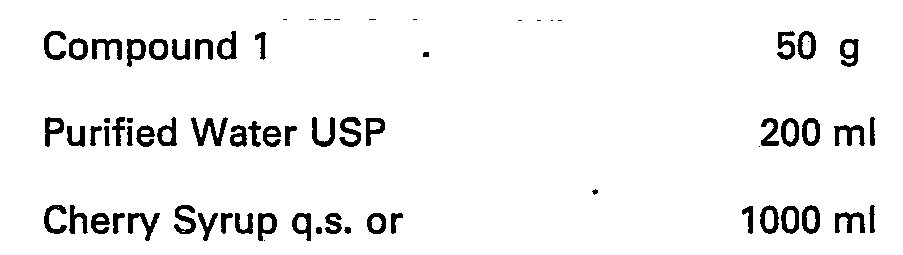
-

-

- Combine compound 1 and the Lactose in a twin-shell blender equipped with an intensifier bar. Tumble blend for two minutes, followed by blending for one minute with the intensifier bar and then tumble blend again for one minute. A portion of the blend is then mixed with the Sterotex Powder, passed through a #30 screen and added back to the remainder of the blend. The mixed ingredients are then blended for one minute, blended with the intensifier bar for thirty seconds and tumble blended for an additional minute. Appropriate sized capsules are filled with 141 mg, 352.5 mg or 705 mg of the blend, respectively, for the 100 mg, 250 mg and 500 mg containing capsules.
-

- 100 mg, 250 mg or 500 mg

-

- Combine the corn starch, the cellulose and Compound 1 together in a planetary mixer and mix for two minutes. Add the water to this combination and mix for one minute. The resulting mix is spread on trays and dried in a hot air oven at 50°C until a moisture level of 1 to 2 percent is obtained. The dried mix is then milled with a Fitzmill through a #RH2B screen at medium speed. The Sterotex Powder is added to a portion of the mix and passed through a #30 screen, and added backto the milled mixture and the total blended for five minutes by drum rolling. Compressed tablets of 150 mg, 375 mg and 750 mg respectively, of the total mix are formed with appropriate sized punches for the 100 mg, 250 mg or 500 mg containing tablets.
-

- Melt.the Polyethylene Glycol 1540 and the Polyethylene Glycol 8000 together at 60°C and dissolve Compound 1 into the melt. Mold this total at 25°C into appropriate suppositories.
-

Claims (14)


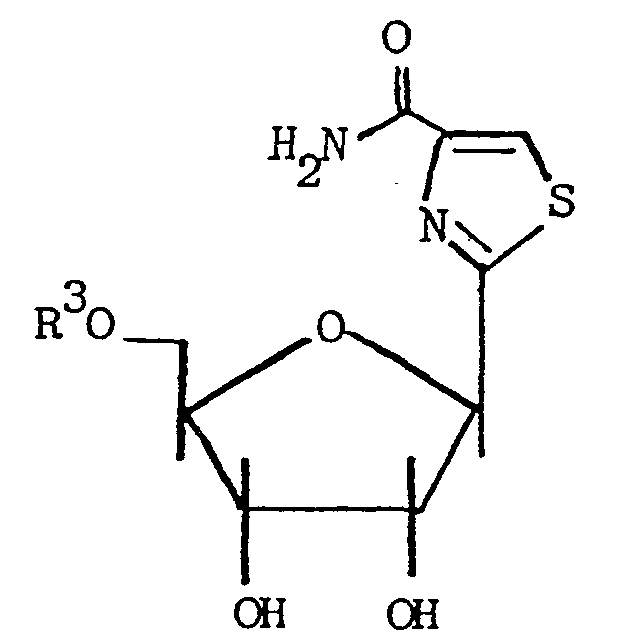

Priority Applications (1)
| Application Number | Priority Date | Filing Date | Title |
|---|---|---|---|
| AT81305874T ATE49965T1 (en) | 1980-12-15 | 1981-12-14 | USE OF 2-BETA-D-RIBOFURANOSYLTHIAZOLE-4CARBOXAMIDES IN THE MANUFACTURE OF DRUGS FOR THE TREATMENT OF CANCER TUMORS. |
Applications Claiming Priority (5)
| Application Number | Priority Date | Filing Date | Title |
|---|---|---|---|
| US21619780A | 1980-12-15 | 1980-12-15 | |
| US216197 | 1980-12-15 | ||
| US32445581A | 1981-11-24 | 1981-11-24 | |
| US324455 | 1981-11-24 | ||
| CH02572/94A CH688398A5 (en) | 1980-12-15 | 1994-08-22 | 2-beta-D-ribofuranosyl-thiazol-4-carboxamide derivatives |
Publications (2)
| Publication Number | Publication Date |
|---|---|
| EP0054432A1 EP0054432A1 (en) | 1982-06-23 |
| EP0054432B1 true EP0054432B1 (en) | 1990-01-31 |
Family
ID=27173784
Family Applications (1)
| Application Number | Title | Priority Date | Filing Date |
|---|---|---|---|
| EP81305874A Expired - Lifetime EP0054432B1 (en) | 1980-12-15 | 1981-12-14 | Use of 2-beta-d-ribofuranosylthiazole-4-carboxamides for the manufacture of medicaments inhibiting malignant tumors |
Country Status (5)
| Country | Link |
|---|---|
| EP (1) | EP0054432B1 (en) |
| AU (1) | AU549670B2 (en) |
| CA (1) | CA1175421A (en) |
| CH (1) | CH688398A5 (en) |
| DK (1) | DK553781A (en) |
Families Citing this family (3)
| Publication number | Priority date | Publication date | Assignee | Title |
|---|---|---|---|---|
| US4544741A (en) * | 1982-03-29 | 1985-10-01 | Robins Roland K | Azole dinucleotide compounds and methods for their production |
| AU738170B2 (en) * | 1996-10-16 | 2001-09-13 | Icn Pharmaceuticals, Inc. | Monocyclic L-nucleosides, analogs and uses thereof |
| EP1254911A1 (en) * | 1996-10-16 | 2002-11-06 | ICN Pharmaceuticals, Inc. | Monocyclic L-nucleosides, analogs and uses thereof |
Family Cites Families (2)
| Publication number | Priority date | Publication date | Assignee | Title |
|---|---|---|---|---|
| US3960836A (en) * | 1974-07-22 | 1976-06-01 | Eli Lilly And Company | Acylated derivatives of pyrazofurin and process for their preparation |
| US3998999A (en) * | 1975-10-20 | 1976-12-21 | Hoffmann-La Roche Inc. | Process for preparing pyrazomycin and pyrazomycin B |
-
1981
- 1981-12-14 EP EP81305874A patent/EP0054432B1/en not_active Expired - Lifetime
- 1981-12-14 DK DK553781A patent/DK553781A/en not_active Application Discontinuation
- 1981-12-15 CA CA000392323A patent/CA1175421A/en not_active Expired
- 1981-12-21 AU AU78692/81A patent/AU549670B2/en not_active Expired
-
1994
- 1994-08-22 CH CH02572/94A patent/CH688398A5/en not_active IP Right Cessation
Non-Patent Citations (1)
| Title |
|---|
| Europ. J. Concer 13 (1977), 821 * |
Also Published As
| Publication number | Publication date |
|---|---|
| EP0054432A1 (en) | 1982-06-23 |
| CH688398A5 (en) | 1997-09-15 |
| AU7869281A (en) | 1982-06-24 |
| CA1175421A (en) | 1984-10-02 |
| DK553781A (en) | 1982-06-16 |
| AU549670B2 (en) | 1986-02-06 |
Similar Documents
| Publication | Publication Date | Title |
|---|---|---|
| CA2155673C (en) | N-alkyl-2-substituted atp analogues | |
| AT390000B (en) | USE OF 3'-AZIDO-3'-DESOXYTHYMIDINE OR A PHARMACEUTICAL ACCEPTABLE DERIVATIVES THEREOF FOR THE PRODUCTION OF MEDICINAL PRODUCTS | |
| EP0373663B1 (en) | Castanospermine esters in the inhibition of tumor metastasis | |
| DE69516605T2 (en) | Camptothecin derivatives, their production and anti-tumor agents | |
| US4680285A (en) | Treatment of malignant tumors with 2-(β-D-ribofuranosylthiazole-4-carboxamide related compounds | |
| CA1175421A (en) | TREATMENT OF MALIGNANT TUMORS WITH 2-.beta.-D- RIBOFURANOSYLTHIAZOLE-4-CARBOXAMIDE AND RELATED COMPOUNDS | |
| EP0089678B1 (en) | Novel 2-beta-d-ribofuranosylselenazole-4-carboxamide compounds and methods for their production | |
| EP0402033B1 (en) | Carboxamide derivatives | |
| DE68919475T2 (en) | BIVALENT LIGANDS, EFFECTIVE TO BLOCK THE ACAT ENZYME. | |
| NL8903054A (en) | ADENOSIN DERIVATIVES, METHODS FOR THEIR PREPARATION AND FOR THE USE OF THESE DERIVATIVES. | |
| US3538077A (en) | D-glucofuranoside ether-esters | |
| JPS5973524A (en) | Remedy for thrombosis | |
| CA1326849C (en) | Treatment of malignant tumors with 8 chloroadenosine 3',5'-cyclic phosphate, and preparation thereof | |
| US4861873A (en) | 8-Chloroadenosine 3', 5'-cyclic monophosphate preparations | |
| NZ199265A (en) | 2-b-d-ribofuranosylthiazol-4-carboxamide esters and antitumour compositions | |
| CA1199274A (en) | TREATMENT OF MALIGNANT TUMORS WITH 2-.beta.-D- RIBOFURANOSYL-THIAZOLE-4-CARBOXAMIDE AND RELATED COMPOUNDS | |
| JPS61257925A (en) | Antiviral nucleoside | |
| US5091410A (en) | Thioxanthenone antitumor agents | |
| US4594416A (en) | 2-β-D-ribofuranosylselenazole-4-carboxamide compounds and methods for their production | |
| JPS644520B2 (en) | ||
| JP2767176B2 (en) | Anticancer drug | |
| US4594414A (en) | 2-β-D-ribofuranosylselenazole-4-carboxamide compounds and methods for their production | |
| JPH0457646B2 (en) | ||
| JPS58105918A (en) | Antimalignant tumoral | |
| US4443458A (en) | Aminocrotonyl 3,5-dinitropyridine useful as adjuncts to radiation therapy |
Legal Events
| Date | Code | Title | Description |
|---|---|---|---|
| PUAI | Public reference made under article 153(3) epc to a published international application that has entered the european phase |
Free format text: ORIGINAL CODE: 0009012 |
|
| AK | Designated contracting states |
Designated state(s): AT BE CH DE FR GB IT LU NL SE |
|
| 17P | Request for examination filed |
Effective date: 19821028 |
|
| ITF | It: translation for a ep patent filed | ||
| RAP1 | Party data changed (applicant data changed or rights of an application transferred) |
Owner name: VIRATEK, INC. |
|
| GRAA | (expected) grant |
Free format text: ORIGINAL CODE: 0009210 |
|
| AK | Designated contracting states |
Kind code of ref document: B1 Designated state(s): AT BE CH DE FR GB IT LI LU NL SE |
|
| REF | Corresponds to: |
Ref document number: 49965 Country of ref document: AT Date of ref document: 19900215 Kind code of ref document: T |
|
| REF | Corresponds to: |
Ref document number: 3177155 Country of ref document: DE Date of ref document: 19900308 |
|
| ET | Fr: translation filed | ||
| PLBE | No opposition filed within time limit |
Free format text: ORIGINAL CODE: 0009261 |
|
| STAA | Information on the status of an ep patent application or granted ep patent |
Free format text: STATUS: NO OPPOSITION FILED WITHIN TIME LIMIT |
|
| 26N | No opposition filed | ||
| PGFP | Annual fee paid to national office [announced via postgrant information from national office to epo] |
Ref country code: CH Payment date: 19910629 Year of fee payment: 10 |
|
| PG25 | Lapsed in a contracting state [announced via postgrant information from national office to epo] |
Ref country code: SE Effective date: 19911215 |
|
| PG25 | Lapsed in a contracting state [announced via postgrant information from national office to epo] |
Ref country code: LI Effective date: 19911231 Ref country code: CH Effective date: 19911231 |
|
| REG | Reference to a national code |
Ref country code: CH Ref legal event code: PL |
|
| ITTA | It: last paid annual fee | ||
| EPTA | Lu: last paid annual fee | ||
| EAL | Se: european patent in force in sweden |
Ref document number: 81305874.0 |
|
| PGFP | Annual fee paid to national office [announced via postgrant information from national office to epo] |
Ref country code: NL Payment date: 20000929 Year of fee payment: 20 |
|
| PGFP | Annual fee paid to national office [announced via postgrant information from national office to epo] |
Ref country code: AT Payment date: 20001103 Year of fee payment: 20 |
|
| PGFP | Annual fee paid to national office [announced via postgrant information from national office to epo] |
Ref country code: GB Payment date: 20001107 Year of fee payment: 20 |
|
| PGFP | Annual fee paid to national office [announced via postgrant information from national office to epo] |
Ref country code: SE Payment date: 20001201 Year of fee payment: 20 Ref country code: LU Payment date: 20001201 Year of fee payment: 20 |
|
| PGFP | Annual fee paid to national office [announced via postgrant information from national office to epo] |
Ref country code: FR Payment date: 20001204 Year of fee payment: 20 |
|
| PGFP | Annual fee paid to national office [announced via postgrant information from national office to epo] |
Ref country code: DE Payment date: 20001222 Year of fee payment: 20 |
|
| BE20 | Be: patent expired |
Free format text: 20011214 *VIRATEK INC. |
|
| PGFP | Annual fee paid to national office [announced via postgrant information from national office to epo] |
Ref country code: BE Payment date: 20010118 Year of fee payment: 20 |
|
| PG25 | Lapsed in a contracting state [announced via postgrant information from national office to epo] |
Ref country code: GB Free format text: LAPSE BECAUSE OF EXPIRATION OF PROTECTION Effective date: 20011213 |
|
| PG25 | Lapsed in a contracting state [announced via postgrant information from national office to epo] |
Ref country code: NL Free format text: LAPSE BECAUSE OF EXPIRATION OF PROTECTION Effective date: 20011214 Ref country code: LU Free format text: LAPSE BECAUSE OF EXPIRATION OF PROTECTION Effective date: 20011214 Ref country code: AT Free format text: LAPSE BECAUSE OF EXPIRATION OF PROTECTION Effective date: 20011214 |
|
| REG | Reference to a national code |
Ref country code: GB Ref legal event code: PE20 Effective date: 20011213 |
|
| NLV7 | Nl: ceased due to reaching the maximum lifetime of a patent |
Effective date: 20011214 |
|
| EUG | Se: european patent has lapsed |
Ref document number: 81305874.0 |