EP0046307B1 - Novel uracil derivatives, process for preparing the same and a pharmaceutical composition containing the same - Google Patents
Novel uracil derivatives, process for preparing the same and a pharmaceutical composition containing the same Download PDFInfo
- Publication number
- EP0046307B1 EP0046307B1 EP81106460A EP81106460A EP0046307B1 EP 0046307 B1 EP0046307 B1 EP 0046307B1 EP 81106460 A EP81106460 A EP 81106460A EP 81106460 A EP81106460 A EP 81106460A EP 0046307 B1 EP0046307 B1 EP 0046307B1
- Authority
- EP
- European Patent Office
- Prior art keywords
- group
- fluorouracil
- hydrogen atom
- same
- formula
- Prior art date
- Legal status (The legal status is an assumption and is not a legal conclusion. Google has not performed a legal analysis and makes no representation as to the accuracy of the status listed.)
- Expired
Links
- 0 *C1OC(*)OC1 Chemical compound *C1OC(*)OC1 0.000 description 4
- DEIKGXRMQUHZJD-UHFFFAOYSA-N Cc(c(C)c1C)cc(O)c1O Chemical compound Cc(c(C)c1C)cc(O)c1O DEIKGXRMQUHZJD-UHFFFAOYSA-N 0.000 description 1
Classifications
-
- C—CHEMISTRY; METALLURGY
- C07—ORGANIC CHEMISTRY
- C07D—HETEROCYCLIC COMPOUNDS
- C07D239/00—Heterocyclic compounds containing 1,3-diazine or hydrogenated 1,3-diazine rings
- C07D239/02—Heterocyclic compounds containing 1,3-diazine or hydrogenated 1,3-diazine rings not condensed with other rings
- C07D239/24—Heterocyclic compounds containing 1,3-diazine or hydrogenated 1,3-diazine rings not condensed with other rings having three or more double bonds between ring members or between ring members and non-ring members
- C07D239/28—Heterocyclic compounds containing 1,3-diazine or hydrogenated 1,3-diazine rings not condensed with other rings having three or more double bonds between ring members or between ring members and non-ring members with hetero atoms or with carbon atoms having three bonds to hetero atoms with at the most one bond to halogen, directly attached to ring carbon atoms
- C07D239/46—Two or more oxygen, sulphur or nitrogen atoms
- C07D239/52—Two oxygen atoms
- C07D239/54—Two oxygen atoms as doubly bound oxygen atoms or as unsubstituted hydroxy radicals
-
- A—HUMAN NECESSITIES
- A61—MEDICAL OR VETERINARY SCIENCE; HYGIENE
- A61P—SPECIFIC THERAPEUTIC ACTIVITY OF CHEMICAL COMPOUNDS OR MEDICINAL PREPARATIONS
- A61P35/00—Antineoplastic agents
-
- C—CHEMISTRY; METALLURGY
- C07—ORGANIC CHEMISTRY
- C07D—HETEROCYCLIC COMPOUNDS
- C07D239/00—Heterocyclic compounds containing 1,3-diazine or hydrogenated 1,3-diazine rings
- C07D239/02—Heterocyclic compounds containing 1,3-diazine or hydrogenated 1,3-diazine rings not condensed with other rings
- C07D239/24—Heterocyclic compounds containing 1,3-diazine or hydrogenated 1,3-diazine rings not condensed with other rings having three or more double bonds between ring members or between ring members and non-ring members
- C07D239/28—Heterocyclic compounds containing 1,3-diazine or hydrogenated 1,3-diazine rings not condensed with other rings having three or more double bonds between ring members or between ring members and non-ring members with hetero atoms or with carbon atoms having three bonds to hetero atoms with at the most one bond to halogen, directly attached to ring carbon atoms
- C07D239/46—Two or more oxygen, sulphur or nitrogen atoms
- C07D239/52—Two oxygen atoms
- C07D239/54—Two oxygen atoms as doubly bound oxygen atoms or as unsubstituted hydroxy radicals
- C07D239/545—Two oxygen atoms as doubly bound oxygen atoms or as unsubstituted hydroxy radicals with other hetero atoms or with carbon atoms having three bonds to hetero atoms with at the most one bond to halogen, directly attached to ring carbon atoms
- C07D239/553—Two oxygen atoms as doubly bound oxygen atoms or as unsubstituted hydroxy radicals with other hetero atoms or with carbon atoms having three bonds to hetero atoms with at the most one bond to halogen, directly attached to ring carbon atoms with halogen atoms or nitro radicals directly attached to ring carbon atoms, e.g. fluorouracil
Definitions
- This invention relates to a novel uracil derivative having good antitumor activity.
- various kinds of uracil derivatives have been developed as anti-tumor agents.
- GB-A-1 543 467 1- acylotymethyl-5-fluorouracil derivatives and 1,3-bis(acylotymethyl)-5-fluorouracil derivatives are described.
- GB-A-2 017 082 1-alkyloxyalkyl-5-fluorouracil derivatives are described.
- the side-effects of these anti-tumor agents are considerable.
- cytostatic compounds there is a demand for new highly active and safe cytostatic compounds.
- R 2 is a hydrogen atom or an alkyl group;
- R 3 is a hydrogn atom, an acyl group, or an unsubstituted or alkyl-substituted phenylsulfonyl group or an alkylsulfonyl group; and
- X is a hydrogen atom, a halogen atom or an alkyl group which may be substituted with one or
- the alkyl group for R 1 in the formula (I) is a straight or branched chain alkyl group having from 1 to 14 carbon atoms.
- alkyl group examples include methyl, ethyl, propyl, isopropyl, butyl, isobutyl, pentyl, isopentyl, hexyl, isohexyl, octyl, nonly, decyl, undecyl, dodecyl and tetradecyl.
- cycloalkyl group for R, has from 3 to 8 carbon atoms and are, for example, cyclopropyl, cyclobutyl, cyclopentyl, cyclohexyl, cycloheptyl, and cyclooctyl.
- alkyl group for R 4 , R s and R 6 contains from 1 to 5 carbon atoms and is a straight or branched chain alkyl group, for example, methyl, ethyl, propyl, isopropyl, butyl, isobutyl, pentyl and isopentyl.
- alkoxy group for R 4 , R s and R 6 includes a straight or branched chain alkoxy group containing from 1 to 6 carbon atoms, examples of which are methoxy, ethoxy, propoxy, isopropoxy, butoxy, iso- butoxy, pentyloxy and hexyloxy.
- acyloxy group for R 4 , R 5 and R 6 contains from 2 to 4 carbon atoms and includes, for example, an aliphatic acyloxy group such as acetyloxy, propionyloxy and butyryloxy.
- the halogen atom for R 4 , R 5 and R a or X is fluorine, chlorine, bromine or iodine.
- alkyl group for R 2 is straight or branched chain alkyl having from 1 to 5 carbon atoms, and includes, for example, methyl, ethyl, propyl, isopropyl, butyl, isobutyl, pentyl and isopentyl.
- acyl group for R 3 is straight or branched alkanoyl having from 1 to 5 carbon atoms, and includes, for example, formyl, acetyl, propionyl, butyryl, isobutyryl, valeryl, isovaleryl and pivaloyl.
- alkyl-substituted or unsubstituted phenylsulfonyl group for R 3 includes, for example, p-toluenesulfonyl, p-ethylbenzenesulfonyl and benzenesulfonyl.
- alkylsulfonyl group for R 3 includes lower alkylsulfonyl such as methylsulfonyl, ethylsulfonyl and propylsulfonyl.
- the alkyl group for X is a straight or branched chain alkyl having from 1 to 4 carbon atoms which may be substituted with halogen atom(s) such as fluorine, chlorine or bromine.
- halogen atom(s) such as fluorine, chlorine or bromine.
- Examples of this alkyl group are methyl, ethyl, propyl, isopropyl, butyl, isobutyl and trifluoromethyl.
- the halogen atom for X means fluorine, chlorine, bromine or iodine.
- Some of the object compounds of this invention have an asymmetric carbon atom and are usually prepared as a racemic mixture.
- the racemic mixture can be resolved by a conventional method, if desired, to give each epimer.
- the optional isomers are involved in the object compounds of this invention.
- the compound of the formula (I) is prepared by reacting an acetal of the formula (II) (wherein R 1 and R 2 are as defined above) with an uracil derivative of the formula (III) (wherein X is as defined above) or its trialkylsilyl ether derivative in the presence of a Lewis acid, and then acylating the product if the object compound of the formula (I) wherein R 3 is an acyl group is desired.
- the starting compound of the formula (II) (wherein R 1 and R 2 are as defined above) can be easily prepared by dehydration condensation of an aldehyde of the formula R 1 CNO with a substituted ethylene glycol in the presence of an acid catalyst.
- the acid catalyst which can be used in the above condensation reaction includes, preferably, organic acids such as p-toluenesulfonic acid and methanesulfonic acid; inorganic acids such as hydrochloric acid and sulfuric acid; and strongly acidic ionexchange resins such as Amberlite®IR-120 (manufactured by Rohm and Hass Co.) and Amberlist@ 15 (manufactured by Rohm and Haas Co.).
- the uracil derivative of the formula (III) (wherein X is as defined above) is a well-known compound and can be easily prepared by a conventional way. Thus, no further explanation on the preparation is needed.
- uracil derivatives (III) are uracil, 5-fluorouracil, 5-bromouracil, 5-iodouracil, 5-methyluracil, 5-ethyluracil, and 5-trifluoromethyluracil, and bis-trimethylsilyl ether thereof.
- the solvent which is useful in the reaction is one capable of dissolving the acetal of the formula (II), the uracil derivative of the formula (III) or its bis-trimethylsilyl ether, and the Lewis acid catalyst without decomposition.
- Examples of the preferred solvent are dichloromethane, chloroform, dimethylformamide and dimethylacetamide.
- the Lewis acids which are useful as the acid catalyst are preferably anhydrous stannic chloride, titanium tetrachloride, boron trifluoride, zinc chloride, aluminum chloride, and ethylaluminum chloride.
- the acid catalyst is usually used in an amount of from 0.1 to 10 moles, preferably from 0.1 to 1.0 moles per mole of the uracil derivative of the formula (III).
- the reaction is usually carried out at a temperature of from -10 to 100°C for 0.5 to 50 hours, preferably at 20 to 50°C for 1 to 12 hours.
- the reaction conditions varies mainly depending on the amount of the acid catalyst used. For example, the reaction will be completed at room temperature in a few hours if the excess catalyst is used.
- the object compounds of this invention represented by the formula (I) wherein R 3 is an acyl group can be prepared by acylating a compound of the formula (I) wherein R 3 is a hydrogen atom with use of a conventional acylating agent.
- Acylating agents which can be used for this acylation include, preferably, acid anhydrides such as acetic anhydride, propionic anhydride and butyric anhydride, and acid chlorides such as acetyl chloride, propionyl chloride and butyryl chloride.
- the acylating agent may be used alone, the use of a tertially amine such as pyridine, triethylamine or dimethylaniline as an acid acceptor is preferred.
- the solvents which are useful in the acylating reaction are those capable of dissolving the hydroxy form of the compound represented by the formula (I), and of not inhibiting the reaction.
- Examples of the preferred solvents are pyridine, dichloromethane, chloroform and tetrahydrofuran.
- the acylation reaction is carried out at a temperature of from below 0°C to room temperature, and if pyridine is used as the solvent, the reaction will be completed at room temperature for about 3 hours.
- the isolation and purification of the object compound of this invention can be easily effected by a conventional manner.
- the reaction mixture may be treated with methanol to remove the silyl group from the product, and the solvent is evaporated off after removing a catalyst.
- the residue is then dissolved in an organic solvent such as chloroform, dichloromethane or ethyl acetate, and after removing the catalyst, washed with an aqueous sodium chloride solution.
- the organic solution is dried over a desiccant such as anhydrous sodium sulfate or magnesium sulfate, and the solvent evaporated off to give a crude product.
- the catalyst is removed as precipitate from the reaction mixture by adding to the mixture an alcohol such as methanol and an inorganic base such as sodium bicarbonate, sodium carbonate or sodium hydroxide, and the solvent is evaporated off to give a crude product.
- the crude product is purified by column chromatography with silica gel or alumina by a conventional method to give a purified product.
- the product, the object compound of this invention represented by the formula (I) exhibits strong anti-tumor activity and, therefore, is useful as an anti-tumor agent.
- the object compound of this invention is formulated by a conventional pharmaceutical technique into tablet, granule, powder, capsule or injection which is administered to a patient orally or parenterally.
- Diluents for formulating tablet, granule, powder or capsule are lactose, starch, dextrin, sucrose, crystalline cellulose, kaolin, calcium carbonate, talc and magnesium stearate.
- Diluents preferably used for injection are distilled water or an aqueous solution of a salt such as sodium chloride or potassium chloride.
- the dosage per day is usually: from 50 to 2,000 mg preferably from 100 to 1,500 mg for oral administration, and usually from 50 to 2,000 mg, preferably from 100 to 1,500 mg for injection.
- the desired daily dosage of the formulation is administered either at one time or in several doses.
- mice Male CDCF, mice (6 weeks old) divided into groups of 6 members each were intraperitoneally inoculated P388 leukemic cells in a count of 10a cells/head. Twenty four hours after the inoculation, the active compound of this invention was dissolved or suspended in a physiological saline or a 0.25% carboxymethylcellulose aqueous solution and administered intraperitoneally (i.p.) or orally (p.o.) in a dose as defined in Table 1 below once a day for 5 days.
- the anti-tumor activity of each of the test compounds was evaluated in terms of percent ILS.
- a Colon 26 or Lewis lung carcinom tumor piece (1 mm 3 ) was subcutaneously inoculated in the side belly of a test mouse.
- CDF 1 strain male mice (6-7 weeks old) and BDF, strain male mice (6-7 weeks old) were used as host mice for Colon 26 tumor and Lewis lung carcinoma, respectively.
- Three days after the inoculation the mice which were confirmed to have taken the tumor piece in their tissue were divided into groups of 6-8 heads each, and each mouse was orally administered once a day for 5 days with a suspension or solution of the predetermined amount of test compound in a 0.25% CMC aqueous solution in a dose of 0.1 ml/10 g body weight. Twenty one days after the inoculation, the tumor was taken out and the wet weight of each tumor was measured, and growth inhibition ratio (% GIR) was determined.
- the % GIR was calculated by the following equation wherein T is the average tumor weight of a group administered the test compound, and C is the average tumor weight of the control group.
- 5-Fluorouracil (10 g) was refluxed in hexamethyldisilazane (40 ml) for 5 hours and, after evaporating off excess hexamethyldisilazane, the resulting bis(trimethylsilyl)-5-fluorouracil was dissolved in dried chloroform. To the solution was added 1,3-dioxolane (10 ml) and then was added dropwise a solution of anhydrous stannic chloride (6.2 ml) in chloroform (15 ml) at room temperature for one hour.
- reaction was effected at room temperature for 30 minutes, and the reaction mixture was added to a methanol (200 ml) containing sodium bicarbonate (30 g) and stirred for one hour. The precipitate was removed by filtration and the filtrate was evaporated. The residue was treated with a small amount of methanol to give 3 g of crystalline 1-(2-hydroxyethoxy)methyl-5-fluoroacil.
- Example 1 1-(2-Hydroxyethoxy)methyl-5-fluorouracil (1 g) obtained in Example 1 was dissolved in pyridine (5 ml) and to the solution was added p-toluenesulfonylchloride (1.12 g) under cooling in an ice bath, and then the mixture was stirred at room temperature for 1.5 hours. After completion of the reaction, the mixture was poured into ice-water and the resulting oil was extracted with chloroform (30 ml). The chloroform layer was washed with hydrochloric acid and then with water, and dried over magnesium sulfate to give crystalline 1-(2-p-toluenesulfonyloxyethoxy)methyl-5-fluorouracil (1.2 g).
- 5-Fluorouracil (10g) was refluxed in hexamethyldisilazane and, after distilling off excess in hexamethyldisilazane, the resulting bis(trimethylsilyl)-5-fluorouracil ether was dissolved in chloroform (50 ml). After addition of 2-methyl-1,3-dioxolan (1.0 ml), a solution of stannic chloride (6 ml) in chloroform (15 ml) was added dropwise to the reaction mixture for one hour while stirring at room temperature. After stirring for 30 minutes, the reaction mixture was poured into 50% aqueous methanol (100 ml) containing sodium bicarbonate (24 g) while vigorously stirring. The precipitate was removed by filtration, and the filtrate was evaporated under reduced pressure. The residue was purified by column chromatography to give 5 g of 1[1-(2-hydroxyethoxy)ethyl]-5-fluorouracil.
- Example 2 1-[1-(2-Hydroxyethoxy)ethyl]-5-fluorouracil (2 g) obtained in Example 2 was treated with acetic anhydride and pyridine as in Example 2 to give 2 g of 1-[1-(2-acetoxyethoxy)ethyl]-5-fluorouracil.
- 2-Phenyl-1,3-dioxolan (15 g) prepared from benzaldehyde and ethylene glycol was added to bis(trimethylsilyl)-5-fluorouracil prepared as in Example 1 from 5-fluorouracil (10 g). Then a solution of anhydrous stannic chloride (6 ml) in chloroform (15 ml) was added dropwise to the mixture over one hour while stirring under cooling in an ice bath. Following stirring at room temperature for one hour, the reaction mixture was poured into methanol (200 ml) containing sodium bicarbonate (40 g) followed by stirring at room temperature for one hour. The precipitate was removed by filtration and the filtrate was evaporated under reduced pressure to dryness.
- Bis-trimethylsilyl-5-fluorouracil prepared from 5-fluorouracil (10 g) as in Example 1 was reacted with 2-(4-methoxyphenyl)-1,3-dioxolan prepared from p-methoxybenzaldehyde and ethylene glycol, and treated as in Example 8 to give 6.5 g of crystalline 1-[a-(2-hydroxyethyoxy)-4-methoxybenzylj-5-fluorouracil.
- Bis-trimethylsilyl-5-fluorouracil prepared as in Example 1 from 5-fluorouracil (10 g), and 2-(3,4-methylenedioxyphenyl)-1,3-dioxolan (18.1 g) prepared from piperonal and ethyleneglycol were dissolved in dichloromethane (50 ml). A solution of anhydrous stannic chloride (1 ml) in dichloromethane (10 ml) was added dropwise to the solution over one hour, and the mixture was stirred at room temperature overnight. Methanol (200 ml) containing sodium bicarbonate (30 g) was added to the reaction mixture and, after removing the precipitate by filtration, the filtrate was evaporated to dryness.
- Acetone 100 ml was added to the residue and the undissolved material was removed by filtration. The filtrate was evaporated and the residue was purified by column chromatography using silica gel and chloroform-acetone (4:1) as an eluant.
- 4-Hydroxybenzaldehyde was acetylated with pyridine and acetic anhydride as in Example 12 to give 4-acetoxybenzaldehyde which was subjected to dehydration condensation with ethylene glycol to give 2-(4-acetoxyphenyl)-1,3-dioxolan.
- Example 30 1-[ ⁇ -(2-Hydroxyethyoxy)-3,4-methylenedioxybenzyl]uracil (3 g) obtained in Example 30 was added to pyridine (10 ml) and acetic anhydride (10 ml) followed by stirring at room temperature for 3 hours. The reaction mixture was poured into ice-water and the resulting oil was extracted with chloroform (30 ml). The chloroform layer was washed with water, dried and evaporated to remove the chloroform. The residue was treated with a small amount of ethanol to give 2.8 g of crystalline 1-[ ⁇ -(2-acetoxy)-3,4-methylenedioxybenzyl]uracil.
- Trimethylchlorosilane (4 ml) was added to a suspension of 5-methyluracil (thymine) (5 g) in hexamethylsilazane (20 ml) followed by refluxing for 5 hours. The resulting ammonium chloride was removed by filtration and the filtrate was evaporated to give bis(trimethylsilyl)-5-methyluracil as oil. To a solution of the oil in dry dichloromethane (10 ml) was added 2-methyl-1,3-dioxolane (15 ml) and then was added dropwise stannic chloride (5 ml). After allowing the mixture to stand at room temperature overnight, it was treated as in Example 10 to give 4.6 g of crystalline 1-[ ⁇ -(2-hydroxy- ethoxy)ethyl]-5-methyluracil.
Landscapes
- Organic Chemistry (AREA)
- Chemical & Material Sciences (AREA)
- Health & Medical Sciences (AREA)
- Life Sciences & Earth Sciences (AREA)
- Medicinal Chemistry (AREA)
- Nuclear Medicine, Radiotherapy & Molecular Imaging (AREA)
- General Chemical & Material Sciences (AREA)
- Pharmacology & Pharmacy (AREA)
- Chemical Kinetics & Catalysis (AREA)
- Animal Behavior & Ethology (AREA)
- General Health & Medical Sciences (AREA)
- Public Health (AREA)
- Veterinary Medicine (AREA)
- Pharmaceuticals Containing Other Organic And Inorganic Compounds (AREA)
- Plural Heterocyclic Compounds (AREA)
- Saccharide Compounds (AREA)
Abstract
Description
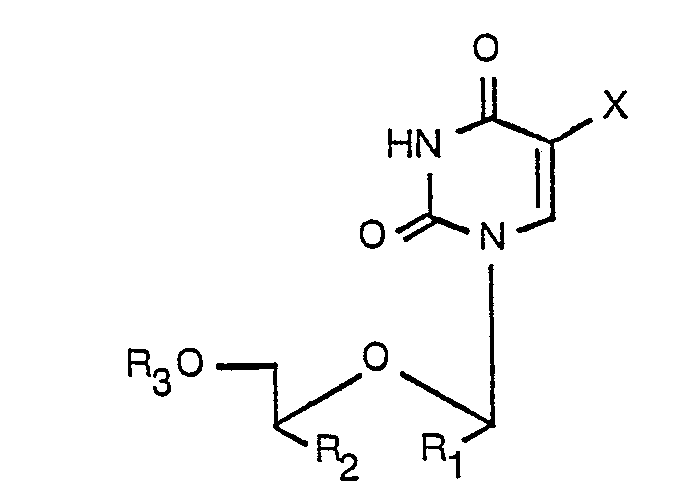
- This invention relates to a novel uracil derivative having good antitumor activity. Heretofore, various kinds of uracil derivatives have been developed as anti-tumor agents. In GB-A-1 543 467 1- acylotymethyl-5-fluorouracil derivatives and 1,3-bis(acylotymethyl)-5-fluorouracil derivatives are described. In GB-A-2 017 082 1-alkyloxyalkyl-5-fluorouracil derivatives are described. In many cases the side-effects of these anti-tumor agents are considerable. Hence there is a demand for new highly active and safe cytostatic compounds. According this invention there is provided an uracil derivative of the formula


- The alkyl group for R1 in the formula (I) is a straight or branched chain alkyl group having from 1 to 14 carbon atoms. Examples of such alkyl group are methyl, ethyl, propyl, isopropyl, butyl, isobutyl, pentyl, isopentyl, hexyl, isohexyl, octyl, nonly, decyl, undecyl, dodecyl and tetradecyl.
- The "cycloalkyl group" for R, has from 3 to 8 carbon atoms and are, for example, cyclopropyl, cyclobutyl, cyclopentyl, cyclohexyl, cycloheptyl, and cyclooctyl.
- The "alkyl group" for R4, Rs and R6 contains from 1 to 5 carbon atoms and is a straight or branched chain alkyl group, for example, methyl, ethyl, propyl, isopropyl, butyl, isobutyl, pentyl and isopentyl.
- The "alkoxy group" for R4, Rs and R6 includes a straight or branched chain alkoxy group containing from 1 to 6 carbon atoms, examples of which are methoxy, ethoxy, propoxy, isopropoxy, butoxy, iso- butoxy, pentyloxy and hexyloxy.
- The "acyloxy group" for R4, R5 and R6 contains from 2 to 4 carbon atoms and includes, for example, an aliphatic acyloxy group such as acetyloxy, propionyloxy and butyryloxy.
- The halogen atom for R4, R5 and Ra or X is fluorine, chlorine, bromine or iodine.
- The "alkyl group" for R2 is straight or branched chain alkyl having from 1 to 5 carbon atoms, and includes, for example, methyl, ethyl, propyl, isopropyl, butyl, isobutyl, pentyl and isopentyl.
- The "acyl group" for R3 is straight or branched alkanoyl having from 1 to 5 carbon atoms, and includes, for example, formyl, acetyl, propionyl, butyryl, isobutyryl, valeryl, isovaleryl and pivaloyl.
- The "alkyl-substituted or unsubstituted phenylsulfonyl group" for R3 includes, for example, p-toluenesulfonyl, p-ethylbenzenesulfonyl and benzenesulfonyl.
- The "alkylsulfonyl group" for R3 includes lower alkylsulfonyl such as methylsulfonyl, ethylsulfonyl and propylsulfonyl.
- The alkyl group for X is a straight or branched chain alkyl having from 1 to 4 carbon atoms which may be substituted with halogen atom(s) such as fluorine, chlorine or bromine. Examples of this alkyl group are methyl, ethyl, propyl, isopropyl, butyl, isobutyl and trifluoromethyl.
- The halogen atom for X means fluorine, chlorine, bromine or iodine.
- Some of the object compounds of this invention have an asymmetric carbon atom and are usually prepared as a racemic mixture. The racemic mixture can be resolved by a conventional method, if desired, to give each epimer. The optional isomers are involved in the object compounds of this invention.
- According to this invention, the compound of the formula (I) is prepared by reacting an acetal of the formula (II)


- The starting compound of the formula (II)


- The uracil derivative of the formula (III)

- Examples of the uracil derivatives (III) are uracil, 5-fluorouracil, 5-bromouracil, 5-iodouracil, 5-methyluracil, 5-ethyluracil, and 5-trifluoromethyluracil, and bis-trimethylsilyl ether thereof.
- The solvent which is useful in the reaction is one capable of dissolving the acetal of the formula (II), the uracil derivative of the formula (III) or its bis-trimethylsilyl ether, and the Lewis acid catalyst without decomposition. Examples of the preferred solvent are dichloromethane, chloroform, dimethylformamide and dimethylacetamide.
- The Lewis acids which are useful as the acid catalyst are preferably anhydrous stannic chloride, titanium tetrachloride, boron trifluoride, zinc chloride, aluminum chloride, and ethylaluminum chloride. The acid catalyst is usually used in an amount of from 0.1 to 10 moles, preferably from 0.1 to 1.0 moles per mole of the uracil derivative of the formula (III).
- The reaction is usually carried out at a temperature of from -10 to 100°C for 0.5 to 50 hours, preferably at 20 to 50°C for 1 to 12 hours. The reaction conditions varies mainly depending on the amount of the acid catalyst used. For example, the reaction will be completed at room temperature in a few hours if the excess catalyst is used.
- The object compounds of this invention represented by the formula (I) wherein R3 is an acyl group can be prepared by acylating a compound of the formula (I) wherein R3 is a hydrogen atom with use of a conventional acylating agent. Acylating agents which can be used for this acylation include, preferably, acid anhydrides such as acetic anhydride, propionic anhydride and butyric anhydride, and acid chlorides such as acetyl chloride, propionyl chloride and butyryl chloride. Although the acylating agent may be used alone, the use of a tertially amine such as pyridine, triethylamine or dimethylaniline as an acid acceptor is preferred.
- The solvents which are useful in the acylating reaction are those capable of dissolving the hydroxy form of the compound represented by the formula (I), and of not inhibiting the reaction. Examples of the preferred solvents are pyridine, dichloromethane, chloroform and tetrahydrofuran. The acylation reaction is carried out at a temperature of from below 0°C to room temperature, and if pyridine is used as the solvent, the reaction will be completed at room temperature for about 3 hours. The isolation and purification of the object compound of this invention can be easily effected by a conventional manner.
- For example, the reaction mixture may be treated with methanol to remove the silyl group from the product, and the solvent is evaporated off after removing a catalyst. The residue is then dissolved in an organic solvent such as chloroform, dichloromethane or ethyl acetate, and after removing the catalyst, washed with an aqueous sodium chloride solution. The organic solution is dried over a desiccant such as anhydrous sodium sulfate or magnesium sulfate, and the solvent evaporated off to give a crude product.
- Alternatively, the catalyst is removed as precipitate from the reaction mixture by adding to the mixture an alcohol such as methanol and an inorganic base such as sodium bicarbonate, sodium carbonate or sodium hydroxide, and the solvent is evaporated off to give a crude product. The crude product is purified by column chromatography with silica gel or alumina by a conventional method to give a purified product.
- The product, the object compound of this invention represented by the formula (I) exhibits strong anti-tumor activity and, therefore, is useful as an anti-tumor agent.
- The object compound of this invention is formulated by a conventional pharmaceutical technique into tablet, granule, powder, capsule or injection which is administered to a patient orally or parenterally. Diluents for formulating tablet, granule, powder or capsule are lactose, starch, dextrin, sucrose, crystalline cellulose, kaolin, calcium carbonate, talc and magnesium stearate. Diluents preferably used for injection are distilled water or an aqueous solution of a salt such as sodium chloride or potassium chloride.
- The dosage per day is usually: from 50 to 2,000 mg preferably from 100 to 1,500 mg for oral administration, and usually from 50 to 2,000 mg, preferably from 100 to 1,500 mg for injection. The desired daily dosage of the formulation is administered either at one time or in several doses.
- Male CDCF, mice (6 weeks old) divided into groups of 6 members each were intraperitoneally inoculated P388 leukemic cells in a count of 10a cells/head. Twenty four hours after the inoculation, the active compound of this invention was dissolved or suspended in a physiological saline or a 0.25% carboxymethylcellulose aqueous solution and administered intraperitoneally (i.p.) or orally (p.o.) in a dose as defined in Table 1 below once a day for 5 days.
- The anti-tumor activity of each of the test compounds was evaluated in terms of percent ILS.


- The anti-tumor activity of some additional compounds of this invention was determined as in Experiment 1. The results are shown in Table 2 below.

- A Colon 26 or Lewis lung carcinom tumor piece (1 mm3) was subcutaneously inoculated in the side belly of a test mouse. CDF1 strain male mice (6-7 weeks old) and BDF, strain male mice (6-7 weeks old) were used as host mice for Colon 26 tumor and Lewis lung carcinoma, respectively. Three days after the inoculation, the mice which were confirmed to have taken the tumor piece in their tissue were divided into groups of 6-8 heads each, and each mouse was orally administered once a day for 5 days with a suspension or solution of the predetermined amount of test compound in a 0.25% CMC aqueous solution in a dose of 0.1 ml/10 g body weight. Twenty one days after the inoculation, the tumor was taken out and the wet weight of each tumor was measured, and growth inhibition ratio (% GIR) was determined.
- The % GIR was calculated by the following equation

- The results are shown in Table 3 below.

- Preparation of the compounds of this invention is described in detail by reference to the following Examples which are given here for illustrative purpose only.
- 5-Fluorouracil (5-FU) (10 g) was refluxed in hexamethyldisilazane (40 ml) for 5 hours and, after evaporating off excess hexamethyldisilazane, the resulting bis(trimethylsilyl)-5-fluorouracil was dissolved in dried chloroform. To the solution was added 1,3-dioxolane (10 ml) and then was added dropwise a solution of anhydrous stannic chloride (6.2 ml) in chloroform (15 ml) at room temperature for one hour. After completion of the addition, the reaction was effected at room temperature for 30 minutes, and the reaction mixture was added to a methanol (200 ml) containing sodium bicarbonate (30 g) and stirred for one hour. The precipitate was removed by filtration and the filtrate was evaporated. The residue was treated with a small amount of methanol to give 3 g of crystalline 1-(2-hydroxyethoxy)methyl-5-fluoroacil.
- m.p.: 153.5-155°C (recrystallized from methanol)
- NMR (DMSO-d6)δ: 7.98 (1 H, d, H-6),

- 3.47 (4H, bs, HOCH2CH2O―).
- 1-(2-Hydroxyethoxy)methyl-5-fluorouracil (1 g) prepared in Example 1 ws dissolved in a mixture of acetic anhydride (5 ml) and pyridine (5 ml) and the solution was stirred at room temperature for 3 hours. The reaction mixture was poured into ice-water and the resulting oil was extracted with chloroform (30 ml). The extract was washed with hydrochloric acid, aqueous sodium bicarbonate and then water, dried over magnesium sulfate and the solvent was evaporated off under reduced pressure. The residue was treated with methanol to give 0.9 g of crystalline 1-(2-acetoxyethoxy)methyl-5-fluorouracil.
- m.p.: 145-146.5°C (recrystallized from methanol)
- NMR (CDCL3 + DMSO-d6)δ: 7.77 (1 H, d, H-6),

- 1-(2-Hydroxyethoxy)methyl-5-fluorouracil (1 g) obtained in Example 1 was dissolved in pyridine (5 ml) and to the solution was added p-toluenesulfonylchloride (1.12 g) under cooling in an ice bath, and then the mixture was stirred at room temperature for 1.5 hours. After completion of the reaction, the mixture was poured into ice-water and the resulting oil was extracted with chloroform (30 ml). The chloroform layer was washed with hydrochloric acid and then with water, and dried over magnesium sulfate to give crystalline 1-(2-p-toluenesulfonyloxyethoxy)methyl-5-fluorouracil (1.2 g).
- m.p.: 141-142.5°C
- NMR (DMSO-d6)δ: 7.97 (1 H, d, H-6), 7.55


- 5-Fluorouracil (10g) was refluxed in hexamethyldisilazane and, after distilling off excess in hexamethyldisilazane, the resulting bis(trimethylsilyl)-5-fluorouracil ether was dissolved in chloroform (50 ml). After addition of 2-methyl-1,3-dioxolan (1.0 ml), a solution of stannic chloride (6 ml) in chloroform (15 ml) was added dropwise to the reaction mixture for one hour while stirring at room temperature. After stirring for 30 minutes, the reaction mixture was poured into 50% aqueous methanol (100 ml) containing sodium bicarbonate (24 g) while vigorously stirring. The precipitate was removed by filtration, and the filtrate was evaporated under reduced pressure. The residue was purified by column chromatography to give 5 g of 1[1-(2-hydroxyethoxy)ethyl]-5-fluorouracil.
- m.p.: 118-120°C
- NMR (CD3OD)δ: 7.78 (1H, d, H-6),


- 1-[1-(2-Hydroxyethoxy)ethyl]-5-fluorouracil (2 g) obtained in Example 2 was treated with acetic anhydride and pyridine as in Example 2 to give 2 g of 1-[1-(2-acetoxyethoxy)ethyl]-5-fluorouracil.
- m.p.: 121-122°C (recrystallized from aqueous methanol)
- NMR (CDCL3(δ: 7.44 (1 H, d, H-6),


- Bis(trimethylsilyl)-5-fluorouracil which had been prepared by treating 5-fluorouracil (10 g) as in Example 1 was dissolved in chloroform (20 ml). Separately prepared 2-ethyl-1,3-dioxolan (15 ml) from propionyldehyde (25 ml) and ethylene glycol (25 ml) was added to the above solution. Then, to the mixture was added dropwise a solution of anhydrous stannic chloride (6 ml) in chloroform (15 ml) under cooling in an ice bath for one hour. Following stirring at room temperature for one hour, the reaction mixture was poured into methanol (100 ml) containing sodium bicarbonate (30 g) and, after removing the resulting precipitate by filtration, the filtrate was evaporated under reduced pressure. The residue was dissolved in water (10 ml), purified by column chromatography with use of Amber- lite®XAD-4 (Rohm and Haas Co.), and then treated with benzene to give 8.7 g of crystalline 1-[1-(2-hydroxyethoxy)propyl]-5-fluorouracil
- m.p.: 111-112°C
- NMR (DMSO-d6)δ: 7.75 (1 H, d, H-6), 5.75-5.45

- 4-Ethyl-1,3-dioxolane (10 ml) prepared from butane-1,2-diol was added to bis(trimethylsilyl)-5-fluorouracil prepared from 5-fluorouracil (10 g) as in Example 1. To the mixture was added dropwise a solution of anhydrous stannic chloride (6 ml) in chloroform (15 ml) over one hour under cooling in an ice bath followed by stirring at room temperature for one hour. The reaction mixture was poured into methanol (100 ml) containing sodium bicarbonate (30 g), and after removing the resulting precipitate, the filtrate was evaporated under reduced pressure. The residue was dissolved in water (10 ml), purified by column chromatography with use of Amberlite@XAD-4 (Rohm and Haas Co.), and treated with benzene to give 6.9 g of crystalline 1-(1-hydroxymethylpropyloxy)methyl-5-fluorouracil.
- m.p.: 76-78°C
- NMR (CD3OD)δ: 7.85 (1 H, d, H-6) 5.22 (2H,

- 2-Phenyl-1,3-dioxolan (15 g) prepared from benzaldehyde and ethylene glycol was added to bis(trimethylsilyl)-5-fluorouracil prepared as in Example 1 from 5-fluorouracil (10 g). Then a solution of anhydrous stannic chloride (6 ml) in chloroform (15 ml) was added dropwise to the mixture over one hour while stirring under cooling in an ice bath. Following stirring at room temperature for one hour, the reaction mixture was poured into methanol (200 ml) containing sodium bicarbonate (40 g) followed by stirring at room temperature for one hour. The precipitate was removed by filtration and the filtrate was evaporated under reduced pressure to dryness. Acetic anhydride (20 ml) and pyridine (20 ml) were added to the residue and the mixture was left to stand at room temperature for 3 hours. The reaction mixture was poured into ice-water, and the resulting oil was extracted with chloroform (100 ml). The chloroform layer was washed with hydrochloric acid and then with water, and evaporated under reduced pressure to remove the solvent. The residue was purified by column chromatography using silica gel and chloroform as the eluent, and treated with methanol to give 6.3 g of crystalline 1-[a-(2-acetoxyethoxy)benzyl]-5-fluorouracil.
- m.p.: 137.5-139.5°
- NMR (CDCl3)δ: 7.40 (5H,S,


- Bis-trimethylsilyl-5-fluorouracil prepared from 5-fluorouracil (10 g) as in Example 1 was reacted with 2-(4-methoxyphenyl)-1,3-dioxolan prepared from p-methoxybenzaldehyde and ethylene glycol, and treated as in Example 8 to give 6.5 g of crystalline 1-[a-(2-hydroxyethyoxy)-4-methoxybenzylj-5-fluorouracil.
- m.p.: 127-132°C
- NMR (CDCI3 + DMXO-d6)δ: 7.36 (1 H, d, H-6), 7.35, 6.88 (each 2H,d
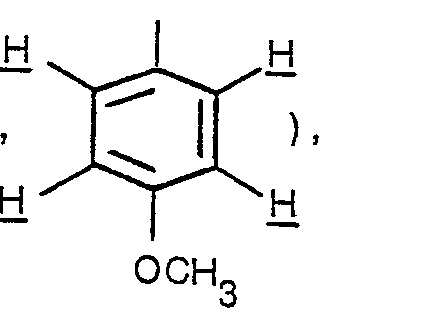

- Bis-trimethylsilyl-5-fluorouracil prepared as in Example 1 from 5-fluorouracil (10 g), and 2-(3,4-methylenedioxyphenyl)-1,3-dioxolan (18.1 g) prepared from piperonal and ethyleneglycol were dissolved in dichloromethane (50 ml). A solution of anhydrous stannic chloride (1 ml) in dichloromethane (10 ml) was added dropwise to the solution over one hour, and the mixture was stirred at room temperature overnight. Methanol (200 ml) containing sodium bicarbonate (30 g) was added to the reaction mixture and, after removing the precipitate by filtration, the filtrate was evaporated to dryness. Acetone (100 ml) was added to the residue and the undissolved material was removed by filtration. The filtrate was evaporated and the residue was purified by column chromatography using silica gel and chloroform-acetone (4:1) as an eluant.
- The eluate was evaporated and the residue was treated with acetone-diisopropyl ether to give 6.3 g of crystalline 1-[α-(2-hydroxyethoxy)-3,4-methylenedioxybenzyl]-5-fluorouracil.
- m.p.: 125-129°C (recrystallized from acetone-diisopropyl ether)
- NMR (CDCI3 + CD3OD)δ: 7.37 (1 H, d, H-6), 7.0-6.80 (3H,m


- 1-[α-(2-Hydroxyethoxy)-3,4-methylendioxybenzyl]-5-fluorouracil obtained in Exampel 10 was dissolved in acetic anhydride (20 ml) and pyridine (20 ml) followed by stirring at room temperature for 3 hours. The reaction mixture was poured into ice-water and the resulting oil was extracted with chloroform (100 ml). The extract was washed with hydrochloric acid and then water, dried over magnesium sulfate and evaporated under reduced pressure to remove chloroform. The residue was treated with ligroinacetone to give 4.3 g of crystalline 1-[a-(2-acetoxyethoxy)-3,4-methylenedioxybenzyl]-5-fluorouracil.
- m.p.: 131-132°C (recrystallized from methanol)
- NMR (CDCI3 + DMSO-d6)δ: 7.24 (1 H, d, H-6), 6.95-6.80 (3H,m
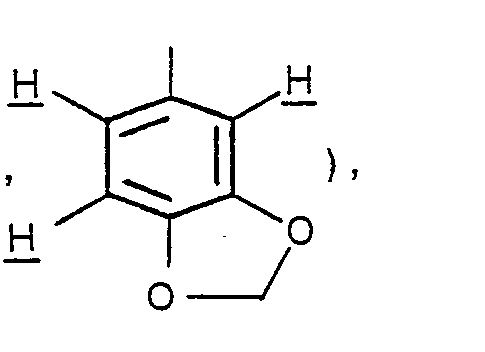


- 2-Hydroxybenzaldehyde (10 g) was dissolved in acetic anhydride (30 ml) and pyridine (30 ml) followed by stirring at room temperature for 3 hours. The reaction mixture was poured into ice-water and the resulting precipitate was recovered by filtration. The precipitate was dissolved in chloroform (100 ml), washed with water, dried and evaporated to give 2-acetoxybenzaldehyde. To a solution of 2-acetoxybenzaldehyde (13 g) and ethyleneglycol (10 ml) in benzene (80 ml) was added Amberlist®15 (Rohm and Haas Co.) (3 g) and followed by refluxing for 5 hours. Water generated during refluxing was removed as an azeotropic mixture. The reaction mixture was washed with an aqueous solution of sodium bicarbonate, and then with water, and dried and evaporated. The residue was distilled under reduced pressure to collect a fraction distilled out at 115―125°C/4 mmHg to give 10 g of 2-(2-acetoxyphenyl)-1,3-dioxolan. To a solution of 2-(2-acetoxyphenyl)-1,3-dioxolan (19.6 g) in dichloromethane (50 mi), bis(trimethylsilyl)-5-fluorouracil prepared as in Example 1 from 5-fluorouracil (10 g) was added and treated as in Example 10 to give 4.2 g of crystalline 1-la-(2-hydroxyethoxy)-2-acetoxy- benzyl]-5-fluorouracil.
- m.p.: 165-166.5°C (recrystallized from isopropyl ether-dichloromethane)
- NMR (CDCI3 + CD30D)8: 7.95-6.95 (5H, m, H-6,


- 4-Hydroxybenzaldehyde was acetylated with pyridine and acetic anhydride as in Example 12 to give 4-acetoxybenzaldehyde which was subjected to dehydration condensation with ethylene glycol to give 2-(4-acetoxyphenyl)-1,3-dioxolan. To a solution of 2-(4-acetoxyphenyl)-1,3-dioxolan (13 g) in dichloromethane, bis(trimethylsilyl)-5-fluorouracil prepared as in Example 1 from 5-fluorouracil (10 g) was added followed by treating as in Example 10 to give 4.5 g of crystalline 1-[a-(2-hydroxyethoxy)-4-acetoxybenzyl]-5-fluorouraciI.
- m.p.: 144-145.5°C (recrystallized from isopropyl ether-ethanol)
- NMR (CDCI3 + DC3OD)δ: 7.63-7.02 (5H, m, H-6,


- 2-(3,4,5,-Trimethoxyphenyl)-1,3-dioxolan (20.3 g) prepared from 3,4,5,-trimethoxybenzaldehyde and ethylene glycol was dissolved in dichloromethane (50 ml). To the solution bis(trimethylsilyl)-5-fluorouracil prepared from 5-fluorouracil (10 g) was added and treated as in Example 10 to give 7.2 g of crystalline 1-[α-(2-hydroxyethoxy)-3,4,5-trimethoxybenzyl]-5-fluorouracil.
- m.p.: 135.5-138°C (recrystallized from isopropyl ether-acetone)
- NMR (CDCI3 + CD3OD)δ: 7.42 (1 H, d, H-6), 6.72 (3H, bs,

- To the solution of 2-(3-methoxy-4-acetoxyphenyl)-1,3-dioxolan (22 g) prepared from 3-methoxy-4-hydroxybenzaldehyde as in Example 12 in dichloromethane (50 ml) bis(trimethylsilyl)-5-fluorouracil prepared from 5-fluorouracil (10 g) was added followed by treating as in Example 10 to give 9.8 g of crystalline 1-[α-(2-hydroxyethoxy)-3-methoxy-4-acetoxybenzyl]-5-fluorouracil.
- m.p.: 130-132.5°C (recrystallized from isopropyl ether-chloromethane)
- NMR (CDCl3 + DMSO-d6)δ: 7.30 (1 H, d, H-6), 7.2-6.9 (3H, m,


- Uracil (10g) was refluxed in hexamethyldisilazane for 5 hours and then distilled off excess hexamethyldisilazane. The resulting bis(trimethylsilyl)-uracil and 2-methyl-1,3-dioxolan (15 g) were dissolved in dichloromethane (50 ml) and treated as in Example 4 to give 4.4 g of crystalline 1-[α-(2-hydroxyethoxy)ethyl]uracil.
- m.p.: 124-127°C
- NMR (DMSO-d6)δ: 7.50, 5.58 (each 1H, d, H-5, H-6), 5.7 (1H, q,-


- By the procedure similar to that in Example 10, compounds listed in the following Table 4 and Table 5 were prepared.


- Bis(trimethylsilyl)5-fluorouracil prepared as in Example 1 from 5-fluorouracil (10g), and 2-(2- ethoxyphenyl)-1,3-dioxolan (15 g) prepared from 2-ethoxybenzaldehyde and ethylene glycol were dissolved in dichloromethane (50 ml). The mixture was treated and acetylated as in Example 10 to give 6.2 g of crystalline 1-[a-(2-acetoxyethoxy)-2-ethoxybenzyl]-5-fluorouracil.
- m.p.: 160-165°C (recrystallized from ethanol)
- NMR (DMSO-d6)δ: 7.7-6.6 (5H, m, H-6

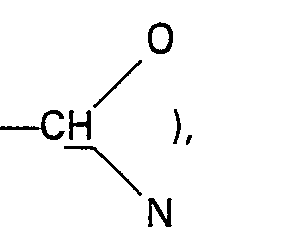
- To the solution of 1-[1-(2-hydroxyethoxy)-3-phenyl-2-propenyl]-5-fluorouracil (3 g) obtained in Example 19 in pyridine (10 ml), acetic anhydride (10 ml) was added followed by stirring at room temperature for 3 hours. The reaction mixture was poured into ice-water and extracted with chloroform. The chloroform layer was washed with water, dried and evaporated to remove chloroform. The residue was treated with a small amount of ethanol to give 2.8 g of crystalline 1-[1-(2-acetoxyethoxy)-3-phenyl-2-propenyl]-5-fluorouracil.
- m.p.: 78-81 °C (recrystallized from ethanol-isopropyl ether)
- NMR (CDCI3)8: 7.5-7.2 (6H,m,


- 1-[α-(2-Hydroxyethyoxy)-3,4-methylenedioxybenzyl]uracil (3 g) obtained in Example 30 was added to pyridine (10 ml) and acetic anhydride (10 ml) followed by stirring at room temperature for 3 hours. The reaction mixture was poured into ice-water and the resulting oil was extracted with chloroform (30 ml). The chloroform layer was washed with water, dried and evaporated to remove the chloroform. The residue was treated with a small amount of ethanol to give 2.8 g of crystalline 1-[α-(2-acetoxy)-3,4-methylenedioxybenzyl]uracil.
- m.p.: 126-128°C (recrystallized from ethanol)
- NMR (CDCl3 + DMSO-d6)δ: 7.14, 5.58 (each 1 H, d, H-5, H-6), 6.63-6.95 (4H, m,

- Bis(trimethylsilyl)-5-fluorouracil prepared from 5-fluorouracil (10g), and 2-(3,4-diacetoxy- phenyl)-1,3-dioxolan (26.6 g) prepared from 3,4-diacetoxybenzaldehyde and ethyleneglycol were treated as in Example 10 and the product was acetylated to give 7.4 g of crystalline 1-[α-(2-acetoxy- ethoxy)-3,4-diacetoxybenzyl]-5-fluorouracil.
- m.p.: 184.5-188°C
- NMR (CDCI3 + DMSO-d6)δ: 7.94 (1H, S,


- Bis(trimethylsilyl)-5-fluorouracil prepared from 5-fluorouracil (10 g), and 2-2,6-dichlorophenyl-1,3-dioxolan (32.0 g) which had been prepared from 2,6-dichlorobenzaldehyde and ethylene glycol were subjected to reaction as in Example 10. Following adding chloroform (100 ml), the reaction mixture was washed twice with a cold saturated NaCl aqueous solution, and then aqueous sodium bicarbonate, and water, and dried over anhydrous magnesium sulfate. The solvent was evaporated off and the residue was purified by column chromatography using silica gel and acetone-chloroform (1:4) as an eluant to give 6.9 g of crystalline 1-[α-(2-hydroxyethoxy)-2,6-dichlorobenzyl]-5-fluorouracil.
- m.p.: 163-168°C
- NMR (CDCI3 + DMSO-d6)δ: 8.12 (1 H, d, H-6), 7.30 (3h, S,


- Trimethylchlorosilane (4 ml) was added to a suspension of 5-methyluracil (thymine) (5 g) in hexamethylsilazane (20 ml) followed by refluxing for 5 hours. The resulting ammonium chloride was removed by filtration and the filtrate was evaporated to give bis(trimethylsilyl)-5-methyluracil as oil. To a solution of the oil in dry dichloromethane (10 ml) was added 2-methyl-1,3-dioxolane (15 ml) and then was added dropwise stannic chloride (5 ml). After allowing the mixture to stand at room temperature overnight, it was treated as in Example 10 to give 4.6 g of crystalline 1-[α-(2-hydroxy- ethoxy)ethyl]-5-methyluracil.
- m.p.: 149-150°C (recrystallized from ethanol)
- NMR (d6―DMSO)δ: 7.48 (1 H, d), 5.94-5.55 (1 H, q), 3.75-3.25 (4H, m), 1.80 (3H, S), 1.39 (3H, d)
- By the procedure similar to that of Example 35, compounds listed in Table 6 were prepared.


Claims (4)




Priority Applications (1)
| Application Number | Priority Date | Filing Date | Title |
|---|---|---|---|
| AT81106460T ATE10368T1 (en) | 1980-08-19 | 1981-08-19 | URACIL DERIVATIVES, PROCESS FOR THEIR MANUFACTURE AND A PHARMACEUTICAL PREPARATION CONTAINING THEM. |
Applications Claiming Priority (2)
| Application Number | Priority Date | Filing Date | Title |
|---|---|---|---|
| JP112993/80 | 1980-08-19 | ||
| JP11299380A JPS5738774A (en) | 1980-08-19 | 1980-08-19 | Uracil derivative and its preparation |
Publications (2)
| Publication Number | Publication Date |
|---|---|
| EP0046307A1 EP0046307A1 (en) | 1982-02-24 |
| EP0046307B1 true EP0046307B1 (en) | 1984-11-21 |
Family
ID=14600731
Family Applications (1)
| Application Number | Title | Priority Date | Filing Date |
|---|---|---|---|
| EP81106460A Expired EP0046307B1 (en) | 1980-08-19 | 1981-08-19 | Novel uracil derivatives, process for preparing the same and a pharmaceutical composition containing the same |
Country Status (6)
| Country | Link |
|---|---|
| US (1) | US4415573A (en) |
| EP (1) | EP0046307B1 (en) |
| JP (1) | JPS5738774A (en) |
| AT (1) | ATE10368T1 (en) |
| CA (1) | CA1148546A (en) |
| DE (1) | DE3167320D1 (en) |
Families Citing this family (21)
| Publication number | Priority date | Publication date | Assignee | Title |
|---|---|---|---|---|
| JPS5839672A (en) * | 1981-09-03 | 1983-03-08 | Chugai Pharmaceut Co Ltd | Uracil derivative |
| US4564618A (en) * | 1982-09-17 | 1986-01-14 | Glaxo Group Limited | 5-Halovinyl-2'-deoxyuridine derivatives |
| SU1235864A1 (en) * | 1983-03-11 | 1986-06-07 | Отделение ордена Ленина института химической физики АН СССР | Nitroxyle derivatives of 5-fluoruracyl with antitumour activity |
| JPS61204190A (en) * | 1985-03-06 | 1986-09-10 | Kanto Ishi Pharma Co Ltd | Glycoside and its production |
| US4719214A (en) * | 1985-07-25 | 1988-01-12 | Southern Research Institute | Carbocyclic analogues of thymine nucleosides |
| US4613604A (en) * | 1985-07-31 | 1986-09-23 | Brown University Research Foundation | Hydroxymethyl derivatives of 5-benzylacyclouridine and 5-benzoyloxybenzylacyclouridine and their use as potentiators for 5-fluoro-2'-deoxyuridine |
| JPS62174060A (en) * | 1985-10-11 | 1987-07-30 | Terumo Corp | 5-fluorouracil derivative and drug preparation containing same |
| KR950006713B1 (en) * | 1988-03-31 | 1995-06-21 | 미쓰비시 가세이 가부시끼가이샤 | 6-substituted acyclic pyrimidine nucleoside derivatives and antiviral agents using the derivatives as an active ingredient |
| US6350753B1 (en) | 1988-04-11 | 2002-02-26 | Biochem Pharma Inc. | 2-Substituted-4-substituted-1,3-dioxolanes and use thereof |
| US6903224B2 (en) | 1988-04-11 | 2005-06-07 | Biochem Pharma Inc. | Substituted 1,3-oxathiolanes |
| US5041449A (en) * | 1988-04-11 | 1991-08-20 | Iaf Biochem International, Inc. | 4-(nucleoside base)-substituted-1,3-dioxolanes useful for treatment of retroviral infections |
| US5466806A (en) * | 1989-02-08 | 1995-11-14 | Biochem Pharma Inc. | Processes for preparing substituted 1,3-oxathiolanes with antiviral properties |
| US6175008B1 (en) | 1988-04-11 | 2001-01-16 | Biochem Pharma Inc. | Processes for preparing substituted 1,3-oxathiolanes with antiviral properties |
| US7119202B1 (en) * | 1989-02-08 | 2006-10-10 | Glaxo Wellcome Inc. | Substituted-1,3-oxathiolanes and substituted-1,3-dioxolanes with antiviral properties |
| US5047407A (en) * | 1989-02-08 | 1991-09-10 | Iaf Biochem International, Inc. | 2-substituted-5-substituted-1,3-oxathiolanes with antiviral properties |
| KR900701763A (en) * | 1988-07-18 | 1990-12-04 | 하마구찌 미찌오 | 1-amino-5-halogenouracil, preparation method thereof, and central nervous system inhibitor containing the compound as an active ingredient |
| DE3905725A1 (en) * | 1989-02-24 | 1990-09-06 | Boehringer Mannheim Gmbh | SECO-NUCLEOSIDE DERIVATIVES, METHOD FOR THE PRODUCTION THEREOF AND THEIR USE AS AN ANTIVIRAL AGENT |
| US5204466A (en) * | 1990-02-01 | 1993-04-20 | Emory University | Method and compositions for the synthesis of bch-189 and related compounds |
| US5476855A (en) * | 1993-11-02 | 1995-12-19 | Mahmoud H. el Kouni | Enzyme inhibitors, their synthesis and methods for use |
| BR9408370A (en) * | 1994-02-28 | 1997-08-26 | Sunkyong Ind Ltd | Pyrimidine acyclonucleoside derivatives |
| DK1140937T3 (en) * | 1998-12-23 | 2004-03-22 | Shire Biochem Inc | Antiviral nucleoside analogues |
Family Cites Families (7)
| Publication number | Priority date | Publication date | Assignee | Title |
|---|---|---|---|---|
| US3947444A (en) * | 1973-06-21 | 1976-03-30 | Solomon Aronovich Giller | Process for producing N1 -(Dihydroxyalkyl)-5-substituted uracils |
| JPS606943B2 (en) * | 1975-04-01 | 1985-02-21 | 三井製薬工業株式会社 | Method for producing 1-(α-alkoxyalkyl)-uracils |
| JPS609505B2 (en) * | 1976-04-20 | 1985-03-11 | 大鵬薬品工業株式会社 | 5-Fluorouracil derivative |
| JPS52153977A (en) * | 1976-06-11 | 1977-12-21 | Daikin Ind Ltd | Synthesis of 5-fluorouracil and its derivatives |
| JPS6011704B2 (en) * | 1976-07-30 | 1985-03-27 | 大鵬薬品工業株式会社 | Method for producing 5-fluorouracil derivative |
| JPS5331676A (en) * | 1976-09-06 | 1978-03-25 | Mitsui Toatsu Chem Inc | Uracil derivatives and their preparation |
| CH633280A5 (en) * | 1978-03-09 | 1982-11-30 | Elkawi Ag | 5-FLUORURACIL DERIVATIVES AND MEDICINAL PRODUCTS CONTAINING THESE COMPOUNDS. |
-
1980
- 1980-08-19 JP JP11299380A patent/JPS5738774A/en active Granted
-
1981
- 1981-08-10 US US06/291,847 patent/US4415573A/en not_active Expired - Fee Related
- 1981-08-14 CA CA000383943A patent/CA1148546A/en not_active Expired
- 1981-08-19 EP EP81106460A patent/EP0046307B1/en not_active Expired
- 1981-08-19 DE DE8181106460T patent/DE3167320D1/en not_active Expired
- 1981-08-19 AT AT81106460T patent/ATE10368T1/en not_active IP Right Cessation
Also Published As
| Publication number | Publication date |
|---|---|
| DE3167320D1 (en) | 1985-01-03 |
| CA1148546A (en) | 1983-06-21 |
| US4415573A (en) | 1983-11-15 |
| JPS5738774A (en) | 1982-03-03 |
| ATE10368T1 (en) | 1984-12-15 |
| JPH0140830B2 (en) | 1989-08-31 |
| EP0046307A1 (en) | 1982-02-24 |
Similar Documents
| Publication | Publication Date | Title |
|---|---|---|
| EP0046307A1 (en) | Novel uracil derivatives, process for preparing the same and a pharmaceutical composition containing the same | |
| US6573378B1 (en) | Antiviral guanine derivatives | |
| US4855466A (en) | Purinyl cyclobutanes | |
| RU2055076C1 (en) | Bis-(hydroxymethyl)-cyclobutyl-purines or pyrimidines and their pharmaceutically acceptable salts | |
| KR920000908B1 (en) | Novel naphtalene derivatives | |
| EP0188248B1 (en) | Naphthalene derivatives, process for the preparation thereof and pharmaceutical composition containing same | |
| US4605659A (en) | Purinyl or pyrimidinyl substituted hydroxycyclopentane compounds useful as antivirals | |
| US5246937A (en) | Purine derivatives | |
| EP0654037A1 (en) | Antiretroviral enantiomeric nucleotide analogs | |
| JP2923933B2 (en) | Novel cyclopropane derivative, process for producing the same, and antiviral composition containing the same | |
| EP0375368B1 (en) | Alcohol and ether derivatives | |
| JPS5839672A (en) | Uracil derivative | |
| FI85143C (en) | Process for the preparation of therapeutically active purine derivatives | |
| EP0103551B1 (en) | Novel derivatives of guanine | |
| EP0044704B1 (en) | Substituted pyrimidin-2-ones, the salts thereof, processes for their preparation, and pharmaceutical compositions containing them | |
| US6576662B2 (en) | Compounds having anticancer activity : process for their preparation and pharmaceutical compositions containing them | |
| CZ20022178A3 (en) | Process for preparing pyrazolo pyridazine derivatives | |
| EP0166564B1 (en) | Pyrimidone derivatives, preparation thereof and use thereof | |
| NO861867L (en) | PROCEDURE FOR THE PREPARATION OF THERAPEUTIC ACTIVE HEXEN ACIDS. | |
| US5374625A (en) | Adenine and guanine derivatives for the treatment of hepatitis virus infections | |
| US5075446A (en) | Synthesis of tetrahydro-2-furylated pyrimidine derivatives | |
| US4254286A (en) | Benzaldehyde compounds | |
| US5703224A (en) | Antiviral c-nucleoside derivatives | |
| US5250688A (en) | Purine derivatives | |
| HU209437B (en) | Process for producing purinyl and pyrimidinyl tetrahydrofuran derivatives and pharmaceutical preparations containing them |
Legal Events
| Date | Code | Title | Description |
|---|---|---|---|
| PUAI | Public reference made under article 153(3) epc to a published international application that has entered the european phase |
Free format text: ORIGINAL CODE: 0009012 |
|
| AK | Designated contracting states |
Designated state(s): AT BE CH DE FR GB IT NL SE |
|
| 17P | Request for examination filed |
Effective date: 19820507 |
|
| ITCL | It: translation for ep claims filed |
Representative=s name: JACOBACCI CASETTA & PERANI S.P.A. |
|
| TCAT | At: translation of patent claims filed | ||
| TCNL | Nl: translation of patent claims filed | ||
| DET | De: translation of patent claims | ||
| ITF | It: translation for a ep patent filed | ||
| GRAA | (expected) grant |
Free format text: ORIGINAL CODE: 0009210 |
|
| AK | Designated contracting states |
Designated state(s): AT BE CH DE FR GB IT LI NL SE |
|
| REF | Corresponds to: |
Ref document number: 10368 Country of ref document: AT Date of ref document: 19841215 Kind code of ref document: T |
|
| REF | Corresponds to: |
Ref document number: 3167320 Country of ref document: DE Date of ref document: 19850103 |
|
| ET | Fr: translation filed | ||
| PG25 | Lapsed in a contracting state [announced via postgrant information from national office to epo] |
Ref country code: AT Effective date: 19850802 |
|
| PG25 | Lapsed in a contracting state [announced via postgrant information from national office to epo] |
Ref country code: SE Effective date: 19850820 |
|
| PG25 | Lapsed in a contracting state [announced via postgrant information from national office to epo] |
Ref country code: LI Effective date: 19850831 Ref country code: CH Effective date: 19850831 |
|
| PLBE | No opposition filed within time limit |
Free format text: ORIGINAL CODE: 0009261 |
|
| STAA | Information on the status of an ep patent application or granted ep patent |
Free format text: STATUS: NO OPPOSITION FILED WITHIN TIME LIMIT |
|
| 26N | No opposition filed | ||
| PG25 | Lapsed in a contracting state [announced via postgrant information from national office to epo] |
Ref country code: NL Effective date: 19860301 |
|
| GBPC | Gb: european patent ceased through non-payment of renewal fee | ||
| NLV4 | Nl: lapsed or anulled due to non-payment of the annual fee | ||
| PG25 | Lapsed in a contracting state [announced via postgrant information from national office to epo] |
Ref country code: FR Free format text: LAPSE BECAUSE OF NON-PAYMENT OF DUE FEES Effective date: 19860430 |
|
| REG | Reference to a national code |
Ref country code: CH Ref legal event code: PL |
|
| PG25 | Lapsed in a contracting state [announced via postgrant information from national office to epo] |
Ref country code: DE Effective date: 19860501 |
|
| REG | Reference to a national code |
Ref country code: FR Ref legal event code: ST |
|
| BERE | Be: lapsed |
Owner name: CHUGAI SEIYAKU K.K. Effective date: 19860831 |
|
| PG25 | Lapsed in a contracting state [announced via postgrant information from national office to epo] |
Ref country code: GB Effective date: 19881118 |
|
| PG25 | Lapsed in a contracting state [announced via postgrant information from national office to epo] |
Ref country code: BE Effective date: 19890831 |
|
| EUG | Se: european patent has lapsed |
Ref document number: 81106460.9 Effective date: 19860729 |