EP0041402A1 - Alkaline cell - Google Patents
Alkaline cell Download PDFInfo
- Publication number
- EP0041402A1 EP0041402A1 EP81302451A EP81302451A EP0041402A1 EP 0041402 A1 EP0041402 A1 EP 0041402A1 EP 81302451 A EP81302451 A EP 81302451A EP 81302451 A EP81302451 A EP 81302451A EP 0041402 A1 EP0041402 A1 EP 0041402A1
- Authority
- EP
- European Patent Office
- Prior art keywords
- cell
- cathode
- nickel
- mol
- solution
- Prior art date
- Legal status (The legal status is an assumption and is not a legal conclusion. Google has not performed a legal analysis and makes no representation as to the accuracy of the status listed.)
- Granted
Links
- 229910000108 silver(I,III) oxide Inorganic materials 0.000 claims abstract description 21
- PXHVJJICTQNCMI-UHFFFAOYSA-N Nickel Chemical compound [Ni] PXHVJJICTQNCMI-UHFFFAOYSA-N 0.000 claims abstract description 19
- 239000010406 cathode material Substances 0.000 claims abstract description 16
- NUJOXMJBOLGQSY-UHFFFAOYSA-N manganese dioxide Inorganic materials O=[Mn]=O NUJOXMJBOLGQSY-UHFFFAOYSA-N 0.000 claims abstract description 13
- 229910002640 NiOOH Inorganic materials 0.000 claims abstract description 8
- FOIXSVOLVBLSDH-UHFFFAOYSA-N Silver ion Chemical compound [Ag+] FOIXSVOLVBLSDH-UHFFFAOYSA-N 0.000 claims abstract description 7
- 239000003792 electrolyte Substances 0.000 claims abstract description 5
- 239000010405 anode material Substances 0.000 claims abstract description 4
- UKWHYYKOEPRTIC-UHFFFAOYSA-N mercury(II) oxide Inorganic materials [Hg]=O UKWHYYKOEPRTIC-UHFFFAOYSA-N 0.000 claims description 4
- 229910001453 nickel ion Inorganic materials 0.000 claims description 4
- 229910052759 nickel Inorganic materials 0.000 abstract description 8
- 241000282320 Panthera leo Species 0.000 abstract 1
- 239000003795 chemical substances by application Substances 0.000 abstract 1
- OSOVKCSKTAIGGF-UHFFFAOYSA-N [Ni].OOO Chemical compound [Ni].OOO OSOVKCSKTAIGGF-UHFFFAOYSA-N 0.000 description 33
- 229910000483 nickel oxide hydroxide Inorganic materials 0.000 description 33
- SQGYOTSLMSWVJD-UHFFFAOYSA-N silver(1+) nitrate Chemical compound [Ag+].[O-]N(=O)=O SQGYOTSLMSWVJD-UHFFFAOYSA-N 0.000 description 26
- 239000000243 solution Substances 0.000 description 24
- NDVLTYZPCACLMA-UHFFFAOYSA-N silver oxide Substances [O-2].[Ag+].[Ag+] NDVLTYZPCACLMA-UHFFFAOYSA-N 0.000 description 23
- 239000000126 substance Substances 0.000 description 22
- KWYUFKZDYYNOTN-UHFFFAOYSA-M potassium hydroxide Inorganic materials [OH-].[K+] KWYUFKZDYYNOTN-UHFFFAOYSA-M 0.000 description 20
- 239000000203 mixture Substances 0.000 description 18
- OKTJSMMVPCPJKN-UHFFFAOYSA-N Carbon Chemical compound [C] OKTJSMMVPCPJKN-UHFFFAOYSA-N 0.000 description 16
- 238000002441 X-ray diffraction Methods 0.000 description 16
- 239000006182 cathode active material Substances 0.000 description 14
- 229910052709 silver Inorganic materials 0.000 description 14
- BQCADISMDOOEFD-UHFFFAOYSA-N Silver Chemical compound [Ag] BQCADISMDOOEFD-UHFFFAOYSA-N 0.000 description 13
- 239000012670 alkaline solution Substances 0.000 description 13
- 239000004332 silver Substances 0.000 description 13
- 229910001923 silver oxide Inorganic materials 0.000 description 13
- 238000000034 method Methods 0.000 description 12
- 239000002244 precipitate Substances 0.000 description 12
- 238000013019 agitation Methods 0.000 description 10
- 238000006243 chemical reaction Methods 0.000 description 10
- HEMHJVSKTPXQMS-UHFFFAOYSA-M Sodium hydroxide Chemical compound [OH-].[Na+] HEMHJVSKTPXQMS-UHFFFAOYSA-M 0.000 description 9
- 150000001875 compounds Chemical class 0.000 description 9
- 229910002804 graphite Inorganic materials 0.000 description 9
- 239000010439 graphite Substances 0.000 description 9
- 239000000843 powder Substances 0.000 description 9
- XLYOFNOQVPJJNP-UHFFFAOYSA-N water Substances O XLYOFNOQVPJJNP-UHFFFAOYSA-N 0.000 description 9
- 239000011149 active material Substances 0.000 description 8
- 239000000654 additive Substances 0.000 description 8
- 230000000996 additive effect Effects 0.000 description 8
- 239000006258 conductive agent Substances 0.000 description 8
- 238000001914 filtration Methods 0.000 description 8
- 229910052799 carbon Inorganic materials 0.000 description 7
- 239000000047 product Substances 0.000 description 7
- 229910001961 silver nitrate Inorganic materials 0.000 description 7
- 238000002474 experimental method Methods 0.000 description 6
- 239000008188 pellet Substances 0.000 description 5
- 239000004744 fabric Substances 0.000 description 4
- 238000004519 manufacturing process Methods 0.000 description 4
- 150000002815 nickel Chemical class 0.000 description 4
- LGQLOGILCSXPEA-UHFFFAOYSA-L nickel sulfate Chemical compound [Ni+2].[O-]S([O-])(=O)=O LGQLOGILCSXPEA-UHFFFAOYSA-L 0.000 description 4
- 229910000363 nickel(II) sulfate Inorganic materials 0.000 description 4
- 230000003647 oxidation Effects 0.000 description 4
- 238000007254 oxidation reaction Methods 0.000 description 4
- HCHKCACWOHOZIP-UHFFFAOYSA-N Zinc Chemical compound [Zn] HCHKCACWOHOZIP-UHFFFAOYSA-N 0.000 description 3
- 239000000463 material Substances 0.000 description 3
- 239000007800 oxidant agent Substances 0.000 description 3
- OTCVAHKKMMUFAY-UHFFFAOYSA-N oxosilver Chemical compound [Ag]=O OTCVAHKKMMUFAY-UHFFFAOYSA-N 0.000 description 3
- 239000002699 waste material Substances 0.000 description 3
- 229910052725 zinc Inorganic materials 0.000 description 3
- 239000011701 zinc Substances 0.000 description 3
- WKBOTKDWSSQWDR-UHFFFAOYSA-N Bromine atom Chemical compound [Br] WKBOTKDWSSQWDR-UHFFFAOYSA-N 0.000 description 2
- 229920000298 Cellophane Polymers 0.000 description 2
- ZAMOUSCENKQFHK-UHFFFAOYSA-N Chlorine atom Chemical compound [Cl] ZAMOUSCENKQFHK-UHFFFAOYSA-N 0.000 description 2
- 229920000742 Cotton Polymers 0.000 description 2
- 239000004677 Nylon Substances 0.000 description 2
- CBENFWSGALASAD-UHFFFAOYSA-N Ozone Chemical compound [O-][O+]=O CBENFWSGALASAD-UHFFFAOYSA-N 0.000 description 2
- 239000005708 Sodium hypochlorite Substances 0.000 description 2
- 238000004458 analytical method Methods 0.000 description 2
- 238000001479 atomic absorption spectroscopy Methods 0.000 description 2
- GDTBXPJZTBHREO-UHFFFAOYSA-N bromine Substances BrBr GDTBXPJZTBHREO-UHFFFAOYSA-N 0.000 description 2
- 229910052794 bromium Inorganic materials 0.000 description 2
- 239000000460 chlorine Substances 0.000 description 2
- 229910052801 chlorine Inorganic materials 0.000 description 2
- 238000005868 electrolysis reaction Methods 0.000 description 2
- 238000003780 insertion Methods 0.000 description 2
- 230000037431 insertion Effects 0.000 description 2
- 230000007935 neutral effect Effects 0.000 description 2
- 229910021508 nickel(II) hydroxide Inorganic materials 0.000 description 2
- BFDHFSHZJLFAMC-UHFFFAOYSA-L nickel(ii) hydroxide Chemical compound [OH-].[OH-].[Ni+2] BFDHFSHZJLFAMC-UHFFFAOYSA-L 0.000 description 2
- KBJMLQFLOWQJNF-UHFFFAOYSA-N nickel(ii) nitrate Chemical compound [Ni+2].[O-][N+]([O-])=O.[O-][N+]([O-])=O KBJMLQFLOWQJNF-UHFFFAOYSA-N 0.000 description 2
- 229920001778 nylon Polymers 0.000 description 2
- 238000012856 packing Methods 0.000 description 2
- USHAGKDGDHPEEY-UHFFFAOYSA-L potassium persulfate Chemical compound [K+].[K+].[O-]S(=O)(=O)OOS([O-])(=O)=O USHAGKDGDHPEEY-UHFFFAOYSA-L 0.000 description 2
- 235000019394 potassium persulphate Nutrition 0.000 description 2
- SUKJFIGYRHOWBL-UHFFFAOYSA-N sodium hypochlorite Chemical compound [Na+].Cl[O-] SUKJFIGYRHOWBL-UHFFFAOYSA-N 0.000 description 2
- 229910017727 AgNi Inorganic materials 0.000 description 1
- DGAQECJNVWCQMB-PUAWFVPOSA-M Ilexoside XXIX Chemical compound C[C@@H]1CC[C@@]2(CC[C@@]3(C(=CC[C@H]4[C@]3(CC[C@@H]5[C@@]4(CC[C@@H](C5(C)C)OS(=O)(=O)[O-])C)C)[C@@H]2[C@]1(C)O)C)C(=O)O[C@H]6[C@@H]([C@H]([C@@H]([C@H](O6)CO)O)O)O.[Na+] DGAQECJNVWCQMB-PUAWFVPOSA-M 0.000 description 1
- 229910002567 K2S2O8 Inorganic materials 0.000 description 1
- ZLMJMSJWJFRBEC-UHFFFAOYSA-N Potassium Chemical compound [K] ZLMJMSJWJFRBEC-UHFFFAOYSA-N 0.000 description 1
- 229910021607 Silver chloride Inorganic materials 0.000 description 1
- 239000013543 active substance Substances 0.000 description 1
- 229910001854 alkali hydroxide Inorganic materials 0.000 description 1
- 150000008044 alkali metal hydroxides Chemical class 0.000 description 1
- QVGXLLKOCUKJST-UHFFFAOYSA-N atomic oxygen Chemical compound [O] QVGXLLKOCUKJST-UHFFFAOYSA-N 0.000 description 1
- 230000015572 biosynthetic process Effects 0.000 description 1
- OJIJEKBXJYRIBZ-UHFFFAOYSA-N cadmium nickel Chemical compound [Ni].[Cd] OJIJEKBXJYRIBZ-UHFFFAOYSA-N 0.000 description 1
- 239000007795 chemical reaction product Substances 0.000 description 1
- 239000013065 commercial product Substances 0.000 description 1
- 239000004020 conductor Substances 0.000 description 1
- 238000010276 construction Methods 0.000 description 1
- 230000007423 decrease Effects 0.000 description 1
- 238000004090 dissolution Methods 0.000 description 1
- 230000002349 favourable effect Effects 0.000 description 1
- -1 for example Chemical compound 0.000 description 1
- 230000005484 gravity Effects 0.000 description 1
- 150000002500 ions Chemical class 0.000 description 1
- 229910000480 nickel oxide Inorganic materials 0.000 description 1
- QELJHCBNGDEXLD-UHFFFAOYSA-N nickel zinc Chemical compound [Ni].[Zn] QELJHCBNGDEXLD-UHFFFAOYSA-N 0.000 description 1
- AIBQNUOBCRIENU-UHFFFAOYSA-N nickel;dihydrate Chemical compound O.O.[Ni] AIBQNUOBCRIENU-UHFFFAOYSA-N 0.000 description 1
- GNRSAWUEBMWBQH-UHFFFAOYSA-N oxonickel Chemical compound [Ni]=O GNRSAWUEBMWBQH-UHFFFAOYSA-N 0.000 description 1
- 229910052760 oxygen Inorganic materials 0.000 description 1
- 239000001301 oxygen Substances 0.000 description 1
- 230000002035 prolonged effect Effects 0.000 description 1
- 239000011369 resultant mixture Substances 0.000 description 1
- HKZLPVFGJNLROG-UHFFFAOYSA-M silver monochloride Chemical compound [Cl-].[Ag+] HKZLPVFGJNLROG-UHFFFAOYSA-M 0.000 description 1
- 239000011734 sodium Substances 0.000 description 1
- 229910052708 sodium Inorganic materials 0.000 description 1
- 238000012360 testing method Methods 0.000 description 1
Images


Classifications
-
- H—ELECTRICITY
- H01—ELECTRIC ELEMENTS
- H01M—PROCESSES OR MEANS, e.g. BATTERIES, FOR THE DIRECT CONVERSION OF CHEMICAL ENERGY INTO ELECTRICAL ENERGY
- H01M4/00—Electrodes
- H01M4/02—Electrodes composed of, or comprising, active material
- H01M4/36—Selection of substances as active materials, active masses, active liquids
- H01M4/48—Selection of substances as active materials, active masses, active liquids of inorganic oxides or hydroxides
-
- Y—GENERAL TAGGING OF NEW TECHNOLOGICAL DEVELOPMENTS; GENERAL TAGGING OF CROSS-SECTIONAL TECHNOLOGIES SPANNING OVER SEVERAL SECTIONS OF THE IPC; TECHNICAL SUBJECTS COVERED BY FORMER USPC CROSS-REFERENCE ART COLLECTIONS [XRACs] AND DIGESTS
- Y02—TECHNOLOGIES OR APPLICATIONS FOR MITIGATION OR ADAPTATION AGAINST CLIMATE CHANGE
- Y02E—REDUCTION OF GREENHOUSE GAS [GHG] EMISSIONS, RELATED TO ENERGY GENERATION, TRANSMISSION OR DISTRIBUTION
- Y02E60/00—Enabling technologies; Technologies with a potential or indirect contribution to GHG emissions mitigation
- Y02E60/10—Energy storage using batteries
Definitions
- the present invention relates to an alkaline cell employing a cathode which comprises an Ni- and Ag-containing oxide.
- Nickel oxyhydroxide is popularly known as a cathode active material of a nickel cadmium cell while a cell using zinc as an anode material is also already disclosed.
- This nickel oxyhydroxide can generally be prepared by familiar methods, such as oxidation, of nickel hydroxide in contact with ozone, electrolysis of a divalent nickel salt in a neutral or alkaline solution, or oxidation of the nickel salt by action of chlorine or bromine.
- nickel oxyhydroxide prepared by one of these methods has so far been mixed with 5 to 15% of an additive conductive agent such as graphite or carbon to form the cathode material for use in fabricating the nickel cell.
- an additive conductive agent such as graphite or carbon
- this type of cell has a demerit that its discharge capacity is small though it has merits in having a comparatively flat discharge curve, is usable as a substitute for the silver oxide cell and has a cheaper production cost compared to the silver oxide cell.
- the present invention which is made in consideration of the above facts, is concerned with an alkaline cell comprising a cathode material, an alkaline electrolyte and an anode material, which are sealed in a container and wherein the cathode material comprises an Ni- and Ag-containing oxide having trivalent nickel ion ; (Ni 3+ ) and the monovalent silver ion (Ag + ) present in a substantially equimolar ratio.
- the phrase "containing an Ni- and Ag-containing oxide” as used herein refers not only to a case where such oxide is contained as a partial composition but to a case where such oxide provides almost 100% of the composition.
- the additive conductive agent such as graphite or carbon can be omitted from the cathode material and, instead, a new substance of very high conductivity comprising the trivalent nickel ion and the monovalent silver ion (the above-mentioned Ni- and Ag-containing oxide) can be mixed in the cathode material to provide a cell of high capacity.
- the Ni- and Ag-containing oxide can be prepared by reacting an oxide of trivalent nickel with an oxide of monovalent silver such that the trivalent nickel ion and the monovalent silver ' ion are present in a substantially equimolar-ratio.
- Nickel oxyhydroxide NiOOH
- Ag 2 0 monovalent silver oxide
- use of this oxide as the cathode material provides an alkaline cell of excellent performance.
- Nickel oxyhydroxide can be prepared by familiar methods, such as oxidation of nickel hydroxide in contact with ozone, electrolysis of a divalent nickel salt in neutral or alkaline solution or oxidation of this nickel salt by action of chlorine or bromine.
- the above new oxide compound used in this invention was found to comprise a new phase according to the results of an X-ray diffraction analysis which showed its diffraction pattern to be very similar to the one of AgCoO 2 (hexagonal phase) in the ASTM Card No.25-761 which suggests the compound to be possibly AgNi0 2 .
- This compound has a very low specific resistance and it can be used as a superior cathode active material for cells that discharge at about 1.45 to 1.40 volts. In this invention, therefore, the compound can be used alone or mixed with nickel oxyhydroxide to form a cathode.
- This new compound gives the cathode enough conductivity and, in addition, increases the capacity of the cathode by contrast to an additive conductive agent such as graphite or carbon.
- the new oxide compound was prepared for use as a cathode material as follows:
- Sample C which was produced by adding 78 cc of 1 mol/1 AgNO 3 to 10 g of nickel oxyhydroxide prepared in the above experiment, was found, according to the X-ray diffraction pattern, to consist almost fully of the above mentioned new substance having a new phase. Beside, as for Sample D. comparison to the X-ray diffraction pattern of silver oxide (Ag 2 0) clearly showed that this sample was a mixture of the new substance and silver oxide.
- the 10 g sample of nickel oxyhydroxide made available by this experiment was found, according to an analysis by atomic absorption spectroscopy, to contain approximately 5.25 g (0.089 mol) of nickel while an addition of about 80 to 90 ml of aqueous 1 mol/1 AgN0 3 solution (approximately 0.08 to 0.09 mol of Ag + ) to the 10 g sample of nickel oxyhydroxide minimized the specific resistance of product as illustrated in Figure 1.
- the new substance thus made available has a very high conductivity compared to the conventional cathode materials of cell, such as Ag 2 0, HgO and MnO 2 . Therefore, by contrast to the conventional cathode active materials that are mixed with an additive conductive agent such as graphite or carbon to form a cathode, the new substance that is conductive requires no additive conductive agent and can form a cathode without the addition of any other material for use in a cell having a large capacity.
- Nickel oxyhydroxide was prepared by the same method as described in the above experiment. 100 g of nickel oxyhydroxide was added to 3 litres of aqueous 5 mol/l potassium hydroxide solution and 0.9 liters of aqueous 1 mol/l silver nitrate solution was then added under agitation. After continuation of the agitation for 16 hours, the mixture was filtrated to separate precipitates, which were washed with water and then dried at 80°C to give a cathode active material. 0.25 g of this active material was used to form a pellet of 11.0 mm in diameter under a pressure of 3 t/cm 2 which was positioned in a cathode case under pressure to give a cathode 2 as shown in Figure 7.
- FIG. 8 gives-the results of this discharge of the Example 1 cell.
- Figure 8 shows that the cell with a quite flat discharge curve at a level of approximately 1.45 V was obtained.
- the silver cell is ranked best.
- the above cell (Example 1 cells) was thus compared to the silver cell by adding a characteristic curve of a silver cell of the same size in Figure 8.
- the discharge curve was as flat as that of the silver cell and the discharge time was prolonged 40% even though the discharge voltage was approximately 0.1 V lower.
- aqueous 2 mol/l sodium hypochlorite solution 500 cc of aqueous 10 mol/1 potassium hydroxide solution and 100 cc of aqueous 2 mol/1 nickel nitrate solution and the mixture was agitated 5 minutes for mixing. Further, 100 cc of aqueous 2 mol/1 silver nitrate solution was added to this mixture and the solution was continuously agitated about 16 hours. Black precipitates that were produced were washed well with pure water and the waste lye was removed by filtration. The precipitates were then dried at 80°C to give a cathode active material.
- the divalent silver oxide oxidizes Ni(OH) 2 that was formed from nickel sulfate in an alkaline solution while partially decomposing to isolate oxygen.
- Ag 2 0 and NiOOH were formed to react and generate a new material that was assumed to be AgNiO 2 as in the aforementioned experiment.
- Ag 2 0 was produced a little more than nickel oxyhydroxide, so some Ag 2 O was left. This was why a voltage of 1.55 V was observed at the start of the cell's characteristic discharge curve.
- the aforementioned new substance considered to be AgNiO 2 can be produced by a reaction of the trivalent nickel and monovalent silver . oxide in an equimolar ratio in alkaline solution as shown in this Example.
- One of the representative methods of its production is a process wherein nickel oxyhydroxide is produced at the first step, which undergoes a reaction with silver oxide in alkaline solution.
- the material proposed by this invention can be prepared if a process includes a step of reacting the trivalent nickel and monovalent silver in alkaline solution.
- Example 3 it was considered that in the production process of this Example Ni(OH) 2 was oxidized by the oxidizer (K 2 S 2 0 8 ) in alkaline solution to result in nickel oxyhydroxide, which reacted with Ag 2 0 to produce the same product as in Example 1. Namely, in alkaline solution; the following reactions probably occurred:
- Ni(OH) 2 nickel hydroxide
- Ag 2 0 silver oxide
- the former was oxidized by the oxidizer potassium peroxydisulfate to nickel oxyhydroxide (NiOOH), which underwent, as in Example 1, the following reaction: resulting in a product that was characterized by an X-ray diffraction pattern as given for Sample C in Figure 4.
- the above product considered to be AgNiO 2 performs excellently as a cathode active material having a very good conductivity as illustrated in Figure 1. Therefore it is possible to mix it with one or more of the substances- that have conventionally been used as the cathode active material, such as Ag 2 0, AgO, MnO 2 , HgO and NiOOH.
- the conventional cathode active materials are generally poorly conductive materials, and therefore, they have been mixed with an additive conductive agent, such as graphite or carbon, when used for the cathode active material. In this case, since graphite or carbon has a comparatively small specific gravity, it occupies a considerable. fraction of the cathode volume.
- Example 5 64 parts of the active substance obtained in Example 1 and considered to be AgNi0 2 was well mixed with 36 parts of MnO 2 . 0.19 g of the mixture was weighed and used to assemble a cell of dimensions 11.6 mm diameter x 2.0 mm as in Example 1. The cell was allowed to continuously discharge through a resistor of 15 k ⁇ The characteristic discharge curve of this Example 5 cell is also given in Figure 8. Even when compared to the silver oxide cell that is believed to perform the best among the conventional cells, an almost equivalent capacity was available though the discharge voltage was slightly lower. However, it is seen from the next table that if compared to the prior art cell of same size, the quantity of silver used in the cathode was about 35%, which meant a saving of about 0.12 g silver per cell and a large reduction in cost.
- the new substance thus produced and nickel oxyhydroxide produced previously were mixed in a weight ratio of 30 parts to 70 parts. 0.17 g of this mixture was weighed, from which a pellet of 11.0 mm diameter was formed under pressure.
- the cathode case of.the cell was then filled up with the pellet under pressure to form the cathode as illustrated in Figure 7. Thereafter, a separator comprising a cellophane sheet and a cloth of cotton fabric was placed thereon, to which 45% KOH. solution was added as the electrolyte.
- An anode case filled up with zinc mercurate-based cathode gel was placed with insertion of a nylon packing and the openings were sealed to give a cell of 11.6 mm diameter x 2.0 mm.
- Example 6 0.17 g of the powder was weighed to form a pellet of 11.0 mm diameter, which was used to assemble a cell of 11.6 mm diameter x 2.0 mm as in Example 6. The cell discharged as in Example 6 and the results obtained are shown in Figure 9 which showed that it had almost the same characteristics as the cell assembled in Example 6.
- Example 6 80 parts of nickel oxyhydroxide produced by the same method as in Example 6 was mixed with 20 parts of Ag 2 0 and the mixture was pelletized to assemble a cell as in Examples 6 and 7. The performance of the cell was observed. Though no graphite was added, it showed a sufficiently low internal resistance, its capacity being 20% higher than the cell of the prior art, though the method in this Example was found to be inferior to those in Examples 6 and ?. Also in this Example, a plateau corresponding to discharge at 1.4 V was detected in the latter part of a characteristic discharge curve. A characteristic discharge curve of a cell whose cathode was made only of the Sample C obtained in Example 6 is shown in Figure 10.
- the alkaline cells conforming to the above Examples 6 to 8 are characterized by a fact that the nickel oxyhydroxide-based cathode of cell contains the monovalent silver (Ag + ), which partially or fully undergoes a reaction with nickel oxyhydroxide to form a substance identified with an X-ray diffraction pattern of Sample C.
- the nickel oxyhydroxide-based cathode of cell contains the monovalent silver (Ag + ), which partially or fully undergoes a reaction with nickel oxyhydroxide to form a substance identified with an X-ray diffraction pattern of Sample C.
Landscapes
- Chemical & Material Sciences (AREA)
- Inorganic Chemistry (AREA)
- Chemical Kinetics & Catalysis (AREA)
- Electrochemistry (AREA)
- General Chemical & Material Sciences (AREA)
- Battery Electrode And Active Subsutance (AREA)
Abstract
Description
- The present invention relates to an alkaline cell employing a cathode which comprises an Ni- and Ag-containing oxide.
- Nickel oxyhydroxide is popularly known as a cathode active material of a nickel cadmium cell while a cell using zinc as an anode material is also already disclosed. This nickel oxyhydroxide can generally be prepared by familiar methods, such as oxidation, of nickel hydroxide in contact with ozone, electrolysis of a divalent nickel salt in a neutral or alkaline solution, or oxidation of the nickel salt by action of chlorine or bromine.
- To give enough conductivity, nickel oxyhydroxide prepared by one of these methods has so far been mixed with 5 to 15% of an additive conductive agent such as graphite or carbon to form the cathode material for use in fabricating the nickel cell. However, this type of cell has a demerit that its discharge capacity is small though it has merits in having a comparatively flat discharge curve, is usable as a substitute for the silver oxide cell and has a cheaper production cost compared to the silver oxide cell.
- The present invention, which is made in consideration of the above facts, is concerned with an alkaline cell comprising a cathode material, an alkaline electrolyte and an anode material, which are sealed in a container and wherein the cathode material comprises an Ni- and Ag-containing oxide having trivalent nickel ion ; (Ni3+) and the monovalent silver ion (Ag+) present in a substantially equimolar ratio. The phrase "containing an Ni- and Ag-containing oxide" as used herein refers not only to a case where such oxide is contained as a partial composition but to a case where such oxide provides almost 100% of the composition. In such construction, the additive conductive agent such as graphite or carbon can be omitted from the cathode material and, instead, a new substance of very high conductivity comprising the trivalent nickel ion and the monovalent silver ion (the above-mentioned Ni- and Ag-containing oxide) can be mixed in the cathode material to provide a cell of high capacity. The Ni- and Ag-containing oxide can be prepared by reacting an oxide of trivalent nickel with an oxide of monovalent silver such that the trivalent nickel ion and the monovalent silver 'ion are present in a substantially equimolar-ratio.
- It was discovered that the trivalent nickel oxide, for example, nickel oxyhydroxide (NiOOH) and the monovalent silver oxide (Ag20) react in the presence of an aqueous alkaline solution to produce a reaction product found to be a new oxide of remarkably low specific resistance. Further, it was discovered that use of this oxide as the cathode material provides an alkaline cell of excellent performance. Nickel oxyhydroxide can be prepared by familiar methods, such as oxidation of nickel hydroxide in contact with ozone, electrolysis of a divalent nickel salt in neutral or alkaline solution or oxidation of this nickel salt by action of chlorine or bromine. It was also found in an experiment as will .be described later that a compound which is obtained by reacting nickel oxyhydroxide (NiOOH) made available by one of the above methods with
Ag 20 in an aqueous alkaline solution, for example, in a potassium or sodium hydroxide solution, has a remarkably low specific resistance as compared to the parent compounds, nickel oxyhydroxide and silver oxide, and.that the compound can be used as the cathode active material to provide a cell that is characterized by a remarkably large capacity and an excellent performance in the discharge characteristics. - The above new oxide compound used in this invention was found to comprise a new phase according to the results of an X-ray diffraction analysis which showed its diffraction pattern to be very similar to the one of AgCoO2 (hexagonal phase) in the ASTM Card No.25-761 which suggests the compound to be possibly AgNi02. This compound has a very low specific resistance and it can be used as a superior cathode active material for cells that discharge at about 1.45 to 1.40 volts. In this invention, therefore, the compound can be used alone or mixed with nickel oxyhydroxide to form a cathode. This new compound gives the cathode enough conductivity and, in addition, increases the capacity of the cathode by contrast to an additive conductive agent such as graphite or carbon.
- The invention will be further illustrated by reference to the accompanying drawings, in which:-
- Figure 1 is a curve of the specific resistance of pelletized cathode material versus the added quantity of AgNO3.
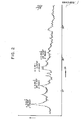
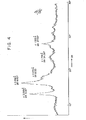
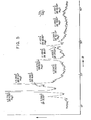
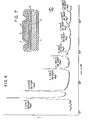
- Figures 2 to 6 are the X-ray diffraction patterns ! of individual samples of cathode materials.
- Figure 7 is a cross section of an alkaline cell.
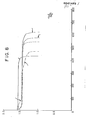
- Figure 8 is the characteristic discharge curve of an alkaline cell as described in Examples 1, 2, 3 and 5.
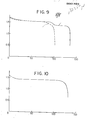
- Figure 9 is a discharge curve of a cell as described in Examples 6 and 7.
- Figure 10 is a characteristic discharge curve of a cell whose cathode is made only of Sample C.
- The invention will be described further by way of examples, though these examples are given only to describe the invention and, therefore, they can be modified according to the novel concept of this invention.
- First, in the following experiment, the new oxide compound was prepared for use as a cathode material as follows:
- 500 cc of aqueous 10 mol/l potassium hydroxide solution and 100 cc of aqueous 2 mol/l nickel sulfate solution were added to 200 cc of aqueous 2 mol/1 sodium hypochlorate solution and the resultant mixture was well mixed. Black precipitates (α-NiOOH) produced were washed well with pure water and the waste lye was removed by filtration. The precipitates were dried 20 hours in a thermostatie oven of 60 C. and then pulversied to put through a 100-mesh sieve. 10 g of the powder fraction that passed through the sieve was weighed and this 10 g of nickel oxyhydroxide (NiOOH) was added to 300 cc of aqueous 5 mol/1 silver nitrate solution and then 100 cc of aqueous 1 mol/l silver nitrate solution (IN AgNO3) was added to the mixture under enough agitation. The agitation was continued 16 hours at 60°C and the resultant precipitates (new Ni- and Ag-containing oxide) were separated by filtration, washed with water and dried to give a test sample. Another five samples were similarly prepared by changing the volume of aqueous silver nitrate solution added to 10 g of nickel oxyhydroxide.
- These six samples were pelletized in a size of 11.0 mm diameter under a pressure of 5 t/cm2. The specific resistance of each sample was measured and plotted on the graph shown in Figure 1. The samples indicated by arrows A, B, C and D in Figure 1 and silver oxide powder (Sample. E) were subjected to an X-ray diffraction analysis. Figures 2 to 6 show the diffraction patterns of these samples. As a result of this analysis, the Sample A was identified as α-NiOOH. Sample B showed formation of a substance having a new phase, namely, it was a mixture of nickel oxyhydroxide and a new substance. Further, Sample C, which was produced by adding 78 cc of 1 mol/1 AgNO3 to 10 g of nickel oxyhydroxide prepared in the above experiment, was found, according to the X-ray diffraction pattern, to consist almost fully of the above mentioned new substance having a new phase. Beside, as for Sample D. comparison to the X-ray diffraction pattern of silver oxide (Ag20) clearly showed that this sample was a mixture of the new substance and silver oxide.
- There was no ASTM card that corresponded to this new substance having a new phase but an analogy to the X-ray diffraction pattern of AgCo02 (hexagonal phase) as given in ASTM Card No. 25-761 suggested that the substance was possibly AgNiO2.
- Further, the 10 g sample of nickel oxyhydroxide made available by this experiment was found, according to an analysis by atomic absorption spectroscopy, to contain approximately 5.25 g (0.089 mol) of nickel while an addition of about 80 to 90 ml of aqueous 1 mol/1 AgN03 solution (approximately 0.08 to 0.09 mol of Ag+) to the 10 g sample of nickel oxyhydroxide minimized the specific resistance of product as illustrated in Figure 1. These facts also supported the idea that the new substance comprised the trivalent nickel and monovalent silver in the equimolar ratio. Thus, Sample C whose X-ray diffraction pattern as given in Figure 4 fully corresponded to the new substance of new phase was analyzed by the atomic absorption spectroscopy for the Ni and Ag contents. The next table gives the results, which showed a very close correspondence to the theoretical estimates for AgNiO2.

- It could be concluded from the above analytical data that the new substance characterized by the X-ray diffraction pattern for Sample C in Figure 2 is probably AgNi0 2.
- It is believed that there is much dissolution of
Ag 20 in aqueous alkali hydroxide solution to produce AgO- ion. Thus, it seems that in the alkaline solution the bond NiO-OH of nickel oxyhydroxide is not so stable and, therefore, AgNi02 is produced by the following reaction:
- The new substance thus made available has a very high conductivity compared to the conventional cathode materials of cell, such as
Ag 20, HgO and MnO2. Therefore, by contrast to the conventional cathode active materials that are mixed with an additive conductive agent such as graphite or carbon to form a cathode, the new substance that is conductive requires no additive conductive agent and can form a cathode without the addition of any other material for use in a cell having a large capacity. - Examples of the invention will now be described concretely.
- Nickel oxyhydroxide was prepared by the same method as described in the above experiment. 100 g of nickel oxyhydroxide was added to 3 litres of aqueous 5 mol/l potassium hydroxide solution and 0.9 liters of aqueous 1 mol/l silver nitrate solution was then added under agitation. After continuation of the agitation for 16 hours, the mixture was filtrated to separate precipitates, which were washed with water and then dried at 80°C to give a cathode active material. 0.25 g of this active material was used to form a pellet of 11.0 mm in diameter under a pressure of 3 t/cm2 which was positioned in a cathode case under pressure to give a cathode 2 as shown in Figure 7. Thereafter a separator 3 comprising a cellophane sheet or a cloth of cotton fabric was placed and 45% KOH solution was added as the electrolyte..An anode case 6 that was filled with zinc mercurate-based
anode gel 5 was placed thereon with insertion of a nylon gasket or packing 4 and the openings were sealed, resulting in a cell of dimensions 11.6 mm x 2.0 mm as shown in Figure 7. - A cell thus prepared was allowed to discharge through a resistor of 15 k Ω. Figure 8 gives-the results of this discharge of the Example 1 cell. Figure 8 shows that the cell with a quite flat discharge curve at a level of approximately 1.45 V was obtained. Among these types of cells, the silver cell is ranked best. The above cell (Example 1 cells) was thus compared to the silver cell by adding a characteristic curve of a silver cell of the same size in Figure 8. Thus the cell of this invention showed a remarkable performance even when compared to the silver cell. Namely, the discharge curve was as flat as that of the silver cell and the discharge time was prolonged 40% even though the discharge voltage was approximately 0.1 V lower.
- Added to 200 cc of aqueous 2 mol/l sodium hypochlorite solution were 500 cc of aqueous 10 mol/1 potassium hydroxide solution and 100 cc of aqueous 2 mol/1 nickel nitrate solution and the mixture was agitated 5 minutes for mixing. Further, 100 cc of aqueous 2 mol/1 silver nitrate solution was added to this mixture and the solution was continuously agitated about 16 hours. Black precipitates that were produced were washed well with pure water and the waste lye was removed by filtration. The precipitates were then dried at 80°C to give a cathode active material. Next, 0.25 g of this cathode active material was weighed to form a pellet of 11.0 mm in diameter, with which a cell of dimensions 11.6 mm diameter x 2.0 mm was assembled in the same procedure as in Example 1. The cell was almost equivalent in performances to the one of Example 1 though the discharge time was somewhat shorter than the Example 1 cell as evident by the discharge curve of the Example 2 cell shown in Figure 8. The shorter discharge time was probably caused by the presence of AgCl mixed in the active material produced.
- 14.9 g of divalent silver oxide AgO was added to a mol/l potassium hydroxide solution and the mixture was well agitated. A solution of 21 g of nickel sulfate (NiSO4.6H2O; commercial product of extra pure grade) in 100 cc of pure water was added to the solution and the mixture was agitated 16 hours. Thereafter the black precipitates were well washed with pure water and the waste lye was removed by filtration. The precipitates were dried 16 hours at 800C to give a cathode active material. This active material was used to assemble a cell of dimensions 11.6 mm diameter x 2.0 mm as in Examples 1 and 2. The performance of the-cell was observed. As illustrated in Figure 8, at the start of discharge, a voltage of approximately 1.55 V was measured for this Example 3 cell but it dropped in a short time to a flat steady level of 1.45 V at which the discharge continued.
- It can be inferred from the above that in this Example a cathode active material that was almost the same as those obtained in Examples 1 and 2 was made available by the following reaction formulae:


- Namely, the divalent silver oxide oxidizes Ni(OH)2 that was formed from nickel sulfate in an alkaline solution while partially decomposing to isolate oxygen. As a result,
Ag 20 and NiOOH were formed to react and generate a new material that was assumed to be AgNiO2 as in the aforementioned experiment. In the present Example, however,Ag 20 was produced a little more than nickel oxyhydroxide, so some Ag2O was left. This was why a voltage of 1.55 V was observed at the start of the cell's characteristic discharge curve. - As described above, it was found that a reaction of nickel oxyhydroxide and silver oxide in an alkaline solution gave a new substance that was considered to be AgNi02 and this substance was very useful as the cathode active material of the cell. The aforementioned new substance considered to be AgNiO2 can be produced by a reaction of the trivalent nickel and monovalent silver . oxide in an equimolar ratio in alkaline solution as shown in this Example. One of the representative methods of its production is a process wherein nickel oxyhydroxide is produced at the first step, which undergoes a reaction with silver oxide in alkaline solution. However, as shown in this Example, the material proposed by this invention can be prepared if a process includes a step of reacting the trivalent nickel and monovalent silver in alkaline solution.
- 100
cc'of 1 mol/1 Ni(NO3)2 solution and 100 cc of 1 mol/1 AgNO3solution were mixed and the mixture was poured into aqueous 10 mol/1 KOH solution. Added to the mixture under enough agitation was 8 g of potassium peroxydisulfate (K2S2O8) every hour at five times, namely, 40 g in total. After addition of the last dose of oxidizer, the agitation was continued 3 hours. The product was removed by filtration, washed with alkaline solution, dried at about 80°C and then pulverized. The resultant powder gave quite the same results as obtained in Example 1. - As in Example 3, it was considered that in the production process of this Example Ni(OH)2 was oxidized by the oxidizer (K2S208) in alkaline solution to result in nickel oxyhydroxide, which reacted with
Ag 20 to produce the same product as in Example 1. Namely, in alkaline solution; the following reactions probably occurred:

- These reactions led to production of nickel hydroxide (Ni(OH)2) and silver oxide (Ag20). The former was oxidized by the oxidizer potassium peroxydisulfate to nickel oxyhydroxide (NiOOH), which underwent, as in Example 1, the following reaction:

- The above product considered to be AgNiO2 performs excellently as a cathode active material having a very good conductivity as illustrated in Figure 1. Therefore it is possible to mix it with one or more of the substances- that have conventionally been used as the cathode active material, such as
Ag 20, AgO, MnO2, HgO and NiOOH. Namely, the conventional cathode active materials are generally poorly conductive materials, and therefore, they have been mixed with an additive conductive agent, such as graphite or carbon, when used for the cathode active material. In this case, since graphite or carbon has a comparatively small specific gravity, it occupies a considerable. fraction of the cathode volume. It is needless to say that though much addition of such additive conductive agent has a favourable result in reducing the internal resistance of cell, it decreases the capacity of cell. Therefore, if mixed with the.substance discovered by this invention instead of an additive conductive agent such as graphite or carbon, the conventionalactive materials Ag 20, MnO2 and HgO will be given an electric conductivity while the added substance itself can perform as an active material. Thus the substance can be mixed in any percentage which is adequate to produce sufficient conductivity (generally 10% or more). This permits designing cells of large capacity with additional features of conventional active material for various application. An example of mixing with MnO2 which is the cheapest of the conventional active materials will be given below. - 64 parts of the active substance obtained in Example 1 and considered to be AgNi02 was well mixed with 36 parts of MnO2. 0.19 g of the mixture was weighed and used to assemble a cell of dimensions 11.6 mm diameter x 2.0 mm as in Example 1. The cell was allowed to continuously discharge through a resistor of 15 k Ω The characteristic discharge curve of this Example 5 cell is also given in Figure 8. Even when compared to the silver oxide cell that is believed to perform the best among the conventional cells, an almost equivalent capacity was available though the discharge voltage was slightly lower. However, it is seen from the next table that if compared to the prior art cell of same size, the quantity of silver used in the cathode was about 35%, which meant a saving of about 0.12 g silver per cell and a large reduction in cost.

- First, 500 cc of aqueous 10 mol/1 potassium hydroxide and then 100 cc of 2 mol/1 nickel sulfate solution were added to 200 cc of aqueous 2 mol/1 sodium hypochlorite solution and the mixture was well mixed. Black precipitates produced were well washed with pure water and the wash was removed by filtration. The precipitates were dried in a thermostatic oven of 60°C to give a powder of nickel oxyhydroxide. The powder was subjected to an X-ray diffraction analysis. Figure 2 is an X-ray diffraction pattern of α-NiOOH thus obtained. Next, 10 g of the product nickel oxyhydroxide (α-NiOOH) was added into 300 cc of aqueous 5 mol/1 potassium hydroxide solution. 90 cc of aqueous 1 mol/1 silver nitrate solution was then added thereto under agitation and the agitation was continued 16 hours. Precipitates were separated by filtration, washed with water and dried at 80°C to give an active material. The product was further subjected to an X-ray diffraction analysis, which resulted in a diffraction pattern similar to the one given for Sample C in Figure 4. It was quite different from the diffraction pattern of α-NiOOH in Figure 2 and the one of
Ag 20 in Figure 6. - The new substance thus produced and nickel oxyhydroxide produced previously were mixed in a weight ratio of 30 parts to 70 parts. 0.17 g of this mixture was weighed, from which a pellet of 11.0 mm diameter was formed under pressure. The cathode case of.the cell was then filled up with the pellet under pressure to form the cathode as illustrated in Figure 7. Thereafter, a separator comprising a cellophane sheet and a cloth of cotton fabric was placed thereon, to which 45% KOH. solution was added as the electrolyte. An anode case filled up with zinc mercurate-based cathode gel was placed with insertion of a nylon packing and the openings were sealed to give a cell of 11.6 mm diameter x 2.0 mm. Further, for comparison, 90 parts of nickel oxyhydroxide was mixed with 10 parts of graphite to assemble a cell ; of the same size (of prior art). Both cells were allowed to discharge through a resistor of 6 k Ω Their characteristic discharge curves are shown in Figure 9. The Figure shows that the nickel zinc cell embodying the present invention is expected to have a capacity increase of more than 35% on the discharge time basis compared to the one of prior art.
- 26.7 g of nickel oxyhydroxide made available by the same method as in Example 6 was added to 300 cc of aqueous 5 mol/l potassium hydroxide solution. 40 cc of aqueous 1 mol/l silver nitrate solution was added to the mixture under agitation and the agitation was continued 16 hours. The precipitates were separated by filtration, washed with water and dried at 80°C. Their powder was subjected to an X-ray diffraction analysis, which gave a diffraction pattern like the one given for Sample B in Figure 3. It was found from this that the powder produced here was a mixture of α-NiOOH and Sample C obtained in Example 6. Also this powder had enough conductivity for use as the cathode of the cell. 0.17 g of the powder was weighed to form a pellet of 11.0 mm diameter, which was used to assemble a cell of 11.6 mm diameter x 2.0 mm as in Example 6. The cell discharged as in Example 6 and the results obtained are shown in Figure 9 which showed that it had almost the same characteristics as the cell assembled in Example 6.
- 80 parts of nickel oxyhydroxide produced by the same method as in Example 6 was mixed with 20 parts of
Ag 20 and the mixture was pelletized to assemble a cell as in Examples 6 and 7. The performance of the cell was observed. Though no graphite was added, it showed a sufficiently low internal resistance, its capacity being 20% higher than the cell of the prior art, though the method in this Example was found to be inferior to those in Examples 6 and ?. Also in this Example, a plateau corresponding to discharge at 1.4 V was detected in the latter part of a characteristic discharge curve. A characteristic discharge curve of a cell whose cathode was made only of the Sample C obtained in Example 6 is shown in Figure 10. The Figure indicates that the substance characterized by the X-ray diffraction pattern for Sample C discharged at a level about 0.1 to 0.2 V lower than nickel oxyhydroxide. Therefore, it is concluded that the plateau observed in the latter part of a characteristic discharge curve in each of Examples 6 to 8 was associated with a voltage generated by the discharge of a substance that was mixed with nickel oxyhydroxide (Examples 6 and ?, or produced by a reaction of nickel oxyhydroxide and Ag2O (Example 8) and characterized by the X-ray diffraction pattern of Sample C. - The alkaline cells conforming to the above Examples 6 to 8 are characterized by a fact that the nickel oxyhydroxide-based cathode of cell contains the monovalent silver (Ag+), which partially or fully undergoes a reaction with nickel oxyhydroxide to form a substance identified with an X-ray diffraction pattern of Sample C.
Claims (4)
Applications Claiming Priority (2)
| Application Number | Priority Date | Filing Date | Title |
|---|---|---|---|
| JP75286/80 | 1980-06-04 | ||
| JP7528680A JPS57849A (en) | 1980-06-04 | 1980-06-04 | Alkaline battery |
Publications (2)
| Publication Number | Publication Date |
|---|---|
| EP0041402A1 true EP0041402A1 (en) | 1981-12-09 |
| EP0041402B1 EP0041402B1 (en) | 1984-10-10 |
Family
ID=13571825
Family Applications (1)
| Application Number | Title | Priority Date | Filing Date |
|---|---|---|---|
| EP81302451A Expired EP0041402B1 (en) | 1980-06-04 | 1981-06-03 | Alkaline cell |
Country Status (12)
| Country | Link |
|---|---|
| US (1) | US4370395A (en) |
| EP (1) | EP0041402B1 (en) |
| JP (1) | JPS57849A (en) |
| AR (1) | AR224826A1 (en) |
| AU (1) | AU548098B2 (en) |
| BR (1) | BR8103460A (en) |
| CA (1) | CA1163317A (en) |
| DE (1) | DE3166572D1 (en) |
| HK (1) | HK45785A (en) |
| IN (1) | IN156164B (en) |
| MX (1) | MX155780A (en) |
| SG (1) | SG23085G (en) |
Cited By (1)
| Publication number | Priority date | Publication date | Assignee | Title |
|---|---|---|---|---|
| CN103259026A (en) * | 2012-02-15 | 2013-08-21 | 日立麦克赛尔株式会社 | Flat alkaline battery and method for manufacturing the same |
Families Citing this family (14)
| Publication number | Priority date | Publication date | Assignee | Title |
|---|---|---|---|---|
| US4555457A (en) * | 1983-09-28 | 1985-11-26 | Acr Electronics Inc. | Battery cell containing potassium monoperoxysulfate in the cathode mix |
| JP2756000B2 (en) * | 1989-08-25 | 1998-05-25 | 花王株式会社 | Tertiary amino alcohol and method for producing the same |
| US5670276A (en) * | 1995-12-04 | 1997-09-23 | Wilson Greatbatch Ltd. | Alternate synthetic method for mixed metal oxide cathode materials |
| US6193871B1 (en) | 1998-12-09 | 2001-02-27 | Eagle-Picher Industries, Inc. | Process of forming a nickel electrode |
| US20060046135A1 (en) * | 2004-08-27 | 2006-03-02 | Weiwei Huang | Alkaline battery with MnO2/NiOOH active material |
| JP4904456B2 (en) | 2004-12-27 | 2012-03-28 | Dowaエレクトロニクス株式会社 | Battery cathode material |
| JP4904457B2 (en) * | 2005-03-31 | 2012-03-28 | Dowaエレクトロニクス株式会社 | Alkaline battery positive electrode material, method for producing the same, and alkaline battery positive electrode material |
| JP2007213829A (en) * | 2006-02-07 | 2007-08-23 | Sony Corp | Alkaline battery |
| US7718319B2 (en) | 2006-09-25 | 2010-05-18 | Board Of Regents, The University Of Texas System | Cation-substituted spinel oxide and oxyfluoride cathodes for lithium ion batteries |
| US7648799B2 (en) * | 2007-03-30 | 2010-01-19 | Eveready Battery Co., Inc. | Multi-layer positive electrode structures having a silver-containing layer for miniature cells |
| JP5447772B2 (en) * | 2008-10-09 | 2014-03-19 | セイコーインスツル株式会社 | Flat alkaline primary battery and positive electrode mixture thereof |
| CN104493180B (en) * | 2014-12-30 | 2016-08-24 | 桂林电器科学研究院有限公司 | A kind of lamellar or the preparation method of rivet type silver nickel electric contact material |
| CN106637286B (en) * | 2016-12-21 | 2018-07-31 | 首都师范大学 | Support type NiOOH electrode materials and its preparation method and application |
| CN113526572A (en) * | 2021-08-20 | 2021-10-22 | 上海蕴邦新材料有限公司 | A kind of silver nickelate material and preparation method |
Citations (3)
| Publication number | Priority date | Publication date | Assignee | Title |
|---|---|---|---|---|
| GB1109524A (en) * | 1964-08-11 | 1968-04-10 | Westinghouse Electric Corp | Electrodes for secondary storage batteries |
| US3752706A (en) * | 1969-01-31 | 1973-08-14 | Svenska Ackumulator Ab | Method for producing an electro-chemically active material for nickel hydroxide electrodes |
| GB2033139A (en) * | 1978-10-30 | 1980-05-14 | Mallory & Co Inc P R | Bilevel rechargeable cell |
Family Cites Families (2)
| Publication number | Priority date | Publication date | Assignee | Title |
|---|---|---|---|---|
| US3353998A (en) * | 1965-02-02 | 1967-11-21 | Sonotone Corp | Alkaline battery cells with silver-oxide or silver electrodes |
| JPS5615561A (en) * | 1979-07-18 | 1981-02-14 | Toshiba Battery Co Ltd | Alkaline battery |
-
1980
- 1980-06-04 JP JP7528680A patent/JPS57849A/en active Granted
-
1981
- 1981-05-29 CA CA000378712A patent/CA1163317A/en not_active Expired
- 1981-06-02 BR BR8103460A patent/BR8103460A/en not_active IP Right Cessation
- 1981-06-03 US US06/270,100 patent/US4370395A/en not_active Expired - Lifetime
- 1981-06-03 IN IN356/DEL/81A patent/IN156164B/en unknown
- 1981-06-03 AU AU71298/81A patent/AU548098B2/en not_active Expired
- 1981-06-03 AR AR285573A patent/AR224826A1/en active
- 1981-06-03 EP EP81302451A patent/EP0041402B1/en not_active Expired
- 1981-06-03 MX MX167629A patent/MX155780A/en unknown
- 1981-06-03 DE DE8181302451T patent/DE3166572D1/en not_active Expired
-
1985
- 1985-03-27 SG SG230/85A patent/SG23085G/en unknown
- 1985-06-13 HK HK457/85A patent/HK45785A/en not_active IP Right Cessation
Patent Citations (3)
| Publication number | Priority date | Publication date | Assignee | Title |
|---|---|---|---|---|
| GB1109524A (en) * | 1964-08-11 | 1968-04-10 | Westinghouse Electric Corp | Electrodes for secondary storage batteries |
| US3752706A (en) * | 1969-01-31 | 1973-08-14 | Svenska Ackumulator Ab | Method for producing an electro-chemically active material for nickel hydroxide electrodes |
| GB2033139A (en) * | 1978-10-30 | 1980-05-14 | Mallory & Co Inc P R | Bilevel rechargeable cell |
Cited By (2)
| Publication number | Priority date | Publication date | Assignee | Title |
|---|---|---|---|---|
| CN103259026A (en) * | 2012-02-15 | 2013-08-21 | 日立麦克赛尔株式会社 | Flat alkaline battery and method for manufacturing the same |
| CN103259026B (en) * | 2012-02-15 | 2017-03-01 | 日立麦克赛尔株式会社 | Flat alkaline cell and its manufacture method |
Also Published As
| Publication number | Publication date |
|---|---|
| JPS6211460B2 (en) | 1987-03-12 |
| US4370395A (en) | 1983-01-25 |
| CA1163317A (en) | 1984-03-06 |
| MX155780A (en) | 1988-04-28 |
| HK45785A (en) | 1985-06-21 |
| IN156164B (en) | 1985-06-01 |
| SG23085G (en) | 1985-09-13 |
| DE3166572D1 (en) | 1984-11-15 |
| AU7129881A (en) | 1981-12-10 |
| EP0041402B1 (en) | 1984-10-10 |
| AU548098B2 (en) | 1985-11-21 |
| BR8103460A (en) | 1982-02-24 |
| AR224826A1 (en) | 1982-01-15 |
| JPS57849A (en) | 1982-01-05 |
Similar Documents
| Publication | Publication Date | Title |
|---|---|---|
| EP0041402B1 (en) | Alkaline cell | |
| EP0571557B1 (en) | Method of making a rechargeable modified manganese dioxide material and related compound and electrode material | |
| RU2170476C1 (en) | Iron base storage battery | |
| US6399247B1 (en) | Nickel-metal hydride secondary battery | |
| EP0353837B1 (en) | A nickel electrode for an alkaline battery | |
| US5389469A (en) | AgO battery, and material | |
| JPS6079678A (en) | Rechargeable manganese dioxide/zinc battery | |
| EP0793285B1 (en) | Active material and positive electrode for alkaline storage battery | |
| US6706442B1 (en) | Alkaline storage battery | |
| WO1997017737A1 (en) | Rechargeable alkaline cells containing zinc anodes without added mercury | |
| US6001508A (en) | AgO cathode battery | |
| EP0723708B1 (en) | Method of making a rechargeable manganese-oxide compound and related electrode material | |
| US6066416A (en) | Nickel hydroxide positive electrode active material having a surface layer containing a solid solution nickel hydroxide with manganese incorporated therein | |
| US4835077A (en) | AgO cathode material | |
| EP1775787B1 (en) | Manufacturing method for cathode active material for alkaline battery | |
| KR100362132B1 (en) | Conductive Agent for Alkaline Batteries and Non-Sintered Nickel Electrode for Alkaline Batteries Using the Same | |
| JP4904456B2 (en) | Battery cathode material | |
| JPH0750606B2 (en) | Non-aqueous electrolyte battery and method for producing positive electrode active material thereof | |
| JP3969075B2 (en) | Cylindrical nickel zinc battery | |
| CA1248324A (en) | Process for producing ago cathode material | |
| JPH10214622A (en) | Sealed alkaline storage battery | |
| EP4229691A1 (en) | Mixed metal manganese oxide material | |
| JPH0831448A (en) | Alkaline secondary battery | |
| JPH09259887A (en) | Conductive agent for alkaline storage battery and non-sintered nickel electrode for alkaline storage battery using the same | |
| JPWO1997019479A1 (en) | Positive electrode active material and positive electrode for alkaline storage battery |
Legal Events
| Date | Code | Title | Description |
|---|---|---|---|
| PUAI | Public reference made under article 153(3) epc to a published international application that has entered the european phase |
Free format text: ORIGINAL CODE: 0009012 |
|
| AK | Designated contracting states |
Designated state(s): BE CH DE FR GB |
|
| 17P | Request for examination filed |
Effective date: 19820215 |
|
| GRAA | (expected) grant |
Free format text: ORIGINAL CODE: 0009210 |
|
| AK | Designated contracting states |
Designated state(s): BE CH DE FR GB LI |
|
| REF | Corresponds to: |
Ref document number: 3166572 Country of ref document: DE Date of ref document: 19841115 |
|
| ET | Fr: translation filed | ||
| PLBE | No opposition filed within time limit |
Free format text: ORIGINAL CODE: 0009261 |
|
| STAA | Information on the status of an ep patent application or granted ep patent |
Free format text: STATUS: NO OPPOSITION FILED WITHIN TIME LIMIT |
|
| 26N | No opposition filed | ||
| PGFP | Annual fee paid to national office [announced via postgrant information from national office to epo] |
Ref country code: FR Payment date: 20000516 Year of fee payment: 20 |
|
| PGFP | Annual fee paid to national office [announced via postgrant information from national office to epo] |
Ref country code: DE Payment date: 20000529 Year of fee payment: 20 |
|
| PGFP | Annual fee paid to national office [announced via postgrant information from national office to epo] |
Ref country code: GB Payment date: 20000530 Year of fee payment: 20 |
|
| PGFP | Annual fee paid to national office [announced via postgrant information from national office to epo] |
Ref country code: BE Payment date: 20000628 Year of fee payment: 20 |
|
| PGFP | Annual fee paid to national office [announced via postgrant information from national office to epo] |
Ref country code: CH Payment date: 20000912 Year of fee payment: 20 |
|
| BE20 | Be: patent expired |
Free format text: 20010603 *SONY EVEREADY INC. |
|
| PG25 | Lapsed in a contracting state [announced via postgrant information from national office to epo] |
Ref country code: LI Free format text: LAPSE BECAUSE OF EXPIRATION OF PROTECTION Effective date: 20010602 Ref country code: GB Free format text: LAPSE BECAUSE OF EXPIRATION OF PROTECTION Effective date: 20010602 Ref country code: CH Free format text: LAPSE BECAUSE OF EXPIRATION OF PROTECTION Effective date: 20010602 |
|
| REG | Reference to a national code |
Ref country code: GB Ref legal event code: PE20 Effective date: 20010602 |
|
| REG | Reference to a national code |
Ref country code: CH Ref legal event code: PL |