EP0040408B1 - Beta-lactam compounds and process for production thereof - Google Patents
Beta-lactam compounds and process for production thereof Download PDFInfo
- Publication number
- EP0040408B1 EP0040408B1 EP81103719A EP81103719A EP0040408B1 EP 0040408 B1 EP0040408 B1 EP 0040408B1 EP 81103719 A EP81103719 A EP 81103719A EP 81103719 A EP81103719 A EP 81103719A EP 0040408 B1 EP0040408 B1 EP 0040408B1
- Authority
- EP
- European Patent Office
- Prior art keywords
- group
- compound
- formula
- salt
- reaction
- Prior art date
- Legal status (The legal status is an assumption and is not a legal conclusion. Google has not performed a legal analysis and makes no representation as to the accuracy of the status listed.)
- Expired
Links
- 238000000034 method Methods 0.000 title claims description 43
- -1 Beta-lactam compounds Chemical class 0.000 title description 99
- 238000004519 manufacturing process Methods 0.000 title description 37
- 150000001875 compounds Chemical class 0.000 claims description 117
- 150000002148 esters Chemical group 0.000 claims description 47
- 150000003839 salts Chemical class 0.000 claims description 41
- 238000006243 chemical reaction Methods 0.000 claims description 39
- 125000002496 methyl group Chemical group [H]C([H])([H])* 0.000 claims description 31
- 125000005843 halogen group Chemical group 0.000 claims description 19
- 125000004435 hydrogen atom Chemical group [H]* 0.000 claims description 19
- 125000001997 phenyl group Chemical group [H]C1=C([H])C([H])=C(*)C([H])=C1[H] 0.000 claims description 16
- 125000004191 (C1-C6) alkoxy group Chemical group 0.000 claims description 12
- 125000000217 alkyl group Chemical group 0.000 claims description 11
- 125000000171 (C1-C6) haloalkyl group Chemical group 0.000 claims description 10
- 125000000449 nitro group Chemical group [O-][N+](*)=O 0.000 claims description 10
- 125000003277 amino group Chemical group 0.000 claims description 9
- 125000004432 carbon atom Chemical group C* 0.000 claims description 9
- 125000002887 hydroxy group Chemical group [H]O* 0.000 claims description 8
- 125000000962 organic group Chemical group 0.000 claims description 8
- 125000000753 cycloalkyl group Chemical group 0.000 claims description 7
- 125000003710 aryl alkyl group Chemical group 0.000 claims description 6
- 239000002585 base Substances 0.000 claims description 6
- 229910052799 carbon Inorganic materials 0.000 claims description 6
- 125000003178 carboxy group Chemical group [H]OC(*)=O 0.000 claims description 5
- 238000007327 hydrogenolysis reaction Methods 0.000 claims description 5
- 239000003960 organic solvent Substances 0.000 claims description 5
- 125000004454 (C1-C6) alkoxycarbonyl group Chemical group 0.000 claims description 4
- 125000004169 (C1-C6) alkyl group Chemical group 0.000 claims description 4
- 150000008049 diazo compounds Chemical class 0.000 claims description 4
- 125000003944 tolyl group Chemical group 0.000 claims description 4
- 150000001204 N-oxides Chemical class 0.000 claims description 3
- 230000007062 hydrolysis Effects 0.000 claims description 3
- 238000006460 hydrolysis reaction Methods 0.000 claims description 3
- 125000001624 naphthyl group Chemical group 0.000 claims description 3
- 125000005023 xylyl group Chemical group 0.000 claims description 3
- 125000006700 (C1-C6) alkylthio group Chemical group 0.000 claims description 2
- 125000000882 C2-C6 alkenyl group Chemical group 0.000 claims description 2
- 125000002252 acyl group Chemical group 0.000 claims description 2
- 229910052783 alkali metal Inorganic materials 0.000 claims description 2
- 150000001340 alkali metals Chemical class 0.000 claims description 2
- 125000005236 alkanoylamino group Chemical group 0.000 claims description 2
- 125000003545 alkoxy group Chemical group 0.000 claims description 2
- 125000004453 alkoxycarbonyl group Chemical group 0.000 claims description 2
- 125000005366 cycloalkylthio group Chemical group 0.000 claims description 2
- 229910052736 halogen Inorganic materials 0.000 claims description 2
- 150000002367 halogens Chemical class 0.000 claims description 2
- 125000000951 phenoxy group Chemical group [H]C1=C([H])C([H])=C(O*)C([H])=C1[H] 0.000 claims description 2
- 125000003356 phenylsulfanyl group Chemical group [*]SC1=C([H])C([H])=C([H])C([H])=C1[H] 0.000 claims description 2
- 125000001424 substituent group Chemical group 0.000 claims description 2
- 238000007127 saponification reaction Methods 0.000 claims 2
- ZMXDDKWLCZADIW-UHFFFAOYSA-N N,N-Dimethylformamide Chemical compound CN(C)C=O ZMXDDKWLCZADIW-UHFFFAOYSA-N 0.000 description 79
- UHOVQNZJYSORNB-UHFFFAOYSA-N Benzene Chemical compound C1=CC=CC=C1 UHOVQNZJYSORNB-UHFFFAOYSA-N 0.000 description 54
- 239000000243 solution Substances 0.000 description 45
- XEKOWRVHYACXOJ-UHFFFAOYSA-N Ethyl acetate Chemical compound CCOC(C)=O XEKOWRVHYACXOJ-UHFFFAOYSA-N 0.000 description 39
- 125000006503 p-nitrobenzyl group Chemical group [H]C1=C([H])C(=C([H])C([H])=C1[N+]([O-])=O)C([H])([H])* 0.000 description 38
- 238000005481 NMR spectroscopy Methods 0.000 description 37
- HEDRZPFGACZZDS-MICDWDOJSA-N Trichloro(2H)methane Chemical compound [2H]C(Cl)(Cl)Cl HEDRZPFGACZZDS-MICDWDOJSA-N 0.000 description 36
- 150000003952 β-lactams Chemical class 0.000 description 36
- 239000000047 product Substances 0.000 description 34
- 229910052739 hydrogen Inorganic materials 0.000 description 29
- ZMANZCXQSJIPKH-UHFFFAOYSA-N Triethylamine Chemical compound CCN(CC)CC ZMANZCXQSJIPKH-UHFFFAOYSA-N 0.000 description 26
- YMWUJEATGCHHMB-UHFFFAOYSA-N Dichloromethane Chemical compound ClCCl YMWUJEATGCHHMB-UHFFFAOYSA-N 0.000 description 25
- 239000000203 mixture Substances 0.000 description 23
- WYURNTSHIVDZCO-UHFFFAOYSA-N Tetrahydrofuran Chemical compound C1CCOC1 WYURNTSHIVDZCO-UHFFFAOYSA-N 0.000 description 22
- 125000001495 ethyl group Chemical group [H]C([H])([H])C([H])([H])* 0.000 description 19
- TXHIDIHEXDFONW-UHFFFAOYSA-N benzene;propan-2-one Chemical compound CC(C)=O.C1=CC=CC=C1 TXHIDIHEXDFONW-UHFFFAOYSA-N 0.000 description 18
- 239000011541 reaction mixture Substances 0.000 description 18
- VYPSYNLAJGMNEJ-UHFFFAOYSA-N Silicium dioxide Chemical compound O=[Si]=O VYPSYNLAJGMNEJ-UHFFFAOYSA-N 0.000 description 17
- 238000003756 stirring Methods 0.000 description 17
- PMZURENOXWZQFD-UHFFFAOYSA-L Sodium Sulfate Chemical compound [Na+].[Na+].[O-]S([O-])(=O)=O PMZURENOXWZQFD-UHFFFAOYSA-L 0.000 description 16
- VZGDMQKNWNREIO-UHFFFAOYSA-N tetrachloromethane Chemical compound ClC(Cl)(Cl)Cl VZGDMQKNWNREIO-UHFFFAOYSA-N 0.000 description 16
- 239000000741 silica gel Substances 0.000 description 15
- 229910002027 silica gel Inorganic materials 0.000 description 15
- 239000008363 phosphate buffer Substances 0.000 description 14
- HEDRZPFGACZZDS-UHFFFAOYSA-N Chloroform Chemical compound ClC(Cl)Cl HEDRZPFGACZZDS-UHFFFAOYSA-N 0.000 description 13
- MHSNTZYKSLYGOM-RKDXNWHRSA-N PS-5 Chemical compound C1C(SCCNC(C)=O)=C(C(O)=O)N2C(=O)[C@H](CC)[C@H]21 MHSNTZYKSLYGOM-RKDXNWHRSA-N 0.000 description 13
- 150000003462 sulfoxides Chemical class 0.000 description 13
- 239000002904 solvent Substances 0.000 description 12
- RTZKZFJDLAIYFH-UHFFFAOYSA-N Diethyl ether Chemical compound CCOCC RTZKZFJDLAIYFH-UHFFFAOYSA-N 0.000 description 11
- 125000006367 bivalent amino carbonyl group Chemical group [H]N([*:1])C([*:2])=O 0.000 description 11
- 239000007858 starting material Substances 0.000 description 11
- YLQBMQCUIZJEEH-UHFFFAOYSA-N tetrahydrofuran Natural products C=1C=COC=1 YLQBMQCUIZJEEH-UHFFFAOYSA-N 0.000 description 11
- XLYOFNOQVPJJNP-UHFFFAOYSA-N water Substances O XLYOFNOQVPJJNP-UHFFFAOYSA-N 0.000 description 10
- 239000007787 solid Substances 0.000 description 9
- UIIMBOGNXHQVGW-UHFFFAOYSA-M Sodium bicarbonate Chemical compound [Na+].OC([O-])=O UIIMBOGNXHQVGW-UHFFFAOYSA-M 0.000 description 8
- HYHCSLBZRBJJCH-UHFFFAOYSA-M sodium hydrosulfide Chemical compound [Na+].[SH-] HYHCSLBZRBJJCH-UHFFFAOYSA-M 0.000 description 8
- WKDDRNSBRWANNC-UHFFFAOYSA-N Thienamycin Natural products C1C(SCCN)=C(C(O)=O)N2C(=O)C(C(O)C)C21 WKDDRNSBRWANNC-UHFFFAOYSA-N 0.000 description 7
- 125000001797 benzyl group Chemical group [H]C1=C([H])C([H])=C(C([H])=C1[H])C([H])([H])* 0.000 description 7
- 239000010410 layer Substances 0.000 description 7
- 238000007254 oxidation reaction Methods 0.000 description 7
- NHQDETIJWKXCTC-UHFFFAOYSA-N 3-chloroperbenzoic acid Chemical compound OOC(=O)C1=CC=CC(Cl)=C1 NHQDETIJWKXCTC-UHFFFAOYSA-N 0.000 description 6
- WFDIJRYMOXRFFG-UHFFFAOYSA-N Acetic anhydride Chemical compound CC(=O)OC(C)=O WFDIJRYMOXRFFG-UHFFFAOYSA-N 0.000 description 6
- CSCPPACGZOOCGX-UHFFFAOYSA-N Acetone Chemical compound CC(C)=O CSCPPACGZOOCGX-UHFFFAOYSA-N 0.000 description 6
- OKKJLVBELUTLKV-UHFFFAOYSA-N Methanol Chemical compound OC OKKJLVBELUTLKV-UHFFFAOYSA-N 0.000 description 6
- FAPWRFPIFSIZLT-UHFFFAOYSA-M Sodium chloride Chemical compound [Na+].[Cl-] FAPWRFPIFSIZLT-UHFFFAOYSA-M 0.000 description 6
- WKDDRNSBRWANNC-ATRFCDNQSA-N Thienamycin Chemical class C1C(SCCN)=C(C(O)=O)N2C(=O)[C@H]([C@H](O)C)[C@H]21 WKDDRNSBRWANNC-ATRFCDNQSA-N 0.000 description 6
- YXFVVABEGXRONW-UHFFFAOYSA-N Toluene Chemical compound CC1=CC=CC=C1 YXFVVABEGXRONW-UHFFFAOYSA-N 0.000 description 6
- 239000007864 aqueous solution Substances 0.000 description 6
- VLKZOEOYAKHREP-UHFFFAOYSA-N n-Hexane Chemical compound CCCCCC VLKZOEOYAKHREP-UHFFFAOYSA-N 0.000 description 6
- 239000007800 oxidant agent Substances 0.000 description 6
- 229910052717 sulfur Inorganic materials 0.000 description 6
- SUMQHCXEWHRKGG-MWLCHTKSSA-N PS-6 Chemical compound C1C(SCCNC(C)=O)=C(C(O)=O)N2C(=O)[C@H](C(C)C)[C@H]21 SUMQHCXEWHRKGG-MWLCHTKSSA-N 0.000 description 5
- 238000010521 absorption reaction Methods 0.000 description 5
- 150000001408 amides Chemical class 0.000 description 5
- 239000012141 concentrate Substances 0.000 description 5
- 235000008504 concentrate Nutrition 0.000 description 5
- 150000004820 halides Chemical class 0.000 description 5
- 239000012044 organic layer Substances 0.000 description 5
- 229920006395 saturated elastomer Polymers 0.000 description 5
- RYHBNJHYFVUHQT-UHFFFAOYSA-N 1,4-Dioxane Chemical compound C1COCCO1 RYHBNJHYFVUHQT-UHFFFAOYSA-N 0.000 description 4
- IAZDPXIOMUYVGZ-WFGJKAKNSA-N Dimethyl sulfoxide Chemical compound [2H]C([2H])([2H])S(=O)C([2H])([2H])[2H] IAZDPXIOMUYVGZ-WFGJKAKNSA-N 0.000 description 4
- IAZDPXIOMUYVGZ-UHFFFAOYSA-N Dimethylsulphoxide Chemical compound CS(C)=O IAZDPXIOMUYVGZ-UHFFFAOYSA-N 0.000 description 4
- JUJWROOIHBZHMG-UHFFFAOYSA-N Pyridine Chemical compound C1=CC=NC=C1 JUJWROOIHBZHMG-UHFFFAOYSA-N 0.000 description 4
- 239000004480 active ingredient Substances 0.000 description 4
- 238000001816 cooling Methods 0.000 description 4
- 239000003480 eluent Substances 0.000 description 4
- GNOIPBMMFNIUFM-UHFFFAOYSA-N hexamethylphosphoric triamide Chemical compound CN(C)P(=O)(N(C)C)N(C)C GNOIPBMMFNIUFM-UHFFFAOYSA-N 0.000 description 4
- 125000001449 isopropyl group Chemical group [H]C([H])([H])C([H])(*)C([H])([H])[H] 0.000 description 4
- 229910000030 sodium bicarbonate Inorganic materials 0.000 description 4
- 235000017557 sodium bicarbonate Nutrition 0.000 description 4
- 239000000126 substance Substances 0.000 description 4
- 125000003852 3-chlorobenzyl group Chemical group [H]C1=C([H])C(=C([H])C(Cl)=C1[H])C([H])([H])* 0.000 description 3
- VOLRSQPSJGXRNJ-UHFFFAOYSA-N 4-nitrobenzyl bromide Chemical compound [O-][N+](=O)C1=CC=C(CBr)C=C1 VOLRSQPSJGXRNJ-UHFFFAOYSA-N 0.000 description 3
- 238000004566 IR spectroscopy Methods 0.000 description 3
- 241001465754 Metazoa Species 0.000 description 3
- KWYUFKZDYYNOTN-UHFFFAOYSA-M Potassium hydroxide Chemical compound [OH-].[K+] KWYUFKZDYYNOTN-UHFFFAOYSA-M 0.000 description 3
- HEMHJVSKTPXQMS-UHFFFAOYSA-M Sodium hydroxide Chemical compound [OH-].[Na+] HEMHJVSKTPXQMS-UHFFFAOYSA-M 0.000 description 3
- DTFOIYPZPIQJCV-UHFFFAOYSA-N acetic acid;2,3-dimethylpyridine Chemical compound CC(O)=O.CC1=CC=CN=C1C DTFOIYPZPIQJCV-UHFFFAOYSA-N 0.000 description 3
- 150000008065 acid anhydrides Chemical class 0.000 description 3
- 230000000845 anti-microbial effect Effects 0.000 description 3
- 230000003115 biocidal effect Effects 0.000 description 3
- 239000000872 buffer Substances 0.000 description 3
- 125000000113 cyclohexyl group Chemical group [H]C1([H])C([H])([H])C([H])([H])C([H])(*)C([H])([H])C1([H])[H] 0.000 description 3
- 125000001511 cyclopentyl group Chemical group [H]C1([H])C([H])([H])C([H])([H])C([H])(*)C1([H])[H] 0.000 description 3
- 239000000839 emulsion Substances 0.000 description 3
- 239000000706 filtrate Substances 0.000 description 3
- 239000001963 growth medium Substances 0.000 description 3
- 239000005457 ice water Substances 0.000 description 3
- RAXXELZNTBOGNW-UHFFFAOYSA-N imidazole Natural products C1=CNC=N1 RAXXELZNTBOGNW-UHFFFAOYSA-N 0.000 description 3
- 239000012442 inert solvent Substances 0.000 description 3
- 239000007788 liquid Substances 0.000 description 3
- 125000004108 n-butyl group Chemical group [H]C([H])([H])C([H])([H])C([H])([H])C([H])([H])* 0.000 description 3
- 229920001467 poly(styrenesulfonates) Polymers 0.000 description 3
- 239000000843 powder Substances 0.000 description 3
- 238000000746 purification Methods 0.000 description 3
- 239000011780 sodium chloride Substances 0.000 description 3
- 238000001228 spectrum Methods 0.000 description 3
- 125000000999 tert-butyl group Chemical group [H]C([H])([H])C(*)(C([H])([H])[H])C([H])([H])[H] 0.000 description 3
- 238000000870 ultraviolet spectroscopy Methods 0.000 description 3
- DZEVDWHVCNPTHJ-UHFFFAOYSA-N (4-nitrophenyl)methyl 3-(2-acetamidoethylsulfanyl)-6-ethyl-7-oxo-1-azabicyclo[3.2.0]hept-2-ene-2-carboxylate Chemical compound N12C(=O)C(CC)C2CC(SCCNC(C)=O)=C1C(=O)OCC1=CC=C([N+]([O-])=O)C=C1 DZEVDWHVCNPTHJ-UHFFFAOYSA-N 0.000 description 2
- FYZUENZXIZCLAZ-UHFFFAOYSA-N 2-methylhept-2-enoic acid Chemical class CCCCC=C(C)C(O)=O FYZUENZXIZCLAZ-UHFFFAOYSA-N 0.000 description 2
- YNJSNEKCXVFDKW-UHFFFAOYSA-N 3-(5-amino-1h-indol-3-yl)-2-azaniumylpropanoate Chemical compound C1=C(N)C=C2C(CC(N)C(O)=O)=CNC2=C1 YNJSNEKCXVFDKW-UHFFFAOYSA-N 0.000 description 2
- 125000006281 4-bromobenzyl group Chemical group [H]C1=C([H])C(=C([H])C([H])=C1Br)C([H])([H])* 0.000 description 2
- 125000004172 4-methoxyphenyl group Chemical group [H]C1=C([H])C(OC([H])([H])[H])=C([H])C([H])=C1* 0.000 description 2
- 241000251468 Actinopterygii Species 0.000 description 2
- IJGRMHOSHXDMSA-UHFFFAOYSA-N Atomic nitrogen Chemical compound N#N IJGRMHOSHXDMSA-UHFFFAOYSA-N 0.000 description 2
- 241000894006 Bacteria Species 0.000 description 2
- VTYYLEPIZMXCLO-UHFFFAOYSA-L Calcium carbonate Chemical compound [Ca+2].[O-]C([O-])=O VTYYLEPIZMXCLO-UHFFFAOYSA-L 0.000 description 2
- YXHKONLOYHBTNS-UHFFFAOYSA-N Diazomethane Chemical compound C=[N+]=[N-] YXHKONLOYHBTNS-UHFFFAOYSA-N 0.000 description 2
- RWSOTUBLDIXVET-UHFFFAOYSA-N Dihydrogen sulfide Chemical compound S RWSOTUBLDIXVET-UHFFFAOYSA-N 0.000 description 2
- XTHFKEDIFFGKHM-UHFFFAOYSA-N Dimethoxyethane Chemical compound COCCOC XTHFKEDIFFGKHM-UHFFFAOYSA-N 0.000 description 2
- ROSDSFDQCJNGOL-UHFFFAOYSA-N Dimethylamine Chemical compound CNC ROSDSFDQCJNGOL-UHFFFAOYSA-N 0.000 description 2
- QUSNBJAOOMFDIB-UHFFFAOYSA-N Ethylamine Chemical compound CCN QUSNBJAOOMFDIB-UHFFFAOYSA-N 0.000 description 2
- WQZGKKKJIJFFOK-GASJEMHNSA-N Glucose Natural products OC[C@H]1OC(O)[C@H](O)[C@@H](O)[C@@H]1O WQZGKKKJIJFFOK-GASJEMHNSA-N 0.000 description 2
- MHAJPDPJQMAIIY-UHFFFAOYSA-N Hydrogen peroxide Chemical compound OO MHAJPDPJQMAIIY-UHFFFAOYSA-N 0.000 description 2
- 241000124008 Mammalia Species 0.000 description 2
- CDBYLPFSWZWCQE-UHFFFAOYSA-L Sodium Carbonate Chemical compound [Na+].[Na+].[O-]C([O-])=O CDBYLPFSWZWCQE-UHFFFAOYSA-L 0.000 description 2
- WQDUMFSSJAZKTM-UHFFFAOYSA-N Sodium methoxide Chemical compound [Na+].[O-]C WQDUMFSSJAZKTM-UHFFFAOYSA-N 0.000 description 2
- 241001147855 Streptomyces cattleya Species 0.000 description 2
- QAOWNCQODCNURD-UHFFFAOYSA-N Sulfuric acid Chemical compound OS(O)(=O)=O QAOWNCQODCNURD-UHFFFAOYSA-N 0.000 description 2
- DRUIESSIVFYOMK-UHFFFAOYSA-N Trichloroacetonitrile Chemical compound ClC(Cl)(Cl)C#N DRUIESSIVFYOMK-UHFFFAOYSA-N 0.000 description 2
- 125000002777 acetyl group Chemical group [H]C([H])([H])C(*)=O 0.000 description 2
- 239000002253 acid Substances 0.000 description 2
- 125000004450 alkenylene group Chemical group 0.000 description 2
- 125000002947 alkylene group Chemical group 0.000 description 2
- 239000003242 anti bacterial agent Substances 0.000 description 2
- 229940088710 antibiotic agent Drugs 0.000 description 2
- 239000004599 antimicrobial Substances 0.000 description 2
- 125000003118 aryl group Chemical group 0.000 description 2
- WDASQEIJFPSYFP-UHFFFAOYSA-N benzyl 3-(2-acetamidoethylsulfanyl)-6-ethyl-7-oxo-1-azabicyclo[3.2.0]hept-2-ene-2-carboxylate Chemical compound N12C(=O)C(CC)C2CC(SCCNC(C)=O)=C1C(=O)OCC1=CC=CC=C1 WDASQEIJFPSYFP-UHFFFAOYSA-N 0.000 description 2
- BAJJQUQBWACFTB-UHFFFAOYSA-N benzyl 7-oxo-6-propan-2-yl-3-sulfanyl-1-azabicyclo[3.2.0]hept-2-ene-2-carboxylate Chemical compound N12C(=O)C(C(C)C)C2CC(S)=C1C(=O)OCC1=CC=CC=C1 BAJJQUQBWACFTB-UHFFFAOYSA-N 0.000 description 2
- 229910000019 calcium carbonate Inorganic materials 0.000 description 2
- 229940041514 candida albicans extract Drugs 0.000 description 2
- 239000002775 capsule Substances 0.000 description 2
- 125000006297 carbonyl amino group Chemical group [H]N([*:2])C([*:1])=O 0.000 description 2
- 150000001732 carboxylic acid derivatives Chemical class 0.000 description 2
- 239000013078 crystal Substances 0.000 description 2
- 239000003814 drug Substances 0.000 description 2
- 229940079593 drug Drugs 0.000 description 2
- 238000001914 filtration Methods 0.000 description 2
- 239000008103 glucose Substances 0.000 description 2
- 229910000037 hydrogen sulfide Inorganic materials 0.000 description 2
- 208000015181 infectious disease Diseases 0.000 description 2
- 238000011835 investigation Methods 0.000 description 2
- 238000002955 isolation Methods 0.000 description 2
- 125000004092 methylthiomethyl group Chemical group [H]C([H])([H])SC([H])([H])* 0.000 description 2
- 244000005700 microbiome Species 0.000 description 2
- 125000004123 n-propyl group Chemical group [H]C([H])([H])C([H])([H])C([H])([H])* 0.000 description 2
- 150000007530 organic bases Chemical class 0.000 description 2
- 125000000636 p-nitrophenyl group Chemical group [H]C1=C([H])C(=C([H])C([H])=C1*)[N+]([O-])=O 0.000 description 2
- 238000007911 parenteral administration Methods 0.000 description 2
- 239000000825 pharmaceutical preparation Substances 0.000 description 2
- BASFCYQUMIYNBI-UHFFFAOYSA-N platinum Chemical compound [Pt] BASFCYQUMIYNBI-UHFFFAOYSA-N 0.000 description 2
- 244000144977 poultry Species 0.000 description 2
- 238000002360 preparation method Methods 0.000 description 2
- 230000002265 prevention Effects 0.000 description 2
- UMJSCPRVCHMLSP-UHFFFAOYSA-N pyridine Natural products COC1=CC=CN=C1 UMJSCPRVCHMLSP-UHFFFAOYSA-N 0.000 description 2
- 238000011218 seed culture Methods 0.000 description 2
- JPJALAQPGMAKDF-UHFFFAOYSA-N selenium dioxide Chemical compound O=[Se]=O JPJALAQPGMAKDF-UHFFFAOYSA-N 0.000 description 2
- JQWHASGSAFIOCM-UHFFFAOYSA-M sodium periodate Chemical compound [Na+].[O-]I(=O)(=O)=O JQWHASGSAFIOCM-UHFFFAOYSA-M 0.000 description 2
- 239000007921 spray Substances 0.000 description 2
- 239000012138 yeast extract Substances 0.000 description 2
- QJUDAQJJOGPBKD-UHFFFAOYSA-N (4-nitrophenyl)methyl 3-(2-acetamidoethylsulfanyl)-7-oxo-6-propan-2-yl-1-azabicyclo[3.2.0]hept-2-ene-2-carboxylate Chemical compound N12C(=O)C(C(C)C)C2CC(SCCNC(C)=O)=C1C(=O)OCC1=CC=C([N+]([O-])=O)C=C1 QJUDAQJJOGPBKD-UHFFFAOYSA-N 0.000 description 1
- GJJNCUSRUUUSPY-UHFFFAOYSA-N (4-nitrophenyl)methyl 3-(2-acetyloxyethylsulfanyl)-7-oxo-6-propan-2-yl-1-azabicyclo[3.2.0]hept-2-ene-2-carboxylate Chemical compound N12C(=O)C(C(C)C)C2CC(SCCOC(C)=O)=C1C(=O)OCC1=CC=C([N+]([O-])=O)C=C1 GJJNCUSRUUUSPY-UHFFFAOYSA-N 0.000 description 1
- HGIKBKWANGPKPV-UHFFFAOYSA-N (4-nitrophenyl)methyl 3-butylsulfanyl-7-oxo-6-propan-2-yl-1-azabicyclo[3.2.0]hept-2-ene-2-carboxylate Chemical compound CC(C)C1C(=O)N2C1CC(SCCCC)=C2C(=O)OCC1=CC=C([N+]([O-])=O)C=C1 HGIKBKWANGPKPV-UHFFFAOYSA-N 0.000 description 1
- LBQFLZSHEINXGY-UHFFFAOYSA-N (4-nitrophenyl)methyl 3-cyclohexylsulfanyl-7-oxo-6-propan-2-yl-1-azabicyclo[3.2.0]hept-2-ene-2-carboxylate Chemical compound C=1C=C([N+]([O-])=O)C=CC=1COC(=O)C=1N2C(=O)C(C(C)C)C2CC=1SC1CCCCC1 LBQFLZSHEINXGY-UHFFFAOYSA-N 0.000 description 1
- BMHBKSXDTYCZBI-UHFFFAOYSA-N (4-nitrophenyl)methyl 6-ethyl-7-oxo-3-[2-[(2-phenylacetyl)amino]ethylsulfinyl]-1-azabicyclo[3.2.0]hept-2-ene-2-carboxylate Chemical compound N12C(=O)C(CC)C2CC(S(=O)CCNC(=O)CC=2C=CC=CC=2)=C1C(=O)OCC1=CC=C([N+]([O-])=O)C=C1 BMHBKSXDTYCZBI-UHFFFAOYSA-N 0.000 description 1
- IKGPUTRRDMXPOJ-UHFFFAOYSA-N (4-nitrophenyl)methyl 7-oxo-3-[2-[(2-phenylacetyl)amino]ethylsulfanyl]-6-propan-2-yl-1-azabicyclo[3.2.0]hept-2-ene-2-carboxylate Chemical compound C=1C=C([N+]([O-])=O)C=CC=1COC(=O)C=1N2C(=O)C(C(C)C)C2CC=1SCCNC(=O)CC1=CC=CC=C1 IKGPUTRRDMXPOJ-UHFFFAOYSA-N 0.000 description 1
- MHSGOABISYIYKP-UHFFFAOYSA-N (4-nitrophenyl)methyl carbonochloridate Chemical compound [O-][N+](=O)C1=CC=C(COC(Cl)=O)C=C1 MHSGOABISYIYKP-UHFFFAOYSA-N 0.000 description 1
- KYVBNYUBXIEUFW-UHFFFAOYSA-N 1,1,3,3-tetramethylguanidine Chemical compound CN(C)C(=N)N(C)C KYVBNYUBXIEUFW-UHFFFAOYSA-N 0.000 description 1
- CHRJZRDFSQHIFI-UHFFFAOYSA-N 1,2-bis(ethenyl)benzene;styrene Chemical compound C=CC1=CC=CC=C1.C=CC1=CC=CC=C1C=C CHRJZRDFSQHIFI-UHFFFAOYSA-N 0.000 description 1
- 125000000453 2,2,2-trichloroethyl group Chemical group [H]C([H])(*)C(Cl)(Cl)Cl 0.000 description 1
- 125000004206 2,2,2-trifluoroethyl group Chemical group [H]C([H])(*)C(F)(F)F 0.000 description 1
- VAAYRRVJPLQBGA-UHFFFAOYSA-N 2,2-dimethylpropanoyloxymethyl 3-(2-acetamidoethylsulfanyl)-6-ethyl-7-oxo-1-azabicyclo[3.2.0]hept-2-ene-2-carboxylate Chemical compound C1C(SCCNC(C)=O)=C(C(=O)OCOC(=O)C(C)(C)C)N2C(=O)C(CC)C21 VAAYRRVJPLQBGA-UHFFFAOYSA-N 0.000 description 1
- FMQSLKZYKJVQAL-UHFFFAOYSA-N 2,2-dimethylpropanoyloxymethyl 6-(1-hydroxyethyl)-7-oxo-3-sulfanyl-1-azabicyclo[3.2.0]hept-2-ene-2-carboxylate Chemical compound C1C(S)=C(C(=O)OCOC(=O)C(C)(C)C)N2C(=O)C(C(O)C)C21 FMQSLKZYKJVQAL-UHFFFAOYSA-N 0.000 description 1
- YMZRESMVYZWVKU-UHFFFAOYSA-N 2,2-dimethylpropanoyloxymethyl 6-ethyl-7-oxo-3-sulfanyl-1-azabicyclo[3.2.0]hept-2-ene-2-carboxylate Chemical compound C1C(S)=C(C(=O)OCOC(=O)C(C)(C)C)N2C(=O)C(CC)C21 YMZRESMVYZWVKU-UHFFFAOYSA-N 0.000 description 1
- BFJRZBWNYAGNCG-UHFFFAOYSA-N 2,2-dimethylpropanoyloxymethyl 7-oxo-6-propan-2-yl-3-sulfanyl-1-azabicyclo[3.2.0]hept-2-ene-2-carboxylate Chemical compound C1C(S)=C(C(=O)OCOC(=O)C(C)(C)C)N2C(=O)C(C(C)C)C21 BFJRZBWNYAGNCG-UHFFFAOYSA-N 0.000 description 1
- HZAXFHJVJLSVMW-UHFFFAOYSA-N 2-Aminoethan-1-ol Chemical compound NCCO HZAXFHJVJLSVMW-UHFFFAOYSA-N 0.000 description 1
- ZFFBIQMNKOJDJE-UHFFFAOYSA-N 2-bromo-1,2-diphenylethanone Chemical compound C=1C=CC=CC=1C(Br)C(=O)C1=CC=CC=C1 ZFFBIQMNKOJDJE-UHFFFAOYSA-N 0.000 description 1
- 125000004080 3-carboxypropanoyl group Chemical group O=C([*])C([H])([H])C([H])([H])C(O[H])=O 0.000 description 1
- 125000002672 4-bromobenzoyl group Chemical group BrC1=CC=C(C(=O)*)C=C1 0.000 description 1
- FASMXPUFMXBVRL-UHFFFAOYSA-N 5-(chloromethyl)-1h-imidazole;hydron;chloride Chemical compound Cl.ClCC1=CN=CN1 FASMXPUFMXBVRL-UHFFFAOYSA-N 0.000 description 1
- XKVUYEYANWFIJX-UHFFFAOYSA-N 5-methyl-1h-pyrazole Chemical compound CC1=CC=NN1 XKVUYEYANWFIJX-UHFFFAOYSA-N 0.000 description 1
- OGMZISIMMRXZBI-UHFFFAOYSA-N 6-(1-hydroxyethyl)-4-[(4-nitrophenyl)methyl]-7-oxo-3-[2-[(2-phenylacetyl)amino]ethylsulfinyl]-1-azabicyclo[3.2.0]hept-2-ene-2-carboxylic acid Chemical compound C=1C=CC=CC=1CC(=O)NCCS(=O)C1=C(C(O)=O)N2C(=O)C(C(O)C)C2C1CC1=CC=C([N+]([O-])=O)C=C1 OGMZISIMMRXZBI-UHFFFAOYSA-N 0.000 description 1
- XZQSPXUNQMDRDT-UHFFFAOYSA-N 6-ethyl-3-ethylsulfinyl-7-oxo-1-azabicyclo[3.2.0]hept-2-ene-2-carboxylic acid Chemical compound CCC1C2CC(=C(N2C1=O)C(=O)O)S(=O)CC XZQSPXUNQMDRDT-UHFFFAOYSA-N 0.000 description 1
- ZCYVEMRRCGMTRW-UHFFFAOYSA-N 7553-56-2 Chemical group [I] ZCYVEMRRCGMTRW-UHFFFAOYSA-N 0.000 description 1
- 229920001817 Agar Polymers 0.000 description 1
- WKBOTKDWSSQWDR-UHFFFAOYSA-N Bromine atom Chemical compound [Br] WKBOTKDWSSQWDR-UHFFFAOYSA-N 0.000 description 1
- DKPFZGUDAPQIHT-UHFFFAOYSA-N Butyl acetate Natural products CCCCOC(C)=O DKPFZGUDAPQIHT-UHFFFAOYSA-N 0.000 description 1
- GAWIXWVDTYZWAW-UHFFFAOYSA-N C[CH]O Chemical group C[CH]O GAWIXWVDTYZWAW-UHFFFAOYSA-N 0.000 description 1
- OYPRJOBELJOOCE-UHFFFAOYSA-N Calcium Chemical compound [Ca] OYPRJOBELJOOCE-UHFFFAOYSA-N 0.000 description 1
- 229930186147 Cephalosporin Natural products 0.000 description 1
- ZAMOUSCENKQFHK-UHFFFAOYSA-N Chlorine atom Chemical compound [Cl] ZAMOUSCENKQFHK-UHFFFAOYSA-N 0.000 description 1
- XJUZRXYOEPSWMB-UHFFFAOYSA-N Chloromethyl methyl ether Chemical compound COCCl XJUZRXYOEPSWMB-UHFFFAOYSA-N 0.000 description 1
- 229910021580 Cobalt(II) chloride Inorganic materials 0.000 description 1
- 241001453268 Comamonas terrigena Species 0.000 description 1
- DGAQECJNVWCQMB-PUAWFVPOSA-M Ilexoside XXIX Chemical compound C[C@@H]1CC[C@@]2(CC[C@@]3(C(=CC[C@H]4[C@]3(CC[C@@H]5[C@@]4(CC[C@@H](C5(C)C)OS(=O)(=O)[O-])C)C)[C@@H]2[C@]1(C)O)C)C(=O)O[C@H]6[C@@H]([C@H]([C@@H]([C@H](O6)CO)O)O)O.[Na+] DGAQECJNVWCQMB-PUAWFVPOSA-M 0.000 description 1
- FYYHWMGAXLPEAU-UHFFFAOYSA-N Magnesium Chemical compound [Mg] FYYHWMGAXLPEAU-UHFFFAOYSA-N 0.000 description 1
- 241001024304 Mino Species 0.000 description 1
- VUDXUIMGYZQRKK-GTNGPMTGSA-N N-Acetylthienamycin Chemical compound C1C(SCCNC(C)=O)=C(C(O)=O)N2C(=O)[C@H]([C@H](O)C)[C@H]21 VUDXUIMGYZQRKK-GTNGPMTGSA-N 0.000 description 1
- SJRJJKPEHAURKC-UHFFFAOYSA-N N-Methylmorpholine Chemical compound CN1CCOCC1 SJRJJKPEHAURKC-UHFFFAOYSA-N 0.000 description 1
- CTQNGGLPUBDAKN-UHFFFAOYSA-N O-Xylene Chemical compound CC1=CC=CC=C1C CTQNGGLPUBDAKN-UHFFFAOYSA-N 0.000 description 1
- CBENFWSGALASAD-UHFFFAOYSA-N Ozone Chemical compound [O-][O+]=O CBENFWSGALASAD-UHFFFAOYSA-N 0.000 description 1
- 229930182555 Penicillin Natural products 0.000 description 1
- JGSARLDLIJGVTE-MBNYWOFBSA-N Penicillin G Chemical compound N([C@H]1[C@H]2SC([C@@H](N2C1=O)C(O)=O)(C)C)C(=O)CC1=CC=CC=C1 JGSARLDLIJGVTE-MBNYWOFBSA-N 0.000 description 1
- ZLMJMSJWJFRBEC-UHFFFAOYSA-N Potassium Chemical compound [K] ZLMJMSJWJFRBEC-UHFFFAOYSA-N 0.000 description 1
- WTKZEGDFNFYCGP-UHFFFAOYSA-N Pyrazole Chemical class C=1C=NNC=1 WTKZEGDFNFYCGP-UHFFFAOYSA-N 0.000 description 1
- KEAYESYHFKHZAL-UHFFFAOYSA-N Sodium Chemical compound [Na] KEAYESYHFKHZAL-UHFFFAOYSA-N 0.000 description 1
- 235000019764 Soybean Meal Nutrition 0.000 description 1
- 229920002472 Starch Polymers 0.000 description 1
- 241000187180 Streptomyces sp. Species 0.000 description 1
- NINIDFKCEFEMDL-UHFFFAOYSA-N Sulfur Chemical compound [S] NINIDFKCEFEMDL-UHFFFAOYSA-N 0.000 description 1
- YZCKVEUIGOORGS-NJFSPNSNSA-N Tritium Chemical compound [3H] YZCKVEUIGOORGS-NJFSPNSNSA-N 0.000 description 1
- 240000008042 Zea mays Species 0.000 description 1
- 235000005824 Zea mays ssp. parviglumis Nutrition 0.000 description 1
- 235000002017 Zea mays subsp mays Nutrition 0.000 description 1
- XAKBSHICSHRJCL-UHFFFAOYSA-N [CH2]C(=O)C1=CC=CC=C1 Chemical group [CH2]C(=O)C1=CC=CC=C1 XAKBSHICSHRJCL-UHFFFAOYSA-N 0.000 description 1
- ITLHXEGAYQFOHJ-UHFFFAOYSA-N [diazo(phenyl)methyl]benzene Chemical compound C=1C=CC=CC=1C(=[N+]=[N-])C1=CC=CC=C1 ITLHXEGAYQFOHJ-UHFFFAOYSA-N 0.000 description 1
- 239000008351 acetate buffer Substances 0.000 description 1
- 125000001539 acetonyl group Chemical group [H]C([H])([H])C(=O)C([H])([H])* 0.000 description 1
- 239000008272 agar Substances 0.000 description 1
- 150000003863 ammonium salts Chemical class 0.000 description 1
- HOPRXXXSABQWAV-UHFFFAOYSA-N anhydrous collidine Natural products CC1=CC=NC(C)=C1C HOPRXXXSABQWAV-UHFFFAOYSA-N 0.000 description 1
- 238000003556 assay Methods 0.000 description 1
- 235000015278 beef Nutrition 0.000 description 1
- JUHORIMYRDESRB-UHFFFAOYSA-N benzathine Chemical compound C=1C=CC=CC=1CNCCNCC1=CC=CC=C1 JUHORIMYRDESRB-UHFFFAOYSA-N 0.000 description 1
- YQIHGZPREMIHOC-UHFFFAOYSA-N benzhydryl 3-(2-acetamidoethylsulfanyl)-6-ethyl-7-oxo-1-azabicyclo[3.2.0]hept-2-ene-2-carboxylate Chemical compound N12C(=O)C(CC)C2CC(SCCNC(C)=O)=C1C(=O)OC(C=1C=CC=CC=1)C1=CC=CC=C1 YQIHGZPREMIHOC-UHFFFAOYSA-N 0.000 description 1
- CEPJMJAPRCYKRI-UHFFFAOYSA-N benzhydryl 3-(2-acetamidoethylsulfinyl)-6-ethyl-7-oxo-1-azabicyclo[3.2.0]hept-2-ene-2-carboxylate Chemical compound N12C(=O)C(CC)C2CC(S(=O)CCNC(C)=O)=C1C(=O)OC(C=1C=CC=CC=1)C1=CC=CC=C1 CEPJMJAPRCYKRI-UHFFFAOYSA-N 0.000 description 1
- SORHTQDOGQIIKB-UHFFFAOYSA-N benzhydryl 6-(2-hydroxyethyl)-7-oxo-3-sulfanyl-1-azabicyclo[3.2.0]hept-2-ene-2-carboxylate Chemical compound N12C(=O)C(CCO)C2CC(S)=C1C(=O)OC(C=1C=CC=CC=1)C1=CC=CC=C1 SORHTQDOGQIIKB-UHFFFAOYSA-N 0.000 description 1
- VMUKYTXUSMTFNG-UHFFFAOYSA-N benzhydryl 6-ethyl-7-oxo-3-sulfanyl-1-azabicyclo[3.2.0]hept-2-ene-2-carboxylate Chemical compound N12C(=O)C(CC)C2CC(S)=C1C(=O)OC(C=1C=CC=CC=1)C1=CC=CC=C1 VMUKYTXUSMTFNG-UHFFFAOYSA-N 0.000 description 1
- PEFSISYVSSZTHX-UHFFFAOYSA-N benzhydryl 7-oxo-6-propan-2-yl-3-sulfanyl-1-azabicyclo[3.2.0]hept-2-ene-2-carboxylate Chemical compound N12C(=O)C(C(C)C)C2CC(S)=C1C(=O)OC(C=1C=CC=CC=1)C1=CC=CC=C1 PEFSISYVSSZTHX-UHFFFAOYSA-N 0.000 description 1
- 125000003236 benzoyl group Chemical group [H]C1=C([H])C([H])=C(C([H])=C1[H])C(*)=O 0.000 description 1
- JRKFVTOZOSZREL-UHFFFAOYSA-N benzyl 3-(2-acetamidoethylsulfanyl)-7-oxo-6-propan-2-yl-1-azabicyclo[3.2.0]hept-2-ene-2-carboxylate Chemical compound N12C(=O)C(C(C)C)C2CC(SCCNC(C)=O)=C1C(=O)OCC1=CC=CC=C1 JRKFVTOZOSZREL-UHFFFAOYSA-N 0.000 description 1
- QYJJMDYLAJYVJZ-UHFFFAOYSA-N benzyl 3-(2-acetamidoethylsulfinyl)-6-ethyl-7-oxo-1-azabicyclo[3.2.0]hept-2-ene-2-carboxylate Chemical compound N12C(=O)C(CC)C2CC(S(=O)CCNC(C)=O)=C1C(=O)OCC1=CC=CC=C1 QYJJMDYLAJYVJZ-UHFFFAOYSA-N 0.000 description 1
- DDEZWMABHDIKBS-UHFFFAOYSA-N benzyl 3-(2-acetamidoethylsulfinyl)-7-oxo-6-propan-2-yl-1-azabicyclo[3.2.0]hept-2-ene-2-carboxylate Chemical compound N12C(=O)C(C(C)C)C2CC(S(=O)CCNC(C)=O)=C1C(=O)OCC1=CC=CC=C1 DDEZWMABHDIKBS-UHFFFAOYSA-N 0.000 description 1
- YABICQXZQBVQGO-UHFFFAOYSA-N benzyl 6-(1-hydroxyethyl)-7-oxo-3-sulfanyl-1-azabicyclo[3.2.0]hept-2-ene-2-carboxylate Chemical compound N12C(=O)C(C(O)C)C2CC(S)=C1C(=O)OCC1=CC=CC=C1 YABICQXZQBVQGO-UHFFFAOYSA-N 0.000 description 1
- FBUBBBLVJQHTAQ-UHFFFAOYSA-N benzyl 6-ethyl-7-oxo-3-sulfanyl-1-azabicyclo[3.2.0]hept-2-ene-2-carboxylate Chemical compound N12C(=O)C(CC)C2CC(S)=C1C(=O)OCC1=CC=CC=C1 FBUBBBLVJQHTAQ-UHFFFAOYSA-N 0.000 description 1
- 125000001584 benzyloxycarbonyl group Chemical group C(=O)(OCC1=CC=CC=C1)* 0.000 description 1
- 239000003782 beta lactam antibiotic agent Substances 0.000 description 1
- 238000004166 bioassay Methods 0.000 description 1
- GDTBXPJZTBHREO-UHFFFAOYSA-N bromine Substances BrBr GDTBXPJZTBHREO-UHFFFAOYSA-N 0.000 description 1
- 229910052794 bromium Inorganic materials 0.000 description 1
- 239000011575 calcium Substances 0.000 description 1
- 229910052791 calcium Inorganic materials 0.000 description 1
- 125000006355 carbonyl methylene group Chemical group [H]C([H])([*:2])C([*:1])=O 0.000 description 1
- 229940124587 cephalosporin Drugs 0.000 description 1
- 150000001780 cephalosporins Chemical class 0.000 description 1
- 239000003795 chemical substances by application Substances 0.000 description 1
- 239000000460 chlorine Substances 0.000 description 1
- 229910052801 chlorine Inorganic materials 0.000 description 1
- JWMLCCRPDOIBAV-UHFFFAOYSA-N chloro(methylsulfanyl)methane Chemical compound CSCCl JWMLCCRPDOIBAV-UHFFFAOYSA-N 0.000 description 1
- UTBIMNXEDGNJFE-UHFFFAOYSA-N collidine Natural products CC1=CC=C(C)C(C)=N1 UTBIMNXEDGNJFE-UHFFFAOYSA-N 0.000 description 1
- 235000005822 corn Nutrition 0.000 description 1
- 239000006071 cream Substances 0.000 description 1
- 125000001995 cyclobutyl group Chemical group [H]C1([H])C([H])([H])C([H])(*)C1([H])[H] 0.000 description 1
- 125000000582 cycloheptyl group Chemical group [H]C1([H])C([H])([H])C([H])([H])C([H])([H])C([H])(*)C([H])([H])C1([H])[H] 0.000 description 1
- 125000000640 cyclooctyl group Chemical group [H]C1([H])C([H])([H])C([H])([H])C([H])([H])C([H])(*)C([H])([H])C([H])([H])C1([H])[H] 0.000 description 1
- 125000001559 cyclopropyl group Chemical group [H]C1([H])C([H])([H])C1([H])* 0.000 description 1
- 239000000645 desinfectant Substances 0.000 description 1
- WLXALCKAKGDNAT-UHFFFAOYSA-N diazoethane Chemical compound CC=[N+]=[N-] WLXALCKAKGDNAT-UHFFFAOYSA-N 0.000 description 1
- CRGRWBQSZSQVIE-UHFFFAOYSA-N diazomethylbenzene Chemical compound [N-]=[N+]=CC1=CC=CC=C1 CRGRWBQSZSQVIE-UHFFFAOYSA-N 0.000 description 1
- ZJULYDCRWUEPTK-UHFFFAOYSA-N dichloromethyl Chemical compound Cl[CH]Cl ZJULYDCRWUEPTK-UHFFFAOYSA-N 0.000 description 1
- ZBCBWPMODOFKDW-UHFFFAOYSA-N diethanolamine Chemical compound OCCNCCO ZBCBWPMODOFKDW-UHFFFAOYSA-N 0.000 description 1
- 238000007865 diluting Methods 0.000 description 1
- 239000003085 diluting agent Substances 0.000 description 1
- 125000002147 dimethylamino group Chemical group [H]C([H])([H])N(*)C([H])([H])[H] 0.000 description 1
- ZZVUWRFHKOJYTH-UHFFFAOYSA-N diphenhydramine Chemical group C=1C=CC=CC=1C(OCCN(C)C)C1=CC=CC=C1 ZZVUWRFHKOJYTH-UHFFFAOYSA-N 0.000 description 1
- 208000037265 diseases, disorders, signs and symptoms Diseases 0.000 description 1
- 239000012153 distilled water Substances 0.000 description 1
- 239000002552 dosage form Substances 0.000 description 1
- 239000008298 dragée Substances 0.000 description 1
- 239000003937 drug carrier Substances 0.000 description 1
- 238000001035 drying Methods 0.000 description 1
- 238000010828 elution Methods 0.000 description 1
- 150000002170 ethers Chemical class 0.000 description 1
- 125000006232 ethoxy propyl group Chemical group [H]C([H])([H])C([H])([H])OC([H])([H])C([H])([H])C([H])([H])* 0.000 description 1
- 125000003754 ethoxycarbonyl group Chemical group C(=O)(OCC)* 0.000 description 1
- 125000005448 ethoxyethyl group Chemical group [H]C([H])([H])C([H])([H])OC([H])([H])C([H])([H])* 0.000 description 1
- 125000005745 ethoxymethyl group Chemical group [H]C([H])([H])C([H])([H])OC([H])([H])* 0.000 description 1
- PQJJJMRNHATNKG-UHFFFAOYSA-N ethyl bromoacetate Chemical compound CCOC(=O)CBr PQJJJMRNHATNKG-UHFFFAOYSA-N 0.000 description 1
- 125000006351 ethylthiomethyl group Chemical group [H]C([H])([H])C([H])([H])SC([H])([H])* 0.000 description 1
- 239000000284 extract Substances 0.000 description 1
- 239000005452 food preservative Substances 0.000 description 1
- 235000019249 food preservative Nutrition 0.000 description 1
- 125000002485 formyl group Chemical group [H]C(*)=O 0.000 description 1
- 239000008187 granular material Substances 0.000 description 1
- FUZZWVXGSFPDMH-UHFFFAOYSA-N hexanoic acid Chemical compound CCCCCC(O)=O FUZZWVXGSFPDMH-UHFFFAOYSA-N 0.000 description 1
- 229930195733 hydrocarbon Natural products 0.000 description 1
- 150000002430 hydrocarbons Chemical class 0.000 description 1
- 239000001257 hydrogen Substances 0.000 description 1
- 150000007928 imidazolide derivatives Chemical class 0.000 description 1
- 239000000543 intermediate Substances 0.000 description 1
- INQOMBQAUSQDDS-UHFFFAOYSA-N iodomethane Chemical compound IC INQOMBQAUSQDDS-UHFFFAOYSA-N 0.000 description 1
- ZAEVLKXXJUYMCY-UHFFFAOYSA-M lithium;3-(2-acetamidoethylsulfinyl)-7-oxo-6-propan-2-yl-1-azabicyclo[3.2.0]hept-2-ene-2-carboxylate Chemical compound [Li+].C1C(S(=O)CCNC(C)=O)=C(C([O-])=O)N2C(=O)C(C(C)C)C21 ZAEVLKXXJUYMCY-UHFFFAOYSA-M 0.000 description 1
- 239000006210 lotion Substances 0.000 description 1
- 239000011777 magnesium Substances 0.000 description 1
- 229910052749 magnesium Inorganic materials 0.000 description 1
- 238000002844 melting Methods 0.000 description 1
- 230000008018 melting Effects 0.000 description 1
- HRDXJKGNWSUIBT-UHFFFAOYSA-N methoxybenzene Chemical group [CH2]OC1=CC=CC=C1 HRDXJKGNWSUIBT-UHFFFAOYSA-N 0.000 description 1
- 125000001160 methoxycarbonyl group Chemical group [H]C([H])([H])OC(*)=O 0.000 description 1
- XELZGAJCZANUQH-UHFFFAOYSA-N methyl 1-acetylthieno[3,2-c]pyrazole-5-carboxylate Chemical compound CC(=O)N1N=CC2=C1C=C(C(=O)OC)S2 XELZGAJCZANUQH-UHFFFAOYSA-N 0.000 description 1
- RXYCUKSOYJWGPE-UHFFFAOYSA-N methyl 2-azidoacetate Chemical compound COC(=O)CN=[N+]=[N-] RXYCUKSOYJWGPE-UHFFFAOYSA-N 0.000 description 1
- QABLOFMHHSOFRJ-UHFFFAOYSA-N methyl 2-chloroacetate Chemical compound COC(=O)CCl QABLOFMHHSOFRJ-UHFFFAOYSA-N 0.000 description 1
- AXKZJJYKDJIRAK-UHFFFAOYSA-N methyl 3-(2-acetamidoethylsulfanyl)-6-ethyl-7-oxo-1-azabicyclo[3.2.0]hept-2-ene-2-carboxylate Chemical compound C1C(SCCNC(C)=O)=C(C(=O)OC)N2C(=O)C(CC)C21 AXKZJJYKDJIRAK-UHFFFAOYSA-N 0.000 description 1
- HFCYDRAIOAUUSM-UHFFFAOYSA-N methyl 3-(2-acetamidoethylsulfinyl)-6-ethyl-7-oxo-1-azabicyclo[3.2.0]hept-2-ene-2-carboxylate Chemical compound C1C(S(=O)CCNC(C)=O)=C(C(=O)OC)N2C(=O)C(CC)C21 HFCYDRAIOAUUSM-UHFFFAOYSA-N 0.000 description 1
- BTHWWKNJRRHYEZ-UHFFFAOYSA-N methyl 6-(1-hydroxyethyl)-7-oxo-3-sulfanyl-1-azabicyclo[3.2.0]hept-2-ene-2-carboxylate Chemical compound COC(=O)C1=C(S)CC2C(C(C)O)C(=O)N12 BTHWWKNJRRHYEZ-UHFFFAOYSA-N 0.000 description 1
- OXOUSQYNDYQREL-UHFFFAOYSA-N methyl 6-ethyl-7-oxo-3-sulfanyl-1-azabicyclo[3.2.0]hept-2-ene-2-carboxylate Chemical compound C1C(S)=C(C(=O)OC)N2C(=O)C(CC)C21 OXOUSQYNDYQREL-UHFFFAOYSA-N 0.000 description 1
- 150000004702 methyl esters Chemical class 0.000 description 1
- 125000004373 methylthiopropyl group Chemical group [H]C([H])([H])SC([H])([H])C([H])([H])C([H])([H])* 0.000 description 1
- 239000012452 mother liquor Substances 0.000 description 1
- PVWOIHVRPOBWPI-UHFFFAOYSA-N n-propyl iodide Chemical compound CCCI PVWOIHVRPOBWPI-UHFFFAOYSA-N 0.000 description 1
- FEMOMIGRRWSMCU-UHFFFAOYSA-N ninhydrin Chemical compound C1=CC=C2C(=O)C(O)(O)C(=O)C2=C1 FEMOMIGRRWSMCU-UHFFFAOYSA-N 0.000 description 1
- 229910052757 nitrogen Inorganic materials 0.000 description 1
- 125000004433 nitrogen atom Chemical group N* 0.000 description 1
- 239000002674 ointment Substances 0.000 description 1
- 230000003287 optical effect Effects 0.000 description 1
- 150000007524 organic acids Chemical class 0.000 description 1
- 235000005985 organic acids Nutrition 0.000 description 1
- 230000003647 oxidation Effects 0.000 description 1
- 230000001590 oxidative effect Effects 0.000 description 1
- 125000003854 p-chlorophenyl group Chemical group [H]C1=C([H])C(*)=C([H])C([H])=C1Cl 0.000 description 1
- 125000003232 p-nitrobenzoyl group Chemical group [N+](=O)([O-])C1=CC=C(C(=O)*)C=C1 0.000 description 1
- 229940049954 penicillin Drugs 0.000 description 1
- 235000019371 penicillin G benzathine Nutrition 0.000 description 1
- XCRBXWCUXJNEFX-UHFFFAOYSA-N peroxybenzoic acid Chemical class OOC(=O)C1=CC=CC=C1 XCRBXWCUXJNEFX-UHFFFAOYSA-N 0.000 description 1
- 125000000843 phenylene group Chemical group C1(=C(C=CC=C1)*)* 0.000 description 1
- UYWQUFXKFGHYNT-UHFFFAOYSA-N phenylmethyl ester of formic acid Natural products O=COCC1=CC=CC=C1 UYWQUFXKFGHYNT-UHFFFAOYSA-N 0.000 description 1
- 125000003170 phenylsulfonyl group Chemical group C1(=CC=CC=C1)S(=O)(=O)* 0.000 description 1
- 125000001557 phthalyl group Chemical group C(=O)(O)C1=C(C(=O)*)C=CC=C1 0.000 description 1
- 229910052697 platinum Inorganic materials 0.000 description 1
- 239000002798 polar solvent Substances 0.000 description 1
- 229920000642 polymer Polymers 0.000 description 1
- 229910052700 potassium Inorganic materials 0.000 description 1
- 239000011591 potassium Substances 0.000 description 1
- NTTOTNSKUYCDAV-UHFFFAOYSA-N potassium hydride Chemical compound [KH] NTTOTNSKUYCDAV-UHFFFAOYSA-N 0.000 description 1
- 229910000105 potassium hydride Inorganic materials 0.000 description 1
- CUQOHAYJWVTKDE-UHFFFAOYSA-N potassium;butan-1-olate Chemical compound [K+].CCCC[O-] CUQOHAYJWVTKDE-UHFFFAOYSA-N 0.000 description 1
- MFDFERRIHVXMIY-UHFFFAOYSA-N procaine Chemical compound CCN(CC)CCOC(=O)C1=CC=C(N)C=C1 MFDFERRIHVXMIY-UHFFFAOYSA-N 0.000 description 1
- 229960004919 procaine Drugs 0.000 description 1
- 125000001501 propionyl group Chemical group O=C([*])C([H])([H])C([H])([H])[H] 0.000 description 1
- 125000006239 protecting group Chemical group 0.000 description 1
- 238000001953 recrystallisation Methods 0.000 description 1
- 239000012047 saturated solution Substances 0.000 description 1
- 239000000377 silicon dioxide Substances 0.000 description 1
- 239000011734 sodium Substances 0.000 description 1
- 229910052708 sodium Inorganic materials 0.000 description 1
- ODZPKZBBUMBTMG-UHFFFAOYSA-N sodium amide Chemical compound [NH2-].[Na+] ODZPKZBBUMBTMG-UHFFFAOYSA-N 0.000 description 1
- 229910000029 sodium carbonate Inorganic materials 0.000 description 1
- QDRKDTQENPPHOJ-UHFFFAOYSA-N sodium ethoxide Chemical compound [Na+].CC[O-] QDRKDTQENPPHOJ-UHFFFAOYSA-N 0.000 description 1
- 239000012312 sodium hydride Substances 0.000 description 1
- 229910000104 sodium hydride Inorganic materials 0.000 description 1
- GJGNDVWXECKGCQ-UHFFFAOYSA-M sodium;3-(2-acetamidoethylsulfinyl)-6-(1-hydroxyethyl)-7-oxo-1-azabicyclo[3.2.0]hept-2-ene-2-carboxylate Chemical compound [Na+].C1C(S(=O)CCNC(C)=O)=C(C([O-])=O)N2C(=O)C(C(O)C)C21 GJGNDVWXECKGCQ-UHFFFAOYSA-M 0.000 description 1
- NKXLJCXJSBEYFR-UHFFFAOYSA-M sodium;3-(2-acetamidoethylsulfinyl)-6-ethyl-7-oxo-1-azabicyclo[3.2.0]hept-2-ene-2-carboxylate Chemical compound [Na+].C1C(S(=O)CCNC(C)=O)=C(C([O-])=O)N2C(=O)C(CC)C21 NKXLJCXJSBEYFR-UHFFFAOYSA-M 0.000 description 1
- 239000011877 solvent mixture Substances 0.000 description 1
- 239000004455 soybean meal Substances 0.000 description 1
- 239000008107 starch Substances 0.000 description 1
- 235000019698 starch Nutrition 0.000 description 1
- 239000007940 sugar coated tablet Substances 0.000 description 1
- 239000011593 sulfur Substances 0.000 description 1
- 239000000829 suppository Substances 0.000 description 1
- 239000000725 suspension Substances 0.000 description 1
- GFYHSKONPJXCDE-UHFFFAOYSA-N sym-collidine Natural products CC1=CN=C(C)C(C)=C1 GFYHSKONPJXCDE-UHFFFAOYSA-N 0.000 description 1
- 239000006188 syrup Substances 0.000 description 1
- 235000020357 syrup Nutrition 0.000 description 1
- 239000003826 tablet Substances 0.000 description 1
- 125000005931 tert-butyloxycarbonyl group Chemical group [H]C([H])([H])C(OC(*)=O)(C([H])([H])[H])C([H])([H])[H] 0.000 description 1
- 238000002560 therapeutic procedure Methods 0.000 description 1
- 125000003396 thiol group Chemical group [H]S* 0.000 description 1
- 125000002088 tosyl group Chemical group [H]C1=C([H])C(=C([H])C([H])=C1C([H])([H])[H])S(*)(=O)=O 0.000 description 1
- 125000000026 trimethylsilyl group Chemical group [H]C([H])([H])[Si]([*])(C([H])([H])[H])C([H])([H])[H] 0.000 description 1
- YFTHZRPMJXBUME-UHFFFAOYSA-N tripropylamine Chemical compound CCCN(CCC)CCC YFTHZRPMJXBUME-UHFFFAOYSA-N 0.000 description 1
- 125000002221 trityl group Chemical group [H]C1=C([H])C([H])=C([H])C([H])=C1C([*])(C1=C(C(=C(C(=C1[H])[H])[H])[H])[H])C1=C([H])C([H])=C([H])C([H])=C1[H] 0.000 description 1
- 238000005406 washing Methods 0.000 description 1
- 239000008096 xylene Substances 0.000 description 1
Classifications
-
- C—CHEMISTRY; METALLURGY
- C07—ORGANIC CHEMISTRY
- C07D—HETEROCYCLIC COMPOUNDS
- C07D477/00—Heterocyclic compounds containing 1-azabicyclo [3.2.0] heptane ring systems, i.e. compounds containing a ring system of the formula:, e.g. carbapenicillins, thienamycins; Such ring systems being further condensed, e.g. 2,3-condensed with an oxygen-, nitrogen- or sulphur-containing hetero ring
- C07D477/10—Heterocyclic compounds containing 1-azabicyclo [3.2.0] heptane ring systems, i.e. compounds containing a ring system of the formula:, e.g. carbapenicillins, thienamycins; Such ring systems being further condensed, e.g. 2,3-condensed with an oxygen-, nitrogen- or sulphur-containing hetero ring with hydrogen atoms, hydrocarbon or substituted hydrocarbon radicals, directly attached in position 4, and with a carbon atom having three bonds to hetero atoms with at the most one bond to halogen, e.g. an ester or nitrile radical, directly attached in position 2
- C07D477/12—Heterocyclic compounds containing 1-azabicyclo [3.2.0] heptane ring systems, i.e. compounds containing a ring system of the formula:, e.g. carbapenicillins, thienamycins; Such ring systems being further condensed, e.g. 2,3-condensed with an oxygen-, nitrogen- or sulphur-containing hetero ring with hydrogen atoms, hydrocarbon or substituted hydrocarbon radicals, directly attached in position 4, and with a carbon atom having three bonds to hetero atoms with at the most one bond to halogen, e.g. an ester or nitrile radical, directly attached in position 2 with hydrogen atoms, hydrocarbon or substituted hydrocarbon radicals, attached in position 6
- C07D477/16—Heterocyclic compounds containing 1-azabicyclo [3.2.0] heptane ring systems, i.e. compounds containing a ring system of the formula:, e.g. carbapenicillins, thienamycins; Such ring systems being further condensed, e.g. 2,3-condensed with an oxygen-, nitrogen- or sulphur-containing hetero ring with hydrogen atoms, hydrocarbon or substituted hydrocarbon radicals, directly attached in position 4, and with a carbon atom having three bonds to hetero atoms with at the most one bond to halogen, e.g. an ester or nitrile radical, directly attached in position 2 with hydrogen atoms, hydrocarbon or substituted hydrocarbon radicals, attached in position 6 with hetero atoms or carbon atoms having three bonds to hetero atoms with at the most one bond to halogen, e.g. an ester or nitrile radical, directly attached in position 3
- C07D477/20—Sulfur atoms
-
- A—HUMAN NECESSITIES
- A61—MEDICAL OR VETERINARY SCIENCE; HYGIENE
- A61P—SPECIFIC THERAPEUTIC ACTIVITY OF CHEMICAL COMPOUNDS OR MEDICINAL PREPARATIONS
- A61P31/00—Antiinfectives, i.e. antibiotics, antiseptics, chemotherapeutics
- A61P31/04—Antibacterial agents
Definitions
- This invention relates to a novel process for producing 7-oxo-1-azabicyclo[3.2.0.]hept-2-ene-2-carboxylic acid derivatives, and more specifically, to a versatile process for producing specific ⁇ -lactam compounds and salts thereof.
- EP ⁇ A ⁇ 11 173 describes novel antibiotic 7-oxo-1-azabicylo[32.20]hept-2-ene-2-carboxylic acid derivatives. Thienamycin derivatives having antibiotic activity are described in EP-A-1628 and EP-A-8888.
- R 1 represents a hydrogen atom, a methyl group, or a hydroxyl group
- R 2 represents a hydrogen atom or an ester residue selected from
- the invention also provides a process for producing a compound of the general formula wherein R 1 represents a methyl group, R 2 is as defined above and R 5 represents the group R 3 or -CO-R 3 in which R 3 represents a monovalent organic group selected from groups (1) to (4) as defined for R 2 , or its salt, which comprises reacting a compound of the general formula wherein R 2 is as defined above, or its salt, with a compound of the formula wherein R 3 is as defined above, and X represents a halogen atom or an activated carboxyl group.
- This invention also provides new compounds of the formula wherein R 2 is as defined above and its salt.
- Typical examples of C 1 ⁇ C 14 alkyl groups substituted by the above mentioned groups include the following.
- Suitable cycloalkyl groups have 3 to 15 carbon atoms, preferably 3 to 10 carbon atoms, more preferably 3 to 6 carbon atoms.
- Such cycloalkyl groups include those having a lower alkyl groups on the ring.
- Typical examples of such cycloalkyl groups are cyclopropyl, cyclobutyl, cyclopentyl, cyclohexyl, cycloheptyl, cyclooctyl, 4-methylcyclohexyl, and 4-ethylcyclohexyl.
- phenyl, tolyl, xylyl, and naphthyl groups which are substituted by the above mentioned groups are p-chlorophenyl, p-methoxyphenyl, p-acetoxyphenyl, p-acetylaminophenyl, p-methoxycarbonylphenyl, and p-nitrophenyl.
- suitable halogen atoms for X are chlorine, bromine and iodine atoms.
- activated carboxyl group denotes a residue left after removal of the monovalent organic group R 3 from an ester-forming active derivative of an organic carboxylic acid (R 3 COOH) capable of forming a thioester bond by reaction with the thiol group (SH) of the thiol compound. Examples of the ester-forming active derivatives of the organic carboxylic acid (R 3 COOH) are given below.
- the compounds of formulae (I) and (II) may be in the form of salts.
- salts include inorganic salts such as sodium, potassium, magnesium, calcium and ammonium salts, and salts with organic bases such as monoethylamine, dimethylamine, triethylamine, monoethanolamine, diethanolamine, benzathine and procaine.
- Examples of the compound of formula (III-1) or (III-2), which is the other starting material used in the process of this invention include the following.
- Diazomethane diazoethane, phenyldiazomethane, diphenyldiazomethane, and diazoglycine methyl ester.
- the reaction of the compound of formula (II) or its salt with the compound of formula (III-1) or (III-2) can sometimes be carried out in the absence of a solvent. Generally, however, it is carried out suitably in an inert organic solvent.
- solvents are ethers such as dioxane, tetrahydrofuran, diethyl ether and glyme, hydrocarbons such as benzene, toluene and xylene, esters such as ethyl acetate and butyl acetate, and amides such as N,N-dimethyl formamide (DMF), hexamethylphosphoramide (HMPA) and dimethyl sulfoxide (DMSO).
- DMF N,N-dimethyl formamide
- HMPA hexamethylphosphoramide
- DMSO dimethyl sulfoxide
- reaction temperature there is no particular restriction on the reaction temperature, and it can be varied widely according to the types of the starting materials, etc. Generally, the reaction can be carried out at a temperature of from -50°C to +50°C, preferably at room temperature or lower temperatures.
- the reaction is carried out preferably in the presence of a base.
- bases include sodium hydride, potassium hydride, sodium amide, potassium amide, sodium hydroxide, potassium hydroxide, sodium ethoxide, sodium methoxide, potassium butoxide, 1,8-diazabicycio[5,4,0]-7-undecene, tetramethylguanidine, triethylamine, tripropylamine, collidine, methylmorpholine, and pyridine.
- Organic bases are preferred.
- the bases is used in an amount of at least 1 equivalent, preferably 1.0 to 2.0 equivalents, per mole of the halide.
- the amount of the compound (III-1) or (III-2) is not critical, and can be varied widely depending upon the types of the starting materials, the reaction conditions, etc. Generally, the amount is at least 1.0 mole, preferably 1.1 to 2.0 moles, per mole of the compound of formula (II).
- the above reaction can be carried out under atmospheric pressure, reduced pressures or elevated pressures. Generally, the use of normal atmospheric pressure is sufficient. Under the conditions described above, the present reaction can be completed generally within 0.5 to 3.0 hours.
- the compound of formula (I) can be obtained in good yields.
- the product is the compound of formula (I) in which R 2 is an ester residue easily splittable by hydrolysis or hydrogenolysis, such as methylthiomethyl, pivaloyloxymethyl, benzyl or p-nitrobenzyl, it is isolated and purified by the methods to be described, and then saponified or hydrogenolyzed in a customary manner to split off the group R 2 , whereby it can be converted to a compound of the following formula or its salt.
- R, and R 5 are as defined hereinabove.
- Isolation and purification of the compound of formula (I) may be effected, for example, by diluting the reaction mixture with a water-immiscible inert solvent such as benzene, toluene, methylene chloride or ethyl acetate, washing the diluted reaction mixture with a phosphate buffer (pH 8.7) or an aqueous solution of sodium hydrogen carbonate and then with a phosphate buffer (pH 6.8), drying the solvent layer over anhydrous sodium sulfate, distilling the dried layer under reduced pressure, dissolving the residue in a small amount of the inert solvent, passing the solution through a column of LH-20 or Biobeads S-series (a styrene-divinylbenzene polymer, a product of Bio-Rad Company), and developing it with the same solvent, and if required, further passing the eluates through a silica gel column.
- a water-immiscible inert solvent such
- the compound of formula (II) used as a starting material in the process of this invention is a novel compound not described in the prior literature. It can be produced, for example, by reacting a compound of the general formula wherein Y represents an amino group which may be protected, or its N-oxide, and R 1 and R 2 are as defined above, or its salt, with a compound of the formula
- M represents a hydrogen atom or an alkali metal.
- the N-protecting group in the "amino group which may be protected” may be any protective groups for the amino group which have been known heretofore. Examples include the following.
- reaction of the compound of formula (IV) or its salt with the compound of formula (V) is carried out generally in an inert organic solvent of the type described hereinabove, usually in an inert polar solvent such as N,N-dimethyl formamide (DMF), tetrahydrofuran (THF), dioxane, hexamethyl- phosphotriamide (HMPA) or glyme, in particular in DMF.
- the reaction temperature is generally room temperature or below, preferably at low temperature in the range of -30°C to -50°C.
- the reaction is desirably carried out in the presence of the aforesaid base.
- the amount of the compound of formula (V), e.g. hydrogen sulfide or sodium hydrosulfide, is not critical.
- it is used in an amount of generally at least 1.0 mole, preferably 1.1 to 1.5 moles, per mole of the compound of formula (IV).
- the compound of formula (II) obtained as above is a fairly stable compound, but under some conditions, for example, in the presence of trichloroacetonitrile, or under certain oxidizing conditions, it might be dimerized to a compound of the following formula (see Example 29).
- the compounds of formula (IV) used as a starting material in the above reaction are known (see, for example, U.S. Patents Nos. 4,123,547 and 4,150,145), and those which are novel can be produced in the same manner as the production of the aforesaid known compounds.
- the compound of formula (IV) can be produced by S-oxidation of a compound of the following formula wherein R" R 2 and Y are as defined hereinabove, or its salt.
- S-oxidation of the compound of formula (VII) can be performed by a method known per se, for example by methods frequently utilized in the S-oxidation of sulfur-containing A-lactam antibiotics of the penicillin or cephalosporin series.
- the compound of formula (VII) is reacted with a mild oxidizing agent which does not substantially act on the 7-oxo-1-azabicyc)o[3.2.0]hept-2-ene-2-carboxytic acid skeleton, e.g. perbenzoic acid, ozone, phenyl dichloroiodide, hydrogen peroxide, selenium dioxide or sodium meta- periodate.
- a mild oxidizing agent are organic acids, especially perbenzoic acid and m-chloroperbenzoic acid. Substituted perbenzoic acids such as m-chloroperbenzoic acid are most preferred.
- reaction between the compound of formula (VII) and the oxidizing agent is carried out advantageously in an inert solvent such as methylene chloride, chloroform or carbon tetrachloride at room temperature or at a lower temperature, preferably -30°C to 20°C.
- an inert solvent such as methylene chloride, chloroform or carbon tetrachloride at room temperature or at a lower temperature, preferably -30°C to 20°C.
- the reaction can be completed under these conditions usually within 3 minutes to 3 hours.
- the amount of the oxidizing agent used in the oxidation of the compound of formula (VII) can be varied widely depending upon the type of the oxidizing agent, the reaction conditions, etc. Generally, the advantageous amount of the oxidizing agent is 0.3 to 1.8 molar equivalents, preferably 0.7 to 1.3 molar equivalents, per mole of the compound of formula (VII).
- the compound of formula (VII). (VII), which is an S-oxidation product, can be isolated and purified by various methods known per se. Usually, this compound can be isolated from the reaction mixture by methods frequently utilized in the isolated and purification of carboxyl-containing antibiotics .
- the compound of formula (VII) can also be used in the aforesaid reaction without isolation and purification.
- the optionally protected amino group at the end of the S-side chain at the 3-position in the compound of formula (VII) or its salt is basic (for example, when it is a free amino group or an amino group which is mono- or di-substituted by an alkyl or aralkyl group)
- the N atom of the amino group might be simultaneously oxidized by the aforesaid S-oxidation to form an N-oxide
- the reaction of the compound of formula (IV) with the compound of formula (V) proceeds equally even when the terminal amino group is so oxidized.
- the compound (I) or its salt obtained by the process of this invention has excellent antimicrobial activity, and can be effectively used as an active ingredient of antimicrobial agents for prevention, therapy and/or treatment of infections by Gram-positive and Gram-negative bacteria not only in man but also in other animals such as mammals, poultry and fish.
- the compounds of formula (I-a) and the salts thereof have have antimicrobial activities as stated above, and can be effectively used as an active ingredient of antimicrobial agents for the prevention, treatment and/or medication of infections diseases caused by Gram-positive and Gram-negative bacteria not only in humans but also in other animals such as mammals, poultry, and fish.
- the compound of formula (I-a) or its salt may be administered orally, topically or perentally (e.g., intravenously, intramuscularly, intraperitoneally) in a variety of usual pharmaceutical preparations depending on the method of administration.
- the compound of formula (I-a) or its salt may be formulated with a pharmaceutically acceptable carrier, diluent or the like into solids (e.g., tablets, capsules, powders, granules, sugar-coated tablets, troches, powder sprays, suppositories), semi-solids (e.g., ointments, creams, semisolid capsules), or liquids (e.g., solutions, emulsions, suspension, lotions, syrups, injecting solutions, liquid sprays).
- a pharmaceutically acceptable carrier diluent or the like into solids (e.g., tablets, capsules, powders, granules, sugar-coated tablets, troches, powder sprays, suppositories), semi
- a unit dosage preparation comprising the compound of formula (I-a) or its salt may generally contain from 0.1 to 99% by weight, preferably 10 to 60% by weight, of the active component in any of liquid, semisolid and solid forms.
- the content of the active ingredient in the pharmaceutical preparation may vary depending upon the form or total amount of the preparation. Usually, it may be from 10 mg to 1000 mg preferably from about 100 mg to about 1000 mg.
- a unit dosage form in parenteral administration may be a solution of the compound of formula (I-a) or its salt having a purity of nearly 100% in sterilized water, or a soluble powder of the compound capable of being easily formed into a solution.
- the compound of formula (I-a) may be used in a dose of generally 0.05 to 500 mg/kg per day, preferably 0.5 to 200 mg/kg per day. Needless to say, the dose can be higher or lower than the above specified range depending upon the condition of a patient to be treated.
- the compound of formula (I-a) in addition to using the compound of formula (I-a) as a drug, it can also be added to animal feeds either directly or as a concentrate. It can also be used as an active ingredient in food preservatives or disinfectants.
- Two milliliters of the seed culture was inoculated in 200 Erlenmeyer flasks (capacity 500 ml) each containing 100 ml of a culture medium consisting of 2.5% of glucose, 1.0% of corn steep liquor, 0.5% of yeast extract, 0.5% of Pharmamedia, 0.3% of CaCO 3 and 0.0013% of CoCl 2 ⁇ 6H 2 O and having the pH. adjusted to 7.3, and cultivated with shaking at 28°C for 5 days.
- the culture broth was put into ice water to cool it rapidly, and 3% of Highflow Supercell (a filtration aid made by Jones Manville Co.) was added. It was suction-filtered to give 21 liters of a filtrate. About 48 ⁇ g/ml of thienamycin was found to be contained in the filtrate. Operations subsequent to this were all performed at a low temperature of 6°C.
- Highflow Supercell a filtration aid made by Jones Manville Co.
- the pH of the filtrate was carefully lowered to 4.5, and adsorbed to a column (7 x 90 cm) of Dowex 50 x 4 (Na-form 20-50 mesh) equilibrated by water and eluted with 2% pyridine.
- the eluate was concentrated under reduced pressure, and its pH was adjusted to 7.3. Then, it was charged onto a column (3 x 50 cm) of Dowex 1 x 2 Cl-form 50-100 mesh equilibrated with water, and eluted with water.
- the eluate was lyophilized.
- the active fractions were collected, and lyophilized.
- the lyophilized product was dissolved in 2 ml of a phosphate buffer (0.01 M, pH 7.0). The pH of the solution was adjusted to 7.0, and the solution was charged onto a column (1.1 x 90 cm) of Biogel P-2 (a product of Bio-Rad Co.) equilibrated with the aforesaid buffer and developed by the same buffer.
- Active fractions were collected and adsorbed to a column (1.1 x 40 cm) filled with Diaion HP-20 AG (a product of Mitsubishi Chemical Industries, Ltd.), followed by elution with water. The active fractions were lyophilized to give 14 mg of a white lyophilized standard product.
- the purity of the product was 40 to 70% although varying from lot to lot.
- Thienamycin (18.8 mg) was dissolved in 4.0 ml of dry dimethyl formamide to form an emulsion.
- the emulsion was cooled with ice water, and with stirring, 2.0 ml of acetic anhydride as distilled was added. The mixture was stirred at the same temperature for 40 minutes.
- reaction mixture was washed with 25 ml of hexane ten times, and when dimethyl formamide and acetic anhydride were almost exhausted, 0.5 ml of ether was added. The mixture was then washed with 25 ml of hexane twice.
- reaction mixture was poured into 50 ml of ethyl acetate, washed with a cold 0.1 M phosphate buffer (pH 6.8) (10 ml x 4). The organic layer was dried over anhydrous sodium sulfate and concentrated. The residue was washed with ether to give 12 mg of the desired product as an insoluble substance.
Landscapes
- Chemical & Material Sciences (AREA)
- Organic Chemistry (AREA)
- Health & Medical Sciences (AREA)
- Communicable Diseases (AREA)
- Oncology (AREA)
- Chemical Kinetics & Catalysis (AREA)
- General Chemical & Material Sciences (AREA)
- Medicinal Chemistry (AREA)
- Nuclear Medicine, Radiotherapy & Molecular Imaging (AREA)
- Pharmacology & Pharmacy (AREA)
- Life Sciences & Earth Sciences (AREA)
- Animal Behavior & Ethology (AREA)
- General Health & Medical Sciences (AREA)
- Public Health (AREA)
- Veterinary Medicine (AREA)
- Pharmaceuticals Containing Other Organic And Inorganic Compounds (AREA)
- Nitrogen Condensed Heterocyclic Rings (AREA)
- Nitrogen And Oxygen Or Sulfur-Condensed Heterocyclic Ring Systems (AREA)
Description
- This invention relates to a novel process for producing 7-oxo-1-azabicyclo[3.2.0.]hept-2-ene-2-carboxylic acid derivatives, and more specifically, to a versatile process for producing specific β-lactam compounds and salts thereof.
- Compounds of the following formula

have recently been developed as antibiotics produced by fermentative methods utilizing microorganisms such as Streptomyces cattleya (NRRL 8057) or Streptomyces sp. A271 (ATCC 31358, FERM-P 3984). Investigations have been actively undertaken in an attempt to obtain derivatives of these compounds which have excellent antimicrobial activity and/or excellent stability. In particular, compounds of the above formula (VI) in which Rg represents a hydrogen atom or a methyl group were developed by the present inventors. As a result of various investigations relating to a method for converting the S-side chain at the 3-position of the compounds of formula (VI) to other groups, they have found that by changing the S-side chain of the 3-position of the compounds of formula (VI) to a SH group and reacting the resulting product with an organic halide, there can be easily obtained compounds corresponding to formula (VI) which have a side chain corresponding to the organic halide used. - EP―A―11 173 describes novel antibiotic 7-oxo-1-azabicylo[32.20]hept-2-ene-2-carboxylic acid derivatives. Thienamycin derivatives having antibiotic activity are described in EP-A-1628 and EP-A-8888.
- Thus, according to this invention, there is provided a process for producing a compound of the general formula

- (1) a C1―C14 alkyl or C2―C6 alkenyl group which may be substituted by a halogen atom, a hydroxyl group, a C1―C6 alkoxy group, a C1―C6 alkylthio group, a C3―C12 cycloalkyloxy group, a C3―C13 cycloalkylthio group, a phenoxy group (the phenyl group may further be substituted by a halogen atom, a C1―C6 alkoxy group, a C1―C6 haloalkyl group or a nitro group), a phenylthio group (the phenyl group may further be substituted by a halogen atom, a C1―C6 alkoxy group, a C1―C6 haloalkyl group or a nitro group), a C2―C16 acyl group, a C2―C14 alkoxycarbonyl group (the alkoxy group may further be substituted by a halogen atom), and a C8―C24 aralkyloxycarbonyl groups (the aralkyl group may further be substituted by a halogen atom, a C1―C6 alkoxy group, a C1―C6 haloalkyl group, or a nitro group);
- (2) C3―C15 cycloalkyl group;
- (3) a phenyl, tolyl, xylyl or naphthyl group which may be substituted by a halogen atom, a C1―C6 alkoxy group, a C1―C6 haloalkyl group, a C1―C6 alkanoylamino group, a C1―C6 alkoxycarbonyl group or a nitro group; and
- (4) a C1―C6 alkyl group substituted by 1―3 phenyl groups, and phenyl groups may further be substituted by 1―3 substituents selected from a halogen atom, a C1―C6 alkyl group, a C1―C6 alkoxy group, a C1―C6 haloalkyl group, a C1―C6 alkoxycarbonyl group, a hydroxyl group and a nitro group,
- The invention also provides a process for producing a compound of the general formula


- These compounds are novel compounds which are useful as intermediates for producing the antibacterially active compounds of the formulae (I) and (11).
- It should be noted in this connection that the reaction of the compound of formula (II) (in which R1 represents groups defined above other than methyl) with the compound of formula (III-1) is the subject matter of EP-A-0,024,332 and is excluded from the scope of the claims of the present application.
- Typical examples of C1―C14 alkyl groups substituted by the above mentioned groups include the following.
- 2,2,2-Trichl-oroethyl,
- 2,2,2-trifluoroethyl,
- hydroxyethyl,
- 2-hydroxypropyl,
- methyoxymethyl,
- ethoxymethyl,
- isopropoxymethyl,
- ethoxyethyl,
- ethoxypropyl,
- methylthiomethyl,
- ethylthiomethyl,
- ethylthioethyl,
- methylthiopropyl,
- isopropylthioethyl,
- cyclohexyloxymethyl,
- cyclohexylthiomethyl,
- phenoxymethyl,
- phenoxyethyl,
- p-chlorophenoxymethyl,
- p-methoxyphenoxymethyl,
- p-trifluoromethylphenoxymethyl,
- p-nitrophenoxymethyl,
- phenylthiomethyl,
- p-methoxyphenylthiomethyl,
- p-trifluoromethylphenylthiomethyl,
- p-nitrophenylthiomethyl,
- acetoxymethyl,
- acetoxyethyl,
- propionyloxymethyl,
- acetoxypropyl,
- pivaloyloxymethyl,
- acetylthioethyl,
- acetonyl,
- propionylmethyl,
- phenacyl,
- p-chlorophenacyl,
- p-bromophenacyl,
- p-methylphenacyl,
- p-tert-butylphenacyl,
- p-ethylphenacyl,
- p-nitrophenacyl,
- o-nitrophenacyl,
- p-trifluoromethylphenacyl,
- p-methoxyphenacyl,
- benzoylethyl,
- phenylacetonyl,
- methoxycarbonylmethyl,
- carbamoylethyl,
- tert-butoxycarbonylmethyl,
- tert-amyloxycarbonylmethyl,
- 2,2,2-trichloroethoxycarbonylmethyl,
- 2,2,2-tribromoethoxycarbonylmethyl,
- benzyloxycarbonylmethyl,
- diphenylmethoxycarbonylmethyl,
- triphenylmethoxycarbonylmethyl,
- p-nitrobenzyloxycarbonylmethyl,
- p-nitrobenzyloxycarbonylethyl,
- p-methoxybenzyloxycarbonylmethyl, and
- phenethyloxycarbonylmethyl.
- Suitable cycloalkyl groups have 3 to 15 carbon atoms, preferably 3 to 10 carbon atoms, more preferably 3 to 6 carbon atoms. Such cycloalkyl groups include those having a lower alkyl groups on the ring. Typical examples of such cycloalkyl groups are cyclopropyl, cyclobutyl, cyclopentyl, cyclohexyl, cycloheptyl, cyclooctyl, 4-methylcyclohexyl, and 4-ethylcyclohexyl.
- Specific examples of phenyl, tolyl, xylyl, and naphthyl groups which are substituted by the above mentioned groups are p-chlorophenyl, p-methoxyphenyl, p-acetoxyphenyl, p-acetylaminophenyl, p-methoxycarbonylphenyl, and p-nitrophenyl.
- In general formula (111-1), suitable halogen atoms for X are chlorine, bromine and iodine atoms. The term "activated carboxyl group" denotes a residue left after removal of the monovalent organic group R3 from an ester-forming active derivative of an organic carboxylic acid (R3COOH) capable of forming a thioester bond

- (a) Acid halides, imidazolides or pyrazolides of the formula R3COX, wherein X, represents a halogen atom, imidazole or methylpyrazole.
- (b) Acid anhydrides of the formula

- (c) Active esters of the formula R3COOA wherein A represents

- When R2 in the compound formulae (I) and (II) is a hydrogen atom, the compounds of formulae (I) and (II) may be in the form of salts. Examples of such salts include inorganic salts such as sodium, potassium, magnesium, calcium and ammonium salts, and salts with organic bases such as monoethylamine, dimethylamine, triethylamine, monoethanolamine, diethanolamine, benzathine and procaine.
- Specific examples of the compounds of formula (II) used as starting materials in the process of this invention, other than those given in Examples hereinbelow, are as follows:
- Methyl 6-ethyl-3-mercapto-7-oxo-1-azabicyclo[3.2.0]hept-2-ene-2-carboxylate,
- benzhydryl 6-ethyl-3-mercapto-7-oxo-1-azabicyclo[3.2.0]hept-2-ene-2-carboxylate,
- methyl 6-isopropyl-3-mercapto-7-oxo-1-azabicyclo[3.2.0] -2-ene-2-carboxylate,
- benzyl 6-isopropyl-3-mercapto-7-oxo-1-azabicyclo[3.2.0]hept-2-ene-2-carboxylate,
- benzhydryl 6-isopropyl-3-mercapto-7-oxo-1-azabicyclo[3.2.0]hept-2-ene-2-carboxylate,
- pivaloyloxymethyl 6-isopropyl-3-mercapto-7-oxo-1-azabicyclo[3.2.0]hept-2-ene-2-carboxylate,
- methyl 6-(1 -hydroxy)ethyl-3-mercapto-7-oxo-1-azabicyclo[3.2.0]hept-2-ene-2-carboxylate,
- benzyl 6-(1-hydroxy)ethyl-3-mercapto-7-oxo-1-azabicyclo[3.2.0]hept-2-ene-2-carboxylate,
- benzhydryl 6-( -hydroxy)ethyl-3-mercapto-7-oxo-1-azabicyclo[3.2.0]hept-2-ene-2-carboxylate, and
- pivaloyloxymethyl 6-(1-hydroxy)ethyl-3-mercapto-7-oxo-1-azabicyclo[3.2.0]hept-2-ene-2-carboxylate.
- Examples of the compound of formula (III-1) or (III-2), which is the other starting material used in the process of this invention include the following.
- [A] Organic halide compounds (the compounds of formula (III-1) in which X is halogen)
- Propyl iodide,
- methyl chloroacetate,
- ethyl bromoacetate
- chloromethoxymethane,
- chloromethylthiomethane,
- [B] Organic diazo compounds (the compounds of formula (III-2)
- Diazomethane, diazoethane, phenyldiazomethane, diphenyldiazomethane, and diazoglycine methyl ester.
- The reaction of the compound of formula (II) or its salt with the compound of formula (III-1) or (III-2) can sometimes be carried out in the absence of a solvent. Generally, however, it is carried out suitably in an inert organic solvent. Examples of useful solvents are ethers such as dioxane, tetrahydrofuran, diethyl ether and glyme, hydrocarbons such as benzene, toluene and xylene, esters such as ethyl acetate and butyl acetate, and amides such as N,N-dimethyl formamide (DMF), hexamethylphosphoramide (HMPA) and dimethyl sulfoxide (DMSO).
- There is no particular restriction on the reaction temperature, and it can be varied widely according to the types of the starting materials, etc. Generally, the reaction can be carried out at a temperature of from -50°C to +50°C, preferably at room temperature or lower temperatures.
- When the halide is used as the starting material of formula (111-1), the reaction is carried out preferably in the presence of a base. Usable bases include sodium hydride, potassium hydride, sodium amide, potassium amide, sodium hydroxide, potassium hydroxide, sodium ethoxide, sodium methoxide, potassium butoxide, 1,8-diazabicycio[5,4,0]-7-undecene, tetramethylguanidine, triethylamine, tripropylamine, collidine, methylmorpholine, and pyridine. Organic bases are preferred. Advantageously, the bases is used in an amount of at least 1 equivalent, preferably 1.0 to 2.0 equivalents, per mole of the halide.
- The amount of the compound (III-1) or (III-2) is not critical, and can be varied widely depending upon the types of the starting materials, the reaction conditions, etc. Generally, the amount is at least 1.0 mole, preferably 1.1 to 2.0 moles, per mole of the compound of formula (II).
- The above reaction can be carried out under atmospheric pressure, reduced pressures or elevated pressures. Generally, the use of normal atmospheric pressure is sufficient. Under the conditions described above, the present reaction can be completed generally within 0.5 to 3.0 hours.
- When the compound of formula (II) in which R2 is a hydrogen atom or its salt is used as a starting material, it sometimes happens that the SH group at the 3-position is exchanged with S-Rs and the carboxyl group at the 2-position is esterified [especially when the compound of formula (III-1) in which X is a halogen atom or the diazo compound of formula (III-2) is used as the other starting material]. This embodiment is also included within the scope of the invention, and in this case, R2 in the product of formula (I) denotes R3 as an exception.
- In the manner described above, the compound of formula (I) can be obtained in good yields. When the product is the compound of formula (I) in which R2 is an ester residue easily splittable by hydrolysis or hydrogenolysis, such as methylthiomethyl, pivaloyloxymethyl, benzyl or p-nitrobenzyl, it is isolated and purified by the methods to be described, and then saponified or hydrogenolyzed in a customary manner to split off the group R2, whereby it can be converted to a compound of the following formula or its salt.

- Isolation and purification of the compound of formula (I) may be effected, for example, by diluting the reaction mixture with a water-immiscible inert solvent such as benzene, toluene, methylene chloride or ethyl acetate, washing the diluted reaction mixture with a phosphate buffer (pH 8.7) or an aqueous solution of sodium hydrogen carbonate and then with a phosphate buffer (pH 6.8), drying the solvent layer over anhydrous sodium sulfate, distilling the dried layer under reduced pressure, dissolving the residue in a small amount of the inert solvent, passing the solution through a column of LH-20 or Biobeads S-series (a styrene-divinylbenzene polymer, a product of Bio-Rad Company), and developing it with the same solvent, and if required, further passing the eluates through a silica gel column. Thus, the compound of formula (I) can be isolated from the reaction mixture.
- The compound of formula (II) used as a starting material in the process of this invention is a novel compound not described in the prior literature. It can be produced, for example, by reacting a compound of the general formula

or its salt, with a compound of the formula
- wherein M represents a hydrogen atom or an alkali metal.
- The N-protecting group in the "amino group which may be protected" may be any protective groups for the amino group which have been known heretofore. Examples include the following.
- (a) Substituted or unsubstituted aralkyl groups such as benzyl, p-nitrobenzyl, m-chlorobenzyl, p-methoxybenzyl, benzhydryl, and trityl.
- (b) Groups of the formula ―COR12 [wherein R12 represents a hydrogen atom, an alkyl group (e.g., a lower alkyl such as methyl, ethyl, n-propyl, isopropyl, n-butyl, and tert-butyl), a cycloalkyl group (e.g., cyclopentyl and cyclohexyl), a substituted or unsubstituted aryl group (e.g., phenyl, or substituted phenyl such as p-methoxyphenyl or p-nitrophenyl), or a substituted or unsubstituted aralkyl group (e.g., benzyl or substituted benzyl such as p-nitrobenzyl, m-chlorobenzyl, p-bromobenzyl or p-methoxybenzyl)]. Examples includes formyl, acetyl, propionyl, benzoyl, p-nitrobenzoyl, m-chlorobenzoyl, p-bromobenzoyl, phenylacetyl, p-methoxyphenylacetyl, and p-nitrophenylacetyl.
- (c) Groups of the formula ―COOR13 [wherein R13 represents an alkyl group (e.g., a lower alkyl group such as methyl, ethyl, n-propyl, isopropyl, n-butyl and tert-butyl), a cycloalkyl group (e.g., cyclopentyl and cyclohexyl), or a substituted or unsubstituted aralkyl group (e.g., benzyl or substituted benzyl such as p-nitrobenzyl, m-chlorobenzyl, p-bromobenzyl, or p-methoxybenzyl)]. Examples include methoxycarbonyl, ethoxycarbonyl, tert-butoxycarbonyl, benzyloxycarbonyl and p-nitrobenzyloxycarbonyl.
- (d) Groups of the formula ―SO2―R14 [wherein R14 represents a lower alkyl group such as methyl, or a substituted or unsubstituted aryl group such as phenyl or tolyl]. Examples are methyl, benzenesulfonyl and tosyl.
- (e) Groups of the formula

- (f) Other groups such as trimethylsilyl and 4,4-dimethyl-1-oxo-2-hexen-3-yl.
- Specific examples of the compound of formula (IV) other than those described in the working Examples given hereinbelow include:
- p-nitrobenzyl 3-(2-phenylacetamido)ethylsulfinyl-6-ethyl-7-oxo-1-azabicyclo[3.2.0]hept-2-ene-2-carboxylate,
- o-nitrobenzyl 3-(2-phenylacetamidolethylsulfinyl-6-isopropyl-7-oxo-1-azabicyclo[3.2.0]hept-2- ene-2-carboxylate,
- p-nitrobenzyl-3-(2-phenylacetamido)ethylsulfinyl-6-(1-hydroxy)ethyl-7-oxo-1-azabicyclo[3.2.0]hept-2-ene-2-carboxylate,
- p-nitrobenzyl 3-(2-benzoylamino)ethylsulfinyl-6-ethyl-7-oxo-1-azabicyclo[3.2.0]hept-2-ene-2-carboxylate,
- o-nitrobenzyl 3-(2-benzoylamino)ethylsulfinyl-6-isopropyl-7-oxo-1-azabicyclo[3.2.0]hept-2-ene-2-carboxylate,
- p-nitrobenzyl 3-(2-benzoylamino)ethylsulfinyf-6-(1-hydroxy)ethyl-7-oxo-1-azabicyclo[3.2.0]hept-2-ene-2-carboxylate,
- p-nitrobenzyl 3-(2-benzyloxycarbonylamino)ethylsulfinyl-6-ethyl-7-oxo-1-azabicyclo[3.2.0.]hept-2-ene-2-carboxylate,
- o-nitrobenzyl 3-(2-benzyloxycarbonylamino)ethylsulfinyl-6-isopropyl-7-oxo-1-azabicyclo[3.2.0]hept-2-ene-2-carboxylate,
- p-nitrobenzyl 3-(2-benzyloxycarbonylamino)ethylsulfinyl-6-(1-hydroxy)ethyl-7-oxo- azabicyclo(3.2.0]hept-2-ene-2-carboxylate,
- p-nitrobenzyl 3-(2-tert-butyloxycarbonylamino)ethylsulfinyl-6-ethyl-7-oxo-1-azabicyclo[3.2.0]hept-2-ene-2-carboxylate,
- p-nitrobenzyl 3-(2-tert-butyloxycarbonylamino)ethylsulfinyl-6-isopropyl-y-oxo-1-azabicyclo[3.2.0]hept-2-ene-carboxylate,
- o-nitrobenzyl 3-(2-tert-butyloxycarbonylamino)ethylsulfinyl-6-( 1-hydroxyethyl)-7-oxo-1-azabicyclo[3.2.0]hept-2-ene-2-carboxylate,
- p-nitrobenzyl 3-(2-phthaloyfamino)ethylsulfinyl-6-ethyl-7-oxo-1-azabicyclo[3.2.0]hept-2-ene-2-carboxylate,
- p-nitrobenzyl 3-(2-phthaloylamino)ethylsulfinyl-6-( 1-hydroxy)ethyl-7-oxo-1-azabicyclo[3.2.0]hept-2-ene-2-carboxylate,
- sodium 3-(2-acetamido)ethylsulfinyl-6-ethyl-7-oxo-1-azabicyclo-[3.2.0]hept-2-ene-2-carboxylate,
- lithium 3-(2-acetamido)ethylsulfinyl-6-isopropyl-7-oxo-1-azabicyclo[3.2.0]hept-2-ene-2-carboxylate,
- sodium 3-(2-acetamido)ethylsulfinyl-6-(1-hydroxy)ethyl-7-oxo-1-azabicyclo[3.2.0]hept-2-ene-2-carboxylate,
- p-nitrobenzyl 3-(2-dimethylamino)ethylsulfinyl-6-ethyl-7-oxo-1-azabicyclo[3.2.0]hept-2-ene-2-carboxylate,
- o-nitrobenzyl 3-(2-dimethylamino)ethylsulfinyl-6-isopropyl-7-oxo-1-azabicyclo[3.2.0]hept-2-ene-2-carboxylate,
- p-nitrobenzyl 3-(2-dimethylaminolethylsulfinyl-6-( 1-hydroxy)-ethyl-7-oxo-1-azabicyclo[3.2.0]hept-2-ene-2-carboxylate,
- p-nitrobenzyl 3-(2-N-dimethyl-N-oxyamino)ethylsulfinyl-6-ethyl-7-oxo-1-azabicyclo[3.2.0]hept-2-ene-2-carboxylate,
- o-nitrobenzyl 3-(2-N-dimethyl-N-oxyamino)ethylsulfinyl-6-isopropyl-7-oxo-1-azabicyclo[3.2.0]hept-2-ene-2-carboxylate,
- o-nitrobenzyl 3-(2-N-dimethyl-N-oxyamino)ethylsulfinyl-6-( 1-hydroxy)ethyl-7-oxo-1-azabicyclo[3.2.0]hept-2-ene-2-carboxylate,
- o-nitrobenzyl 3-(2-N-di-p-nitrobenzylamino)ethylsulfinyl-6-ethyl-7-oxo-1-azabicyclo[3.2.0]hept-2-ene-2-carboxylate,
- p-n itrobe nzyl 3-(2-N-di-p-nitrobenzylamino)ethylsulfinyl-6-( 1-hydroxy)ethyl-7-oxo-1-azabicyclo[3.2.0]hept-2-ene-2-carboxylate,
- p-nitrobenzyl 3-(2-N-di-p-nitrobenzyl-N-oxyamino)ethylsulfinyl-6-ethyl-7-oxo-1-azabicyclo[3.2.0]hept-2-ene-2-carboxylate,
- p-nitrobenzyl 3-(2-N-di-p-nitrobenzyl-N-oxyamino)ethylsulfinyl-6-( 1-hydroxyethyl)-7-oxo-1-azabicyclo[3.2.0]hept-2-ene-2-carboxylate,
- p-nitrobenzyl 3-(2-mesylamino)ethylsulfinyl-6-ethyl-7-oxo-1-azabicyclo[3.2.0]hept-2-ene-2-carboxylate,
- p-nitrobenzyl 3-(2-mesylamino)-ethylsulfinyl-6-( 1-hydroxy)-ethyl-7-oxo-1-azabicyclo[3.2.0]hept-2-ene-2-carboxylate,
- o-nitrobenzyl 3-(2-tosyla mino)ethylsulfinyl-6-ethyl-7-oxo-1-azabicyclo[3.2.0]hept-2-ene-2-carboxylate, and
- p-nitrobenzyl 3-(2-tosylamino)ethylsulfinyl-6-( 1-hydroxy)ethyl-7-oxo-1-azabicyclo[3.2.0]hept-2- ene-2-carboxylate.
- The reaction of the compound of formula (IV) or its salt with the compound of formula (V) is carried out generally in an inert organic solvent of the type described hereinabove, usually in an inert polar solvent such as N,N-dimethyl formamide (DMF), tetrahydrofuran (THF), dioxane, hexamethyl- phosphotriamide (HMPA) or glyme, in particular in DMF. The reaction temperature is generally room temperature or below, preferably at low temperature in the range of -30°C to -50°C.
- When the compound of formula (V) in which M is hydrogen, i.e. hydrogen sulfide, is used, the reaction is desirably carried out in the presence of the aforesaid base.
- The amount of the compound of formula (V), e.g. hydrogen sulfide or sodium hydrosulfide, is not critical. Advantageously, it is used in an amount of generally at least 1.0 mole, preferably 1.1 to 1.5 moles, per mole of the compound of formula (IV).
- Thus, the compound of formula (II) can be obtained. This compound can be used in the process of the invention either as such or after it has been isolated and purified in the manner described hereinabove.
- The compound of formula (II) obtained as above is a fairly stable compound, but under some conditions, for example, in the presence of trichloroacetonitrile, or under certain oxidizing conditions, it might be dimerized to a compound of the following formula

- The group ―S―CH2―CH2―Y which is liberated in the reaction of the compound of formula (IV) or its salt with the compound of formula (V) might again react with the resulting compound of formula (II) or its salt under the aforesaid reaction conditions to form a compound of the following formula

- Some of the compounds of formula (IV) used as a starting material in the above reaction are known (see, for example, U.S. Patents Nos. 4,123,547 and 4,150,145), and those which are novel can be produced in the same manner as the production of the aforesaid known compounds. For example, the compound of formula (IV) can be produced by S-oxidation of a compound of the following formula

- S-oxidation of the compound of formula (VII) can be performed by a method known per se, for example by methods frequently utilized in the S-oxidation of sulfur-containing A-lactam antibiotics of the penicillin or cephalosporin series.
- For example, the compound of formula (VII) is reacted with a mild oxidizing agent which does not substantially act on the 7-oxo-1-azabicyc)o[3.2.0]hept-2-ene-2-carboxytic acid skeleton, e.g. perbenzoic acid, ozone, phenyl dichloroiodide, hydrogen peroxide, selenium dioxide or sodium meta- periodate. Suitable mild oxidizing agents are organic acids, especially perbenzoic acid and m-chloroperbenzoic acid. Substituted perbenzoic acids such as m-chloroperbenzoic acid are most preferred.
- The reaction between the compound of formula (VII) and the oxidizing agent is carried out advantageously in an inert solvent such as methylene chloride, chloroform or carbon tetrachloride at room temperature or at a lower temperature, preferably -30°C to 20°C. The reaction can be completed under these conditions usually within 3 minutes to 3 hours.
- The amount of the oxidizing agent used in the oxidation of the compound of formula (VII) can be varied widely depending upon the type of the oxidizing agent, the reaction conditions, etc. Generally, the advantageous amount of the oxidizing agent is 0.3 to 1.8 molar equivalents, preferably 0.7 to 1.3 molar equivalents, per mole of the compound of formula (VII).
- After the reaction, the compound of formula (VII). (VII), which is an S-oxidation product, can be isolated and purified by various methods known per se. Usually, this compound can be isolated from the reaction mixture by methods frequently utilized in the isolated and purification of carboxyl-containing antibiotics . The compound of formula (VII) can also be used in the aforesaid reaction without isolation and purification.
- When the optionally protected amino group at the end of the S-side chain at the 3-position in the compound of formula (VII) or its salt is basic (for example, when it is a free amino group or an amino group which is mono- or di-substituted by an alkyl or aralkyl group), the N atom of the amino group might be simultaneously oxidized by the aforesaid S-oxidation to form an N-oxide

- Compounds of formula (VII) to be subjected to S-oxidation are known, and disclosed, for example, in Japanese Laid-Open Patent Publications Nos. 121702/1978, 30195/1979, 84389/1979, 59295/1979, 54899/1980, 73191/1976, 65293/1977, and 65294/1977, U.S. Patents Nos. 4,123,547 and 4,150,145, and Japanese Patent Applications Nos. 133773/1978 (Laid-Open Publication No. 62088/1980), 94891/1979 (Laid-Open Publication No. 22789/1981, 124712/1979, and 124713/1979). The disclosures of these patent documents are cited in lieu of giving a description of the manufacturing methods for these compounds herein.
- Although all chemical formulae in the present application are given in a planar structure for simplicity, it is to be understood that the compounds of formulae (II), (IV) and (VII) used as starting materials in the process of this invention and the compound of formula (I) as the product include steric isomers and optical isomers. Thus, for example, the compound of formula (I) includes the following two steric isomers and a mixture of these.


- The compound (I) or its salt obtained by the process of this invention has excellent antimicrobial activity, and can be effectively used as an active ingredient of antimicrobial agents for prevention, therapy and/or treatment of infections by Gram-positive and Gram-negative bacteria not only in man but also in other animals such as mammals, poultry and fish.
- The compounds of formula (I-a) and the salts thereof have have antimicrobial activities as stated above, and can be effectively used as an active ingredient of antimicrobial agents for the prevention, treatment and/or medication of infections diseases caused by Gram-positive and Gram-negative bacteria not only in humans but also in other animals such as mammals, poultry, and fish.
- The compound of formula (I-a) or its salt may be administered orally, topically or perentally (e.g., intravenously, intramuscularly, intraperitoneally) in a variety of usual pharmaceutical preparations depending on the method of administration. For example, the compound of formula (I-a) or its salt may be formulated with a pharmaceutically acceptable carrier, diluent or the like into solids (e.g., tablets, capsules, powders, granules, sugar-coated tablets, troches, powder sprays, suppositories), semi-solids (e.g., ointments, creams, semisolid capsules), or liquids (e.g., solutions, emulsions, suspension, lotions, syrups, injecting solutions, liquid sprays).
- A unit dosage preparation comprising the compound of formula (I-a) or its salt may generally contain from 0.1 to 99% by weight, preferably 10 to 60% by weight, of the active component in any of liquid, semisolid and solid forms. The content of the active ingredient in the pharmaceutical preparation may vary depending upon the form or total amount of the preparation. Usually, it may be from 10 mg to 1000 mg preferably from about 100 mg to about 1000 mg.
- A unit dosage form in parenteral administration may be a solution of the compound of formula (I-a) or its salt having a purity of nearly 100% in sterilized water, or a soluble powder of the compound capable of being easily formed into a solution.
- In usual oral or parenteral administration, the compound of formula (I-a) may be used in a dose of generally 0.05 to 500 mg/kg per day, preferably 0.5 to 200 mg/kg per day. Needless to say, the dose can be higher or lower than the above specified range depending upon the condition of a patient to be treated.
- In addition to using the compound of formula (I-a) as a drug, it can also be added to animal feeds either directly or as a concentrate. It can also be used as an active ingredient in food preservatives or disinfectants.
- The following Examples illustrate the present invention in greater detail, Examples 1 to 23 not being Examples of the present invention.
- Production of p-nitrobenzyl 3-(2-acetamido)ethylthio-6-ethyl-7-oxo-I-azabicyclo[3.2.0]hept-2- ene-2-carboxylate (PS-5. p-nitrobenzyl ester):-
- PS-5 sodium salt (275 mg) was dissolved in 20 mg of dry DMF, and with stirring at room temperature, 197 microliters of triethylamine was added. Ten minutes late, a solution of 279 mg of p-nitrobenzyl bromide in 5 ml of dry dimethylformamide was added at 5°C with stirring. The mixture was stirred at this temperature for 3 hours. After the reaction mixture was poured into a 150 ml of benzene, and washed three times with 100 ml of a 0.1 M phosphate buffer (pH 6.8), and dried over anhydrous sodium sulfate. The solvent was distilled off under reduced pressure, and the residue was chromatographed on a column of silica gel (30 g, 1.8 x 30 cm) using a benzene-acetone (3:1) as an eluent. The eluates were distilled to remove the solvent and thereby to obtain yellow crystals. Recrystallization of the yellow crystals from benzene afforded 240 mg of yellow needles having a melting point of 163 to 165°C.
-

-

-

-
- NMR (CDCl3) δ: 1.04 (3H, 6, J=7Hz, CH2CH3), 1.84 (2H, m CH2CH3), 1.96 (3H, s, NHCOCH3), 2.80―3.60 (7H, m, 3XCH2, CH), 3.98 (1H, dt, J=9.0Hz, J=3Hz, C―5H), 5.19 (1H, d, J=14Hz, ArCH·H), 5.49 (1H, d, J=14Hz, ArCH·H), 5.95 (1H, brs, NH), 7.61 (2H, d, J=9Hz, ArH), 8.18 (2H, d, J=9Hz, ArH).
- Mass (m/z): 433 (M+), 363 (M+ -EtCH=C=O).
- Anal. Calcd. for C20H23O6N3S·
-

- Production of benzyl 3-(2-acetamido)ethylthio-6-ethyl-7-oxo-1-azabicyclo[3.2.0]hept-2-ene-2-carboxylate (PS―5) ·benzyl ester):―
- Prepared in the same way as in Example 1.
-

-

-

-
- NMR (CDCl3) δ: 1.04 (3H, t, J=7Hz, CH2CH3), 1.82 (2H, m, CH2CH3), 1.96 (3H, s, COCH3), 2.80―3.60 (7H, m, 3XCH2, CH), 3.94 (1H, dt, J=9.0Hz, J=3Hz, C―5, H), 5.21 (1H, d, J=12Hz, ArCH·H), 5.38 (1H, d, J=12Hz, ArCH·H), 5.90―6.10 (1H, brs, NH), 7.34 (5H, distored, s, ArH).
- Mass (m/z): 388 (M+).
- Production of benzhydryl 3-(2-acetamido)ethylthio-6-ethyl-7-oxo-1-azabicyclo[3.2.0]hept-2-ene-2-carboxylate (PS-5. benzhydryl ester):-
- Prepared in the same way as in Example 1.
-

-
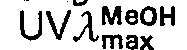
-

-
- NMR (CDCl3) δ: 1.06 (3H, t, J=8Hz, CH3CH2― 1.94 (3H, s, CH3CONH―), 3.94 (1 H, dt, J=9Hz, J=3Hz, C-5H), 5.92 (1 H, brs, NH), 6.90 (1 H, s, -CHAr2), 7.32 (10H, s, -CHAr2).
- Mass (m/z): 464 (M+), 394 (M+ -EtCH=C=O).
- Production of methyl 3-(2-acetamido)ethylthio-6-ethyl-7-oxo-1-azabicyclo[3.2.0]hept-2-ene-2-carboxylate (PS-5. methyl ester):-
- Prepared in the same way as in Example 1.
-

-
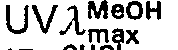
-

-
- NMR (CDCl3) δ: 1.06 (3H, t, J=8Hz, ―CH―CH3), 1.70―2.06 (2H, m, ―CH2CH3), 1.99 (3H, s, ―NHCOCH3), 2.90―3.56 (7H, m, 3X―CH2―, ―CH―), 3.83 (3H, s, ―CO2CH3), 3.96 (1 H, dt, J=8Hz, J=2Hz, C―5H), 6.20 (1 H, brs, ―NH).
- Mass (m/z): 312 (M+), 242 (M+ -EtCH=C=O).
- Production of pivaloyloxymethyl 3-(2-acetamido)ethylthio-6-ethyl-7-oxo-1-azabicyclo[3.2.0]hept-2-ene-2-carboxylate (PS―5. pivaloyloxymethyl ester):―
- Prepared in the same way as in Example 1.
-

-

-

-
- NMR (CDCl2) δ: 1.03 (3H, t, J=7.5Hz, CH2CH3) CH 3
- 1.22 (9H, s, CH―C―CH3)
- 1.65―1.95 (2H, m, CH2CH3)
- 1.98 (3H, s, COCH3)
- 2.70―3.70 (7H, m, C―4H2, C―6H, S―CH2CH2NH)
- 3.92 (1H, dt, J=3.0Hz, J=9.0Hz, C―5H)
- 5.83 (1H, d, J=12.0Hz, O-CHH-O)
- 5.90 (1 H, d, J=12.0Hz, O―CHH―O)
- 6.15 (1H, br, NH)
- Mass (m/z): 412 (M+).
- Production of p-nitrobenzyl 3-(2-acetamido)ethylthio-6-isopropyl-7-oxo-1-azabicyclo[3.2.0]hept-2-ene-2-carboxylate (PS―6, p-nitrobenzyl ester):―
- Prepared in the same way as in Example 1.
-

-

-
- NMR (CDCI3) 8: 1.02 (3H, d, J=7.0Hz,


- 1.98 (3H, S, COCH3), 2.80-3.60 (7H, m, C-4H, C-6H, 2 x CH2), 4.02 (1 H, dt, J=9.0Hz, J=3.0Hz, C-5H), 5.20 (1 H, d, J=14.0Hz, ArCHH), 5.48 (1 H, d, J=14.0Hz, ArCHH), 6.00 (1 H, m, NH), 7.62 (2H, d, J=9.0Hz, ArH), 8.18 (2H, d, J=9.0Hz, ArH).
- Benzyl 3-(2-acetamido)ethylthio-6-isopropyl-7-oxo-1-azabicyclo[3.2.0]hept-2-ene-2-carboxylate (PS-6. benzyl ester):-
- Prepared in the same way as in Example 1.
-

-

-
- NMR (CDCl3) ε: 1.07 (6H, t, J=8Hz, ―CH·(CH3)2), 2.00 (3H, s, ―NHCOCH3), 4.05 (1H, dt, C―5H), 5.31 (1H, d, J=12Hz, ―CH, HAr), 5.47 (1H, d, J=12Hz, ―CH, HAr), 6.07 (1H, brs, NH―), 7.46 (5H, s, Ar-H).
- Mass (m/z): 402 (M+), 318 (M+ ―i·Pr·CH=C=O).
- Production of p-nitrobenzyl 5,6-trans-3-(2-acetamidoethylthio)-6-(1-hydroxyethyl)-7-oxo-1-azabicyclo[3.2.0]hept-2-ene-2-carboxylate (PS―3A. p-nitrobenzyl) ester:―
- Prepared in the same way as in Example 1.
-

-

-
- NMR (CDCI3) 8: 1.37 (3H, d, J=6.5Hz, -CHOH-CH3), 1.96 (3H, S, -COCH3), 2.50-3.65 (7H, m, C6―H, C4―H2, ―S―CH2―CH2―NH―), 3.80―4.40 (2H, m, ―CHOH―CH3, C5―H), 5.21 (1 H, d, J=14.0Hz, ―CHH―Ar), 5.45 (1H, d, J=14.0Hz, ―CHH―Ar), 7.59 (2H, d, J=8.4Hz,
-

- Mass (m/z): 363 (M+ ―86).
- Production of p-nitrobenzyl 5,6-cis-3-(2-acetamidoethylthio)-6-(1-hydroxyethyl)-7-oxo-1-azabicyclo[3.2.0]hept-2-ene-2-carboxylate (PS―3B Ω p-nitrobenzyl ester):―
- Prepared in the same way as in Example 1.
-

-

-
- NMR (CDCI3) 8: 1.41 (3H, d, J=6.4Hz, -CHOH-CH3), 1.96 (3H, s, -CO-CH3), 2.83-3.91 (7H, m, C-4H, C-6H, -SCH2CH2NH-), 4.00-4.50 (2H, m, C-5H, -CHOH-), 5.21 (1 H, d, J=14.OHz, ―CHH―Ar), 5.45 (1 H, d, J= 14.0Hz, ―CHH―Ar), 7.60 (2H, d, J=8.41 Hz, ―CH2―Ar), 8.17 (2H, d, d, J=8.4Hz, -CH2-Ar).
- Mass (m/z): 363 (M+ -CH3CHOH.CH=C=O).
- Production of thienamycin:
- In accordance with the method described in Journal of Antibiotic 32, Nos. 11-12, 1979, Streptomyces cattleya (NRRL 8057) was inoculated in an ISP-2- agar culture medium to cause full adhesion of spores. A platinum loopful of the resulting slant culture was inoculated in a 500 ml Erlenmeyer flask containing 100 ml of an SE-4 seed culture medium consisting of 0.3% of beef extract (a product of Difco Laboratories), 0.5% of bactotryptone (a product of Difco Laboratories), 0.5% of soybean meal, 0.1 % of glucose, 2.4% of soluble starch, 0.5% of yeast extract and 0.4% of CaC03 and having the pH adjusted to 7.5, and cultivated with shaking at 28°C.
- Two milliliters of the seed culture was inoculated in 200 Erlenmeyer flasks (capacity 500 ml) each containing 100 ml of a culture medium consisting of 2.5% of glucose, 1.0% of corn steep liquor, 0.5% of yeast extract, 0.5% of Pharmamedia, 0.3% of CaCO3 and 0.0013% of CoCl2·6H2O and having the pH. adjusted to 7.3, and cultivated with shaking at 28°C for 5 days.
- The culture broth was put into ice water to cool it rapidly, and 3% of Highflow Supercell (a filtration aid made by Jones Manville Co.) was added. It was suction-filtered to give 21 liters of a filtrate. About 48 µg/ml of thienamycin was found to be contained in the filtrate. Operations subsequent to this were all performed at a low temperature of 6°C.
- The pH of the filtrate was carefully lowered to 4.5, and adsorbed to a column (7 x 90 cm) of Dowex 50 x 4 (Na-form 20-50 mesh) equilibrated by water and eluted with 2% pyridine. The eluate was concentrated under reduced pressure, and its pH was adjusted to 7.3. Then, it was charged onto a column (3 x 50 cm) of Dowex 1 x 2 Cl-form 50-100 mesh equilibrated with water, and eluted with water. The eluate was lyophilized.
- A column (2.5 x 40 cm) of Dowex 50 x 8 lutidine-form 200-400 mesh was equilibrated with a 0.25 M lutidine acetate buffer (pH 6.3), and a solution of the lyophilized product in 5 ml of 0.1 M lutidine acetate (pH 6.3) was charged onto the column. The column was eluted with a buffer (pH 6.3) of 0.25 M lutidine acetate. Throughout the entire process, active fractions were detected by bioassay using Comamonas terrigena IFO 12685 as an assay microorganism and by coloration in ninhydrin and Ehrlich reactions.
- The active fractions were collected, and lyophilized. The lyophilized product was dissolved in 2 ml of a phosphate buffer (0.01 M, pH 7.0). The pH of the solution was adjusted to 7.0, and the solution was charged onto a column (1.1 x 90 cm) of Biogel P-2 (a product of Bio-Rad Co.) equilibrated with the aforesaid buffer and developed by the same buffer. Active fractions were collected and adsorbed to a column (1.1 x 40 cm) filled with Diaion HP-20 AG (a product of Mitsubishi Chemical Industries, Ltd.), followed by elution with water. The active fractions were lyophilized to give 14 mg of a white lyophilized standard product.
- The purity of the product, measured on the basis of

- Production of p-nitrobenzyl (5R, 6S)3-(2-acetamido)ethylthio-6-[(1R)1-hydroxy]ethyl-7-oxo-1-azabicyclo[3.2.0]hept-2-ene-2-carboxylate (N-acetylthienamycin p-nitrobenzyl ester):
- Thienamycin (18.8 mg) was dissolved in 4.0 ml of dry dimethyl formamide to form an emulsion. The emulsion was cooled with ice water, and with stirring, 2.0 ml of acetic anhydride as distilled was added. The mixture was stirred at the same temperature for 40 minutes.
- The reaction mixture was washed with 25 ml of hexane ten times, and when dimethyl formamide and acetic anhydride were almost exhausted, 0.5 ml of ether was added. The mixture was then washed with 25 ml of hexane twice.
- The residue was dried under reduced pressure for 3 minutes, and dissolved in 4.0 ml of dry dimethyl formamide. The solution was cooled with ice water, and with stirring, 144 microliters of triethylamine was added. Then a solution of 149 mg of p-nitrobenzyl bromide in 1.5 ml of dimethyl formamide was gradually added dropwise to the mixture. After the addition, the temperature was raised to room temperature, and the reaction was performed for 2 hours. The reaction mixture was poured ino 40 ml of ethyl acetate, cooled, and washed with 20 ml of 0.1 M phosphate buffer (pH 6.86) three times. The product was dried over anhydrous sodium sulfate, and concentrated to dryness. Dichloromethane (1 ml) was added, and the precipitated solid was collected by filtration. The solid was washed with 2 to 3 ml of dichloromethane, and dried under reduced pressure to give 7.2 mg of the desired product as a white solid. The mother liquor was concentrated under reduced pressure, and chromatographed on a column (1.0 x 8.0 cm) of silica gel (4 gr) with a developing solvent consisting of a 1:2 mixture of benzene and acetone. Fractions containing the desired product which had an Rf value of 0.10 (benzene/acetone=1/1) by TLC were collected and concentrated to dryness to give 4.0 mg of the desired product as a white solid. The total amount of the product was 11.2 mg (yield 36.1 %).
-

-

-

- NMR (DMSO-ds) 8:
- 1.15 (3H, J=7Hz, ―CH(OH)―CH3).
- 1.82 (3H, S, -NHCO-CH3),
- 2.80―3.50 (7H, m, ―S―CH2―CH2―NHAc, C―4H2, C―6H),
- 3.60-4.30 (2H, m, -CH(OH)-CH3, C-5H),
- 5.24 (1 H, d, J=14.5Hz, -CH-H-Ar).
- 5.47 (1H, d, J=14.5Hz, ―CH·H―Ar),
- 7.72 (2H, d, J=9Hz, -ArH),
- 8.27 (2H, d, J=9Hz, -ArH),
- Production of p-nitrobenzyl (5R, 6S)6-[(1R)1-hydroxy)]ethyl-3-(2-p-nitrobenzyloxycarbonyl- amino)ethylthio-7-oxo-1-azabicycio[3.2.0]hept-2-ene-2-carboxylate (N-p-nitrobenzyloxycarbonyl thienamycin):-
- With ice cooling, 4.62 mg (0.0055 millimole) of sodium hydrogen carbonate and 3 ml of dioxane were added to a solution of 15 mg (0.055 millimole) of thienamycin in 3 ml of distilled water. Then, a solution of 17.7 mg (0.082 millimole) of p-nitrobenzyl chloroformate in 0.5 ml of dioxane was added dropwise with stirring. The mixture was stirred for 10 minutes with ice cooling. The reaction mixture was washed with 2 ml of ether twice, and 0.1 M sulfuric acid was added. The pH of the aqueous layer was adjusted to 2.3, and it was extracted with 3 ml of ethyl acetate three times. The organic layers were combined, and washed with a cold saturated aqueous solution of sodium chloride, dried over anhydrous sodium sulfate, and concentrated under reduced pressure to a volume of about 3 ml. Immediately then, 5 ml of anhydrous dimethyl formamide and 16.8 microliters (0.121 millimole) of triethylamine was added. With ice cooling and stirring, a solution of 13.1 mg (0.0605 millimole) of p-nitrobenzyl bromide in 1 ml of dimethyl formamide was added dropwise. Then, the temperature was gradually raised to room temperature, and the mixture was stirred for 2 hours.
- The reaction mixture was poured into 50 ml of ethyl acetate, washed with a cold 0.1 M phosphate buffer (pH 6.8) (10 ml x 4). The organic layer was dried over anhydrous sodium sulfate and concentrated. The residue was washed with ether to give 12 mg of the desired product as an insoluble substance.
-
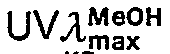
-

- NMR (DMSO―d6) δ: 1.15 (3H, d, J=6.1 Hz, ―CH·CH3). |
- 2.7―3.6 (7H, m, ―S.CH2CH2―NH― C―4H2, C―6H).
- 3.7―4.3 (2H, m, C―5H, ―CH―OH).
- 5.22 (2H, S, ―NH―CO2―CH2Ar).
- 5.27 (1H, d, J=14.5Hz, -CH-HAr).
- 5.48 (1 H, d, J=14.5Hz, -CH-HAr).
- 7.5-7.8 (4H, m, ArH).
- 8.1-8.4 (4H, m, ArH).
- Production of p-nitrobenzyl 3-(2-acetamido) ethylsulfinyl-6-ethyl-7-oxo-1-azabicyclo[3.2.0]hept-2-ene-2-carboxylate:―
- 240 mg of p-nitrobenzyl 3-(2-acetamido)ethylthio-6-ethyl-7-oxo-1-azabicyclo[3.2.0]hept-2-ene-2-carboxylate was dried, and dissolved in 25 ml of methylene chloride. The solution was cooled to -30°C. A solution of 104.9 mg of m-chloroperbenzoic acid in 12 ml of dry methylene chloride was added to the above solution with stirring, and the reaction was performed at this temperature for 40 minutes. After the reaction, the reaction mixture was poured into an ice-cooled solution of 0.09 ml of triethylamine in 100 ml of ethyl acetate, and stirred for 5 minutes with ice cooling. Then, 100 ml of ethyl acetate was added, and the mixture was transferred to a separating funnel and washed with an ice-cooled 0.1 M phosphate buffer (pH 6.86) four times. The solvent layer was dried over anhydrous sodium sulfate, and benzene was added. The mixture was concentrated under reduced pressure to a volume of 1 ml. The concentrate was passed through a silica gel column (18 g; 42 ml, 2.0 x 13.4 cm; the same silica gel as mentioned hereinabove) wetted with benzene-acetone (1 :1), and developed with about 50 ml of the same solvent mixture. The eluate contained 14.1 mg of the starting material. When the column was developed further with about 60 mg of benzene-acetone (1:2) and then 70 ml of benzene-acetone (1:3) to give the title compound (amount 211 mg; yield 89%). On a silica gel TLC plate (the same TLC plate as described hereinabove), this product showed an Rf value of 0.36 with benzene-acetone (1:2).
-

-

-

-
- NMR (CDCl3) δ:
- 1.08 (3H, t, J=7.0Hz, CH2CH3), 1.84 (2H, m, CH2CH3),
- 2.00 (3H, S, NHCOCH3), 2.90―3.92 (7H, m, 3XCH2, CH), 3.92―4.23 (1H, m, CH),
- 5.22 (1H, d, J=14.OHz, ArCHH), 5.48 (1H, d, J=14.OHz, ArCHH), 6.40 (1H, brs, NH),
- 7.53-7.72 (2H, d, J=9.0Hz, ArH),
- 8.12-8.28 (2H, d, J=9.0Hz, ArH).
- Mass (m/z): 449 (M+) (FD Mass).
- Benzyl 3-(2-acetamido)ethylsulfinyl-6-ethyl-7-oxo-1-azabicyclo[3.2.0]hept-2-ene-2-carboxylate:―
- Prepared in the same way as in Example 13.
-

-

-

-
- NMR (CDCl3) δ: 1.04 (3H, t, J=7.0Hz, CH2CH3), 1.86 (2H, m, CH2CH3), 1.94 (3H, s, COCH3), 2.90-3.84 (7H, m, 3XCH2, CH), 4.12 (1 H, m, C-5H), 5.26 (2H, s, ArCH2), 6.40 (1 H, m, NH), 7.36 (5H, s, ArH).
- Mass (m/z): 404 (M+).
- Production of benzhydryl 3-(2-acetamido)ethyl-sulfinyl-6-ethyl-7-oxo-1-azabicyclo[3.2.0]hept-2- ene-2-carboxylate:-
- Prepared in the same way as in Example 13.
-

-
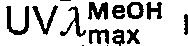
-

-
- NMR (CDCl3) δ:
- 1.08 (3H, t, J=8Hz, ―CH2―CH3),
- 1.92 (3H, s, -NHCOCH3),
- 4.08 (1H, dt, J=9Hz, J=3Hz, C-5H),
- 6.34 (1H, br, NH), 6.87 (1H, s, ―CHAr2),
- 7.32 (10H, s-like, -CHAr2),
- Mass (m/z): 480 (M+).
- Production of methyl 3-(2-acetamido)ethyl-sulfinyl-6-ethyl-7-oxo-1-azabicyclo[3.2.0]hept-2-ene-2-carboxylate:-
- Prepared in the same way as in Example 13.
-

-

-
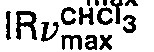
-
- NMR (CDCI3) 8:
- 1.07 (3H, t, J=8Hz, ―CH2―CH3),
- 1.70―2.00 (2H, m, ―CH2―CH3),
- 2.00 (3H, s, -NHCOCH3), 2.90―3.90 (7H, m, 3X―CH2―, ―CH―), 3.89 (3H, s, ―CO2CH3),
- 4.00―4.20 (1H, m, C―5H), 6.60 (1H, brs, ―NH).
- Mass (m/z): 328 (M+) (FD Mass).
- Production of pivaloyloxymethyl 3-(2-acetamino)ethylsulfinyl-6-ethyl-7-oxo-1-azabicy- clo[3.2.0]hept-2-ene-2-carboxylate (the sulfoxide of PS―5·pivaloyloxymethyl ester):―
- 184 mg (0.45 millimole) of the PS―5·pivaloyloxymethyl ester prepared in Example 5 was dissolved in 10 ml of methylene, chloride, and cooled to -30°C. A solution of 85.0 mg (0.49 millimole) of m-chloroperbenzoic acid in 10 ml of methylene chloride was added dropwise, and the reaction was performed at the same temperature for 30 minutes. The reaction mixture was poured into 100 ml of methylene chloride, washed with a saturated aqueous solution of sodium carbonate, and dried over anhydrous sodium sulfate. Benzene was added to the organic layer, and the mixture was concentrated under reduced pressure. The concentrate was adsorbed to a column of silica gel (25 ml) and eluted with benzene-acetone (1:1 ), (1:3), and (1:5) respectively. Those eluates which had an UV absorption at Rf=0.2 in silica gel TLC developed with benzene-acetone (1:2) were dried under reduced pressure to give 147 mg of the title compound.
-

-

-

-
- NMR (CDCI3) 8:
- 1.06 (3H, t, J=7.5Hz, CH2CH3),
- 1.27 (9H, s,

- 1.70―2.05 (2H, m, CH2CH3),
- 2.02 (3H, s, COCH3),
- 2.90―4.30 (8H. m. C―4H. C―5H

- 5.80-6.05 (2H, m, COOCH20CO),
- 6.55 (1 H, m, NH).
- Production of p-nitrobenzyl 3-(2-acetamido)ethylsulfinyl-6-isopropyl-7-oxo-1-azabicy- clo[3.2.0]hept-2-ene-2-carboxylate (the sulfoxide of PS―6.p-nitrobenzyl ester):―
- Prepared in the same way as in Example 13.
-

-

-
- NMR (CDCl3) δ:


- 2.90-4.25 (8H, m, C―4H, C―5H, C―6H, 2 × CH2),
- 5.22 (1 H, d, J=14.0Hz, ArCHH),
- 5.44 (1H, d, J=14.0Hz, ArCHH),
- 6.45 (1 H, m, NH),
- 7.56 (2H, d, J=9.0Hz, ArH),
- 8.18 (2H, d, J=9.0Hz, ArH).
- Production of benzyl 3-(2-acetamido)ethylsulfinyl-6-isopropyl-7-oxo-1-azabicyclo[3.2.0]hept-2- ene-2-carboxylate:―
- Prepared in the same way as in Example 13.
-

-

- NMR (CDCl2) δ:
- 1.07 (6H, t, J=7Hz, -CH(CH3)2),
- 1.98 (3H, s, -NHCOCH3),
- 4.12 (1 H, m, C-5H),
- 5.29 (2H, s, ―CH2―Ar),
- 6.47 (1 H, br, -NH),
- 7.37 (5H, s, -like, ArH).
-
- Mass (m/z): 418 (M+) (FD Mass).
- Production of p-nitrobenzyl 5,6-trans-3-(2-acetamido)ethylsulfinyl-6-(1-hydroxy)ethyl-7-oxo-1-azabicyclo[3.2.0]hept-2-ene-2-carboxylate (the sulfoxide of PS―3A.p-nitrobenzyl ester):―
- Prepared in the same way as in Example 13.
-

-

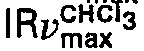
-
- NMR (CDCl3) δ:
- 1.41 (3H, d, J=6.0Hz, ―CHOH―CH3), 1.97 (3H, s, ―CO―CH3), 3.00―3.90 (7H, m, C―6H, C―4H2, S―CH2―CH2NH),
- 4.00-4.55 (2H, m, C-5H, C-7H),
- 5.25 (1H, d, J=14Hz, CHH-Ar),
- 5.42 (1H, d, J=14Hz, CHH―Ar),
- 6.10-6.50 (1 H, m, -NH-),
- 7.58 (2H, d, J=9.0Hz, ―ArH),
- 8.19 (2H, d, J=9.0Hz, -ArH).
- p-Nitrobenzyl 5,6-cis-3-(2-acetamido-ethylsulfinyl-6-(1-hydroxy)ethyl-7-oxo-1-azsbicy- clo[3.2.0]hept-2-ene-2-carboxylate (the sulfoxide of PS―3B.p-nitrobenzyl ester):―
- Prepared in the same way as in Example 13.
-

-

-
- NMR (CDCl3) δ:
- 1.41 (3H, d, J=6.0Hz, CHOH-CH3),
- 1.96 (3H, S, CO-CH3),
- 2.90―3.95 (7H, m, C-6H, C―4H2, SCH2CH2N),
- 5.24 (1H, d, J=14.0Hz, CHHAr), 5.41 (1H, d, J=14.0Hz, CHHAr), 7.58 (2H, d, J=8.4Hz, ArH),
- 8.19 (2H, d, J=8.4Hz, ArH).
- Production of p-nitrobenzyl (5R, 6S)-3-(2-acetamido)-ethylsulfinyl-6-[(1R)-1-hydroxy]ethyl-7-oxo-1-azabicyclo[3.2.0]hept-2-ene-2-carboxylate (N-acetylthienamycin.p-nitrobenzyl ester.sulfoxide):―
- 28.8 mg of N-acetylthienamycin p-nitrobenzyl ester was dissolved in 10 ml of dry tetrahydrofuran which had just been distilled. The solution was cooled to -30°C, and a solution of 14.4 mg of m-chloroperbenzoic acid in 1.44 ml of dry tetrahydrofuran was added dropwise over the course of 5 minutes with stirring. After the addition, the mixture was stirred at the same temperature for 30 minutes, poured into 100 ml of ethyl acetate, and then washed with a cooled saturated aqueous solution of sodium hydrogen carbonate (50 ml x 2) and a saturated aqueous solution of sodium chloride (50 ml x 1). The washed product was dried over anhydrous sodium sulfate, and concentrated under reduced pressure. The resulting residue (32.5 mg) was chromatographed on a column (0.5 x 5 cm) of silica gel (0.5 g) using benzene-acetone (1:3) as an eluent. Fractions which contained the desired product (Rf=0.07 in TLC with benzene-acetone (1:3)) were collected and concentrated to dryness to afford 16.2 mg (yield 54.4%) of the desired product.
-

-

- 1700 (C=0 of ester).
-
- NMR (DMSO-d6) δ:
- 1.14 (3H, d, J=6.5Hz, -CH(OH)-CH3),
- 1.78 (3H, s, -NHCOCH3),
- 2.80―3.65 (7H, m, ―S―CH2―CH2―NHAc,
- C-4H2, C-6H),
- 3.70-4.35 (2H, m, -CH(OH)-CH3, C-5H),
- 5.40(2H, s, ―CH2―Ar),
- 7.71 (2H, d, J=9Hz, Ar),
- 8.25 (2H, d, J=9Hz, Ar).
- Production of p-nitrobenzyl (5R, 6S)-6-[(1R)1-hydroxy]-ethyl-3-(2-p-nitrobenzyloxycarbonylamino)-ethylsulfinyl-7-oxo-1-azabicyclo[3.2.0]hept-2-ene-2-carboxylate (N-p-nitrobenzyloxycarbonyl- thienamycin.p-nitrobenzyl ester.suffoxide):
- A solution of 10 mg (0.017 millimole) of N-(p-nitrobenzyloxycarbonyl)thienamycin p-nitrobenzyl ester in 2 ml of anhydrous tetrahydrofuran was cooled to -20°C, and with stirring, a solution of 7.3 mg (0.0338 millimole) of m-chloroperbenzoic acid in 0.5 ml of tetrahydrofuran was added dropwise in an atmosphere of nitrogen. The mixture was stirred at the same temperature for 30 minutes, diluted with 10 ml of ethyl acetate, washed with a cold saturated solution of sodium hydrogen carbonate (2 ml x 2) and a saturated aqueous solution of sodium chloride (2 ml=2), dried over anhydrous sodium sulfate, and concentrated to give a solid. The solid was washed with ethyl acetate to give 5 mg of the desired product as an insoluble substance.
-

-

-
- NMR (CDCl3) δ:
- 1.36 (3H, d, J=6Hz, >CH-CH3),
- 3.0―3.9 (7H, m, C―6H, C―4H2, ―S―CH2―CH2―HH―),
- 4.0-4.6 (2H, m C-5H, >CH-OH),
- 5.0―5.7 (4H, m, ―O―CH2―Ar × 2),
- 7.5-7.8 (4H, m, ArH x 4),
- 8.1-8.4 (4H, m, ArH x 4).
- Production of p-nitrobenzyl 6-ethyl-3-mercapto-7-oxo-1-azabicycio[3.2.0]hept-2-ene-2-carboxyiate:
- 49.5 mg of PS-5-p-nitrobenzyl ester.sulfoxide was dissolved in 15 ml of dry dimethyl formamide, and the solution was cooled to -40°C. With stirring, 0.94 ml of a dimethyl formamide solution of sodium hydrosulfide (NaSH.XH2O abt 70%) (10 mg/ml) was gradually added. The mixture was stirred at the same temperature for 30 minutes. The reaction mixture was poured into 70 ml of benzene, and washed with a cold 0.1 M phosphate buffer (pH 6.86) (30 ml x 3). The benzene layer was dried over anhydrous sodium sulfate, concentrated under reduced pressure to a volume of about 0.3 ml, charged onto a column (1.2 x 90 cm) of Biobeads S-X3 and developed with benzene. Fractions which showed an UV absorption at Rf=0.55 in silica gel TLC with benzene-acetone (2:1) were collected. Carbon tetrachloride (3 to 4 ml) was added, and the mixture was concentrated under reduced pressure to a volume of about 1 ml. Again, about 4 ml of carbon tetrachloride was added to form a solution having a volume of about 5 mi. About 4 ml of the solution was used for NMR spectroscopy, and about 1 ml of it was used for IR and UV spectroscopy. Each of these portions was concentrated under reduced pressure until the solvent was almost exhausted, and the respective spectra were quickly measured.
-

-

-
- NMR (CDCI3) 8:
- 1.06 (3H, t, J=7.5Hz, -CH2-CH3),
- 1.59 (1 H, s, -SH),
- 1.55-2.05 (2H, m, -CH2-CH3),
- 2.70―3.60 (3H, m, C―4H2, C―6H),
- 3.92 (1 H, dt, J=3.0Hz, J=9.0Hz, C-5H),
- 5.22 (1H, d, J=14.OHz, ―CH.H―Ar),
- 5.53 (1H, d, J=14.0Hz, ―CH·―Ar),
- 7.65 (2H, d, J=9.0Hz, ArH),
- 8.22 (2H, d, J=9.0Hz, ArH).
- Production of benzyl 6-ethyl-3-mercapto-7-oxo-1-azabicyclo[3.2.0]hept-2-ene-2-carboxylate:
- 54.3 mg of PS-5.benzyl ester sulfoxide was dissolved in 15 ml of dry dimethyl formamide. The solution was cooled to -40°C, and with stirring, 1.15 ml of a dimethyl formamide solution of sodium hydrosulfide (NaSH.XH20, abt 70%) (10 mg/ml) was added gradually with stirring. Five minutes later, the desired product having an Rf of 0.74 (benzene-acetone in a ratio of 1;1) in silica gel TLC was determined. The mixture was stirred at the same temperature for 30 minutes. The reaction mixture was poured into 120 ml of carbon tetrachloride, and washed with a cooled 0.1 M phosphate buffer (pH 6.86) (80 ml=3). The carbon tetrachloride solution was dried over anhydrous sodium sulfate, and concentrated under reduced pressure to a volume of about 0.5 ml. About 0.4 ml of the concentrate was used for NMR spectroscopy, and about 0.1 ml of it for IR and UV spectroscopy. The respective spectra were quickly measured.
-
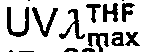
-

-
- NMR (CCl4) δ:
- 1.03 (3H, t, J=7.5Hz, ―CH2―CH3)
- 1.50―2.05 (2H, m, ―CH2―CH3)
- 2.50-3.50 (3H, m, C-4H2, C-6H)
- 3.77 (1H, dt, J=3.0Hz, J=9.0Hz, C-5H)
- 5.12 (1H, d, J=13.0Hz, -CHH-Ar)
- 5.30 (1 H, d, J=13.0Hz, ―CH·H―Ar)
- 6.15 (1 H, s, -SH)
- 7.15-7.55 (5H, m, Ar)
- Production of benzyl 6-isopropyl-3-mercapto-7-oxo-1-azabicyclo[3.2.0]hept-2-ene-2-carboxylate:
- Example 25 was repeated except that PS-6.benzyl ester.sulfoxide was used instead of PS-5.benzyl ester.sulfoxide. Thus, the title compound was obtained.
-

-

-
- Production of pivaloyloxymethyl 6-ethyl-3-mercapto-7-oxo-1-azabicyclo[3.2.0]hept-2-ene-2-carboxylate:
- A solution of 47.7 mg of PS-5.pivaloyloxymethyl ester.sulfoxide was dissolved in 15 ml of dry dimethyl formamide. The solution was cooled to -40°C. With stirring, 0.96 ml of a dimethyl formamide solution (10 mg/ml) of sodium hydrosulfide (NaSH.xH20 abt 70%) was gradually added. The mixture was stirred at the same temperature for 30 minutes. The reaction mixture was poured into 70 ml of benzene, and washed with a cooled 0.1 M phosphate buffer (pH 6.86) (40 mi=3). The benzene layer was dried over anhydrous sodium sulfate, concentrated under reduced poressure to a volume of about 0.5 ml, and chromatographed on a column (1.2 x 90 cm) of Biobeads S-X3 using benzene as an eluent. Those eluates which showed an UV absorption at Rf=0.43 in silica TLC with benzene-acetone (1:1) were collected, and 3 to 4 ml of carbon tetrachloride was added. The mixture was concentrated under reduced pressure to a volume of about 1 ml, and again 3 to 4 ml of carbon tetrachloride was added to form a solution having a volume of about 5 ml. About 4 ml of the solution was used for NMR spectroscopy, and about 1 ml of it, for IR and UV spectroscopy.. Each of these portions was concentrated under reduced pressure until the solvent was almost exhausted, and the respective spectra were quickly measured.
-

-

- 1753 (C = 0 of ester), 1710 (C=O of ester, shoulder).
-
- NMR (CDCl2):
- 1.03 (3H, t, J=7.5Hz, ―CH2―CH3)
- 1.67 (1 H, S, -SH)
- 1.22 (9H, S, ―C(CH3)3)
- 1.57―2.07 (2H, m, ―CH2―CH3)
- 2.50―3.65 (3H, m, C―4H2, C―6H)
- 3.87 (1H, td, J=3.0Hz, J=9.0Hz, C-5H)
- 5.85 (1 H, d, J=5.0Hz, ―O―CH.H―O―)
- 5.94 (1 H, d, J=5.0Hz, -O-CH.H-O-)
- Production of p-nitrobenzyl (5R, 6S)-6-[(1R)-1-hydroxy]-ethyl-3-mercapto-7-oxo-1-azabicyclo[3.2.0]hept-2-ene-2-carboxylate:
- In the same way as in Example 24, there was produced a comopund in which the 3-position was -SH. The compound had an Rf of 0.40 in TLC with benzene-acetone (1:3).
-

-

- 1680 (C=O of ester)
-
- Production of p-nitrobenzyl bis-(6-ethyl-3-thio-7-oxo-1-azabicyclo[3.2.0]hept-2-ene-2-carboxylate:
- Sodium hydrosulfide (NaSH.xH20 abt 70%) was added in an amount of 3.82 ml as a dry dimethyl formamide solution in a concentration of 10 mg/ml to a solution of 204.8 mg of PS-5.p-nitrobenzyl ester.sulfoxide in 70 ml of dry dimethyl formamide at -35°C with stirring. With stirring at the same temperature, 318 microliters of TEA was added 1.5 hours later. Furthermore, 45.7 microliters of trichloroacetonitrile was added. The mixture was stirred at the same temperature for 1 hour to complete the reaction. After the reaction, the reaction mixture was poured into about 300 ml of benzene, and washed with a 0.1 M phosphate buffer (pH 8.40) (250 ml x 3). The organic layer was dried over anhydrous sodium sulfate, and the benzene was distilled off under reduced pressure to give a yellowish brown oily product. The oily product was chromatographed on a column (1.0 x 24.0 cm) of silica gel (20 g) using benzene-acetone (1 5:1) as an eluent. The desired product was searched by TLC, and fractions which showed an UV absorption at Rf=0.33 in silica gel TLC with benzene-acetone (10:1) were collected and distilled under reduced pressure to remove the solvent. Thus, the desired product was obtained in an amount of 86.8 mg (yield 54.9%).
-

-
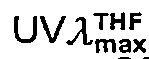
- 325.2 (E=13800)
-

- 1700 (C=O of ester)
-
- NMR (CDCI3) 8:
- 1.06 (3H, t, J=7.5Hz, ―CH2CH3)
- 1.60―2.00 (2H, m, ―CH2CH3)
- 2.98 (1H, dd, J=9Hz, J=19Hz, C―4H)
- 3.42 (1H, dd, J=9Hz, J=19Hz, C-4H)
- 2.90-3.30 (1H, m, C-6H)
- 3.94 (1H, dt, J=3Hz, J=9Hz, C-5H)
- 5.22 (1H, d, J=14Hz, ―CH.H―Ar)
- 5.50 (1H, d, J=14Hz, ―CH·H―Ar)
- 7.61 (2H, d, J=9Hz, Ar)
- 8.19 (2H, d, J=9Hz, Ar)
- Mass (m/z): 348


- Production of p-nitrobenzyl 6-ethyl-3-methylthio-7-oxo-1-azabicydo[3.2.0]hept-2-ene-2-carboxylate:
- (A) 23 mg (0.05 millimole) of PS-5.p-nitrobenzyl ester.sulfoxide was dissolved in 10 ml of anhydrous dimethyl formamide. The solution was cooled to -35°C, and 0.43 ml of a separately prepared DMF solution of sodium hydrosulfide (10 mg/ml) was added gradually. The reaction was performed at the same temperature for 10 minutes. The reaction mixture was poured into 50 ml of ethyl acetate and washed with a phosphate buffer (pH 6.86). The ethyl acetate layer was dried over anhydrous sodium sulfate, and concentrated under reduced pressure to a volume of 10 ml. The concentrate was cooled to 0°C, and 3 ml of an ether solution of diazomethane was added. The mixture was then concentrated to dryness under reduced pressure. The residue was dissolved in a small amount of benzene and adsorbed to a silica gel column (10 ml). The column was eluted with benzene-acetone (30:1). Fractions which showed an UV absorption at Rf=0.78 by silica gel TLC with benzene-acetone (3:1) were collected and concentrated to dryness under reduced pressure to give 10.8 mg of the desired product.
- (B) 0.43 ml of a dimethyl formamide solution of sodium hydrosulfide (10 mg/ml) cooled to -35°C was gradually added with stirring to a solution of 23 mg (0.05 millimole) of PS-5.p-nitrobenzyl ester.sulfoxide in 10 ml of anhydrous dimethyl formamide. The reaction was carried out for 10 minutes. Then, at the same temperature, 2.8 microliters (0.20 millimole) of triethylamine and 6.3 microliters (0.10 millimole) of methyl iodide were added. The mixture was stirred further. The reaction mixture was poured into 50 ml of ethyl acetate, and washed with a 0.1 M phosphate buffer (pH 6.8). The organic layer was dried over anhydrous sodium sulfate and concentrated under reduced pressure. The resulting residue was isolated and purified in the same manner as described in section (A) above to give 12.1 mg of the desired compound.
-

-

- IRνCHCl3max cm-1: 1778 (CO of β-lactam)
- 1702 (CO of ester).
-
- NMR (CDCI3) 8:
- 1.04 (3H, t, J=7.0Hz, CH2CH3)
- 1.85 (2H, m, CH2CH3)
- 2.36 (3H, S, SCH3)
- 3.12 (3H, m, C-6H, C-4H2)
- 3.94 (1 H, dt, J=3.0Hz, J=9.0Hz, C-5H)
- 5.20 (1 H, d, J=15.0Hz, CHH-Ar)
- 5.50 (1 H, d, J=15.0Hz, CHH-Ar)
- 7.60 (2H, d, J=8.0Hz, Ar) 8.16 (2H, D, J=8.0Hz, Ar) Mass (m/z): 362 (M+),
- 292 (M+ ―CH3CH2CHCO).
- Production of p-nitrobenzyl 3-n-butylthio-6-isopropyl-7-oxo-1-azabicyclo[3.2.0]hept-2-ene-2-carboxylate:
- Prepared in the same way as in Example 30 (B).
-
- 270 (10100).
-

- 1695 (ester).
-
- NMR (CDCl3) δ: 0.92 (3H, t, J=7.0, ―CH2CH2CH2CH3),
- 1.02 (3H, t, J=7.0,
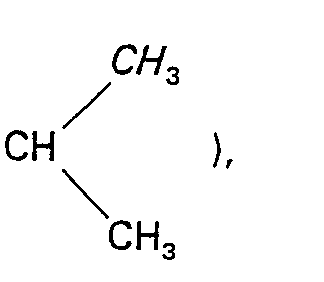
- 1.05 (3H, t, J=7.0,

- 1.20―2.20 (5H, m,

- 2.70-3.55 (5H, m, C―4H, C―6, SCH2),
- 3.95 (1H, dt, J=9.0, J=3.0, C―5H),
- 5.20 (1 H, d, J=14.0, ArCHH),
- 5.50 (1 H, d, J=14.0, ArCHH),
- 7.64 (2H, d, J=9.0, ArH),
- 8.18 (2H, d, J=9.0, ArH).
- Production of p-nitrobenzyl 3-cyclohexylthio-6-isopropyl-7-oxo-1-azabicyclo[3.2.0]hept-2-ene-2-carboxylate:
- Prepared in the same way as in Example 30 (B).
-

- IR

-
- NMR (CDCl3) δ:
- 1.02 (3H, d, J=7.0,

- 1.05 (3H, d, J=7.0,

- 1.18-2.30 (11H, m,

- 2.78-3.30 (4H, m, C-4H, C-6H, SCH)
- 3.96 (1H, dt, J=9.0, J=3.0, C-4H)
- 5.20 (1H, d, J=14.0, ArCHH)
- 5.48 (1H, d, J=14.0, ArCHH)
- 7.63 (2H, d, J=9.0, ArH)
- 8.20 (2H, d, J=9.0, ArH)
- Production of p-nitrobenzyl 6-isopropyl-3-(imldazol-4-yl)methylthio-7-oxo-1-azabicyclo[3.2.0]hept-2- ene-2-carboxylate:
- 22.0 mg of PS-6.p-nitrobenzyl ester.sulfoxide was dissolved in 10 ml of dry dimethyl formamide, and the solution was cooled to -35°C. with stirring, 0.40 ml of a dimethyl formamide solution (10 mg/ml) of sodium hydrosulfide (NaSH.xH20 abt 70%) was gradually added. The mixture was stirred at the same temperature for 30 minutes to convert the 3-position to -SH. Then, 26.4 microliters of triethylamine was added, and further a solution of 10.9 mg of 4-chloromethylimidazole hydrochloride in 0.5 ml of dimethyl formamide was added. The mixture was stirred at the same temperature for 1 hour. The reaction mixture was poured into 70 ml of benzene, and washed with a 0.1 M phosphate buffer (pH 8.40) (40 ml x 3). The washed product was dried over anhydrous sodium sulfate, concentrated under reduced pressure, dried in vacuo and chromatographed on a column (1.2 x 85 cm) of Sephadex LH-20 using acetone as a developing solvent. The fractions were analyzed by TLC, and those fractions which contained the desired product having an Rf of 0.15 (benzene-acetone = 1:1 were collected. They were concentrated under reduced pressure, and dried in vacuo to
- give 10.4 mg (yield 51.2%) of the desired product.
- UV

- IR

- 1704 (C=O of ester)
- NMR (CDCl3) δ:
- 1.08 (3H, d, J=7.2 Hz,

- 1.12 (3H, d, J=7.2 Hz,-

- 1.5-2.2 (1 H, m,

- 2.7-3.5 (3H, m, C-4H2, C-6H)
- 3.95 (1 H, dt, J=3Hz, J=9Hz, C-5H)
- 4.01 (2H, S, ―S―CH2―)
- 5.15 (1H, d, J=12.5Hz, -CH-H-Ar)
- 5.40 (1 H, d, J=12.5Hz, -CH.H-Ar)
- 5.6-6.1 (1 H, broad, >NH)
- 6.95 (1 H, S, Imd-5' H)
- 7.50 (1 H, S, Imd-2' H)
- 7.55 (2H, d, J=9Hz, ArH)
- 8.10 (2H, d, J=9Hz, ArH)
- Mass (m/z): 442 (M+)
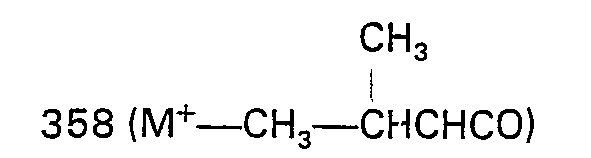
- The following compounds were produced in the same way as describe in Example 30 (B) or Example 33.
- Production of p-nitrobenzyl 3-(2-ethytoxy)ethylthio-6-isopropy)-7-oxo-1-azabicyclo[3.2.0]hept-2-ene-2-carboxylate:
- UV

- IR

- NMR (CDCl3) δ:
- 0.90-1.25 (9H, m,

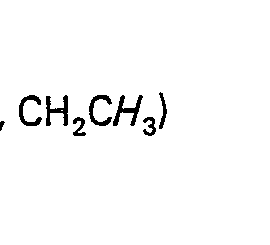
- 1.90-2.30 (1 H, m,

- 2.80-3.75 (9H, m, C-4H, C-6, CH2 x 3)
- 3.95 (1H, dt, J=9.0, J=3.0, C-5H)
- 5.20 (1H,d, J=14.0, ArCHH)
- 5.48 (1 H, d, J=14.0, ArCHH)
- 7.62 (2H, d, J=9.0, ArH)
- 8.18 (2H, d, J=9.0, ArH)
- Production of p-nitrobenzyl 3-(2-acetoxy)ethylthio-6-isopropyl-7-oxo-1-azabicyclo[3.2.0]hept-2-ene-2-carboxylate:
- UV


- 1740 (OAc) 1700 (ester)
- NMR (CDCl3) δ:
- 1.03 (3H, d, J=7.0Hz,

- 1.06 (3H, d, J=7.0,
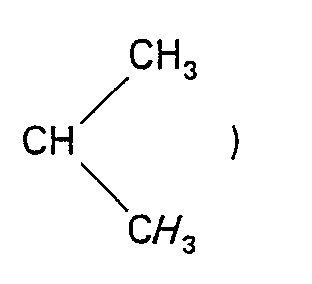
- 1.90-2.30 (1 H, m,

- 2.07 (3H, S, COCH3)
- 2.70―3.50 (5H, m, SCH2, C―4H, C―6H)
- 4.00 (1H, dt, J=9.5, J=3.0, C―5H)
- 4.20 (2H, t, J=7.5, CH2OCO)
- 5.18 (1 H, d, J=14.0, ArCHH)
- 5.48 (1H, d, J=14.0, ArCHH)
- 7.58 (2H, d, J=9.0, ArH)
- 8.14 (2H, d, J=9.0, ArH)
- Production of p-nitrobenzyl 3-(2-dimethylamino)ethylthio-6-isopropyl-7-oxo-1-azabicyclo[3.2.0]hept-2-ene-2-carboxylate:
- UV


- NMR (CDCI3) 8:
- 1.02 (3H, d, J=7.0,

- 1.05 (3H, d, J=7.0,

- 1.90―2.20 (1H, m,

- 2.26 (6H, S, N(CH3)2)
- 2.40-3.50 (7H, m, C-4H, C-6H, 2 x CH2)
- 3.96 (1 H, dt, J=9.0, J=3.0, C-5H)
- 5.22 (1H, d, J=14.0, ArCHH)
- 5.50 (1 H, d, J=14.0, ArCHH)
- 7.63 (2H, d, J=9.0, ArH)
- 8.18 (2H, d, J=9.0, ArH)
- Production of p-nitrobenzyl 3-(2-phenylacetamido)ethylthio-6-isopropyl-7-oxo-1-azabicyclo[3.2.0]hept-2-ene-2-carboxylate:
- UV

- IR

- 1.00 (3H, d, J=7.0,

- 1.03 (3H, d, J=7.0,

- 1.80-2.25 (1H, m, CH(CH3)2)
- 2.70-3.56 (7H, m, C-4H, C-6H, 2 x CH2)
- 3.60 (2H, S, COCH2)
- 3.98 (1H, dt, J=9.0, J=3.0, C-5H)
- 5.23 (1H, d, J=14.0, ArCHH)
- 5.50 (1 H, d, J=14.0, ArCHH)
- 5.84 (1 H, m, NH)
- 7.24 (5H, S, ArH)
- 7.65 (2H, d, J=9.0, ArH)
- 8.20 (2H, d, J=9.0, ArH)
- 1.00 (3H, d, J=7.0,
and R51 represents a monovalent organic group selected from groups (1) to (4) as defined for R2. or its salt, which comprises reacting a compound of the general formula


Claims (23)
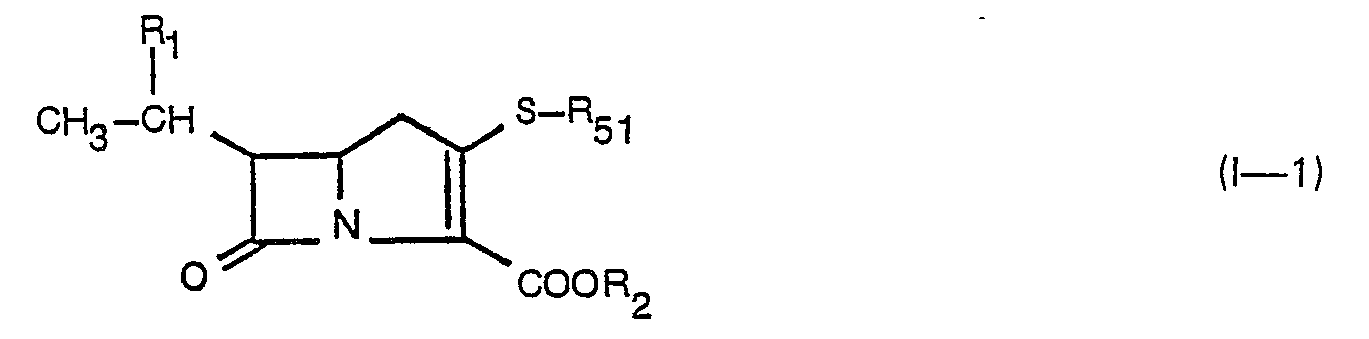
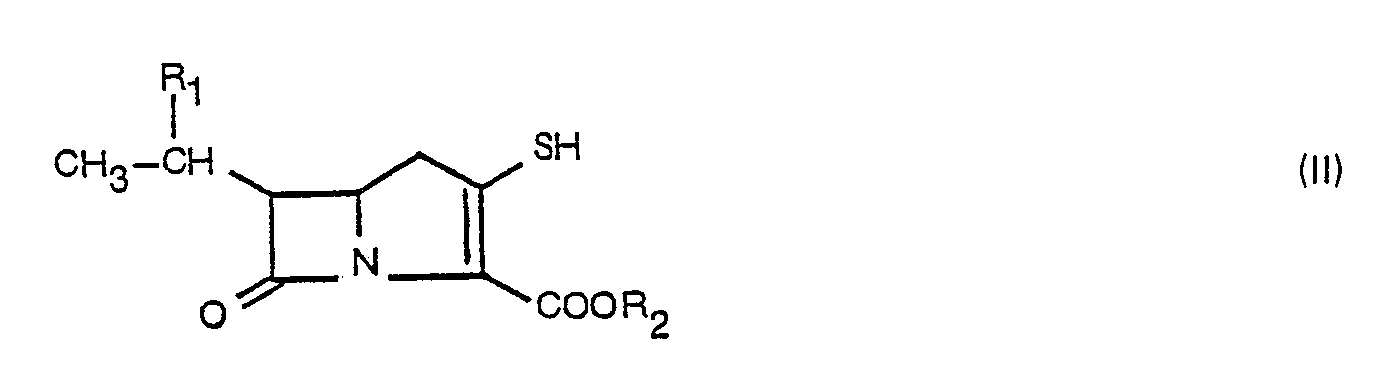


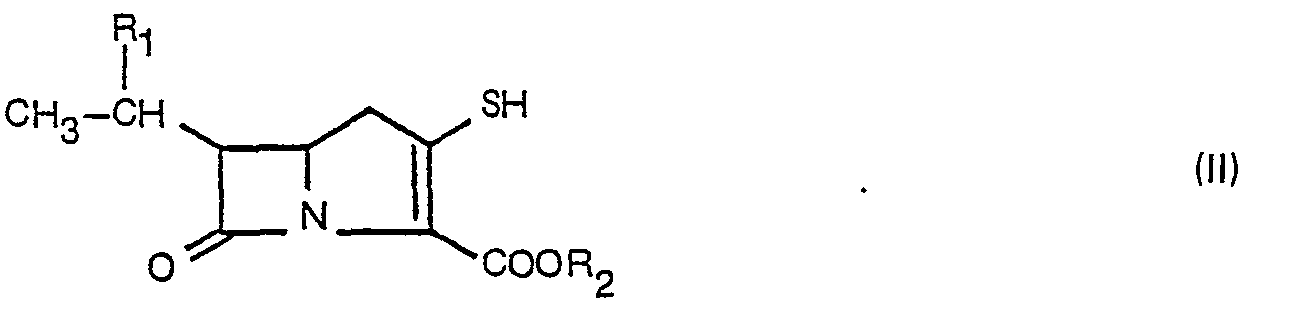
which comprises reacting a compound of the general formula

MSH (V)

and its salt.
Applications Claiming Priority (2)
| Application Number | Priority Date | Filing Date | Title |
|---|---|---|---|
| JP6403280A JPS56161393A (en) | 1980-05-16 | 1980-05-16 | Beta-lactam compound |
| JP64032/80 | 1980-05-16 |
Publications (2)
| Publication Number | Publication Date |
|---|---|
| EP0040408A1 EP0040408A1 (en) | 1981-11-25 |
| EP0040408B1 true EP0040408B1 (en) | 1984-08-29 |
Family
ID=13246372
Family Applications (1)
| Application Number | Title | Priority Date | Filing Date |
|---|---|---|---|
| EP81103719A Expired EP0040408B1 (en) | 1980-05-16 | 1981-05-14 | Beta-lactam compounds and process for production thereof |
Country Status (4)
| Country | Link |
|---|---|
| EP (1) | EP0040408B1 (en) |
| JP (1) | JPS56161393A (en) |
| CA (1) | CA1164460A (en) |
| DE (1) | DE3165747D1 (en) |
Families Citing this family (12)
| Publication number | Priority date | Publication date | Assignee | Title |
|---|---|---|---|---|
| EP0044170A1 (en) * | 1980-07-11 | 1982-01-20 | Beecham Group Plc | Beta-lactam antibiotics, their preparation and use |
| US4552873A (en) * | 1981-08-19 | 1985-11-12 | Sankyo Company Limited | Carbapenem compounds, and compositions containing them |
| US4683301A (en) * | 1982-04-08 | 1987-07-28 | Bristol-Myers Company | Carbapenem antibiotics |
| US4710568A (en) * | 1982-04-09 | 1987-12-01 | Bristol-Myers Company | Carbapenem antibiotics |
| US4642341A (en) * | 1982-04-09 | 1987-02-10 | Bristol-Myers Company | Carbapenem antibiotics |
| US4493839A (en) * | 1982-05-24 | 1985-01-15 | Merck & Co., Inc. | 1-Carbapenem-3-carboxylic esters as anti-inflammatory agents |
| US4665170A (en) * | 1982-06-18 | 1987-05-12 | Bristol-Myers Company | Carbapenem antibiotics |
| US4536335A (en) * | 1982-06-18 | 1985-08-20 | Bristol-Myers Company | Carbapenem antibiotics |
| US4640799A (en) * | 1982-06-18 | 1987-02-03 | Bristol-Myers Company | Carbapenem antibiotics |
| US4746736A (en) * | 1982-09-28 | 1988-05-24 | Bristol-Myers Company | Carbapenem antibiotics |
| US4732977A (en) * | 1982-09-28 | 1988-03-22 | Bristol Myers Company | Carbapenem antibiotics |
| US4665169A (en) * | 1985-09-11 | 1987-05-12 | Bristol-Myers Company | Carbapenem antibiotics |
Citations (2)
| Publication number | Priority date | Publication date | Assignee | Title |
|---|---|---|---|---|
| EP0001628A1 (en) * | 1977-10-19 | 1979-05-02 | Merck & Co. Inc. | 3-Substituted-6-substituted-7-oxo-1-azabicyclo (3.2.0)-hept-2-ene-2-carboxylic acid, its preparation and pharmaceutical compositions containing it |
| EP0011173A1 (en) * | 1978-11-01 | 1980-05-28 | Sanraku-Ocean Co., Ltd. | Process for producing antibiotic beta-lactam compounds |
Family Cites Families (2)
| Publication number | Priority date | Publication date | Assignee | Title |
|---|---|---|---|---|
| DE2966187D1 (en) * | 1978-08-23 | 1983-10-27 | Beecham Group Plc | Beta-lactam antibacterial compounds, their preparation and pharmaceutical compositions containing them |
| DE2961882D1 (en) * | 1978-08-25 | 1982-03-04 | Beecham Group Plc | Beta-lactam anti-bacterials, compositions containing them and a process for their preparation |
-
1980
- 1980-05-16 JP JP6403280A patent/JPS56161393A/en active Pending
-
1981
- 1981-05-14 DE DE8181103719T patent/DE3165747D1/en not_active Expired
- 1981-05-14 EP EP81103719A patent/EP0040408B1/en not_active Expired
- 1981-05-15 CA CA000377694A patent/CA1164460A/en not_active Expired
Patent Citations (2)
| Publication number | Priority date | Publication date | Assignee | Title |
|---|---|---|---|---|
| EP0001628A1 (en) * | 1977-10-19 | 1979-05-02 | Merck & Co. Inc. | 3-Substituted-6-substituted-7-oxo-1-azabicyclo (3.2.0)-hept-2-ene-2-carboxylic acid, its preparation and pharmaceutical compositions containing it |
| EP0011173A1 (en) * | 1978-11-01 | 1980-05-28 | Sanraku-Ocean Co., Ltd. | Process for producing antibiotic beta-lactam compounds |
Also Published As
| Publication number | Publication date |
|---|---|
| DE3165747D1 (en) | 1984-10-04 |
| CA1164460A (en) | 1984-03-27 |
| JPS56161393A (en) | 1981-12-11 |
| EP0040408A1 (en) | 1981-11-25 |
Similar Documents
| Publication | Publication Date | Title |
|---|---|---|
| FI84826C (en) | FOERFARANDE FOER FRAMSTAELLNING AV 6 - (1-HYDROXIETYL-2-SUBSTITUERAD-2-CARBAPENEM-3-CARBOXYLSYROR ANVAENDBARA SOM LAEKEMEDEL. | |
| SK126696A3 (en) | Cephalosporin antibiotics and antibacterial agents containing them | |
| US4337199A (en) | Antibiotic β-lactam compounds, production thereof, and their use as antimicrobial agent | |
| EP0199446B1 (en) | Penem compounds, production and use thereof | |
| US6057312A (en) | Cephalosporin antibiotics | |
| CA1164460A (en) | Beta-lactam compounds and process for production thereof | |
| IE832951L (en) | Fluoromethylthiooxacephalosporins. | |
| US4708956A (en) | 3-position halogenated cephalosporin analogs and pharmaceutical compositions | |
| US6025352A (en) | Cephalosporin antibiotics | |
| US4952577A (en) | Methoxymethyl penem compounds | |
| US4820701A (en) | Penam derivatives | |
| EP0273747B1 (en) | Penem derivatives, production and use thereof | |
| US5028427A (en) | "Cephalosporin" compounds | |
| EP0017970A1 (en) | Novel beta-lactam derivatives and process for production thereof | |
| IE68344B1 (en) | Use of stable oxapenem-3-carboxylic acids for the manufacture of beta-lactamase-inhibiting medicaments | |
| GB2105329A (en) | Penem-3-carboxylic acid derivatives their preparation and their use as antimicrobial agents | |
| US5055463A (en) | Spirocyclic 6-amido carbapenems | |
| EP0082501A1 (en) | Beta-lactam compound and a pharmaceutical composition containing the same | |
| US5183887A (en) | Spirocyclic 6-amido-carbapenems and azetidinones | |
| CA1134298A (en) | ANTIBIOTIC .beta.-LACTAM COMPOUNDS, PRODUCTION THEREOF, AND ITS USE AS ANTIMICROBIAL AGENTS | |
| CH661730A5 (en) | PENEM CARBONIC ACIDS AND METHOD FOR THE PRODUCTION THEREOF. | |
| JPH08134075A (en) | New carbapenem derivative | |
| US4661480A (en) | Formamido oxacephems | |
| KR100246953B1 (en) | New Carbapenem Antibiotics | |
| KR100233233B1 (en) | New Carbapenem Antibiotics |
Legal Events
| Date | Code | Title | Description |
|---|---|---|---|
| PUAI | Public reference made under article 153(3) epc to a published international application that has entered the european phase |
Free format text: ORIGINAL CODE: 0009012 |
|
| AK | Designated contracting states |
Designated state(s): DE FR GB IT |
|
| 17P | Request for examination filed |
Effective date: 19820115 |
|
| ITF | It: translation for a ep patent filed | ||
| GRAA | (expected) grant |
Free format text: ORIGINAL CODE: 0009210 |
|
| AK | Designated contracting states |
Designated state(s): DE FR GB IT |
|
| REF | Corresponds to: |
Ref document number: 3165747 Country of ref document: DE Date of ref document: 19841004 |
|
| ET | Fr: translation filed | ||
| PLBE | No opposition filed within time limit |
Free format text: ORIGINAL CODE: 0009261 |
|
| STAA | Information on the status of an ep patent application or granted ep patent |
Free format text: STATUS: NO OPPOSITION FILED WITHIN TIME LIMIT |
|
| 26N | No opposition filed | ||
| ITPR | It: changes in ownership of a european patent |
Owner name: CAMBIO RAGIONE SOCIALE;SANRAKU INCORPORATED |
|
| REG | Reference to a national code |
Ref country code: FR Ref legal event code: CD |
|
| PG25 | Lapsed in a contracting state [announced via postgrant information from national office to epo] |
Ref country code: FR Free format text: LAPSE BECAUSE OF NON-PAYMENT OF DUE FEES Effective date: 19880129 |
|
| PG25 | Lapsed in a contracting state [announced via postgrant information from national office to epo] |
Ref country code: DE Effective date: 19880202 |
|
| GBPC | Gb: european patent ceased through non-payment of renewal fee | ||
| REG | Reference to a national code |
Ref country code: FR Ref legal event code: ST |
|
| PG25 | Lapsed in a contracting state [announced via postgrant information from national office to epo] |
Ref country code: GB Free format text: LAPSE BECAUSE OF NON-PAYMENT OF DUE FEES Effective date: 19881118 |