EP0031650A1 - Process for preparing liquid polyisocyanate compositions, and their use - Google Patents
Process for preparing liquid polyisocyanate compositions, and their use Download PDFInfo
- Publication number
- EP0031650A1 EP0031650A1 EP80304261A EP80304261A EP0031650A1 EP 0031650 A1 EP0031650 A1 EP 0031650A1 EP 80304261 A EP80304261 A EP 80304261A EP 80304261 A EP80304261 A EP 80304261A EP 0031650 A1 EP0031650 A1 EP 0031650A1
- Authority
- EP
- European Patent Office
- Prior art keywords
- carbon atoms
- reaction
- liquid
- diphenylmethane diisocyanate
- alkyl group
- Prior art date
- Legal status (The legal status is an assumption and is not a legal conclusion. Google has not performed a legal analysis and makes no representation as to the accuracy of the status listed.)
- Granted
Links
Classifications
-
- C—CHEMISTRY; METALLURGY
- C08—ORGANIC MACROMOLECULAR COMPOUNDS; THEIR PREPARATION OR CHEMICAL WORKING-UP; COMPOSITIONS BASED THEREON
- C08G—MACROMOLECULAR COMPOUNDS OBTAINED OTHERWISE THAN BY REACTIONS ONLY INVOLVING UNSATURATED CARBON-TO-CARBON BONDS
- C08G18/00—Polymeric products of isocyanates or isothiocyanates
- C08G18/06—Polymeric products of isocyanates or isothiocyanates with compounds having active hydrogen
- C08G18/70—Polymeric products of isocyanates or isothiocyanates with compounds having active hydrogen characterised by the isocyanates or isothiocyanates used
- C08G18/72—Polyisocyanates or polyisothiocyanates
- C08G18/80—Masked polyisocyanates
- C08G18/8061—Masked polyisocyanates masked with compounds having only one group containing active hydrogen
- C08G18/8064—Masked polyisocyanates masked with compounds having only one group containing active hydrogen with monohydroxy compounds
-
- C—CHEMISTRY; METALLURGY
- C08—ORGANIC MACROMOLECULAR COMPOUNDS; THEIR PREPARATION OR CHEMICAL WORKING-UP; COMPOSITIONS BASED THEREON
- C08G—MACROMOLECULAR COMPOUNDS OBTAINED OTHERWISE THAN BY REACTIONS ONLY INVOLVING UNSATURATED CARBON-TO-CARBON BONDS
- C08G18/00—Polymeric products of isocyanates or isothiocyanates
- C08G18/06—Polymeric products of isocyanates or isothiocyanates with compounds having active hydrogen
- C08G18/28—Polymeric products of isocyanates or isothiocyanates with compounds having active hydrogen characterised by the compounds used containing active hydrogen
- C08G18/2805—Compounds having only one group containing active hydrogen
- C08G18/2815—Monohydroxy compounds
- C08G18/282—Alkanols, cycloalkanols or arylalkanols including terpenealcohols
- C08G18/2825—Alkanols, cycloalkanols or arylalkanols including terpenealcohols having at least 6 carbon atoms
-
- C—CHEMISTRY; METALLURGY
- C08—ORGANIC MACROMOLECULAR COMPOUNDS; THEIR PREPARATION OR CHEMICAL WORKING-UP; COMPOSITIONS BASED THEREON
- C08G—MACROMOLECULAR COMPOUNDS OBTAINED OTHERWISE THAN BY REACTIONS ONLY INVOLVING UNSATURATED CARBON-TO-CARBON BONDS
- C08G18/00—Polymeric products of isocyanates or isothiocyanates
- C08G18/06—Polymeric products of isocyanates or isothiocyanates with compounds having active hydrogen
- C08G18/28—Polymeric products of isocyanates or isothiocyanates with compounds having active hydrogen characterised by the compounds used containing active hydrogen
- C08G18/2805—Compounds having only one group containing active hydrogen
- C08G18/2815—Monohydroxy compounds
- C08G18/283—Compounds containing ether groups, e.g. oxyalkylated monohydroxy compounds
-
- C—CHEMISTRY; METALLURGY
- C08—ORGANIC MACROMOLECULAR COMPOUNDS; THEIR PREPARATION OR CHEMICAL WORKING-UP; COMPOSITIONS BASED THEREON
- C08G—MACROMOLECULAR COMPOUNDS OBTAINED OTHERWISE THAN BY REACTIONS ONLY INVOLVING UNSATURATED CARBON-TO-CARBON BONDS
- C08G18/00—Polymeric products of isocyanates or isothiocyanates
- C08G18/06—Polymeric products of isocyanates or isothiocyanates with compounds having active hydrogen
- C08G18/70—Polymeric products of isocyanates or isothiocyanates with compounds having active hydrogen characterised by the isocyanates or isothiocyanates used
- C08G18/72—Polyisocyanates or polyisothiocyanates
- C08G18/74—Polyisocyanates or polyisothiocyanates cyclic
- C08G18/76—Polyisocyanates or polyisothiocyanates cyclic aromatic
- C08G18/7657—Polyisocyanates or polyisothiocyanates cyclic aromatic containing two or more aromatic rings
- C08G18/7664—Polyisocyanates or polyisothiocyanates cyclic aromatic containing two or more aromatic rings containing alkylene polyphenyl groups
- C08G18/7671—Polyisocyanates or polyisothiocyanates cyclic aromatic containing two or more aromatic rings containing alkylene polyphenyl groups containing only one alkylene bisphenyl group
-
- C—CHEMISTRY; METALLURGY
- C08—ORGANIC MACROMOLECULAR COMPOUNDS; THEIR PREPARATION OR CHEMICAL WORKING-UP; COMPOSITIONS BASED THEREON
- C08G—MACROMOLECULAR COMPOUNDS OBTAINED OTHERWISE THAN BY REACTIONS ONLY INVOLVING UNSATURATED CARBON-TO-CARBON BONDS
- C08G18/00—Polymeric products of isocyanates or isothiocyanates
- C08G18/06—Polymeric products of isocyanates or isothiocyanates with compounds having active hydrogen
- C08G18/70—Polymeric products of isocyanates or isothiocyanates with compounds having active hydrogen characterised by the isocyanates or isothiocyanates used
- C08G18/72—Polyisocyanates or polyisothiocyanates
- C08G18/77—Polyisocyanates or polyisothiocyanates having heteroatoms in addition to the isocyanate or isothiocyanate nitrogen and oxygen or sulfur
- C08G18/78—Nitrogen
- C08G18/7806—Nitrogen containing -N-C=0 groups
- C08G18/7818—Nitrogen containing -N-C=0 groups containing ureum or ureum derivative groups
- C08G18/7837—Nitrogen containing -N-C=0 groups containing ureum or ureum derivative groups containing allophanate groups
Definitions
- This invention relates to liquid polyisocyanate compositions and in particular to compositions containing diphenylmethane diisocyanate and to the use of such compositions in the manufacture of polyurethanes.
- polyurethanes of a cellular or non-cellular nature, by reacting an organic polyisocyanate with an organic polyol in the presence of additives of various kinds.
- organic polyisocyanates have been proposed for use in making polyurethanes butt since many polyurethane manufacturing processes involve the rapid mixing of materials at room temperature, it is preferred to use polyisocyanates that are liquid at room temperature and that remain in the liquid state without significant deposition of solid materials even when stored at relatively low temperatures such as may be encountered in winter.
- diphenylmethane diisocyanate which is generally available either in a substantially pure form or in admixture with related polymethylene polyphenyl polyisocyanates of higher functionality such as may be represented by the general formula: wherein n has an average value of one or more.
- the latter mixtures are commonly referred to in the trade as "crude MDI” and are made by the phosgenation of a mixture of polyamines obtained by the acid condensation of aniline and formaldehyde.
- the diisocyanates can be isolated from this mixture by distillation, being recovered as an isomer mixture in which the predominant component is 4,4'-diphenylmethane diisocyanate, there being smaller amounts of the 2,4'- and 2,2'-isomers.
- a substantially pure form of the 4,4'-isomer can be recovered from this isomer mixture by crystallisation leaving a mother liquor which can vary in composition depending upon the operating conditions but which typically might contain about 80% of the 4,4'-isomer and about 20% of the 2,4'-isomer with traces of the 2,2'-isomer.
- the present invention is particularly concerned with diphenylmethane diisocyanate containing at least 15% by weight, based on&e total diisocyanate, of the 2,4'-isomer.
- Both the 4,4'- and 2,4'-isomers are solids at room temperature, having melting points of 42°C and 36°C respectively and many of the isomer mixtures are solid at room temperature or under the lower temperatures which can obtain during winter storage or transportation.
- the present invention provides liquid polyisocyanate compositions which are stable to storage at low temperatures and which provide polyurethanes having excellent properties.
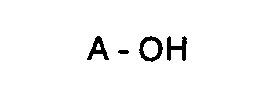
- a method or the preparation of a liquid polyisocyanate composition which comprises reacting one molar proportion of diphenylmethane diisocyanate containing at least 15% by weight of the 2,4'-isomer with from 0.01 to 0.8 molar proportions of a monohydric alcohol of the formula: wherein A represents an alkyl radical containing from 9 to 16 carbon atoms or a radical of the formula: wherein R represents an alkyl group containing from 1 to 12 carbon atoms, R represents hydrogen or an alkyl group containing from 1 to 3 carbon atoms and x is an integer of from 1 to 58, the reaction being performed at a temperature of from 100 to 250 "C and in the presence of a catalyst for the NCO/OH reaction.
- the diphenylmethane diisocyanate used as starting material contains the 4,4' isomer in addition to containing at least 15% by weight of the 2,4'-isomer.
- the monohydric alcohol is one in which A is an alkyl radical having 9 to 16 carbon atoms, it may be linear or branched but the latter is preferred. Alcohols having from 10 to 14 carbon atoms are especially suitable. A mixture of alcohols may be employed and in fact many of the alcohols are most readily available as isomer mixtures.
- R is preferably an alkyl group containing from 1 to 5 carbon atoms, for example methyl or ethyl.
- R 1 is preferably hydrogen or methyl, the material then being a monoalkoxy (poly)ethylene or (poly)propylene glycol.
- the formula includes copolymeric monoalkoxy polyalkylene glycols, for example copolymers derived from ethylene and propylene oxides.
- the integer n is preferably less than 44. Mixtures of monoalkoxy glycols may be used.
- the urethane formed by the reaction of the monohydric alcohol with the diphenylmethane diisocyanate reacts with further isocyanate to form an allophanate.
- the reaction product may contain a minor proportion of material that has not reacted beyond the urethane stage as well as higher functionality material where the reaction has gone beyond the allophanate stage.
- Particularly useful products are obtained when one molar proportion of the diphenylmethane diisocyanate is reacted with from 0.1 to 0.3 molar proportions of the monohydric alcohol.
- the reaction between the diphenylmethane diisocyanate and the monohydric alcohol is preferably performed at a temperature in the range 100 to 200 °C and is continued until a product of the desired constitution is obtained.
- the reaction catalyst may be any catalyst known for the reaction between isocyanate and hydroxyl groups. Particularly suitable catalysts are tin and dialkyl tin salts of carboxylic acids,for example stannous octoate and dibutyl tin dilaurate. Other suitable catalysts are tertiary amines in which the nitrogen atom is not directly attached to an aromatic residue, for example 1,4-diazabicyclo[2.2.2]octane.
- the monohydric alcohol is conveniently added slowly to the polyisocyanate and catalyst at the reaction temperature,but the repctants may alternatively be brought together at ambient temperature or at an intermediate temperature and then heated to the reaction temperature.
- the repctants may alternatively be brought together at ambient temperature or at an intermediate temperature and then heated to the reaction temperature.
- the polyisocyanate compositions of the present invention are liquid compositions which are stable to storage, that is to say the compositions remain liquid at room temperature for long periods of time, sufficient in fact for all practical purposes, and can be transported or stored at low temperature without significant sedimentation of crystals of diphenylmethane diisocyanate.
- the compositions are suitable for use in the manufacture of polyurethanes using techniques fully described in the prior art. Being substantially difunctional, the compositions are particularly suitable for the manufacture of polyurethane elastomers and flexible foams including microcellular elastomers.
- the flexible foams obtained have improved tensile properties and improved curing properties compared with foams obtained from corresponding diphenylmethane diisocyaaates which have not been modified by reaction with a monohydric alcohol.
- the product was blended with starting material to yield an isocyanate value of 30% and a flexible foam moulding prepared using the following formulation and the conventional moulding methods of the art.
- the foam moulding had the following physical properties.
- the crude MDI used in the formulation had an NCO content of 30% and contained approximately 5C% of diphenylmethane diisocyanates, the remainder being polymethylene polyphenyl polyisocyanates of higher functionality.
- Example 2 To 1000 parts of the isomeric mixture of diphenylmethane diisocyanates used in Example 1 were added 2.4 parts of dibutyl tin dilaurate. The mixture was heated to 120°C, stirring under nitrogen and 160 parts of tridecanol (a C 13 hydrocarbon based alcohol) were added slowly maintaining the temperature at 120°C. The reaction mixture was then heated to 200°C and held at that temperature for 2 hours; 0.52 parts of salicylic acid were added and the reaction mixture was crash cooled to ambient temperature. The product was a red/brown low viscosity liquid of NCO value 22.5%, which remained liquid for several weeks at 0°C.
- tridecanol a C 13 hydrocarbon based alcohol
- Example 2 To 500 parts of the isomeric mixture of diphenylmethane diisocyanates used in Example 1 was added 1 part dibutyl tin dilaurate. The mixture was heated with stirring under dry nitrogen to 120°C at which point 40 parts of methyl cellosolve were added slowly, maintaining the temperature at 120°C. The mixture was heated for a further 2 hours at 120°C, when 0.24 parts of salicylic acid were added, and then crash cooled. The product obtained was a yellow/brown liquid with an NCO content of 23.0%. The product was blended with a proportion of the starting isocyanate to yield an isocyanate value of 30% and a flexible foam moulding was prepared using the conventional methods known in the art and the following formulation:
- the foam moulding had the following physical properties.
Landscapes
- Chemical & Material Sciences (AREA)
- Health & Medical Sciences (AREA)
- Chemical Kinetics & Catalysis (AREA)
- Medicinal Chemistry (AREA)
- Polymers & Plastics (AREA)
- Organic Chemistry (AREA)
- Polyurethanes Or Polyureas (AREA)
- Organic Low-Molecular-Weight Compounds And Preparation Thereof (AREA)
Abstract

Description
- This invention relates to liquid polyisocyanate compositions and in particular to compositions containing diphenylmethane diisocyanate and to the use of such compositions in the manufacture of polyurethanes.
- It is well known to manufacture polyurethanes, of a cellular or non-cellular nature, by reacting an organic polyisocyanate with an organic polyol in the presence of additives of various kinds. Many organic polyisocyanates have been proposed for use in making polyurethanes butt since many polyurethane manufacturing processes involve the rapid mixing of materials at room temperature, it is preferred to use polyisocyanates that are liquid at room temperature and that remain in the liquid state without significant deposition of solid materials even when stored at relatively low temperatures such as may be encountered in winter.
- One of the polyisocyanates which has been used commercially in the manufacture of polyurethanes is diphenylmethane diisocyanate which is generally available either in a substantially pure form or in admixture with related polymethylene polyphenyl polyisocyanates of higher functionality such as may be represented by the general formula:

- The manufacture of both the polyamine mixtures and the polyisocyanate mixtures is well known. The condensation of aniline with formaldehyde in the presence of strong acids such as hydrochloric acid gives a reaction product containing diaminodiphenylmethane together with polymethylene polyphenyl polyamines of higher functionality, the precise composition depending in known manner on the aniline/formaldehyde ratio. The polyisocyanates are made by phosgenation of the polyamine mixtures and the various proportions of diamines, triamines and higher polyamines give rise to related proportions of diisocyanates, triisocyanates and higher polyisocyanates.
- The diisocyanates can be isolated from this mixture by distillation, being recovered as an isomer mixture in which the predominant component is 4,4'-diphenylmethane diisocyanate, there being smaller amounts of the 2,4'- and 2,2'-isomers. A substantially pure form of the 4,4'-isomer can be recovered from this isomer mixture by crystallisation leaving a mother liquor which can vary in composition depending upon the operating conditions but which typically might contain about 80% of the 4,4'-isomer and about 20% of the 2,4'-isomer with traces of the 2,2'-isomer.
- The present invention is particularly concerned with diphenylmethane diisocyanate containing at least 15% by weight, based on&e total diisocyanate, of the 2,4'-isomer. Both the 4,4'- and 2,4'-isomers are solids at room temperature, having melting points of 42°C and 36°C respectively and many of the isomer mixtures are solid at room temperature or under the lower temperatures which can obtain during winter storage or transportation. For polyurethane manufacture, it is necessary to melt any solid material and maintain it in a molten condition.
- The present invention provides liquid polyisocyanate compositions which are stable to storage at low temperatures and which provide polyurethanes having excellent properties.
- Thus, according to the invention, there is provided a method or the preparation of a liquid polyisocyanate composition which comprises reacting one molar proportion of diphenylmethane diisocyanate containing at least 15% by weight of the 2,4'-isomer with from 0.01 to 0.8 molar proportions of a monohydric alcohol of the formula:


- Preferably, the diphenylmethane diisocyanate used as starting material contains the 4,4' isomer in addition to containing at least 15% by weight of the 2,4'-isomer.
- When the monohydric alcohol is one in which A is an alkyl radical having 9 to 16 carbon atoms, it may be linear or branched but the latter is preferred. Alcohols having from 10 to 14 carbon atoms are especially suitable. A mixture of alcohols may be employed and in fact many of the alcohols are most readily available as isomer mixtures.
- When the monohydric alcohol is a monoalkoxy glycol, R is preferably an alkyl group containing from 1 to 5 carbon atoms, for example methyl or ethyl. R1 is preferably hydrogen or methyl, the material then being a monoalkoxy (poly)ethylene or (poly)propylene glycol. The formula includes copolymeric monoalkoxy polyalkylene glycols, for example copolymers derived from ethylene and propylene oxides. The integer n is preferably less than 44. Mixtures of monoalkoxy glycols may be used.
- Under the conditions specified for the performance of the method of the invention, the urethane formed by the reaction of the monohydric alcohol with the diphenylmethane diisocyanate reacts with further isocyanate to form an allophanate. It will be appreciated,however, that the reaction product may contain a minor proportion of material that has not reacted beyond the urethane stage as well as higher functionality material where the reaction has gone beyond the allophanate stage.
- Particularly useful products are obtained when one molar proportion of the diphenylmethane diisocyanate is reacted with from 0.1 to 0.3 molar proportions of the monohydric alcohol.
- The reaction between the diphenylmethane diisocyanate and the monohydric alcohol is preferably performed at a temperature in the range 100 to 200 °C and is continued until a product of the desired constitution is obtained. The reaction catalyst may be any catalyst known for the reaction between isocyanate and hydroxyl groups. Particularly suitable catalysts are tin and dialkyl tin salts of carboxylic acids,for example stannous octoate and dibutyl tin dilaurate. Other suitable catalysts are tertiary amines in which the nitrogen atom is not directly attached to an aromatic residue, for example 1,4-diazabicyclo[2.2.2]octane. The monohydric alcohol is conveniently added slowly to the polyisocyanate and catalyst at the reaction temperature,but the repctants may alternatively be brought together at ambient temperature or at an intermediate temperature and then heated to the reaction temperature. After the reaction is complete, it is preferable to deactivate the catalyst either chemically, for example by incorporating an acidic substance, or physically, for example by adsorption on to activated carbon. It is also possible in some cases to remove the catalyst by filtration or distillation.
- The polyisocyanate compositions of the present invention are liquid compositions which are stable to storage, that is to say the compositions remain liquid at room temperature for long periods of time, sufficient in fact for all practical purposes, and can be transported or stored at low temperature without significant sedimentation of crystals of diphenylmethane diisocyanate. The compositions are suitable for use in the manufacture of polyurethanes using techniques fully described in the prior art. Being substantially difunctional, the compositions are particularly suitable for the manufacture of polyurethane elastomers and flexible foams including microcellular elastomers. The flexible foams obtained have improved tensile properties and improved curing properties compared with foams obtained from corresponding diphenylmethane diisocyaaates which have not been modified by reaction with a monohydric alcohol.
- The invention is illustrated by the following Examples in which all parts and percentages are by weight.
- To 4000 parts of an isomeric mixture of diphenylmethane diisocyanates, containing approximately 80% 4.4'-, 20% 2,4'-, and 1% 2,2'-isomers, were added 9.6 parts of dibutyl tin dilaurate. The mixture was heated to 120°C, stirring under a blanket of nitrogen, and 653 parts of monomethoxy polyethylene glycol of molecular weight 213 were added slowly maintaining the temperature at 120°C. The reaction mixture was heated for a further 2 hours at 120°C and was then cooled to ambient temperature. 2.4 parts of salicylic acid were added during the cooling period. The product, a stable, brown, low viscosity liquid had an isocyanate content of 23.9%, and remained liquid for up to one month at 0°C.
- The product was blended with starting material to yield an isocyanate value of 30% and a flexible foam moulding prepared using the following formulation and the conventional moulding methods of the art.

- The foam moulding had the following physical properties.

- The crude MDI used in the formulation had an NCO content of 30% and contained approximately 5C% of diphenylmethane diisocyanates, the remainder being polymethylene polyphenyl polyisocyanates of higher functionality.
- To 1000 parts of the isomeric mixture of diphenylmethane diisocyanates used in Example 1 were added 2.4 parts of dibutyl tin dilaurate. The mixture was heated to 120°C, stirring under nitrogen and 160 parts of tridecanol (a C13 hydrocarbon based alcohol) were added slowly maintaining the temperature at 120°C. The reaction mixture was then heated to 200°C and held at that temperature for 2 hours; 0.52 parts of salicylic acid were added and the reaction mixture was crash cooled to ambient temperature. The product was a red/brown low viscosity liquid of NCO value 22.5%, which remained liquid for several weeks at 0°C.
- To 500 parts of the isomeric mixture of diphenylmethane diisocyanates used in Example 1 was added 1 part dibutyl tin dilaurate. The mixture was heated with stirring under dry nitrogen to 120°C at which point 40 parts of methyl cellosolve were added slowly, maintaining the temperature at 120°C. The mixture was heated for a further 2 hours at 120°C, when 0.24 parts of salicylic acid were added, and then crash cooled. The product obtained was a yellow/brown liquid with an NCO content of 23.0%. The product was blended with a proportion of the starting isocyanate to yield an isocyanate value of 30% and a flexible foam moulding was prepared using the conventional methods known in the art and the following formulation:
-

- The foam moulding had the following physical properties.

- 1000 parts of 2f4'-diisocyanato diphenylmethane were heated with stirring under a blanket of dry nitrogen to 80°C and 4 parts of dibutyl tin dilaurate were added. The temperature was increased to 120°C and 80 parts of methyl Cellosolve were added slowly. The mixture was heated at 120°C for a further 4½ hours and allowed to cool with the addition of 1 part of salicylic acid at a temperature of approximately 80°C. The product was a clear brown liquid with an isocyanate content of 23.6%. The product remained liquid after several weeks storage at 0°C.
- To 4000 parts of an isomeric mixture of diphenylmethane diisocyanate,containing approximately 18% 2,4'-, 82% 4,4'- and 1% 2,2'-isomers, were added 9.6 parts of dibutyl tin dilaurate. The mixture was heated to 120°C under dry nitrogen with stirring and 960 parts of monomethoxy polypropylene glycol of molecular weight 406 were added slowly, maintaining the temperature at 120°C. The reaction mixture was heated for a further 2 hours at 120°C and allowed to cool to ambient temperature with the addition of 2.4 parts of salicylic acid at approximately 80°C. The product was a red/brown clear liquid of low viscosity with an isocyanate content of 23.3% and excellent low temperature stability. The product was blended with starting material to yield a final isocyanate value of 27.7% and a flexible foam moulding was prepared using the following formulation.
-


Claims (6)


Applications Claiming Priority (2)
| Application Number | Priority Date | Filing Date | Title |
|---|---|---|---|
| GB7943096 | 1979-12-14 | ||
| GB7943096 | 1979-12-14 |
Publications (2)
| Publication Number | Publication Date |
|---|---|
| EP0031650A1 true EP0031650A1 (en) | 1981-07-08 |
| EP0031650B1 EP0031650B1 (en) | 1984-10-03 |
Family
ID=10509844
Family Applications (1)
| Application Number | Title | Priority Date | Filing Date |
|---|---|---|---|
| EP80304261A Expired EP0031650B1 (en) | 1979-12-14 | 1980-11-27 | Process for preparing liquid polyisocyanate compositions, and their use |
Country Status (3)
| Country | Link |
|---|---|
| EP (1) | EP0031650B1 (en) |
| JP (1) | JPS5692856A (en) |
| DE (1) | DE3069385D1 (en) |
Cited By (15)
| Publication number | Priority date | Publication date | Assignee | Title |
|---|---|---|---|---|
| EP0236050A1 (en) * | 1986-02-25 | 1987-09-09 | Ppg Industries, Inc. | Compositions comprising ionic resins and capped polyisocyanate mixtures containing a diphenyl-2,4'-diisocyanate and a diphenyl-4,4'-diisocyanate |
| GB2188055A (en) * | 1986-03-20 | 1987-09-23 | Smith & Nephew Ass | Hydrophilic polyurethane foams |
| EP0277487A3 (en) * | 1987-01-23 | 1989-04-19 | BASF Corporation | Storage stable polyisocyanates characterized by allophanate linkages |
| AU593077B2 (en) * | 1986-03-20 | 1990-02-01 | Smith & Nephew Associated Companies Plc | Foams |
| EP0641812A1 (en) * | 1993-09-02 | 1995-03-08 | Bayer Corporation | Liquid diphenylmethane diisocyanates and processes for their production and use |
| US5428104A (en) * | 1992-11-27 | 1995-06-27 | Imperial Chemical Industries Plc | Polyol compositions |
| EP0682012A1 (en) * | 1994-05-09 | 1995-11-15 | Bayer Ag | Process for the preparation of light stable polyisocyanates containing allophanate groups |
| WO1996023015A1 (en) * | 1995-01-25 | 1996-08-01 | Bayer Aktiengesellschaft | Process for producing mouldings |
| US5663272A (en) * | 1995-12-22 | 1997-09-02 | Bayer Corporation | Allophanate-modified diphenylmethane diisocyanates and processes for their production and use |
| US5821275A (en) * | 1997-11-10 | 1998-10-13 | Bayer Corporation | Flexible foams and flexible molded foams based on liquid isocyanate-terminated allophanate-modified MDI prepolymer blends and processes for the production of these foams |
| US5874485A (en) * | 1997-11-10 | 1999-02-23 | Bayer Corporation | Flexible foams and flexible molded foams based on allophanate-modified diphenylmethane diisocyanates and processes for the production of these foams |
| US6271279B1 (en) | 2000-07-10 | 2001-08-07 | Bayer Corporation | High resilient flexible urethane foam and flexible molded foams based on allophanate modified isocyanates |
| WO2001094438A1 (en) * | 2000-06-09 | 2001-12-13 | Henkel Kommanditgesellschaft Auf Aktien | Urethane based on organoleptically active aromatic alcohols |
| WO2005047361A1 (en) * | 2003-10-27 | 2005-05-26 | Basf Aktiengesellschaft | Water-emulsifiable isocyanate preparation comprising an emulsifying agent based on 2,4'-mdi |
| EP2025693A1 (en) | 2007-07-27 | 2009-02-18 | Bayer MaterialScience LLC | Allophanate modified diphenylmethane diisocyanates, prepolymers thereof, and their use in the preparation of polyureas and polyureaurethanes |
Families Citing this family (3)
| Publication number | Priority date | Publication date | Assignee | Title |
|---|---|---|---|---|
| EP2644632A1 (en) * | 2012-03-29 | 2013-10-02 | Huntsman International Llc | Isocyanate-based prepolymer |
| JP2017137411A (en) * | 2016-02-03 | 2017-08-10 | 東ソー株式会社 | Polyisocyanate composition for flexible polyurethane foam |
| JP6946699B2 (en) * | 2017-03-31 | 2021-10-06 | 東ソー株式会社 | Polyisocyanate composition containing an allophanate modified product derived from MDI and a method for producing the same. |
Citations (7)
| Publication number | Priority date | Publication date | Assignee | Title |
|---|---|---|---|---|
| GB994890A (en) * | 1961-12-18 | 1965-06-10 | Ici Ltd | New organic polyisocyanates and their manufacture |
| GB1377676A (en) * | 1972-09-21 | 1974-12-18 | Ici Ltd | Isocyanate compositions |
| DE2425657A1 (en) * | 1973-05-29 | 1974-12-19 | Ici Ltd | POLYURETHANE FOAM |
| FR2241597A1 (en) * | 1973-08-21 | 1975-03-21 | Ici Ltd | |
| DE2513793A1 (en) * | 1974-04-03 | 1975-10-16 | Ici Ltd | POLYISOCYANATE |
| DE2708820A1 (en) * | 1976-03-11 | 1977-09-15 | Upjohn Co | THERMOPLASTIC POLYURETHANE ELASTOMERS |
| EP0019375A1 (en) * | 1979-04-23 | 1980-11-26 | The Baxenden Chemical Company Limited | A process for the manufacture of polyurethane foams |
Family Cites Families (1)
| Publication number | Priority date | Publication date | Assignee | Title |
|---|---|---|---|---|
| JPS5227655B2 (en) * | 1972-07-14 | 1977-07-21 |
-
1980
- 1980-11-27 DE DE8080304261T patent/DE3069385D1/en not_active Expired
- 1980-11-27 EP EP80304261A patent/EP0031650B1/en not_active Expired
- 1980-12-15 JP JP17597580A patent/JPS5692856A/en active Granted
Patent Citations (7)
| Publication number | Priority date | Publication date | Assignee | Title |
|---|---|---|---|---|
| GB994890A (en) * | 1961-12-18 | 1965-06-10 | Ici Ltd | New organic polyisocyanates and their manufacture |
| GB1377676A (en) * | 1972-09-21 | 1974-12-18 | Ici Ltd | Isocyanate compositions |
| DE2425657A1 (en) * | 1973-05-29 | 1974-12-19 | Ici Ltd | POLYURETHANE FOAM |
| FR2241597A1 (en) * | 1973-08-21 | 1975-03-21 | Ici Ltd | |
| DE2513793A1 (en) * | 1974-04-03 | 1975-10-16 | Ici Ltd | POLYISOCYANATE |
| DE2708820A1 (en) * | 1976-03-11 | 1977-09-15 | Upjohn Co | THERMOPLASTIC POLYURETHANE ELASTOMERS |
| EP0019375A1 (en) * | 1979-04-23 | 1980-11-26 | The Baxenden Chemical Company Limited | A process for the manufacture of polyurethane foams |
Cited By (21)
| Publication number | Priority date | Publication date | Assignee | Title |
|---|---|---|---|---|
| US5114552A (en) * | 1985-02-07 | 1992-05-19 | Ppg Industries, Inc. | Compositions comprising ionic resins and capped polyisocyanate mixtures containing a diphenyl-2,4'-diisocyanate and a diphenyl-4,4'-diisocyanate |
| EP0236050A1 (en) * | 1986-02-25 | 1987-09-09 | Ppg Industries, Inc. | Compositions comprising ionic resins and capped polyisocyanate mixtures containing a diphenyl-2,4'-diisocyanate and a diphenyl-4,4'-diisocyanate |
| GB2188055A (en) * | 1986-03-20 | 1987-09-23 | Smith & Nephew Ass | Hydrophilic polyurethane foams |
| GB2188055B (en) * | 1986-03-20 | 1989-12-28 | Smith & Nephew Ass | Hydrophilic polyurethane foams |
| AU593077B2 (en) * | 1986-03-20 | 1990-02-01 | Smith & Nephew Associated Companies Plc | Foams |
| US5164421A (en) * | 1986-03-20 | 1992-11-17 | Smith And Nephew Associated Companies Plc | Hydrophilic polyurethane foams |
| EP0277487A3 (en) * | 1987-01-23 | 1989-04-19 | BASF Corporation | Storage stable polyisocyanates characterized by allophanate linkages |
| US5428104A (en) * | 1992-11-27 | 1995-06-27 | Imperial Chemical Industries Plc | Polyol compositions |
| EP0641812A1 (en) * | 1993-09-02 | 1995-03-08 | Bayer Corporation | Liquid diphenylmethane diisocyanates and processes for their production and use |
| US6392001B1 (en) | 1994-05-09 | 2002-05-21 | Bayer Aktiengesellschaft | Process for the production of light-stable polyisocyanates containing allophanate groups |
| EP0682012A1 (en) * | 1994-05-09 | 1995-11-15 | Bayer Ag | Process for the preparation of light stable polyisocyanates containing allophanate groups |
| WO1996023015A1 (en) * | 1995-01-25 | 1996-08-01 | Bayer Aktiengesellschaft | Process for producing mouldings |
| US5663272A (en) * | 1995-12-22 | 1997-09-02 | Bayer Corporation | Allophanate-modified diphenylmethane diisocyanates and processes for their production and use |
| US5821275A (en) * | 1997-11-10 | 1998-10-13 | Bayer Corporation | Flexible foams and flexible molded foams based on liquid isocyanate-terminated allophanate-modified MDI prepolymer blends and processes for the production of these foams |
| US5874485A (en) * | 1997-11-10 | 1999-02-23 | Bayer Corporation | Flexible foams and flexible molded foams based on allophanate-modified diphenylmethane diisocyanates and processes for the production of these foams |
| EP0915111A1 (en) * | 1997-11-10 | 1999-05-12 | Bayer Corporation | Flexible foams and flexible molded foams based on liquid isocyanate-terminated allophanate-modified MDI prepolymer blends and processes for the production of these foams |
| EP0915117A1 (en) * | 1997-11-10 | 1999-05-12 | Bayer Corporation | Flexible foams and flexible molded foams based on allophanate-modified diphenylmethane diisocyanates and processes for the production of these foams |
| WO2001094438A1 (en) * | 2000-06-09 | 2001-12-13 | Henkel Kommanditgesellschaft Auf Aktien | Urethane based on organoleptically active aromatic alcohols |
| US6271279B1 (en) | 2000-07-10 | 2001-08-07 | Bayer Corporation | High resilient flexible urethane foam and flexible molded foams based on allophanate modified isocyanates |
| WO2005047361A1 (en) * | 2003-10-27 | 2005-05-26 | Basf Aktiengesellschaft | Water-emulsifiable isocyanate preparation comprising an emulsifying agent based on 2,4'-mdi |
| EP2025693A1 (en) | 2007-07-27 | 2009-02-18 | Bayer MaterialScience LLC | Allophanate modified diphenylmethane diisocyanates, prepolymers thereof, and their use in the preparation of polyureas and polyureaurethanes |
Also Published As
| Publication number | Publication date |
|---|---|
| JPH0238583B2 (en) | 1990-08-31 |
| EP0031650B1 (en) | 1984-10-03 |
| JPS5692856A (en) | 1981-07-27 |
| DE3069385D1 (en) | 1984-11-08 |
Similar Documents
| Publication | Publication Date | Title |
|---|---|---|
| US4261852A (en) | Liquid polyisocyanate compositions | |
| EP0031650B1 (en) | Process for preparing liquid polyisocyanate compositions, and their use | |
| US4031026A (en) | Diphenylmethane diisocyanate compositions | |
| EP0013487B1 (en) | Modified diisocyanate compositions and polyurethanes thereof | |
| CA2069384C (en) | A process for the preparation of liquid storable organic isocyanates containing carbodimide and/or uretone imine groups and their use for the preparation of polyurethane plastics | |
| US5925781A (en) | Prepolymers with low monomeric TDI content | |
| US4332742A (en) | Low temperature storage stable liquid diphenylmethane diisocyanates | |
| CA2069456C (en) | Polyisocyanate composition | |
| EP0031207B1 (en) | Process for preparing liquid polyisocyanate compositions, and their use | |
| HK1001690B (en) | Polyisocyanate composition | |
| EP0294110B1 (en) | Process for the preparation of rigid foams. | |
| KR20030022316A (en) | Diphenylmethane Diisocyanate Compositions | |
| US5426126A (en) | Liquid, light-colored polyisocyanate mixtures and a process for their production | |
| US4386032A (en) | Liquid polyisocyanate compositions | |
| MXPA01001362A (en) | Liquid mdi adducts with improved freeze stability. | |
| US4322364A (en) | Modified isocyanate compositions | |
| US5258417A (en) | Low viscosity polymeric MDI | |
| GB2066813A (en) | Liquid Polyisocyanate Compositions | |
| EP0032011A1 (en) | Modified isocyanate compositions | |
| CA2523401C (en) | Crystallization-stable mdi allophanates by a two-stage process | |
| DE10216659A1 (en) | A process for preparation of isocyanate compositions with blocked isocyanate groups useful in the preparation of paints, coatings, adhesives, and for elastification of epoxide and phenol resins | |
| GB2034708A (en) | Isocyanate Compositions | |
| HK1001692B (en) | Process for the preparation of rigid foams | |
| GB2025405A (en) | Polyisocyanate Compositions | |
| HK1001692A1 (en) | Process for the preparation of rigid foams |
Legal Events
| Date | Code | Title | Description |
|---|---|---|---|
| PUAI | Public reference made under article 153(3) epc to a published international application that has entered the european phase |
Free format text: ORIGINAL CODE: 0009012 |
|
| AK | Designated contracting states |
Designated state(s): BE DE FR GB IT NL |
|
| 17P | Request for examination filed |
Effective date: 19811030 |
|
| RAP1 | Party data changed (applicant data changed or rights of an application transferred) |
Owner name: IMPERIAL CHEMICAL INDUSTRIES PLC |
|
| ITF | It: translation for a ep patent filed | ||
| GRAA | (expected) grant |
Free format text: ORIGINAL CODE: 0009210 |
|
| AK | Designated contracting states |
Designated state(s): BE DE FR GB IT NL |
|
| REF | Corresponds to: |
Ref document number: 3069385 Country of ref document: DE Date of ref document: 19841108 |
|
| ET | Fr: translation filed | ||
| PLBE | No opposition filed within time limit |
Free format text: ORIGINAL CODE: 0009261 |
|
| STAA | Information on the status of an ep patent application or granted ep patent |
Free format text: STATUS: NO OPPOSITION FILED WITHIN TIME LIMIT |
|
| 26N | No opposition filed | ||
| PGFP | Annual fee paid to national office [announced via postgrant information from national office to epo] |
Ref country code: FR Payment date: 19911007 Year of fee payment: 12 |
|
| PGFP | Annual fee paid to national office [announced via postgrant information from national office to epo] |
Ref country code: DE Payment date: 19911021 Year of fee payment: 12 |
|
| PGFP | Annual fee paid to national office [announced via postgrant information from national office to epo] |
Ref country code: BE Payment date: 19911023 Year of fee payment: 12 |
|
| PGFP | Annual fee paid to national office [announced via postgrant information from national office to epo] |
Ref country code: GB Payment date: 19911030 Year of fee payment: 12 |
|
| ITTA | It: last paid annual fee | ||
| PGFP | Annual fee paid to national office [announced via postgrant information from national office to epo] |
Ref country code: NL Payment date: 19911130 Year of fee payment: 12 |
|
| PG25 | Lapsed in a contracting state [announced via postgrant information from national office to epo] |
Ref country code: GB Effective date: 19921127 |
|
| PG25 | Lapsed in a contracting state [announced via postgrant information from national office to epo] |
Ref country code: BE Effective date: 19921130 |
|
| BERE | Be: lapsed |
Owner name: IMPERIAL CHEMICAL INDUSTRIES P.L.C. Effective date: 19921130 |
|
| PG25 | Lapsed in a contracting state [announced via postgrant information from national office to epo] |
Ref country code: NL Effective date: 19930601 |
|
| NLV4 | Nl: lapsed or anulled due to non-payment of the annual fee | ||
| GBPC | Gb: european patent ceased through non-payment of renewal fee |
Effective date: 19921127 |
|
| PG25 | Lapsed in a contracting state [announced via postgrant information from national office to epo] |
Ref country code: FR Effective date: 19930730 |
|
| PG25 | Lapsed in a contracting state [announced via postgrant information from national office to epo] |
Ref country code: DE Effective date: 19930803 |
|
| REG | Reference to a national code |
Ref country code: FR Ref legal event code: ST |