EP0027180B1 - Photo, e-beam, and x-ray sensitive negative resists based on donor polymer-doped halocarbon acceptor transfer complexes and method for producing negative resist images - Google Patents
Photo, e-beam, and x-ray sensitive negative resists based on donor polymer-doped halocarbon acceptor transfer complexes and method for producing negative resist images Download PDFInfo
- Publication number
- EP0027180B1 EP0027180B1 EP80105502A EP80105502A EP0027180B1 EP 0027180 B1 EP0027180 B1 EP 0027180B1 EP 80105502 A EP80105502 A EP 80105502A EP 80105502 A EP80105502 A EP 80105502A EP 0027180 B1 EP0027180 B1 EP 0027180B1
- Authority
- EP
- European Patent Office
- Prior art keywords
- negative resist
- group
- resist according
- polymer
- bonded
- Prior art date
- Legal status (The legal status is an assumption and is not a legal conclusion. Google has not performed a legal analysis and makes no representation as to the accuracy of the status listed.)
- Expired
Links
- 229920002120 photoresistant polymer Polymers 0.000 title claims description 33
- 150000008282 halocarbons Chemical class 0.000 title claims description 18
- 238000004519 manufacturing process Methods 0.000 title claims description 5
- 229920000642 polymer Polymers 0.000 claims description 44
- 230000005855 radiation Effects 0.000 claims description 33
- -1 phenoxy, carboxyl Chemical group 0.000 claims description 25
- 239000002904 solvent Substances 0.000 claims description 18
- FHCPAXDKURNIOZ-UHFFFAOYSA-N tetrathiafulvalene Chemical compound S1C=CSC1=C1SC=CS1 FHCPAXDKURNIOZ-UHFFFAOYSA-N 0.000 claims description 17
- YMWUJEATGCHHMB-UHFFFAOYSA-N Dichloromethane Chemical compound ClCCl YMWUJEATGCHHMB-UHFFFAOYSA-N 0.000 claims description 13
- HEDRZPFGACZZDS-UHFFFAOYSA-N Chloroform Chemical compound ClC(Cl)Cl HEDRZPFGACZZDS-UHFFFAOYSA-N 0.000 claims description 10
- 125000000217 alkyl group Chemical group 0.000 claims description 10
- KTWOOEGAPBSYNW-UHFFFAOYSA-N ferrocene Chemical group [Fe+2].C=1C=C[CH-]C=1.C=1C=C[CH-]C=1 KTWOOEGAPBSYNW-UHFFFAOYSA-N 0.000 claims description 10
- DNXIASIHZYFFRO-UHFFFAOYSA-N pyrazoline Chemical group C1CN=NC1 DNXIASIHZYFFRO-UHFFFAOYSA-N 0.000 claims description 10
- 150000001412 amines Chemical class 0.000 claims description 9
- 125000003118 aryl group Chemical group 0.000 claims description 9
- 125000000524 functional group Chemical group 0.000 claims description 9
- 229910052736 halogen Inorganic materials 0.000 claims description 9
- 150000002367 halogens Chemical class 0.000 claims description 9
- 229950000688 phenothiazine Drugs 0.000 claims description 9
- BZORFPDSXLZWJF-UHFFFAOYSA-N N,N-dimethyl-1,4-phenylenediamine Chemical group CN(C)C1=CC=C(N)C=C1 BZORFPDSXLZWJF-UHFFFAOYSA-N 0.000 claims description 8
- 150000002894 organic compounds Chemical class 0.000 claims description 7
- 150000003839 salts Chemical class 0.000 claims description 7
- 239000000758 substrate Substances 0.000 claims description 7
- 230000003647 oxidation Effects 0.000 claims description 6
- 238000007254 oxidation reaction Methods 0.000 claims description 6
- 229920001577 copolymer Polymers 0.000 claims description 4
- 229920002755 poly(epichlorohydrin) Polymers 0.000 claims description 4
- VZGDMQKNWNREIO-UHFFFAOYSA-N tetrachloromethane Chemical compound ClC(Cl)(Cl)Cl VZGDMQKNWNREIO-UHFFFAOYSA-N 0.000 claims description 4
- 239000004793 Polystyrene Substances 0.000 claims description 3
- 229940075397 calomel Drugs 0.000 claims description 3
- 150000001768 cations Chemical class 0.000 claims description 3
- ZOMNIUBKTOKEHS-UHFFFAOYSA-L dimercury dichloride Chemical compound Cl[Hg][Hg]Cl ZOMNIUBKTOKEHS-UHFFFAOYSA-L 0.000 claims description 3
- 229920002643 polyglutamic acid Polymers 0.000 claims description 3
- 229920002223 polystyrene Polymers 0.000 claims description 3
- 229920000915 polyvinyl chloride Polymers 0.000 claims description 3
- 239000004800 polyvinyl chloride Substances 0.000 claims description 3
- 150000003219 pyrazolines Chemical group 0.000 claims description 3
- HJUGFYREWKUQJT-UHFFFAOYSA-N tetrabromomethane Chemical compound BrC(Br)(Br)Br HJUGFYREWKUQJT-UHFFFAOYSA-N 0.000 claims description 3
- WJFKNYWRSNBZNX-UHFFFAOYSA-N 10H-phenothiazine Chemical group C1=CC=C2NC3=CC=CC=C3SC2=C1 WJFKNYWRSNBZNX-UHFFFAOYSA-N 0.000 claims description 2
- 108010020346 Polyglutamic Acid Proteins 0.000 claims description 2
- DIKBFYAXUHHXCS-UHFFFAOYSA-N bromoform Chemical compound BrC(Br)Br DIKBFYAXUHHXCS-UHFFFAOYSA-N 0.000 claims description 2
- 125000002887 hydroxy group Chemical group [H]O* 0.000 claims description 2
- 239000002243 precursor Substances 0.000 claims description 2
- 229920005989 resin Polymers 0.000 claims description 2
- 239000011347 resin Substances 0.000 claims description 2
- 125000001484 phenothiazinyl group Chemical group C1(=CC=CC=2SC3=CC=CC=C3NC12)* 0.000 claims 7
- PPBRXRYQALVLMV-UHFFFAOYSA-N Styrene Chemical compound C=CC1=CC=CC=C1 PPBRXRYQALVLMV-UHFFFAOYSA-N 0.000 claims 2
- WHUUTDBJXJRKMK-UHFFFAOYSA-N Glutamic acid Natural products OC(=O)C(N)CCC(O)=O WHUUTDBJXJRKMK-UHFFFAOYSA-N 0.000 claims 1
- HFBMWMNUJJDEQZ-UHFFFAOYSA-N acryloyl chloride Chemical compound ClC(=O)C=C HFBMWMNUJJDEQZ-UHFFFAOYSA-N 0.000 claims 1
- KCXMKQUNVWSEMD-UHFFFAOYSA-N benzyl chloride Chemical compound ClCC1=CC=CC=C1 KCXMKQUNVWSEMD-UHFFFAOYSA-N 0.000 claims 1
- 229940073608 benzyl chloride Drugs 0.000 claims 1
- 239000011248 coating agent Substances 0.000 claims 1
- 238000000576 coating method Methods 0.000 claims 1
- 235000013922 glutamic acid Nutrition 0.000 claims 1
- 239000004220 glutamic acid Substances 0.000 claims 1
- 125000000291 glutamic acid group Chemical group N[C@@H](CCC(O)=O)C(=O)* 0.000 claims 1
- 125000001475 halogen functional group Chemical group 0.000 claims 1
- VHHHONWQHHHLTI-UHFFFAOYSA-N hexachloroethane Chemical compound ClC(Cl)(Cl)C(Cl)(Cl)Cl VHHHONWQHHHLTI-UHFFFAOYSA-N 0.000 claims 1
- GKTNLYAAZKKMTQ-UHFFFAOYSA-N n-[bis(dimethylamino)phosphinimyl]-n-methylmethanamine Chemical compound CN(C)P(=N)(N(C)C)N(C)C GKTNLYAAZKKMTQ-UHFFFAOYSA-N 0.000 claims 1
- 125000002924 primary amino group Chemical group [H]N([H])* 0.000 claims 1
- 150000003440 styrenes Chemical class 0.000 claims 1
- 229920002554 vinyl polymer Polymers 0.000 claims 1
- WYURNTSHIVDZCO-UHFFFAOYSA-N Tetrahydrofuran Chemical compound C1CCOC1 WYURNTSHIVDZCO-UHFFFAOYSA-N 0.000 description 36
- ZMXDDKWLCZADIW-UHFFFAOYSA-N N,N-Dimethylformamide Chemical compound CN(C)C=O ZMXDDKWLCZADIW-UHFFFAOYSA-N 0.000 description 27
- 239000000463 material Substances 0.000 description 21
- 239000000203 mixture Substances 0.000 description 13
- YXFVVABEGXRONW-UHFFFAOYSA-N Toluene Chemical compound CC1=CC=CC=C1 YXFVVABEGXRONW-UHFFFAOYSA-N 0.000 description 12
- 238000000034 method Methods 0.000 description 11
- MCGBIXXDQFWVDW-UHFFFAOYSA-N 4,5-dihydro-1h-pyrazole Chemical compound C1CC=NN1 MCGBIXXDQFWVDW-UHFFFAOYSA-N 0.000 description 10
- ZWEHNKRNPOVVGH-UHFFFAOYSA-N 2-Butanone Chemical compound CCC(C)=O ZWEHNKRNPOVVGH-UHFFFAOYSA-N 0.000 description 9
- 238000006243 chemical reaction Methods 0.000 description 8
- BGTOWKSIORTVQH-UHFFFAOYSA-N cyclopentanone Chemical compound O=C1CCCC1 BGTOWKSIORTVQH-UHFFFAOYSA-N 0.000 description 8
- 239000000370 acceptor Substances 0.000 description 7
- 230000008569 process Effects 0.000 description 7
- 230000008961 swelling Effects 0.000 description 7
- QOSSAOTZNIDXMA-UHFFFAOYSA-N Dicylcohexylcarbodiimide Chemical compound C1CCCCC1N=C=NC1CCCCC1 QOSSAOTZNIDXMA-UHFFFAOYSA-N 0.000 description 6
- RTZKZFJDLAIYFH-UHFFFAOYSA-N Diethyl ether Chemical compound CCOCC RTZKZFJDLAIYFH-UHFFFAOYSA-N 0.000 description 6
- OAKJQQAXSVQMHS-UHFFFAOYSA-N Hydrazine Chemical compound NN OAKJQQAXSVQMHS-UHFFFAOYSA-N 0.000 description 6
- 229920006254 polymer film Polymers 0.000 description 6
- YLQBMQCUIZJEEH-UHFFFAOYSA-N Furan Chemical compound C=1C=COC=1 YLQBMQCUIZJEEH-UHFFFAOYSA-N 0.000 description 5
- 230000007246 mechanism Effects 0.000 description 5
- 230000007935 neutral effect Effects 0.000 description 5
- 230000035945 sensitivity Effects 0.000 description 5
- IJGRMHOSHXDMSA-UHFFFAOYSA-N Atomic nitrogen Chemical compound N#N IJGRMHOSHXDMSA-UHFFFAOYSA-N 0.000 description 4
- 229920001746 electroactive polymer Polymers 0.000 description 4
- 239000012454 non-polar solvent Substances 0.000 description 4
- 238000001556 precipitation Methods 0.000 description 4
- 239000007787 solid Substances 0.000 description 4
- 238000003756 stirring Methods 0.000 description 4
- UHOVQNZJYSORNB-UHFFFAOYSA-N Benzene Chemical compound C1=CC=CC=C1 UHOVQNZJYSORNB-UHFFFAOYSA-N 0.000 description 3
- OKKJLVBELUTLKV-UHFFFAOYSA-N Methanol Chemical compound OC OKKJLVBELUTLKV-UHFFFAOYSA-N 0.000 description 3
- 230000015572 biosynthetic process Effects 0.000 description 3
- TVFDJXOCXUVLDH-UHFFFAOYSA-N caesium atom Chemical class [Cs] TVFDJXOCXUVLDH-UHFFFAOYSA-N 0.000 description 3
- 239000003638 chemical reducing agent Substances 0.000 description 3
- 238000004132 cross linking Methods 0.000 description 3
- 229940032007 methylethyl ketone Drugs 0.000 description 3
- 125000001997 phenyl group Chemical group [H]C1=C([H])C([H])=C(*)C([H])=C1[H] 0.000 description 3
- UWEMSSWRJJCTJK-UHFFFAOYSA-N 2-(1,3-dithiol-2-ylidene)-1,3-dithiole-4-carboxylic acid Chemical compound S1C(C(=O)O)=CSC1=C1SC=CS1 UWEMSSWRJJCTJK-UHFFFAOYSA-N 0.000 description 2
- LFQSCWFLJHTTHZ-UHFFFAOYSA-N Ethanol Chemical compound CCO LFQSCWFLJHTTHZ-UHFFFAOYSA-N 0.000 description 2
- 229920003060 Poly(vinyl benzyl chloride) Polymers 0.000 description 2
- YTPLMLYBLZKORZ-UHFFFAOYSA-N Thiophene Chemical compound C=1C=CSC=1 YTPLMLYBLZKORZ-UHFFFAOYSA-N 0.000 description 2
- 150000001875 compounds Chemical class 0.000 description 2
- 230000008878 coupling Effects 0.000 description 2
- 238000010168 coupling process Methods 0.000 description 2
- 238000005859 coupling reaction Methods 0.000 description 2
- 229920006037 cross link polymer Polymers 0.000 description 2
- HGCIXCUEYOPUTN-UHFFFAOYSA-N cyclohexene Chemical compound C1CCC=CC1 HGCIXCUEYOPUTN-UHFFFAOYSA-N 0.000 description 2
- LPIQUOYDBNQMRZ-UHFFFAOYSA-N cyclopentene Chemical compound C1CC=CC1 LPIQUOYDBNQMRZ-UHFFFAOYSA-N 0.000 description 2
- 230000018109 developmental process Effects 0.000 description 2
- 150000002500 ions Chemical class 0.000 description 2
- 239000011159 matrix material Substances 0.000 description 2
- 229910052757 nitrogen Inorganic materials 0.000 description 2
- 230000003287 optical effect Effects 0.000 description 2
- 239000003960 organic solvent Substances 0.000 description 2
- 230000035515 penetration Effects 0.000 description 2
- 239000002952 polymeric resin Substances 0.000 description 2
- 239000002244 precipitate Substances 0.000 description 2
- 230000007261 regionalization Effects 0.000 description 2
- 238000004626 scanning electron microscopy Methods 0.000 description 2
- 238000000926 separation method Methods 0.000 description 2
- 125000001424 substituent group Chemical group 0.000 description 2
- 229920003002 synthetic resin Polymers 0.000 description 2
- 238000005406 washing Methods 0.000 description 2
- SLBOQBILGNEPEB-UHFFFAOYSA-N 1-chloroprop-2-enylbenzene Chemical compound C=CC(Cl)C1=CC=CC=C1 SLBOQBILGNEPEB-UHFFFAOYSA-N 0.000 description 1
- UMAPFAAAQBMYNJ-UHFFFAOYSA-N 1-n,2-n-dimethylbenzene-1,2-diamine Chemical compound CNC1=CC=CC=C1NC UMAPFAAAQBMYNJ-UHFFFAOYSA-N 0.000 description 1
- OXBLVCZKDOZZOJ-UHFFFAOYSA-N 2,3-Dihydrothiophene Chemical compound C1CC=CS1 OXBLVCZKDOZZOJ-UHFFFAOYSA-N 0.000 description 1
- JKTCBAGSMQIFNL-UHFFFAOYSA-N 2,3-dihydrofuran Chemical compound C1CC=CO1 JKTCBAGSMQIFNL-UHFFFAOYSA-N 0.000 description 1
- VYZAMTAEIAYCRO-UHFFFAOYSA-N Chromium Chemical compound [Cr] VYZAMTAEIAYCRO-UHFFFAOYSA-N 0.000 description 1
- 206010073306 Exposure to radiation Diseases 0.000 description 1
- 238000004566 IR spectroscopy Methods 0.000 description 1
- 239000004642 Polyimide Substances 0.000 description 1
- 238000010521 absorption reaction Methods 0.000 description 1
- 230000009471 action Effects 0.000 description 1
- 125000003277 amino group Chemical group 0.000 description 1
- 125000000129 anionic group Chemical group 0.000 description 1
- 230000003466 anti-cipated effect Effects 0.000 description 1
- 238000006664 bond formation reaction Methods 0.000 description 1
- 229910000025 caesium bicarbonate Inorganic materials 0.000 description 1
- 238000012668 chain scission Methods 0.000 description 1
- 230000008859 change Effects 0.000 description 1
- 239000003795 chemical substances by application Substances 0.000 description 1
- 125000004122 cyclic group Chemical group 0.000 description 1
- UKJLNMAFNRKWGR-UHFFFAOYSA-N cyclohexatrienamine Chemical group NC1=CC=C=C[CH]1 UKJLNMAFNRKWGR-UHFFFAOYSA-N 0.000 description 1
- GPRSOIDYHMXAGW-UHFFFAOYSA-N cyclopenta-1,3-diene cyclopentanecarboxylic acid iron Chemical compound [CH-]1[CH-][CH-][C-]([CH-]1)C(=O)O.[CH-]1C=CC=C1.[Fe] GPRSOIDYHMXAGW-UHFFFAOYSA-N 0.000 description 1
- BAJHDUZEIKRKAS-UHFFFAOYSA-N cyclopenta-1,3-diene;cyclopenta-1,3-diene-1-carboxylic acid;iron(2+) Chemical compound [Fe+2].C=1C=C[CH-]C=1.OC(=O)C1=CC=C[CH-]1 BAJHDUZEIKRKAS-UHFFFAOYSA-N 0.000 description 1
- BXVLTNLCEUMARW-UHFFFAOYSA-N cyclopenta-1,3-diene;cyclopenta-2,4-diene-1-carboxylic acid;iron(2+) Chemical compound [Fe+2].C1C=CC=[C-]1.OC(=O)C1C=CC=[C-]1 BXVLTNLCEUMARW-UHFFFAOYSA-N 0.000 description 1
- 230000007423 decrease Effects 0.000 description 1
- 230000001419 dependent effect Effects 0.000 description 1
- SBZXBUIDTXKZTM-UHFFFAOYSA-N diglyme Chemical compound COCCOCCOC SBZXBUIDTXKZTM-UHFFFAOYSA-N 0.000 description 1
- 239000002019 doping agent Substances 0.000 description 1
- 230000000694 effects Effects 0.000 description 1
- 238000010894 electron beam technology Methods 0.000 description 1
- 125000001495 ethyl group Chemical group [H]C([H])([H])C([H])([H])* 0.000 description 1
- 238000001704 evaporation Methods 0.000 description 1
- 230000008020 evaporation Effects 0.000 description 1
- 239000007888 film coating Substances 0.000 description 1
- 238000009501 film coating Methods 0.000 description 1
- 239000000706 filtrate Substances 0.000 description 1
- 239000012530 fluid Substances 0.000 description 1
- XEOSBIMHSUFHQH-UHFFFAOYSA-N fulvalene Chemical compound C1=CC=CC1=C1C=CC=C1 XEOSBIMHSUFHQH-UHFFFAOYSA-N 0.000 description 1
- PCHJSUWPFVWCPO-UHFFFAOYSA-N gold Chemical compound [Au] PCHJSUWPFVWCPO-UHFFFAOYSA-N 0.000 description 1
- 239000010931 gold Substances 0.000 description 1
- 229910052737 gold Inorganic materials 0.000 description 1
- 125000005843 halogen group Chemical group 0.000 description 1
- 238000010438 heat treatment Methods 0.000 description 1
- 229920001519 homopolymer Polymers 0.000 description 1
- 125000004029 hydroxymethyl group Chemical group [H]OC([H])([H])* 0.000 description 1
- 230000001678 irradiating effect Effects 0.000 description 1
- 125000002496 methyl group Chemical group [H]C([H])([H])* 0.000 description 1
- 125000002816 methylsulfanyl group Chemical group [H]C([H])([H])S[*] 0.000 description 1
- 238000004377 microelectronic Methods 0.000 description 1
- 239000012046 mixed solvent Substances 0.000 description 1
- 238000002156 mixing Methods 0.000 description 1
- 239000000178 monomer Substances 0.000 description 1
- 229910052760 oxygen Inorganic materials 0.000 description 1
- RGSFGYAAUTVSQA-UHFFFAOYSA-N pentamethylene Natural products C1CCCC1 RGSFGYAAUTVSQA-UHFFFAOYSA-N 0.000 description 1
- 229920001721 polyimide Polymers 0.000 description 1
- 238000006116 polymerization reaction Methods 0.000 description 1
- XAEFZNCEHLXOMS-UHFFFAOYSA-M potassium benzoate Chemical compound [K+].[O-]C(=O)C1=CC=CC=C1 XAEFZNCEHLXOMS-UHFFFAOYSA-M 0.000 description 1
- 239000000047 product Substances 0.000 description 1
- 150000005839 radical cations Chemical class 0.000 description 1
- 150000003254 radicals Chemical class 0.000 description 1
- 238000010992 reflux Methods 0.000 description 1
- 238000001226 reprecipitation Methods 0.000 description 1
- 229910052711 selenium Inorganic materials 0.000 description 1
- 238000001228 spectrum Methods 0.000 description 1
- 125000003011 styrenyl group Chemical class [H]\C(*)=C(/[H])C1=C([H])C([H])=C([H])C([H])=C1[H] 0.000 description 1
- 238000000859 sublimation Methods 0.000 description 1
- 230000008022 sublimation Effects 0.000 description 1
- 239000000126 substance Substances 0.000 description 1
- 229910052717 sulfur Inorganic materials 0.000 description 1
- 238000003786 synthesis reaction Methods 0.000 description 1
- 229910052714 tellurium Inorganic materials 0.000 description 1
- 238000007669 thermal treatment Methods 0.000 description 1
- 229930192474 thiophene Natural products 0.000 description 1
Images


Classifications
-
- G—PHYSICS
- G03—PHOTOGRAPHY; CINEMATOGRAPHY; ANALOGOUS TECHNIQUES USING WAVES OTHER THAN OPTICAL WAVES; ELECTROGRAPHY; HOLOGRAPHY
- G03F—PHOTOMECHANICAL PRODUCTION OF TEXTURED OR PATTERNED SURFACES, e.g. FOR PRINTING, FOR PROCESSING OF SEMICONDUCTOR DEVICES; MATERIALS THEREFOR; ORIGINALS THEREFOR; APPARATUS SPECIALLY ADAPTED THEREFOR
- G03F7/00—Photomechanical, e.g. photolithographic, production of textured or patterned surfaces, e.g. printing surfaces; Materials therefor, e.g. comprising photoresists; Apparatus specially adapted therefor
- G03F7/004—Photosensitive materials
- G03F7/038—Macromolecular compounds which are rendered insoluble or differentially wettable
Definitions
- the invention lies in the field of photo, E-beam and X-ray sensitive negative resists based on donor polymer-doped halocarbon acceptor transfer complexes and also comprises a method for producing negative resist images.
- halogen containing organic compounds or halocarbons halogen containing organic compounds or halocarbons. These halocarbons, which are generally present to enhance the sensitivity of the resist, are discussed and reviewed in U.S. Patents 3 752 669; 3 769 023; 3 820 993; 3 895 954; 3 988 1 52 and 3 916 036.
- the resists disclosed in the above references are sensitive to either actinic or electron beam radiation.
- the prime need for the halocarbon in these resists are for the generation of free radicals to initiate polymerization.
- E-beam resist materials based on donor- charge transfer salts see EP-A-0 023 988. These materials are different and distinct from the present composition in that they are crystalline salts that are coated onto a substrate by evaporation or sublimation, wherein the present compositions are amorphous polymeric materials which are cast from a solution.
- the present resist compositions are two component systems in which differential solubility is generated via salt formation as opposed to the one component system of the above-mentioned application in which a neutral substance is produced. Additionally, the materials used in the present invention are insulating while the aforementioned are conductive.
- the prior art materials have several drawbacks among which is the difficulty of obtaining sharp images of high resolution, particularly in negative resists. This is due to the swelling of the polymeric material during solvent development.
- Object of the present invention are photo-, E-beam and X-ray resist materials which do not show these drawbacks.
- the object of the invention is achieved by providing photo-, E-beam, and X-ray sensitive negative resists comprising active polymers consisting of a polymer backbone and an active molecule bonded thereto, said molecule
- the resist materials can be broadly classified as donor polymer-doped halocarbon charge transfer complexes.
- the invention also comprises a method for producing negative resist images.
- the present invention teaches novel photo, E-beam, and X-ray resist materials which can be used to provide a negative resist image. Principally, the materials are comprised of electroactive polymers and a halocarbon.
- the electroactive polymer consists of a polymer backbone and a electroactive molecule as hereinbefore defined bonded thereto.
- Several of the electroactive polymers of the type anticipated for use in this invention are described in U.S. Patent 4 142 783 and in the IBM Technical Disclosure Bulletin, Vol. 20, No. 7, December 1977, pp, 2862-2864.
- the polymeric backbone can be selected from several known homopolymer and copolymer compositions having skeletal functional groups or side chains having functional groups capable of reacting with the functional groups of donor molecules.
- Polymers which can be used include a copolymer of polystyrene and chloromethylated styrene, e.g., where the value of X is varied (0 ⁇ x ⁇ 1), so that the number of donor molecules per chain and their distance apart can be varied. The desired lithographic properties are thus varied as a function of X;
- polystyrene backbones can be selected from the following: polyglutamic acid polyvinyl chloride polyepichlorohydrin poly(ahalo phosphazenes) poly(acrylic chloride) and the like.
- the R groups may be of any organic substituent including alkyls, such as methyl and ethyl, phenyls, substituted phenyls, ⁇ SCH 3 , ⁇ CO 2 Me, halogen, fused cyclics in which the substituent effectively connects R1 with R2 and R3 with R4, e.g.
- TTF tetrathiafulvalene
- TTFCO 2 H tetrathiafulvalene-carboxylic acid
- TTFCH z OH tetraselenafulvalene- carboxylicacid (hydroxymethyl)-tetrathiafulvalene
- TTFCH z OH hydroxymethyltetraselenafulvalene
- TTFC 6 H 4 OH p-hydroxyphenyl)-tetrathiafulvalene
- TSeFC,H 4 0H p-aminophenyl)-tetrathiafulvalene
- TTFC 6 H 4 NH 2 tetrathiafulvalene
- TTFC 6 H 4 CO 2 H phenoxy-
- fused rings such as cyclopentene, cyclohexene, benzene, furan, thiophene, dihydrofuran and dihydrothiophene, and derivatives thereof can be used.
- tetrathiatetracene compounds e.g. and their derivatives are also suitable for the purpose of this invention.
- organic ⁇ -electron donors having low ionization potentials ( ⁇ 7.5 eV)2 can be used.
- compositions are contemplated by this invention.
- Pyrazolines of particular importance include:
- Typical halocarbon acceptors which can be used are selected from CCl 4 , CBR 4 , Cl 4 , C Z Cl 6 , C 2 Cl 2 Br 4 , C 3 Br 4 H 4 , C 2 Br 2 Cl 4 , C 2 H2Cl 4 , C 2 Br 6 , C 3 Cl 8 , CHBr 3 , CHCl 3 , CH 2 Cl 2 and the like.
- the halocarbon agent may be present in amounts ranging from 0.01 to 10 times the concentration of the donor moiety.
- the solvents which can be used for film coating are toluene, chloroform, methylene chloride, cyclopentanone, tetrahydrofuran, methyl-ethyl-ketone etc.
- resist compositions are exposed to U.V. radiation, E-beam radiation or X-ray radiation.
- U.V. exposures were performed using a 200 watt Hg lamp in conjunction with a contact printer.
- the lamp output was 40 mW/cm 2 in the plane of the wafer and a dichroic mirror was used during exposure to absorb infrared radiation.
- the lamp produces broad band U.V. radiation, i.e., in the range of 300 nm to 500 nm.
- the mask used was E-beam generated using a chrome substrate. Exposure times were typically 10 seconds to 120 seconds.
- E-beam exposure were performed in a vacuum of about 1.33.1 0-3bar on a scanning E-beam system at 20 KV beam voltage.
- the charge density is in the range of about 1 x 10- 6 C/ CM 2 to about 50 x 10 6 C/ c m 2.
- X-ray exposure were performed in 1.33 ⁇ 10 -3 bar vacuum, using a vacuum generator 1 KeV electron gun, with 7 KV gun voltage and 40 mA gun current.
- the X-rays having an energy of about 1.34 KeV are generated with an AI target (0.83 nm) and X-ray spot of 1-2 mm size.
- a gold (600 nm) mask on a polyimide substrate is coated with 50 nm of AI to prevent optical exposure of the resist.
- the mask- wafer separation used is 4 ,um, and the copy is obtained at a gun-wafer separation of 18 cm. Under these conditions the copy time for a 100 mj/cm 2 dose is about three hours.
- X-ray exposures involve doses of 25-100 mj/cm 2 .
- this invention concerns new compositions of matter which function in a novel resist process when irradiated by actinic radiation, E-beam radiation or X-ray radiation.
- films of a polymeric TTF material can be spin cast from a solution containing a halocarbon acceptor, such as CBr 4 . Under these conditions the resulting polymer film contains CBr 4 and becomes sensitive to radiation.
- actinic radiation, E-beam radiation or X-ray radiation is used to irradiate these films through appropriate masks, only the unexposed areas can be removed from the underlying substrate by washing with a non-polar solvent.
- This negative resist process is a novel one and unrelated to those suggested earlier for polymers whose solubility decreases upon exposure to radiation because of radiation induced crosslinking reactions.
- the third ramification of the postulated mechanism is that other n-donor polymers should be lithographically active in the presence of halocarbon dopants.
- ⁇ -donor sensitivity to radiation with halocarbons present has been observed for a large number of donors in fluid solution. If the postulated mechanism is correct it would be expected that the same variety of donor halocarbon ionization found in solution would also be observed in the polymeric solid state.
- a prime disadvantage of previous negative resist materials is the inherently low resolution of the patterns obtainable.
- negative resists typically operate by means of a radiation-induced crosslinking process.
- penetration of the solvent into the polymer causes swelling of the polymer chains since many of the development solvents are thermodynamically good solvents for the unexposed non- crosslinked polymer.
- the swelling process grossly distorts the lithographic pattern, and attempts to alleviate this problem by use of mixed solvents or thermal treatments have largely been unsuccessful.
- Polymer films are prepared by mixing 4.7 mg of the polymer with 1 mg of C 2 Br 2 Cl 4 which is added to 20 ⁇ l of cyclopentanone.
- the films are spin coated at 2500 RPM on a photoresist spinner. No baking is required in order to obtain good images.
- Solvents used as developers include tetrahydrofuran cyclo- pentantone, diglyme, methylene chloride, chloroform and mixtures thereof.
- the potassium salt of the pyrazoline is prepared by adding 374 mg pyrazoline to 40 mg KH in dry THF. After stirring for 30 minutes, 152 mg of polyvinylbenzylchloride is added to this solution. After refluxing for 4 days, the solvent volume was reduced and the polymer isolated following multiple repreci- pitations from 50:50 NeOH/H 2 0. About 4.6 mg of the polymer and 1 mg of the C 2 Br 2 Cl 4 acceptor are added to 32 ,ul of THF. Films were spun at 2500 RPM on a photoresist spinner. After U.V. exposures, E-beam exposures or X-ray exposures, as in the above examples, good images are obtained by developing in toluene:THF mixtures. No pre- or post exposure baking was required to obtain good images.
- Poly(D-glutamic acid) (Miles-Yeda Ltd. mol. wt. 12400), 0.5 g, is dissolved in 50 ml of dry DMF and 2 g of freshly distilled N,N-dimethyl-p-phenylenediamine is then added. The solution is cooled to 0°C and 1 g of DCC is added with stirring. Stirring is continued at 0°C for 1 h and at room temperature for an additional 24 h. One milliliter of dry methanol is added and stirring is continued for an additional h. The precipitate is filtered off and the filtrate is evaporated to dryness at 35°C bath temperature (0.01 mm). The residue is dissolved in THF and filtered in a drybox under nitrogen. Diethyl ether is added to the solution and the precipitate is filtered and collected under nitrogen. The collected solid is further purified by precipitation from THF with diethyl ether.
Landscapes
- Physics & Mathematics (AREA)
- Spectroscopy & Molecular Physics (AREA)
- General Physics & Mathematics (AREA)
- Exposure And Positioning Against Photoresist Photosensitive Materials (AREA)
- Materials For Photolithography (AREA)
Description
- The invention lies in the field of photo, E-beam and X-ray sensitive negative resists based on donor polymer-doped halocarbon acceptor transfer complexes and also comprises a method for producing negative resist images.
- The prior art is replete with radiation sensitive materials as resists and with their use in pattern formation in the fabrication of microelectronic devices. In the prior art, pattern formation in these materials is dependent upon differential solubility between irradiated and unirradiated regions. These solubility changes are produced by either bondbreaking, (chain scission) or bond formation (chain crosslinking) in polymeric systems. This occurs in the presence of actinic radiation, E-beam radiation or X-ray radiation.
- Several prior art resists have included in them halogen containing organic compounds or halocarbons. These halocarbons, which are generally present to enhance the sensitivity of the resist, are discussed and reviewed in U.S.
Patents 3 752 669; 3 769 023; 3 820 993; 3 895 954; 3 988 1 52 and 3 916 036. The resists disclosed in the above references are sensitive to either actinic or electron beam radiation. The prime need for the halocarbon in these resists are for the generation of free radicals to initiate polymerization. - More recently there has been developed a new class of E-beam resist materials based on donor- charge transfer salts see EP-A-0 023 988. These materials are different and distinct from the present composition in that they are crystalline salts that are coated onto a substrate by evaporation or sublimation, wherein the present compositions are amorphous polymeric materials which are cast from a solution. The present resist compositions are two component systems in which differential solubility is generated via salt formation as opposed to the one component system of the above-mentioned application in which a neutral substance is produced. Additionally, the materials used in the present invention are insulating while the aforementioned are conductive.
- The prior art materials have several drawbacks among which is the difficulty of obtaining sharp images of high resolution, particularly in negative resists. This is due to the swelling of the polymeric material during solvent development.
- Object of the present invention are photo-, E-beam and X-ray resist materials which do not show these drawbacks.
- The object of the invention is achieved by providing photo-, E-beam, and X-ray sensitive negative resists comprising active polymers consisting of a polymer backbone and an active molecule bonded thereto, said molecule
- a) being capable of electron oxidation to a cation;
- b) having an oxidation potential of from about 0.1 V to about 1 V measured against a standard calomel electrode;
- c) being capable of photoionizing in the presence of a halogen containing organic compound; and
- d) having a functional group which when reacted with a polymer support will be bonded thereto; and said active polymers being doped with a halogen containing organic compound.
- The resist materials can be broadly classified as donor polymer-doped halocarbon charge transfer complexes.
- The invention also comprises a method for producing negative resist images.
- The present invention teaches novel photo, E-beam, and X-ray resist materials which can be used to provide a negative resist image. Principally, the materials are comprised of electroactive polymers and a halocarbon. The electroactive polymer consists of a polymer backbone and a electroactive molecule as hereinbefore defined bonded thereto. Several of the electroactive polymers of the type anticipated for use in this invention are described in U.S.
Patent 4 142 783 and in the IBM Technical Disclosure Bulletin, Vol. 20, No. 7, December 1977, pp, 2862-2864. - The polymeric backbone can be selected from several known homopolymer and copolymer compositions having skeletal functional groups or side chains having functional groups capable of reacting with the functional groups of donor molecules. Polymers which can be used include a copolymer of polystyrene and chloromethylated styrene, e.g.,

- Typically, other polymer backbones can be selected from the following: polyglutamic acid


- The donor molecules that can be used in this invention are those which can be characterized as having the following specific molecular properties:
- (a) Those that are capable of electron oxidation to a cation.
- (b) Have an oxidation potential of from about 0.1 V to about 1 V measured against a standard calomel electrode;
- (c) those that photoionize in the presence of a halocarbon; and
- (d) which have a functional group which when reacted with a polymer support will be bonded thereto. Functional groups contemplated by the present invention include hydroxyl, phenoxy, carboxyl, amino groups and the like.
- A wide variety of 7r donor molecules are expected to be active in polymeric form as negative resist materials.
- This invention may be effected by using donors of the empirical formula C6H4X4R4 and having the structural formula


- The following fused rings, such as cyclopentene, cyclohexene, benzene, furan, thiophene, dihydrofuran and dihydrothiophene, and derivatives thereof can be used. In addition, tetrathiatetracene compounds, e.g.

- Additionally, the following compositions are contemplated by this invention;
- Amines
- R-NH2, R=Alkyl, Aryl
- Pyrazolines of particular importance include:
- 1,3-di-(p-methoxyphenyl)-5-(p-hydroxyphenyl)-△2-pyrazoline,
- 1,5-di-(p-methoxyphenyl)-3-(p-hydroxyphenyl)-△2-Ryrazoline,
- 3,5-di-(p-methoxyphenyl)-1-(p-hydroxyphenyl)-△2-pyrazoline,
- 1,3-di-(p-methoxyphenyl)-5-(p-carboxyphenyl)-△2-pyrazoline,
- 1,5-di-(p-methoxyphenyl)-3-(p-carboxyphenyl)-△2-pyrazoline,
- 3,5-di-(p-methoxyphenyl)-1-(p-carboxyphenyl)-△2-pyrazoline,
- 1,3-di-(p-methoxyphenyl)-5-(p-aminophenyl)-△2-pyrazoline,
- 1,5-di(phenyl)-3-(p-aminophenyl)-△2-pyrazoline,
- 1-(p-hydroxyphenyl)-3-(p-methoxystyryl)-5-(p-methoxyphenyl)-△2-pyrazoline,
- 1-(p-hydroxyphenyl)-3-(p-diethylaminostyryl)-5-(p-diethylaminophenyl)-△2-pyrazoline.
- The acceptor molecules that can be used in this invention are those which can be characterized as having the following specific molecular properties:
- (a) Contains one or more halogen atoms.
- (b) Has high electron affinity to accept electron from donor species (0-2 eV).
- (c) Forms anionic species.
- Typical halocarbon acceptors which can be used are selected from CCl4, CBR4, Cl4, CZCl6, C2Cl2Br4, C3Br4H4, C2Br2Cl4, C2H2Cl4, C2Br6, C3Cl8, CHBr3, CHCl3, CH2Cl2 and the like.
- The halocarbon agent may be present in amounts ranging from 0.01 to 10 times the concentration of the donor moiety.
- There are two basic kinds of synthetic procedures for covalently attaching the donor molecules to the polymer resin. In equation (1),

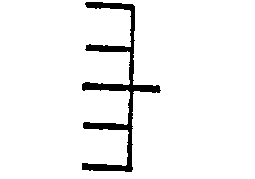
reactions 2 and 3), the desired electroactive molecule is synthesized from polymer precursors directly on the resin. Thus, functionalized electroactive species are not required; however, multiple polymer reactions become necessary.

- The specific steps of the synthesis of the contemplated compositions can be found in U.S. Patent 4142783.
- The solvents which can be used for film coating are toluene, chloroform, methylene chloride, cyclopentanone, tetrahydrofuran, methyl-ethyl-ketone etc.
- In the present invention resist compositions are exposed to U.V. radiation, E-beam radiation or X-ray radiation.
- U.V. exposures were performed using a 200 watt Hg lamp in conjunction with a contact printer. The lamp output was 40 mW/cm2 in the plane of the wafer and a dichroic mirror was used during exposure to absorb infrared radiation. The lamp produces broad band U.V. radiation, i.e., in the range of 300 nm to 500 nm. The mask used was E-beam generated using a chrome substrate. Exposure times were typically 10 seconds to 120 seconds.
- E-beam exposure were performed in a vacuum of about 1.33.1 0-3bar on a scanning E-beam system at 20 KV beam voltage. The charge density is in the range of about 1 x 10⁻⁶ C/CM 2 to about 50 x 106 C/
c m2. - X-ray exposure were performed in 1.33 · 10-3bar vacuum, using a
vacuum generator 1 KeV electron gun, with 7 KV gun voltage and 40 mA gun current. The X-rays having an energy of about 1.34 KeV are generated with an AI target (0.83 nm) and X-ray spot of 1-2 mm size. A gold (600 nm) mask on a polyimide substrate is coated with 50 nm of AI to prevent optical exposure of the resist. The mask- wafer separation used is 4 ,um, and the copy is obtained at a gun-wafer separation of 18 cm. Under these conditions the copy time for a 100 mj/cm2 dose is about three hours. X-ray exposures involve doses of 25-100 mj/cm2. - More specifically, this invention concerns new compositions of matter which function in a novel resist process when irradiated by actinic radiation, E-beam radiation or X-ray radiation. For example, films of a polymeric TTF material can be spin cast from a solution containing a halocarbon acceptor, such as CBr4. Under these conditions the resulting polymer film contains CBr4 and becomes sensitive to radiation. When actinic radiation, E-beam radiation or X-ray radiation is used to irradiate these films through appropriate masks, only the unexposed areas can be removed from the underlying substrate by washing with a non-polar solvent. This negative resist process is a novel one and unrelated to those suggested earlier for polymers whose solubility decreases upon exposure to radiation because of radiation induced crosslinking reactions.
- It is suggested that these resists operate by means of the radiation-induced formation of a salt, according to
reaction 1.
- The neutral polymer is soluble in non-polar solvents while the salt produced is insoluble. This reaction is known to occur with monomeric TTF in solution,
U.S. Patent 4 036 648, where the halide salt produced is insoluble in non-polar solvents. This new mechanism for lithographic action has been established in the following ways. - Using visible-near IR spectrophotometry, the TTF ions postulated in the above reaction have been detected. By irradiating poly(TTF) doped halocarbon films that were spun onto transparent substrates it has been observed that the films' spectrum changes during irradiation to give new absorption at 600 nm and at 800 nm, previously identified as characteristic of TTF+ ion and aggregates thereof. (see the publication to J. B. Torrance et al entitled "Optical Properties of the Radical Cation Tetrathiafulvalenium in its Mixed-Valence and Monovalence Halide Salts", Phys. Rev. B, 19 730 (1979). Additional predictions of the suggested mechanism have also been observed. For instance, it would be expected that polymer films containing no halocarbon present would be much less sensitive to incident radiation. Confirming this point it has been observed that irradiation of the undoped TTF polymer films gave no lithographic images when subjected to the same incident radiation as in the case of doped films.
- Another facet of this mechanism is that reversing of the charge transfer in
Reaction 1, seereaction 2 below, could be expected to lead to a change in the solubility properties, whereby the irradiation
- The third ramification of the postulated mechanism is that other n-donor polymers should be lithographically active in the presence of halocarbon dopants. As alluded to previously, π-donor sensitivity to radiation with halocarbons present has been observed for a large number of donors in fluid solution. If the postulated mechanism is correct it would be expected that the same variety of donor halocarbon ionization found in solution would also be observed in the polymeric solid state. Similar lithographic differential solubility with donors such as pyrazoline, dimethylphenylenediamine, and ferrocene bound to polymeric backbones and prepared as halocarbon doped films, has in fact been observed.
- A prime disadvantage of previous negative resist materials is the inherently low resolution of the patterns obtainable. As discussed earlier, negative resists typically operate by means of a radiation-induced crosslinking process. Although the crosslinked polymer that remains cannot be dissolved in a developer solvent, penetration of the solvent into the polymer causes swelling of the polymer chains since many of the development solvents are thermodynamically good solvents for the unexposed non- crosslinked polymer. The swelling process grossly distorts the lithographic pattern, and attempts to alleviate this problem by use of mixed solvents or thermal treatments have largely been unsuccessful.
- For the present resist process, however, the lithographic patterns obtained showed no evidence for solvent induced distortions or loss of resolution. It is suggested that solvent penetration of the polymer followed by swelling is prevented in the system described herein, by the presence of ions which act to repel the non-polar solvent from the polymer matrix. Thus solvent cannot penetrate into the exposed polymer mass and cause swelling.
- The following examples are given solely for purposes of illustration. In the examples the following abbreviations are used:
- DMF = dimethyl-formamide;
- DCC = N,N'-dicyclohexylcarbodiimide
- THF ≙ tetrahydrofuran;
- Poly(vinylbenzylchloride), prepared from the monomer vinylbenzylchloride, 0.275 g, and the cesium salt of tetrathiafulvalene carboxylic acid, 0.750 mg, is added to 75 ml of DMF and stirred at 75°C for 24 hours. The solution is concentrated and the resultant polymer is isolated by precipitation into a rapidly stirred H20 solution. Repeated precipitations from THF/H20 gave a dark brown solid. Anal. calc'd for
- C15.1H11.6S3.5O1.7Cl0.13, [C9H9(C7S4H3O2)0.87(Cl)0.13]
- C=53.81, S=33.09, Cl=0.14. Found C, 53.74; S, 32.96; Cl, 0.23.
- Polymer films are prepared by mixing 4.7 mg of the polymer with 1 mg of C2Br2Cl4 which is added to 20 µl of cyclopentanone. The films are spin coated at 2500 RPM on a photoresist spinner. No baking is required in order to obtain good images. Solvents used as developers include tetrahydrofuran cyclo- pentantone, diglyme, methylene chloride, chloroform and mixtures thereof.
- Several poly(TTF) films are prepared in this manner. To determine the sensitivity of this resist, some of these films are exposed to U.V. radiation from a 200 watt Hg lamp.
- Some films were exposed to E-beams with doses from 2-40 x 10-6 C/cm2. The films were developed in 1:1 THF: cyclopentanone and then the thickness of the remaining resist was determined with a surfanalyzer. From the resulting plot of normalized thickness remaining vs. dose rate, see Fig. 1, it can be seen that the sensitivity of the material for 50% thickness remaining is -5 Coul/cm2. From data on other resist materials (Table I, page, 19), it can be seen that the present material is one of the most sensitive resists known.
- An E-beam exposed pattern was studied via scanning electron microscopy (see Fig. 2). These photographs show no evidence for the classical negative resist swelling behaviour. All of the patterns are extremely well-formed, with parallel, vertical walls and showing no signs of pattern distortion. From the indicated scale, it is estimated that the present resist has a resolution of better than 200 nm.
- Some films were exposed to X-rays of energies ranging form 15-100 mj/cm2. The films were developed in THF, and then the thickness of the remaining resist was determined with a surfanalyzer. From the resulting plot of normalized thickness remaining vs. dose rate, see Fig. 3, it can be seen that the sensitivity of the material for 50% thickness remaining is -4 mj/cm2. From data on other resist materials (Table II, page 19), it can be seen that the present material is one of the most sensitive resists known.
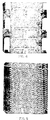
- An X-ray exposed pattern was studied via scanning electron microscopy (see Fig. 4). These photographs show no evidence for the classical negative resist swelling behaviour. All of the patterns are extremely well formed, with parallel, vertical walls and showing no signs of pattern distortion. From the indicated scale, it is estimated that the present resist has a resolution of better than 200 nm.
- Poly(vinylbenzylchloride), 150 mg, is reacted with 360 mg of the cesium salt of ferrocene carboxylic acid, (as prepared below) in 65 ml DMF solvent. The solution is heated to 75°C, and stirred for 24 hours. The volume of the solution is reduced and the polymer is precipitated into H20. Repeated precipitations (THF/H20) gave a light yellow solid.
- Anal. calc'd for C9H9(C7.5H5.4O1.4Fe0.7) (Cl0.3)
- C, 69.9; Fe, 13.4; Cl, 4. Found C, 67.62; Fe, 12.11; Cl, 4.61.
- Cesium salt of carboxyferrocene. Monocarboxyferrocene, 230 mg, is dissolved in ethanol. To this solution is added 5 ml of H20 which contained 250 mg CsHC03. Using slight heating and high vacuum, the solution was taken to dryness to produce the desired salt.
- About 5.2 mg of the so prepared polymer and about 1 mg of C2Br2Cl4, the acceptor compound are added to 26 ,ul of THF solvent and films are spun at 2500 RPM on a photoresist spinner. The films are exposed to U.V. radiation, E-beam radiation or X-ray radiation in the range of 10-100 mj/cm2, as in Example 1. Patterns obtained by exposure to u.v. radiation or X-rays are developed by one of the following solvents or mixtures thereof: toluene, chloroform, methylene chloride, cyclopentanone, THF. Patterns obtained by exposure to E-beams are developed in toluene:THF mixtures. No pre- or post exposure baking is required to obtain good images.
- The potassium salt of the pyrazoline is prepared by adding 374 mg pyrazoline to 40 mg KH in dry THF. After stirring for 30 minutes, 152 mg of polyvinylbenzylchloride is added to this solution. After refluxing for 4 days, the solvent volume was reduced and the polymer isolated following multiple repreci- pitations from 50:50 NeOH/H20. About 4.6 mg of the polymer and 1 mg of the C2Br2Cl4 acceptor are added to 32 ,ul of THF. Films were spun at 2500 RPM on a photoresist spinner. After U.V. exposures, E-beam exposures or X-ray exposures, as in the above examples, good images are obtained by developing in toluene:THF mixtures. No pre- or post exposure baking was required to obtain good images.
- Poly(D-glutamic acid) (Miles-Yeda Ltd. mol. wt. 12400), 0.5 g, is dissolved in 50 ml of dry DMF and 2 g of freshly distilled N,N-dimethyl-p-phenylenediamine is then added. The solution is cooled to 0°C and 1 g of DCC is added with stirring. Stirring is continued at 0°C for 1 h and at room temperature for an additional 24 h. One milliliter of dry methanol is added and stirring is continued for an additional h. The precipitate is filtered off and the filtrate is evaporated to dryness at 35°C bath temperature (0.01 mm). The residue is dissolved in THF and filtered in a drybox under nitrogen. Diethyl ether is added to the solution and the precipitate is filtered and collected under nitrogen. The collected solid is further purified by precipitation from THF with diethyl ether.
- Anal. Calcd. for (C13H17N3O2)n
- C, 62.90; H, 6.85; N, 16.93. Found: C, 62.69; H, 7.64; N, 14.54.
- About 15 mg of the above prepared polymer (5.0 mg) and the C2Br2C'4 acceptor, 1 mg, are added to 29 ,ul THF and films are spun (2500 RPM) on a photoresist spinner. After exposure to U.V. E-beam or X-rays as in the above examples, good images are obtained by use of methyl-ethyl-ketone developer solvent. No baking was required.
- About 15 mg of polyphenoxytetrathiafulvalene and 1.0 mg of C2Br2Cl4 are added to 29 µl THF and films are spun (2500 RPM) on a photoresist spinner. After exposure to U.V., E-beam or X-rays, as in the above examples, good images are obtained by use of methyl-ethyl-ketone developer solvent. No baking was required.


- After U.V. exposure, E-beam exposure or X-ray exposure the polymer films are readily removed by washing with a DMF solution which contained a few drops of the reducing agent hydrazine. Because this works by reducing the oxidized films, it is likely that other reducing agents (and solvents) can similarly be used.
- Other functionalized polymers, e.g., poly(epichlorohydrin), poly(halophosphazenes), poly(acrylic chloride) and copolymers of the same where reacted with donors listed above. The resultant electroactive polymers were treated as in Examples 1-5 above and provided good images when exposed to U.V. radiation, E-beam radiation or X-ray radiation.
Pyrazolines


Claims (13)
Applications Claiming Priority (6)
| Application Number | Priority Date | Filing Date | Title |
|---|---|---|---|
| US8349679A | 1979-10-10 | 1979-10-10 | |
| US8349579A | 1979-10-10 | 1979-10-10 | |
| US8349179A | 1979-10-10 | 1979-10-10 | |
| US83491 | 1979-10-10 | ||
| US83496 | 1979-10-10 | ||
| US83495 | 1979-10-10 |
Publications (2)
| Publication Number | Publication Date |
|---|---|
| EP0027180A1 EP0027180A1 (en) | 1981-04-22 |
| EP0027180B1 true EP0027180B1 (en) | 1984-02-01 |
Family
ID=27374546
Family Applications (1)
| Application Number | Title | Priority Date | Filing Date |
|---|---|---|---|
| EP80105502A Expired EP0027180B1 (en) | 1979-10-10 | 1980-09-15 | Photo, e-beam, and x-ray sensitive negative resists based on donor polymer-doped halocarbon acceptor transfer complexes and method for producing negative resist images |
Country Status (2)
| Country | Link |
|---|---|
| EP (1) | EP0027180B1 (en) |
| DE (1) | DE3066410D1 (en) |
Families Citing this family (5)
| Publication number | Priority date | Publication date | Assignee | Title |
|---|---|---|---|---|
| JPS59124133A (en) * | 1982-12-30 | 1984-07-18 | インタ−ナショナル ビジネス マシ−ンズ コ−ポレ−ション | Method of forming negative type resist image |
| JPS61125019A (en) * | 1984-11-16 | 1986-06-12 | インタ−ナショナル ビジネス マシ−ンズ コ−ポレ−ション | Manufacture of ic and photoconductive photoresist composite used therefor |
| DE19914304A1 (en) * | 1999-03-29 | 2000-10-05 | Bayer Ag | Electrochrome contrast plate |
| GB201405660D0 (en) * | 2014-03-28 | 2014-05-14 | Gama Healthcare Ltd | A liquid disinfecting composition |
| CN104448090B (en) * | 2014-12-19 | 2017-02-22 | 无锡市人民医院 | Preparation method of copolymer with ferrocene-containing side chain |
-
1980
- 1980-09-15 DE DE8080105502T patent/DE3066410D1/en not_active Expired
- 1980-09-15 EP EP80105502A patent/EP0027180B1/en not_active Expired
Non-Patent Citations (1)
| Title |
|---|
| None * |
Also Published As
| Publication number | Publication date |
|---|---|
| DE3066410D1 (en) | 1984-03-08 |
| EP0027180A1 (en) | 1981-04-22 |
Similar Documents
| Publication | Publication Date | Title |
|---|---|---|
| AU604932B2 (en) | Radiation-sensitive mixture for photosensitive coating materials | |
| US4076536A (en) | Dry photopolymer imaging article having a diazonium salt and epoxide copolymer | |
| US4600683A (en) | Cross-linked polyalkenyl phenol based photoresist compositions | |
| EP0404206A2 (en) | Resist compositions | |
| EP0698230A4 (en) | Chemically amplified photoresist | |
| JPS61240237A (en) | Resist composition for far ultraviolet lithography and use thereof | |
| EP0537879B1 (en) | Aryl triflate compound, radiologically acid producing agent, radiologically acid producing agent system, and radiosensitive composition | |
| EP0027180A1 (en) | Photo, E-beam, and X-ray sensitive negative resists based on donor polymer-doped halocarbon acceptor transfer complexes and method for producing negative resist images | |
| CA1161685A (en) | Class of x-ray resists based on donor polymer-doped halocarbon acceptor transfer complexes | |
| CA1175990A (en) | Class of photo resists based on donor polymer-doped halocarbon acceptor transfer complexes | |
| CA1163671A (en) | Class of e-beam resists based on donor polymer-doped halocarbon acceptor transfer complexes | |
| US4262083A (en) | Positive resist for electron beam and x-ray lithography and method of using same | |
| US3856523A (en) | Process for preparing lithographic plates | |
| JP2662141B2 (en) | Device manufacturing method | |
| JPS5855926A (en) | Formation of image using polyamide type linear polymer | |
| US5851728A (en) | Three-component chemical amplified photoresist composition | |
| US3792025A (en) | Novel compounds and process | |
| US3779989A (en) | Light-sensitive polymers containing a phenyl-diarylcyclopropene moiety,their preparation and use | |
| US4897336A (en) | Self-developing radiation sensitive resist with amorphous polymer having haloalkyl substitution derived from cycic ether | |
| US3911164A (en) | Novel compounds and process | |
| US4054451A (en) | Method of polymerizing a copolymer of glycidyl methacrylate and allyl glycidyl ether | |
| US5439990A (en) | Photolytic polymer and photoresist composition | |
| US4504646A (en) | Positive type, radiation-sensitive organic polymer materials | |
| US3794626A (en) | Radiation sensitive polymers | |
| US4247622A (en) | Photodeformable polymeric compositions |
Legal Events
| Date | Code | Title | Description |
|---|---|---|---|
| PUAI | Public reference made under article 153(3) epc to a published international application that has entered the european phase |
Free format text: ORIGINAL CODE: 0009012 |
|
| AK | Designated contracting states |
Designated state(s): BE CH DE FR GB IT NL SE |
|
| 17P | Request for examination filed |
Effective date: 19810807 |
|
| GRAA | (expected) grant |
Free format text: ORIGINAL CODE: 0009210 |
|
| AK | Designated contracting states |
Designated state(s): BE CH DE FR GB IT LI NL SE |
|
| PG25 | Lapsed in a contracting state [announced via postgrant information from national office to epo] |
Ref country code: NL Effective date: 19840201 Ref country code: IT Free format text: LAPSE BECAUSE OF FAILURE TO SUBMIT A TRANSLATION OF THE DESCRIPTION OR TO PAY THE FEE WITHIN THE PRESCRIBED TIME-LIMIT;WARNING: LAPSES OF ITALIAN PATENTS WITH EFFECTIVE DATE BEFORE 2007 MAY HAVE OCCURRED AT ANY TIME BEFORE 2007. THE CORRECT EFFECTIVE DATE MAY BE DIFFERENT FROM THE ONE RECORDED. Effective date: 19840201 |
|
| REF | Corresponds to: |
Ref document number: 3066410 Country of ref document: DE Date of ref document: 19840308 |
|
| ET | Fr: translation filed | ||
| PGFP | Annual fee paid to national office [announced via postgrant information from national office to epo] |
Ref country code: BE Payment date: 19840630 Year of fee payment: 5 |
|
| NLV1 | Nl: lapsed or annulled due to failure to fulfill the requirements of art. 29p and 29m of the patents act | ||
| PGFP | Annual fee paid to national office [announced via postgrant information from national office to epo] |
Ref country code: FR Payment date: 19840829 Year of fee payment: 5 |
|
| PGFP | Annual fee paid to national office [announced via postgrant information from national office to epo] |
Ref country code: DE Payment date: 19840920 Year of fee payment: 5 |
|
| PGFP | Annual fee paid to national office [announced via postgrant information from national office to epo] |
Ref country code: SE Payment date: 19840930 Year of fee payment: 5 |
|
| PLBI | Opposition filed |
Free format text: ORIGINAL CODE: 0009260 |
|
| PGFP | Annual fee paid to national office [announced via postgrant information from national office to epo] |
Ref country code: CH Payment date: 19841220 Year of fee payment: 5 |
|
| 26 | Opposition filed |
Opponent name: HOECHST AKTIENGESELLSCHAFT,FRANKFURT(MAIN) Effective date: 19841027 |
|
| RDAG | Patent revoked |
Free format text: ORIGINAL CODE: 0009271 |
|
| STAA | Information on the status of an ep patent application or granted ep patent |
Free format text: STATUS: PATENT REVOKED |
|
| GBPR | Gb: patent revoked under art. 102 of the ep convention designating the uk as contracting state | ||
| 27W | Patent revoked |
Effective date: 19870613 |
|
| BERE | Be: lapsed |
Owner name: INTERNATIONAL BUSINESS MACHINES CORP. Effective date: 19870930 |
|
| REG | Reference to a national code |
Ref country code: CH Ref legal event code: PL |
|
| EUG | Se: european patent has lapsed |
Ref document number: 80105502.1 Effective date: 19890614 |