EP0025460B1 - Coupling of aryl and heteroaryl polyhalides - Google Patents
Coupling of aryl and heteroaryl polyhalides Download PDFInfo
- Publication number
- EP0025460B1 EP0025460B1 EP79104205A EP79104205A EP0025460B1 EP 0025460 B1 EP0025460 B1 EP 0025460B1 EP 79104205 A EP79104205 A EP 79104205A EP 79104205 A EP79104205 A EP 79104205A EP 0025460 B1 EP0025460 B1 EP 0025460B1
- Authority
- EP
- European Patent Office
- Prior art keywords
- aryl
- nickel
- heteroaryl
- ligand
- polyhalides
- Prior art date
- Legal status (The legal status is an assumption and is not a legal conclusion. Google has not performed a legal analysis and makes no representation as to the accuracy of the status listed.)
- Expired
Links
- 0 C*[N+]([O-])OCC*[N+](**)[O-] Chemical compound C*[N+]([O-])OCC*[N+](**)[O-] 0.000 description 3
- MUAOENXPXJUFLG-ARJAWSKDSA-N C/C=C\C(C/C=[O]/C(CC1)=CC=C1C(C1C=CC([ClH]C)=CC1)=O)C(C(CC1)=CC=C1Cl)=O Chemical compound C/C=C\C(C/C=[O]/C(CC1)=CC=C1C(C1C=CC([ClH]C)=CC1)=O)C(C(CC1)=CC=C1Cl)=O MUAOENXPXJUFLG-ARJAWSKDSA-N 0.000 description 1
- KKDZMSWHDHBHEU-UHFFFAOYSA-N CC1C(C)C=CCC1 Chemical compound CC1C(C)C=CCC1 KKDZMSWHDHBHEU-UHFFFAOYSA-N 0.000 description 1
Classifications
-
- C—CHEMISTRY; METALLURGY
- C08—ORGANIC MACROMOLECULAR COMPOUNDS; THEIR PREPARATION OR CHEMICAL WORKING-UP; COMPOSITIONS BASED THEREON
- C08G—MACROMOLECULAR COMPOUNDS OBTAINED OTHERWISE THAN BY REACTIONS ONLY INVOLVING UNSATURATED CARBON-TO-CARBON BONDS
- C08G61/00—Macromolecular compounds obtained by reactions forming a carbon-to-carbon link in the main chain of the macromolecule
Definitions
- This invention pertains to a method of coupling aryl and heteroaryl polyhalides and more particularly to the use of a catalyst mixture of an anhydrous nickel compound and a ligand in the presence of a reducing metal in a dipolar aprotic solvent.
- Yamamoto et al. in the Bulletin of the Chemical Society of Japan, 51, 7 (1978) pages 2091-2097 and in JP-A-52-154900n7 describe the polycondensation of di- and polyhalogenated organic compounds via magnesium Grignard reagents in the presence of a transition metal catalyst comprising as ligands triphenylphospine or 2,2'bipyridine to produce polyphenylene type polymers.
- the catalysts include di- and trivalent compounds such as NiCl 2 (2,2'-bipyridine), NiBr 2 (triphenylphosphine) 2' PdCl 2 (2,2'-bipyridine), NiCl 2 , CoCl 2 , FeCl 2 , and FeCl 3 .
- the molar ratio of ligands per grammatom of Ni is e.g. 1:1 or 2:1.
- the reaction is conducted in ether solvents such as tetrahydrofuran, dibutyl ether and diglyme.
- NiCI 2 (bpy) was added to a mixture of the products obtained by the reaction of 11.8 g (50 mmol) of p-dibromobenzene with 1.22 g (50 mg-atom) of magnesium in dry tetrahydrofuran.
- This invention is directed to a method of coupling aryl and heteroaryl polyhalides by contacting said aryl and heteroaryl polyhalides, wherein the halide is selected from CI, Br, or I, or mixtures thereof, in an aprotic solvent with a catalyst mixture comprising an anhydrous nickel compound in the presence of a reducing metal compound at a temperature of from 0 to 250°C, preferably from 25 to 120°C, characterized in that the reaction is carried out in the presence of at least one ligand selected from the group consisting of a - triaryl phosphine having 6 to 14 carbons in each aryl moiety and an aromatic bidentate compound containing at least one ring nitrogen atom and 5 to 30 carbon atoms, in the presence of zink or manganese as reducing metals, wherein the ratio of equivalents of nickel to equivalents of aryl or heteroaryl polyhalide is in the range of 0.0001 to 0.5, the amount of ligand is from 0.1 to 100 moles per
- This invention provides a novel process for the production of aryl and heteroaryl oligomers and polymers.
- the coupling reaction takes place at temperatures of from 0 to 250°C, preferably from 25 to 120°C, and most preferably from 40 to 80°C.
- Pressure is not critical and so superatmospheric or subatmospheric pressures can be used as well as atmospheric pressure. Reaction is carried out in an inert atmosphere.
- Reaction time can vary from minutes to as long as several hours.
- Inorganic salt promoters may be used to reduce reaction times and/or temperatures.
- Preferred promoters include alkali, alkaline earth, zinc, magnesium, manganese and aluminum halides, or mixtures thereof. Iodides are particularly preferred. The most preferred promoters are alkali metal iodides, bromides and chlorides. The amount of promoter, when used, can range from 0.1 to 1000 moles per gram atom of nickel with 1 to 100 moles of promoter being preferred. If desired one can also employ alkali, alkaline earth, zinc, magnesium, manganese, and aluminum sulfates or phosphates, or mixtures thereof, as promoters.
- Suitable nickel compounds are nickel(O) complexes and those reducible by organometallic and metal reducing agents. These compounds include nickel halides, that is, the chlorides, bromides and iodides, nickel sulfates, nickel phosphates, nickel carbonates, nickel salts of organic acids having 1 to 18 carbons, such as, nickel formate, nickel acetate, and nickel organic complexes such as nickel acetylacetonate and dichloro-bis(triphenylphosphine) nickel (II); and nickel (O) compounds such as bis(1,5-cyclooctadiene) nickel and tetrakis(triphenylphosphine)nickel.
- the anion of the nickel compounds is unimportant and serves merely to provide nickel ion to the catalyst mixture, but it must not interfere with the reaction of the nickel compound with the ligand.
- the preferred anions are the halides, chloride being the most preferred.
- the preferred ratio of gram atoms of nickel to equivalents of aryl or heteroaryl polyhalide is 0.001 to 0.1.
- Suitable triaryl phosphines include triphenylphosphine, triphenylphosphines containing alkyl or alkoxy substituents having up to 8 carbon atoms, and unsubstituted or alkyl- and alkoxy-substituted trinaphthyl phosphines.
- Suitable bidentate compounds include e.g. 2,2'-bipyridine, 1,10-phenanthroline, 1,8-naphthylpyridine, 2-methylaminopyridine.
- Preferred ligands are triphenylphosphine and 2,2'-bipyridine.
- the ratio of triarylphosphine to nickel can range from 0 to 100, preferably from 1 to 10 moles per gram atom of nickel.
- the ratio of bidentate ligand to nickel can range from 0 to 5, preferably from 0.2 to 2, moles of bidentate ligand to gram atom of nickel.
- triarylphosphine and aromatic bidentate ligand preferably a mixture of triphenylphosphine and 2,2'-bipyridine, wherein the ratio of triarylphosphine to nickel varies from 1 to 3, and the ratio of bidentate ligand to nickel varies from 0.5 to 2 moles per gram atom of nickel.
- the aprotic solvents are dipolar solvents, such as dimethylacetamide, dimethylformamide, dimethylsulfoxide and sulfolane. Dimethylacetamide and dimethylformamide are particularly preferred.
- all solvents used in the practice of this invention be anhydrous.
- all reagents and solvents should be anhydrous.
- manganese metal can be used, zinc metal is the preferred metal. It is also preferred that the metal be in finely divided form with an average particle size of 0.83 mm (US sieve 20) or finer.
- the stoichiometric amount of reducing metal required in this coupling reaction is 0.5 moles of reducing metal per equivalent of aryl or heteroaryl polyhalide, it is preferred to use a 50 percent excess or greater.
- the nickel (0) ligand complex believed to be the active catalyst can be formed in situ in the presence of an aryl and/or heteroaryl polyhalide, or the catalyst can be preformed in situ prior to the addition of the aryl and/or heteroaryl polyhalide.
- aryl and heteroaryl polyhalides may be used in the practice of this invention.
- the polyhalides may be selected from the following formulae: wherein R is an aryl or heteroaryl radical, or combinations thereof, containing 4 to 100 carbon atoms such as phenyl, biphenyl, naphthyl and pyridyl; Y is independently an inert substituent selected from hydrogen, alkyl, aryl, arlkylaryl, arylalkyl, substituted or unsubstituted amino, -CN, -CHO, Oaryl, -Oalkyl, -OCOaryl, -OCOalkyl, -COOalkyl, -COOaryl, ⁇ SO 2 aryl, ⁇ SO 2 -alkyl, ⁇ SO 3 -alkyl, -SO 3 aryl, wherein the aryl contains 4 to 30 carbon atoms and the alkyl contains 1 to 8 carbon atoms; X is chlorine
- B is as previously defined, and is preferably -0-, -S-, -S-S-, R 3 is a direct bond, ⁇ O ⁇ , ⁇ S ⁇ , ⁇ SO 2 , alkylene or alkylidene containing 1 to 6 carbon atoms, preferably -C(CH 3 ) 2 , or cycloalkylidene containing 5 to 18 carbon atoms, and X and Y are as previously defined; wherein X and Y are as previously defined.
- one or more carbon atoms of the benzene rings can be replaced by a hetero atom, such as P or N.
- polyhalides should not contain nitro groups or acidic functional groups such as phenols and carboxylic acids. Also, the aryl and heteroaryl polyhalides should not contain two substituents ortho to the halide.
- the aryl and heteroaryl polyhalides starting materials can additionally include aryl and heteroaryl monohalides.
- R 4 is independently selected from a monovalent inert radical such as alkyl, aryl, F, substituted or unsubstituted amino, -CN, -CHO, -Oaryl, O-alkyl, -OCO-aryl, -OCOalkyl, -COOalkyl, -COOaryl, ⁇ SO 2 -aryl or -SO 2 -alkyl, wherein the aryl contains 4 to 30 carbon atoms, the alkyl contains 1 to 8 carbon atoms, andz is an integer having values of 0 to 4, with the proviso that no more than one R 4 is in a position ortho to the halide containing ring carbon atom, and X is a halide selected from CI, B, or I.
- inert radicals is meant radicals which do not interfere with the coupling reaction.
- Another preferred monohalide compound is a heteroaryl-monohalide wherein one or more of the carbon atoms of the benzene ring in formula (VI) is replaced by a hetero atom, such as N or P.
- the preferred polyhalides include the following:
- the aryl and heteroaryl polyhalides can be used individually or in combination, or in combination with the aryl and heteroaryl monohalides described, supra, and they can be coupled to form a variety of compounds, oligomers, polymers and copolymers.
- Such polymers include e.g. polycarbonates, polysulfones, polyethersulfones, polyesters, polyarylates, polyurethanes, polyetherimides, and polyimides, and copolymers thereof.
- the polymer was then pressure molded at 320°C and cut into test bars 0.5 mm (20 mils) thick and tested for tensile modulus, yield strength tensile strength, yield elongation and elongation at break by a procedure similar to ASTM-D638. The results are as follows:
- the polymer was filtered, washed with methanol, and then placed in a vacuum oven (100°C at 13 mbar (10 mm Hg) for about 24 hours) to dry.
- the dry polymer had a reduced viscosity of 0.18 dl/g as measured in p-chlorophenol.
- This Example describes the preparation of a polyarylate by coupling bisphenol-A di-p-chlorobenzoate of the following formula:
- This Example describes the preparation of a poly(biphenylether).
- Example 1 To a 50 ml flask there was added 0.26 g NiCI 2 , 3.0 g triphenylphosphine, 1.0 g sodium bromide, 6.0 g Zn, and 10 g 4,4'-dibromophenyl ether. Under a nitrogen atmosphere there was added 30 ml of dry DMAC. The reaction was run at 70°C for 2 hours during which time the polymer precipitated from solution. The insoluble polymer was isolated and dried as described in Example 1.
- This Example describes the preparation of a copolymer by coupling two different aryl halides.
- the polymer began to precipitate from solution even before the addition of the dichlorodiphenylsulfone was complete.
- the reaction was allowed to continue for several hours at 70°C.
- the reaction mixture was poured into acidic methanol solution and heated with stirring for 1 hour.
- the polymer was then filtered, washed twice with 25 ml portions of methanol, and then placed in a vacuum oven (100°C at 1.3 mbar (1 mm Hg) for about 24 hours) to dry.
- the polymer was found to be insoluble in solvents.
Landscapes
- Chemical & Material Sciences (AREA)
- Health & Medical Sciences (AREA)
- Chemical Kinetics & Catalysis (AREA)
- Medicinal Chemistry (AREA)
- Polymers & Plastics (AREA)
- Organic Chemistry (AREA)
- Polyoxymethylene Polymers And Polymers With Carbon-To-Carbon Bonds (AREA)
- Organic Low-Molecular-Weight Compounds And Preparation Thereof (AREA)
- Catalysts (AREA)
- Plural Heterocyclic Compounds (AREA)
Abstract
Description
- This invention pertains to a method of coupling aryl and heteroaryl polyhalides and more particularly to the use of a catalyst mixture of an anhydrous nickel compound and a ligand in the presence of a reducing metal in a dipolar aprotic solvent.
- Reactions which form carbon-carbon bonds are few although they are extremely useful in organic synthesis. In the formation of these bonds involving aryl groups, coupling is usually accomplished through the use of a metal. The use of copper in the Ullmann reaction is described in Chem. Rev. 38,139 (1946); 64, 613 (1964). The use of nickel complexes was described by M. F. Semmelhack, et al. in J. Am. Chem. Soc., 93, 5908 (1971). The use of palladium complexes was described by F. R. S. Clark, et al, J. Chem. Soc. Perkin I, 121 (1975). The latter reactions with nickel or palladium complexes have the advantage of proceeding at moderate temperatures but are disadvantageous in that aryl chlorides were either completely unreactive or gave very poor yields.
- Yamamoto et al. in the Bulletin of the Chemical Society of Japan, 51, 7 (1978) pages 2091-2097 and in JP-A-52-154900n7 describe the polycondensation of di- and polyhalogenated organic compounds via magnesium Grignard reagents in the presence of a transition metal catalyst comprising as ligands triphenylphospine or 2,2'bipyridine to produce polyphenylene type polymers. The catalysts include di- and trivalent compounds such as NiCl2(2,2'-bipyridine), NiBr2(triphenylphosphine)2' PdCl2(2,2'-bipyridine), NiCl2, CoCl2, FeCl2, and FeCl3. The molar ratio of ligands per grammatom of Ni is e.g. 1:1 or 2:1. The reaction is conducted in ether solvents such as tetrahydrofuran, dibutyl ether and diglyme.
- In an example e.g. 51 mg of NiCI2(bpy) was added to a mixture of the products obtained by the reaction of 11.8 g (50 mmol) of p-dibromobenzene with 1.22 g (50 mg-atom) of magnesium in dry tetrahydrofuran.
- The work of Yamamoto, et al. was a stated extension of well-known prior art on the coupling of aromatic Grignard reagents with aryl halides.
- This invention is directed to a method of coupling aryl and heteroaryl polyhalides by contacting said aryl and heteroaryl polyhalides, wherein the halide is selected from CI, Br, or I, or mixtures thereof, in an aprotic solvent with a catalyst mixture comprising an anhydrous nickel compound in the presence of a reducing metal compound at a temperature of from 0 to 250°C, preferably from 25 to 120°C, characterized in that the reaction is carried out in the presence of at least one ligand selected from the group consisting of a - triaryl phosphine having 6 to 14 carbons in each aryl moiety and an aromatic bidentate compound containing at least one ring nitrogen atom and 5 to 30 carbon atoms, in the presence of zink or manganese as reducing metals, wherein the ratio of equivalents of nickel to equivalents of aryl or heteroaryl polyhalide is in the range of 0.0001 to 0.5, the amount of ligand is from 0.1 to 100 moles per gram atom of nickel and the amount of reducing metal is at least 0.5 equivalent per equivalent of aryl or heteroaryl polyhalide and that the aprotic solvent is a dipolar aprotic solvent.
- This invention provides a novel process for the production of aryl and heteroaryl oligomers and polymers.
- It was unexpected that high performance polymers could be produced from aryl and heteroaryl polyhalides at moderate temperatures.
- The coupling reaction takes place at temperatures of from 0 to 250°C, preferably from 25 to 120°C, and most preferably from 40 to 80°C.
- Pressure is not critical and so superatmospheric or subatmospheric pressures can be used as well as atmospheric pressure. Reaction is carried out in an inert atmosphere.
- Reaction time can vary from minutes to as long as several hours. Inorganic salt promoters may be used to reduce reaction times and/or temperatures.
- Preferred promoters include alkali, alkaline earth, zinc, magnesium, manganese and aluminum halides, or mixtures thereof. Iodides are particularly preferred. The most preferred promoters are alkali metal iodides, bromides and chlorides. The amount of promoter, when used, can range from 0.1 to 1000 moles per gram atom of nickel with 1 to 100 moles of promoter being preferred. If desired one can also employ alkali, alkaline earth, zinc, magnesium, manganese, and aluminum sulfates or phosphates, or mixtures thereof, as promoters.
- Suitable nickel compounds are nickel(O) complexes and those reducible by organometallic and metal reducing agents. These compounds include nickel halides, that is, the chlorides, bromides and iodides, nickel sulfates, nickel phosphates, nickel carbonates, nickel salts of organic acids having 1 to 18 carbons, such as, nickel formate, nickel acetate, and nickel organic complexes such as nickel acetylacetonate and dichloro-bis(triphenylphosphine) nickel (II); and nickel (O) compounds such as bis(1,5-cyclooctadiene) nickel and tetrakis(triphenylphosphine)nickel. The anion of the nickel compounds is unimportant and serves merely to provide nickel ion to the catalyst mixture, but it must not interfere with the reaction of the nickel compound with the ligand. The preferred anions are the halides, chloride being the most preferred.
- The preferred ratio of gram atoms of nickel to equivalents of aryl or heteroaryl polyhalide is 0.001 to 0.1.
- Suitable triaryl phosphines include triphenylphosphine, triphenylphosphines containing alkyl or alkoxy substituents having up to 8 carbon atoms, and unsubstituted or alkyl- and alkoxy-substituted trinaphthyl phosphines. Suitable bidentate compounds include e.g. 2,2'-bipyridine, 1,10-phenanthroline, 1,8-naphthylpyridine, 2-methylaminopyridine. Preferred ligands are triphenylphosphine and 2,2'-bipyridine.
- The ratio of triarylphosphine to nickel can range from 0 to 100, preferably from 1 to 10 moles per gram atom of nickel.
- The ratio of bidentate ligand to nickel can range from 0 to 5, preferably from 0.2 to 2, moles of bidentate ligand to gram atom of nickel.
- It is preferred to use a combination of triarylphosphine and aromatic bidentate ligand, preferably a mixture of triphenylphosphine and 2,2'-bipyridine, wherein the ratio of triarylphosphine to nickel varies from 1 to 3, and the ratio of bidentate ligand to nickel varies from 0.5 to 2 moles per gram atom of nickel.
- The aprotic solvents are dipolar solvents, such as dimethylacetamide, dimethylformamide, dimethylsulfoxide and sulfolane. Dimethylacetamide and dimethylformamide are particularly preferred.
- It is preferred that all solvents used in the practice of this invention be anhydrous. To produce high polymers all reagents and solvents should be anhydrous.
- Although manganese metal can be used, zinc metal is the preferred metal. It is also preferred that the metal be in finely divided form with an average particle size of 0.83 mm (US sieve 20) or finer.
- Although the stoichiometric amount of reducing metal required in this coupling reaction is 0.5 moles of reducing metal per equivalent of aryl or heteroaryl polyhalide, it is preferred to use a 50 percent excess or greater.
- While not wishing to be bound by any scientific theory or explanation of the mechanism of the coupling reaction of this invention, it is believed that the combination of nickel compound, ligand and reducing metal provides nickel in a zero valent state, a form which in an anhydrous dipolar aprotic medium enables the coupling of aryl and/or heteroaryl polyhalides to take place in excellent yields.
- The nickel (0) ligand complex believed to be the active catalyst can be formed in situ in the presence of an aryl and/or heteroaryl polyhalide, or the catalyst can be preformed in situ prior to the addition of the aryl and/or heteroaryl polyhalide.
- A method for the determination of zero valent nickel is described by C. A. Tolman, J. Am. Chem. Soc. 92, 2956 (1970).
- A wide variety of aryl and heteroaryl polyhalides may be used in the practice of this invention. For example, the polyhalides may be selected from the following formulae:


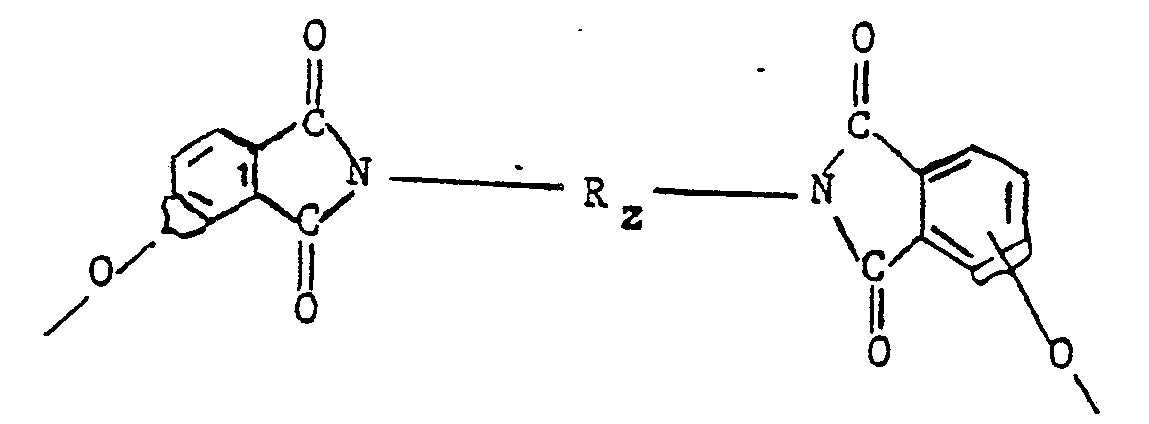


- In the polyhalides depicted in formulas (II) to (V), one or more carbon atoms of the benzene rings can be replaced by a hetero atom, such as P or N.
- Additionally, the polyhalides should not contain nitro groups or acidic functional groups such as phenols and carboxylic acids. Also, the aryl and heteroaryl polyhalides should not contain two substituents ortho to the halide.
- The aryl and heteroaryl polyhalides starting materials can additionally include aryl and heteroaryl monohalides.
- The preferred aryl and heteroaryl monohalides are depicted as follows:


- Another preferred monohalide compound is a heteroaryl-monohalide wherein one or more of the carbon atoms of the benzene ring in formula (VI) is replaced by a hetero atom, such as N or P.
- The preferred polyhalides include the following:


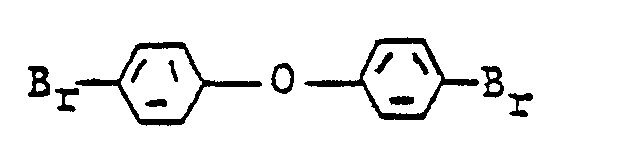





- The aryl and heteroaryl polyhalides can be used individually or in combination, or in combination with the aryl and heteroaryl monohalides described, supra, and they can be coupled to form a variety of compounds, oligomers, polymers and copolymers. Such polymers include e.g. polycarbonates, polysulfones, polyethersulfones, polyesters, polyarylates, polyurethanes, polyetherimides, and polyimides, and copolymers thereof.
- The invention is further described in the examples which follow. All parts and percentages are by weight unless otherwise specified.
- This example describes the preparation of a polysulfone by coupling 4,4'-bis(p-chlorophenoxy)-diphenylsulfone of the following formula:

- To a 100 ml flask equipped with a magnetic stirring bar were added 0.26 g NiC12, 0.3 g bipyridine, 1.5 g triphenylphosphine, 2.0 g Zn and 2.0 g NaBr. In a side arm attached to this flask were placed 10 g of 4,4'-bis-(p-chlorophenoxyldiphenylsulfone. The reaction apparatus was sealed, evacuated, and filled with nitrogen. Thirty ml of DMAC (dimethyl acetamide) were added and the mixture was heated to 70°C. To this brown mixture was added 0.28 ml of trichlorobenzene. After 1 hour, the monomer was added to the mixture from the side arm. This mixture was stirred for 7 hours at 70°C during which time the reaction mixture became very viscous. The mixture was filtered and diluted with 10 ml DMAC, and then coagulated in hot acidic methanol solution (10 ml concentration of HCI in 500 ml methanol) in a blender. After stirring in the hot acidic methanol for 1 hour, the white polymer was filtered and washed with several cake volumes of methanol. The polymer was then placed in a vacuum oven (80°C and 20 mbar (15 mm Hg) for about 24 hours) to dry. The polymer had a relative viscosity of 0.60 dl/g (measured at 25°C in N-methyl-2-pyrrolidinone).
- The polymer was then pressure molded at 320°C and cut into test bars 0.5 mm (20 mils) thick and tested for tensile modulus, yield strength tensile strength, yield elongation and elongation at break by a procedure similar to ASTM-D638. The results are as follows:

- This Example describes the preparation of a poly(biphenylsulfone) of the following formula:

- To a 50 ml flask there was added 0.26 g nickel chloride, 2.0 g sodium bromide, 2.0 g triphenylphosphine, 3.0 g zinc dust, and 5.0 g dichlorodiphenylsulfone. The flask was sealed, evacuated, and filled with nitrogen. Thirty ml dry DMAC were added through a serum cap and the mixture was reacted at 100°C with stirring. Within 45 minutes, the polymer began precipitating out of solution turning the brownish solution gray. The reaction mixture was poured into hot acidic methanol (10 ml conc. HCI in 500 ml methanol) and stirred for 1 hour. The polymer was filtered, washed with methanol, and then placed in a vacuum oven (100°C at 13 mbar (10 mm Hg) for about 24 hours) to dry. The dry polymer had a reduced viscosity of 0.18 dl/g as measured in p-chlorophenol.
- This Example describes the preparation of a poly(biphenylketone) of the following formula:

- To a 50 ml flask there was added 2.6 g triphenylphosphine, 0.26 g nickel chloride, 2.0 g zinc dust and 2.5 g of 4,4'-dichlorobenzophenone. After a nitrogen atmosphere was introduced, 20 ml DMAC were added by syringe and the mixture was reacted at 70°C with stirring. Within 20 minutes the polymer was precipitating from solution. The polymer was filtered and separated from residual zinc dust by washing in acidic methanol. After filtering and washing, the polymer was dried in a vacuum oven (100°C at 13 mbar (10 mm Hg) for about 24 hours).
- This Example describes the preparation of a polyarylate by coupling bisphenol-A di-p-chlorobenzoate of the following formula:

- To a 50 ml flask there was added 0.26 g NiC12, 3.0 g triphenylphosphine, 2.0 g zinc dust, and 2 g of the dichloro compound depicted above. After purging with nitrogen for 45 minutes, 30 ml of dry DMAC were added by syringe and the mixture was stirred at 85°C. The polymer began precipitating from solution within 45 minutes. The reaction was allowed to continue for several hours. The polymer was isolated and dried in a vacuum oven as described in Example 1. The polymer had a reduced viscosity of 0.18 di/g as measured in N-methyl-2-pyrrolidinone.
- This Example describes the preparation of a polyarylate by coupling ethylene di-p-chlorobenzoate of the following formula:

- To a 50 ml flask there was added 0.26 g nickel chloride, 2.0 g triphenylphosphine, 3.0 g zinc dust, 2.0 g sodium bromide, and 6.8 g ethylene di-p-chlorobenzoate. Under a nitrogen atmosphere there was added 30 ml DMAC. The reaction was heated to 70°C with stirring. Within 40 minutes the polymer had precipitated from solution. The polymer was isolated and dried in an oven as described in Example 1. The polymer had a reduced viscosity of 0.1 dl/g as measured in N-methyl-2-pyrrolidinone.
- This Example describes the preparation of a poly(biphenylether).
- To a 50 ml flask there was added 0.26 g NiCI2, 3.0 g triphenylphosphine, 1.0 g sodium bromide, 6.0 g Zn, and 10 g 4,4'-dibromophenyl ether. Under a nitrogen atmosphere there was added 30 ml of dry DMAC. The reaction was run at 70°C for 2 hours during which time the polymer precipitated from solution. The insoluble polymer was isolated and dried as described in Example 1.
- This Example describes the preparation of a copolymer by coupling two different aryl halides.
- To a 50 ml flask there was added 0.26 g NiC12, 2.0 g triphenylphosphine, 2.0 g sodium bromide, and 3.0 g zinc dust. The flask was sealed, evacuated, and filled with nitrogen. Thirty ml of DMAC and 0.4 ml 2-chloropyridine were added by syringe and reacted for 1 hour at 70°C. After this period, 2.5 g of 4,4'-dibromodiphenylether dissolved in 4 ml DMAC was added to the mixture, and over a period of 1 hour, 2.5 g of 4,4'-dichlorodiphenylsulfone dissolved in 4 ml DMAC was added. The polymer began to precipitate from solution even before the addition of the dichlorodiphenylsulfone was complete. The reaction was allowed to continue for several hours at 70°C. The reaction mixture was poured into acidic methanol solution and heated with stirring for 1 hour. The polymer was then filtered, washed twice with 25 ml portions of methanol, and then placed in a vacuum oven (100°C at 1.3 mbar (1 mm Hg) for about 24 hours) to dry. The polymer was found to be insoluble in solvents.
Claims (9)
Priority Applications (1)
| Application Number | Priority Date | Filing Date | Title |
|---|---|---|---|
| AT79104205T ATE26454T1 (en) | 1979-09-11 | 1979-10-29 | LINKAGE OF ARYL AND HETEROARYL POLYHALIDES. |
Applications Claiming Priority (2)
| Application Number | Priority Date | Filing Date | Title |
|---|---|---|---|
| US7230979A | 1979-09-11 | 1979-09-11 | |
| US72309 | 1979-09-11 |
Publications (2)
| Publication Number | Publication Date |
|---|---|
| EP0025460A1 EP0025460A1 (en) | 1981-03-25 |
| EP0025460B1 true EP0025460B1 (en) | 1987-04-08 |
Family
ID=22106798
Family Applications (1)
| Application Number | Title | Priority Date | Filing Date |
|---|---|---|---|
| EP79104205A Expired EP0025460B1 (en) | 1979-09-11 | 1979-10-29 | Coupling of aryl and heteroaryl polyhalides |
Country Status (5)
| Country | Link |
|---|---|
| EP (1) | EP0025460B1 (en) |
| JP (1) | JPS59523B2 (en) |
| AT (1) | ATE26454T1 (en) |
| CA (1) | CA1129418A (en) |
| DE (1) | DE2967654D1 (en) |
Families Citing this family (15)
| Publication number | Priority date | Publication date | Assignee | Title |
|---|---|---|---|---|
| US4400499A (en) * | 1981-12-29 | 1983-08-23 | Union Carbide Corporation | Integrated process for the preparation of substantially linear high molecular weight thermoplastic polymers from aryl polyhalide monomers |
| US4486576A (en) * | 1982-04-22 | 1984-12-04 | Union Carbide Corporation | High-temperature, aromatic coating materials from aryl polyhalides |
| US4623732A (en) * | 1983-11-18 | 1986-11-18 | General Electric Company | Process for the preparation of N-alkylphthalimide and copolymer derived therefrom |
| JPS60194121U (en) * | 1984-06-04 | 1985-12-24 | 川崎重工業株式会社 | Exhaust pipe cooling device for running vehicles |
| US5227457A (en) * | 1988-02-17 | 1993-07-13 | Maxdem Incorporated | Rigid-rod polymers |
| US5646231A (en) * | 1988-02-17 | 1997-07-08 | Maxdem, Incorporated | Rigid-rod polymers |
| US5654392A (en) * | 1988-02-17 | 1997-08-05 | Maxdem Incorporated | Rigid-rod polymers |
| US5565543A (en) * | 1988-02-17 | 1996-10-15 | Maxdem Incorporated | Rigid-rod polymers |
| US5869592A (en) * | 1991-08-19 | 1999-02-09 | Maxdem Incorporated | Macromonomers having reactive side groups |
| WO1993018077A1 (en) * | 1992-03-06 | 1993-09-16 | Maxdem Incorporated | Rigid-rod polymers |
| EP0629217B1 (en) * | 1992-03-06 | 2003-05-07 | Mississippi Polymer Technologies, Inc. | Rigid-rod polymers |
| JP2816426B2 (en) * | 1995-08-31 | 1998-10-27 | 工業技術院長 | Novel phenylene polymer, method for producing the same, and organic conductive material using the same |
| US5668245A (en) * | 1995-11-02 | 1997-09-16 | Maxdem Incorporated | Polymers with heterocyclic side groups |
| US5886130A (en) * | 1995-11-02 | 1999-03-23 | Maxdem Incorporated | Polyphenylene co-polymers |
| DE10241814A1 (en) | 2002-09-06 | 2004-03-25 | Covion Organic Semiconductors Gmbh | Process for the preparation of aryl-aryl coupled compounds |
Family Cites Families (3)
| Publication number | Priority date | Publication date | Assignee | Title |
|---|---|---|---|---|
| US3345332A (en) * | 1964-04-02 | 1967-10-03 | Nat Distillers Chem Corp | Dipolar aprotic solvent system for polymerization of bis-(alpha-haloalkyl) aromatic compounds in the presence of a coupling agent |
| US3431221A (en) * | 1965-01-26 | 1969-03-04 | Us Army | Catalyzed wurtz-fittig synthesis |
| DE1745085B2 (en) * | 1967-02-21 | 1973-11-29 | Minnesota Mining And Manufacturing Co., Saint Paul, Minn. (V.St.A.) | Process for the preparation of polyarylsulfone polymers |
-
1979
- 1979-09-28 CA CA336,665A patent/CA1129418A/en not_active Expired
- 1979-10-26 JP JP54137876A patent/JPS59523B2/en not_active Expired
- 1979-10-29 DE DE7979104205T patent/DE2967654D1/en not_active Expired
- 1979-10-29 EP EP79104205A patent/EP0025460B1/en not_active Expired
- 1979-10-29 AT AT79104205T patent/ATE26454T1/en not_active IP Right Cessation
Also Published As
| Publication number | Publication date |
|---|---|
| ATE26454T1 (en) | 1987-04-15 |
| JPS5643318A (en) | 1981-04-22 |
| CA1129418A (en) | 1982-08-10 |
| JPS59523B2 (en) | 1984-01-07 |
| EP0025460A1 (en) | 1981-03-25 |
| DE2967654D1 (en) | 1987-05-14 |
Similar Documents
| Publication | Publication Date | Title |
|---|---|---|
| CA1129418A (en) | Coupling of aryl and heteroaryl polyhalides | |
| US4880902A (en) | Copolymerization of carbon monoxide and olefin with diphosphine having heterocyclic substituents as catalyst | |
| EP0012201B1 (en) | Coupling of aryl and heteroaryl monochlorides | |
| KR970004932B1 (en) | New catalyst compositions, methods of making polymers using the same, and polymers prepared therefrom | |
| EP0085185B1 (en) | Integrated process for the preparation of substantially linear high molecular weight thermoplastic polymers from aryl polyhalide monomers | |
| JP5180254B2 (en) | Hexacoordinate ruthenium or osmium metal carbene metathesis catalyst | |
| EP3673994B1 (en) | Method for preparing transition metal complex | |
| US4486576A (en) | High-temperature, aromatic coating materials from aryl polyhalides | |
| JPH0331322A (en) | Catalyst compound for manufacture of polymer of carbon monoxide and olefinic unsaturated compound | |
| US5025091A (en) | Polymerization of CO/olefin with Hydrocarbyl-Pd halide/bidentate P ligand catalyst complex | |
| CA2091028C (en) | Preparation of alternating olefin/carbon monoxide copolymers by means of a heterogeneous supported catalyst | |
| JPH069776A (en) | New homogeneous catalyst composition and method for copolymerizing carbon monoxide with olefin | |
| US6852662B2 (en) | Catalyst systems based on transition metal complexes for carbon monoxide copolymerization in an aqueous medium | |
| US5171832A (en) | Polymerization of carbon monoxide/olefin with p bidentate ligand having (1) alkoxy phenyl p group and (2) monosubstituted divalent bridging group | |
| JPS63273641A (en) | Removal of catalyst residue from olefin/co copolymer | |
| JP2000044544A (en) | Bipyrimidine compound, its polymer and its use | |
| US5169926A (en) | Polymerization of carbon monoxide/olefin with hexakis phosphine ligand | |
| CA2201767C (en) | Process for the preparation of copolymers of carbon monoxide and at least one compound containing an alkenyl unsaturation | |
| JPH0329095B2 (en) | ||
| EP0743336A2 (en) | A process for the preparation of a linear alternating copolymer of carbon monoxide with ethene and another olefinically unsaturated compound | |
| EP0728791A1 (en) | Process for the preparation of copolymers based on carbon monoxide and at least one compound having an alkenylic unsaturation | |
| US6667386B1 (en) | Water-soluble transition metal complexes | |
| US5066777A (en) | Polymerization of co/olefin with diphosphine/hydrocarbyl palladium salt complex catalyst | |
| JP2862293B2 (en) | Linear poly (2,2'-bipyridine-5,5'-diyl) polymer, method for producing and using the same | |
| US5229343A (en) | Polymerization process |
Legal Events
| Date | Code | Title | Description |
|---|---|---|---|
| PUAI | Public reference made under article 153(3) epc to a published international application that has entered the european phase |
Free format text: ORIGINAL CODE: 0009012 |
|
| AK | Designated contracting states |
Designated state(s): AT BE CH DE FR GB IT NL SE |
|
| 17P | Request for examination filed |
Effective date: 19810911 |
|
| RAP1 | Party data changed (applicant data changed or rights of an application transferred) |
Owner name: UNION CARBIDE CORPORATION |
|
| RAP1 | Party data changed (applicant data changed or rights of an application transferred) |
Owner name: AMOCO CORPORATION |
|
| GRAA | (expected) grant |
Free format text: ORIGINAL CODE: 0009210 |
|
| AK | Designated contracting states |
Kind code of ref document: B1 Designated state(s): AT BE CH DE FR GB IT NL SE |
|
| PG25 | Lapsed in a contracting state [announced via postgrant information from national office to epo] |
Ref country code: AT Effective date: 19870408 |
|
| REF | Corresponds to: |
Ref document number: 26454 Country of ref document: AT Date of ref document: 19870415 Kind code of ref document: T |
|
| ITF | It: translation for a ep patent filed | ||
| PG25 | Lapsed in a contracting state [announced via postgrant information from national office to epo] |
Ref country code: SE Effective date: 19870430 |
|
| REF | Corresponds to: |
Ref document number: 2967654 Country of ref document: DE Date of ref document: 19870514 |
|
| ET | Fr: translation filed | ||
| PLBE | No opposition filed within time limit |
Free format text: ORIGINAL CODE: 0009261 |
|
| STAA | Information on the status of an ep patent application or granted ep patent |
Free format text: STATUS: NO OPPOSITION FILED WITHIN TIME LIMIT |
|
| 26N | No opposition filed | ||
| PGFP | Annual fee paid to national office [announced via postgrant information from national office to epo] |
Ref country code: CH Payment date: 19900918 Year of fee payment: 12 |
|
| ITTA | It: last paid annual fee | ||
| PGFP | Annual fee paid to national office [announced via postgrant information from national office to epo] |
Ref country code: NL Payment date: 19901031 Year of fee payment: 12 |
|
| PGFP | Annual fee paid to national office [announced via postgrant information from national office to epo] |
Ref country code: FR Payment date: 19910913 Year of fee payment: 13 |
|
| PGFP | Annual fee paid to national office [announced via postgrant information from national office to epo] |
Ref country code: DE Payment date: 19910917 Year of fee payment: 13 |
|
| PGFP | Annual fee paid to national office [announced via postgrant information from national office to epo] |
Ref country code: BE Payment date: 19910927 Year of fee payment: 13 |
|
| PGFP | Annual fee paid to national office [announced via postgrant information from national office to epo] |
Ref country code: GB Payment date: 19910930 Year of fee payment: 13 |
|
| PG25 | Lapsed in a contracting state [announced via postgrant information from national office to epo] |
Ref country code: CH Effective date: 19911031 |
|
| PG25 | Lapsed in a contracting state [announced via postgrant information from national office to epo] |
Ref country code: NL Effective date: 19920501 |
|
| NLV4 | Nl: lapsed or anulled due to non-payment of the annual fee | ||
| REG | Reference to a national code |
Ref country code: CH Ref legal event code: PL |
|
| PG25 | Lapsed in a contracting state [announced via postgrant information from national office to epo] |
Ref country code: GB Effective date: 19921029 |
|
| PG25 | Lapsed in a contracting state [announced via postgrant information from national office to epo] |
Ref country code: BE Effective date: 19921031 |
|
| BERE | Be: lapsed |
Owner name: AMOCO CORP. Effective date: 19921031 |
|
| GBPC | Gb: european patent ceased through non-payment of renewal fee |
Effective date: 19921029 |
|
| PG25 | Lapsed in a contracting state [announced via postgrant information from national office to epo] |
Ref country code: FR Effective date: 19930630 |
|
| PG25 | Lapsed in a contracting state [announced via postgrant information from national office to epo] |
Ref country code: DE Effective date: 19930701 |
|
| REG | Reference to a national code |
Ref country code: FR Ref legal event code: ST |