EP0013663B1 - Process for removing an allylic group from allylic esters, carbonates and carbamates - Google Patents
Process for removing an allylic group from allylic esters, carbonates and carbamates Download PDFInfo
- Publication number
- EP0013663B1 EP0013663B1 EP80810005A EP80810005A EP0013663B1 EP 0013663 B1 EP0013663 B1 EP 0013663B1 EP 80810005 A EP80810005 A EP 80810005A EP 80810005 A EP80810005 A EP 80810005A EP 0013663 B1 EP0013663 B1 EP 0013663B1
- Authority
- EP
- European Patent Office
- Prior art keywords
- allylic
- ester
- carboxylic acid
- group
- alkali metal
- Prior art date
- Legal status (The legal status is an assumption and is not a legal conclusion. Google has not performed a legal analysis and makes no representation as to the accuracy of the status listed.)
- Expired
Links
Classifications
-
- C—CHEMISTRY; METALLURGY
- C07—ORGANIC CHEMISTRY
- C07C—ACYCLIC OR CARBOCYCLIC COMPOUNDS
- C07C29/00—Preparation of compounds having hydroxy or O-metal groups bound to a carbon atom not belonging to a six-membered aromatic ring
- C07C29/09—Preparation of compounds having hydroxy or O-metal groups bound to a carbon atom not belonging to a six-membered aromatic ring by hydrolysis
- C07C29/095—Preparation of compounds having hydroxy or O-metal groups bound to a carbon atom not belonging to a six-membered aromatic ring by hydrolysis of esters of organic acids
-
- C—CHEMISTRY; METALLURGY
- C07—ORGANIC CHEMISTRY
- C07C—ACYCLIC OR CARBOCYCLIC COMPOUNDS
- C07C29/00—Preparation of compounds having hydroxy or O-metal groups bound to a carbon atom not belonging to a six-membered aromatic ring
- C07C29/09—Preparation of compounds having hydroxy or O-metal groups bound to a carbon atom not belonging to a six-membered aromatic ring by hydrolysis
- C07C29/12—Preparation of compounds having hydroxy or O-metal groups bound to a carbon atom not belonging to a six-membered aromatic ring by hydrolysis of esters of mineral acids
-
- C—CHEMISTRY; METALLURGY
- C07—ORGANIC CHEMISTRY
- C07D—HETEROCYCLIC COMPOUNDS
- C07D499/00—Heterocyclic compounds containing 4-thia-1-azabicyclo [3.2.0] heptane ring systems, i.e. compounds containing a ring system of the formula:, e.g. penicillins, penems; Such ring systems being further condensed, e.g. 2,3-condensed with an oxygen-, nitrogen- or sulfur-containing hetero ring
-
- C—CHEMISTRY; METALLURGY
- C07—ORGANIC CHEMISTRY
- C07D—HETEROCYCLIC COMPOUNDS
- C07D499/00—Heterocyclic compounds containing 4-thia-1-azabicyclo [3.2.0] heptane ring systems, i.e. compounds containing a ring system of the formula:, e.g. penicillins, penems; Such ring systems being further condensed, e.g. 2,3-condensed with an oxygen-, nitrogen- or sulfur-containing hetero ring
- C07D499/88—Compounds with a double bond between positions 2 and 3 and a carbon atom having three bonds to hetero atoms with at the most one bond to halogen, e.g. an ester or nitrile radical, directly attached in position 2
-
- C—CHEMISTRY; METALLURGY
- C07—ORGANIC CHEMISTRY
- C07B—GENERAL METHODS OF ORGANIC CHEMISTRY; APPARATUS THEREFOR
- C07B2200/00—Indexing scheme relating to specific properties of organic compounds
- C07B2200/07—Optical isomers
-
- C—CHEMISTRY; METALLURGY
- C07—ORGANIC CHEMISTRY
- C07C—ACYCLIC OR CARBOCYCLIC COMPOUNDS
- C07C2601/00—Systems containing only non-condensed rings
- C07C2601/12—Systems containing only non-condensed rings with a six-membered ring
- C07C2601/14—The ring being saturated
Definitions
- the N-allyloxycarbonyl group has been used previously as a protecting group for amines and cleaved by hydrogenation after completion of its function.
- the use of allyloxycarbonyl as a protecting group offers no advantages over the more common benzyloxycarbonyl protecting group. See for instance, J. Am. Chem. Soc., 72, 725 (1950).
- Cleavage of allyloxycarbonyl derivatives of amines and alcohols has also been accomplished using nickel carbonyl as described in J. Org. Chem., 38, 3223 (1973).
- the disadvantages of this procedure are the necessary basic conditions, as well as a need for an excess of the volatile, toxic nickel carbonyl.
- the present invention describes a new method for the fission of the bond between an allylic group (this meaning an unsubstituted or substituted allyl group) and an adjacent oxygen atom in an aprotic organic solvent and in the presence of an organic-soluble palladium complex having a coordinating phosphine ligand, especially by reaction with an active-hydrogen compound, characterized in that the method is applied to the removal under mild conditions of allylic groups from allylic esters or of allylic-oxycarbonyl groups from allylic carbonates or carbamates, by reacting the said allylic compounds with an alkali metal salt of a carboxylic acid having from five to eighteen carbon atoms or by using as the active-hydrogen compound the said carboxylic acid in the free form or sodium-cyanoborohydride or sodium-borohydride.
- This method provides near-neutral conditions which are particularly desirable for acid- or base-sensitive substrates.
- the so- obtainable acid, alcohol or amine is produced in high yield with a small
- the process preferably utilizes an alkali metal salt of the carboxylic acid which is most preferably 2-ethylhexanoic acid.
- the reaction between the allylic ester and the alkali metal salt of e.g. 2-ethylhexanoic acid results in the formation of the alkali metal salt of the product acid which is generally insoluble in the organic, aprotic solvent utilized for the conduct of the process.
- the reaction is driven to completion by the precipitation of the product salt.
- This precipitation of the product salt also results in a very pure product without the need for further recrystallizations.
- the removal of an allylic-oxycarbonyl, group of a carbonate or carbamate to provide the corresponding alcohol or amine is advantageously accomplished utilizing the free carboxylic acid rather than the alkali metal salt thereof.
- Suitable allylic groups which are removable by the method of the present invention are any of those having the allylic structure.
- Typical allylic groups are those derived from allyl alcohol, haloallyl alcohol, methylallyl alcohol, crotyl alcohol, the lower alkoxycarbonyl derivatives thereof and cinnamyl alcohol or the activated esters thereof and are generally known in the art as suitable protecting groups.
- allyl alcohol or haloallyl alcohol or an activated ester is usually used.
- particularly suitable starting materials of the method of this invention are the allylic esters, carbonates and amines wherein the allylic group or allylic-oxycarbonyl group is derived from allyl or haloallyl alcohol.
- carboxylic acid having from five to eighteen carbon atoms or alkali metal salts thereof can be used in the method of this invention there are certain types of acids which, due to their solubility in the organic, aprotic solvent used as the reaction medium are particularly suitable.
- Acids having from six to ten carbon atoms and a branched chain, such as 2-propylpentanoic acid, 2-methylheptanoic acid, 2-ethylbutyric acid, 2-ethylpentanoic acid or 2-ethylheptanoic acid and the alkali metal salts thereof, are preferred.
- 2-Ethylhexanoic acid or an alkali metal salt thereof is most preferred due to its solubility in most aprotic solvents. Any of the alkali metal salts may be utilized but potassium and sodium are generally preferred.
- the reaction proceeds at room temperature generally in a time from about 0.5 to 5 hours.
- the conditions are near neutral so that no other protecting or functional groups are affected during the removal reaction.
- the invention provides a method of selectively removing an allylic group of an allylic ester or of an allylic-oxycarbonyl group of an allylic carbonate or carbamate while leaving unaffected other protecting groups which might be present in the same molecule.
- the present invention may also be used to selectively deprotect one of two carboxylic acid functions in a single molecule, for instance, diallyl malonate may be converted to allyl potassium malonate.
- the solvent utilized for the conduct of this invention may be any common, aprotic solvent in which the allylic ester, carbonate or carbamate is soluble and in which the carboxylic acid or the alkali metal salt thereof or sodium-cyanoborohydride or sodium borohydride are soluble. Additionally, for ease of isolation, the product acid, (or alkali metal salt thereof) should be sparingly soluble or insoluble in the chosen solvent. Suitable solvents include dichloromethane, chloroform, carbon tetrachloride, ethyl ether, benzene, toluene, ethyl acetate, acetone, acetonitrile, tetrahydrofuran or a mixture of any of the foregoing.
- the organic soluble palladium complex utilized must possess a coordinating phosphine ligand.
- a triarylphosphine such as triphenylphosphine
- the complex of choice is tetrakis (triphenylphosphine)palladium-(O).
- utilizable soluble palladium complexes are bis-(triphenylphosphine) palladium (II) dichloride, dichloro-di[benzonitrile]palladium (II) and palladium (II) diacetate in conjunction with several equivalents of triphenylphosphine (see Fieser and Fieser, "Reagents for Organic Syntheses", Vol V, pp. 497, 503, 504).
- the quantity of catalyst utilized in the method of this invention is typically 0.25-5 mole percent of the allylic ester, carbonate or carbamate, with 2 mole percent being the amount most generally used. However, for large scale preparations, amounts such as 0.25 to 1 mole percent may be sufficient.
- the allylic group may be introduced into any suitable molecule, for example to protect a carboxylic function, a hydroxy or an amino group, by conventional techniques.
- Such techniques comprise the reaction with a chloride, bromide or iodide of the allylic alcohol or an activated ester thereof.
- the acid or a salt thereof is reacted with the allylic bromide or iodide in a polar aprotic solvent such as dimethylformamide.
- the amine or alcohol is typically reacted with the chloroformate or an activated carbonate ester of the allylic alcohol in the presence of an acid acceptor.
- 1-aminoadamantane is reacted with allyl chloroformate or with N-[allyloxycarbonyloxy]succinimide.
- the present invention is particularly useful for the removal of an allylic group or an allylic-oxycarbonyl group present in certain acid- or base-sensitive substrates.
- Particularly preferred substrates are beta-lactam allylic esters such as the allylic esters of penams, e.g., penicillin G, ampicillin; cephems e.g., cephalosporanic acid, 7 - (phenylacetamido)desacetoxycephalo- sporanic acid, cephamycin; carbapenems, e.g., thienamycin and particularly penems. Removal of the allylic group from the foregoing affords useful antibacterial agents of commercial significance.
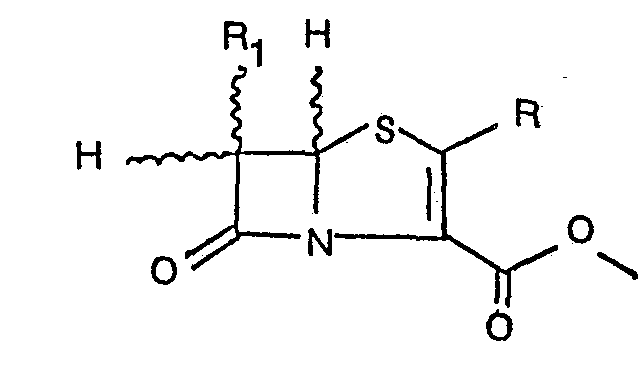
- a class of compounds for which this removal procedure has been found to be very useful are those of the formula: wherein R is hydrogen, lower alkyl, N-(allylic-oxycarbonyl)amino lower alkyl, or lower alkylthio the latter being optionally substituted by N-(allylic-oxycarbonyl)amino or acylamino, and R, is hydrogen, hydroxy lower alkyl or acylamino.
- R is hydrogen, lower alkyl, N-(allylic-oxycarbonyl)amino lower alkyl, or lower alkylthio the latter being optionally substituted by N-(allylic-oxycarbonyl)amino or acylamino
- R is hydrogen, hydroxy lower alkyl or acylamino.
- carboxylic acids which can be produced from their corresponding allylic esters include amino acids, e.g., glycine, serine, phenylalanine, etc.; benzoic acid and nalidixic acid.
- the alcohols and amines which can be produced from their corresponding allylic carbonate or carbamate by the instant process include alcohols such as n-octadecanol, 1- menthol, 1-octanol, 2-octanol, 1-adamantanol, N-benzyloxycarbonylserine; steroids, e.g., cholesterol, cortisone, testosterone, estradiol; phenol, 1-naphthol, macrolides, e.g., erythromycin and rosaramicin; and amines such as 1-aminoadamantane, 2-octylamine, ephedrine, aniline, p-methoxyaniline, 1-naphthylamine, benzocaine; and amino acids, e.g., glycine, phenylalanine and serine.
- alcohols such as n-octadecanol, 1- menthol, 1-octanol
- Penicillin-G potassium salt (3.75 g) is stirred in dry dimethylformamide (12 ml) with addition of allyl iodide (1.65 g) at room temperature for 18 hours. The mixture is then diluted with ether (100 ml), and washed with water (3 x 50 ml), 5% aqueous sodium thiosulfate (25 ml) and saturated sodium chloride (50 ml). After drying over anhydrous magnesium sulfate, the solvents are removed and the residue dried to constant weight under high vacuum to give penicillin-G allylester in near-quantitative yield, as a colorless oil with an IR spectrum in dichloromethane solution at 3350, 1785, 1730 and 1660 cm-'.
- Penicillin-G allylester (10 mmol; 3.75 g) is treated at 0-5°C in dichloromethane (20 ml) with m-chloroperoxybenzoic acid (10.2 mmol; 1.75 g) in ethyl ether (5 ml). The solution is kept at 0-5°C for two hours, then diluted with dichloromethane (30 ml) and washed 2 x 50 ml sodium bicarbonate solution, dried and evaporated to afford a residue (foam) of the sulfoxide of penicillin-G allylester. This foam is dissolved in dry dioxane (50 ml) and refluxed for 10 hours with pyridine phosphate (0.2 g).
- the crude chloride from the previous paragraph is stirred in dry dichloromethane (15 ml) and dry dimethylformamide (15 ml) with triphenylphosphine (3,25 g) and 2,4,6-collidine (1.5 g) for 20 hours.
- the reaction mixture is diluted with dichloromethane and washed with 3 x 50 ml water, dried and evaporated.
- the residue is dried at high vacuum, then chromatographed on silica gel (100 g), eluting with dichloromethane followed by 25% ether dichloromethane. Fractions containing a mixture of the phosphorane and triphenylphosphine oxide are combined and evaporated.
- Penicillin-G allylester (0.38 g) is stirred under argon in a 0.5M dichloromethane solution of potassium 2-ethylhexanoate (3 ml) and ethyl ether (2 ml).
- Triphenylphosphine (0.025 g) and tetrakis (triphenylphosphine) palladium-(O) (0.020 g) are added, and stirring is continued for 1 hour at room temperature.
- Penicillin-G cinnamyl ester (0.50 g) is stirred in ethyl ether (5 ml) and a 0.5M solution of potassium 2-ethylhexanoate (3.5 ml) in dichloromethane added. Then triphenylphosphine (0.025 g) and tetrakis (triphenylphosphine) palladium-(O) (0.22 g) are added, and the mixture is stirred for 1 hour under argon. After dilution with ethyl ether (10 ml), the precipitate is filtered and dried to afford pure potassium penicillin-G in a yield of about 85%.
- Example 3 The procedure of Example 3 is repeated with the penicillin-G cinnamyl ester being replaced by penicillin-G-(3-methoxycarbonylallyl)ester (0.46 g) to afford pure potassium penicillin-G in a yield of 79%.
- Allyl 2-methylpenem-3-carboxylate (0.10 g) is stirred in ethyl ether (1.5 ml) with a 0.5M dichloromethane solution of potassium 2-ethylhexanoate (1.25 ml).
- Triphenylphosphine (0.01 g) and tetrakis (triphenylphosphine)palladium-(O) (0.01 g ) are added, and the mixture stirred under argon for 45 minutes at room temperature.
- Allyl 7-(phenylacetamido)-desacetoxyceph- alósporanate (1.0 g) is stirred with potassium 2-ethylhexanoate in dichloromethane (0.2M; 12 ml), triphenylphosphine (0.08 g) and bis-(triphenylphosphine)palladium (II) dichloride (0.03 g) for 1.5 hours under argon. The product is collected and washed with dichloromethane. After drying at 50°C in vacuo, there is afforded potassium 7 - (phenylacetamido)desacetoxy- cephalosporanate, identical with an authentic sample.
- the residue is chromatographed on silica gel and eluted with 1:1 dichloromethane hexane in order to remove the allyl 2-ethylhexanoate, and with 5% ether- dichloromethane in order to elute the product, n-octadecanol, fully identical with an authentic sample.
- Penicillin-G 2-chloroallyl ester (1 mmol; 0.41 g) was stirred in dry tetrahydrofuran (5 ml) with sodium cyanoborohydride (2 mmol; 0.13 g) under nitrogen. Triphenylphosphine (0.05 g) and tetrakis (triphenylphosphine) palladium-(O) (0.05 g) were added and the mixture stirred under nitrogen at room temperature overnight (22 hours), by which time tic showed only traces of ester remained. Ether (10 ml) was added, and the product collected, washed with ether and dried to give penicillin-G sodium (0.32 g) as a white powder.
Landscapes
- Chemical & Material Sciences (AREA)
- Organic Chemistry (AREA)
- Organic Low-Molecular-Weight Compounds And Preparation Thereof (AREA)
- Cephalosporin Compounds (AREA)
- Pharmaceuticals Containing Other Organic And Inorganic Compounds (AREA)
- Low-Molecular Organic Synthesis Reactions Using Catalysts (AREA)
Abstract
Description
- The N-allyloxycarbonyl group has been used previously as a protecting group for amines and cleaved by hydrogenation after completion of its function. In this respect, the use of allyloxycarbonyl as a protecting group offers no advantages over the more common benzyloxycarbonyl protecting group. See for instance, J. Am. Chem. Soc., 72, 725 (1950). Cleavage of allyloxycarbonyl derivatives of amines and alcohols has also been accomplished using nickel carbonyl as described in J. Org. Chem., 38, 3223 (1973). The disadvantages of this procedure are the necessary basic conditions, as well as a need for an excess of the volatile, toxic nickel carbonyl.
- The use of zero-valent palladium complexes such as tetrakis-(triphenylphosphine)-palladium to catalyse the reaction of certain compounds having an active hydrogen atom with compounds having a bond between an allylic group and an oxygen atom for the purpose of synthesising compounds in which the allylic group is bonded to the residue of the active hydrogen compounds is described in Chemical Communications. 21, 11 th November 1970 pp 1392-1393, and Tetrahedron Letters no. 43, September 1970 pages 3821-3824.
- The present invention describes a new method for the fission of the bond between an allylic group (this meaning an unsubstituted or substituted allyl group) and an adjacent oxygen atom in an aprotic organic solvent and in the presence of an organic-soluble palladium complex having a coordinating phosphine ligand, especially by reaction with an active-hydrogen compound, characterized in that the method is applied to the removal under mild conditions of allylic groups from allylic esters or of allylic-oxycarbonyl groups from allylic carbonates or carbamates, by reacting the said allylic compounds with an alkali metal salt of a carboxylic acid having from five to eighteen carbon atoms or by using as the active-hydrogen compound the said carboxylic acid in the free form or sodium-cyanoborohydride or sodium-borohydride. This method provides near-neutral conditions which are particularly desirable for acid- or base-sensitive substrates. Thus, the so- obtainable acid, alcohol or amine is produced in high yield with a small amount of degradation by-products.
- In the case of the removal of the allylic group from an allylic ester the process preferably utilizes an alkali metal salt of the carboxylic acid which is most preferably 2-ethylhexanoic acid. The reaction between the allylic ester and the alkali metal salt of e.g. 2-ethylhexanoic acid results in the formation of the alkali metal salt of the product acid which is generally insoluble in the organic, aprotic solvent utilized for the conduct of the process. As a result of the insolubility of the product salt, the reaction is driven to completion by the precipitation of the product salt. This precipitation of the product salt also results in a very pure product without the need for further recrystallizations. The removal of an allylic-oxycarbonyl, group of a carbonate or carbamate to provide the corresponding alcohol or amine is advantageously accomplished utilizing the free carboxylic acid rather than the alkali metal salt thereof.
- In this reaction, C02 is released as a byproduct so that the reaction is essentially irreversible.
- Suitable allylic groups which are removable by the method of the present invention are any of those having the allylic structure. Typical allylic groups are those derived from allyl alcohol, haloallyl alcohol, methylallyl alcohol, crotyl alcohol, the lower alkoxycarbonyl derivatives thereof and cinnamyl alcohol or the activated esters thereof and are generally known in the art as suitable protecting groups. For simplicity and economy, allyl alcohol or haloallyl alcohol or an activated ester is usually used. Thus, particularly suitable starting materials of the method of this invention are the allylic esters, carbonates and amines wherein the allylic group or allylic-oxycarbonyl group is derived from allyl or haloallyl alcohol.
- While any carboxylic acid having from five to eighteen carbon atoms or alkali metal salts thereof can be used in the method of this invention there are certain types of acids which, due to their solubility in the organic, aprotic solvent used as the reaction medium are particularly suitable. Acids having from six to ten carbon atoms and a branched chain, such as 2-propylpentanoic acid, 2-methylheptanoic acid, 2-ethylbutyric acid, 2-ethylpentanoic acid or 2-ethylheptanoic acid and the alkali metal salts thereof, are preferred. 2-Ethylhexanoic acid or an alkali metal salt thereof is most preferred due to its solubility in most aprotic solvents. Any of the alkali metal salts may be utilized but potassium and sodium are generally preferred.
- The reaction proceeds at room temperature generally in a time from about 0.5 to 5 hours. The conditions are near neutral so that no other protecting or functional groups are affected during the removal reaction. Thus, the invention provides a method of selectively removing an allylic group of an allylic ester or of an allylic-oxycarbonyl group of an allylic carbonate or carbamate while leaving unaffected other protecting groups which might be present in the same molecule. The present invention may also be used to selectively deprotect one of two carboxylic acid functions in a single molecule, for instance, diallyl malonate may be converted to allyl potassium malonate.
- The solvent utilized for the conduct of this invention may be any common, aprotic solvent in which the allylic ester, carbonate or carbamate is soluble and in which the carboxylic acid or the alkali metal salt thereof or sodium-cyanoborohydride or sodium borohydride are soluble. Additionally, for ease of isolation, the product acid, (or alkali metal salt thereof) should be sparingly soluble or insoluble in the chosen solvent. Suitable solvents include dichloromethane, chloroform, carbon tetrachloride, ethyl ether, benzene, toluene, ethyl acetate, acetone, acetonitrile, tetrahydrofuran or a mixture of any of the foregoing.
- The organic soluble palladium complex utilized must possess a coordinating phosphine ligand. Preferably a triarylphosphine, such as triphenylphosphine, is the coordinating phosphine ligand. The complex of choice is tetrakis (triphenylphosphine)palladium-(O). Other utilizable soluble palladium complexes are bis-(triphenylphosphine) palladium (II) dichloride, dichloro-di[benzonitrile]palladium (II) and palladium (II) diacetate in conjunction with several equivalents of triphenylphosphine (see Fieser and Fieser, "Reagents for Organic Syntheses", Vol V, pp. 497, 503, 504).
- The quantity of catalyst utilized in the method of this invention is typically 0.25-5 mole percent of the allylic ester, carbonate or carbamate, with 2 mole percent being the amount most generally used. However, for large scale preparations, amounts such as 0.25 to 1 mole percent may be sufficient.
- At a suitable stage prior to the removal reaction of this invention the allylic group may be introduced into any suitable molecule, for example to protect a carboxylic function, a hydroxy or an amino group, by conventional techniques. Such techniques comprise the reaction with a chloride, bromide or iodide of the allylic alcohol or an activated ester thereof. Typically, the acid or a salt thereof is reacted with the allylic bromide or iodide in a polar aprotic solvent such as dimethylformamide. The amine or alcohol is typically reacted with the chloroformate or an activated carbonate ester of the allylic alcohol in the presence of an acid acceptor. For instance, 1-aminoadamantane is reacted with allyl chloroformate or with N-[allyloxycarbonyloxy]succinimide.
- The present invention is particularly useful for the removal of an allylic group or an allylic-oxycarbonyl group present in certain acid- or base-sensitive substrates. Particularly preferred substrates are beta-lactam allylic esters such as the allylic esters of penams, e.g., penicillin G, ampicillin; cephems e.g., cephalosporanic acid, 7 - (phenylacetamido)desacetoxycephalo- sporanic acid, cephamycin; carbapenems, e.g., thienamycin and particularly penems. Removal of the allylic group from the foregoing affords useful antibacterial agents of commercial significance. A class of compounds for which this removal procedure has been found to be very useful are those of the formula:

- Other carboxylic acids which can be produced from their corresponding allylic esters include amino acids, e.g., glycine, serine, phenylalanine, etc.; benzoic acid and nalidixic acid.
- The alcohols and amines which can be produced from their corresponding allylic carbonate or carbamate by the instant process include alcohols such as n-octadecanol, 1- menthol, 1-octanol, 2-octanol, 1-adamantanol, N-benzyloxycarbonylserine; steroids, e.g., cholesterol, cortisone, testosterone, estradiol; phenol, 1-naphthol, macrolides, e.g., erythromycin and rosaramicin; and amines such as 1-aminoadamantane, 2-octylamine, ephedrine, aniline, p-methoxyaniline, 1-naphthylamine, benzocaine; and amino acids, e.g., glycine, phenylalanine and serine.
- The following Examples illustrate the process of the invention whereas in the Preparations is shown how to obtain the starting materials.
- Penicillin-G potassium salt (3.75 g) is stirred in dry dimethylformamide (12 ml) with addition of allyl iodide (1.65 g) at room temperature for 18 hours. The mixture is then diluted with ether (100 ml), and washed with water (3 x 50 ml), 5% aqueous sodium thiosulfate (25 ml) and saturated sodium chloride (50 ml). After drying over anhydrous magnesium sulfate, the solvents are removed and the residue dried to constant weight under high vacuum to give penicillin-G allylester in near-quantitative yield, as a colorless oil with an IR spectrum in dichloromethane solution at 3350, 1785, 1730 and 1660 cm-'.
- The procedure of Preparation A is repeated with the allyl iodide being replaced by cinnamyl bromide (1.95 g). The penicillin-G cinnamyl ester is isolated in the same manner, as a white foam, with an IR spectrum in dichloromethane at 3300, 1785, 1670 and 1610 cm-'.
- The procedure of Preparation A is followed using redistilled methyl gamma-bromocrotonate (1.75 g) in place of the allyl iodide. The product, penicillin-G 3-(methoxycarbonyl)allyl ester is isolated in the same manner as a colorless, thick oil with an IR spectrum in dichloromethane at 3350, 1785, 1735, 1715 and 1680 cm-'.
- Penicillin-G allylester (10 mmol; 3.75 g) is treated at 0-5°C in dichloromethane (20 ml) with m-chloroperoxybenzoic acid (10.2 mmol; 1.75 g) in ethyl ether (5 ml). The solution is kept at 0-5°C for two hours, then diluted with dichloromethane (30 ml) and washed 2 x 50 ml sodium bicarbonate solution, dried and evaporated to afford a residue (foam) of the sulfoxide of penicillin-G allylester. This foam is dissolved in dry dioxane (50 ml) and refluxed for 10 hours with pyridine phosphate (0.2 g). The solvent is evaporated and the residue chromatographed on silica gel, eluting with 5% ether- dichloromethane. Evaporation of appropriate eluates gives allyl-7-phenylacetamidodesace- toxycephalosporanate, as a white foam, with an IR spectrum in dichloromethane with v max at 3400, 1770, 1725, 1650 and 1605 cm-'.
- 4-Acetylthioazetidin-2-one (Annalen, 1974, p. 553) (1.4 g) and allyl glyoxylate hydrate (1.5 g) are refluxed for 2 hours in benzene to afford a solution of 1-lallyloxycarbonylhydroxymethyl)-4-acetylthioazetidin-2-one which is cooled and used directly in the next step. The foregoing solution is diluted with dichloromethane (30 ml) and methanesulfonyl chloride (1.5 mi), and triethylamine (2.3 ml) is added over 2 minutes with stirring. After 5 minutes, the solution is washed with 0.2N sulfuric acid and then with water. After drying over anhydrous magnesium sulfate and evaporation, the crude 1-(allyloxycarbonylchloro- methyl)-4-acetylthioazetidin-2-one is isolated as a brown oil.
- The crude chloride from the previous paragraph is stirred in dry dichloromethane (15 ml) and dry dimethylformamide (15 ml) with triphenylphosphine (3,25 g) and 2,4,6-collidine (1.5 g) for 20 hours. The reaction mixture is diluted with dichloromethane and washed with 3 x 50 ml water, dried and evaporated. The residue is dried at high vacuum, then chromatographed on silica gel (100 g), eluting with dichloromethane followed by 25% ether dichloromethane. Fractions containing a mixture of the phosphorane and triphenylphosphine oxide are combined and evaporated.
- The phosphorane prepared in the previous paragraph is heated at reflux for 1.5 hour in toluene (50 ml). After being cooled and evaporated, the residue is chromatographed on silica gel, eluting with 2:1 dichloromethane: hexane, followed by dichloromethane. Fractions containing the product are evaporated to give a pale yellow oil which is crystallized on strong cooling to give allyl 2-methylpenem-3-carboxylate. Infrared spectrum in dichloromethane: 1795, 1965, 1640 cm-1.
- 1-Aminoadamantane (10 mmol; 1.51 g) and triethylamine (1.9 ml) in dry dichloromethane (30 ml) are stirred at 0-5°C and allyl chloroformate (1.1 ml) added dropwise. After 0.5 hour, the solution is washed with dilute sulfuric acid and water. After drying over anhydrous magnesium sulfate, the solution is evaporated to give 1-(allyloxycarbonylamino)adamantane, as a white solid, with a melting point of about 56-58°C.
- Penicillin-G allylester (0.38 g) is stirred under argon in a 0.5M dichloromethane solution of potassium 2-ethylhexanoate (3 ml) and ethyl ether (2 ml). Triphenylphosphine (0.025 g) and tetrakis (triphenylphosphine) palladium-(O) (0.020 g) are added, and stirring is continued for 1 hour at room temperature. Ethyl ether (10 ml) is added and the product filtered, washed with 1:1 ether:dichloromethane and dried in vacuo at 50°C to give pure potassium penicillin-G (0.34 g), identical (IR, p.m.r) with an authentic sample in a yield of about 90%.
- When the tetrakis (triphenylphosphine)palladium-(O) in Example 2 is replaced by bis (triphenylphosphine) palladium (II) dichloride (0.015 g), pure potassium penicillin-G is obtained.
- Penicillin-G cinnamyl ester (0.50 g) is stirred in ethyl ether (5 ml) and a 0.5M solution of potassium 2-ethylhexanoate (3.5 ml) in dichloromethane added. Then triphenylphosphine (0.025 g) and tetrakis (triphenylphosphine) palladium-(O) (0.22 g) are added, and the mixture is stirred for 1 hour under argon. After dilution with ethyl ether (10 ml), the precipitate is filtered and dried to afford pure potassium penicillin-G in a yield of about 85%.
- The procedure of Example 3 is repeated with the penicillin-G cinnamyl ester being replaced by penicillin-G-(3-methoxycarbonylallyl)ester (0.46 g) to afford pure potassium penicillin-G in a yield of 79%.
- Allyl 2-methylpenem-3-carboxylate (0.10 g) is stirred in ethyl ether (1.5 ml) with a 0.5M dichloromethane solution of potassium 2-ethylhexanoate (1.25 ml). Triphenylphosphine (0.01 g) and tetrakis (triphenylphosphine)palladium-(O) (0.01 g) are added, and the mixture stirred under argon for 45 minutes at room temperature. After dilution with ethyl ether (3 ml), the product is collected, washed with ethyl ether and dried in vacuo at room temperature to give, as a cream solid, potassium 2-methyl- penem-3-carboxylate having infrared v max (nujol) at 1785 and 1605 cm-1 in a yield of about 86%.
- Allyl 7-(phenylacetamido)-desacetoxyceph- alósporanate (1.0 g) is stirred with potassium 2-ethylhexanoate in dichloromethane (0.2M; 12 ml), triphenylphosphine (0.08 g) and bis-(triphenylphosphine)palladium (II) dichloride (0.03 g) for 1.5 hours under argon. The product is collected and washed with dichloromethane. After drying at 50°C in vacuo, there is afforded potassium 7 - (phenylacetamido)desacetoxy- cephalosporanate, identical with an authentic sample.
- 1-(Allyloxycarbonylamino)adamantane (0.50 g) is stirred in dichloromethane (10 ml) containing 2-ethylhexanoic acid (0.35 g). Triphenylphosphine (0.05 g) and tetrakis(triphenylphosphine)palladium-(O) (0.04 g) are added and the mixture is stirred at room temperature for 1 hour. Ethyl ether (10 ml) is added, and the product collected, washed with ether, and dried at 25°C in vacuo, which is identical (IR, mp and pmr) with an authentic sample of 1-aminoadamantane prepared from the acid and amine in ether.
- N-Octadecyl allyl carbonate (0.5 g) [prepared as described in J. Org. Chëm., 38, 3223 (1973)] and ethylhexanoic acid (0.2 g) are stirred for 1 hour under nitrogen in dichloromethane (5 ml) containing triphenylphosphine (0.025 g) and tetrakis (triphenylphosphine)palladium-(O) (0.02 g). Thin layer chromatography indicates complete conversion to products after addition is complete. The mixture is diluted with ethyl ether, washed with sodium bicarbonate, dried and evaporated. The residue is chromatographed on silica gel and eluted with 1:1 dichloromethane hexane in order to remove the allyl 2-ethylhexanoate, and with 5% ether- dichloromethane in order to elute the product, n-octadecanol, fully identical with an authentic sample.
- Allyl 1-menthyl carbonate (0.3 g) [prepared as described in J. Org. Chem., 38, (1973)] is substituted for the n-octadecyl derivative of Example 8. Cleavage is completed within 1 hour, and the product, 1-menthol, is isolated by chromatography.
- Penicillin-G 2-chloroallyl ester (1 mmol; 0.41 g) was stirred in dry tetrahydrofuran (5 ml) with sodium cyanoborohydride (2 mmol; 0.13 g) under nitrogen. Triphenylphosphine (0.05 g) and tetrakis (triphenylphosphine) palladium-(O) (0.05 g) were added and the mixture stirred under nitrogen at room temperature overnight (22 hours), by which time tic showed only traces of ester remained. Ether (10 ml) was added, and the product collected, washed with ether and dried to give penicillin-G sodium (0.32 g) as a white powder.
- Allyl 2-ethylthiopenem-3-carboxylate (0.06 g) was stirred in dry tetrahydrofuran (1 ml) with sodium cyanoborohydride (0.02 g) triphenylphosphine (0.02 g) and tetrakis (triphenylphosphine) palladium-(O) (0.015 g) under nitrogen for 6 hours at room temperature. Ether (5 ml) was then added dropwise to precipitate the salt, which was collected by centrifuge, washed with ether and dried at room temperature to give a tan solid (0.045 g).
Claims (13)
Priority Applications (1)
| Application Number | Priority Date | Filing Date | Title |
|---|---|---|---|
| KE354785A KE3547A (en) | 1979-01-10 | 1985-06-11 | Process for removing an allylic group from allilic esters carbonates and carbamates |
Applications Claiming Priority (2)
| Application Number | Priority Date | Filing Date | Title |
|---|---|---|---|
| US2472 | 1979-01-10 | ||
| US06/002,472 US4314942A (en) | 1979-01-10 | 1979-01-10 | Deprotection of allylic esters, carbonates and carbamates catalyzed by palladium compounds |
Publications (2)
| Publication Number | Publication Date |
|---|---|
| EP0013663A1 EP0013663A1 (en) | 1980-07-23 |
| EP0013663B1 true EP0013663B1 (en) | 1982-11-17 |
Family
ID=21700933
Family Applications (1)
| Application Number | Title | Priority Date | Filing Date |
|---|---|---|---|
| EP80810005A Expired EP0013663B1 (en) | 1979-01-10 | 1980-01-07 | Process for removing an allylic group from allylic esters, carbonates and carbamates |
Country Status (16)
| Country | Link |
|---|---|
| US (1) | US4314942A (en) |
| EP (1) | EP0013663B1 (en) |
| JP (1) | JPS609730B2 (en) |
| AU (1) | AU533405B2 (en) |
| CA (1) | CA1144155A (en) |
| CY (1) | CY1297A (en) |
| DE (1) | DE3061075D1 (en) |
| DK (1) | DK6280A (en) |
| HK (1) | HK60385A (en) |
| HU (1) | HU182082B (en) |
| IE (1) | IE49353B1 (en) |
| IL (1) | IL59080A (en) |
| MY (1) | MY8500053A (en) |
| NZ (1) | NZ192540A (en) |
| SG (1) | SG39085G (en) |
| ZA (1) | ZA8085B (en) |
Families Citing this family (18)
| Publication number | Priority date | Publication date | Assignee | Title |
|---|---|---|---|---|
| US4612386A (en) * | 1980-09-16 | 1986-09-16 | The Dow Chemical Company | Process for making esters |
| US4347183A (en) * | 1981-02-02 | 1982-08-31 | Schering Corporation | Process for the synthesis of penems and carbapenems |
| US4567005A (en) * | 1983-04-22 | 1986-01-28 | The Dow Chemical Company | Allylation of carbon acids |
| US4507492A (en) * | 1983-05-06 | 1985-03-26 | The Dow Chemical Company | Preparation of aromatic derivatives |
| JPS61200926A (en) * | 1985-02-28 | 1986-09-05 | Nippon Zeon Co Ltd | Method for producing amino compounds |
| US4788282A (en) * | 1985-06-07 | 1988-11-29 | Bristol-Myers Company | Deprotection of allylic esters and ethers |
| US4992543A (en) * | 1988-10-19 | 1991-02-12 | Pfizer Inc. | Penem derivatives |
| US4895940A (en) * | 1988-10-19 | 1990-01-23 | Pfizer Inc. | Process for the preparation of penems |
| US5191075A (en) * | 1988-10-19 | 1993-03-02 | Pfizer Inc | Process for the preparation of penems |
| EP0384732A3 (en) * | 1989-02-23 | 1991-12-04 | Merck & Co. Inc. | Deblocking process for allyl esters with regeneratable polymer supported pd (0) |
| US5124448A (en) * | 1989-02-23 | 1992-06-23 | Merck & Co., Inc. | Deblocking process for allyl esters with regeneratable polymer supported Pd(O) |
| IL105392A (en) * | 1992-04-15 | 1998-02-22 | Rhone Poulenc Chimie | Reagent and catalytic process useful for cleaving a protected functional group |
| JP2847693B2 (en) * | 1992-06-18 | 1999-01-20 | 田辺製薬株式会社 | Removal method of carboxyl group protecting group |
| US5587474A (en) * | 1992-06-18 | 1996-12-24 | Tanabe Seiyaku Co., Ltd. | Method for removing the protecting group for carboxyl group |
| EP0623626B1 (en) * | 1993-04-05 | 1999-09-01 | Perseptive Biosystems, Inc. | Automated allyl deprotection in solid-phase synthesis |
| EP0676236A1 (en) * | 1994-04-05 | 1995-10-11 | Pfizer Inc. | Process for removal of allyl group or allyloxycarbonyl group |
| US5621084A (en) * | 1994-04-05 | 1997-04-15 | Pfizer Inc. | Process for removal of allyl group or allyloxycarbonyl group |
| JP6894498B2 (en) | 2016-08-12 | 2021-06-30 | ザ カトリック ユニバーシティ オブ コリア インダストリー−アカデミック コーオペレイション ファウンデーション | Composition for soft tissue hardening |
-
1979
- 1979-01-10 US US06/002,472 patent/US4314942A/en not_active Expired - Lifetime
-
1980
- 1980-01-06 IL IL59080A patent/IL59080A/en not_active IP Right Cessation
- 1980-01-07 DE DE8080810005T patent/DE3061075D1/en not_active Expired
- 1980-01-07 AU AU54379/80A patent/AU533405B2/en not_active Ceased
- 1980-01-07 CY CY1297A patent/CY1297A/en unknown
- 1980-01-07 NZ NZ192540A patent/NZ192540A/en unknown
- 1980-01-07 DK DK6280A patent/DK6280A/en not_active Application Discontinuation
- 1980-01-07 JP JP55000475A patent/JPS609730B2/en not_active Expired
- 1980-01-07 EP EP80810005A patent/EP0013663B1/en not_active Expired
- 1980-01-07 ZA ZA00800085A patent/ZA8085B/en unknown
- 1980-01-08 IE IE33/80A patent/IE49353B1/en not_active IP Right Cessation
- 1980-01-08 CA CA000343245A patent/CA1144155A/en not_active Expired
- 1980-01-09 HU HU8038A patent/HU182082B/en not_active IP Right Cessation
-
1985
- 1985-05-25 SG SG390/85A patent/SG39085G/en unknown
- 1985-08-15 HK HK603/85A patent/HK60385A/en unknown
- 1985-12-30 MY MY53/85A patent/MY8500053A/en unknown
Also Published As
| Publication number | Publication date |
|---|---|
| JPS5594321A (en) | 1980-07-17 |
| AU533405B2 (en) | 1983-11-24 |
| HK60385A (en) | 1985-08-23 |
| IL59080A0 (en) | 1980-05-30 |
| AU5437980A (en) | 1980-07-17 |
| IE800033L (en) | 1980-07-10 |
| JPS609730B2 (en) | 1985-03-12 |
| NZ192540A (en) | 1982-03-23 |
| CY1297A (en) | 1985-10-18 |
| MY8500053A (en) | 1985-12-31 |
| SG39085G (en) | 1985-12-13 |
| DE3061075D1 (en) | 1982-12-23 |
| CA1144155A (en) | 1983-04-05 |
| DK6280A (en) | 1980-07-11 |
| EP0013663A1 (en) | 1980-07-23 |
| IL59080A (en) | 1982-09-30 |
| US4314942A (en) | 1982-02-09 |
| ZA8085B (en) | 1980-09-24 |
| IE49353B1 (en) | 1985-09-18 |
| HU182082B (en) | 1983-12-28 |
Similar Documents
| Publication | Publication Date | Title |
|---|---|---|
| US4314942A (en) | Deprotection of allylic esters, carbonates and carbamates catalyzed by palladium compounds | |
| Leanza et al. | An efficient synthesis of 2-substituted-thio-6-hydroxyethyl-penem-3-carboxylic acids via 2-thioxopenams | |
| NL192265C (en) | Penem carboxylic acid compounds and pharmaceutical preparations containing these compounds. | |
| HU189559B (en) | Process for preparing 2-penem compounds | |
| Yoshida et al. | 2-(Alkylthio) penem-3-carboxylic acids. IV. Synthesis of (hydroxyethyl)-azetidinone precursors to 1-thia analogs of thienamycin | |
| EP0032400A1 (en) | (3SR, 4RS)-3-((RS)-1-hydroxyethyl)- and -((RS)-1-acyloxyethyl)-2-oxo-4-azetidineacetic acid compounds and a process for preparing the same | |
| JPH0557980B2 (en) | ||
| US3943123A (en) | Novel beta-lactams and novel process | |
| CH630333A5 (en) | METHOD FOR SPLIT OF benzyl OF carboxylic acids. | |
| EP0040494B1 (en) | Carbapenams and carbapen-2-ems and process therefor | |
| US4008229A (en) | Halo substituted β-lactam antibiotics | |
| EP0623622B1 (en) | Process for producing cephem compound | |
| EP0372699B1 (en) | Process for the preparation of 4-acyloxy-2-azetidinone derivatives | |
| US7977475B2 (en) | Process for the preparation of faropenem | |
| GB2162840A (en) | Sterospecific process for preparing azetidinones | |
| KR20050086548A (en) | Process for producing carbapenem compound for oral administration | |
| EP0131811B1 (en) | Process for the preparation of azetidinones | |
| US5621084A (en) | Process for removal of allyl group or allyloxycarbonyl group | |
| KR100959027B1 (en) | Method for preparing penem intermediate using zinc compound as cocatalyst | |
| OIDA et al. | 2-(Alkylthio) penem-3-carboxylic Acids. I. Synthesis of 6-Unsubstituted Penems | |
| US4709064A (en) | β-N-substituted aminothiol ester and process for preparing the same | |
| Goo et al. | Synthetic Studies on Penems and Carbapenems (IV). Practical Preparation of (3R, 4R)-4-Acetoxy-3-[(1R)-1-hydroxyethyl] azetidin-2-one Derivatives from 6-Aminopenicillanic Acid | |
| JP2810731B2 (en) | Production method of β-lactam compound | |
| Wild et al. | First synthetic access to 6-(methylene) oxapenems: a new class of β-lactamase inhibitors | |
| Bevilacqua et al. | Studies on the reactivity of 4-acetoxy-3-acylamino-2-azetidinones: Stereospecific trans carbon-carbon bond formation |
Legal Events
| Date | Code | Title | Description |
|---|---|---|---|
| PUAI | Public reference made under article 153(3) epc to a published international application that has entered the european phase |
Free format text: ORIGINAL CODE: 0009012 |
|
| 17P | Request for examination filed | ||
| AK | Designated contracting states |
Designated state(s): BE CH DE FR GB IT NL SE |
|
| ITF | It: translation for a ep patent filed | ||
| GRAA | (expected) grant |
Free format text: ORIGINAL CODE: 0009210 |
|
| AK | Designated contracting states |
Designated state(s): BE CH DE FR GB IT NL SE |
|
| REF | Corresponds to: |
Ref document number: 3061075 Country of ref document: DE Date of ref document: 19821223 |
|
| ET | Fr: translation filed | ||
| ITTA | It: last paid annual fee | ||
| PGFP | Annual fee paid to national office [announced via postgrant information from national office to epo] |
Ref country code: FR Payment date: 19941212 Year of fee payment: 16 |
|
| PGFP | Annual fee paid to national office [announced via postgrant information from national office to epo] |
Ref country code: CH Payment date: 19941215 Year of fee payment: 16 Ref country code: DE Payment date: 19941215 Year of fee payment: 16 |
|
| PGFP | Annual fee paid to national office [announced via postgrant information from national office to epo] |
Ref country code: GB Payment date: 19941216 Year of fee payment: 16 |
|
| PGFP | Annual fee paid to national office [announced via postgrant information from national office to epo] |
Ref country code: SE Payment date: 19941219 Year of fee payment: 16 |
|
| PGFP | Annual fee paid to national office [announced via postgrant information from national office to epo] |
Ref country code: BE Payment date: 19941222 Year of fee payment: 16 |
|
| EAL | Se: european patent in force in sweden |
Ref document number: 80810005.1 |
|
| PGFP | Annual fee paid to national office [announced via postgrant information from national office to epo] |
Ref country code: NL Payment date: 19950131 Year of fee payment: 16 |
|
| PG25 | Lapsed in a contracting state [announced via postgrant information from national office to epo] |
Ref country code: GB Effective date: 19960107 |
|
| PG25 | Lapsed in a contracting state [announced via postgrant information from national office to epo] |
Ref country code: SE Effective date: 19960108 |
|
| PG25 | Lapsed in a contracting state [announced via postgrant information from national office to epo] |
Ref country code: CH Effective date: 19960131 Ref country code: BE Effective date: 19960131 |
|
| BERE | Be: lapsed |
Owner name: SCHERING CORP. Effective date: 19960131 |
|
| PG25 | Lapsed in a contracting state [announced via postgrant information from national office to epo] |
Ref country code: NL Effective date: 19960801 |
|
| GBPC | Gb: european patent ceased through non-payment of renewal fee |
Effective date: 19960107 |
|
| REG | Reference to a national code |
Ref country code: CH Ref legal event code: PL |
|
| PG25 | Lapsed in a contracting state [announced via postgrant information from national office to epo] |
Ref country code: FR Effective date: 19960930 |
|
| NLV4 | Nl: lapsed or anulled due to non-payment of the annual fee |
Effective date: 19960801 |
|
| PG25 | Lapsed in a contracting state [announced via postgrant information from national office to epo] |
Ref country code: DE Effective date: 19961001 |
|
| EUG | Se: european patent has lapsed |
Ref document number: 80810005.1 |
|
| REG | Reference to a national code |
Ref country code: FR Ref legal event code: ST |
|
| PLBE | No opposition filed within time limit |
Free format text: ORIGINAL CODE: 0009261 |
|
| STAA | Information on the status of an ep patent application or granted ep patent |
Free format text: STATUS: NO OPPOSITION FILED WITHIN TIME LIMIT |