EP0010531A1 - 3-Alkylxanthines, processes for their preparation and compositions for use in the treatment of chronic obstructive airway disease and cardiac disease - Google Patents
3-Alkylxanthines, processes for their preparation and compositions for use in the treatment of chronic obstructive airway disease and cardiac disease Download PDFInfo
- Publication number
- EP0010531A1 EP0010531A1 EP79850090A EP79850090A EP0010531A1 EP 0010531 A1 EP0010531 A1 EP 0010531A1 EP 79850090 A EP79850090 A EP 79850090A EP 79850090 A EP79850090 A EP 79850090A EP 0010531 A1 EP0010531 A1 EP 0010531A1
- Authority
- EP
- European Patent Office
- Prior art keywords
- formula
- compound
- butyl
- methylbutyl
- propyl
- Prior art date
- Legal status (The legal status is an assumption and is not a legal conclusion. Google has not performed a legal analysis and makes no representation as to the accuracy of the status listed.)
- Granted
Links
- 0 CCC=C(C(*(C(N(C)*C)=O)=N)=O)NC(*)=N Chemical compound CCC=C(C(*(C(N(C)*C)=O)=N)=O)NC(*)=N 0.000 description 1
Classifications
-
- C—CHEMISTRY; METALLURGY
- C07—ORGANIC CHEMISTRY
- C07D—HETEROCYCLIC COMPOUNDS
- C07D239/00—Heterocyclic compounds containing 1,3-diazine or hydrogenated 1,3-diazine rings
- C07D239/02—Heterocyclic compounds containing 1,3-diazine or hydrogenated 1,3-diazine rings not condensed with other rings
- C07D239/24—Heterocyclic compounds containing 1,3-diazine or hydrogenated 1,3-diazine rings not condensed with other rings having three or more double bonds between ring members or between ring members and non-ring members
- C07D239/28—Heterocyclic compounds containing 1,3-diazine or hydrogenated 1,3-diazine rings not condensed with other rings having three or more double bonds between ring members or between ring members and non-ring members with hetero atoms or with carbon atoms having three bonds to hetero atoms with at the most one bond to halogen, directly attached to ring carbon atoms
- C07D239/46—Two or more oxygen, sulphur or nitrogen atoms
- C07D239/52—Two oxygen atoms
- C07D239/54—Two oxygen atoms as doubly bound oxygen atoms or as unsubstituted hydroxy radicals
- C07D239/545—Two oxygen atoms as doubly bound oxygen atoms or as unsubstituted hydroxy radicals with other hetero atoms or with carbon atoms having three bonds to hetero atoms with at the most one bond to halogen, directly attached to ring carbon atoms
-
- A—HUMAN NECESSITIES
- A61—MEDICAL OR VETERINARY SCIENCE; HYGIENE
- A61P—SPECIFIC THERAPEUTIC ACTIVITY OF CHEMICAL COMPOUNDS OR MEDICINAL PREPARATIONS
- A61P11/00—Drugs for disorders of the respiratory system
- A61P11/08—Bronchodilators
-
- A—HUMAN NECESSITIES
- A61—MEDICAL OR VETERINARY SCIENCE; HYGIENE
- A61P—SPECIFIC THERAPEUTIC ACTIVITY OF CHEMICAL COMPOUNDS OR MEDICINAL PREPARATIONS
- A61P9/00—Drugs for disorders of the cardiovascular system
-
- A—HUMAN NECESSITIES
- A61—MEDICAL OR VETERINARY SCIENCE; HYGIENE
- A61P—SPECIFIC THERAPEUTIC ACTIVITY OF CHEMICAL COMPOUNDS OR MEDICINAL PREPARATIONS
- A61P9/00—Drugs for disorders of the cardiovascular system
- A61P9/04—Inotropic agents, i.e. stimulants of cardiac contraction; Drugs for heart failure
-
- C—CHEMISTRY; METALLURGY
- C07—ORGANIC CHEMISTRY
- C07D—HETEROCYCLIC COMPOUNDS
- C07D473/00—Heterocyclic compounds containing purine ring systems
- C07D473/02—Heterocyclic compounds containing purine ring systems with oxygen, sulphur, or nitrogen atoms directly attached in positions 2 and 6
- C07D473/04—Heterocyclic compounds containing purine ring systems with oxygen, sulphur, or nitrogen atoms directly attached in positions 2 and 6 two oxygen atoms
- C07D473/06—Heterocyclic compounds containing purine ring systems with oxygen, sulphur, or nitrogen atoms directly attached in positions 2 and 6 two oxygen atoms with radicals containing only hydrogen and carbon atoms, attached in position 1 or 3
Definitions
- the present invention relates to novel, pharmacologically active compounds, methods and intermediates for ther preparation and their therapeutical use.
- the invention also relates to pharmaceutical compositions containing the compounds. More particularly, the novel compounds of the invention are intended for the treatment of chronic obstructive airway disease(COAD) or cardiac disease.
- COAD chronic obstructive airway disease
- the object of the present invention is to provide xanthine derivatives which have a bronchcdilatory and cardiotonic potency but which do not elicit convulsions.
- Theophylline and various salts thereof are used in the treatment of chronic obstructive airway disease (COAD) and cardiac disease.
- COAD chronic obstructive airway disease
- Major therapeutic effects of theophylline are to rela bronchial smooth muscle and stimulate heart muscle.
- the major drawback with theophylline therapy is that the drug with a significant frequency produces toxic side-effects; most common are nausea and gastric distress, most serious are convulsions, which may lead to death.
- This invention also takes into consideration that compounds which structurally deviates from the formula (1) after administration to a living organism may be transformed therein to a compound of the formula (1) and in this structural form exerting their effects. This consideration is a further asper of this invention.
- the present invention includes pharmaceutically acceptable salts of compounds of formula (1) with pharmaceutically acceptable bases.
- pharmaceutically acceptable salts is meant salts the cations of which are relatively innocuous to the animal organism when used in therapeutic doses so that the beneficial pharmacological properties of the parent compounds of general formula (1) are not vitiated by side effects ascribable to those cations.
- Suitable salts include the alkali metal, e.g. sodium and potassium, and ammonium salts and salts of amines known in the art to be pharmaceutically acceptable, e.g.
- compositions may be prepared by the reaction together of stoichiometric quantities of a compound of formula (1) and the appropriate base, that is to say, a base as described immediately hereinbefore, for example at an elevated temperature, with or without an appropriate solvent, preferably followed by recrystallisation from an appropriate solvent, for example a hydroxylic solvent, e.g. water, of the salt so formed.
- a base as described immediately hereinbefore, for example at an elevated temperature
- an appropriate solvent preferably followed by recrystallisation from an appropriate solvent, for example a hydroxylic solvent, e.g. water, of the salt so formed.
- the compounds of the present invention will normally be administered orally, rectally, nasally, sublingually, by injection or by inhalation in the form of a pharmaceutical preparation comprising the active ingredient in the form of the original compound or optionally in the form of a pharmaceutically acceptable salt thereof, in association with a pharmaceutically acceptable carrier which may be a solid,semi-solid or liquid diluent or an ingestible capsule. and such preparations comprise a further aspect of the invention.
- a pharmaceutically acceptable carrier which may be a solid,semi-solid or liquid diluent or an ingestible capsule.
- the active substance will comprise between 0.1 and 99% by weight of the preparation, for example between 0.5 and 20% for preparations intended for injection and between 0.1 and 50% for preparations intended for oral administration.
- the active ingredient may be mixed with a solid, pulverulent carrier, for example lactose, saccharose, sorbitol, mannitol, a starch such as potato starch, corn starch, amylopectin, laminaria powder or citrus pulp powder, a cellulose derivative, polyvinylpyrrolidone or gelatine and also may include lubricants such as magnesium or calcium stearate or a Carbowax ® or other polyethylene glycol waxes and compressed to form tablets or cores for dragees.
- a solid, pulverulent carrier for example lactose, saccharose, sorbitol, mannitol, a starch such as potato starch, corn starch, amylopectin, laminaria powder or citrus pulp powder, a cellulose derivative, polyvinylpyrrolidone or gelatine and also may include lubricants such as magnesium or calcium stearate or a Carbowax ® or other polyethylene glycol wax
- the cores may be coated, -for example with concentrated sugar solutions which may contain gum arabic, talc and/or titanium dioxide, or alternatively with a film forming agent dissolved in easily volatile organic solvents or other suitable solvent or mixtures of organic solvents.
- Dyestuffs can be added to these coatings for example, to distinguish between different contents of active substance.
- the active substance may be admixed with a Carbowax ® or a suitable oil as e.g. sesam oil, olive oil, or arachis oil.
- Hard gelatine capsules may contain granulates of the active substance with solid, pulverulent carriers such as lactose, saccharose, sorbitol, mannitol, starches (for example potato starch, corn starch or amylopectin), cellulose derivatives, polyvinylpyrrolidone or gelatine, and may also include magnesium stearate or stearic acid as lubricants.
- solid, pulverulent carriers such as lactose, saccharose, sorbitol, mannitol, starches (for example potato starch, corn starch or amylopectin), cellulose derivatives, polyvinylpyrrolidone or gelatine, and may also include magnesium stearate or stearic acid as lubricants.
- a compound of the invention may also be formulated as a sustained action dosage form using suitable excipients.
- suitable excipients Different methods may be used for the availability control e.g. diffusion process and ion exchange. Methods using the diffusion process may be exemplified by products involving coated granules or particles, metrix imbedded drug and slightly soluble forms.
- effervescent powders are prepared by mixing the active ingredient with non-toxic carbonates or hydrogen carbonates of e.g. sodium, potassium or calcium, such as calcium carbonate, potassium carbonate and potassium hydrogen carbonate, solid, non-toxic acids such as tartaric acid, ascorbic acid, and citric acid, and for example aroma.
- non-toxic carbonates or hydrogen carbonates e.g. sodium, potassium or calcium, such as calcium carbonate, potassium carbonate and potassium hydrogen carbonate, solid, non-toxic acids such as tartaric acid, ascorbic acid, and citric acid, and for example aroma.
- Liquid preparations for oral application may be in the form of elixirs, syrups or suspensions, for example solutions containing from about 0.1% to 20% by weight of active substance.
- injection preparations may comprise an aqueous solution or suspension of the active substances according to the invention, desirably in a concentration of 0.5-10%, and optionally also a stabilizing agent and/or buffer substances in aqueous solution. Dosage units of the solution may advantageously be enclosed in ampoules.
- the dosage at which the active ingredients are administered may vary within a wide range and will depend on various factors such as for example the individual requirements of each patient.
- a suitable oral dosage range is from 50 to 1000 mg given 1-4 times a day.
- a suitable dosage range at parenteral administration is from 20 to 500 mg.
- compositions containing the active ingredients may suitably be formulated so that they provide doses within these ranges either as single dosage units or as multiple dosage units.
- the compounds of the invention can be prepared by any of the following methods.
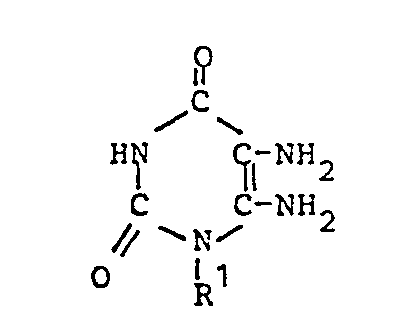
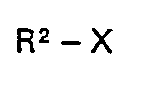
- R is n-propyl, n-butyl, isobutyl, n-pentyl, 2-methyl butyl, 3-methylbutyl, 2,2-dimethylpropyl, cyclopropyl, cyclobutyl, cyclopentyl, or cyclohexylmethyl
- R 2 is hydrogen or methyl
- X is -COOH, -CONH 2 or -OC-O-CO-R 2 , provided that R 2 is methyl when R 1 is n-propyl, n-butyl or isobutyl and, if necessary, submitting the obtained product to dehydration.
- the dehydration may be carried out for instance by heating the reaction mixture in the absence of solvent or by heating the mixture with alkali or by boiling the mixture in a high- boiling solvent.
- the starting material of the compounds prepared according to this route can be obtained for instance as illustrated in th reaction scheme below, wherein the radical R has the meanin given in this specification.
- R 1 is n-propyl, n-butyl, isobutyl, n-pentyl, 2-methylbutyl, 3-methylbutyl, 2,2-dimethylpropyl, cyclopropyl, cyclobutyl, cyclopentyl, or cyclohexylmethyl
- R 2 is hydrogen or methyl
- X 1 is -CHO or provided that R 2 is methyl when R 1 is n-propyl, n-butyl or isobutyl, and submitting the obtained product to oxidative cyclization.
- Q 1 is hydrogen or an alkyl group with 1-3 carbon atoms and Q 2 is an alkyl group with 1-3 carbon atoms.
- Q 1 and Q 2 are methyl or ethyl.
- oxidative cyclization a variety of agents can be used, e.g. thionyl chloride, SOCl 2 .
- R1 is n-propyl, n-butyl, or n-pentyl
- R 2 is hydrogen or methyl
- R is a lower alkyl group (with 1-3 carbon atoms)
- R 2 is methyl when R 1 is n-propyl or n-butyl
- R 1 is n-pentyl, 2-methylbutyl, 3-methylbutyl, 2,2-dimethylpropyl, cyclopropyl, cyclobutyl, cyclopentyl or cyclc- hexylmethyl are not previously described in the literature. They are valuable starting materials for the preparation via methods A and B of the compounds of the invention. The preparation of the starting material is described in connection with the description of method A.
- “Frigen” is used to denote the halogenated hydrocarbons.
- “Frigen” 114 is 1,2-dichlcro-1,1,2,2-tetrafluorethane
- “Frigen” 113 is 1,1-difluoro-2,2-dichlorotrifluorotrichloro- ethane
- "Frigen” 11 is trichloromonofluoromethane
- “Frigen” 12 is dichlorodifluoromethane.
- “Miglyol” denotes a triglyceride of saturated vegetable oils.or a pulver aerosol where the active substance is mixed with lactose.
- mice Male NMRI mice, weighing 20-26 g, starved for 6 h were used.
- the compounds dissolved in 0.5 M NaOH and 0.85% NaCl-solution (pH 10.6-12.1) were administered as follows:
- At least seven dose levels doses increasing in a geometric progression with a factor 1.2, were examined. Each dose was given to 5 animals. The animals were observed for signs of toxicity during 14 days after administration. The position of extremities in dead animals indicated whether they had died in convulsions or not.
- Guinea-pigs of both sexes were killed by a blow on the head and bled.
- the trachea was removed and cut spirally yielding one or two preparations.
- the tracheal preparations were mounted in organ baths containing Krebs solution maintained at 37°C and bubbled with carboger (95% 0 2 + 5% CO 2 ).
- Isometric tension reflecting mainly activity in circular tracheal muscle was recorded by means of a force displacement transducer. Initial tension was set at 0.5 g which was the approximate basal tension kept during the experiment. Evaluation of relaxant effects was done when the preparations had contracted to a stable tension by the addition of carbacholine 0.1 ⁇ g/ml to the bath.
- EC 50 values i.e.
- molar concentrations of xanthines required to produce 50% maximum response were obtained from log concentration response lines and used to calculate the potency of theo- phylline relative to that of the test drug. After washing out the drugs the trachea resumed its basal tone and was left to stabilize for at least 15 min. before the next drug evalua- tion was performed. Between two evaluations of theophylline the effect of the test drug was examined and its EC 50 value was compared with the mean of the previous and following EC SD values of theophylline. In the Table II the potency rations are illustrated. Theophylline is one by definition and a value larger than one indicate that the drug is more potent than theophylline.
- the hearts were immediately removed and perfused with oxygenated Krebs solution at 37° according to Langendorff.
- the heart was mounted in a thermostatically controlled organ bath (25 ml) containing Krebs solution.
- a saline-filled, open-end polyethylene catheter was inserted into the right ventricle through the pulmonary artery.
- the catheter was fixed to the pulmonary artery by a ligature just above the valvular plane. It was connected to a pressure transducer (P23 AC), making it possible to record changes in intraventricular pressure. From these, the contraction frequency was obtained.
- Drugs were given as single bolus injections into the perfusion solution.
- the left column lists molar potency ratios for broncho- dilatation between theophylline and various xanthine compounds. Toxic symptoms occuring before death in mice receiving constant rate infusion of drug i.v. are accounted for in the middle column. Tonic convulsions (conv.) is a consistent effect by theophylline and caffeine (30 out of 30 and 20 out of 20 respectively tested animals had marked tonic convulsions). Each other compound was tested in 10 animals and in no case a tonic convulsion was induced.
Landscapes
- Chemical & Material Sciences (AREA)
- Organic Chemistry (AREA)
- Health & Medical Sciences (AREA)
- Engineering & Computer Science (AREA)
- Bioinformatics & Cheminformatics (AREA)
- Pharmacology & Pharmacy (AREA)
- Veterinary Medicine (AREA)
- Chemical Kinetics & Catalysis (AREA)
- General Chemical & Material Sciences (AREA)
- Medicinal Chemistry (AREA)
- Nuclear Medicine, Radiotherapy & Molecular Imaging (AREA)
- Cardiology (AREA)
- Life Sciences & Earth Sciences (AREA)
- Animal Behavior & Ethology (AREA)
- General Health & Medical Sciences (AREA)
- Public Health (AREA)
- Heart & Thoracic Surgery (AREA)
- Hospice & Palliative Care (AREA)
- Pulmonology (AREA)
- Pharmaceuticals Containing Other Organic And Inorganic Compounds (AREA)
- Nitrogen Condensed Heterocyclic Rings (AREA)
- Heterocyclic Carbon Compounds Containing A Hetero Ring Having Nitrogen And Oxygen As The Only Ring Hetero Atoms (AREA)
- Medicinal Preparation (AREA)
- Saccharide Compounds (AREA)
- Steroid Compounds (AREA)
- Organic Low-Molecular-Weight Compounds And Preparation Thereof (AREA)
Abstract

Description
- The present invention relates to novel, pharmacologically active compounds, methods and intermediates for ther preparation and their therapeutical use. The invention also relates to pharmaceutical compositions containing the compounds. More particularly, the novel compounds of the invention are intended for the treatment of chronic obstructive airway disease(COAD) or cardiac disease.
- The object of the present invention is to provide xanthine derivatives which have a bronchcdilatory and cardiotonic potency but which do not elicit convulsions.
- Theophylline and various salts thereof are used in the treatment of chronic obstructive airway disease (COAD) and cardiac disease. Major therapeutic effects of theophylline are to rela bronchial smooth muscle and stimulate heart muscle. The major drawback with theophylline therapy is that the drug with a significant frequency produces toxic side-effects; most common are nausea and gastric distress, most serious are convulsions, which may lead to death.
- It has been found according to the present invention that compounds of the formula

- This invention also takes into consideration that compounds which structurally deviates from the formula (1) after administration to a living organism may be transformed therein to a compound of the formula (1) and in this structural form exerting their effects. This consideration is a further asper of this invention.
- The present invention includes pharmaceutically acceptable salts of compounds of formula (1) with pharmaceutically acceptable bases. By the term "pharmaceutically acceptable salts" is meant salts the cations of which are relatively innocuous to the animal organism when used in therapeutic doses so that the beneficial pharmacological properties of the parent compounds of general formula (1) are not vitiated by side effects ascribable to those cations. Suitable salts include the alkali metal, e.g. sodium and potassium, and ammonium salts and salts of amines known in the art to be pharmaceutically acceptable, e.g. glycine ethylene diamine, choline, diethanolamine, triethanolamine, octadecylamine, diethylamine, triethylamine, l-amino-2-propanol-2-amino-2--(hydroxymethyl)propane-1,3-diol and l-(3.4-dihydroxyphenyl)-2-isopropylaminoethanol.
- Pharmaceutically acceptable salts may be prepared by the reaction together of stoichiometric quantities of a compound of formula (1) and the appropriate base, that is to say, a base as described immediately hereinbefore, for example at an elevated temperature, with or without an appropriate solvent, preferably followed by recrystallisation from an appropriate solvent, for example a hydroxylic solvent, e.g. water, of the salt so formed.
- In clinical practice the compounds of the present invention will normally be administered orally, rectally, nasally, sublingually, by injection or by inhalation in the form of a pharmaceutical preparation comprising the active ingredient in the form of the original compound or optionally in the form of a pharmaceutically acceptable salt thereof, in association with a pharmaceutically acceptable carrier which may be a solid,semi-solid or liquid diluent or an ingestible capsule. and such preparations comprise a further aspect of the invention. Usually the active substance will comprise between 0.1 and 99% by weight of the preparation, for example between 0.5 and 20% for preparations intended for injection and between 0.1 and 50% for preparations intended for oral administration.
- To produce pharmaceutical preparations in the form of dosage units for oral application containing a compound of the invention the active ingredient may be mixed with a solid, pulverulent carrier, for example lactose, saccharose, sorbitol, mannitol, a starch such as potato starch, corn starch, amylopectin, laminaria powder or citrus pulp powder, a cellulose derivative, polyvinylpyrrolidone or gelatine and also may include lubricants such as magnesium or calcium stearate or a Carbowax® or other polyethylene glycol waxes and compressed to form tablets or cores for dragees. If dragees are required, the cores may be coated, -for example with concentrated sugar solutions which may contain gum arabic, talc and/or titanium dioxide, or alternatively with a film forming agent dissolved in easily volatile organic solvents or other suitable solvent or mixtures of organic solvents. Dyestuffs can be added to these coatings for example, to distinguish between different contents of active substance. For the preparation of soft gelatine capsules (pearl-shaped closed capsules) consisting of gelatine and, for example, glycerol as a plasticizer, or similar closed capsules, the active substance may be admixed with a Carbowax® or a suitable oil as e.g. sesam oil, olive oil, or arachis oil. Hard gelatine capsules may contain granulates of the active substance with solid, pulverulent carriers such as lactose, saccharose, sorbitol, mannitol, starches (for example potato starch, corn starch or amylopectin), cellulose derivatives, polyvinylpyrrolidone or gelatine, and may also include magnesium stearate or stearic acid as lubricants.
- A compound of the invention may also be formulated as a sustained action dosage form using suitable excipients. Different methods may be used for the availability control e.g. diffusion process and ion exchange. Methods using the diffusion process may be exemplified by products involving coated granules or particles, metrix imbedded drug and slightly soluble forms.
- effervescent powders are prepared by mixing the active ingredient with non-toxic carbonates or hydrogen carbonates of e.g. sodium, potassium or calcium, such as calcium carbonate, potassium carbonate and potassium hydrogen carbonate, solid, non-toxic acids such as tartaric acid, ascorbic acid, and citric acid, and for example aroma.
- Liquid preparations for oral application may be in the form of elixirs, syrups or suspensions, for example solutions containing from about 0.1% to 20% by weight of active substance. sugar and a mixture of ethanol, water, glycerol, propylene glycol and optionally aroma, saccharine and/or carboymethyl- cellulose as a dispersing agent.
- For parenteral application by injection preparations may comprise an aqueous solution or suspension of the active substances according to the invention, desirably in a concentration of 0.5-10%, and optionally also a stabilizing agent and/or buffer substances in aqueous solution. Dosage units of the solution may advantageously be enclosed in ampoules.
- The dosage at which the active ingredients are administered may vary within a wide range and will depend on various factors such as for example the individual requirements of each patient. A suitable oral dosage range is from 50 to 1000 mg given 1-4 times a day. A suitable dosage range at parenteral administration is from 20 to 500 mg.
- The pharmaceutical compositions containing the active ingredients may suitably be formulated so that they provide doses within these ranges either as single dosage units or as multiple dosage units.
- The compounds of the invention can be prepared by any of the following methods.
-


- The dehydration may be carried out for instance by heating the reaction mixture in the absence of solvent or by heating the mixture with alkali or by boiling the mixture in a high- boiling solvent.
- The starting material of the compounds prepared according to this route can be obtained for instance as illustrated in th reaction scheme below, wherein the radical R has the meanin given in this specification.

-


- Q1 is hydrogen or an alkyl group with 1-3 carbon atoms and Q2 is an alkyl group with 1-3 carbon atoms. Preferably Q1 and Q2 are methyl or ethyl.
- For the oxidative cyclization a variety of agents can be used, e.g. thionyl chloride, SOCl2.
-


- By this method compounds of the formula 1 wherein R1 is n-propyl, n-butyl or n-pentyl, R2 is hydrogen or methyl, provided that R2 is methyl when R1 is n-propyl or n-butyl are obtained.
- The compounds of the formula

- The best result when carrying out this invention will be obtained when the compound 3-cyclopentyl-3,7-dihydro-lH- purine-2,6-dione is used.
- To a solution of 64 g (0.75 mol) cyanoacetic acid and 250 ml of acetic anhydride was added 70 g (0.7 mol) of cyclopropyl- urea. The solution was stirred at 60-70°C for 2 hours. After cooling white crystals were filtered off and washed with ethanol. Yield 76.7 g (66%) (I). This was suspended in 200 ml of hot water and 55 ml of 5 N NaOH was added in portions so the solution the whole time was basic. The reaction mixture was refluxed for 20·minutes and then neutralized with 5 N HCl. After cooling, white crystals were filtered off. Yield 31.7 g (42%) (II) NMR.
- 31.7 g (0.19 mol) of 6-amino-1-cyclopropyl-2,4-(1H,3H)-pyrimidinedione (II) was suspended in 250 ml water. To this was added 45 ml of 5 N HC1 and 15 g of NaN02 (D.22 mol) which was dissolved in water. The reaction mixture was stirred for 2 hours and after cooling, the red crystals were filtered off and washed with water. Yield 31.9 g (86%) (III) NMR.
- 15.9 g of 6-amino-l-cyclopropyl-5-nitroso-2,4-(lH,3H)-pyrimi- dinedione (III) was catalytically hydrogenated in 1 liter of DMF and in the presence of 0.1 g Pt02 for 4 hours and at room temperature and at a pressure of 200 kPa. The catalyst and the crystals were filtered off and washed with ethanol. Yield 12.9 g (87%) (IV).
- A solution of 12 g of 1-cyclopropyl-5,6-diamino-2,4-(1H,3H)-pyrimidinedione (IV) in 50 ml of formic acid was refluxed for 2 hours. The hot solution was filtered and 30 ml of chloroform was added and ether was then added slowly. The received crystals were filtered off. Yield 11.2 g (V). The amide (V) was refluxed in 40 ml of 2 N NaOH for 1 hour and then neutralized with 5 N HC1. The crystals were filtered off. Yield 7 g (60%) (VI) NMR(see Table I).
-

- To a solution of 30 g (0.35 mol) cyanoacetic acid and 100 ml of acetic anhydride was added 36,1 g (0.32 mol) of cyclo- butylurea. The solution was stirred at 60-70°C for 2 hours. After cooling, white crystals were filtered off and washed with ethanol. Yield 36.4 g (63%) (VII). This was suspended in 100 ml of hot water and 50 ml of 2 N NaOH was added in portions so the solution the whole time was basic. The reaction mixture was refluxed for 20.minutes. After cooling, white crystals were filtered off. Yield 3.6 g (20%) (VIII) NMR.
- 3 g (0.0166 mol) of 6-amino-1-cyclobutyl-2,4-(1H,3H)-pyrimi- dinedione (VIII), was suspended in 25 ml water. To this was added 4 ml of 5 N HC1 and 1.3 g of NaN02 (0.019 mol) which was dissolved in water. The reaction mixture was stirred for 3 hours and the red crystals were filtered off and washed with water. Yield 3.1 g (89%) (IX) NMR.
- 6.9 g of 6-amino-l-cyclobutyl-5-nitroso-2,4-(lH,3H)-pyrimi- dinedione (IX) was catalytically hydrogenated in 250 ml of ONE and in the presence of 0.1 g Pt02 for 2 hours and at room temperature and at a pressure of 200 kPa. The catalyst and the crystals were filtered off and washed with ethanol. Yield 3.5 g (54%) (X).
- A solution of 3,5 g of 1-cyclobutyl-5,6-diamino-2,4-(1H,3H)-pyrimidinedione (X) in 20 ml of formic acid was refluxed for 2 hours. The hot solution was filtered and 20 ml of chloroform was added and ether was then added slowly. The received crystals were filtered off. Yield 2.7 g (XI).
- The amide (XI) was refluxed in 20 ml of 2 N NaOH for 1 hour and then neutralized with 5 N HCl. The crystals were filtered off and recrystallized from 150 ml ethanol. Yield 1.4 g (36%) (XII) NMR (see Table I).
- Reaction scheme:
-

- To a solution of 136 g (1.6 mol) cyanoacetic acid and 400 ml of acetic anhydride was added 192 g (1.5 mol) of cyclopentylurea. The solution was stirred at 60-70 C for 2 hours. After cooling white crystals were filtered off and washed with ethanol. Yield 192 g (66%) (XIII). This was stirred in 500 ml of hot water and 195 ml of 5 N NaOH was added in portions so the solution the whole time was basic. The reaction mixture was refluxed for 20 minutes and then neutralized with 5 N HCl. After cooling, white crystals of cyclopentylurea were filtered off (159 g). The filtrate was evaporated and the residue was refluxed with 200 ml of 1 N NaOH. After cooling the cyclopentylurea was filtered off and the filtrate was neutralized with 5 N HC1. The crystals were filtered off. Yield 3.8 g (2%) (XIV) NMR.
- 12.4 g (0.064 mol) of 6-amino-1-cyclopentyl-2,4-(1H,3H)-pyri- midinedione (XIV) was suspended in 200 ml water. To this was added 14 ml of 5 N HC1 and 4.8 g of NaN02 (0.07 mol) which was dissolved in water. The reaction mixture was stirred for 1 hour and washed with water. Yield 12.9 g (90%) (XV) NMR.
- 12.9 g of 6-amino-1-cyclopentyl-5-nitroso-2,4-(1H,3H)-pyrimi- dinedione (XV) was catalytically hydrogenated in 30 ml of 2 N HCl and in the presence of 0.1 g Pt02 for 3 hours and at room temperature and at a pressure of 200 kPa. The catalyst was filtered off and the filtrate was neutralized with 5 N NaOH. The crystals were filtered off. Yield 6.1 g (50%) (XV).
- A solution of 6.1 g of 1-cyclopentyl-5,6-diamino-2,4-(1H,3H)-pyrimidinedione (XVI) in 25 ml of formic acid was refluxed for 1 hour. The hot solution was filtered and 20 ml of chloroform was added and ether was then added slowly. The received crystals were filtered off. Yield 5.9 g (XVII).
- The amide (XVII) was refluxed in 30 ml of 2 N NaOH for 1 hour and then neutralized with 5 N HCl. The crystals were filtered off and recrystallized from 400 ml ethanol. Yield 3.4 g (53%) (XVIII) NMR(see Table I).
- Reaction scheme:

-
- a) Preparation of 6-amino-l-cyclohexylmethyl-2,4-(lH,3H)-pyrimidine-dione (XX) was performed according to the description of Example 3 a.
- b) Preparation of 6-amino-l-cyclohexylmethyl-5-nitroso-2,4--(lH,3H)-pyrimidinedione (XXI) was performed according to the description of Example 3 b.
- c) Preparation of 5,6-dio-mino-1-cyclohexylmethyl-2,4-(1H,3H)-pyrimidinedione (XXII) was performed according to the description of Example 2 c.
- d) Preparation of 3,7-dihydro-3-cyclohexylmethyl-lH-purine-2,6-dione XXIV
- 2 g of 5,6-diamino-1-cyclohexylmethyl-2,4-(1H,3H)-pyrimidine dione (XXII) was refluxed in 10 ml of formic acid for 1 h. 5 ml of chloroform was added and ether was then added slowly. The received crystals were filtered off. Yield 2.1 g (XXIII). The amide (XXIII) was refluxed in 15 ml of 2 N NaOH for 1 hour-and then neutralized with 5 N HCl. Yield 1.7 g (XXIV) NMR(see Tablel
- Reaction scheme:

-
- a) Preparation of 6-amino-1-(2,2-dimethylpropyl)-2,4-(1H,3H)-pyrimidinedione (XXVI) was performed according to the description of Example 3 a.
- b) Preparation of 6-amino-l-(2,2-dimethylpropyl)-5-nitroso--2,4-(1H,3H)-pyrimidine dione (XXVII)
- To a solution of 7.0 g of XXVI in 50 ml of DMSO was added 8 ml of 5 N HCl and 2.7 g of NaNO2 dissolved in 5 ml of water. The reaction mixture was stirred 10 minutes at 50°C and then 100 ml of water was added. The red crystals were filtered off. Yield 6 g (XXVII).
- c) Preparation of 5,6-diamino-1-(2,2-dimethylpropyl)-2,4-(lH,3H)-pyrimidinedione (XXVIII)
- To a suspension of 6.0 g of XXVII in 100 ml of water was added 13.0 g of sodiumdithionite in portions. The green crystals were filtered off and washed with water. Yield 4.0 g (XXVIII).
- d) Preparation of 3,7-dihydro-3-(2,2-dimethylpropyl)-lH- purine-2,6-dione (XXIX)
- 4.0 g of XXVIII was refluxed in 20 ml of formamide for 30 minutes. After cooling 30 ml of ethanol was added and the yellow crystals were filtered off and recrystallized from 15 ml of DMF. Yield 2.0 g (XXIX) NMR (see Table I).
- Reaction scheme:

- 1 g of 5,6-diamino-1-cyclohexylmethyl-2,4-(1H,3H)-pyrimidine dione (XXII) was refluxed in 5 ml of acetic acid for 1 hour. 2 ml of chloroform was added and ether was then added slowly. The received crystals of the amide were filtered off. Yield 1 g.
- The amide was refluxed in 10 ml of 2 N NaOH for 1 hour and then neutralized with 5 N HC1. The crystals were filtered off and recrystallized from 80 ml of ethanol. Yield 0.6 g (XXX) NMR (see Table I).
- 1.6 g of l-cyclopentyl-5,6-diamino-2,4-(lH,3H)-pyrimidine dione (XVI) was refluxed in 10 ml of acetic acid for 15 min. 10 ml of chloroform was added and ether was then added slowly. The received crystals of the amide were filtered off. Yield 2.0 g.
- The amide was refluxed in 5 ml of 2 N NaOH for 1 hour and then neutralized with 5 N HCl. The crystals were filtered off and recrystallized from 25 ml of 80% ethanol. Yield 0.7 g (XXXI) NMR (see Table I).
- 10.4 g of 5,6-diamino-l-(2,2-dimethylpropyl)-2,4-(lH,3H)-pyrimidine dione (XXVIII) was refluxed in 75 ml of acetic acid for 1 hour. 50 ml of chloroform was added and ether was then added slowly. The received crystals were filtered off. Yield 11.4 g. The amide was refluxed in 50 ml of 1 N NaOH for 1 hour and then neutralized with 5 N HCl. Yield 7.2 g (XXXIV). NMR (see Table I).
- 10 g of 5,6-diamino-1-(2-methylpropyl)-2,4-(1H,3H)-pyrimidine- dione was refluxed in 50 ml of acetic acid for 1 hour. 30 ml of chloroform was added and ether was then added slowly. The received crystals were filtered off. Yield 10.8 g. The amide was refluxed in 30 ml of 2 n NaOH for 1 hour and then neutralized with 5 N HCl. The crystals were filtered off and recrystallized from 50 ml of acetic acid. Yield 3.3 g. NMR (see Table I).

-

-

-

-

-

- Male NMRI mice, weighing 20-26 g, starved for 6 h were used. The compounds, dissolved in 0.5 M NaOH and 0.85% NaCl-solution (pH 10.6-12.1) were administered as follows:
- a) intravenously, 0.1 ml/10 g at an injection rate of 0.3 ml per minute
- b) orally, 0.1 ml/10 g
- At least seven dose levels, doses increasing in a geometric progression with a factor 1.2, were examined. Each dose was given to 5 animals. The animals were observed for signs of toxicity during 14 days after administration. The position of extremities in dead animals indicated whether they had died in convulsions or not.
- In acute toxicity studies it was observed that many xanthine compounds elicit convulsions. This was also repeatedly shown to occur with theophylline. However, no sign of convulsive activity (such as tonically stretched hindlegs of dead animals) was observed in animals given the compounds of this invention.
- Additionally, convulsive activity was studied by slowly infusing drugs into the tail veins of albino mice. In this study it was confirmed that 1-alkyl substituted xanthines (theophylline and caffeine) consistently produced tonic convulsions, and that with the compounds of the invention death occurred without signs of tonic convulsions. (Table II).
- Guinea-pigs of both sexes, weighing between 150 and 250 g, were killed by a blow on the head and bled. The trachea was removed and cut spirally yielding one or two preparations. The tracheal preparations were mounted in organ baths containing Krebs solution maintained at 37°C and bubbled with carboger (95% 02 + 5% CO2). Isometric tension reflecting mainly activity in circular tracheal muscle was recorded by means of a force displacement transducer. Initial tension was set at 0.5 g which was the approximate basal tension kept during the experiment. Evaluation of relaxant effects was done when the preparations had contracted to a stable tension by the addition of carbacholine 0.1 µg/ml to the bath. EC50 values, i.e. molar concentrations of xanthines required to produce 50% maximum response were obtained from log concentration response lines and used to calculate the potency of theo- phylline relative to that of the test drug. After washing out the drugs the trachea resumed its basal tone and was left to stabilize for at least 15 min. before the next drug evalua- tion was performed. Between two evaluations of theophylline the effect of the test drug was examined and its EC50 value was compared with the mean of the previous and following ECSD values of theophylline. In the Table II the potency rations are illustrated. Theophylline is one by definition and a value larger than one indicate that the drug is more potent than theophylline.
- From the bled guinea-pigs, the hearts were immediately removed and perfused with oxygenated Krebs solution at 37° according to Langendorff. The heart was mounted in a thermostatically controlled organ bath (25 ml) containing Krebs solution. A saline-filled, open-end polyethylene catheter was inserted into the right ventricle through the pulmonary artery. The catheter was fixed to the pulmonary artery by a ligature just above the valvular plane. It was connected to a pressure transducer (P23 AC), making it possible to record changes in intraventricular pressure. From these, the contraction frequency was obtained. Drugs were given as single bolus injections into the perfusion solution.

- VI = 3-cyclopropyl-3,7-dihydro-1H-purine-2,6-dione
- XII = 3-cyclobutyl-3,7-dihydro-lH-purine-2,6-dione
- XVIII = 3-cyclopentyl-3,7-dihydro-lH-purine-2,6-dione
- XXIV = 3,7-dihydro-3-cyclohexylmethyl-IH-purine-2,6-dione
- XXIX = 3,7-dihydro-3-(2,2-dimethylpropyl)-1H-purine-2,6-dione
- XXX = 3,7-dihydro-8-methyl-3-cyclohexylmethyl-1H-purine-2,6-dione
- XXXI 3-cyclopentyl-3,7-dihydro-8-methyl-lH-purine-2,6-dione
- XXXIV= 3,7-dihydro-3-(2,2-dimethylpropyl)-8-methyl-lH- purine-2,6-dione.
- XXXV = 3,7-dihydro-8-methyl-3-(2-methylpropyl)-lH-purine-2,6-dione
- The left column lists molar potency ratios for broncho- dilatation between theophylline and various xanthine compounds. Toxic symptoms occuring before death in mice receiving constant rate infusion of drug i.v. are accounted for in the middle column. Tonic convulsions (conv.) is a consistent effect by theophylline and caffeine (30 out of 30 and 20 out of 20 respectively tested animals had marked tonic convulsions). Each other compound was tested in 10 animals and in no case a tonic convulsion was induced. The notes indicate, however, that a few animals receiving 0 4164, D 4161 or D 4169 exhibited a clonic-type of convulsion or a mixed clonic/tonic type of convulsion, however, of very moderate intensity compared to the effect seen by theophylline and caffeine. The far right column indicate cardiotonic activity as positive chronotropic potency.
Claims (16)


Priority Applications (1)
| Application Number | Priority Date | Filing Date | Title |
|---|---|---|---|
| AT79850090T ATE1145T1 (en) | 1978-10-20 | 1979-09-28 | 3-ALKYLXANTHINS, PROCESSES FOR THEIR PREPARATION AND COMPOSITIONS FOR USE IN THE TREATMENT OF CHRONIC AIRWAY AND HEART DISEASES. |
Applications Claiming Priority (2)
| Application Number | Priority Date | Filing Date | Title |
|---|---|---|---|
| SE7810947A SE7810947L (en) | 1978-10-20 | 1978-10-20 | 3-ALKYLXANTHINES |
| SE7810947 | 1978-10-20 |
Publications (2)
| Publication Number | Publication Date |
|---|---|
| EP0010531A1 true EP0010531A1 (en) | 1980-04-30 |
| EP0010531B1 EP0010531B1 (en) | 1982-06-02 |
Family
ID=20336145
Family Applications (1)
| Application Number | Title | Priority Date | Filing Date |
|---|---|---|---|
| EP79850090A Expired EP0010531B1 (en) | 1978-10-20 | 1979-09-28 | 3-alkylxanthines, processes for their preparation and compositions for use in the treatment of chronic obstructive airway disease and cardiac disease |
Country Status (24)
| Country | Link |
|---|---|
| US (2) | US4548818A (en) |
| EP (1) | EP0010531B1 (en) |
| JP (1) | JPS5557589A (en) |
| AT (1) | ATE1145T1 (en) |
| AU (1) | AU530717B2 (en) |
| CA (1) | CA1131632A (en) |
| DD (1) | DD146708A5 (en) |
| DE (1) | DE2963021D1 (en) |
| DK (1) | DK148884C (en) |
| ES (1) | ES485178A1 (en) |
| FI (1) | FI66867C (en) |
| GR (1) | GR72945B (en) |
| HK (1) | HK7785A (en) |
| HU (1) | HU180220B (en) |
| IE (1) | IE49184B1 (en) |
| NO (1) | NO152561C (en) |
| NZ (1) | NZ191870A (en) |
| PH (1) | PH16676A (en) |
| PL (1) | PL119413B1 (en) |
| PT (1) | PT70350A (en) |
| SE (1) | SE7810947L (en) |
| SG (1) | SG86084G (en) |
| SU (1) | SU952105A3 (en) |
| ZA (1) | ZA795113B (en) |
Cited By (9)
| Publication number | Priority date | Publication date | Assignee | Title |
|---|---|---|---|---|
| EP0038784A3 (en) * | 1980-04-18 | 1982-01-20 | Aktiebolaget Draco | 3,8-dialkylxanthines, processes for their preparation, composition and methods for the treatment of chronic obstructive airway disease and cardiovascular diseases |
| FR2531708A1 (en) * | 1982-08-10 | 1984-02-17 | Malesci Sas | XANTHIN DERIVATIVES, PROCESS FOR THEIR PREPARATION AND PHARMACEUTICAL COMPOSITIONS CONTAINING SAME |
| EP0369744A3 (en) * | 1988-11-14 | 1991-04-10 | SMITHKLINE BEECHAM PHARMA GmbH | Xanthine derivatives, process for their preparation and pharmaceutical compositions |
| EP0386683A3 (en) * | 1989-03-10 | 1992-01-15 | POLI INDUSTRIA CHIMICA S.p.A. | Xanthine derivatives having bronchodilating activity, a process for the preparation thereof and pharmaceutical compositions containing them |
| EP0430025A3 (en) * | 1989-11-24 | 1992-05-06 | Hokuriku Pharmaceutical Co., Ltd. | Xanthine compound, method for preparing thereof, and a pharmaceutical composition comprising the same |
| US5321029A (en) * | 1988-11-14 | 1994-06-14 | Beecham-Wuelfing Gmbh & Co.K.G. | Xanthines |
| US7829707B2 (en) | 2004-12-06 | 2010-11-09 | Astrazeneca Ab | Pyrrolo [3,2-d]pyrimidin-4-one derivatives and their use in therapy |
| US7943625B2 (en) | 2006-06-05 | 2011-05-17 | Astrazeneca Ab | 2 thioxanthine derivatives acting as MPO-inhibitors |
| EP2332541A1 (en) | 2002-04-19 | 2011-06-15 | AstraZeneca AB | Use of thioxanthine derivatives as MPO inhibitors |
Families Citing this family (22)
| Publication number | Priority date | Publication date | Assignee | Title |
|---|---|---|---|---|
| SE7810947L (en) * | 1978-10-20 | 1980-04-21 | Draco Ab | 3-ALKYLXANTHINES |
| CH643260A5 (en) * | 1980-05-02 | 1984-05-30 | Nestle Sa | 1-ALLYL-3-BUTYL-8-METHYLXANTHINE, METHOD OF PREPARATION AND USE IN A MEDICAMENT. |
| US5338741A (en) * | 1986-10-27 | 1994-08-16 | Nestec S.A. | 1-hydroxyalkylxanthines and medicaments containing them |
| IL92096A0 (en) | 1988-10-25 | 1990-07-12 | Abbott Lab | Carboxylic nucleoside analogs |
| US5153352A (en) * | 1988-10-25 | 1992-10-06 | Bristol-Myers Squibb Company | Process for preparation of intermediates of carbocyclic nucleoside analogs |
| US5246931A (en) * | 1988-10-25 | 1993-09-21 | Bristol-Myers Squibb Company | Carbocyclic nucleoside analogs |
| US4988703A (en) * | 1989-05-22 | 1991-01-29 | Abbott Laboratories | Carbocyclic nucleoside analogs with antiviral activity |
| FR2657257B1 (en) * | 1990-01-19 | 1994-09-02 | Rhone Poulenc Sante | PROCESS FOR THE PREPARATION OF DRUGS IN THE FORM OF PEARLS. |
| DE69230349T2 (en) * | 1991-03-05 | 2000-07-27 | Ajinomoto Co., Inc. | Cyclopropane derivative |
| US5877179A (en) * | 1992-09-29 | 1999-03-02 | The United States Of America As Represented By The Department Of Health And Human Services | Xanthines for identifying CFTR--binding compounds useful for activating chloride conductance in animal cells |
| US5504090A (en) * | 1994-03-30 | 1996-04-02 | Trustees Of The University Of Pennsylvania | Compositions and methods for the prevention and treatment of ischemia-reperfusion organ injury |
| US5786360A (en) | 1996-11-19 | 1998-07-28 | Link Technology Incorporated | A1 adenosine receptor antagonists |
| CA2336967C (en) | 1998-07-10 | 2010-06-29 | The United States Of America, Represented By The Secretary, Department Of Health And Human Services | A3 adenosine receptor antagonists |
| ATE336492T1 (en) * | 2000-01-14 | 2006-09-15 | Us Gov Health & Human Serv | METHONOCARBACYCLOALKYLANALOGUES OF NUCLEOSIDES |
| US6623553B2 (en) * | 2001-04-20 | 2003-09-23 | John Russell | Printing process with edible inks |
| JP2006518390A (en) | 2003-02-19 | 2006-08-10 | エンダシア,インコーポレイテッド | A1 adenosine receptor antagonist |
| EP1636229A4 (en) * | 2003-06-06 | 2008-07-30 | Endacea Inc | A1 adenosine receptor antogonists |
| EP1636230A4 (en) * | 2003-06-09 | 2010-06-16 | Endacea Inc | A1 adenosine receptor antagonists |
| DE102006020519A1 (en) * | 2006-05-03 | 2007-11-08 | Robert Bosch Gmbh | Device for folding at least one tab of a package |
| US7743683B2 (en) * | 2006-08-15 | 2010-06-29 | Umagination Labs, L.P. | Systems and methods of a power tool system with interchangeable functional attachments powered by a direct rotational drive |
| EP2507241A1 (en) | 2009-12-02 | 2012-10-10 | The U.S.A. As Represented By The Secretary, Department Of Health And Human Services | Methanocarba adenosine derivatives and dendrimer conjugates thereof |
| EP3397640B1 (en) * | 2015-12-29 | 2021-08-04 | INSERM - Institut National de la Santé et de la Recherche Médicale | Xanthine derivative inhibitors of bet proteins |
Citations (3)
| Publication number | Priority date | Publication date | Assignee | Title |
|---|---|---|---|---|
| DE864868C (en) * | 1943-10-02 | 1953-01-29 | Hellmut Dr Bredereck | Process for the preparation of purine compounds |
| US2646432A (en) * | 1947-01-13 | 1953-07-21 | Mallinckrodt Chemical Works | Method of preparing 2, 6-diketopurines |
| US4089959A (en) * | 1976-03-31 | 1978-05-16 | Cooper Laboratories, Inc. | Long-acting xanthine bronchodilators and antiallergy agents |
Family Cites Families (20)
| Publication number | Priority date | Publication date | Assignee | Title |
|---|---|---|---|---|
| DE1245969B (en) * | 1967-08-03 | VEB Arzneimittelwerk Dresden, Radebeul | Process for the production of xanthine derivatives | |
| US2517410A (en) * | 1947-08-15 | 1950-08-01 | Searle & Co | Hydroxy alkyl xanthines and the production thereof |
| GB683523A (en) * | 1948-08-18 | 1952-12-03 | Beecham Res Lab | The manufacture of purine derivatives |
| US2781344A (en) * | 1953-05-04 | 1957-02-12 | Monsanto Chemicals | Formylation of amino-pyrimidines |
| US2844576A (en) * | 1955-11-22 | 1958-07-22 | American Cyanamid Co | Preparation of purines |
| BE592753A (en) * | 1959-07-09 | 1900-01-01 | ||
| GB982079A (en) * | 1962-05-01 | 1965-02-03 | Dresden Arzneimittel | Process for the production of xanthine derivatives |
| GB1008454A (en) * | 1963-03-26 | 1965-10-27 | Dresden Arzneimittel | Pseudoxanthines |
| GB1435916A (en) * | 1972-05-11 | 1976-05-19 | Beecham Group Ltd | Pharmaceutical weight-reducing compositions |
| JPS5125009U (en) * | 1974-08-14 | 1976-02-24 | ||
| FR2346244A1 (en) * | 1976-03-30 | 1977-10-28 | Chamagne Pierre | Air tight wine cooler container and dispenser - has adjustable lid kept in contact with surface by screw mechanism |
| CA1077932A (en) * | 1976-03-31 | 1980-05-20 | Berlex Laboratories, Inc. | Xanthine compounds and method of treating bronchospastic and allergic diseases |
| US4120947A (en) * | 1976-03-31 | 1978-10-17 | Cooper Laboratories, Inc. | Xanthine compounds and method of treating bronchospastic and allergic diseases |
| JPS52133295U (en) * | 1976-04-05 | 1977-10-11 | ||
| JPS5618169Y2 (en) * | 1976-09-20 | 1981-04-28 | ||
| SE416810C (en) * | 1977-10-14 | 1982-07-19 | Draco Ab | PROCEDURE FOR THE PREPARATION OF Xanthine DERIVATIVES WITH ANTIALLERGIC ACTIVITY |
| SE7810946L (en) * | 1978-10-20 | 1980-04-21 | Draco Ab | METHOD OF TREATING CHRONIC OBSTRUCTIVE AIR DISEASE |
| SE7810947L (en) * | 1978-10-20 | 1980-04-21 | Draco Ab | 3-ALKYLXANTHINES |
| US4338319A (en) * | 1979-11-27 | 1982-07-06 | Aktiebolaget Draco | Method for the treatment of chronic obstructive airway or cardiac diseases |
| SE8002910L (en) * | 1980-04-18 | 1981-10-19 | Draco Ab | 3,8-DIALKYLXANTINES, PROCEDURES FOR THEIR PREPARATION, PREPARATION AND METHODS OF TREATMENT OF CHRONIC OBSTRUCTIVE AIR DISORDER AND CARDIOVASCULAR DISEASES |
-
1978
- 1978-10-20 SE SE7810947A patent/SE7810947L/en not_active Application Discontinuation
-
1979
- 1979-09-26 ZA ZA00795113A patent/ZA795113B/en unknown
- 1979-09-28 DE DE7979850090T patent/DE2963021D1/en not_active Expired
- 1979-09-28 AT AT79850090T patent/ATE1145T1/en not_active IP Right Cessation
- 1979-09-28 EP EP79850090A patent/EP0010531B1/en not_active Expired
- 1979-10-05 CA CA337,077A patent/CA1131632A/en not_active Expired
- 1979-10-11 SU SU792824353A patent/SU952105A3/en active
- 1979-10-12 DK DK432179A patent/DK148884C/en active
- 1979-10-16 PH PH23182A patent/PH16676A/en unknown
- 1979-10-17 NZ NZ191870A patent/NZ191870A/en unknown
- 1979-10-17 AU AU51871/79A patent/AU530717B2/en not_active Ceased
- 1979-10-17 FI FI793224A patent/FI66867C/en not_active IP Right Cessation
- 1979-10-18 IE IE1987/79A patent/IE49184B1/en unknown
- 1979-10-19 NO NO793377A patent/NO152561C/en unknown
- 1979-10-19 HU HU79DA367A patent/HU180220B/en unknown
- 1979-10-19 ES ES485178A patent/ES485178A1/en not_active Expired
- 1979-10-19 PL PL1979219065A patent/PL119413B1/en unknown
- 1979-10-19 DD DD79216348A patent/DD146708A5/en unknown
- 1979-10-19 JP JP13584579A patent/JPS5557589A/en active Granted
- 1979-10-19 GR GR60300A patent/GR72945B/el unknown
- 1979-10-19 PT PT70350A patent/PT70350A/en unknown
-
1981
- 1981-11-23 US US06/323,955 patent/US4548818A/en not_active Expired - Fee Related
-
1984
- 1984-07-25 US US06/634,650 patent/US4644001A/en not_active Expired - Fee Related
- 1984-11-29 SG SG860/84A patent/SG86084G/en unknown
-
1985
- 1985-01-31 HK HK77/85A patent/HK7785A/en unknown
Patent Citations (3)
| Publication number | Priority date | Publication date | Assignee | Title |
|---|---|---|---|---|
| DE864868C (en) * | 1943-10-02 | 1953-01-29 | Hellmut Dr Bredereck | Process for the preparation of purine compounds |
| US2646432A (en) * | 1947-01-13 | 1953-07-21 | Mallinckrodt Chemical Works | Method of preparing 2, 6-diketopurines |
| US4089959A (en) * | 1976-03-31 | 1978-05-16 | Cooper Laboratories, Inc. | Long-acting xanthine bronchodilators and antiallergy agents |
Cited By (11)
| Publication number | Priority date | Publication date | Assignee | Title |
|---|---|---|---|---|
| EP0038784A3 (en) * | 1980-04-18 | 1982-01-20 | Aktiebolaget Draco | 3,8-dialkylxanthines, processes for their preparation, composition and methods for the treatment of chronic obstructive airway disease and cardiovascular diseases |
| FR2531708A1 (en) * | 1982-08-10 | 1984-02-17 | Malesci Sas | XANTHIN DERIVATIVES, PROCESS FOR THEIR PREPARATION AND PHARMACEUTICAL COMPOSITIONS CONTAINING SAME |
| EP0369744A3 (en) * | 1988-11-14 | 1991-04-10 | SMITHKLINE BEECHAM PHARMA GmbH | Xanthine derivatives, process for their preparation and pharmaceutical compositions |
| US5321029A (en) * | 1988-11-14 | 1994-06-14 | Beecham-Wuelfing Gmbh & Co.K.G. | Xanthines |
| EP0386683A3 (en) * | 1989-03-10 | 1992-01-15 | POLI INDUSTRIA CHIMICA S.p.A. | Xanthine derivatives having bronchodilating activity, a process for the preparation thereof and pharmaceutical compositions containing them |
| EP0430025A3 (en) * | 1989-11-24 | 1992-05-06 | Hokuriku Pharmaceutical Co., Ltd. | Xanthine compound, method for preparing thereof, and a pharmaceutical composition comprising the same |
| EP2332541A1 (en) | 2002-04-19 | 2011-06-15 | AstraZeneca AB | Use of thioxanthine derivatives as MPO inhibitors |
| US7829707B2 (en) | 2004-12-06 | 2010-11-09 | Astrazeneca Ab | Pyrrolo [3,2-d]pyrimidin-4-one derivatives and their use in therapy |
| US8859568B2 (en) | 2004-12-06 | 2014-10-14 | Astrazeneca Ab | Pyrrolo[3,2-D]pyrimidin-4-one derivatives and their use in therapy |
| US9580429B2 (en) | 2004-12-06 | 2017-02-28 | Astrazeneca Ab | Pyrrolo[3,2-D]pyrimidin-4-one derivatives and their use in therapy |
| US7943625B2 (en) | 2006-06-05 | 2011-05-17 | Astrazeneca Ab | 2 thioxanthine derivatives acting as MPO-inhibitors |
Also Published As
| Publication number | Publication date |
|---|---|
| NO793377L (en) | 1980-04-22 |
| HU180220B (en) | 1983-02-28 |
| ES485178A1 (en) | 1980-05-16 |
| PH16676A (en) | 1983-12-13 |
| NO152561B (en) | 1985-07-08 |
| AU5187179A (en) | 1980-05-01 |
| DD146708A5 (en) | 1981-02-25 |
| IE49184B1 (en) | 1985-08-21 |
| DE2963021D1 (en) | 1982-07-22 |
| ZA795113B (en) | 1980-10-29 |
| NZ191870A (en) | 1984-07-06 |
| EP0010531B1 (en) | 1982-06-02 |
| DK148884C (en) | 1986-04-07 |
| DK432179A (en) | 1980-04-21 |
| ATE1145T1 (en) | 1982-06-15 |
| US4644001A (en) | 1987-02-17 |
| SG86084G (en) | 1985-06-07 |
| GR72945B (en) | 1984-01-17 |
| DK148884B (en) | 1985-11-04 |
| PL219065A1 (en) | 1980-06-16 |
| SE7810947L (en) | 1980-04-21 |
| US4548818A (en) | 1985-10-22 |
| SU952105A3 (en) | 1982-08-15 |
| JPH0130834B2 (en) | 1989-06-22 |
| PT70350A (en) | 1979-11-01 |
| FI66867B (en) | 1984-08-31 |
| NO152561C (en) | 1985-10-16 |
| FI66867C (en) | 1984-12-10 |
| HK7785A (en) | 1985-02-08 |
| IE791987L (en) | 1980-04-20 |
| PL119413B1 (en) | 1981-12-31 |
| FI793224A7 (en) | 1980-04-21 |
| AU530717B2 (en) | 1983-07-28 |
| CA1131632A (en) | 1982-09-14 |
| JPS5557589A (en) | 1980-04-28 |
Similar Documents
| Publication | Publication Date | Title |
|---|---|---|
| EP0010531B1 (en) | 3-alkylxanthines, processes for their preparation and compositions for use in the treatment of chronic obstructive airway disease and cardiac disease | |
| US4804664A (en) | Method and pharmaceutical preparation for treating chronic obstructive airway disease and cardiac disease, and intermediates for the preparation of therapeutically active xanthine derivatives | |
| DE69824632T2 (en) | PURINE DERIVATIVES AND MEDICAMENTS CONTAINING THE SAME AS AN ACTIVE INGREDIENT | |
| US4289776A (en) | Xanthine derivatives | |
| US4089959A (en) | Long-acting xanthine bronchodilators and antiallergy agents | |
| EP0001735B1 (en) | Xanthine derivatives having antiallergic activity and pharmacological preparations containing them | |
| EP0038784B1 (en) | 3,8-dialkylxanthines, processes for their preparation and compositions containing them | |
| US4147805A (en) | Alkylthiophenoxyalkylamines and the pharmaceutical use thereof | |
| JPS6222771A (en) | 5-substituted-6-aminopyrimidine derivative composition and use | |
| US5015647A (en) | Method for treating viral infections | |
| US4338319A (en) | Method for the treatment of chronic obstructive airway or cardiac diseases | |
| US5017577A (en) | Methods for treating viral infection | |
| CA1142928A (en) | 3-alkylxanthines, intermediates, processes for their preparation, composition and methods for the treatment of chronic obstructive airway disease and cardiac disease | |
| KR830001654B1 (en) | Method for preparing 3-alkyl xanthine for the treatment of chronic airway and heart disease | |
| JPH05262770A (en) | Chemical manufacturing method | |
| US3974164A (en) | Reserpic acid derivatives | |
| CA1075693A (en) | Xanthine derivatives |
Legal Events
| Date | Code | Title | Description |
|---|---|---|---|
| PUAI | Public reference made under article 153(3) epc to a published international application that has entered the european phase |
Free format text: ORIGINAL CODE: 0009012 |
|
| AK | Designated contracting states |
Designated state(s): AT BE CH DE FR GB IT LU NL SE |
|
| 17P | Request for examination filed |
Effective date: 19801013 |
|
| ITF | It: translation for a ep patent filed | ||
| GRAA | (expected) grant |
Free format text: ORIGINAL CODE: 0009210 |
|
| AK | Designated contracting states |
Designated state(s): AT BE CH DE FR GB IT LU NL SE |
|
| REF | Corresponds to: |
Ref document number: 1145 Country of ref document: AT Date of ref document: 19820615 Kind code of ref document: T |
|
| REF | Corresponds to: |
Ref document number: 2963021 Country of ref document: DE Date of ref document: 19820722 |
|
| PG25 | Lapsed in a contracting state [announced via postgrant information from national office to epo] |
Ref country code: LU Free format text: LAPSE BECAUSE OF NON-PAYMENT OF DUE FEES Effective date: 19820930 |
|
| PGFP | Annual fee paid to national office [announced via postgrant information from national office to epo] |
Ref country code: LU Payment date: 19830817 Year of fee payment: 5 |
|
| PGFP | Annual fee paid to national office [announced via postgrant information from national office to epo] |
Ref country code: FR Payment date: 19840824 Year of fee payment: 6 |
|
| PGFP | Annual fee paid to national office [announced via postgrant information from national office to epo] |
Ref country code: SE Payment date: 19840930 Year of fee payment: 6 Ref country code: BE Payment date: 19840930 Year of fee payment: 6 |
|
| PGFP | Annual fee paid to national office [announced via postgrant information from national office to epo] |
Ref country code: DE Payment date: 19841025 Year of fee payment: 6 |
|
| PGFP | Annual fee paid to national office [announced via postgrant information from national office to epo] |
Ref country code: CH Payment date: 19841026 Year of fee payment: 6 |
|
| PGFP | Annual fee paid to national office [announced via postgrant information from national office to epo] |
Ref country code: AT Payment date: 19850905 Year of fee payment: 7 |
|
| PG25 | Lapsed in a contracting state [announced via postgrant information from national office to epo] |
Ref country code: BE Effective date: 19860630 |
|
| PG25 | Lapsed in a contracting state [announced via postgrant information from national office to epo] |
Ref country code: AT Effective date: 19860928 |
|
| BERE | Be: lapsed |
Owner name: A.B. DRACO Effective date: 19860930 |
|
| PGFP | Annual fee paid to national office [announced via postgrant information from national office to epo] |
Ref country code: NL Payment date: 19870930 Year of fee payment: 9 |
|
| PG25 | Lapsed in a contracting state [announced via postgrant information from national office to epo] |
Ref country code: CH Effective date: 19880930 |
|
| REG | Reference to a national code |
Ref country code: CH Ref legal event code: PL |
|
| PG25 | Lapsed in a contracting state [announced via postgrant information from national office to epo] |
Ref country code: GB Effective date: 19890928 |
|
| PG25 | Lapsed in a contracting state [announced via postgrant information from national office to epo] |
Ref country code: SE Effective date: 19890929 |
|
| PG25 | Lapsed in a contracting state [announced via postgrant information from national office to epo] |
Ref country code: NL Effective date: 19900401 |
|
| NLV4 | Nl: lapsed or anulled due to non-payment of the annual fee | ||
| GBPC | Gb: european patent ceased through non-payment of renewal fee | ||
| PG25 | Lapsed in a contracting state [announced via postgrant information from national office to epo] |
Ref country code: FR Effective date: 19900531 |
|
| PG25 | Lapsed in a contracting state [announced via postgrant information from national office to epo] |
Ref country code: DE Effective date: 19900601 |
|
| REG | Reference to a national code |
Ref country code: FR Ref legal event code: ST |
|
| EUG | Se: european patent has lapsed |
Ref document number: 79850090.6 Effective date: 19900521 |
|
| PLBE | No opposition filed within time limit |
Free format text: ORIGINAL CODE: 0009261 |
|
| STAA | Information on the status of an ep patent application or granted ep patent |
Free format text: STATUS: NO OPPOSITION FILED WITHIN TIME LIMIT |