EP0009025B1 - Composition for inhibiting plaque formation - Google Patents
Composition for inhibiting plaque formation Download PDFInfo
- Publication number
- EP0009025B1 EP0009025B1 EP79900117A EP79900117A EP0009025B1 EP 0009025 B1 EP0009025 B1 EP 0009025B1 EP 79900117 A EP79900117 A EP 79900117A EP 79900117 A EP79900117 A EP 79900117A EP 0009025 B1 EP0009025 B1 EP 0009025B1
- Authority
- EP
- European Patent Office
- Prior art keywords
- group
- composition
- calcium
- agents
- formula
- Prior art date
- Legal status (The legal status is an assumption and is not a legal conclusion. Google has not performed a legal analysis and makes no representation as to the accuracy of the status listed.)
- Expired
Links
Classifications
-
- A—HUMAN NECESSITIES
- A61—MEDICAL OR VETERINARY SCIENCE; HYGIENE
- A61Q—SPECIFIC USE OF COSMETICS OR SIMILAR TOILETRY PREPARATIONS
- A61Q11/00—Preparations for care of the teeth, of the oral cavity or of dentures; Dentifrices, e.g. toothpastes; Mouth rinses
-
- A—HUMAN NECESSITIES
- A61—MEDICAL OR VETERINARY SCIENCE; HYGIENE
- A61K—PREPARATIONS FOR MEDICAL, DENTAL OR TOILETRY PURPOSES
- A61K8/00—Cosmetics or similar toiletry preparations
- A61K8/18—Cosmetics or similar toiletry preparations characterised by the composition
- A61K8/30—Cosmetics or similar toiletry preparations characterised by the composition containing organic compounds
- A61K8/69—Cosmetics or similar toiletry preparations characterised by the composition containing organic compounds containing fluorine
- A61K8/70—Cosmetics or similar toiletry preparations characterised by the composition containing organic compounds containing fluorine containing perfluoro groups, e.g. perfluoroethers
Definitions
- This invention relates to compositions and methods useful in inhibiting the growth of cariogenic bacteria and the formation of plaque on teeth in an oral environment.
- Dental plaque results when cariogenic bacteria (e.g., Streptococcus Mutans) collect in colonies on the teeth and form a tenacious deposit thereon.
- cariogenic bacteria e.g., Streptococcus Mutans
- the presence of the bacteria and the deposits is extremely detrimental to the health of the teeth because if left unchecked they may cause infected gingival tissue, the formation of dental caries and peridontal disease. In extreme cases they may ultimately result in the loss of the teeth.
- British Patent No. 1 319 247 describes dental compositions which comprise a dental vehicle and a zinc, copper or zirconium complex of a fluorinated beta-diketone. These compounds are said to reduce the solubility of tooth enamel in the acids produced by bacteria in the mouth.
- United States Patent Specification No. 2 829 086 discloses compositions which employ perfluorinated carboxylic compounds of the formula F(CF 2 ) n COX. Polishing agents such as dicalcium phosphate, insoluble sodium metaphosphate, and magnesium carbonate may be used in these compositions.
- United States Patent Specification No. 2 955 985 discloses that compositions containing fluoroalkyl phosphates and their water soluble salts are useful in reducing the dissolving action of acids on dental enamel.
- the fluoroalkyl phosphates are the mono-, di- and tri-fluoroalkyl esters of phosphoric acids and their water soluble salts.
- Agents such as dicalcium phosphate, calcium pyrophosphate, tricalcium phosphate and calcium carbonate may be used in the compositions.
- United States Patent Specification No. 3 584 116 discloses oral compositions which contain certain perfluoro-1,2-disphosphonocycloalk-1,2-enes and salts thereof.
- Abrasive materials are useful in such compositions although the abrasives are preferably not sources of soluble calcium; calcium- containing abrasives such as beta-phase calcium pyrophosphate are useful. Additionally, magnesium aluminum silicates are useful as thickening agents in the compositions.
- compositions containing certain fluorochemicals which compositions are substantially free from materials containing polyvalent metals (e.g. Ca ++ , Mg ++ , etc.) which are prevalent in many compositions of the prior art.
- polyvalent metals e.g. Ca ++ , Mg ++ , etc.
- a dentifrice composition comprising at least one ingredient selected from caries prophylactic agents, polishing agents, surfactants, flavouring agents, sweetening agents, thickening agents and humectants, in which the composition is substantially free from polyvalent metal ions, and contains at least 0.05% by weight of a fluorochemical compound having the formula (R f ) m QYX in which
- compositions of the present invention comprise from 0.1 to 1% by weight, of the fluorochemical compound.
- liquids e.g. mouthwashes and rinses, etc.
- toothpastes in the form of gels, powders or pastes
- dentifrice compositions of the invention may be applied to teeth by a variety of techniques including, for example, painting or brushing, spraying, bathing and rinsing. Other means of application are also possible and will be obvious to those skilled in the art as a result of this disclosure.
- R f is a fluorinated, saturated, usually monovalent, aliphatic radical.
- the R f radicals are stable, inert, nonpolar moieties which can be both oleophobic and hydrophobic. They can be straight chain or branched chain radicals. Additionally, if the radicals are sufficiently large, they may be cyclic or combinations of cyclic, branched and straight chain (e.g. alkylcycloaliphatic radicals).
- the skeletal chain of the R f radical can include catenary oxygen and/or trivalent nitrogen hetero atoms.bonded only to carbon atoms. Such hetero atoms provide stable linkages between fluorocarbon groups and do not interfere with the inert character of the radical.
- R f has from about 4 to 16 (preferably from about 6 to 12) carbon atoms. Additionally the R f radical is preferably fully or substantially fully fluorinated. Thus the preferred R f radicals are perfluoroalkyl groups (e.g. C n F 2n+1 ⁇ ). Moreover, the terminal portion of the R f group preferably contains a -CF 3 group, and most preferably the terminal portion also has at least three fully fluorinated carbon atoms (e.g. CF 3 CF 2 CF 2 -).
- the R f radical contains about 40-80 percent by weight (preferably 50-80 percent by weight) fluorine.
- the corresponding fluorochemicals contain from about 4 to 70 percent by weight fluorine.
- Complexing moieties (Y) useful in the present invention are polydentate.
- the fluorochemicals form complex (e.g. chelate) structures with calcium through the Y group.
- These complex structures may contain up to about 10 atoms in their backbone. Preferably they contain from about 5 to 6 members therein.
- the calcium complexing moieties have a formation constant within a defined range. This constant is expressed in terms of Iog 10 K.
- Useful calcium complexing moieties have a formation constant in the range of about 0.5 to 8. Values of more than 8 indicate very strong calcium chelators. Such chelators are undesirable because they decalcify the tooth (i.e. withdraw the calcium from the tooth) thereby weakening its resistance to disease and wear.
- the formation constant is based upon a' complex formed between the fluorochemical and an organic ligand.
- the value is determined at about 25°C. and an ionic strength approaching 0 from the following:
- M represents the concentration of the complexing agent
- L represents the concentration of the organic ligand
- ML represents the concentration of the complex at equilibrium.
- the chelate structure formed between the fluorochemical and calcium of the tooth may be represented by the general structure: wherein R f , Y, X and m are as described above.
- the Y group may be represented by the formula -A-Z-A-.
- structure / may also be represented by wherein each R f' X, Z, A and m are as described above.
- Each A is an electron donating moiety.
- Z is a connecting group which does not interefere with the formation of the chelate structure.
- useful A groups are ketone groups, hydroxyl groups, carboxyl groups, amino groups, sulfhydryl groups, thionogroups, thiologroups, mercapto groups, etc. Fluorochemicals which contain more than one of these A groups are also useful (e.g. hydroxycarboxylic, sulfhydryl- carboxylic, sulfhydryl-thiolo, sulfhydryl thiono, amino-mercapto, etc.).
- Hetero atoms e.g. nitrogen, oxygen and sulfur
- they must not interfere with chelation of the calcium.
- the other Y groups useful in the present invention comprise quaternary nitrogen groups. These groups may be represented by the formula defined above.
- the quaternary nitrogen moieties are associated with an anionic moiety.
- anionic moieties are -H2P04° and ⁇ NO 3 ⁇ . Still other anionic moieties are also useful as will be understood by those skilled in the art.
- X groups useful in the fluorochemical materials do not interfere with the ability of the Y group to form complex structures with calcium.
- Q is a polyvalent (i.e. at least divalent) linking group through which R f and Y are bonded together.
- the Q group is selected from polyvalent aliphatic; polyvalent aromatic, oxy, th i o, carbonyl, sulfone, sulfoxy, imino, and combinations thereof such as oxyalkylene, iminoalkylene, iminoarylene, sulfonamideo, carbonamido, sulfonamidoalkylene, carbonamidoalkylene, urethane, etc.
- Representative examples of polyvalent aliphatic Q groups include ⁇ CH 2 ⁇ CH 2 ⁇ and ⁇ CH 2 C(CH 2 O) 2 ⁇ .
- Representative examples of polyvalent aromatic Q groups include Representative examples of imino Q groups include -NH- and ⁇ N(C 2 H 5 ) ⁇ .
- Representative of suitable urethane Q groups include ⁇ CH 2 CH 2 OCONH ⁇ and
- compositions of the present invention may also be added to the compositions of the present invention.
- prophylactic agents, polishing agents, surfactants, flavoring and sweetening agents, thickening agents and humectants may be included using techniques which are known to the art.
- Such other ingredients must be substantially free of polyvalent metal (e.g. calcium, magnesium, etc.).
- polyvalent metal e.g. calcium, magnesium, etc.
- the presence of such metals in these ingredients prevents the compositions of the invention from exhibiting the desired control over cariogenic bacteria and plaque formation. While the reason for this is not fully understood, it is believed that these metals interact with the fluorochemical materials before application of the composition to teeth thereby preventing them from interacting with the calcium of the teeth.
- these ingredients may contain a minor amount of polyvalent metal, the total amount of such ions present must not prevent the fluorochemical materials from interacting with the teeth.
- these other ingredients are completely free from any polyvalent metal.
- prophylactic agents include supplemental caries-preventing materials such as sodium fluoride, stannous fluoride, potassium flouride, hexylamine hydrofluoride, myristylamine hydrofluoride, betaine fluoride, glycine potassium flouride, etc.
- a particularly preferred fluoride is sodium fluoride.
- the prophylactic agents are present in sufficient concentration so as to provide an available fluoride ion concentration of up to about 2% by weight, and preferably in the range of about 0.5-2% by weight, of the dentifrice composition.
- Suitable polishing agents include, for example, water-impervious crosslinked thermosetting resins such as the condensation products of melamine and urea with formaldehyde. Other suitable polishing agents will be obvious to those skilled in the art as a result of this disclosure.
- the polishing agent is not so abrasive so as to scratch or unduly abrade the surface of the dentin. Rather it only cleans the tooth surface.
- the polishing agents may comprise up to 95% by weight of the dentifrice composition.
- Surfactants may also be employed in compositions of the invention.
- Suitable surfactants include, for example, detergent materials and are preferably nonionic.
- Representative examples of useful surfactants include lauric monoethanolamide, lauric-myristic monoethanolamide, ricinoleic alkanolamides, fatty acid alkanolamides (e.g., coconut diethanolamide), lauryl dimethyl amine oxide, glycerol monolaurate, glycerol monostearate, pentaerythritol monooleate, sorbitan monooleate, ethoxylated castor oil, nonyl phenol ethoxolate, etc.
- the surfactants typically comprise up to about 5% by weight of the dentifrice composition.
- Suitable flavoring and sweetening agents which may be employed in compositions of the invention include, for example, the oils of wintergreen, peppermint, spearmint, sassafras and anise. Additionally small amounts of sweetening agents such as saccharin, dextrose, levulose, etc. may also be added to such compositions. These flavoring and sweetening agents may comprise up to about 5% by weight of the dentifrice composition.
- Suitable gelling or thickening agents which may be employed in compositions of the present invention include, for example, natural gums such as gum karaya, gum arabic and gum tragacanth; and finely divided silica. Such thickening agents may comprise up to about 5% by weight of the dentifrice composition.
- Suitable humectants which may be employed in compositions of the invention include glycerine, sorbitol, and other polyhydric alcohols.
- the humectants may comprise up to about 35% by weight of the dentifrice composition.
- compositions used to treat the teeth comprised 1% by weight fluorochemical and 99% by weight deionized water.
- the monkeys were fed twice a day with a diet which encouraged plaque formation. Each feeding consisted of about 135 grams of Purina R New World Monkey Chow R which has been softened with 200 grams distilled water and to which had been added 118 grams of sugar.
- the Monkey Chow R is commercially available from Ralston Purina Co.
- the ingredients in the Monkey Chow R were ground yellow corn, soybean meal, ground wheat, corn gluten meal, dried skimmed milk, animal fat preserved with BHA, sucrose, brewers' dried yeast, salt, dehydrated alfalfa meal, vitamin B 12 supplement, riboflavin supplement, calcium pantothenate, niacin, choline chloride, menadione sodium bisulfite (source of vitamin K activity), folic acid, pyridoxine hydrochloride, thiamin, ascorbic acid, vitamin A supplement, D activated animal sterol (source of vitamin D 3 ).
- vitamin E supplement iron oxide, iron sulfate, manganese sulfate, calcium iodate, calcium carbonate, dicalcium phosphate, manganous oxide, copper oxide, cobalt carbonate and zinc oxide.
- plaque index number The effectiveness of plaque inhibition in this test was measured by means of a plaque index number.
- the plaque index was determined by applying Erythrosine B dye (further identified as FD&C Red dye #3, Color Index No. 45430) to the teeth. This dye stains plaque but not tooth enamel. The stained plaque was visually observed and assigned a number using the following scale.
Landscapes
- Health & Medical Sciences (AREA)
- Life Sciences & Earth Sciences (AREA)
- Animal Behavior & Ethology (AREA)
- General Health & Medical Sciences (AREA)
- Public Health (AREA)
- Veterinary Medicine (AREA)
- Oral & Maxillofacial Surgery (AREA)
- Birds (AREA)
- Epidemiology (AREA)
- Cosmetics (AREA)
Abstract
Description
- This invention relates to compositions and methods useful in inhibiting the growth of cariogenic bacteria and the formation of plaque on teeth in an oral environment.
- The prevention of the formation of dental plaque is a highly desired result. Dental plaque results when cariogenic bacteria (e.g., Streptococcus Mutans) collect in colonies on the teeth and form a tenacious deposit thereon. The presence of the bacteria and the deposits is extremely detrimental to the health of the teeth because if left unchecked they may cause infected gingival tissue, the formation of dental caries and peridontal disease. In extreme cases they may ultimately result in the loss of the teeth.
- Many attempts have been made to control the formation of plaque. Thus, fluoride solutions and gels have been used. Such are typically performed in a dental office at periodic, but not frequent, intervals so as to render the tooth enamel more resistant to the acid action caused by plaque. Such treatments do not, however, result in plaque control for an extended period of time.
- Even when the frequency of application of such solutions and gels is increased only partial control has been shown. For example, studies wherein a fluoride-containing solution (1% fluoride concentration) was applied four to five times in the course of a year demonstrated only limited success. Moreover, the daily application of fluoride gel by means of a custom-fitted polyvinyl mouthpiece for a period of 21 months also showed no substantial change in plaque formation among treated and untreated patients. See "Clinical Anti-caries Effect of a Repeated Sodium Fluoride Application by Mouthpiece", Journal of the American Dental Association, V. 75, No. 3, September, 1967, pp.638-644.
- Other attempts at inhibiting the formation of plaque have also been made. Thus British Patent No. 1 319 247 describes dental compositions which comprise a dental vehicle and a zinc, copper or zirconium complex of a fluorinated beta-diketone. These compounds are said to reduce the solubility of tooth enamel in the acids produced by bacteria in the mouth.
- United States Patent Specification No. 2 829 086 discloses compositions which employ perfluorinated carboxylic compounds of the formula F(CF2)nCOX. Polishing agents such as dicalcium phosphate, insoluble sodium metaphosphate, and magnesium carbonate may be used in these compositions.
- United States Patent Specification No. 2 955 985 discloses that compositions containing fluoroalkyl phosphates and their water soluble salts are useful in reducing the dissolving action of acids on dental enamel. The fluoroalkyl phosphates are the mono-, di- and tri-fluoroalkyl esters of phosphoric acids and their water soluble salts. Agents such as dicalcium phosphate, calcium pyrophosphate, tricalcium phosphate and calcium carbonate may be used in the compositions.
- United States Patent Specification No. 3 584 116 discloses oral compositions which contain certain perfluoro-1,2-disphosphonocycloalk-1,2-enes and salts thereof. Abrasive materials are useful in such compositions although the abrasives are preferably not sources of soluble calcium; calcium- containing abrasives such as beta-phase calcium pyrophosphate are useful. Additionally, magnesium aluminum silicates are useful as thickening agents in the compositions.
- It has now been determined that the growth of cariogenic bacteria and the formation of plaque on teeth may be inhibited by the application of compositions containing certain fluorochemicals which compositions are substantially free from materials containing polyvalent metals (e.g. Ca++, Mg++, etc.) which are prevalent in many compositions of the prior art.
- Therefore according to the present invention there is provided a dentifrice composition comprising at least one ingredient selected from caries prophylactic agents, polishing agents, surfactants, flavouring agents, sweetening agents, thickening agents and humectants, in which the composition is substantially free from polyvalent metal ions, and contains at least 0.05% by weight of a fluorochemical compound having the formula (Rf)mQYX in which
- Rf represents a fluorinated, saturated, aliphatic radical having from 4 to 16 carbon atoms;
- Q represents a covalent bond, a polyvalent aliphatic group, a polyvalent aromatic group, an oxy group, a thio group, a carbonyl group, a sulpho group, a sulphoxy group, an imino group, or any combination thereof, provided that Q does not interfere with the formation of a complex structure between Y and calcium in the teeth;
- Y represents a polydentate calcium-chelating moiety which forms the complex structure with calcium in teeth and which, when at equilibrium with the complex structure, has a formation constant in the range of 0.5 to 8, and which is selected from
- (1) a group having the formula -AZA- in which each A independently represents oxygen, sulphur, primary nitrogen, secondary nitrogen, a ketone group, a hydroxyl group, a carboxyl group, an amino group, a sulphydryl group, a thiono group, a thiolo group, or a mercapto group, and Z represents an alkylene radical containing from 1 to 20 carbon atoms, or an arylene radical containing from 5 to 20 carbon atoms, and
- (2) a group having the formula:


- X is a terminal group which does not interfere with the ability of the calcium chelating moiety to form a complex structure with calcium, and represents an alkyl group containing from 1 to 4 carbon atoms 2,3-dihydroxypropyl, a carboxyl radical, a sulphonate radical, a nitrate moiety, a phosphate moiety or an ammonium moiety, an aryl radical containing from 5 to 6 carbon atoms, a hydrogen atom or an atom of an alkali metal, and
- m is an integer of at least one.
- Preferably compositions of the present invention comprise from 0.1 to 1% by weight, of the fluorochemical compound.
- As it is used throughout the specification, the term "dentifrice" refers to compositions for topical application to teeth. Representative of such compositions are liquids (e.g. mouthwashes and rinses, etc.) and toothpastes (in the form of gels, powders or pastes) etc.
- The dentifrice compositions of the invention may be applied to teeth by a variety of techniques including, for example, painting or brushing, spraying, bathing and rinsing. Other means of application are also possible and will be obvious to those skilled in the art as a result of this disclosure.
- Fluorochemical materials, useful in the invention have the formula set forth above. In this formula Rf is a fluorinated, saturated, usually monovalent, aliphatic radical. The Rf radicals are stable, inert, nonpolar moieties which can be both oleophobic and hydrophobic. They can be straight chain or branched chain radicals. Additionally, if the radicals are sufficiently large, they may be cyclic or combinations of cyclic, branched and straight chain (e.g. alkylcycloaliphatic radicals). The skeletal chain of the Rf radical can include catenary oxygen and/or trivalent nitrogen hetero atoms.bonded only to carbon atoms. Such hetero atoms provide stable linkages between fluorocarbon groups and do not interfere with the inert character of the radical.
- Rf has from about 4 to 16 (preferably from about 6 to 12) carbon atoms. Additionally the Rf radical is preferably fully or substantially fully fluorinated. Thus the preferred Rf radicals are perfluoroalkyl groups (e.g. CnF2n+1―). Moreover, the terminal portion of the Rf group preferably contains a -CF3 group, and most preferably the terminal portion also has at least three fully fluorinated carbon atoms (e.g. CF3CF2CF2-).
- Generally the Rf radical contains about 40-80 percent by weight (preferably 50-80 percent by weight) fluorine. As a result, the corresponding fluorochemicals contain from about 4 to 70 percent by weight fluorine.
- Complexing moieties (Y) useful in the present invention are polydentate. The fluorochemicals form complex (e.g. chelate) structures with calcium through the Y group. These complex structures may contain up to about 10 atoms in their backbone. Preferably they contain from about 5 to 6 members therein. Additionally, the calcium complexing moieties have a formation constant within a defined range. This constant is expressed in terms of Iog10K. Useful calcium complexing moieties have a formation constant in the range of about 0.5 to 8. Values of more than 8 indicate very strong calcium chelators. Such chelators are undesirable because they decalcify the tooth (i.e. withdraw the calcium from the tooth) thereby weakening its resistance to disease and wear.
- The formation constant is based upon a' complex formed between the fluorochemical and an organic ligand. The value is determined at about 25°C. and an ionic strength approaching 0 from the following:


- The chelate structure formed between the fluorochemical and calcium of the tooth may be represented by the general structure:


- Z is a connecting group which does not interefere with the formation of the chelate structure.
- Representative examples of useful A groups are ketone groups, hydroxyl groups, carboxyl groups, amino groups, sulfhydryl groups, thionogroups, thiologroups, mercapto groups, etc. Fluorochemicals which contain more than one of these A groups are also useful (e.g. hydroxycarboxylic, sulfhydryl- carboxylic, sulfhydryl-thiolo, sulfhydryl thiono, amino-mercapto, etc.).
- Hetero atoms (e.g. nitrogen, oxygen and sulfur) may appear in the Z groups. However they must not interfere with chelation of the calcium.
- The other Y groups useful in the present invention comprise quaternary nitrogen groups. These groups may be represented by the formula

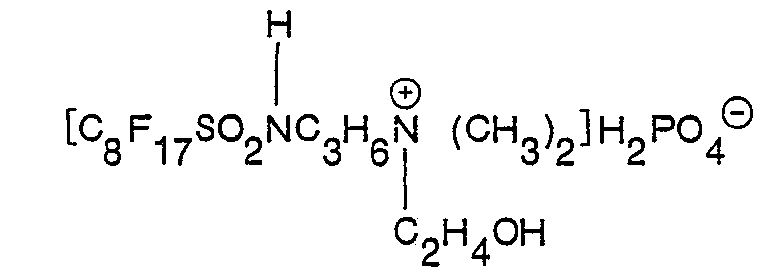
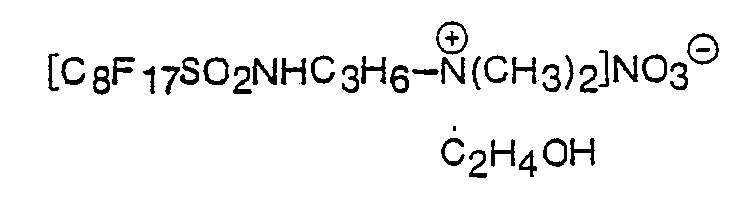
- Typically the quaternary nitrogen moieties are associated with an anionic moiety. Representative examples of such anionic moieties are -H2P04° and ―NO3⊖. Still other anionic moieties are also useful as will be understood by those skilled in the art.
- X groups useful in the fluorochemical materials do not interfere with the ability of the Y group to form complex structures with calcium.
- In the formula (Rf)mQYZ, Q is a polyvalent (i.e. at least divalent) linking group through which Rf and Y are bonded together. As described above, the Q group is selected from polyvalent aliphatic; polyvalent aromatic, oxy, thio, carbonyl, sulfone, sulfoxy, imino, and combinations thereof such as oxyalkylene, iminoalkylene, iminoarylene, sulfonamideo, carbonamido, sulfonamidoalkylene, carbonamidoalkylene, urethane, etc.
- Representative examples of polyvalent aliphatic Q groups include ―CH2―CH2― and ―CH2C(CH2O)2―. Representative examples of polyvalent aromatic Q groups include

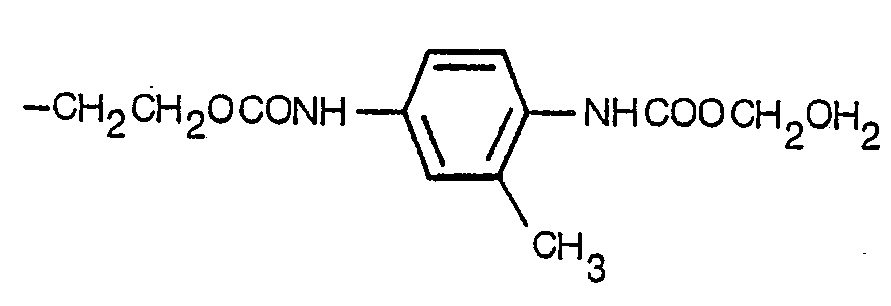
- Specific examples of fluorochemical materials which conform to the formulae described previously are set forth in Table 1. The specific formula and the portion of each material attributable to each element of the generic formula are given.


- Other ingredients may also be added to the compositions of the present invention. Thus, for example, prophylactic agents, polishing agents, surfactants, flavoring and sweetening agents, thickening agents and humectants may be included using techniques which are known to the art.
- Such other ingredients must be substantially free of polyvalent metal (e.g. calcium, magnesium, etc.). The presence of such metals in these ingredients prevents the compositions of the invention from exhibiting the desired control over cariogenic bacteria and plaque formation. While the reason for this is not fully understood, it is believed that these metals interact with the fluorochemical materials before application of the composition to teeth thereby preventing them from interacting with the calcium of the teeth. Thus while these ingredients may contain a minor amount of polyvalent metal, the total amount of such ions present must not prevent the fluorochemical materials from interacting with the teeth. Preferably these other ingredients are completely free from any polyvalent metal.
- Representative prophylactic agents include supplemental caries-preventing materials such as sodium fluoride, stannous fluoride, potassium flouride, hexylamine hydrofluoride, myristylamine hydrofluoride, betaine fluoride, glycine potassium flouride, etc. A particularly preferred fluoride is sodium fluoride. Typically the prophylactic agents are present in sufficient concentration so as to provide an available fluoride ion concentration of up to about 2% by weight, and preferably in the range of about 0.5-2% by weight, of the dentifrice composition.
- Suitable polishing agents include, for example, water-impervious crosslinked thermosetting resins such as the condensation products of melamine and urea with formaldehyde. Other suitable polishing agents will be obvious to those skilled in the art as a result of this disclosure. Preferably the polishing agent is not so abrasive so as to scratch or unduly abrade the surface of the dentin. Rather it only cleans the tooth surface. The polishing agents may comprise up to 95% by weight of the dentifrice composition.
- Surfactants may also be employed in compositions of the invention. Suitable surfactants include, for example, detergent materials and are preferably nonionic. Representative examples of useful surfactants include lauric monoethanolamide, lauric-myristic monoethanolamide, ricinoleic alkanolamides, fatty acid alkanolamides (e.g., coconut diethanolamide), lauryl dimethyl amine oxide, glycerol monolaurate, glycerol monostearate, pentaerythritol monooleate, sorbitan monooleate, ethoxylated castor oil, nonyl phenol ethoxolate, etc. The surfactants typically comprise up to about 5% by weight of the dentifrice composition.
- Suitable flavoring and sweetening agents which may be employed in compositions of the invention include, for example, the oils of wintergreen, peppermint, spearmint, sassafras and anise. Additionally small amounts of sweetening agents such as saccharin, dextrose, levulose, etc. may also be added to such compositions. These flavoring and sweetening agents may comprise up to about 5% by weight of the dentifrice composition.
- Suitable gelling or thickening agents which may be employed in compositions of the present invention include, for example, natural gums such as gum karaya, gum arabic and gum tragacanth; and finely divided silica. Such thickening agents may comprise up to about 5% by weight of the dentifrice composition.
- Suitable humectants which may be employed in compositions of the invention include glycerine, sorbitol, and other polyhydric alcohols. The humectants may comprise up to about 35% by weight of the dentifrice composition.
- The effectiveness of the present invention in inhibiting the growth of plaque was demonstrated by both in vitro and in vivo tests. These tests are described more fully in the following examples.
- In vitro tests were performed on plaque-free bovine teeth. The teeth were dipped into a composition of the invention for 30 minutes and then air dried for 30 minutes. Untreated teeth were used as controls. The treated and untreated teeth were then suspended in tubes of a test media comprising 18 milliliters of actinomyces groth, 2 milliliters of a 20% aqueous sucrose solution and 0.2 milliliters of a 24 hour viable culture of Streptococcus mutans. The teeth and test tubes were incubated at 37°C. for 24 hours, after which the teeth were transferred to new test tubes of fresh test media and again incubated at 37°C. for 24 hours. The procedure was repeated for three days or until attachment of plaque to the control teeth was noted.
- The compositions used to treat the teeth comprised 1% by weight fluorochemical and 99% by weight deionized water. Compositions containing the following fluorochemicals, each of which had a formation constant in the range of about 0.5 to 8, were found to prevent the formation of plaque in this test:




- /n vivo tests were performed on Rhesus Monkeys. Each monkey received a complete dental prophylaxis wherein their teeth were ultrasonically cleaned and then polished using a soft rubber prophylaxis cup and standard pumice-filled prophylaxis paste. The test compounds were applied to the upper central and medial incisors of each monkey by brushing about 0.5 cc. of a solution of the fluorochemical material in deionized water and allowing the teeth to air dry for about 30 seconds. Various concentrations of the fluorochemicals were employed in the solutions tested. The lower central and medial incisors of the monkeys served as control teeth. Except for the initial dental prophylaxis, the control teeth received no treatment during the tests. The teeth were observed for up to 14 days to determine the effect of the treatment upon the formation of plaque.
- The monkeys were fed twice a day with a diet which encouraged plaque formation. Each feeding consisted of about 135 grams of Purina R New World Monkey Chow R which has been softened with 200 grams distilled water and to which had been added 118 grams of sugar. The Monkey Chow R is commercially available from Ralston Purina Co. It has a guaranteed analysis of:

- The effectiveness of plaque inhibition in this test was measured by means of a plaque index number. The plaque index was determined by applying Erythrosine B dye (further identified as FD&C Red dye #3, Color Index No. 45430) to the teeth. This dye stains plaque but not tooth enamel. The stained plaque was visually observed and assigned a number using the following scale.
-


Claims (8)




Applications Claiming Priority (2)
| Application Number | Priority Date | Filing Date | Title |
|---|---|---|---|
| US05/865,680 US4170636A (en) | 1977-12-29 | 1977-12-29 | Composition and method for inhibiting plaque formation |
| US865680 | 1977-12-29 |
Publications (3)
| Publication Number | Publication Date |
|---|---|
| EP0009025A1 EP0009025A1 (en) | 1980-03-19 |
| EP0009025A4 EP0009025A4 (en) | 1981-03-24 |
| EP0009025B1 true EP0009025B1 (en) | 1984-07-11 |
Family
ID=25346019
Family Applications (1)
| Application Number | Title | Priority Date | Filing Date |
|---|---|---|---|
| EP79900117A Expired EP0009025B1 (en) | 1977-12-29 | 1979-07-31 | Composition for inhibiting plaque formation |
Country Status (7)
| Country | Link |
|---|---|
| US (1) | US4170636A (en) |
| EP (1) | EP0009025B1 (en) |
| JP (1) | JPS54500063A (en) |
| DE (1) | DE2862429D1 (en) |
| FR (1) | FR2413086A1 (en) |
| IT (1) | IT7852476A0 (en) |
| WO (1) | WO1979000455A1 (en) |
Families Citing this family (12)
| Publication number | Priority date | Publication date | Assignee | Title |
|---|---|---|---|---|
| USRE31787E (en) * | 1979-04-02 | 1985-01-01 | Minnesota Mining And Manufacturing Company | Compositions for reducing elution of therapeutic agents from teeth |
| US4304766A (en) * | 1979-04-02 | 1981-12-08 | Minnesota Mining And Manufacturing Company | Compositions for reducing elution of therapeutic agents from teeth |
| US4366146A (en) * | 1980-08-11 | 1982-12-28 | Minnesota Mining & Manufacturing Co. | Compositions and method for reducing elution of therapeutic agents from teeth |
| US4353892A (en) * | 1981-08-13 | 1982-10-12 | Forsyth Dental Infirmary For Children | Fluoride preparations containing surface-active agents |
| US5174989A (en) * | 1987-11-25 | 1992-12-29 | Shiseido Company Ltd. | Oral composition |
| US4952407A (en) * | 1988-09-12 | 1990-08-28 | Wm. Wrigley Jr. Company | Chewing gum containing glycerol mono laurate |
| US4992260A (en) * | 1989-07-26 | 1991-02-12 | Forsyth Dental Infirmary For Children | Method of inhibiting the formation of plaque |
| US5202359A (en) * | 1990-05-17 | 1993-04-13 | Minnesota Mining And Manufacturing Company | Photoinitiators that are soluble in highly fluorinated monomers |
| US7943567B2 (en) | 2004-01-30 | 2011-05-17 | E.I. Du Pont De Nemours And Company | Production processes and systems, compositions, surfactants, monomer units, metal complexes, phosphate esters, glycols, aqueous film forming foams, and foam stabilizers |
| EP2626077A3 (en) * | 2007-03-19 | 2013-11-20 | Metaproteomics, LLC | Compositions for promoting bone and joint health |
| US8318656B2 (en) | 2007-07-03 | 2012-11-27 | E. I. Du Pont De Nemours And Company | Production processes and systems, compositions, surfactants, monomer units, metal complexes, phosphate esters, glycols, aqueous film forming foams, and foam stabilizers |
| US20130005593A1 (en) * | 2011-03-09 | 2013-01-03 | Teles Flavia R F | RNA-Oligonucleotide Quantification Technique for the Enumeration of Uncultivated Bacterial Species |
Family Cites Families (9)
| Publication number | Priority date | Publication date | Assignee | Title |
|---|---|---|---|---|
| US2567611A (en) * | 1947-01-17 | 1951-09-11 | L S Mcclaren | Porch glider |
| US2567011A (en) * | 1949-01-10 | 1951-09-04 | Minnesota Mining & Mfg | Fluorocarbon acids and derivatives |
| US2759019A (en) * | 1954-08-09 | 1956-08-14 | Minnesota Mining & Mfg | Perfluoro amine compounds and quaternary derivatives |
| US2829086A (en) * | 1954-09-21 | 1958-04-01 | Colgate Palmolive Co | Dental preparations comprising higher aliphatic perfluorinated acid compounds |
| US2809990A (en) * | 1955-12-29 | 1957-10-15 | Minnesota Mining & Mfg | Fluorocarbon acids and derivatives |
| US2955985A (en) * | 1956-06-18 | 1960-10-11 | Bristol Myers Co | Dentifrice compositions |
| US3346612A (en) * | 1964-07-02 | 1967-10-10 | Minnesota Mining & Mfg | Perfluoroalkane sulfonate esters |
| US3584116A (en) * | 1967-12-11 | 1971-06-08 | Procter & Gamble | Oral compositions for calculus retardation |
| US3535421A (en) * | 1968-07-11 | 1970-10-20 | Procter & Gamble | Oral compositions for calculus retardation |
-
1977
- 1977-12-29 US US05/865,680 patent/US4170636A/en not_active Expired - Lifetime
-
1978
- 1978-12-28 WO PCT/US1978/000256 patent/WO1979000455A1/en not_active Ceased
- 1978-12-28 JP JP50030578A patent/JPS54500063A/ja active Pending
- 1978-12-28 FR FR7836647A patent/FR2413086A1/en active Granted
- 1978-12-28 DE DE7979900117T patent/DE2862429D1/en not_active Expired
- 1978-12-28 IT IT7852476A patent/IT7852476A0/en unknown
-
1979
- 1979-07-31 EP EP79900117A patent/EP0009025B1/en not_active Expired
Also Published As
| Publication number | Publication date |
|---|---|
| FR2413086B3 (en) | 1981-09-04 |
| JPS54500063A (en) | 1979-11-15 |
| DE2862429D1 (en) | 1984-08-16 |
| FR2413086A1 (en) | 1979-07-27 |
| WO1979000455A1 (en) | 1979-07-26 |
| US4170636A (en) | 1979-10-09 |
| EP0009025A4 (en) | 1981-03-24 |
| EP0009025A1 (en) | 1980-03-19 |
| IT7852476A0 (en) | 1978-12-28 |
Similar Documents
| Publication | Publication Date | Title |
|---|---|---|
| US4161518A (en) | Compositions and methods for inhibiting plaque formation | |
| EP0297212B1 (en) | Oral compositions | |
| US4325939A (en) | Zinc derivatives and their use in dental compositions | |
| US5286479A (en) | Oral compositions for suppressing mouth odors | |
| US3175951A (en) | Oral compositions for caries prophylaxis | |
| US3671626A (en) | Inhibiting dental plaque | |
| US4170636A (en) | Composition and method for inhibiting plaque formation | |
| EP0518608B1 (en) | Taste preserving, mild oral hygiene compositions | |
| WO1994026243A1 (en) | Oral compositions | |
| US5376360A (en) | Baking soda toothpaste containing soluble pyrophosphate salts | |
| NO165903B (en) | ORAL AND DENTAL CARE. | |
| US4146605A (en) | Aluminum compounds as anti-calculus agents | |
| EP0008480A1 (en) | Sweetened oral compositions, preferably toothpastes or mouthwash compositions | |
| EP0417833B1 (en) | Dentifrice compositions | |
| US4144324A (en) | Oral compositions for calculus retardation | |
| US20200197267A1 (en) | Dentifrice Containing Sodium Bicarbonate and Stannous Fluoride | |
| US5279814A (en) | Oral-hygiene/dentifrice preparations which protect dental enamel | |
| DE2755847C2 (en) | ||
| EP0176249B1 (en) | Stain removal toothpaste | |
| US3544678A (en) | Oral compositions for caries prophylaxis | |
| JPH05320032A (en) | Oral composition | |
| US3937806A (en) | Oral compositions for caries prophylaxis | |
| US3448132A (en) | Stannous hydroxyethylnitrilodiacetate | |
| EP0040938A2 (en) | Prophylactic dental paste comprising dicalcium phosphate and method of using it for cleaning, polishing and remineralizing teeth | |
| EP0020617B1 (en) | Dentifrice |
Legal Events
| Date | Code | Title | Description |
|---|---|---|---|
| PUAI | Public reference made under article 153(3) epc to a published international application that has entered the european phase |
Free format text: ORIGINAL CODE: 0009012 |
|
| AK | Designated contracting states |
Designated state(s): CH DE GB SE |
|
| 17P | Request for examination filed |
Effective date: 19800111 |
|
| GRAA | (expected) grant |
Free format text: ORIGINAL CODE: 0009210 |
|
| AK | Designated contracting states |
Designated state(s): CH DE GB SE |
|
| REF | Corresponds to: |
Ref document number: 2862429 Country of ref document: DE Date of ref document: 19840816 |
|
| PGFP | Annual fee paid to national office [announced via postgrant information from national office to epo] |
Ref country code: CH Payment date: 19841127 Year of fee payment: 7 |
|
| PGFP | Annual fee paid to national office [announced via postgrant information from national office to epo] |
Ref country code: DE Payment date: 19841211 Year of fee payment: 7 |
|
| PGFP | Annual fee paid to national office [announced via postgrant information from national office to epo] |
Ref country code: SE Payment date: 19841231 Year of fee payment: 7 |
|
| PLBE | No opposition filed within time limit |
Free format text: ORIGINAL CODE: 0009261 |
|
| STAA | Information on the status of an ep patent application or granted ep patent |
Free format text: STATUS: NO OPPOSITION FILED WITHIN TIME LIMIT |
|
| 26N | No opposition filed | ||
| PG25 | Lapsed in a contracting state [announced via postgrant information from national office to epo] |
Ref country code: SE Effective date: 19861229 |
|
| PG25 | Lapsed in a contracting state [announced via postgrant information from national office to epo] |
Ref country code: CH Effective date: 19861231 |
|
| GBPC | Gb: european patent ceased through non-payment of renewal fee | ||
| REG | Reference to a national code |
Ref country code: CH Ref legal event code: PL |
|
| PG25 | Lapsed in a contracting state [announced via postgrant information from national office to epo] |
Ref country code: DE Effective date: 19870901 |
|
| PG25 | Lapsed in a contracting state [announced via postgrant information from national office to epo] |
Ref country code: GB Free format text: LAPSE BECAUSE OF NON-PAYMENT OF DUE FEES Effective date: 19881118 |
|
| EUG | Se: european patent has lapsed |
Ref document number: 79900117.7 Effective date: 19870902 |