EP0000641B1 - Electrographic dielectric resin-coated conductive paper and a solution adapted to deposit such a coating - Google Patents
Electrographic dielectric resin-coated conductive paper and a solution adapted to deposit such a coating Download PDFInfo
- Publication number
- EP0000641B1 EP0000641B1 EP19780300164 EP78300164A EP0000641B1 EP 0000641 B1 EP0000641 B1 EP 0000641B1 EP 19780300164 EP19780300164 EP 19780300164 EP 78300164 A EP78300164 A EP 78300164A EP 0000641 B1 EP0000641 B1 EP 0000641B1
- Authority
- EP
- European Patent Office
- Prior art keywords
- resin
- organic solvent
- solution
- alcohol
- weight
- Prior art date
- Legal status (The legal status is an assumption and is not a legal conclusion. Google has not performed a legal analysis and makes no representation as to the accuracy of the status listed.)
- Expired
Links
Classifications
-
- G—PHYSICS
- G03—PHOTOGRAPHY; CINEMATOGRAPHY; ANALOGOUS TECHNIQUES USING WAVES OTHER THAN OPTICAL WAVES; ELECTROGRAPHY; HOLOGRAPHY
- G03G—ELECTROGRAPHY; ELECTROPHOTOGRAPHY; MAGNETOGRAPHY
- G03G5/00—Recording-members for original recording by exposure, e.g. to light, to heat or to electrons; Manufacture thereof; Selection of materials therefor
- G03G5/02—Charge-receiving layers
- G03G5/0202—Dielectric layers for electrography
- G03G5/0205—Macromolecular components
- G03G5/0208—Macromolecular components obtained by reactions only involving carbon-to-carbon unsatured bonds
-
- G—PHYSICS
- G03—PHOTOGRAPHY; CINEMATOGRAPHY; ANALOGOUS TECHNIQUES USING WAVES OTHER THAN OPTICAL WAVES; ELECTROGRAPHY; HOLOGRAPHY
- G03G—ELECTROGRAPHY; ELECTROPHOTOGRAPHY; MAGNETOGRAPHY
- G03G5/00—Recording-members for original recording by exposure, e.g. to light, to heat or to electrons; Manufacture thereof; Selection of materials therefor
- G03G5/02—Charge-receiving layers
- G03G5/0202—Dielectric layers for electrography
- G03G5/0217—Inorganic components
-
- Y—GENERAL TAGGING OF NEW TECHNOLOGICAL DEVELOPMENTS; GENERAL TAGGING OF CROSS-SECTIONAL TECHNOLOGIES SPANNING OVER SEVERAL SECTIONS OF THE IPC; TECHNICAL SUBJECTS COVERED BY FORMER USPC CROSS-REFERENCE ART COLLECTIONS [XRACs] AND DIGESTS
- Y10—TECHNICAL SUBJECTS COVERED BY FORMER USPC
- Y10T—TECHNICAL SUBJECTS COVERED BY FORMER US CLASSIFICATION
- Y10T428/00—Stock material or miscellaneous articles
- Y10T428/25—Web or sheet containing structurally defined element or component and including a second component containing structurally defined particles
- Y10T428/258—Alkali metal or alkaline earth metal or compound thereof
-
- Y—GENERAL TAGGING OF NEW TECHNOLOGICAL DEVELOPMENTS; GENERAL TAGGING OF CROSS-SECTIONAL TECHNOLOGIES SPANNING OVER SEVERAL SECTIONS OF THE IPC; TECHNICAL SUBJECTS COVERED BY FORMER USPC CROSS-REFERENCE ART COLLECTIONS [XRACs] AND DIGESTS
- Y10—TECHNICAL SUBJECTS COVERED BY FORMER USPC
- Y10T—TECHNICAL SUBJECTS COVERED BY FORMER US CLASSIFICATION
- Y10T428/00—Stock material or miscellaneous articles
- Y10T428/31504—Composite [nonstructural laminate]
- Y10T428/31786—Of polyester [e.g., alkyd, etc.]
- Y10T428/3179—Next to cellulosic
-
- Y—GENERAL TAGGING OF NEW TECHNOLOGICAL DEVELOPMENTS; GENERAL TAGGING OF CROSS-SECTIONAL TECHNOLOGIES SPANNING OVER SEVERAL SECTIONS OF THE IPC; TECHNICAL SUBJECTS COVERED BY FORMER USPC CROSS-REFERENCE ART COLLECTIONS [XRACs] AND DIGESTS
- Y10—TECHNICAL SUBJECTS COVERED BY FORMER USPC
- Y10T—TECHNICAL SUBJECTS COVERED BY FORMER US CLASSIFICATION
- Y10T428/00—Stock material or miscellaneous articles
- Y10T428/31504—Composite [nonstructural laminate]
- Y10T428/31855—Of addition polymer from unsaturated monomers
- Y10T428/3188—Next to cellulosic
- Y10T428/31895—Paper or wood
-
- Y—GENERAL TAGGING OF NEW TECHNOLOGICAL DEVELOPMENTS; GENERAL TAGGING OF CROSS-SECTIONAL TECHNOLOGIES SPANNING OVER SEVERAL SECTIONS OF THE IPC; TECHNICAL SUBJECTS COVERED BY FORMER USPC CROSS-REFERENCE ART COLLECTIONS [XRACs] AND DIGESTS
- Y10—TECHNICAL SUBJECTS COVERED BY FORMER USPC
- Y10T—TECHNICAL SUBJECTS COVERED BY FORMER US CLASSIFICATION
- Y10T428/00—Stock material or miscellaneous articles
- Y10T428/31504—Composite [nonstructural laminate]
- Y10T428/31855—Of addition polymer from unsaturated monomers
- Y10T428/3188—Next to cellulosic
- Y10T428/31895—Paper or wood
- Y10T428/31899—Addition polymer of hydrocarbon[s] only
- Y10T428/31902—Monoethylenically unsaturated
-
- Y—GENERAL TAGGING OF NEW TECHNOLOGICAL DEVELOPMENTS; GENERAL TAGGING OF CROSS-SECTIONAL TECHNOLOGIES SPANNING OVER SEVERAL SECTIONS OF THE IPC; TECHNICAL SUBJECTS COVERED BY FORMER USPC CROSS-REFERENCE ART COLLECTIONS [XRACs] AND DIGESTS
- Y10—TECHNICAL SUBJECTS COVERED BY FORMER USPC
- Y10T—TECHNICAL SUBJECTS COVERED BY FORMER US CLASSIFICATION
- Y10T428/00—Stock material or miscellaneous articles
- Y10T428/31504—Composite [nonstructural laminate]
- Y10T428/31971—Of carbohydrate
- Y10T428/31989—Of wood
Definitions
- the present invention relates to improving the charge acceptance of electrographic dielectric resins for coating conductive paper.
- Electrographic dielectric resins are useful for coatings on conductive paper, which may for example be used in electrographic copying processes where they accept and hold an electrostatic charge image which is deposited upon them in any desired fashion. The greater the charge, the larger the amount of toner particles which are attracted and held, and the greater the print density which is obtained.
- the present invention enables the charge accepting capacity of insulating carboxyl-functional resins, especially but not exclusively acrylic acid copolymers, to be increased.
- conductive paper coated with an electrographic dielectric coating having improved charge accepting capacity comprises a coating of organic solvent-soluble thermoplastic insulating resin having carboxyl functionality providing an acid value of from 5 to 100, and is characterised by calcium oxide or calcium hydroxide being dispersed in the coating in an amount of from 0.05% to 3% of the weight of the resin.
- an organic solvent solution for depositing such a dielectric coating in which the resin is dissolved in the organic solvent and characterised in that the calcium oxide or calcium hydroxide is dispersed in the resin solution in an amount of from 0.05% to 3% of the weight of the resin.
- Monovalent hydroxides such as sodium or lithium hydroxides, tend to make the resin coatings more conductive, and thus lower the charge acceptance of the unmodified coating.
- Polyvalent hydroxides and oxides other than calcium tend to cause the carboxyl-functional resin to precipitate from solution which is undesirable, and the increase in charge acceptance is only moderate.
- Calcium oxide and calcium hydroxide provide a large increase in charge acceptance, and undesirable precipitation is minimized. This minimal precipitation is observable as an opalescence in the solution, and this opalescence is minimized when an alcohol is present to improve the clarity of the calcium-containing resin solution.
- the calcium oxide or hydroxide is preferably used in an amount of from 0.1% to 2% of the carboxyl-functional resin.
- the carboxyl-functional resin may be constituted by any organic solvent-soluble thermoplastic resin which contains the carboxyl functionality which is needed.
- the resin may optionally contain hydroxyl functionality as the only other functionality.
- the carboxyl functionality is preferably in the acid value range from 10 to 80, most preferably from 20 to 50. Hydroxyl functional monomers which may be present are illustrated by hydroxy ethyl methacrylate.
- polyester resins are useful such as a polyester formed by the esterification of 55 mol percent of phthalic anhydride with 45 mol percent of 1,4-butane diol
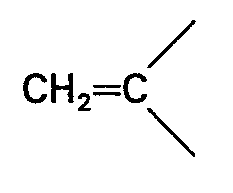
- the preferred resins are copolymers of mono-ethylenically unsaturated monomers containing at least 85% of monomers in which the group is the sole reactive group, preferably at least 90%. These are illustrated by C,-C a alkyl esters of acrylic or methacrylic acid; such as methyl methacrylate or ethyl acrylate, styrene, vinyl toluene, vinyl acetate, vinyl chloride and acrylonitrile. The nitrile group in acrylonitrile does not react under normal conditions of polymerisation and baking.
- the monomers preferably contain only carbon, hydrogen and oxygen.
- the copolymers preferably additionally include from 0.5% to 10%, more preferably from 1.0% to 8%, of monoethylenic carboxylic acid, illustrated by acrylic acid, methacrylic acid, crotonic acid, maleic acid and itaconic acid having carboxyl functionality providing an acid value of from 20-50.
- An alcohol, and particularly a monohydric alcohol or an ether alcohol, containing up to 6 carbon atoms, is desirably additionally present in the solvent solution in an amount of from 5% to 100% of the weight of the copolymer, to minimise the opalescence introduced by the calcium oxide or hydroxide.
- the resins are used in organic solvent solution which may be modified to include mineral fillers (pigments) such as clay or lithopone (barium sulphate-zinc sulphide commercial mixture). Calcium carbonate, aluminium silicate, titanium dioxide and the like are also useful mineral fillers.
- the mineral filler provides the desired aesthetic appearance and a rough surface, and is normally used in a filler to binder ratio of from 1:1 to 4:1.
- Ethyl alcohol, propyl alcohol, butyl alcohol and 2-ethoxy ethanol will illustrate the useful alcohols which may be present in the solvent solution. Ethyl alcohol is preferred.
- Alcohol in amounts of at least 3% of the weight of the resin provide the desired clarity. Larger amounts of alcohol up to 100% of the weight of the resin may be used, preferably from 5% to 30%.
- the calcium oxide or hydroxide is used as a finely divided powder, preferably 128 meshes per cm (325 mesh) or finer, and it is dispersed uniformly in the resin solution using simple mixing, or high speed mixing where desired. Calcium hydroxide is preferred.
- the calcium oxide or hydroxide containing resin solution is itself an article of commerce, and it is usually mixed with the mineral fillers prior to use.
- the coatings are normally deposited upon a conductive paper and dried, preferably with a coating weight between 2.3 and 3.2 kilograms of dried coating per ream (306.6 m 2 of paper).
- a three-litre flask, equipped with an agitator, a condenser, a heating mantle, a nitrogen blanket, a thermometer and a dropping funnel was charged with 330 grams of xylene and xylene was heated to 125°C.
- the calcium hydroxide containing copolymer solution is pigmented to a pigment to binder ratio of 2.5:1 using an 11:4 weight ratio mixture of lithopone and treated clay (Translink 37 - Freeport Kaolin Company, New York, N.Y., U.S.A.).
- the clay can be omitted or untreated clay can be used in its place.
- This pigmented solution is applied to conductive paper using a No. 12 wire wound rod to deposit between 2.3 and 3.2 kg dry coating weight per ream of paper and the coating is dried.
- the presence of the calcium hydroxide increased the voltage which can be retained on the coated paper.
Landscapes
- Physics & Mathematics (AREA)
- Chemical & Material Sciences (AREA)
- General Physics & Mathematics (AREA)
- Chemical Kinetics & Catalysis (AREA)
- Spectroscopy & Molecular Physics (AREA)
- Inorganic Chemistry (AREA)
- Paper (AREA)
- Paints Or Removers (AREA)
- Photoreceptors In Electrophotography (AREA)
- Compositions Of Macromolecular Compounds (AREA)
Description
- The present invention relates to improving the charge acceptance of electrographic dielectric resins for coating conductive paper.
- Electrographic dielectric resins are useful for coatings on conductive paper, which may for example be used in electrographic copying processes where they accept and hold an electrostatic charge image which is deposited upon them in any desired fashion. The greater the charge, the larger the amount of toner particles which are attracted and held, and the greater the print density which is obtained.
- It is known to add a variety of pigments to electrostatic recording materials (cf FR 2251039 page 4 lines 30-38 and US 3944705 Col 4 lines 48-68). It is suggested in DE 2454047 that the addition of calcium carbonate does not reduce the charge acceptance of the recording material as other pigments do (cf page 9 and Table 2 on page 14). In Chemical Abstracts Vol 80, No. 126813 it is stated that the addition of a mixture of calcium oxide and silica to an organic solution of an insulating resin improves the moisture resistance, and thus charge acceptance, of the electrostatic recording material produced from the solution when coated on a conductive support.
- The present invention enables the charge accepting capacity of insulating carboxyl-functional resins, especially but not exclusively acrylic acid copolymers, to be increased.
- According to one aspect of the invention conductive paper coated with an electrographic dielectric coating having improved charge accepting capacity comprises a coating of organic solvent-soluble thermoplastic insulating resin having carboxyl functionality providing an acid value of from 5 to 100, and is characterised by calcium oxide or calcium hydroxide being dispersed in the coating in an amount of from 0.05% to 3% of the weight of the resin.
- According to another aspect of the invention there is provided an organic solvent solution for depositing such a dielectric coating in which the resin is dissolved in the organic solvent and characterised in that the calcium oxide or calcium hydroxide is dispersed in the resin solution in an amount of from 0.05% to 3% of the weight of the resin.
- Monovalent hydroxides, such as sodium or lithium hydroxides, tend to make the resin coatings more conductive, and thus lower the charge acceptance of the unmodified coating. Polyvalent hydroxides and oxides other than calcium tend to cause the carboxyl-functional resin to precipitate from solution which is undesirable, and the increase in charge acceptance is only moderate. Calcium oxide and calcium hydroxide, on the other hand, provide a large increase in charge acceptance, and undesirable precipitation is minimized. This minimal precipitation is observable as an opalescence in the solution, and this opalescence is minimized when an alcohol is present to improve the clarity of the calcium-containing resin solution.
- The calcium oxide or hydroxide is preferably used in an amount of from 0.1% to 2% of the carboxyl-functional resin.
- The carboxyl-functional resin may be constituted by any organic solvent-soluble thermoplastic resin which contains the carboxyl functionality which is needed. In addition, to carboxyl functionality, the resin may optionally contain hydroxyl functionality as the only other functionality. The carboxyl functionality is preferably in the acid value range from 10 to 80, most preferably from 20 to 50. Hydroxyl functional monomers which may be present are illustrated by hydroxy ethyl methacrylate.
- While polyester resins are useful such as a polyester formed by the esterification of 55 mol percent of phthalic anhydride with 45 mol percent of 1,4-butane diol, the preferred resins are copolymers of mono-ethylenically unsaturated monomers containing at least 85% of monomers in which the

- The copolymers preferably additionally include from 0.5% to 10%, more preferably from 1.0% to 8%, of monoethylenic carboxylic acid, illustrated by acrylic acid, methacrylic acid, crotonic acid, maleic acid and itaconic acid having carboxyl functionality providing an acid value of from 20-50. An alcohol, and particularly a monohydric alcohol or an ether alcohol, containing up to 6 carbon atoms, is desirably additionally present in the solvent solution in an amount of from 5% to 100% of the weight of the copolymer, to minimise the opalescence introduced by the calcium oxide or hydroxide.
- The resins are used in organic solvent solution which may be modified to include mineral fillers (pigments) such as clay or lithopone (barium sulphate-zinc sulphide commercial mixture). Calcium carbonate, aluminium silicate, titanium dioxide and the like are also useful mineral fillers. The mineral filler provides the desired aesthetic appearance and a rough surface, and is normally used in a filler to binder ratio of from 1:1 to 4:1. Ethyl alcohol, propyl alcohol, butyl alcohol and 2-ethoxy ethanol will illustrate the useful alcohols which may be present in the solvent solution. Ethyl alcohol is preferred. Alcohol in amounts of at least 3% of the weight of the resin provide the desired clarity. Larger amounts of alcohol up to 100% of the weight of the resin may be used, preferably from 5% to 30%.
- The calcium oxide or hydroxide is used as a finely divided powder, preferably 128 meshes per cm (325 mesh) or finer, and it is dispersed uniformly in the resin solution using simple mixing, or high speed mixing where desired. Calcium hydroxide is preferred.
- The calcium oxide or hydroxide containing resin solution is itself an article of commerce, and it is usually mixed with the mineral fillers prior to use. As will be appreciated, the coatings are normally deposited upon a conductive paper and dried, preferably with a coating weight between 2.3 and 3.2 kilograms of dried coating per ream (306.6 m2 of paper).
- Other resins in an amount up to 50% of the weight of the carboxyl functional resin may be used for special purposes. Thus, a low molecular weight homopolymer of alpha-methyl styrene provides curl resistance to the final coated paper.
- The invention is illustrated in the following example.
- A three-litre flask, equipped with an agitator, a condenser, a heating mantle, a nitrogen blanket, a thermometer and a dropping funnel was charged with 330 grams of xylene and xylene was heated to 125°C.
- Then a mixture of 495 grams of styrene, 485 grams of ethyl acrylate, 20 grams of acrylic acid, 4.0 grams of benzoyl peroxide and 8.0 grams of tertiary butyl perbenzoate was gradually added over a 2.5 hour period to the flask. This reaction mixture was held for an additional 4 hours at the temperature of 125°C, and then the product was diluted with toluene to 60% nonvolatile solids, cooled and packaged.
- Place 3000 grams of the above copolymer preparation as 50.0% solids (diluted with toluene) in a container and add:
- 150.0 grams of a homopolymer of alpha-methyl styrene of low molecular weight. The product 276-V-2 of Dow Chemical Co., U.S.A., may be used.
- 150.0 grams of ethyl alcohol
- 376.7 grams of toluene
- 4.5 grams of calcium hydroxide, fine powder, technical grade sold by Sargent Welch, U.S.A., as catalog item number S.C. 11222 (100% passes through a 128 meshes per cm (325 mesh) screen).
- Stir the mixture at a sufficient speed and time for an even distribution. Simple mixing is sufficient, but a high speed mixer can be used.
- The calcium hydroxide containing copolymer solution is pigmented to a pigment to binder ratio of 2.5:1 using an 11:4 weight ratio mixture of lithopone and treated clay (Translink 37 - Freeport Kaolin Company, New York, N.Y., U.S.A.). The clay can be omitted or untreated clay can be used in its place. This pigmented solution is applied to conductive paper using a No. 12 wire wound rod to deposit between 2.3 and 3.2 kg dry coating weight per ream of paper and the coating is dried. The presence of the calcium hydroxide increased the voltage which can be retained on the coated paper.
Claims (11)

Applications Claiming Priority (2)
| Application Number | Priority Date | Filing Date | Title |
|---|---|---|---|
| US819849 | 1977-07-28 | ||
| US05/819,849 US4145478A (en) | 1977-07-28 | 1977-07-28 | Calcium oxide or hydroxide to improve the charge acceptance of electrographic dielectric resins |
Publications (2)
| Publication Number | Publication Date |
|---|---|
| EP0000641A1 EP0000641A1 (en) | 1979-02-07 |
| EP0000641B1 true EP0000641B1 (en) | 1981-10-21 |
Family
ID=25229248
Family Applications (1)
| Application Number | Title | Priority Date | Filing Date |
|---|---|---|---|
| EP19780300164 Expired EP0000641B1 (en) | 1977-07-28 | 1978-07-19 | Electrographic dielectric resin-coated conductive paper and a solution adapted to deposit such a coating |
Country Status (6)
| Country | Link |
|---|---|
| US (1) | US4145478A (en) |
| EP (1) | EP0000641B1 (en) |
| JP (1) | JPS5425827A (en) |
| CA (1) | CA1111635A (en) |
| DE (1) | DE2861191D1 (en) |
| IT (1) | IT1106101B (en) |
Families Citing this family (3)
| Publication number | Priority date | Publication date | Assignee | Title |
|---|---|---|---|---|
| US4215173A (en) * | 1978-08-07 | 1980-07-29 | Pacer Technology And Resources | Bonded joints and method and material for forming same |
| US4259425A (en) * | 1979-05-11 | 1981-03-31 | Monsanto Company | Electrographic recording material |
| US4447574A (en) * | 1982-06-29 | 1984-05-08 | Standard Oil Company (Indiana) | Injection moldable amide-imide polymers containing calcium moieties |
Family Cites Families (13)
| Publication number | Priority date | Publication date | Assignee | Title |
|---|---|---|---|---|
| DE1175985B (en) * | 1959-11-05 | 1964-08-13 | Agfa Ag | Process for making electro-photographic images |
| US3472687A (en) * | 1965-03-24 | 1969-10-14 | Denki Onkyo Co Ltd | Transparent electrostatic recording medium |
| US3985666A (en) * | 1971-04-13 | 1976-10-12 | Xerox Corporation | Plastic materials mixed with polar group containing materials |
| US3924050A (en) * | 1971-08-19 | 1975-12-02 | Dow Chemical Co | Dielectric layer composition |
| BE793072A (en) * | 1971-12-20 | 1973-06-20 | Wiggins Teape Res Dev | PAPER FOR FORMING IMAGES BY PATH |
| JPS5137777B2 (en) * | 1972-02-21 | 1976-10-18 | ||
| GB1422336A (en) * | 1972-04-13 | 1976-01-28 | ||
| US3991253A (en) * | 1973-03-08 | 1976-11-09 | Monsanto Company | Dielectric recording media |
| US3950594A (en) * | 1973-05-31 | 1976-04-13 | The Dow Chemical Company | Dielectric coating composition |
| US3944705A (en) * | 1973-07-26 | 1976-03-16 | Kanzaki Paper Manufacturing Company, Ltd. | Electrostatic recording material and manufacture thereof |
| NL7414576A (en) * | 1973-11-14 | 1975-05-16 | Dow Chemical Co | LATEX COATED ELECTROSTATIC SHEET. |
| JPS5080133A (en) * | 1973-11-14 | 1975-06-30 | ||
| NL7505134A (en) * | 1975-05-01 | 1976-11-03 | Philips Nv | METHOD FOR MANUFACTURING A SEMI-CONDUCTOR DEVICE. |
-
1977
- 1977-07-28 US US05/819,849 patent/US4145478A/en not_active Expired - Lifetime
-
1978
- 1978-07-10 CA CA307,084A patent/CA1111635A/en not_active Expired
- 1978-07-19 EP EP19780300164 patent/EP0000641B1/en not_active Expired
- 1978-07-19 DE DE7878300164T patent/DE2861191D1/en not_active Expired
- 1978-07-20 IT IT5040078A patent/IT1106101B/en active
- 1978-07-27 JP JP9100378A patent/JPS5425827A/en active Pending
Also Published As
| Publication number | Publication date |
|---|---|
| JPS5425827A (en) | 1979-02-27 |
| US4145478A (en) | 1979-03-20 |
| EP0000641A1 (en) | 1979-02-07 |
| IT7850400A0 (en) | 1978-07-20 |
| CA1111635A (en) | 1981-11-03 |
| IT1106101B (en) | 1985-11-11 |
| DE2861191D1 (en) | 1981-12-24 |
Similar Documents
| Publication | Publication Date | Title |
|---|---|---|
| TW515821B (en) | Fluidized polymer suspension of hydrophobically modified poly(acetal- or ketal-polyether), polyurethane and polyacrylate | |
| US3956562A (en) | Electrostatic recording material | |
| US3510338A (en) | Method of electrostatic printing | |
| DE69804145T2 (en) | Conductive polymers | |
| DE2425925B2 (en) | Electrostatic recording material and process for its manufacture | |
| US3991253A (en) | Dielectric recording media | |
| JPS5825387B2 (en) | Diphenol Rakakiyozai Ofcum Funtai Soso Saibutsu | |
| US4145478A (en) | Calcium oxide or hydroxide to improve the charge acceptance of electrographic dielectric resins | |
| US3951882A (en) | Dielectric coating compositions | |
| US4204971A (en) | Calcium oxide or hydroxide to improve the charge acceptance of electrographic dielectric resins | |
| US4444847A (en) | Electrostatic record material | |
| US3563736A (en) | Photoconductive coatings | |
| US4870118A (en) | Powdery copolymers of vinyl ester-ethylene | |
| US3258441A (en) | Soil and slip resistant coating compositions | |
| JPH10147742A (en) | Low gloss coating composition | |
| US4588649A (en) | Aqueous dielectric coatings based on copolymers of high acid content | |
| US4400441A (en) | Electrographic coating containing aqueous emulsion copolymerized acrylamide copolymers | |
| US4448807A (en) | Preparation of an electrographic recording material | |
| EP0106031B1 (en) | Thermosetting vinyl acetate coatings | |
| US3799911A (en) | Binder for electrophotographic coatings | |
| EP0034895B1 (en) | Electrically conductive substrate with insulating coating and coating for same | |
| US5262474A (en) | Aqueous dielectric coating compositions and method of producing coatings | |
| US3924050A (en) | Dielectric layer composition | |
| US3950594A (en) | Dielectric coating composition | |
| US4394479A (en) | Vinyl acetate interpolymer latices |
Legal Events
| Date | Code | Title | Description |
|---|---|---|---|
| PUAI | Public reference made under article 153(3) epc to a published international application that has entered the european phase |
Free format text: ORIGINAL CODE: 0009012 |
|
| AK | Designated contracting states |
Designated state(s): BE CH DE FR GB NL |
|
| 17P | Request for examination filed | ||
| GRAA | (expected) grant |
Free format text: ORIGINAL CODE: 0009210 |
|
| AK | Designated contracting states |
Designated state(s): BE CH DE FR GB NL |
|
| REF | Corresponds to: |
Ref document number: 2861191 Country of ref document: DE Date of ref document: 19811224 |
|
| PGFP | Annual fee paid to national office [announced via postgrant information from national office to epo] |
Ref country code: FR Payment date: 19820715 Year of fee payment: 5 |
|
| PGFP | Annual fee paid to national office [announced via postgrant information from national office to epo] |
Ref country code: NL Payment date: 19820731 Year of fee payment: 5 |
|
| PGFP | Annual fee paid to national office [announced via postgrant information from national office to epo] |
Ref country code: DE Payment date: 19820930 Year of fee payment: 5 Ref country code: CH Payment date: 19820930 Year of fee payment: 5 Ref country code: BE Payment date: 19820930 Year of fee payment: 5 |
|
| PG25 | Lapsed in a contracting state [announced via postgrant information from national office to epo] |
Ref country code: BE Effective date: 19830719 |
|
| PG25 | Lapsed in a contracting state [announced via postgrant information from national office to epo] |
Ref country code: CH Effective date: 19830731 |
|
| PG25 | Lapsed in a contracting state [announced via postgrant information from national office to epo] |
Ref country code: NL Effective date: 19840201 |
|
| GBPC | Gb: european patent ceased through non-payment of renewal fee | ||
| NLV4 | Nl: lapsed or anulled due to non-payment of the annual fee | ||
| PG25 | Lapsed in a contracting state [announced via postgrant information from national office to epo] |
Ref country code: FR Free format text: LAPSE BECAUSE OF NON-PAYMENT OF DUE FEES Effective date: 19840330 |
|
| REG | Reference to a national code |
Ref country code: CH Ref legal event code: PL |
|
| PG25 | Lapsed in a contracting state [announced via postgrant information from national office to epo] |
Ref country code: DE Effective date: 19840403 |
|
| REG | Reference to a national code |
Ref country code: FR Ref legal event code: ST |
|
| PG25 | Lapsed in a contracting state [announced via postgrant information from national office to epo] |
Ref country code: GB Effective date: 19881117 |
|
| PLBE | No opposition filed within time limit |
Free format text: ORIGINAL CODE: 0009261 |
|
| STAA | Information on the status of an ep patent application or granted ep patent |
Free format text: STATUS: NO OPPOSITION FILED WITHIN TIME LIMIT |