EP0000615B1 - Beta-lactam compounds, preparation and use in pharmaceutical compositions and as chemical intermediates - Google Patents
Beta-lactam compounds, preparation and use in pharmaceutical compositions and as chemical intermediates Download PDFInfo
- Publication number
- EP0000615B1 EP0000615B1 EP78300054A EP78300054A EP0000615B1 EP 0000615 B1 EP0000615 B1 EP 0000615B1 EP 78300054 A EP78300054 A EP 78300054A EP 78300054 A EP78300054 A EP 78300054A EP 0000615 B1 EP0000615 B1 EP 0000615B1
- Authority
- EP
- European Patent Office
- Prior art keywords
- compound
- formula
- preparation
- isomer
- solution
- Prior art date
- Legal status (The legal status is an assumption and is not a legal conclusion. Google has not performed a legal analysis and makes no representation as to the accuracy of the status listed.)
- Expired
Links
- 238000002360 preparation method Methods 0.000 title claims description 9
- -1 Beta-lactam compounds Chemical class 0.000 title claims description 5
- 239000008194 pharmaceutical composition Substances 0.000 title claims description 4
- 239000000126 substance Substances 0.000 title claims description 4
- 239000000543 intermediate Substances 0.000 title description 5
- 150000001875 compounds Chemical class 0.000 claims description 77
- 239000000203 mixture Substances 0.000 claims description 26
- RTZKZFJDLAIYFH-UHFFFAOYSA-N Diethyl ether Chemical compound CCOCC RTZKZFJDLAIYFH-UHFFFAOYSA-N 0.000 claims description 18
- 238000000034 method Methods 0.000 claims description 13
- 238000006243 chemical reaction Methods 0.000 claims description 10
- HZZVJAQRINQKSD-UHFFFAOYSA-N Clavulanic acid Natural products OC(=O)C1C(=CCO)OC2CC(=O)N21 HZZVJAQRINQKSD-UHFFFAOYSA-N 0.000 claims description 9
- HZZVJAQRINQKSD-PBFISZAISA-N clavulanic acid Chemical compound OC(=O)[C@H]1C(=C/CO)/O[C@@H]2CC(=O)N21 HZZVJAQRINQKSD-PBFISZAISA-N 0.000 claims description 9
- 229960003324 clavulanic acid Drugs 0.000 claims description 9
- KDLHZDBZIXYQEI-UHFFFAOYSA-N Palladium Chemical compound [Pd] KDLHZDBZIXYQEI-UHFFFAOYSA-N 0.000 claims description 8
- 239000003054 catalyst Substances 0.000 claims description 6
- 239000003960 organic solvent Substances 0.000 claims description 6
- 125000001797 benzyl group Chemical group [H]C1=C([H])C([H])=C(C([H])=C1[H])C([H])([H])* 0.000 claims description 5
- 238000007259 addition reaction Methods 0.000 claims description 4
- 125000000217 alkyl group Chemical group 0.000 claims description 4
- 125000004432 carbon atom Chemical group C* 0.000 claims description 4
- 125000001495 ethyl group Chemical group [H]C([H])([H])C([H])([H])* 0.000 claims description 4
- 125000001997 phenyl group Chemical group [H]C1=C([H])C([H])=C(*)C([H])=C1[H] 0.000 claims description 4
- 125000002496 methyl group Chemical group [H]C([H])([H])* 0.000 claims description 3
- 150000003839 salts Chemical class 0.000 claims description 3
- 239000003937 drug carrier Substances 0.000 claims description 2
- 125000004108 n-butyl group Chemical group [H]C([H])([H])C([H])([H])C([H])([H])C([H])([H])* 0.000 claims description 2
- 125000004123 n-propyl group Chemical group [H]C([H])([H])C([H])([H])C([H])([H])* 0.000 claims description 2
- 229910052763 palladium Inorganic materials 0.000 claims description 2
- 238000009903 catalytic hydrogenation reaction Methods 0.000 claims 1
- 239000012442 inert solvent Substances 0.000 claims 1
- WYURNTSHIVDZCO-UHFFFAOYSA-N Tetrahydrofuran Chemical compound C1CCOC1 WYURNTSHIVDZCO-UHFFFAOYSA-N 0.000 description 36
- XEKOWRVHYACXOJ-UHFFFAOYSA-N Ethyl acetate Chemical compound CCOC(C)=O XEKOWRVHYACXOJ-UHFFFAOYSA-N 0.000 description 25
- YXFVVABEGXRONW-UHFFFAOYSA-N Toluene Chemical compound CC1=CC=CC=C1 YXFVVABEGXRONW-UHFFFAOYSA-N 0.000 description 21
- YLQBMQCUIZJEEH-UHFFFAOYSA-N tetrahydrofuran Natural products C=1C=COC=1 YLQBMQCUIZJEEH-UHFFFAOYSA-N 0.000 description 18
- 239000000243 solution Substances 0.000 description 16
- 239000002904 solvent Substances 0.000 description 15
- 229910052739 hydrogen Inorganic materials 0.000 description 8
- UHOVQNZJYSORNB-UHFFFAOYSA-N Benzene Chemical compound C1=CC=CC=C1 UHOVQNZJYSORNB-UHFFFAOYSA-N 0.000 description 6
- 229930186147 Cephalosporin Natural products 0.000 description 6
- XTHFKEDIFFGKHM-UHFFFAOYSA-N Dimethoxyethane Chemical compound COCCOC XTHFKEDIFFGKHM-UHFFFAOYSA-N 0.000 description 6
- 229930182555 Penicillin Natural products 0.000 description 6
- HEDRZPFGACZZDS-MICDWDOJSA-N Trichloro(2H)methane Chemical compound [2H]C(Cl)(Cl)Cl HEDRZPFGACZZDS-MICDWDOJSA-N 0.000 description 6
- 230000000844 anti-bacterial effect Effects 0.000 description 6
- 229940124587 cephalosporin Drugs 0.000 description 6
- 150000001780 cephalosporins Chemical class 0.000 description 6
- 239000003208 petroleum Substances 0.000 description 6
- RIOQSEWOXXDEQQ-UHFFFAOYSA-N triphenylphosphine Chemical compound C1=CC=CC=C1P(C=1C=CC=CC=1)C1=CC=CC=C1 RIOQSEWOXXDEQQ-UHFFFAOYSA-N 0.000 description 6
- 108090000204 Dipeptidase 1 Proteins 0.000 description 5
- UFHFLCQGNIYNRP-UHFFFAOYSA-N Hydrogen Chemical compound [H][H] UFHFLCQGNIYNRP-UHFFFAOYSA-N 0.000 description 5
- VYPSYNLAJGMNEJ-UHFFFAOYSA-N Silicium dioxide Chemical compound O=[Si]=O VYPSYNLAJGMNEJ-UHFFFAOYSA-N 0.000 description 5
- 229960000723 ampicillin Drugs 0.000 description 5
- AVKUERGKIZMTKX-NJBDSQKTSA-N ampicillin Chemical compound C1([C@@H](N)C(=O)N[C@H]2[C@H]3SC([C@@H](N3C2=O)C(O)=O)(C)C)=CC=CC=C1 AVKUERGKIZMTKX-NJBDSQKTSA-N 0.000 description 5
- 102000006635 beta-lactamase Human genes 0.000 description 5
- 239000000706 filtrate Substances 0.000 description 5
- 239000001257 hydrogen Substances 0.000 description 5
- 239000000741 silica gel Substances 0.000 description 5
- 229910002027 silica gel Inorganic materials 0.000 description 5
- 150000003952 β-lactams Chemical class 0.000 description 5
- WFDJRNYIAAHLAB-SSDOTTSWSA-N (5r)-3-ethenyl-4-oxa-1-azabicyclo[3.2.0]hept-2-en-7-one Chemical compound O1C(C=C)=CN2C(=O)C[C@H]21 WFDJRNYIAAHLAB-SSDOTTSWSA-N 0.000 description 4
- LFQSCWFLJHTTHZ-UHFFFAOYSA-N Ethanol Chemical compound CCO LFQSCWFLJHTTHZ-UHFFFAOYSA-N 0.000 description 4
- QIGBRXMKCJKVMJ-UHFFFAOYSA-N Hydroquinone Chemical compound OC1=CC=C(O)C=C1 QIGBRXMKCJKVMJ-UHFFFAOYSA-N 0.000 description 4
- JGSARLDLIJGVTE-MBNYWOFBSA-N Penicillin G Chemical compound N([C@H]1[C@H]2SC([C@@H](N2C1=O)C(O)=O)(C)C)C(=O)CC1=CC=CC=C1 JGSARLDLIJGVTE-MBNYWOFBSA-N 0.000 description 4
- 238000001704 evaporation Methods 0.000 description 4
- 230000008020 evaporation Effects 0.000 description 4
- 150000002960 penicillins Chemical class 0.000 description 4
- BRUQAXMCSDCKCL-SSDOTTSWSA-N (5r)-3-ethylidene-4-oxa-1-azabicyclo[3.2.0]heptan-7-one Chemical compound O1C(=CC)CN2C(=O)C[C@H]21 BRUQAXMCSDCKCL-SSDOTTSWSA-N 0.000 description 3
- 241000894006 Bacteria Species 0.000 description 3
- 0 CCC(C)=CN* Chemical compound CCC(C)=CN* 0.000 description 3
- ZMXDDKWLCZADIW-UHFFFAOYSA-N N,N-Dimethylformamide Chemical compound CN(C)C=O ZMXDDKWLCZADIW-UHFFFAOYSA-N 0.000 description 3
- 239000012298 atmosphere Substances 0.000 description 3
- 229910052799 carbon Inorganic materials 0.000 description 3
- 239000013078 crystal Substances 0.000 description 3
- 239000003814 drug Substances 0.000 description 3
- 150000002148 esters Chemical class 0.000 description 3
- 238000001914 filtration Methods 0.000 description 3
- 238000004128 high performance liquid chromatography Methods 0.000 description 3
- 238000005984 hydrogenation reaction Methods 0.000 description 3
- 208000015181 infectious disease Diseases 0.000 description 3
- 230000002401 inhibitory effect Effects 0.000 description 3
- BASFCYQUMIYNBI-UHFFFAOYSA-N platinum Chemical compound [Pt] BASFCYQUMIYNBI-UHFFFAOYSA-N 0.000 description 3
- BRUQAXMCSDCKCL-BIPIGHIPSA-N (3z,5r)-3-ethylidene-4-oxa-1-azabicyclo[3.2.0]heptan-7-one Chemical compound O1C(=C/C)\CN2C(=O)C[C@H]21 BRUQAXMCSDCKCL-BIPIGHIPSA-N 0.000 description 2
- 241000222122 Candida albicans Species 0.000 description 2
- 241000699670 Mus sp. Species 0.000 description 2
- OFBQJSOFQDEBGM-UHFFFAOYSA-N Pentane Chemical compound CCCCC OFBQJSOFQDEBGM-UHFFFAOYSA-N 0.000 description 2
- PMZURENOXWZQFD-UHFFFAOYSA-L Sodium Sulfate Chemical compound [Na+].[Na+].[O-]S([O-])(=O)=O PMZURENOXWZQFD-UHFFFAOYSA-L 0.000 description 2
- 239000002253 acid Substances 0.000 description 2
- 230000007059 acute toxicity Effects 0.000 description 2
- 231100000403 acute toxicity Toxicity 0.000 description 2
- 150000008064 anhydrides Chemical class 0.000 description 2
- 230000004071 biological effect Effects 0.000 description 2
- 229940095731 candida albicans Drugs 0.000 description 2
- CZTQZXZIADLWOZ-CRAIPNDOSA-N cefaloridine Chemical compound O=C([C@@H](NC(=O)CC=1SC=CC=1)[C@H]1SC2)N1C(C(=O)[O-])=C2C[N+]1=CC=CC=C1 CZTQZXZIADLWOZ-CRAIPNDOSA-N 0.000 description 2
- 229960003866 cefaloridine Drugs 0.000 description 2
- 229940106164 cephalexin Drugs 0.000 description 2
- 230000014759 maintenance of location Effects 0.000 description 2
- 239000000463 material Substances 0.000 description 2
- 229940049954 penicillin Drugs 0.000 description 2
- BWHMMNNQKKPAPP-UHFFFAOYSA-L potassium carbonate Chemical compound [K+].[K+].[O-]C([O-])=O BWHMMNNQKKPAPP-UHFFFAOYSA-L 0.000 description 2
- 239000000047 product Substances 0.000 description 2
- 238000001953 recrystallisation Methods 0.000 description 2
- 238000001228 spectrum Methods 0.000 description 2
- 229940124597 therapeutic agent Drugs 0.000 description 2
- 238000005406 washing Methods 0.000 description 2
- WRFCGBVLTRJBKN-QSNWEANLSA-N (2s,5r,6r)-6-[[(2r)-2-[[2-[[amino(pyridin-4-yl)methylidene]amino]acetyl]amino]-2-phenylacetyl]amino]-3,3-dimethyl-7-oxo-4-thia-1-azabicyclo[3.2.0]heptane-2-carboxylic acid Chemical compound N([C@@H](C(=O)N[C@H]1[C@H]2SC([C@@H](N2C1=O)C(O)=O)(C)C)C=1C=CC=CC=1)C(=O)CN=C(N)C1=CC=NC=C1 WRFCGBVLTRJBKN-QSNWEANLSA-N 0.000 description 1
- BRUQAXMCSDCKCL-AJCRVFRXSA-N (3e,5r)-3-ethylidene-4-oxa-1-azabicyclo[3.2.0]heptan-7-one Chemical compound O1C(=C/C)/CN2C(=O)C[C@H]21 BRUQAXMCSDCKCL-AJCRVFRXSA-N 0.000 description 1
- SBUCDZYLTRYMFG-PBFPGSCMSA-N (6r,7r)-7-[[(2r)-2-amino-2-(4-hydroxyphenyl)acetyl]amino]-3-[(5-methyl-1,3,4-thiadiazol-2-yl)sulfanylmethyl]-8-oxo-5-thia-1-azabicyclo[4.2.0]oct-2-ene-2-carboxylic acid Chemical compound S1C(C)=NN=C1SCC1=C(C(O)=O)N2C(=O)[C@@H](NC(=O)[C@H](N)C=3C=CC(O)=CC=3)[C@H]2SC1 SBUCDZYLTRYMFG-PBFPGSCMSA-N 0.000 description 1
- JASVGJXDNLJABQ-UHFFFAOYSA-N 3-ethenyl-4-oxa-1-azabicyclo[3.2.0]heptan-7-one Chemical compound O1C(C=C)CN2C(=O)CC21 JASVGJXDNLJABQ-UHFFFAOYSA-N 0.000 description 1
- 241000283690 Bos taurus Species 0.000 description 1
- ONTDITIOASNSEA-QHHAFSJGSA-N C/C=C(\C1)/OC(CC2)N1C2=O Chemical compound C/C=C(\C1)/OC(CC2)N1C2=O ONTDITIOASNSEA-QHHAFSJGSA-N 0.000 description 1
- UQLLWWBDSUHNEB-CZUORRHYSA-N Cefaprin Chemical compound N([C@H]1[C@@H]2N(C1=O)C(=C(CS2)COC(=O)C)C(O)=O)C(=O)CSC1=CC=NC=C1 UQLLWWBDSUHNEB-CZUORRHYSA-N 0.000 description 1
- 241000588724 Escherichia coli Species 0.000 description 1
- 241000192125 Firmicutes Species 0.000 description 1
- 206010017533 Fungal infection Diseases 0.000 description 1
- 229940123930 Lactamase inhibitor Drugs 0.000 description 1
- GUBGYTABKSRVRQ-QKKXKWKRSA-N Lactose Natural products OC[C@H]1O[C@@H](O[C@H]2[C@H](O)[C@@H](O)C(O)O[C@@H]2CO)[C@H](O)[C@@H](O)[C@H]1O GUBGYTABKSRVRQ-QKKXKWKRSA-N 0.000 description 1
- 241000124008 Mammalia Species 0.000 description 1
- 208000031888 Mycoses Diseases 0.000 description 1
- ZSXGLVDWWRXATF-UHFFFAOYSA-N N,N-dimethylformamide dimethyl acetal Chemical compound COC(OC)N(C)C ZSXGLVDWWRXATF-UHFFFAOYSA-N 0.000 description 1
- 229930195708 Penicillin V Natural products 0.000 description 1
- 239000002202 Polyethylene glycol Substances 0.000 description 1
- 229920002472 Starch Polymers 0.000 description 1
- 230000009102 absorption Effects 0.000 description 1
- 238000010521 absorption reaction Methods 0.000 description 1
- 125000002777 acetyl group Chemical group [H]C([H])([H])C(*)=O 0.000 description 1
- 229960003022 amoxicillin Drugs 0.000 description 1
- LSQZJLSUYDQPKJ-NJBDSQKTSA-N amoxicillin Chemical compound C1([C@@H](N)C(=O)N[C@H]2[C@H]3SC([C@@H](N3C2=O)C(O)=O)(C)C)=CC=C(O)C=C1 LSQZJLSUYDQPKJ-NJBDSQKTSA-N 0.000 description 1
- 238000004458 analytical method Methods 0.000 description 1
- 239000003242 anti bacterial agent Substances 0.000 description 1
- 230000000843 anti-fungal effect Effects 0.000 description 1
- ODFHGIPNGIAMDK-NJBDSQKTSA-N azidocillin Chemical compound C1([C@@H](N=[N+]=[N-])C(=O)N[C@H]2[C@H]3SC([C@@H](N3C2=O)C(O)=O)(C)C)=CC=CC=C1 ODFHGIPNGIAMDK-NJBDSQKTSA-N 0.000 description 1
- 229960004328 azidocillin Drugs 0.000 description 1
- 239000003782 beta lactam antibiotic agent Substances 0.000 description 1
- 239000003781 beta lactamase inhibitor Substances 0.000 description 1
- 229940126813 beta-lactamase inhibitor Drugs 0.000 description 1
- 230000003115 biocidal effect Effects 0.000 description 1
- 230000015572 biosynthetic process Effects 0.000 description 1
- 239000007478 blood agar base Substances 0.000 description 1
- 125000000484 butyl group Chemical group [H]C([*])([H])C([H])([H])C([H])([H])C([H])([H])[H] 0.000 description 1
- 239000006227 byproduct Substances 0.000 description 1
- 239000002775 capsule Substances 0.000 description 1
- FPPNZSSZRUTDAP-UWFZAAFLSA-N carbenicillin Chemical compound N([C@H]1[C@H]2SC([C@@H](N2C1=O)C(O)=O)(C)C)C(=O)C(C(O)=O)C1=CC=CC=C1 FPPNZSSZRUTDAP-UWFZAAFLSA-N 0.000 description 1
- 229960003669 carbenicillin Drugs 0.000 description 1
- 229960003972 cefacetrile Drugs 0.000 description 1
- RRYMAQUWDLIUPV-BXKDBHETSA-N cefacetrile Chemical compound S1CC(COC(=O)C)=C(C(O)=O)N2C(=O)[C@@H](NC(=O)CC#N)[C@@H]12 RRYMAQUWDLIUPV-BXKDBHETSA-N 0.000 description 1
- FUBBGQLTSCSAON-PBFPGSCMSA-N cefaloglycin Chemical compound C1([C@@H](N)C(=O)N[C@H]2[C@@H]3N(C2=O)C(=C(CS3)COC(=O)C)C(O)=O)=CC=CC=C1 FUBBGQLTSCSAON-PBFPGSCMSA-N 0.000 description 1
- 229950004030 cefaloglycin Drugs 0.000 description 1
- 229960000603 cefalotin Drugs 0.000 description 1
- 229950000042 cefaparole Drugs 0.000 description 1
- 229960004350 cefapirin Drugs 0.000 description 1
- 229960001139 cefazolin Drugs 0.000 description 1
- MLYYVTUWGNIJIB-BXKDBHETSA-N cefazolin Chemical compound S1C(C)=NN=C1SCC1=C(C(O)=O)N2C(=O)[C@@H](NC(=O)CN3N=NN=C3)[C@H]2SC1 MLYYVTUWGNIJIB-BXKDBHETSA-N 0.000 description 1
- 229960002588 cefradine Drugs 0.000 description 1
- ZAIPMKNFIOOWCQ-UEKVPHQBSA-N cephalexin Chemical compound C1([C@@H](N)C(=O)N[C@H]2[C@@H]3N(C2=O)C(=C(CS3)C)C(O)=O)=CC=CC=C1 ZAIPMKNFIOOWCQ-UEKVPHQBSA-N 0.000 description 1
- VUFGUVLLDPOSBC-XRZFDKQNSA-M cephalothin sodium Chemical compound [Na+].N([C@H]1[C@@H]2N(C1=O)C(=C(CS2)COC(=O)C)C([O-])=O)C(=O)CC1=CC=CS1 VUFGUVLLDPOSBC-XRZFDKQNSA-M 0.000 description 1
- RDLPVSKMFDYCOR-UEKVPHQBSA-N cephradine Chemical compound C1([C@@H](N)C(=O)N[C@H]2[C@@H]3N(C2=O)C(=C(CS3)C)C(O)=O)=CCC=CC1 RDLPVSKMFDYCOR-UEKVPHQBSA-N 0.000 description 1
- 239000003610 charcoal Substances 0.000 description 1
- 238000004587 chromatography analysis Methods 0.000 description 1
- 239000003086 colorant Substances 0.000 description 1
- 239000006071 cream Substances 0.000 description 1
- HGBLNBBNRORJKI-WCABBAIRSA-N cyclacillin Chemical compound N([C@H]1[C@H]2SC([C@@H](N2C1=O)C(O)=O)(C)C)C(=O)C1(N)CCCCC1 HGBLNBBNRORJKI-WCABBAIRSA-N 0.000 description 1
- 229960004244 cyclacillin Drugs 0.000 description 1
- 238000000354 decomposition reaction Methods 0.000 description 1
- 150000001993 dienes Chemical class 0.000 description 1
- 239000003085 diluting agent Substances 0.000 description 1
- 239000002552 dosage form Substances 0.000 description 1
- 230000000694 effects Effects 0.000 description 1
- RPBAFSBGYDKNRG-NJBDSQKTSA-N epicillin Chemical compound C1([C@@H](N)C(=O)N[C@H]2[C@H]3SC([C@@H](N3C2=O)C(O)=O)(C)C)=CCC=CC1 RPBAFSBGYDKNRG-NJBDSQKTSA-N 0.000 description 1
- 229960002457 epicillin Drugs 0.000 description 1
- 238000002474 experimental method Methods 0.000 description 1
- 239000000796 flavoring agent Substances 0.000 description 1
- 235000019634 flavors Nutrition 0.000 description 1
- 239000007903 gelatin capsule Substances 0.000 description 1
- 239000011521 glass Substances 0.000 description 1
- 238000001802 infusion Methods 0.000 description 1
- 239000003112 inhibitor Substances 0.000 description 1
- 230000005764 inhibitory process Effects 0.000 description 1
- 229940102223 injectable solution Drugs 0.000 description 1
- 238000002347 injection Methods 0.000 description 1
- 239000007924 injection Substances 0.000 description 1
- 239000008101 lactose Substances 0.000 description 1
- 239000007788 liquid Substances 0.000 description 1
- 238000011068 loading method Methods 0.000 description 1
- FPYJFEHAWHCUMM-UHFFFAOYSA-N maleic anhydride Chemical compound O=C1OC(=O)C=C1 FPYJFEHAWHCUMM-UHFFFAOYSA-N 0.000 description 1
- 208000004396 mastitis Diseases 0.000 description 1
- 238000005259 measurement Methods 0.000 description 1
- MSKBUVDLWGTLAC-UHFFFAOYSA-N methyl 2-(1,3-dioxoisoindol-2-yl)oxyacetate Chemical compound C1=CC=C2C(=O)N(OCC(=O)OC)C(=O)C2=C1 MSKBUVDLWGTLAC-UHFFFAOYSA-N 0.000 description 1
- 239000012299 nitrogen atmosphere Substances 0.000 description 1
- LSQZJLSUYDQPKJ-UHFFFAOYSA-N p-Hydroxyampicillin Natural products O=C1N2C(C(O)=O)C(C)(C)SC2C1NC(=O)C(N)C1=CC=C(O)C=C1 LSQZJLSUYDQPKJ-UHFFFAOYSA-N 0.000 description 1
- 238000007911 parenteral administration Methods 0.000 description 1
- 235000019371 penicillin G benzathine Nutrition 0.000 description 1
- 229940056360 penicillin g Drugs 0.000 description 1
- 229940056367 penicillin v Drugs 0.000 description 1
- BPLBGHOLXOTWMN-MBNYWOFBSA-N phenoxymethylpenicillin Chemical compound N([C@H]1[C@H]2SC([C@@H](N2C1=O)C(O)=O)(C)C)C(=O)COC1=CC=CC=C1 BPLBGHOLXOTWMN-MBNYWOFBSA-N 0.000 description 1
- 229950004791 pirbenicillin Drugs 0.000 description 1
- 229910052697 platinum Inorganic materials 0.000 description 1
- 229920001223 polyethylene glycol Polymers 0.000 description 1
- XAEFZNCEHLXOMS-UHFFFAOYSA-M potassium benzoate Chemical compound [K+].[O-]C(=O)C1=CC=CC=C1 XAEFZNCEHLXOMS-UHFFFAOYSA-M 0.000 description 1
- 229910000027 potassium carbonate Inorganic materials 0.000 description 1
- 230000003389 potentiating effect Effects 0.000 description 1
- 239000003755 preservative agent Substances 0.000 description 1
- 229940002612 prodrug Drugs 0.000 description 1
- 239000000651 prodrug Substances 0.000 description 1
- HOCWPKXKMNXINF-XQERAMJGSA-N propicillin Chemical compound N([C@@H]1C(N2[C@H](C(C)(C)S[C@@H]21)C(O)=O)=O)C(=O)C(CC)OC1=CC=CC=C1 HOCWPKXKMNXINF-XQERAMJGSA-N 0.000 description 1
- 229960003672 propicillin Drugs 0.000 description 1
- 125000001436 propyl group Chemical group [H]C([*])([H])C([H])([H])C([H])([H])[H] 0.000 description 1
- 239000012429 reaction media Substances 0.000 description 1
- 239000011541 reaction mixture Substances 0.000 description 1
- 230000009257 reactivity Effects 0.000 description 1
- 210000002345 respiratory system Anatomy 0.000 description 1
- 238000000926 separation method Methods 0.000 description 1
- 229910052938 sodium sulfate Inorganic materials 0.000 description 1
- 235000011152 sodium sulphate Nutrition 0.000 description 1
- 210000004872 soft tissue Anatomy 0.000 description 1
- 239000007787 solid Substances 0.000 description 1
- 239000008107 starch Substances 0.000 description 1
- 235000019698 starch Nutrition 0.000 description 1
- 239000012258 stirred mixture Substances 0.000 description 1
- 238000003756 stirring Methods 0.000 description 1
- 239000000725 suspension Substances 0.000 description 1
- 230000002195 synergetic effect Effects 0.000 description 1
- 239000006188 syrup Substances 0.000 description 1
- 235000020357 syrup Nutrition 0.000 description 1
- 239000003826 tablet Substances 0.000 description 1
- 125000000999 tert-butyl group Chemical group [H]C([H])([H])C(*)(C([H])([H])[H])C([H])([H])[H] 0.000 description 1
- NLDYACGHTUPAQU-UHFFFAOYSA-N tetracyanoethylene Chemical group N#CC(C#N)=C(C#N)C#N NLDYACGHTUPAQU-UHFFFAOYSA-N 0.000 description 1
- OHKOGUYZJXTSFX-KZFFXBSXSA-N ticarcillin Chemical compound C=1([C@@H](C(O)=O)C(=O)N[C@H]2[C@H]3SC([C@@H](N3C2=O)C(O)=O)(C)C)C=CSC=1 OHKOGUYZJXTSFX-KZFFXBSXSA-N 0.000 description 1
- 229960004659 ticarcillin Drugs 0.000 description 1
- BDZBKCUKTQZUTL-UHFFFAOYSA-N triethyl phosphite Chemical compound CCOP(OCC)OCC BDZBKCUKTQZUTL-UHFFFAOYSA-N 0.000 description 1
- CYTQBVOFDCPGCX-UHFFFAOYSA-N trimethyl phosphite Chemical compound COP(OC)OC CYTQBVOFDCPGCX-UHFFFAOYSA-N 0.000 description 1
- 210000001635 urinary tract Anatomy 0.000 description 1
- XLYOFNOQVPJJNP-UHFFFAOYSA-N water Substances O XLYOFNOQVPJJNP-UHFFFAOYSA-N 0.000 description 1
Classifications
-
- C—CHEMISTRY; METALLURGY
- C07—ORGANIC CHEMISTRY
- C07D—HETEROCYCLIC COMPOUNDS
- C07D503/00—Heterocyclic compounds containing 4-oxa-1-azabicyclo [3.2.0] heptane ring systems, i.e. compounds containing a ring system of the formula:, e.g. oxapenicillins, clavulanic acid derivatives; Such ring systems being further condensed, e.g. 2,3-condensed with an oxygen-, nitrogen- or sulfur-containing hetero ring
-
- A—HUMAN NECESSITIES
- A61—MEDICAL OR VETERINARY SCIENCE; HYGIENE
- A61P—SPECIFIC THERAPEUTIC ACTIVITY OF CHEMICAL COMPOUNDS OR MEDICINAL PREPARATIONS
- A61P31/00—Antiinfectives, i.e. antibiotics, antiseptics, chemotherapeutics
- A61P31/04—Antibacterial agents
Definitions
- the present invention relates to A-lactam containing compounds to the process for their preparation, to pharmaceutical compositions containing them and to their use as intermediates and synergists.
- Belgian Patent No: 840, 252 disclosed the compounds of the formula (II): and their salts. Such compounds were shown to possess ⁇ -lactamase inhibitory activity which enables them to enhance the effectiveness of penicillins and cephalosporins against ⁇ -lactamase producing bacteria.
- Belgian Patent No: 847,044 disclosed inter alia that esters of the compound of the formula (III): may be used to prepare compounds such as esters of 9-dibenzylaminodeoxyclavulanic acid.
- Belgian Patent No: 849,308 disclosed that the esters of the compound of the formula (III) also possessed ⁇ -lactamase inhibitory activity.
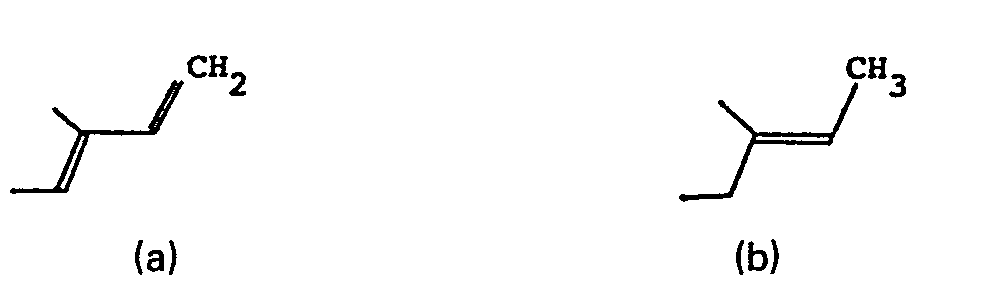
- the present invention provides the compounds of the formula (I): wherein X represents a moiety of the sub-formula (a) or (b):
- the monoenes within formula (I), that is the compounds of the formula (IV): are envisaged as ⁇ -lactamase inhibitors which may be used to enhance the effectiveness of penicillins or cephalosporins.
- the E-isomer of the compound may be used or the Z-isomer of the compound may be used or mixtures of the E- and Z-isomers may be used.
- the diene within formula (I), that is the compound of the formula (V): is also envisaged as a A-lactamase inhibitor which may be used to enhance the effectiveness of penicillins or cephalosporins but its chemical reactivity also makes it a useful intermediate, for example it is able to take place in 1,4-addition reactions as will become apparent hereinafter.
- the compounds of the formulae (I), (IV) or (V) are at least 50% w/w pure and preferably at least 80% w/w pure so that unwanted effects due to possible by-products of their formation are reduced.
- the % purity is calculated on a solvent free basis since it is conventional to prepare and isolate the compound of the formula (V) in an organic solvent).
- the present invention also provides a process for the preparation of the compounds of the formula (IV) which process comprises the hydrogenation of the compound of the formula (V) in the presence of a palladium or platinum catalyst.
- reaction will be carried out in an inert organic solvent, for example in tetrahydrofuran or other similar solvent.
- the hydrogenation reaction normally produces a mixture of E- and Z-isomers of the compound of the formula (IV). These isomers may be separated chromatographically if desired, for example by preparative high pressure liquid chromatography or column chromatography.
- the hydrogenation of the compound of the formula (V) exemplifies the 1,4-addition reactions (in this case the 1,4-addition of a molecule of hydrogen) to which the compound of the formula (V) is susceptible.
- the use of the compound of the formula (V) as a chemical intermediate for a 1,4-addition reaction forms a part of this invention.
- This invention also provides a process for the preparation of the compound of the formula (V) which process comprises the reaction in an inert organic solvent of clavulanic acid with either
- Suitable values for R' include the groups of the formula ⁇ (CH2) q CH 3 wherein q is 1, 2, 3, 4 or 5. Most suitably q is 1 or 2. Preferably q is 1.
- R 2 and R 3 represent the same moiety, for example both represent methyl, ethyl, propyl or butyl groups.
- Particularly suitable compounds of the formula (VII) include those therein R 2 and R 3 each represent an ethyl or t-butyl group.
- R 4 , R 5 and R 6 each represent the same moiety.
- Particularly suitable compounds of the formula (VIII) include triphenylphosphine, trimethylphosphite and triethylphosphite.
- a preferred compound of the formula (VIII) is triphenylphosphine.
- the compound of the formula (V) tends to polymerise when free of solvent at room temperature so that it must either be stored in solution (optionally with hydroquinone) or at a low temperature. Preferably the compound of the formula (V) is used shortly after its preparation.
- the reaction of clavulanic acid with the compound of the formula (VI) takes place in an inert organic solvent such as tetrahydrofuran, 1,2-dimethoxyethane, ethyl acetate, tetrahydrofuran/toluene, tetrahydrofuran/benzene or solvents of similar properties.
- an inert organic solvent such as tetrahydrofuran, 1,2-dimethoxyethane, ethyl acetate, tetrahydrofuran/toluene, tetrahydrofuran/benzene or solvents of similar properties.
- the reaction will generally take place at 0°C to 25°C. It is generally most convenient to carry out the reaction at ambient temperature.
- reaction medium is maintained free of hydroxylic materials other than clavulanic acid.
- the present invention also provides a process for the preparation of a compound of the formula (V) which comprises maintaining a salt of an 0-acyl derivative of clavulanic acid at a temperature of 30°C to 45°C in solution in an aqueous ether.
- Suitable derivatives of clavulanic acid for use in this process include the acetyl derivative, for example as its potassium salt.
- Acylated derivatives of clavulanic acid are described in Belgian Patent No. 834,645.
- the decomposition process tends to be slow and low yielding so it is desirable to warm the reaction mixture to 30-45°C to encourage reaction.
- Suitable solvents include aqueous tetrahydrofuran and aqueous 1,2-dimethoxyethane.
- the present invention also provides pharmaceutical compositions which comprise a compound of the formula (I) and a pharmaceutically acceptable carrier.
- composition will comprise a compound of the formula (IV) which may be in the form of the Z-isomer, the E-isomer or, less favourably as a mixture thereof.
- compositions of the invention include those in a form adapted for oral or parenteral use and may be used for the treatment of the infection in mammals including humans.
- the infections to be treated include those due to gram-positive bacteria and gram-negative bacteria and less commonly fungal infections.
- compositions of this invention include tablets, capsules, creams, syrups, suspensions, solutions, reconstitutable and sterile forms suitable for injection or infusion.
- Such compositions may contain conventional pharmaceutically acceptable materials such as diluents, colours, flavours, preservatives and the like in accordance with conventional pharmaceutical practice in the manner well understood by those skilled in the art of formulating liquid or oily pharmaceuticals.
- Injectable or infusable compositions of a compound of the formula (I) are suitable.
- a sterile compound of the formula (1) may be sealed in a glass vial, bottle or the like and made up into an injectable solution by the addition of aqueous ethanol or the like.
- Unit dose compositions comprising a compound of the formula (I) adapted for oral administration form a further preferred compositions aspect of this invention.
- Particularly favoured forms include soft gelatin capsules (with polyethyleneglycol) or other solid forms in which the compound of the formula (I) is absorbed on an inert carrier such as lactose, starch or the like.
- the compound of the formula (I) may be present in the composition as sole therapeutic agent or it may be present together with other therapeutic agents such as a f3-lactam antibiotic.
- Suitable A-lactam antibiotics for inclusion in the compositions of this invention include benzylpenicillin, phenoxymethyl- penicillin, carbenicillin, azidocillin, propicillin, ampicillin, amoxycillin, epicillin, ticarcillin, cyclacillin, cefatriazine, pirbenicillin, a-sulphonyloxybenzylpenicillin, cephaloridine, cephalothin, cefazolin, cephalexin, cephacetrile, cephamondole, nafate, cephapirin, cephradine, 4-hydroxy-cephalexin, cefaparole, cephaloglycine and other well known penicillins and cephalosporins or pro-drugs therefore.
- the composition will be adapted for parenteral administration.
- the ratio of a compound of the formula (I) present to the other antibacterial agent may vary over a wide range of ratios, for example 3:1 to 1:10 and advantageously may be from 1 :1 to 1:8, for example, 1:2, 1:3, 1:4, 1:5 or 1:6.
- the total quantity of compound of the formula (11) in any unit dosage form will normally be between 25 and 1000 mg and will usually be between 50 and 500 mg, for example 62.5, 100, 125, 150,200 or 250 mg.
- compositions of this invention may be used for the treatment of infections of inter alis, the respiratory tract, the urinary tract and soft tissues and mastitis in cattle.
- Normally between 50 and 1000 mg of the compounds of this invention will be administered each day of treatment but more usually between 100 and 750 mg of the compounds of the invention will be administered per day, for example as 1-6 doses, more usually 2-4 doses.
- the concentrated solution was made up to 70 ml using dry toluene. From an aliquot (8 ml) of this solution the solvent was removed under reduced pressure to yield a yellow oil (55 mg) which was immediately redissolved in CDCI 3 (1 ml). An nmr spectrum of this solution showed absorptions for only the title compounds, dimethylformamide, and toluene. On the basis of this the estimated yield of title compound was 2.9 mmole (83%).
- Benzyl 9-0-acetylclavulanate (90 mg., 0.27 mmole) was dissolved in tetrahydrofuran (10 ml) and the solution was shaken with 10% palladium-on-charcoal (30 mg) under one atmosphere of hydrogen at room temperature for 20 minutes. The catalyst was removed by filtration and was washed with tetrahydrofuran. The filtrate was concentrated to 5 ml by evaporation of solvent under reduced pressure to yield a solution of 9-0-acetylclavulanic acid in tetrahydrofuran.
- Example 4 The product of Example 4(60 mg) was subjected to high pressure liquid chromatography under the following conditions
- the Z-isomer under these conditions had a retention time of 10 minutes which allowed easy separation from the E-isomer which had a 12' minute retention time.
- the isomers were obtained by evaporation of the solvent: Z-isomer (33 mg), E-isomer (8 mg).
- Example 1 The compound from Example 1 was a potent inhibitor of ⁇ -lactamase enzymes as illustrated in the following Table. I 50 values were determined using the process described in Belgium Patent No. 827,926.
- the Z-isomer also synergised the antibacterial activity of caphaloridine.
- the M.I.C. of cephaloridine against E. coli JT410 was lowered from 125 ⁇ g/ml to 8 ⁇ g/ml.
- the E-isomer is able to synergise the antibacterial activity of ampicillin.
- the M.I.C. of ampicillin against Staph. aureus Russell was lowered from 500 ⁇ g/ml to 3.1 ⁇ g/ml.
- the Z-isomer is able to inhibit the growth of Candida albicans.
- a loading of 250 ⁇ g of the Z-isomer on a paper tape which was contacted with a blood agar base plate seeded with Candida albicans BRL 1003 and incubated at 28°C for 24 hours produced a zone of inhibition with diameter 22.1 mm.
- Example 4 The compound from Example 4 (containing 26% E-isomer and 62% Z-isomer) was tested for acute toxicity in mice as described below.
Landscapes
- Chemical & Material Sciences (AREA)
- Organic Chemistry (AREA)
- Health & Medical Sciences (AREA)
- Chemical Kinetics & Catalysis (AREA)
- Life Sciences & Earth Sciences (AREA)
- General Chemical & Material Sciences (AREA)
- Medicinal Chemistry (AREA)
- Nuclear Medicine, Radiotherapy & Molecular Imaging (AREA)
- Communicable Diseases (AREA)
- Pharmacology & Pharmacy (AREA)
- Oncology (AREA)
- Animal Behavior & Ethology (AREA)
- General Health & Medical Sciences (AREA)
- Public Health (AREA)
- Veterinary Medicine (AREA)
- Pharmaceuticals Containing Other Organic And Inorganic Compounds (AREA)
- Nitrogen And Oxygen Or Sulfur-Condensed Heterocyclic Ring Systems (AREA)
Description
- The present invention relates to A-lactam containing compounds to the process for their preparation, to pharmaceutical compositions containing them and to their use as intermediates and synergists.
- Belgian Patent No: 840, 252 disclosed the compounds of the formula (II):


- Belgian Patent No. 850593 discloses inter alia that (3RS, 5RS) and (3RS, 5SR)-3-vinyl-4-oxa-1-azabicyclo [3.2.0]heptan-7-one could be prepared synthetically and used in antibacterial compositions.
- It is believed desirable to produce compounds having differing β-lactamase inhibitory properties or which may be used as intermediates to compounds having such properties. Such compounds have been discovered.
- The present invention provides the compounds of the formula (I):

- The monoenes within formula (I), that is the compounds of the formula (IV):

- The diene within formula (I), that is the compound of the formula (V):

- For use for any of the preceding utilities it is most suitable that the compounds of the formulae (I), (IV) or (V) are at least 50% w/w pure and preferably at least 80% w/w pure so that unwanted effects due to possible by-products of their formation are reduced. (The % purity is calculated on a solvent free basis since it is conventional to prepare and isolate the compound of the formula (V) in an organic solvent).
- The present invention also provides a process for the preparation of the compounds of the formula (IV) which process comprises the hydrogenation of the compound of the formula (V) in the presence of a palladium or platinum catalyst.
- Most suitably an approximately atmospheric pressure of hydrogen is employed. Most suitably palladium on charcoal is used as catalyst, for example 10% palladium on charcoal. The reaction will be carried out in an inert organic solvent, for example in tetrahydrofuran or other similar solvent.
- The hydrogenation reaction normally produces a mixture of E- and Z-isomers of the compound of the formula (IV). These isomers may be separated chromatographically if desired, for example by preparative high pressure liquid chromatography or column chromatography.
- The hydrogenation of the compound of the formula (V) exemplifies the 1,4-addition reactions (in this case the 1,4-addition of a molecule of hydrogen) to which the compound of the formula (V) is susceptible. The use of the compound of the formula (V) as a chemical intermediate for a 1,4-addition reaction forms a part of this invention.
- This invention also provides a process for the preparation of the compound of the formula (V) which process comprises the reaction in an inert organic solvent of clavulanic acid with either
- (a) a compound of the formula (VI):

- (b) a compound of the formula (VII):


- Suitable values for R' include the groups of the formula ―(CH2)qCH3 wherein q is 1, 2, 3, 4 or 5. Most suitably q is 1 or 2. Preferably q is 1.
- Particularly suitable R2 and R3 represent the same moiety, for example both represent methyl, ethyl, propyl or butyl groups. Particularly suitable compounds of the formula (VII) include those therein R2 and R3 each represent an ethyl or t-butyl group.
- It is generally convenient that R4, R5 and R6 each represent the same moiety. Particularly suitable compounds of the formula (VIII) include triphenylphosphine, trimethylphosphite and triethylphosphite. A preferred compound of the formula (VIII) is triphenylphosphine.
- The compound of the formula (V) tends to polymerise when free of solvent at room temperature so that it must either be stored in solution (optionally with hydroquinone) or at a low temperature. Preferably the compound of the formula (V) is used shortly after its preparation.
- The reaction of clavulanic acid with the compound of the formula (VI) takes place in an inert organic solvent such as tetrahydrofuran, 1,2-dimethoxyethane, ethyl acetate, tetrahydrofuran/toluene, tetrahydrofuran/benzene or solvents of similar properties. The reaction will generally take place at 0°C to 25°C. It is generally most convenient to carry out the reaction at ambient temperature.
- The reaction of clavulanic acid with the compounds of the formula (VII) and (VIII) will take place in an inert organic solvent such as tetrahydrofuran, 1,2-dimethoxyethane or solvent of similar properties.
- It is generally most convenient to carry out the reaction at ambient temperature.
- In both preceding reactions it is preferable that the reaction medium is maintained free of hydroxylic materials other than clavulanic acid. _
- The present invention also provides a process for the preparation of a compound of the formula (V) which comprises maintaining a salt of an 0-acyl derivative of clavulanic acid at a temperature of 30°C to 45°C in solution in an aqueous ether.
- Suitable derivatives of clavulanic acid for use in this process include the acetyl derivative, for example as its potassium salt. Acylated derivatives of clavulanic acid are described in Belgian Patent No. 834,645.
- The decomposition process tends to be slow and low yielding so it is desirable to warm the reaction mixture to 30-45°C to encourage reaction.
- Suitable solvents include aqueous tetrahydrofuran and aqueous 1,2-dimethoxyethane.
- The present invention also provides pharmaceutical compositions which comprise a compound of the formula (I) and a pharmaceutically acceptable carrier.
- Most suitably the composition will comprise a compound of the formula (IV) which may be in the form of the Z-isomer, the E-isomer or, less favourably as a mixture thereof.
- The compositions of the invention include those in a form adapted for oral or parenteral use and may be used for the treatment of the infection in mammals including humans. The infections to be treated include those due to gram-positive bacteria and gram-negative bacteria and less commonly fungal infections.
- Suitable forms of the compositions of this invention include tablets, capsules, creams, syrups, suspensions, solutions, reconstitutable and sterile forms suitable for injection or infusion. Such compositions may contain conventional pharmaceutically acceptable materials such as diluents, colours, flavours, preservatives and the like in accordance with conventional pharmaceutical practice in the manner well understood by those skilled in the art of formulating liquid or oily pharmaceuticals.
- Injectable or infusable compositions of a compound of the formula (I) are suitable. A sterile compound of the formula (1) may be sealed in a glass vial, bottle or the like and made up into an injectable solution by the addition of aqueous ethanol or the like.
- Unit dose compositions comprising a compound of the formula (I) adapted for oral administration form a further preferred compositions aspect of this invention. Particularly favoured forms include soft gelatin capsules (with polyethyleneglycol) or other solid forms in which the compound of the formula (I) is absorbed on an inert carrier such as lactose, starch or the like.
- The compound of the formula (I) may be present in the composition as sole therapeutic agent or it may be present together with other therapeutic agents such as a f3-lactam antibiotic. Suitable A-lactam antibiotics for inclusion in the compositions of this invention include benzylpenicillin, phenoxymethyl- penicillin, carbenicillin, azidocillin, propicillin, ampicillin, amoxycillin, epicillin, ticarcillin, cyclacillin, cefatriazine, pirbenicillin, a-sulphonyloxybenzylpenicillin, cephaloridine, cephalothin, cefazolin, cephalexin, cephacetrile, cephamondole, nafate, cephapirin, cephradine, 4-hydroxy-cephalexin, cefaparole, cephaloglycine and other well known penicillins and cephalosporins or pro-drugs therefore.
- Naturally if the penicillin or cephalosporin present in the composition is not suitable for oral administration then the composition will be adapted for parenteral administration.
- When present together with a cephalosporin or penicillin, the ratio of a compound of the formula (I) present to the other antibacterial agent may vary over a wide range of ratios, for example 3:1 to 1:10 and advantageously may be from 1 :1 to 1:8, for example, 1:2, 1:3, 1:4, 1:5 or 1:6.
- The total quantity of compound of the formula (11) in any unit dosage form will normally be between 25 and 1000 mg and will usually be between 50 and 500 mg, for example 62.5, 100, 125, 150,200 or 250 mg.
- Compositions of this invention may be used for the treatment of infections of inter alis, the respiratory tract, the urinary tract and soft tissues and mastitis in cattle.
- Normally between 50 and 1000 mg of the compounds of this invention will be administered each day of treatment but more usually between 100 and 750 mg of the compounds of the invention will be administered per day, for example as 1-6 doses, more usually 2-4 doses.
-
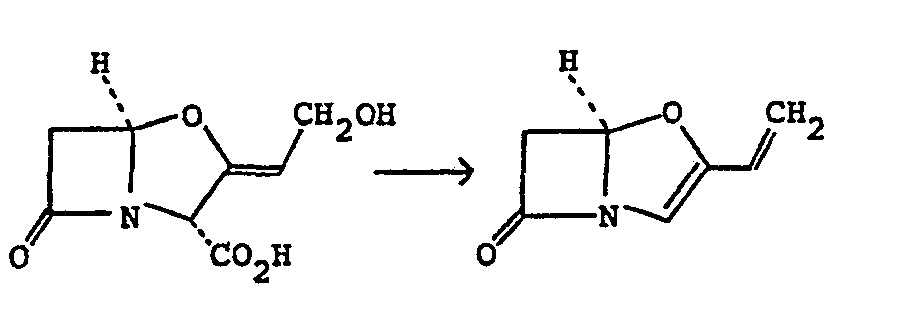
- Clavulanic acid (3.5 mmole) in dry tetrahydrofuran (5 ml) and N,N-dimethylformamide dimethyl acetal (4.0 mmole) in dry toluene (5 ml) were added dropwise and simultaneously to a well stirred mixture of dry toluene (10 ml) and dry tetrahydrofuran (10 ml) containing hydroquinone (ca 3 mg). After addition was complete (5 minutes), the mixture was stirred for an additional 5 minutes, and was then decolourised using charcoal (ca 0.5 g) and filtered. The filter was washed with dry toluene (20 ml) and the combined filtrate and washings were concentrated to ca 10 ml under reduced pressure. The concentrated solution was made up to 70 ml using dry toluene. From an aliquot (8 ml) of this solution the solvent was removed under reduced pressure to yield a yellow oil (55 mg) which was immediately redissolved in CDCI3 (1 ml). An nmr spectrum of this solution showed absorptions for only the title compounds, dimethylformamide, and toluene. On the basis of this the estimated yield of title compound was 2.9 mmole (83%).
- When free of solvent the title compound readily polymerises. For determination of spectroscopic and biological properties aliquots of the toluene solution were treated in a manner similar to that described above for measurement of the nmr spectrum. The title compound was characterised by the following spectroscopic properties. λmax (EtOH): 277.5 nm. νmax (CHCI3): 1797 (β-lactam C=O), 1670 and 1640 (C=C)cm-1. δ (CDCl3): 3.36 (d, J 17Hz, 1 H, C(6)H), 3.63 (dd, J 17, 2Hz, 1 H, C(6)H), 5.22 (dd, J 10.5, 1.OHz, 1 H, olefinic H), 5.49 (dd, J 16 1.OHz, 1 H, olefinic H), 5.80 (s, 2H, C(5)H and C(2)H), 6.10 (dd, J 16, 10.5Hz, 1 H, olefinic H).
-

- Clavulanic acid (1.5 mmole) in dry tetrahydrofuran (5 ml) under a dry nitrogen atmosphere was treated with triphenylphosphine (1.5 mmole) and then, dropwise, diethylazoxicarboxylate (1.5 mmole) in dry tetrahydrofuran (2 ml). After addition was complete (2 minutes), the mixture was stirred for 30 minutes at room temperature and was then ice-cooled and diluted with a mixture of ether and n-pentane (1:2, 20 ml). The mixture was filtered and the filtrate was diluted with dry benzene (10 ml) and then concentrated to about 5 ml under reduced pressure to yield a solution of the title compound (1 mmole).
-

- Benzyl 9-0-acetylclavulanate (90 mg., 0.27 mmole) was dissolved in tetrahydrofuran (10 ml) and the solution was shaken with 10% palladium-on-charcoal (30 mg) under one atmosphere of hydrogen at room temperature for 20 minutes. The catalyst was removed by filtration and was washed with tetrahydrofuran. The filtrate was concentrated to 5 ml by evaporation of solvent under reduced pressure to yield a solution of 9-0-acetylclavulanic acid in tetrahydrofuran.
- To the above solution a solution of potassium carbonate (0.14 mmole) in water (1 ml) was added with stirring. The mixture was kept at room temperature for 2 hours, at which time the presence of the title compound was detected using t.l.c. (silica gel; 1:2 ethyl acetate/petrol). The mixture was warmed to 40° for a further 3 hours and was then diluted with ethyl acetate (30 ml). The tetrahydrofuran was evaporated under reduced pressure and then the aqueous layer was separated. The solution was dried (sodium sulphate) and concentrated to 3 ml by evaporation of solvent under reduced pressures to yield a solution containing 0.04 mmole of the title compound.
-

- (5R)-7-Oxo-3-vinyl-4-oxa-1-azabicyclo 3.2.0 -hept-2-ene (2.4 mmole) in tetrahydrofuran (30) ml) was shaken with 10% palladium on charcoal (120 mg) under one atmosphere of hydrogen for 2 hours. The catalyst was then removed by filtration and was washed well with fresh tetrahydrofuran. From the filtrate and washings the solvent was removed under reduced pressure and the residue chromatographed on silica gel (15 g) using ethyl acetate/petroleum ether. In this way a colourless oil (140 mg) was obtained which by nmr analysis contained the title compound (87%).

- The I50 values obtained for the product of this example against certain common gram positive and oram neaative bacteria were as follows:

-
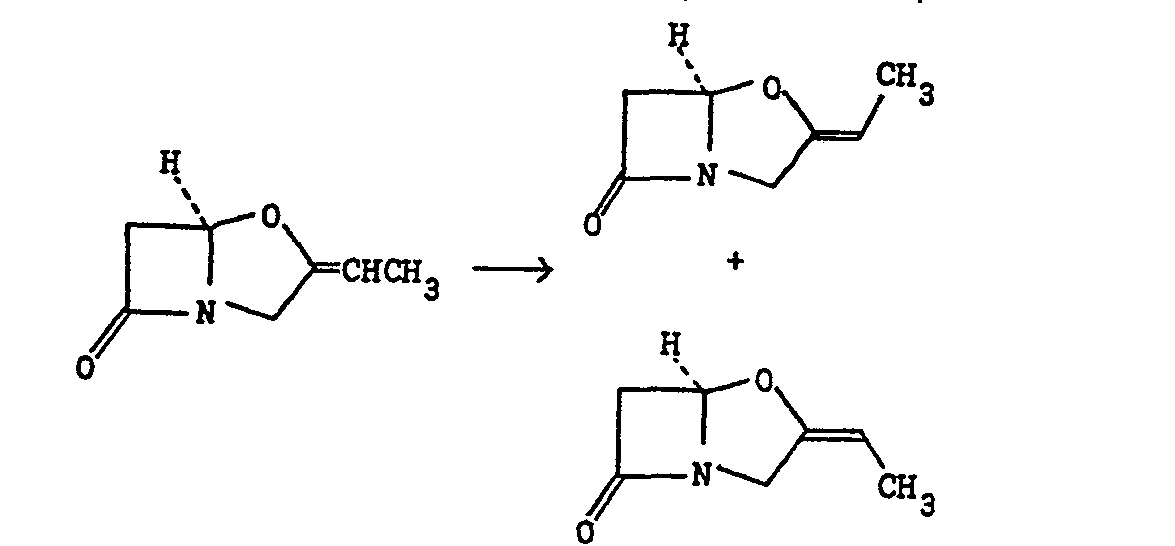
- The product of Example 4(60 mg) was subjected to high pressure liquid chromatography under the following conditions

- The Z-isomer under these conditions had a retention time of 10 minutes which allowed easy separation from the E-isomer which had a 12' minute retention time. The isomers were obtained by evaporation of the solvent: Z-isomer (33 mg), E-isomer (8 mg).
- The Z-isomer was obtained as a colourless oil;

- The E-isomer was obtained as colourless crystals,

-

- (5R)-7-oxo-3-vinyl-4-oxa-1-azabicyclo[3.2.0] hept-2-ene (2.4 mmole) in tetrahydrofuran (20 ml) was shaken with 5% platinum on charcoal (150 mg) under 1 atmosphere of hydrogen at room temperature for 1.5 hours. The catalyst was removed by filtration and was washed with tetrahydrofuran. The solvent was evaporated from the filtrate and the residue was chromatographed on silica gel using 1:7 ethyl acetate/petroleum ether (b.p. 60-80°). A mixture of E- and Z- isomers of the title compound was thus obtained as a colourless oil (40 mg).
-

- To the solution from the previous experiment, tetracyanoethylene (40 mg) was added and the mixture was kept at room temperature for 16 hours. The solvent was evaporated under pressure and the residue was chromatographed on silica gel (5 g) using 1:4→1:1 ethyl acetate/petroleum ether (b.p. 60-80°). The title compound was thus obtained as colourless crystals (10 mg., 0.038 mmole); recrystallisation from ethyl acetate/petroleum ether (b.p. 60-80°) gave colourless rods (8 mg) m.p. 200-202°.
-

- To the solution from Example 2, maleic anhydride (2 mmole) was added and the mixture was kept at room temperature for 18 hours. Evaporation of solvent under reduced pressure followed by chromatography on silica gel (20 g) using ethyl acetate/petroleum ether gave the title compound as colourless crystals (170 mg., 0.72 mmole), m.p. 148-150°. Recrystallisation from ethyl acetate/petroleum ether (b.p. 60-80°) gave colourless rods, m.p. 157-159°. (Found: C, 56.18; H, 3.69; N, 5.92. C11H9NO5 requires C, 56.18; H, 3.86; N, 5.96%).

- The compound from Example 1 was a potent inhibitor of β-lactamase enzymes as illustrated in the following Table. I50 values were determined using the process described in Belgium Patent No. 827,926.

- The compound displayed antibacterial activity as shown in the following Table:

- The compound synergised the antibacterial activity of ampicillin as shown in the following Table:

- Synergistic activity for E- and Z- (5R)-3-ethylidene-4-oxa-1-azabicyclo[3.2.0]heptan-7-one The Z-isomer synergised the antibacterial activity of ampicillin as shown in the followinq Table:

- The Z-isomer also synergised the antibacterial activity of caphaloridine. For example, when combined with the Z-isomer at a level of 20 µg/ml, the M.I.C. of cephaloridine against E. coli JT410 was lowered from 125 µg/ml to 8 µg/ml.
- The E-isomer is able to synergise the antibacterial activity of ampicillin. Thus, when present with the E-izomer at a level of 20 µg/ml, the M.I.C. of ampicillin against Staph. aureus Russell was lowered from 500 µg/ml to 3.1 µg/ml.
- The Z-isomer is able to inhibit the growth of Candida albicans. Thus, a loading of 250 µg of the Z-isomer on a paper tape which was contacted with a blood agar base plate seeded with Candida albicans BRL 1003 and incubated at 28°C for 24 hours produced a zone of inhibition with diameter 22.1 mm.
- Acute toxicity in mice for (5R)-3-ethylidene-4-oxa-1-azabicyclo[3.2.0]heptan-7-one

- The compound from Example 4 (containing 26% E-isomer and 62% Z-isomer) was tested for acute toxicity in mice as described below.


Claims (13)


Applications Claiming Priority (2)
| Application Number | Priority Date | Filing Date | Title |
|---|---|---|---|
| GB3101577 | 1977-07-23 | ||
| GB3101577 | 1977-07-23 |
Publications (2)
| Publication Number | Publication Date |
|---|---|
| EP0000615A1 EP0000615A1 (en) | 1979-02-07 |
| EP0000615B1 true EP0000615B1 (en) | 1981-04-29 |
Family
ID=10316644
Family Applications (1)
| Application Number | Title | Priority Date | Filing Date |
|---|---|---|---|
| EP78300054A Expired EP0000615B1 (en) | 1977-07-23 | 1978-06-20 | Beta-lactam compounds, preparation and use in pharmaceutical compositions and as chemical intermediates |
Country Status (5)
| Country | Link |
|---|---|
| US (1) | US4145430A (en) |
| EP (1) | EP0000615B1 (en) |
| JP (1) | JPS5424890A (en) |
| DE (1) | DE2860640D1 (en) |
| IT (1) | IT1105922B (en) |
Family Cites Families (3)
| Publication number | Priority date | Publication date | Assignee | Title |
|---|---|---|---|---|
| GB1515241A (en) * | 1976-01-27 | 1978-06-21 | Beecham Group Ltd | Beta-lactam antibiotics |
| GB1529913A (en) * | 1976-02-04 | 1978-10-25 | Beecham Group Ltd | Beta-lactam compounds |
| BE855467A (en) * | 1976-06-08 | 1977-12-07 | Glaxo Lab Ltd | SUBSTITUTE CLAVAMES AND THEIR PREPARATION |
-
1978
- 1978-06-20 EP EP78300054A patent/EP0000615B1/en not_active Expired
- 1978-06-20 DE DE7878300054T patent/DE2860640D1/en not_active Expired
- 1978-07-03 US US05/921,738 patent/US4145430A/en not_active Expired - Lifetime
- 1978-07-21 IT IT50416/78A patent/IT1105922B/en active
- 1978-07-22 JP JP8987078A patent/JPS5424890A/en active Pending
Also Published As
| Publication number | Publication date |
|---|---|
| IT7850416A0 (en) | 1978-07-21 |
| JPS5424890A (en) | 1979-02-24 |
| DE2860640D1 (en) | 1981-08-06 |
| IT1105922B (en) | 1985-11-11 |
| EP0000615A1 (en) | 1979-02-07 |
| US4145430A (en) | 1979-03-20 |
Similar Documents
| Publication | Publication Date | Title |
|---|---|---|
| US4256638A (en) | Process for manufacture of 9-amino-9-deoxyclavulanates | |
| CH636357A5 (en) | METHOD FOR PRODUCING 4-OXA-1-AZA-BICYCLO (3.2.0) HEPTAN-7-ON DERIVATIVES. | |
| US4228174A (en) | Clavulanic acid ethers | |
| BE875054A (en) | COMPOUNDS ANALOGUE TO CEPHALOSPORINS | |
| US4444754A (en) | Derivatives of clavulanic acid, a process for their preparation and their use | |
| US4145430A (en) | Beta-lactam compounds, preparation and use | |
| US4258050A (en) | Antibacterial agents | |
| US4079177A (en) | Clavulanic acid carbamates | |
| EP0007717B1 (en) | Clavulanic acid derivatives, a process for their preparation, their use, and pharmaceutical compositions containing them | |
| US4426389A (en) | Derivatives of clavulanic acid, a process for their preparation and their use | |
| EP0008884B1 (en) | Derivatives of clavulanic acid, a process for their preparation and their compositions | |
| US4415584A (en) | 3-Oxo-6-oxa-2-azatricyclo 5.4.2. unadecene-4-carboxylate | |
| EP0002319B1 (en) | Clavulanic acid derivatives, a process for their preparation and compositions containing them | |
| US4036969A (en) | 2,12-Dioxo-7-hydroxymethyl-9-phenyl-1-aza-5,8,11-trioxotetracyclo[9.2.0.06,13 0.6.9 ]tridecane | |
| US4187228A (en) | Antibacterial agents 5R, 2S-hydroxymethyl-3Z (2-hydroxy- or 2-alkoxyethylidene-1-aza-4-oxabicyclo[3,2,0]heptanone | |
| US4427689A (en) | Clavulanic acid 9-deoxy-9-thia derivatives their preparation and use | |
| CA1132548A (en) | Derivatives of clavulanic acid, a process for their preparation and their use | |
| CA1148085A (en) | Clavulanic acid derivatives, a process for their preparation and their use | |
| EP0027323B1 (en) | Derivatives of clavulanic acid, processes for their preparation and pharmaceutical compositions containing them | |
| EP0021836B1 (en) | Clavulanic acid derivatives, process for their preparation and pharmaceutical compositions containing them | |
| US4314941A (en) | Aminocarbonylmethyl ethers of clavulanic acid, a process for their preparation and use |
Legal Events
| Date | Code | Title | Description |
|---|---|---|---|
| PUAI | Public reference made under article 153(3) epc to a published international application that has entered the european phase |
Free format text: ORIGINAL CODE: 0009012 |
|
| AK | Designated contracting states |
Designated state(s): BE DE FR GB |
|
| 17P | Request for examination filed | ||
| GRAA | (expected) grant |
Free format text: ORIGINAL CODE: 0009210 |
|
| AK | Designated contracting states |
Designated state(s): BE DE FR GB |
|
| REF | Corresponds to: |
Ref document number: 2860640 Country of ref document: DE Date of ref document: 19810806 |
|
| PGFP | Annual fee paid to national office [announced via postgrant information from national office to epo] |
Ref country code: FR Payment date: 19840328 Year of fee payment: 7 |
|
| PGFP | Annual fee paid to national office [announced via postgrant information from national office to epo] |
Ref country code: DE Payment date: 19840628 Year of fee payment: 7 |
|
| PGFP | Annual fee paid to national office [announced via postgrant information from national office to epo] |
Ref country code: BE Payment date: 19840630 Year of fee payment: 7 |
|
| BERE | Be: lapsed |
Owner name: BEECHAM GROUP LTD Effective date: 19870630 |
|
| PG25 | Lapsed in a contracting state [announced via postgrant information from national office to epo] |
Ref country code: FR Free format text: LAPSE BECAUSE OF NON-PAYMENT OF DUE FEES Effective date: 19880226 |
|
| PG25 | Lapsed in a contracting state [announced via postgrant information from national office to epo] |
Ref country code: DE Effective date: 19880301 |
|
| GBPC | Gb: european patent ceased through non-payment of renewal fee | ||
| REG | Reference to a national code |
Ref country code: FR Ref legal event code: ST |
|
| PG25 | Lapsed in a contracting state [announced via postgrant information from national office to epo] |
Ref country code: GB Effective date: 19881117 |
|
| PG25 | Lapsed in a contracting state [announced via postgrant information from national office to epo] |
Ref country code: BE Effective date: 19890630 |
|
| PLBE | No opposition filed within time limit |
Free format text: ORIGINAL CODE: 0009261 |
|
| STAA | Information on the status of an ep patent application or granted ep patent |
Free format text: STATUS: NO OPPOSITION FILED WITHIN TIME LIMIT |