Light stores up straight gentle sharing building system
Technical Field
The utility model relates to a new forms of energy building site selection field, it is a light stores up straight gentle shared building system that says so more specifically.
Background
The introduction and application of renewable energy technology to buildings is an important direction for the development of the future building industry; the building photovoltaic technology is one of the main sources of building renewable energy at present, and the building can achieve optimal balance of energy supply and use through combined application of the building photovoltaic technology, the intelligent building microgrid technology, the energy storage technology and the passive building.
However, in the prior art, a light storage straight and flexible building system mainly relates to a design scheme of a single building, for example, patent CN113983524A discloses a light storage straight and flexible air source heat pump unit and a system operation method, which can be used for effectively controlling a photovoltaic component and an air source heat pump unit in a targeted manner, and patent CN214746015U discloses a phase change energy storage radiation heating system for a light storage straight and flexible building.
Therefore, it is necessary to develop a light storage direct and flexible shared building system which can not only reduce carbon and save energy for the building itself, but also provide charging service for other electric vehicle users.
SUMMERY OF THE UTILITY MODEL
The utility model aims at overcoming the weak point of above-mentioned background art, and provide a light stores up gentle sharing building system directly.
In order to realize the purpose, the technical scheme of the utility model is that: the utility model provides a gentle sharing building system is directly stored up to light which characterized in that: including the photovoltaic module that is located the building roof, be located the energy storage battery of building and be located the sharing parking stall that charges outside the building, energy storage battery and sharing parking stall that charges all are connected with photovoltaic module through building direct current microgrid, energy storage battery passes through building direct current microgrid and is connected with electrical apparatus.
In the technical scheme, the photovoltaic power generation system further comprises an external power grid, and the external power grid is sequentially connected with the inverter and the photovoltaic module through the building direct-current micro-grid.
In the technical scheme, the intelligent charging system further comprises an inner control system and an outer control system, the inner control system is arranged on a building direct current micro-grid connected with the photovoltaic assembly and the shared charging parking space, and the outer control system is arranged on the building direct current micro-grid connected with the photovoltaic assembly and an external power grid.
In the technical scheme, the electric appliance comprises a refrigerator, an air conditioner, a television, a water heater and a computer.
Compared with the prior art, the utility model, have following advantage:
1) the utility model realizes the maximization of energy utilization, takes the functions of a temporary electric vehicle charging station into account during the off-peak period of building electricity utilization, and provides shared charging service for more electric vehicle users by utilizing redundant generated energy; on the one hand, the on-site consumption capability of photovoltaic power generation is improved, and on the other hand, the charging income of building users can be increased.
2) In the prior art, photovoltaic consumption can be carried out only through the photovoltaic energy storage device, when the photovoltaic power generation capacity is larger than the power consumption, the photovoltaic energy storage device can be adjusted only through self energy storage, and however, part of loss exists in the energy storage in the charging and discharging processes; the utility model discloses share the sharing parking stall of charging of building self, can promote building photovoltaic's consumption on the spot on the one hand, avoided the loss of charge-discharge process, on the other hand also can increase the economic income of building.
3) The utility model discloses can solve the difficult problem of electric automobile charging.
Drawings
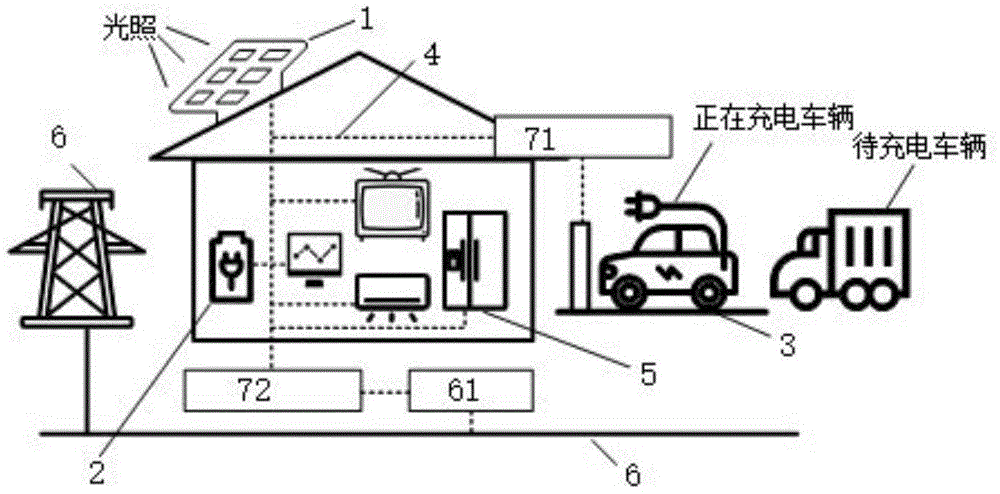
Fig. 1 is a schematic structural diagram of the present invention.
FIG. 2 is a control logic diagram of an external control system.
FIG. 3 is a control logic diagram of the internal control system.
Detailed Description
The following detailed description of the embodiments of the present invention will be made with reference to the accompanying drawings, which are not intended to limit the present invention, but are merely exemplary. While the advantages of the invention will be apparent and understood from the description.
With reference to the accompanying drawings: the utility model provides a gentle sharing building system is directly stored up to light which characterized in that: including photovoltaic module 1 that is located the building roof, be located energy storage battery 2 in the building and be located the sharing parking stall 3 that charges outside the building, energy storage battery 2 and sharing parking stall 3 all are connected with photovoltaic module 1 through building direct current microgrid 4, energy storage battery 2 is connected with electrical apparatus 5 through building direct current microgrid 4.
The photovoltaic power generation system further comprises an external power grid 6, wherein the external power grid 6 is sequentially connected with the inverter 61 and the photovoltaic module 1 through the building direct-current micro-grid 4.
The photovoltaic solar energy and electric energy integrated system further comprises an inner control system 71 and an outer control system 72, wherein the inner control system 71 is arranged on the building direct-current microgrid 4 connected with the photovoltaic assembly 1 and the shared charging parking space 3, and the outer control system 72 is arranged on the building direct-current microgrid 4 connected with the photovoltaic assembly 1 and the external power grid 6.
The electric appliance 5 comprises a refrigerator, an air conditioner, a television, a water heater and a computer.
In actual use, the utility model discloses an electric energy supply source mainly has photovoltaic module 1 and outside electric wire netting 6, and photovoltaic module 1 places on the building roof or faces the sun, has photovoltaic module 1's main function for absorbing the sun illumination, produces the electric energy and supplies the inside electrical apparatus 5 of building to use, and unnecessary electric energy then stores to energy storage battery 2, and when the sun illumination is not enough, the building will purchase the electricity from outside electric wire netting 6, or use the electric quantity that stores in the energy storage battery 2, supplies the inside use of building; the utility model discloses a load is main useful electrical apparatus 5 and sharing storage battery car position 3, with electrical apparatus 5 including but not limited to refrigerator, air conditioner, TV set, water heater, computer etc..
The internal control system 71 connects the building direct-current microgrid 4 with the shared charging parking space 3 and is responsible for controlling the electric energy exchange between the building direct-current microgrid 4 and the shared charging parking space 3; vehicles capable of providing charging by sharing the charging parking space 3 comprise vehicles of the building system and vehicles needing charging outside the building system; when the vehicle of building system self need not charge this moment, the shared charging parking stall is idle to building system holistic electric energy this moment has redundantly, can open the charging to the outside, as follows to the redundant definition of building system electric energy: the generated energy of the photovoltaic component 1 and the electric quantity in the energy storage battery 2 are larger than the electric quantity used by the electric appliance 5.
The external control system 72 connects the building direct-current microgrid 4 with the external power grid 6 through the inverter 61 and is responsible for controlling the electric energy exchange between the building direct-current microgrid 4 and the external power grid 6.
As shown in fig. 1, a photovoltaic module 1 is placed on the roof or the sunward side of a building, an energy storage battery 2 and an electrical appliance 5 are arranged in the building, and a shared charging parking space 3 is matched outside the building; normally, the photovoltaic module 1 and the energy storage battery 2 are used for providing electric energy for the electrical appliance 5, and when the output of the photovoltaic module 1 is insufficient, electricity is purchased to the external power grid 6 through the external control system 72. On the basis of ensuring the normal operation of the electric appliance 5, if the output of the photovoltaic module 1 is too much or the electric energy of the energy storage battery 2 is redundant, the redundant electric energy can be provided for the shared charging parking space 3 through the internal control system 61.
As shown in fig. 2, the external control system 72 is connected with the external power grid 6 and the building direct-current microgrid 4 through an inverter 61; the sensors continuously monitor each device in real time, when the residual capacity of the energy storage battery 2 is monitored to be less than 20kWh, whether the photovoltaic power generation power is less than the instantaneous power of the electric appliance for 2 hours continuously is further monitored, and if the conditions are met, electricity is purchased to an external power grid through the inverter 61; and if the conditions are not met, returning to the monitoring equipment.
As shown in fig. 3, the internal control system 71 connects the building direct-current microgrid 4 with the shared charging parking space 3; the sensors continuously monitor each device in real time, firstly detect whether the charging pile of the shared charging parking space 3 is in use, and if the parking space is in use, return to the monitoring. If the shared charging parking space 3 is not used at this moment, the photovoltaic power generation power is greater than the instantaneous power of the electric appliance for 2 continuous hours, and the capacity of the energy storage battery is greater than 20kWh, a shared charging command is sent, so that an external electric vehicle can be charged to the shared charging parking space 3; if the above conditions cannot be met, the sensor still monitors the equipment in real time.
Other parts not described belong to the prior art.