Internal heating device of platinum channel
Technical Field
The utility model relates to a platinum channel internal heating device, and belongs to the technical field of support plate glass pre-processing.
Background
The carrier plate glass is a product with strict requirements on internal defects, the requirement on bubbles is less than 100 mu m, and the homogenization requirement is free from stripe defects. In response to such severe requirements, strict clarification and homogenization treatments are required in the production process, and are usually carried out by using a platinum channel. The high-temperature molten glass liquid flows through a platinum channel to finish the process treatments of clarification, stirring, homogenization and the like. In the process, the platinum channel needs to be heated to a certain temperature, but the heating of the platinum channel is limited to the heating of the outer ring at present, so that the temperature of the inner ring of the molten glass in the platinum channel is different from that of the outer ring. In order to meet the technological requirement of consistent glass liquid temperature inside a platinum channel, for example, a flange structure for electrically heating the inside of the platinum channel, the technical scheme is that the platinum channel and the flange structure are additionally arranged at the central part of the platinum channel, and the flange is composed of a multilayer structure made of different materials and comprises a flange concentric and coaxial with the platinum channel, a flange inner ring for flow equalization, a flange outer ring for flow guidance and the like. According to the technology, the flange structure is utilized to directly guide current to the internal platinum channel body, and the current flows through the platinum channel with certain internal resistance to generate heat so as to heat the internal platinum channel. Belongs to a direct drainage heating scheme. The main problems of the above technology are: (1) the flange structure needs precise size to ensure the average distribution of the current by the current-sharing layer; (2) heating current is concentrated at the joint of the flange structure and the internal platinum channel, so that the local current density is high, and the internal platinum channel is easy to ablate; (3) the current flowing through the internal platinum channel body is unbalanced, so that the heat generated by the current at each position of the internal platinum channel is unequal, and the design requirement is difficult to meet; (4) the current direction is parallel to the axial direction of the internal platinum channel, and a plurality of flange structures are required to be installed if the temperature of the internal platinum channel is required to be controlled in a segmented manner; (5) the internal platinum channel generates expansion deformation after being heated, and the difficult problem is caused to the cable connection of the flange structure.
SUMMERY OF THE UTILITY MODEL
Aiming at the defects in the prior art, the utility model provides a platinum channel internal heating device.
The internal heating device of the platinum channel comprises a solid platinum pipe, a platinum channel I and a platinum channel II which are sequentially arranged from inside to outside, wherein the solid platinum pipe and the platinum channel I are filled with a heat insulation layer, and the platinum channel I and the platinum channel II are filled with glass liquid; a plurality of sections of coils which are arranged at intervals are arranged in the heat insulation layer, each section of coil is wound on the outer side of the solid platinum pipe along the axial direction by adopting a hollow lead to form induced eddy current, and the hollow part of the coil is filled with cooling liquid.
The structure of the platinum channel is optimized, the platinum channel is divided into three layers of platinum structures, the coil for heating is additionally arranged on the innermost layer, heat is further kept by utilizing a heat insulation layer outside the coil, the coil is electrified to form a magnetic field so as to heat the solid platinum tube and the platinum channel I, heat is mainly dissipated into glass liquid from the platinum channel I, and a small part of heat enters the solid platinum tube. Since different platinum channel locations require different temperatures, separate sections of the coil are used for individual control.
Preferably, heat insulation layers are arranged between the coil and the solid platinum pipe and between the coil and the platinum channel I at intervals, and the coil is not directly contacted with the solid platinum pipe and the platinum channel I.
Because the heat generated by the coil is not directly contacted, but is caused by the fact that an eddy current is formed through a non-contact magnetic field, the heat insulation layer wrapped on the outer side of the coil can avoid the too fast transfer of the heat between the solid platinum pipe and the platinum channel I.
Preferably, the coil is connected with a controllable alternating current power supply device after being led out.
A controllable alternating current supply device provides alternating current to the coil. The alternating current led into the coil is adjusted through the controllable alternating current power supply device, so that the heating temperature of the internal platinum channel is adjusted. The heating power can be controlled by controlling the amplitude value through the controllable alternating current power supply device, and the method is a main means for controlling the temperature. The phase position is controlled to improve the utilization efficiency of electric energy and reduce energy consumption. In addition, the frequency can also be controlled by means of a controllable alternating current supply device.
Preferably, the controllable alternating current supply device is a thyristor voltage regulator, a thyristor-based variable transformer or a controllable silicon inverter.
Preferably, the coils are respectively connected with different controllable alternating current power supply devices, and the coils and the controllable alternating current power supply devices are in one-to-one correspondence.
Preferably, the coil and the platinum channel I are coaxially arranged, and a circumferential induced current is formed inside the platinum channel I.
The number of the coils in the internal platinum channel heating device can be one, or can be multiple, and when the number of the coils is multiple, the multiple coils are respectively connected with different controllable alternating current power supply devices. In the embodiment, one coil is correspondingly controlled through one controllable alternating current power supply device, so that each coil is independently controlled, and the aim of heating the platinum channel in a segmented manner is fulfilled.
The utility model has the beneficial effects that: the internal heating device of the platinum channel has the advantages that induced current generated by the internal platinum channel is balanced, no current density concentrated area exists, ablation phenomenon is avoided, and meanwhile, the heating temperature of the internal platinum channel is more balanced.
Drawings
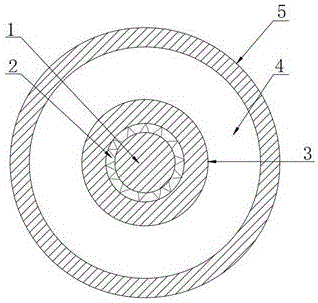
FIG. 1 is a schematic cross-sectional view of the present invention.
Fig. 2 is a schematic longitudinal sectional view of the present invention.
In the figure: 1. a solid platinum tube; 2. a heat insulation layer; 3. a platinum channel I; 4. glass liquid; 5. a platinum channel II; 6. and a coil.
Detailed Description
The technical solution in the embodiments of the present invention will be clearly and completely described below with reference to the accompanying drawings in the embodiments of the present invention.
The embodiment is as follows:
as shown in FIG. 1, the core of the platinum channel internal heating device of the present invention is to provide a three-layer platinum channel structure, and to provide a non-contact segmented heating structure for the inner coil 6. Referring to fig. 2, a solid platinum tube 1, a platinum channel i 3 and a platinum channel ii 5 are arranged in sequence from inside to outside. The aim of the utility model is to achieve a uniform and preferably controlled and uniform temperature of the molten glass 4 between the inside and the outside. The glass liquid 4 is arranged between the platinum channel I3 and the platinum channel II 5, the heating position is arranged on the inner side of the platinum channel I3, namely between the platinum channel I3 and the solid platinum pipe 1, and the heat emitted from inside to outside can promote the glass liquid 4 to be heated more uniformly. On the other hand, the platinum channel II 5 directly on the outermost side is heated, which causes uneven heating of the inner molten glass 4. Simultaneously, in order to avoid 6 circular telegrams of coil after the heat disappears too fast, realize the long-term maintenance of temperature through filling thermal insulation layer 2, simultaneously, solid platinum pipe 1 is because also receive magnetic field to influence the production of heat, when its heat was too high, then utilizes the coolant liquid in the coil 6 to circulate to realize local cooling, the coolant liquid is external refrigeration cycle device, no longer gives details here.
Specifically, the structure of the utility model is as follows: the solid platinum pipe 1 and the platinum channel I3 are filled with a heat insulation layer 2, and the platinum channel I3 and the platinum channel II 5 are filled with glass liquid 4; a plurality of sections of coils 6 arranged at intervals are arranged in the heat insulation layer 2, each section of coil 6 is wound on the outer side of the solid platinum pipe 1 along the axial direction by adopting a hollow lead to form induced eddy current, and the hollow part of the coil 6 is filled with cooling liquid.
Preferably, the coil 6 sleeved outside the platinum channel i 3 includes a first coil 6 and a second coil 6, the first coil 6 is connected to a first controllable alternating current power supply device, the second coil 6 is connected to a second controllable alternating current power supply device, the first controllable alternating current power supply device and the second controllable alternating current power supply device use three-phase power-frequency alternating current as an energy source, and the first controllable alternating current power supply device and the second controllable alternating current power supply device use different phases of three-phase power-frequency alternating current. Different currents are led into the first coil 6 and the second coil 6 through the first controllable alternating current power supply device and the second controllable alternating current power supply device, so that platinum channels I3 corresponding to the two coils 6 form different circumferential induced currents, and different heating heat is generated. The power supply of the first controllable alternating current power supply device and the second controllable alternating current power supply device is respectively obtained from two split phases of industrial three-phase alternating current, and the utilization rate of electric energy is increased.
Preferably, in the above embodiment, the coil 6 is coaxially disposed with the platinum channel i 3, and a circumferential induced current is formed inside the platinum channel i 3.
In the above embodiment, the coil 6 is preferably wound using a hollow wire, and the cooling liquid is introduced into the hollow portion of the hollow wire. This avoids the problem of the coil 6 being damaged by excessive temperature. Of course, it is also possible to avoid the problem of the coil 6 having an excessively high temperature by providing a cooling mechanism for cooling inside the coil 6. The specific cooling mechanism may be a cooling water pipe arranged or wound inside the coil 6.
The inside platinum passageway heating device of this patent embodiment utilizes the electromagnetic induction principle, uses the cover at the inside one or more coils 6 of platinum passageway I3, lets in controllable alternating current, produces alternating magnetic field, forms the eddy current of inducing on platinum passageway I3, and the eddy current produces the heat through platinum passageway I3, realizes the heating to platinum passageway I3, belongs to a non-contact indirect heating mode. On the other hand, this patent embodiment provides an inside platinum passageway system, including the inside heating device of platinum passageway, this embodiment adopts the heating device of any one of the above-mentioned embodiments. In another aspect, this patent embodiment provides a glass production system, including an internal platinum channel system, the heating device of any of the above embodiments employed in this embodiment.
The utility model can be widely applied to the occasions of pre-processing the carrier plate glass.