Disposable intra-abdominal pressure monitoring kit
Technical Field
The utility model belongs to the technical field of medical care, especially, relate to disposable intra-abdominal pressure monitoring external member.
Background
Most ICU patients are critical in illness state and have higher risk of abdominal hypertension. The abdominal hypertension is often considered as a common complication of critically ill patients, and it is clinically important to pay attention to the dynamic monitoring of the intra-abdominal pressure of the patients and to be vigilant about various risk factors. Direct measurement of intra-abdominal pressure (IAP), which is often left in the abdomen, increases the probability of infection in the patient. And therefore conventional use is not recommended. In the 2013 clinical practice guidelines for WSSACS, intravesical pressure (IBP) was suggested as the first choice for indirect IAP measurement in critically ill patients, using Foley catheter, after emptying the bladder, no more than 25ml of saline was infused, with the axillary midline iliac crest crossing as the zero level, and the patient was in supine position, measured without abdominal contractions, at the end of expiration. When in measurement, the pressure measuring tube with scales can be used for being connected with the catheter to measure pressure, and the pressure sensor can also be used for being connected with the catheter to read on the monitor. However, the measuring method does not involve influence factors such as positive end expiratory pressure, posture change of a bed head required to be lifted by 30-45 degrees for preventing the pneumonia of the breathing machine, and the influence of the amount, flow rate, temperature and the like of the physiological saline infused into the bladder. For dynamic monitoring, the measurement accuracy and comparability are ensured, and further exploration and analysis are needed. Based on the above factors, currently nurses in ICU wards use disposable monitoring of intra-abdominal pressure.
The disposable intra-abdominal pressure monitoring can reduce the influence of posture change, mechanical ventilation and the temperature and flow rate of physiological saline, so that the monitoring result is more accurate, and the treatment scheme is guided more effectively. However, the disposable intra-abdominal pressure monitoring kit does not appear in common clinical instruments, and when intra-abdominal pressure monitoring is needed each time, a nurse utilizes the existing medical instrument materials such as an injector, a drainage bag, physiological saline, a thermometer, an extension tube, a tee joint and the like to perform improved assembly. However, in the improvement process, the conventional apparatus form cannot completely meet the requirement of the intra-abdominal pressure monitoring kit, and the intra-abdominal pressure value may be influenced. Therefore, the disposable intra-abdominal pressure monitoring kit is expected to be converted into clinical instrument results, is more convenient to operate in clinical intra-abdominal pressure monitoring, and has more accurate numerical value.
SUMMERY OF THE UTILITY MODEL
To the technical problem, the utility model provides a disposable intra-abdominal pressure monitoring external member has solved present intra-abdominal pressure monitoring external member and has monitored the inconvenient and not accurate problem enough of monitoring numerical value of time measuring operation.
In order to achieve the above purpose, the utility model provides the following technical scheme; the device comprises a three-way valve, wherein the three-way valve is communicated with a first interface, a second interface and a third interface, the first interface is communicated with an injector, the second interface is communicated with a drainage tube, the third interface is communicated with a piezometer tube, one end of the piezometer tube, which is far away from the three-way valve, is matched with a sterile cap, and the wall of the piezometer tube is marked with scales.
Preferably, the three-way valve includes the cavity the same with first interface, second interface, third interface, it is connected with the turning block that closely laminates with the inner wall of cavity to rotate in the cavity, set up the first through-hole that runs through from top to bottom and perpendicular just to the second through-hole that runs through on the left of the turning block with first through-hole in the turning block.
Preferably, an operating handle is fixedly connected above the rotating block, and an indicator is arranged on the upper end face of the rotating block.
Preferably, the syringe has a volume of 40 ml.
Compared with the prior art, the beneficial effects of the utility model are that: 1) the intra-abdominal pressure monitoring of the patient is more accurate; 2) the nurse is more convenient to apply; 3) make up the shortcoming of current relevant intra-abdominal pressure monitoring external member.
Drawings
The accompanying drawings are included to provide a further understanding of the invention, and are incorporated in and constitute a part of this specification, illustrate embodiments of the invention, and together with the description serve to explain the invention and not to limit the invention. In the drawings:
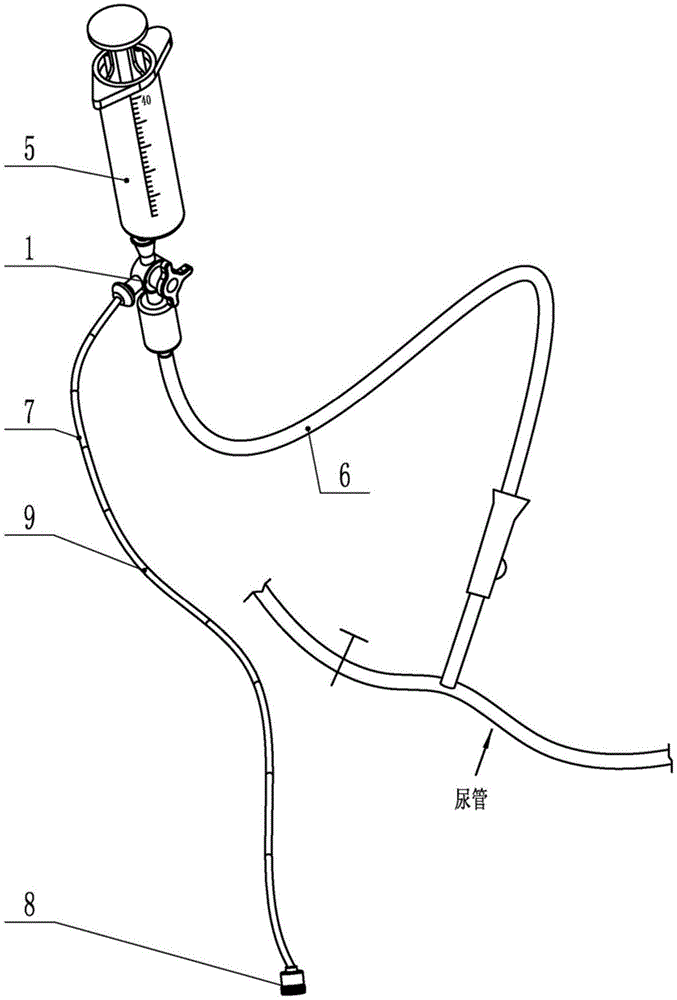
fig. 1 is a schematic view of the overall connection structure of the present invention.
Fig. 2 is the schematic diagram of the three-way valve according to the present invention.
Fig. 3 is an enlarged schematic view of a portion B in fig. 2.
In the figure: the device comprises a three-way valve 1, a first connector 2, a second connector 3, a third connector 4, an injector 5, a drainage tube 6, a piezometer tube 7, a sterile cap 8, scales 9, a cavity 10, a rotating block 11, a first through hole 12, a second through hole 13, an operating handle 14 and an indicator 15.
Detailed Description
The present invention will now be described in further detail with reference to the accompanying drawings. The attached drawings are simplified schematic diagrams, and only illustrate the basic structure of the present invention in a schematic manner, and thus only show the components related to the present invention.
Referring to fig. 1-3 shown, the utility model discloses a three-way valve 1, the intercommunication has first interface 2, second interface 3 and third interface 4 on the three-way valve 1, the intercommunication has syringe 5 on the first interface 2, the intercommunication has drainage tube 6 on the second interface 3, the intercommunication has pressure-measuring pipe 7 on the third interface 4, the one end cooperation that three-way valve 1 was kept away from to pressure-measuring pipe 7 is equipped with aseptic cap 8, the sign has scale 9 on the pipe wall of pressure-measuring pipe 7.
As shown in fig. 2, the three-way valve 1 includes a cavity 10 identical to the first port 2, the second port 3, and the third port 4, a rotating block 11 closely attached to an inner wall of the cavity 10 is rotatably connected to the cavity 10, and a first through hole 12 penetrating up and down and a second through hole 13 perpendicular to the first through hole 12 and penetrating to the left side of the rotating block 11 are formed in the rotating block 11.
An operating handle 14 is fixedly connected above the rotating block 11, and an indicator 15 is arranged on the upper end face of the rotating block 11.
Wherein the volume of the syringe is 40 ml.
The disposable intra-abdominal pressure monitoring kit is composed of: an infusion set (non-lightproof), a disposable external drainage bag, a three-way valve, a thermometer, physiological saline, a measuring tape and a 50ml syringe. The connection steps of each part are as follows:
the nurse wears the mask after washing hands and the sterile gloves, keeps the surrounding environment clean and tidy, opens the disposable external drainage bag, cuts the middle of the pipeline by the sterile scissors, reserves the drainage tube 6 for standby, then, the middle section of the infusion apparatus is cut off by aseptic scissors, the ventilation end is sealed by an aseptic cap 8, scales 9 are printed on the tube wall to form a piezometric tube 7, then the second interface 2 of the three-way valve 1 is communicated with a drainage tube 6, the third interface 4 is communicated with a piezometric tube 7, then preparing 40ml of normal saline by using a 50ml syringe, communicating the normal saline with the first interface 2, and finally exhausting the disposable intra-abdominal pressure monitor formed by connection for use, and (3) opening a control switch on the drainage tube 6, communicating the first through hole 12 with the first interface 2 and the third interface 4, not communicating the second through hole 13 with the second interface 3, and then pushing 20ml of physiological saline into the drainage tube 6 to close the control switch.
A double-cavity air bag urinary catheter is placed in a patient body and is communicated with a drainage tube 6, when the pressure of the bladder is monitored, a drainage bag is closed firstly, then 15-20ml of physiological saline is injected into the patient body through a three-way valve 1 through an injector 5, the tail end of a piezometric tube 7 is sealed through an aseptic cap 8, then a rotating block 11 is rotated clockwise through an operating handle 14, the connection condition of the three-way valve 1 can be quite clarified through an indicator 15, when the indicator 15 points to the right side, a first through hole 12 is communicated with a first interface 2 and a third interface 4, a second through hole 13 is not communicated with a second interface 3, then 20ml of physiological saline is slowly injected into the bladder, the zero point on the piezometric tube 7 is placed to the axillary midline, then the rotating block 11 is continuously rotated by 90 degrees, the piezometric tube 7 is communicated with the first through hole 12, the drainage tube 6 is communicated with the second through hole 13, the first through hole 12 is not communicated with the first interface 2, and then, the physiological saline returns to the piezometer tube 7, the height of the water column is recorded, and the drainage bag is opened after the monitoring is finished.
Finally, it should be noted that: although the present invention has been described in detail with reference to the foregoing embodiments, it will be apparent to those skilled in the art that modifications may be made to the embodiments described in the foregoing embodiments, or equivalents may be substituted for elements thereof. Any modification, equivalent replacement, or improvement made within the spirit and principle of the present invention should be included in the protection scope of the present invention.