CN211172126U - An excavator with a boom - Google Patents
An excavator with a boom Download PDFInfo
- Publication number
- CN211172126U CN211172126U CN201921847323.9U CN201921847323U CN211172126U CN 211172126 U CN211172126 U CN 211172126U CN 201921847323 U CN201921847323 U CN 201921847323U CN 211172126 U CN211172126 U CN 211172126U
- Authority
- CN
- China
- Prior art keywords
- excavator
- boom
- bucket
- utility
- movable ring
- Prior art date
- Legal status (The legal status is an assumption and is not a legal conclusion. Google has not performed a legal analysis and makes no representation as to the accuracy of the status listed.)
- Active
Links
Images


Landscapes
- Jib Cranes (AREA)
Abstract
本实用新型实施例公开了一种带有吊臂的挖掘机,用于解决现有偏僻地区的电线杆或电线塔一般采用人工施工进行安装,造成施工效率低下且带有一定安全隐患的技术问题。本实用新型实施例包括挖掘机主体,所述挖掘机主体上设置有机械臂,所述机械臂上设置有挖斗,所述挖斗的外侧壁上可拆卸连接有吊臂,所述吊臂远离所述挖斗的一端设置有活动环。本实施例中,利用在现有的挖掘机的挖斗上加装一个用于吊起电线杆或电线塔的吊臂,在吊臂上安装可以挂设绳索的活动环,利用挖掘机控制绳索移动电线杆或电线塔,可以大大增加电线杆或电线塔的安装效率,加快施工进度,节省人力。
The embodiment of the utility model discloses an excavator with a boom, which is used to solve the technical problems that the existing electric poles or electric towers in remote areas are generally installed by manual construction, resulting in low construction efficiency and certain safety hazards. . The embodiment of the utility model includes an excavator main body, a mechanical arm is arranged on the excavator main body, a bucket is arranged on the mechanical arm, and a boom is detachably connected to the outer side wall of the bucket, and the boom is One end away from the bucket is provided with a movable ring. In this embodiment, a boom for hoisting a utility pole or a power tower is installed on the bucket of an existing excavator, a movable ring that can hang a rope is installed on the boom, and the excavator is used to control the rope Moving the pole or tower can greatly increase the installation efficiency of the pole or tower, speed up the construction progress and save manpower.
Description
技术领域technical field
本实用新型涉及电网设备安装技术领域,尤其涉及一种带有吊臂的挖掘机。The utility model relates to the technical field of power grid equipment installation, in particular to an excavator with a boom.
背景技术Background technique
现有的种养殖业多处农村偏远地区,所设供电线路只能架设在田间小路或池塘小堤旁,大型吊臂起重机械完全无法进入工作现场。过去一直都是利用人工拖杆的方法立杆立塔,但这种方法效率低,大大增加了施工难度,并且无法确保施工进度及伴有很大的安全风险存在。There are many remote rural areas in the existing planting and breeding industry, and the power supply lines can only be erected on the field roads or ponds and small embankments, and large-scale jib cranes cannot enter the work site at all. In the past, the method of using manual tow bars to erect towers has always been used, but this method is inefficient, greatly increases the difficulty of construction, and cannot ensure the construction progress and is accompanied by great safety risks.
现有在田间小路或池塘小堤旁立杆仍采用人工拖杆的方法,有以下缺点:The existing method of using artificial tow rods on the field roads or pond small embankments still has the following disadvantages:
1、人工立杆立塔,单次立杆立塔需多人协作,耗费较多人力。1. Manually erecting a pole and tower, a single pole and tower requires the cooperation of many people, which consumes a lot of manpower.
2、12米普通水泥杆的标准重量为1070公斤。立杆过程中需多人抬起抱杆上端,拉动牵引绳使杆慢慢立起。这个过程的劳动强度极大,对立杆人员的身体素质和技能要求较高,且作业风险较高。2. The standard weight of a 12-meter ordinary cement pole is 1070 kg. In the process of erecting the pole, multiple people need to lift the upper end of the pole, and pull the traction rope to make the pole stand up slowly. The labor intensity of this process is extremely high, the physical fitness and skills of the pole personnel are relatively high, and the operation risk is relatively high.
3、采用人工立杆立塔,工作时间内的立杆立塔数往往达不到工程进度要求,造成施工进度拖慢的后果。3. Using artificial poles and towers, the number of poles and towers during working hours often fails to meet the requirements of the project progress, resulting in the consequence of slowing down the construction progress.
因此,为解决上述的技术问题,寻找一种带有吊臂的挖掘机成为本领域技术人员所研究的重要课题。Therefore, in order to solve the above-mentioned technical problems, finding an excavator with a boom has become an important subject studied by those skilled in the art.
实用新型内容Utility model content
本实用新型实施例公开了一种带有吊臂的挖掘机,用于解决现有偏僻地区的电线杆或电线塔一般采用人工施工进行安装,造成施工效率低下且带有一定安全隐患的技术问题。The embodiment of the utility model discloses an excavator with a boom, which is used to solve the technical problems that the existing electric poles or electric towers in remote areas are generally installed by manual construction, resulting in low construction efficiency and certain safety hazards. .
本实用新型实施例提供了一种带有吊臂的挖掘机,包括挖掘机主体,所述挖掘机主体上设置有机械臂,所述机械臂上设置有挖斗,所述挖斗的外侧壁上可拆卸连接有吊臂,所述吊臂远离所述挖斗的一端设置有活动环。The embodiment of the present utility model provides an excavator with a boom, including an excavator main body, a mechanical arm is arranged on the excavator main body, a bucket is arranged on the mechanical arm, and an outer side wall of the bucket is arranged A boom is detachably connected to the upper part, and a movable ring is provided at one end of the boom away from the bucket.
可选地,还包括三个螺丝和三个螺母;Optionally, three screws and three nuts are also included;
所述挖斗的外侧壁上开设有呈三角形分布的三个第一圆孔,所述吊臂靠近所述挖斗的一端设置有与所述第一圆孔相匹配的三个第二圆孔,所述挖斗的内侧壁上设置有螺纹垫片,其中两个螺丝穿过第二圆孔、第一圆孔、螺纹垫片后与螺母进行螺纹连接,其中一个螺丝穿过第二圆孔、第一圆孔与螺母进行螺纹连接。The outer side wall of the bucket is provided with three first circular holes distributed in a triangle, and the end of the boom close to the bucket is provided with three second circular holes matching the first circular holes , the inner side wall of the bucket is provided with a threaded gasket, wherein two screws pass through the second round hole, the first round hole, and the threaded gasket to be threadedly connected with the nut, and one of the screws passes through the second round hole , The first round hole is threadedly connected with the nut.
可选地,所述活动环上挂设有钢索。Optionally, a steel cable is hung on the movable ring.
可选地,所述挖掘机主体上还设置有履带;Optionally, the main body of the excavator is further provided with a crawler;
所述履带包括有两条,两条所述履带分别对称设置于所述挖掘机主体的两侧。There are two crawler belts, and the two crawler belts are symmetrically arranged on both sides of the main body of the excavator.
可选地,所述活动环与所述吊臂可拆卸连接。Optionally, the movable ring is detachably connected to the boom.
从以上技术方案可以看出,本实用新型实施例具有以下优点:As can be seen from the above technical solutions, the embodiments of the present utility model have the following advantages:
本实用新型实施例提供了一种带有吊臂的挖掘机,包括挖掘机主体,所述挖掘机主体上设置有机械臂,所述机械臂上设置有挖斗,所述挖斗的外侧壁上可拆卸连接有吊臂,所述吊臂远离所述挖斗的一端设置有活动环。本实施例中,利用在现有的挖掘机的挖斗上加装一个用于吊起电线杆或电线塔的吊臂,在吊臂上安装可以挂设绳索的活动环,利用挖掘机控制绳索移动电线杆或电线塔,可以大大增加电线杆或电线塔的安装效率,加快施工进度,节省人力。The embodiment of the present utility model provides an excavator with a boom, including an excavator main body, a mechanical arm is arranged on the excavator main body, a bucket is arranged on the mechanical arm, and an outer side wall of the bucket is arranged A boom is detachably connected to the upper part, and a movable ring is provided at one end of the boom away from the bucket. In this embodiment, a boom for hoisting a utility pole or a power tower is installed on the bucket of an existing excavator, a movable ring that can hang a rope is installed on the boom, and the excavator is used to control the rope Moving the pole or tower can greatly increase the installation efficiency of the pole or tower, speed up the construction progress and save manpower.
附图说明Description of drawings
为了更清楚地说明本实用新型实施例或现有技术中的技术方案,下面将对实施例或现有技术描述中所需要使用的附图作简单地介绍,显而易见地,下面描述中的附图仅仅是本实用新型的一些实施例,对于本领域普通技术人员来讲,在不付出创造性劳动性的前提下,还可以根据这些附图获得其它的附图。In order to more clearly illustrate the embodiments of the present utility model or the technical solutions in the prior art, the following briefly introduces the accompanying drawings that need to be used in the description of the embodiments or the prior art. Obviously, the accompanying drawings in the following description These are just some embodiments of the present invention, and for those of ordinary skill in the art, other drawings can also be obtained from these drawings without creative labor.
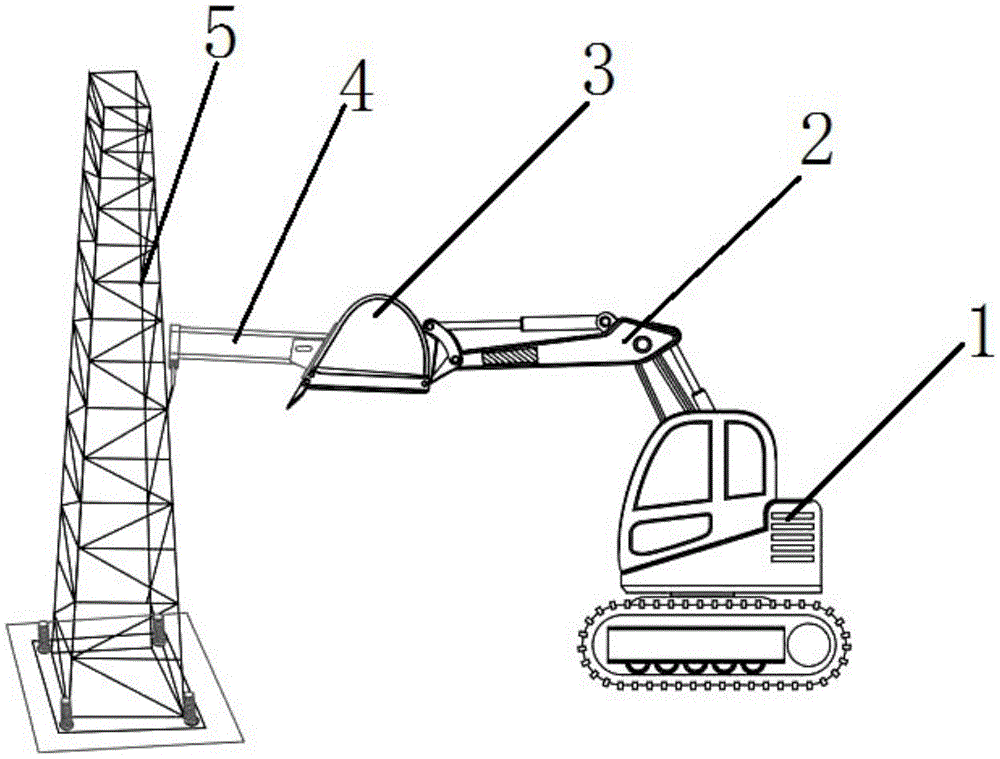
图1为本实用新型实施例中提供的一种带有吊臂的挖掘机的结构示意图;1 is a schematic structural diagram of an excavator with a boom provided in an embodiment of the present utility model;
图2为本实用新型实施例中提供的一种带有吊臂的挖掘机的吊臂结构示意图;2 is a schematic diagram of a boom structure of an excavator with a boom provided in an embodiment of the present utility model;
图3为本实用新型实施例中提供的一种带有吊臂的挖掘机的吊臂的爆炸视图;3 is an exploded view of a boom of an excavator with a boom provided in an embodiment of the present utility model;
图4为本实用新型实施例中提供的一种带有吊臂的挖掘机的挖斗的结构示意图;4 is a schematic structural diagram of a bucket of an excavator with a boom provided in an embodiment of the present utility model;
图5为本实用新型实施例中提供的一种带有吊臂的挖掘机中挖斗与吊臂之间的连接示意图;5 is a schematic diagram of the connection between a bucket and a boom in an excavator with a boom provided in an embodiment of the present utility model;
图示说明:挖掘机主体1;机械臂2;挖斗3;吊臂4;电线塔5;活动环 6;螺纹垫片7;第一圆孔8;螺丝9;螺母10;第二圆孔11。Description: excavator main body 1;
具体实施方式Detailed ways
本实用新型实施例公开了一种带有吊臂的挖掘机,用于解决现有偏僻地区的电线杆或电线塔一般采用人工施工进行安装,造成施工效率低下且带有一定安全隐患的技术问题。The embodiment of the utility model discloses an excavator with a boom, which is used to solve the technical problems that the existing electric poles or electric towers in remote areas are generally installed by manual construction, resulting in low construction efficiency and certain safety hazards. .
为了使本技术领域的人员更好地理解本发明方案,下面结合附图和具体实施方式对本发明作进一步的详细说明。显然,所描述的实施例仅仅是本发明一部分实施例,而不是全部的实施例。基于本发明中的实施例,本领域普通技术人员在没有做出创造性劳动前提下所获得的所有其他实施例,都属于本发明保护的范围。In order to make those skilled in the art better understand the solution of the present invention, the present invention will be further described in detail below with reference to the accompanying drawings and specific embodiments. Obviously, the described embodiments are only some, but not all, embodiments of the present invention. Based on the embodiments of the present invention, all other embodiments obtained by those of ordinary skill in the art without creative efforts shall fall within the protection scope of the present invention.
请参阅图1至图5,本实用新型实施例中提供的一种带有吊臂的挖掘机的一个实施例包括:Referring to FIGS. 1 to 5 , an embodiment of an excavator with a boom provided in an embodiment of the present invention includes:
挖掘机主体1,所述挖掘机主体1上设置有机械臂2,所述机械臂2上设置有挖斗3,所述挖斗3的外侧壁上可拆卸连接有吊臂4,所述吊臂4远离所述挖斗3的一端设置有活动环6。Excavator main body 1, the excavator main body 1 is provided with a
本实施例中,利用在现有的挖掘机的挖斗3上加装一个用于吊起电线杆或电线塔5的吊臂4,在吊臂4上安装可以挂设绳索的活动环6,利用挖掘机控制绳索移动电线杆或电线塔5,可以大大增加电线杆或电线塔5的安装效率,加快施工进度,节省人力。In this embodiment, a
进一步地,还包括三个螺丝9和三个螺母10;Further, it also includes three
所述挖斗3的外侧壁上开设有呈三角形分布的三个第一圆孔8,所述吊臂 4靠近所述挖斗3的一端设置有与所述第一圆孔8相匹配的三个第二圆孔11,所述挖斗3的内侧壁上设置有螺纹垫片7,其中两个螺丝9穿过第二圆孔11、第一圆孔8、螺纹垫片7后与螺母10进行螺纹连接,其中一个螺丝9穿过第二圆孔11、第一圆孔8与螺母10进行螺纹连接。The outer side wall of the
需要说明的是,通过将吊臂4和挖斗3进行螺纹连接,可以方便工作人员进行组装或拆卸。It should be noted that, by screwing the
进一步地,所述活动环6上挂设有钢索。Further, a steel cable is hung on the
需要说明的是,钢索的一端挂扣与活动环6上,另一端用于绑住电线塔5 或电线杆,如图1所示。It should be noted that one end of the steel cable is hooked to the
进一步地,所述挖掘机主体1上还设置有履带;Further, the excavator body 1 is also provided with crawler belts;
所述履带包括有两条,两条所述履带分别对称设置于所述挖掘机主体1 的两侧。There are two crawler belts, and the two crawler belts are symmetrically arranged on both sides of the excavator main body 1 respectively.
进一步地,所述活动环6与所述吊臂4可拆卸连接。Further, the
需要说明的是,采用活动环6与吊臂4进行螺纹连接的方式,可以方便工作人员进行组装或拆卸。It should be noted that the use of the way in which the
本实施例中的一种带有吊臂4的挖掘机的优点在于:The advantages of an excavator with a
1、采用加装专用吊臂4的挖掘机安装电线杆或电线塔5,安装过程所需的作业人员数量大幅度减少,节省了人力。1. Using the excavator equipped with the
2、安装电线杆或电线塔5过程应用机械替代人力立杆,减少作业人员安装电线杆或电线塔5过程中的作业风险,且有效提高了安装电线杆或电线塔5 的效率。2. In the process of installing utility poles or electrical towers 5, machinery is used instead of manpower poles, which reduces the operation risk of operators in the process of installing utility poles or electrical towers 5, and effectively improves the efficiency of installing electrical poles or electrical towers 5.
3、吊臂4装设在挖斗3上,增加了吊臂4的高度;吊臂4尾端采用活动环6来套钢丝绳,解决挖机套上钢丝绳后无法灵活转动的问题。3. The
在此,仅为了描述特定的示例实施例的目的使用专业词汇,并且不是意指为限制的目的。除非上下文清楚地作出相反的表示,在此使用的单数形式“一个(a)”、“一个(an)”和“该(the)”可以意指为也包括复数形式。术语“包括(comprises)”、“包括(comprising)”、“包括(including)”和“具有(having)”是包括在内的意思,并且因此指定存在所声明的特征、整体、步骤、操作;步骤、操作、元件、组件和/或其组合。除非明确地指示了执行的次序,在此描述的该方法步骤、处理和操作不解释为一定需要按照所论述和示出的特定的次序执行。还应当理解的是,可以采用附加的或者可选择的步骤。Here, specialized vocabulary is used for the purpose of describing particular example embodiments only and is not intended to be limiting. As used herein, the singular forms "a", "an (an)" and "the (the)" may be intended to include the plural forms as well, unless the context clearly dictates otherwise. The terms "comprises", "comprising", "including" and "having" are inclusive and thus specify the presence of the stated features, integers, steps, operations; steps, operations, elements, components and/or combinations thereof. Unless the order of performance is explicitly indicated, the method steps, processes, and operations described herein are not to be construed as necessarily requiring performance in the particular order discussed and illustrated. It should also be understood that additional or alternative steps may be employed.
当元件或者层称为是“在……上”、“与……接合”、“连接到”或者“联接到”另一个元件或层,其可以是直接在另一个元件或者层上、与另一个元件或层接合、连接到或者联接到另一个元件或层,也可以存在介于其间的元件或者层。与此相反,当元件或层称为是“直接在……上”、“与……直接接合”、“直接连接到”或者“直接联接到”另一个元件或层,则可能不存在介于其间的元件或者层。其他用于描述元件关系的词应当以类似的方式解释(例如,“在……之间”和“直接在……之间”、“相邻”和“直接相邻”等)。在此使用的术语“和/或”包括该相关联的所罗列的项目的一个或以上的任一和所有的组合。虽然此处可能使用了术语第一、第二、第三等以描述各种的元件、组件、区域、层和/或部分,这些元件、组件、区域、层和/或部分不受到这些术语的限制。这些术语可以只用于将一个元件、组件、区域或部分与另一个元件、组件、区域或部分区分。除非由上下文清楚地表示,在此使用诸如术语“第一”、“第二”及其他数值的术语不意味序列或者次序。因此,在下方论述的第一元件、组件、区域、层或者部分可以采用第二元件、组件、区域、层或者部分的术语而不脱离该示例实施例的教导。When an element or layer is referred to as being "on," "engaged with," "connected to," or "coupled to" another element or layer, it can be directly on, or in conjunction with, the other element or layer. One element or layer is joined, connected or coupled to another element or layer, and intervening elements or layers may also be present. In contrast, when an element or layer is referred to as being "directly on," "directly engaged with," "directly connected to," or "directly coupled to" another element or layer, there may be no intervening elements or layers in between. Other words used to describe the relationship of elements should be interpreted in a similar fashion (eg, "between" and "directly between," "adjacent" and "directly adjacent," etc.). As used herein, the term "and/or" includes any and all combinations of one or more of the associated listed items. Although the terms first, second, third, etc. may be used herein to describe various elements, components, regions, layers and/or sections, these elements, components, regions, layers and/or sections are not limited by these terms limit. These terms may only be used to distinguish one element, component, region or section from another element, component, region or section. The use of terms such as the terms "first," "second," and other numerical terms herein do not imply a sequence or order unless clearly indicated by the context. Thus, a first element, component, region, layer or section discussed below could be termed a second element, component, region, layer or section without departing from the teachings of the example embodiments.
空间的相对术语,诸如“内”、“外”、“在下面”、“在……的下方”、“下部”、“上方”、“上部”等,在此可出于便于描述的目的使用,以描述如图中所示的一个元件或者特征和另外一个或多个元件或者特征之间的关系。空间的相对术语可以意指包含除该图描绘的取向之外该装置的不同的取向。例如如果翻转该图中的装置,则描述为“在其他元件或者特征的下方”或者“在元件或者特征的下面”的元件将取向为“在其他元件或者特征的上方”。因此,示例术语“在……的下方”可以包含朝上和朝下的两种取向。该装置可以以其他方式取向(旋转90度或者其他取向)并且以此处的空间的相对描述解释。Spatially relative terms, such as "inside", "outside", "below", "below", "lower", "above", "upper", etc., may be used herein for ease of description , to describe the relationship between one element or feature and one or more other elements or features as shown in the figures. Spatially relative terms may be meant to encompass different orientations of the device than the orientation depicted in this figure. For example, if the device in this figure is turned over, elements described as "below" or "beneath" other elements or features would then be oriented "above" the other elements or features. Thus, the example term "under" can encompass both an orientation of upward and downward. The device may be otherwise oriented (rotated 90 degrees or otherwise) and interpreted in relative terms of space herein.
以上对本实用新型所提供的一种带有吊臂的挖掘机进行了详细介绍,对于本领域的一般技术人员,依据本实用新型实施例的思想,在具体实施方式及应用范围上均会有改变之处,综上所述,本说明书内容不应理解为对本实用新型的限制。The excavator with a boom provided by the present invention has been described in detail above. For those skilled in the art, according to the idea of the embodiment of the present invention, there will be changes in the specific implementation and application scope. In conclusion, the content of this specification should not be construed as a limitation to the present invention.
Claims (5)
Priority Applications (1)
| Application Number | Priority Date | Filing Date | Title |
|---|---|---|---|
| CN201921847323.9U CN211172126U (en) | 2019-10-30 | 2019-10-30 | An excavator with a boom |
Applications Claiming Priority (1)
| Application Number | Priority Date | Filing Date | Title |
|---|---|---|---|
| CN201921847323.9U CN211172126U (en) | 2019-10-30 | 2019-10-30 | An excavator with a boom |
Publications (1)
| Publication Number | Publication Date |
|---|---|
| CN211172126U true CN211172126U (en) | 2020-08-04 |
Family
ID=71803659
Family Applications (1)
| Application Number | Title | Priority Date | Filing Date |
|---|---|---|---|
| CN201921847323.9U Active CN211172126U (en) | 2019-10-30 | 2019-10-30 | An excavator with a boom |
Country Status (1)
| Country | Link |
|---|---|
| CN (1) | CN211172126U (en) |
Cited By (1)
| Publication number | Priority date | Publication date | Assignee | Title |
|---|---|---|---|---|
| CN110644543A (en) * | 2019-10-30 | 2020-01-03 | 广东电网有限责任公司 | Excavator with suspension arm |
-
2019
- 2019-10-30 CN CN201921847323.9U patent/CN211172126U/en active Active
Cited By (1)
| Publication number | Priority date | Publication date | Assignee | Title |
|---|---|---|---|---|
| CN110644543A (en) * | 2019-10-30 | 2020-01-03 | 广东电网有限责任公司 | Excavator with suspension arm |
Similar Documents
| Publication | Publication Date | Title |
|---|---|---|
| CN100480481C (en) | Quadrangular pyramid sphere net case falsework-free constructing and mounting method and hoisting machine tool | |
| CN102040166A (en) | Hoisting tool for equipment on pillar | |
| CN104925672B (en) | The all-hydraulic self-crawling type two-sided tower crane of suspension | |
| CN203998746U (en) | Portable suspension installation | |
| CN201517022U (en) | Lifting tools for pole-mounted equipment | |
| CN211594766U (en) | Hoisting device | |
| CN205222518U (en) | Outdoor equipment hoisting accessory | |
| CN112249876A (en) | An installation platform and installation method for large-tonnage prefabricated pipe piles | |
| CN110644543A (en) | Excavator with suspension arm | |
| CN208120600U (en) | A kind of quick provision for disengagement of large size inside-climbing tower crane | |
| CN101967902A (en) | Basic guide rail for helicopter assembly transmission line iron tower leg section | |
| CN101967903A (en) | Basic guide rail for helicopter assembly transmission line iron tower leg section | |
| CN201440587U (en) | a pay-off tackle | |
| CN105584938A (en) | Mast crane applied to river network area | |
| CN202657876U (en) | 110kV line surge arrester hoisting frame | |
| CN204040498U (en) | A kind of steel work Multi-section column lifting automatic decoupling device | |
| CN204959759U (en) | Automatic watering device of concrete maintenance | |
| CN205687456U (en) | A kind of portable high-pressure line guy dish delivery device | |
| CN203065072U (en) | Lifting device for substation outdoor equipment | |
| CN211226088U (en) | Portable substation column equipment hoisting device | |
| CN106608596A (en) | Lifting device for outdoor equipment | |
| CN207999218U (en) | A kind of mast installation and rotary drilling rig | |
| CN223562593U (en) | A pole-holding device for erecting cement utility poles | |
| CN102022020B (en) | A kind of tower lifting tackles connector and hoisting method | |
| CN104453339B (en) | Power circuit steel pipe pole erection assembling tool and technique |
Legal Events
| Date | Code | Title | Description |
|---|---|---|---|
| GR01 | Patent grant | ||
| GR01 | Patent grant |