CN210047157U - Wear-resistant antibacterial wool blended fabric - Google Patents
Wear-resistant antibacterial wool blended fabric Download PDFInfo
- Publication number
- CN210047157U CN210047157U CN201920076863.5U CN201920076863U CN210047157U CN 210047157 U CN210047157 U CN 210047157U CN 201920076863 U CN201920076863 U CN 201920076863U CN 210047157 U CN210047157 U CN 210047157U
- Authority
- CN
- China
- Prior art keywords
- wear
- fibers
- fabric
- resistant
- wool blended
- Prior art date
- Legal status (The legal status is an assumption and is not a legal conclusion. Google has not performed a legal analysis and makes no representation as to the accuracy of the status listed.)
- Active
Links
- 239000004744 fabric Substances 0.000 title claims abstract description 92
- 210000002268 wool Anatomy 0.000 title claims abstract description 39
- 230000000844 anti-bacterial effect Effects 0.000 title claims abstract description 36
- 229920000742 Cotton Polymers 0.000 claims abstract description 33
- 239000000835 fiber Substances 0.000 claims abstract description 29
- 235000017166 Bambusa arundinacea Nutrition 0.000 claims abstract description 22
- 235000017491 Bambusa tulda Nutrition 0.000 claims abstract description 22
- 241001330002 Bambuseae Species 0.000 claims abstract description 22
- 235000015334 Phyllostachys viridis Nutrition 0.000 claims abstract description 22
- 239000011425 bamboo Substances 0.000 claims abstract description 22
- 229920003043 Cellulose fiber Polymers 0.000 claims abstract description 20
- 239000003610 charcoal Substances 0.000 claims abstract description 20
- 238000004321 preservation Methods 0.000 claims abstract description 20
- 239000004627 regenerated cellulose Substances 0.000 claims abstract description 20
- 230000003115 biocidal effect Effects 0.000 claims abstract description 17
- 239000004831 Hot glue Substances 0.000 claims abstract description 12
- 229920000433 Lyocell Polymers 0.000 claims abstract description 10
- 238000007731 hot pressing Methods 0.000 claims abstract description 4
- 229920002334 Spandex Polymers 0.000 claims description 12
- 239000004759 spandex Substances 0.000 claims description 12
- 229920006221 acetate fiber Polymers 0.000 claims description 9
- 210000000050 mohair Anatomy 0.000 claims description 9
- 229920001778 nylon Polymers 0.000 claims description 9
- 229920002972 Acrylic fiber Polymers 0.000 claims description 8
- 238000005299 abrasion Methods 0.000 claims 1
- 230000035699 permeability Effects 0.000 abstract description 9
- 238000010521 absorption reaction Methods 0.000 abstract description 7
- 241000894006 Bacteria Species 0.000 abstract description 5
- XLYOFNOQVPJJNP-UHFFFAOYSA-N water Substances O XLYOFNOQVPJJNP-UHFFFAOYSA-N 0.000 abstract description 5
- 241000238631 Hexapoda Species 0.000 abstract description 4
- 238000009395 breeding Methods 0.000 abstract description 4
- 230000001488 breeding effect Effects 0.000 abstract description 4
- 230000001580 bacterial effect Effects 0.000 abstract description 3
- 238000004332 deodorization Methods 0.000 abstract description 3
- 230000002265 prevention Effects 0.000 abstract description 3
- 239000004753 textile Substances 0.000 description 7
- NIXOWILDQLNWCW-UHFFFAOYSA-N acrylic acid group Chemical group C(C=C)(=O)O NIXOWILDQLNWCW-UHFFFAOYSA-N 0.000 description 4
- 238000004804 winding Methods 0.000 description 4
- 244000025254 Cannabis sativa Species 0.000 description 3
- 235000012766 Cannabis sativa ssp. sativa var. sativa Nutrition 0.000 description 3
- 235000012765 Cannabis sativa ssp. sativa var. spontanea Nutrition 0.000 description 3
- 235000009120 camo Nutrition 0.000 description 3
- 235000005607 chanvre indien Nutrition 0.000 description 3
- 239000011487 hemp Substances 0.000 description 3
- 239000012535 impurity Substances 0.000 description 3
- 230000002035 prolonged effect Effects 0.000 description 3
- 229920000049 Carbon (fiber) Polymers 0.000 description 2
- 239000004917 carbon fiber Substances 0.000 description 2
- 150000001875 compounds Chemical class 0.000 description 2
- 230000000694 effects Effects 0.000 description 2
- 230000006872 improvement Effects 0.000 description 2
- 239000000463 material Substances 0.000 description 2
- 238000000034 method Methods 0.000 description 2
- 230000004048 modification Effects 0.000 description 2
- 238000012986 modification Methods 0.000 description 2
- 239000003513 alkali Substances 0.000 description 1
- 244000052616 bacterial pathogen Species 0.000 description 1
- 230000009286 beneficial effect Effects 0.000 description 1
- 230000007547 defect Effects 0.000 description 1
- 239000002781 deodorant agent Substances 0.000 description 1
- 230000036541 health Effects 0.000 description 1
- 238000002156 mixing Methods 0.000 description 1
- 238000009941 weaving Methods 0.000 description 1
Images


Landscapes
- Woven Fabrics (AREA)
Abstract
The utility model discloses a wear-resisting antibiotic wool blended fabric, including surface fabric, heat preservation antibacterial layer and wearing layer, the surface fabric upper surface has sewed up the heat preservation antibacterial layer through the cotton thread, and the heat preservation antibacterial layer includes bamboo charcoal fiber, hot melt adhesive and cotton fiber, and the bamboo charcoal fiber upper surface has bonded cotton fiber through the hot melt adhesive, and the heat preservation antibacterial layer is through hot pressing complex with the wearing layer, and the wearing layer upper surface is provided with wear-resisting piece, the utility model discloses a regenerated cellulose fibre comprises modal and tencel, and modal and tencel quantity ratio is 2:1, can improve the gas permeability that absorbs water greatly through regenerated cellulose fibre, is difficult for breeding the bacterium, makes the surface fabric softer silky moreover; the bamboo charcoal fiber and the cotton fiber are separated by 5 microns, so that the moisture absorption and air permeability of the bamboo charcoal fiber can be improved, the comfort of the fabric is stronger in warmth in winter and coolness in summer, the bacterial breeding can be avoided through the bamboo charcoal fiber, the antibacterial property is good, the insect prevention and deodorization are realized, and the strong practicability is realized.
Description
Technical Field
The utility model relates to a textile fabric correlation technique field specifically is a wear-resisting antibiotic wool blended fabric.
Background
Fabric is the material used to make clothing. As one of the three elements of the garment, the fabric not only can explain the style and the characteristics of the garment, but also directly controls the expression effects of the color and the shape of the garment. With the continuous improvement of the material and living standard of people, the requirements on the textile are turned from the basic requirements to mainly pursue fashion and express individuality, the requirements on the quantity, variety, grade and quality of the textile are higher and higher, and the textile is gradually finished, matched, fashionable and individualized. China is a large textile country, along with the rapid development of textile industry, market competition is more and more intense, and the profit rate of conventional products is lower and lower, even at loss. The development of a novel and breakthrough product is the only way for textile enterprises to go out of the predicament and go to refulgence, but the existing fabric has single function and poor wear resistance, so that the service life of the fabric is short; and along with the continuous enhancement of the health concept of consumers, the consumers pay more attention to the antibacterial performance of the fabric, the existing fabric is poor in air permeability, easy to accumulate a large amount of germs and the like, and poor in antibacterial effect, so that the wear-resistant antibacterial wool blended fabric is improved, and is used for solving the problems.
SUMMERY OF THE UTILITY MODEL
For solving the defect that prior art exists, the utility model provides a wear-resisting antibiotic wool blended fabric.
In order to solve the technical problem, the utility model provides a following technical scheme:
the utility model relates to a wear-resisting antibiotic wool blending surface fabric, including surface fabric, heat preservation antibiotic layer and wearing layer, the heat preservation antibiotic layer has been sewed up through the cotton thread to the surface fabric upper surface, the heat preservation antibiotic layer includes bamboo charcoal fiber, hot melt adhesive and cotton fiber, bamboo charcoal fiber upper surface bonds through the hot melt adhesive has cotton fiber, the heat preservation antibiotic layer is compound through hot pressing with the wearing layer, the wearing layer upper surface is provided with wear-resisting piece.
As an optimal technical scheme of the utility model, the surface fabric includes vertical surface fabric and horizontal surface fabric, vertical surface fabric and the perpendicular equidistance of horizontal surface fabric are arranged, and remain 10 microns interval between adjacent vertical surface fabric and the horizontal surface fabric.
As an optimal technical scheme of the utility model, vertical surface fabric includes that acrylic fibres silk thread and wool mix the yarn, the wool mixes every three of arranging of yarn and inserts an acrylic fibres silk thread, and acrylic fibres silk thread mixes yarn reverse winding with the wool.
As an optimal technical scheme of the utility model, horizontal surface fabric includes spandex and regenerated cellulose fibre, every five strips of arranging of regenerated cellulose fibre insert a spandex, and spandex and the reverse winding of regenerated cellulose fibre.
As a preferred technical proposal of the utility model, the regenerated cellulose fiber consists of modal and tencel, and the quantity ratio of the modal to the tencel is 2: 1.
As an optimized technical scheme of the utility model, cotton fiber is through combing the processing, and cotton fiber length is 80 mm.
As an optimized technical proposal of the utility model, the hot melt adhesive is evenly arranged with the circumference, and the interval between the bamboo charcoal fiber and the cotton fiber is 5 microns.
As an optimal technical scheme of the utility model, the wearing layer comprises nylon fiber, saint hemp fiber, acetate fiber, mohair yarn and chenille yarn, and twines between adjacent nylon fiber, saint hemp fiber, acetate fiber, mohair yarn and the chenille yarn and weave.
As an optimal technical scheme of the utility model, wear-resisting piece becomes the arc form, the vertical equidistance of wear-resisting piece is arranged, and remains 100 microns interval between the adjacent wear-resisting piece.
As an optimized technical scheme of the utility model, the thickness range of the heat preservation antibacterial layer is 0.3-0.5 mm, and the thickness range of the wear-resistant layer is 0.4-0.8 mm.
Compared with the prior art, the beneficial effects of the utility model are that:
(1) the regenerated cellulose fiber of the utility model consists of modal and tencel, and the quantity ratio of the modal to the tencel is 2:1, so that the water absorption and air permeability can be greatly improved through the regenerated cellulose fiber, bacteria are not easy to breed, and the fabric is softer and smoother.
(2) The utility model discloses a cotton fiber is through combing the processing, can reject the impurity in the cotton, has improved the toughness of cotton, is difficult for the balling-up, and this wear-resisting antibiotic wool blended fabric's use feel, wearability all can improve.
(3) The utility model discloses a 5 microns in interval between bamboo charcoal fiber and the cotton fiber, can improve bamboo charcoal fiber's moisture absorption gas permeability, make the surface fabric warm in winter and cool in summer travelling comfort stronger, can avoid bacterial growing through bamboo charcoal fiber moreover, the bacterinertness is good, and the protection against insects is deodorant, has very strong practicality.
(4) The utility model discloses a wearing layer is woven by the winding between nylon fiber, saint hemp fiber, acetate fiber, mohair yarn and the chenille yarn, can improve this wear-resisting antibiotic wool blended fabric's toughness, and the wearability is good, and life prolongs greatly.
Drawings
The accompanying drawings are included to provide a further understanding of the invention, and are incorporated in and constitute a part of this specification, illustrate embodiments of the invention, and together with the description serve to explain the invention and not to limit the invention. In the drawings:
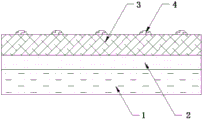
FIG. 1 is a schematic structural view of the present invention;
FIG. 2 is a schematic view of the structure of the fabric of the present invention;
FIG. 3 is a schematic view of the structure of the heat-insulating antibacterial layer of the present invention;
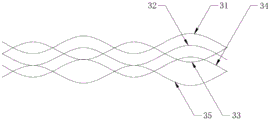
fig. 4 is a schematic view of the structure of the wear-resistant layer of the present invention.
In the figure: the fabric comprises a fabric 1, a longitudinal fabric 11, an acrylic yarn 111, a wool blended fabric 112, a transverse fabric 12, spandex 121, regenerated cellulose fibers 122, a heat-preservation antibacterial layer 2, bamboo charcoal fibers 21, hot melt adhesives 22, cotton fibers 23, a wear-resistant layer 3, nylon fibers 31, Shengma fibers 32, acetate fibers 33, mohair yarns 34, chenille yarns 35 and wear-resistant blocks 4.
Detailed Description
The preferred embodiments of the present invention will be described in conjunction with the accompanying drawings, and it will be understood that they are presented herein only to illustrate and explain the present invention, and not to limit the present invention.
Example (b):
referring to fig. 1, fig. 2, fig. 3 and fig. 4, the utility model relates to a wear-resisting antibiotic wool blended fabric, including surface fabric 1, heat preservation antibiotic layer 2 and wearing layer 3, the antibiotic layer 2 of heat preservation has been sewed up through the cotton thread to surface fabric 1 upper surface, and the antibiotic layer 2 of heat preservation includes bamboo charcoal fiber 21, hot melt adhesive 22 and cotton fiber 23, and bamboo charcoal fiber 21 upper surface has cotton fiber 23 through hot melt adhesive 22 bonding, and the antibiotic layer 2 of heat preservation passes through hot pressing with wearing layer 3 and compounds, and wearing layer 3 upper surface is provided with wear-resisting piece 4.
Referring to fig. 2, the fabric 1 includes a longitudinal fabric 11 and a transverse fabric 12, the longitudinal fabric 11 and the transverse fabric 12 are vertically and equidistantly arranged, and a 10-micron interval is reserved between the adjacent longitudinal fabric 11 and the transverse fabric 12.
Referring to fig. 2, the longitudinal fabric 11 includes acrylic yarns 111 and wool mixed yarns 112, one acrylic yarn 111 is inserted into each arrangement of the wool mixed yarns 112, and the acrylic yarns 111 and the wool mixed yarns 112 are reversely wound.
Referring to fig. 2, the transverse fabric 12 includes spandex 121 and regenerated cellulose fibers 122, one spandex 121 is inserted into each five arranged regenerated cellulose fibers 122, and the spandex 121 is reversely wound around the regenerated cellulose fibers 122.
Referring to fig. 1 and 2, the regenerated cellulose fibers 122 are composed of modal and tencel, and the number ratio of the modal to the tencel is 2:1, so that the water absorption and air permeability can be greatly improved through the regenerated cellulose fibers 122, bacteria are not easy to breed, and the fabric 1 is softer and smoother.
Referring to fig. 4, after the cotton fibers 23 are subjected to combing treatment, impurities in the cotton can be removed, the toughness of the cotton is improved, pilling is not easy to occur, the use texture and the wear resistance of the wear-resistant antibacterial wool blended fabric are improved, and the length of the cotton fibers 23 is 80 mm.
Referring to fig. 4, the hot melt adhesive 22 is uniformly arranged in a circumference, and the bamboo charcoal fiber 21 and the cotton fiber 23 are spaced by 5 microns, so that the moisture absorption and air permeability of the bamboo charcoal fiber 21 can be improved, the comfort of the fabric 1 is stronger in warmth in winter and coolness in summer, the bacterial breeding can be avoided through the bamboo charcoal fiber 21, the antibacterial property is good, the insect prevention and deodorization are realized, and the strong practicability is realized.
Referring to fig. 1 and 3, the wear-resistant layer 3 is composed of nylon fibers 31, Shengma fibers 32, acetate fibers 33, mohair yarns 34 and chenille yarns 35, and the nylon fibers 31, the Shengma fibers 32, the acetate fibers 33, the mohair yarns 34 and the chenille yarns 35 which are adjacent to each other are wound and woven, so that the tenacity of the wear-resistant antibacterial wool blended fabric can be improved, the wear resistance is good, and the service life is greatly prolonged.
Referring to fig. 1, the wear-resistant blocks 4 are arc-shaped, the wear-resistant blocks 4 are longitudinally arranged at equal intervals, and a space of 100 micrometers is reserved between adjacent wear-resistant blocks 4.
Referring to fig. 1, the thickness of the heat preservation antibacterial layer 2 ranges from 0.3 mm to 0.5 mm, and the thickness of the wear-resistant layer 3 ranges from 0.4 mm to 0.8 mm.
The working principle is as follows: firstly, the fabric 1 consists of an acrylic fiber yarn 111, a wool blended yarn 112, spandex 121 and regenerated cellulose fibers 122, the wool blended yarn 112 is softer and fluffier through the acrylic fiber yarn 111, the light resistance is better, the alkali resistance and the elasticity of the fabric 1 can be improved through the spandex 121, the fabric is not easy to damage, the service life of the fabric 1 is prolonged, the water absorption and air permeability can be greatly improved through the regenerated cellulose fibers 122, bacteria are not easy to breed, the fabric 1 is softer and silky, impurities in cotton are eliminated through combing treatment of the cotton fibers 23, the toughness of the cotton is improved, pilling is not easy to occur, the use texture and the wear resistance of the wear-resistant antibacterial wool blended fabric are improved, a 5-micron interval is reserved between the bamboo carbon fibers 21 and the cotton fibers 23, the moisture absorption and air permeability of the bamboo carbon fibers 21 can be improved, the fabric 1 is warm in winter and cool in summer and more comfortable, and the bacteria breeding can be, the wear-resistant antibacterial wool blended fabric has the advantages that the antibacterial property is good, the insect prevention and deodorization are realized, the wear-resistant layer 3 is formed by winding and weaving nylon fibers 31, Shengma fibers 32, acetate fibers 33, mohair yarns 34 and chenille yarns 35, the toughness of the wear-resistant antibacterial wool blended fabric can be improved, the wear resistance is good, the service life is greatly prolonged, the wear-resistant blocks 4 can prevent the fabric 1 from being directly damaged in use, heat, water vapor and the like can be led out of the fabric 1 in use, the comfort is high, a good waterproof effect can be achieved, the fabric 1 is prevented from being wetted by external rainwater and the like, and the wear-resistant antibacterial wool blended fabric is a use method of the wear-resistant antibacterial wool blended fabric, and the content which is not described in detail in the specification belongs to the.
Finally, it should be noted that: although the present invention has been described in detail with reference to the foregoing embodiments, it will be apparent to those skilled in the art that modifications may be made to the embodiments described in the foregoing embodiments, or equivalents may be substituted for elements thereof. Any modification, equivalent replacement, or improvement made within the spirit and principle of the present invention should be included in the protection scope of the present invention.
Claims (10)
1. The utility model provides a wear-resisting antibiotic wool blended fabric, includes surface fabric (1), heat preservation antibiotic layer (2) and wearing layer (3), its characterized in that: the fabric comprises a fabric body and is characterized in that a heat-preservation antibacterial layer (2) is sewn on the upper surface of the fabric body (1) through cotton threads, the heat-preservation antibacterial layer (2) comprises bamboo charcoal fibers (21), hot melt adhesives (22) and cotton fibers (23), the cotton fibers (23) are bonded on the upper surface of the bamboo charcoal fibers (21) through the hot melt adhesives (22), the heat-preservation antibacterial layer (2) and a wear-resistant layer (3) are compounded through hot pressing, and wear-resistant blocks (4) are arranged on the upper surface of the wear-resistant layer (3).
2. A wear-resistant antibacterial wool blended fabric according to claim 1, characterized in that: the fabric (1) comprises longitudinal fabrics (11) and transverse fabrics (12), wherein the longitudinal fabrics (11) and the transverse fabrics (12) are vertically arranged at equal intervals, and 10-micrometer intervals are reserved between the adjacent longitudinal fabrics (11) and the transverse fabrics (12).
3. A wear-resistant antibacterial wool blended fabric according to claim 2, characterized in that: the longitudinal fabric (11) comprises acrylic fibers (111) and wool blended yarns (112), wherein each three arranged wool blended yarns (112) are inserted into one acrylic fiber (111), and the acrylic fibers (111) and the wool blended yarns (112) are reversely wound.
4. A wear-resistant antibacterial wool blended fabric according to claim 2, characterized in that: the transverse fabric (12) comprises spandex (121) and regenerated cellulose fibers (122), wherein one spandex (121) is inserted into every five arranged regenerated cellulose fibers (122), and the spandex (121) and the regenerated cellulose fibers (122) are reversely wound.
5. A wear-resistant antibacterial wool blended fabric according to claim 4, characterized in that: the regenerated cellulose fibers (122) are composed of modal and lyocell fibers, and the ratio of the number of modal to lyocell fibers is 2: 1.
6. A wear-resistant antibacterial wool blended fabric according to claim 1, characterized in that: the cotton fibers (23) are combed, and the length of the cotton fibers (23) is 80 mm.
7. A wear-resistant antibacterial wool blended fabric according to claim 1, characterized in that: the hot melt adhesives (22) are uniformly arranged in a circumference manner, and the interval between the bamboo charcoal fiber (21) and the cotton fiber (23) is 5 micrometers.
8. A wear-resistant antibacterial wool blended fabric according to claim 1, characterized in that: the abrasion-resistant layer (3) is composed of nylon fibers (31), Shengma fibers (32), acetate fibers (33), mohair yarns (34) and chenille yarns (35), and adjacent nylon fibers (31), Shengma fibers (32), acetate fibers (33), mohair yarns (34) and chenille yarns (35) are wound and woven.
9. A wear-resistant antibacterial wool blended fabric according to claim 1, characterized in that: the wear-resistant blocks (4) are arc-shaped, the wear-resistant blocks (4) are longitudinally arranged at equal intervals, and 100-micrometer intervals are reserved between every two adjacent wear-resistant blocks (4).
10. A wear-resistant antibacterial wool blended fabric according to claim 1, characterized in that: the thickness range of the heat preservation antibacterial layer (2) is 0.3-0.5 mm, and the thickness range of the wear-resistant layer (3) is 0.4-0.8 mm.
Priority Applications (1)
| Application Number | Priority Date | Filing Date | Title |
|---|---|---|---|
| CN201920076863.5U CN210047157U (en) | 2019-01-17 | 2019-01-17 | Wear-resistant antibacterial wool blended fabric |
Applications Claiming Priority (1)
| Application Number | Priority Date | Filing Date | Title |
|---|---|---|---|
| CN201920076863.5U CN210047157U (en) | 2019-01-17 | 2019-01-17 | Wear-resistant antibacterial wool blended fabric |
Publications (1)
| Publication Number | Publication Date |
|---|---|
| CN210047157U true CN210047157U (en) | 2020-02-11 |
Family
ID=69377349
Family Applications (1)
| Application Number | Title | Priority Date | Filing Date |
|---|---|---|---|
| CN201920076863.5U Active CN210047157U (en) | 2019-01-17 | 2019-01-17 | Wear-resistant antibacterial wool blended fabric |
Country Status (1)
| Country | Link |
|---|---|
| CN (1) | CN210047157U (en) |
Cited By (1)
| Publication number | Priority date | Publication date | Assignee | Title |
|---|---|---|---|---|
| CN113403739A (en) * | 2021-06-16 | 2021-09-17 | 红豆集团无锡红豆童装有限公司 | Organic cotton chitosan fiber blended yarn knitted fabric and preparation method thereof |
-
2019
- 2019-01-17 CN CN201920076863.5U patent/CN210047157U/en active Active
Cited By (1)
| Publication number | Priority date | Publication date | Assignee | Title |
|---|---|---|---|---|
| CN113403739A (en) * | 2021-06-16 | 2021-09-17 | 红豆集团无锡红豆童装有限公司 | Organic cotton chitosan fiber blended yarn knitted fabric and preparation method thereof |
Similar Documents
| Publication | Publication Date | Title |
|---|---|---|
| CN102418194A (en) | Cotton, hemp and tencel wear-resistant blended fabric | |
| CN102443932A (en) | Worsted woolen fabric containing PLA fibers and bamboo fibers | |
| CN208930859U (en) | A kind of antibiotic skin-care fabric | |
| CN102433646A (en) | Fabric woven by siro spinning yarns | |
| CN209454292U (en) | A kind of environmental protection fiber cotton that gas permeability is strong | |
| CN207310737U (en) | A kind of thermal fabric | |
| CN204414685U (en) | A kind of silk composite material | |
| CN106149131A (en) | A kind of moral floss twisted yarn | |
| CN211713294U (en) | Degradable yarn | |
| CN210596420U (en) | Blended yarn | |
| CN102991035A (en) | Coral fleece composite fabric | |
| CN207845880U (en) | A kind of Anti-cutting covered yarn | |
| CN210886402U (en) | Breathable yarn | |
| CN219467202U (en) | Heat-insulating cool fabric | |
| CN213413152U (en) | Women's garment fabric | |
| CN216466703U (en) | A kind of skin-friendly cotton fiber thermal textile fabric | |
| CN214491919U (en) | Soft and warm polyester acrylic fiber composite fabric | |
| CN215251471U (en) | Package type antibacterial medium-core rayon yarn | |
| CN213866646U (en) | An environmentally friendly mulberry silk underwear fabric | |
| CN211917924U (en) | Antibacterial super-soft fabric | |
| CN214164320U (en) | High-strength tensile knitted fabric | |
| CN205272710U (en) | Profile material spins in good warmth retention's family | |
| CN211713297U (en) | Regenerated polyester air-coated yarn | |
| CN221071787U (en) | Fine denier special-shaped polyester cool filament fiber | |
| CN211195198U (en) | Novel high-density four-side elastic double-layer velvet fabric |
Legal Events
| Date | Code | Title | Description |
|---|---|---|---|
| GR01 | Patent grant | ||
| GR01 | Patent grant | ||
| PE01 | Entry into force of the registration of the contract for pledge of patent right | ||
| PE01 | Entry into force of the registration of the contract for pledge of patent right |
Denomination of utility model: A wear-resistant and antibacterial wool blend fabric Effective date of registration: 20230512 Granted publication date: 20200211 Pledgee: Zhejiang Shaoxing Ruifeng Rural Commercial Bank Co.,Ltd. Binhai sub branch Pledgor: Zhejiang Zhongrong Industry Co.,Ltd. Registration number: Y2023980040349 |