Double-fluid photovoltaic photo-thermal roof assembly for residential building and use method thereof
Technical Field
The invention belongs to the technical field of solar photovoltaic photo-thermal integration, and relates to a double-fluid photovoltaic photo-thermal roof component for a residential building and a using method thereof, which realize comprehensive utilization of solar energy and meet various forms of energy requirements of the building.
Background
Solar photovoltaic photo-thermal integration PV/T is a novel technology for carrying out cascade utilization on solar energy, wherein a photovoltaic cell assembly generates electricity after absorbing solar radiation, the temperature of the photovoltaic cell assembly rises after receiving solar radiation, the photovoltaic cell assembly is cooled through an increased photo-thermal assembly and converts absorbed heat into useful energy for building users, meanwhile, the photovoltaic cell photoelectric conversion efficiency drops along with the rise of the temperature of the cell, the photovoltaic cell assembly photoelectric conversion efficiency after cooling also can be improved, and the comprehensive utilization rate of the solar energy can be greatly improved by the use of the solar photovoltaic photo-thermal integration.
When the solar photovoltaic photo-thermal integration is used in the field of buildings, the comprehensive utilization rate of solar energy is improved, and the thermal performance of the buildings is also improved due to the combination of the solar photovoltaic photo-thermal integration and the buildings. When the solar photovoltaic photo-thermal component is used as a building roof member, solar radiation heat can be effectively prevented from directly irradiating the roof in summer, the air-conditioning cold load in the building can be reduced, the air gap can be utilized in winter, the heat insulation performance can be improved, the heating heat load in the building can be reduced, and the operation energy consumption of the building can be integrally reduced.
At present, the cooling mode of the photovoltaic photo-thermal component mainly comprises a water cooling type and an air cooling type. The water-cooling type photovoltaic photo-thermal module generally has better cooling characteristics due to high heat capacity of water, but needs to pay attention to anti-freezing measures when used in cold areas in winter in the north. The air-cooled photovoltaic photothermal module is often used for heating hot air in buildings because of its simple use and no freezing problem in winter, but its thermal efficiency is often inferior to that of the water-cooled photovoltaic photothermal module because its thermal properties are inferior to water.
Disclosure of Invention
The invention provides a double-fluid photovoltaic photo-thermal roof component for a residential building and a using method thereof, aiming at the multi-demand use of the residential building, namely the demand of using electricity, the demand of hot water in life all year round, the demand of heating in winter and the demand of attractive appearance of the building, and aiming at realizing the gradient utilization of solar energy to improve the comprehensive utilization rate of the solar energy, provide electric energy, hot water and hot air for the building and realize the purpose of reducing the load of the building. The invention can not only provide electric energy, domestic hot water, hot air heating in winter or fresh air preheating for building users, but also effectively reduce the building heat load and reduce the building operation energy consumption. The component can utilize the roof of the building, and the potential of the building is improved.
The technical scheme of the invention is as follows:
a double-fluid type photovoltaic photo-thermal roof component for a residential building comprises a photovoltaic cell layer 1, a water flow channel layer 2 and an air flow channel layer 3;
the photovoltaic cell layer 1 is a crystalline silicon photovoltaic cell, and the photovoltaic cell layer 1 comprises tempered glass and a photovoltaic cell assembly laminated with the tempered glass into a whole through an EVE (ethylene vinyl acetate) adhesive film; the toughened glass can protect the fragile photovoltaic cell assembly;
the water flow channel layer 2 comprises a water inlet collecting pipe 4, heat exchange branch pipes 5, a water outlet collecting pipe 6 and a heat absorbing plate 7, the heat exchange branch pipes 5 are uniformly arranged along the length direction of the assembly, one end of each heat exchange branch pipe 5 is communicated with the water inlet collecting pipe 4, the other end of each heat exchange branch pipe 5 is communicated with the water outlet collecting pipe 6, two ends of each water inlet collecting pipe 4 extend to the outer side of the assembly to serve as a water inlet 14, two ends of each water outlet collecting pipe 6 extend to the outer side of the assembly to serve as a water outlet 15, and the heat exchange branch pipes 5 are wrapped by the heat absorbing plate 7; the heat absorption plate 7, the heat exchange branch pipe 5 and the inner side of the photovoltaic cell layer 1 are laminated into a whole through an EVE (ethylene-vinyl acetate) adhesive film, so that the water flow channel layer 2 is attached below the photovoltaic cell layer 1;
the air flow channel layer 3 comprises a transverse baffle plate 8, a bottom plate 9, a heat insulation material layer 10, side plates 11, an air inlet 12 and an air outlet 13, wherein the two side plates 11 are positioned on two sides of the bottom plate 9, the side plates 11 are positioned in the length direction of the assembly, the other two ends of the bottom plate 9 are respectively used as the air inlet 12 and the air outlet 13, namely the air inlet 12 and the air outlet 13 are positioned in the width direction of the assembly; a plurality of transverse baffle plates 8 are welded on the bottom plate 9 along the width direction of the assembly, and the transverse baffle plates 8, the air inlet 12 and the air outlet 13 form a through snake-shaped air flow channel; the heat insulating material layer 10 is arranged outside the air flow channel layer 3;
photovoltaic cell layer 1 is fixed at air flow channel layer 3 top opening part, forms box-like structure, and water flow channel layer 2 is located the structure inside.
The water inlet 14 and the water outlet 15 are arranged on two sides of the component, so that the connection of multiple components is facilitated.
And a heat-conducting colloid is filled in a wrapping gap between the heat exchange branch pipe 5 and the heat absorption plate 7.
The water inlet collecting pipe 4, the heat exchange branch pipe 5 and the water outlet collecting pipe 6 are made of copper, and the heat absorbing plate 7 is made of aluminum.
A gap is arranged between the transverse baffle plate 8 and the water flow passage layer 2.
The length of the transverse baffle 8 is 9/10 the width of the air flow passage layer 3.
The using method of the double-fluid photovoltaic photo-thermal roof assembly for the residential building comprises the following specific steps:
when the assembly works in summer, a water cooling mode is used, water enters the water inlet collecting pipe 4 from the water inlet 14, then exchanges heat with the heat absorbing plate 7 along the heat exchange branch pipe 5, and flows to the next double-fluid type photovoltaic and thermal roof assembly or the heat storage water tank from the water outlet 15 through the water outlet collecting pipe 6 after absorbing heat for a building user to use.
When the assembly works in winter, the air cooling mode is used, air enters the air flow channel layer 3 from the air inlet 12 to exchange heat with the heat absorbing plate 7 and the transverse baffle plate 8, enters the next double-fluid photovoltaic photo-thermal roof assembly through the air outlet 13 after heat exchange is completed or is supplied to a building user for use, and meanwhile, the water cooling mode can be simultaneously carried out according to environmental parameters and user demand conditions to provide life hot water for the building user.
The invention has the beneficial effects that:
1. the double-fluid photovoltaic photo-thermal roof component for the residential building can realize gradient utilization of solar energy, utilizes two cooling fluids with different properties, reduces the temperature of a photovoltaic cell layer, improves the photoelectric conversion efficiency, generates electric energy and heat energy simultaneously, and greatly improves the comprehensive utilization rate of the solar energy;
2. the double-fluid photovoltaic photo-thermal roof component for the residential building can be flexibly adjusted according to different requirements of building users on heat energy forms in different seasons. And the water cooling mode is used in summer to provide domestic hot water for building users. The air cooling mode is used in winter to provide hot air heating or fresh air preheating for building users, and the water cooling mode can be operated as required to provide domestic hot water;
3. the transverse baffle plate is fixed on the bottom plate and is not contacted with the water flow channel layer, so that unnecessary heat dissipation loss caused by the contact of the water flow channel layer and the baffle plate is avoided, and the heat collection efficiency of a water cooling mode is reduced. Meanwhile, in the air cooling mode, the air gap at the upper part of the transverse baffle plate can guide a part of airflow to pass through the air gap, so that the mixing capacity of the airflow is increased, the nonuniformity of the temperature of the photovoltaic cell layer is reduced, and the airflow resistance can be reduced;
4. the double-fluid photovoltaic photo-thermal roof component for the residential building can fully utilize the area of the building roof, provide energy for the building on the premise of not influencing the integral aesthetic property of the building, and reduce the energy consumption of the building.
Drawings
Fig. 1 is a schematic view of a layered structure of a dual fluid type photovoltaic and photothermal roofing assembly for residential construction according to the present invention.
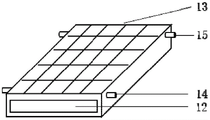
Fig. 2 is an overall schematic view of the dual fluid type photovoltaic and photothermal roofing assembly for residential construction of the present invention.
In the figure: 1 a photovoltaic cell layer; 2 water flow channel layer; 3 air flow channel layer; 4 a water inlet header; 5, heat exchange branch pipes; 6, a water outlet header; 7 a heat absorbing plate; 8 transverse baffle plate; 9 a bottom plate; 10 a heat insulating material layer; 11 side plates; 12 air inlet; 13 air outlet; 14 water inlet; 15 water outlet.
Detailed Description
The following further describes a specific embodiment of the present invention with reference to the drawings and technical solutions.
As shown in fig. 1 and 2, a double-fluid type photovoltaic and photothermal roof module for residential buildings includes a photovoltaic cell layer 1, a water flow passage layer 2, and an air flow passage layer 3;
the photovoltaic cell layer 1 is a crystalline silicon photovoltaic cell, and further comprises toughened glass and a photovoltaic cell assembly which are laminated into a whole through an EVE (ethylene-vinyl acetate) adhesive film; the toughened glass can protect the fragile photovoltaic cell assembly; the photovoltaic cell assembly is used for converting a short-wave-band light source in sunlight into electric energy;
the water flow channel layer 2 comprises a water inlet header 4, heat exchange branch pipes 5, a water outlet header 6 and a heat absorption plate 7; the heat exchange branch pipes 5 are uniformly arranged along the length direction of the assembly, one end of each heat exchange branch pipe is communicated with the water inlet collecting pipe 4, the other end of each heat exchange branch pipe is communicated with the water outlet collecting pipe 6, two ends of each water inlet collecting pipe 4 extend to the outer side of the assembly to be used as a water inlet 14, and two ends of each water outlet collecting pipe 6 extend to the outer side of the assembly to be used as a water outlet 15; the heat exchange branch pipe 5 is wrapped by a heat absorption plate 7; the heat absorption plate 7, the heat exchange branch pipe 5 and the back of the photovoltaic cell layer 1 are laminated into a whole through an EVE adhesive film; the water inlet 14 and the water outlet 15 are arranged in different side end structures and are connected with external components, so that the fluid pipelines are arranged in the same way; and a heat-conducting colloid is filled in a wrapping gap between the heat exchange branch pipe 5 and the heat absorption plate 7.
In this embodiment, the water inlet manifold 4, the heat exchange branch pipes 5, and the water outlet manifold 6 are made of copper, and the heat absorbing plate 7 is made of aluminum.
The air flow channel layer 3 comprises a transverse baffle plate 8, a bottom plate 9, a side plate 11, a heat insulation material layer 10, an air inlet 12 and an air outlet 13; the transverse baffle plate 8 is welded on the bottom plate 9 in a laser welding mode and forms a through snake-shaped air flow channel with the air inlet 12 and the air outlet 13; the insulating material layer 10 is arranged outside the assembly; the component air inlet 12 and the component air outlet 13 are located in the width direction of the component, and slots are formed in the edge of the air outlet, so that the components can be conveniently lapped.
In this embodiment, the length of the transverse baffle 8 is 9/10 the width of the air flow passage layer 3.
The transverse baffle plate 8 is fixed on the bottom plate 9 and has a certain gap with the water flow channel layer 2, when air passes through, most of the air flows can flow in a snake shape along with the transverse baffle plate 8, and a small part of the air flows can pass through the upper gap, so that the air flows on two sides of the baffle plate are mixed, the air flow disturbance is increased, the convective heat transfer coefficient of the air and the heat absorbing plate 7 is improved, the air outlet temperature and the heat collection efficiency in an air cooling mode are improved, meanwhile, the nonuniformity of the temperature of the photovoltaic cell layer 1 is reduced, and meanwhile, the air flow resistance can also be reduced.
The double-fluid photovoltaic photo-thermal roof component for the residential building can be flexibly adjusted according to different energy form requirements of residential users in different seasons, and the specific use method is as follows:
when the assembly works in summer, the temperature of the photovoltaic cell layer 1 is reduced in a water cooling mode, and domestic hot water is provided for residents while electric energy is provided. Water enters the water inlet manifold 4 from the water inlet 14, then exchanges heat with the heat absorbing plate 7 along the heat exchange branch pipes 5, and flows to the next bi-fluid type photovoltaic and thermal roof assembly or indoor heat storage water tank from the water outlet 15 through the water outlet manifold 6 after absorbing heat for use by building users.
When the module works in winter, the temperature of the photovoltaic cell layer 1 is reduced in an air cooling mode, and the electric energy is provided while the hot air heating or fresh air preheating function is provided for building users. Air enters the air flow channel layer 3 from the air inlet 12, exchanges heat with the heat absorbing plate 7 and the transverse baffle plate 8, and enters the next double-fluid type photovoltaic photo-thermal roof assembly or is supplied to a building user for use through the air outlet 13 after the heat exchange is finished. Meanwhile, according to the environmental parameters and the user demand conditions, a water cooling mode can be simultaneously carried out to provide domestic hot water demands for building users.
The double-fluid photovoltaic photo-thermal roof component for the residential building can provide various forms of energy for building users, can fully utilize the building roof area, and endows the building with dynamic characteristics of participating in active regulation on the premise of not influencing the building attractiveness and overall consistency.