CN112352581A - Flowerpot structure for realizing watering without residual bottom and flowerpot with structure - Google Patents
Flowerpot structure for realizing watering without residual bottom and flowerpot with structure Download PDFInfo
- Publication number
- CN112352581A CN112352581A CN202010886825.3A CN202010886825A CN112352581A CN 112352581 A CN112352581 A CN 112352581A CN 202010886825 A CN202010886825 A CN 202010886825A CN 112352581 A CN112352581 A CN 112352581A
- Authority
- CN
- China
- Prior art keywords
- water
- flowerpot
- cavity
- soil
- watering
- Prior art date
- Legal status (The legal status is an assumption and is not a legal conclusion. Google has not performed a legal analysis and makes no representation as to the accuracy of the status listed.)
- Pending
Links
- XLYOFNOQVPJJNP-UHFFFAOYSA-N water Substances O XLYOFNOQVPJJNP-UHFFFAOYSA-N 0.000 claims abstract description 188
- 239000002689 soil Substances 0.000 claims abstract description 93
- 238000002347 injection Methods 0.000 claims abstract description 22
- 239000007924 injection Substances 0.000 claims abstract description 22
- 238000005303 weighing Methods 0.000 abstract description 9
- 241000196324 Embryophyta Species 0.000 description 35
- 238000000034 method Methods 0.000 description 10
- 230000005484 gravity Effects 0.000 description 7
- 230000002265 prevention Effects 0.000 description 3
- 238000010521 absorption reaction Methods 0.000 description 2
- 238000005336 cracking Methods 0.000 description 2
- 238000009826 distribution Methods 0.000 description 2
- 238000001035 drying Methods 0.000 description 2
- 238000002791 soaking Methods 0.000 description 2
- 239000000243 solution Substances 0.000 description 2
- 239000012780 transparent material Substances 0.000 description 2
- 238000009736 wetting Methods 0.000 description 2
- 208000012868 Overgrowth Diseases 0.000 description 1
- 241001464837 Viridiplantae Species 0.000 description 1
- 238000009825 accumulation Methods 0.000 description 1
- 238000007792 addition Methods 0.000 description 1
- 230000003749 cleanliness Effects 0.000 description 1
- 230000008602 contraction Effects 0.000 description 1
- 125000004122 cyclic group Chemical group 0.000 description 1
- 235000013399 edible fruits Nutrition 0.000 description 1
- 238000001704 evaporation Methods 0.000 description 1
- 230000008020 evaporation Effects 0.000 description 1
- 238000010413 gardening Methods 0.000 description 1
- 238000004519 manufacturing process Methods 0.000 description 1
- 239000000463 material Substances 0.000 description 1
- 238000012986 modification Methods 0.000 description 1
- 230000004048 modification Effects 0.000 description 1
- 238000005457 optimization Methods 0.000 description 1
- 238000011002 quantification Methods 0.000 description 1
- 238000005507 spraying Methods 0.000 description 1
- 230000005477 standard model Effects 0.000 description 1
- 238000006467 substitution reaction Methods 0.000 description 1
- 230000017260 vegetative to reproductive phase transition of meristem Effects 0.000 description 1
Images




Classifications
-
- A—HUMAN NECESSITIES
- A01—AGRICULTURE; FORESTRY; ANIMAL HUSBANDRY; HUNTING; TRAPPING; FISHING
- A01G—HORTICULTURE; CULTIVATION OF VEGETABLES, FLOWERS, RICE, FRUIT, VINES, HOPS OR SEAWEED; FORESTRY; WATERING
- A01G9/00—Cultivation in receptacles, forcing-frames or greenhouses; Edging for beds, lawn or the like
- A01G9/02—Receptacles, e.g. flower-pots or boxes; Glasses for cultivating flowers
-
- A—HUMAN NECESSITIES
- A01—AGRICULTURE; FORESTRY; ANIMAL HUSBANDRY; HUNTING; TRAPPING; FISHING
- A01G—HORTICULTURE; CULTIVATION OF VEGETABLES, FLOWERS, RICE, FRUIT, VINES, HOPS OR SEAWEED; FORESTRY; WATERING
- A01G25/00—Watering gardens, fields, sports grounds or the like
Landscapes
- Life Sciences & Earth Sciences (AREA)
- Environmental Sciences (AREA)
- Engineering & Computer Science (AREA)
- Water Supply & Treatment (AREA)
- Cultivation Receptacles Or Flower-Pots, Or Pots For Seedlings (AREA)
Abstract
The invention provides a flowerpot structure for realizing watering without residual bottom and a flowerpot with the structure, wherein the flowerpot is arranged on the flowerpot and comprises a soil area in the flowerpot, namely an area for filling soil and planting plants in the flowerpot, and a separated cavity body for watering, the cavity body is provided with an opening for water injection, and the bottom of the cavity body is provided with a water guide hole or a water guide gap communicated with the lower part or the bottom of the soil area. The inner bottom surface of the cavity body is not lower than the bottom surface of the flowerpot soil area. The water guide hole or the water guide gap is positioned at the lowest position of the cavity body. The flowerpot structure for realizing residual-free bottom watering can directly water the bottom of the flowerpot soil, and no residual water exists outside the soil area, so that accurate and quantitative watering can be carried out by weighing the water amount in advance, and the flowerpot structure is simple in structure and convenient to use.
Description
Technical Field
The invention relates to the technical field of gardening planting containers, in particular to a flowerpot structure for realizing watering without residual bottom and a flowerpot with the structure.
Background
Some plant species (mostly native to arid regions) with strict requirements for water, such as various succulent plants, root tuber/bulb plants and the like, are increasingly and widely cultivated in the aspects of production, life, research and the like in China. Due to the physiological structure formed in the special environment of the origin, compared with common plants, the water environment requirement in the growth process has the following two characteristics:
(1) and (3) watering mode: the fleshy part, the joint of the fleshy part and the root, and the root tuber, bulb and other parts of the plant are sensitive to water dampness, and are easy to rot after being soaked in water or drenched. The most ideal watering mode is that only the fibrous root system which is responsible for absorbing water is contacted with water, and the joints of the fibrous root and the fleshy part (or root tuber/bulb) and the parts above the joints are kept dry, so that the risk of rotting caused by water moisture is avoided;
(2) pouring water quantity: the suitable water supply period of the plants is a cyclic reciprocating process of 'soil moistening after watering-soil drying period-soil moistening after watering-soil drying period'. Such plants have a strong water absorption capacity, and various problems such as rottenness, vain growth, and plant body cracking can be caused by an excessively large watering amount, which results in an excessively long soil wetting period, even if the soil is kept moist for a long time. Thus, in order to control the length of the wetting period, a limited amount of water is required for each watering. In hot weather, cloudy weather with insufficient sunlight, the ecdysis season and the flowering season of some plants and the like, the watering amount needs to be strictly controlled to prevent the problems, and sometimes the proper watering amount of each plant is only a few milliliters. Therefore, it is required to accurately control the amount of water poured with a small error in the watering process.
In the existing products and various patents, although some flowerpot structures can realize water supply from the bottom, a large amount of water is remained in the area outside the soil area of the flowerpot due to the limited structure, and the poured water cannot be completely introduced into the soil of the flowerpot. (see patent application No. 201220222692.0 and 201410112737.2 for example.) therefore, even if the exact amount of water is weighed by the apparatus and poured in according to the corresponding implementation steps, the effective amount of water that eventually enters the soil cannot be determined, and a large amount of water remains in the area outside the pot soil area and evaporates. This error is more proportional, especially in the case of a smaller amount of watering required.
Therefore, how to satisfy the water demand characteristics of two aspects (watering mode and watering amount) of a specific plant group so as to eliminate the most main troubles existing in the current cultivation becomes a technical problem to be mainly solved at present.
Disclosure of Invention
The invention aims to provide a flowerpot structure for realizing residual-free bottom watering, which solves the technical problem of how to realize residual-free watering at the bottom of the flowerpot, has no residual water outside a soil area, and is simple in structure and convenient to use.
In order to achieve the implementation purpose, the invention adopts the following technical scheme:
the utility model provides a flowerpot structure that realization no residual bottom watered, sets up on the flowerpot which characterized in that, include with the flowerpot in soil area (the area of soil planting plant is filled in the flowerpot promptly, the back with) the separated cavity body that is used for watering, this cavity body has the opening that is used for the water injection, the bottom of this cavity body has water guide hole or water guide gap that are linked together with soil area lower part or bottom.
Preferably, the inner bottom surface of the cavity body is not lower than the bottom surface of the flowerpot soil area. The water can continuously flow into the soil area of the flowerpot under the action of gravity after being injected into the hollow cavity, so that the water can be completely absorbed by the soil.
Preferably, the water guide hole or the water guide slit is located at the lowest position of the hollow cavity, such as the bottom of the side surface or the inner bottom surface. This is in order to ensure that the water that pours into in the cavity body can all get into flowerpot soil area, can not be because of the water level fall to be less than behind the position of water guide hole or water guide seam, remaining water can't flow into flowerpot soil area.
Preferably, the area of the inner bottom (i.e. the lowest surface inside the cavity) of the cavity is less than 50% of the maximum longitudinal cross-sectional area of the cavity. Preferably, the inner bottom area of the cavity body is smaller than or equal to the maximum cross-sectional area of the cavity body. This is to define the inner floor area of the cavity body in a small proportion to the volume of water injected into the cavity. According to the structure, after the water injected into the cavity body flows into the flowerpot soil area under the action of gravity, the most main residual water exists on the inner bottom of the cavity body in the form of water drops, water films and the like under the action of surface tension. The smaller the area of this insole, the less this residual water. The smaller the ratio of this inner basal area to the volume of injected water, the smaller the proportion of residual water after watering. In the case of a sufficiently small inner floor area, this residual water will be completely connected to the water-conducting holes or water-conducting slits and will be completely sucked up by the capillary forces of the soil in the pot.
Preferably, one or more hollow cavities can be arranged in the flowerpot according to requirements. When the bottom area of the flowerpot is larger, a plurality of hollow cavities for watering can be arranged for watering more uniformly.
Preferably, the hollow cavity can be arranged on the side, the corner or inside of the flowerpot as required.
Preferably, the water injection opening of the cavity body is positioned at the upper part or the lateral upper part of the cavity body. The opening position is as high as possible, and under certain cavity volume, the water injection volume that can hold is the most, is the maximize to the utilization of space.
Preferably, the height difference between the inner bottom surface of the hollow cavity and the bottom surface of the flowerpot soil area is not more than 50% of the total height of the flowerpot soil area. The height difference is limited in order to ensure that water injected into the hollow cavity body can rapidly flow downwards to the bottom of the flowerpot soil area and spread at the bottom after flowing out through the water guide holes or the water guide seams, and the water is uniformly absorbed by the soil at the bottom. If the height difference is too large, water can be absorbed by the midway soil more in the downward flowing process, so that the distribution height of water in the soil area is not uniform enough.
Preferably, the water filling opening of the hollow cavity body can be provided with a cover, a plug or other plugging parts. When the flowerpot is used for planting plants, the mouth of the cavity body is blocked, so that soil planting materials can be prevented from falling into the cavity body. Can also be used for daily prevention of foreign matters from falling into the hollow cavity.
Preferably, the side wall of the cavity body can be provided with volume scales capable of reflecting the water amount in the cavity body in real time.
Preferably, the hollow cavity is integrated with the flowerpot or is matched with the flowerpot in a split mode.
Another object of the present patent is to propose a flower pot comprising a structure as described above for achieving a residue-free bottom watering.
The patent of the invention achieves the following remarkable effects:
(1) when watering, water enters the flowerpot soil area from the bottom of the flowerpot, and the easily rotten parts of the plants sensitive to water cannot contact with the water;
(2) meanwhile, after watering, almost no residual water exists, all the water poured in enters an absorption area of a plant root system in the soil in the flowerpot, the effective watering amount entering the soil area of the flowerpot can be accurately controlled by weighing the determined water amount in advance and then pouring, and particularly under the condition that the required watering amount is less, compared with the prior art, the invention has high accuracy, and by accurately controlling the effective watering amount, the plant can not have various problems of rot, overgrowth, plant body cracking and the like due to excessive watering amount, and can not grow badly due to the excessive watering amount;
the two aspects (1) and (2) solve the most difficult points of cultivating the plant species which have severe requirements on water;
(3) for large batches of plants, each pot can adopt consistent watering amount, so that unified management is facilitated;
(4) the invention has simple and practical structure and is easy to implement and produce.
Drawings
Note: in the patent, the aforementioned "cavity body in the flowerpot structure for realizing residual-free bottom watering" is simply referred to as "cavity body" in the description of the drawings and the description of the specific embodiments for the convenience of description.
FIG. 1A is a longitudinal cross-sectional view taken along a diagonal line of an embodiment of the present invention;
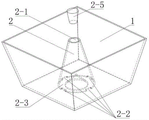
FIG. 1B is a top oblique view of the first embodiment of the present invention;
FIG. 1C is a top view of the other side of the first embodiment of the present invention;
FIG. 1D is a bottom view of the first embodiment of the present invention;
FIG. 2A is a longitudinal cross-sectional view of a two-piece assembly of the patented embodiment of the invention;
FIG. 2B is an exploded view of the second embodiment of the present invention;
FIG. 3A is a longitudinal sectional view of a third embodiment of the present invention;
FIG. 3B is a top oblique view of the third embodiment of the present invention;
FIG. 3C is a top view of the other side of the third embodiment of the present invention;
FIG. 4A is a longitudinal sectional view of a fourth embodiment of the present invention;
FIG. 4B is an exploded view of a fourth embodiment of the present invention;
FIG. 4C is a top view of the example of the present invention after four plants have been planted;
FIG. 5A is a longitudinal sectional view of a single hollow cavity structure according to a fifth embodiment of the present invention;
FIG. 5B is an exploded view of a single cavity structure according to the fifth embodiment of the present invention;
FIG. 5C is a top oblique view of the fifth embodiment of the present invention;
FIG. 5D is a top view of five plants of the example of the present invention;
fig. 5E is a top view of another embodiment of the present invention after planting plants.
Wherein the reference numerals are: 1. a flowerpot soil area; 1-1, a bottom hole tube; 1-2, a plug; 1-3, footing; 1-4, water passing gaps; 1-5, vent holes; 1-6, the upper surface of the soil; 1-7, plants planted in the flowerpot; 2. a cavity body; 2-1, a water injection port; 2-2, water guide holes; 2-3, an insole; 2-4, number plate; 2-5, a lid or plug; 2-6, connecting a hook; 2-7, a water leakage prevention rubber cushion; 2-8, straight tube portions; 2-9, fixing the base.
Detailed Description
In order to clearly illustrate the technical features of the present solution, the present solution is described below by way of specific embodiments.
The core of the patent of the invention is to provide a flowerpot structure for realizing watering without residual bottom and a flowerpot with the structure, so that not only water flows into the bottom of soil during watering, but also residual water is stopped to ensure that all the poured water enters the soil, and the aim of accurately and quantitatively watering can be achieved by pre-weighing the water quantity. Therefore, the physiological habit of a specific plant group is satisfied from the aspects of watering mode and watering quantity, and the most difficult point existing currently when the plants are cultivated is solved.
It should be noted that the embodiments and features of the embodiments of the present invention may be combined with each other without conflict.
Example one
Referring to fig. 1A, fig. 1B, fig. 1C and fig. 1D, a flowerpot structure for realizing watering without residual bottom and a flowerpot with the structure, which is a standard model obtained by research and optimization, are suitable for various watering modes: a. accurately and quantitatively watering the bottom without residue; b1. irrigating from the upper part like a common flowerpot; b2. the pot-soaking watering is carried out like a common flowerpot (the pot-soaking watering refers to a watering mode that the flowerpot is put into water with a certain depth, and water enters the soil area from the bottom hole of the soil area upwards).
The embodiment comprises the following steps: a square flowerpot body; a soil area for planting 1; a round tubular soil region bottom hole pipe 1-1 (the bottom hole of the soil region is tubular, so that a plug can be conveniently plugged, and meanwhile, the evaporation of water through the bottom hole can be slowed down); a plug 1-2 of the bottom hole pipe, wherein the plug is made of elastic rubber; 1-3 parts of a bottom foot of the flowerpot; 1-4 parts of water passing gaps among the bottom feet of the flowerpot; 1-5 of vent holes in the space below the flowerpot; the cavity body 2 is positioned at the corner of the flowerpot, and a plurality of cavity bodies positioned at different corners can be arranged according to requirements; 2-1 of a water injection port of the cavity body; two rectangular water guide holes 2-2 of the cavity body are positioned at two ends of the inner bottom edge of the cavity body and are communicated with the soil area; the inner bottom 2-3 of the cavity body is slightly higher than the inner bottom surface of the soil area 1; and the number plate 2-4 is used for recording plant numbers and facilitating batch management.
The operation mode is as follows:
a. the accurate quantitative watering without residue bottom comprises the steps of firstly plugging a bottom hole pipe 1-1 of a soil area by a plug 1-2, then weighing water by a weighing device (such as a graduated cylinder and the like) according to the required watering amount, injecting the quantitative water from a water injection port 2-1 of a cavity body, and leading the water to flow into the soil area 1 of the flowerpot through a water guide hole 2-2 quickly and be dispersed and absorbed by soil at the bottom of the soil area under the action of gravity. The lower part of the cavity body 2 is provided with an inclined plane, the inner space is in a contraction shape, so that the area of the inner bottom 2-3 of the cavity body is very small, and the proportion of residual water existing on the inner bottom 2-3 in the form of a water drop and a water film in the total pouring water volume is very small. Due to the shape of the inner bottom surface 2-3, the residual water is close to the water guide hole 2-2 and can be completely connected with the water guide hole 2-2, so that the residual water is completely sucked under the action of capillary force of soil in the basin, and the requirement of accurate quantification is met.
b1. The spraying or irrigating from the upper part is basically the same as the using mode of the common flowerpot. When the watering mode is used, the bottom hole pipe 1-1 of the soil area is not plugged with a plug, and redundant water can flow down through the bottom hole pipe 1-1 and flow out through the water passing gap 1-4 between the bottom feet 1-3 of the flowerpot.
b2. The pot is soaked and watered, and the use mode is basically the same as that of the common flowerpot. When the watering mode is used, the bottom hole pipe 1-1 of the soil area is not plugged with a plug, the flowerpot is placed in water with a certain depth, the water outside the flowerpot flows into the lower part of the flowerpot through the water passing gap 1-4 between the bottom feet 1-3 of the flowerpot under the principle action of the communicating vessel, then the water upwards enters the soil area 1 through the bottom hole pipe 1-1 of the soil area, and finally the water level in the soil area 1 of the flowerpot can reach the height close to the water level outside the flowerpot. The vent holes 1-5 in the space below the flowerpot are arranged to avoid the phenomenon that air is blocked in the high-level space below the position 1-5 to form air pressure to influence the rise of water level when the pot is watered, and the condition can be avoided by adding the vent holes at the position. The water guide hole 2-2 of the cavity body and the inner bottom 2-3 of the cavity body are slightly higher than the inner bottom of the soil area 1, so that water can be prevented from flowing back into the cavity body 2 from the water guide hole 2-2 to cause water accumulation when the water-immersed basin is watered. After the basin is soaked and the water is poured, the water outside the basin is discharged, the water which is not absorbed by the soil in the basin can flow down through the bottom hole pipe 1-1 and flows out through the water passing gap 1-4 between the bottom feet 1-3 of the flowerpot together with the water below the basin bottom.
Example two
Referring to fig. 2A and 2B, a flowerpot structure for realizing residual-free bottom watering and a flowerpot having the same, the embodiment includes: a square flowerpot body; a flowerpot soil area 1; the cavity body 2 which is separated from the flowerpot main body is made of transparent material, and volume scales are arranged on the outer side surface; the water injection port 2-1 of the cavity body is in a short round pipe shape, and a cover 2-5 is arranged on the water injection port; the bottom of the cavity body 2 is provided with a circular water guide hole 2-2 which is inserted into a circular hole on the side wall of the flowerpot soil area through a circular tubular structure, and a water leakage prevention rubber pad 2-7 is tightly plugged between the water injection pipe and the hole to prevent water leakage; 2-3 of the inner bottom of the cavity body; the split cavity body and the flowerpot body are connected with hooks 2-6, and the split cavity body 2 is hung on the side wall of the flowerpot.
The operation mode is as follows: the assembly is shown in the figure. When watering, water is weighed by a weighing device (such as a measuring cylinder and the like) according to the amount of water to be poured, the cover 2-5 is opened, the quantitative water is injected from the water injection port 2-1, and the water can quickly flow into the flowerpot soil area 1 through the water guide hole 2-2 and is dispersed at the bottom of the soil area and absorbed by the soil under the action of gravity. The cavity body is made of transparent material, and the change of the water amount in the cavity body can be clearly observed from the outside by combining the volume scale on the cavity body. One side of the hollow body 2 is inclined so that the inner space is contracted, so that the area of the inner bottom 2-3 is small and the proportion of the residual water existing on the inner bottom 2-3 in the form of a water droplet film in the total amount of poured water is small. Due to the shape of the inner bottom surface 2-3, the residual water is close to the water guide hole 2-2 and can be completely connected with the water guide hole 2-2, so that the residual water is completely sucked under the action of capillary force of soil in the pot, and the purpose of accurate quantitative watering without residual bottom is realized. The cover 2-5 can prevent foreign matters from falling into the hollow cavity at ordinary times. After watering is finished, the tubular structure of the water guide hole 2-2 can be pulled out of the flowerpot main body, the connecting hook 2-6 is detached, and therefore the split cavity body 2 is detached to be stored, and space is saved. The present embodiment is particularly suitable for cultivation of large plants.
EXAMPLE III
Referring to fig. 3A, 3B and 3C, a flowerpot structure for realizing residual-free bottom watering and a flowerpot having the same, the embodiment includes: a circular flowerpot body; a flowerpot soil area 1; a cavity body 2 hidden at the side part of the flowerpot body, a round water injection port 2-1 is arranged at the side upper part of the cavity body 2, and two rectangular water guide holes 2-2 are arranged at the edge of the inner bottom of the cavity body 2 and are communicated with a soil area; an inner bottom 2-3 of the hollow cavity.
The operation mode is as follows: when watering, water is weighed by a weighing device (such as a measuring cylinder) according to the amount of water poured in, the quantitative water is injected from the water injection port 2-1, and the water can quickly flow into the flowerpot soil area 1 through the water guide hole 2-2 and is dispersed at the bottom of the soil area and absorbed by the soil under the action of gravity. The depth of the space in the cavity body 2 is large, the area of the inner bottom 2-3 is small, and the ratio of the area of the inner bottom 2-3 to the volume of water injected into the cavity is small. The proportion of residual water present on the inner bottom 2-3 in the form of a water droplet film in the total amount of watering is therefore small. Due to the shape of the inner bottom surface 2-3, the residual water is close to the water guide hole 2-2 and can be completely connected with the water guide hole 2-2, so that the residual water is completely sucked under the action of capillary force of soil in the pot, and the purpose of accurate quantitative watering without residual bottom is realized. Because the hollow cavity 2 is hidden in the flowerpot body, the embodiment is particularly suitable for scenes with high requirements on aesthetic appearance and cleanliness.
Example four
Referring to fig. 4A, 4B and 4C, a flowerpot structure for realizing residual-free bottom watering and a flowerpot having the same, the embodiment includes: a square flowerpot body; a flowerpot soil area 1; a cavity body 2 positioned in the center of the flowerpot soil area 1, wherein the top of the cavity body 2 is provided with a water injection port 2-1, and the water injection port 2-1 is provided with a plug 2-5 made of elastic rubber; the outer edge of the bottom of the cavity body 2 is provided with four rectangular water guide holes 2-2 which are arranged at equal intervals and are communicated with the soil area 1; an inner bottom 2-3 of the hollow cavity.
The operation mode is as follows: the flowerpot in this embodiment can be used for planting 8 plants 1-7 according to the position shown in fig. 4C. In the figures, 1-6 show the upper surface of the soil in the flowerpot after actual planting. When the planting operation is carried out, the plug 2-5 is used for plugging the water injection port 2-1, so that the soil can be prevented from carelessly falling into the cavity body 2, and the plug is pulled out after the planting is finished. When watering, water is weighed by a weighing device (such as a measuring cylinder) according to the amount of water poured in, the quantitative water is injected from the water injection port 2-1, and the water can quickly flow into the flowerpot soil area 1 through the water guide hole 2-2 and is dispersed at the bottom of the soil area and absorbed by the soil under the action of gravity. The conical protrusion at the lower part in the cavity body 2 ensures that the area of the inner bottom 2-3 is small, and the residual water existing on the inner bottom 2-3 in the form of a water drop and a water film occupies a small proportion of the total pouring water. Due to the shape of the inner bottom surface 2-3, the residual water is close to the water guide hole 2-2 and can be completely connected with the water guide hole 2-2, so that the residual water is completely sucked under the action of capillary force of soil in the pot, and the purpose of accurate quantitative watering without residual bottom is realized. This embodiment is particularly suitable for growing a large number of plants with a small number.
EXAMPLE five
Referring to fig. 5A, 5B, 5C, 5D and 5E, a flowerpot structure for achieving residue-free bottom watering and a flowerpot having the same, the embodiment includes: a square flowerpot body; the flowerpot soil area 1 is internally provided with six fixing bases 2-9 of split cavity bodies at the bottom; the base 2-9 is in a short pipe shape, and the inner side of the upper part of the base is provided with a circle of bulges; the straight pipe part 2-8 of the split cavity body can be inserted into the base 2-9 and is supported by a circle of bulges at the inner side of the upper part of the base 2-9, and the inner wall of the straight pipe part 2-8 is provided with volume scales; referring to the figure, each base 2-9 and the straight pipe 2-8 form a cavity body 2, so that up to 6 cavity bodies can be arranged in the flowerpot soil area; the upper end of the straight pipe 2-8 is a water filling port 2-1 of the cavity body, 4 rectangular water guide holes 2-2 are uniformly distributed on the side surface of the base part of the base 2-9, and the lower bottom surface in the fixing base 2-9 is the inner bottom 2-3 of the cavity body.
The operation mode is as follows: after the flowerpot in this embodiment is installed, 48 plants can be planted according to the position shown in fig. 5D, three straight pipes can be removed according to the position shown in fig. 5E, 3 large-scale plants can be planted, or the distribution of the hollow cavity can be planned by installing or removing the straight pipes according to actual needs, so that the flowerpot has flexible adaptability. In the figure, 1-6 are the upper surfaces of the soil in the flowerpot after actual planting, and 1-7 are the plants to be planted. When watering, the total water quantity needed to be watered in the whole pot is divided by the number of the cavity bodies to obtain the watering quantity of each cavity body. Water is weighed by a weighing appliance (such as a measuring cylinder and the like) according to the watering amount of the single hollow cavity body, the water with the fixed amount is injected from the water injection port 2-1, and the water can quickly flow into the flowerpot soil area 1 through the water guide hole 2-2 and is dispersed at the bottom of the soil area and absorbed by the soil under the action of gravity. The inner wall of the straight pipe part 2-8 of the split cavity body is provided with volume scales, and the change of the water quantity in the cavity body 2 can be observed through the water injection port 2-1. The cavity body 2 is tubular as a whole, the depth of the inner space is large, the area of the inner bottom 2-3 is small, and the ratio of the area of the inner bottom 2-3 to the volume of water injected into the cavity is small. Therefore, the residual water existing on the inner bottom 2-3 in the form of a water drop film occupies a small proportion of the total watering amount, and most of the residual water is connected with the water guide holes 2-2 and can be absorbed under the action of capillary force of soil in the pot, so that the purpose of accurate and quantitative watering without the residual bottom is realized. And carrying out watering operation once in each hollow cavity to finish the watering of the whole pot. The embodiment is particularly suitable for planting a plurality of plants with a large number or a plurality of large-scale plants.
It is noted that, in this document, relational terms such as first and second, and the like, and serial numbers such as 1, 2, 3, or a, b, c, and the like may be used solely to distinguish one element such as an entity or operation from another element such as an entity or operation without necessarily requiring or implying any actual such relationship or order between such elements.
Meanwhile, the terms "comprises," "comprising," or any other variation thereof, are intended to cover a non-exclusive inclusion, such that a process, method, article, or apparatus that comprises a list of elements does not include only those elements but may include other elements not expressly listed or inherent to such process, method, article, or apparatus. Without further limitation, an element defined by the phrase "comprising an … …" does not exclude the presence of other identical elements in a process, method, article, or apparatus that comprises the element.
Meanwhile, the term "flowerpot" herein is used in a broad sense, not only for cultivating flowers, but also for all containers for plant cultivation, and the cultivation application range includes, but is not limited to, flowers, green plants, crops, fruit trees, and the like.
Technical features that are not described in the present patent may be implemented by or using the prior art, and are not described herein again, and of course, the above description is not intended to limit the present patent, and the present patent is not limited to the above examples. Those skilled in the art will appreciate that changes, modifications, substitutions and additions may be made to the embodiments without departing from the principles and spirit of the present invention, which shall fall within the scope of the present patent.
Claims (13)
1. The utility model provides a flowerpot structure that realization is watered without residual bottom sets up on the flowerpot which characterized in that, includes the cavity body that is used for watering that separates with soil zone in the flowerpot, and this cavity body has the opening that is used for the water injection, and the bottom of this cavity body has the water guide hole or the water guide gap that are linked together with soil zone lower part or bottom.
2. A pot structure for enabling residue-free bottom watering according to claim 1, wherein the inner bottom surface of the cavity is no lower than the bottom surface of the pot soil area.
3. A pot structure for achieving residue-free bottom watering according to claim 2, wherein the water guiding hole or water guiding slit is located at the lowest position of the cavity.
4. A pot structure for achieving residue-free bottom watering according to claim 3, wherein the internal bottom area of the cavity is less than 50% of the maximum longitudinal cross-sectional area of the cavity.
5. A pot structure for achieving residue-free bottom watering according to claim 4, wherein the internal bottom area of the cavity is less than or equal to the maximum cross-sectional area of the cavity.
6. A pot structure for achieving residue-free bottom watering according to claim 5, wherein the hollow body has one or more.
7. A pot structure for achieving residue-free bottom watering according to claim 6, wherein the cavity is located on a side, corner or inside of the pot.
8. A pot structure for achieving residue-free bottom watering according to claim 7, wherein the water injection opening of the cavity is located at an upper or lateral upper portion of the cavity.
9. A pot structure for achieving residue-free bottom watering according to claim 8, wherein the difference in height between the inner bottom surface of the hollow body and the bottom surface of the pot soil area is no more than 50% of the total height of the pot soil area.
10. A planter structure for effecting residue-free bottom watering according to claim 9, wherein the water injection opening of the hollow body is configured with a closure element.
11. A flowerpot structure for achieving residue-free bottom watering according to claim 9, wherein the side wall of the cavity body is provided with volume scales capable of reflecting the amount of water in the cavity body in real time.
12. A planter structure for achieving residue-free bottom watering according to claim 9, wherein said cavity is integral with said planter or is adapted for use with said planter in a split configuration.
13. A planter, said planter comprising a planter structure for achieving residue-free bottom watering according to any one of claims 1-12.
Priority Applications (1)
| Application Number | Priority Date | Filing Date | Title |
|---|---|---|---|
| CN202010886825.3A CN112352581A (en) | 2020-08-28 | 2020-08-28 | Flowerpot structure for realizing watering without residual bottom and flowerpot with structure |
Applications Claiming Priority (1)
| Application Number | Priority Date | Filing Date | Title |
|---|---|---|---|
| CN202010886825.3A CN112352581A (en) | 2020-08-28 | 2020-08-28 | Flowerpot structure for realizing watering without residual bottom and flowerpot with structure |
Publications (1)
| Publication Number | Publication Date |
|---|---|
| CN112352581A true CN112352581A (en) | 2021-02-12 |
Family
ID=74516749
Family Applications (1)
| Application Number | Title | Priority Date | Filing Date |
|---|---|---|---|
| CN202010886825.3A Pending CN112352581A (en) | 2020-08-28 | 2020-08-28 | Flowerpot structure for realizing watering without residual bottom and flowerpot with structure |
Country Status (1)
| Country | Link |
|---|---|
| CN (1) | CN112352581A (en) |
Cited By (2)
| Publication number | Priority date | Publication date | Assignee | Title |
|---|---|---|---|---|
| CN113115665A (en) * | 2021-05-08 | 2021-07-16 | 安徽工业大学 | Clean water-saving flowerpot |
| CN115250787A (en) * | 2022-08-19 | 2022-11-01 | 长沙市立格玛自动化科技有限公司 | Planting box and flowerpot |
Citations (7)
| Publication number | Priority date | Publication date | Assignee | Title |
|---|---|---|---|---|
| JP3032751U (en) * | 1996-05-08 | 1997-01-10 | 雄一 後藤 | Flowerpot with irrigation function |
| JP2006230394A (en) * | 2004-06-12 | 2006-09-07 | Kaoru Hayashidani | Flowerpot also divertible to pot cover with automatically water-supplying function |
| CN2840650Y (en) * | 2004-10-08 | 2006-11-29 | 张长禄 | Flower pot |
| KR20130005651A (en) * | 2011-07-07 | 2013-01-16 | 권태욱 | Flowerpot for supplying water |
| CN204443311U (en) * | 2014-12-31 | 2015-07-08 | 安徽万利生态园林景观有限公司 | The potted landscape cultivation tray of irrigation amount can be controlled |
| CN208639092U (en) * | 2018-05-09 | 2019-03-26 | 西安理工大学 | A kind of adjustable leak through type flowerpot of flow |
| CN212393352U (en) * | 2020-08-28 | 2021-01-26 | 青岛十初生态科技有限公司 | Flowerpot structure for realizing watering without residual bottom and flowerpot with structure |
-
2020
- 2020-08-28 CN CN202010886825.3A patent/CN112352581A/en active Pending
Patent Citations (7)
| Publication number | Priority date | Publication date | Assignee | Title |
|---|---|---|---|---|
| JP3032751U (en) * | 1996-05-08 | 1997-01-10 | 雄一 後藤 | Flowerpot with irrigation function |
| JP2006230394A (en) * | 2004-06-12 | 2006-09-07 | Kaoru Hayashidani | Flowerpot also divertible to pot cover with automatically water-supplying function |
| CN2840650Y (en) * | 2004-10-08 | 2006-11-29 | 张长禄 | Flower pot |
| KR20130005651A (en) * | 2011-07-07 | 2013-01-16 | 권태욱 | Flowerpot for supplying water |
| CN204443311U (en) * | 2014-12-31 | 2015-07-08 | 安徽万利生态园林景观有限公司 | The potted landscape cultivation tray of irrigation amount can be controlled |
| CN208639092U (en) * | 2018-05-09 | 2019-03-26 | 西安理工大学 | A kind of adjustable leak through type flowerpot of flow |
| CN212393352U (en) * | 2020-08-28 | 2021-01-26 | 青岛十初生态科技有限公司 | Flowerpot structure for realizing watering without residual bottom and flowerpot with structure |
Cited By (2)
| Publication number | Priority date | Publication date | Assignee | Title |
|---|---|---|---|---|
| CN113115665A (en) * | 2021-05-08 | 2021-07-16 | 安徽工业大学 | Clean water-saving flowerpot |
| CN115250787A (en) * | 2022-08-19 | 2022-11-01 | 长沙市立格玛自动化科技有限公司 | Planting box and flowerpot |
Similar Documents
| Publication | Publication Date | Title |
|---|---|---|
| CN105557376B (en) | a moisturizing pot | |
| KR20130046793A (en) | Automatic water supply apparatus for potted plant | |
| CN205232911U (en) | Store water flowerpot of simply ventilating | |
| CN212393352U (en) | Flowerpot structure for realizing watering without residual bottom and flowerpot with structure | |
| CN207399984U (en) | Convenient for the device for raising seedlings of planting vegetable in greenhouse | |
| KR200463816Y1 (en) | Functional flowerpot | |
| KR200302520Y1 (en) | Flowerpot having a device for suppling moisture and a device for measuring water level | |
| CN206564919U (en) | One kind is permeated to water flowerpot | |
| CN205005662U (en) | Hydroponic device that high -efficient plant seeds sprouts, seedling was cultivated | |
| RU154046U1 (en) | PLANT CONTAINER | |
| CN102613021A (en) | Wick-type automatic watering flowerpot | |
| CN201640072U (en) | Three-dimensional flower pot | |
| KR20210016139A (en) | Flowerpot having removable humidity sensor | |
| US6766614B2 (en) | Automatic liquid dispensing device with smart properties | |
| CN208609494U (en) | A plant cultivation device for reducing watering times | |
| CN211458132U (en) | Plant planting pot | |
| CA2118397C (en) | Method and apparatus for integrated pre-cultivation and ultimate cultivation of plants | |
| RU168396U1 (en) | PLANT CONTAINER | |
| CN205161265U (en) | a planting container | |
| CN206963424U (en) | A kind of flowerpot | |
| CN2404329Y (en) | Ecological imitation type flower-pot with removeable bottom and side holes | |
| CN202168369U (en) | Water-saving and water-retention flowerpot | |
| JP3048573U (en) | Hydroponic equipment | |
| RU66657U1 (en) | DEVICE FOR DOMESTIC IRRIGATION OF INDOOR PLANTS | |
| CN210987252U (en) | Automatic fertilization flower cultivation device |
Legal Events
| Date | Code | Title | Description |
|---|---|---|---|
| PB01 | Publication | ||
| PB01 | Publication | ||
| SE01 | Entry into force of request for substantive examination | ||
| SE01 | Entry into force of request for substantive examination |