Transportation equipment bearing track inclination adjusting device suitable for high-stress unloading layered surrounding rock roadway floor heave
Technical Field
The invention belongs to a transportation equipment bearing rail line inclination adjusting device suitable for high-stress unloading layered surrounding rock roadway floor heave, which is used for adjusting the bearing rail line inclination of transportation equipment (a base type transportation belt and a rail tramcar) caused by roadway floor heave, and improving the adaptability of the transportation equipment to the roadway floor heave.
Background
The roadway excavation of the high-stress surrounding rock releases the stress of a shallow part, a top plate and two sides are supported after the roadway excavation, a bottom plate is not supported normally and is used as a channel for releasing high ground stress, and the channel is expressed as roadway bottom bulging; after a conveying belt or a track in a tunnel is installed, the tunnel bottom bulge causes the inclination of a bracket or the track of the conveying belt machine, so that the conveying equipment cannot be normally used. The method for treating the influence of the roadway floor heave on the transportation equipment is to lay the roadway floor and reinstall the transportation equipment so as to ensure the normal use of the transportation equipment. And (4) with the continuous release of high stress of surrounding rocks, the normal use of the equipment is influenced by the tunnel heaving once again, and the bed bottom repair of the tunnel bottom plate is repeated. But the repeated repair of the tunnel can affect the normal production and also increase the engineering cost.
When the roadway floor heave influences the normal use of the transportation equipment, but the roadway can still meet the safety requirement of the roadway section, a device for adjusting the inclination of the bearing rail line of the transportation equipment (a transportation belt and a rail car) is needed, and the axial continuity and the horizontal section of the bearing rail line of the transportation equipment are restored.
Disclosure of Invention
The invention provides a transportation equipment bearing track inclination adjusting device suitable for high-stress unloading layered surrounding rock roadway floor heave, aiming at overcoming the defects of adaptability of a coal mine underground transportation equipment bearing track.
In order to achieve the purpose, the technical scheme of the invention is as follows:
a transportation equipment bearing track inclination adjusting device suitable for high-stress unloading layered surrounding rock roadway floor heave comprises a roadway floor heave of high-stress unloading surrounding rock, a belt conveyor support inclination degree adjusting criterion and a transportation equipment adjusting device.
The characteristic of the floor heave of the high stress unloading surrounding rock roadway is as follows: firstly, a roadway bottom plate of high-stress unloading surrounding rock under the combined action of high ground stress and mining stress is not supported and is used as a surrounding rock energy release channel, and the energy of the surrounding rock is released to cause roadway bottom heave; secondly, the floor heave of the high stress unloading surrounding rock roadway is not suitable for lying on the bottom due to the limitation of production and safety conditions; the section of the floor heave roadway of the high stress unloading surrounding rock can meet the safety requirement of production; and fourthly, unloading the bottom bulge of the bottom plate of the high-stress roadway to cause the inclination of the bearing track of the transportation equipment in the roadway, thereby causing potential transportation safety hazards.
The transport equipment carrying track includes a base conveyor belt support and a track for a rail car.
(1) The base type conveying belt H-shaped support inclination degree adjusting criterion is as follows: the verticality deviation between the width center lines of the transmission roller and the steering roller and the longitudinal center line of the rubber belt conveyor does not exceed 2/1000 of the width of the roller, and the contact ratio deviation between the center line of the H-shaped support and the center line of the rubber belt conveyor is not more than 3 mm; the left-right deviation and the up-down deviation at the joint of the frame are not more than 3mm, and the height deviation at the joint of the longitudinal beam pipe is not allowed to be more than 2 mm; the central line of the frame and the central line of the belt conveyor are coincided, and the deviation is not more than 3 mm; the straightness of the rack is not more than 10mm within any 25 m; the horizontal inclination angle is adopted, and the horizontal deviation between the transmission roller and the steering roller shaft is not more than 0.3/1000; the verticality of the H-shaped support leg is not more than 3/1000, and the straightness deviation in the vertical plane is not more than 1/1000 of the length of the H-shaped support; thirdly, when the belt conveyor runs, the rubber belt deviates, the upper layer of rubber belt comes out of the carrier roller, the lower layer of rubber belt rubs the H-shaped support legs, and the upper layer of rubber belt and the lower layer of rubber belt contact and rub.
(2) Track of a rail car: firstly, the axial continuity is realized, the gap of a track joint is not more than 5mm, and the height and the left-right error difference are not more than 2 mm; the height difference of the top surfaces of 2 steel rails in the straight line section and the height deviation of the outer rail of the curve section from the top surface of the inner rail after being heightened according to design are both not more than 5 mm; the upper deviation of the track gauge of the straight line section and the widened curve section is +5mm, and the lower deviation is-2 mm; the specification and the number of the sleepers meet the standard requirements, and the distance deviation does not exceed 50 mm; a horizontal inclination angle is adopted, and the height difference of the same section of the two rails is less than 10 mm; the length of each track measured every 2m along the length direction is less than 2 mm; the height difference of the upper part and the lower part of the whole length is less than 15 mm.
The transport equipment carries the adjusting device of the track slope: the pin type track inclination adjusting device comprises a base, an adjusting device, a track inclination adjusting device connecting piece and a bearing pad; the adjusting device adjusts the height of the unilateral track through the bolt holes arranged on the wall of the bearing pad and at different positions of the bearing pad, so as to prevent the track from inclining; the spiral track inclination adjusting device consists of a spiral track inclination adjusting device bearing pad, a rotating handle, a track inclination adjusting device connecting piece and a spiral track inclination adjusting device base, and the height of a single-side track is adjusted by rotating a spiral between the spiral track inclination adjusting device bearing pad and the spiral track inclination adjusting device base through the rotating handle to prevent the track from inclining; and the hydraulic track inclination adjusting device is composed of a hydraulic track inclination adjusting device bearing pad, a hydraulic track inclination adjusting device piston, a track inclination adjusting device connecting piece and a hydraulic jack base, and the hydraulic track inclination adjusting device piston is used for adjusting the hydraulic track inclination adjusting device bearing pad to adjust the height of the single-side track so as to prevent the track from inclining.
A construction process for adjusting the inclination of a bearing track of transportation equipment suitable for high-stress unloading layered surrounding rock roadway floor heave comprises the following steps:
the method comprises the following steps: the test transport equipment carries the horizontal inclination and axial continuity of the trajectory cross section.
Step two: when the horizontal inclination angle and the axial continuity of the bearing track of the transportation equipment meet the inclination degree adjusting criterion of the bearing track of the transportation equipment, the horizontal inclination angle and the axial continuity of the bearing track of the transportation equipment meet the requirements.
Step three: and (5) circulating the first step and the second step until the horizontal inclination angle and the longitudinal axis inclination angle of the cross section of the loading trajectory of the transportation equipment meet the requirements.
The invention has the beneficial technical effects that: firstly, the repair frequency of the floor heave of the roadway is reduced; and the adaptability of the carrying trajectory of the transportation equipment is improved.
Drawings
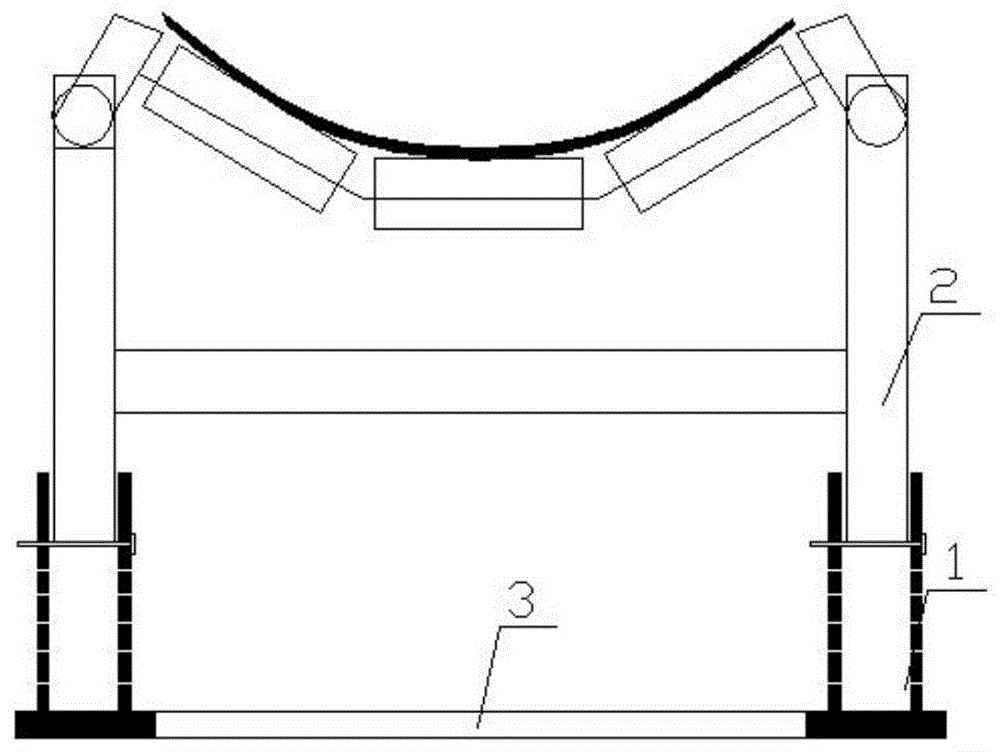
FIG. 1 schematic diagram of a base conveyor belt H-bracket inclination adjustment arrangement
FIG. 2 is a schematic view of the track inclination adjustment arrangement of the rail car
FIG. 3 schematic view of a latch style track tilt adjustment mechanism
FIG. 4 schematic diagram of a spiral track Tilt adjustment
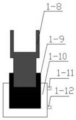
FIG. 5 schematic of a hydraulic trajectory tilt adjustment mechanism
In the figure: 1-carrying track inclination adjusting device of transportation equipment 2-base type H-shaped support 3-track inclination adjusting device connecting piece 4-track 5-sleeper 6-ballast 1-1-carrying track base 1-3-sleeve 1-3-bolt 1-4-bolt hole 1-5-spiral track inclination adjusting device bearing pad 1-6-rotating handle 1-7-spiral track inclination adjusting device base 1-8-hydraulic track inclination adjusting device bearing pad 1-9-hydraulic track inclination adjusting device piston 1-10-hydraulic jack 1-11-hydraulic jack liquid return valve 1-12-hydraulic jack liquid inlet valve of rail car.
Detailed Description
After the roadway is excavated, the stress of surrounding rocks at the shallow part is released, the supporting structure is adopted to control the further deformation of the surrounding rocks, for the high-stress surrounding rock conditions, the bottom plate is usually used as a stress release channel, and the deformation of the bottom plate releases the energy accumulated in the surrounding rocks, so that the roadway bottom heave is caused; meanwhile, the roadway bottom heave can be caused by the advance supporting pressure formed by the stoping of the working face, so that the inclination of a belt transportation bracket or a mine car track laid on a roadway bottom plate is caused, and the normal use of transportation equipment is influenced. The treatment method for influencing the normal use of the equipment by the roadway floor heave is to lay the roadway floor, and for high-stress surrounding rock conditions, the stress release of the surrounding rock is a slow process, and the floor heave of the roadway can be repeated. If the section in tunnel can satisfy the safety requirement, carry out the bed bottom to tunnel bottom plate and can cause cost increase and the working face can not normally produce.
The inclination adjustment criterion of the carrying track of the transportation equipment is as follows:
h-shaped bracket of conveyor belt
The belt conveyer takes the central line and the waist line of a roadway as the reference, and is flat, straight and stable, the distance deviation cannot exceed 10mm, the verticality deviation between the width central line of a transmission roller and a steering roller and the longitudinal central line of the belt conveyer is not more than 2/1000 of the width of the rollers, and the levelness deviation of a shaft is not more than 0.3/1000.
The contact degree deviation of the center line of the H-shaped support and the center line of the belt conveyor is not more than 3mm, the verticality of the support leg is not more than 3/1000, and the straightness deviation in the vertical plane is not more than 1/1000 of the length of the H-shaped support.
The rubber belt does not deviate when the belt conveyor runs: the upper layer of adhesive tape does not come out of the carrier roller, the lower layer of adhesive tape does not rub the H-shaped support leg, and the upper layer of adhesive tape and the lower layer of adhesive tape do not contact and rub.
The belt conveyor must be equipped with a comprehensive protection device with the functions of coal piling, deviation prevention, skid prevention, temperature, smoke alarm and the like.
The adjustment of the inclination of the H-shaped bracket of the conveyor belt caused by the roadway floor heave is further explained by combining the attached drawings.
The method comprises the following steps: the tunnel bottom heave causes the H-shaped bracket (2) of the conveyer belt to incline, and the axial continuity and the horizontal inclination angle of the H-shaped bracket (2) of the conveyer belt and the rubber belt deviation condition when the belt conveyor runs are tested.
Step two: when the inclination degree of the base type conveying belt H-shaped support (2) accords with the inclination degree adjusting criterion of the base type conveying belt H-shaped support (2), the adjusting devices (1) at the lower parts of the conveying belt H-shaped supports (2) are adjusted one by one.
Step three: and (5) testing the axial continuity and the horizontal inclination angle of the H-shaped support (2) of the conveying belt and the rubber belt deviation condition when the belt conveyor runs again, and circulating the step one and the step two until the axial continuity and the horizontal inclination angle of the H-shaped support (2) of the conveying belt and the rubber belt deviation condition when the belt conveyor runs meet the requirements.
Rail of tracked mine car
The track of a rail car should meet the following requirements: the gap of the rail joint is not more than 5mm, and the height and the left-right error difference are not more than 2 mm. The height difference of the top surfaces of 2 steel rails in the straight line section and the height deviation of the outer rail of the curve section and the top surface of the inner rail after being heightened according to design are not more than 5 mm. The upper deviation of the track gauge of the straight line section and the widened curve section is +5mm, and the lower deviation is-2 mm. And thirdly, the specification and the number of the sleepers meet the standard requirement, and the distance deviation does not exceed 50 mm.
The adjustment of the inclination of the rail car caused by the roadway floor heave will be further explained with reference to the accompanying drawings.
The method comprises the following steps: the roadway bottom heave causes two rails (4) of the rail tramcar to generate altitude difference inclination, and the axial continuity and the horizontal inclination angle of the two rails of the rail tramcar are tested.
Step two: when the inclination degree of the track (4) of the rail tramcar accords with the inclination degree adjusting criterion of the track (4) of the rail tramcar, the adjusting devices (1) between the track (4) of the rail tramcar and the sleepers (5) are adjusted one by one.
Step three: and (5) testing the axial continuity and the horizontal inclination angle of the track (4) of the rail tramcar again, and circulating the first step and the second step until the axial continuity and the horizontal inclination angle of the track (4) of the rail tramcar meet the requirements.
The above description is only an embodiment of the present invention, but the scope of the invention is not limited thereto, and any person skilled in the art can make some changes within the technical scope of the present invention, such as the structure, arrangement, and monitoring means of the incline adjusting device of the carrying track of the transportation equipment, etc., should be regarded as infringing the scope of the present invention. Therefore, the protection scope of the present invention shall be subject to the protection scope of the claims.