CN112153527B - Voice playing control method and related device - Google Patents
Voice playing control method and related device Download PDFInfo
- Publication number
- CN112153527B CN112153527B CN202010956541.7A CN202010956541A CN112153527B CN 112153527 B CN112153527 B CN 112153527B CN 202010956541 A CN202010956541 A CN 202010956541A CN 112153527 B CN112153527 B CN 112153527B
- Authority
- CN
- China
- Prior art keywords
- target user
- speaker
- pan
- tilt
- loudspeaker
- Prior art date
- Legal status (The legal status is an assumption and is not a legal conclusion. Google has not performed a legal analysis and makes no representation as to the accuracy of the status listed.)
- Active
Links
Images




Classifications
-
- H—ELECTRICITY
- H04—ELECTRIC COMMUNICATION TECHNIQUE
- H04R—LOUDSPEAKERS, MICROPHONES, GRAMOPHONE PICK-UPS OR LIKE ACOUSTIC ELECTROMECHANICAL TRANSDUCERS; ELECTRIC HEARING AIDS; PUBLIC ADDRESS SYSTEMS
- H04R1/00—Details of transducers, loudspeakers or microphones
- H04R1/20—Arrangements for obtaining desired frequency or directional characteristics
- H04R1/32—Arrangements for obtaining desired frequency or directional characteristics for obtaining desired directional characteristic only
- H04R1/40—Arrangements for obtaining desired frequency or directional characteristics for obtaining desired directional characteristic only by combining a number of identical transducers
- H04R1/403—Arrangements for obtaining desired frequency or directional characteristics for obtaining desired directional characteristic only by combining a number of identical transducers loud-speakers
-
- G—PHYSICS
- G06—COMPUTING OR CALCULATING; COUNTING
- G06T—IMAGE DATA PROCESSING OR GENERATION, IN GENERAL
- G06T7/00—Image analysis
- G06T7/70—Determining position or orientation of objects or cameras
-
- G—PHYSICS
- G06—COMPUTING OR CALCULATING; COUNTING
- G06V—IMAGE OR VIDEO RECOGNITION OR UNDERSTANDING
- G06V40/00—Recognition of biometric, human-related or animal-related patterns in image or video data
- G06V40/70—Multimodal biometrics, e.g. combining information from different biometric modalities
-
- H—ELECTRICITY
- H04—ELECTRIC COMMUNICATION TECHNIQUE
- H04N—PICTORIAL COMMUNICATION, e.g. TELEVISION
- H04N23/00—Cameras or camera modules comprising electronic image sensors; Control thereof
- H04N23/80—Camera processing pipelines; Components thereof
-
- H—ELECTRICITY
- H04—ELECTRIC COMMUNICATION TECHNIQUE
- H04N—PICTORIAL COMMUNICATION, e.g. TELEVISION
- H04N9/00—Details of colour television systems
- H04N9/12—Picture reproducers
- H04N9/31—Projection devices for colour picture display, e.g. using electronic spatial light modulators [ESLM]
- H04N9/3141—Constructional details thereof
-
- H—ELECTRICITY
- H04—ELECTRIC COMMUNICATION TECHNIQUE
- H04R—LOUDSPEAKERS, MICROPHONES, GRAMOPHONE PICK-UPS OR LIKE ACOUSTIC ELECTROMECHANICAL TRANSDUCERS; ELECTRIC HEARING AIDS; PUBLIC ADDRESS SYSTEMS
- H04R3/00—Circuits for transducers
-
- G—PHYSICS
- G06—COMPUTING OR CALCULATING; COUNTING
- G06T—IMAGE DATA PROCESSING OR GENERATION, IN GENERAL
- G06T2207/00—Indexing scheme for image analysis or image enhancement
- G06T2207/30—Subject of image; Context of image processing
- G06T2207/30196—Human being; Person
Landscapes
- Engineering & Computer Science (AREA)
- Signal Processing (AREA)
- Physics & Mathematics (AREA)
- Multimedia (AREA)
- General Physics & Mathematics (AREA)
- Theoretical Computer Science (AREA)
- Health & Medical Sciences (AREA)
- Otolaryngology (AREA)
- Acoustics & Sound (AREA)
- Human Computer Interaction (AREA)
- Computer Vision & Pattern Recognition (AREA)
- Circuit For Audible Band Transducer (AREA)
Abstract
The embodiment of the application discloses a voice playing control method and a related device, which are applied to electronic equipment, wherein the method comprises the following steps: the electronic equipment firstly collects image information of a target user through at least two camera devices, then determines the actual state of the target user according to the image information, and finally adjusts the working states of the first holder loudspeaker and the second holder loudspeaker according to the actual state of the target user. The embodiment of the application is favorable for improving the intelligence of the control over the loudspeaker in the electronic equipment, and further improves the experience of a user.
Description
Technical Field
The present application relates to the field of electronic devices, and in particular, to a voice play control method and related apparatus.
Background
Along with the development of scientific technology, the speaker is generally built in the current electronic equipment to realize voice broadcast, and the speaker fixed in the speaker cannot move, so in the application process, the relative position of the speaker with strong directivity and a user is different, different effects can be presented, for example, when the user is just facing to a voice device of the electronic equipment, the whole music performance is good, when the direction or the distance is greater, because the directivity of high-frequency music with higher frequency is narrower, the attenuation is stronger as the deviation is greater, the listening experience performance is worse, the definition and the layering are lacked, and the sound image localization is not obvious.
Among the prior art, electronic equipment only is used for image processing discernment or human location position discernment through human body tracking, does not have the location and the tracking of being applied to sound for the speaker is fixed towards the user all the time, is difficult to promote user's use and feels, and under user different state, the user demand to the speaker is different, can not be applicable to various scenes, and is intelligent low.
Disclosure of Invention
The embodiment of the application provides a voice playing control method and a related device, so that the working state of a loudspeaker can be adjusted based on the actual state of a user, the intelligence of loudspeaker control in electronic equipment is improved, and the experience of the user is further improved.
In a first aspect, an embodiment of the present application provides a voice playing control method, which is applied to an electronic device, where the electronic device includes a main body, a first pan-tilt speaker and a second pan-tilt speaker that are disposed on the main body, and at least two camera devices that are disposed on the main body, and the method includes:
acquiring image information of a target user through the at least two camera devices;
determining the actual state of the target user according to the image information;
and adjusting the working states of the first holder loudspeaker and the second holder loudspeaker according to the actual state of the target user.
In a second aspect, an embodiment of the present application provides a voice playback control apparatus, which is applied to an electronic device, where the electronic device includes a main body, a first pan-tilt speaker and a second pan-tilt speaker disposed on the main body, and at least two image capturing devices disposed on the main body, the voice playback control apparatus includes a processing unit and a communication unit,
the processing unit is used for acquiring image information of a target user through the communication unit and the at least two camera devices; the system is used for determining the actual state of the target user according to the image information; and the working state of the first holder loudspeaker and the second holder loudspeaker is adjusted according to the actual state of the target user.
In a third aspect, an embodiment of the present application provides an electronic device, including a processor, a memory, a communication interface, and one or more programs, where the one or more programs are stored in the memory and configured to be executed by the processor, and the program includes instructions for executing steps in any method of the first aspect of the embodiment of the present application.
In a fourth aspect, the present application provides a computer-readable storage medium, where the computer-readable storage medium stores a computer program for electronic data exchange, where the computer program makes a computer perform part or all of the steps described in any one of the methods of the first aspect of the present application.
In a fifth aspect, the present application provides a computer program product, wherein the computer program product includes a non-transitory computer-readable storage medium storing a computer program, and the computer program is operable to cause a computer to perform some or all of the steps as described in any one of the methods of the first aspect of the embodiments of the present application. The computer program product may be a software installation package.
It can be seen that, in the embodiment of the application, the electronic device first acquires image information of a target user through the at least two camera devices, then determines an actual state of the target user according to the image information, and finally adjusts working states of the first pan-tilt speaker and the second pan-tilt speaker according to the actual state of the target user. Therefore, the actual state of the user is analyzed through the image information of the user, and the working state of the loudspeaker is adjusted based on the actual state of the user, so that the intelligence of the electronic equipment for controlling the loudspeaker is improved, and the experience of the user is further improved.
Drawings
In order to more clearly illustrate the embodiments of the present application or the technical solutions in the prior art, the drawings used in the description of the embodiments or the prior art will be briefly described below, it is obvious that the drawings in the following description are only some embodiments of the present application, and for those skilled in the art, other drawings can be obtained according to the drawings without creative efforts.
Fig. 1 is a schematic structural diagram of an electronic device according to an embodiment of the present disclosure;
fig. 2 is a schematic flowchart of a voice playing control method according to an embodiment of the present application;
fig. 3 is a schematic structural diagram of a projector according to an embodiment of the present application;
fig. 4 is a schematic flowchart of another voice playing control method provided in the embodiment of the present application;
fig. 5 is a schematic structural diagram of an electronic device provided in an embodiment of the present application;
fig. 6 is a block diagram illustrating functional units of a voice playback control apparatus according to an embodiment of the present application.
Detailed Description
In order to make the technical solutions of the present application better understood, the technical solutions in the embodiments of the present application will be clearly and completely described below with reference to the drawings in the embodiments of the present application, and it is obvious that the described embodiments are only a part of the embodiments of the present application, and not all of the embodiments. All other embodiments, which can be derived by a person skilled in the art from the embodiments given herein without making any creative effort, shall fall within the protection scope of the present application.
The terms "first," "second," and the like in the description and claims of the present application and in the foregoing drawings are used for distinguishing between different objects and not for describing a particular sequential order. Furthermore, the terms "include" and "have," as well as any variations thereof, are intended to cover non-exclusive inclusions. For example, a process, method, system, article, or apparatus that comprises a list of steps or elements is not limited to only those steps or elements listed, but may alternatively include other steps or elements not listed, or inherent to such process, method, article, or apparatus.
Reference herein to "an embodiment" means that a particular feature, structure, or characteristic described in connection with the embodiment can be included in at least one embodiment of the application. The appearances of the phrase in various places in the specification are not necessarily all referring to the same embodiment, nor are separate or alternative embodiments mutually exclusive of other embodiments. It is explicitly and implicitly understood by one skilled in the art that the embodiments described herein can be combined with other embodiments.
As shown in fig. 1, fig. 1 is a schematic structural diagram of an electronic device 100, where the electronic device 100 includes a main body 110, a first pan-tilt speaker 120 and a second pan-tilt speaker 130 that are disposed on the main body 110, and at least two camera devices that are disposed on the main body, where the at least two camera devices are configured to collect image information of a target user, so as to enable the electronic device 100 to determine an actual state of the target user according to the image information, and adjust working states of the first pan-tilt speaker 120 and the second pan-tilt speaker 130 according to the actual state of the target user, and the first pan-tilt speaker 120 and the second pan-tilt speaker 130 are configured to perform voice broadcast under the control of the electronic device 100. The electronic device may include various handheld devices with wireless communication functions, vehicle-mounted devices, wearable devices, computing devices or other processing devices connected to a wireless modem, as well as various forms of User Equipment (UE), Mobile Stations (MS), terminal devices (terminal device), and so on, which may also be a projector.
At present, current electronic equipment only is used for image processing discernment or human location position discernment through human body tracking, does not have the location and the tracking of being applied to sound for the speaker is fixed towards the user all the time, is difficult to promote user's use sense, and under user different states, the user demand to the speaker is different, can not be applicable to various scenes, and is intelligent low.
In view of the above problems, the present application provides a method for controlling voice playing, and the following describes an embodiment of the present application in detail with reference to the accompanying drawings.
Referring to fig. 2, fig. 2 is a schematic flow chart of a voice play control method provided in an embodiment of the present application, and is applied to an electronic device, where the electronic device includes a main body, a first pan-tilt speaker and a second pan-tilt speaker that are disposed on the main body, and at least two camera devices that are disposed on the main body, and as shown in the drawing, the voice play control method includes:
s201, the electronic equipment acquires image information of a target user through the at least two camera devices;
wherein the body includes an upper end surface, a lower end surface, and a plurality of side end surfaces.
The number of the side end surfaces is not specifically limited, for example, 3, 4, or another number, where the number of the imaging devices is not specifically limited, for example, one imaging device may be arranged on each side end surface, a plurality of imaging devices may be arranged on each side end surface, or an imaging device may be arranged on a part of side end surfaces of the plurality of side end surfaces, so that the plurality of imaging devices arranged on the electronic device can acquire image data of a horizontal 360-degree space, and tracking of a target person in a signal coverage range is achieved.
For example, the electronic device may be four side end surfaces, and includes an image pickup device disposed on the front end surface and an image pickup device disposed on the rear end surface, where the image pickup device disposed on the front end surface and the image pickup device disposed on the rear end surface are used to track a target person in a horizontal 360-degree space.
Therefore, in the example, the electronic equipment can acquire the image information of the target user through the at least two camera devices arranged on the body so as to ensure the timeliness and the authenticity of the source of the image information.
S202, the electronic equipment determines the actual state of the target user according to the image information;
wherein, the actual state of the target user may be the following three types: the first pan/tilt speaker is being used, the first pan/tilt speaker is not being used, and the first pan/tilt speaker and the second pan/tilt speaker are suspended from being used.
In a specific implementation, when a target user is asleep, determining that the target user does not use the first pan-tilt speaker and the second pan-tilt speaker; determining that the target user suspends the use of the first pan-tilt speaker and the second pan-tilt speaker under the condition that the target user uses the mobile phone; and under the condition that the target user does not use the mobile phone and is not asleep, determining that the target user is using the first pan-tilt speaker and the second pan-tilt speaker.
Therefore, in this example, the electronic device can determine the actual state of the user according to the image information of the user, and the intelligence of the electronic device is improved.
S203, the electronic equipment adjusts the working states of the first holder loudspeaker and the second holder loudspeaker according to the actual state of the target user.
Wherein the first pan-tilt speaker and the second pan-tilt speaker may be full-range speakers; the first pan-tilt speaker and the second pan-tilt speaker may also be tweeters; the first pan-tilt speaker and the second pan-tilt speaker may be tweeters, and the second pan-tilt speaker may be full-range speakers; the first pan-tilt speaker and the second pan-tilt speaker may be driven by a motor in the electronic device to rotate at multiple angles in the left-right direction or the up-down direction according to the corresponding requirement.
Wherein the arrangement of the first pan-tilt speaker and the second pan-tilt speaker is not particularly limited, for example, the first pan tilt speaker and the second pan tilt speaker may be both disposed on the upper end surface of the main body, the first pan tilt speaker and the second pan tilt speaker may be both disposed on the lower end surface of the main body, the first pan tilt speaker may be disposed on the upper end surface of the main body, the second pan-tilt speaker is arranged on the lower end surface of the main body and can be arranged in other modes, and the specific positions where the first pan-tilt speaker and the second pan-tilt speaker are disposed are not limited, such as when the first pan-tilt speaker and the second pan-tilt speaker are disposed at the same end face, the end face may be symmetrically disposed on the left and right sides of the end face, or asymmetrically disposed on the left and right sides of the end face, and is not particularly limited.
For example, the electronic device is a projector, please refer to fig. 3, and fig. 3 is a schematic structural diagram of the projector, as shown in fig. 3, the projector includes a main body, and the first pan tilt speaker and the second pan tilt speaker are symmetrically disposed on an upper end surface of the main body.
Therefore, in this example, the electronic device can analyze the actual state of the user through the image information of the user, and adjust the working state of the speaker based on the actual state of the user, so that the intelligence of controlling the speaker in the electronic device is improved, and the experience of the user is further improved.
In one possible example, the determining, by the electronic device, the actual state of the target user according to the image information includes: the electronic equipment determines whether the action of the target user is to make a call; if the action of the target user is not a call, the electronic equipment determines whether the motion state of the target user is a static state; if the motion state of the target user is a static state, the electronic equipment determines whether the posture of the target user meets a first condition, wherein the first condition is used for restraining the posture of the target user to be a sitting posture or a sleeping posture; if the posture of the target user meets the first condition, the electronic equipment determines whether the eye state of the target user meets a second condition, wherein the second condition is used for restraining the eye state of the target user to be a closed eye state, and the corresponding duration exceeds a preset duration; if the eye state of the target user meets the second condition, the electronic device determines that the actual state of the target user is that the first pan-tilt speaker and the second pan-tilt speaker are not used.
The implementation manner of the electronic device determining whether the action of the target user is to make a call may be: the electronic device determines that the target user holds the communication device in hand, and presses the communication device close to the ear to present the action of answering the phone call. The communication device may be a cell phone, a landline phone, a telephone watch, or the like.
The preset time may be 1 minute, the preset time may also be two minutes, and the preset time may also be other times, which is not specifically limited.
In a specific implementation, when the preset time is 1 minute, the electronic device determines whether the motion state of the target user is a stationary state when determining that the motion state of the target user is not a call, then determines whether the posture of the target user is a sitting posture or a sleeping posture when determining that the motion state of the target user is the stationary state, then further monitors the eye state of the user when determining that the posture of the target user is the sitting posture or the sleeping posture, and determines that the eye state of the target user is an eye-closed state and the eye-closed state exceeds 1 minute, that is, it is determined that the actual state of the target user is that the first pan-tilt speaker and the second pan-tilt speaker are not used.
In this example, it can be seen that, in a case where it is determined that the motion of the user is not a call, the electronic device is capable of determining whether the motion state of the target user is a stationary state, then, in a case where it is determined that the motion state of the target user is the stationary state, then, determining whether the posture of the user is a sitting posture or a sleeping posture, in a case where it is determined that the posture of the target user is the sitting posture or the sleeping posture, further, monitoring the eye state of the user, and when it is determined that the eye state of the target user is an eye-closed state and the eye-closed state exceeds a preset time, determining that the actual state of the user is that the first pan-tilt speaker and the second pan-tilt speaker are not used.
In one possible example, after the electronic device determines whether the action of the target user is to make a call, the method further comprises:
and if the action of the target user is calling, the electronic equipment determines that the actual state of the target user is that the first holder loudspeaker and the second holder loudspeaker are suspended.
As can be seen, in this example, the electronic device is capable of determining that the actual state of the user is the suspension of using the first pan-tilt speaker and the second pan-tilt speaker when it is determined that the user is making a call based on the image information of the user.
In one possible example, after the electronic device determines whether the motion state of the target user is a static state if the action of the target user is not to make a call, the method further includes:
and if the motion state of the target user is not a static state, the electronic equipment determines that the actual state of the target user is that the first pan-tilt speaker and the second pan-tilt speaker are being used.
That is, when the motion state of the target user is a non-stationary state, that is, when the position of the target user changes, it is determined that the actual state of the target user is using the first pan-tilt speaker and the second pan-tilt speaker.
As can be seen, in this example, the electronic device may determine that the actual state of the user is the suspension of using the first pan-tilt speaker and the second pan-tilt speaker when it is determined that the user moves based on the image information of the user.
In one possible example, after the electronic device determines whether the gesture of the target user satisfies the first condition if the motion state of the target user is a stationary state, the method further includes:
if the posture of the target user does not satisfy the first condition, the electronic device determines that the actual state of the target user is that the first pan-tilt speaker and the second pan-tilt speaker are being used.
In specific implementation, if the target user is not in the sitting posture or the sleeping posture, such as a half-squatting posture, a full-squatting posture or a standing posture, it is determined that the user is using the first pan-tilt speaker and the second pan-tilt speaker.
As can be seen, in this example, the electronic device is capable of determining that the user is actually using the first pan-tilt speaker and the second pan-tilt speaker when it is determined that the user is not making a call and is not moving based on the image information of the user and the postures are not the postures of the sitting posture and the sleeping posture.
In one possible example, after the electronic device determines whether the eye state of the target user satisfies a second condition if the gesture of the target user satisfies the first condition, the method further includes:
if the eye state of the target user does not satisfy the second condition, the electronic device determines that the actual state of the target user is that the first pan-tilt speaker and the second pan-tilt speaker are being used.
In a specific implementation, when the preset time is 1 minute, under the condition that it is determined that the target user does not make a call and the posture is the sleeping posture or the sitting posture, if it is monitored that the eyes of the target user are opened after closing the eyes for 15s, it is determined that the actual state of the target user is that the first pan-tilt speaker and the second pan-tilt speaker are being used.
As can be seen, in this example, the electronic device is further capable of recognizing that the user is in a stationary state when it is determined that the user is not making a call based on the image information of the user, and determining that the actual state of the user is that the first pan-tilt speaker and the second pan-tilt speaker are suspended when the eye state of the user is in the eye-closed state for no longer than a preset time period.
In one possible example, the adjusting, by the electronic device, the working states of the first pan-tilt speaker and the second pan-tilt speaker according to the actual state of the target user includes:
if it is determined that the actual state of the target user is that the first pan-tilt speaker and the second pan-tilt speaker are not used, the electronic device generates a first instruction for adjusting the first pan-tilt speaker and the second pan-tilt speaker so as to close the first pan-tilt speaker and the second pan-tilt speaker;
if it is determined that the actual state of the target user is that the first pan-tilt speaker and the second pan-tilt speaker are suspended from being used, the electronic device generates a second instruction for adjusting the first pan-tilt speaker and the second pan-tilt speaker so as to close the first pan-tilt speaker and the second pan-tilt speaker, or enable the first pan-tilt speaker and the second pan-tilt speaker to face other directions except the direction of the target user;
if the actual state of the target user is determined to be that the first holder speaker and the second holder speaker are being used, the electronic device generates a third instruction for adjusting the first holder speaker and the second holder speaker, so that the first holder speaker and the second holder speaker face the target user, and the playing volume is the target volume.
Specifically, for example, the first pan-tilt speaker and the second pan-tilt speaker may both face the direction other than the direction of the target user and have an included angle with the direction of the target user greater than any other direction of a first angle value, the first angle value may be 60 degrees, the first angle value may also be 90 degrees, the first angle value may be other angle values, and the first pan-tilt speaker and the second pan-tilt speaker may both face the direction opposite to the direction of the target user.
Wherein the target volume is a volume associated with a distance between the electronic device and a target user, in a specific implementation, the larger the distance between the electronic device and the target user, the higher the target volume, the smaller the distance between the electronic device and the target user, and the lower the target volume, so as to achieve the same sound effect that the target user hears at different positions, and the function associated with the distance between the electronic device and the target user and the target volume can be turned on and off as required, it can be understood that, when the function associated with the distance between the electronic device and the target user and the target volume is not turned on, the first pan-tilt speaker and the second pan-tilt speaker do not change due to the change of the distance between the electronic device and the target user, and when the function associated with the distance between the electronic device and the target user and the target volume is turned on, the first pan-tilt speaker and the second pan-tilt speaker may vary with a distance between the electronic device and a target user.
Specifically, for example, the first pan-tilt speaker and the second pan-tilt speaker may both face the direction other than the direction of the target user and have an included angle with the direction of the target user greater than any other direction of a first angle value, the first angle value may be 60 degrees, the first angle value may also be 90 degrees, the first angle value may be other angle values, and the first pan-tilt speaker and the second pan-tilt speaker may both face the direction opposite to the direction of the target user.
As can be seen, in this example, the electronic device can perform different adjustments on the working states of the first pan-tilt speaker and the second pan-tilt speaker in different actual states of the user, and specifically, can close the first pan-tilt speaker and the second pan-tilt speaker when it is determined that the actual state of the user is that the first pan-tilt speaker and the second pan-tilt speaker are not used; determining that the actual state of the user is that the first pan-tilt speaker and the second pan-tilt speaker are suspended, or closing the first pan-tilt speaker and the second pan-tilt speaker, or making the first pan-tilt speaker and the second pan-tilt speaker face other directions except the direction of the target user; and when the actual state of the target user is determined to be that the first holder loudspeaker and the second holder loudspeaker are used, the first holder loudspeaker and the second holder loudspeaker face the target user, and the playing volume is the target volume.
In one possible example, if it is determined that the actual state of the target user is using the first pan-tilt speaker and the second pan-tilt speaker, the electronic device generates a third instruction for adjusting the first pan-tilt speaker and the second pan-tilt speaker, including: the electronic device determining a head position of the target user; the electronic equipment determines a first target direction of the first pan-tilt loudspeaker according to the head position, wherein the first target direction is a direction facing the head position; the electronic equipment determines a second target direction of the second pan-tilt loudspeaker according to the head position, wherein the second target direction is a direction facing the head position; the electronic equipment determines a target distance from a local terminal to the head of the target user; the electronic equipment determines target volume according to the target distance and a first preset relation, wherein the first preset relation is a corresponding relation between the distance and the volume; and the electronic equipment generates a third instruction according to the first target direction, the second target direction and the target volume so as to adjust the orientation of the first holder loudspeaker and the second holder loudspeaker to the target user, and the playing volume is the target volume.
The first target direction and the second target direction may be the same, for example, the first target direction is an opposite direction of the target user with respect to the direction in which the first pan-tilt speaker is located, the second target direction is an opposite direction of the target user with respect to the direction in which the second pan-tilt speaker is located, and the first target direction and the second target direction may be different, for example, the first target direction is an opposite direction of the target user with respect to the direction in which the first pan-tilt speaker is located, and the second target direction is any direction having an included angle of 90 degrees with the direction in which the target user with respect to the second pan-tilt speaker is located.
In a specific implementation, the first preset relationship may be a corresponding relationship between a plurality of volume gears and a plurality of distance ranges. As shown in Table 1, volume level 1 corresponds to a first volume value X 1 First volume value X 1 Corresponding to a first distance range [0, a); volume gear 2 corresponds to a second volume value X 2 Second volume value X 2 Corresponding to the second distanceOff range [ a, b); volume gear 3 corresponds to a second volume value X 3 Second volume value X 3 Corresponding to a second distance range [ b, c); volume gear 4 corresponds to a second volume value X 4 Second volume value X 4 Corresponding to a second distance range [ c, d); volume gear 5 corresponds to a second volume value X 5 Second volume value X 5 Corresponding to a second distance range [ d, + infinity](ii) a The first volume value is smaller than the second volume value, the second volume value is smaller than the third volume value, the third volume value is smaller than the fourth volume value, the fourth volume value is smaller than the fifth volume value, wherein a is larger than 0, a is smaller than b, b is smaller than c, and c is smaller than d. Each corresponding relationship is data obtained based on an experiment, or is obtained based on profiling statistics of the target user, that is, statistics of the use habits of the target user, and is not particularly limited.


TABLE 1
As can be seen, in this example, when the actual state of the user is that the first pan-tilt speaker and the second pan-tilt speaker are being used, the electronic device controls the first pan-tilt speaker to face the head of the user, controls the second pan-tilt speaker to face the head of the user, determines the distance from the local end to the head of the target user, and adjusts the playing volume of the first pan-tilt speaker and the second pan-tilt speaker based on the distance.
In one possible example, after the image information of the target user is acquired by the at least two cameras, the method further includes: if the actual state of the target user is not identified according to the image information, a fourth instruction for adjusting the first holder loudspeaker and the second holder loudspeaker is generated, so that the first holder loudspeaker and the second holder loudspeaker face towards the right front.
It should be noted that, when the user can set that the electronic device is in the power-on state, the first pan-tilt speaker and the second pan-tilt speaker are default to face the front, and the direction is a common direction scene.
It can be seen that, in this example, when the actual state of the target user is not recognized, the electronic device may control the first pan-tilt speaker and the second pan-tilt speaker to face the front, so as to improve the intelligence of the electronic device.
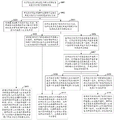
Referring to fig. 4, fig. 4 is a schematic flowchart of another voice playing control method provided in the embodiment of the present application, and is applied to an electronic device, as shown in fig. 4, the voice playing control method includes:
s401, the electronic equipment collects image information of a target user through the at least two camera devices;
s402, the electronic equipment determines whether the action of the target user is calling according to the image information;
s403, if the action of the target user is to make a call, the electronic device determines that the actual state of the target user is to suspend using the first pan-tilt speaker and the second pan-tilt speaker;
s404, if the action of the target user is not a call, the electronic equipment determines whether the motion state of the target user is a static state;
s405, if the motion state of the target user is not a static state, the electronic device determines that the actual state of the target user is that the first pan-tilt speaker and the second pan-tilt speaker are being used;
s406, if the motion state of the target user is a static state, the electronic device determines whether the posture of the target user meets a first condition, where the first condition is used to restrict the posture of the target user to a sitting posture or a sleeping posture;
s407, if the posture of the target user meets the first condition, the electronic device determines whether the eye state of the target user meets a second condition, wherein the second condition is used for restricting the eye state of the target user to be a closed eye state, and the corresponding duration exceeds a preset duration;
s408, if the eye state of the target user does not satisfy the second condition, the electronic device determines that the actual state of the target user is that the first pan-tilt speaker and the second pan-tilt speaker are being used.
S409, if the eye state of the target user satisfies the second condition, determining, by the electronic device, that the actual state of the target user is that the first pan-tilt speaker and the second pan-tilt speaker are not used;
s410, if it is determined that the actual state of the target user is that the first pan-tilt speaker and the second pan-tilt speaker are not used, the electronic device generates a first instruction for adjusting the first pan-tilt speaker and the second pan-tilt speaker, so as to close the first pan-tilt speaker and the second pan-tilt speaker;
s411, if it is determined that the actual state of the target user is that the first pan-tilt speaker and the second pan-tilt speaker are suspended from being used, the electronic device generates a second instruction for adjusting the first pan-tilt speaker and the second pan-tilt speaker to turn off the first pan-tilt speaker and the second pan-tilt speaker, or make the first pan-tilt speaker and the second pan-tilt speaker face other directions except the direction of the target user;
s412, if it is determined that the actual state of the target user is using the first pan-tilt speaker and the second pan-tilt speaker, the electronic device generates a third instruction for adjusting the first pan-tilt speaker and the second pan-tilt speaker, so that the first pan-tilt speaker and the second pan-tilt speaker face the target user, and the playing volume is the target volume.
It can be seen that, in the embodiment of the application, the electronic device first acquires image information of a target user through the at least two camera devices, then determines an actual state of the target user according to the image information, and finally adjusts working states of the first pan-tilt speaker and the second pan-tilt speaker according to the actual state of the target user. Therefore, the actual state of the user is analyzed through the image information of the user, and the working state of the loudspeaker is adjusted based on the actual state of the user, so that the intelligence of the electronic equipment for controlling the loudspeaker is improved, and the experience of the user is further improved.
In addition, the electronic equipment can determine the actual state of the user according to the conditions of whether the user is calling, the motion state, the posture, the eye state and the like, and the accuracy of determining the actual state of the user is improved.
Consistent with the embodiments shown in fig. 2 and 4, please refer to fig. 5, fig. 5 is a schematic structural diagram of an electronic device 500 provided in an embodiment of the present application, where the electronic device includes a main body, a first pan-tilt speaker and a second pan-tilt speaker disposed on the main body, and at least two cameras disposed on the main body, as shown in the figure, the electronic device 500 includes a processor 510, a memory 520, a communication interface 530, and one or more programs 521, where the one or more programs 521 are stored in the memory 520 and configured to be executed by the processor 510, and the one or more programs 521 include instructions for performing the following steps;
acquiring image information of a target user through the at least two camera devices;
determining the actual state of the target user according to the image information;
and adjusting the working states of the first holder loudspeaker and the second holder loudspeaker according to the actual state of the target user.
It can be seen that, in the embodiment of the application, the electronic device first acquires image information of a target user through the at least two camera devices, then determines an actual state of the target user according to the image information, and finally adjusts working states of the first pan-tilt speaker and the second pan-tilt speaker according to the actual state of the target user. Therefore, the actual state of the user is analyzed through the image information of the user, and the working state of the loudspeaker is adjusted based on the actual state of the user, so that the intelligence of the electronic equipment for controlling the loudspeaker is improved, and the experience of the user is further improved.
In one possible example, in the determining the actual state of the target user according to the image information, the instructions in the one or more programs 521 are specifically configured to: determining whether the action of the target user is to make a call; if the action of the target user is not a call, determining whether the motion state of the target user is a static state; if the motion state of the target user is a static state, determining whether the posture of the target user meets a first condition, wherein the first condition is used for restraining the posture of the target user to be a sitting posture or a sleeping posture; if the posture of the target user meets the first condition, determining whether the eye state of the target user meets a second condition, wherein the second condition is used for restraining the eye state of the target user to be a closed eye state, and the corresponding duration exceeds a preset duration; and if the eye state of the target user meets the second condition, determining that the actual state of the target user is that the first pan-tilt speaker and the second pan-tilt speaker are not used.
In one possible example, the instructions in the one or more programs 521 are specifically for: after determining whether the action of the target user is a call, if the action of the target user is a call, determining that the actual state of the target user is that the first cradle head speaker and the second cradle head speaker are suspended from being used.
In one possible example, the instructions in the one or more programs 521 are specifically for: and after determining whether the motion state of the target user is a static state if the motion state of the target user is not a call, determining that the actual state of the target user is that the first pan-tilt speaker and the second pan-tilt speaker are being used if the motion state of the target user is not a static state.
In one possible example, the instructions in the one or more programs 521 are specifically for: after determining whether the eye state of the target user satisfies a second condition if the posture of the target user satisfies the first condition, determining that the actual state of the target user is that the first pan-tilt speaker and the second pan-tilt speaker are being used if the eye state of the target user does not satisfy the second condition.
In one possible example, in said adjusting the operating states of said first pan-tilt speaker and said second pan-tilt speaker according to the actual state of said target user, the instructions of said one or more programs 521 are specifically configured to: if the actual state of the target user is determined to be that the first pan-tilt speaker and the second pan-tilt speaker are not used, generating a first instruction for adjusting the first pan-tilt speaker and the second pan-tilt speaker so as to close the first pan-tilt speaker and the second pan-tilt speaker; if the actual state of the target user is determined to be that the first pan-tilt speaker and the second pan-tilt speaker are suspended from being used, generating a second instruction for adjusting the first pan-tilt speaker and the second pan-tilt speaker so as to close the first pan-tilt speaker and the second pan-tilt speaker, or enable the first pan-tilt speaker and the second pan-tilt speaker to face other directions except the direction of the target user; if the actual state of the target user is determined to be that the first holder loudspeaker and the second holder loudspeaker are in use, a third instruction for adjusting the first holder loudspeaker and the second holder loudspeaker is generated, so that the first holder loudspeaker and the second holder loudspeaker face the target user, and the playing volume is the target volume.
In one possible example, in the aspect of generating a third instruction to adjust the first pan-tilt speaker and the second pan-tilt speaker if it is determined that the actual state of the target user is using the first pan-tilt speaker and the second pan-tilt speaker, the instructions in the one or more programs 521 are specifically configured to: determining a head position of the target user; determining a first target direction of the first pan-tilt speaker according to the head position, wherein the first target direction is a direction facing the head position; determining a second target direction of the second pan-tilt speaker according to the head position, wherein the second target direction is a direction facing the head position; determining a target distance from a local terminal to the head of the target user; determining target volume according to the target distance and a first preset relation, wherein the first preset relation is a corresponding relation between the distance and the volume; and generating a third instruction according to the first target direction, the second target direction and the target volume so as to adjust the first holder loudspeaker and the second holder loudspeaker to face the target user, wherein the playing volume is the target volume.
In one possible example, the one or more programs 521 further include instructions for performing the steps of: after the image information of the target user is collected through the at least two camera devices, if the actual state of the target user is not identified according to the image information, a fourth instruction for adjusting the first holder loudspeaker and the second holder loudspeaker is generated, so that the first holder loudspeaker and the second holder loudspeaker face towards the right front.
The above description has introduced the solution of the embodiment of the present application mainly from the perspective of the method-side implementation process. It is understood that the electronic device comprises corresponding hardware structures and/or software modules for performing the respective functions in order to realize the above-mentioned functions. Those of skill in the art will readily appreciate that the present application is capable of hardware or a combination of hardware and computer software implementing the various illustrative elements and algorithm steps described in connection with the embodiments provided herein. Whether a function is performed as hardware or computer software drives hardware depends upon the particular application and design constraints imposed on the solution. Skilled artisans may implement the described functionality in varying ways for each particular application, but such implementation decisions should not be interpreted as causing a departure from the scope of the present application.
In the embodiment of the present application, the electronic device may be divided into the functional units according to the method example, for example, each functional unit may be divided corresponding to each function, or two or more functions may be integrated into one processing unit. The integrated unit can be realized in a form of hardware, and can also be realized in a form of a software functional unit. It should be noted that the division of the unit in the embodiment of the present application is schematic, and is only a logic function division, and there may be another division manner in actual implementation.
Fig. 6 is a block diagram showing functional units of a speech playback control apparatus 600 according to an embodiment of the present application. Applied to an electronic device comprising a main body, a first pan-tilt speaker and a second pan-tilt speaker disposed on the main body, and at least two cameras disposed on the main body, as shown in fig. 6, the voice playback control device comprises a processing unit 601 and a communication unit 602, wherein,
the processing unit 601, through the communication unit 602, acquires image information of a target user through the at least two camera devices; the system is used for determining the actual state of the target user according to the image information; and the working state of the first holder loudspeaker and the second holder loudspeaker is adjusted according to the actual state of the target user.
The voice playback control apparatus 600 may further include a storage unit 603 for storing program codes and data of the electronic device. The processing unit 601 may be a processor, the communication unit 602 may be a touch display screen or a transceiver, and the storage unit 603 may be a memory.
It can be seen that, in the embodiment of the application, the electronic device first acquires image information of a target user through the at least two camera devices, then determines an actual state of the target user according to the image information, and finally adjusts working states of the first pan-tilt speaker and the second pan-tilt speaker according to the actual state of the target user. Therefore, the actual state of the user is analyzed through the image information of the user, and the working state of the loudspeaker is adjusted based on the actual state of the user, so that the intelligence of the electronic equipment for controlling the loudspeaker is improved, and the experience of the user is further improved.
In one possible example, in the aspect of determining the actual state of the target user according to the image information, the processing unit 601 is specifically configured to: determining whether the action of the target user is to make a call; if the action of the target user is not a call, determining whether the motion state of the target user is a static state; if the motion state of the target user is a static state, determining whether the posture of the target user meets a first condition, wherein the first condition is used for restraining the posture of the target user to be a sitting posture or a sleeping posture; if the posture of the target user meets the first condition, determining whether the eye state of the target user meets a second condition, wherein the second condition is used for restraining the eye state of the target user to be a closed eye state, and the corresponding duration exceeds a preset duration; and if the eye state of the target user meets the second condition, determining that the actual state of the target user is that the first pan-tilt speaker and the second pan-tilt speaker are not used.
In one possible example, the processing unit 601 is specifically configured to: after determining whether the action of the target user is a call, if the action of the target user is a call, determining that the actual state of the target user is that the first cradle head speaker and the second cradle head speaker are suspended from being used.
In one possible example, the processing unit 601 is specifically configured to: after determining whether the motion state of the target user is a stationary state if the motion state of the target user is not a stationary state if the action of the target user is not a call, determining that the actual state of the target user is using the first pan/tilt/zoom speaker and the second pan/tilt/zoom speaker if the motion state of the target user is not a stationary state.
In one possible example, the processing unit 601 is specifically configured to: after determining whether the eye state of the target user satisfies a second condition if the posture of the target user satisfies the first condition, determining that the actual state of the target user is that the first pan-tilt speaker and the second pan-tilt speaker are being used if the eye state of the target user does not satisfy the second condition.
In a possible example, in terms of the adjusting the working states of the first pan-tilt speaker and the second pan-tilt speaker according to the actual state of the target user, the processing unit 601 is specifically configured to: if the actual state of the target user is determined to be that the first pan-tilt speaker and the second pan-tilt speaker are not used, generating a first instruction for adjusting the first pan-tilt speaker and the second pan-tilt speaker so as to close the first pan-tilt speaker and the second pan-tilt speaker; if the actual state of the target user is determined to be that the first pan-tilt speaker and the second pan-tilt speaker are suspended from being used, generating a second instruction for adjusting the first pan-tilt speaker and the second pan-tilt speaker so as to close the first pan-tilt speaker and the second pan-tilt speaker, or enable the first pan-tilt speaker and the second pan-tilt speaker to face other directions except the direction of the target user; and if the actual state of the target user is determined to be that the first holder loudspeaker and the second holder loudspeaker are in use, generating a third instruction for adjusting the first holder loudspeaker and the second holder loudspeaker so that the first holder loudspeaker and the second holder loudspeaker face the target user and the playing volume is the target volume.
In a possible example, in terms of generating a third instruction for adjusting the first pan-tilt speaker and the second pan-tilt speaker if it is determined that the actual state of the target user is using the first pan-tilt speaker and the second pan-tilt speaker, the processing unit 601 is specifically configured to: determining a head position of the target user; determining a first target direction of the first pan-tilt speaker according to the head position, wherein the first target direction is a direction facing the head position; determining a second target direction of the second pan-tilt speaker according to the head position, wherein the second target direction is a direction facing the head position; determining a target distance from a local terminal to the head of the target user; determining target volume according to the target distance and a first preset relation, wherein the first preset relation is a corresponding relation between the distance and the volume; and generating a third instruction according to the first target direction, the second target direction and the target volume so as to adjust the first holder loudspeaker and the second holder loudspeaker to face the target user, wherein the playing volume is the target volume.
In one possible example, the processing unit 601 is further configured to: after the image information of the target user is collected through the at least two camera devices, if the actual state of the target user is not identified according to the image information, a fourth instruction for adjusting the first holder loudspeaker and the second holder loudspeaker is generated, so that the first holder loudspeaker and the second holder loudspeaker face towards the right front.
It can be understood that, since the embodiment of the voice playing control method and the embodiment of the voice playing control device are different presentation forms of the same technical concept, the content of the embodiment of the voice playing control method in the present application should be synchronously adapted to the embodiment of the voice playing control device, and will not be described herein again.
Embodiments of the present application also provide a computer storage medium, where the computer storage medium stores a computer program for electronic data exchange, and the computer program implements, when executed by a computer, part or all of the steps of any one of the methods described in the above method embodiments, and the computer includes an electronic device.
Embodiments of the present application also provide a computer program product comprising a non-transitory computer readable storage medium storing a computer program operable to cause a computer to perform some or all of the steps of any of the methods as described in the above method embodiments. The computer program product may be a software installation package, the computer comprising an electronic device.
It should be noted that, for simplicity of description, the above-mentioned method embodiments are described as a series of acts or combination of acts, but those skilled in the art will recognize that the present application is not limited by the order of acts described, as some steps may occur in other orders or concurrently depending on the application. Further, those skilled in the art should also appreciate that the embodiments described in the specification are preferred embodiments and that the acts and modules referred to are not necessarily required in this application.
In the foregoing embodiments, the descriptions of the respective embodiments have respective emphasis, and for parts that are not described in detail in a certain embodiment, reference may be made to related descriptions of other embodiments.
In the several embodiments provided in the present application, it should be understood that the disclosed apparatus may be implemented in other manners. For example, the above-described embodiments of the apparatus are merely illustrative, and for example, the above-described division of the units is only one type of division of logical functions, and other divisions may be realized in practice, for example, a plurality of units or components may be combined or integrated into another system, or some features may be omitted, or not executed. In addition, the shown or discussed mutual coupling or direct coupling or communication connection may be an indirect coupling or communication connection of some interfaces, devices or units, and may be an electric or other form.
The units described as separate parts may or may not be physically separate, and parts displayed as units may or may not be physical units, may be located in one place, or may be distributed on a plurality of network units. Some or all of the units can be selected according to actual needs to achieve the purpose of the solution of the embodiment.
In addition, functional units in the embodiments of the present application may be integrated into one processing unit, or each unit may exist alone physically, or two or more units are integrated into one unit. The integrated unit can be realized in a form of hardware, and can also be realized in a form of a software functional unit.
The integrated unit may be stored in a computer readable memory if it is implemented in the form of a software functional unit and sold or used as a stand-alone product. Based on such understanding, the technical solution of the present application may be substantially implemented or a part of or all or part of the technical solution contributing to the prior art may be embodied in the form of a software product stored in a memory, and including several instructions for causing a computer device (which may be a personal computer, a server, or a network device) to execute all or part of the steps of the above-mentioned method of the embodiments of the present application. And the aforementioned memory comprises: a U-disk, a Read-Only Memory (ROM), a Random Access Memory (RAM), a removable hard disk, a magnetic or optical disk, and other various media capable of storing program codes.
Those skilled in the art will appreciate that all or part of the steps in the methods of the above embodiments may be implemented by associated hardware instructed by a program, which may be stored in a computer-readable memory, which may include: flash Memory disks, Read-Only memories (ROMs), Random Access Memories (RAMs), magnetic or optical disks, and the like.
The foregoing detailed description of the embodiments of the present application has been presented to illustrate the principles and implementations of the present application, and the above description of the embodiments is only provided to help understand the method and the core concept of the present application; meanwhile, for a person skilled in the art, according to the idea of the present application, there may be variations in the specific embodiments and the application scope, and in summary, the content of the present specification should not be construed as a limitation to the present application.
Claims (9)
1. A voice playing control method is applied to electronic equipment, the electronic equipment comprises a main body, a first pan-tilt speaker and a second pan-tilt speaker which are arranged on the main body, and at least two camera devices which are arranged on the main body, and the method comprises the following steps:
acquiring image information of a target user through the at least two camera devices;
determining whether the action of the target user is a call according to the image information;
if the action of the target user is not a call, determining whether the motion state of the target user is a static state;
if the motion state of the target user is a static state, determining whether the posture of the target user meets a first condition, wherein the first condition is used for restraining the posture of the target user to be a sitting posture or a sleeping posture;
if the posture of the target user meets the first condition, determining whether the eye state of the target user meets a second condition, wherein the second condition is used for restraining the eye state of the target user to be a closed eye state, and the corresponding duration exceeds a preset duration;
if the eye state of the target user meets the second condition, determining that the actual state of the target user is that the first pan-tilt speaker and the second pan-tilt speaker are not used;
if the actual state of the target user is determined to be that the first pan-tilt speaker and the second pan-tilt speaker are not used, generating a first instruction for adjusting the first pan-tilt speaker and the second pan-tilt speaker so as to close the first pan-tilt speaker and the second pan-tilt speaker.
2. The method of claim 1, wherein after determining whether the action of the target user is to place a call, the method further comprises:
and if the action of the target user is calling, determining that the actual state of the target user is the suspension of using the first holder loudspeaker and the second holder loudspeaker.
3. The method of claim 1, wherein after determining whether the motion state of the target user is a stationary state if the action of the target user is not to make a call, the method further comprises:
and if the motion state of the target user is not a static state, determining that the actual state of the target user is that the first pan-tilt speaker and the second pan-tilt speaker are being used.
4. The method of claim 1, wherein after determining whether the eye state of the target user satisfies a second condition if the gesture of the target user satisfies the first condition, the method further comprises:
and if the eye state of the target user does not satisfy the second condition, determining that the actual state of the target user is that the first pan-tilt speaker and the second pan-tilt speaker are being used.
5. The method of claim 2, further comprising:
and if the actual state of the target user is determined to be that the first holder loudspeaker and the second holder loudspeaker are suspended from being used, generating a second instruction for adjusting the first holder loudspeaker and the second holder loudspeaker so as to close the first holder loudspeaker and the second holder loudspeaker, or enabling the first holder loudspeaker and the second holder loudspeaker to face other directions except the direction of the target user.
6. The method according to claim 3 or 4, characterized in that the method further comprises:
and if the actual state of the target user is determined to be that the first holder loudspeaker and the second holder loudspeaker are in use, generating a third instruction for adjusting the first holder loudspeaker and the second holder loudspeaker so that the first holder loudspeaker and the second holder loudspeaker face the target user and the playing volume is the target volume.
7. The method of claim 6, wherein generating a third instruction to adjust the first pan-tilt speaker and the second pan-tilt speaker if it is determined that the actual state of the target user is using the first pan-tilt speaker and the second pan-tilt speaker comprises:
determining a head position of the target user;
determining a first target direction of the first pan-tilt speaker according to the head position, wherein the first target direction is a direction facing the head position;
determining a second target direction of the second pan-tilt speaker according to the head position, wherein the second target direction is a direction facing the head position;
determining a target distance of the electronic device to a head of the target user;
determining target volume according to the target distance and a first preset relation, wherein the first preset relation is a corresponding relation between the distance and the volume;
and generating a third instruction according to the first target direction, the second target direction and the target volume so as to adjust the first holder loudspeaker and the second holder loudspeaker to face the target user, wherein the playing volume is the target volume.
8. A voice playing control device is characterized in that the voice playing control device is applied to electronic equipment, the electronic equipment comprises a main body, a first pan-tilt loudspeaker and a second pan-tilt loudspeaker which are arranged on the main body, and at least two camera devices which are arranged on the main body, the voice playing control device comprises a processing unit and a communication unit, wherein,
the processing unit is used for acquiring image information of a target user through the communication unit and the at least two camera devices; and the image information is used for determining whether the action of the target user is calling or not; if the action of the target user is not a call, determining whether the motion state of the target user is a static state; if the motion state of the target user is a static state, determining whether the posture of the target user meets a first condition, wherein the first condition is used for restraining the posture of the target user to be a sitting posture or a sleeping posture; if the posture of the target user meets the first condition, determining whether the eye state of the target user meets a second condition, wherein the second condition is used for restraining the eye state of the target user to be a closed eye state, and the corresponding duration exceeds a preset duration; if the eye state of the target user meets the second condition, determining that the actual state of the target user is that the first pan-tilt speaker and the second pan-tilt speaker are not used; if the actual state of the target user is determined to be that the first pan-tilt speaker and the second pan-tilt speaker are not used, generating a first instruction for adjusting the first pan-tilt speaker and the second pan-tilt speaker so as to close the first pan-tilt speaker and the second pan-tilt speaker.
9. An electronic device comprising a processor, a memory, a communication interface, and one or more programs stored in the memory and configured to be executed by the processor, the programs comprising instructions for performing the steps in the method of any of claims 1-7.
Priority Applications (1)
| Application Number | Priority Date | Filing Date | Title |
|---|---|---|---|
| CN202010956541.7A CN112153527B (en) | 2020-09-11 | 2020-09-11 | Voice playing control method and related device |
Applications Claiming Priority (1)
| Application Number | Priority Date | Filing Date | Title |
|---|---|---|---|
| CN202010956541.7A CN112153527B (en) | 2020-09-11 | 2020-09-11 | Voice playing control method and related device |
Publications (2)
| Publication Number | Publication Date |
|---|---|
| CN112153527A CN112153527A (en) | 2020-12-29 |
| CN112153527B true CN112153527B (en) | 2022-08-05 |
Family
ID=73889689
Family Applications (1)
| Application Number | Title | Priority Date | Filing Date |
|---|---|---|---|
| CN202010956541.7A Active CN112153527B (en) | 2020-09-11 | 2020-09-11 | Voice playing control method and related device |
Country Status (1)
| Country | Link |
|---|---|
| CN (1) | CN112153527B (en) |
Families Citing this family (2)
| Publication number | Priority date | Publication date | Assignee | Title |
|---|---|---|---|---|
| CN113192446A (en) * | 2021-05-08 | 2021-07-30 | 益逻触控系统公司 | Media playing device and self-service terminal |
| CN114339334A (en) * | 2021-12-30 | 2022-04-12 | 深圳市火乐科技发展有限公司 | Sleep assisting method and device, storage medium and projection equipment |
Citations (1)
| Publication number | Priority date | Publication date | Assignee | Title |
|---|---|---|---|---|
| JP2002111892A (en) * | 2000-09-30 | 2002-04-12 | Teruo Ido | Remote monitoring control system by mobile phone |
Family Cites Families (5)
| Publication number | Priority date | Publication date | Assignee | Title |
|---|---|---|---|---|
| JPH03145246A (en) * | 1989-10-31 | 1991-06-20 | Matsushita Electric Ind Co Ltd | Telephone set |
| US8917307B2 (en) * | 2012-02-24 | 2014-12-23 | Microsoft Corporation | Video calling |
| JP5887543B2 (en) * | 2014-11-18 | 2016-03-16 | パナソニックIpマネジメント株式会社 | Surveillance camera system and surveillance method in surveillance camera system |
| WO2019010896A1 (en) * | 2017-07-12 | 2019-01-17 | 华为技术有限公司 | Control method and device for device volume, and server |
| CN108737896B (en) * | 2018-05-10 | 2020-11-03 | 深圳创维-Rgb电子有限公司 | A method for automatically adjusting the orientation of speakers based on a TV and a TV |
-
2020
- 2020-09-11 CN CN202010956541.7A patent/CN112153527B/en active Active
Patent Citations (1)
| Publication number | Priority date | Publication date | Assignee | Title |
|---|---|---|---|---|
| JP2002111892A (en) * | 2000-09-30 | 2002-04-12 | Teruo Ido | Remote monitoring control system by mobile phone |
Also Published As
| Publication number | Publication date |
|---|---|
| CN112153527A (en) | 2020-12-29 |
Similar Documents
| Publication | Publication Date | Title |
|---|---|---|
| US12238488B2 (en) | Systems and methods for equalizing audio for playback on an electronic device | |
| US12143808B2 (en) | Displaying a location of binaural sound outside a field of view | |
| CN107071648B (en) | Sound playing adjusting system, device and method | |
| US10405081B2 (en) | Intelligent wireless headset system | |
| JP6314286B2 (en) | Audio signal optimization method and apparatus, program, and recording medium | |
| CN111402913A (en) | Noise reduction method, device, equipment and storage medium | |
| CN103634720A (en) | Playing control method and electronic equipment | |
| KR20120057258A (en) | Mobile terminal and operation control method thereof | |
| EP3975582A1 (en) | Sound box assembly, display apparatus, audio output method and device | |
| CN112153527A (en) | Voice playing control method and related device | |
| CN105100368A (en) | Information processing method and information processing device | |
| CN109842718A (en) | A kind of call method of adjustment, terminal and computer readable storage medium | |
| EP3941027B1 (en) | Adaptive method and apparatus for intelligent terminal, and terminal | |
| CN206585725U (en) | A kind of earphone | |
| CN114339582A (en) | Dual-channel audio processing method, directional filter generating method, apparatus and medium | |
| US12548575B2 (en) | Apparatus, methods and computer programs for controlling band limited audio objects | |
| CN107870758A (en) | Audio playback method and device, electronic device | |
| WO2017215158A1 (en) | Communication terminal sound processing control method, device and communication terminal | |
| CN217406572U (en) | Reversible electronic device | |
| US20250342675A1 (en) | Virtual space modification | |
| US20250308544A1 (en) | Audio scene modification | |
| WO2019174442A1 (en) | Adapterization equipment, voice output method, device, storage medium and electronic device | |
| KR20120040766A (en) | Mobile terminal and operation control method thereof | |
| CN108271098A (en) | Sound equipment mechanism and sound system | |
| CN121619526A (en) | Audio control method, audio control device, electronic equipment and storage medium |
Legal Events
| Date | Code | Title | Description |
|---|---|---|---|
| PB01 | Publication | ||
| PB01 | Publication | ||
| SE01 | Entry into force of request for substantive examination | ||
| SE01 | Entry into force of request for substantive examination | ||
| GR01 | Patent grant | ||
| GR01 | Patent grant |