Replacement inner core of antibacterial water-absorbing mask
Technical Field
The invention belongs to the technical field of masks, and particularly relates to a replaceable inner core of an antibacterial water-absorbing mask.
Background
The disposable medical mask is composed of three layers of structures, the filtering function of the mask is embodied in the middle static filtering layer, but in the using process of the mask, the static filtering layer is easy to lose static electricity due to water vapor brought out by the breathing of a human body; therefore, the contact of water vapor with the electrostatic filter layer is reduced, and the service life of the mask can be prolonged.
Disclosure of Invention
In view of the above problems in the prior art, an object of the present invention is to provide a replaceable core for an antibacterial water-absorbing mask, which can reduce the contact of water vapor with an electrostatic filter layer and prolong the service life of the mask.
The invention provides the following technical scheme: the utility model provides an antibacterial gauze mask replacement inner core that absorbs water which characterized in that: including nose wing part and gauze mask main part, nose wing part sets up the upper portion at the gauze mask main part, the gauze mask main part includes first layer close skin surface fabric, the antibiotic strip that absorbs of a plurality of second floor and the close skin surface fabric of third layer in proper order, and the parallel interval arrangement of the antibiotic strip that absorbs of a plurality of second floor is between first layer close skin surface fabric and the close skin surface fabric of third layer.
The replaceable inner core of the antibacterial water-absorbing mask is characterized in that the nose wing part is made of a skin-friendly material.
The replacement inner core of the antibacterial water-absorbing mask is characterized in that the nasal wing part, the first layer of skin-friendly fabric and the third layer of skin-friendly fabric are non-woven fabrics made of bamboo fiber/fibroin/cyclodextrin composite materials, and the second layer of antibacterial water-absorbing strips are made of sodium alginate/sulfonated cyclodextrin materials.
The replacement inner core of the antibacterial water-absorbing mask is characterized in that the preparation method of the skin-friendly material comprises the following steps:
step one, preparing a sodium hydroxide solution with the pH value of 8-12, putting bamboo fibers into the alkali solution, reacting for 2-6 hours at 55-85 ℃, and filtering to obtain a uniform solution A;
step two, adding cyclodextrin into the solution, and stirring to obtain uniform solution B
Step three, preparing a buffer solution with the pH value of 8, putting the fibroin into the solution, adding alkaline protease, reacting for 2-6 hours at the temperature of 25-38 ℃, and filtering to obtain a uniform solution C;
step four, mixing the solution B and the solution C, and preparing a non-woven fabric by using a spunlace method in a weakly acidic environment;
and step five, washing the obtained non-woven fabric for multiple times until the non-woven fabric is neutral, and drying.
The replacement inner core of the antibacterial water-absorbing mask is characterized in that the mass ratio of the bamboo fibers, the fibroin and the cyclodextrin is 10-25: 3-5: 0.2-0.5.
The replacement inner core of the antibacterial water-absorbing mask is characterized in that the preparation method of the second-layer antibacterial water-absorbing strip 3 material is as follows:
step one, preparing a sodium alginate solution with the concentration of 2.3-4.7% at the temperature of 45-85 ℃;
secondly, adding sulfonated cyclodextrin according to 0.1-0.4% of the solution by mass, and stirring to obtain a uniform solution A;
step three, adding 5% glutaraldehyde solution with the mass of 2% of the solution into the uniform solution A, and reacting for 2-4 hours at 50-95 ℃ to obtain jelly B;
step four, extruding the obtained jelly B into ethanol, and soaking for 1 hour; soaking and cleaning with deionized water for 3 times, each time for 3 hours;
and step five, drying and dehydrating the obtained adhesive tape.
By adopting the technology, compared with the prior art, the invention has the following beneficial effects:
1. the replacement inner core of the mask comprises a first layer of skin-friendly fabric, a second layer of antibacterial water-absorbing strips and a third layer of skin-friendly fabric, wherein the second layer of antibacterial water-absorbing strips are arranged in parallel at intervals; the structural design can effectively absorb moisture brought out by human breath and reduce the possibility of inactivation of the static protective layer; when the water absorption capacity reaches a certain degree, the second layer of antibacterial water absorption strip expands to remind the user to replace the inner core in time, and meanwhile, the breathing passage is not blocked, and the comfort level of people wearing the antibacterial water absorption strip is improved; meanwhile, the structure has a certain telescopic space, so that a user can adjust the inner core according to the face shape of the user, and the inner core can completely cover the mouth and the nose;
2. the used skin-friendly fabric is made of bamboo fiber/fibroin/cyclodextrin composite materials by a spunlace method, and the materials have good skin-friendly performance and cannot stimulate the skin; meanwhile, the elasticity is good, and a certain amount of stretching can be borne; the water absorption and air permeability performance is good, and the wearing is more comfortable;
3. the antibacterial water absorbing strip is prepared by using a sodium alginate/sulfonated cyclodextrin material, the material has good water absorption, the water absorption capacity of the material per unit mass is 6-14 times of the mass of the material, the volume can be greatly changed after water absorption, and the antibacterial water absorbing strip has the capacity of preventing water from back seepage; and the sulfonated cyclodextrin group has an inhibiting effect on bacteria, and can effectively protect the health of users.
Drawings
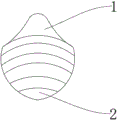
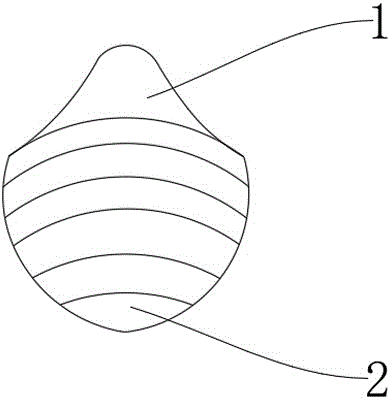
FIG. 1 is a schematic front view of the present invention;
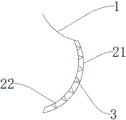
fig. 2 is a schematic side view of the present invention.
In the figure: 1. a nasal wing portion; 2. a mask body; 21. a first layer of skin-friendly fabric; 22. a third layer of skin-friendly fabric; 3. the second layer of antibacterial water absorbing strip.
Detailed Description
In order to make the objects, technical solutions and advantages of the present invention more apparent, the present invention is further described in detail below with reference to the accompanying drawings and embodiments. It should be understood that the specific embodiments described herein are merely illustrative of the invention and are not intended to limit the invention.
On the contrary, the invention is intended to cover alternatives, modifications, equivalents and alternatives which may be included within the spirit and scope of the invention as defined by the appended claims. Furthermore, in the following detailed description of the present invention, certain specific details are set forth in order to provide a better understanding of the present invention. It will be apparent to one skilled in the art that the present invention may be practiced without these specific details.
Referring to fig. 1-2, the replacement inner core for the antibacterial water-absorbing mask comprises a nose wing part 1 and a mask main body 2, wherein the nose wing part 1 is arranged on the upper part of the mask main body 2, the mask main body 2 sequentially comprises a first layer of skin-friendly fabric 21, a plurality of second layers of antibacterial water-absorbing strips 3 and a third layer of skin-friendly fabric 22, and the plurality of second layers of antibacterial water-absorbing strips 3 are parallelly arranged between the first layer of skin-friendly fabric 21 and the third layer of skin-friendly fabric 22 at intervals.
The nasal wing part 1, the first layer of skin-friendly fabric 21 and the third layer of skin-friendly fabric 22 are all non-woven fabrics made of bamboo fiber/fibroin/cyclodextrin composite materials, and the second layer of antibacterial water absorbing strips 3 are made of sodium alginate/sulfonated cyclodextrin materials.
The preparation method of the non-woven fabric comprises the following steps:
step one, preparing a sodium hydroxide solution with the pH value of 8-12, putting bamboo fibers into the alkali solution, reacting for 2-6 hours at 55-85 ℃, and filtering to obtain a uniform solution A;
step two, adding cyclodextrin into the solution, and stirring to obtain uniform solution B
Step three, preparing a buffer solution with the pH value of 8, putting the fibroin into the solution, adding alkaline protease, reacting for 2-6 hours at the temperature of 25-38 ℃, and filtering to obtain a uniform solution C;
step four, mixing the solution B and the solution C, and preparing a non-woven fabric by using a spunlace method in a weakly acidic environment;
and step five, washing the obtained non-woven fabric for multiple times until the non-woven fabric is neutral, and drying.
Wherein the mass ratio of the bamboo fibers to the fibroin to the cyclodextrin is 10-25: 3-5: 0.2-0.5.
The preparation method of the second layer of antibacterial water-absorbing strip (3) material comprises the following steps:
step one, preparing a sodium alginate solution with the concentration of 2.3-4.7% at the temperature of 45-85 ℃;
secondly, adding sulfonated cyclodextrin according to 0.1-0.4% of the solution by mass, and stirring to obtain a uniform solution A;
step three, adding 5% glutaraldehyde solution with the mass of 2% of the solution into the uniform solution A, and reacting for 2-4 hours at 50-95 ℃ to obtain jelly B;
step four, extruding the obtained jelly B into ethanol, and soaking for 1 hour; soaking and cleaning with deionized water for 3 times, each time for 3 hours;
and step five, drying and dehydrating the obtained adhesive tape.
When the material is prepared, the main technical scheme adopted by the invention is as follows:
example 1
The first layer of skin-friendly fabric 21, the third layer of skin-friendly fabric 22 and the nasal wing part 1 are prepared by the following steps:
step one, preparing 1000ml of sodium hydroxide solution with the pH value of 8, putting 250g of bamboo fibers into the alkali solution, reacting for 2 hours at 55 ℃, and filtering to obtain uniform solution A;
step two, adding 12.5g of cyclodextrin into the solution, and stirring to obtain a uniform solution B;
step three, preparing a sodium dihydrogen phosphate/disodium hydrogen phosphate buffer solution with the pH value of 8, adding 80g of fibroin into the solution, adding 0.5g of alkaline protease, reacting for 4 hours at 28 ℃, and filtering to obtain a uniform solution C;
step four, mixing the solution B and the solution C, and preparing the non-woven fabric in an acetic acid solution with the pH value of 3.5 by using a spunlace method;
and step five, washing the obtained non-woven fabric for multiple times until the non-woven fabric is neutral, and drying.
The preparation method of the second layer of antibacterial water-absorbing strip material 3 comprises the following steps:
step one, preparing a sodium alginate solution with the concentration of 4.7% at the temperature of 45 ℃;
step two, adding sulfonated cyclodextrin according to 0.1 percent of the mass of the solution, and stirring to obtain a uniform solution A;
step three, extruding the obtained jelly B into ethanol, and soaking for 1 hour; soaking and cleaning with deionized water for 3 times, each time for 3 hours;
step four, mixing the solution B and the solution C, and preparing the non-woven fabric in an acetic acid solution with the pH value of 3.5 by using a spunlace method;
and step five, drying and dehydrating the obtained adhesive tape.
The water absorption capacity of the mask prepared from the material is 7.3g (water)/g (mask).
Example 2
The first layer of skin-friendly fabric 21, the third layer of skin-friendly fabric 22 and the nasal wing part 1 are prepared by the following steps:
step one, preparing 1000ml of sodium hydroxide solution with the pH value of 12, putting 120g of bamboo fibers into the alkali solution, reacting for 6 hours at 85 ℃, and filtering to obtain uniform solution A;
step two, adding 2.4g of cyclodextrin into the solution, and stirring to obtain a uniform solution B;
step three, preparing a sodium dihydrogen phosphate/disodium hydrogen phosphate buffer solution with the pH value of 8, adding 36g of fibroin into the solution, adding 0.5g of alkaline protease, reacting for 2 hours at 35 ℃, and filtering to obtain a uniform solution C;
step four, mixing the solution B and the solution C, and preparing the non-woven fabric in an acetic acid solution with the pH value of 4 by using a spunlace method;
and step five, washing the obtained non-woven fabric for multiple times until the non-woven fabric is neutral, and drying.
The preparation method of the second layer of antibacterial water-absorbing strip 3 material comprises the following steps:
step one, preparing a sodium alginate solution with the concentration of 2.3 percent at the temperature of 45 ℃;
step two, adding sulfonated cyclodextrin according to 0.4 percent of the mass of the solution, and stirring to obtain a uniform solution A;
step three, adding a 5% glutaraldehyde solution with the mass of 2% of the solution into the uniform solution A, and reacting for 4 hours at 50 ℃ to obtain a jelly B;
step four, extruding the obtained jelly B into ethanol, and soaking for 1 hour; soaking and cleaning with deionized water for 3 times, each time for 3 hours;
and step five, drying and dehydrating the obtained adhesive tape.
The mask made of the material has the water absorption capacity of 12.7g (water)/g (mask).
Example 3
The first layer of skin-friendly fabric 21, the third layer of skin-friendly fabric 22 and the nasal wing part 1 are prepared by the following steps:
step one, preparing 1000ml of sodium hydroxide solution with the pH value of 8, putting 170g of bamboo fibers into the alkali solution, reacting for 6 hours at 85 ℃, and filtering to obtain uniform solution A;
step two, adding 3.1g of cyclodextrin into the solution, and stirring to obtain a uniform solution B;
step three, preparing a sodium dihydrogen phosphate/disodium hydrogen phosphate buffer solution with the pH value of 8, adding 45g of fibroin into the solution, adding 0.5g of alkaline protease, reacting for 2 hours at 35 ℃, and filtering to obtain a uniform solution C;
step four, mixing the solution B and the solution C, and preparing the non-woven fabric in an acetic acid solution with the pH value of 4 by using a spunlace method;
and step five, washing the obtained non-woven fabric for multiple times until the non-woven fabric is neutral, and drying.
The preparation method of the second layer of antibacterial water-absorbing strip 3 material comprises the following steps:
step one, preparing a sodium alginate solution with the concentration of 3.1% at the temperature of 45 ℃;
step two, adding sulfonated cyclodextrin according to 0.2 percent of the mass of the solution, and stirring to obtain a uniform solution A;
step three, adding a 5% glutaraldehyde solution with the mass of 2% of the solution into the uniform solution A, and reacting for 4 hours at 50 ℃ to obtain a jelly B;
step four, extruding the obtained jelly B into ethanol, and soaking for 1 hour; soaking and cleaning with deionized water for 3 times, each time for 3 hours;
and step five, drying and dehydrating the obtained adhesive tape.
The mask made of the material has the water absorption capacity of 10.3g (water)/g (mask).
The above description is only for the purpose of illustrating the preferred embodiments of the present invention and is not to be construed as limiting the invention, and any modifications, equivalents and improvements made within the spirit and principle of the present invention are intended to be included within the scope of the present invention.