CN107879606B - High-temperature forming mold automatic transfer and loading and unloading device, 3D cover glass high-efficiency processing system and processing method - Google Patents
High-temperature forming mold automatic transfer and loading and unloading device, 3D cover glass high-efficiency processing system and processing method Download PDFInfo
- Publication number
- CN107879606B CN107879606B CN201711282466.5A CN201711282466A CN107879606B CN 107879606 B CN107879606 B CN 107879606B CN 201711282466 A CN201711282466 A CN 201711282466A CN 107879606 B CN107879606 B CN 107879606B
- Authority
- CN
- China
- Prior art keywords
- cover glass
- forming mold
- temperature
- mold
- station
- Prior art date
- Legal status (The legal status is an assumption and is not a legal conclusion. Google has not performed a legal analysis and makes no representation as to the accuracy of the status listed.)
- Expired - Fee Related
Links
Images


Classifications
-
- C—CHEMISTRY; METALLURGY
- C03—GLASS; MINERAL OR SLAG WOOL
- C03B—MANUFACTURE, SHAPING, OR SUPPLEMENTARY PROCESSES
- C03B23/00—Re-forming shaped glass
- C03B23/02—Re-forming glass sheets
- C03B23/023—Re-forming glass sheets by bending
- C03B23/03—Re-forming glass sheets by bending by press-bending between shaping moulds
- C03B23/0307—Press-bending involving applying local or additional heating, cooling or insulating means
-
- C—CHEMISTRY; METALLURGY
- C03—GLASS; MINERAL OR SLAG WOOL
- C03B—MANUFACTURE, SHAPING, OR SUPPLEMENTARY PROCESSES
- C03B23/00—Re-forming shaped glass
- C03B23/02—Re-forming glass sheets
- C03B23/023—Re-forming glass sheets by bending
- C03B23/03—Re-forming glass sheets by bending by press-bending between shaping moulds
- C03B23/0302—Re-forming glass sheets by bending by press-bending between shaping moulds between opposing full-face shaping moulds
-
- Y—GENERAL TAGGING OF NEW TECHNOLOGICAL DEVELOPMENTS; GENERAL TAGGING OF CROSS-SECTIONAL TECHNOLOGIES SPANNING OVER SEVERAL SECTIONS OF THE IPC; TECHNICAL SUBJECTS COVERED BY FORMER USPC CROSS-REFERENCE ART COLLECTIONS [XRACs] AND DIGESTS
- Y02—TECHNOLOGIES OR APPLICATIONS FOR MITIGATION OR ADAPTATION AGAINST CLIMATE CHANGE
- Y02P—CLIMATE CHANGE MITIGATION TECHNOLOGIES IN THE PRODUCTION OR PROCESSING OF GOODS
- Y02P40/00—Technologies relating to the processing of minerals
- Y02P40/50—Glass production, e.g. reusing waste heat during processing or shaping
- Y02P40/57—Improving the yield, e-g- reduction of reject rates
Landscapes
- Chemical & Material Sciences (AREA)
- Engineering & Computer Science (AREA)
- Materials Engineering (AREA)
- Organic Chemistry (AREA)
- Re-Forming, After-Treatment, Cutting And Transporting Of Glass Products (AREA)
Abstract
本发明揭示了高温成型模具自动转运及上下料装置、3D盖板玻璃高效加工系统及其加工方法,高温成型模具自动转运及上下料装置,包括成型模具输送机构,用于将温度不低于100℃的成型模具从加工设备的出料端移送到卸料上料工位以及从卸料上料工位移送到加工设备的入料端;卸料上料工位包括上模移动装置,用于升降成型模具的上模来控制开模合模;取片置片装置,用于将成型件从成型模具的下模中取出,并从待加工件放置区取件置于下模上。本方案不需要人工操作,能够提高整体的加工效率和产品良率,输出的成型模具没有温度限制,可以在较高的温度条件下输出,能够减少冷却时间,同时减少在预热所花费的时间,有利于提高整体的加工速率和降低能耗。
The invention discloses an automatic transfer and loading and unloading device for high-temperature forming molds, a high-efficiency processing system and processing method for 3D cover glass, an automatic transfer and loading and unloading device for high-temperature forming molds, including a forming mold conveying mechanism, which is used to reduce the temperature to not lower than 100 The forming mold of ℃ is moved from the discharge end of the processing equipment to the unloading and feeding station and from the unloading and feeding station to the feeding end of the processing equipment; the unloading and feeding station includes an upper mold moving device for The upper mold of the forming mold is lifted to control the opening and closing of the mold; the sheet taking device is used to take out the molded part from the lower mold of the forming mold, and take the piece from the place to be processed and place it on the lower mold. This solution does not require manual operation and can improve overall processing efficiency and product yield. The output molding die has no temperature limit and can be output at a higher temperature, which can reduce cooling time and reduce the time spent on preheating , which is conducive to improving the overall processing rate and reducing energy consumption.
Description
技术领域technical field
本发明涉及盖板玻璃加工领域,尤其是高温成型模具自动转运及上下料装置、3D盖板玻璃高效加工系统及其加工方法。The invention relates to the field of cover glass processing, in particular to an automatic transfer and loading and unloading device for a high-temperature forming mold, a high-efficiency 3D cover glass processing system and a processing method thereof.
背景技术Background technique
随着5G信号时代的到来,传统的金属外壳屏蔽信号的缺点趋于明显。With the advent of the 5G signal era, the shortcomings of traditional metal shell shielding signals tend to be obvious.
玻璃作为手机外壳具有新颖的外观、舒适的手感、良好的可塑性等众多优点,逐渐取代传统的塑料外壳和金属外壳。As a mobile phone casing, glass has many advantages such as novel appearance, comfortable feel, good plasticity, etc., and gradually replaces traditional plastic casings and metal casings.
最新的创新之一是通过弯曲玻璃的边缘或中心来获得三维结构形状,即通过在加热的同时并向盖板玻璃的四周施加压力,来使现有二维平面状态下的盖板玻璃弯曲成3维形状。One of the latest innovations is to obtain a three-dimensional structural shape by bending the edge or center of the glass, that is, by applying pressure to the periphery of the cover glass while heating, so that the existing two-dimensional flat state of the cover glass is bent into a 3-dimensional shape.
现有的用于3D手机盖板玻璃成型的热弯机在加工时,基本上由人工进行上料和下料,自动化程度低,加工效率受影响,同时,人工上料下料的速度和准确性还影响到整个设备的加工效率和产品的质量。The existing hot bending machine for 3D mobile phone cover glass molding is basically manually loaded and unloaded, which has a low degree of automation and affects processing efficiency. At the same time, the speed and accuracy of manual loading and unloading It also affects the processing efficiency of the entire equipment and the quality of the product.
进一步,由于采用人工进行下料,因此,成型模具再从热弯机中移出时,其温度需要降低到人体皮肤耐受温度至下,通常为室温,这就导致了冷却时间的延长,同时在进行后续加工时,又需要将成型模具从室温加热至玻璃软化点温度,这就造成了加热时间的延长,不仅降低了加工效率,增加了加工时间,也增加了设备的能耗。Further, due to the manual blanking, when the forming mold is removed from the hot bending machine, its temperature needs to be lowered to the lower than the human skin tolerance temperature, usually room temperature, which leads to the prolongation of the cooling time, and at the same time During subsequent processing, the forming mold needs to be heated from room temperature to the softening point of glass, which prolongs the heating time, which not only reduces the processing efficiency, increases the processing time, but also increases the energy consumption of the equipment.
另一方面,现有的用于3D手机盖板玻璃成型工艺的加热方法主要有电阻棒加热和电磁感应加热。On the other hand, the existing heating methods for the molding process of 3D mobile phone cover glass mainly include resistance rod heating and electromagnetic induction heating.
电阻棒加热成型工艺,即通过电阻加热管加热,通过热传导的方式间接加热成型模具使玻璃软化,但是电阻加热缓慢,成型模具通过每个工位后带走的热量损失,需要较长的时间进行温度补偿,且加热的最高温度受到了限制。The resistance rod heating forming process is to heat the forming mold through the resistance heating tube and indirectly heat the forming mold to soften the glass through heat conduction, but the resistance heating is slow, and the heat loss taken away by the forming mold after passing through each station takes a long time to complete. Temperature compensation, and the maximum temperature of heating is limited.
电磁感应加热是利用电磁感应使模具内部产生电流,依靠涡流的能量加热成型模具,其优点是能够在数秒内使成型模具达到玻璃软化点的温度,其缺点是由于电磁的特性,成型模具靠近线圈侧温度高,远离线圈远侧温度低,导致成型模具的热均匀性非常差,从而导致盖板玻璃的热均匀性很差,致使最终压制成型的3D盖板玻璃良率很低。Electromagnetic induction heating uses electromagnetic induction to generate current inside the mold, and relies on eddy current energy to heat the forming mold. Its advantage is that the forming mold can reach the temperature of the glass softening point within a few seconds. The disadvantage is that due to the characteristics of electromagnetic, the forming mold is close to the coil. The side temperature is high, and the temperature far away from the coil is low, resulting in very poor thermal uniformity of the forming mold, resulting in poor thermal uniformity of the cover glass, resulting in a low yield of the final press-molded 3D cover glass.
发明内容Contents of the invention
本发明的目的就是为了解决现有技术中存在的上述问题,提供了高温成型模具自动转运及上下料装置、3D盖板玻璃高效加工系统及其加工方法。The purpose of the present invention is to solve the above-mentioned problems in the prior art, and provide an automatic transfer and loading and unloading device for high-temperature forming molds, a high-efficiency processing system for 3D cover glass and a processing method thereof.
本发明的目的通过以下技术方案来实现:The purpose of the present invention is achieved through the following technical solutions:
高温成型模具自动转运及上下料装置,包括High temperature forming mold automatic transfer and loading and unloading device, including
成型模具输送机构,用于将温度不低于100℃的成型模具从加工设备的出料端移送到卸料上料工位以及从卸料上料工位移送到加工设备的入料端;The forming mold conveying mechanism is used to transfer the forming mold with a temperature not lower than 100°C from the discharge end of the processing equipment to the unloading and loading station, and from the unloading and loading station to the feeding end of the processing equipment;
卸料上料工位包括Unloading and loading stations include
上模移动装置,用于升降成型模具的上模来控制成型模具的开模合模;The upper mold moving device is used to lift the upper mold of the forming mold to control the opening and closing of the forming mold;
取片置片装置,用于在开模状态下将成型件从成型模具的下模中取出置于成品放置区,并从待加工件放置区取件置于下模上。The sheet taking and placing device is used to take out the molded parts from the lower mold of the forming mold and place them in the finished product placement area under the mold opening state, and take the parts from the placement area of the workpieces to be processed and place them on the lower mold.
优选的,所述成型模具输送机构及上模移动装置与成型模具接触的区域为保温隔热材料。Preferably, the area where the forming mold conveying mechanism and the upper mold moving device are in contact with the forming mold is made of thermal insulation material.
优选的,所述成型模具输送机构、卸料上料工位位于隔热保温环境内。Preferably, the forming mold conveying mechanism and the unloading and loading station are located in a heat-insulating and heat-preserving environment.
3D盖板玻璃高效加工系统,包括热弯机,所述热弯机输出的成型模具的温度不低于100℃;还包括上述任一的高温成型模具自动转运及上下料装置。The high-efficiency processing system for 3D cover glass includes a hot bending machine, and the temperature of the forming mold output by the hot bending machine is not lower than 100°C; it also includes any one of the above-mentioned high-temperature forming mold automatic transfer and loading and unloading devices.
优选的,所述热弯机的预热工站至少包括采用电磁感应加热设备加热的第二预热工位以及位于其后方的采用电阻加热设备加热的第三预热工位。Preferably, the preheating station of the hot bending machine includes at least a second preheating station heated by electromagnetic induction heating equipment and a third preheating station located behind it heated by resistance heating equipment.
优选的,所述第二预热工位采用电磁感应加热设备和电阻加热设备进行复合加热。Preferably, the second preheating station uses electromagnetic induction heating equipment and resistance heating equipment for combined heating.
优选的,所述第二预热工位的前端还设置有采用电阻加热设备进行加热的第一预热工位。Preferably, the front end of the second preheating station is further provided with a first preheating station heated by resistance heating equipment.
优选的,所述电阻加热设备包括位置固定的下加热模块和可升降的上加热模块,所述下加热模块和上加热模块均包括内置有电阻棒加热管的加热块,所述加热块背向成型模具的一侧设置有隔热装置,所述隔热装置连接散热装置,所述上加热模块的散热装置连接驱动其升降的驱动装置。Preferably, the resistance heating device includes a fixed lower heating module and a liftable upper heating module, the lower heating module and the upper heating module both include a heating block with a built-in resistance rod heating tube, and the heating block faces away from the One side of the forming mold is provided with a heat insulating device, and the heat insulating device is connected with a heat dissipation device, and the heat dissipation device of the upper heating module is connected with a driving device for driving it up and down.
优选的,所述隔热装置是与加热块线接触和/或多点接触的不锈钢体或者超级合金体,所述散热装置是采用冷却液的冷却设备。Preferably, the heat insulation device is a stainless steel body or a super alloy body that is in line contact and/or multi-point contact with the heating block, and the heat dissipation device is a cooling device using cooling liquid.
优选的,所述热弯机的成型工站采用所述电阻加热设备进行加热,其使成型模具保持在软化点温度;所述热弯机的冷却工站采用温度低于成型模具的电阻加热设备实现冷却。Preferably, the forming station of the hot bending machine is heated by the resistance heating device, which keeps the forming mold at the softening point temperature; the cooling station of the hot bending machine adopts a resistance heating device whose temperature is lower than that of the forming die Achieve cooling.
3D盖板玻璃高效加工系统的加工方法,包括如下步骤:A processing method for a high-efficiency processing system for 3D cover glass, comprising the following steps:
S1,热弯机对成型模具上的平板盖板玻璃进行加工,并将温度在300-400℃且带有成型盖板玻璃的成型模具输出;S1, the hot bending machine processes the flat cover glass on the forming mold, and outputs the forming mold with the formed cover glass at a temperature of 300-400°C;
S2,成型模具输送机构将热弯机输出的成型模具输送到卸料上料工位;S2, the forming mold conveying mechanism transports the forming mold output by the hot bending machine to the unloading and loading station;
S3,上模移动装置将成型模具的上模提升实现开模;S3, the upper mold moving device lifts the upper mold of the forming mold to open the mold;
S4,取片置片装置将成型盖板玻璃从成型模具的下模中取出置于成品放置区,并从平板盖板玻璃放置区取件置于下模上;S4, the sheet taking and placing device takes the formed cover glass out of the lower mold of the forming mold and places it in the finished product placement area, and takes the piece from the flat cover glass placement area and places it on the lower mold;
S5,上模移动装置将所述上模下移实现合模;S5, the upper mold moving device moves the upper mold down to realize mold closing;
S6,成型模具输送机构将装有平板盖板玻璃且温度不低于100℃的成型模具输送至热弯机的入料端;S6, the forming mold conveying mechanism transports the forming mold equipped with flat cover glass and whose temperature is not lower than 100°C to the feeding end of the hot bending machine;
S7,重复S1-S6步骤。S7, repeat steps S1-S6.
优选的,所述S1步骤包括如下过程:Preferably, the S1 step includes the following process:
S11,将装有平板盖板玻璃的成型模具置入第一预热工位,通过电阻加热设备进行加热,加热期间不对平板盖板玻璃施加压力;S11, placing the forming mold equipped with the flat cover glass into the first preheating station, and heating it through resistance heating equipment, during the heating period, no pressure is applied to the flat cover glass;
S12,将经过S11步骤的成型模具置入第二预热工位,至少通过电磁感应加热设备加热,使成型模具的温度升高至不低于平板盖板玻璃的软化点温度,加热期间不对平板盖板玻璃施加压力;S12, put the forming mold that has passed the step of S11 into the second preheating station, and at least heat it through electromagnetic induction heating equipment, so that the temperature of the forming mold is raised to not lower than the softening point temperature of the flat cover glass, and the flat plate is not heated during the heating period. Cover glass exerts pressure;
S13,将经过S12步骤的成型模具置入第三预热工位,采用电阻加热设备加热,使经过S12步骤的成型模具和平板盖板玻璃的温度均匀化并维持在平板盖板玻璃的软化点温度,加热期间不对平板盖板玻璃施加压力。S13, put the forming mold after step S12 into the third preheating station, and use resistance heating equipment to heat, so that the temperature of the forming mold and the flat cover glass after step S12 is uniform and maintained at the softening point of the flat cover glass temperature, no pressure is applied to the flat cover glass during heating.
S14,将经过预热的成型模具置入成型工站,采用电阻加热设备使成型模具保持在平板盖板玻璃的软化点温度同时对平板盖板玻璃施加压力;S14, putting the preheated forming mold into the forming station, using resistance heating equipment to keep the forming mold at the softening point temperature of the flat cover glass and applying pressure to the flat cover glass;
S15,将经过S14步骤的成型模具置入冷却工站,对平板盖板玻璃施加压力,通过温度低于成型模具的电阻加热设备使成型模具冷却至300-400℃后输出。S15, putting the forming mold after step S14 into the cooling station, applying pressure to the flat cover glass, and cooling the forming mold to 300-400°C through a resistance heating device whose temperature is lower than that of the forming mold, and then outputting it.
优选的,在S12步骤中,通过电磁感应加热设备及电阻加热设备进行复合加热。Preferably, in step S12, combined heating is performed by means of electromagnetic induction heating equipment and resistance heating equipment.
优选的,在S15步骤中,所述冷却工站的各冷却工位的温度递减,且第一个冷却工位的电阻加热设备的温度与平板盖板玻璃的软化点的温度差在200±10℃之间。Preferably, in step S15, the temperature of each cooling station in the cooling station decreases gradually, and the temperature difference between the temperature of the resistance heating device at the first cooling station and the softening point of the flat cover glass is within 200±10 between ℃.
优选的,所述S2步骤-S6步骤的总时间不超过所述S1步骤的时间。Preferably, the total time of step S2-step S6 does not exceed the time of step S1.
本发明技术方案的优点主要体现在:The advantage of technical solution of the present invention is mainly reflected in:
本方案设计精巧,结构简单,通过上模移动装置及取片置片装置的设置,有效的实现了成型模具的自动开闭和盖板玻璃的自动卸料、上料,不需要人工操作,能够有效保证每次放置位置的一致性、准确性和速率,从而提高整体的加工效率和产品良率,同时,由于不需要人工操作,因此热弯机输出的成型模具不再有温度的限制,因此可以在较高的温度条件下输出,能够减少冷却时间,同时减少在预热所花费的时间,有利于提高整体的加工速率和降低能耗。This scheme is exquisite in design and simple in structure. Through the setting of the upper mold moving device and the sheet taking and placing device, the automatic opening and closing of the forming mold and the automatic unloading and loading of the cover glass are effectively realized without manual operation. Effectively guarantee the consistency, accuracy and speed of each placement position, thereby improving the overall processing efficiency and product yield. At the same time, because no manual operation is required, the forming mold output by the hot bending machine is no longer limited by temperature, so It can be output at a higher temperature, which can reduce the cooling time and reduce the time spent on preheating, which is conducive to improving the overall processing rate and reducing energy consumption.
采用各种保温措施以及通过对成型模具输送、开合模及上下料的时间控制,能够有效的避免成型模具从热弯机内输出后的温度损失,从而有利于减少再预热的时间,有利于进一步改善加工效率。Using various heat preservation measures and controlling the time of molding mold transportation, opening and closing, and loading and unloading can effectively avoid the temperature loss of the molding mold after it is output from the hot bending machine, thereby helping to reduce the reheating time and effectively It is beneficial to further improve the processing efficiency.
采用高精度的定位设备,能够有效保证自动化设备放置待加工件的准确性和一致性,从而避免人工放置易出现放置不到位或位置不统一的问题。The use of high-precision positioning equipment can effectively ensure the accuracy and consistency of the automation equipment to place the workpiece to be processed, thereby avoiding the problem of manual placement that is not in place or the position is not uniform.
本方案的热弯机将电阻加热和电磁感应加热结合进行成型模具的预热,能够大大加速加热效率,相对于电阻加热预热,能够减少一半的预热时间,预热时间可缩短至10-20s,大大提高预热速度,缩短了整体的加工时间,通过对预热工站各工位具体加热方式的设置,相对于单独的电磁感应加热,能够有效的使成型模具和平板盖板玻璃在电磁感应加热升温后实现温度的均匀化,避免因加热温度不均造成压制过程中盖板玻璃出现损伤,从而提高3D手机盖板玻璃成品的良率,实现了效率提高和良率改进的有效结合。The hot bending machine of this solution combines resistance heating and electromagnetic induction heating to preheat the forming mold, which can greatly accelerate the heating efficiency. Compared with resistance heating preheating, it can reduce the preheating time by half, and the preheating time can be shortened to 10- 20s, which greatly improves the preheating speed and shortens the overall processing time. By setting the specific heating mode of each station in the preheating station, compared with the separate electromagnetic induction heating, it can effectively make the forming mold and the flat cover glass After electromagnetic induction heating, the temperature can be uniformed to avoid damage to the cover glass during the pressing process due to uneven heating temperature, thereby improving the yield rate of the finished 3D mobile phone cover glass and realizing an effective combination of efficiency improvement and yield improvement.
在电磁感应加热之前设置电阻加热的第一预热工位,能够有效满足设备入料口温度不能过高的要求,同时,有利于保证成型模具与平板盖板玻璃在它们允许的升温速率内加热升温,减小对成型模具和平板盖板玻璃性能的不利影响。Setting the first preheating station of resistance heating before electromagnetic induction heating can effectively meet the requirement that the temperature of the material inlet of the equipment should not be too high, and at the same time, it is beneficial to ensure that the forming mold and flat cover glass are heated within their allowable heating rate Increase the temperature to reduce the adverse effect on the performance of the forming mold and flat cover glass.
在第二预热工位进一步结合电阻加热方式,将两中加热方式叠加,有利于进一步提高加热速率,从而节约预热时间,提高整体加工效率。In the second preheating station, the resistance heating method is further combined, and the two heating methods are superimposed, which is beneficial to further increase the heating rate, thereby saving the preheating time and improving the overall processing efficiency.
采用特制结构的电阻加热装置,通过减小加热块与隔热装置的接触面积,从而减小加热块因热传导而导致的热量损失,提高加热效率,同时通过冷却装置能够有效的避免高温对与加热模块连接的设备的影响,尤其是能够减小因受热导致动作变形带来的压制误差,有利于提高设备的使用寿命和提高产品良率。The resistance heating device with a special structure reduces the contact area between the heating block and the heat insulation device, thereby reducing the heat loss of the heating block due to heat conduction and improving the heating efficiency. At the same time, the cooling device can effectively avoid high temperature and heating The impact of the equipment connected by the module, especially the suppression error caused by the action deformation caused by heat, can be reduced, which is conducive to improving the service life of the equipment and improving the product yield.
在压制过程中,采用电阻加热装置加热,能够进一步实现成型模具温度的均匀性,从而保证盖板玻璃均匀受热,有利于提高产品良率。During the pressing process, the resistance heating device is used for heating, which can further realize the uniformity of the temperature of the forming mold, thereby ensuring that the cover glass is evenly heated, which is conducive to improving the product yield.
在冷却过程中,通过对第一个冷却工位的温度的设置,从而在保证盖板玻璃不破碎的前提下,提高冷却效率,从而有利于提高整体的加工效率。During the cooling process, by setting the temperature of the first cooling station, the cooling efficiency can be improved under the premise of ensuring that the cover glass is not broken, which is conducive to improving the overall processing efficiency.
附图说明Description of drawings
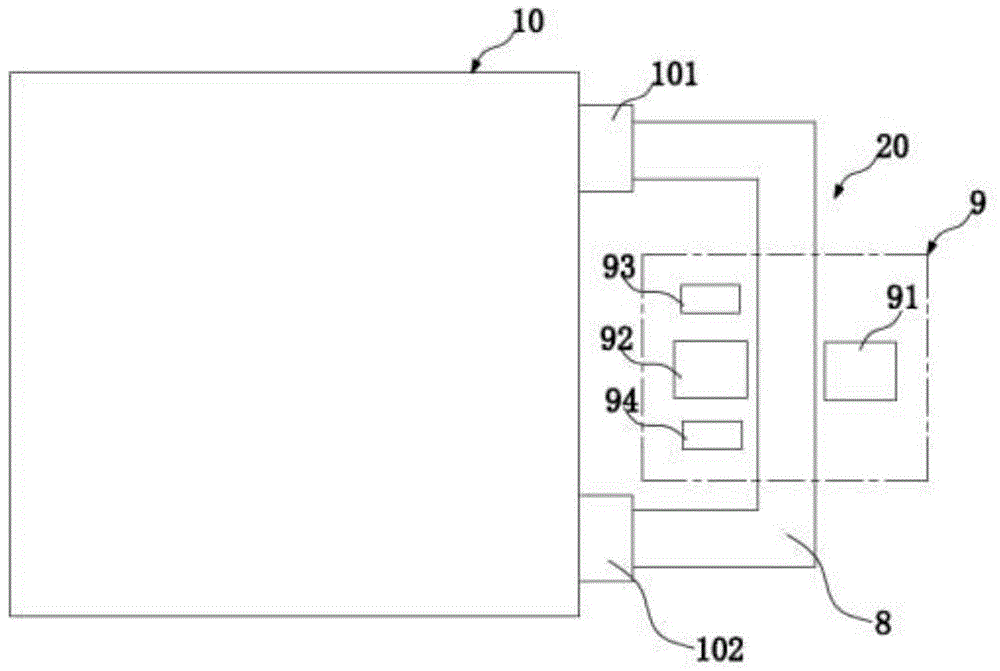
图1 是本发明的高效3D平板盖板玻璃的加工系统的结构框图;Fig. 1 is the block diagram of the processing system of efficient 3D flat cover glass of the present invention;
图2是本发明的热弯机的结构示意图;Fig. 2 is the structural representation of hot bending machine of the present invention;
图3是本发明的电阻加热设备结构示意图;Fig. 3 is a schematic structural view of resistance heating equipment of the present invention;
图4是本发明的热弯机加工时的温度变化曲线图;Fig. 4 is the curve diagram of temperature variation during hot bending machine processing of the present invention;
图5是本发明的高效3D平板盖板玻璃的加工系统、热弯机及常规热弯机加工时的温度变化曲线与时间对照图,图中加粗实线为加工系统的温度变化曲线、细实线为本发明的热弯机单独工作时的温度变化曲线、虚线为常规加工工艺的温度变化曲线。Fig. 5 is a comparison chart of the temperature change curve and time during processing of the high-efficiency 3D flat cover glass processing system, hot bending machine and conventional hot bending machine of the present invention. The bold solid line in the figure is the temperature change curve of the processing system, the thin The solid line is the temperature change curve when the hot bending machine of the present invention works alone, and the dotted line is the temperature change curve of the conventional processing technology.
具体实施方式Detailed ways
本发明的目的、优点和特点,将通过下面优选实施例的非限制性说明进行图示和解释。这些实施例仅是应用本发明技术方案的典型范例,凡采取等同替换或者等效变换而形成的技术方案,均落在本发明要求保护的范围之内。Objects, advantages and features of the present invention will be illustrated and explained by the following non-limiting description of preferred embodiments. These embodiments are only typical examples of applying the technical solutions of the present invention, and all technical solutions formed by adopting equivalent replacements or equivalent transformations fall within the protection scope of the present invention.
在发明的描述中,需要说明的是,术语“中心”、“上”、“下”、“左”、“右”、“前”、“后”、“竖直”、“水平”、“内”、“外”等指示的方位或位置关系为基于附图所示的方位或位置关系,仅是为了便于描述和简化描述,而不是指示或暗示所指的装置或元件必须具有特定的方位、以特定的方位构造和操作,因此不能理解为对本发明的限制。此外,术语“第一”、“第二”、“第三”仅用于描述目的,而不能理解为指示或暗示相对重要性。In the description of the invention, it should be noted that the terms "center", "upper", "lower", "left", "right", "front", "rear", "vertical", "horizontal", " The orientation or positional relationship indicated by "inner", "outer", etc. is based on the orientation or positional relationship shown in the drawings, and is only for the convenience of description and simplification of description, rather than indicating or implying that the device or element referred to must have a specific orientation , constructed and operated in a particular orientation and therefore should not be construed as limiting the invention. In addition, the terms "first", "second", and "third" are used for descriptive purposes only, and should not be construed as indicating or implying relative importance.
下面结合附图对本发明的高温成型模具自动转运及上下料装置20进行说明,如附图1所示,包括成型模具输送机构8及卸料上料工位9。The automatic transfer and loading and unloading
所述成型模具输送机构8与加工设备的入料端101和出料端102分别配接,用于将温度不低于100℃的成型模具从加工设备的出料端101移送到卸料上料工位9以及从卸料上料工位9移送到加工设备的入料端102;所述成型模具输送机构8可以是已知的各种搬运结构,如皮带输送线或六轴移动机械手或具有成型模具放置结构的线性导轨等结构,在此不作限定。The forming mold conveying mechanism 8 is respectively connected with the feeding
所述卸料上料工位9设置于所述加工设备的入料端101和出料端102之间的位置,包括上模移动装置91及取片置片装置92,所述上模移动装置91用于升降成型模具4的上模来控制成型模具的开模合模;所述上模移动装置91可以是已知的各种结构,如设置于气缸上的真空吸附装置,设置于多轴移动机构上的夹爪等,在此不作限定;所述取片置片装置92用于在开模状态下将成型件从成型模具的下模中取出置于成品放置区93,并从待加工件放置区94取件置于下模上,所述取片置片装置92可以是已知的各种结构,如设置于多轴移动结构上的真空吸附结构或是设置于多轴移动结构上的夹爪结构等,在此不作限定。The unloading and feeding station 9 is arranged at a position between the
并且,为了避免成型模具由加工设备输出后的热量消耗,所述成型模具输送机构8及上模移动装置91与成型模具4接触的区域为保温隔热材料,并且,所述成型模具输送机构8、卸料上料工位9位于隔热保温环境内(图中未示出)。And, in order to avoid the heat consumption of the forming mold after it is output by the processing equipment, the area where the forming mold conveying mechanism 8 and the upper
所述高温成型模具自动转运及上下料装置20还包括各种用于确定成型模具移动到的位置以及用于卸料上料工位确定成型件和待加工件所在位置及放置位置的定位传感器(图中未示出),从而能够保证各部分位置移动的可靠性和准确性。The high-temperature molding mold automatic transfer and loading and unloading
上述的高温成型模具自动转运及上下料装置可以配合各种需要对模具进行加热成型后输出设备进行卸料上料并再次送入设备进行加热成型的设备使用,从而实现加工全过程的自动化进行。The above-mentioned automatic transfer and loading and unloading device for high-temperature forming molds can be used in conjunction with various equipment that needs to heat and form the mold, then output equipment for unloading and loading, and then send it to the equipment for heating and forming, so as to realize the automation of the entire processing process.
进一步,本发明揭示了一种高效3D平板盖板玻璃的加工系统,优选用于3D手机盖板玻璃、3D平板电脑盖板玻璃、液晶显示玻璃等的加工,如附图1所示,其包括热弯机10及上述的高温成型模具自动转运及上下料装置20,虽然图中显示的热弯机10的入料端101和出料端102位于热弯机的同一侧,但是它们的具体布置形式可以根据实际需要进行设置,在此不作限定。Further, the present invention discloses a high-efficiency 3D flat panel cover glass processing system, which is preferably used for the processing of 3D mobile phone cover glass, 3D tablet computer cover glass, liquid crystal display glass, etc., as shown in Figure 1, which includes The
如附图2所示,所述热弯机10包括预热工站1,所述预热工站1至少包括至少采用电磁感应加热设备5进行加热的第二预热工位12以及间隙设置于其后方的采用电阻加热设备6进行加热的第三预热工位13。As shown in accompanying drawing 2, described
其中,所述电磁感应加热设备5至少包括环状的感应线圈及与所述感应线圈连接并为其提供交变电流的供电装置,所述感应线圈可以连接在升降结构上,从而在优选为石墨材质的成型模具4移动到加热位置时,感应线圈下降将成型模具4套住进行加热,在加热结束后,感应线圈上升,使成型模具4可以移动。Wherein, the electromagnetic
当然,在其他实施例中,所述感应线圈也可以是延伸一定长度且固定在成型模具输送线外周的结构,成型模具移动到其中空内腔中时进行加热,移出时即不再加热,此处对于感应线圈的具体布设形式不作限定。Of course, in other embodiments, the induction coil may also be a structure that extends for a certain length and is fixed on the outer periphery of the forming mold conveying line. The forming mold is heated when it moves into the hollow inner cavity, and is no longer heated when it is moved out. The specific layout form of the induction coil is not limited.
并且,所述电磁感应加热设备5优选为高频感应加热设备,通常频率在10 kHz以上为高频,本方案中优选感应频率在30kHz-80kHz之间,从而能够快速产生剧烈热源实现快速加热,所述电磁感应加热设备5的电压为380VAC,供电装置的功率则可以根据实际工艺要求进行调整,如当需要在10s内使模具上升300-400℃时,功率可以选择为20KW,一般来说:时间越短,上升温度越高,供电装置所需的功率越大。Moreover, the electromagnetic
另外,在另一实施例中,还可以根据实际需要在所述第二预热工位12处增加电阻加热设备6进行加热,从而能够将电磁感应加热和电阻加热复合,以进一步提高加热速率。In addition, in another embodiment, a
如附图3所示,所述电阻加热设备6包括位置固定的下加热模块61和可升降的上加热模块62,优选所述下加热模块61固定在用于承载成型模具4的承载板的下方,所述上加热模块62与所述下加热模块共轴设置,当然,所述下加热模块61和上加热模块62具体设置位置、布设形式及个数可以根据实际需要进行调整,如在承载板的两侧也设置有下加热模块61,或所述上加热模块62是多个且围合成槽型等,在此不作限定。As shown in Figure 3, the
进一步来说,所述下加热模块61和上加热模块62均包括内置有电阻棒加热管601的加热块602,所述加热块602背向成型模具4的一侧设置有隔热装置603,所述隔热装置603连接散热装置604,所述上加热模块62的散热装置604连接驱动其升降的驱动装置,优选所述驱动装置为气缸,当然也可以是其他可行的结构,在此不作限定。Further, the
所述隔热装置603是与加热块602线接触和/或多点接触的不锈钢体或者超级合金体,例如其是环状结构、管状结构或者多根独立且与加热块的平面垂直的支杆结构等,在此不作限定,从而能够减小与加热块602的接触面积,减少加热块602因热量传导导致的热量损失;所述散热装置604主要用于阻隔所述隔热装置603与驱动装置的热传导,防止气缸与上加热模块连接的位置因过度受热变形从而导致动作变形,使压制时的误差变大,散热装置604是采用冷却液的冷却设备,优选为水冷设备。The
同时,发明人研究发现,如果将电磁感应加热设备5,即第二预热工位12直接设置于热弯机的入料端位置,则工作时,入料端位置会存在较高的温度,不利于作业人员操作,更进一步,由于电磁感应加热的速度块,温度变化幅度大,因此,在短时间内将成型模具和平板盖板玻璃从初始温度升温到目标温度过程中,升温速率极有可能超出成型模具和平板盖板玻璃能够承受的升温速率范围,造成不利影响,因此,优选在所述第二预热工位12的前端还间隙设置有采用上述的电阻加热设备6进行加热的第一预热工位11,因此预热工站1的整体结构为:从入料端101向后依次排布的采用电阻加热设备6进行加热的第一预热工位11、第二预热工位12和第三预热工位13。At the same time, the inventor found that if the electromagnetic
整个预热工站1通常为3-5个间隙设置的工位,具体工位数量可以根据不同的工艺要求设计,通过增加预热工位的数量,有利于减少成型模具在每个工位上停留的时间,但是也增加了设备制造成本和控制难易程度,预热工站1具体工位数量的调整是通过调整所述第三预热工位13的分工位的数量来实现,优选所述分工位的数量为1-3个,进一步优选为2-3个,并且,当所述第三预热工位为多个分工位时,且当所述第二预热工位12使所述成型模具4加热到平板盖板玻璃的软化点温度以上时,所述第三预热工位的各分工位之间还可以递减,从而使成型模具4的温度匀速的降低到软化点温度。The entire preheating station 1 is usually 3-5 stations with gaps. The specific number of stations can be designed according to different process requirements. By increasing the number of preheating stations, it is beneficial to reduce the number of forming molds in each station. The time of staying, but also increased equipment manufacturing cost and control degree of difficulty, the adjustment of the specific station quantity of preheating station 1 is to realize by adjusting the quantity of the sub-station of described 3rd preheating
本发明的热弯机10在没有与高温成型模具自动转运及上下料装置20配合使用时,其在预热工站的温度变化曲线如附图4所示,所述第一预热工位11将位于其加热区域内的成型模具及平板盖板玻璃先以较低的加热速率加热到一定温度,该温度与目标温度仍有一定的差距,因此入口端处的温度要低很多,并且,此时再进行电磁感应加热时,温度的变化幅度相对减小,在一个工位加热时间不变的条件下,加热速率降低很多。When the
接着通过所述第二预热工位12以较高的加热速率使成型模具在短时间内加热升温至不低于平板盖板玻璃的软化点温度,如附图4所示,使成型模具加热到平板盖板玻璃的软化点温度以上,加热到的具体温度根据平板盖板玻璃的软化点及石墨尺寸在700-800℃之间调整。Then, the forming mold is heated to a temperature not lower than the softening point of the flat cover glass in a short period of time through the second preheating
再由所述第三预热工位13使所述成型模具4的温度从第二预热工位12的最大温度缓慢的下降至平板盖板玻璃的软化点温度后保持一段时间,如附图3所示,当然,如果在第二预热工位12仅将成型模具加热到平板盖板玻璃的软化点温度,在第三预热工位13处则使成型模具直接保持在平板盖板玻璃的软化点温度。Then by the third preheating
在电磁感应加热后,成型模具的温度分布不均匀,靠近电磁线圈的区域温度更高,远离的位置温度相对要低,即成型模具的边缘温度和中心温度存在温度差,因此在第三预热工位13采用电阻加热设备进行后续加热时,由于电阻加热设备与成型模具轴向的两个表面的位置更加契合,不存在偏离的情况,因此能够使成型模具的上下表面整体受热,从而使成型模具的温度分布均匀化,进而使平板盖板玻璃各部位均匀受热达到软化点温度,避免在后续的压制过程中因局部未达到软化点位置而硬受力导致平板盖板玻璃易压坏和/或因局部过热而导致平板盖板玻璃过度变形的情况出现;并且,在第一预热工位11、第二预热工位12和第三预热工位13加热过程中,所述上加热模块62不对成型模具4施加压力。After electromagnetic induction heating, the temperature distribution of the forming mold is uneven, the temperature in the area close to the electromagnetic coil is higher, and the temperature in the far away position is relatively low, that is, there is a temperature difference between the edge temperature and the center temperature of the forming mold, so in the third preheating When
在预热之后,如附图2、附图4所示,装有平板盖板玻璃的所述成型模具4还要经过成型工站2压制及在冷却工站3冷却定型,所述成型工站2包括至少一个单独的压制工位,优选为3个且间隙设置,每个压制工位均采用上述的电阻加热设备6进行加热,并使平板盖板玻璃保持在软化点温度,在加热的同时,所述上加热模块62对成型模具4的上模板施加压力,从而使平板盖板玻璃受力变形。After preheating, as shown in accompanying drawing 2, accompanying drawing 4, described forming
所述冷却工站3与所述成型工站2保持间隙,其同样包括至少一个单独的冷却工位,优选为3-4个且间隙设置,每个冷却工位同样采用电阻加热设备6进行成型模具4的冷却,并且每个冷却工位的电阻加热设备6的温度低于成型模具4的温度且多个冷却工位的电阻加热设备6的温度递减;在冷却的同时,每个冷却工位还通过上加热模块62对平板盖板玻璃施加压力。The cooling station 3 maintains a gap with the molding station 2, and it also includes at least one separate cooling station, preferably 3-4 with a gap set, and each cooling station also uses
在整个加工过程中,如附图2所示,为了实现成型模具4依次在各工站及在各工站中的各工位间的移动,所述热弯机还包括输送设备,所述输送设备可以是已知的各种形式和结构,本方案中优选其至少包括上述的贯穿所述预热工站、成型工站及冷却工站各工位的承载板以及在每个工位处设置有驱动所述成型模具在支撑板上移动的拨动机构,所述拨动机构位于相邻工位之间的间隙处,其包括拨杆7、驱动所述拨杆7升降的气缸(图中未示出)及驱动拨杆7在工位之间移动且由马达和丝杠(图中未示出)构成的平移机构;不需要推送成型模具时,所述气缸处于缩回状态,且所述拨杆7处于缩回状态;当需要推送成型模具,所述气缸的伸缩轴伸出,使所述拨杆下移到成型模具的侧方位置,接着所述伺服马达驱动所述丝杠带动所述拨杆平移,实现模具的推送。In the whole processing process, as shown in accompanying drawing 2, in order to realize that forming
并且,在所述热弯机上还设置有用于向热弯机腔体内充入氮气以进行成型模具保护的氮气供应装置。Moreover, a nitrogen gas supply device for filling nitrogen into the cavity of the hot bender for molding mold protection is also provided on the hot bender.
本发明的3D平板盖板玻璃高效加工系统工作时,其温度与时间的对应关系如附图5所示,其具体过程如下:When the 3D flat cover glass high-efficiency processing system of the present invention works, the corresponding relationship between its temperature and time is shown in Figure 5, and its specific process is as follows:
S1,热弯机10对成型模具上的平板盖板玻璃进行加工,并将温度在300-400℃且带有成型盖板玻璃的成型模具输出,其具体加工过程如下:S1, the
S11,将装有平板盖板玻璃的成型模具4置入第一预热工位11,通过电阻加热设备进行成型模具4和平板盖板玻璃的加热,加热期间不对平板盖板玻璃施加压力。S11, placing the forming
S12,通过拨动机构将经过S1步骤加热的成型模具4推入到第二预热工位12中,至少通过电磁感应加热设备5进行成型模具的加热,使成型模具4的温度升高至不低于平板盖板玻璃的软化点温度,优选在700-800℃之间,加热期间不对平板盖板玻璃施加压力;另外,在S12步骤中,进一步优选通过电磁感应加热设备5及电阻加热设备6进行复合加热。S12, pushing the forming
S13,通过拨动机构将经过S12步骤加热的成型模具4置入第三预热工位13,采用电阻加热设备6对成型模具及平板盖板玻璃进行加热,使经过S12步骤的成型模具及平板盖板玻璃的温度均匀化并维持在平板盖板玻璃的软化点温度,加热期间不对平板盖板玻璃施加压力。S13, put the forming
S14,通过拨动机构将经过预热工站1预热的成型模具4依次置入成型工站的各压制工位,在各压制工位采用电阻加热设备6使成型模具4及平板盖板玻璃保持在平板盖板玻璃的软化点温度同时通过上加热模块62对平板盖板玻璃施加压力,并且控制每个压制工位对平板盖板玻璃施加压力在600-1200KPa之间,发明人发现,如果施加的压力小于上述范围时,则最终成形的盖板玻璃的弯曲程度低于标准要求,反之,若大于上述范围时,则最终成形的盖板玻璃变形过度。S14, the forming
S15,将经过S14步骤的成型模具置入冷却工站,对平板盖板玻璃施加压力,并且控制压力在300-600 KPa之间;在施加压力的同时通过温度低于成型模具的电阻加热设备6使成型模具4冷却至300-400℃后输出。S15, put the forming mold after step S14 into the cooling station, apply pressure to the flat cover glass, and control the pressure between 300-600 KPa; while applying pressure, pass through the
其中,所述冷却工站3的各冷却工位的温度呈递减趋势,经过成型工站进入冷却工站后,如果此时冷却工位的电阻加热设备的温度与成型工站中的温度差值过大时,平板盖板玻璃会在压力下出现破碎的情况,而如果两者之间的温度差值过小,则平板盖板玻璃的冷却效率慢,发明人通过实验发现,当冷却工站中的第一个冷却工位的电阻加热设备的温度与平板盖板玻璃的软化点的温度差在200±10℃之间时,能够获得最优的效果。Wherein, the temperature of each cooling station in the cooling station 3 shows a decreasing trend. After entering the cooling station through the forming station, if the temperature difference between the resistance heating equipment of the cooling station and the temperature in the forming station When it is too large, the flat cover glass will be broken under pressure, and if the temperature difference between the two is too small, the cooling efficiency of the flat cover glass will be slow. The inventor found through experiments that when the cooling station The best effect can be obtained when the temperature difference between the temperature of the resistance heating device in the first cooling station and the softening point of the flat cover glass is between 200±10°C.
并且,在整个加工过程中,控制成型模具4在每个工位停留的时间相同,从而能够使各工位的加工节拍匹配,能够实现多个产品的同时加工。并且,成型模具在每个工位的停留的时间参数是可调节的,且时间决定设备的出片效率,在保证质量的前提下,时间越短效率越高。Moreover, during the whole processing process, the molding die 4 is controlled to stay at each station for the same time, so that the processing beats of each station can be matched, and simultaneous processing of multiple products can be realized. Moreover, the dwell time parameter of the forming mold at each station is adjustable, and the time determines the output efficiency of the equipment. On the premise of ensuring the quality, the shorter the time, the higher the efficiency.
S2,成型模具输送机构将热弯机输出的高温成型模具输送到卸料上料工位9处。S2, the forming mold conveying mechanism transports the high-temperature forming mold output by the hot bending machine to the 9 unloading and loading stations.
S3,在卸料上料工位9处实现成型模具的下模定位,接着上模移动装置将成型模具的上模提升实现开模;S3, realizing the lower mold positioning of the forming mold at the unloading and loading station 9, and then the upper mold moving device lifts the upper mold of the forming mold to realize mold opening;
S4,取片置片装置将成型盖板玻璃从成型模具的下模中取出置于成品放置区,并从平板盖板玻璃放置区取件置于下模上;S4, the sheet taking and placing device takes the formed cover glass out of the lower mold of the forming mold and places it in the finished product placement area, and takes the piece from the flat cover glass placement area and places it on the lower mold;
S5,上模移动装置将所述上模下移实现合模;S5, the upper mold moving device moves the upper mold down to realize mold closing;
S6,成型模具输送机构将装有平板盖板玻璃且温度不低于100℃的成型模具输送至热弯机的入料端,优选成型模具的温度为不低于200℃;S6, the forming mold delivery mechanism transports the forming mold with the flat cover glass and the temperature not lower than 100°C to the feeding end of the hot bending machine, preferably the temperature of the forming mold is not lower than 200°C;
S7,重复S1-S6步骤,并且控制所述S2步骤-S6步骤的总时间不超过所述S1步骤的时间。S7, repeat steps S1-S6, and control the total time of steps S2-S6 not to exceed the time of step S1.
根据上述步骤,从热弯机中输出的温度在300-400℃的成型模具在经过上述一系列动作,再次输送到热弯机的入料端时仍将维持200-300℃的温度,从而减少了从常温(室温)加热至300℃所需耗的热能和时间。According to the above steps, the forming mold output from the hot bending machine at a temperature of 300-400°C will still maintain a temperature of 200-300°C when it is transported to the feeding end of the hot bending machine after the above series of actions, thereby reducing The heat energy and time required for heating from normal temperature (room temperature) to 300 °C are calculated.
当然,上述系统工作时,各成型模具在第一次进入热弯机时,其初始温度可以为常温(室温),并且当其从热弯机中输出时,温度控制在300-400℃,之后则按照S1-S7步骤执行,至加工完毕停止。Of course, when the above system is working, the initial temperature of each molding die can be normal temperature (room temperature) when it enters the hot bending machine for the first time, and when it is output from the hot bending machine, the temperature is controlled at 300-400°C, after that Then execute according to steps S1-S7, and stop until the processing is completed.
本发明尚有多种实施方式,凡采用等同变换或者等效变换而形成的所有技术方案,均落在本发明的保护范围之内。There are still many implementations in the present invention, and all technical solutions formed by equivalent transformation or equivalent transformation fall within the protection scope of the present invention.
Claims (9)
Priority Applications (1)
| Application Number | Priority Date | Filing Date | Title |
|---|---|---|---|
| CN201711282466.5A CN107879606B (en) | 2017-12-07 | 2017-12-07 | High-temperature forming mold automatic transfer and loading and unloading device, 3D cover glass high-efficiency processing system and processing method |
Applications Claiming Priority (1)
| Application Number | Priority Date | Filing Date | Title |
|---|---|---|---|
| CN201711282466.5A CN107879606B (en) | 2017-12-07 | 2017-12-07 | High-temperature forming mold automatic transfer and loading and unloading device, 3D cover glass high-efficiency processing system and processing method |
Publications (2)
| Publication Number | Publication Date |
|---|---|
| CN107879606A CN107879606A (en) | 2018-04-06 |
| CN107879606B true CN107879606B (en) | 2023-04-28 |
Family
ID=61773391
Family Applications (1)
| Application Number | Title | Priority Date | Filing Date |
|---|---|---|---|
| CN201711282466.5A Expired - Fee Related CN107879606B (en) | 2017-12-07 | 2017-12-07 | High-temperature forming mold automatic transfer and loading and unloading device, 3D cover glass high-efficiency processing system and processing method |
Country Status (1)
| Country | Link |
|---|---|
| CN (1) | CN107879606B (en) |
Families Citing this family (7)
| Publication number | Priority date | Publication date | Assignee | Title |
|---|---|---|---|---|
| CN108975664B (en) * | 2018-09-14 | 2021-02-09 | 东旭光电科技股份有限公司 | Loading and unloading device, loading and unloading method, and hot bending machine |
| CN110133043A (en) * | 2019-06-04 | 2019-08-16 | 武汉科技大学 | Measure the method and system of solid-state material thermal conductivity |
| CN111469449B (en) * | 2020-04-08 | 2022-11-29 | 北京天域科技有限公司 | Mould pressing multimachine linkage automation line |
| CN111572067B (en) * | 2020-04-08 | 2022-06-21 | 北京天域科技有限公司 | Automatic die opening and closing and cleaning device for thermosetting composite material die pressing die |
| CN113233743B (en) * | 2021-05-20 | 2023-06-09 | 广东华中科技大学工业技术研究院 | Apparatus and method for hot-bending glass |
| CN113772929B (en) * | 2021-09-17 | 2025-03-07 | 中山市春光玻璃有限公司 | A multi-station high-efficiency centrifuge with cover |
| CN114772910A (en) * | 2022-04-18 | 2022-07-22 | 四川旭虹光电科技有限公司 | Glass hot bending equipment |
Citations (2)
| Publication number | Priority date | Publication date | Assignee | Title |
|---|---|---|---|---|
| CN104556641A (en) * | 2013-10-22 | 2015-04-29 | 巍思有限公司 | Glass molding method and equipment applying same |
| CN106365419A (en) * | 2016-08-31 | 2017-02-01 | 弓睿莲 | 3D glass processing production line |
Family Cites Families (11)
| Publication number | Priority date | Publication date | Assignee | Title |
|---|---|---|---|---|
| JPH0776103B2 (en) * | 1986-09-26 | 1995-08-16 | 日本板硝子株式会社 | Method for forming glass product having smooth surface |
| CN105731772B (en) * | 2016-02-02 | 2017-06-27 | 凯茂科技(深圳)有限公司 | Glass cover-plate hot bending die, glass cover-plate hot bending preparation system and its technique |
| CN206127111U (en) * | 2016-08-31 | 2017-04-26 | 饶武良 | Cell -phone glass and wrist -watch face lid hot -bend forming machine |
| CN106517762A (en) * | 2016-10-08 | 2017-03-22 | 深圳市普盛旺科技有限公司 | Electronic device glass hot bending molding furnace and automatic feeding and discharging device |
| CN206408100U (en) * | 2016-12-22 | 2017-08-15 | 无锡市凯创自动化科技有限公司 | A kind of bend glass thermoforming system |
| CN206359417U (en) * | 2017-01-13 | 2017-07-28 | 广东凯驰科技有限公司 | 3D glass bending machine |
| CN106830642A (en) * | 2017-02-15 | 2017-06-13 | 东莞市方方电子科技有限公司 | A kind of mobile phone glass film hot-bending machine |
| CN206607159U (en) * | 2017-03-03 | 2017-11-03 | 东莞恩特贝斯智能技术有限公司 | A preheating device for mobile terminal curved glass forming |
| CN107032585B (en) * | 2017-03-17 | 2019-09-27 | 四川旭虹光电科技有限公司 | Method for forming 3D curved glass plate, and 3D curved glass plate obtained by the forming method |
| CN107117800A (en) * | 2017-05-17 | 2017-09-01 | 洛阳用功感应加热设备有限公司 | A kind of hot-bending machine of combination electromagnetic induction heating and two kinds of technologies of electric heating conduction heating |
| CN207845483U (en) * | 2017-12-07 | 2018-09-11 | 苏州赛万玉山智能科技有限公司 | The automatic transhipment of high-temperature mold and handling equipment and 3D cover-plate glass highly-efficient processing systems |
-
2017
- 2017-12-07 CN CN201711282466.5A patent/CN107879606B/en not_active Expired - Fee Related
Patent Citations (2)
| Publication number | Priority date | Publication date | Assignee | Title |
|---|---|---|---|---|
| CN104556641A (en) * | 2013-10-22 | 2015-04-29 | 巍思有限公司 | Glass molding method and equipment applying same |
| CN106365419A (en) * | 2016-08-31 | 2017-02-01 | 弓睿莲 | 3D glass processing production line |
Also Published As
| Publication number | Publication date |
|---|---|
| CN107879606A (en) | 2018-04-06 |
Similar Documents
| Publication | Publication Date | Title |
|---|---|---|
| CN107879606A (en) | High-temperature mold is transported automatically and handling equipment, 3D cover-plate glass highly-efficient processing systems and its processing method | |
| TWI537070B (en) | Molding system of metal sheet and its forming method | |
| EP3632858B1 (en) | Curved-glass thermoforming device and method therefor | |
| CN107857466A (en) | Efficient 3D cover-plate glass preheating device, pre-heating mean, hot-bending machine and its processing method | |
| CN106746533A (en) | A pressurization system for mobile terminal curved glass forming | |
| CN106830646A (en) | A method for forming curved glass for a mobile terminal | |
| TW202039379A (en) | Glass plate molding device | |
| CN113072291B (en) | 3D glass hot bending forming device and method based on local targeted ultrasonic resonance | |
| TW202039380A (en) | Glass plate forming method | |
| CN217265896U (en) | Disc spring pressure quenching machine | |
| TWI481570B (en) | Continuous work piece mold equipment and a manufacturing method thereof | |
| CN110039313B (en) | Energy-saving step-by-step forming equipment and process for hot-formed steel parts | |
| CN205420154U (en) | a hot bending machine | |
| CN109626800B (en) | Aspherical optical lens compression molding assembly line | |
| CN106746532A (en) | A kind of 3D curved glass hot pressing method | |
| CN207845483U (en) | The automatic transhipment of high-temperature mold and handling equipment and 3D cover-plate glass highly-efficient processing systems | |
| CN113896408A (en) | A kind of 3D glass hot bending forming equipment and forming method thereof | |
| CN207862166U (en) | Non-spherical glass lens moulding press with quick positioning push mechanism | |
| CN117324528A (en) | Titanium alloy hot-press forming device and forming method | |
| CN211226893U (en) | Glass hot bending equipment | |
| CN109836031A (en) | Transfer tool, 3D glass processing system and processing method | |
| CN209493479U (en) | A dual-mold structure for hot-bending glass | |
| CN208414222U (en) | Efficient 3D cover-plate glass preheating device and hot-bending machine | |
| CN207537337U (en) | A 3D curved glass hot bending forming machine | |
| CN115139516A (en) | Full-automatic forming equipment for 3D or special-shaped film line |
Legal Events
| Date | Code | Title | Description |
|---|---|---|---|
| PB01 | Publication | ||
| PB01 | Publication | ||
| SE01 | Entry into force of request for substantive examination | ||
| SE01 | Entry into force of request for substantive examination | ||
| GR01 | Patent grant | ||
| GR01 | Patent grant | ||
| CF01 | Termination of patent right due to non-payment of annual fee |
Granted publication date: 20230428 |
|
| CF01 | Termination of patent right due to non-payment of annual fee |