CN102938811A - Household mobile phone communication system based on voice recognition - Google Patents
Household mobile phone communication system based on voice recognition Download PDFInfo
- Publication number
- CN102938811A CN102938811A CN2012103898385A CN201210389838A CN102938811A CN 102938811 A CN102938811 A CN 102938811A CN 2012103898385 A CN2012103898385 A CN 2012103898385A CN 201210389838 A CN201210389838 A CN 201210389838A CN 102938811 A CN102938811 A CN 102938811A
- Authority
- CN
- China
- Prior art keywords
- mobile phone
- system based
- transceiver
- master controller
- speech recognition
- Prior art date
- Legal status (The legal status is an assumption and is not a legal conclusion. Google has not performed a legal analysis and makes no representation as to the accuracy of the status listed.)
- Pending
Links
Images


Landscapes
- Telephonic Communication Services (AREA)
Abstract
本发明公开了一种基于语音识别的家庭手机通话系统,包括总控制器、多个收发机和手机,所述总控制器与手机通过USB接口连接,所述总控制器与所述收发机连接;所述总控制器包括手机控制模块、收发机控制模块和语音识别模块。本发明实现了在家里随时随地进行接听和呼叫,极大地提高了室内通讯的便捷性。
The invention discloses a voice recognition-based family mobile phone call system, which includes a general controller, a plurality of transceivers and a mobile phone, the general controller is connected to the mobile phone through a USB interface, and the general controller is connected to the transceiver ; The general controller includes a mobile phone control module, a transceiver control module and a voice recognition module. The invention realizes answering and calling at home anytime and anywhere, and greatly improves the convenience of indoor communication.
Description
技术领域 technical field
本发明涉及智能家居领域,特别涉及一种基于语音识别的家庭手机通话系统。The invention relates to the field of smart home, in particular to a family mobile phone communication system based on voice recognition.
背景技术 Background technique
在家里,手机随身带着很不方便,尤其是充电的时候想接听或者拨打电话都受到充电器位置的限制,所以有必要提出一种系统,可以实现在家里随时随地进行接听和呼叫,会极大地提高室内通讯的便捷性。At home, it is very inconvenient to carry the mobile phone with you, especially when you want to answer or make a call while charging, it is limited by the location of the charger, so it is necessary to propose a system that can answer and call at home anytime, anywhere, which will be very convenient. Greatly improve the convenience of indoor communication.
ADB(Android Debug Bridge),是android SDK里的一个工具,可以直接操作管理android模拟器或者真实的android设备。ADB (Android Debug Bridge), is a tool in the android SDK, which can directly operate and manage the android emulator or the real android device.
隐马尔科夫模型是一种统计模型,用来描述一个含有隐含未知参数的马尔可夫过程,该模型广泛应用于语音识别、中文断词/分词或光学字符识别,生物息学和基因组学。Hidden Markov model is a statistical model used to describe a Markov process with hidden unknown parameters. This model is widely used in speech recognition, Chinese word segmentation/segmentation or optical character recognition, bioinformatics and genomics .
发明内容 Contents of the invention
为了克服现有技术的上述缺点与不足,本发明的目的在于提供一种基于语音识别的家庭手机通话系统,实现在家里随时随地进行接听和呼叫,极大地提高室内通讯的便捷性。In order to overcome the above-mentioned shortcomings and deficiencies of the prior art, the purpose of the present invention is to provide a family mobile phone communication system based on voice recognition, which can answer and call at home anytime and anywhere, and greatly improve the convenience of indoor communication.
本发明的目的通过以下技术方案实现:The object of the present invention is achieved through the following technical solutions:
一种基于语音识别的家庭手机通话系统,包括总控制器、手机和多个收发机,所述总控制器与手机通过USB接口连接,所述总控制器与所述收发机连接;A family mobile phone communication system based on speech recognition, comprising a general controller, a mobile phone and a plurality of transceivers, the general controller is connected to the mobile phone through a USB interface, and the general controller is connected to the transceiver;
所述总控制器包括:The general controller includes:
手机控制模块,用于对手机进行控制,所述控制包括接听、拨号和读通信录;The mobile phone control module is used to control the mobile phone, and the control includes answering, dialing and reading the address book;
收发机控制模块,用于接收各收发机的信息、接收语音信号并对语音信号进行放大,同时用于对用户进行定位;The transceiver control module is used for receiving the information of each transceiver, receiving the voice signal and amplifying the voice signal, and simultaneously used for positioning the user;
语音识别模块,用于识别用户的语音指令。The voice recognition module is used to recognize the user's voice command.
所述的一种基于语音识别的家庭手机通话系,还包括手机充电器,所述总控制器与手机充电器连接,所述手机充电器与手机通过USB接口连接。The family mobile phone communication system based on speech recognition also includes a mobile phone charger, the general controller is connected with the mobile phone charger, and the mobile phone charger is connected with the mobile phone through a USB interface.
所述语音识别模块采用离散隐马尔可夫模型对用户的语音指令进行识别。The voice recognition module uses a discrete hidden Markov model to recognize the user's voice commands.
所述总控制器为MCU,采用ARM架构芯片。The general controller is an MCU using an ARM architecture chip.
与现有技术相比,本发明具有以下优点和有益效果:Compared with the prior art, the present invention has the following advantages and beneficial effects:
通过本发明,用户利用声控实现远离手机的状态下随时随地的接听或者呼叫;本发明还带有充电器,解决了充电的时候想接听或者拨打电话都受到充电器位置的限制的问题。同时,本发明的语音识别模块在模板匹配过程中采用采用离散隐马尔可夫模型,并具有自学习功能,提高了识别的准确性。Through the invention, the user realizes answering or calling anytime and anywhere by voice control; the invention also has a charger, which solves the problem that the position of the charger is limited to answer or make a call when charging. At the same time, the speech recognition module of the present invention adopts a discrete hidden Markov model in the process of template matching, and has a self-learning function, which improves the accuracy of recognition.
附图说明 Description of drawings
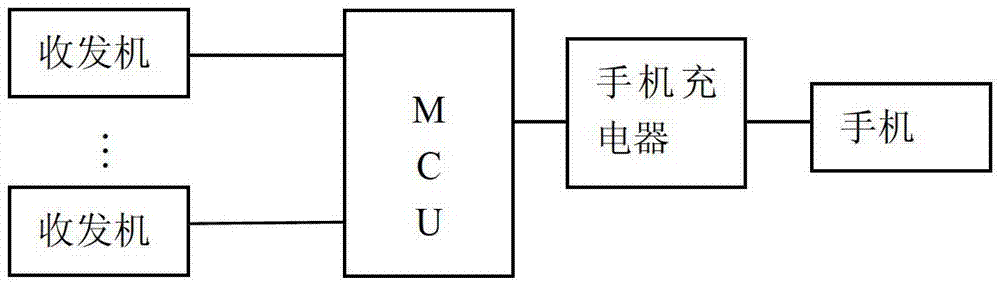
图1为本发明的基于语音识别的家庭手机通话系统的组成示意图。FIG. 1 is a schematic diagram of the composition of the speech recognition-based family mobile phone communication system of the present invention.
图2为本发明的实施例采用的模板匹配法的流程图。Fig. 2 is a flow chart of the template matching method adopted by the embodiment of the present invention.
具体实施方式 Detailed ways
下面结合实施例及附图,对本发明作进一步地详细说明,但本发明的实施方式不限于此。The present invention will be described in further detail below in conjunction with the embodiments and the accompanying drawings, but the embodiments of the present invention are not limited thereto.
实施例Example
如图1所示,本实施的基于语音识别的家庭手机通话系统,包括总控制器、多个收发机、充电器和手机,所述总控制器与手机充电器连接,所述手机充电器与手机通过USB接口连接,所述总控制器与所述收发机连接;As shown in Figure 1, the family mobile phone communication system based on voice recognition of the present implementation includes a general controller, a plurality of transceivers, a charger and a mobile phone, the general controller is connected with a mobile phone charger, and the mobile phone charger is connected with the mobile phone charger. The mobile phone is connected through a USB interface, and the general controller is connected with the transceiver;
所述总控制器包括:The general controller includes:
手机控制模块,用于对手机进行控制,所述控制包括接听、拨号和读通信录;The mobile phone control module is used to control the mobile phone, and the control includes answering, dialing and reading the address book;
收发机控制模块,用于接收各收发机的信息、接收语音信号并对语音信号进行放大,同时用于对用户进行定位;The transceiver control module is used for receiving the information of each transceiver, receiving the voice signal and amplifying the voice signal, and simultaneously used for positioning the user;
语音识别模块,用于识别用户的语音指令。The voice recognition module is used to recognize the user's voice command.
本实施例的总控制器为MCU,采用ARM架构芯片;手机为搭载android系统手机。The general controller of this embodiment is an MCU, which adopts an ARM architecture chip; the mobile phone is a mobile phone equipped with an android system.
本实施例的总控制器的工作过程如下:The working process of the general controller of the present embodiment is as follows:
总控制器中的Linux启动adb(Android调试桥)。adb服务器会绑定手机本地的TCP端口5037并监听adb客户端发来的命令,所有的adb客户端都是用端口5037与adb服务器对话。adb可通过如下格式发出命令adb[-d|-e|-s<serialNumber>]<command>。adb可通过Shell来加载命令如:am start-aandroid.intent.action.CALL-d tel:10086。Linux in the total controller starts adb (Android Debug Bridge). The adb server will bind the local TCP port 5037 of the mobile phone and listen to the commands sent by the adb client. All adb clients use port 5037 to talk to the adb server. adb can issue commands in the following format: adb[-d|-e|-s<serialNumber>]<command>. adb can load commands through Shell such as: am start-aandroid.intent.action.CALL-d tel:10086.
在正常工作的过程中,总控制器监听各个收发机传送过来的数据,通过语音识别模块判断是否有指令输入,如判断某分机有语音输入,则将指令压入命令队列,并记录该收发机的id。总控制器与该收发机进行单独通讯。同时,ARM运行的操作系统上的另一进程将会根据指令队列执行指令,指令包括:接听,拨号,读通讯录。During the normal working process, the general controller monitors the data transmitted by each transceiver, and judges whether there is an instruction input through the voice recognition module. If it is judged that a certain extension has voice input, it will push the instruction into the command queue and record the transceiver. the id. The master controller communicates with the transceiver alone. At the same time, another process on the operating system running on the ARM will execute instructions according to the instruction queue, and the instructions include: answering, dialing, and reading the address book.
本实施例的语音识别模块过程包括训练阶段和识别阶段,其中第一步训练阶段的任务是建立识别基本单元的声学模型;第二步识别阶段,采用模板匹配法将接收到的语音信号与系统模型进行比较,经判决得出识别结果。本实施例初设为小词汇量识别的语音识别系统,采用的是如图2所示的模板匹配法,具体包括以下步骤:The voice recognition module process of the present embodiment includes a training stage and a recognition stage, wherein the task of the first step training stage is to establish an acoustic model for identifying basic units; The models are compared, and the recognition results are obtained after judgment. This embodiment is initially set as a speech recognition system for small vocabulary recognition, and adopts the template matching method as shown in Figure 2, which specifically includes the following steps:
1.预处理1. Pretreatment
语音信号是非平稳过程的信号,但考虑到人的发音器官的运动特点,可以看作局部平稳的。因此,对语音信号进行短时分帧处理:设定语音采样率为11kHz,最大误差为14bit按256个采样点分帧,帧移128个采样点。信号经过如下高通滤波器H(z)=1-βz-1,使其预加重,这里取β为0.95。Speech signal is a signal of non-stationary process, but considering the motion characteristics of human vocal organs, it can be regarded as locally stationary. Therefore, carry out short-time frame-division processing on the voice signal: set the voice sampling rate to 11kHz, the maximum error is 14bit, divide into frames by 256 sampling points, and shift the frame by 128 sampling points. The signal is pre-emphasized through the following high-pass filter H(z)=1-βz-1, where β is taken as 0.95.
2.端点检测2. Endpoint detection
准确地从背景噪声中检测出语音信号的起始点和终止点,可以减少采集的数据量,删除不含语音成分的背景噪声,从而可以大大降低语音识别处理中的计算量和处理时间,提高识别的准确性,为语音识别系统在实时处理中得以应用创造条件。为了提高起止点检测的准确性,本实施例把HMM方法直接用于语言信号的端点检测。具体做法是:把被测信号看作是由背景和废料(在语音处理中,习惯上把有用和无用的发音统称为“废料”)两部分组成,而端点就是这两部分的分界点。在训练阶段,分别得出背景噪声和废料的模型参数;在测试阶段,用Viterbi解码方法在训练模型基础上对被测语音进行分解,求出语音的哪些帧与背景噪声匹配,哪些帧与废料匹配,从而得到端点的所在处。Accurately detect the start point and end point of the speech signal from the background noise, which can reduce the amount of collected data and delete the background noise that does not contain speech components, thereby greatly reducing the amount of calculation and processing time in speech recognition processing and improving recognition. The accuracy creates conditions for the application of speech recognition systems in real-time processing. In order to improve the accuracy of start-stop detection, this embodiment uses the HMM method directly for the endpoint detection of the speech signal. The specific method is: regard the signal under test as composed of background and waste (in speech processing, it is customary to collectively refer to useful and useless pronunciation as "waste"), and the endpoint is the dividing point of these two parts. In the training phase, the model parameters of background noise and waste are obtained respectively; in the test phase, the tested speech is decomposed on the basis of the training model by Viterbi decoding method, and which frames of the speech match the background noise and which frames match the waste Match to get the location of the endpoint.
3.特征参数提取3. Feature parameter extraction
把经过预处理后的信号经过一次变换,去掉冗余部分而把代表语音本质的参数提取出来称为特征参数的提取。语音识别中对特征参数的要求是:①能够有效地代表语音特征;②各阶参数之间有良好的独立性;③特征参数要计算方便,保证识别的实时实现。本实施例使用的MFCC参数建立在Fourier频谱分析的基础上,它的核心思想是利用人耳的感知特性,在语音的频谱范围内设置若干个带通滤波器,每个滤波器具备三角或者正弦的形滤波特性,计算相应滤波器组的信号能量,再通过DCT计算对应的倒谱系数,符合语音识别中对特征参数的要求。After the preprocessed signal is transformed once, the redundant part is removed and the parameters representing the essence of speech are extracted, which is called feature parameter extraction. The requirements for feature parameters in speech recognition are: ① can effectively represent speech features; ② have good independence between parameters of each order; ③ feature parameters should be easy to calculate to ensure real-time recognition. The MFCC parameters used in this embodiment are based on Fourier spectrum analysis. Its core idea is to use the perceptual characteristics of the human ear to set several bandpass filters in the spectrum range of speech. Each filter has triangular or sine The shape filter characteristics, calculate the signal energy of the corresponding filter bank, and then calculate the corresponding cepstral coefficients through DCT, which meets the requirements for feature parameters in speech recognition.
MFCC求取主要步骤是:①给每一帧语音加窗做FFT,取出幅度;②将幅度和滤波器组中每一个三角滤波器进行Binning运算;③求log,换算成对数率;④从对数率的滤波器组幅度,使用DCT变换求出MFCC系数。The main steps to obtain MFCC are: ①Do FFT for each frame of speech with a window, and take out the amplitude; ②Binning the amplitude and each triangular filter in the filter bank; ③Find the log, and convert it into a logarithmic rate; ④From Log rate filter bank magnitude, using DCT transform to find MFCC coefficients.
4.模板训练及识别4. Template training and recognition
HMM语音模型由起始状态概率λ(π,A,B)、状态转移概率(A)和观测序列概率(B)三个参数决定。π揭示了HMM的拓扑结构,A描述了语音信号随时间的变化情况,B给出了观测序列的统计特性。HMM语音识别的过程是:用前向后向算法,通过递推方法计算已知模型输出O及λ=f(π,A,B)模型时的产生输出序列的概率P(0|λ),然后用Baum-Welch算法,基于最大似然准则,对模型参数λ(π,A,B)进行修正,最优参数λ的求解可表示为
本实施例采用离散隐马尔可夫模型(DHMM)算法来实现识别。与连续隐马尔可夫模型(CHMM)算法相比,DHMM识别精度稍低,但运算量大大降低,特别适合应用在嵌入式系统中。此时DSP能够独立完成语音训练并生成训练模板库,无须借助PC机实现训练。系统采用前向Viterbi算法计算各个语音模型产生采入语音的概率。In this embodiment, a discrete hidden Markov model (DHMM) algorithm is used to realize recognition. Compared with the continuous hidden Markov model (CHMM) algorithm, the recognition accuracy of DHMM is slightly lower, but the calculation amount is greatly reduced, and it is especially suitable for application in embedded systems. At this time, the DSP can independently complete speech training and generate a training template library, without the need for training with a PC. The system uses the forward Viterbi algorithm to calculate the probability of each voice model producing the input voice.
本实施例利用DHMM模型,使系统具有自学习的功能。当发生误识时,系统对误识的模板进行调整,使之更适应使用者的发音习惯,以避免类似的误识再度发生。In this embodiment, the DHMM model is used to enable the system to have a self-learning function. When a misrecognition occurs, the system adjusts the misrecognition template to make it more suitable for the user's pronunciation habits, so as to avoid similar misrecognition from happening again.
上述实施例为本发明较佳的实施方式,但本发明的实施方式并不受所述实施例的限制,其他的任何未背离本发明的精神实质与原理下所作的改变、修饰、替代、组合、简化,均应为等效的置换方式,都包含在本发明的保护范围之内。The above-mentioned embodiment is a preferred embodiment of the present invention, but the embodiment of the present invention is not limited by the embodiment, and any other changes, modifications, substitutions and combinations made without departing from the spirit and principle of the present invention , simplification, all should be equivalent replacement methods, and are all included in the protection scope of the present invention.
Claims (4)
Priority Applications (1)
| Application Number | Priority Date | Filing Date | Title |
|---|---|---|---|
| CN2012103898385A CN102938811A (en) | 2012-10-15 | 2012-10-15 | Household mobile phone communication system based on voice recognition |
Applications Claiming Priority (1)
| Application Number | Priority Date | Filing Date | Title |
|---|---|---|---|
| CN2012103898385A CN102938811A (en) | 2012-10-15 | 2012-10-15 | Household mobile phone communication system based on voice recognition |
Publications (1)
| Publication Number | Publication Date |
|---|---|
| CN102938811A true CN102938811A (en) | 2013-02-20 |
Family
ID=47697677
Family Applications (1)
| Application Number | Title | Priority Date | Filing Date |
|---|---|---|---|
| CN2012103898385A Pending CN102938811A (en) | 2012-10-15 | 2012-10-15 | Household mobile phone communication system based on voice recognition |
Country Status (1)
| Country | Link |
|---|---|
| CN (1) | CN102938811A (en) |
Cited By (4)
| Publication number | Priority date | Publication date | Assignee | Title |
|---|---|---|---|---|
| CN103929544A (en) * | 2014-04-30 | 2014-07-16 | 广东欧珀移动通信有限公司 | A method and system for realizing automatic recording between PC terminal and mobile terminal |
| CN104766608A (en) * | 2014-01-07 | 2015-07-08 | 深圳市中兴微电子技术有限公司 | Voice control method and voice control device |
| CN107358957A (en) * | 2017-08-19 | 2017-11-17 | 合肥智贤智能化科技有限公司 | A kind of domestic intelligent telephone receiving system |
| CN110547665A (en) * | 2018-06-04 | 2019-12-10 | 佛山市顺德区美的电热电器制造有限公司 | Method, device, storage medium and server for determining cooking state |
Citations (5)
| Publication number | Priority date | Publication date | Assignee | Title |
|---|---|---|---|---|
| US7079865B1 (en) * | 1999-05-13 | 2006-07-18 | Skyworks Solutions, Inc. | Apparatus and method for connecting a cellular telephone to a universal serial bus |
| CN101290770A (en) * | 2007-04-20 | 2008-10-22 | 明基电通股份有限公司 | Speech Recognition System and Method |
| CN201601705U (en) * | 2009-12-08 | 2010-10-06 | 苟智程 | Sound control intelligent mobile phone |
| CN101944359A (en) * | 2010-07-23 | 2011-01-12 | 杭州网豆数字技术有限公司 | Voice recognition method facing specific crowd |
| CN102693721A (en) * | 2012-06-26 | 2012-09-26 | 苏州科技学院 | Simple and easy voice and gender detection device and method |
-
2012
- 2012-10-15 CN CN2012103898385A patent/CN102938811A/en active Pending
Patent Citations (5)
| Publication number | Priority date | Publication date | Assignee | Title |
|---|---|---|---|---|
| US7079865B1 (en) * | 1999-05-13 | 2006-07-18 | Skyworks Solutions, Inc. | Apparatus and method for connecting a cellular telephone to a universal serial bus |
| CN101290770A (en) * | 2007-04-20 | 2008-10-22 | 明基电通股份有限公司 | Speech Recognition System and Method |
| CN201601705U (en) * | 2009-12-08 | 2010-10-06 | 苟智程 | Sound control intelligent mobile phone |
| CN101944359A (en) * | 2010-07-23 | 2011-01-12 | 杭州网豆数字技术有限公司 | Voice recognition method facing specific crowd |
| CN102693721A (en) * | 2012-06-26 | 2012-09-26 | 苏州科技学院 | Simple and easy voice and gender detection device and method |
Cited By (6)
| Publication number | Priority date | Publication date | Assignee | Title |
|---|---|---|---|---|
| CN104766608A (en) * | 2014-01-07 | 2015-07-08 | 深圳市中兴微电子技术有限公司 | Voice control method and voice control device |
| CN103929544A (en) * | 2014-04-30 | 2014-07-16 | 广东欧珀移动通信有限公司 | A method and system for realizing automatic recording between PC terminal and mobile terminal |
| CN103929544B (en) * | 2014-04-30 | 2016-02-10 | 广东欧珀移动通信有限公司 | A kind of method and system realizing pc end and mobile terminal automatic recording |
| CN107358957A (en) * | 2017-08-19 | 2017-11-17 | 合肥智贤智能化科技有限公司 | A kind of domestic intelligent telephone receiving system |
| CN110547665A (en) * | 2018-06-04 | 2019-12-10 | 佛山市顺德区美的电热电器制造有限公司 | Method, device, storage medium and server for determining cooking state |
| CN110547665B (en) * | 2018-06-04 | 2022-04-01 | 佛山市顺德区美的电热电器制造有限公司 | Cooking state determining method and device, storage medium and server |
Similar Documents
| Publication | Publication Date | Title |
|---|---|---|
| US11620983B2 (en) | Speech recognition method, device, and computer-readable storage medium | |
| CN110310623B (en) | Sample generation method, model training method, device, medium, and electronic apparatus | |
| EP3923273B1 (en) | Voice recognition method and device, storage medium, and air conditioner | |
| CN108597496B (en) | Voice generation method and device based on generation type countermeasure network | |
| Schluter et al. | Using phase spectrum information for improved speech recognition performance | |
| WO2021128741A1 (en) | Voice emotion fluctuation analysis method and apparatus, and computer device and storage medium | |
| WO2018227781A1 (en) | Voice recognition method, apparatus, computer device, and storage medium | |
| CN104575504A (en) | Method for personalized television voice wake-up by voiceprint and voice identification | |
| CN103065629A (en) | Speech recognition system of humanoid robot | |
| WO2014114049A1 (en) | Voice recognition method and device | |
| CN110570873A (en) | Voiceprint wake-up method, device, computer equipment and storage medium | |
| CN105374352A (en) | Voice activation method and system | |
| CN104658538A (en) | Mobile bird recognition method based on birdsong | |
| CN101345819A (en) | A voice control system for set-top box | |
| CN117059068A (en) | Speech processing method, device, storage medium and computer equipment | |
| WO2015103836A1 (en) | Voice control method and device | |
| CN107871499A (en) | Speech recognition method, system, computer device and computer-readable storage medium | |
| CN102945673A (en) | Continuous speech recognition method with speech command range changed dynamically | |
| CN109215634A (en) | Method and system for multi-word voice control on-off device | |
| CN111554281A (en) | Vehicle-mounted human-computer interaction method, vehicle-mounted terminal and storage medium for automatic language recognition | |
| CN116206592A (en) | Voice cloning method, device, equipment and storage medium | |
| CN106356054A (en) | Method and system for collecting information of agricultural products based on voice recognition | |
| CN116564275A (en) | A dialect recognition method and system for intelligent speech | |
| CN116168699A (en) | A voice recognition-based security platform control method, device, storage medium and equipment | |
| CN104123930A (en) | Guttural identification method and device |
Legal Events
| Date | Code | Title | Description |
|---|---|---|---|
| C06 | Publication | ||
| PB01 | Publication | ||
| C10 | Entry into substantive examination | ||
| SE01 | Entry into force of request for substantive examination | ||
| C02 | Deemed withdrawal of patent application after publication (patent law 2001) | ||
| WD01 | Invention patent application deemed withdrawn after publication |
Application publication date: 20130220 |