CN101672126A - Multifunctional compound nomadic camp - Google Patents
Multifunctional compound nomadic camp Download PDFInfo
- Publication number
- CN101672126A CN101672126A CN200910167707A CN200910167707A CN101672126A CN 101672126 A CN101672126 A CN 101672126A CN 200910167707 A CN200910167707 A CN 200910167707A CN 200910167707 A CN200910167707 A CN 200910167707A CN 101672126 A CN101672126 A CN 101672126A
- Authority
- CN
- China
- Prior art keywords
- tent
- nomadic
- tents
- canopy
- skylight
- Prior art date
- Legal status (The legal status is an assumption and is not a legal conclusion. Google has not performed a legal analysis and makes no representation as to the accuracy of the status listed.)
- Pending
Links
- 150000001875 compounds Chemical class 0.000 title description 2
- 239000004744 fabric Substances 0.000 claims abstract description 73
- 239000002131 composite material Substances 0.000 claims abstract description 17
- 239000011229 interlayer Substances 0.000 claims description 19
- YCKRFDGAMUMZLT-UHFFFAOYSA-N Fluorine atom Chemical compound [F] YCKRFDGAMUMZLT-UHFFFAOYSA-N 0.000 claims description 12
- 229910052731 fluorine Inorganic materials 0.000 claims description 12
- 239000011737 fluorine Substances 0.000 claims description 12
- 230000000694 effects Effects 0.000 abstract description 68
- 238000009413 insulation Methods 0.000 abstract description 35
- 238000009423 ventilation Methods 0.000 abstract description 24
- 239000000779 smoke Substances 0.000 abstract description 21
- 230000001965 increasing effect Effects 0.000 abstract description 10
- 230000006872 improvement Effects 0.000 abstract description 4
- 238000009510 drug design Methods 0.000 abstract description 2
- 238000002474 experimental method Methods 0.000 description 26
- 238000010586 diagram Methods 0.000 description 19
- 239000000463 material Substances 0.000 description 19
- 238000012360 testing method Methods 0.000 description 18
- 239000010410 layer Substances 0.000 description 15
- 238000004321 preservation Methods 0.000 description 12
- 230000005855 radiation Effects 0.000 description 11
- 239000003086 colorant Substances 0.000 description 10
- 238000004519 manufacturing process Methods 0.000 description 10
- 229910000831 Steel Inorganic materials 0.000 description 7
- 230000009286 beneficial effect Effects 0.000 description 7
- 239000010959 steel Substances 0.000 description 7
- 238000013461 design Methods 0.000 description 5
- 230000008859 change Effects 0.000 description 4
- 230000002708 enhancing effect Effects 0.000 description 4
- 239000002184 metal Substances 0.000 description 4
- 238000002310 reflectometry Methods 0.000 description 4
- 238000011160 research Methods 0.000 description 4
- 244000269722 Thea sinensis Species 0.000 description 3
- 238000000034 method Methods 0.000 description 3
- 241000255925 Diptera Species 0.000 description 2
- 238000010521 absorption reaction Methods 0.000 description 2
- 239000010425 asbestos Substances 0.000 description 2
- 238000010411 cooking Methods 0.000 description 2
- 230000003247 decreasing effect Effects 0.000 description 2
- 230000007613 environmental effect Effects 0.000 description 2
- 238000005457 optimization Methods 0.000 description 2
- 238000009304 pastoral farming Methods 0.000 description 2
- 230000035699 permeability Effects 0.000 description 2
- 229910052895 riebeckite Inorganic materials 0.000 description 2
- 230000003313 weakening effect Effects 0.000 description 2
- 244000025254 Cannabis sativa Species 0.000 description 1
- 229920000742 Cotton Polymers 0.000 description 1
- 240000005979 Hordeum vulgare Species 0.000 description 1
- 235000007340 Hordeum vulgare Nutrition 0.000 description 1
- 241001465754 Metazoa Species 0.000 description 1
- 239000004677 Nylon Substances 0.000 description 1
- 241001465382 Physalis alkekengi Species 0.000 description 1
- 239000002390 adhesive tape Substances 0.000 description 1
- 230000002411 adverse Effects 0.000 description 1
- 238000003915 air pollution Methods 0.000 description 1
- 230000003373 anti-fouling effect Effects 0.000 description 1
- 235000013351 cheese Nutrition 0.000 description 1
- 238000004140 cleaning Methods 0.000 description 1
- 239000011248 coating agent Substances 0.000 description 1
- 238000000576 coating method Methods 0.000 description 1
- 238000002485 combustion reaction Methods 0.000 description 1
- 230000000052 comparative effect Effects 0.000 description 1
- 238000012937 correction Methods 0.000 description 1
- 230000007812 deficiency Effects 0.000 description 1
- 230000006866 deterioration Effects 0.000 description 1
- 210000003608 fece Anatomy 0.000 description 1
- 239000002657 fibrous material Substances 0.000 description 1
- 239000012467 final product Substances 0.000 description 1
- 239000000446 fuel Substances 0.000 description 1
- 230000003760 hair shine Effects 0.000 description 1
- 238000010438 heat treatment Methods 0.000 description 1
- 238000009434 installation Methods 0.000 description 1
- 231100000567 intoxicating Toxicity 0.000 description 1
- 230000002673 intoxicating effect Effects 0.000 description 1
- 239000008267 milk Substances 0.000 description 1
- 210000004080 milk Anatomy 0.000 description 1
- 235000013336 milk Nutrition 0.000 description 1
- 229920001778 nylon Polymers 0.000 description 1
- 238000013021 overheating Methods 0.000 description 1
- 230000002265 prevention Effects 0.000 description 1
- 230000008569 process Effects 0.000 description 1
- 238000007789 sealing Methods 0.000 description 1
- 238000005728 strengthening Methods 0.000 description 1
- XLYOFNOQVPJJNP-UHFFFAOYSA-N water Substances O XLYOFNOQVPJJNP-UHFFFAOYSA-N 0.000 description 1
Images




Landscapes
- Tents Or Canopies (AREA)
Abstract
本发明公开了一种多功能复合型游牧帐篷。该游牧帐篷主要由主帐篷和外帐篷构成,主帐篷的侧围和外帐篷构成侧部空气间层,主帐篷的篷顶和外帐篷构成顶部空气间层,顶部空气间层和侧部空气间层的平均间距分别为100~300mm和1000~3000mm。本发明通过在主帐篷外侧设置外帐篷,削弱“温室效应”和“冷室效应”,向外扩展了帐篷的面积和空间;通过帐篷与外帐篷的灵活搭配方式变化实现帐篷的多功能;通过对篷围的合理设计,实现防热、通风和排烟等功能方面的根本改善;通过合理选择帐篷面料的导热性能和颜色,削弱游牧帐篷“温室效应”和“冷室效应”,增加帐篷隔热和保温性能,提高牧民游牧期间的生活居住品质。

The invention discloses a multifunctional composite nomadic tent. The nomadic tent is mainly composed of a main tent and an outer tent, the side enclosure of the main tent and the outer tent form a side air compartment, the top air compartment of the main tent and the outer tent form a top air compartment, and the top air compartment and the side air compartment The average spacing of the layers is 100-300mm and 1000-3000mm, respectively. The present invention weakens the "greenhouse effect" and "cold room effect" by arranging an outer tent outside the main tent, and expands the area and space of the tent outward; realizes the multi-function of the tent by changing the flexible collocation mode of the tent and the outer tent; The rational design of the canopy can achieve fundamental improvements in functions such as heat protection, ventilation and smoke exhaust; through reasonable selection of the thermal conductivity and color of tent fabrics, the "greenhouse effect" and "cold room effect" of nomadic tents can be weakened, and the insulation of tents can be increased. Thermal and thermal insulation performance, improve the living quality of herdsmen during nomadic life.
Description
技术领域 technical field
本发明涉及一种帐篷,具体是指一种多功能复合型游牧帐篷。The invention relates to a tent, in particular to a multifunctional composite nomadic tent.
背景技术 Background technique
游牧民族是勤劳的民族,他们“逐水草”放牧,居住在简陋的牛毛帐篷中。牛毛帐篷既是牧民不可缺少的生产工具,又是牧民赖以栖息的居所,因此,牧民家家都有牛毛帐篷。游牧民族也是豪爽的民族,能歌善舞,每年六至九月常有“耍坝子”活动,经幡飘飘,牧歌悠扬,奶茶香醇,青稞醉人,骑马射箭,豪情奔放,户户都有专为“刷坝子”的“花帐篷”。Nomads are hard-working people who graze animals "by water and grass" and live in simple cow-hair tents. Cow hair tents are not only an indispensable production tool for herdsmen, but also a habitat for herdsmen. Therefore, every herdsman has a cow hair tent. The nomads are also bold people who are good at singing and dancing. From June to September every year, there are often "playing dams" activities, with fluttering prayer flags, melodious pastoral songs, mellow milk tea, intoxicating highland barley, horseback riding and archery. It is the "flower tent" of "Brush Bazi".
牛毛帐篷通常以木柱做支撑、手工编织牛毛毡做围护,靠世代承袭的经验和方法自己动手搭建。它具有搬迁方便、场地适应性强的特点,就地取材、廉价经济;但帐篷内阴冷潮湿,漏雨透风,烟熏火燎现象普遍,室内热湿环境和舒适性都较差。“花帐篷”从市场购买,牧民看重外形美观、色彩艳丽、具有民族风格和民族特色,但保温隔热通风排烟性能存在问题,舒适性差,不适合游牧。Cow hair tents are usually supported by wooden pillars and enclosed by hand-woven cow felt. They are built by themselves based on the experience and methods inherited from generation to generation. It has the characteristics of convenient relocation, strong adaptability to the site, local materials, cheap and economical; but the tent is cold and humid, leaking rain and ventilation, smoke and fire are common, and the indoor hot and humid environment and comfort are poor. "Flower tents" are purchased from the market. Herdsmen value beautiful appearance, bright colors, and national style and characteristics. However, there are problems with thermal insulation, ventilation and smoke exhaust performance, and poor comfort, so they are not suitable for nomads.
随着游牧民与外界联系的加强,采用各种纤维材料作为帐篷面料的支杆式帐篷(如八一军帐)和框架式帐篷(如民政帐篷)在牧区被少数牧民用作游牧帐篷。与传统牛毛毡帐篷相比,这些帐篷的优点是:支杆式游牧帐篷的结构采用一根或多根金属杆件取代牛毛帐篷的木桩,杆件和配件标准化,数量少,装撤方便快捷,总体重量轻;框架式游牧帐篷的结构采用金属管做成框架,结构稳定性好,抗风承雪压能力强,内部空间规整,便于使用,布料比牛毛毡密实,防雨、保暖性能有较大的改善,居住舒适性有明显的提高。With the strengthening of nomads' contact with the outside world, pole tents (such as Bayi military tents) and frame tents (such as civilian tents) that use various fiber materials as tent fabrics are used by a small number of herdsmen in pastoral areas as nomadic tents. Compared with traditional cow-felt tents, the advantages of these tents are: the structure of pole-type nomadic tents uses one or more metal poles to replace the stakes of cow-hair tents, the poles and accessories are standardized, the number is small, and the installation and removal are convenient and quick , the overall weight is light; the structure of the frame-type nomadic tent is made of metal tubes, which has good structural stability, strong wind and snow resistance, regular internal space, and is easy to use. Great improvement, living comfort has been significantly improved.
当专为野战部队或救灾设计的帐篷用于游牧民放牧期间生活使用时,存在以下几个方面的问题:1)、排烟能力差。由于野战部队有专门的炊事班,救灾时很少在帐篷里生火做饭;而牧民做饭、煮茶、烤糌粑、取暖等日常生活都离不开以牛粪或薪柴为燃料的灶具,燃烧产生的烟气外漏,不可避免地造成对帐篷内空气的污染,排烟功能是这些帐篷没有考虑的;2)、防热能力弱。与传统牛毛毡相比,这些帐篷布料密实,透气性差得多;牧区一般海拔较高,太阳辐射比较强,即使是比较寒冷的季节,白天太阳辐射强烈时,帐篷内的温度较高,热气不能及时排出,“温室效应”明显,而手工编织的牛毛毡因透气效果好,“温室效应”弱,防热能力强;3)、通风换气不足。由于牧民要在帐篷内生活和从事一些诸如制奶酪等的生产活动,加之各种生活生产设施堆放于空间不够宽敞的帐篷内,帐内空气质量将受影响,确保帐篷的良好通风条件是消除室内异味、保持室内卫生健康的空气品质所必需(牛毛毡透气性好)。4)、气候适应能力有待进一步改善。游牧期一般是4~10月,牧区一般是高原型气候,早晚温差大,“早穿棉袄午穿纱”,白天太阳辐射和紫外线很强,夜间天空冷辐射也很强,在7、8月的夜间有时气温也在0℃以下。野战部队或救灾设计的帐篷对多变的气候条件适应能力均有待改善。When the tent specially designed for field troops or disaster relief is used for the life use during nomads grazing, there are the following problems: 1), poor smoke exhaust ability. Since the field troops have a special cooking team, they seldom cook in tents during disaster relief; and the daily life of herdsmen, such as cooking, making tea, roasting tsampa, heating, etc., is inseparable from stoves that use cow dung or firewood as fuel. , The smoke generated by combustion leaks out, which inevitably causes air pollution in the tent, and the smoke exhaust function is not considered by these tents; 2), the heat resistance is weak. Compared with traditional cow felt, these tents are densely clothed and have much poorer air permeability; pastoral areas generally have higher altitudes and stronger solar radiation, even in colder seasons, when solar radiation is strong during the day, the temperature inside the tent is higher, and the heat cannot If it is discharged in time, the "greenhouse effect" is obvious, while the hand-woven cow felt has a good ventilation effect, a weak "greenhouse effect", and strong heat resistance; 3) Insufficient ventilation. As herdsmen have to live in tents and engage in some production activities such as cheese making, and various living and production facilities are stacked in tents that are not spacious enough, the air quality in the tents will be affected. Ensuring good ventilation conditions in tents is the key to eliminating indoor Odor, necessary to maintain indoor hygienic and healthy air quality (cow felt has good air permeability). 4) The climate adaptability needs to be further improved. The nomadic period is generally from April to October. Pastoral areas generally have a plateau climate, with a large temperature difference between morning and evening. "Wear cotton jackets in the morning and wear gauze in the afternoon". The sun radiation and ultraviolet rays are strong during the day, and the cold sky radiation is also strong at night. In July and August Sometimes the temperature is below 0°C at night. The tents designed for field troops or disaster relief all need to be improved in adaptability to variable climatic conditions.
上述支杆式游牧帐篷和框架式游牧帐篷除存在以上问题外,还具有明显的“冷室效应”,即在晴朗的夜晚,帐篷室内的气温反而比室外气温还要低,形成“冷室”。通过反复实验研究,发现“冷室效应”主要是由于夜间的天空冷辐射造成的,天空冷辐射越强,帐篷内的“冷室效应”越明显;而在云层较厚的夜晚,“冷室效应”微弱,甚至几乎不出现“冷室效应”。In addition to the above problems, the above-mentioned pole-type nomadic tents and frame-type nomadic tents also have an obvious "cold room effect", that is, on a clear night, the temperature inside the tent is lower than the outdoor temperature, forming a "cold room" . Through repeated experiments and research, it is found that the "cold room effect" is mainly caused by the cold sky radiation at night. The stronger the cold sky radiation, the more obvious the "cold room effect" in the tent; Effect" is weak, and there is almost no "cold room effect".
游牧帐篷在使用过程中,会经历各种气象条件,在全年中,室外气温和气象条件都是变化的。当室外气温低于人们感觉的夏季舒适温度26℃时,“温室效应”对于改善帐篷内的环境是有利的;但如果“温室效应”太强,超过了26℃,居住者感到闷热,就需要抑制了;当室外气温高于26℃时,“温室效应”都会导致帐篷内更不舒适,都需要抑制。同样,当室外气温高于人们冬季感觉的舒适温度18℃时,“冷室效应”对于改善帐篷内的环境是有利的,但如果“冷室效应”太强,使帐篷内气温低于了18℃,冷感变明显,就需要抑制了;当室外气温低于18℃时,“冷室效应”都会导致帐篷内更不舒适,都需要抑制。Nomadic tents will experience various weather conditions during use, and the outdoor temperature and weather conditions will change throughout the year. When the outdoor temperature is lower than the comfortable temperature of 26°C that people feel in summer, the "greenhouse effect" is beneficial to improve the environment inside the tent; Inhibited; when the outdoor temperature is higher than 26°C, the "greenhouse effect" will make the tent more uncomfortable, and all need to be inhibited. Similarly, when the outdoor temperature is 18°C higher than the comfortable temperature that people feel in winter, the "cold room effect" is beneficial to improving the environment in the tent, but if the "cold room effect" is too strong, the temperature in the tent will be lower than 18°C. When the outdoor temperature is lower than 18°C, the "cold room effect" will make the tent more uncomfortable and needs to be suppressed.
综上所述,游牧帐篷需要良好的防雨、抗风、保温、隔热、排烟、通风性能和较强的环境气候适应能力,最好能够兼顾游牧和“耍坝子”。此外,游牧民在放牧过程中大量的生活必需品和生产工具都堆放在帐篷中,使本来狭小的空间变得更拥挤不堪,力所能及为牧民创造更大的使用面积和空间也是必要的。因此,研发一种兼具以上性能、满足牧民各种需求的多功能复合型帐篷是十分重要的。To sum up, nomadic tents need good rainproof, wind resistance, heat preservation, heat insulation, smoke exhaust, ventilation performance and strong environmental and climate adaptability. It is best to take into account nomadic and "playing dam". In addition, during the grazing process of nomads, a large number of daily necessities and production tools are piled up in tents, which makes the originally small space more crowded. It is also necessary to create a larger usable area and space for herdsmen as much as possible. Therefore, it is very important to develop a multifunctional composite tent that has both the above properties and meets the various needs of herdsmen.
发明内容 Contents of the invention
本发明的目的在于克服上述现有技术的缺点和不足,提供一种多功能复合型游牧帐篷,该多功能复合型游牧帐篷通过在主帐篷的外侧设置外帐篷,在削弱其“温室效应”和“冷室效应”的同时向外扩展了帐篷的使用面积和空间;通过对帐篷篷围的科学合理设计,对游牧帐篷在防热、通风和排烟等功能方面进行根本的改善;通过科学实验,合理选择帐篷面料的导热性能和颜色,削弱游牧帐篷的“温室效应”和“冷室效应”,增加帐篷的隔热和保温性能,提高牧民在游牧期间的生活居住品质;通过主帐篷与外帐篷的灵活组配,创造不同的生活空间。The purpose of the present invention is to overcome the shortcomings and deficiencies of the above-mentioned prior art, and provide a multifunctional composite nomadic tent, which weakens its "greenhouse effect" and The "cold room effect" expands the usable area and space of the tent outward; through the scientific and rational design of the tent enclosure, the nomadic tent is fundamentally improved in terms of heat protection, ventilation and smoke exhaust; through scientific experiments Reasonably choose the thermal conductivity and color of tent fabrics, weaken the "greenhouse effect" and "cold room effect" of nomadic tents, increase the heat insulation and thermal insulation performance of tents, and improve the living quality of herdsmen during nomadic life; The flexible combination of tents creates different living spaces.
本发明的目的是通过下述技术方案实现:一种多功能复合型游牧帐篷,主要由主帐篷、以及设置在主帐篷外侧的外帐篷构成,所述主帐篷包括支撑结构、以及设置在支撑结构上的篷围,外帐篷包括设置在支撑结构外侧的外支撑结构、以及设置在外支撑结构上的外篷围,所述篷围由侧围和篷顶构成,外篷围由外侧围和外篷顶构成,侧围和外侧围之间构成侧部空气间层,篷顶和外篷顶之间构成顶部空气间层。The object of the present invention is achieved through the following technical solutions: a multifunctional composite nomadic tent, mainly composed of a main tent and an outer tent arranged outside the main tent, the main tent includes a support structure, and an outer tent arranged on the support structure. The outer tent includes an outer support structure arranged on the outside of the support structure, and an outer tent enclosure arranged on the outer support structure. The tent enclosure is composed of a side enclosure and a roof. The roof is formed, the side air space is formed between the side wall and the outer wall, and the top air space is formed between the roof and the outer roof.
进一步的,所述空气间层的平均厚度太小,保温、隔热效果不理想;平均厚度太大,对进一步增强保温、隔热效果的作用不明显。综合考虑,游牧帐篷的顶部空气间层主要作用是保温隔热,其平均厚度以100~300mm为宜,且优先设计为200mm;侧部空气间层除起保温隔热作用外,主要是扩展面积和空间,其平均厚度以1000~3000mm为宜,且优先设计为2000mm。Further, if the average thickness of the air interlayer is too small, the heat preservation and heat insulation effects are not ideal; if the average thickness is too large, the effect on further enhancing the heat preservation and heat insulation effects is not obvious. Considering comprehensively, the main function of the air space at the top of the nomadic tent is thermal insulation. and space, the average thickness is preferably 1000-3000mm, and the preferred design is 2000mm.
再进一步的,所述侧围和外侧围上设置有位置相应、大小相等的侧窗洞,主帐篷的侧窗洞与篷围的面积比为0.05~0.15;所述篷顶和外篷顶上设置有位置相应、大小相等的天窗洞,主帐篷的天窗洞与篷围的面积比为0.01~0.03。Still further, the side wall and the outer wall are provided with side window holes corresponding in position and equal in size, and the area ratio of the side window holes of the main tent to the canopy is 0.05-0.15; the canopy and the outer canopy are provided with For skylight holes with corresponding positions and equal sizes, the area ratio of the skylight hole of the main tent to the canopy enclosure is 0.01 to 0.03.
上述侧窗洞与篷围的面积比指的是篷围四周侧面窗户洞口(含门)的面积之和与整个篷围面积(含所有洞口)的比值,简称侧窗围比;天窗洞与篷围的面积比指的是篷围顶部各面开设的天窗的洞口面积之和与整个篷围面积(含所有洞口)的比值,简称天窗围比。所述的侧窗围比和天窗围比均针对主帐篷而言,外帐篷的指标因空气间层厚度而变化。The area ratio of the above-mentioned side window openings to the awning enclosure refers to the ratio of the sum of the area of the side window openings (including doors) around the awning enclosure to the area of the entire awning enclosure (including all openings), referred to as the side window enclosure ratio; The area ratio refers to the ratio of the sum of the opening areas of the skylights opened on all sides of the top of the awning to the area of the entire awning (including all openings), referred to as the ratio of the skylight. The said side window girth ratio and skylight girth ratio are all for the main tent, and the index of the outer tent changes due to the thickness of the air interlayer.
所述主帐篷的侧窗洞与篷围的面积比为0.05~0.15,主帐篷的天窗洞与篷围的面积比为0.01~0.03,侧窗围比和天窗围比在上述范围内可任意优化组合,综合考虑增大侧窗洞和天窗洞导致生产成本和防雨难度增大的因素,侧窗围比在0.10附近、天窗围比在0.02附近时的组合为最佳。The area ratio of the side window hole to the canopy circumference of the main tent is 0.05 to 0.15, the area ratio of the skylight hole to the canopy circumference of the main tent is 0.01 to 0.03, and the side window circumference ratio and the skylight circumference ratio can be optimally combined within the above range , considering the factors that increase the production cost and rainproof difficulty due to the increase of side window openings and skylight openings, the combination of side window girth ratio around 0.10 and skylight girth ratio around 0.02 is the best.
所述游牧帐篷采用导热系数为0.042~0.055W/m℃的有机氟防水透气性面料制成,面料颜色(特别是外篷围)优先选用纯白色或浅灰白色。当帐篷结构、形式、尺寸参数和其它材质都相同,仅篷布面料材质不同时,选择导热系数较小的材料作为篷布面料,对改善帐篷的保温、防热性能都是有利的;且由于不同颜色面料对于辐射波的反射率和吸收率不同,浅色面料的反射率高而吸收率低,据此本发明中涉及的游牧帐篷优先采用导热系数为0.042~0.055W/m℃的纯白色或浅灰白色有机氟防水透气性面料制成。The nomadic tent is made of organic fluorine waterproof and breathable fabric with a thermal conductivity of 0.042-0.055W/m°C, and the color of the fabric (especially the outer canopy) is preferably pure white or light off-white. When the tent structure, form, size parameters and other materials are the same, only the material of the tarpaulin fabric is different, it is beneficial to choose a material with a small thermal conductivity as the tarpaulin fabric, which is beneficial to improve the thermal insulation and heat resistance performance of the tent; and because Different color fabrics have different reflectivity and absorptivity for radiation waves, and light-colored fabrics have high reflectivity and low absorptivity. Therefore, the nomadic tents involved in the present invention preferably use pure white with a thermal conductivity of 0.042-0.055W/m°C. Or light off-white organic fluorine waterproof and breathable fabric.
所述篷围和外篷围均由篷顶和侧围组成,它们有各自的支撑结构,进而可形成大小两顶帐篷,它们既可单独使用,又可将大帐篷套小帐篷,在大帐篷内形成室内回廊空间,既拓宽了牧民生活生产空间,又为整个帐篷附加了外空气间层,有效提高帐篷的保温、隔热性能。当大帐篷套小帐篷时,大帐篷的侧围可自由揭起,既形成多样的半室外空间,又使空气间层自然通风,有效排热。所述支撑结构和外支撑结构采用支杆或者框架,采用支杆结构时由一根、两根或三根主支杆和多根边支杆组成;采用框架结构由若干根钢管通过构件连接组合而成。所述帐篷的篷围和外篷围的篷顶和侧围不仅可设计为一个整体结构,还可独立设置,单独设置时,在篷顶与侧围连接部位设置连接构件,所述连接构件为尼龙粘带、连环扣、扣环组或拉链。Both the canopy and the outer canopy are composed of a canopy and a side. They have their own supporting structures, and then can form two tents of different sizes. They can be used alone, and the big tent can be covered with a small tent. An indoor corridor space is formed inside, which not only broadens the living and production space of the herdsmen, but also adds an outer air space to the entire tent, effectively improving the heat preservation and heat insulation performance of the tent. When the big tent covers the small tent, the side walls of the big tent can be lifted freely, which not only forms a variety of semi-outdoor spaces, but also allows the air to be naturally ventilated and effectively dissipate heat. The support structure and the outer support structure adopt a pole or a frame, and when the pole structure is adopted, it is composed of one, two or three main poles and multiple side poles; the frame structure is composed of several steel pipes connected through components. become. The canopy and the side of the canopy and outer canopy of the tent can not only be designed as an integral structure, but can also be set independently. Velcro, chain buckle, buckle set or zipper.
为了使帐篷能快速排出牧民生活过程中产生的烟气,在篷围以及外篷围的顶部或侧围设置有用于烟囱穿过的烟囱口,从而确保炉内烟气能顺利排出,改善帐篷内的空气质量。为防止烟囱过热破坏烟囱周边的篷围和外篷围面料,用夹有石棉布或石棉板的金属片作为篷围和外篷围面料与烟囱的过渡衔接部件,起到阻燃防火作用。篷围和外篷围面料通过固定构件与金属片固定。In order to enable the tent to quickly discharge the smoke generated during the herdsman’s life, a chimney opening for the chimney to pass through is provided on the top or side of the tent enclosure and the outer enclosure, so as to ensure that the smoke in the furnace can be discharged smoothly and improve the tent’s interior. air quality. In order to prevent the overheating of the chimney from damaging the awning and outer awning fabric around the chimney, a metal sheet sandwiched with asbestos cloth or asbestos board is used as a transitional connecting part between the awning and outer awning fabric and the chimney to play a role of flame retardancy and fire prevention. The awning and outer awning fabrics are fixed with the metal sheet through the fixing member.
本发明与现有技术相比,具有以下优点及有益效果:Compared with the prior art, the present invention has the following advantages and beneficial effects:
(1)通过在主帐篷的外侧设置外帐篷,削弱其“温室效应”和“冷室效应”,且向外扩展了帐篷的使用面积和空间;通过帐篷与外帐篷的搭配方式的灵活变化使使用功能多样化。(1) By setting the outer tent on the outside of the main tent, its "greenhouse effect" and "cold room effect" are weakened, and the use area and space of the tent are expanded outward; through the flexible change of the collocation mode of the tent and the outer tent, the Diverse functions.
(2)通过科学实验,对帐篷篷围以及内篷围进行科学合理设计,实现复合型游牧帐篷在防热、通风和排烟等功能方面进行根本的改善。(2) Through scientific experiments, scientifically and rationally design tent enclosures and inner enclosures to achieve fundamental improvements in the functions of compound nomadic tents in terms of heat protection, ventilation, and smoke exhaust.
(3)通过科学实验,合理选择帐篷面料的材质和颜色,削弱其“温室效应”和“冷室效应”,增加帐篷的隔热和保温性能,提高牧民在游牧期间的生活居住品质。(3) Through scientific experiments, rationally select the material and color of the tent fabric, weaken its "greenhouse effect" and "cold room effect", increase the heat insulation and heat preservation performance of the tent, and improve the living quality of herdsmen during nomadic life.
附图说明 Description of drawings
图1为本发明采用框架式支撑结构时的整体结构示意图;Fig. 1 is the overall structure schematic diagram when the present invention adopts frame support structure;
图2为本发明的支撑结构采用支杆形式时的一种结构示意图;Fig. 2 is a kind of structural representation when supporting structure of the present invention adopts strut form;
图3为本发明的支撑结构采用支杆形式时的另一种结构示意图;Fig. 3 is another kind of structural schematic diagram when supporting structure of the present invention adopts strut form;
图4为本发明的支撑结构采用支杆形式时的再一种结构示意图;Fig. 4 is another structural schematic diagram when the support structure of the present invention adopts the form of poles;
图5为本发明的支撑结构采用框架形式时的一种结构示意图;Fig. 5 is a kind of structural representation when supporting structure of the present invention adopts frame form;
图6为本发明的支撑结构采用框架形式时的另一种结构示意图;Fig. 6 is another structural schematic diagram when the support structure of the present invention adopts a frame form;
图7为本发明的支撑结构采用框架、支杆混合形式时的一种结构示意图;Fig. 7 is a kind of structural representation when the support structure of the present invention adopts the mixed form of frame and struts;
图8为本发明的支撑结构采用框架、支杆混合形式时的另一种结构示意图;Fig. 8 is another structural schematic diagram when the support structure of the present invention adopts a mixed form of frame and struts;
图9为本发明采用支杆式结构时主帐篷单独使用的一种效果示意图;Fig. 9 is a schematic diagram of the effect of the main tent being used alone when the present invention adopts a pole structure;
图10为本发明采用支杆式结构时外帐篷单独使用的一种效果示意图;Figure 10 is a schematic diagram of the effect of using the outer tent alone when the present invention adopts a pole structure;
图11为本发明的外帐篷套在主帐篷上的一种使用状态示意图;Fig. 11 is a schematic diagram of a use state where the outer tent of the present invention is covered on the main tent;
图12为本发明的外帐篷套在主帐篷上的另一种使用状态示意图;Fig. 12 is a schematic diagram of another use state where the outer tent of the present invention is covered on the main tent;
图13为本发明的外帐篷套在主帐篷上的再一种使用状态示意图;Fig. 13 is a schematic diagram of another use state where the outer tent of the present invention is covered on the main tent;
图14为本发明的一种设置侧窗的结构示意图;Fig. 14 is a schematic structural view of setting side windows according to the present invention;
图15为本发明的另一种设置侧窗的结构示意图;Fig. 15 is another structural schematic diagram of setting side windows according to the present invention;
图16为本发明的再一种设置侧窗的结构示意图;Fig. 16 is another structural schematic diagram of setting side windows according to the present invention;
图17为本发明的一种设置天窗的结构示意图;Fig. 17 is a structural schematic diagram of setting a skylight according to the present invention;
图18为本发明的另一种设置天窗的结构示意图;Fig. 18 is a structural schematic diagram of another arrangement of skylights of the present invention;
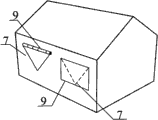
图19为图11中天窗洞为倒三角形时的结构示意图;Fig. 19 is a structural schematic diagram when the skylight hole in Fig. 11 is an inverted triangle;
图20为本发明的再一种设置天窗的结构示意图;Fig. 20 is a structural schematic diagram of yet another arrangement of skylights in the present invention;
图21为本发明的第四种设置天窗的结构示意图;Fig. 21 is a schematic structural view of a fourth type of skylight provided in the present invention;
图22为外空气间层对帐篷的保温性能的影响曲线图;Fig. 22 is a curve diagram of the influence of the outer air space layer on the thermal insulation performance of the tent;
图23为外空气间层对帐篷的隔热性能的影响曲线图;Fig. 23 is a graph showing the influence of the outer air space layer on the thermal insulation performance of the tent;
图24为不同侧窗围比对帐篷内气温的影响曲线图;Figure 24 is a curve diagram of the influence of different side window circumference ratios on the temperature in the tent;
图25为不同天窗围比对帐篷内气温的影响曲线图;Figure 25 is a graph showing the influence of different skylight girth ratios on the temperature in the tent;
图26为不同侧窗围比和天窗围比组合对帐篷内气温的影响曲线图;Figure 26 is a curve diagram of the influence of different side window girth ratios and skylight girth ratio combinations on the temperature in the tent;
图27为不同面料材质对帐篷保温性能的影响曲线图;Figure 27 is a graph showing the influence of different fabric materials on the thermal performance of tents;
图28为不同面料材质对帐篷防热性能的影响曲线图;Figure 28 is a graph showing the influence of different fabric materials on the thermal performance of tents;
图29为不同面料颜色对帐篷保温性能的影响曲线图;Figure 29 is a graph showing the influence of different fabric colors on the thermal performance of tents;
图30为不同面料颜色对帐篷防热性能的影响曲线图。Figure 30 is a graph showing the influence of different fabric colors on the thermal performance of tents.
附图中标记及相应的零部件名称:1-支撑结构;2-外支撑结构;3-侧围;4-篷顶;5-外侧围;6-外篷顶;7-侧窗洞;8-天窗洞;9-窗帘;10-烟囱;11-主支杆;12-边支杆;13-横杆;14-小窗洞;15-拉绳;16-布条。The marks in the drawings and the names of corresponding parts: 1-support structure; 2-outer support structure; 3-side enclosure; 4-roof; 5-outer enclosure; Skylight hole; 9-curtain; 10-chimney; 11-main support rod; 12-side support rod; 13-cross bar; 14-small window hole;
具体实施方式 Detailed ways
下面结合实施例及附图,对本发明作进一步的详细说明,但本发明的实施方式不仅限于此。The present invention will be further described in detail below in conjunction with the embodiments and the accompanying drawings, but the embodiments of the present invention are not limited thereto.
实施例Example
本发明主要由主帐篷、以及设置在主帐篷外侧的外帐篷构成,所述主帐篷包括支撑结构1、以及设置在支撑结构1上的篷围,外帐篷包括设置在支撑结构1外侧的外支撑结构2、以及设置在外支撑结构2上的外篷围,所述篷围由侧围3和篷顶4构成,外篷围由外侧围5和外篷顶6构成,侧围3和外侧围5之间构成侧部空气间层,篷顶4和外篷顶6之间构成顶部空气间层,如图1所示。侧围3和外侧围5上设置有位置相应、大小相等的侧窗洞7,篷顶4和外篷顶6上设置有位置相应、大小相等的天窗洞8,侧窗洞7和天窗洞8上均设置有窗帘9,所述篷围和外篷围上设置有用于烟囱10穿过的烟囱口。The present invention is mainly composed of a main tent and an outer tent arranged on the outside of the main tent. The main tent includes a
本发明涉及到的支撑结构1和外支撑结构2采用支杆形式或者框架形式,当采用支杆形式时,可以设计为图2所示的一根主支杆11和多根边支杆12形式,主支杆11位于帐内中心处,与多根边支杆12一起支撑篷围,形成帐篷内部空间;另一种为图3所示的两根主支杆11和多根边支杆12形式,两根主支杆11通过横杆13联系,并行排列于帐内,与多根边支杆12一起支撑篷围,形成帐篷内部空间;第三种为图4所示的三根主支杆11和多根边支杆12形式,三根主支杆11通过横杆13联系,与多根边支杆12一起支撑篷围,形成帐篷内部空间。上述边支杆12杆径、高度均等,主支杆11的杆径、高度均大于边支杆。本发明采用支杆形式时不局限于上述三种,也可根据用户需求自行设计。The
当支撑结构1和外支撑结构2采用框架形式时,可以设计为图5所示的框架式双坡顶,也可以设计为图6所示的框架式四坡顶,但本发明采用框架形式时不局限于上述两种,也可根据用户需求自行设计。框架结构的组装方式分为两种:1、由若干根钢管通过铰接、串接组合而成;2、通过多通构件连接组合而成。在框架顶部的坡面上的人字钢架间交叉设置有钢索,用于稳固和加强框架结构;在框架顶部沿人字钢架走向在钢管间设有多根钢索13,既加固框架结构,又可用于悬挂马灯、毛巾等重量较轻的物品,方便牧民的日常生活。支撑结构1和外支撑结构2也可采用框架、支杆混合形式,如图7、8所示。When the
根据不同的使用情况,主帐篷和外帐篷即可单独使用,如图9所示为主帐篷单独使用,图10所示为外帐篷单独使用;也可如图11、12、13所示将外帐篷套在主帐篷上,进而在外帐篷内形成室内回廊空间,既拓宽了牧民生活生产空间,又为整个游牧帐篷附加了空气间层,有效提高了游牧帐篷的保温、隔热性能。According to different usage situations, the main tent and the outer tent can be used alone, as shown in Figure 9, the main tent can be used alone, and Figure 10 shows that the outer tent can be used alone; The tent is set on the main tent, and then forms an indoor corridor space in the outer tent, which not only broadens the living and production space of the nomads, but also adds an air space to the whole nomadic tent, effectively improving the heat preservation and heat insulation performance of the nomadic tent.
所述侧围3和外侧围5上设置有位置相应、大小相等的侧窗洞7,所述侧窗洞7在侧围3和外侧围5上的设置形式有三种:一种如图14所示,在开设的侧窗洞7外附有比侧窗洞7略大的窗帘9,侧窗洞7为矩形;另一种如图15所示,其与第一种形式的不同之处在于侧窗洞7是倒三角形,增加防雨水能力;第三种如图16所示,当篷围和外篷围上的单个侧窗洞7面积较大时,在大窗帘9上增设一个小窗洞14,并在其上附有窗帘9,可以适应各种气候条件,增加使用的方便性。The
所述篷顶4和外篷顶6上设置有位置相应、大小相等的天窗洞8,天窗洞8的在篷顶4和外篷顶6上的设置形式有四种:一种如图17所示,该天窗洞8横跨在篷顶4和外篷顶6上,其上附有面积大于天窗洞8的窗帘9,窗帘9上附有拉绳15,且有一边缝固在篷围上。当需开启天窗时,在窗帘9缝固的一侧向下拉动拉绳15将窗帘9打开;当需关闭大窗时,在窗帘9的另一侧向下拉动拉绳15将窗帘9关闭。The
另一种如图18所示,整个天窗洞8设置在任意一个或多个坡面上,在天窗洞8设有遮挡风雨雪的窗帘9,窗帘9成矩形,其上附有拉绳15,且矩形窗帘9一边固定,在与固定边垂直的两边上设有起连接和密封作用的布条16,防止雨水渗流,布条16成三角形,其形状决定天窗开启角度。当需要开启天窗进行通风时,只需拉动拉绳15将窗帘9开启起到适当位置,并固定拉绳15,保持窗帘9的开启角度即可。天窗洞8上不仅可以如图16所示的方式安装窗帘9,也可如图19所示,将天窗洞8设计为倒三角形,以防雨水渗流。在三角形洞口上安装窗帘9,窗帘9上安装有控制其收紧状态的拉绳15,当需要开启天窗的时候,只需拉动窗帘9上的拉绳15将其收缩,即可实现天窗的开启。Another kind is shown in Figure 18, and the
第三种如图20所示,这种天窗形式主要应用于框架式双坡顶游牧帐篷,该形式的天窗是在相对的两个山墙面(与坡面相垂直的帐篷侧面)上部分开设三角形天窗洞8,并在其上附有三角形窗帘9。三角形窗帘9的一边固定在三角形天窗洞8的下部,窗帘9的固定边的对角尖上分别在内外面上缝固拉绳15。侧围的山墙面顶部开设一个小洞,将窗帘9内面上缝固的拉绳15穿过小洞,悬垂在帐内,窗帘9外面上缝固的拉绳15悬垂在帐外。当需开启天窗时,在帐外向下拉动拉绳15,将窗帘9拉至自然悬垂状态,天窗完全开启;当需关闭天窗时,在帐内向下拉动拉绳15,将窗帘9拉回关闭状态。窗帘9通过尼龙粘带与篷围粘结,避免寒风渗透。The third type is shown in Figure 20. This type of skylight is mainly used in frame-type double-slope nomadic tents. The skylights of this type are partially opened on the two opposite gable surfaces (sides of the tent perpendicular to the slope).
第四种如图21所示,这种天窗形式主要应用于框架式双坡顶游牧帐篷,该形式的天窗是在相对的两个山墙面(与坡面相垂直的帐篷侧面)上部分开设三角形天窗洞8,并在其上附有三角形窗帘9。三角形窗帘9的两个斜边缝固在篷围上,三角形窗帘9的第三边上缝固拉绳15,其第三边长度长于三角形窗洞对应边的长度,长度的增量将决定窗帘开启角度,增量越大,开启角度越大,通风效果越好。当需开启天窗时,在帐外向外下方拉动拉绳15,窗帘9的第三边被向外侧拉起,固定拉绳15以固定窗帘拉起角度;当需关闭天窗时,放开拉绳15,窗帘9自然悬垂,使天窗处于关闭状态窗帘9通过尼龙粘带与篷围粘结,避免寒风渗透。The fourth type is shown in Figure 21. This type of skylight is mainly used in frame-type double-slope nomadic tents. The skylights of this type are partially opened on the two opposite gable surfaces (sides of the tent perpendicular to the slope).
本发明的一个关键点是主要由主帐篷、以及设置在主帐篷外侧的外帐篷构成,所述主帐篷包括支撑结构1、以及设置在支撑结构1上的篷围,外帐篷包括设置在支撑结构1外侧的外支撑结构2、以及设置在外支撑结构2上的外篷围,所述篷围由侧围3和篷顶4构成,外篷围由外侧围5和外篷顶6构成,侧围3和外侧围5之间构成侧部空气间层,篷顶4和外篷顶6之间构成顶部空气间层。上述侧部空气间层和顶部空气间层组合成外空气间层。A key point of the present invention is that it mainly consists of a main tent and an outer tent arranged on the outside of the main tent. The main tent includes a supporting
为了说明外空气间层对帐篷的保温和隔热性能的影响,首先进行的是外空气间层对帐篷保温性能的影响实验。反映保温效果优劣的主要指标是帐篷的内气温和内表面温度;在相同条件下,温度越高,室内越温暖,保温效果越好。该实验选择在具有代表性的、温度比较低的、最需要保温的夜间进行,为了排除其他因素的干扰,测试时侧窗、天窗全部关闭。实验结果如图22所示,图中,横坐标对应不同时刻,纵坐标表示温度。从该图可以看出:In order to illustrate the influence of the outer air space layer on the thermal insulation and heat insulation performance of the tent, the experiment of the influence of the outer air space layer on the thermal insulation performance of the tent was first carried out. The main indicators that reflect the quality of the thermal insulation effect are the internal air temperature and the internal surface temperature of the tent; under the same conditions, the higher the temperature, the warmer the room and the better the thermal insulation effect. The experiment is carried out at a typical night when the temperature is relatively low and heat preservation is most needed. In order to eliminate the interference of other factors, the side windows and skylights are all closed during the test. The experimental results are shown in Figure 22. In the figure, the abscissa corresponds to different times, and the ordinate indicates the temperature. From this figure it can be seen that:
1)有外空气间层的帐篷,帐篷内空气温度明显高于无外空气间层的帐篷;1) For a tent with an outer air layer, the air temperature inside the tent is significantly higher than that of a tent without an outer air layer;
2)有外空气间层的帐篷,帐篷内表面温度明显高于无外空气间层的帐篷;2) For tents with an outer air interlayer, the inner surface temperature of the tent is significantly higher than that of tents without an outer air interlayer;
3)将帐篷气温、内表面温度与室外气温对比可以发现,无外空气间层帐篷的“冷室效应”更明显,外空气间层可以显著地削弱“冷室效应”。3) Comparing the tent temperature, inner surface temperature and outdoor temperature, it can be found that the "cold room effect" of the tent without the outer air interlayer is more obvious, and the outer air interlayer can significantly weaken the "cold room effect".
然后进行的是外空气间层对帐篷隔热性能的影响实验。该实验选择在具有代表性的温度较高、太阳辐射较大的、最需要防热的白天进行,为了排除其他因素的干扰,测试时侧窗、天窗全部关闭。实验结果如图23所示,图中,横坐标对应不同时刻,纵坐标表示温度。从该图可以看出:Then, the experiment of the effect of the outer air space layer on the thermal insulation performance of the tent was carried out. The experiment was carried out during the typical day when the temperature is high, the solar radiation is large, and heat protection is most needed. In order to eliminate the interference of other factors, the side windows and skylights were all closed during the test. The experimental results are shown in Figure 23. In the figure, the abscissa corresponds to different times, and the ordinate indicates the temperature. From this figure it can be seen that:
1)有外空气间层的帐篷,帐篷内空气温度明显低于无外空气间层的帐篷;1) For a tent with an outer air layer, the air temperature inside the tent is significantly lower than that of a tent without an outer air layer;
2)有外空气间层的帐篷,帐篷内表面温度明显低于无外空气间层的帐篷;2) For tents with an outer air interlayer, the inner surface temperature of the tent is significantly lower than that of tents without an outer air interlayer;
3)将帐篷气温和内表面温度与室外气温对比可以发现,无外空气间层帐篷的“温室效应”更明显,外空气间层可以显著地削弱“温室效应”。3) Comparing the air temperature and inner surface temperature of the tent with the outdoor air temperature, it can be found that the "greenhouse effect" of the tent without the outer air interlayer is more obvious, and the outer air interlayer can significantly weaken the "greenhouse effect".
以上测试结果是在大量测试数据中的一组代表性试验曲线,测试条件为顶部空气间层的平均厚度为200m,侧部空气间层的平均厚度为2000mm。The above test results are a set of representative test curves in a large number of test data. The test conditions are that the average thickness of the top air space is 200m, and the average thickness of the side air space is 2000mm.
当外空气间层只在帐篷局部时,也具有类似的规律,只是保温、隔热效果因外空气间层所占比例大小受到不同程度的影响;本发明通过在局部增加外空气间层,测试结果得到了证实。When the outer air space layer is only in the part of the tent, it also has a similar rule, but the heat preservation and heat insulation effects are affected to varying degrees due to the proportion of the outer air space layer; The results were confirmed.
通过大量实验结果表明,较合理的顶部空气间层的平均厚度为100~300mm,侧部空气间层的平均厚度为1000~3000mm,上述空气间层的平均厚度太小,保温、隔热效果不理想;平均厚度太大,对增强保温、隔热效果的作用不明显,综合考虑,顶部空气间层的平均厚度的范围选择为100~300mm,且优先设计为200mm;侧部空气间层的平均厚度的范围选择为1000~3000mm,且优先设计为2000mm。A large number of experimental results show that the reasonable average thickness of the top air space is 100-300mm, and the average thickness of the side air space is 1000-3000mm. The average thickness of the above-mentioned air space is too small, and the heat preservation and heat insulation effects are not good. Ideal; the average thickness is too large, and the effect on enhancing heat preservation and heat insulation is not obvious. Considering comprehensively, the average thickness of the top air space is selected as 100-300mm, and the preferred design is 200mm; the average thickness of the side air space The range of thickness is selected as 1000-3000mm, and the preferred design is 2000mm.
本发明的另一个关键点是通过科学实验分析确定主帐篷篷围上的天窗围比和侧窗围比的合理范围,以及在合理范围内的优化组合。天窗围比和侧窗围比的优化目的在于更好的通风、排烟、防热及营造健康卫生的室内环境,其综合量化效果可用游牧帐篷在炎热环境下的防热能力来表征,因为防热性能越好,通风、排烟能力就越强,室外的新鲜空气进入就越多。Another key point of the present invention is to determine the reasonable range of the girth ratio of the skylight and the girth ratio of the side windows on the main tent enclosure through scientific experiment analysis, and the optimal combination within a reasonable range. The purpose of optimizing the girth ratio of the skylight and the girth ratio of the side windows is to better ventilate, exhaust smoke, prevent heat and create a healthy and hygienic indoor environment. The better the thermal performance, the stronger the ventilation and smoke exhaust ability, and the more fresh air from outside enters.
所述侧窗洞7与篷围的面积比指的是篷围四周侧面窗户洞口(含门)的面积之和与整个篷围面积(含所有洞口)的比值,简称侧窗围比;天窗洞8与篷围的面积比指的是篷围顶部各面开设的天窗的洞口面积之和与整个篷围面积(含所有洞口)的比值,简称天窗围比。The area ratio of the
为了确定篷围上的天窗围比和侧窗围比的合理范围,首先进行的是天窗围比对帐篷内气温的影响实验,该实验在侧窗全部关闭的情况进行,实验结果如图24所示,图中,横坐标表示不同时刻,纵坐标表示温度。从上到下的5条测试曲线分别是天窗围比为0,0.01,0.02,0.03,0.038时,各种帐篷几何中心处的空气温度对比。从该图可以看出,在室外相同的气象条件下,当天窗围比为0时(即天窗全部关闭),帐篷内气温最高;当天窗围比为0.01时,帐篷内的气温有明显下降,温室效应减弱;当天窗围比增大至0.02时,帐篷内的气温又有明显的降低;当天窗围比为0.03时,帐篷的温室效应得到进一步改善;但当天窗围比增大至0.038时,室内气温与0.03时相比,降低并不明显。因此,从削弱帐篷的温室效应、增强帐篷的防热能力和保持足够良好通风角度,天窗围比控制在0.03以内为佳。天窗户洞口太大,一是增加天窗及附件成本,二是防雨渗漏的难度大大增加,三是防热排烟能力改进并不太显著,得不偿失。另一方面,从上图可以看出,帐篷上是否开设天窗,防热和削弱温室效应的能力是完全不同的;天窗是排除热气和污浊气体的有效途径,特别是每天要烧火做饭、煮茶取暖的游牧帐篷,外溢烟气的排出最佳途径是天窗;此外,天窗还可满足居住者自然采光的基本需求。经过以上测试分析综合研究,最小天窗围比应该大于0.01。据此,本发明的天窗围比的范围为0.01~0.03。In order to determine the reasonable range of the girth ratio of the skylight and the girth ratio of the side windows on the canopy, the experiment of the effect of the girth ratio of the skylight on the air temperature inside the tent was carried out first. The experiment was carried out when all the side windows were closed. In the figure, the abscissa indicates different times, and the ordinate indicates temperature. The five test curves from top to bottom are the air temperature comparisons at the geometric centers of various tents when the skylight girth ratio is 0, 0.01, 0.02, 0.03, and 0.038. It can be seen from the figure that under the same meteorological conditions outdoors, when the skylight circumference ratio is 0 (that is, the skylights are all closed), the temperature inside the tent is the highest; when the skylight circumference ratio is 0.01, the temperature inside the tent drops significantly. The greenhouse effect is weakened; when the skylight ratio increases to 0.02, the temperature inside the tent drops significantly; when the skylight ratio is 0.03, the greenhouse effect of the tent is further improved; but when the skylight ratio increases to 0.038 , compared with 0.03, the indoor temperature does not decrease significantly. Therefore, from the perspective of weakening the greenhouse effect of the tent, enhancing the heat resistance of the tent and maintaining sufficient ventilation, it is better to control the girth ratio of the skylight within 0.03. The opening of the skylight is too large. First, the cost of the skylight and accessories will be increased. Second, the difficulty of preventing rain and leakage will be greatly increased. Third, the improvement of the ability to prevent heat and smoke is not too significant, and the gain outweighs the gain. On the other hand, it can be seen from the picture above that whether there is a skylight on the tent, the ability to prevent heat and weaken the greenhouse effect is completely different; For nomadic tents heated by tea, the best way to discharge the overflowing smoke is the skylight; in addition, the skylight can also meet the basic needs of the occupants for natural lighting. After the above test analysis and comprehensive research, the minimum skylight girth ratio should be greater than 0.01. Accordingly, the girth ratio of the skylight in the present invention ranges from 0.01 to 0.03.
然后进行的是侧窗围比对帐篷内气温的影响实验,该实验在天窗全部关闭的情况进行,实验结果如图25所示,图中,横坐标表示不同时刻,纵坐标表示温度。从上到下的5条测试曲线分别是侧窗围比为0,0.05,0.095,0.15,0.196时帐篷内的空气温度对比,最下面一条曲线是室外气温。从该图可以看出,在室外相同的气象条件下,当侧窗围比为0时(即侧窗全部关闭),帐篷内气温最高;当侧窗围比为0.05时,帐篷内的气温有明显下降,温室效应减弱,特别是在气温较高的区间更明显;随着侧窗围比增大至0.095时,帐篷内的气温又有明显的降低;当侧窗围比为0.15时,帐篷的温室效应得到进一步改善;但当侧窗围比增大至0.196时,室内气温与0.15时相比,降低并不明显。因此,从削弱帐篷的温室效应、增强帐篷的防热能力和保持足够良好通风角度,侧窗围比控制在0.15以下为佳,窗户洞口太大,增加窗及附件成本,增加雨水浸入的可能性,因坠性变差影响外形美观。另一方面,帐篷是为人居住使用的,居住者除了有防热、排烟、良好空气品质等舒适性要求外,居住期间还有采光的基本需求,开启侧窗除了可以具有上图所示的防热效果,还需考虑居住者自然采光和欣赏外景的,经过以上综合研究,最低侧窗围比应该大于0.05,据此,本发明的侧窗围比的范围为0.05~0.15。Then, the experiment on the effect of the side window circumference ratio on the temperature in the tent was carried out. The experiment was carried out when the skylights were all closed. The experimental results are shown in Figure 25. In the figure, the abscissa indicates different times, and the ordinate indicates the temperature. The five test curves from top to bottom are the comparison of the air temperature inside the tent when the side window circumference ratio is 0, 0.05, 0.095, 0.15, and 0.196, and the bottom curve is the outdoor air temperature. It can be seen from the figure that under the same weather conditions outdoors, when the side window circumference ratio is 0 (that is, the side windows are all closed), the temperature inside the tent is the highest; when the side window circumference ratio is 0.05, the temperature inside the tent has Significantly decreased, the greenhouse effect weakened, especially in the higher temperature range; as the side window ratio increased to 0.095, the temperature in the tent decreased significantly; when the side window ratio was 0.15, the tent The greenhouse effect is further improved; but when the side window enclosure ratio increases to 0.196, the indoor air temperature does not decrease significantly compared with 0.15. Therefore, from the perspective of weakening the greenhouse effect of the tent, enhancing the heat resistance of the tent and maintaining sufficient ventilation, it is better to control the side window circumference ratio below 0.15. If the window opening is too large, the cost of windows and accessories will be increased, and the possibility of rainwater intrusion will be increased. , the aesthetic appearance is affected by the deterioration of the falling property. On the other hand, tents are for people to live in. In addition to comfort requirements such as heat protection, smoke exhaust, and good air quality, the occupants also have basic needs for lighting during their residence. The heat protection effect also needs to consider the occupant's natural lighting and appreciation of the exterior scenery. After the above comprehensive research, the minimum side window circumference ratio should be greater than 0.05. Accordingly, the side window circumference ratio of the present invention ranges from 0.05 to 0.15.
以上侧窗围比、天窗围比的优化范围是在固定其中一类条件下获得的,它们合理的优化组合可以取得更佳的效果,反之,不恰当的组合会影响效果。为了得到侧窗围比、天窗围比在上述范围内的组合对帐篷的防热、排烟、通风、采光的影响,接着进行的是不同天窗围比和侧窗围比组合对帐篷内气温的影响实验,实验结果如图26所示,图中,横坐标表示不同时刻,纵坐标表示温度。从上到下的5条测试曲线分别是不同侧窗、天窗围比下各种帐篷几何中心处的空气温度对比,最下面一条是室外气温曲线。该图自上而下的第1条曲线说明,在室外相同的气象条件下,当侧窗、天窗围比均为0时(即侧窗、天窗全部关闭),帐篷内气温最高;第2条曲线说明,当侧窗围比为0.097、天窗围比为0时,帐篷内的气温有明显下降,温室效应减弱;第3条曲线说明,当侧窗围比适当降低至0.076、但开设天窗,天窗围比增大0.012时,帐篷内的气温反而有很明显的降低;第4条曲线说明,当侧窗、天窗围比都进一步增大,分别至0.11和0.021时,气温又有所下降,帐篷的温室效应得到进一步改善;第5条曲线说明,当侧窗、天窗围比均增大至最大的推荐值0.15和0.03时,帐篷的防热效果更好。The above optimization ranges of the girth ratio of the side window and the girth ratio of the sunroof are obtained under the condition of fixing one of them, and their reasonable optimal combination can achieve better results, otherwise, inappropriate combinations will affect the effect. In order to obtain the influence of the combination of side window girth ratio and skylight girth ratio within the above range on the heat protection, smoke exhaust, ventilation and lighting of the tent, the following is the comparison of the air temperature inside the tent with different combinations of skylight girth ratio and side window girth ratio. Influencing experiments, the experimental results are shown in Figure 26. In the figure, the abscissa indicates different times, and the ordinate indicates the temperature. The five test curves from top to bottom are the comparison of the air temperature at the geometric center of various tents under different side window and skylight circumference ratios, and the bottom one is the outdoor air temperature curve. The first curve from top to bottom in the figure shows that under the same outdoor meteorological conditions, when the side windows and skylight ratios are both 0 (that is, the side windows and skylights are all closed), the temperature inside the tent is the highest; the second line The curve shows that when the girth ratio of the side window is 0.097 and the girth ratio of the skylight is 0, the temperature inside the tent drops significantly, and the greenhouse effect is weakened; the third curve shows that when the girth ratio of the side window is appropriately reduced to 0.076, but the skylight is opened, When the girth ratio of the skylight increases by 0.012, the temperature inside the tent drops significantly; the fourth curve shows that when the girth ratio of the side windows and the skylight is further increased to 0.11 and 0.021 respectively, the temperature drops again. The greenhouse effect of the tent has been further improved; the fifth curve shows that when the ratios of side windows and skylights are both increased to the maximum recommended values of 0.15 and 0.03, the heat protection effect of the tent is better.
该实验科学地说明了几点:1、侧窗、天窗围比合理匹配的重要性,只开侧窗、不开天窗(偏离推荐范围)的效果不佳;2、在推荐值的某一个匹配范围内(第3、4条曲线),增大侧窗、天窗围比的效果不是太显著,在综合考虑增大侧窗和天窗导致生产成本和防雨难度增大的因素,侧窗围比在0.10、天窗围比在0.02附近的组合为最佳;3、增大侧窗、天窗围比对于防热、通风总是有利的,要应对炎热的极端气候,可以将帐篷的几个侧围设计成全部或部分活动粘接的,当遇特别炎热气候时,可揭起一面或多面侧围。The experiment scientifically explained a few points: 1. The importance of a reasonable match between the side window and the sunroof ratio, the effect is not good if only the side window is opened without the sunroof (deviating from the recommended range); 2. Within a certain matching range of the recommended value Inside (the 3rd and 4th curves), the effect of increasing the ratio of the side windows and skylights is not too significant. Considering the factors that increase the production cost and the difficulty of rain protection due to the increase of side windows and skylights, the ratio of the side windows and skylights is The combination of 0.10 and the ratio of the skylight around 0.02 is the best; 3. Enlarging the side windows and the ratio of the skylight is always beneficial to heat protection and ventilation. To deal with the hot and extreme climate, several side walls of the tent can be designed If all or part of the movable bonding is completed, one or more sides of the side wall can be uncovered when encountering a particularly hot climate.
帐篷制作最终确定的侧窗、天窗围比无论大或小,从很大程度影响防热、排烟、通风性能,但不会影响帐篷的保温性能。因为侧窗、天窗可以完全关闭(需要保温时);也可以完全打开(需要排烟、通风时);也可以根据实际情况需要,开启到任意角度,这样帐篷的气候和环境适应能力增强了。帐篷制作最终确定的侧窗、天窗围比大小,决定了生产者为帐篷居住者提供了多大的调节范围。Regardless of whether the ratio of the side windows and skylights finalized in the tent production is large or small, it will greatly affect the performance of heat protection, smoke exhaust and ventilation, but will not affect the thermal insulation performance of the tent. Because the side windows and skylights can be completely closed (when heat preservation is required); they can also be fully opened (when smoke exhaust and ventilation are required); they can also be opened to any angle according to the actual situation, so that the climate and environmental adaptability of the tent are enhanced. The size of the side windows and the skylight ratio finally determined by the tent production determines how much adjustment range the producer provides for the tent occupants.
另外,为防蚊虫,一般在窗的洞口需设置纱窗;市场上纱窗的网眼密度差别较大,如果按照通风面积比,一般在25~55%(实验样品用纱窗通风面积比约40%)。纱窗网眼密度对侧窗围比、天窗围比的影响是,当选用的纱窗网眼较稀(通风面积比较大),侧窗围比、天窗围比可适当降低;网眼较密(通风面积比较小),侧窗围比、天窗围比须适当提高一点。对于高海拔、蚊虫较少的游牧地区,若窗户洞口不设纱窗,侧窗围比、天窗围比的优选范围可乘以0.70左右的修正系数。In addition, in order to prevent mosquitoes, screens are generally installed at the opening of the window; the mesh density of screens on the market varies greatly, if according to the ventilation area ratio, it is generally 25-55% (the ventilation area ratio of the screen window for the experimental sample is about 40%). The mesh density of the screen window affects the girth ratio of the side window and the girth ratio of the skylight. When the mesh of the selected screen window is relatively thin (the ventilation area is relatively large), the girth ratio of the side window and the skylight can be appropriately reduced; the mesh is denser (the ventilation area is relatively small). ), the girth ratio of the side windows and the girth ratio of the sunroof must be appropriately increased. For nomadic areas with high altitude and few mosquitoes, if there are no screens at the window openings, the optimal range of side window girth ratio and skylight girth ratio can be multiplied by a correction factor of about 0.70.
此外,图17~图21给出的四种天窗形式,其排烟、排热气和通风的效果存在明显的差异,依次变差。如果以第一种形式的效果为100%计,后三种形式依次约为90%、75%、60%。In addition, there are obvious differences in the smoke exhaust, heat exhaust and ventilation effects of the four skylight forms shown in Figures 17 to 21, and they become worse in turn. If the effect of the first form is 100%, the latter three forms are approximately 90%, 75%, and 60% successively.
本发明的第三个关键点是通过科学实验来合理选择游牧帐篷的面料材质以及颜色范围。The third key point of the present invention is to reasonably select the fabric material and color range of the nomadic tent through scientific experiments.
为了确定游牧帐篷的面料材质,首先进行的是不同面料材质对帐篷保温性能的影响实验,该实验在夜晚进行,且帐篷其他条件相同,只有面料材质不同;为了排除其它因素的影响,实验时去掉内篷围4,侧窗和天窗均全部关闭,实验结果如图27所示,图中,横坐标对应不同时刻,纵坐标表示温度。其中上面一条曲线是室外气温;中间一条曲线是面料采用有机氟防水透气帆布制作时,帐篷内气温的变化曲线;下面一条是面料采用PVC单面涂层制作时,帐篷内气温的变化曲线。从该图可以看出:In order to determine the fabric material of the nomadic tent, the experiment of the influence of different fabric materials on the thermal insulation performance of the tent was first carried out. The experiment was carried out at night, and the other conditions of the tent were the same, only the fabric material was different; in order to exclude the influence of other factors, the test was removed The inner canopy surrounds 4, the side windows and the skylight are all closed, and the experimental results are shown in Figure 27. In the figure, the abscissa corresponds to different times, and the ordinate indicates the temperature. The upper curve is the outdoor temperature; the middle curve is the change curve of the temperature inside the tent when the fabric is made of organic fluorine waterproof and breathable canvas; the lower curve is the change curve of the temperature inside the tent when the fabric is made of PVC single-sided coating. From this figure it can be seen that:
1)以有机氟做帐篷面料时,帐篷内气温明显高于PVC单面涂层的帐篷;1) When organic fluorine is used as tent fabric, the temperature inside the tent is significantly higher than that of PVC single-sided coated tents;
2)与室外气温相比,两种面料的帐篷的篷内气温大部分时刻低于室外气温,出现“冷室效应”现象。2) Compared with the outdoor temperature, the temperature inside the tent of the two fabrics is lower than the outdoor temperature most of the time, and the phenomenon of "cold room effect" appears.
3)进一步的测试结果表明,单面PVC面料帐篷的内表面温度比有机氟面料帐篷更低,且低的程度比气温低的程度更明显,导致在单面PVC面料帐篷中的寒冷感更显著。3) Further test results show that the inner surface temperature of the single-sided PVC fabric tent is lower than that of the organic fluorine fabric tent, and the lower degree is more obvious than the lower temperature, resulting in a more significant cold feeling in the single-sided PVC fabric tent .
接着进行不同面料材质对帐篷防热性能的影响实验,该实验其他条件与不同材质的面料对帐篷保温性能的影响实验相同,唯一不同是在白天进行,实验结果如图28所示,图中,横坐标对应不同时刻,纵坐标表示温度。几条曲线分别是以有机氟、单面PVC涂层布做面料时帐篷的内气温和内表面温度、室外空气温度。从该图可以看出:Then, the experiment on the effect of different fabric materials on the thermal performance of tents was carried out. The other conditions of this experiment were the same as the experiment on the thermal insulation performance of tents made of different fabric materials. The only difference was that it was carried out during the daytime. The experimental results are shown in Figure 28. The abscissa corresponds to different times, and the ordinate indicates the temperature. Several curves are the internal temperature, internal surface temperature, and outdoor air temperature of the tent when organic fluorine and single-sided PVC coated cloth are used as fabrics. From this figure it can be seen that:
1)以有机氟做面料时,帐篷内气温明显低于PVC单面涂层的帐篷;1) When organic fluorine is used as the fabric, the temperature inside the tent is significantly lower than that of PVC single-sided coated tents;
2)以有机氟做面料时,帐篷内表面温度明显低于PVC单面涂层的帐篷;2) When organic fluorine is used as the fabric, the inner surface temperature of the tent is significantly lower than that of PVC single-sided coated tents;
3)以有机氟做面料的帐篷,“温室效应”得到有效削弱,室内气温和内表面温度更低,热天更凉爽。3) For tents made of organic fluorine, the "greenhouse effect" is effectively weakened, the indoor temperature and inner surface temperature are lower, and the hot weather is cooler.
通过以上两个实验可以看出,当帐篷结构、形式、尺寸参数和其它材质都相同,仅帐篷面料材质不同时,两种帐篷在夜间寒冷时的保温性能和白天太阳辐射强烈时的防热性能存在明显的差异。进一步的测试发现,导致上述现象的主要原因是两种材质的导热系数不同,单面PVC涂层布料导热系数约为0.068W/m℃,而有机氟防水透气帆布的导热系数约为0.048W/m℃;其它面料材质的帐篷对比测试也证实,选择导热系数较小的材料作外帐篷面料,对改善帐篷的保温、防热性能都是有利的。据此,本发明采用导热系数为0.042~0.055W/m℃的有机氟面料作为游牧帐篷的帐篷面料。Through the above two experiments, it can be seen that when the structure, form, size parameters and other materials of the tents are the same, only the material of the tent fabric is different, the thermal insulation performance of the two tents when it is cold at night and the heat resistance performance when the solar radiation is strong during the day There are clear differences. Further testing found that the main reason for the above phenomenon is the different thermal conductivity of the two materials. The thermal conductivity of single-sided PVC-coated fabric is about 0.068W/m℃, while the thermal conductivity of organic fluorine waterproof and breathable canvas is about 0.048W/m m°C; The comparative test of tents made of other fabric materials also proves that choosing materials with a smaller thermal conductivity as the outer tent fabric is beneficial to improving the thermal insulation and heat resistance performance of the tent. Accordingly, the present invention uses organic fluorine fabrics with a thermal conductivity of 0.042-0.055 W/m°C as tent fabrics for nomadic tents.
为了确定游牧帐篷的面料颜色范围,需进行不同面料颜色对帐篷保温性能的影响实验,该实验在夜晚进行,且帐篷其他条件相同,只有面料颜色不同,为了排除其它因素的影响,实验时侧窗和天窗均全部关闭,实验结果如图29所示,图中,横坐标对应不同时刻,纵坐标表示温度。几条曲线分别代表帐篷面料颜色为纯白色、灰白色、深灰色、蓝色时帐篷的内气温、室外空气温度。从该图可以看出:In order to determine the fabric color range of nomadic tents, it is necessary to conduct an experiment on the influence of different fabric colors on the thermal insulation performance of the tent. The experiment is carried out at night, and the other conditions of the tent are the same, only the fabric color is different. In order to exclude the influence of other factors, the side window and skylights are all closed, the experimental results are shown in Figure 29, in the figure, the abscissa corresponds to different times, and the ordinate represents the temperature. Several curves respectively represent the internal air temperature and outdoor air temperature of the tent when the color of the tent fabric is pure white, off-white, dark gray, and blue. From this figure it can be seen that:
1)帐篷面料的颜色越浅,帐篷内的气温越高,保温性越好;1) The lighter the color of the tent fabric, the higher the temperature inside the tent and the better the thermal insulation;
2)纯白色最好,蓝色是这几个颜色中最差的,“冷室效应”最明显;2) Pure white is the best, blue is the worst of these colors, and the "cold room effect" is the most obvious;
3)进一步的测试结果表明,浅色面料帐篷的内表面温度比深色面料帐篷更高,且高的程度比气温高的程度更明显,导致在浅色面料帐篷中的温暖感更显著。3) Further test results show that the inner surface temperature of light-colored fabric tents is higher than that of dark-colored fabric tents, and the higher degree is more obvious than that of air temperature, resulting in a more significant sense of warmth in light-colored fabric tents.
最后进行的是不同面料颜色对帐篷防热性能的影响实验,该实验其他条件与不同颜色对帐篷保温性能的影响实验相同,唯一不同是在白天进行,实验结果如图30所示,图中,横坐标对应不同时刻,纵坐标表示温度。几条曲线分别代表帐篷面料颜色为纯白色、灰白色、深灰色、蓝色时帐篷的内气温、室外空气温度。The last experiment was the effect of different fabric colors on the thermal performance of tents. The other conditions of this experiment were the same as those of different colors on the thermal performance of tents. The only difference was that it was conducted during the day. The experimental results are shown in Figure 30. In the figure, The abscissa corresponds to different times, and the ordinate indicates the temperature. Several curves respectively represent the internal air temperature and outdoor air temperature of the tent when the color of the tent fabric is pure white, off-white, dark gray, and blue.
从该图可以看出:帐篷面料的颜色越浅,帐篷内的气温越低,隔热性越好;纯白色最好,蓝色是这几个颜色中最差的。测试结果还表明,浅色面料帐篷的内表面温度比深色面料帐篷更低,且低的程度比气温低的程度更明显,在浅色面料帐篷中的凉爽感更显著。由此可见,从改善游牧帐篷的保温和防热性能角度,外层面料的颜色取向是一致的,宜选浅色调。It can be seen from the figure that the lighter the color of the tent fabric, the lower the temperature inside the tent and the better the heat insulation; pure white is the best, and blue is the worst of these colors. The test results also show that the inner surface temperature of light-colored fabric tents is lower than that of dark-colored fabric tents, and the lower degree is more obvious than that of air temperature, and the cool feeling in light-colored fabric tents is more significant. It can be seen that from the perspective of improving the thermal insulation and heat resistance performance of nomadic tents, the color orientation of the outer fabric is consistent, and light colors should be selected.
通过进一步的实验测试发现,导致上述现象的主要原因是不同颜色的面料对于辐射波的反射率和吸收率不同,浅色面料的反射率高而吸收率低。白天,太阳辐射热量照射在帐篷外表面,浅色面料把大部分热量反射走了,被面料吸收的少,所以帐篷内表面和篷内气温都较低,深色面料吸收的多、反射走的少,故而帐篷内表面和篷内气温都较高;夜晚,天空冷辐射照射在帐篷外表面,浅色面料把大部分冷量反射走了,被帐篷吸收的少,篷内温度较高,深色面料吸收的多、反射走的少,篷内温度较低。Through further experimental tests, it is found that the main reason for the above phenomenon is that fabrics of different colors have different reflectivity and absorption rate for radiation waves, and light-colored fabrics have high reflectivity and low absorption rate. During the day, the sun radiates heat on the outer surface of the tent, and the light-colored fabric reflects most of the heat away, and less is absorbed by the fabric, so the temperature on the inner surface of the tent and inside the tent is lower, and the dark-colored fabric absorbs more and reflects away. less, so the temperature inside the tent and inside the tent is higher; at night, the cold radiation from the sky shines on the outer surface of the tent, and the light-colored fabric reflects most of the cold away, which is less absorbed by the tent, and the temperature inside the tent is higher, and the darker The colored fabric absorbs more, reflects less, and the temperature inside the tent is lower.
据此可以得出,游牧帐篷的面料颜色优先采用纯白色或浅灰白色;帐篷面料应经常进行自洁、防污、色牢处理,以免在使用过程中灰污使面料颜色变深;帐篷外层设计的深色装饰性色条(块)和印制的民族特色的深色图案的着色面积应控制在整个帐篷外表面积的20%以内,以免对帐篷的保温、防热性能造成明显的不利影响。Based on this, it can be concluded that the fabric color of nomadic tents should be pure white or light off-white; the tent fabric should be treated with self-cleaning, anti-fouling, and color fastness frequently to avoid gray stains during use that will darken the fabric color; the outer layer of the tent The colored area of the designed dark decorative color strips (blocks) and the printed dark patterns of ethnic characteristics should be controlled within 20% of the outer surface area of the entire tent, so as not to cause obvious adverse effects on the thermal insulation and heat resistance performance of the tent .
以上根据科学测试与研究提出的篷围设计优化参数、面料材质导热性能范围和优先选择的面料颜色,是从帐篷的通风、排热、排烟、保温、隔热等技术指标角度进行的优化,而游牧帐篷还需综合考虑牧民的经济承受能力、民族风俗习惯等,实际上通过技术经济比较,可不完全局限于上述范围。Based on scientific testing and research, the optimization parameters of tent design, the range of thermal conductivity of fabric materials and the preferred color of fabrics proposed above are optimized from the perspective of technical indicators such as tent ventilation, heat exhaust, smoke exhaust, heat preservation, and heat insulation. The nomadic tent also needs to comprehensively consider the economic affordability of the herders, ethnic customs, etc. In fact, through technical and economic comparison, it is not completely limited to the above range.
本发明主要针对草原上牧民所使用的游牧帐篷,但并不局限于游牧帐篷,也可应用于其他领域的帐篷,在此不一一叙述。The present invention is mainly aimed at nomadic tents used by herdsmen on the grasslands, but is not limited to nomadic tents, and can also be applied to tents in other fields, which will not be described one by one here.
如上所述,便可较好的实现本发明。As described above, the present invention can be better implemented.
Claims (10)
Priority Applications (1)
| Application Number | Priority Date | Filing Date | Title |
|---|---|---|---|
| CN200910167707A CN101672126A (en) | 2009-09-22 | 2009-09-22 | Multifunctional compound nomadic camp |
Applications Claiming Priority (1)
| Application Number | Priority Date | Filing Date | Title |
|---|---|---|---|
| CN200910167707A CN101672126A (en) | 2009-09-22 | 2009-09-22 | Multifunctional compound nomadic camp |
Publications (1)
| Publication Number | Publication Date |
|---|---|
| CN101672126A true CN101672126A (en) | 2010-03-17 |
Family
ID=42019510
Family Applications (1)
| Application Number | Title | Priority Date | Filing Date |
|---|---|---|---|
| CN200910167707A Pending CN101672126A (en) | 2009-09-22 | 2009-09-22 | Multifunctional compound nomadic camp |
Country Status (1)
| Country | Link |
|---|---|
| CN (1) | CN101672126A (en) |
Cited By (1)
| Publication number | Priority date | Publication date | Assignee | Title |
|---|---|---|---|---|
| CN105370088A (en) * | 2014-08-21 | 2016-03-02 | 株式会社乐格氏 | Tent |
-
2009
- 2009-09-22 CN CN200910167707A patent/CN101672126A/en active Pending
Cited By (1)
| Publication number | Priority date | Publication date | Assignee | Title |
|---|---|---|---|---|
| CN105370088A (en) * | 2014-08-21 | 2016-03-02 | 株式会社乐格氏 | Tent |
Similar Documents
| Publication | Publication Date | Title |
|---|---|---|
| Singh et al. | Solar passive features in vernacular architecture of North-East India | |
| CN201567838U (en) | An insulated nomadic tent | |
| CN101597969B (en) | Heat preservation nomadism tent | |
| CN201512988U (en) | A multifunctional composite nomadic tent | |
| CN101694133A (en) | Frame type nomadism tent with inner air interlayer | |
| CN101629461B (en) | Strut-type portable nomadic tent with inner roof | |
| CN201486206U (en) | Pole Portable Nomad Tent with Inner Roof | |
| CN101614084B (en) | Fulcrum bar type handysize nomadism tent with external roof | |
| CN201343891Y (en) | Tent used all the year round | |
| CN201605873U (en) | Pole Portable Nomad Tent With Canopy | |
| CN205546712U (en) | Get over summer vegetables production big -arch shelter | |
| KR102692297B1 (en) | Tent for four seasons having removable mesh screen | |
| CN201486208U (en) | Frame nomad tent with inner air compartment | |
| CN214365327U (en) | Portable single tent | |
| CN205777839U (en) | A kind of mosquito-proof moistureproof tent | |
| KR101660338B1 (en) | Removable Transparent Tarp for Camping Shelter | |
| CN209556499U (en) | A passive cooling tent | |
| CN211776346U (en) | Double top ventilated and insulated tent | |
| CN110005222B (en) | A passive solar house with a vertical ventilation chimney in the living room | |
| CN108560995A (en) | Outdoor tent with moisture-proof function of driving mosquitoes | |
| CN221682633U (en) | A prefabricated tent house with thermal insulation structure | |
| Kumar et al. | Mitigating Climate Change through Traditional Knowledge in Tropical Housing: An Overview | |
| CN218265295U (en) | A jewel-shaped stargazing tent | |
| CN107773009A (en) | A kind of temperature adjustment curtain | |
| CN222745787U (en) | An outdoor tent convenient for ventilation in rainy days |
Legal Events
| Date | Code | Title | Description |
|---|---|---|---|
| C06 | Publication | ||
| PB01 | Publication | ||
| C10 | Entry into substantive examination | ||
| SE01 | Entry into force of request for substantive examination | ||
| C12 | Rejection of a patent application after its publication | ||
| RJ01 | Rejection of invention patent application after publication |
Application publication date: 20100317 |